← Les Clés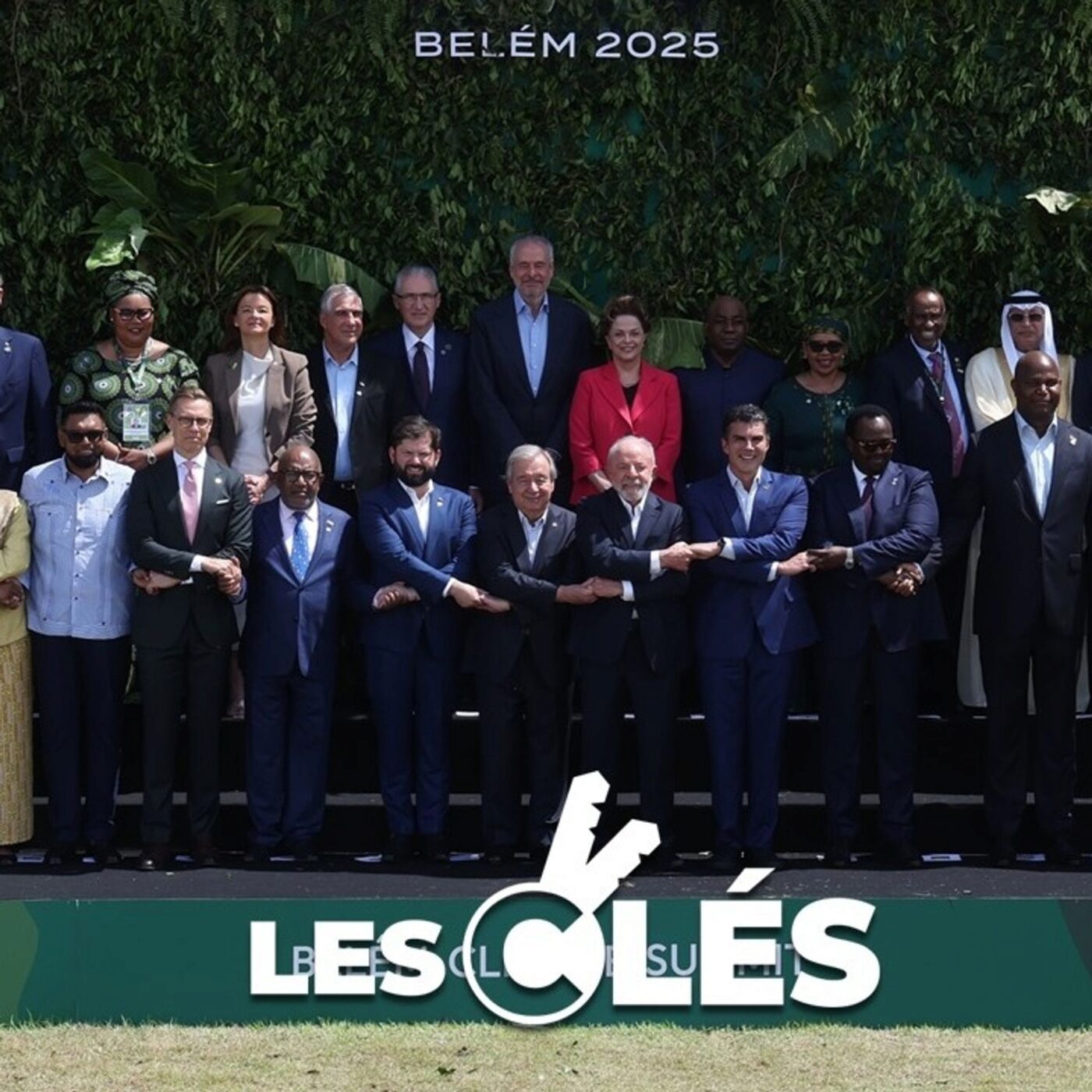
Les Clés
COP30 : une COP pour rien ?
00:28:07
Quel bilan pour la COP30 ? L’accord conclut à Belém déçoit largement. L'enjeu de la déforestation et de la protection des forêts n’a pas vraiment été pris en compte. Nous en discutons avec Jean-Louis Doucet, professeur de foresterie tropicale à Gembloux Agro-Bio Te...
Loading summary
Transcript57 lines
- [00:01]
Jean-Louis Doucet
La première.
- [00:06]
Arne Reussen
Les scientifiques tirent la sonnette d'alarme depuis tellement longtemps.
- [00:10]
Sarah Poussey
Les clés. La situation est incontrôlable.
- [00:12]
Jean-Louis Doucet
J'ai besoin de repères.
- [00:13]
Romain Wijkmans
Une fois qu'on voit, c'est trop tard pour faire machine arrière.
- [00:16]
Sarah Poussey
Arne Reussen.
- [00:17]
Arne Reussen
Bonjour à toutes, bonjour à tous et bienvenue dans les clés pour un épisode où l'on va analyser la COP30 qui vient de se terminer à Bel-Hem au Brésil. Une COP jugée très décevante par tous ceux qui attendent qu'on accélère l'action face au réchauffement climatique. Une COP qui, malgré un contexte international de très vive tension, est quand même parvenue à un accord sur le plus petit dénominateur commun. Alors, qu'en retenir ? Le verre à moitié plein, le verre à moitié vide. On a une petite demi-heure pour tenter d'y voir clair.
- [00:46]
Monique Barbu
La première, les clés.
- [00:55]
Arne Reussen
Samedi, 22 novembre, il est 17h41, heure de Bruxelles, 13h41, heure de Belém au Brésil. Le président de la COP30, André Correa de Lago, acte un accord à coup de marteau. Comme souvent, l'accord est salué par des applaudissements et des cris de joie, mais ils sont bien moins enthousiastes que pour d'autres COP et ne durent pas très longtemps. D'ailleurs, la suite va plonger les 194 délégations présentes dans un moment de confusion, puisque certains pays qui avaient demandé la parole pour s'opposer à l'accord estiment avoir été ignorés. C'est le cas du Panama.
- [01:44]
Monique Barbu
C'est.
- [01:56]
Arne Reussen
Le cas aussi de la Colombie, qui estime que cet accord est bien trop en deçà de l'enjeu. Quelques heures plus tard, l'accord sera quand même validé, mais dans un climat de grande déception pour tous ceux et celles qui espéraient bien davantage. Écoutez par exemple la réaction de Monique Barbu, la ministre française du climat, qui, juste avant l'accord, qualifiait en des mots très durs le texte sur la table.
- [02:37]
Monique Barbu
On est extrêmement déçus. C'est un texte qui est vide sur tout ce qui est atténuation. Il n'y a rien sur les fossil fuels. Alors, ceux qui bloquent le plus, on les connaît tous. Ce sont les pays pétroliers, bien évidemment, la Russie, l'Inde, l'Arabie Saoudite, mais rejoints par beaucoup de pays émergents. Et vous avez des pays qui étaient plutôt avec nous au départ, mais au fur et à mesure que le temps passe, je pense en particulier aux petites îles, en réalité elles se disent bon, si on a du financement pour l'adaptation, bof, à la limite on peut vivre sans un texte sur l'atténuation.
- [03:26]
Arne Reussen
C'est effectivement un signe des temps. Dans le texte final, il n'y a pas de feuille de route sur la sortie des énergies fossiles. Tout juste, la présidence de la COP promet de travailler à une telle feuille dans les deux ans.
- [03:41]
Jean-Louis Doucet
Par.
- [03:47]
Arne Reussen
Contre, on parle beaucoup d'adaptation, un peu comme si on faisait le constat qu'on n'est pas vraiment en train de prendre la mesure de l'enjeu de la lutte contre le réchauffement climatique. Alors, on met de plus en plus de moyens sur la table pour s'adapter à un monde qui se réchauffe. Ainsi, dans l'accord, il y a l'engagement de tripler d'ici 2035 l'aide pour les pays en développement qui vivent déjà aujourd'hui les conséquences très concrètes du réchauffement. Dans la grisaille de cet accord à minima, certains négociateurs se réjouissaient tout de même de voir désormais l'enjeu d'une transition juste placée au cœur de l'action climatique. L'idée que désormais les actions de transition doivent respecter toute une série de droits essentiels, le droit au travail, à la santé, à l'éducation, à la sécurité sociale. L'objectif de construire une transition qui prenne vraiment en compte aussi les personnes les plus vulnérables. Tout cela sont de maigres consolations pour tous ceux qui rêvaient d'un vrai accord ambitieux qui viendrait accélérer l'action climatique, rendre concrètes les ambitions de l'accord de Paris. Mais pour le ministre belge Jean-Luc Krug, le pire a été évité.
- [05:03]
Jean-Luc Krug
On n'a réellement pas obtenu le niveau des ambitions qu'était celle de l'Europe. Et je crois qu'il faut être correct à cet égard. On ne retrouve, à mon sens, pas suffisamment de références à la sortie du fossile. On ne parle pas de déforestation insuffisante alors qu'on est en Amazonie et qu'ils devraient savoir ce que c'est. Donc reconnaissons que ça fait défaut. Par contre, on ne peut pas aujourd'hui contester le fait que tous ceux qui étaient ici se sont mis d'accord, certes sur une vitesse moins importante et moins rapide que nous le voulions, mais se sont mis d'accord. Le multilatéralisme aujourd'hui est sauvé et les accords de Paris sont sauvés. Ils vont pouvoir continuer à nous guider.
- [05:37]
Arne Reussen
Et c'était d'ailleurs la tonalité générale des commentaires côté européens. L'accord est très loin d'être à la hauteur, mais cela aurait pu être pire dans le contexte du moment. Et comme le disait notre envoyé spécial.
- [05:52]
Sarah Poussey
Sophie Brems, Personne ne voulait un échec ici car cela aurait ouvert la porte à ceux qui doutent que la coopération internationale soit la meilleure chose à faire pour le climat.
- [06:05]
Arne Reussen
Voilà et merci à Sophie Brems qui interrogeait aussi Jean-Luc Krug que l'on entendait dans ce petit résumé autour de l'accord. Bonjour Romain Wijkmans.
- [06:13]
Jean-Louis Doucet
Bonjour.
- [06:13]
Arne Reussen
Merci d'être avec nous. Vous êtes professeur en relations internationales à l'ULB et vous êtes un spécialiste de la gouvernance du climat au niveau mondial. Peut-être d'abord un tout petit mot sur ce qu'on a entendu au tout début, à ce moment des coups de marteau, où on valide l'accord de cette COP30 à Bellem, et puis le fait que tout de suite dans la foulée, il y a des pays qui disent mais nous on avait levé un petit drapeau, on voulait s'exprimer, on voulait dire qu'on n'était pas d'accord, et pourtant un peu au forcé, puisque comme ça on fait passer cet accord. C'est peut-être important d'abord de rappeler, alors comment se prennent les décisions en fait dans une COP comme celle-là ? C'est au consensus, comment est-ce que ça marche ?
- [06:49]
Romain Wijkmans
C'est un point important à aborder parce que ça permet de comprendre les limites de ce processus. C'est un processus qui demande une prise de décision à l'unanimité, ce qui est très difficile à obtenir quand on a plus de 194 pays autour de la table. Imaginez une réunion de copropriétés même dans votre immeuble à 20 appartements quand vous avez 194 copropriétaires de l'atmosphère. C'est très difficile à régler surtout avec des états aux intérêts, aux valeurs aussi différentes et parfois des pays en guerre aussi qui se retrouvent là autour de la table. Donc toutes sortes de sujets géopolitiques plus larges qui sont importés dans ces discussions. Ce que ça demande, ça demande beaucoup de temps en fait. Beaucoup de temps, beaucoup de tact, beaucoup de diplomatie, de discussion. C'est pour ça que ce sont des négociations infinies en réalité et que même en deux semaines, donc avec un espace quand même de temps énorme, les États ont du mal à aboutir à des accords tout court.
- [07:50]
Arne Reussen
Et donc, à la fin, on est sur le plus petit dénominateur commun. Et même là, il y en a encore quelques-uns qui ne sont pas d'accord, qui ne voudraient pas qu'on le valide. Et puis, à un moment donné, on passe un peu en force pour valider un accord à la fin. On sait qu'il y a eu encore quelques discussions après. Puis globalement, tout le monde quand même ressort de là en disant qu'on a un accord. Bon, on va rentrer maintenant dans le contenu de cet accord parce que ça c'est l'autre volet évidemment de ce qu'on veut analyser ici. On a entendu Jean-Luc Krug qui dit on est déçu pour le climat mais le multilatéralisme est sauvé. C'était la tonalité aussi de pas mal de commentaires dans la presse qui disaient oui le multilatéralisme s'en sort mais par contre c'est très décevant, c'est très insuffisant sur le climat. C'est aussi votre avis Romain Wijkmans ?
- [08:33]
Romain Wijkmans
Oui, on ne peut pas avoir d'autre avis. Quand on lit le texte de la décision finale, on est dans une position assez schizophrénique où on met en évidence l'ampleur de l'enjeu, l'urgence à agir, mais dans le même temps... dans le même temps où on ne se donne pas les moyens d'agir. Donc on avait parlé de COP de la vérité, mais là, la COP de la vérité, c'est une vérité qui n'est pas facile à voir ou à regarder. Donc ça, c'est un peu la limite de ce processus. On met une limite des limites qu'on connaît, qui se repose chaque année, en fait. Et c'est pour ça qu'on a beaucoup commenté la question de la sortie des énergies fossiles. Quand ça a été acté pour la première fois, et c'était historique, En 2023, la COP à Dubaï, donc dans un pays berceau du pétrole et des hydrocarbures plus largement, c'était un succès du multilatéralisme parce que parvenir à mettre d'accord ces pays pétroliers sur le fait qu'un jour il va bien falloir en sortir, c'était quelque chose. Mais le contexte de l'époque était très différent. C'était un contexte où Joe Biden était toujours président des Etats-Unis. Il y avait l'Inflation Reduction Act aux Etats-Unis avec cet ensemble de subsides pour les industries américaines ou pour les consommateurs américains. En Europe, c'était le pacte vert, le summum de ce pacte vert qui essayait de revoir toutes les législations européennes pour y intégrer le climat. Aujourd'hui, la donne a complètement changé aux Etats-Unis, en Europe, mais aussi dans beaucoup d'autres pays dans le monde. Et donc on a d'autres pays comme l'Argentine, l'Inde ou l'Arabie Saoudite qui historiquement a été en fait un acteur qui a toujours une diplomatie en fait très active, très maligne avec des négociateurs à la pointe pour empêcher toute avancée concrète dans ce forum là.
- [10:23]
Arne Reussen
Et ceux-là ont su reprendre la main avec ce contexte qui a changé. On avait réussi quelque part à les contourner quand on fait cet accord en 2023, où on acte dans les mots, en tout cas, l'idée qu'on doit sortir à terme des énergies fossiles. Aujourd'hui, ceux-là ont réussi à sans doute mieux perturber la négociation pour qu'on continue à avancer dans cette direction-là. Est-ce que l'absence des États-Unis, parce que vous avez mentionné qu'en 2023, ils étaient bien là, en plus avec Joe Biden. Aujourd'hui, c'est Donald Trump à la Maison Blanche. Les États-Unis étaient carrément absent de cette COP. Est-ce que ça, c'est quelque chose qui a beaucoup compté, l'absence de Washington à la COP ?
- [10:59]
Romain Wijkmans
À vrai dire, assez peu. On aurait pu s'attendre à ce que certains autres acteurs, par exemple l'Union européenne, par exemple la Chine, ou en tout cas c'est des commentaires qui ont été faits, que d'autres acteurs allaient prendre leur relais, le leadership sur cette question climatique, ça ne s'est pas du tout observé. Le leadership a plutôt été observé vers des pays d'Amérique latine, la Colombie par exemple, qui, c'était quelque chose d'important, qui avec les Pays-Bas vont organiser une première conférence internationale sur la sortie des énergies fossiles en Colombie fin avril. Donc, pour d'une certaine façon essayer de sortir des limites de ce processus onusien qui réclame le consensus, etc. Essayer de sortir de là et de venir avec une espèce de coalition de volontaires. On a parlé de ces plus de 80 pays qui étaient en fait en faveur d'un langage plus fort sur cette sortie des énergies fossiles pour essayer d'avancer sur cette question. Alors, il y a de fortes chances que cette conférence-là, à nouveau, elle accouche d'une souris. Mais tout de même, c'est une autre façon d'avancer. Et je crois que là, il y a un moment qui, à mon avis, est en train de se faire.
- [11:59]
Arne Reussen
Ça veut dire qu'on est peut-être en train de changer progressivement de modèle ou de cette idée des grandes conférences onusiennes où tout le monde est là et où on essaye tant bien que mal d'avoir quand même des petits pas, mais des petits pas qui embarquent tout le monde, de peut-être poser des plus grands pas, mais seulement à quelques-uns, quelques dizaines ou une centaine d'États qui, eux, décident d'avancer de manière plus forte ensemble.
- [12:20]
Romain Wijkmans
C'est mon impression. Je crois qu'on est là à un point un peu d'inflexion où beaucoup de gens... En fait, ces limites de ces COP, elles deviennent intenables. En fait, c'est pas des nouveautés. On connaît les limites de ces enceintes. Mais là, je pense que c'est difficile de continuer comme ça parce qu'on sait que les objectifs climatiques fixés par l'accord de Paris, l'objectif de 1,5 degré est hors de portée. Celui de 2 degrés, on peut déjà le dire, est menacé. En tout cas, les promesses que les États ont mis sur la table ne permettent absolument pas d'y parvenir. On est plutôt sur un réchauffement de l'ordre de 2,5, mais encore c'est en fait...
- [12:56]
Arne Reussen
Si tous les engagements déjà pris sont tenus, ce qui n'est pas sûr du.
- [12:58]
Romain Wijkmans
Tout non plus, puisqu'on est en train.
- [12:59]
Arne Reussen
De reculer dans pas mal d'États sur les engagements qu'on a pu prendre.
- [13:02]
Romain Wijkmans
Exactement, et aussi en gardant à l'esprit que toute une série d'engagements formulés par des pays pauvres sont formulés à la condition que ces pays reçoivent un soutien financier des pays riches, ce qui aussi n'est pas du tout garanti. Donc tout ça pour dire, et vous l'avez aussi indiqué en introduction, que cette question de l'adaptation, elle remonte aussi à la surface. Et en effet, atténuation et adaptation doivent aller de pair. Parce que si on laisse filer le réchauffement, on va atteindre des niveaux de réchauffement, des trajectoires d'augmentation de la température, auquel il va devenir de plus en plus difficile de s'adapter. Et vous l'avez aussi souligné dans votre introduction, la tension pour ces petits états insulaires particulièrement vulnérables au changement climatique, mais ce n'est pas que le cas des petites îles, c'est aussi le cas de pays les pays les moins avancés. Pour ces pays-là, le changement climatique, c'est avant tout une question de survie et donc la question de l'adaptation pour ces pays, elle est prioritaire et primordiale, au risque d'ailleurs de mettre sur la table des enjeux de court terme, d'adaptation, plutôt que de long terme, qui est la réduction des émissions de gaz à effet de serre.
- [14:08]
Arne Reussen
Oui, le danger c'est ça, c'est de se dire aujourd'hui le réchauffement climatique il est là, il va devenir de plus en plus visible et donc peut-être on va se dire on concentre alors l'action pour cela, on demande surtout des moyens pour faire face, pour pouvoir s'adapter parce que là nous on a une urgence, quitte alors à perdre de vue l'enjeu de l'atténuation, c'est-à-dire de limiter au maximum ce réchauffement climatique. Mais si on perd de vue l'atténuation, on risque d'avoir des problèmes encore plus lourds à gérer dans le futur. Donc il y a aussi une forme de court-termisme qui pose problème aujourd'hui dans la façon dont on fonctionne avec ces COP.
- [14:42]
Romain Wijkmans
Oui et puis alors il y a des limites aussi qui sont très fortes en fait dans la volonté des pays riches à soutenir l'adaptation dans les pays en développement ou à soutenir leur sortie des énergies fossiles, leur transition. Donc là, parce qu'on a parlé d'un triplement des fonds visant l'adaptation, mais ces fonds sont quand même relativement limités. Une grande partie de ces fonds est fournie sous la forme de prêts, une autre partie est fournie sous la forme de financements privés, donc ce n'est pas de l'argent public qui est fourni. Voilà, donc ça c'est les limites du processus actuel.
- [15:18]
Arne Reussen
Voilà donc pour toutes les limites à l'action de cette COP qui a aussi été lézardée en plus du reste par la guerre commerciale en cours, qui complique encore davantage la possibilité de trouver des accords au consensus à 194 pays, même en l'absence des Etats-Unis. Ceci dit, Romain Wijkmans tenait quand même à pointer quelques éléments positifs à ressortir de cette COP à Bellem. Et notamment, on l'a évoqué, cette initiative conjointe de la Colombie et des Pays-Bas pour l'organisation d'un sommet en avril prochain en Colombie sur la sortie concrète des énergies fossiles. 80 pays ont déjà annoncé leur soutien à cette initiative, dont la Belgique, Et le fait qu'à la manœuvre, on trouve un pays en développement, comme la Colombie, est un élément important, estime Romain Weichmann.
- [16:15]
Romain Wijkmans
Et puis on a vu aussi toutes sortes d'autres initiatives gravitant autour de la COP. Vous avez parlé au sein de la COP de ce programme de travail sur la transition juste, qui était une demande très forte de la société civile internationale et d'une partie des pays du Sud. Mais il y a aussi une déclaration contre la désinformation climatique. Et on sait aujourd'hui, avec ce qui se passe aux Etats-Unis ou ailleurs dans le monde, à quel point ce sujet est important. On a vu aussi une task force sur la taxation des jets privés. Il y a comme ça toutes sortes d'initiatives, de mécanismes qui apparaissent en parallèle de ce forum COP où l'unanimité est très difficile à obtenir.
- [16:51]
Arne Reussen
Donc cette COP, si on la regarde d'un point de vue global et sur le contenu de l'accord, elle était assez décevante. À vous entendre, il y a quand même peut-être des germes d'autres choses qu'on a pu voir là aussi, qu'il faudra tenir à l'œil dans les mois et dans les années qui viennent. Il y avait un gros enjeu aussi de cette COP, c'était la lutte contre la déforestation. On sait que là, le président brésilien en avait fait vraiment un des enjeux majeurs de cette COP. Qu'en a-t-il été alors concrètement ? On va voir ça en compagnie de Sarah Poussey.
- [17:24]
Sarah Poussey
La tenue de la COP à Belem, dans la région de l'Amazonie, était hautement symbolique. C'était un message fort envoyé par le président brésilien. Il se targuait d'ailleurs d'avoir laissé une large place aux communautés autochtones qui militent pour la préservation de la forêt amazonienne. Pourtant, des communautés locales ont manifesté devant la COP. Elles réclamaient que leur voix soit entendue au sein des négociations et notamment que le chef Raoni puisse s'entretenir avec les responsables, Sonia Guajajara, la ministre brésilienne des peuples indigènes.
- [18:00]
Monique Barbu
Il ne s'agit pas seulement de la plus grande forêt tropicale du monde, mais aussi d'un lieu d'une richesse exceptionnelle en termes de diversité de peuples, de cultures et de territoires. Et il faut les protéger. Ce sont précisément les populations qui y vivent qui préservent cette forêt et sa biodiversité. C'est un atout précieux dans la lutte contre le changement climatique. Ainsi, pour protéger la forêt amazonienne, il est essentiel de comprendre que nous devons également protéger les peuples qui y vivent.
- [18:31]
Sarah Poussey
Dans le texte final de la COP, le mot forêt n'apparaît qu'une seule fois. Les différentes parties ont simplement rappelé les engagements de la COP de 2021, c'est-à-dire réduire la déforestation et inverser la tendance d'ici 2030. Pas de grands changements ni d'avancées non plus pour la reconnaissance des territoires indigènes. En marge de la COP, le président brésilien Lula a tout de même lancé un fonds pour protéger les forêts tropicales. L'idée est que la protection des forêts soit aussi rentable que la déforestation. L'argent investi dans ce fonds serait placé pour générer des intérêts et ainsi rémunérer chaque pays par hectare de forêts protégées. Le Brésil souhaiterait ainsi lever 125 milliards de dollars à terme, mais pour l'instant, 7 milliards ont été engagés par différents Etats, dont la Norvège, l'Allemagne ou l'Indonésie. D'autres pays comme la Belgique se sont engagés sur le principe, mais sans pour autant amener d'argent sur la table.
- [19:32]
Arne Reussen
Et avec nous pour commenter justement cet enjeu des forêts tropicales, Jean-Louis Doucet, bonjour.
- [19:38]
Jean-Louis Doucet
Bonjour.
- [19:38]
Arne Reussen
Vous êtes professeur en foresterie tropicale à Jean Blou agrobiothèque université de Liège. Quel est le bilan que vous tirez, vous justement, sur cet enjeu de la déforestation après ce qu'on vient d'entendre ?
- [19:51]
Jean-Louis Doucet
Il est clair que la déforestation reste extrêmement importante dans les régions tropicales. On considère que c'est l'équivalent de la superficie des Pays-Bas qui disparaît chaque année avec deux continents qui sont particulièrement touchés, l'Amérique du Sud et l'Afrique. Donc il y a un enjeu extrêmement important à préserver ces forêts tropicales parce que ces forêts tropicales permettent à 800 millions de personnes de vivre s'alimente directement de ces forêts tropicales et puis il y a des enjeux climatiques liés à la préservation de ces forêts tropicales.
- [20:23]
Arne Reussen
Parce que ces forêts sont aussi des dépouilles de carbone naturel et que chaque fois qu'on déforeste, on limite cette capacité des déforêts à capter du CO2 et on ne fait qu'aggraver le problème et le cercle vicieux. Du coup vous êtes déçu de ce qui ressort de la COP à ce sujet ?
- [20:42]
Jean-Louis Doucet
En complément de ce qui a été dit juste avant, oui, on peut dire que le bilan est plutôt décevant, en tout cas en matière d'émissions de gaz liées à l'utilisation des énergies fossiles. Après, comme on l'a dit dans le reportage, il y a quand même la création de ce fonds en marge de la COP par le président Lula, qui est quand même une initiative, me semble-t-il, assez intéressante.
- [21:06]
Arne Reussen
Donc c'est ce fonds dont les intérêts devraient servir, puisque c'est ça l'idée, à aider les pays qui s'engagent concrètement contre la déforestation, qui replantent, et à pénaliser justement ceux qui déforestent. Vous pensez que ça c'est quelque chose qui peut avoir un vrai rôle ou bien est-ce que c'est une sorte de gadget politique, si je puis dire, pour un loulah qui ne pouvait pas ressortir avec rien de cette COP ?
- [21:31]
Jean-Louis Doucet
Disons que je pense que ça peut avoir un véritable rôle, parce qu'ici l'approche est différente par rapport à d'autres mécanismes qui ont montré leurs limites, comme les mécanismes REDD+, qui finalement ne sont pas traduits par des avancées majeures sur le terrain.
- [21:43]
Arne Reussen
REDD+, c'est ?
- [21:44]
Jean-Louis Doucet
La réduction des émissions liées à la déforestation et à la dégradation, donc qui visait à récompenser ceux qui évitaient d'émettre des effets de serre liés à la déforestation et à la dégradation des forêts. Et donc là ça passait par une comptabilisation en quelque sorte du carbone émis fixé. Ici on a une approche qui est beaucoup plus globale, on voit la forêt comme une entité qui rend un ensemble de services écosystémiques. Donc il n'y a pas que l'aspect carbone qui est pris en compte, il y a également l'aspect biodiversité, l'importance pour les populations locales également qui est considérée. Et donc l'idée à travers ce fonds, pour autant qu'on puisse récolter l'argent nécessaire, on a parlé de 7 milliards dans le reportage, il faudrait 25 milliards initialement pour lancer le fonds, puis pour générer les intérêts qui pourraient être réinvestis sur le terrain. Ce réinvestissement des intérêts sur le terrain pourrait effectivement participer à la préservation des forêts. Maintenant est-ce que le montant, tel qu'il est envisagé, on parle de 4 dollars l'hectare, de forêts préservées. Est-ce que c'est suffisant pour éviter la conversion des forêts ? Parce que s'il y a de la déforestation, c'est parce que la forêt est essentiellement convertie en terre agricole. Et donc est-ce que les revenus générés par l'agriculture comparaient à ces 4 dollars par hectare ? Voilà, c'est là qu'il faut voir où va se situer la balance. Est-ce que ce sera suffisant ou pas ?
- [23:04]
Arne Reussen
Parce qu'évidemment, il y a aussi cet enjeu de court terme et de long terme qu'on évoquait avec Romain Wijkmans. Parfois pour des États, si on regarde à quelques années, ça peut paraître très intéressant d'aller chercher du territoire qui est aujourd'hui de la forêt pour de l'agriculture, voire pour d'autres activités économiques. Par contre, si on regarde à long terme, les services écosystémiques que nous rend la forêt, pas seulement pour le climat, ils sont énormes. On voit vraiment cet affrontement court terme, long terme aussi sur ce dossier-là en particulier.
- [23:33]
Jean-Louis Doucet
Oui, bien entendu, et pas que pour les États, aussi pour les populations qui y vivent, parce que si dans certaines régions, comme en Amérique du Sud, effectivement, il y a des Amérindiens qui vivent dans la forêt tropicale, qui font de la cueillette et de la chasse, dans d'autres régions du monde, les populations locales vivent essentiellement de l'agriculture, qui est une agriculture surbrûlée et qui participe à cette déforestation. On estime qu'en Afrique, 90% de la perte de couvert forestier est liée à une agriculture à petite échelle, donc les gens pour survivre, ont besoin de cultiver et dans un contexte de croissance démographique, ça se fait inévitablement au détriment de la forêt.
- [24:10]
Arne Reussen
Et donc c'est pas simple de faire la balance entre une forêt dont on veut montrer qu'elle nous rend des services, mais pour certains, quelque part, ils ont l'impression que ça leur rend plus de services quand on s'en débarrasse et qu'on peut faire autre chose.
- [24:22]
Jean-Louis Doucet
Tout à fait. Pour beaucoup de gens, c'est une question de survie. Je ne pense pas que ce soit les 4 dollars l'hectare, dont 20% reviendra aux populations locales, qui permettraient de compenser ce besoin de terre. L'argent ne se mange pas et quand la population augmente, il y a besoin de terre. C'est vraiment une question majeure qu'il faut aborder. C'est un développement durable de l'agriculture dans ces régions tropicales, dans un contexte de croissance hémographique.
- [24:47]
Arne Reussen
Alors, si on revient vers vous, Romain Wijkmans, on a cet exemple concret de l'avenir de nos forêts et on a l'impression qu'il illustre un peu toute la difficulté, à la fois de l'enjeu du long terme, on l'a dit, de concilier aussi des attentes de développement économique, des attentes sociales. On parle de la question de la justice climatique, d'une transition juste, mais on a l'impression que tout ça reste encore à l'état de mots et que c'est extrêmement difficile à construire. à l'échelle d'une planète.
- [25:18]
Romain Wijkmans
Oui, exactement. En fait, on ne se rend pas forcément compte, a priori, de la complexité de résoudre un enjeu comme celui de la déforestation, où les moteurs de la déforestation, en fait, sont multiples. Et ça dépend aussi très fort des contextes, comme ça a été dit. On a parfois l'image d'une déforestation industrielle à grande échelle, vraiment avec des traits mécanisés, mais dans beaucoup de cas, ce n'est pas le cas. C'est vraiment des petits producteurs, en fait, qui cherchent juste à survivre. et surtout parfois dans des contextes où l'État est très peu présent. Il ne peut pas décider de stopper ou de ne pas stopper la déforestation facilement. J'ai quand même des doutes par rapport au futur de ce fonds et à son efficacité. L'argent va revenir en grande partie à des états. On ne sait pas très bien ce qui sera fait avec cet argent. Mais on comprend pourquoi c'est conçu comme ça, parce qu'il y a des enjeux de souveraineté aussi. Les pays tropicaux considèrent que la forêt c'est à eux, c'est pas à la communauté internationale à décider du futur de ces forêts. Donc il y a comme ça des enjeux de souveraineté aussi qui viennent s'y mettre. Une façon pour l'Union Européenne d'agir, c'était son règlement sur la déforestation importée qui va sans doute connaître encore des retards. C'était d'essayer de dire qu'un des gros moteurs de la déforestation dans une série de pays, c'est les importations. qui sont faites vers l'Union Européenne. Et donc, on va essayer de faire de la traçabilité et de ne permettre que l'importation de produits qui ne sont pas issus de la déforestation. Mais ça, c'est très discuté, contesté, y compris par des industriels européens.
- [26:59]
Arne Reussen
Un dossier qui, là aussi, illustre que le momentum n'est plus le même qu'il y a quelques années. En pleine guerre commerciale, en pleine crise du multilatéralisme, les dimensions environnementales des politiques sont en partie battues en brèche, y compris à l'intérieur même de l'Union européenne, qui reste pourtant l'un des acteurs les plus volontaristes dans une enceinte comme la COP. On suivra donc avec attention comment d'autres initiatives pourraient se concrétiser en dehors du cadre onusien de ces grandes conférences pour le climat. Pour rappel, la COP suivante, elle, sera organisée en Turquie, mais avec l'Australie à la manœuvre. Voilà. C'était Les Clés, un podcast de La Première avec à la réalisation sonore Guillaume Desmet, à la préparation Sarah Poussey et Arnaud Reussen. Et si vous souhaitez nous écrire pour réagir ou nous proposer d'autres questions à creuser, n'hésitez pas à le faire à l'adresse lesclés.com.br.