← Les Clés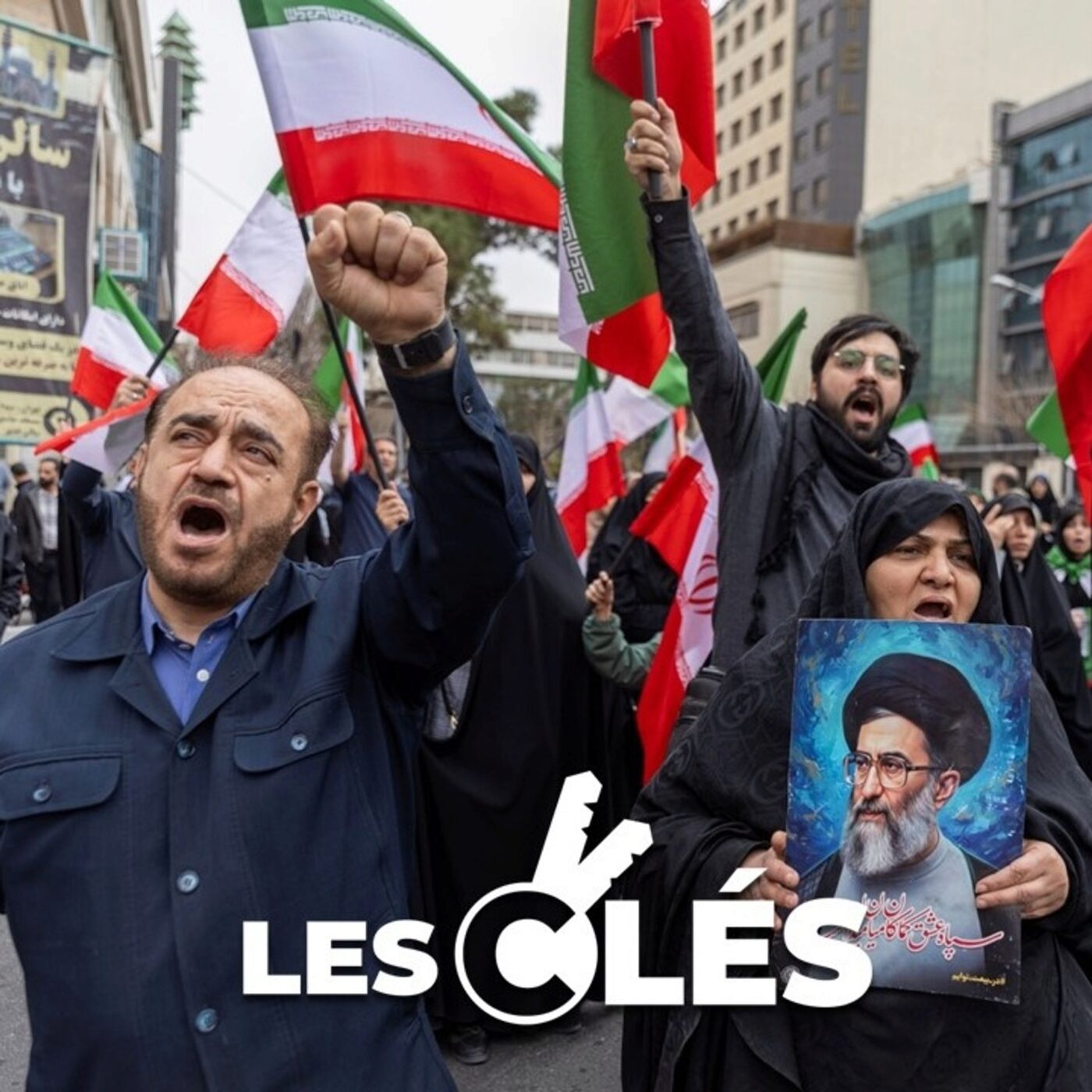
Les Clés
Iran : le régime islamique va-t-il survivre ?
00:28:02
Le guide suprême Ali Khamenei est décédé le 28 février, dans l’opération militaire conjointe menée par les États-Unis et Israël en Iran. Une disparition qui marque un tournant pour la République islamique. Sans son guide suprême, est-elle vouée à disparaître ? Anal...
Loading summary
Transcript37 lines
- [00:01]
Narrator
C'est la fin d'une ère en Iran, le guide suprême, l'ayatollah Ali Khamenei est mort.
- [00:05]
Jonathan Piron
La première, lui qui a consacré sa vie à protéger la république islamique d'Iran.
- [00:11]
Narrator
Ils ont eu Khamenei, ils l'ont tué.
- [00:13]
Firouzeh Nahavandi
Les clés.
- [00:13]
Host
Prenez votre destin en main, levez la tête. Bonjour à toutes, bonjour à tous et bienvenue dans les clés pour un numéro où nous allons essayer de comprendre ce qui se joue en ce moment à l'intérieur du régime iranien. La mort du guide suprême est-elle une bascule qui va précipiter la chute de ce régime théocratique autoritaire? Ou bien ce régime peut-il se maintenir et perdurer malgré les attaques des Etats-Unis et d'Israël qui a déjà tué une partie de ses cadres et malgré la défiance aussi d'une très large partie de la population. C'est ce que nous allons analyser dans cette émission en commençant par revenir sur les frappes qui ont décapité la République islamique. En Téhéran, samedi 28 février, il est 9h40 du matin, heure locale, quand soudain, une série d'avions de chasse fendent le ciel. Des avions israéliens qui ont su déjouer la défense antiaérienne et viennent larguer en quelques secondes à peine une trentaine de bombes sur un complexe immobilier dans lequel se trouve notamment l'ayatollah Ali Khamenei, le guide suprême de la révolution islamique. Cette attaque, ou en tout cas la possibilité de mener une telle attaque, Elle est en réalité en préparation depuis plusieurs mois. Selon plusieurs sources concordantes, la CIA et le Mossad, les services secrets américains et israéliens, traçaient depuis longtemps toutes les habitudes du guide. En assemblant un immense puzzle de données diverses, sources de terrain, décryptage de données informatiques ou téléphoniques, ils étaient visiblement parvenus à comprendre les routines quotidiennes du guide, ses déplacements et même à anticiper son agenda. Avec l'idée d'identifier les rares moments de vulnérabilité, rares parce que le guide se sait menacé qu'il fait l'objet d'une intense et permanente protection, qu'il vit et dort dans un bunker à l'abri des bombes. Mais ce samedi matin est précisément un de ces moments de vulnérabilité. Les services de renseignement américains et israéliens qui croisent leurs données avaient pu établir qu'une réunion était prévue entre plusieurs hauts responsables de la sécurité, une réunion à laquelle devait participer le guide suprême Ali Khamenei. Dans un contexte où qui plus est, des pourparlers sur le nucléaire étaient toujours officiellement en cours avec les Etats-Unis, ce qui laissait peut-être penser au régime que le moment n'était pas particulièrement critique. C'est donc la confirmation de cette réunion qui va entraîner la décision d'attaquer des avions d'école du territoire israélien et vont aller frapper le guide suprême ainsi que plusieurs hauts dignitaires du régime dans une opération éclair qui lance une offensive militaire plus large. toute la journée du samedi, le doute planera sur la réussite ou non de l'opération, mais au petit matin du 1er mars, les autorités iraniennes elles-mêmes confirment la mort d'Ali Khamenei, une information répercutée par un présentateur en pleurs à la télévision officielle.
- [04:11]
Jonathan Piron
L'ayatollah Khamenei est mort en martyr. Lui qui a consacré sa vie à protéger la république islamique d'Iran.
- [04:25]
Host
Une annonce qui va susciter des réactions tout en contraste dans le pays. Si certains pleurent, le guide écrit vengeance. D'autres, en particulier chez les jeunes, sortent dans les rues dès l'annonce pour célébrer ce décès. Ils n'hésitent pas à danser ou allumer des feux d'artifice pour célébrer ce qu'ils espéraient être une libération pour le peuple iranien. Et avec nous pour commenter cette situation, il y a notamment Firouzeh Nahavandi.
- [04:58]
Firouzeh Nahavandi
Bonjour. Bonjour.
- [04:59]
Host
Merci d'être là. Vous êtes sociologue, professeur émérite à l'Université libre de Bruxelles. Vous connaissez très bien l'Iran. Vous êtes iranienne d'origine. D'abord, votre avis sur ce moment, la mort du guide qui lance en fait même cette opération, c'est mené au tout début de l'opération militaire. C'est potentiellement un tournant majeur pour l'Iran, en ce sens où c'était un personnage clé de ce régime.
- [05:28]
Firouzeh Nahavandi
Oui, c'est un moment important pour l'Iran dans la mesure où l'ayatollah Khamenei contrôlait tous les rouages du système iranien, que ce soit en matière économique, que ce soit en matière militaire, judiciaire. Il était vraiment en haut de la hiérarchie et il était contesté de plus en plus par la population iranienne, donc même si beaucoup annonçait depuis longtemps sa mort parce qu'il était âgé, il était malade, il ne cessait de mourir d'une certaine manière, ça a été une surprise que ce soit de cette manière-là et oui c'est un tournant parce que il contrôlait d'une main de fer l'Iran depuis 1989 même si avant il avait déjà des responsabilités Donc l'Iran perd la république islamique, excusez-moi, perd quand même son parrain, en quelque sorte.
- [06:31]
Host
Et on parle d'un personnage évidemment très visible qui symboliquement incarne aussi ce régime quand on voit les prises de parole à chaque moment important de l'Iran. C'est lui que l'on voit, c'est lui qui est en haut, effectivement, de cette hiérarchie un peu clé de voûte de ce système théocratique. Mais c'était vraiment le chef, on peut le dire comme ça. C'est quand même au départ de lui qu'était prise toute une série de grandes décisions stratégiques pour l'Iran aujourd'hui.
- [06:59]
Firouzeh Nahavandi
Oui, je pense qu'à tous les niveaux, c'était lui qui avait le dernier mot, que ce soit dans les transactions et les négociations sur le nucléaire, où il avait quand même cédé pour que les négociations aient lieu, je parle de 2015. Il n'était pas d'accord, mais il s'était rendu compte qu'il n'y avait pas vraiment le choix, que ce soit pour les soutiens aussi aux proxys, que ce soit pour l'organisation économique de manière générale, c'était vraiment lui qui avait le dernier mot, d'autant plus qu'il était soutenu et qu'il contrôlait le corps des gardiens de la révolution, qu'il n'avait de compte à rendre à personne sauf à lui, dont les comptes étaient opaques mais peut-être visibles par lui, qu'il contrôlait de la même manière les fondations charitables, donc une partie encore de l'économie. Donc c'était vraiment un personnage central et qui d'ailleurs, c'est vrai, vous avez raison, même physiquement, et depuis le temps qu'on le voyait, et surtout depuis le temps que les jeunes générations le voyaient, parce qu'ils n'avaient vu que lui en quelque sorte, c'était une clé de voûte.
- [08:08]
Host
Oui, une forme d'incarnation presque de ce cette République islamique.
- [08:12]
Firouzeh Nahavandi
Et puis il ne faut pas oublier même son physique avec le bras qu'il avait perdu lors d'un attentat. C'était un personnage qui percutait.
- [08:23]
Host
Alors justement, faisons peut-être un peu d'histoire dans cette émission pour comprendre aussi d'où vient ce rôle du guide suprême et à travers cela, comprendre un peu l'organisation de ce régime de la République islamique. Et pour ça, on va accueillir un historien aussi dans cette émission. Bonjour Jonathan Piron.
- [08:38]
Jonathan Piron
Bonjour.
- [08:38]
Host
Vous êtes historien spécialiste de l'Iran, chercheur notamment aux grippes et chez Etopia. D'où vient ce rôle du guide suprême et comment est-ce qu'on peut définir en fait ce rôle du guide suprême de la révolution islamique intrinsèquement lié à la révolution même qui a mis en place cette république islamique en 1979?
- [08:58]
Jonathan Piron
Alors, c'est une construction politique qui a été proposée par l'ayatollah Roumeni dans les années 60 et 70, surtout qu'il a théorisé dans différents livres, et qui propose en fait ce qu'on appelle le principe du gouvernement du docte ou du jurisconsulte, en personne c'est le Valaya Tefari. et dans lequel justement alors il y a cette lecture inédite en fait dans le chiisme du pouvoir qui serait incarné justement par un religieux. Et en fait c'est une définition qui ne fait pas d'unanimité au sein du clergé religieux chiite où beaucoup, notamment dans les autres adélatolat, considèrent que les religieux n'ont pas à s'occuper de politique et qu'ils doivent en fait avoir un rôle quiétiste. Or, Remeni a justement proposé cette innovation qui s'inspire d'éléments qui se retrouvent déjà dans l'histoire politique de l'Iran, notamment à la suite de la révolution constitutionnelle de 1906, où il y avait déjà des propositions d'application des religieux, mais qui ici va beaucoup plus loin parce qu'en fait c'est lui donner l'ensemble des pouvoirs sur le régime iranien. Comme l'a précisé le professeur Nahavandi, le guide de la révolution est présent dans tous les processus de décision. dans la nomination, même aussi parfois des personnes qui se retrouvent dans l'audiovisuel ou dans certaines grandes institutions sociales de l'État. Ici, en plus, il a cette particularité, c'est qu'on retrouve des éléments dits républicains à l'intérieur du régime iranien, avec des élections qui sont organisées de manière régulière, mais où tout est contrôlé par les structures et les institutions, alors qu'ils sont aussi désignés par le Guide. Donc si vous avez un Parlement qui est élu, Ces décisions, ces lois sont validées par un conseil des gardiens, dont les membres en fait sont désignés directement ou indirectement par le Guide. Et donc il a un verrou institutionnel en fait sur l'ensemble des structures, ce qui fait en fait justement la particularité un peu inédite en fait de la dictature iranienne, c'est que si on a des élections régulières, il y a quand même un verrou qui existe avec une décision aussi qui à chaque fois est emportée par le Guide. Néanmoins, Même si c'est un chef religieux, parce que c'est aussi une imposition dans la structure, ce n'est pas un chef religieux qui fait l'unanimité au sein du chiisme. Il y a toute une série de tensions. D'ailleurs, Ali Khamenei, quand il a été élu à la suite de la mort de Khomeini, n'avait pas le titre d'ayatollah. Il était d'un degré inférieur. Ça a amené beaucoup de critiques. Et aujourd'hui, c'est vrai que certains chiites le pleurent, mais ce n'était pas la figure monumentale du chiisme. C'est plutôt des personnages comme l'ayatollah Ali Sistani, qui se trouve en Irak, en fait, qui sont considérés comme étant vraiment des leaders religieux.
- [11:18]
Host
Donc ça c'est important à bien comprendre pour ce qui est de ce rôle, avec ce verrou dont vous parlez, des formes de droits de veto qu'il a sur des décisions qui peuvent être prises, la possibilité d'arbitrer aussi d'éventuelles tensions entre le politique, le judiciaire, le religieux, ce qui le met de facto dans une position surplombante de l'ensemble du régime iranien. Tout ça évidemment lui confère un pouvoir très important. Il y a une institution quand même que vous venez de citer tous les deux, et je pense que c'est bien qu'on s'y arrête un petit instant, c'est ce corps des gardiens de la révolution. Parce que j'ai l'impression qu'on ne peut pas comprendre vraiment l'organisation du régime et le pouvoir aussi du guide sans comprendre ce que joue comme rôle ce corps des gardiens de la révolution en Iran. Est-ce qu'on peut l'expliquer en quelques mots, Jonathan Piron?
- [12:05]
Jonathan Piron
Alors, à la base, le corps des gardiens de la Révolution, il a été créé suite à la Révolution de 1979, dans un premier temps pour être en fait le bras armé du régime parce que Romeni n'avait pas du tout confiance dans l'armée régulière qu'il considérait comme étant encore remplie d'éléments favorables au régime impérial. Et donc, petit à petit, le corps de la Guerrière de la Révolution va prendre une place de plus en plus prépondérante à l'intérieur de l'Iran, avec notamment le conflit en Irak dans les années 80, où il va aller faire ses armes, en fait, sur le conflit. Et aussi, petit à petit, dans les années 90 et 2000, avec toute série d'autres attributions qui lui sont confiées, notamment dans la reconstruction du pays à la suite de la guerre avec l'Irak, avec donc une présence dans le secteur économique. industriels, où ils deviennent en fait un conglomérat financier monumental en fait, incontournable en Iran. C'est un État dans l'État, mais qui ne dépend que du guide de la Révolution. Il y a une espèce de lien de fidélité en fait, qui se fait entre les deux, et aussi bien le guide dépend du corps des gardiens de la Révolution, que le corps des gardiens de la Révolution dépend du guide. Il y a donc une fidélité, une même assise idéologique, avec aussi de plus en plus un fort sentiment nationaliste qui se retrouve, Et donc ce sont en fait des éléments qui aujourd'hui sont prêts à défendre jusqu'à la mort en fait le système parce qu'ils savent aussi que leur survie même en tant qu'institution dépend du maintien du régime iranien.
- [13:19]
Host
Et ce corps des gardiens de la Révolution, qui lui aussi a perdu dans les frappes une série de ses cadres, il reste là aujourd'hui. Et bien là, c'est plusieurs centaines de milliers, il me semble que je disais 250 000 personnes, ce corps des gardiens de la Révolution. Donc, c'est une structure très, très importante qui pèse en les rangs, qui a des moyens et financiers et militaires. Et donc, on se dit qu'il ne suffit pas d'enlever quelques responsables pour se débarrasser, entre guillemets, de cette importante composante du régime iranien.
- [13:49]
Jonathan Piron
Tout à fait. Il est présent, en fait, dans l'ensemble des rouages de l'État. Et d'ailleurs, on voit qu'il y a un renouvellement assez rapidement, en fait, qui est réalisé. Déjà l'année dernière, au moment de la guerre de 12 jours, où toute série de hauts responsables avaient été tués, ils ont été très vite renouvelés. Et ici, on voit également que le dirigeant du corps des gardiens, qui a également été tué dans les frappes, a été remplacé. Et d'ailleurs, il a été remplacé par un plus dur, en fait, que ceux qui existaient auparavant, Vaidi. qui d'ailleurs est recherchée par la justice internationale pour avoir participé à un attentat contre l'ambassade d'Israël en Argentine en 1994.
- [14:18]
Host
Et donc quand on entend tout cela, Firouzena Avandi, on se dit qu'une lecture un peu basique qu'on pourrait avoir, d'ailleurs peut-être en regardant ce qui s'est passé au Venezuela avec Nicolás Maduro aussi récemment, de se dire si on tue le leader qui est par ailleurs un leader contesté par une partie importante de sa population. On a vu les manifestations très importantes de ces derniers mois, la façon dont elles ont été réprimées, se dire qu'il suffirait de se débarrasser du leader pour faire émerger autre chose en Iran. Quand on entend ce que vient d'expliquer Jean-Antoine Pérron, ce que vous expliquiez, ce n'est pas du tout aussi évident que ça.
- [14:51]
Firouzeh Nahavandi
Non, non, ce n'est pas du tout évident. Si on poursuit la comparaison, l'Iran, ce n'est pas du tout le Venezuela où, d'une certaine manière, il y a eu un deal à la Trump puisque rien n'a changé. Et ce qui m'inquiète un tout petit peu d'ailleurs maintenant, c'est que j'entends Trump peut dire qu'il va peut-être commencer à négocier, je ne sais pas avec qui, mais avec le remplaçant peut-être de Khamenei. Mais non, c'est un régime qui est en place depuis 1979, qui a des institutions solides. C'est un islamisme institutionnalisé, comme j'ai l'habitude de le dire. Et donc il ne suffit pas effectivement d'en éliminer la tête, d'autant plus qu'il avait déjà prévu. Cette tête avait déjà prévu des remplaçants. Alors, il est vrai que la constitution de la République islamique prévoit toute une série d'étapes pour la nomination du remplaçant du guide. Il y a le comité des experts qui doit le nommer, mais il se fait qu'en Iran, Khomeini s'était autoproclamé d'une certaine manière. puis il avait nommé Khamenei, et Khamenei avait aussi envisagé des remplaçants, dont Raisi, qui était le président de la République, qui est mort dans un accident d'hélicoptère, on ne sait pas trop comment, mais on parlait en tout cas de son fils, Mojtaba, on parlait de plusieurs autres personnes, donc c'est un système qui s'érodait, au fil du temps, à chaque fois que quelqu'un a été assassiné ou est mort, il a été très très vite remplacé. Maintenant on est dans des circonstances totalement différentes, dans un pays qui est bombardé, dans un pays où la population s'est soulevée et veut un changement de régime, en majorité, et donc il ne suffit pas que de tuer la tête pour que tout... que quelqu'un le remplace automatiquement.
- [17:04]
Host
Mais donc on comprend qu'il y a à la fois des éléments de résilience dans ce régime et en plus un régime qui avait anticipé le fait qu'il pouvait y avoir des responsables qui disparaissaient, y compris le guide suprême. Donc ça a été anticipé. Et en même temps, il y a un contexte qui est particulièrement compliqué avec ces frappes qui sont annoncées pour durer, avec des éléments de déstabilisation du régime, avec une économie aussi qui est en grande difficulté. Donc même si ce régime peut encore durer à vous entendre, il a aussi des éléments de déstabilisation très importantes qui fait qu'il va vivre de toute façon des heures extrêmement difficiles.
- [17:40]
Firouzeh Nahavandi
Oui, oui, mais je ne pense pas avoir dit qu'il va durer nécessairement. Ce régime a pour le moment les moyens et de riposter d'un point de vue militaire et de déstabiliser la région et de frapper même Israël. Il a le moyen de massacrer sa population, ce qu'il n'a pas hésité de faire. Mais il y a un élément qui, à court, à moyen ou à long terme, est décisif, c'est qu'il a perdu sa légitimité. Il l'avait déjà perdue avant les massacres de janvier 2026, en particulier avec le mouvement Femmes Vives Libertés. Des forces militaires qui s'épuisent, parce qu'elles ne sont pas infinies. Pas d'aide vraiment extérieure, sauf des frappes des proxys. On l'a vu au Liban, où le Hezbollah a frappé sur Israël. Donc, dans ces conditions, ce régime ne peut pas continuer.
- [18:40]
Host
Alors on va voir justement ou essayer d'anticiper ce qui pourrait se passer. Mais d'abord un petit mot sur la transition telle qu'elle a été annoncée officiellement par le président iranien lui-même il y a quelques heures et on va voir ça en compagnie de Sarah Poussey.
- [18:57]
Narrator
C'est un triumvirat qui assure l'intérim et dirige l'Iran depuis la mort du guide suprême. On y retrouve le président iranien Massoud Pezequian, chirurgien cardiaque de 71 ans. Il a été élu en 2024 pour 4 ans. Il est considéré comme réformateur, voire l'un des plus modérés à ce poste. Deuxième membre de ce conseil de direction intérimaire, Golam Hossein Mosseini. C'est le chef du pouvoir judiciaire iranien, donc c'est lui qui ordonne les actes de répression, de torture ou les exécutions commises par le gouvernement. Lui, par contre, fait partie de l'aile dure du régime. C'est un religieux chiite nommé à son poste par Ramenei il y a cinq ans. Il fait partie de la liste des successeurs potentiels au guide suprême. Et enfin le dernier pilier de ce conseil est l'ayatollah Ali Reza Arafi. C'est un homme d'une soixantaine d'années moins connu que ses deux collègues. Il dirige le centre de gestion des séminarchies d'Iran. C'est aussi un membre du conseil des gardiens de la révolution et de l'assemblée des experts qui doit élire le prochain guide suprême. Tous les trois sont aussi accompagnés par Ali Lariani, un homme de confiance de Ramenei. Il est à la tête du Conseil suprême de la sécurité nationale, c'est-à-dire le plus haut organe de sécurité en Iran, et c'est lui aussi qui a piloté la répression des manifestations début janvier. Dimanche, il a présenté les étapes de la transition avant de nommer un nouveau guide suprême. Et justement, qui sera ce nouveau guide suprême? C'est une question encore en suspens. Dans tous les cas, ce successeur devra être en haut dignitaire chiite et convaincre l'Assemblée des experts, c'est-à-dire un groupe de 88 théologiens élus au suffrage universel par la population et qui nomme donc le guide suprême.
- [20:51]
Host
Alors Jonathan Piron, est-ce qu'on peut essayer de discerner quels sont les scénarios possibles dans ce qui pourrait se passer maintenant avec un régime, on l'a dit, affaibli par les frappes, en perte de légitimité par rapport à une très large partie de la population, affaibli militairement, affaibli économiquement, mais en même temps avec toute une série de composantes du régime qui veulent pouvoir durer parce qu'elles ont trouvé avantage évidemment à la mise en place du régime tel qu'il est aujourd'hui. Quels sont selon vous alors les scénarios possibles pour les jours et les semaines qui viennent?
- [21:24]
Jonathan Piron
Alors il y en a plusieurs, du probable à l'improbable. Une transition démocratique, je ne pense pas que ce soit vraiment possible dans le cadre actuel parce que l'opposition est trop fragmentée, ne parvient pas à s'organiser et le système de répression est toujours bien en place. On parle aussi de la potentialité du retour du fils du chat mais ça reste très compliqué aussi pour lui puisque pour le moment il n'y a pas de défection à l'intérieur du régime et aussi même s'il parvenait hypothétiquement à rentrer en Iran, il ne fait pas non plus complètement l'unanimité et on sait aussi qu'il doit s'entourer de toute série de composantes qui sont toujours présentes en Iran et c'est pour le moins aléatoire. Alors la situation ce serait que le régime parvienne quand même à se maintenir mais il faut voir donc Quel choc, aussi, il parviendra à se maintenir? Comment est-ce qu'il peut absorber une opération qui va durer longtemps? Et donc, on serait plutôt, en fait, dans la situation où il y aurait la nomination d'un nouveau guide. Maintenant, on ne sait pas très bien comment ça va se réaliser. Est-ce que ça va être public? Est-ce que le nom va être révélé tout de suite ou un peu plus tard? Je pense qu'il y a quand même aussi cette volonté du régime de démontrer qu'il tient le coup et qu'il peut aussi assez rapidement, en fait, amener un successeur de Ramenei. Et donc ce qui est possible, en fait, c'est qu'on ait à la tête de l'Iran peut-être un plus radical, un plus dur, quelqu'un justement qui parvient à ressouder aussi les différentes composantes parce qu'il faut aussi que le prochain guide soit quelqu'un qui fasse l'unanimité au sein des différentes factions. Le pouvoir iranien n'est pas complètement uniforme. Il y a toute série de composantes qui parfois s'opposent, et donc il faudra que les guides parviennent justement à répondre aux ultra-radicaux, mais aussi à avoir le soutien du corps des gardiens de la Révolution.
- [22:51]
Host
Fyrozena Avandi, est-ce que le risque d'une guerre civile est un risque possible quand on voit qu'on a une très large partie de la population qui veut se débarrasser de ce régime. On a vu ces personnes sortir, danser, chanter à l'annonce de la mort du guide suprême. Et en même temps, on a compris qu'il y avait des composantes et des éléments de permanence, de résilience dans ce régime qui ne va pas vouloir évidemment céder le pouvoir. Est-ce que l'idée d'affrontement interne dans la société iranienne est une possibilité?
- [23:23]
Firouzeh Nahavandi
Déjà, on est dans un affrontement qui existe en Iran, entre une population qui se soulève et qui est les mains nues, et un régime qui est armé jusqu'aux dents. Donc déjà, on a cette confrontation qui existe. Après, quand on parle de guerre civile, et en particulier quand on parle d'un pays multi-ethnique comme l'Iran, souvent on pense à une confrontation entre différentes régions et différentes ethnies. Il est vrai que dans certaines ethnies, comme chez les Kurdes ou chez les Balouches, il existe des mouvements qui sont indépendantistes, par exemple, mais la majorité d'entre eux ne veulent pas de la décomposition de l'Iran, donc à ce niveau-là, Il faut voir ce que cela va mener, mais qu'il y ait une confrontation, oui, je pense qu'on y est déjà. C'est inévitable dans le cadre actuel où on a un régime qui ne veut absolument pas perdre le contrôle. c'est sa survie. Et donc même si les différentes composantes de ce régime, dont d'ailleurs les membres du corps des gardiens de la révolution, ont placé leur argent à l'extérieur, que leurs enfants et leurs familles sont déjà à l'extérieur, ils ne vont pas laisser le pouvoir tel quel. Et je reviens à ce que je disais tout à l'heure, la possibilité, qui est un cauchemar pour les iraniens, mais d'un deal entre Donald Trump est un membre du corps des gardiens de la révolution, je ne sais pas qui, qui reprendrait la situation et qui ouvrirait les portes de l'Iran à d'autres accords commerciaux.
- [25:07]
Host
Donc pour vous, le discours de Donald Trump sur la liberté et la démocratie en Iran ne vous convainc pas? Et l'exemple vénézuélien, où là finalement on a laissé le même régime mais après avoir mis un un dictateur de côté et en dealant avec ses successeurs, vous laisse penser qu'il n'y a peut-être pas, voire pas du tout cette idée de favoriser une alternative démocratique en Iran.
- [25:29]
Firouzeh Nahavandi
Alors je ne pense pas que la démocratie soit vraiment ce qui préoccupe Donald Trump. Pour le moment, il doit se sortir des affaires internes comme Epstein et compagnie. Il doit assurer ses élections, etc. Il veut s'en sortir sans que beaucoup d'Américains ne soient morts dans la région. Il veut s'en sortir, mais pas nécessairement en soutenant la population iranienne qui veut un changement de régime. Je ne pense pas que ce soit vraiment sa préoccupation. Sa préoccupation, c'est aussi d'affaiblir les Chinois et il a beaucoup d'autres idées en tête.
- [26:04]
Host
En quelques secondes, parce qu'on est au bout, Jonathan Piron, n'est-ce qu'il n'y a pas un risque que ce soit surtout la population iranienne, du coup, qui souffre maintenant de cette phase où on a à la fois d'un côté des bombardements et en même temps un régime qui pourrait de nouveau s'en prendre violemment à une population qui tenterait de se soulever?
- [26:19]
Jonathan Piron
Le risque est déjà présent, elle souffre en fait aujourd'hui. On a déjà visiblement plus de 500 civils qui auraient été tués à l'heure actuelle. Elle a été durement réprimée par la répression de janvier. Les iraniens d'ailleurs le disent aujourd'hui, on est entre le marteau et l'enclume d'une intervention extérieure et d'une répression intérieure.
- [26:42]
Host
une population entre le marteau et l'enclume, avec un conflit qui, au-delà de l'Iran même, déstabilise aujourd'hui une bonne partie du Moyen-Orient. Et on a bien compris, dans cette émission, que les artisans de ce régime, aux abois et acculés, mais n'ayant plus grand-chose à perdre, pourraient résister, encore, dans une stratégie jusqu'au boutiste, avec alors toutes les conséquences que cela peut avoir pour la population iranienne et pour la région. Mais de cela, on en reparlera très certainement dans de prochaines émissions. Merci d'avoir choisi les clés pour vous informer. Merci à Jonathan Pirro ainsi qu'à Firouzena Avandi dont on va rappeler le titre du dernier ouvrage « Femmes iraniennes, évolution ou révolution » A la réalisation sonore de cet épisode, il y avait Antoine Duhartz, à la préparation Sarah Poussey et Arnaud Reussen. Et si vous souhaitez nous écrire, je vous rappelle l'adresse à laquelle vous pouvez nous envoyer vos suggestions et vos