← Les Clés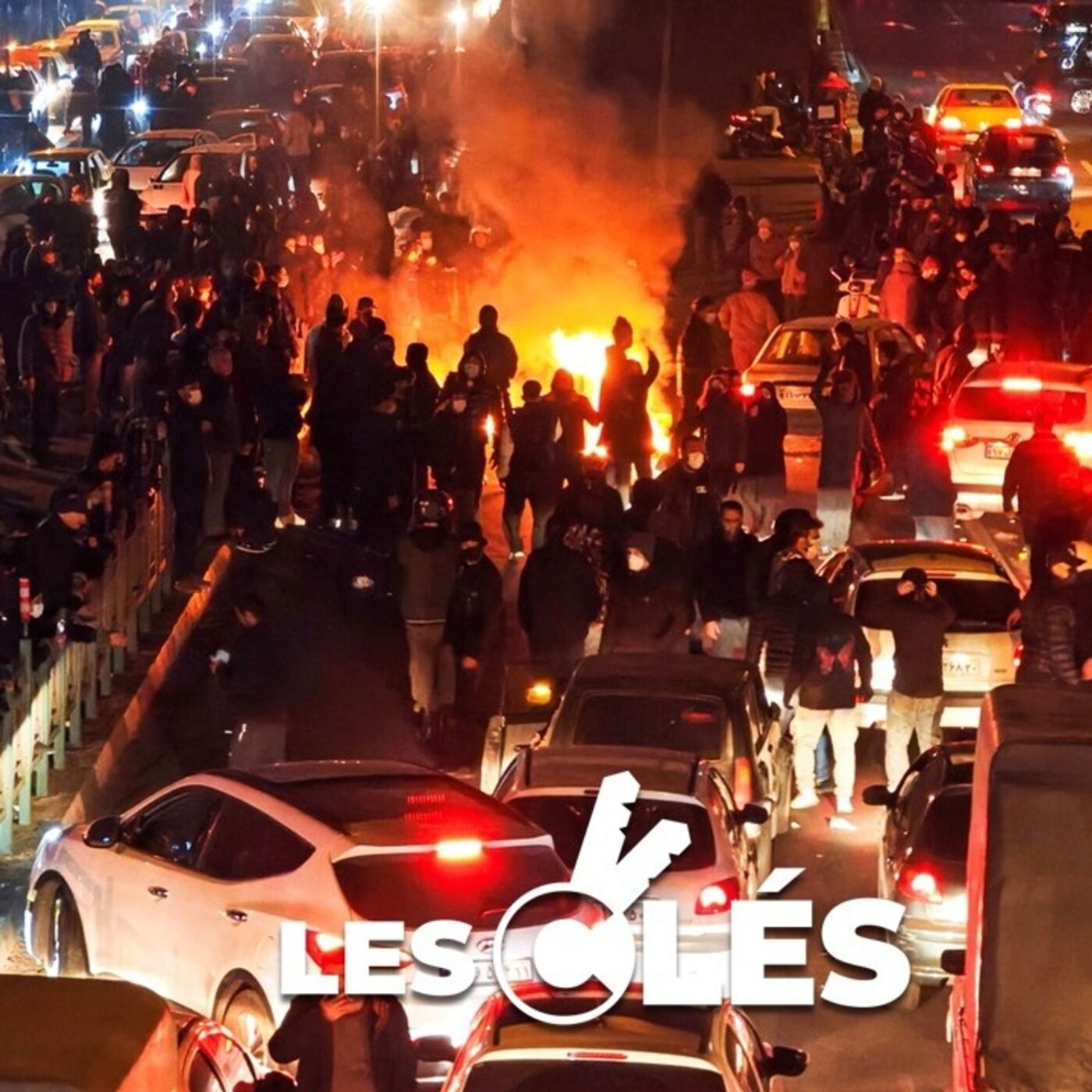
Les Clés
Iran : vers la fin du régime des mollahs ?
00:28:06
L’Iran est secoué par des vagues de manifestations depuis la fin décembre. La crise économique et le manque de libertés ont provoqué un véritable soulèvement populaire que le régime réprime et brutalise avec énormément de violence. Nous tentons de comprendre la sit...
Loading summary
Transcript49 lines
- [00:02]
Host
Plus de 2500 morts en Iran depuis le début des manifestations il y a 15 jours. La première.
- [00:07]
Hamid Babaï
Le peuple d'Iran ne tolérons plus de dictature.
- [00:10]
Jonathan Piron
J'ai besoin de repères.
- [00:11]
Host
Le régime est au pied du mur, il n'a jamais été aussi fragile et il utilise la dernière arme qui lui reste, c'est la violence. Les clés. Le régime iranien va-t-il tomber ? Arnaud.
- [00:20]
Arnaud Roussen
Roussen. Bonjour à toutes, bonjour à tous et bienvenue dans les clés pour un numéro où l'on va tenter de comprendre ce qui se joue en Iran. Depuis plus de 15 jours maintenant, des manifestations se sont muées en soulèvement auquel le régime répond de manière brutale et meurtrière. Alors quelles sont les raisons profondes de ce mouvement ? Le régime d'Emola est-il sur le point de tomber ? Quel rôle pourraient jouer les Etats-Unis de Donald Trump ? C'est à toutes ces questions que nous allons tenter de répondre en commençant par faire le point sur la situation sur place. C'est une crise qui se déroule pratiquement à huis clos puisque depuis quelques jours, les autorités iraniennes se sont arrangées pour couper au maximum les connexions avec le reste du monde. L'avocate franco-iranienne Sherin Ardakani l'expliquait sur la première, il devient de plus en plus difficile de savoir exactement ce qu'il.
- [01:31]
Host
Se passe sur place. Cela fait 48 heures que je n'ai plus aucune nouvelle de.
- [01:36]
Jonathan Piron
Mes contacts sur place. En réalité, cela.
- [01:39]
Host
Fait depuis jeudi que le pays est plongé dans un blackout complet à l'initiative.
- [01:45]
Jonathan Piron
Des autorités iraniennes qui ont donc coupé.
- [01:47]
Host
L'Accès à Internet, de sorte que les Iraniens désormais sont véritablement.
- [01:53]
Arnaud Roussen
Plongés dans le noir. Jusqu'il y a peu, certains Iraniens parvenaient encore à communiquer avec leurs familles à l'étranger grâce au réseau satellite Starlink. Mais il semble que les autorités soient parvenues à brouiller aussi une grande partie de ces communications-là. Essayons néanmoins de comprendre ce qu'il se passe sur place. C'est le 28 décembre dernier que le feu de la contestation a pris. D'abord, dans le grand bazar de Téhéran, des commerçants décident de fermer boutique excédée par l'inflation galopante née de l'effondrement.
- [02:36]
Jonathan Piron
De la monnaie iranienne. Je vois tous les jours des gens qui ne peuvent plus.
- [02:40]
Arnaud Roussen
Se payer certains produits. Ils ne prennent que le.
- [02:43]
Jonathan Piron
Strict minimum, rien d'autre. Le prix d'une boîte de jus de fruits est passé d'un euro à deux euros. Les gens n'en achètent plus. Ils prennent juste un peu de pain, de.
- [02:53]
Arnaud Roussen
Lait et quelques œufs. Rapidement, la contestation s'étend. Elle gagne d'autres quartiers de la capitale, puis d'autres villes du pays. Dans un premier temps, les autorités iraniennes pensent pouvoir gérer ce mouvement lié à la crise économique. Mais très vite, on dépasse le simple mouvement d'humeur face à la hausse des prix et c'est le régime qui est pris pour cible par les manifestants. Des statues du guide suprême Ali Khamenei sont vandalisées et une partie de la foule crie « mort au dictateur ». Alors, le 3 janvier, le régime change de stratégie et la réponse se fait brutale et meurtrière. Devant la morgue de Teheran, des corps sans vie sont alignés. Le régime tire désormais à balles réelles sur les émeutiers et des milliers de manifestants sont arrêtés. Certains de ces manifestants scandent, lors des rassemblements, le nom de Reza Pahlavi, le fils du dernier Shah d'Iran qui vit en exil aux Etats-Unis et qui, ces derniers jours, n'a pas hésité à prendre la parole pour exhorter les manifestants.
- [04:29]
Jonathan Piron
À continuer et intensifier la lutte. Notre objectif n'est plus seulement de manifester en rue, mais de se préparer à s'emparer.
- [04:41]
Arnaud Roussen
Des centres-villes et de les contrôler. C'est le 8 janvier que les autorités de Téhéran décident de couper Internet. La situation réelle sur place devient donc de plus en plus difficile à établir. Mais on sait que le mouvement de contestation continue et que le bilan de la répression ne cesse de s'alourdir. Certaines ONG parlent désormais de 2500 morts depuis le début des manifestations. Et pour essayer de mieux comprendre ce qui se joue là-bas.
- [05:18]
Jonathan Piron
Jonathan.
- [05:18]
Arnaud Roussen
Piron est avec nous. Bonjour. Bonjour. Vous êtes historien, spécialiste de l'Iran, chercheur aux grippes, professeur de relations internationales aussi à la haute école ELMO. Alors qu'est-ce qui se joue là, maintenant, selon vous, en Iran ? Est-ce que c'est potentiellement un tournant majeur pour la République.
- [05:36]
Jonathan Piron
Islamique auquel on assiste ? C'est une séquence inédite qui voit la concrétisation de ce qu'on sent et de ce qu'on voit depuis plusieurs années, c'est-à-dire une fracture énorme entre la population et le pouvoir en place, mais aussi une impasse, c'est-à-dire qu'on se retrouve dans la situation-ci où il y a un mouvement de révolte et de soulèvement qui aujourd'hui est à l'œuvre en Iran. mais où la population ne parvient pas encore à faire chuter le régime, puisque celui-ci n'a pas les défections, et où dans l'autre sens le régime utilise l'arme de la brutalisation, c'est plus que de la repression, c'est de la brutalisation à l'égard de la population, mais dispose aussi de faibles marges de manœuvre pour se réformer parce qu'il ne le veut pas. Et donc toute la difficulté aujourd'hui est justement de savoir ce qui va se passer dans les jours, les semaines ou les mois à venir, parce que déjà nous n'avons pas d'informations, nous en avons très peu, nous avons des fragments, donc il faut reconstituer en fait une image à partir de ces quelques éléments, mais aussi parce que toute une série d'autres acteurs entrent en mouvement, notamment sur la scène internationale, on voit les menaces de Donald Trump qui font que c'est une séquence historique en fait, que vit l'Iran probablement depuis 1979. Tous ces éléments entraînent en fait Un effondrement qui est en train de se réaliser à l'intérieur du pays. On a vu l'effondrement économique, l'effondrement social est présent aussi. Maintenant, c'est un effondrement politique, mais d'où l'issue reste incertaine. Qu'est-ce qui va arriver ? Est-ce qu'une alternative démocratique va se mettre en place ? Mais il y a encore beaucoup d'êtres connus là derrière. Est-ce qu'il va y avoir une militarisation du régime ? On sait que les gardiens de la Révolution le souhaiteraient peut-être, mais on se pose aussi des questions sur les leaders qui pourraient prendre la place. Est-ce qu'il va y avoir des réformes du système ? Et on sait aussi que le cœur du régime, les ultraconservateurs, refusent en fait de céder sur certaines lignes rouges. Et donc pour le moment, on vit les éléments, on voit les.
- [07:20]
Arnaud Roussen
Événements, mais il est encore très difficile de pouvoir prévoir la suite. Essayons peut-être de comprendre les raisons profondes de ce qui s'est joué là. On l'a dit, c'est d'abord des questions plus économiques qui ont mis le feu aux poudres, mais tout cela s'inscrivait dans un contexte de malaise beaucoup plus profond de la population qui sait déjà incarnée dans d'autres mouvements de contestation, de révolte ces dernières années. Comment est-ce qu'on peut décrire, au fond, la situation de la population en Iran pour expliquer comment ça a pu prendre à cette vitesse-là et comment, malgré la brutalisation du régime dont vous parlez, la contestation semble.
- [07:57]
Jonathan Piron
Continuer aujourd'hui ? Qu'est-ce qui explique les raisons profondes, justement, de ce soulèvement ? C'est un épuisement de la part de la population, c'est de la colère, c'est du ressentiment. En fait, il y a un sondage qui avait été réalisé il y a quelques années par des institutions iraniennes. Ils le font assez régulièrement, tous les 5-6 ans, ce qu'on appelle l'enquête sur les valeurs de la population iranienne. et parfois le régime communique publiquement en fait les données. Et le dernier sondage qui a été réalisé il y a deux ans, les informations n'ont pas été reliées publiquement. Mais le rapport a quand même fuité. Et dans ces éléments-là, on se rendait compte notamment, dans les chiffres qui étaient disponibles, que 90% de la population en Iran considère que le pays est dans une situation intonable, que ce n'est plus possible. Et 30% de la population iranienne étaient convaincus que le régime n'était pas capable de se réformer. Et donc on voit qu'il y a justement ce ressentiment politique, cet impasse en fait de la population en l'égard du régime qui est de plus en plus présente, d'ailleurs aussi un autre signe des chiffres qui sont à nos dispositions, c'est l'année dernière ont eu lieu des élections présidentielles anticipées et où il y a eu 60% de taux d'abstention, ce qui est inédit. Et donc on voit qu'une grande partie de la population ne croit plus en fait dans le régime, mais souhaite normalement que que les questions sociales et économiques soient quand même travaillées, or l'économie est aujourd'hui profondément corrompue. On sait aussi que des grandes institutions comme les Gardiens de la Révolution ou les fondations religieuses sont exemptées d'impôts, avec donc une situation dans laquelle le taux de chômage explose, dans lequel l'inflation dépasse allègrement maintenant les 40% et où les promesses qui ont été lancées notamment par le nouveau président réformateur Pézechkian l'année dernière n'aboutissent pas. D'ailleurs, il y a eu une déclaration deux semaines avant le début de la révolte dans laquelle Pézechkian reconnaissait que sur les questions économiques ou environnementales, qui pèsent aussi durablement sur l'Iran, en fait, il n'y avait pas de solution. Et donc, on se retrouve dans cette situation où la population est exaspérée et où cet élément est celui, en fait, donc l'effondrement de la monnaie a été l'étincelle qui a fait exploser une poudrière qui était déjà bien présente. Et on sait aussi, depuis de nombreuses années, qu'il y a des séquences de contestations qui reviennent de manière régulière en Iran. Il y a eu évidemment le mouvement Massa Jinnah Mini, Femmes, Vies, Libertés de 2022, d'où on se souvient, mais également déjà en 2017-2018, des contestations fortes liées à la question sociale et économique. Aujourd'hui, on se retrouve néanmoins dans une situation inédite de part notamment l'influence extérieure, mais aussi avec un soulèvement inédit par son intensité et aussi une brutalisation qui démontre la.
- [10:23]
Arnaud Roussen
Volonté du régime de continuer à verrouiller le système et à empêcher toute alternative. Quand on parle de brutalisation plutôt que de répression, puisque vous avez fait justement cette différence, la brutalisation ça sert aussi à envoyer un signal pour décourager toute contestation, ça veut dire qu'on ne va pas seulement s'en prendre à ceux qui manifestent, on veut montrer qu'on va être violent avec toute contestation pour essayer de faire peur.
- [10:47]
Jonathan Piron
À ceux qui voudraient continuer à se soulever ou rejoindre ceux qui se soulèvent. Tout à fait, c'est marqué aussi au fait rouge dans la mémoire de la population que, regardez ce que nous sommes prêts à faire, donc n'osez pas par la suite. vous révolter à nouveau. En fait on peut faire des parallèles d'ailleurs avec la manière dont le régime Assad lui-même a réprimé la population, c'était vraiment avoir cette logique en fait de terroriser les personnes qui manifestent et aussi de dissuader celles qui pourraient manifester. D'ailleurs avant-hier il y a eu une diffusion sur la chaîne publique iranienne d'un reportage où on voyait un journaliste présent dans les morgues et où il montrait en fait aux caméras, regardez ce sont des gens ordinaires qui se retrouvent dans ces sacs. pour justement bien montrer aussi à la population que nous n'avons même pas peur de montrer les images. Et on voit aussi que les différents services de sécurité et l'armée régulière se sont réorganisés et ressoudés autour du guide et du régime, ce qui montre aussi pour le moment qu'il y a très peu de brèches à l'intérieur et que donc le pouvoir en place va défendre avant tout le régime. Et donc tous ces éléments nous montrent qu'il a cette volonté en fait qui est beaucoup plus forte que la répression et qui va certainement aussi laisser des traces à l'intérieur de la population, quel que soit le scénario, et on espère qu'il va y avoir un scénario positif et démocratique qui pourra arriver dans l'Iran, mais si jamais le régime parvient à reprendre le contrôle, c'est peut-être aussi un.
- [11:59]
Arnaud Roussen
Des obstacles plus profonds encore qui va s'installer dans l'esprit de la population iranienne. Et ça, ce n'est pas exclu à ce stade. Quand on voit, vous nous l'avez dit, qu'il n'y a pas de vraie défection de personnages importants de ce régime aujourd'hui théocratique en Iran, ça veut dire que pour le moment, le régime parvient à faire bloc en brutalisant. Malgré cette contestation qui dure, malgré un soutien qui s'exprime aussi de plus en plus à l'extérieur de l'Iran, pour le moment, on n'a pas de signe de fissure clair de ce régime. On sait qu'il n'a pas de solution, on sait qu'il est en crise profonde, qu'il est incapable, vous nous l'avez dit, de réformer l'Iran. Donc on a l'impression qu'à long terme, sans doute, il est menacé. Mais là, à court terme.
- [12:40]
Jonathan Piron
Il n'y a pas d'élément qui laisserait penser de manière claire qu'il peut s'effondrer. À ce stade, on n'en voit aucun. Le régime iranien, en fait, est un régime très particulier. C'est que comparativement à d'autres dictatures, comme par exemple Assad en Syrie ou Saddam Hussein en Irak, il ne repose pas sur une famille, sur une faction. Il y a en fait un ensemble de milieux qui la composent, qui parfois aussi se font concurrence, qui s'opposent très fortement. Les ultraconservateurs, par exemple, n'attendent qu'une chose, c'est de pouvoir éliminer le président réformateur. Mais quand le régime se sent agressé, il se ressoude. Et donc on voit justement que ces différentes factions se rassemblent pour défendre leur intérêt. Et les brèches alors sont très difficiles à faire apparaître. Maintenant les questions qui se posent c'est de voir sur le temps long est-ce que des brèches ne pourraient pas survenir de part aussi l'ampleur des manifestations si celles-ci continuent et de part aussi les menaces extérieures. On est aussi face à un régime qui est paranoïaque. Et on voit notamment que les menaces de Trump sont d'ailleurs utilisées par les durs du régime pour prouver, enfin dans leur propagande, pour essayer de montrer que regardez ce qui se passe pour le moment, les manifestations sont en fait pilotées par l'extérieur. Donc nous sommes face à une guerre et nous avons alors le droit justement de réprimer fortement parce que nous sommes en conflit. Et donc c'est cette propagande aussi que le cœur du régime va.
- [13:51]
Arnaud Roussen
Utiliser justement pour asseoir sa répression et aussi décourager toute autre personne d'aller manifester. Alors, on sait que ce qui se passe là-bas est extrêmement suivi par une importante communauté iranienne qui vit en dehors d'Iran. Et on va vous proposer justement, dans la suite des clés, d'entendre l'avis d'un Iranien qui vit en Belgique, qui s'appelle Hamid Babaï. Il est venu étudier en Belgique. Aujourd'hui, il enseigne du côté de Lille, dans le nord de la France. et Sarah Poussey a pris contact avec lui pour voir quel regard lui portait.
- [14:23]
Host
Sur la situation actuelle et sur ce qu'il pourrait advenir justement dans la suite. Amid Babaï est professeur de finance dans une école de commerce et de management à Lille. Cet Iranien est arrivé en Belgique en 2010 pour entamer un doctorat à l'université de Liège. Mais lors de vacances en Iran, il est arrêté. Son pays lui demande d'espionner d'autres étudiants expatriés en Belgique. Le jeune homme refuse. Il sera alors emprisonné durant 6 ans dans des conditions inhumaines. Libéré en 2019, il peut finalement revenir en Belgique en 2021 et termine son doctorat. Aujourd'hui, son passé de prisonnier politique, il ne souhaite plus.
- [15:08]
Hamid Babaï
Le détailler. S'il souhaite s'exprimer, c'est plutôt pour analyser la révolte actuelle en Iran. Je voudrais demander aux hommes d'État et aux femmes d'État belges, européennes surtout, de bien connaître le régime d'Iran et mettre fin à la politique de tolérance avec un tel régime. C'est un régime violent qui tire sur le peuple. On est dans un tournoi historique. On est dans.
- [15:32]
Host
Le point où les États européens peuvent penser à un changement pour reconnaître l'opposition. L'opposition à laquelle Hamid Babaï place ses espoirs, c'est le prince Reza Pahlavi. Depuis les Etats-Unis où il est exilé, il a appelé pour la première fois la population.
- [15:49]
Hamid Babaï
Iranienne à se révolter contre le régime et son appel a été largement suivi. manifestations étendues à travers le pays. Donc, les peuples sont venus en rue et d'une manière spontanée, ils scandaient le gouvernement de Charles, le prince tyran qui habite en étranger, voilà, en demandant de lui.
- [16:15]
Host
De revenir au pays, gérer la période de transition pour établir l'état de droit. La période de transition dont parle Hamid Babaï, c'est un plan qui viserait à redéfinir les.
- [16:27]
Hamid Babaï
Bases de l'état de droit en Iran avant qu'un nouveau gouvernement n'arrive au pouvoir. Tout le monde souhaite une période pacifique de transition pour établir une nouvelle constitution. C'est indispensable parce qu'on ne peut pas continuer avec la constitution actuelle. Si on veut changer, il faut changer tout. Donc c'est une constitution idéologique. Donc.
- [16:50]
Host
Il faut vraiment avoir un leadership qui peut gérer cette période difficile de transition. Et c'est en la personne du prince d'Iran qu'une partie de la population voit cet espoir d'un avenir démocratique. Accompagné d'un groupe d'experts, il a défini un plan en 100 jours pour changer le régime iranien.
- [17:10]
Hamid Babaï
Notamment avec un référendum sur la forme de système politique attendu par la population. Le prince d'Iran ne croit pas en remettre le royaume au pouvoir. Il a dit à plusieurs reprises, ce que je veux faire, c'est gérer une période de transition pour organiser un référendum. Son but, ce n'est pas la remise au pouvoir du royaume d'un nouveau dictateur en Iran. La dictature est finie d'Iran. La dictature actuelle ne sera.
- [17:39]
Host
Pas remplacée par la dictature suivante. Le peuple d'Iran ne tolère plus la dictature. On l'entend, Hamid Babaï analyse vraiment la situation actuelle en Iran comme un moment historique. Des manifestations importantes, une opposition prête à prendre.
- [17:57]
Hamid Babaï
Le pouvoir, toutes les conditions sont réunies, il ne manque plus qu'un allié étranger. En fait, ce régime est bien spécialisé dans la répression du peuple. Je crois que c'est très difficile pour le peuple de renverser le régime, même s'il y a une opposition structurée. C'est pour.
- [18:18]
Host
Cela que la plupart des peuples pensent qu'une intervention courte, rapide, étrangère.
- [18:24]
Hamid Babaï
C'Est indispensable. Le professeur en finance voit ainsi d'un bon œil l'intervention des États-Unis. Les événements qui se sont passés au Venezuela, je crois que cela avait fait un bon effet sur le peuple iranien. Au Venezuela, les États-Unis sont venus enlever seulement le sommet du pouvoir. une attaque terrestre, les pertes civiles étaient minimisées. Cela, je crois que le peuple d'Iran a cru que voilà, ça peut être possible si les États-Unis peuvent venir enlever le guide suprême d'Iran.
- [19:00]
Host
Je crois que ça, c'est un événement qui a vraiment encouragé le peuple d'Iran. Amit Babaï insiste tout de même sur un point, cette intervention étrangère devrait.
- [19:09]
Arnaud Roussen
Être rapide et courte pour ensuite laisser le peuple iranien choisir son futur gouvernement. Voilà le point de vue d'Amid Babaï en exil ici en Belgique et en France. Ceci dit, on a entendu d'autres personnalités aussi de la communauté iranienne vivant en Belgique et en France être beaucoup plus mesurées sur les possibilités que ce soit le fils du chat Reza Pahlavi qui puisse incarner cette transition, voire opposé pour certains d'ailleurs à toute intervention des Etats-Unis unilatéralement pour venir sans prendre au guide suprême de la révolution. Donc on voit bien qu'il n'y a pas une communauté iranienne qui aurait un avis très clair sur ce qu'il faut faire. Jonathan Piron, est-ce qu'il y a des alternatives claires, justement, au niveau de l'opposition.
- [20:00]
Jonathan Piron
De ce qui pourrait venir se substituer au régime en place ? Alors, il faut comprendre un peu la diaspora politique iranienne et voir ses différentes composantes pour, justement, comprendre en fait la place que joue le fils Pahlavi aujourd'hui auprès d'une partie de cette diaspora et aussi de repoussoir en fait qui le représente. La diaspora politique iranienne est aujourd'hui composée d'évidemment des mouvements monarchistes prochains qui sont partis en exil au moment de la révolution de 1979. mais également de mouvements qui ont contribué à la révolution, dans lequel se retrouvent notamment des mouvements républicains, démocratiques, laïcs, qui ont combattu contre le Shah et qui ont été en fait mis dehors, expulsés par les forces de Rouménie. Et puis d'autres mouvements aussi par la suite, qui dans un premier temps ont collaboré avec Rouménie, par exemple les Moudjahidines du peuple, mais qui ont aussi été expulsés, massacrés durant les années 80 par la République islamique et qui aujourd'hui sont en exil. Et donc, toutes ces diasporas politiques entretient des relations conflictuelles en fait, les unes par rapport aux autres. Et donc vous avez les mouvements qui sont issus de la révolution de 1979 qui ont justement combattu les mouvements Prochat et qui donc refusent en fait finalement de revenir vers la personnalité qu'ils ont combattue. On voit aussi qu'il y a une évolution dans le temps qui est particulière, c'est que pendant longtemps Reza Pahlavi n'a pas essayé d'organiser justement une coordination Et on voit en fait, par contre, que depuis plusieurs années, il y a cette tentative de son côté de s'imposer un peu comme le leader naturel, l'avocat. D'ailleurs, il se présentait tel quel, comme étant l'avocat en fait de la population iranienne, notamment déjà durant le mouvement Masaj-i Nahamini. notamment également durant la guerre des Douze Jours qui a eu lieu l'année dernière avec Israël, mais où la coordination qui a été mise en place, notamment à Georgetown, a explosé. De part aussi les liens que Reza Pahlavi a entretenus avec Israël, ce qui est en fait inacceptable pour une partie de la diaspora. Aussi, ce qui est nécessaire en fait, c'est d'essayer d'interroger la popularité de Reza Pahlavi à l'intérieur de l'Iran et comme le régime n'autorise pas les sondages, on n'a pas beaucoup d'informations. On a des idées, on pense qu'il y a peut-être entre 20 et 30% de la population iranienne qui souhaite le retour du fils du chat.
- [21:58]
Arnaud Roussen
Mais pas spécialement en fait avec le rétablissement de la monarchie telle qu'elle existait auparavant. Lui semble faire des ouvertures en disant je ne viens pas pour rétablir la monarchie mais pour un pouvoir de transition et pouvoir laisser la place à quelque chose.
- [22:10]
Jonathan Piron
D'Autre, de plus démocratique. Donc lui-même semble faire des ouvertures par rapport à cet enjeu-là. Oui, et donc s'il y parvient, ce qui n'est pas encore du tout le cas à l'heure actuelle puisqu'il n'y a pas de brèche à l'intérieur du système, mais s'il y parvient aussi quels seraient les contacts qu'il pourrait avoir justement avec d'autres fractions à l'extérieur et à l'intérieur de l'Iran, là se pose aussi la question avec quand même aussi des partisans du régime actuel qui sont toujours en place, par exemple dans les élections qui ont lieu l'année dernière. 13 millions d'électeurs ont voté pour un ultraconservateur, Djalili, qui défendait notamment le système, voire même qui défendait aussi plus de radicalité à l'intérieur du système. Et donc, la République islamique a toujours un socle social et idéologique qui est bien présent, ce qui pose aussi beaucoup de questions sur cette transition démocratique et de la manière dont elle pourrait venir. Il y a en fait autour de Reza Pahlavi, à l'intérieur de la population iranienne aussi, une nostalgie de l'époque avant 1979. Une grande partie, une majorité de la population iranienne aujourd'hui est jeune, n'a pas connu le régime impérial, mais voit cette période un peu de manière idéalisée, notamment avec l'idée de l'ouverture que représentait en fait l'Iran en ce moment-là, on pouvait voyager plus facilement, les femmes étaient libres, et tout le côté dictature est oublié parce que c'est cette nostalgie qui est mis en évidence. Et donc ce n'est pas nécessairement une adhésion au projet monarchique, mais c'est peut-être aussi la seule figure qui pour le moment est à disposition des manifestants contre le narratif de la République islamique. Et donc ça peut expliquer aussi en partie les slogans Prochat qui sont lancés, mais évidemment il y a aussi une partie de la population qui souhaite le retour du régime impérial, il y a quand même toujours aussi une certaine.
- [23:36]
Arnaud Roussen
Assise à l'intérieur de l'Iran, même si c'est très difficile de savoir dans quelles proportions. Un mot alors de la situation géopolitique et de ce qu'a pu dire Donald Trump en disant, moi je pourrais intervenir en Iran et si on continue à s'en prendre à la population, je pourrais frapper en Iran. C'est une possibilité réelle, ça, qu'il y ait une intervention soit unilatérale des Etats-Unis ou alors une intervention coordonnée, que sais-je, sous un mandat de l'ONU mais qui serait sans doute très difficile.
- [24:03]
Jonathan Piron
À obtenir au Conseil de sécurité et qui pourrait venir changer la donne de l'extérieur. Alors c'est une possibilité, oui, on l'a vu l'année dernière, les Américains ont frappé les sites nucléaires iraniens et aussi depuis l'opération Venezuela et l'envelévement de Maduro, on sait que les fanfaronnats de Trump peuvent être suivis en fait d'actions concrètes. Maintenant la question qui se pose en fait, c'est surtout pour faire quoi ? et quel impact ? On sait en fait que la stratégie d'action de Donald Trump privilégie souvent des frappes très ciblées dans un laps de temps très court pour aussi jouer très fortement sur la communication politique et après essayer d'affirmer justement que le cours des choses a changé. Or on sait aujourd'hui que ce genre de frappe contre le régime pourrait très bien ne pas aboutir en fait au scénario proposé qui serait un changement de régime parce que cela pourrait justement encore une fois ressouder les régimes autour de l'idée d'une menace extérieure. On l'a déjà vu aussi par le passé, le régime peut utiliser justement cette menace de conflit comme étant un instrument pour accentuer la répression et supprimer encore plus justement les opposants à l'intérieur du pays. Et donc on est quand même dans cette situation un peu d'impasse, d'autant plus aussi qu'une partie de l'opposition critique ses frappes et ne les demande pas parce qu'il voit ce qui est arrivé au Venezuela, où effectivement il y a eu l'enlèvement de Nicolás Maduro, mais où le régime n'a pas changé. Et donc toute série de questions se posent sur les réelles intentions de Donald Trump et sur la manière dont les choses finalement pourraient évoluer à la suite.
- [25:22]
Arnaud Roussen
De frappes, qu'elles soient militaires ou non. On peut très bien aussi cibler par exemple le cyber. On a l'impression, du coup, en vous écoutant, Jonathan Piron, que c'est extrêmement difficile de pouvoir lire ce qui pourrait se passer. C'est devenu encore plus compliqué aussi avec cette coupure de tous les réseaux Internet, où là, le régime parvient quand même à nous couper en bonne partie de ce qui se passe en Iran et de comprendre ce qui se passe. Ce qu'on retient de ce que vous nous avez dit, c'est qu'au fond.
- [25:48]
Jonathan Piron
Le régime, il est sans doute menacé à long terme, mais ça pourrait encore prendre du temps. Si on fait un coopératif avec d'autres révolutions dans le cadre d'un système autoritaire aussi verrouillé, par exemple le régime Assad, il lui a fallu 14 ans pour tomber. Et donc, en effet, on se retrouve dans cette situation où l'Iran est dans une impasse, dans une paralysie aussi complète parce que le régime est incapable de se réformer et dans une impasse parce que la population ne parvient pas à se coordonner politiquement pour enclencher la dynamique révolutionnaire autour d'une alternative politique. Il n'y a pas une plateforme commune à l'intérieur de l'Iran de revendication. Et donc, en fait, on peut se demander si on n'assisterait pas petit à petit à une longue descente dans l'enfer dans laquelle cette paralysie se maintient et d'où l'événement qui pourrait déclencher les brèches serait la mort ou le départ de Khamenei et la crise de succession qui s'ouvrirait. où on pourrait voir des composantes du régime qui, pour le moment, se ressoudent, entrent en contestation les unes par rapport aux autres parce que le choix du successeur ou du système qui remplace le système actuel n'est pas conforme à leurs attentes et donc cela créerait alors cette fameuse brèche qui pourrait se connecter avec la population. Mais tout cela reste encore une fois très aléatoire. D'autant plus qu'il nous manque des éléments sur la sociologie politique des manifestations actuelles. Quelles sont les villes qui bougent ? Quelle partie de la population ? Est-ce que ce sont des jeunes ? Est-ce que c'est intergénérationnel ? Et.
- [27:08]
Arnaud Roussen
Donc on est en fait dans cette période d'incertitude et où tout le malheur en fait repose sur la population iranienne. Une population qui, on le rappelle, vit sous un régime autoritaire et théocratique, responsable de violations systématiques des droits humains marquées par de fortes répression des libertés fondamentales. Mais un régime qui, en plus, pour le moment, est aux abois et donc s'en prend brutalement à la population qui se révolte. Merci à Jonathan Piron d'avoir été avec nous pour nous aider à mieux comprendre la situation sur place. Merci à Laurent Nellysen pour la réalisation sonore de cet épisode. A la préparation, il y avait.