← Les Clés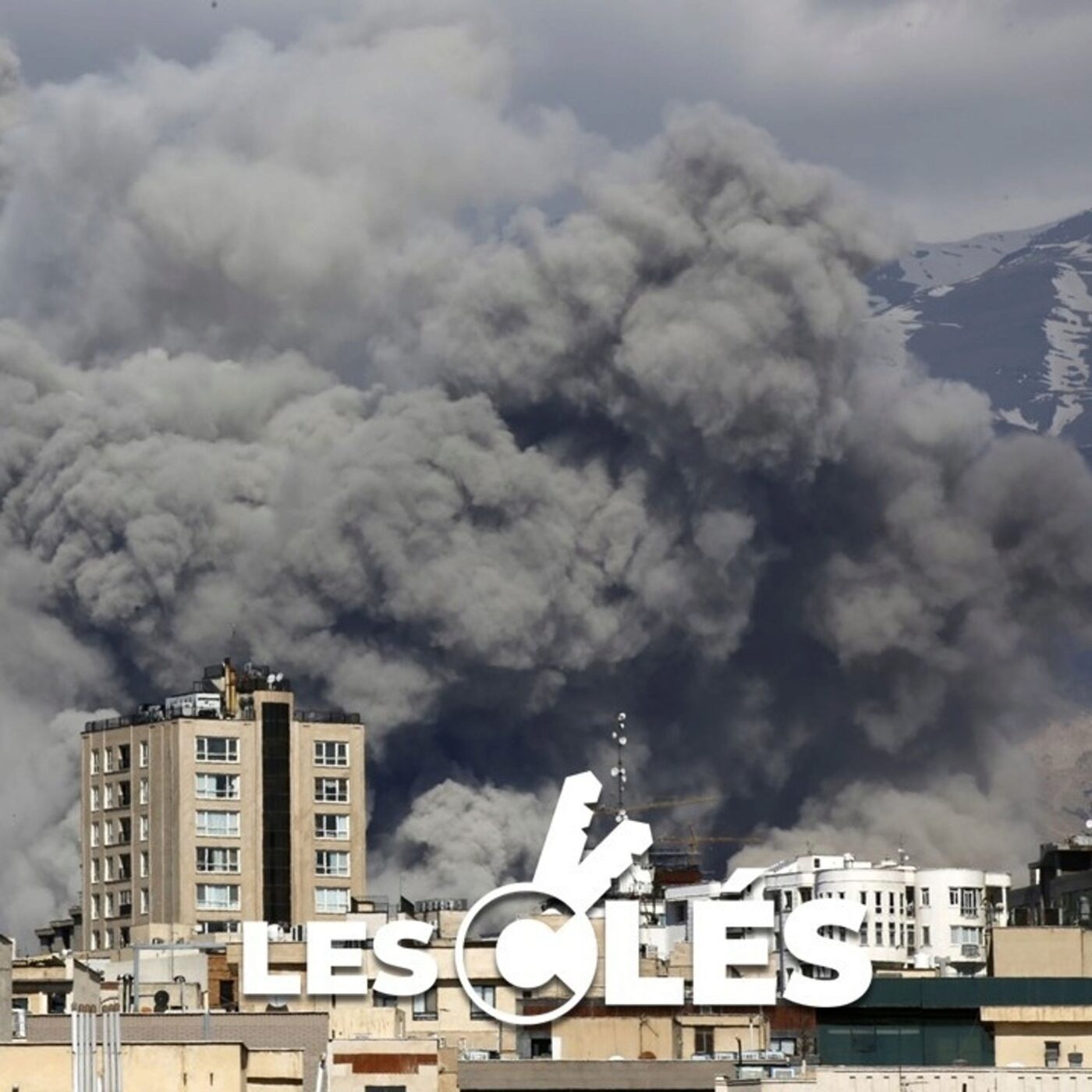
Les Clés
Iran : vers la mort du droit international ?
00:27:07
L’opération des États-Unis et d’Israël en Iran s’est faite en dehors du cadre défini par le droit international. L’attaque n’a pas non plus été discutée au sein de l’ONU. Ce mépris de certains dirigeants pour les lois qui fondent les relations internationales inter...
Loading summary
Transcript53 lines
- [00:00]
Arnaud Ruyssen
La première. Les clés.
- [00:13]
Host / Moderator
Arnaud Ruyssen. Bonjour à toutes, bonjour à tous et bienvenue dans les clés pour un épisode où l'on va s'interroger sur l'avenir du droit international. L'attaque des États-Unis et d'Israël sur l'Iran menée en dehors de tout cadre onusien vient une nouvelle fois illustrer le peu de cas fait de la charte des Nations Unies, de ses principes fondateurs sur la souveraineté des États ou l'interdiction du recours à la force. Alors faut-il considérer que l'on est en train de changer d'ordre mondial pour tourner le dos au droit international? Faut-il considérer que l'ONU est en train de mourir à petit feu, c'est tout cela que nous allons explorer au départ des frappes actuelles sur l'Iran.
- [00:56]
Narrator / Reporter
Revenons d'abord sur les derniers jours qui ont précédé les frappes américaines et israéliennes en Iran. Jusqu'au tout dernier moment, 36 heures avant les frappes, se tenaient à Genève des pourparlers indirects entre les Etats-Unis et l'Iran sur la question du nucléaire. Des pourparlers facilités par les Suisses et avec dans le rôle du médiateur le sultanat d'Oman qui, vendredi encore, estimait qu'on avait là un dialogue constructif et par les mêmes, je cite, d'un accord à portée de main. Le ministre des Affaires étrangères iranien, Abbas Araqchi, semblait d'ailleurs dresser lui aussi le même constat.
- [01:48]
Abbas Araqchi
Je peux dire que nous avons bien avancé après plusieurs heures de négociations intensives. Nous avons entamé des discussions sérieuses sur les éléments d'un accord, tant dans le domaine nucléaire que dans celui de la levée des sanctions. Nous avons convenu que les équipes techniques commenceraient leurs travaux lundi à la IEA à Vienne.
- [02:13]
Narrator / Reporter
» Ça, c'était donc le jeudi 26 février en soirée. Les Iraniens s'attendaient à ce que des négociations continuent le lundi suivant, sauf que le samedi, les bombes commencent à tomber sur Téhéran, accompagnées de cette déclaration de Donald
- [02:35]
Arnaud Ruyssen
Trump. L'armée américaine a lancé des opérations de combat majeures en Iran. Notre objectif est de défendre le peuple américain en éliminant les menaces imminentes que présente le régime iranien. Un groupe cruel composé d'individus très durs et terribles. Nous allons détruire leurs missiles et mettre leur production de missiles à genoux. Tout sera une nouvelle fois complètement anéanti. Et nous veillerons à ce que l'Iran n'obtienne pas d'armes nucléaires. C'est un message très simple. Ils n'auront jamais d'armes
- [03:11]
Narrator / Reporter
nucléaires. Une attaque que la Maison-Blanche justifie donc en tant que guerre préventive par crainte d'attaque sur les Etats-Unis, dit Donald Trump. Certains de ses proches justifieront aussi qu'il n'avait aucune confiance dans l'attitude des Iraniens à la table des négociations. Mais ce qui ressort des mots de Donald Trump, qui ne fait dans cette allocution aucune allusion au principe du droit international ou aux Nations Unies, c'est le triomphe de la loi du plus
- [03:54]
Arnaud Ruyssen
fort. Ce régime va vite apprendre que personne ne devrait s'opposer à la force et à la puissance des États-Unis. J'ai construit et reconstruit notre armée lors de mon premier mandat et il n'y a aucune armée dans le monde qui s'approche de son pouvoir, de sa force ou de son
- [04:12]
Narrator / Reporter
perfectionnement. Un peu plus loin, Donald Trump expliquera aussi agir pour la liberté du peuple iranien, qu'il invite à se soulever une fois les frappes
- [04:24]
Arnaud Ruyssen
terminées. Et finalement, pour le grand et fier peuple d'Iran, je vous le dis ce soir. L'heure de votre liberté est à portée de main. Restez à l'abri. Ne quittez pas vos maisons, c'est très dangereux dehors. Des bombes vont tomber partout. Mais quand nous aurons fini, prenez le contrôle de votre gouvernement. Ce sera à vous de le faire. Ce sera sans doute votre seule occasion pour des
- [04:47]
Narrator / Reporter
générations. Une déclaration de guerre qui a surpris tous les alliés des Etats-Unis et d'Israël. La France n'a été ni prévenue ni impliquée, tout comme d'ailleurs l'ensemble des pays de la région et nos alliés. des alliés, dès lors condamné à un rôle d'équilibriste, puisque c'est leur plus puissant allié, les Etats-Unis, qui a posé ce choix, qu'il le fait aussi à l'égard d'une dictature et d'un régime qui
- [05:24]
Host / Moderator
viole depuis des décennies les droits humains
- [05:26]
Narrator / Reporter
et les libertés de son peuple. Mais les Etats-Unis font cela sans le moindre mandat onusien, en violation des principes du droit international. Ce qui a conduit à des déclarations diplomatiques plutôt alambiquées, notamment celles du ministre belge des Affaires étrangères, Maxime
- [05:43]
Maxime Prévost
Prévost. La Belgique est de longue date et entend bien rester un défenseur inaliénable du droit international. Il faut rappeler quelle est la vocation du droit international. C'est d'abord et avant tout de pouvoir protéger les peuples, leurs droits et libertés. Et à cet égard, on ne peut pas dire que l'Iran fasse l'objet d'un élève modèle, loin sans faux. Donc il y a évidemment la réalité des principes, mais nous devons aussi la confronter à un principe de
- [06:10]
Narrator / Reporter
réalité. Alors, le droit international peut-il, doit-il s'effacer au nom d'une forme de réale politique? Les institutions onusiennes sont-elles en train de mourir à petit feu comme vidées de leur substance par le retour des empires? C'est ce que nous allons maintenant
- [06:35]
Host / Moderator
explorer. Et avec nous pour cela il y a notamment Pierre Dargent,
- [06:40]
François Dubuisson
bonjour.
- [06:41]
Host / Moderator
Bonjour. Vous êtes professeur de droit international à l'UCLouvain et avec vous on va commencer par qualifier un peu ce qui s'est passé avec cette intervention donc des Etats-Unis et d'Israël en Iran sur un pays qui certes, et on l'a redit dans cette introduction, viole des droits fondamentaux, des libertés de son peuple, mais une intervention qui s'est faite en dehors du cadre de l'ONU. Est-ce qu'on doit considérer aujourd'hui de manière claire, pour un spécialiste du droit international que vous êtes, qu'il y a là une violation des principes du droit international dans la façon dont se fait cette
- [07:14]
Pierre Dargent
intervention? Oui, indébutablement. C'est une opération militaire qui ne correspond pas aux nécessités qui s'imposent en cas de légitime défense. Et il est très difficile, je pense, pour tout observateur qui est un petit peu au courant des règles de droit international, de considérer que cette attaque sur l'Iran pourrait être justifiée en droit. Alors la question de savoir si, du caractère autoritaire et répressif du régime iranien, est-ce qu'on serait Justifier à aller assassiner un chef d'état et à bombarder toute l'infrastructure militaire de ce pays, la réponse en droit international est clairement non également. Bien sûr, il y a des violations massives des droits de l'homme par le régime iranien. Bien sûr, tout le monde devrait se réjouir de la disparition de ce régime en quelque sorte. La question de savoir dans quelles conditions cette disparition aura lieu, on n'en sait rien. Et peut-être qu'effectivement, la boîte de Pandore qui a été ouverte va aboutir à de plus grandes violations des droits humains. Mais il est extrêmement difficile de trouver dans la Charte des Nations Unies le moindre fondement pour cette opération militaire. Même si tous les États au monde essayent toujours de justifier leur comportement en prétendant qu'ils agissent conformément aux droits
- [08:28]
Host / Moderator
internationaux. Mais ici, on a l'impression qu'il n'y a même pas vraiment de façon d'essayer d'habiller un petit peu les choses pour essayer de coller au droit international, si ce n'est dans cet argument de dire qu'il y avait un risque pour les États-Unis et c'est pour ça qu'on est intervenu. Mais ça, on ne peut pas le faire, il n'y a rien qui prévoit en droit international cette idée de légitime défense
- [08:48]
Pierre Dargent
préventive. Alors légitime défense préventive, oui, si les conditions sont réunies. C'est-à-dire qu'il y a véritablement une attaque dont on sait qu'elle va se dérouler et qu'il y a lieu de l'appréhender, en quelque sorte de l'interrompre dans son déroulement. Mais on est loin de ça. Alors quand on entend que l'Iran crie mort à l'Amérique, mais l'Iran crie mort à l'Amérique depuis 1979. Donc on ne va pas dire qu'il y a une situation d'imminence, d'attaque. La situation iranienne ne date pas d'hier. Sous la première présidence Trump, M. Trump, le président Trump a alors torpillé l'accord qui avait été obtenu qui avait été couvert par une résolution obligatoire du conseil de sécurité. On avait fait fonctionner la diplomatie, on avait fait fonctionner les institutions internationales. L'accord était temporaire pour 15 ans. Israël détestait cet accord. Et le président Trump a suivi le premier ministre Netanyahou dans ce rejet. Et au fond, le problème naît de là. On est dans une situation où on a amoindri les principes du droit international, où on amoindrit sans cesse les institutions internationales. Et effectivement, l'ordre juridique international qui tient à des principes et qui tient à des institutions est actuellement profondément remis en cause par des puissances qui n'ont pas apparemment intérêt à son
- [10:10]
Host / Moderator
maintien. Et avec nous pour cette émission, il y a un autre prof de droit international de l'ULB, c'est François Dubuisson.
- [10:16]
François Dubuisson
Bonjour.
- [10:17]
Host / Moderator
Bonjour. Merci d'être aussi avec nous. Est-ce qu'on vit les moments les plus compliqués de doutes existentiels, pratiquement, pour les principes fondateurs des Nations Unies pour le droit international depuis la Seconde Guerre mondiale avec ce qu'on est en train de vivre
- [10:32]
François Dubuisson
aujourd'hui? – Je ne sais pas si c'est le moment le plus compliqué, c'est en tout cas un moment compliqué, on en a eu sans doute d'autres, notamment pendant la guerre froide, où le système onusien était largement bloqué, parce que dès que l'un des deux grandes puissances soviétiques ou les États-Unis étaient concernés, l'ONU était paralysée et donc on avait plutôt des opérations qui se déroulaient en marge de l'ONU avec des choses aussi graves que la guerre du Vietnam par exemple ou l'intervention soviétique en Afghanistan. Donc là aussi on avait quand même des entorses fondamentales au droit international donc ce n'est pas nouveau. Mais il est clair qu'on a une crise grave du droit international et du système onusien depuis un certain nombre d'années et tout particulièrement depuis l'entrée en fonction de Donald Trump dans son second mandat. Et on voit bien qu'il porte un discours selon lequel le droit international n'est absolument pas un élément à même prendre en considération, je dirais, dans les éléments qui permettent de fonder ou non une décision. On a fait référence à la guerre d'Irak de 2003, on se souviendra que à tout le moins là, l'administration Bush fils avait eu des mois de tractation pour essayer d'obtenir néanmoins une autorisation du Conseil de sécurité des Nations Unies que finalement il avait renoncé à demander parce qu'il voyait bien que les conditions politiques n'étaient pas réunies. Mais il y avait cette volonté de mettre en conformité une intervention en Irak avec le droit international et il y a eu énormément de débats par rapport à ça et aussi une mobilisation de l'opinion publique pour aller à l'encontre des velléités, éventuellement de certains gouvernements, de suivre l'administration Bush dans cette aventure-là. Aujourd'hui on voit que ce n'est pas du tout le cas, c'est que pratiquement du jour au lendemain on passe d'une situation de négociation qui semble ne pas être arrivée à une fin de non recevoir absolue et du jour au lendemain on lance une opération militaire de très grande envergure sans essayer d'avoir obtenu quoi que ce soit. Et ce qui différencie aussi cette situation-ci de celle de la guerre en Irak de 2003, c'est la très grande faiblesse de la réaction d'un certain nombre d'États européens, d'États occidentaux qui ici, au mieux, ont des déclarations extrêmement ambivalentes pour ne pas condamner très directement cette opération. voire la soutiennent carrément en prétendant qu'Israël est en état de légitime défense comme l'ont fait le Canada ou l'Australie en dépit de tous les principes du
- [13:05]
Host / Moderator
droit international. Alors justement, on va s'arrêter
- [13:07]
Narrator / Reporter
un peu sur ce qui s'était passé
- [13:09]
Host / Moderator
en Irak en 2003, puisque vous convoquez cet épisode de l'histoire et qu'on en parle souvent, justement, quand on parle des interventions militaires américaines. Qu'est-ce qu'il s'était passé alors, puisque c'était aussi finalement une intervention en dehors du cadre nusien, bien qu'assez différente de ce qui se passe aujourd'hui? Eh bien c'est Sarah Poussey
- [13:27]
Narrator / Reporter
qui va nous rafraîchir
- [13:28]
Sarah Poussey
la mémoire. Pour comprendre l'invasion en Irak, il faut remonter un peu en arrière. Après les attentats de septembre 2001, les États-Unis renversent le régime des talibans en Afghanistan, mais Oussama Ben Laden reste introuvable. Le pays n'est donc pas vengé. Le président américain choisit alors une nouvelle cible, l'Irak, qu'il accuse de soutenir Al-Qaïda. Dès 2002, George Bush menace Saddam Hussein, et puis début 2003, les États-Unis sortent une nouvelle carte. En plus de soutenir Al-Qaïda, l'Irak aurait développé des armes de destruction massive, biologiques et chimiques, et représenterait donc une menace mondiale. À la tribune du Conseil de sécurité de l'ONU, le secrétaire d'état américain Colin Powell agite une fiole contenant de l'anthrax, une arme bactériologique qui aurait été fabriquée
- [14:24]
Pierre Dargent
en Irak. Mesdames et messieurs, il s'agit de moyens sophistiqués. Ils peuvent par exemple produire de l'anthrax et des toxines botuliques. En fait, ils peuvent produire suffisamment d'agents biologiques en un mois pour tuer des milliers et des milliers
- [14:37]
Sarah Poussey
de gens. Face aux arguments américains, la Russie, la Chine, la Belgique, l'Allemagne et surtout la France refusent la guerre. À la tribune de l'ONU, Dominique de Villepin, le ministre français des Affaires étrangères, encourage le respect du droit international et la poursuite des inspections sur
- [14:55]
Dominique de Villepin
l'armement irakien. Dans ce temple des Nations Unies, nous sommes les gardiens d'un idéal. Nous sommes les gardiens d'une conscience, la lourde responsabilité. et l'immense honneur qui sont les nôtres doivent nous conduire à donner la priorité au désarmement. dans
- [15:15]
Sarah Poussey
la paix. Le Conseil de sécurité de l'ONU n'autorise donc pas l'intervention américaine en Irak. Mais soutenu par plusieurs pays et notamment la Grande-Bretagne, George Bush décide quand même de poser un ultimatum à
- [15:28]
Maxime Prévost
Saddam Hussein. Saddam Hussein et ses fils doivent quitter l'Irak dans les
- [15:32]
Pierre Dargent
48 heures. S'ils refusent de partir, une
- [15:36]
François Dubuisson
action militaire sera lancée au moment que
- [15:38]
Sarah Poussey
nous choisirons. L'invasion militaire de l'Irak commence. L'armée américaine, avec l'aide des Britanniques, déclenche l'opération Liberté pour l'Irak le 20 mars 2003. Par la suite, les arguments et le dossier présenté par Colin Powell à l'ONU seront considérés comme entièrement faux. Il n'y avait pas d'armes de destruction massive en Irak à
- [16:00]
Host / Moderator
cette époque. Alors, c'est assez troublant, évidemment, de réécouter tout cela aujourd'hui, François Dubuisson, parce qu'il y a des ingrédients qu'on retrouve aujourd'hui. Finalement, on a une intervention qui va se faire sans mandat de l'ONU. On a des fake news dont on parle
- [16:17]
Narrator / Reporter
beaucoup aujourd'hui. Quelque part, on en a
- [16:18]
Host / Moderator
déjà à l'époque dans ce que vont avancer les Américains pour essayer de convaincre le Conseil de sécurité. Et pourtant, vous le disiez, c'est assez différent parce que là, on a quand même, du côté des États-Unis, essayé jusqu'à un certain point de jouer le jeu qui a pu avoir ce débat multilatéral qui est prévu par les
- [16:34]
François Dubuisson
Nations unies. Sous-titrage Oui c'est ça, donc là il y avait une volonté quand même d'essayer de couvrir l'opération à la fois en ayant des alliés d'un côté et de l'autre, donc d'avoir une couverture de l'ONU avec cette autorisation du Conseil de sécurité. Et même si elle n'a pas pu être obtenue, les États-Unis ont échafaudé toute une construction juridique assez complexe, assez peu convaincante, où il s'agissait de revitaliser une ancienne autorisation du Conseil de sécurité qui datait de la première guerre du Golfe en 1990, en disant les conditions du cessez-le-feu n'ont plus été respectées. Société Radio-Canada revitalise quelque part la toute première autorisation qui avait permis de libérer le Kuwait en 1991. Donc il y avait quand même cette volonté de le faire. Avec Donald Trump, on voit bien que dans son discours, il lit tout à fait explicitement, l'ONU, le droit international, ça ne m'intéresse absolument pas. Israël, on sait aussi que depuis fort longtemps, il n'est pas le plus grand partisan du respect du droit international, ou en tout cas il en présente toujours une version assez biaisée par rapport aux standards généralement acceptés. Et comme je l'ai indiqué tout à l'heure, il y avait quand même une forte réaction. Alors il y avait évidemment eu des alliés qui s'étaient joints à cette opération, notamment une série d'états européens. Mais il y avait eu quand même un certain nombre d'États en pointe, notamment la France, qui s'était largement opposée en termes de principe. Et ça n'avait pas nuit non plus à la continuation de leur alliance avec les États-Unis. D'ailleurs, à la fin de la guerre, il faut rappeler que même les États-Unis ont rapatrié finalement la situation irakienne au sein du gérant des Nations unies, puisqu'on a établi une administration internationale. Alors qu'ils pouvaient prêter le flanc à la critique. puisque c'était un peu l'occupation sous une autre appellation avec la validation de l'ONU, mais ils ont réussi à convaincre la Russie, la Chine à l'époque, de valider finalement les effets de l'invasion pour au moins rapatrier la situation au sein des Nations Unies. Ce qui ne semble pas être le cas et évidemment ça nous ramène au Conseil de la paix mis en place par Donald Trump dont on se demande s'il va le convoquer pour ici gérer peut-être la situation post-guerre
- [18:39]
Host / Moderator
en Iran. Alors justement, ça nous permet aussi de parler de la façon dont peut-être aussi la société regarde le droit international, regarde l'ONU aujourd'hui, pire d'argent. On entend dans le débat ces derniers jours autour de l'Iran aussi pas mal de responsables politiques dire oui mais il y a la réelle politique, il y a du pragmatisme à avoir par rapport à ce régime iranien qui s'est avéré de manière particulièrement cruelle, viole les droits fondamentaux de son peuple. On entend, y compris des responsables politiques chez nous en Belgique, dire que l'ONU aujourd'hui, on voit bien que ça ne marche plus vraiment, que c'est devenu le plus grand club de dictateurs, disait d'ailleurs Georges Louis Boucher à ce sujet. On entend beaucoup de critiques qui disent que le multilatéralisme, de toute façon, ça ne marche plus aujourd'hui, et est-ce que ce n'est pas un problème que le droit international nous empêche d'aller intervenir pour mettre fin à certaines dictatures? Est-ce qu'il n'y a pas un regard de la société qui a changé finalement sur le sens profond de ce droit international dans l'organisation de notre monde et
- [19:44]
Pierre Dargent
du multilatéralisme? Je crois qu'il y a certainement un scepticisme et une certaine désillusion par rapport au droit international. J'encouragerais ceux qui pensent qu'il y a tout à fait moyen de le remplacer à bien réfléchir. au monde qui se prépare si on met la Charte des Nations Unies aux orties, surtout pour un pays comme la Belgique qui n'est pas quand même la plus grande puissance au monde, capable toute seule de tenir son existence entre ses mains. On est un pays extrêmement exposé au multilatéralisme et on vit d'un ordre international qui est prévisible et structuré par des règles. Alors, bien entendu, on peut critiquer les faiblesses du droit international. Elles sont inhérentes au système. C'est un système qui est fondé sur l'égale souveraineté des États. Bien sûr, il y a des États qui sont entre les mains de clans. Et si vous y réfléchissez bien, Un état, c'est l'organisation criminelle la plus parfaite. Si vous êtes un groupe criminel et que vous prenez le contrôle d'un état, c'est formidable ce que vous pouvez faire avec un état. Et c'est bien pour ça qu'en interne chez nous, les institutions sont importantes, que la lutte contre le grand banditisme, etc. est fondamentale. Donc ce que cet échec du droit international à certains égards met en lumière, c'est l'impérieuse nécessité de réfléchir en tant qu'état de droit à nos institutions. Peut-être qu'on a été naïf de croire que l'état de droit interne était facilement internationalisable. L'avenir nous dira si vraiment la Charte des Nations Unies est achetée aux oubliettes. Mais d'abord certains politiciens qui s'expriment chez nous sont de simples citoyens, n'ont aucune responsabilité ministérielle et donc heureusement c'est leur choix dans une certaine mesure. Ils n'engagent pas la position officielle de l'État belge mais j'engagerai tout un chacun à bien réfléchir aux propositions qui sous-tendent leurs propos. Et aussi, il faut se rendre compte qu'il y a certains qui ont un intérêt à dire que le droit international ne fonctionne pas. Si le droit international ne fonctionne pas, ça veut dire quoi? Ça veut dire que les puissants sont encore plus puissants. Et je pense qu'il ne faut pas être naïf à cet égard-là. Bien sûr, le droit international ne va jamais sauver l'humanité de tous ces maux. Mais penser que le droit international échoue de lui-même alors que certains veulent le faire échouer, ça, je pense, c'est le mensonge qui est en cours. En réalité, ce qui se passe, c'est qu'il y a des États qui sont en position de respecter le droit international et qui délibérément, comme François Dubuisson l'a rappelé, considèrent qu'ils veulent s'en affranchir. Et là, je pense qu'il y a une responsabilité historique. non seulement des Etats qui font cela, mais d'autres qui chez nous courent derrière en disant, c'est peut-être bien. Et moi je suis
- [22:33]
Host / Moderator
très débitatif. Et vous rappelez quand même un élément important, c'est que ce droit international, il met tous les Etats sur un pied d'égalité et que forcément, quelque part, s'il est respecté, ça a plus d'intérêt pour les Etats les plus petits, les plus faibles que pour les plus grands qui, a priori, peuvent se faire respecter par des armes et par
- [22:51]
Pierre Dargent
la force. C'est un droit qui est profondément philosophiquement libéral, c'est-à-dire qui est fondé sur l'égalité de ces sujets. Que vous soyez la Belgique, la Chine ou la Russie, vous êtes un Etat souverain. Alors peut-être qu'en Belgique on est moins souverain parce qu'on est état membre de l'Union Européenne et bien sûr qu'entre états européens on sait que le droit international a ses limites et donc on remplace ce droit international par un autre ordre juridique qui nous est beaucoup plus cher et beaucoup plus proche qui est le droit de l'Union Européenne et qui nous fait vivre en paix. Mais ne pas voir qu'au cœur du droit international et de la construction du droit international, il y a cette affirmation d'égalité souveraine qui est comme l'égale dignité des personnes, qui est un principe de philosophie libérale, ne pas voir que ça a une valeur pour le monde entier, je trouve ça
- [23:37]
Host / Moderator
assez étonnant. Et on notera que ça pointe notamment certaines déclarations de Georges-Louis Boucher, président d'un parti qui se dit fier d'être libéral et qui pourtant attaque pas mal ce droit international dans certaines de ses déclarations ces dernières semaines. François Dubuisson, vous êtes professeur de droit international comme Pierre Dargent d'ailleurs. Qu'est-ce qu'on dit aujourd'hui à des étudiants qui se demandent si ça vaut la peine encore d'étudier ces principes du droit international quand ils voient à quel point ils sont aujourd'hui challengés, pour le dire positivement, ou très fortement remis en question par le
- [24:15]
François Dubuisson
débat actuel? Alors il faut dire que nous on a une approche critique du droit international, c'est-à-dire qu'on ne leur présente pas ça non plus comme étant un élément d'idéal qui s'applique de manière un peu naïve et béate. On leur souligne toujours le fait que le droit international, il le produit largement des rapports de force et qu'il navigue toujours entre défense d'un certain nombre de principes de valeur et une sorte de pragmatisme politique. Un grand exemple, évidemment, c'est le droit de veto des cinq membres permanents. Alors on critique très souvent ce droit de veto, mais on ne trouve pas quel est le bon système qui viendrait à la place et qui
- [24:52]
Host / Moderator
permettrait... Ça a été une façon d'internaliser du pragmatisme politique de rapport de force tout en construisant cet écheveau du droit international après
- [24:59]
François Dubuisson
la guerre. Exactement. Tout le système de sécurité collective des Nations Unies navigue entre essayer de garantir la paix et la sécurité d'un côté, avec notamment ce principe cardinal du non-recours à la force et de la compétence exclusive du conseil de sécurité sauf légitime défense, et en même temps tenir compte du fait qu'il y a des États, qui sortaient vainqueurs de la guerre, qui ont une certaine position prédominante et qu'on n'imagine pas leur imposer des décisions ou des autorisations alors qu'il ne le voudrait pas et ce serait plutôt contre-productif en réalité de vouloir par exemple imposer aux Etats-Unis quelque chose alors qu'il s'y opposerait franchement. Et donc pour les étudiants, je pense qu'on essaie plutôt d'essayer de montrer l'analyse du droit international et en même temps on ne peut pas dire qu'il y a un désintérêt de la part des étudiants, au contraire j'ai l'impression qu'il y a un intérêt plus grand de la part
- [25:51]
Narrator / Reporter
des étudiants. Un intérêt renforcé donc dans un moment où ce droit international est indubitablement en crise, mais où cela vaut du coup peut-être encore plus la peine d'en comprendre et d'en rappeler les bases et les sources. Et à ce propos, j'ai envie de conclure par une petite phrase que me soufflait le professeur Pierre d'Argent juste après l'enregistrement de cette émission. Quand on veut un droit pour ses amis et un autre droit pour ses ennemis, Alors, ce n'est plus du droit. Voilà, merci d'avoir suivi cet épisode des Clés. Merci à Pierre Dargent et François Dubuisson d'avoir pris le temps de cette analyse croisée. Merci à Antoine Duhart pour la réalisation sonore de cet épisode. A la préparation, il y avait Sarah Pousset et Arnaud Reussen. Et si ce contenu, si ce podcast vous a intéressé, n'hésitez pas, bien sûr, à le partager et à
- [26:49]
Host / Moderator
le faire connaître autour
- [26:50]
Arnaud Ruyssen
de vous. Sous-titrage