← Les Clés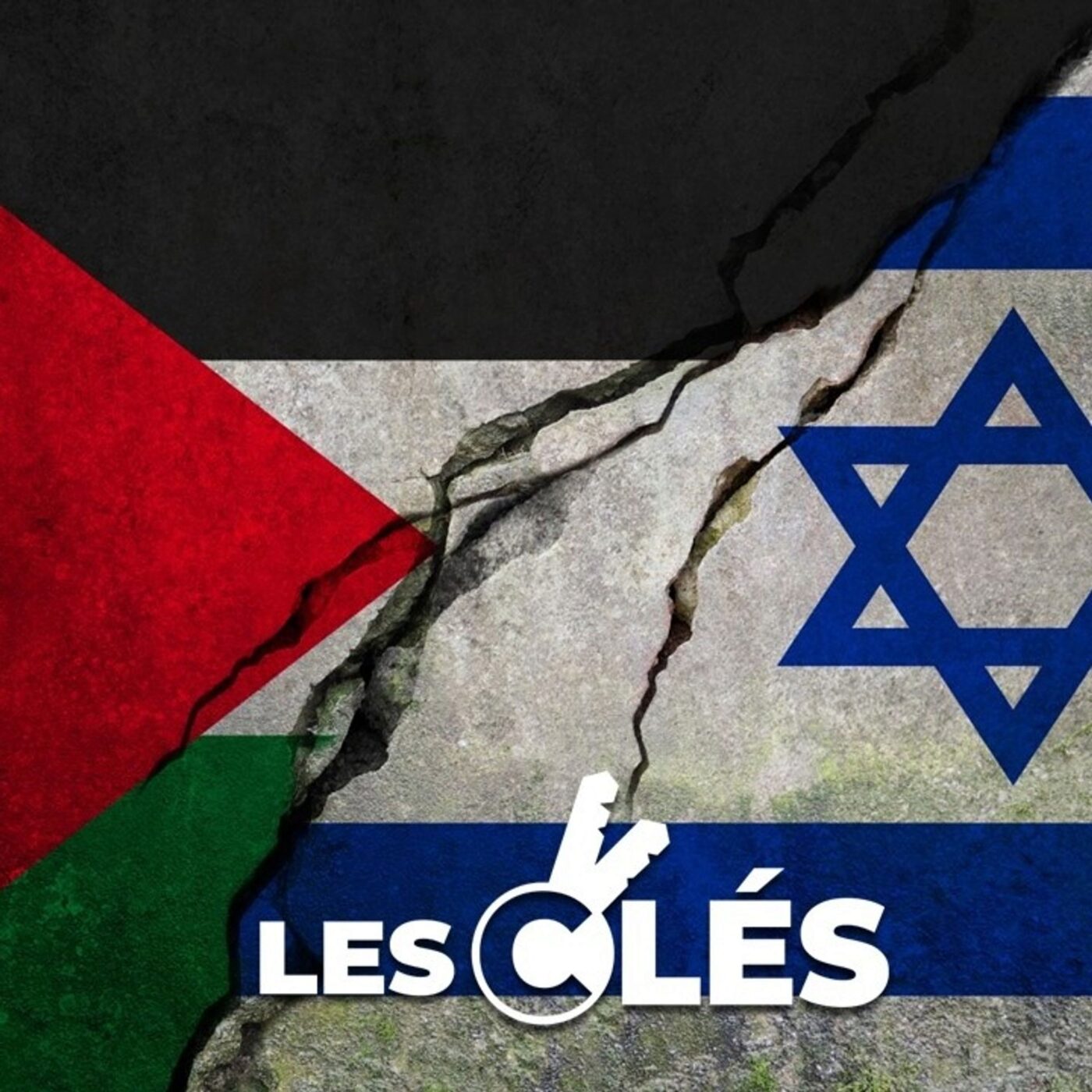
Les Clés
Israël-Palestine, aux sources du conflit (3/3) : quand les ennemis de la paix s'imposent
00:32:32
Deux ans après l'attaque du 7 octobre 2023, cette série en trois épisodes retrace l'histoire du conflit israélo-palestinien, avec Vincent Lemire, historien, enseignant-chercheur et maître de conférence en histoire contemporaine à l’Université Gustave-Eiffel. Un ra...
Loading summary
Transcript36 lines
- [00:01]
French Government Official
« De quel côté de l'histoire vous rangez-vous ?
- [00:04]
Vincent Lemire
» « Il y a là une souffrance dont on ne voit pas la fin. » « Deux promesses contradictoires à deux peuples sur un même territoire ne peut donner qu'une catastrophe géopolitique.
- [00:16]
Podcast Host
» Bonjour à toutes, bonjour à tous, et bienvenue dans Les Clés pour le troisième et dernier numéro de notre série consacrée à l'histoire du conflit israélo-palestinien. Toujours avec l'historien Vincent Lemire, professeur à l'université Gustave Eiffel de Paris, on retrace la chronologie, la généalogie de ce conflit. Et là, on va commencer ce troisième épisode par un moment charnière, l'assassinat du premier ministre israélien Yitzhak Rabin en 1995.
- [00:47]
Vincent Lemire
La première, les clés.
- [00:54]
Podcast Host
Je ne vais pas permettre à l'Israël d'annexer l'Ouest Bank.
- [00:56]
News Reporter
Madame, Monsieur, bonsoir. Le Premier ministre israélien Isaac Rabin a été assassiné ce soir à Tel Aviv. Isaac Rabin s'apprêtait à quitter une importante manifestation de soutien au processus de paix lorsqu'il a été atteint de trois balles tirées par une arme automatique. L'auteur des coups de feu a été aussitôt arrêté. Il s'agit d'un jeune Israélien de 23 ans qui appartiendrait à un groupe d'extrême droite.
- [01:27]
Podcast Host
C'était le 4 novembre 95. Et ce jour-là, on ne mesure sans doute pas encore bien toute la portée qu'aura cet assassinat. Et pourtant, nous dit l'historien Vincent Lemire, la mort d'Itzhak Rabin va constituer un tournant majeur dans ce conflit.
- [01:47]
Vincent Lemire
C'est terrible à dire, mais il y a parfois des actes violents qui sont efficaces, qui sont des points de bifurcation historiques. Il y a l'amir, l'assassin d'Itzhak Rabin, qui est donc un colon d'extrême droite. soutenu par un certain Itamar Benvir, très jeune à l'époque, mais qui fait partie de ces mêmes groupuscules ultra violents, explicitement racistes, et qui se livrent à l'action violente, y compris à des bagarres de rue, etc. Igalamir a visé juste en fait, il a considéré à juste titre, que seul Yitzhak Rabin pouvait faire la paix avec Yasser Arafat. Pourquoi ? Parce que Rabin, c'est un ancien chef d'état-major, un ancien ministre de la Défense, c'est quelqu'un qui a la confiance de l'armée, c'est quelqu'un qui a la confiance de la population, y compris des gens de droite. Et Yitzhak Rabin, sa grande formule, c'est « j'ai fait la guerre tant qu'il n'y avait pas de possibilité de faire la paix ». Donc c'est quelqu'un qui n'a jamais hésité à faire la guerre, mais qui considère qu'il y a une opportunité historique à faire la paix. Alors sa position est également ambiguë, parce qu'il n'a jamais lutté véritablement contre les colons, contre les colonies. Il a considéré qu'il s'en occuperait plus tard. Et dans ces années 1990, y compris sous l'autorité d'Itzhak Rabin, les colonies ont continué de se développer en contravention complète des accords d'Oslo. N'empêche que Yitzhak Rabin était un peu le de Gaulle israélien qui pouvait parler à sa population en disant il faut faire la paix aujourd'hui. Il est assassiné, au même moment le Hamas organise des attentats extrêmement violents contre la population civile israélienne, pas seulement contre les militaires israéliens, pas seulement contre les occupants en Cisjordanie, même pas seulement contre les colons, civile en Cisjordanie, mais des attentats à Tel Aviv ou donc au cœur des frontières israéliennes. Et là, en fait, petit à petit, ce processus de paix, en Europe, on va continuer d'y croire. On va continuer de l'oxygéner de façon de plus en plus artificielle. On va continuer d'organiser des conférences. On va continuer de le faire vivre par les mots et par les photos. Mais en fait, il est déjà morné d'une certaine manière parce que Effectivement, le fait qu'on ait considéré que l'État palestinien ne viendrait qu'à la toute fin du processus, c'est comme si on avait donné aux ennemis de la paix, donc extrême droite israélienne et Hamas, une to-do liste en fait. Voilà ce que vous devez faire si vous voulez faire échouer le processus. Et c'est ce qu'ils ont fait.
- [04:18]
Podcast Host
Ainsi, en septembre 2000, va commencer ce qu'on appelle la seconde intifada. L'histoire retient que c'est la visite du chef de l'opposition israélienne d'alors, Ariel Sharon, sur l'esplanade des mosquées, qui met le feu aux poudres et ouvre une séquence qui va durer près de 5 ans.
- [04:38]
Vincent Lemire
C'est une intifada qui est beaucoup plus militaire que la première, donc c'est moins un soulèvement populaire, et de ce fait, la répression va être encore plus violente, encore plus dure, il y a beaucoup beaucoup plus de morts pendant la deuxième intifada que pendant la première intifada. qui dure donc effectivement des années 2000 à peu près à 2005. Et là, c'est vraiment le processus de Schlöw en fait n'existe plus, même si nous, vu depuis l'Europe, on a l'impression qu'il est encore à peu près survivant. Mais ça va nous prendre presque 15 ans, 20 ans avant d'en prendre acte.
- [05:09]
Podcast Co-host
On peut dire qu'à ce moment-là, des deux côtés, au fond, ce sont ceux qui veulent faire dérailler ce processus, qui prennent la main. À la fois, côté palestinien, ceux qui veulent rester dans cette logique de pas question d'avoir des juifs sur notre territoire et qui rêvent encore d'une Palestine qui irait de la mer au Jourdain. Et de l'autre côté, pareil côté juif, de ceux qui ne veulent pas d'autre chose que d'un État qui irait aussi de la mer au Jourdain pour les juifs.
- [05:39]
Vincent Lemire
Exactement. Et puis il y a des leaders qui disparaissent. Donc on a dit Yitzhak Rabin assassiné en 1995. Mais il faut parler aussi d'Yasser Arafat. Il meurt en novembre 2005. dans des conditions assez troubles. Il est frappé d'une maladie de dégénérescence au niveau du sang, etc. Ça alimente évidemment les soupçons du côté palestinien. Ça alimente les soupçons d'un éventuel empoisonnement par les Israéliens. Il meurt dans des conditions extrêmement difficiles. La ville de Ramallah est totalement encerclée et puis finalement occupée. Et les chars israéliens sont sous les fenêtres du palais présidentiel de la Moukata. Et Arafat passe plusieurs semaines, plusieurs mois, enfermé, en fait, dans quelques deux, trois pièces. Il est allongé sur son lit de camp, il écoute les nouvelles, il est totalement isolé. Et puis, il est frappé par cette maladie gravissime. Il est évacué en hélicoptère vers la France et il meurt très, très peu de temps après au Val-de-Grâce. Avec lui disparaît un petit peu celui qui avait fait ce pari historique en 1988 de dire on abandonne la lutte pour toute la Palestine et on se bat seulement pour la Cisjordanie et pour Gaza. Et Yasser Arafat, c'est une figure fondatrice. On a dit qu'il était là au moment de la création de l'OLP en 1964. Il a pris la tête de l'OLP en 1969. Donc il incarnait en fait tout ce moment de la palestinisation du mouvement. Et puis les Palestiniens l'appelaient le vieux. Il avait cette espèce d'autorité naturelle. qui faisait qu'il aurait pu encore tordre le bras au Hamas s'il avait été là. En tout cas, en 2005, il a disparu. Et il y a d'autres leaders qui prennent l'ascendant. Du côté palestinien, c'est le Hamas, on l'a dit, qui a été créé au milieu des années 80, mais qui a mis du temps, petit à petit, à se consolider. Et à chaque élection législative, on se rend compte que le Hamas progresse de plus en plus. Et en 2006, au moment des élections législatives palestiniennes de 2006, le Hamas l'emporte assez nettement et à la loyale. Il y a des milliers d'observateurs internationaux qui vérifient, le scrutin se débroule parfaitement. et le Hamas l'emporte contre l'OLP. Et donc le Hamas obtient la majorité à la Chambre et donc logiquement un certain Ismail Haniye va être nommé Premier ministre par Mahmoud Abbas qui est le président de l'autorité palestinienne, successeur, bras droit, très proche de Yasser Arafat. Donc c'est logique, le Hamas a remporté les élections, le Hamas forme un gouvernement.
- [08:12]
Podcast Host
On est donc en 2006. Et là aussi, c'est un moment charnière, très certainement, dans la longue histoire de ce conflit. Dans un premier temps, on l'a dit, le Hamas, mouvement islamiste et nationaliste, qui s'est de mieux en mieux implanté au fil du temps dans les territoires palestiniens, remporte une nette victoire électorale. Mais voilà, tant le FATA qui tenait le pouvoir jusque-là, que la communauté internationale qui continue de soutenir à bout de bras le FATA et son dirigeant Mahmoud Abbas, n'entendent pas laisser le Hamas occuper le pouvoir qu'il a gagné dans les urnes. Et pour Vincent Lemire, c'est, au regard de l'histoire et de ce qui va suivre, une occasion manquée, une erreur stratégique.
- [08:58]
Vincent Lemire
Une erreur stratégique majeure, Ismail Haniyeh, c'est la branche politique du Hamas. C'était plutôt quelqu'un de modéré. Il aurait tout à fait pu emmener le Hamas vers une solution proche de celle de l'OLP. Le Hamas aurait pu, à ce moment-là, adhérer à l'OLP. Il faut rappeler que l'OLP, ce n'est pas un parti politique. C'est une fédération de partis. C'est une organisation qui fédère plusieurs partis. Ça n'a pas été le choix qui a été fait. On a en fait accepté les demandes d'Abbas d'étouffer le nouveau gouvernement palestinien. Et s'en est suivie une guerre civile très rapide, mais très, très violente à Gaza en 2007. Et c'est le moment où le Hamas prend le pouvoir dans la bande de Gaza, ce qui nous amène directement à 2023.
- [09:44]
Podcast Host
C'est à ce moment-là que le Hamas prend donc le pouvoir à Gaza, au terme d'une séquence très violente où des dirigeants du Fatah seront assassinés. On va assister à une guerre civile intra-palestinienne. De facto, l'autorité palestinienne, avec son président Mahmoud Abbas, n'a plus aucun pouvoir sur Gaza, où le Hamas règne désormais en maître. Et Israël met alors en œuvre un blocus très dur de cette bande de Gaza, qui va conduire progressivement à une paupérisation de plus en plus marquée de la population. Il faut dire que dans le même temps, en Israël, ce sont aussi les ennemis de la paix qui vont progressivement imposer leurs lignes et un homme en particulier va s'imposer comme une figure politique incontournable, Benyamin Netanyahou.
- [10:45]
Vincent Lemire
Il a été Premier ministre pour la première fois en 1996, il y a pratiquement 30 ans, juste après Simon Peres, juste après l'assassinat d'Itzhak Rabin. Contrairement à ce que l'on dit souvent, c'est vrai que c'est un tacticien hors pair, c'est vrai que c'est quelqu'un qui est capable d'aménager sa position en fonction de ses intérêts immédiats, mais c'est aussi et surtout un idéologue. Et là aussi, il faut faire de l'histoire. Benjamin Netanyahou, c'est le fils de Bencion Netanyahou, un historien, qu'on appelle dans l'historiographie classique un historien révisionniste yabotinskien. Bencion Netanyahou, le père de Benjamin, était le secrétaire particulier de Vladimir Yabotinsky. Donc là, ça nous ramène dans les années 1920 et 1930. Vladimir Yabotinsky, c'était le père fondateur de ce qu'on appelle le sionisme révisionniste. Donc, il n'était pas du tout dans la ligne consensuel et majoritaire du mouvement sioniste qui était de dire on se bat petit à petit et on remporte des petites victoires petit à petit. Iapotinsky disait le projet sioniste il doit aller de la mer Méditerranée jusqu'au Jourdain et peut-être même plus loin que ça peut-être même une partie de la Jordanie peut-être une partie du Liban une partie de l'Egypte donc c'est le grand Israël et Premièrement. Et deuxièmement, ça ne marchera que par la force. La force brute et brutale. Il faut arrêter la diplomatie, il faut arrêter les petits accommodements. Il faut s'armer, il faut tirer, il faut faire peur à nos ennemis, qu'ils soient les ennemis lointains ou nos ennemis internes, nos ennemis palestiniens. Et c'est la seule voie, en fait. La force, la force brutale et la répression. Netanyahou, c'est un Yaboutinskien. Aujourd'hui, il le dit explicitement. Dans les années 90, il était un peu plus discret. Mais c'est ce qu'on appelle en Israël un sioniste révisionniste. Donc, vous voyez, des deux côtés, du côté palestinien comme du côté israélien, dès la fin des années 1990, en fait, dès le début des années 2000, les ennemis de la paix sont au pouvoir. Ils sont au pouvoir et ils sont représentatifs de leur population, il faut le dire aussi. Le Hamas est élu en 2006. Benyamin Netanyahou est élu plusieurs fois. Et ils vont tout faire, en fait, pour faire échouer le processus d'Oslo. Et encore une fois, en Europe, on va se refuser à voir la situation telle qu'elle est. Parce que si on prend acte de la nouvelle situation, ça demanderait des décisions extrêmement dures que l'Europe et les États-Unis ne sont pas prêtes à prendre. Donc on fait semblant de croire que le processus d'Oslo se poursuit jusqu'à une conférence à Napolis en 2017, qui est complètement lunaire, où personne ne parle plus de rien. C'est juste cela pour la photo. Mais en fait, depuis le début des années 2000, le processus d'Oslo n'a plus aucune dynamique.
- [13:10]
Podcast Co-host
Vous avez dit quand même quelque chose d'important, me semble-t-il. C'est dans les deux cas, que ce soit quand le Hamas arrive au pouvoir ou quand c'est Benyamin Netanyahou ainsi que d'autres partis extrémistes religieux qui vont le rejoindre dans son gouvernement, ce qui va tirer de plus en plus vers une ligne extrême la politique du gouvernement israélien. Chaque fois, ce sont quand même des mouvements qui vont gagner dans les urnes. Ça veut dire que dans la population.
- [13:32]
Podcast Host
Aussi, à un moment donné, on ne.
- [13:34]
Podcast Co-host
Croit plus à la ligne Arafat-Rabin du processus de paix tel qu'il avait été construit à ce moment-là ?
- [13:39]
Vincent Lemire
Oui, d'abord parce qu'Arafat et Rabin sont morts, donc ils ne peuvent plus parler à leur population. En histoire, il y a des fenêtres d'opportunité qui s'ouvrent et qui se referment. Et puis deuxièmement, parce que les populations ne retirent pas les bénéfices de la paix. Et ça, c'est extrêmement important. Du côté israélien, il y a des attentats, beaucoup plus nombreux qu'avant le processus d'Oslo. C'est quand même paradoxal. On est dans un processus de paix et pourtant il y a des attentats et des bus sautent tous les jours. alors qu'avant c'était pas le cas.
- [14:07]
Podcast Co-host
Donc c'est normal quelque part aussi côté israélien qu'à un moment donné on ait l'impression que la paix elle n'arrive pas puisqu'en fait on a plus d'attaques qu'avant alors qu'on est en train d'avancer normalement vers la paix.
- [14:15]
Vincent Lemire
Exactement, si vous vous mettez vraiment à la place de l'homme de la rue, qui n'a pas forcément une réflexion politique extrêmement élaborée, c'est paradoxal. Et en fait, c'est tout à fait logique. C'est parce qu'il y a un processus de paix que les ennemis de la paix agissent et font des attentats pour contrer ce processus de paix. Donc c'est totalement logique. N'empêche que du point de vue du ressenti, du vécu des Israéliens, les attentats montrent qu'il n'y a pas de bénéfice. Il n'y a pas de bénéfice immédiat. Puis du côté palestinien, c'est presque pire. Le processus de paix s'est accompagné du début de ce qu'on appelait la délimitation des zones A, des zones B, des zones C. Et donc, le quotidien des Palestiniens est beaucoup plus difficile après le début des accords d'Oslo qu'avant. On se met à avoir des checkpoints israéliens qui n'existaient pas. On se met à devoir demander des autorisations pour passer de zone A en zone B, pour aller voir sa grand-mère qui est malade en zone C. On ne peut plus construire en zone C parce que c'est une zone inconstructible, etc. En fait, il y a une judiciarisation de la vie des Palestiniens qui devient de plus en plus compliqué. Ceux qui faisaient des affaires avec les Israéliens, ça devient de plus en plus difficile. En fait, il y avait une fluidité de l'occupation depuis 67 qui disparaît à mesure qu'on trace ces lignes. À Gaza, c'est encore pire. Les populations ont de plus en plus de mal à sortir pour aller travailler, pour revenir le soir. Ou alors, si elles le font, c'est des démarches de plus en plus complexes. Il faut sortir pendant plusieurs semaines. Donc, on ne voit pas ses enfants, on ne voit pas sa famille. En fait, très concrètement sur le terrain, il faut toujours revenir à ça, si les populations ne voient pas rapidement le bénéfice du pari politique que leur propose leur leader, elles se retournent. Surtout s'il y a des politiciens très bien armés sur le plan rhétorique. c'est le cas du Hamas, c'est le cas de l'extrême droite israélienne, qui leur disent on vous a trompé, c'était un piège de l'ennemi bien sûr, il faut revenir au combat radical, le grand Israël, de la mer au Jourdain, et on gérera les palestiniens dans quelques bancs tout ce temps, ça c'est pour l'extrême droite israélienne, ou la grande Palestine, de la mer au Jourdain, on va égorger tous les israéliens, on va les jeter à la mer, et on va créer une Palestine entièrement libre et indépendante. Bon, c'est des projets qui sont totalement irréalistes mais qui, pour les populations civiles, sont en fait préférables à une situation présente qui clairement ne tourne pas à leur avantage.
- [16:46]
Podcast Co-host
Et donc quand on a dit tout ça, on comprend cette lente dégradation, cette escalade aussi de la violence. Et puis ce qui va se passer le 7 octobre 2023, quand je dis on comprend, je veux dire on comprend les mécaniques politiques qui sont à l'œuvre. Ça ne justifie évidemment en rien ce qui va se passer à ce moment-là, d'attaques terroristes extrêmement violentes de la part du Hamas. Et puis la réaction qu'on connaît ensuite côté israélien.
- [17:14]
Vincent Lemire
Oui, dès le samedi 7 octobre au matin, il y a tout de suite une formule qui m'est venue. J'ai dit on est choqué mais pas surpris. choqué par la violence de ses attaques terroristes contre les civils, mais pas surpris. Le travail des historiens, le travail des sciences sociales, c'est d'expliquer les phénomènes, de comprendre les phénomènes. Et comprendre n'est jamais justifié. Il y a des grands historiens du nazisme qui sont là pour expliquer la mécanique de l'extermination des juifs d'Europe. Personne ne leur dit qu'ils sont en train de justifier. Donc notre travail, c'est en permanence de comprendre, de comprendre les logiques sous-jacentes. Et effectivement, le 7 octobre 2023, la branche militaire du Hamas, c'est très important à dire, on sait aujourd'hui, mais en fait on l'avait compris dès la fin de matinée du samedi 7 octobre, cette opération extrêmement élaborée, extrêmement audacieuse, a été préparée en fait par quelques individus, qui se comptent sur moins que les deux mains, de la branche militaire du Hamas, de Gaza. Il est évident que la branche politique du Hamas, qu'elle soit en Turquie, qu'elle soit à Doha ou ailleurs, n'était pas au courant. On ne peut pas imaginer qu'on discute de ce genre de projet dans des réunions au sein de la branche politique, où il y a des observateurs partout, où il y a des gens qui renseignent les Israéliens. Ce sont des lieux qui sont truffés d'espions israéliens. Donc voilà, c'est une opération qui est montée par la branche militaire du Hamas et en particulier par Sinoir. pour en fait basculer dans autre chose. C'est quelque chose que j'ai écrit dès le 14 octobre 2023, donc vraiment une semaine après. J'ai dit en fait il y a un piège qui est tendu aux Israéliens par Sinoir. Sinoir connaît par cœur les Israéliens. Il veut non seulement créer un nouveau rapport de force, mais c'est surtout psychologiquement en fait. Et c'est là en fait que c'est une action terroriste au sens propre. C'est là que moi j'ai absolument pas compris qu'une partie de la gauche ou de l'extrême gauche en France, et peut-être ailleurs, a hésité à qualifier cette opération d'opération terroriste. C'est presque le cas exemplaire d'une action terroriste. C'est-à-dire qu'on tue 1200 personnes, ce qui est gravissime, mais en filmant ces assassinats et en diffusant ces images, ça a été très bizarre. Les gens se sont étonnés que le Hamas diffuse ces images, mais ça faisait partie du plan. Le plan, c'est de tuer 1200 personnes et d'en terroriser 8 millions. Ça s'appelle du terrorisme. Et c'est un mode d'action qui est connu depuis longtemps, depuis les terroristes anarchistes de la fin du 19e siècle. Quand on a peu de moyens opérationnels, on peut utiliser ce levier. Et le but, c'était d'entraîner les Israéliens dans leurs pires errements, de les faire surréagir, de déclencher chez eux un mécanisme de vengeance, totalement irrationnel et de leur faire commettre à Gaza, je l'ai écrit dès le 14 octobre, les pires crimes de guerre jusqu'à attendre le retournement de l'opinion publique internationale. C'est ce qui est arrivé, exactement ce qui est arrivé.
- [20:23]
Podcast Host
Pourtant, aux premières heures qui suivent le 7 octobre, à mesure de la découverte de l'horreur des attentats perpétrés par le Hamas, des personnes assassinées chez elles alors qu'elles déjeunaient en famille, des centaines de jeunes tués alors qu'ils participaient à un festival, des pères ou mères de famille enlevés devant leurs enfants, la compassion est très large. Les capitales occidentales manifestent leur vif soutien à Israël, y compris pour combattre le Hamas, pour aider Israël à vaincre le mouvement islamiste et assurer sa sécurité. Mais voilà, au fil des mois et de l'ampleur de la riposte israélienne, et de tout ce qu'elle va avoir comme conséquence pour les civils de Gaza, au fil des mois donc, le regard de l'opinion publique internationale va changer du tout au tout, Pour Vincent Lemire, c'est exactement ce qu'espérait dès le départ Yahya Sinwar, le chef de la branche armée du Hamas, qui a conçu les plans du 7 octobre.
- [21:23]
Vincent Lemire
Ce qui est incroyable, c'est que la violence des représailles israéliennes, puis le fait que ces représailles militaires, contre la branche militaire du Hamas, aient débouché au bout de quelques mois vers tout autre chose, c'est-à-dire des déplacements de population civile, un plan de nettoyage ethnique de plus en plus assumé, a fait que le plan de Sinoir a fonctionné. C'est ça qui est terrible, c'est que le piège que Sinoir a tendu à Israël, Israël est tombé dedans, et toujours dedans, c'est-à-dire faire en sorte qu'Israël commette les pires crimes de guerre, les pires crimes de l'humanité imaginables, ce qui est particulièrement inacceptable pour cet État qui a été créé par la communauté internationale, par un vote de l'Assemblée générale de 1947, donc qui est un État qui est consubstantiellement lié aux droits internationaux et qui est un État qui a été créé pour ce qu'on appelle le plus jamais ça, c'est-à-dire qu'il n'y ait plus de crimes contre l'humanité, qu'il n'y ait plus de crimes de génocide. Donc c'est pour ça que c'est particulièrement inacceptable Au regard du droit international, que cet État commette ses exactions, l'opinion internationale s'est petit à petit retournée, de plus en plus. En Europe, c'est évident. Mais même aux États-Unis, quand on regarde les sondages générationnels, aux États-Unis, c'est très, très, très frappant. Qu'on soit républicain ou qu'on soit démocrate, d'ailleurs, et qu'on soit chrétien, qu'on soit musulman ou qu'on soit juif, Plus on est jeune, moins on soutient Israël et plus on soutient la Palestine dans des proportions gigantesques. Et ça, c'est une donnée que l'historien a toujours en tête. C'est les générations. Les personnes âgées meurent et les jeunes, les plus jeunes, arrivent aux responsabilités. Et donc, ce glissement, il va avoir des effets absolument majeurs. Israël est en train de perdre la guerre, non seulement de l'opinion internationale, mais du droit international. Et ça pourra avoir à terme des conséquences absolument majeures.
- [23:09]
Podcast Co-host
Mais donc, cette branche la plus radicale armée du Hamas, qui a conçu cette attaque terroriste du 7 octobre, finalement a.
- [23:18]
Podcast Host
Réussi le coup politique qu'il voulait essayer.
- [23:21]
Podcast Co-host
De jouer, qui est quand même d'un cynisme absolu aussi, si on réfléchit à ce que ça coûte aujourd'hui, par contre, aux populations civiles palestiniennes de Gaza.
- [23:29]
Vincent Lemire
– Absolument, c'est une guerre révolutionnaire. Vous savez, quand le FLN faisait la guerre pour obtenir l'indépendance vis-à-vis de la France. Il savait très très bien qu'il y avait des dizaines de milliers de civils algériens qui en étaient victimes directement. Ça en faisait des martyrs, ce qu'on appelle des martyrs, donc dans la martyrologie, et ça participe en fait de la légitimation de la cause. Aujourd'hui, vous avez raison, il y a des dizaines de milliers de morts civiles dans la bande de Gaza. On considère qu'il y a plus de 250 000 personnes qui sont mortes ou amputées ou blessées, c'est-à-dire plus de 10% de la population, ce qui est absolument majeur à l'échelle de la France. C'est comme si 7 millions de personnes depuis deux ans étaient tués ou amputés ou très, très durement blessés. Il y a 90% de la population qui est déplacée ou qui a été déplacée plusieurs fois. Et puis, vous avez plus de la moitié de la population qui souffre de malnutrition très sévère, voire de famine. Donc, c'est des conséquences dévastatrices pour les civils de Gaza. C'est des conséquences dévastatrices pour les civils palestiniens de Cisjordanie. En Cisjordanie, depuis le 7 octobre 2023, il y a plus de 1000 morts Je rappelle toujours, ça correspond à peu près au nombre de morts palestiniens de la première intifada pendant les cinq ans de la première intifada. Et bien là, en moins de deux ans, vous avez autant de morts seulement en Cisjordanie. Donc, vous voyez, les populations civiles palestiniennes paient un prix très fort, mais le pari de Sinoir, vous l'avez dit, c'était un pari stratégique, c'était un pari politique. Le problème, c'est qu'en face, l'extrême droite israélienne est absolument sans frein et répond au coup par coup et est prête à finalement rendre effectif son plan de nettoyage ethnique de la bande de Gaza. Ils le disent, le ministre de la Défense le dit, Netanyahou le dit, il l'a dit, c'est bien notre plan, expulser les 2 millions de Palestiniens qui restent encore aujourd'hui à Gaza vers l'Egypte, vers la Somalie, vers le Somaliland, vers l'Indonésie, vers la Syrie. Donc ce qui est terrible c'est qu'on voit qu'il y a une espèce de surenchère du côté du Hamas comme du côté de l'extrême droite israélienne Et c'est pour ça que la communauté internationale aujourd'hui se mobilise. Parce qu'elle se rend compte qu'en fait, on est dans une espèce de fuite en avant des deux côtés. Chacun rond coup par coup. Et le seul moyen d'arrêter ça, c'est de s'interposer. Et c'est ce que la communauté internationale essaye de faire enfin depuis quelques semaines.
- [26:03]
Podcast Host
Au moment de l'enregistrement de ce podcast, on ne connaissait pas encore le plan Trump pour Gaza et il est toujours difficile de voir aujourd'hui si, oui ou non, ce plan conçu à Washington pourra changer la donne dans la région. Par contre, on a terminé notre entretien avec Vincent Lemire en évoquant un autre événement politique majeur intervenu le 22 septembre dernier à la tribune de l'Assemblée générale de l'ONU.
- [26:32]
French Government Official
Fidèle à l'engagement historique de mon pays au Proche-Orient, pour la paix entre le peuple israélien et le peuple palestinien. Je déclare que la France reconnaît aujourd'hui l'état de Palestine.
- [26:56]
Podcast Host
Une reconnaissance de la Palestine par la France et par une série d'autres Etats occidentaux qui, jusqu'ici, s'étaient toujours refusés à le faire. On l'a rappelé dans les précédents épisodes de ce podcast. Jusqu'ici, on avait toujours dit aux Palestiniens, on vous reconnaîtra comme un Etat à la toute fin, quand vous aurez rempli toutes les conditions de la paix et d'une solution à deux Etats. Désormais, on inverse la logique en reconnaissant d'abord la Palestine pour espérer réenclencher une dynamique vers la solution à deux Etats. Et ça, selon Vincent Lemire, cela pourrait changer la donne.
- [27:38]
Vincent Lemire
Moi, je pense que c'est en ce sens que c'est une décision historique au sens strict. Et moi, je suis historien, c'est l'adjectif historique, je l'utilise avec beaucoup, beaucoup, beaucoup de parcimonie. C'est une décision historique au sens strict parce qu'on retourne la perspective. Effectivement, on constate que Oslo est un échec complet. On constate que le pari de régler tous les problèmes, puis de reconnaître l'État palestinien, c'était l'erreur à ne pas commettre. Donc, on fait le contraire. On reconnaît d'abord l'État palestinien et on crée ensuite les conditions de son effectivité. Il y a aujourd'hui, entre la mer Méditerranée et le Jourdain, à peu près 7 millions de Juifs israéliens et à peu près 7 millions d'Arabes palestiniens. Ces Arabes palestiniens, ils sont 2 millions en Israël, ils sont 3 millions en Cisjordanie et ils sont 2 millions dans la bande de Gaza. Donc voilà, 50-50. On n'est pas en train de parler de quelques milliers de Palestiniens qu'Israël pourrait enfermer dans des bancs tout ce temps. Ça n'est pas possible. Et malgré le taux de mortalité absolument incommensurable dans la bande de Gaza, peut-être 100 000 morts, il y a 7 millions de Palestiniens. Donc l'idée, c'est de se dire, toutes ces populations ont besoin d'un État, parce que tous ces individus ont besoin d'être protégés, premièrement, représentés, deuxièmement, Contrôler, troisièmement. Un État c'est aussi une entité qui contrôle ses populations, c'est-à-dire qui, par exemple, fait le distinguo entre ce qui relève de l'action politique et ce qui relève de l'action terroriste. C'est pareil en Europe, c'est pareil partout. Donc être protégé, être représenté, c'est-à-dire canalisé politiquement et contrôlé, sur le plan policier, c'est extrêmement important. Toutes ces populations ont besoin d'un État, donc il faut un État pour les Palestiniens. Ensuite, la question territoriale, elle viendra d'une certaine manière dans un second temps. Et en Europe, et en Belgique en particulier, mais ailleurs dans toute l'Europe, on est bien placé pour savoir qu'on peut distinguer la question territoriale de la question de la souveraineté. Vous pouvez aujourd'hui être Belge et vivre à Berlin. Et à ce moment-là, vous allez participer aux élections locales en Allemagne, mais vous allez continuer d'élire le gouvernement belge. L'Europe a inventé des formes politiques créatives, innovantes, qui permettent de distinguer la carte d'identité de la question territoriale. Et en plus dans un contexte post-traumatique, qui est le contexte d'après la deuxième guerre mondiale, où en particulier l'Allemagne et la France s'étaient fait la guerre pendant des décennies. Donc on peut le faire, il y a des solutions concrètes. Mais ce qu'il faut d'abord, c'est reconnaître les deux peuples. et reconnaître les deux États. C'est ce que la communauté internationale a décidé de faire. Je pense très sincèrement que ça peut avoir des effets très très rapides. Et puis très concrètement, ça va permettre aussi à la Palestine d'avoir des capacités juridiques renforcées. Ça va lui permettre de se présenter devant la Cour internationale de justice, ce qu'elle ne peut pas faire aujourd'hui. Ça va rendre les Palestiniens porteurs d'un passeport reconnu par des grandes puissances. Et être porteur d'un passeport, c'est important si vous avez besoin de vous faire soigner à l'étranger. Donc c'est non seulement historique, c'est symbolique évidemment, mais ça a aussi des effets pratiques concrets. Et on l'a dit tout à l'heure, il faut que les populations voient les bénéfices immédiats des décisions diplomatiques, sinon elles ne peuvent pas s'engager dans des processus qui seront de toute façon très difficiles et semés d'embûches. Ça ne va pas se régler en quelques semaines tout ça. Le temps.
- [31:05]
French Government Official
Est venu d'arrêter la guerre, les bombardements à Gaza, les massacres et les populations en fuite. Le temps de la paix est venu.
- [31:16]
Podcast Host
Effectivement, on voit mal comment un conflit aussi long, avec les plaies profondes qu'il a créées, et sans doute plus profondes que jamais encore ces deux dernières années, on voit mal comment un tel conflit pourrait trouver une issue en quelques semaines, voire quelques mois. En tout cas, On estimait que ça valait la peine de prendre le temps de comprendre les sources, la généalogie de ce conflit, et on l'a fait avec Vincent Lemire parce qu'on a estimé que son travail, sérieux et reconnu comme historien, ses qualités pédagogiques aussi, en faisaient un bon guide pour s'y retrouver dans cette histoire complexe. Merci à lui de s'être prêté à l'exercice. Je ne peux que vous conseiller son dernier livre, l'Atlas historique du Moyen-Orient, publié aux Arènes. Merci à Antoine Duhartz pour la réalisation sonore de ce dernier épisode. À la préparation, il y avait Sarah Poussey et Arnaud Reussen. Je vous rappelle que cet épisode était le troisième d'un triptyque sur l'histoire du conflit israélo-palestinien. Et si ces épisodes vous ont intéressé, n'hésitez pas à faire connaître notre podcast Les Clés. autour de vous.