← Les Clés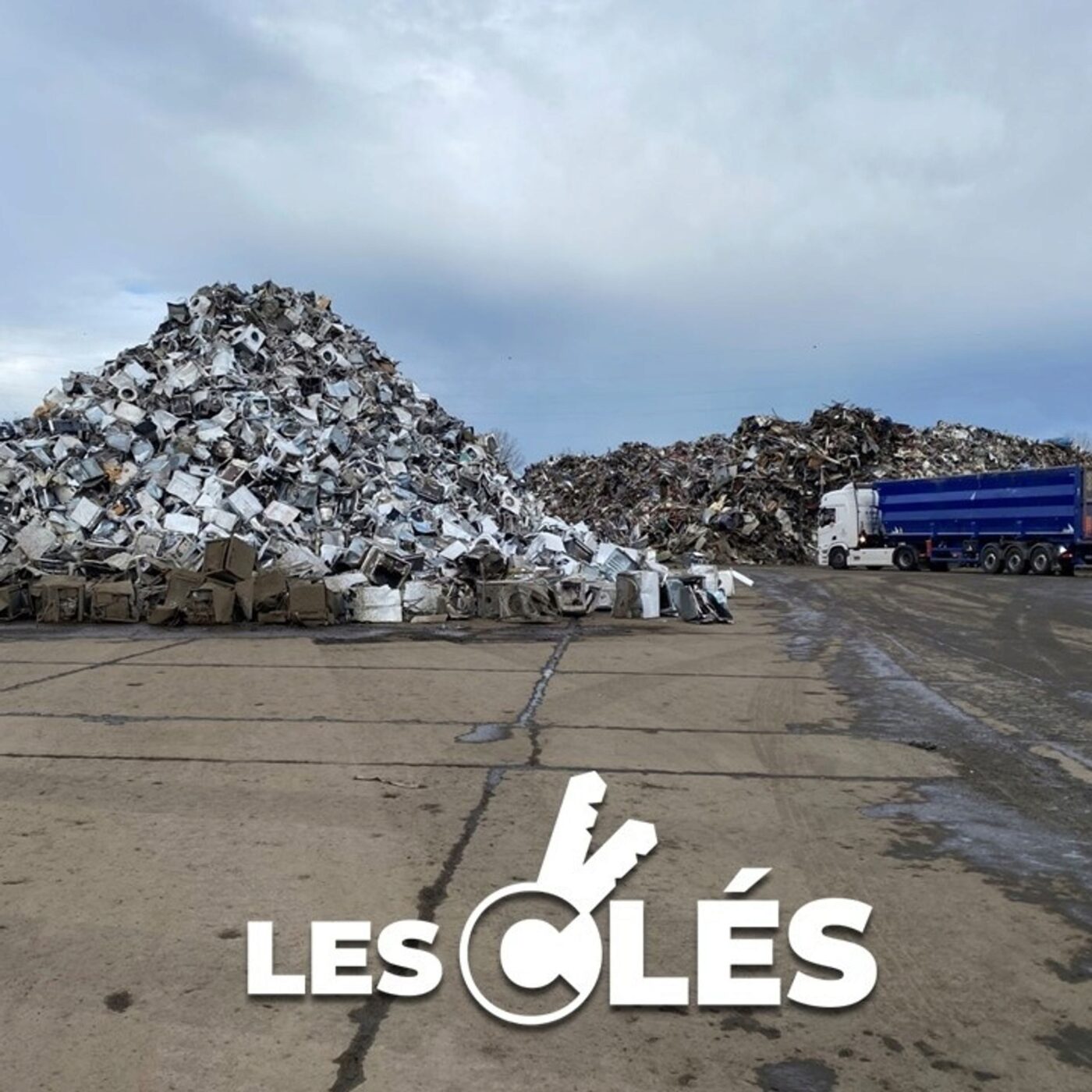
Les Clés
La guerre des métaux (2/2) : la voie du recyclage
00:27:27
Dans ce second épisode, nous nous intéressons au recyclage des métaux avec un reportage dans l’une des entreprises spécialisées dans ce domaine en Belgique, Comet. Nous suivons les différentes étapes du recyclage et discutons des grands enjeux de ce secteur avec le...
Loading summary
Transcript65 lines
- [00:01]
A
titane, manganèse, cérium et autres dysprosium, des métaux stratégiques.
- [00:06]
B
La première?
- [00:07]
C
Il n'y a pas d'industrie de défense sans terres rares et pour lesquelles nous dépendons à 100% des matières raffinées chinoises.
- [00:15]
B
Les clés? L'Europe veut en profiter pour restreindre les exportations de déchets fabriqués à partir de terres rares pour favoriser le recyclage. Arnaud Reussen.
- [00:25]
C
Bonjour à toutes, bonjour à tous et bienvenue dans le deuxième épisode des clés consacrées à la guerre des métaux. Après avoir exploré les raisons de notre dépendance à certains métaux critiques, on va dans ce numéro se pencher sur l'enjeu du recyclage. Jusqu'à quel point recycle-t-on les métaux aujourd'hui chez nous? La circularité est-elle une voie possible pour permettre à l'Europe d'assurer son autonomie stratégique? Quels dispositifs mettre en œuvre pour éviter que des ressources métalliques critiques soient aujourd'hui jetées, perdues? C'est tout cela que nous allons prendre le temps d'examiner en commençant par un grand reportage signé Sarah Poussey qui a poussé la porte de l'entreprise belge Comet, spécialiste du recyclage des métaux.
- [01:09]
B
«La première, les clés. D'un peu partout en Belgique, les objets électriques collectés dans les parcs à conteneurs sont envoyés vers l'entreprise Comet. Les plus gros sont directement transportés jusqu'au site d'Aubourg, près de Mons. Et les plus petits, comme les ordinateurs, les jouets ou les friteuses, arrivent ici, à Mont-sur-Marchenne. 10 à 15 camions de récupèles transitent tous les jours remplis de D3E, le nom de code pour les déchets d'équipements électriques et électroniques. Nicolas Bombec est responsable de production chez Comet et c'est l'un de nos guides sur le chemin du recyclage.
- [02:00]
D
La société CometService est spécialisée dans le démantèlement d'appareils électriques et électroniques. Donc ça va être tout ce qui est petit électro qui se trouve chez la personne lambda, qui ne fonctionne plus ou qui est beaucoup trop vieille et qu'ils vont porter dans un parc à conteneurs afin de l'envoyer vers un centre de tri et de dépollution.
- [02:22]
B
Première étape du parcours, établir des catégories. A la main, chaque objet est trié et examiné.
- [02:29]
E
Alors moi, c'est Panos. Ici, on est ouvrier polyvalent. Ce que je fais ici, c'est un peu la première phase du trip. Donc, on va recevoir beaucoup d'électro. Moi, ce que je vais devoir faire ici, c'est commencer à trier tout ce qui va au four, donc des micro-ondes, tout ce qui est PC, compartiment PC, les mettre pour les PC. Et alors, tout ce qui est petit jouet ou juste petit, comme ça, pour pas taper sur les doigts, on les met dans le petit bac. Tout commence par ici, tout passe ici. que ce soit des imprimantes, des micro-ondes.
- [03:06]
B
La deuxième étape consiste à démanteler manuellement les objets pour retirer tous les éléments polluants.
- [03:13]
D
Vous allez retrouver des condensateurs, des néons, des ampoules, des batteries lithium, des cartouches d'encre, des cartouches tonnerre, des encres rubans. Tous les différents polluants se trouvent ici et repartent directement vers des sociétés qui sont habilitées à récupérer ces polluants.
- [03:36]
B
Les ordinateurs eux sont mis à part car les ouvriers comme Vincent récupèrent leurs précieux composants.
- [03:44]
C
Ici, en fait, on se trouve au
- [03:45]
E
poste PC, donc tout ce qui est tour, portable, serveur.
- [03:53]
D
Et ici, on démonte tout ce qui
- [03:54]
E
est à l'intérieur, c'est-à-dire les cartes mères,
- [03:58]
C
on retire tout ce qui est câbles,
- [04:01]
E
les écrans, les alimentations, les refroidisseurs, piles, batteries.
- [04:08]
B
Et puis il y a aussi tous les objets trop petits pour être dépollués manuellement, par exemple des jouets, des cigarettes électroniques ou des écouteurs sans fil qui abritent des tas de batteries ou de piles. Comet a donc développé une machine qui permet de casser tous ces petits appareils électroniques. Les débris défilent ensuite sur un tapis roulant et les piles sont triées à la main, notamment par ange.
- [04:32]
E
Il y a une machine qui casse,
- [04:35]
F
qui libère les piles et ça passe
- [04:37]
E
sur le tapis et on crie les piles par-dessus.
- [04:41]
A
Il
- [04:46]
B
faut réagir vite quand même.
- [04:48]
F
Oui, il faut quand même avoir une
- [04:49]
E
rapidité pour trier ça.
- [04:51]
F
Il y en a quand même beaucoup comme vous voyez là.
- [04:55]
E
On a des bâtons, on a des petites piles, des grosses, on fait des trucs.
- [05:00]
B
D'accord. Chaque matin, quand les camions de récup'elle arrivent, c'est un peu la découverte. Les types d'objets et les flux varient, avec des pics durant les fêtes, au Black Friday ou encore en période de solde. Une fois dépollués, ces petits électroquits montent sur Marchenne et poursuivent leur trajet en camion vers Aubourg. Aubourg, c'est le site principal de Comet. 25 hectares le long du canal du centre où se dressent plusieurs usines et surtout des pyramides de plusieurs mètres de haut de déchets. En fait, déchets, ce n'est pas le bon terme. Il faut vraiment parler de matériaux puisque ce qui arrive ici est acheté par l'entreprise aux sociétés de gestion de déchets. Et puis, cette matière est recyclée et revendue. La première étape ici, comme à Mont-sur-Marchenne, c'est la dépollution. Rudy s'occupe des gros blancs, c'est-à-dire les lave-linges ou les lave-vaisselles.
- [06:00]
E
Ce premier maillon de la dépollution, on enlève les condensateurs qui sont des gros polluants et on récupère le cap de l'alimentation. Une fois que nous on a récupéré ça, on est sûr qu'il n'y a plus de polluants. Tout part en tas et puis ça passe à la broyeuse.
- [06:23]
B
Pour trier les différents composants, toutes les piles d'objets passent en effet une à une dans un super broyeur. Cédric Slegers nous explique le principe.
- [06:31]
G
Chez Comet, on a deux broyeurs. Ici, c'est le plus gros broyeur de l'Union Européenne. Le principe d'un broyeur, ce n'est pas une question logistique. Ce n'est pas casser pour réduire, pour transporter. Le principe du broyeur, ou on peut appeler aussi déchiqueteur, c'est de se dire que les matériaux qui rentrent chez nous, il y a plein de matériaux différents. Il y a du plastique, il y a des matériaux composites, il y a de la mousse, il y a du textile, il y a des métaux ferreux, des métaux non ferreux, il y a de plus en plus de câbles. Et donc c'est de se dire, après, à passage, au niveau manuel, de démonter un certain nombre de pièces, parfois des pièces, vous l'avez vu tout à l'heure, qui ont plus de valeur en les retirant manuellement, c'est d'éclater cette matière dans un broyeur pour pouvoir après séparer les plastiques, séparer les métaux non ferreux, séparer le cuivre, séparer les métaux ferreux.
- [07:11]
C
Les
- [07:19]
B
18 marteaux du broyeur tapent donc la matière pour la déchiqueter. Deux grands aimants attirent ensuite les parties de métaux ferreux qui s'écoulent en une grande pile. Toute cette ferraille sera chargée sur bateau et transportée vers différentes entreprises sidérurgiques. Et c'est ici qu'on entre dans la dernière partie du travail de Comet, traiter le résidu de broyage. Jusque dans les années 2000, cette matière était tout simplement jetée en décharge. Et puis, au fil des années, l'entreprise a développé des outils pour séparer les matières. Il a fallu être créatif. Et d'ailleurs, les techniques sont souvent inspirées d'autres industries, par exemple minières ou alimentaires.
- [08:03]
G
Comment les séparer? Il n'y a pas un magazine qui vous dit que vous devez faire comme ça, donc on doit chaque fois réfléchir. Ici, c'est une usine qui va utiliser de l'eau. Et donc on va artificiellement augmenter la densité, comme sur la mer Morte, pour que tous les plastiques flottent, tous les caoutchoucs flottent. Donc première séparation et une deuxième séparation, c'est un courant de Foucault, c'est un aimant qui tourne très très vite et qui va créer un champ électromagnétique. Et on va sortir un mélange, c'est ce qu'il y a devant nous, de zinc, d'aluminium, d'inox, de laiton et de cuivre. C'est ce qu'on appelle le zorba.
- [08:35]
B
Les composés plastiques subissent encore d'autres traitements pour finalement être divisés en cinq grosses familles et revendus à des transformateurs. Le mélange Zorba, composé donc de métaux non ferreux, est lui séparé dans une autre usine qui fonctionne cette fois avec de l'intelligence artificielle, des caméras et des robots. Et c'est là où travaille Lucas.
- [08:57]
G
On fonctionne avec un tri robotisé, on a 18 bras de robots sur la ligne qui trient une pièce à la seconde. Elles identifient via trois caméras et un programme qui définit les différentes classes des métaux. C'est les ouvriers qu'on a à notre disposition.
- [09:20]
B
Rien ne se perd, tout se transforme. L'adage prend vraiment tout son sens chez Comet qui ne cesse de travailler à de nouvelles façons d'améliorer la chaîne du recyclage. Mais l'entreprise est aussi confrontée à de sacrés défis. L'évolution de nos objets dont la composition change sans cesse et parfois des méthodes de fabrication qui ne permettent pas de séparer les matériaux. Ici, on le comprend, le recyclage d'un objet se réfléchit dès sa conception.
- [09:51]
C
Reportage donc signé Sarah Poussey et avec nous pour prolonger dans cet épisode des clés, il y a Pierre-François Barrel. Bonjour.
- [09:58]
F
Bonjour.
- [09:59]
C
Vous êtes le patron de la société Comet où s'est rendue Sarah. Société qui emploie aujourd'hui 550 personnes et qui traite combien de tonnes de déchets environ par an?
- [10:11]
F
Grosso modo, on brasse un million de tonnes de déchets, c'est-à-dire un million de tonnes à l'entrée mais également à la sortie avec la partie composante logistique qui va derrière.
- [10:19]
C
Et ça nous montre, ce qu'on entend là, une face qu'on ne connaît pas vraiment de la société de consommation aujourd'hui. Tout ce qui doit être recyclé, on a compris que ce n'est pas toujours évident. Alors repartons peut-être avec vous un peu des bases. On va préciser qu'avant de travailler chez Comet et puis d'en devenir le CIO, vous avez fait une thèse de doctorat en métallurgie, vous êtes ingénieur des mines, donc vous avez un parcours scientifique avant ce parcours industriel. Peut-être qu'on peut expliquer que le métal, a priori, se prête très bien à l'enjeu de la circularité. Si on parvient à garder un métal à peu près pur, le fait de le refondre fait qu'on peut réutiliser pratiquement l'entièreté du métal qu'on a fondu pour faire autre chose. Donc, en théorie, le métal c'est très bien pour développer une économie circulaire.
- [11:06]
F
Oui, c'est vrai pour la plupart des métaux. Mais évidemment, vous parlez d'un métallurgiste et ce n'est pas valable pour tous. Derrière, la métallurgie nécessite et les efforts de métallurgie nécessitent quand même de repasser par des transformations très primaires en amont. Le recyclage, vous l'avez évoqué, en tant qu'ingénieur des mines, j'ai un peu suivi le déchet comme si c'était une mine, ce qu'on appelle la mine urbaine, la mine de surface. et très vite j'ai été confronté à la nécessité de partir aussi vers la métallurgie parce que c'est une chose que d'avoir la mine, c'est une autre chose que d'avoir la métallurgie qui permet d'alimenter ces métaux vers les bonnes filières et qui est quelque chose d'essentiel. Aujourd'hui on parle beaucoup de métaux, j'aime toujours à dire aussi derrière il y a l'utilisateur du métaux et il faut faire le gap entre le producteur et le consommateur de métaux qui va lui après offrir des objets.
- [11:54]
C
Alors on peut prendre peut-être un exemple très concret, quand on a des canettes en aluminium, par exemple Pierre-François Barrel, bon là a priori on est face à un processus qui n'est pas trop trop compliqué, si on peut collecter les canettes, on peut les refondre et puis on peut réutiliser cet aluminium. Ça va d'ailleurs coûter beaucoup moins cher en argent et en énergie que s'il fallait aller extraire de l'alumine dans la bauxite pour avoir de nouveau de l'aluminium utilisable. Donc là, par exemple, c'est très intéressant de pouvoir le faire. Mais la première chose déjà qu'il faut avoir en tête, c'est que pour pouvoir réaliser cela, il faut d'abord pouvoir récupérer les canettes et pouvoir les refondre. Ça, c'est un premier enjeu et on l'entend un peu dans le reportage. Aujourd'hui, pour pouvoir organiser de la circularité, il faut d'abord pouvoir collecter les objets qu'on veut recycler. Et ça, ce n'est pas toujours simple. On a beaucoup progressé en Belgique, mais on n'est pas encore au bout de ce qu'on pourrait faire en la matière.
- [12:48]
F
Maintenant, on a beaucoup progressé en Belgique. Je crois aussi qu'on peut dire que la Belgique fait partie des leaders. Donc, depuis très longtemps, les citoyens trient chez eux. Depuis très longtemps, les entreprises trient. Effectivement, la logistique qui tourne autour est importante. On brasse beaucoup de volume. Tout ce que vous consommez d'un côté, à un moment donné, il faut les ramener dans nos filières. Donc, le transport à la vente et à l'achat sont les mêmes. Finalement, le bilan de masse est équivalent. Mais je peux vraiment dire qu'au niveau de cette logistique-là, aujourd'hui, elle est en place. Ce qui manque peut-être derrière, c'est les filières qui vont derrière. On a beaucoup parlé, alors c'était plus le cas sur les plastiques, mais sur les métaux ça existait aussi, de l'exportation, parce que nous n'avions pas la capacité industrielle de pouvoir faire quelque chose de ces déchets. Et c'est là qu'il a fallu développer les technologies, ça nous a beaucoup occupé ces dernières années.
- [13:34]
C
Donc, vous nous dites qu'on est plutôt bon pour collecter en Belgique. C'est déjà une bonne nouvelle. Et si je comprends bien, là où on a un manque, mais qui est en train de se combler, c'est sur notre capacité à traiter en aval ces déchets chez nous, ici en Belgique, plutôt que de devoir les exporter ailleurs. Et puis, il y a la façon dont on va pouvoir justement traiter correctement ces déchets. Et là, ce qui transparaît, je trouve, dans le reportage de Sarah Poussey, c'est à quel point traiter ces déchets, une fois qu'on les a, est tout sauf simple. Tant on a aujourd'hui des objets complexes qui mêlent plusieurs métaux différents, avec du plastique, d'autres matières encore, trier, séparer tout ça, c'est vraiment compliqué.
- [14:14]
F
Oui, tout à fait. Et j'aimerais répéter que nos objets sont tous les jours plus compliqués. On nous les annonce toujours plus éco-conçus également. Je tiens à signaler qu'au niveau des recycleurs, le métier n'a jamais été aussi compliqué qu'aujourd'hui et sera plus compliqué demain. Vous l'avez entendu dans le reportage. Il y a d'abord un état de fait, il y a des choses qu'on a mis en marché qu'on ne recyclera jamais. Et donc nous, ça fait partie, vous avez expliqué, qu'on regroupait et nous on recristallise un petit peu cette post-consommation dans nos activités. Il y a des éléments qu'on ne remettra jamais en marché simplement parce qu'aujourd'hui ils ne sont plus acceptables et acceptés sur une mise en circulation pour des raisons de pollution et ce genre de choses. Et donc ça c'est un métier de départ qui est souvent sous-considéré dans notre filière, mais avant de remettre des matériaux au marché, on retire également du marché des choses qui ne pourront pas aller dans une économie circulaire. Alors vous l'avez entendu, il y a des opérations très manuelles, 25% du personnel le commettent, c'est de l'opération manuelle pour faire ce qu'on appelle la dépollution, le tri, le démantèlement. Ensuite, on a principalement des outils d'ordre mécanique. On a entendu du broyage, du séparateur à courant de Foucault. Ça, c'était, je vais dire, les 20 dernières années du recyclage, c'est-à-dire ce qu'on appelait la séparation mécanique. On utilise des outils pour le faire. on rentre dans une nouvelle ère. Vous l'avez entendu, l'ère du numérique qui nous permet d'avoir accès à des formes de robotisation. Alors pourquoi est-ce qu'on robotise? Parce qu'à un moment donné, le humain n'est pas capable de voir des choses que des capteurs sont capables de faire. Le robot est capable d'aller prendre des pièces là où l'être humain a plus de difficultés et avec des cadences aussi qui le permettent. Et là, on va séparer entre des métaux des alliages. Par exemple, vous avez parlé de la canette. C'est un des 300 alliages d'aluminium. Nous, avec ses capacités industrielles, on va aller séparer différents alliages qui, à l'EU, sont tous les mêmes. Et donc, ça, c'est l'avenir du recyclage. C'est d'aller vers de plus en plus de valeurs ajoutées sur de la séparation avec des techniques de la métallurgie moderne, des tris via l'intelligence artificielle, des outils également. On va parler de pyrométallurgie dans des fours, donc des choses qui nous refont rêver. Là où finalement on a connu une désindustrialisation de tout ce qui venait de la métallurgie primaire, c'est-à-dire la grande force de nos régions de l'époque, mais qui se fait ailleurs aujourd'hui.
- [16:23]
C
Mais donc, d'après vous, on a une possibilité, en Wallonie notamment, terre de métallurgie historique, partir de ces produits recyclés pour redévelopper quelque part un accès à cette matière première qu'est le métal et participer à l'autonomie stratégique de l'Europe dans le fait de retrouver sur son sol alors des matériaux importés par notre consommation.
- [16:48]
F
Oui, mais aujourd'hui, je tiens à vous dire qu'on est peu nombreux. Et donc, lorsqu'on a connu la fameuse désindustrialisation sidérurgique et métallurgique en Wallonie, on a eu autour d'une table un consortium de quelques entrepreneurs universités. Vous avez eu Eric Piraire hier à votre micro. qui se sont réunis en 2010 et qui ont voulu ne pas laisser tomber ces métiers-là. On a créé ce qu'on a appelé la Reverse Métallurgie, qui est un consortium d'entreprises, de centres de recherche d'université, pour redévelopper la métallurgie de demain. Effectivement, pendant dix ans, on était les anciens qui avaient des idées. Aujourd'hui, on sent que c'est indispensable. On parle de souveraineté de l'Europe par rapport à ces matières. Moi, je dis c'est surtout par rapport à ces filières, parce que derrière ces matières, elles doivent alimenter des filières industrielles. Et aujourd'hui, oui, effectivement, je suis extrêmement positif de voir qu'il y a les idées, il y a la technique, mais il faut aussi parler de l'acceptabilité sociétale. Je suis le dernier ingénieur des mines formé à l'Université de Liège. Eric est le dernier professeur. J'ai dans mes équipes le dernier ingénieur en métallurgie de cette même université. Il faut recréer tout ça. La formation, l'acceptation, tous ces éléments là sont pour moi aussi importants que les belles techniques à mettre en oeuvre.
- [18:02]
C
Donc ça c'est pour l'enjeu et les opportunités qu'il peut y avoir aussi pour des régions comme les nôtres. Ceci dit, si je reviens à quelque chose que vous évoquiez juste avant, qui est assez interpellant, c'est qu'on a l'impression qu'on a une course à l'armement technologique, à la fois dans le développement des objets, qui fait qu'on va mixer de plus en plus de matériaux dans un même objet, on va aussi les miniaturiser, et à l'autre bout de la chaîne, vous-même, vous allez devoir recourir de plus en plus à des outils numériques, robotiques, pour aller reséparer tout cela en aval. on a l'impression qu'on ne se facilite pas la tâche aujourd'hui dans la façon dont fonctionne notre société de consommation si on voulait vraiment construire davantage de circularité.
- [18:44]
F
Ça très clairement. Je crois qu'on n'a jamais eu des produits aussi peu éco-conçus qu'aujourd'hui alors que les programmes de recherche sur l'éco-conception sont très conséquents. Moi j'aime parfois essayer d'amener des solutions à ça et une des approches que j'ai souvent c'est de dire si vous commenciez déjà par concevoir tout ce que vous produisez à partir de produits recyclés, au lieu de penser à la place du recycleur, vous penseriez déjà avec le recycleur. Et pour nous, c'est important parce que finalement, ça amène la demande en matériaux recyclés. Je prends souvent l'exemple. Nos déchets, il y en a beaucoup, mais l'important, c'est de tirer l'économie circulaire par la demande. Et si finalement, l'utilisateur final est conscient que ce déchet n'est pas toujours exactement ce qu'une mine va produire ou la pétrochimie va produire, mais est vraiment à prendre en tant que nouveaux matériaux. Alors là, je pense qu'on va vraiment faire avancer l'économie Donc ça, premier message
- [19:35]
C
du recycleur, évidemment vous vous plaidez, c'est normal pour votre chapelle, mais c'est de dire tiens il faudrait déjà qu'en amont dans la conception des objets on se dise comment est-ce que je peux partir d'un produit qui est lui-même issu de la filière du recyclage. J'imagine qu'il y a aussi parfois des enjeux de conception où vous-même en tant que recycleur vous vous dites Tiens, mais ça, si on avait conçu l'objet un peu différemment, si on n'avait pas mis tel matériau à côté de tel autre, ça n'aurait peut-être pas fondamentalement changé l'objet, mais ça nous aurait simplifié fortement la tâche en aval au moment de recycler. Aujourd'hui, on ne pense pas assez la fin de vie des objets au moment où on les conçoit.
- [20:10]
F
Non bien sûr. Je vais vous donner un simple exemple. Vous avez entendu tout à l'heure, on doit retirer les batteries de tous les déchets électriques et électroniques. Je mets au défi tous les citoyens de Belgique d'être capables de retirer toutes les batteries de tous les objets qu'ils utilisent. Le simple smartphone par exemple. L'accès à la batterie d'un smartphone est compliqué. Or là, il y a un enjeu fondamental. Les batteries, aujourd'hui, c'est des batteries que tout le monde connaît comme des batteries au lithium. Nous, on voit ça comme un danger. Une batterie au lithium, ça peut brûler, ça peut exploser, ça peut mettre le feu à des déchets qui sont combustibles en partie. Et donc, voilà, simplement, la conception de tous ces objets qui contiennent des batteries au lithium pour lesquels on n'a pas l'accès, c'est toute une difficulté que le secteur du recyclage, qui est en crise par rapport aux incendies, il est confronté.
- [20:52]
C
Et donc là, il y a un message pour ceux qui conçoivent les objets, on pourrait penser les choses autrement, à la fois pour imaginer le recyclage en aval et puis peut-être même simplement la sécurité de ceux qui vont devoir y travailler. Puis il y a l'enjeu peut-être aussi du consommateur et de la façon dont on peut organiser, réguler la consommation. On a posé justement la question à Éric Pirard que l'on avait dans notre épisode précédent. de ce que Louis trouvait important d'envisager en termes de régulation, notamment pour améliorer justement la recyclabilité. Écoutez sa réponse.
- [21:25]
A
Il y a beaucoup de défis à relever pour arriver à une économie circulaire. Quand je dois n'en citer qu'un seul, j'ai tendance à insister sur le fait que nous devons absolument ralentir la boucle de consommation. Et c'est assez facile à comprendre. Si on veut ralentir la boucle de consommation, il faut que nos produits durent plus longtemps. Donc il faut absolument que tous les incitants que l'on peut trouver, qu'ils soient légaux ou fiscaux, aillent dans le sens de favoriser des produits qui durent, des produits qui sont plus facilement réparables et des produits surtout qui sont plus facilement recyclables. Or quand on fait un peu l'historique des technologies des 10, 20, 30 dernières années, on est allé tout sauf dans cette direction-là.
- [22:00]
C
Est-ce qu'il y a, à votre avis, des voies politiques à suivre pour encourager et l'industrie et le consommateur à aller vers ça?
- [22:09]
A
C'est un sujet complexe. L'Europe met en place une série de réglementations. Il y a aujourd'hui le Digital Product Passport. On va essayer de documenter ce qu'il y a dans un produit et j'espère aussi commencer à documenter comment gérer ce produit en fin de vie. Il y a une série de directives sur les éco-designs qui ne sont peut-être pas toujours bien ciblées, mais il y a du progrès. En matière de taxation, je ne suis pas spécialement au courant de ce qu'il peut y avoir. Je dis souvent un peu par boutade qu'on devrait remplacer la taxe sur la valeur ajoutée par une taxe sur la valeur dégradée parce que, en l'occurrence, quand on prend du cuivre, de l'aluminium et de l'argent et qu'on en fait un mélange, une soupe de métaux comme on le fait aujourd'hui dans l'électronique, on a dégradé la valeur originale de ces métaux qui étaient purs et qui aujourd'hui sont mélangés de manière quasiment inextricable. Ayant dit ça, je n'ai pas la clé pour voir comment on peut fixer une taxe sur la valeur dégradée. Mais clairement, il faudrait que certains objets soient pénalisés par le fait qu'ils rendent la récupération des métaux en fin de vie pratiquement impossible.
- [23:08]
C
Mais donc, pour résumer, on pourrait dire qu'aujourd'hui, en tout cas, la façon dont fonctionne notre système de consommation, la façon dont tout ça est encadré aussi fiscalement, etc. ne favorise pas encore vraiment la durabilité, rend quand même toujours très attractif pour le monde économique de fabriquer des objets jetables à très courte durée de vie.
- [23:29]
A
Oui, et là, je peux aussi blâmer le marketing qui pousse aussi à avoir des tas d'objets avec des des écrans tactiles ou des boutons qui sont tactiles plutôt que mécaniques. On pousse à l'électronique partout, on pousse à la reconnaissance vocale même dans une cafetière alors que pour faire du café il n'y a pas besoin de reconnaissance vocale. Il y a aussi une lourde responsabilité là-bas des fabricants et des responsables du marketing et donc de la mode des objets que l'on nous propose à la vente.
- [23:55]
C
Pierre-François Baril, vu de votre point de vue d'entreprise qui pratique le recyclage, il y a un vrai enjeu de régulation sur la façon dont on produit, sur la façon dont on consomme, si on veut demain construire une économie beaucoup plus circulaire et aussi plus autonome stratégiquement pour l'Union Européenne, puisqu'il y a ça aussi comme enjeu. Si on a accès davantage à ces ressources, notamment métalliques, c'est aussi un argument de souveraineté pour l'Union Européenne. Oui, bien sûr.
- [24:22]
F
Et donc, on revient à l'éco-conception, mais là, on est dans de grands paradoxes qui sont très difficiles à surmonter. Est-ce qu'aujourd'hui, une cafetière doit avoir des petits leds lumineux qui contiennent des terres rares ou du gallium incrusté dedans, que nous serons quasiment incapables d'aller rechercher? La question est vraiment là. Maintenant, pour revenir à la notion de souveraineté, je pense qu'il faut être conscient de certains éléments. Aujourd'hui, le reste du monde ne nous a pas du tout attendu. Les capacités industrielles en métallurgie, elles ne sont plus chez nous. Je pense qu'il est important de rappeler aussi qu'on ne les voit plus. Donc je pense que les citoyens européens ne se rendent plus compte que les mines qui sont ailleurs, elles ont leurs impacts ailleurs, que la métallurgie qui est aujourd'hui à 55% quasiment en Chine, on ne la voit plus. Donc quand on ne le voit pas, on ne se rend plus compte non plus des enjeux et donc se réapproprier ces thématiques est un enjeu je pense sociétal important pour la souveraineté de l'Europe parce que si un jour on doit remettre une souveraineté en Europe, ces usines elles devront réapparaître Et là, elles ne réapparaîtront pas comme là-bas ou comme on l'a fait chez nous. Et donc il faut aussi que l'Europe soit consciente qu'elle doit mettre les balises économiques autour de ça parce qu'on ne veut pas l'industrie de hier en Europe et on ne veut pas l'industrie d'ailleurs en Europe. Donc il faudra construire une nouvelle industrie de demain. Là-dessus, l'enjeu, il est également de mettre les balises économiques. Et là-dessus, l'Europe a plutôt tendance à venir fixer des objectifs qu'on se fixe entre nous en Europe, qui n'existe pas ailleurs dans le monde, mais le monde y continue à avancer sans ces balises européennes. Donc nous, c'est vraiment important de voir une Europe qui, indépendamment d'objectifs, s'en donne les moyens économiques.
- [25:57]
C
Et pour Pierre-François Barrel, si l'Europe veut être cohérente avec ses objectifs, alors elle doit mettre en place des mécanismes qui assurent que l'acier européen, que l'on veut rendre le plus vert possible et dont on veut assurer la circularité, puisse jouer à arme égale avec les métaux importés d'Inde, de Chine ou d'ailleurs. avec par exemple des tarifs qui s'appliqueraient aux métaux qui entrent en Europe sans respecter nos standards sociaux et environnementaux.
- [26:29]
F
«Oui d'accepter que des produits qui viennent d'ailleurs soient soumis à finalement payer le juste prix de l'externalité de pollution ou de conditions sociales qu'on accepte ailleurs et qu'on n'accepterait pas chez nous. Je viens toujours avec le slogan «Je suis ferrailleur et je ne veux pas qu'on laisse faire ailleurs ce qu'on n'accepte pas chez nous».
- [26:46]
C
C'était donc Pierre-François Barrel, CEO du groupe Comet. Merci à lui d'être venu nous éclairer sur les enjeux du recyclage et de la circularité des métaux. Merci à Laurent Nélissen pour la réalisation sonore de cet épisode, à Sarah Pousset pour son reportage sur différents sites de la société Comet. Cet épisode, je vous le rappelle, était le tome 2 en quelque sorte d'un diptyque consacré à la guerre des métaux. N'hésitez donc pas à aller écouter, si ce n'est pas encore fait, l'épisode précédent qui questionnait en particulier notre dépendance criante face à la Chine. Bonne écoute et merci d'être fidèle au Clé.