← Les Clés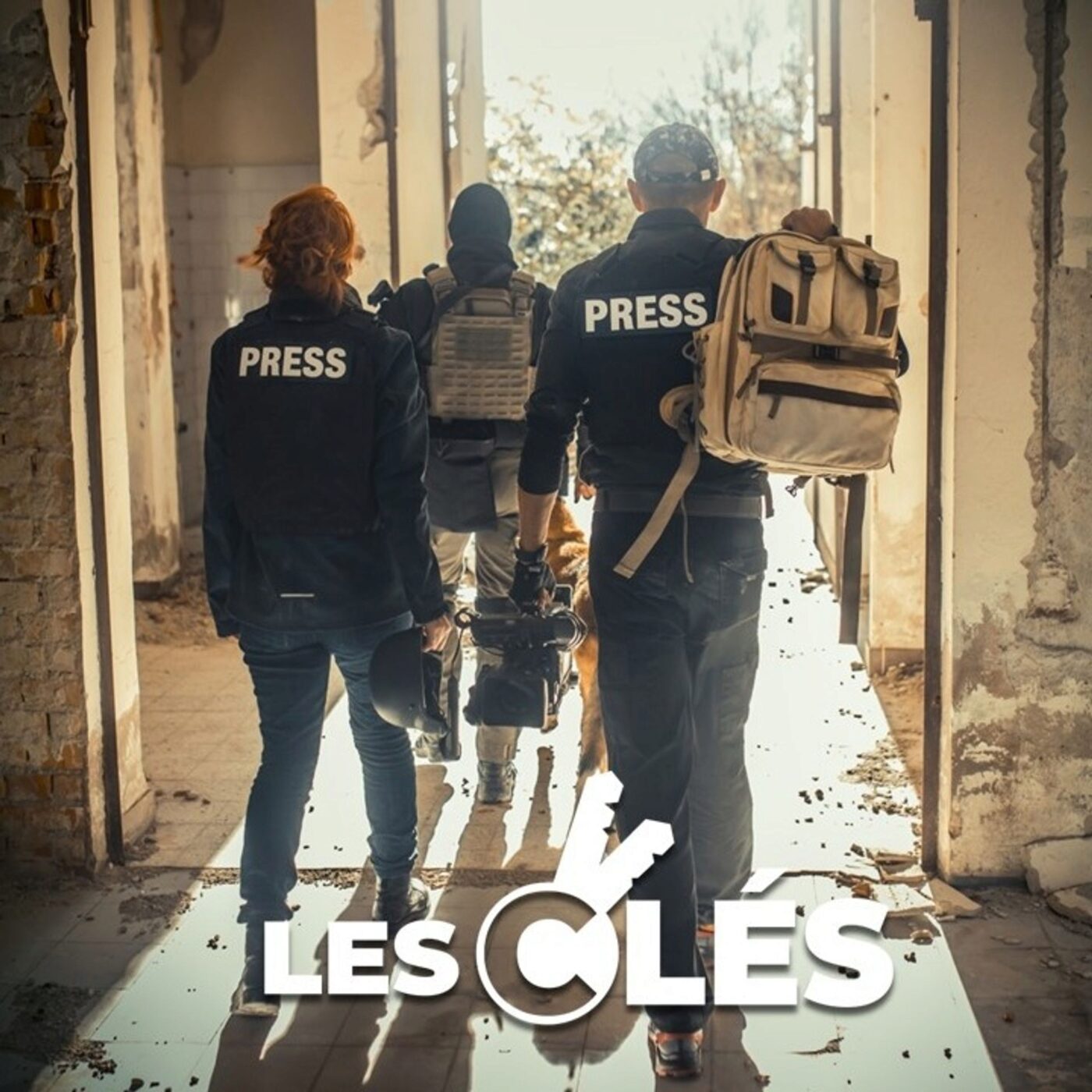
Les Clés
#medias : Comment le journalisme de guerre évolue-t-il ?
00:31:56
Si la présence sur le terrain est cruciale pour documenter la guerre, certains endroits sont aussi inaccessibles aux journalistes. Face à ce vide, data, vidéos amateurs ou images satellites peuvent constituer des sources d’informations précieuses. Nous discutons de...
Loading summary
Transcript67 lines
- [00:01]
Ambroise Carton
Un reporter et son ingénieur du son ont été tués dans l'Est de l'Ukraine.
- [00:05]
Host (possibly Sarah Poussey or a main presenter)
La première? Vous êtes notre correspondante à Kiev. Aucune région d'Ukraine n'a été épargnée. Effectivement, on avait été repérés par les agents du régime au cœur de la guerre.
- [00:17]
Christophe Lamfalussi
Les clés médias, Marie Van Kutzer.
- [00:19]
Host (possibly Sarah Poussey or a main presenter)
Bonjour à toutes et tous et bienvenue dans les clés médias. Nous avons peu d'images de la guerre en Iran, on ne voit pas les gens. Gaza est interdite d'accès aux journalistes étrangers. Le massacre d'El Fasher au Soudan fin octobre 2025 s'est fait quasiment sans témoins, sans images. Comment documenter la guerre quand personne n'est là pour la raconter? Une piste est peut-être de compter sur de nouveaux moyens technologiques. Les images satellites, les datas. C'est ainsi que l'on a pu documenter les destructions dans la bande de Gaza ou même repérer de grandes flaques de sang au Soudan, sur le sol clair et sablonneux d'El Facher. Des images qui compensent, qui complètent, mais qui ne remplacent pas le travail de terrain malgré tout. Aujourd'hui, on parle de l'évolution du journalisme de guerre avec nos invités. La première, les clés.
- [01:11]
Vladimir Poutine
J'ai décidé de lancer une opération militaire spéciale. Son objectif est de protéger les personnes qui ont été soumises à des abus et à un génocide par le régime de Kiev pendant 8 ans. Et pour ce faire, nous nous efforcerons de démilitariser et de dénazifier l'Ukraine et aussi de traduire en justice ceux qui ont commis de nombreux crimes sanglants contre des civils, y compris des citoyens de la Fédération de Russie.
- [01:53]
Host (possibly Sarah Poussey or a main presenter)
Nous sommes le 24 février 2022. La Russie annonce une opération de dénazification de l'Ukraine. Les mots choisis par Vladimir Poutine font partie intégrante de son récit. Il faut justifier l'attaque.
- [02:13]
Ambroise Carton
Bienvenue dans votre grand dossier sur LCI, consacré ce soir en grande partie à la Russie.
- [02:19]
Christophe Lamfalussi
Tout s'accélère ce soir du côté de
- [02:20]
Ambroise Carton
la Russie contre l'Europe.
- [02:22]
Host (possibly Sarah Poussey or a main presenter)
Aucune région d'Ukraine n'a été épargnée ces dernières heures par les tirs, les frappes.
- [02:26]
Ambroise Carton
On est à plus de 20, presque 25 attaques sur des sites énergétiques.
- [02:30]
Christophe Lamfalussi
Les objectifs de l'opération militaire spéciale seront atteints. Nous préférions y parvenir et éliminer les
- [02:37]
Ambroise Carton
causes profondes du conflit par la voie diplomatique.
- [02:40]
Christophe Lamfalussi
Nos troupes ont l'initiative stratégique sur toute la ligne de contact. J'ai dit récemment que nous les écraserions, mais il y a des raisons de croire que nous allons les achever.
- [03:02]
Host (possibly Sarah Poussey or a main presenter)
C'est le début d'une guerre qui dure depuis plus de 4 ans maintenant. Maureen Mercier, correspondante pour la RTBF, était déjà sur place lors des assauts contre la Crimée en 2014. En février 2022, elle retourne sur place et s'y installe. La question d'être sur le terrain pour couvrir cette guerre ne se pose même pas.
- [03:18]
Maureen Mercier
Une guerre, c'est compliqué. Si on n'est pas sur place, on ne la comprend pas. Alors évidemment qu'il faut des spécialistes, des experts, mais souvent ces experts, je les vois ici venir régulièrement, et c'est ce qui fait leur qualité, je les vois venir en Ukraine faire également ce travail de terrain. Moi, j'ai choisi d'y rester, d'y vivre, parce que pour mieux vous raconter ce que les Ukrainiens vivent dans leur chair et parce que, encore une fois, les choses sont très complexes, je pense que d'être ici quasiment chaque jour qui passe, c'est tout ce que je mets comme plus-value, comme savoir dans les reportages. Et je pense véritablement, encore une fois, que cette réalité-là, ce travail-là, c'est le cœur de notre métier et c'est ce qu'on doit aux gens, véritablement.
- [04:06]
Host (possibly Sarah Poussey or a main presenter)
Mais elle l'admet, comme partout en terrain de guerre, il y a des zones où elle ne va pas, où elle ne peut pas.
- [04:11]
Maureen Mercier
C'est vrai, ça fait plus de 4 ans que je me farcis des nuits découpées, des bombardements, que je vais dans des coins parfois très compliqués. Évidemment que toutes les journées qui se déroulent ne sont pas si simples et qu'il y a une part de sacrifice. Mais très franchement, je pense que c'est la base même de notre métier. Comment on peut couvrir la guerre autrement qu'en étant sur le terrain? C'est, je pense, le lien de confiance qu'on a avec les auditeurs et les auditrices. Et ça, j'y tiens. véritablement, malgré encore une fois les difficultés à couvrir une gare sur la longueur. Une gare c'est compliqué, si on n'est pas sur place, on ne la comprend pas. Alors évidemment qu'il faut des spécialistes, des experts, mais souvent ces experts, je les vois ici venir régulièrement, et c'est ce qui fait leur qualité, je les vois venir en Ukraine, faire également ce travail de terrain. Moi, j'ai choisi d'y rester, d'y vivre, parce que, pour mieux vous raconter ce que les Ukrainiens vivent dans leur chair, et parce que, encore une fois, les choses sont très complexes, je pense que d'être ici, quasiment chaque jour qui passe, c'est tout ce que je mets comme plus-value, comme savoir dans les reportages, et je pense véritablement, encore une fois, que cette réalité-là, ce travail-là, c'est le cœur de notre métier, et c'est ce qu'on doit aux gens, véritablement. Évidemment, il y a les territoires occupés par la Russie. Ça représente 20% du territoire ukrainien. J'ai fait plusieurs demandes, parce que j'estime qu'une guerre, il faut pouvoir la couvrir des deux côtés, mais je n'ai jamais eu la moindre réponse de la part des autorités russes. Je continue à faire des demandes, sait-on jamais, peut-être qu'un jour, ça aboutira.
- [06:00]
Host (possibly Sarah Poussey or a main presenter)
Toutes ces zones occupées par l'armée russe sont donc devenues des angles morts de la guerre. Mais c'est là que les images satellites viennent apporter des informations précieuses. Selon l'AFP qui a croisé de nombreuses données, 19 à 20% du territoire ukrainien sont désormais occupés par la Russie dans l'Est et le Sud de l'Ukraine. Des chiffres recalculés régulièrement avec les données disponibles. Et ces territoires ne sont pas seulement occupés, ils sont exploités et remodelés par la Russie. L'agence Reuters a fait ses calculs. Grâce aux images satellites, 2500 km de routes et de voies ferrées ont été construites ou réparées entre 2022 et 2025 dans ces régions. Il faut faciliter le transport des soldats et du matériel russe lié à la guerre, mais aussi le produit de l'exploitation agricole et minière de la région. On peut imaginer qu'après de tels investissements, la Russie n'a aucune intention de restituer ces zones, même après un potentiel accord de paix. Ici à la RTBF, la cellule des cryptes a même pu confirmer la construction de bâtiments pour les russes dans la ville de Mariupol. Construction annoncée et largement médiatisée par la chaîne YouTube du génie de l'armée russe. En analysant les images avant après de la zone sur quelques mois, on voit en effet du ciel la construction très rapide de ces immeubles d'un blanc éclatant parmi les autres bâtiments salis et abîmés par la guerre. Un projet qui vise donc à installer des russes dans la région. Une guerre donc, de façon d'aller chercher l'information, sur place ou de loin, on en parle et on analyse l'évolution de tout cela avec nos invités du jour. Bonjour Christophe Lamfalussi.
- [07:48]
Christophe Lamfalussi
Bonjour.
- [07:48]
Host (possibly Sarah Poussey or a main presenter)
Vous êtes grand reporter à La Libre Belgique. Vous avez parcouru les zones de guerre à travers le monde pendant 40 ans et vous venez de sortir un livre qui s'intitule «Zone rouge, un grand reporter face à l'enfer des guerres». C'est aux éditions Racine. Alors Christophe Lamfalussi, un mot d'abord de ce constat. Ces zones rouges sans accès aujourd'hui, ces guerres à huis clos, est-ce que c'est quelque chose que vous avez déjà vu durant votre carrière ou bien c'est un phénomène nouveau?
- [08:14]
Christophe Lamfalussi
C'est un phénomène qui est croissant. C'est-à-dire qu'il y a eu, dans le passé, des zones totalement fermées aux journalistes. Je pense notamment à la Syrie dans les années 80, lorsque le régime a écrasé les frères musulmans dans la ville de Hama. Il y a eu 20 000 morts. Et ce n'est qu'après que les journalistes ont pu rentrer dans le pays et faire le compte-rendu de ce qui s'était passé. Mais c'est vrai que par ma propre expérience, je constate qu'il y a de plus en plus de zones qui sont fermées aux journalistes volontairement pour empêcher que la vérité apparaisse et pour empêcher aussi que des éléments viennent contredire le narratif de la guerre.
- [08:51]
Host (possibly Sarah Poussey or a main presenter)
On a ces derniers temps une sensation d'accélération des crises. On en a parlé d'ailleurs dans une émission précédente sur l'anxiété informationnelle. Mais quand on lit votre livre, Chute du mur de Berlin, ex-Yougoslavie, Bosnie, Kosovo, le 11 septembre, l'Afghanistan, la Syrie, les attentats en Europe, on se dit que ça a peut-être toujours été le cas. Quel est votre regard à vous là-dessus?
- [09:11]
Christophe Lamfalussi
En Bosnie, par exemple, on pouvait franchir les lignes de front. Lorsqu'il y avait des trêves, il était possible de passer d'un camp à l'autre, des croates aux serbes et des serbes aux bosnaques. On pouvait même sortir de Sarajevo et aller sur les montagnes de palais où se trouvait le quartier général des serbes de Bosnie.
- [09:28]
Host (possibly Sarah Poussey or a main presenter)
La presse était respectée, entre guillemets, pour ce qu'elle était, pour son travail?
- [09:31]
Christophe Lamfalussi
La presse était respectée, pour autant qu'elle était accréditée. C'est-à-dire qu'il fallait quand même chercher des papiers un peu partout. mais elle était respectée et il y avait également à l'époque des observateurs étrangers. Il y avait des observateurs européens qui étaient dans des grands jeeps blindés blanches. On les appelait les marchands de glace à l'époque. Et ces observateurs européens comme observateurs passaient d'un camp à l'autre dans des voitures blindées avec des gilets pare-balles et des casques. Donc on les a accompagnés une fois ou deux. Et là on passait également les lignes de front. Mais progressivement, je trouve que les journalistes ont d'abord été mis à l'écart. Je pense à la guerre en Irak avec l'invasion américaine. Les journalistes qui étaient incorporés dans l'armée américaine étaient en queue de peloton finalement et ne voyaient pas ce qu'il se passait. A peine s'ils voyaient les cadavres. C'était une guerre sans cadavres. Puis plus récemment, il y a eu aussi une guerre que j'ai couverte, qui est le Haut-Karabakh, où l'assaut final de l'armée azérie en 2023 s'est fait sans aucun journaliste sur place, sauf un ou deux journalistes locaux. Et la seule façon dont on a pu voir ce qui se passait, c'était des images satellites qui montraient des colonnes de voitures d'Arméniens qui fouillaient l'enclave et qui quittaient finalement leur pays natal.
- [10:51]
Host (possibly Sarah Poussey or a main presenter)
On sent quand même qu'il y a une évolution dans la pratique du journalisme de guerre, dans ce que vous nous dites aujourd'hui. Après, j'ai vraiment eu à la lecture de votre livre une sensation de continuité. On parle par exemple beaucoup du complotisme aujourd'hui, des fake news. Vous, en détaillant votre voyage dans la Roumanie d'Etchewoszewko, vous parlez déjà de climat complotiste. Quand vous décrivez la guerre civile en Syrie, vous parlez de fake news. L'époque actuelle n'a rien inventé, mais peut-être que c'est l'évolution des nouvelles technologies qui a accéléré ou amplifié les choses.
- [11:21]
Christophe Lamfalussi
Exactement, c'est le fait que des théories complotistes sont diffusées largement à grande échelle par les réseaux sociaux qui sont parfois complices. Je pense aux réseaux X par exemple, dont les algorithmes manifestement amplifient les fake news. Mais c'est vrai que dans des situations comme la Roumanie, de l'après-Cheochescou, c'était vraiment une dictature fermée. Au moment où ça s'ouvre, on sent qu'il y a des gens qui veulent prendre le pouvoir, qui étaient proches auparavant de Cheochescou et du Parti communiste, mais qui voulaient reprendre le pouvoir, se débarrasser du dictateur, mais être quand même là au pouvoir après la chute. Donc il y a toute une série de pays, notamment des pays qui étaient très fermés auparavant, qui lorsqu'ils s'ouvrent, ce n'est pas toujours très clair ce qui s'y passe.
- [12:06]
Host (possibly Sarah Poussey or a main presenter)
Oui, évidemment, la guerre de l'information est là derrière également. Et tant qu'on parle de communication, je note qu'à la chute du mur de Berlin, vous dictez vos articles par téléphone à la rédaction de La Libre Belgique. C'est comme ça que ça fonctionnait en 1989. Quel regard vous posez sur l'évolution des techniques de communication qui ont tout de même révolutionné le métier de journaliste?
- [12:24]
Christophe Lamfalussi
C'est extraordinaire évidemment parce que je me souviens d'avoir dicté un papier à partir de la Roumanie justement à partir d'une ligne de téléphone qui s'éteignait progressivement. Donc j'ai continué à dicter mon article sans savoir si le secrétaire à la rédaction de La Libre était bien en train de l'entendre. Donc j'ai continué et puis j'ai dit c'est fini, je te dis au revoir. Et finalement l'article est paru parce que la ligne lui entendait ce que je disais. Donc maintenant on se trouve dans des situations où même en Afghanistan par exemple, on peut envoyer un mail, on peut téléphoner avec un portable et on est capable d'envoyer des articles comme ça à la seconde, des vidéos, des images.
- [13:04]
Host (possibly Sarah Poussey or a main presenter)
Bonjour Ambroise Carton. Vous êtes journaliste ici à la RTBF, à la cellule Décrypte. C'est la cellule data et fact-checking de la rédaction Info. Vous utilisez vos compétences pour étudier des documents et data numériques qui produisent in fine de l'information exploitable. Alors on évoquait la guerre en Iran. Vous avez pu par exemple travailler avec des images satellites du détroit de Hormuz. Expliquez-nous ce que vous avez pu en faire.
- [13:26]
Ambroise Carton
On a utilisé des données gratuites qui sont accessibles à tous. C'est le programme Copernicus de l'Union européenne qui a plusieurs satellites qui font le tour de la Terre en permanence. Ils produisent des images en couleur et aussi des données radar. Et c'est ces données radar qu'on a utilisées parce que même s'il y a une couverture nuageuse, on peut avoir des informations sur ce qu'il y a au sol ou ce qu'il y a à la surface de l'eau. Et dans ce cas-ci, on pouvait observer les mouvements des bateaux avec un décalage de 24 heures, mais quand même avoir une vue assez précise de la situation. Et puis aussi, on a des données temporelles Donc tous les jours des images de la Terre, on a pu comparer la situation avant le début de la guerre, fin février, avant la fermeture du Détroit et après la fermeture du Détroit.
- [14:01]
Host (possibly Sarah Poussey or a main presenter)
Et donc qu'est-ce que vous avez pu produire comme article en observant les mouvements des bateaux sur le Détroit d'Hormuz?
- [14:05]
Ambroise Carton
On peut notamment voir par où ils passent, par où ils ne passent pas. Et alors sur ces images satellites, elles ne sont pas d'une très bonne résolution, mais on aperçoit quand même les bateaux attaqués, on voit des volutes de fumée. J'ai eu ça la semaine dernière, je regarde l'image, je la parcours un petit peu, je me dis tiens c'est bizarre, il y a un trait. qui la barre et en zoomant on voit que ça ressemble à de la fumée. En vérifiant la localisation dans les coordonnées GPS, on peut identifier de quel bateau il s'agit. Donc sans être sur place, on a déjà des informations sur la situation.
- [14:30]
Host (possibly Sarah Poussey or a main presenter)
Et dans le cas d'un conflit, on peut élargir cette réflexion à l'utilisation des images satellites. Qu'est-ce qu'on peut observer d'autre? Qu'est-ce qui est relevant dans ce type d'image?
- [14:40]
Ambroise Carton
C'est encore la dimension temporelle, c'est le avant-après. Comme on a avec Copernicus des images régulièrement, j'ai eu un cas où j'ai pu observer l'installation des Russes à Mariupol. À l'époque, on n'avait pas de journalistes sur place, mais on pouvait voir qu'ils avaient construit des bâtiments, qu'ils en avaient détruits. On pouvait voir l'étendue du cimetière qui était en périphérie de la ville. On voyait que de plus en plus de terrain était consacré à ça. Et donc on peut faire des time-lapses, des vidéos en accéléré où on voit l'évolution. Et donc c'est vraiment une approche très précieuse pour nous quand on ne peut pas aller sur place de compléter avec des vues comme celle-là.
- [15:15]
Host (possibly Sarah Poussey or a main presenter)
Il y a aussi des images de satellites américains, Planète par exemple, que vous pouvez du coup contacter via le service presse pour obtenir des images en tant que journaliste. C'est gratuit ça?
- [15:24]
Ambroise Carton
Donc Copernicus c'est gratuit, c'est européen, vous comme moi on peut y accéder quasiment en temps réel. Et puis il y a des acteurs privés qui sont arrivés sur ce marché puisque les satellites ça devient de plus en plus facile et de moins en moins cher de les envoyer dans l'espace. Et donc on a Planète, notamment, et Maxar, des sociétés privées qui fournissent des images payantes. Mais on a des contacts privilégiés avec eux, notamment avec Planète, on peut leur demander une zone du monde. et nous disent voilà ce qu'on a en stock, à quelle résolution, parce que l'avantage aussi de ces sociétés privées, c'est que les images sont de bien meilleure qualité. On peut vraiment zoomer et voir des détails qu'on ne distingue pas sur les images gratuites de Copernicus.
- [15:57]
Host (possibly Sarah Poussey or a main presenter)
On a appris récemment que les deux grandes entreprises américaines de satellites, Planète et Eventor, ont choisi de retarder, voire de bloquer la diffusion d'images qui viennent du Moyen-Orient. Pourquoi?
- [16:06]
Ambroise Carton
C'est vrai qu'il y a un intérêt stratégique derrière ces images. Elles nous renseignent très très bien sur les mouvements de troupes, sur les positions des différents acteurs dans le cadre d'un conflit. Donc ça a une valeur certaine et aussi il y a des enjeux commerciaux. Si on parle de Maxar, ils ont des liens avec différents ministères de la Défense à travers le monde, notamment avec les Etats-Unis. Donc on est à la fois un acteur commercial mais qui a aussi un rôle stratégique et c'est là qu'on mélange un petit peu deux tableaux.
- [16:31]
Host (possibly Sarah Poussey or a main presenter)
Oui c'est ça, on entre en fait dans le cœur d'un problème qui est lié à ces images en brosse carton, c'est qu'elles appartiennent à des groupes qui ont des intérêts. C'est une des limites de ce travail-là sur les images, sur les datas.
- [16:42]
Ambroise Carton
C'est vrai qu'il y a l'entreprise qui produit l'image et elle a un intérêt à nous fournir une donnée plutôt qu'une autre, donc il faut avoir une prudence à ce niveau-là. Et puis il y a aussi, je ne pense pas que dans le cas de Max Tarot de Planète, quand ils nous fournissent des images, elles soient manipulées, ce n'est pas du tout... Peut-être qu'il y aurait des zones qui seraient floutées, il y aurait une explication. Mais on doit en tout cas se méfier sur la source de l'image. Comme toujours, en tant que journaliste, notre rôle c'est de vérifier et de critiquer la source. Et donc là, si on rajoute une autre dimension peut-être, c'est de dire qu'il y a des images générées par l'intelligence artificielle qui ressemblent à de vraies images satellites. Bon, ce n'est pas celles-là qui nous sont fournies par Planète et Maxar. On reçoit bien des vraies images issues de leurs satellites, mais de plus en plus, on voit arriver des images où on a des doutes. Elles ne peuvent pas être siglées Maxar, Planète ou une autre entreprise. Elles ne sont peut-être pas réelles.
- [17:24]
Host (possibly Sarah Poussey or a main presenter)
Oui, c'est ça, le danger de la falsification, évidemment, il est central. Est-ce que vous, vous avez des petits trucs, vous avez des méthodes, on va dire, pour s'assurer que vous n'êtes pas face à des images manipulées avec de l'IA?
- [17:36]
Ambroise Carton
Alors on a des outils qui là aussi sont accessibles à tout le monde. Faire de la recherche d'images inversées, donc chercher dans un moteur de recherche une image pour en retrouver la source. Le réseau de fact-checkers, de journalistes spécialisés en vérification d'informations est suffisamment étendu pour que dès qu'il y a une image douteuse ou fausse, elle soit assez rapidement identifiée. S'il y a d'autres images similaires qui ont été postées à d'autres endroits et de tomber sur un site de fact-checking de voir si cette image a été invalidée par une agence de presse comme Reuters ou l'AFP ou si elle a été validée à l'inverse. ou de pouvoir contacter la société qui est prétendument à l'origine de cette image et demander est-ce que vous l'avez vraiment émise? Est-ce que vous pouvez nous confirmer que ça ressemble bien à ça sur le terrain? Donc il y a tout ce travail là à faire et le problème c'est que ça prend du temps. Parfois en fait on cherche une aiguille dans une botte de fond quand on cherche à identifier l'endroit où une photosatellite a été prise mais si l'aiguille a été générée par IA alors là le travail devient vraiment compliqué.
- [18:26]
Host (possibly Sarah Poussey or a main presenter)
Et est-ce que l'IA peut vous aider aussi dans ce travail-là?
- [18:29]
Ambroise Carton
On commence à voir apparaître des outils d'IA où c'est un peu comme la recherche d'image inversée, on donne l'image et alors il va chercher des indices pour trouver des correspondances dans les centaines de possibilités. C'est une aide mais ce n'est pas encore tout à fait fiable. Il va déterminer une zone, il va dire oui c'est potentiellement le Sahara mais il ne va pas trouver l'endroit exact. Donc ça reste un travail d'enquêteur, un travail de fan de puzzle, de chercher le détail pour retrouver l'origine de l'image.
- [18:56]
Host (possibly Sarah Poussey or a main presenter)
Être un peu enquêteur, c'est évidemment aussi votre travail à vous Christophe Lemphal aussi quand vous êtes sur le terrain. Pour éviter de vous faire avoir entre guillemets pendant les intérêts d'un camp ou de l'autre, vous dites commencer tout petit par ce qu'il y a autour, de l'endroit où vous logez, par les fixeurs, donc des personnes sur place, bilingues et qui ont des réseaux de contact. Comment fait-on pour faire la part des choses?
- [19:17]
Christophe Lamfalussi
Mais d'abord le plus important effectivement pour moi c'est d'avoir une filière ou d'avoir quelqu'un sur place en qui je peux avoir presque une totale confiance. Donc de Belgique souvent je vais chercher des personnes qui vont me dire tu peux contacter telle personne et il va t'aider. Et donc à partir de cette personne qui parfois m'accueille chez lui, là je ne suis pas nécessairement dans un hôtel, Je construis mon histoire à partir de lui. J'ai bien sûr des idées sur ce que je vais faire dans le pays, mais c'est lui qui va m'aider par exemple à trouver un fixeur, peut-être quelqu'un qui peut me transporter. J'ai besoin d'une base de confiance, surtout dans les climats de guerre où il y a des risques pour la sécurité.
- [19:59]
Host (possibly Sarah Poussey or a main presenter)
Et quand vous parlez de confiance, est-ce qu'on parle uniquement de réseautage? Tu peux faire confiance à telle personne, bouche à oreille, etc. Ou est-ce qu'il y a aussi une question de feeling personnel?
- [20:08]
Christophe Lamfalussi
C'est d'abord la confiance que je reçois d'autres personnes. C'est une question de réseautage. Et donc ça c'est essentiel. Il y a d'autres mesures importantes, c'est aussi la logistique par exemple. d'être suffisamment outillé que pour pouvoir travailler correctement sur place, d'avoir du cash, parce que dans beaucoup de pays en guerre, les cartes de crédit ne fonctionnent pas. Alors on se méfie quand même des téléphones, parce que quand vous arrivez avec votre téléphone portable, et s'il se connecte sur le réseau du pays, comme l'était la série de Bachar el-Assad, vous êtes
- [20:39]
Host (possibly Sarah Poussey or a main presenter)
Oui, vous racontez d'ailleurs avoir échappé potentiellement à une opération de piratage de votre téléphone.
- [20:45]
Christophe Lamfalussi
Oui, parce que ma fonction Bluetooth ne fonctionnait pas et j'avais pris un vieux Nokia, volontairement, parce que si je prenais mon iPhone, j'étais sûr d'être piraté. Par contre, mon Nokia qui, heureusement, la fonction Bluetooth ne fonctionnait pas et les gens qui essayaient de piller ce que j'avais à l'intérieur se sont énervés et puis finalement m'ont lancé le téléphone en râlant. Mais ce sont des pratiques courantes dans ces pays-là, donc il faut faire très attention. Par exemple, quand on allait dans le nord de la Syrie au Rojava, là, nos téléphones se connectaient immédiatement sur les réseaux téléphoniques turcs qui étaient à côté. Or, les Turcs bombardent les Kurdes du Rojava, en tout cas bombardaient jusqu'il y a peu de temps. Et donc là aussi, c'est quelque chose auquel il faut faire attention. Peut-être la prudence, la mesure de prudence qui s'impose, c'est de ne pas travailler avec ses outils, son téléphone, sur place, mais d'attendre de sortir du pays avant d'envoyer ses papiers, de parler avec des gens, avec la rédaction notamment. parce qu'il y a des journalistes qui ont été tués, parce qu'ils envoyaient de Homs par exemple en Syrie, ils envoyaient leurs vidéos et leurs séquences radio à leur rédaction à partir de la maison d'une guest house de l'opposition à Homs et l'armée de Bachar el-Assad a tiré sur cette guest house.
- [22:05]
Host (possibly Sarah Poussey or a main presenter)
C'est ça, donc on sent bien que ces dispositifs technologiques assez neufs qui peuvent permettre de faire une série de choses peuvent aussi être finalement des problèmes dans le fait d'être repérés par l'ennemi sur le terrain. La guerre a toujours été aussi une guerre d'information, on le sait bien et on le voit encore plus quand on en parle dans cette émission. Aller sur place, Christophe Lampaloussi, c'est une démarche indispensable à côté des outils satellites dont on vient de parler avec Ambroise.
- [22:31]
Christophe Lamfalussi
Oui, parce que c'est remettre l'humain au cœur du reportage. Moi je vois par exemple les images de Flightradar qui montrent le trafic aérien qui contourne volontairement le Moyen-Orient. C'est évidemment une information très importante. ça montre beaucoup de choses. Mais je pense aux gens, par exemple, qui vivent du tourisme dans les pays arabes, qui n'ont plus un seul touriste, pour eux c'est une catastrophe. Donc c'est quelque chose qu'on devrait raconter. Ces gens qui sont dans les sites historiques, à Petra par exemple, en Jordanie ou ailleurs, et qui vivent du tourisme, on n'a pas d'écho là-dessus. La guerre aussi, c'est... Ce sont souvent des héros, des héroïnes, c'est-à-dire que la guerre à la fois révèle les plus bas instincts de l'homme, mais aussi des personnes remarquables par leur résistance, par leur dignité. Par exemple, pour revenir à Sarajevo, j'étais fasciné par les femmes qui s'habillaient de façon très digne dans cette ville qui était pleine de boue, avec des tirs toute la journée. Mais elles résistaient uniquement par la façon dont elles s'habillaient. Et ça, il faut pouvoir le raconter, il faut pouvoir le montrer. Donc il faut aller sur place. Et c'est ça que je pense que dans une société qui va être dominée par l'intelligence artificielle et notre métier en particulier. Il est vraiment important d'aller sur place parce que c'est là qu'on peut recueillir des éléments nouveaux, des témoignages, des choses vues. J'ai fait l'expérience il y a quelques jours de demander à Chad JPT Fais-moi un 3500 signes sur les origines du conflit entre Israël, l'Iran et les Etats-Unis. Il a fallu cinq secondes. Cinq secondes pour qu'ils me produisent un article qui était assez bien torché, qui se pillait largement d'autres sujets.
- [24:23]
Host (possibly Sarah Poussey or a main presenter)
Vous l'avez vendu à la libre?
- [24:24]
Christophe Lamfalussi
Je ne l'ai pas vendu. Mais donc ça dit tout, ça annonce un peu ce qui nous attend.
- [24:33]
Host (possibly Sarah Poussey or a main presenter)
Le plus évidemment à côté de l'IA c'est de pouvoir amener ce que vous dites, c'est ce côté humain évidemment que ça l'IA ne pourra jamais aller chercher. Embrasse carton ce volet humain, est-ce qu'on peut l'intégrer à des analyses de data comme vous l'avez réalisé? Est-ce que c'est une réflexion que vous avez lorsque vous travaillez là-dessus?
- [24:48]
Ambroise Carton
Quand on regarde des images satellites, on regarde des pixels. Alors on a peut-être parfois tendance à oublier qu'il y a des hommes et des femmes au sol, mais les deux sont complémentaires. Quand on a des images satellites qui nous permettent, grâce aux données radar, de savoir si la nature du terrain a changé, savoir si la bande de gaz a été détruite à tel ou tel endroit, de regarder en Ukraine s'il y a des départs de feu, s'il y a des zones de chaleur et que ça nous renseigne sur les lieux des combats, on a le big picture, le côté vraiment large. Et en complément, il faut vraiment pouvoir rajouter de l'humain. Je pense qu'on a besoin des deux et c'est vraiment précieux d'avoir ces correspondants sur le terrain, de pouvoir envoyer des journalistes de la rédaction. Mais heureusement, les images satellites nous permettent de réagir quasiment dans la seconde, là où on voit quelqu'un sur le terrain ou contacter un correspondant, ça prend parfois plus de temps. Mais on en est tout à fait conscients et j'ai un exemple en tête. J'ai regardé l'avancée de l'armée ukrainienne du côté de Kursk il y a quelques mois, et je regardais des tranchées qu'on creusait, c'était des lignes sur des images satellites, mais des lignes brunes sur des images satellites, c'est aussi des gens dans la boue, c'est des gens qui font une guerre de position comme on en faisait il y a plus d'un siècle, et ça il ne faut vraiment pas l'oublier.
- [25:56]
Host (possibly Sarah Poussey or a main presenter)
Et les nouvelles technologies peuvent aussi permettre peut-être des articles un peu hybrides, on va dire. Ici, à la rédaction internationale, on a des journalistes qui sont en contact avec, par exemple, des journalistes à Gaza, des journalistes gazaouis, avec qui ils font des vocaux WhatsApp quand les communications, en tout cas, le permettent. Et ça, ça peut permettre peut-être aussi d'ajouter Ce volet humain dont on parlait, même si c'est à distance. Christophe, l'infallucie, être sur place au cœur d'un conflit, ça vient aussi parler aux émotions. On l'évoquait, celle du journaliste qui entre en écho avec celle des civils, des soldats, des victimes. C'est parfois très violent. Vous évoquez d'ailleurs un burn-out il y a quelques années, un retour d'Afghanistan. Comment fait-on pour relayer ces émotions sans se laisser submerger? Est-ce que le danger, ce n'est pas de développer une forme de cynisme ou de distance pour se protéger?
- [26:40]
Christophe Lamfalussi
Non, je pense pas. Je pense qu'il faut d'abord une distance professionnelle pour justement ne pas devenir une éponge. Parce que si on est une éponge, on aspire toutes les émotions. de toutes les victimes qu'on rencontre. Et je pense qu'on ne peut pas tenir une guerre, deux guerres. Ce n'est pas possible. Et donc il faut cette distance. Il faut être capable à la fois d'écouter le message. On est évidemment ému quand on entend, je ne sais pas, moi j'ai interrogé par exemple des familles yézidis qui avaient été esclaves de l'Etat islamique. Ce sont des témoignages qu'on n'oublie pas. Mais il y a des moments où on dit ça suffit. Par exemple, c'est Yezidi, on avait interrogé également des enfants qui revenaient du califat, qui avaient été enfants soldats. Et j'étais avec une journaliste, Johanna, et on a commencé à interviewer un jeune enfant qui était vraiment mal en point. Après une heure, j'ai dit à Jonas, on arrête. Et donc on est parti parce que personnellement, ma limite était là. Donc il faut connaître ses limites, il faut une certaine distance professionnelle et il faut pouvoir raconter aussi ce qu'on a vu. Quelque part ce livre c'est aussi une forme de thérapie, c'est une façon de dire voilà ce que j'ai vécu, voilà les coulisses de mes reportages, ce que je n'ai pas dit ou pu écrire à l'époque parce que ça rentrait pas dans le cadre de l'article. Donc le dire est aussi important.
- [28:03]
Host (possibly Sarah Poussey or a main presenter)
Est-ce qu'il y a parfois aussi face à l'injustice, à la douleur, à la tentation de militer, vous dites il faut distinguer l'engagement du militantisme chez les journalistes?
- [28:12]
Christophe Lamfalussi
Oui, je crois qu'il est naturel qu'un journaliste s'engage à un moment dans des causes, c'est-à-dire qu'il mette ses moyens... à disposition de causes qui sont un peu, soit des causes perdues, soit des causes dont on parle très peu. C'est assez facile d'aller dans le sens de la troupe, de parler du même sujet tout le temps, d'être scandalisé, etc. Mais par contre, aller un peu à contre-courant me semble le rôle du journaliste.
- [28:38]
Host (possibly Sarah Poussey or a main presenter)
Encore faut-il convaincre sa rédaction?
- [28:39]
Christophe Lamfalussi
Encore faut-il convaincre sa rédaction, mais mon expérience c'est que quand on a des arguments ça va. Mais le journaliste militant peut être assez dangereux dans la mesure où il finit par sélectionner les faits qu'il arrange et adhère totalement à la cause qu'il défend. On peut être engagé dans une cause et se poser des questions aussi. Je pense que ça c'est la différence entre l'engagement et la militance.
- [29:04]
Host (possibly Sarah Poussey or a main presenter)
Ambroise Carton, j'ai envie d'évoquer cette question des émotions avec vous. Vous pouvez aussi observer, c'est ce que je regardais un petit peu en préparant cette émission, grâce aux images satellites, la progression par exemple des feux de forêt ou l'impact de certains phénomènes liés au changement climatique. Ça m'a fait penser à ce livre de Yann Arthus-Bertrand, La Terre vue du ciel, qui avait annoncé amorcer son engagement en faveur de l'écologie. On peut aussi parler de l'overview effect. Je ne sais pas si vous voyez ce que c'est. C'est cette sensation qui est décrite par les astronautes lorsqu'ils voient la Terre de loin, seul dans l'immensité de l'espace. L'overview effect, c'est cet élan d'amour qu'on peut avoir envers sa planète. Est-ce que l'observation des images que vous faites a réveillé chez vous quelque chose de cet ordre-là? Est-ce que le fait de dézoomer sur les choses peut créer aussi une forme d'émotion?
- [29:48]
Ambroise Carton
Complètement. En fait, il y a une manière de travailler les images satellites. C'est un peu comme quand on fait de la retouche photo, on peut rajouter un peu de couleurs, un peu de ceci, un peu de cela. Et certaines images, parfois on les regarde entre collègues et on se dit qu'en fait on aurait envie de les imprimer et de les afficher en grand dans son salon, même si parfois elles montrent des choses tragiques. Quand on regarde le recul des glaciers ou la sédimentation d'un fleuve, il y a plein d'éléments comme ça. On se dit que la Terre est belle et c'est vraiment le paradoxe. Elle est belle vue de très très loin comme le montrent les astronautes et en même temps il peut s'y passer des choses terribles. Donc c'est vraiment un paradoxe, c'est ça. il y a quelque chose de profond en fait là-dedans et ça remet en question aussi on n'est pas uniquement journaliste. Parfois moi je suis dans une position froide et lointaine alors que Christophe va être sur le terrain dans une position très humaine, très ancrée et bien il y a moyen de rejoindre les deux.
- [30:41]
Host (possibly Sarah Poussey or a main presenter)
Et c'est sans doute cela qu'il faut retenir. Les technologies, les images satellites et données que l'on peut obtenir permettent d'avoir des informations rapides et globales, complémentaires par rapport à une approche sur le terrain ancrée dans le reportage et le contact humain. L'idéal est de combiner les deux, bien entendu, mais parfois, quand les conflits se déroulent à huis clos, ces images satellites sont notre seule porte d'entrée pour ne pas laisser sombrer dans l'oubli des situations dramatiques. Elles sont aussi par ailleurs utilisées par des ONG ou des organismes comme les Nations Unies pour documenter les crimes de guerre commis par les pays responsables. Autant de preuves nécessaires pour lutter autant que possible contre l'impunité. Merci à nos invités Christophe Lamphalussi et grand reporter pour la Libre Belgique. Il vient de publier le livre «Zone rouge, un grand reporter face à l'enfer des guerres». C'est aux éditions Racine. Et embrasse carton et journaliste à la RTBF et à la cellule Décrypte, la cellule data et fact-checking de la rédaction. Merci aussi à notre correspondante en Ukraine, Maureen Mercier, qui a répondu aux questions de Sarah Poussey. A la réalisation de cette émission, il y avait Valentin Gourdange, à la préparation Sarah Poussey et Marie Van Kutsem. A très bientôt pour de nouvelles clés médias.