Podcast
Let People Prosper
Hosted by Vance Ginn, Ph.D. · EN
What works best to let people prosper? Join leading free-market economist Vance Ginn, Ph.D., as he works to understand this question through weekly interviews with interesting people on Tuesdays and weekly economic updates on Fridays. His insights build on past lessons, including his presidency of Ginn Economic Consulting and contributions to more than 15 think tanks, while he formerly taught economics in academia and served as chief economist of the White House's OMB. Dr. Ginn is a Christian, husband, father of three kids, classical liberal, and rock drummer who resides near Austin, Texas.
73episodes
Episodes
Newest firstAll episodes
From Record Home Prices to Record Startups | TWE 175
3d ago00:09:27Tap to summarizeWhy does everything still feel so expensive?In this week's episode of This Week's Economy, I connect the dots between inflation, tariffs, housing, the Federal Reserve, and entrepreneurship to explain why affordability remains the defining economic issue facing American families.The lesson is simple: affordability isn't created by government spending more. It's created by policies that expand production, encourage investment, and let people prosper.
Transcribe →
Regulation Is Never Free with Richard Morrison | LPP 209
1w ago00:47:54Tap to summarizeEvery regulation has a cost, even when it doesn't appear on a tax bill.This week, I talk with Richard Morrison of the Competitive Enterprise Institute about why regulation shapes prices, innovation, entrepreneurship, and economic opportunity. We discuss ESG, financial regulation, corporate governance, and why policymakers should focus on clear, predictable rules instead of using private markets to advance political goals.Free enterprise depends on competition, accountability, and the rule of law—not politics disguised as markets.Subscribe for more conversations on economics, policy, and freedom.Visit vanceginn.com and subscribe to my newsletter at vanceginn.substack.com.
Transcribe →
How Much is Your State Spending? | TWE 174
1w ago00:09:48Tap to summarizeGovernment spending should not grow faster than the people paying for it.In this episode of This Week’s Economy, I examine the latest Sustainable Budget Project results and compare state spending growth with the responsible benchmark of population growth plus inflation.Only eight states kept state-funded spending within that limit over the past decade, while just three, Colorado, North Dakota, and Texas, met the standard for both state-funded and total spending. Meanwhile, states such as California, Illinois, Minnesota, New Jersey, and New York allowed spending to grow far beyond taxpayers’ means.We also look at the federal government, where spending increased 81.9% over the decade compared with sustainable growth of only 32.4%.These numbers matter because spending drives taxes, debt, and future economic opportunity. Responsible budgeting creates room for lasting tax relief, stronger reserves, and greater prosperity.Listen now and learn how your state compares. Watch the full episode, subscribe, and visit VanceGinn.com for more economic insights, and get show notes and subscribe to my newsletter at vanceginn.substack.com.
Transcribe →
Politics Needs More Humility with Dr. Lauren Hall | LPP 208
2w ago00:47:10Tap to summarizeToo much of modern politics is built on false choices. Left or right. Win or lose. Good or bad. My side or your side. That may work for cable news, campaign fundraising, and social media algorithms, but it does not work well for families, communities, or good policymaking. Real life is more complicated than our political categories allow.That is why I enjoyed this conversation with Dr. Lauren Hall, Professor of Political Science and Associate Dean at the Rochester Institute of Technology. Lauren’s work sits at the intersection of political theory, human behavior, healthcare regulation, family, culture, and real-world decision-making. She is the author of The Medicalization of Birth and Death and Family and the Politics of Moderation. She also writes at Radical Moderate’s Guide to Life, where she challenges the binary thinking that dominates politics and culture.Her idea of radical moderation is not about being weak, vague, or halfway between two bad options. It is about taking complexity seriously. It means recognizing tradeoffs, respecting pluralism, and admitting that no political tribe has a monopoly on truth.🎧 Listen to the full episode on Apple Podcasts, Spotify, or YouTube.🌐 Learn more about my work at vanceginn.com📩 Subscribe for weekly analysis at vanceginn.substack.com
Transcribe →
The Rising Price Tag on Bad Policy | TWE 173
2w ago00:18:28Tap to summarizeEvery government policy has a cost. Sometimes it appears through higher prices and debt. Other times it means fewer homes, weaker job growth, distorted investment, or billions lost to fraud.In Episode 173, I examine the labor market, inflation-adjusted wages, housing policy, federal overspending, Texas’s economic model, tariffs, corporate welfare, and healthcare fraud.The path to prosperity is not more political control. It is restraint in spending, sound money, free trade, competition, and greater freedom to work, build, and invest.Find the show notes at vanceginn.substack.com and more of my work at vanceginn.com.
Transcribe →
How to Improve the Affordability Crisis with Ryan Bourne | LPP 207
3w ago00:44:52Tap to summarizeRyan Bourne of the Cato Institute joins the Let People Prosper Show to discuss America’s affordability crisis.We examine why housing, healthcare, childcare, energy, and other essentials cost so much, how government policies restrict supply and competition, and why price controls and subsidies often make the problem worse.Subscribe to the show, read the show notes at vanceginn.substack.com, and find more work at vanceginn.com.
Transcribe →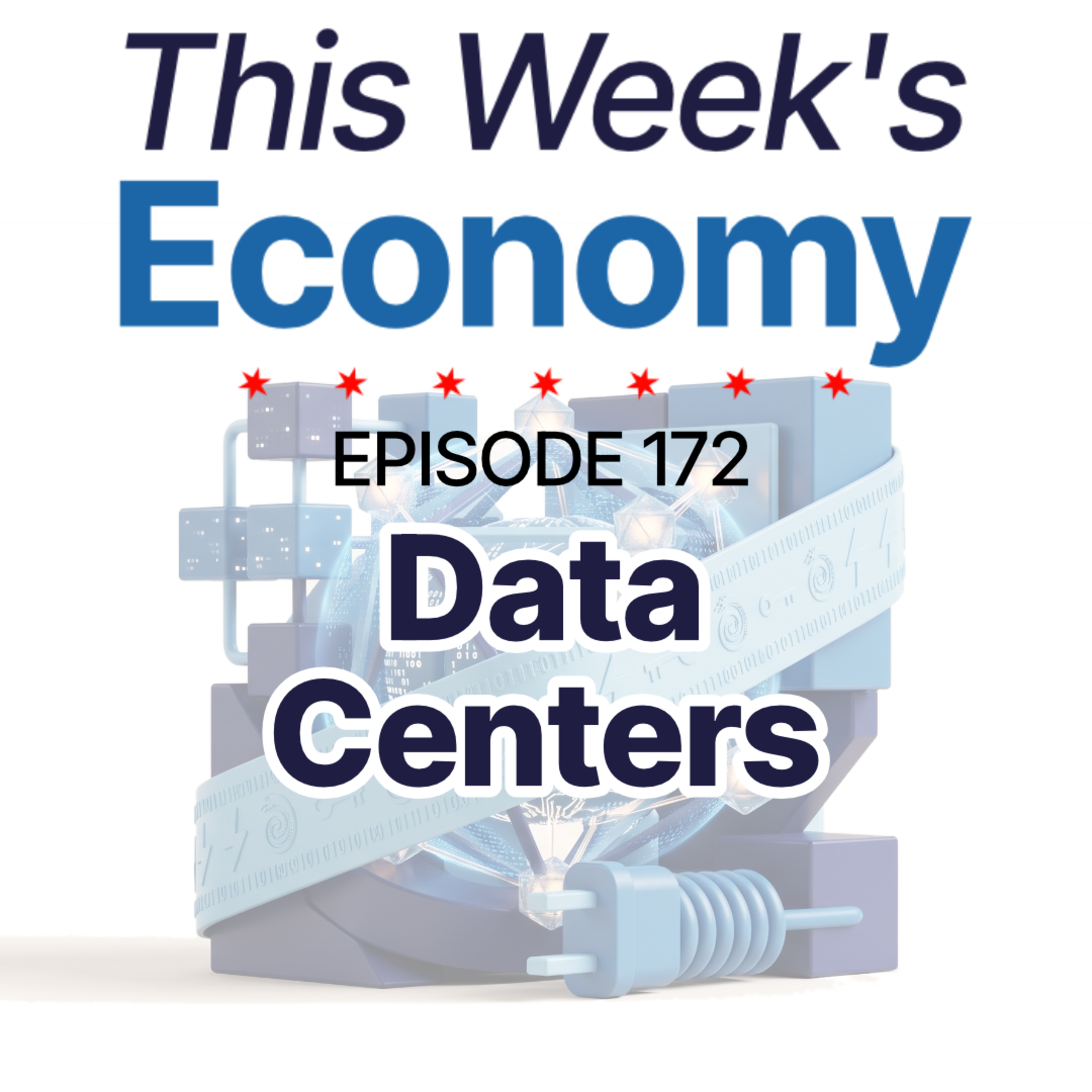
America's Data Center Debate Is Really About Our Future | This Week's Economy Ep. 172
3w ago00:14:00Tap to summarizeAcross the country, a growing backlash is forming against data centers. Anti-growth proponents and NIMBYs (Not In My Backyard activists) are working to block the very infrastructure that powers artificial intelligence, cloud computing, and the digital services Americans rely on every day. The Economist had a good write-up on data centers.But America will not stop needing these technologies. If we make it harder to build data centers here, that infrastructure will simply be built somewhere else.In today’s episode of This Week’s Economy, we’ll examine why data centers matter, address some of the most common concerns surrounding them, and explain why restricting this critical infrastructure threatens economic growth, energy innovation, and America’s ability to remain a global leader in technology.Catch the full episode on YouTube, Apple Podcasts, or Spotify, get show notes at vanceginn.substack.com, and visit my website for more information about Ginn Economic Consulting.
Transcribe →
The Forgotten Document That Shaped American Liberty with Dr. Daniel Dreisbach | LPP 206
4w ago00:43:21Tap to summarizeJuly 4th has passed, but the real work of preserving liberty never ends. It is easy to celebrate independence with fireworks, flags, and family gatherings. But it is harder to understand the principles that made independence meaningful in the first place. America was not founded merely as a break from British rule. It was founded on the belief that rights are not gifts from government, power must be limited, and liberty requires institutions strong enough to restrain those who govern.That is why I enjoyed this conversation with Dr. Daniel L. Dreisbach, a professor at American University specializing in American constitutional law and history, First Amendment law, and church-state relations. Daniel earned a D.Phil. from the University of Oxford as a Rhodes Scholar and a J.D. from the University of Virginia. He has authored or edited ten books, written widely on constitutional principles, and has been recognized as American University’s Scholar/Teacher of the Year.Our conversation focuses on one of the most important but often overlooked documents in American history: the Virginia Declaration of Rights. It came before the Constitution, influenced the Bill of Rights, and helped define the language of liberty that shaped the American experiment.🎧 Listen to the full episode on Apple Podcasts, Spotify, or YouTube.🌐 Learn more about my work at vanceginn.com📩 Subscribe for weekly analysis at vanceginn.substack.com
Transcribe →
Why Do Free Societies Innovate More? | TWE 171
Jul 600:18:08Tap to summarizeToo many people express skepticism about capitalism while enjoying the countless innovations it has produced every day. The smartphones in our pockets, life-saving medicines, online services, modern transportation, and countless other conveniences that make life easier did not appear by accident. They were created by people who had the freedom and incentive to take risks, solve problems, and improve upon existing ideas.In today’s episode of This Week’s Economy, we’ll take a closer look at innovation and why free markets encourage people to experiment, invest, and develop new technologies that improve our quality of life. We’ll also explore the conditions that enable innovation to flourish and why protecting them is essential if we want future generations to enjoy greater abundance, opportunity, and prosperity.Catch the full episode on YouTube, Apple Podcasts, or Spotify, and visit my website for more information about Ginn Economic Consulting.
Transcribe →
America’s 250-Year Test with Dr. Samuel Gregg | LPP 205
Jul 300:46:15Tap to summarizeAmerica is approaching its 250th birthday, and that should mean more than fireworks, speeches, and nostalgia.It should make us ask a harder question: Do we still understand what made the American experiment different?The United States did not become prosperous because government officials directed the economy from Washington. It became exceptional because our institutions protected liberty, property, voluntary exchange, civil society, religious freedom, and the rule of law. Those principles gave free people room to work, build, trade, worship, raise families, and solve problems in ways no central planner could design.That is why I enjoyed this conversation with Samuel Gregg, President of the American Institute for Economic Research. Sam is one of the leading voices connecting economics, history, political philosophy, and the moral foundations of free societies. He previously joined me on Episode 17 of the Let People Prosper Show to discuss free markets, culture, and the future of economic freedom.🎧 Listen to the full episode on Apple Podcasts, Spotify, or YouTube.🌐 Learn more about my work at vanceginn.com📩 Subscribe for weekly analysis at vanceginn.substack.com
Transcribe →