← Let's Get Dressed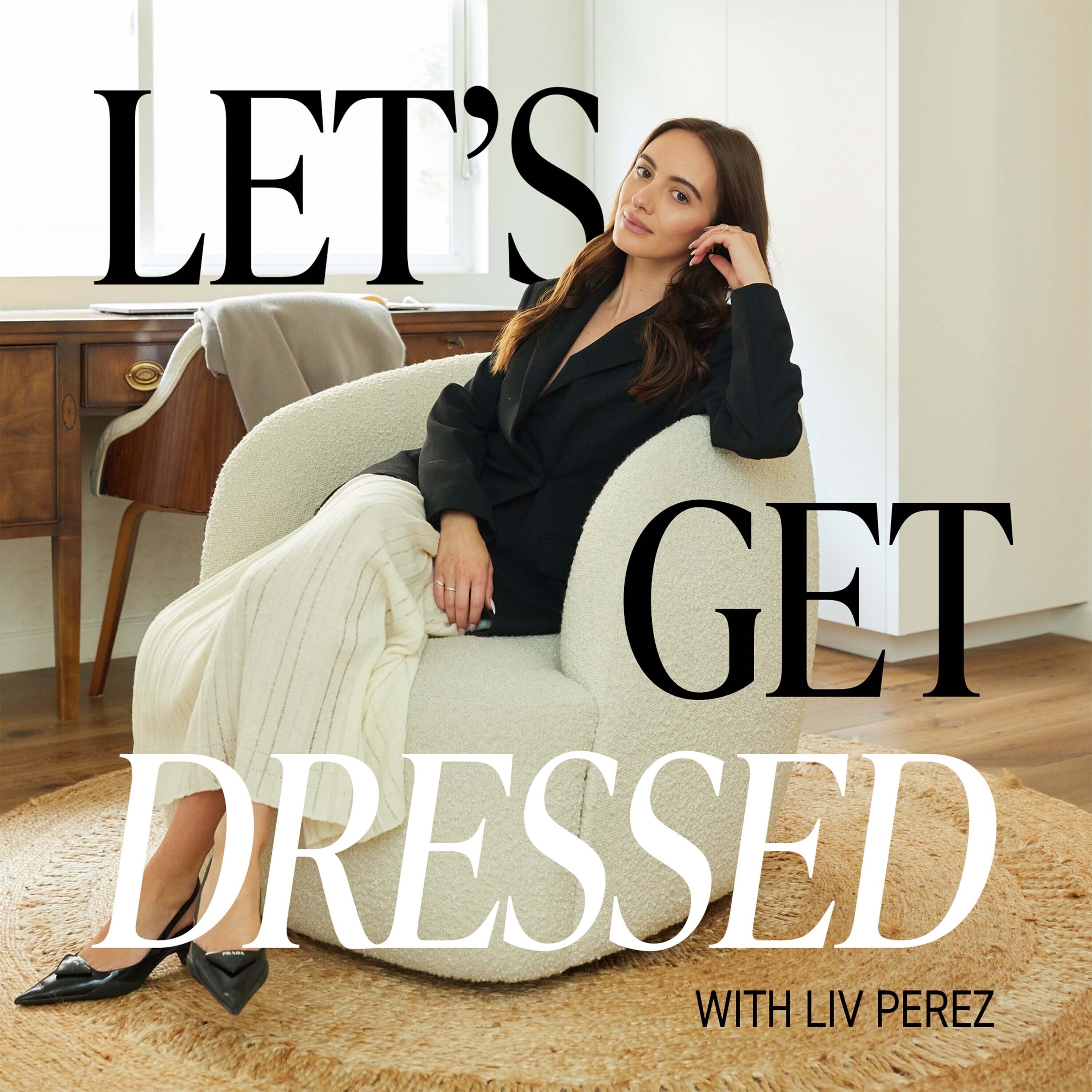
Loading summary
Transcript162 lines
- [00:02]
A
Hey, everyone.
- [00:03]
B
Welcome back to another episode of let's Get Dressed. It's your host, Liv Perez. Thanks so much for tuning in today. Today's episode is a fun one because I feel like something we usually do in the fashion industry is romanticize this idea of starting something from scratch, like the brand launch. The mood boards, the collection reveal, the launch party. But today's episode is a completely different path into fashion. At 22 years old, fresh out of college, Madison Dowd bought Ludivine, an Upper east side boutique, on a website called Biz by Sell. It wasn't very glamorous. It didn't have a website. It wasn't viral. It just was an existing business with real inventory, loyal customers, and a really big growth opportunity. Today we talk about what running a multibrand retail store actually looks like in 2026. Stepping into a store with history, figuring out who your consumer is making, making really big buying bets and mistakes, Balancing instinct versus data, and understanding why some brick and mortar stores simply don't work in 2026. If you've ever wondered how some of your favorite stores actually run, like how brands get placed in there, or what it takes to sustain something physical in a very digital world, today's episode is a very fascinating look at that.
- [01:17]
A
If you're based in New York, I
- [01:18]
B
highly recommend heading up to Ludivine. Madison is amazing. And tell her we said hi. Let's go get dressed with Madison Dowd of Ludovine.
- [01:30]
A
Welcome to the show.
- [01:31]
C
Thank you. I'm so excited to be here.
- [01:33]
A
I want to hear a little bit about the early days of finding Ludivine. You were fresh out of college.
- [01:41]
C
Yes.
- [01:41]
A
Tell me a little bit about when you saw it. How did you know that it would be something that was going to be valuable?
- [01:48]
C
Yeah. So the store was originally on Lexington and 82nd, and it was very much so like the boutique in the sense of the boutique that we've always understood. It was this, like, neighborhood shop where you could discover things that maybe weren't sold at Bergdorf's or Barney's at the time. And although it was, like, very niche and neighborhood, it had this amazing group of customers that had been shopping there for, like, 10, 12 years. And I saw that, and I was like, wow, I love boutiques. I've lived in New York for, I think it was, like, four years at the time, and I seek things out like this. Why have I not found Ludivine? And I felt like that was a problem. There was this, like, amazing store that I didn't know about, and that Means there's so many other people that didn't know about it either. So huge opportunity for growth. Also, they didn't have a website and there was no marketing at all. It was like only people that lived in the 82nd and Lexington area would even know about this store. So it felt like huge opportunity for growth.
- [02:44]
A
What year was this?
- [02:45]
C
This was 2018.
- [02:46]
A
It's interesting because I feel like during that time retail was not the biggest point of success. Like, I feel like right before that, we had had this like big era of pop up shops. Like everybody was doing a pop up shop.
- [02:58]
C
True.
- [02:59]
A
And that like experiential marketing was really the focus versus these like temple stores. What year did Barney's close? It must have been 2019. Right. So you see this retail opportunity in a time where the biggest retail stores are going under.
- [03:16]
C
Yeah. I think that it was a bit serendipitous that I was actually so young at the time because I was looking for something that was tangible. As a 22 year old that didn't know how to find a new market, I was like, okay, I want to buy something that's physical, where I can watch clients walk through the door and take data on why they're buying it, what size they are, what they're looking for, what their lifestyle is like. So I was looking for something like, actually in person. And it's serendipitous that retail in the brick and mortar sense wasn't popular at the time, but has kind of like evolved back around. And I feel lucky that I was like using that time to learn. While it wasn't like the most popular part of fashion and retail at the time.
- [04:02]
A
22, buying a business. What did that look like? I'm sure that's a question you get asked a lot. I know you took out a loan to buy it. Can you share a little bit to your comfortability of what that looked like? If someone said to me at 22 to take out a loan, I'd. If someone said to me now to take out a loan, I don't think I know what to do. So can you share a little bit about that process?
- [04:23]
C
Yeah. So I think that it's often overlooked of buying a business versus building it. I think we're all like, kind of caught up in this like founder mentality where we're like, I want to create something totally new. But of course, at the time I was 22 and like, didn't. I wanted a template. And so I felt like Ludivine was a great opportunity for that. And I Think what people don't realize is that when there is a business with a P and L that already exists and a business history and clientele, you can take that P and L to a bank and say, can you loan on it? And it's a great opportunity to like, expand upon something that already exists instead
- [05:00]
A
of having to go and take on investors and bring other people into the fold based on your own idea.
- [05:04]
C
Right?
- [05:05]
A
Yeah.
- [05:05]
C
I mean, there's financial risk in any of these endeavors. Right. If you're a founder, you still have to take money out of your own pocket or find investors or get a loan. Like, it's all kind of like financially a risk, but this one may be a bit more mitigated.
- [05:19]
A
We need to talk about Biz by Sell, because I've never heard of this.
- [05:22]
C
Yeah, it's a crazy place.
- [05:24]
A
How did you find it? Like, in college, were you like, I, oh, I. I want to run a business. What did that look like at the time?
- [05:30]
C
Yes. I always wanted to curate. I've always loved boutiques and sourcing and choosing things for my own personal wardrobe. And that was the extent of my experience at the time. Of course, I did like my internships in fashion, but I always knew I wanted to be in fashion and biz. Buy. Sell. I don't know, I just, I knew that I wanted to start something and I just kept coming back to like, who is my customer? And not knowing the answer to that. And I knew I didn't want it to be like other 22 year olds like myself. So I was like, okay, like, what other businesses are out there? And Bizpuysel is a crazy place. You can buy a dry cleaner, you can buy bowling alley, you can buy a Ludivine.
- [06:11]
A
I was listening to a podcast yesterday about how some of the top millionaires in America are people who have bought local businesses and either franchise them. Crazy, crazy. Dry cleaners.
- [06:25]
C
Yeah.
- [06:26]
A
Automobile dealerships. All of those things that are either franchisable or strong local businesses are the backbone of a lot of millionaires in America.
- [06:36]
C
Wild. Makes sense to me.
- [06:38]
A
I also like what you said earlier about having faith in retail. Because I do think the older I get in fashion, the real. The more I realize everything comes back. Nothing's ever dead, especially shopping. Like, people are going to shop to the end of time. Retail is never going to die.
- [06:54]
C
Yes. Yeah. And in person is coming back. I think that people have bought everything they wanted to buy online and they realized that. I don't know about you, but I feel like everything I buy online is the same thing.
- [07:05]
A
Yes.
- [07:05]
C
I have the same T shirt over and over and over again that I ordered on Net. A Porter. Or the same jeans. Because that's the thing I'm willing to take a risk on when I'm buying something online, because I know it fits and I know this is the style I like. But I'm never, like, pushing my wardrobe forward when I'm shopping online. And I feel like people are getting sick of that.
- [07:23]
A
I'm definitely getting sick of that.
- [07:24]
C
Yeah.
- [07:24]
A
I also think that return culture has gotten too intense. Like, I feel like I can buy anything online, and if I don't like it, I'm just gonna return it and be over with it. And I think that has created which is necessary.
- [07:35]
C
You don't wanna end up with things you don't want because you couldn't return it.
- [07:38]
A
Of course, I think from a consumer behavior perspective, it's like, allowing us to be not as intentional with our shopping as I think we should be. It's like, okay, I'm just gonna buy that and try it. I don't really care. Maybe I like it, maybe I don't. I can't really tell. And I think return culture has allowed us to just kind of be passive about it instead of, like, actively trying to buy things that we really, really, really love. Like, revolves. Return rate must be, like, 85%.
- [08:04]
C
Must be.
- [08:05]
A
Has to be like, I know so many people that are, like, getting ready to go to a wedding and they buy, like, five dresses with the idea that they're going to return four of them.
- [08:13]
C
Right.
- [08:14]
A
Which I think is a great model. Like, that's choice. It's great to be able to try it on in your home. But I also think it's allowed us to be a little bit lazy with the way that we shop and not like, I love that dress. That's the one.
- [08:27]
C
Yeah, I agree. And I also think that we're also lazy with the return, even if we're buying it online because we know we can return it. Sometimes we're like, oh, it's already in my house. I'll just keep it.
- [08:37]
A
We gotta go back to in store shopping. I am trying to only shop in store these days. Let's go back to Ludivine. Yes. So was there something when you first bought it that was, like, very apparent to you that you were like, I have to shed this in order to make it grow? What was that, like, initial step when you first took it over?
- [08:55]
C
Yeah. So there absolutely was a lot of shedding that needed to happen, but it didn't happen right away, which was quite interesting. I made a smart decision that I later realized was smart, which was come in and try to make sure, like, no one knew anything changed. I wanted every client to think the old owner still owned it, she was still doing the buying. I wanted no one to know who I was hiding in the back room, just, like, listening, learning, trying to gather as much information as I possibly could before making any change. And in retrospect, I think that was really smart, rather than running in and, like, throwing spaghetti at the wall and trying to figure out what works. And it was really only maybe two years in that we started shedding the old Ludevine. And I like to think of it in two phases. There was a period of time in which Ludivine was shaping me. I was 22, and it was like changing my style and how I felt about the world. And we were going to Paris and sourcing brands, and I was like, oh, this is a whole new like me. And then there was a transition point in which I was enacting change on Ludivine and I was changing Ludivine. But that took some time.
- [10:03]
A
I like that a lot. Because you don't want to alienate a customer in the beginning.
- [10:07]
C
Yeah. And I'm terrified of that.
- [10:09]
A
I see that now a lot with a lot of designers changing houses. Yes. I'm seeing. I can see a lot of, like, chatter on the Internet or even just, you know, living in LA from, like, high end customers who, you know, buy at some of these amazing brands. I can hear them saying, oh, like, I used to shop at this brand for this, and now, like, the fit's different or the cuts are different, the materials are different. Like, I don't really like this. What's happening. Like, why is it so different?
- [10:32]
C
Right.
- [10:32]
A
So I think it's really. That feels really important to me to kind of just ease the transition and learn from what's already working.
- [10:39]
C
Right.
- [10:40]
A
So why did the original owner sell it?
- [10:42]
C
She was moving back to Paris. She'd been in New York for 20 years, I think, and just kind of done New York.
- [10:50]
A
All right. One woman's trash is another woman's treasure.
- [10:53]
C
Exactly.
- [10:53]
A
I love that.
- [10:54]
C
Lucky me.
- [10:55]
A
I'm curious. You know, you take on this business, it sounds like you were in the store, obviously, listening, learning, trying to figure it out. But running a store is so many different facets. You've got merchandising, management of your team, buying. What went into learning all of that? How did you even begin?
- [11:11]
C
Yeah, the old owner mentored me for A few seasons with the buying.
- [11:16]
A
Amazing.
- [11:17]
C
She came to Paris, introduced me to all the houses that we were buying from. Kind of did the, like, quantities with me to make sure I wasn't. I had no idea if I should buy, like, 4 of something or 25 of something. I could look into the past orders, obviously, and triangulate, but she was helpful with that. And from a customer standpoint, I was super lucky that the employee that was with the previous owner stayed on after she sold. And she had all the customer relationships and was very much so, like, the main salesperson. So I was so blessed with that because, as I was learning, she was able to, like, keep a consistent face of the store and continue cultivating those clients and selling to them. And having the core customers stay the same was so important to projecting the buy and mitigating the inventory risk. Very important to have the team, like, kind of consistent across the transition.
- [12:10]
A
I feel like when I was growing up, buying was like, this, like, very glossy, coveted job, right? Like, everybody wanted to be the buyer at Barney's. Like, that was one of, like, the biggest dream job. Of course, dream jobs. But on the back end, it is so much math, so much predicting. It actually, to me is like, 20% knowing what's, like, relevant and cool, and the other half being incredibly academic about what could work in your store and actually give you a profit. What are some rules that you follow as you're buying for your customers?
- [12:41]
C
So the prior owner did not use any math to do her buying. It was all based on the customer relationships and knowing, like, this client's gonna buy this, and that client's gonna buy that. So I actually wasn't able to learn any retail math from her, which was an interesting start of the journey. But I think what's important about that is that if you really know your customer intimately, you don't need the math so much. You know their name and their size and exactly like, their style. So because we were small, you're able to focus the buy around that. But beyond knowing the customer, now that you can't always know every customer, I would say that kind of our rule of thumb is to always have a styling in mind of each piece and a location where the client is wearing it. And if you have those two things in mind and you've kind of, like, conceptualized the outfit in your head, once it comes in and it's on the rack, it's like, it feels curated because you're like, this is how I'm going to wear the outfit, and this is how we're going to place this piece in our client's wardrobe. We're not going to the Runway and saying, I want, like, all of look one and all of look two. Anyone can copy and paste that, but I think people come to a place like Ludovine because they want the look that we're providing or like the styling ideas that we had when we or that we intended when we purchased the thing.
- [14:02]
A
The Upper east side is a very specific pocket in the American shopping landscape. It's clientele, very high end, high net worth, incredible taste. And it's been known in my mind to launch so many brands. All of these brands have really come up from the Upper east side consumer, but also the shopper that wants to feel like they're an Upper east side woman. So you have an expertise in that. Obviously, your clientele is there. Can you talk to us a little bit about the power of that. That neighborhood?
- [14:33]
C
Yes. I think that the Upper east side is the best neighborhood in New York to build a clientele because it's less transient in downtown. Obviously, there are people that live there for their entire lives, but there's younger people that are moving from the Lower east side to the West Village to Tribeca, and they're kind of like, moving around, whereas the Upper east side people move to stay. And testament to that is the fact that when I bought the store, there were people that had been shopping there for 12 years, and now they're still shopping with us eight years later. They have nearly 20 years of shopping history just at Ludivine, which, as I was saying, with the buying is, like, such a valuable way of scaling a business and growing it when you know who your customer is and you can count on them, and you can count on them, on them to walk in the door and buy, like, almost exactly what you thought they were going to buy. And, of course, you can take risks in other ways when you know that you have that loyal person that's going to shop with you season after season. And I think that's why the Upper east side is maybe the best place
- [15:33]
A
to grow a business.
- [15:34]
C
Not that there's not others, but makes sense that Kate and Totem want to be there too.
- [15:39]
A
Do you think the Upper east side is having a little bit of, like, a shopping renaissance right now?
- [15:44]
C
Yes, I think that if you walk through soho on a Saturday and you. Yes. Chaos. Is soho the new Times Square?
- [15:54]
A
Yes, I think so. I feel it is.
- [15:58]
C
Yeah.
- [15:59]
A
Especially like Saturday morning, you're walking around now, it feels like Times Square.
- [16:03]
C
Yeah.
- [16:04]
A
I don't ever want to go to Soho to shop?
- [16:06]
C
Don't go on Broadway.
- [16:07]
A
You took the words out of my mouth. Going to Zara on Broadway or any of those stores feels so scary. I actually would rather go to the Oculus.
- [16:17]
C
Yeah.
- [16:17]
A
Because it's just like a little bit more of, like a contained environment. Yes. Still extremely touristy.
- [16:21]
C
Right.
- [16:22]
A
But I do think that the new local high end experience is the Upper east side.
- [16:31]
C
Yes. I think if you walk through Soho on a weekend and you go into Bottega or Chanel. Yes, you're getting Bottega. But it's often like the accessories buy rather than the ready to wear.
- [16:42]
A
Right.
- [16:43]
C
Whereas if you go uptown, there is the full Runway collection. Every piece you could want to try. And I think if you want to try something in person and you want to, like, touch and feel, you have to shop uptown.
- [16:55]
A
Also, though, there's like, so many brands that have great stores up there now. Like, we keep bringing up Chotam, but the Totem store on the Upper east side is so beautiful.
- [17:03]
C
I love that red staircase.
- [17:04]
A
Me too. And they have like. So the store is like two stories, and when you walk in, you have a whole double two story wall of, like, the bags and accessories. Beautiful, gorgeous red staircase. Like, I stay downtown when I come in town, but I.
- [17:17]
C
If.
- [17:17]
A
If I want to shop, I'm going uptown.
- [17:19]
C
Yeah.
- [17:19]
A
I'm going to Kalmire. Uptown, I'm going into Tem. I usually try to sneak in, like, going to one of. And all of those are on the Upper east side. Elise Walker is up there. You're up there. To me, it feels like the best shopping experience in New York right now.
- [17:34]
C
I agree. And I think just the back to what we were saying about the clientele being best, I think because the clientele is there, they stock all the merchandise. So therefore it's like the best place to be because you can see everything. Not just like, if you're after a specific bag, you can. You can find that at either store.
- [17:50]
A
Have you noticed anything that has been helpful in getting to know your customer on a daily basis? Like, obviously, they're coming in and shopping, and you can predict that. But I'm curious if you've noticed anything behavior based that has informed the way that you know something is going to sell? Like, are you getting to know them outside of shopping, or is there something where you're like, okay, I can predict that this is going to be good for my customer because of this exact thing?
- [18:18]
C
Mm. I would say these women are quite busy, and sometimes you don't even see them sometimes they want everything sent to their house and they want to try it on approval. And you never even see the garment on them, which is an interesting case as well. But I think you just have a sense of maybe every year they go on a certain trip and you know that they spend time in Aspen and you kind of like have those little like, tidbits of information about them in the back of your head. And beyond that, if that customer doesn't buy it, there are other customers in the market that also go to Aspen. So you kind of just have to have like the archetype of like, okay, I'm buying this jacket for the Aspen customer. Not necessarily, like, name the person. So I think it's a. If one client doesn't buy it, there's always someone like in a similar archetype without knowing exactly personally the client and where they're, where they're traveling.
- [19:09]
A
Are you taking notes, like on the back end? Like, do you have very in depth customer profiles or is it more of a feeling?
- [19:14]
C
More of a feeling. It is changing a bit with social media. I had no social media until six months ago. I had literally zero posts on my Instagram. I was.
- [19:24]
A
And now we're here.
- [19:25]
C
And now we're here.
- [19:26]
A
You've gone viral on TikTok many times. I've seen your content numerous times.
- [19:29]
C
A couple times, yeah. It still doesn't feel like my personality, but it's so good for business. And it's interesting because now we're collecting these customers from all over the US not just the Upper east side. And they'll see something on TikTok or Instagram and they'll walk through our door and we'll get to meet them in person. And that's great. But there's also people that I'm never going to meet because they live in LA or they live in Chicago. But it's interesting that their, like, way of life seems similar to our customer base on the Upper east side. And by nature of them finding me on social media, it's kind of self selecting, like, if they liked my style. They also like the style of curation that we have at Ludivine. So it's interesting that we are capturing those people that have like a very similar lifestyle.
- [20:12]
A
Have you noticed a correlation between what you post and what sells?
- [20:16]
C
Yeah, I guess we do use a little bit of math on our, on our buying.
- [20:20]
B
Here we go.
- [20:21]
C
Yeah, here we go. So we have a consultant that runs our data through his system and says, like, oh, you're overbought in sweaters or you're underbought in denim or whatever the thing is. And in August of this year, he came to me. He's like, madison, you have too many sweaters. You have way too many coats. Like, you're never gonna be able to sell all these. You should go, and you should cancel half of your orders. And I was like, no. I. I had a gut feeling. I was like, these are going to sell. And I started posting them on Instagram. And we've not only sold every one of those sweaters, we've sold all of the shearling coats, and people are still reordering them.
- [21:00]
A
Okay, this guy, obviously, now is going to reassess the things that he sends to you. But what were the. Can you share? Like, what brands? The sweaters and jackets actually were. Like, I'm curious for you. Like, this obviously was a really big, like, successful buying moment. But so what brands are really moving right now for you?
- [21:17]
C
I would say that brands that people can't find at other stores obviously do better than brands that they can find just around the corner.
- [21:27]
A
Like.
- [21:27]
C
Like, we have this brand called Batonaire. It's a Japanese cashmere brand. Wow. And this was the brand where I had doubled our order from 2024 to 2025. And the guy's like, don't do it.
- [21:40]
A
Did you do it?
- [21:42]
C
Because the quality is amazing. And I know if we have a good sweater, it's gonna sell. People die for sweaters. Yeah.
- [21:48]
A
I could have a million. A sweater's eternal.
- [21:50]
C
And it's. Yeah. And it's an emotional purchase, too. We put it on and you feel good. And as long as it feels good, people want it. And I love them, too. So I believed in them. So we doubled our order. We continued bringing the order in despite his suggestions. And people can't find it anywhere else. So they're like, I have to buy it at Ludwig, and I have to buy it now because my size is going to sell. And it's a similar situation with the shearlings. We carried Simonetta, Revisa, which is an Italian brand, shearling company, and Utz Thanh, who's based in Copenhagen. And both of them are brands that either we bought a color that nobody else bought, or we bought a style that no one else had. So it was an opportunity for us to have an exclusive without actually having an exclusive. And people feel the pressure of buying then and now because it's the only one and they can't find it somewhere else.
- [22:45]
A
How are you finding these brands? Because every brand you just said I've never heard of. You're, of course, going to all the fashion weeks, but what does that look like for you?
- [22:53]
C
So I go to Milan and Paris a couple times a year, four times. And sometimes I'll find brands at a trade show. For example, this Batonaire Japanese brand is at a show called Man Woman, and it's often mostly men's clothes, actually. And Batonaire is very unisex. But sometimes you can find some gems of cool Japanese Korean brands, just things that, like, you haven't seen before. And it takes a little bit of imagination to take it from its menswear vibe and imagine it in a store like Ludivine. And then for the fur brands, I've been carrying Simonetta for a few years. I actually saw it for the first time in Porto Cervo in Sardinia in a boutique. They were selling furs, like in the middle of August. I was like, okay, this brand is cool.
- [23:43]
A
They know what's up.
- [23:44]
C
Yeah, they know what's up. Yeah. So it's just travels. And wherever I see stuff, Instagram, sometimes you never know where things will find you.
- [23:53]
A
Has there been a buy that you've regretted? Ooh.
- [23:55]
C
There's always some surprises or things that maybe looked great in the showroom on the model, and then you see it in person. You're like, mm, I don't love that fabric. I remember placing an Emelia Wickstead buy early on at Ludivine for these really cool brown jumpsuits. And they were like tailored at the waist and they had puffy sleeves. And I found it, like the coolest, most fashion forward thing.
- [24:22]
A
What year was this?
- [24:23]
C
This was 2019, I think.
- [24:25]
A
Incredibly important context for a jumpsuit. Like, what era were we in?
- [24:30]
C
People hated them.
- [24:31]
A
Yeah.
- [24:32]
C
I mean, brown wool jumpsuit. I should have known. It's not necessarily hot.
- [24:37]
A
The jumpsuit. Jumpsuits are interesting to me. I don't own one. Do you?
- [24:42]
C
I have one.
- [24:43]
A
What is it?
- [24:44]
C
Suede.
- [24:44]
A
Okay.
- [24:45]
C
Cute. It's cool. It's like a carpenter kind of suede jumpsuit.
- [24:48]
A
See, I think that's cute.
- [24:49]
C
Yeah.
- [24:50]
A
One of my friends has a brand called Mimchik, and she just made like a tweed low rise jumpsuit.
- [24:58]
C
That sounds cool.
- [24:59]
A
It's very cool. And I would never usually wear a jumpsuit. It's like a wide leg, kind of drop waist, and I think it has like a little embellishment, like right at the shoulder straps. I thought it was really cool. She styled it with a T shirt, and then she styled it T shirt under. T shirt under. And Then one way she styled it was like nothing under and a little bit of like a side boob moment. And then a leather jacket over words over it. And I was like, that feels very Chanel. Like, I would wear that.
- [25:24]
C
Yeah. I think that people maybe stray away from jumpsuits. Cause they're. There's only so many ways you can style it. Right. Like, it sounds like wearing it once. Yeah, right. Yeah. And I think we're seeing a lot of people spending more money on their day to day wardrobes rather than spending on the occasion wear. For example, jeans are $850 in some cases now, and a sweater is $1,900. And people are okay with it because they're like, these are things I'm gonna wear again and again in my wardrobe. And they're buying that instead of investing in the $3,000 dress.
- [25:59]
A
It's amazing how much, like, people can really upsell the idea of a good basic. I mean, the row, I think, completely shifted that for everybody.
- [26:07]
C
Yeah, for you.
- [26:08]
A
I'm sure you've learned so much about customer service in this experience. What do you think makes good customer service in 2026?
- [26:17]
C
I think being a little bit removed from the sale is important. I think there were times in which I was like, so close to the P and L, I was like, I need this person to buy this thing. And removing myself from that obviously, like, creates a much smoother dynamic between the customer. It doesn't. Doesn't matter if they buy the jeans or not. We want them to, like, buy things that they love and they're going to come back. If they have those jeans in their wardrobe and they keep wearing them and they love them. And if they bought something that didn't look good because we told them it looked good, they're not going to come back because they're going to be like, oh, I hate that store. I buy like all my dud clothes there, and we don't want to be that.
- [26:54]
A
Right.
- [26:54]
C
So, yeah, I think, like, removing yourself from people's need to buy things just create like an easeful environment. We have two floors, and upstairs there's this like, beautiful fitting room area with a big couch. And I love that people, like, come in and spend hours just trying things on, like it's their own wardrobe. So I think that creates like, a really nice customer experience as well.
- [27:16]
A
Being removed from the buy is. Is a good piece of feedback because there's a store that I love that I buy a lot of my basics from. Absolutely love them. I wear like, so many pieces from them. But when I go in store, sometimes I feel like their sales associates are, like, following my tail from the second I walk in. While I'm walking around and into the dressing room, like, they are so close to me and making sure that I'm trying it on. Did you like it? Do you want more sizes? And, like, I think the customer service of that is amazing. But I also think that, like, there's like, a weird sense of desperation when you feel like they're, like, too close to you, that they're trying to get. Oh, my God. Like, I actually, like, run out of there. I'm like, I can't do this right now. Yeah. Like, I want someone to offer help but not make me feel like I'm being watched every two seconds. I kind of want to have my own experience and see if I like it or not.
- [28:08]
C
Yeah. I will say I don't feel like we're very removed from the customer as they're moving around the store, but I think that's cause it's more of a luxury environment and you're, like, leading someone around your home almost. It'd be weird for them to, like, make their way on their own, I think. But yeah, of course, we, like, try to make it focused on the styling and the fit and helpful instead of, obviously, the sale.
- [28:29]
A
One thing when you and I have been talking, getting ready for this episode that really stuck with me was this idea that you really wanted to be an entrepreneur and not a founder. You didn't want to build something, you wanted to make it better. And I'm sure a lot of people listening to this episode, of course, are inspired and interested in obviously the dynamics of running the store. But I think the greatest lesson from watching and hearing your journey is exactly what you said. Like, this idea that if you want to do something, it isn't always about starting from scratch. So what is your advice for people that maybe don't know where to, like, channel that ambition and how it's really worked for you.
- [29:08]
C
So I think if I was pigeonholed on the idea of starting something brand new and finding this, like, new novel idea when I bought Ludivine, I might have missed the boat on buying this amazing store. And I think it's important to be open minded. Like, maybe your best business opportunity is to franchise something that already exists and, like, take learnings from that and see where that takes you. I don't think, like, building something from the ground up is necessarily the most important part of an entrepreneurial journey. And I think you have to, like, Think about where you are in your life and do you need, like, are there things you need to learn to get to the point that you need to build something on your own, or is buying something going to take you exactly where you needed to be? I don't know. I just. I don't think it's important to pigeonhole yourself and to founder or build. It just is however you're going to get to the end goal. I think I got pretty lucky, though, that Ludivine was for sale on at the time that I was looking. I haven't looked recently to know what's for sale now, but I think that if you're someone that wants to buy something and there happens to be something for sale, it's, like, worth exploring.
- [30:19]
A
What are some brands you're excited about? Now, I know you mentioned some brands that you carry in store that I hadn't heard of, but are there any brands you're really excited about that you would love to have in store or just wear in everyday life?
- [30:30]
C
I think Phoebe Filo is the holy grail of brands to have, and I love the idea of discovering something so luxurious in a store like Ludivine. I think it creates, like, this opportunity to try things on in a place that feels like home rather than a stuffy store where you're like, I can't even touch this because it's all locked up. So I love exploring brands like that in a smaller environment. So I think we could be a great partner for Phoebe.
- [30:58]
A
You're also newly engaged. Congratulations. Any bridal brands you think listeners should have on their radar that you're excited about?
- [31:05]
C
I am so new to the bridal scene. I have, like, one friend. I've been to, like, two weddings, so everything is new to me. But I found a brand called Able Honor on Instagram recently. Have you heard of them?
- [31:20]
A
No.
- [31:21]
C
They do bespoke gowns, and they also have some samples, and I was emailing them, and they were like, okay, so the process is like, first you meet with the designer, and then if the conversation goes well, you get to move on to, like, the trying on of the samples phase, rather than the other way around, where you get to try on first and then have the conversation
- [31:40]
A
with the designer or, like, customer relations. I can do that. I'm good at that.
- [31:44]
C
Yeah. Which I thought was very interesting. We'll see. Maybe I'll have an appointment with them in a few months. I have a lot of time. Very cool.
- [31:52]
A
Well, congratulations.
- [31:53]
C
Thank you.
- [31:53]
A
Thank you so much for coming on the show.
- [31:55]
C
Thank you for having me.
- [31:55]
A
This is such a fun conversation to have.
- [31:57]
C
Loved it.
- [31:57]
A
If you guys are in New York, go stop by the store. And if you're in town, also go stop by the store.
- [32:01]
C
I love owning Lud Bean. So fun.