Loading summary
Transcript43 lines
- [00:00]
A
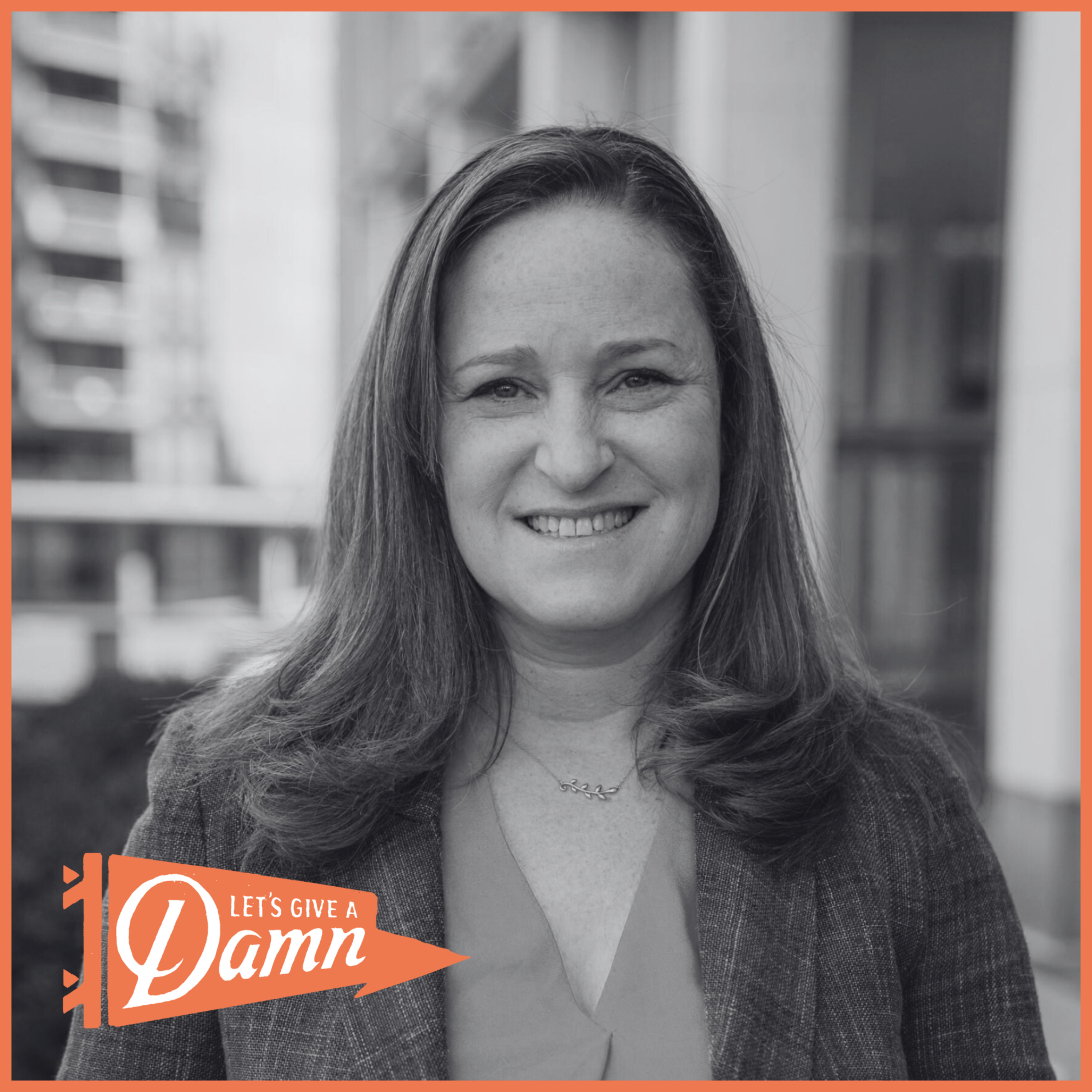
Hello dear friends and damn givers. Welcome to the let's Give a Damn Podcast, a show where I get to have conversations with incredible people who aim to leave the planet much better than they found it. And then I get to share those conversations and guests and stories with you. I'm your host, Nick lapara, and I'm so delighted you're here. This episode is brought to you by you, the listeners and viewers of this podcast. Well, some of you anyway. In case you didn't know, let's Give a Damn is on Patreon. For just a few dollars a month you can help us continue to make the podcast week after week after week. Making a podcast, especially as a self employed entrepreneur of sorts, is not easy and it's definitely not cheap. So if you learned from the show, if you love the show, please consider joining our Patreon. Visit patreon.com LetsGividam to learn more. Or you can just google Patreon and Let's Give a Damn together and our page will pop right up. And please hit me up@helloletsgivadam.com if you have any questions at all. Another way you can support this work is by purchasing some of our merch. The most popular item, and the one I get stopped about every single day is our trucker hat. I'm wearing it right now. And if you follow me on socials, and if you follow let's Give a Damn on socials, I'm wearing it in basically every place post. And I'm not kidding. People stop me every single day to tell me how much they like it and ask more about what it means. And remember friends, that all the items in our store have shipping and tax already included, so the price you see is what you pay. Visit letsgivadam.com store to see our products and make a purchase today. Friends, My guest this week is Mara Cronenfeld, the Executive Director of UNRA usa, the nonprofit organization that supports the humanitarian and human development work of the United Nations Relief and Works Agency for Palestine Refugees, otherwise known as UNWRA, in the Middle East. With over 20 years of experience in international development, Mara is a Fulbright Scholar and an expert in designing, implementing and leading public and private partnerships supporting youth development programming in the Middle east and North Africa. Now, I met Mara last year when I was hired to produce a fundraising Tour with Unrwa USA and Motaz Aziza. On that tour, we raised almost $2 million for Unrwa USA and for Gaza, and it has been such a joy to get to know Mara over these last few months and I'm excited to announce that I'll be doing more consulting work with UNRE USA in 2025 to help them pull off many more events. And I'm super thrilled about that. Friends, the conversation you're about to hear is very important. It's monumentally important because UNRWA is irreplaceable and yet Israel plans on banning UNWRA in just a few days. Israel wants to keep UNWRA from providing life saving aid to hundreds of of thousands of Palestine refugees. The result of an UNWRA ban would be catastrophic for Palestinians and frankly for the whole world. Because as I've quoted many times before on this podcast and will quote many times in the future, nobody is free until everybody is free. Fannie Lou Hamer and banning UNWRA will not get us any closer to a free Palestine or a free everybody. I hope this conversation results in you taking a number of actions to help prevent UNWRA from getting banned. And I hope this also causes you to support UNRWA and UNRWA USA in more ways. Before we begin, a quick reminder as always that you can email me anytime and for any reason@helloetsgiveadam.com you can ask questions, recommend future guests, tell me how much you love or hate the show. Anything goes. I just love hearing from you. And don't forget, if you prefer to watch your podcasts instead of listen to them, we're on YouTube. And now, friends, let's get right into my conversation with my friend and hero, Mark Cronenfeld. Let's go. Mara Cronenfeld, welcome to the let's Give a Damn podcast.
- [04:23]
B
Hi. Next. Thanks for having me here.
- [04:26]
A
I am. So despite all of the craziness happening around our conversation and around the world, I'm so glad to have you here and thanks for doing it so last minute. But things are happening, you know, by the minute, by the hour right now. And I've, I've been wanting to have you on and this just yesterday I was thinking it has to be now. There's so much to talk about and we need to get as much noise going about your work and so thank you for making it happen so quickly. My first question is, how are you doing? Let's start. I guess this might not be a light answer, but let's start sort of talking about the weather but like, yeah, how are you doing? Because you are in this work more than most people are, right people are, you know, your average Joe and Sally. They're scrolling and they feel like they're in it because they're seeing the stuff all the time. You're actually in a lot of the decision making happening in a lot of the work. That's a lot of the aid that's going in. And so you're in it every moment of every day. And so how are you on this fine ish day?
- [05:29]
B
Thanks, Nick. Yeah, it's been 15 months of hell. And I say to my, to our small staff at Under Yusa, just really about 10 people, that our brain chemistry, our very brain chemistry has transformed in these 15 months. We are different people now than we were when this started. And I think we're all experiencing some element of. It's not even post traumatic stress syndrome. I hope it's post. God, I hope it's post.
- [06:15]
A
Me too.
- [06:16]
B
But it's just ongoing pain. And what just stops you in your tracks every single day is whatever we are feeling. Myself and my staff, you, anyone watching this horror play out on their screens, it is just nothing, nothing comparable to what those on the ground have experienced and are continuing to experience. Just 24 hours after the ceasefire, which I know we'll get into. I've just read there are 80 Palestinians in Gaza killed. So we, you know, we are on the front, kind of have a front row view of what's going on. And that's our job. And so we are in on our computer screens, on our phone screens all the time. And but that's our duty and our duty is to see what's going on and frankly to feel that pain so that we can act and so that we can share with the world and be part of those who are helping people really understand what's been going on in Gaza. So we're doing okay. I'm most, most concerned for, as I said, those on the ground and for my beloved staff members. Four of them have family in Gaza and one who many, many have seen in podcasts and news interviews. Hani Al Maktoun, who's had two brothers killed in Gaza, the last one surely targeted and killed, and his brother Maajid and his brother Mahmoud were some of the best people. And Sheikh Mahmoud was feeding thousands of people with his Gaza soup kitchen daily. And you've got to wonder if that's why he was killed, because he was keeping Palestinians and Gaza alive. So my heart is, most of the day is with all those I know who have family there, all those I know and knew in Gaza who've suffered, if not paid the ultimate price for being born where they happen to be born.
- [08:28]
A
Yeah. Yeah. Do you find it, Mara, do you find it hard to. You have a family, right? You have. You have kids, you have. You have other things to do. You have a dog, you have, you know, you have soccer games or whatever to go to. Do you find it hard to separate these things? Right. You're at the soccer game with your kid or whatever, you're walking the dog, and it's. Those things are still sort of playing. Do you. Do you find that hard? And what have you done to sort of help mitigate that from happening?
- [08:59]
B
Yeah, Nick. Oh, you went. You went for the jugular. I could see. I feel it. No, I'm just kidding. But, yeah, that's my. It's just. It's. It's my personal struggle because. Because certainly my kids are old enough to know what's going on. They ask me questions, they ask my husband, I think. But I also have an obligation as a mother to. They can't live the pain that I'm living. They're too young. And. And so I share with them just enough. But I have to keep the emotion at bay. And as. As probably anybody who just watched me tear up or who's watching me, I. I cry easily. I. I am an emotional person, and. And it's very hard for me to put up those walls, but I absolutely have to at times. Um, but I find myself in somewhat of a multi personality disorder setting where I'm at the soccer game, I'm cheering on the team, and one half of me is out there being a. Being a member of my community in Maryland and trying to take a moment away from the craziness. But it's always there, and I think always on my mind is I'm always. I want people to know the truth, and I know that our media in the US doesn't always tell it. So it's always on my mind. How much do I talk about it? How much am I going to be able to talk about it, maintain my calm, but also help increase understanding in this world? And. And I'm also not preachy. It's just not my nature. So how do I do it in a way that will connect to people, that will make them stop and think? And. And sometimes I succeed honestly, and sometimes I don't. And then I also have, frankly, the privilege to let it go for an evening and to hang with the. The mothers in my neighborhood and let it go. And I'm not necessarily that good at it, but I have the privilege to even attempt that which. Which so many others do not.
- [11:01]
A
Yeah. As A. As a. I feel that so deeply as a father of three amazing children that I am trying to get. We're trying to raise them so that they'll care about these things, right? So that they'll be damn givers, you know, and they already are. But it's. Yeah, it's. How do you introduce them to the horrors of the world while not putting the burden on their tiny little bodies and brains and, you know, they just, they have no. I don't know how to handle it, as you just pointed out. You don't. We don't know how to do this as adults. They definitely don't. And so, yeah, it's a really hard. It's a really hard, hard thing.
- [11:34]
B
Hundred, 100, 100%. And I always think about growing up, you know, our parents, at least, you know, so many people I know, they said you've got to read the newspaper every day. I mean, my parents were so informed and thoughtful. They traveled. And now I don't tell my kids to read the newspaper because if they did, they would be filled with anxiety every single moment of their life. So. Exactly. You hit the nail on the head. How do you tell them enough to keep them engaged and make sure that they are part of a generation who does give a damn and at the same time not overwhelm them? So it's a constant battle.
- [12:09]
A
I feel that we're going to spend the majority of our time momentarily talking about the work. But before that, one of my favorite parts of the conversations that I have is I always try to. Before we introduce the work. Right. The big thing which most of my guests have, whether it's a book or a nonprofit or a big project or whatever, I want to get to know my guests a little more. You know, you and I, we've had the honor. Well, I've had the honor. I don't know if it's an honor.
- [12:32]
B
Me as well.
- [12:33]
A
I've had the honor of working alongside you all as a consultant for a few months at Unreal usa. And it's been such an incredible joy to get to know you and the team, but we haven't. This will be our longest one on one conversation yet. And so I don't really know a ton about you beyond, you know, the tuber that we did last autumn and the work that we're doing this year together. So take as little or as long as you'd like. But I would love to get to know the who, what, when, where, and why of Mar. Mara Cronenfeld. Where did you come from? How did you get here? Who were the people, places and things that shaped you, that made you the person that you are today? Yeah, go into that for a minute. Just tell me a little bit about that, how you got here.
- [13:14]
B
Sure, sure. I grew up in Southern California. It's often shocks people, particularly as I've gotten older, that I'm from SoCal. I'm probably a Valley girl. I probably have tried to remove light from my language over the course of many years, but because I've spent so much time traveling and entering and living in the Middle east and North Africa, I've picked up. I don't even hear it, but I'm told I've picked up a certain amount of an accent because I'm always around, frankly, Arabic speakers or French speakers. And so I often get from Americans, literally from Americans. Are you from Germany or Norway or something? Because I've picked up somehow a way of speaking that makes me sound like Middle European, which is just shocking. But I am a Valley girl through and through and had a really wonderful upbringing, actually from Riverside, a small town an hour and a half east of la. These days it's three hours east of LA because the traffic is a nightmare. But. But a small town, as everyone knows, nothing glamorous, nothing fancy in any sort of way. And. And a really, you know, really kind of gentle upbringing away from the kind of glitz of la. And. And my parents happened to be. They're academics, the professors, and my mom's a writer and a poet, and my dad's an anthropologist. And they just always believed in helping my talk about how we raise our kids, helping my, myself and my brother understand that there's a world outside the us There's a world outside the bubble that we're in. And it's really an obligation we have to understand people who are different than us or who are just not even different, who come from different places than us and, and understand the history of other settings and the politics and all these things. So we always really firmly grew up with an understanding that we're just in one small part of the world. And so we always traveled. My father had done his field research in Ghana and West Africa. They had traveled around. And then we got to go to camp across Mexico when I was 6, and then got to go to Europe later on. And just again, they told us to read the newspaper. We read it, we learned a lot of things. And so I. When I got to college, I knew I was going to study international relations on some sort of level. And then I. I Got, I got just drawn into a class by a wonderful professor at Stanford, Joel Bannon, who was, who's Jewish and highly critical of Israeli policy, and he's actually Israeli and moved to the US and he, he opened my world to so much that I didn't know, frankly. And so those, the key moments in my life, in my life have been when I realized how little I know.
- [16:08]
A
Wow.
- [16:10]
B
And how much more I have to learn. And, and, and that was an epiphany at that time, one of the earliest ones where I kind of thought I knew what the Middle east was about. And, and little did I know how much, even in my very liberal, open environment that I was born in, how much of the media representations had. Had seeped into my own DNA, my own, my own thoughts and conclusions about the world. How, how I took for granted a lot of mythology. I, who happened to be, happened to be Jewish, was born into a lot of mythology about the Middle east and about Israel in particular. So he rocked my, this professor rocked my, my international relations world. And, and I started taking as many courses as I could on the Middle east and North Africa. And then I got to travel to Egypt right out of college for a year. And then I had, in the course of my professional and personal life, I've, I've spent two years living in Syria, studying Arabic there with a, with a, with a FUBAI program, and then lived in Morocco on and off, happened to marry a Moroccan gentleman. So my kids are Moroccan American. And I think, I think the other thing that was a huge influence on how I came to my own independent thinking around issues involving Israel and Palestine were twofold, maybe threefold. One was that my dad taught me to question authority consistently. So he just said, you never take for granted that somebody is morally correct or authorized to tell you what to do. And, and he, I always say he reaped the benefits of that. And then I questioned him constantly and I was a little pain in the ass. I'm going to.
- [17:59]
A
You and me both. You and me both.
- [18:02]
B
So we constantly discussed, fought, whatever, but he was game for it. God love him, he was game for it. And we discussed and discussed and discussed and, and frankly, over time, we've influenced each other so much, it really has been two way. And then he also, and this was like a mantra in my head, you know, quoted, quoted, this, this. A couple of things. One, if a Talmudic scholar, if you're not for yourself, if you're for yourself only, who are you for? And if, if you're not for yourself, who's for you. And so this idea that we have to think about other people, that was just part of being Jewish for me was we didn't call in repair the world, but we in my family it was how do we care for other people? How do we think about others, not just ourselves. And then of course the statement they came from this. I think In World War II, they, they came for, for, they came for the, the one group and I wasn't part of that group, so I didn't care. They came for another group, I wasn't part of that group and I didn't care. They came for me and suddenly I was alone. And so that has been the mantra, the moral, one of the moral codes I grew up with. And this theory leads me here to this day. And finally my mom gave me unconditional love. And that has come in handy in ways I would cry if I really thought deeply about it right now. But no matter what hurls, what horrible things people hurl at us. I don't know where you say at me. I've had the most horrible things said to me, to my fellow staff. People call me self hating Jew, whatever. I just, in the end I know I'm loved and I know I'm loved for who I am. And then I forgot why I forgot I should say the most, the most, the most important of all of all influences on me was my grandfather who escaped Nazi Germany and his sister's family was killed in the Holocaust. And bless his soul, he came to the US and he said never again. And for him it meant anybody. And I could say without kind of lionizing him, like he didn't have a prejudice bone in his body and was just a gregarious, wonderful person, as any of my friends from Riverside can attest to. And I really am here because of what he believed in.
- [20:31]
A
That was a lot thank you for. I mean it was only a couple minutes, but you packed so much in there. And for all the people listening, I just want to recount a couple things that stood out to me there that I want that was. There were some really impactful moments in there. One of the things is early on you said that all the key moments in your life came when you realized, when you were realizing how little you knew. That's that young people listening. If you were able to capture that at a young age, your life, it's not going to be easy, but it will be brilliantly better if you, you don't walk around like you already know everything. If you walk around ready to Learn and ready to be transformed by college professors or grandparents or, you know, whatever the case. I also loved how you shared that. To always question authority. Never assume that just because someone has a title, whether it's professor or. Or dad or president or whatever, just because they have a title does not mean they know what the hell they're talking about or that they're right, that just those two are not the same. We should always question authority. My kids, I was. I grew up in a household where I was never allowed to question authority ever, ever, ever, ever, ever, ever in. My kids are growing up in a household where they can, and it's frustrating sometimes to have my authority questioned, but boy, oh, boy, am I glad that it's that way, where I have to deal with the fact that my kids aren't scared that they're going to get harmed or whatever if they question my authority. Right, right. And so I love that. And then the. The unconditional love of your mother. It is so good to know that you're loved and to walk through life that way because you get just a tremendous confidence from that. And lastly, the never again for anyone from your grandfather. I mean, I've Learned these last 15 months have been why I've been thinking about. I was talking with my mentor the other day. But the last. Really, the last five years. Well, the last eight years, the whole first Trump presidency. But then at the end of the Trump presidency, we had, you know, we had George Floyd, Black Lives Matter, a movement that sparked just incredible change all around the world. And then we had Covid, and now this. Like, there have been some really traumatizing things that have happened, and I'm really grateful that there are. Whether it's. Whether we're talking about the genocide happening in Gaza or whether we're talking about systemic racism and what. The kind of the conversations that came out of Black Lives Matter, like, it's never again for anyone. Right. It's not. We. We have to. We have to, like, collective liberation is the way. Like, everybody getting free is the way. Right. And so your grandfather, someone who might have had more reason than others to say, you know, I. I don't like those people or that thing or whatever, and I'm gonna. I don't want to be for everybody except them. He could have said that. And he said, no, never again for anyone. And I'm so grateful for the Jewish community that I've seen rise up. I mean, just by the. By the untold number over the past 15 months saying, no, no, no, no, no. That what they're doing doesn't define me. What they're doing is not who I am. You know, Zionism and Judaism, two totally different things. Like my faith is so important. My faith is actually what's informing me to say, you know, no, no more so really beautiful retelling of your upbringing. Let's, let's get into the work because we have a lot to get to. The people that are listening to the show, they give a damn and they care deeply. And I've seen them, I've received just over the past 15 months, thousands of emails and DMs and messages of support and also like, hey, what can I do? And them taking action. So they're here while they're listening, they're really excited to learn from you and to hear more about really ultimately what. This is not a passive community either. Like we just, we, we don't just want to hear good inspiring stories and then just move on. We want to take action. And so unreusa, let's begin with maybe a question that some people might, they're, they're part of this community, but they don't quite know about UNREUSA and what it means. And so do a quick two, three minute overview of, of not, not just unreusa, but how does it, how does it tie to unra? Right? UNRA being a governmental organization, unreuse being a nonprofit. Like how does it tie? Where do they, how do they play together? Yeah, give us that overview and then we'll get into really these big. The, not just the ceasefire, but mainly the ban that is hopefully not going to happen, but we presume it's coming up.
- [24:58]
B
Great. Yeah, so, so thank you Nick and thank you for the retelling. And also obviously we have a shared sensibility around kids, so. Wonderful. And thanks to all of your community for caring. So unrwa, the United Nations Relief and Works Agency for Palestine Refugees, is obviously a United nations agency. It was established in 1949 after the creation of Israel. It was really meant to be a temporary solution for those 6,750,000 plus Palestinians and under calls them Palestine refugees because it was really anybody who was refugee, whether they're Christian, Jewish or Muslim as a result of the creation of the State of Israel. And though it was meant to be temporary, to serve the food, health, housing, shelter needs of that population up until they could return home. And really I always say that Underwara was meant to reach planned ops that was built into unrwa. Planned obsolescence like some sort of electronic equipment that is made to eventually fail so that you buy the next one, you get to the next solution essentially. So UNRWA was never meant to be around for 75 years. We all hope for the day when UNRWA is not needed. But ANRWAH cannot go away with the unilateral, frankly outrageous actions of one state. It has to be because there is a just and durable political solution addressing the plight of Palestine refugees, many of whom have not been able and their descendants who have not been able to go home. And, and it's, it, it cannot be. It is still absolutely necessary for UNRWA to be there because nobody else is addressing the basic needs of this population until that time. Now UNRWA, the United nations agency is one thing. UNRWA USA is as you mentioned, a separate independent NGO 501C3 and we were established in 2006, started as a friends of UN organization like UNICEF USA, WFP World Food Predator of USA. But it's a little wonky here, so bear with us. But essentially US Finance regulations, rightly so said if you're bringing in and raising revenue from American taxpayers, you cannot just be a pass through that would send money to a foreign entity, albeit a UN agency. So you have to be independent so that you, as an American institution with a majority American board, have full discretion and control over the funds you use and make sure that they are used for a purpose that is in line with what the American donors are had in mind. So that's why we're independent. We're financially independent, legally independent. But that said, we, we work hand in hand with unrwa. We have an MOU with them. We don't implement anything on the ground. Our role really is just awareness raising and fundraising and we want to make sure that Americans understand the plight of Palestine refugees, the 75 years of displacement conflict, the need for UNRWA. Again, we wish the need wasn't there, but it is there. And then of course the, the work that ANRWA does. So we do a lot of, a lot of communications, a lot of awareness building around that through social media, through storytelling, interviewing refugees and interviewing those who work at UNRWA and interviewing those in the United States, who knows, who know UNRWA's work well.
- [28:41]
A
Incredible. And this is a, this is a pretty, I think this matters for the rest of our conversation and for those that are getting introduced. One of the things that I've heard Hani and you bring up, you know, many times is because people, rightfully so, don't trust most nonprofits. Right. You know they look at these, they, they'll. They'll go to the website and they'll download the, you know, the tax, you know, returns from the other years, and they'll be like, oh, my God, you spent, you know, you spent 50% on staff and program, you know, staff and overhead. And then only 50%, like 50% of my dollar or even less. With some organizations, you know, it's even. It's even less. That actually gets to the work. And UNRES is his. A small fraction of that that actually goes to overhead. Can you just share 20 seconds on that? Because I think that's important people to know as they. They're going to love what they hear. But can I also trust that this organization is using my money?
- [29:42]
B
Well, yes. Yes. And I actually have to close my door once again. One second.
- [29:46]
A
Go for it, go for it, go for it.
- [29:54]
B
I swear I was not stalling. We have a. We have a good answer for that question. Yeah, so. So frankly, we, our staff, like I said, has been around about 10 people, and we, we hit. Hit above, essentially hit above our weight. So we, we, with this small group of 10 people, we were able to raise over $50 million in 2024. And that means that the overhead rate, we're estimating to be something around 4%, 4.5%. And so what that means in practice, Nick, is that every dollar that a supporter of ours contributes, 96 cents, 95.5 cents go to programs. And the vast majority of those programs are, of course, directly to helping save lives at this critical moment in Gaza. And then the other programs that we run, which are very small percentage of the work we do, but they're about this awareness building, about interviewing people, as I said, getting the word out, helping Americans understand the plight of Palestine refugees. And the key work that under what does. We are so proud of that overhead rate because it shows you how efficient we are trying to be as an organization and how much we want your dollar to go to work. So thank you for asking about that. It is not without hardship. It is hard, long hours, but it's. It. It is. If we weren't getting the vast majority of funds to people in need, then what are we working for?
- [31:37]
A
Yeah, much more than many other nonprofit goals that I've seen with other nonprofits where the money actually goes. Like, every dollar that isn't going to Gaza is literally, you know, it could be between, you know, a starving child. Literally within, like a week of you giving it. It could mean a starving child, not like getting that closer to death or whatever the case may be. And so it really is life saving, every dollar, life saving. So $56 million in 2024. Another horrific thing that happened during that year was back in October, which is one of the reasons we're talking today. The Israeli Knesset essentially said we are beginning the process. And this is after a, a wild earlier in the year, a wild misinformation campaign to demonize UNRA and unruh's work and unra's incredible employees working their asses off in Gaza. You know, they're doing so much to help these people and then they get demonized by Israel. So yeah, back in October, essentially the world was told that we're going to begin the process, Israel said to remove UNRA from Gaza. Tell us about what has happened since then. And really we're, we are nearing, we don't know what's going to happen. We don't know what's going to happen in a couple of weeks, but in theory we're nearing that deadline, which is, it literally makes me sick to my stomach when I think about how important and vital the work is on a, not just a daily but an hourly and a minutely basis that UNRE does. And in two weeks that could all be gone. That is so wild to me. So please give us sort of the last, really. The last 90 days.
- [33:22]
B
Yeah, yeah. So the, like you said, these laws were passed in early October, essentially two laws which in, in practice are meant to ban UNRWA from working in the occupied Palestinian territory, which is Gaza, the West bank, including East Jerusalem. So the laws, when they went in, when they were passed, they have essentially a 90 day implementation period. And that 90 days gets us to where we are now basically by the end of this month, whether January 28th, 29th or 30th or February 1st, that is apparently that is supposed to be the 90 days depending on, you know, who's counting. And frankly none of this is very clear. Israel has got given no further indication beyond, beyond the passing of these bills when they're, and this, this theoretical 90 day period before they're implemented in terms of how these will be implemented, exactly which date nothing has been put out there. And frankly I worry that Israel, it's not within this extremist right wing government's interest to clarify because unfortunately we have seen that concern for humanitarian aid and how it gets there and frankly at this point the lives of innocent civilians has not been first and foremost on their mind. So they have not been clear. And there may be a political motivation for not being Clear. Whereas UNRWA and the UN more broadly, including the Secretary General, have said we will make no mitigation plans for unrwa not working because the move that the laws by Israel are in fact unilateral, outrageous actions by one state and in fact the occupying power, which has a duty under the Geneva Conventions to care. To take care of the population it occupies, to. To be responsible for humanitarian aid of that population. So, so UNRWA and the UN have made no, no mitigation plans In. In fact, what I want everyone listening to understand is that UNRWA is not there because a couple of men and women in suits said we need to be there and we're the best people. ANRWA is there because the community of angels through the United nations said you are mandated to be there. And that mandate was renewed every couple of years for 75 years. And again, the only reason that mandate has continued to be renewed and UNRWA has stuck around, well, belong well beyond its planned tenure was because there has been no political solution because there is no state to take care of these refugees. So what has happened in this campaign against unrwa, which these laws are, the. Are, one could say the culmination of this campaign, unless hopefully they don't actually go into effect, was really to get rid of unrwa. Why? Because I hate to say it, but because UNRWA keeps Palestinians alive.
- [36:24]
A
Yep.
- [36:24]
B
And if you get rid of unrwa, yeah, more Palestinians die. What dies with them is what Israel would like is. Sorry, this government in Israel would like is their, their political aspirations. They're a future sovereign state. The. The very idea of, of being Palestinian. And so, and, and unfortunately, those who are targeting UNRWA think that if you get rid of unrwa, you get rid of many rights, perhaps, but the right of return in particular, and the right of return is in a different UN mandate. UNRWA does not guarantee the right of return. It just protects the refugees who are deserving of that right. That right is part of international law, whether UNRWA is there or not. So, so really, any allegation that Israel has made has to be understood within that larger context of, as you said, trying to demonize a UN agency, a UN agency that is created by the world community. Just over a hundred countries got together this summer at the United nations and said 180, including the US as part of the UN Security Council and said, we re. We repeat that we support UNRWA's mandate and the important essential work they're doing to save Palestinian lives at this crucial moment.
- [37:43]
A
Yeah, so we are. There's so much to touch on in there, but I'm trying to be wise about where, where we go from here. You know, I know that, yeah, we, I want to be, I want to be responsible with this conversation and really be helpful, like help people. Let's get to helping people take some steps forward in these last couple weeks and really ongoing, because I trust and I hope that UNRE will continue to be around and that it will be a choice. It'll be a choice at some point for UNRA to dissolve because they don't need to anymore because Palestine is free. Right. Like that's, that's the hope and not that they're pushed out. What happens for those, for those wanting to support the incredible work that UNRA USA is doing? I've been a part of a bunch of meetings that we've had over the last week with, with hundreds of folks from all over the country, sort of updating folks on what's happening and what are the numbers and what's at stake and what's not at stake and all that stuff. What with what kind of confidence can people continue to give to UNRE usa? Like what happens even if, let's say in two and a half weeks or whatever it is, two weeks now, UNRA is essentially, I don't know how, I don't know how this happens, but they get kicked out or the beginning of getting kicked out, what happens to unreusa? And I know a lot of these are like questions that you, you all don't even know, but like, what kind of direction do we give people as they're like, yeah, please continue giving because UNRWA usa, regardless of what happens with unrwa, is going to continue the work in fill in the blank kind of ways.
- [39:16]
B
Yep. Yep. So I want to say emphatically to everybody listening, we are still providing resources, funds to UNRWA for the humanitarian support. They are still deploying our resources through whatever trucks get in. But it's not just how many trucks get in because unfortunately humanitarian aid is systematically being blocked, but it's also aid we're giving funds that support doctor salaries and nurses and health workers who are providing medical assistance as we speak right now. Unaware, which was meant to be for primary care with clinics across the Gaza Strip, has now become the major provider of medical aid because hospitals have systematically been damaged and destroyed across Gaza, as we know. So aid to UNRWA usa, which we're in turn getting to UNWRA as fast as we can. Is yes going for food for non food items but it's also going for medical care for tr, for counselors to provide trauma support to young children and their families, for UNRWA to be able to provide water. UNRWA is the organization that's essentially in charge of civic, of civil, of civic infrastructure. So they're, they're providing the water and the sanitation treatment as possible in which so much of the strip has been, has been decimated. So we will continue to give to UNRWA as long as we know they are still working there. And when we are absolutely certain without a shadow of a doubt that UNRWA cannot work in Gaza for the safety of their thousands and thousands of workers in Gaza then we will, I assure everyone here transparency is a key, a key value for us. We will be telling all of our supporters that what's going on and how we plan to use the funds right now. In fact on Monday we're meeting for our next large disbursement, multi million dollar disbursement to UNRWA and we will continue to send funds up until January 24th and then we're going to wait like everybody else to understand how this is, how this is going to work. So if you are willing to support, please send funds right away and we will be deploying them right away and we promise to tell our community everything we know as we near the end of this month in terms of unaware operations. I also want to say as much as every dollar in is going to help save lives and so we do encourage folks to consider generously contributing. There are two other major actions you can take which are absolutely necessary and extremely meaningful. So one of them is to engage in advocacy for UNRWA USA and for UNRWA around stop the ban. So if you go to our website unrwasha.org stoptheban you can have access to a digital toolkit which gives you all the messaging around why, why the ban should be stopped. Why the ban is, is, is unilateral, why it's immoral, outrageous, why it's going to result in more people dying. There are messages that you can take and put on your social media as well as graphics that you can use. So please go to our website Stop the ban and, and hands off underwater as well and you will see the different, the different actions you can take to stop this ban. The other key advocacy you can make is to keep calling your representatives. I'm sure many of you are doing that. You called your representatives for months asking for a ceasefire. You called your representatives asking them to restore funds for Underworld, hopefully continue to do that. There is a bill in the House with some very powerful supporters asking the U.S. government to restore funding to UNRWA. And this, this bill is going forward and we, we hope that it will go forward with, with UNRWA intact in Gaza and the West Bank. I want to make clear that UNRWA doesn't only operate in Gaza and the west bank, including East Jerusalem, but also serves millions of Palestine refugees in Lebanon, which we know has been, has been subject to an extremely brutal assault also in Jordan and also in Syria. So UNRWA is really a lifeline for almost 6 million Palestine refugees across the Middle east, not just in Gaza and the west bank, but Gaza, of course, is where the funds are needed most as well as Lebanon these days.
- [43:58]
A
Listeners, make sure you hear very clearly that how, how catastrophic this may be that UNRA right now because Israel has systematically, you know, blown up virtually every hospital, every, every everything, every building where things happen, whether it's a bakery or a hospital or a mosque, all these places of community, they're gone. So UNRA is now the, they are the major, the majority, they are providing the majority of the help, whether it's food, whether it's shelter, whether it's medicine, whether it's, they're doing that. And so again, removing UNRA from Gaza, the west bank, including East Jerusalem. Catastrophic. Right. And one thing I want to point out that you just said as well is that, you know, when so many of the countries, when the disinformation campaign around the UNWRA employees came out earlier last year and a lot of the countries stopped funding Israel or sorry, self funding unra. Many of those came back when it was proven to not be true. Many of the countries came back. The U.S. and several others did not. In the U.S. provides about 350, was providing $350 million a year to UNRA, and that stopped and still hasn't come back. Think about how big that number is. And that still hasn't come back. And so UNRA needs our support and they need this bill that, that you just referenced to move forward from the House to the Senate to the President. Like, I don't know how that's going to happen, but I hope it does because the, the, the, this, this life, literally life saving money from the US Needs to begin flowing again to really this incredible organization that is doing the majority of the work right now.
- [45:39]
B
Absolutely. And, and, and I want to also say it's not just about, you know, saving lives this very minute, that is number one. But also we have 600,000 students in Gaza, 50,000 in the West Bank. The 600,000 in Gaza have been out of school for now, their second year in a row. They talk about being a parent and imagine your children can't go and learn. And these are traumatized children. This is robbing a generation of young people of their futures. In addition to the trauma they have to bear, having been part of seeing their loved ones being killed in front of their own eyes, it is an impossible weight on, on these small shoulders. So we need to fund UNRWA so that UNRWA can get back to its role, not just saving lives, but UNRWA was the education provider for half of those 600,000 children until October of 2023. And right now, because every single person in Gaza has been displaced some 10 times, everybody in Gaza now are refugees. And UNRWA now has a mandate for all 600,000 children in Gaza to educate them. And I also want to say something that, that, you know, in these dark moments, Nick, like I, I won't lie. I've crumpled and fallen on the ground at a couple of times just in tears because I've never in my whole life been in a situation where my work can actually save people's lives. You're in jobs and somebody says this is really life or death. And every time in my own life before this, I'm saying, you're absolutely right, it is not life or death. These last five years and particularly these last 15 months have been life or death. There's a huge responsibility and, and what makes me keep going and, and get past this is all of our supporters. So I want to make, I just want to shout out to every supporter in America, we went from 7,000 in early October, we added 138,000 supporters donors. Since then, we went from about 7 million in revenue at most average 4 million over the last 10 years to over $51 million last year. Wild. And that's, yeah, we have a great staff, don't get me wrong. But that's not just about our staff. That's about the compassion and the care of the American people. And when the US Government stepped aside from its moral duty and like you said, paused and perhaps we're waiting to see if this is going to be permanent. The funding to unaware to the tune of over $360 million, the American people have stepped up. And that 50, $51 million, 56 million total that's gone to Gaza since October. Yeah, it doesn't fill the Whole gap of the 360 million. But it is a huge, huge effort that has kept thousands, if not tens of thousands of people alive. And the American people became the third largest donor to the Gaza emergency, just behind two countries. So the American people are ahead of every other country in the world in terms of their generosity and compassion. And that's what gives me hope, that's what makes me feel good, feel like we can get through this, because the people know what's going on, even if our governments don't always.
- [48:46]
A
Incredible. Yes. Thank you to the American people. I saw firsthand that on the tour that we went on with our friend Motes on last autumn, the generosity, it just literally, I mean, every day I cried multiple times, whether it was just producing the event or watching people raise their hands and commit huge numbers of huge, you know, huge amounts of money to this work. So really, really grateful. Okay, during this last section of our conversation. You're a busy person. You've got way more to do today besides just talk to me. I want to touch on a couple more things. One being that's an on purpose, deep breath.
- [49:31]
B
This, I should take one thing.
- [49:33]
A
Yeah, this. You know, yesterday I was meeting a friend for lunch, one of my mentors. And as he was walking up was the all, you know, all the Twitter feed, the Instagram feed, that the ceasefire deal had been signed. I mean, literally, I couldn't contain myself. And there are still so many unknowns. And we saw that. I woke up to different news this morning that Netanyahu is stalling. And, you know, it's still got. It's still got to make it to Sunday when the actual, you know, a ceasefire goes into place. And I think in the next four days, we're going to see more horrific. You know, we've already seen more horrific killing and bombing. And, yeah, a lot more is going to happen between now and Sunday. And I don't know if it's going to get signed on Sunday now with this news, but for a moment, I got to watch videos of little children just, you know, just overjoyed that this was happening. And, yeah, it's. It's really emotional, just, you know, fighting for something. And I can't imagine being in their position. This is just me living in, you know, Manhattan, you know, stupid, you know, but I like, every. Every single hour of every day for the last 15 months. This is all I've lived. You know, I've lost so much work and I've lost so many friends, and all of that's worth it, you know, who cares about all that? So it's just been a very emotional last 24 hours. How are you processing through this news? What are you hopeful about? What are you not hopeful about? And, and really, what does this mean for. What does this mean? Do you have any thoughts? I know none of this is like, again, nobody knows what, what the hell's going on, but, like, do you have any thoughts on what this even means? Maybe for the potential ban. Yeah, just really interesting times because no one knows what's going on.
- [51:16]
B
Yeah. Yeah. First and foremost, we're all humans. Ahead of every other thing, we do our job. And, and I always tell the staff that, that, and, and that's why I want. I tell the staff, you have to take care of your mental and your physical health, number one, because you can't do your job if you're not whole. A whole person. And we bring our whole selves to work. And, and as a human being, I was like you. I was. I felt joy and, and I felt, I smiled and I felt a sense of relief. And that went against every rational part of my body. I'm going to tell you because every time we felt hope, when we thought we were, we thought a ceasefire was imminent, our hopes were dashed. Every time we thought we'd hit the bottom of what experts, Amnesty, Human Rights Watch, Israeli historians are telling us is a genocide, every time we reached the bottom of that we thought we reached the bottom, a new hell descended. So the rational part of me is skeptical. The emotional part of me is. Took a breath and, and my dear colleague Hani, you know, one of the several staff members, most of our staff members are Palestinian and like I said, four of them have family in Gaza. And I turned to Hani and to see Hani joyful was extremely powerful. And we mentioned it earlier, he's lost so many family members lost to such a euphemism, they've been killed unnecessarily. Their innocence, their civilians. And to see, to think about what this affords the rest of his family, a way out, a way forward, is extremely meaningful. So, yeah, I let myself be happy. I'm not. I know that there are so many ifs, but I remain. I want to be an optimist. I want to hope that this will lead the first stage, that it will be signed, that the first stage of this will be implemented, it will lead to a second stage and it will lead to a third stage and that, God willing, it will lead to adjust and permanent, you know, solution to the plight of Palestine refugees. At the same Time I'm not naive. I'm watching as Netanyahu is already backed off aspects of the CEASEFIRE we mentioned 80 people, 80 Palestinians killed in 24 hours. I hope this is not a kind of publicity stunt for January 20th in this country. And I but this is the only way forward is a ceasefire and let's hope good leads to more good and calm leads to more calm and that ultimately a just peace is achieved. We gotta hope we got nothing else. We have to hope. So we, we, we are cautiously optimistic is what I'll say. And, and you know what's interesting about Anrwa is that Hanny, Hanny had, you know, Hanny gets news from his, all his friends and family on the ground. And, and as they were, as Israel was prepping for this ceasefire announcement they were actually Nick, this is maybe hot off the press like breaking news right here on, on, on let's give a damn. They the Israel engaged UNRWA bulldozers to, to bulldoze the area between the north and south so that Palestinians could actually get back to the north. So here's this law, these laws making UNRWA Persona non grata and und this and blah blah. Meanwhile behind the scenes Israel is engaging on Iran because again they are the infrastructure of humanitarian aid, of, of civic works, of the school system, of the health system in Gaza. So who bulldozes this land to allow people to return on? So I think that that is tacit recognition that this rebuilding can't happen without anrwa and I hope that is the case in reality it's not just protecting a name, it's protecting an institution that has meant so much to Palestine refugees, has kept them alive, has kept a potential sovereign state alive and has educated generation after generation but also has employed 13,000 staff. And these staff members are the people who've had the expertise to do all these things. So these staff members are individual Palestinians who know what they're doing and they will be part God willing of the most efficient rebuilding that hopefully we'll get to in the coming months.
- [56:16]
A
Let me ask one question from that I got on social media that someone wanted to ask you and the question was and I don't know if you'll be able to answer this or how well you'll be able to answer especially in the time that we have left. This is probably a longer conversation but how do we undo the damage from Israeli, Israeli Hasbara? And you know, there's just so, I mean just there's so much. Yeah, I mean part of the work that you all have to do. Whether intent, whether directly or indirectly, is just to fight the misinformation and disinformation. We've talked at length and we've seen, you know, the, the bus stop billboards near the UN where it has a picture of a, of a T word. And you know, in the headband is an un, a blue, you know, UNRA headband. And you know, if you type anybody try right now to type UNRA into Google and this first it'll say sponsored on top and it'll be a website and it's, it's a Israeli sponsored website that's just full of disinformation. I mean just blatant on purpose, you know, disinformation. And so how do we. Yeah, beyond giving, beyond all this stuff, like, do you have any advice for how to, how to fight the, the mis and disinformation that we're facing each and every day? And whether it's, you know, out in our cities here in, you know, New York or in our inboxes.
- [57:33]
B
Yeah, it is a battle. It's a war in of itself. And it's a war that's allowed the killing of 45,000, probably 100,000 people when more than 100,000, when the, when the real devastation becomes known of all the people buried under the rubble and all the people who haven't been counted it. That disinformation war is what allowed the actual war on people to happen. And, and being on the inside and knowing the lies that are spewed is debilitating sometimes. And, but who all. For all those who are aware of what's possible in propaganda of how the media distorts things, keep doing the good work you're doing. Go to UNRWA's site, they have a claims and facts section which tells it like it is. Look at what we're producing as underwear. USA question authority, question popular media. And, and listen, you know, one of the things I always reflect on, Nick, is like how many people, even people I know, have told me things that are outright not true. It's not their fault, they hear it in the media. But sometimes people argue with you. And, and what's fascinating to me is I'll say, oh, so you've been to the Middle east or you've been to Palestine? No. Oh, you've been to Israel? No. You've, you've visited an Arab country ever? No. You know, Muslims? No. And, and I said, well, I've been to Israel, I've been to Palestine, I have lived across the Middle East, I Speak Arabic. My husband's Muslim. So take it from me that I'm speaking from some experience and some knowledge.
- [59:36]
A
Yeah.
- [59:37]
B
And, and so I want to tell every person out there who is a propagandist and I know not many of them are listening to your show, thankfully for those who might be. For oppo research. I am a Jewish American, a proud Jewish American who went to Gaza, who, who met with every UNRWA staff member who has worked hand in hand with UNRWA for five years. I have never, never, not once seen what the allegations are, never has anyone said anything to me about my Jewishness. And so I just, we just got to keep fighting. And, and if there are those amongst your, your wonderful audience who want to help us fight the disinformation against us, that is something that is a campaign we'll be engaged in because it's dangerous. It's, it's already, you know, that disinformation, like I said, probably a hundred thousand deaths have resulted from it. In Gaza. 269 UNRWA staff members have been killed. I worry about our own staff. It is deeply personal and all I can do is state the truth. And luckily we're on the side of the angels. So come to the side of the angels with us.
- [61:00]
A
Come to the side of the angels together. For those listening, all the links that were referenced and more will be in the show notes. Please check those out for the digital advocacy toolkit that Mara referenced. There'll also be a link that I'll post about writing your reps. It's very easy. You click on the link, fill in your info and Unreusa sends something on your behalf to your reps. And also not just the ban, but also talk to your reps about HR9495, the nonprofit killer bill, which will in this next administration, if it passes, it would give the Treasury Secretary and by extension the President of the United States unilateral power to designate any nonprofit, any nonprofit they wish. They don't have to have proof. They don't have to have anything. If they don't like you, they can designate you a terrorist organization and strip you of your 501c3 tax status and strip you of your power to raise money and distribute it and do these programs out in the world. And I would, I would guess in this next administration, UNREUSA would be a target there. So also talk to your, your senators because it's in the Senate right now. It's being held in the Senate about 9,495 because we definitely don't want that to pass. So all these links will be in the show notes. You can also just go to Unreuse social media, their website. Check it out. Get involved. Follow Mara, follow Hani, follow Layla, follow Unreusa, follow Motaz. You'll be in good company there. Mara, thank you so much for your work. I hope we can do this again in a few months and that will it'll be under much different circumstances. There'll be a ceasefire in place and UNRE will still be working in Gaza, the West Bank, East Jerusalem and hope we can have a more hopeful and hey, we've got a plan sort of a conversation next time and I can I look forward to continuing to work with you this year at unreusa. Thank you so much for joining today.
- [62:50]
B
Thank you Nick. Thanks for all the work you do and thanks for your amazing audience as well.
- [62:57]
A
Friends, thank you so much for showing up and for spending some time with Mara and me today. To find links for everything mentioned in today's conversation and to keep up with all things let's Give a damn. Visit LetsGiveADamn.com Please share this episode with a friend. Please leave us a five star rating and review on Apple Podcasts or Spotify and please show up next week. We have so many more incredible conversations coming your way. The music in this episode is by our friend Propaganda. You can reach out anytime and for any reason at hello, let's Give a damn dot com. Keep giving a damn my friends. I love you all. Bye for now.