← Let's Give A Damn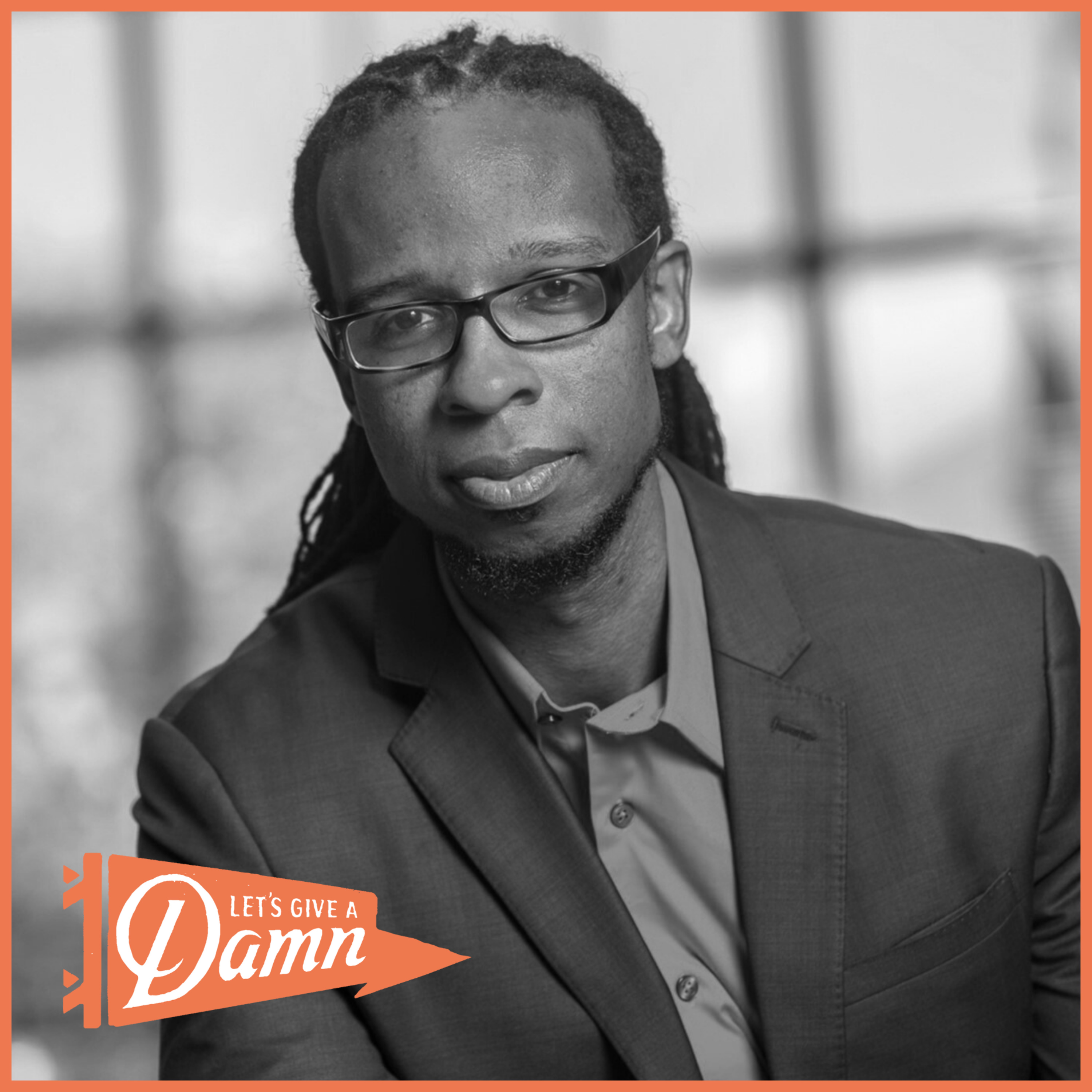
Let's Give A Damn
Ibram X. Kendi: How To Be An Anti-Racist, Malcolm X, and Collective Liberation
01:04:56
Loading summary
Transcript47 lines
- [00:00]
A
Welcome to the let's Give a Damn Podcast, a show where I have conversations with fascinating people who give a damn and who aim to lead the planet much better than they found it. I'm your host, Nick lapara, and I'm so incredibly glad you're here. Before I introduce this week's guest, although my guest doesn't really need that much of an introduction, I want to remind you of a few of the ways that you can show your support for our show. You you can subscribe to our Patreon, you can follow us on social media, you can share this episode with friends in person and online. You can buy some of the merch on our website letsgivadam.com or maybe you're an organization or company that aligns with us and you like to sponsor some episodes. And lastly, a really important one, you can leave us a five star rating and review on Apple Podcasts. Friends, there are so many ways to support this show and I invite you to explore where which ones are right for you. You can always reach out to me with any questions at hello, let's give a damn.com buckle up friends and damn givers. This week's conversation is with Dr. Ibram X. Kendi. Dr. Kendi is a National Book Award winning author of 17 books for adults and children, including 11 New York Times bestsellers. Dr. Kendi is the Andrew W. Mellon professor in the Humanities at Boston University and the Director of the BU center for Anti Racist Research. This summer he will join Howard University as Professor of History and Director of its newly established Howard Institute for advanced study. Dr. Kendi is the author of Stamped from the the Definitive History of Racist Ideas in America, which won the National Book Award for Nonfiction, making him the youngest author to win that award. He also authored the international bestseller how to Be an Anti Racist, which was described in the New York Times as the most courageous book to date on the problem of race in the Western mind. In 2020, Time magazine named Dr. Kendi one of the 100 most influential people in the world. He was also awarded a 2021 MacArthur Fellowship and his newest book is Malcolm Lives. It is the first major biography of Malcolm X for young readers in more than 30 years. It appeared last month, May 2025, on the Centennial of Malcolm X's birth and debuted on the New York Times Bestsellers list. In this conversation we discuss collective liberation, the genocide in Gaza, his new book, Malcolm Lives, and so much more. This was an incredible conversation. Before we begin, a quick reminder as always that you can email me anytime. And for Any reason at hello, let's give a damn.com you can ask questions. Recommend future guests tell me how much you love or hate the show. Anything goes. I just love hearing from you. And don't forget friends, if you prefer to watch your podcasts instead of listen to them, we're on YouTube as well. And now let's get right into my conversation with the man that's the Myth, the legend, Dr. Ibram X. Kendi. Let's go. I am so thrilled. It is an honor to have you on the show. Been a fan of your work for years. A little jealous because we are about the same age. I'm a year younger and in terms of accomplishments, you have out accomplished me. Not really jealous. Just so, so grateful for you and your work and really excited to talk about a variety of things today, including the forthcoming Malcolm Lives biography. So let's begin this way. You have had a hell of a last few years and we, we have had a hell of a last few years. How am I finding your heart and your soul today? How are you?
- [04:06]
B
I'm feeling focused. And I think a lot of people, particularly a lot of Americans, are in a moment in which they're focused on figuring out ways to do what they do best to help really save humanity, save the nation, allow us to ensure that we'll pass on a country where our children will have human and civil rights. So really, I'm in a spirit of focus right now.
- [04:45]
A
I'm glad you feel that way. And that has been my experience as well. This is a particularly trying moment for us. And I have friends that are incredible humans that aren't doing so well right now. Right. They're not focused and they're feeling pretty. Yeah. Just helpless. Like, what can we actually do? We've been protesting for years. We've been marching for years. We've been writing and calling and doing all the things and, and what have we done? Right? And so they feel helpless. So I have groups of. I have a group like that. But then I'm grateful that I'm also surrounded and I don't blame them for feeling that way. Honestly, this is a troubling, troubling time. But I am also grateful to be surrounded by so many focused folks that are really set on what can we do. Okay, this is really bad. This is really fucking bad. This is disastrous. And what are we going to do about it? Right? And so I'm glad that that is how we're finding you today. We have so much to focus on during our conversation and not a lot of time to do it in. But I always like to take a few minutes at the top of the conversation to ask my guests, how do we get here? How you in particular, how did you get here? I'd love to hear a bit about your story. Obviously, folks can go read all versions of your biography on your website, and they, you know, they might have heard you talk about it before, but in this, I would love, in this moment, how are you processing through that? So if you could just, in a couple of minutes, share the people, places, and things that made you who you are today.
- [06:21]
B
Sure. So I guess I'm. Who I am today is an historian and scholar who studies racism and has written quite a few books and essays on the topic. And that scholarship is really geared to regular, everyday people so they can really understand what they're experiencing, what they're seeing, how to challenge racism and how I arrived here. I grew up in the 80s and 90s in New York City, largely experienced, like many black youth, all sorts of racism, you know, racial profiling. I didn't really understand fully what I was experiencing, but I also, you know, could sort of feel the effects of that. At the same time, I was a basketball head. I, you know, grew up playing basketball, dreaming of playing in the NBA. And so when I got to college, I realized that I probably wouldn't make the NBA. But, you know, I'd also grown up witnessing my parents speaking in churches. My father was a minister. My father was also, you know, a longtime poet. You know, my mother became a minister. And so seeing people use the word or words to move people, I wasn't particularly necessarily religious. And. But. And so I go to college, I pursue sports writing. Sports writing gets old very quickly because, you know, professional athletes are just like any of us.
- [08:11]
A
Sure.
- [08:11]
B
And. But then I start writing about race and racism and think about becoming a journalist who's going to cover racism, Go to grad school, pursue my master's in African American studies. I didn't believe since I was black, I was an expert on black people. When I get there, I realize that I could actually have much more freedom if I'm a professor. I decided to become a professor. And as a professor, I start writing books on the history of racism and those who are, you know, who are challenging it. And because I was groomed in a. In a department and even a discipline, African American studies, that was really focused on sort of knowledge for change's sake, as opposed to knowledge for knowledge's sake, you know, from the beginning, I wanted my work to be accessible to regular folks.
- [09:04]
A
You pointed out, let's go back to that moment for a second where you were writing about sports and then you decided to write about race and racism. Was there a particular thing that was happening because you said, you know, the re. One of the reasons you sort of changed was you can only write so much, right? But obviously there's a whole billion dollar, multi billion dollar industry of people writing about these ordinary folks that can throw a ball a certain way or, you know, hit a ball a certain way. So that could have been. There's a version of Ibram x Kendi that is on espn, right? And, and we're not getting that today. So was there something, was it just, hey, I can talk about this, these new topics in a better way as a black man in America? Or was or did something happen sort of historically, culturally that said, yeah, this is a way better use of my time.
- [09:49]
B
So I, I was a, I went to Florida A and M University and at FAMU we were encouraged to do internships, those journalism students. So I interned at the Mobile Register in Mobile, Alabama in the summer of 2020, 2003. During that summer, the sports editor comes to me and assigns me to write a story assessing or really covering whether the top football high school recruits in the state would prefer to play for a black head football coach. At the time, the SEC had never hired a black head football coach. Alabama had just passed on Sylvester Croom and hired, I believe, Nick Saban, or he may have been after that at the time, Tyrone Willingham was the coach of Notre Dame and doing quite well. So I ended up talking to a whole bunch of high school football recruits in the state of Alabama and even a few other states and ended up finding that a lot of them actually wanted to play for a black hood football coach. And we ended up reporting that story. And I saw the reaction, you know, to that story, particularly along because of its social aspect that was much more interesting and fulfilling to me than the sports aspect. And so I think that that in many ways was a, a, you know, a sort of a fork in the role that, that I took that, that got me to this point.
- [11:25]
A
Okay, that makes sense. I mean, that's a, that's sort of a huge moment right there where you're getting, you're getting pushback about something that you shouldn't be getting pushback about. But this is America. And so the things that we shouldn't have to fight for, we still are hundreds of years, hundreds of years into this American experiment, just for some context, because we don't know each other. I live in New York City. I live in Harlem. So you were born, what, 11 miles southeast of where I'm at right now in Queensland. And, and we'll talk about this later when we get to your book, but your, your New York stop for the book tour is going to be a couple of miles from our apartment a couple miles north. I love attending events at that center. And yeah, I'm going to obviously come up and see you there when you're in, when you're in town. Great. We moved here, but we're not lifelong New Yorkers. I was, I was born in Rochester, New York. My dad is an immigrant. And then I grew up in Guatemala, where he is from. But it was always the dream to get to New York. And here we are raising our three kids, which we'll talk more about. Because of the age range that you've placed on this biography is like, right where my kids are. So I'm excited to get into that. Do you mind if, can we talk about your name changes real quickly for a minute?
- [12:47]
B
Sure.
- [12:47]
A
I find it super fascinating. I, I find it really fascinating. So you were born Ibram Henry Rogers, and then in 2013, you changed your middle name from Henry to, and forgive me if I'm not pronouncing this correctly, Solani.
- [13:00]
B
Is that Solani?
- [13:01]
A
Yes, Solani. Okay. Meaning peace in Zulu. And then there was another name change whenever you married your partner, Dr. Siddiqua Kendi, and you ch. Chose the surname Kendi together, which means loved one. In Meru, I believe there's so much power in a name. We, my partner and I, we put a lot of thought into our children's names and even gave them two middle names because we had so much that we wanted to communicate with their names. My surname is Lapara or Lapara. And if it wasn't such a strong last name, and if there weren't only like 3,000 people in the world that had this last name, I would change it because I see a lot of, like, I have a lot of friends with pretty sort of run of the mill, boring last names. And I'm always like, you know, you can change your last name, right? Like, you don't have to stick with, you know, this name that you were given outside of your control. Well, you obviously took that very seriously. And I'm not saying you didn't. You tell me. I don't, I don't know if you didn't like those other names, but you chose these names. Super, super intentionally so. Can you talk about what brought about those changes, both the middle and then the surname.
- [14:13]
B
So it was a combination of not necessarily liking my middle and last names, as well as really being intentional on choosing ones that I really liked. And my parents sort of had a pact in which my mother was able to choose the middle name of my brother, my older brother, and then my father chose my middle name. And they both named us after, you know, ancestors in their family. So I got Henry, and she didn't like that name from the beginning. And, you know, I never necessarily like that name. And then when I started studying the history of racism and learned that the first, the man who really pioneered what became the transatlantic human trade in Portugal was named Prince Henry, it also was a name that I. That it didn't. No longer wanted to stand by. And so I changed it to Zelani, meaning peace. Because ultimately, if we're not working to create a society where we can have collective peace, then what are we really seeking to do? And similarly, with Rogers, I was constantly mocked, will you be my neighbor? Sort of growing up from Mr. Rogers neighborhood. But I wasn't necessarily as intent on changing that name until I met William, my wife, you know, Sadiqa. And she. When we started talking about, you know, getting married, and she shared with me just the challenge of changing her name, and not sure whether she wanted to go through that again. Our marriage was her second marriage, and. And so then I suggested her, hey, how about we change our names together? And she was open to that. And we ended up choosing our name together, Kendi, and actually unveiled it to our loved ones at our wedding. And I should also add, there's also a tradition among African Americans to change their name. And part of that tradition was, whether during or after the enslavement era, when African Americans wanted to remove the name of their enslaver. And even since then, I mean, even people like Malcolm X, right, Who. Who decided to drop his name little. And. And so I also knew that tradition, obviously, being an historian of black America, that's really beautiful.
- [16:52]
A
Thank you for sharing. And I just want to give everyone out there permission if you. You know, if you want to communicate certain things with your life and work, A lot is stored up in a name, and you can. You can do something about that. My partner and I have joked. She. She hates her maiden name, not hates it. If you're listening to this in laws, not hate it. But she definitely was glad to get rid of it once we. We were married 17 years ago in a different time of life. We were still coming out of our conservative Christian upbringing. And so there was no conversation back then anyway, of, wait, should I take your surname? Why do you have to take mine? Why is it just automatically assumed? And so in recent years, I've offered to her, I'll change, like, I, I will change, I love my last name, but, like, I will change it, or let's change it together to something that we really want to communicate. And she, she loves my surname and I love it as well. So we're not changing it. But the very fact that those conversations can and should happen, and you're sort of giving us this example of, hey, if you don't like it, you can change it and put, like, meaning behind it, you know, I can just, just.
- [17:59]
B
Add very quickly for those Americans who have that tradition, as well as for women who, who oftentimes change their name when they're, when they're married, it, I think there's more conversation literally right now as we speak, because the House recently passed the so called SAVE act, which quote unquote requires somebody to prove their citizenship by producing a birth certificate or a passport. And for those who may not have changed their names, those documents become incredibly difficult to get or to produce when you've changed your name or you're in the process of changing your name. And so it actually disenfranchises a whole group of people or makes it harder for them to vote, which clearly is unfortunate.
- [18:49]
A
I, I was literally going to bring that up next because I was going to say, listen, doctor, you're, you're, you're a controversial person and figure, are you worried that they could use that against you, you and your, your wife? Like, you know, they could easily make a case there. Obviously it's a shitty case, but, like, they can make a case for, listen, it doesn't match up and we've passed this thing and you got to abide by it, right? Because there has been talk of not just deporting, you know, green card holders and, you know, undocumented migrants. There's, there's been hinting of, like, even if you're an American citizen and we don't want you here, we could send you elsewhere and they could use things like that. So, I mean, I, I think we'll, we will fight against that and I hope it doesn't, you know, get to people like you. But, but it's a, it's a real, it's wild that we have to consider, hey, it doesn't match up with my birth certificate. Is this going to be a problem? Am I going to be able to work here. Am I going to be able to do my work here in two or three years?
- [19:47]
B
Exactly.
- [19:48]
A
Let's hope that doesn't happen. We're going to get closer to talking about Malcolm Lives. I want to mention another book, though, that you wrote that has impacted me deeply. You've written many books. 15, right? Am I, as my number correctly, 15, 16. Yeah. Insane. But you. But the one I want to address real briefly because this is such a cornerstone of your. It's such a foundational part of your work. You know, you wrote how to Be an Anti Racist. And again, a controversial book. Shouldn't be, but it's, it's. I could probably find people each and every day that are talking about this topic both positively and negatively. So we're not gonna spend a lot of time here. But I do want to bring this up because I think it's important. Again, all of your work is bound up in this idea, right? I think of how do we. How do we communicate what's going on in the world? How do we move past these things? How do we break down barriers? How do we create not just equality, but equity? We need to go beyond equality. So, because how to Be an Anti Racist was such an important book, what is the. And again, you've. You've talked about this ad nauseam. I'm so sorry to ask you again, but for those listening today, it's okay. What is the difference? Because I think it's so important, because this also doesn't apply just to anti racist. This belongs. This applies to. If somebody says, well, I'm not a. I'm not a transphobe versus I'm anti, you know, I'm an anti transphobe. Or I'm like, it's so much deeper and bigger to go beyond just saying I'm not this. So what is the difference between saying I'm not a racist versus someone saying I'm an anti racist? Why is it not good enough for someone just to say, well, I'm not racist?
- [21:31]
B
Well, let me give an example. In 1820, actually, let me fast forward to 1860, there were about 4 million enslaved black people in the United States. And, and those who were enslaving those black people wanted, let's say white people who weren't enslaving black people in the north to do nothing. So they just wanted them to do nothing. They, they, they were completely fine with those northern white Americans who said, I am a. I, I am. I don't like slavery. And then, period, they had an issue with people who were abolitionists. In other words, I am going to, whether they were black or white or another racial group, I'm going to actively seek to abolish slavery. Those were the individuals who most threatened the life of slavery. And fast forward two centuries later, those who say, I'm not racist, period. It doesn't threaten the structure of racism in the way in which those who actively are seeking to deconstruct racism is. And so frankly, when you do nothing in the face of an injustice, what happens to that injustice? It persists. And if the people literally who want that injustice to persist are trying to get other people to do nothing, then what does that mean? That means that there's a level of complicity when we do nothing, which is to say that people, again, who are conserving racism want the rest of us to do nothing because they know our resistance is the only thing that could bring it down. And so I argue actually in how to Be an Anti Racist, that inaction is just as critical to the persistence of racism as action. So the individual who is actively seeking to institute a law that disenfranchises black people is. That's one form of someone who's participating or allowing racism persist, but just as much another person who's like, I don't think that that's a good law and then that's it, or I'm against that law, or I'm not like that person who instituted that law. It doesn't really do anything to change that law. It doesn't really do anything to ensure we're all have access to voting. And so I keep stressing that when something is the norm, when something is the status quo, there's only two positions. There's those of us who are allowing the status quo to persist either through our action or inaction, or those of us who are actually trying to challenge the status quo and thereby in this case, being anti racist.
- [24:45]
A
Super, super helpful. And it's also what you just described, obviously that applies to a hundred, a thousand different topics, right? A thousand different things happening. And it's also something that we talk about quite a bit in the let's Give a Damn community on the podcast is if I. If you know that something is wrong and you're just not saying you can't do it there in this place. But if you're just talking about it behind closed doors with your friends, if you're just, you know, bitching about it over beers with your buddies, or if you're just. If you're just talking about all the ways that X, Y or Z is wrong, but then you're not taking the next step to do what, whatever you possibly can. I, I have, I have little respect. I'm also, I understand, like life is hard, you can't do everything. I want to acknowledge that. Friends, if you're listening, like, I'm not telling you that you have to do everything that you care about. You have to do something about it, because that's humanly impossible. There's lots of things to care about, lots of things that are wrong. But we must take those extra steps. We must do something and if we're going to talk about it long enough, we must get up and do something about it. I completely agree. I think there's a lot, I think one of the current versions of that is the genocide in Gaza. And we've seen. I have spent the last 18 months raising hundreds of thousands of dollars for organizations in Gaza, helping other people raise. I've done 110 mile walks in the freezing cold to raise money. I've done work with a bunch of organizations working in Gaza. So like I have tried to, hey, if you look at my social media, you will see that I care about this issue a lot. But it's not just posting, it's not just talking about it. It's not just posting sort of things that are going to get people riled up. It's also me in action each and every day doing something about it. Otherwise I need to shut the hell up and find something that I can contribute to. I mean, really, because it's we, we, we, we need, we need fewer people, we need fewer people talking, talking, talking, talking, talking and then not doing something about it. So I love that. Yeah. Did you have something to say there? I don't know.
- [26:58]
B
No. And, and, and I was just going to say that doing something could certainly mean as you, as you have done, you know, fundraising for organizations, it could mean donating to organizations because typically with most of these issues, and whether it's the genocide in Gaza or racism black and brown people are facing in the United States, they're typically organizations who are engaged in challenging that injustice. And so the question becomes for you as an individual, how do I support that organization? I may not have a bunch of time, but I have money, so let me give, I may not have that much money, but I have time. Right? So let me give my time and volunteer. I may have a little bit of time and a little bit of money, so I'm going to give a little bit of both. Right. How can we each contribute to those organizations that are engaged in this fight? Or we realize there's no organization in our local community, so how do we create one?
- [28:02]
A
That's really helpful distinction. Thank you for going one step further because there isn't one. There are a thousand different ways to be anti. Fill in the blank, right? It's not just the way that I do it, for sure. In fact, I have a good friend here in the city who will remain nameless for literally his own safety and his livelihood. But the job he's in, that he has been in for 35, the career he's been in for 35, 40 years does not allow him to speak up in the ways that he would like to. But he also makes a lot, a hell of a lot more money than I do and then uses all of like every cent he can to facilitate the work being done on the ground. And so that is a, that is a beautiful example of someone that can't speak up in the way that I do. But they're using everything that they can do to move this forward because at their age, it would not make sense for them to like, give it all up and like hit the, you know, that's not for everybody to do. And so there are so many different ways to do it. Let's talk for a minute about this moment since we're sort of on this topic. We, we've already mentioned the horrific 1819 month genocide in Gaza that's happening abroad. It also has, it also has, we're also very explicitly part of it. We have fascism. Seems like it is here. Hopefully not here to stay, but it is here. I have no love for Democrats when they say all the right things, but in my, in my short life, when they have a chance to do something important, they rarely take that chance. But they keep saying the right thing. And I honestly refuse to be part of a party that is by and large just like the other major party, bought and paid for by Israel and other special interests. So I have no, I'm not coming at this from a, like, let's support the Democrats and let's hate on the Republicans. But I also understand that this is a very, like, this moment feels very heavy. How are you? Feels very heavy. Very, very harrowing, Very evil really. How are you navigating sort of what's happening right now? And how should, if you're, if you're sitting in a room with, you know, my audience, who are all people that in all walks of life that all want to give a damn in bigger and better ways. How should we be thinking about how to navigate these times?
- [30:35]
B
So, well, let me say, I think the way that I'm navigating this moment, you know, we're going back to what we were, I think talking about at the onset is I'm really focused on trying to both respond to what's happening on a day to day basis, you know, in ways that I can. So, for instance, using my platform to point out and explain for people what's happening, to sort of pierce through sort of forms of gaslighting coming out of this administration, but then at the same time privately creating institutions and entities or even writing a book that will help to explain for people what's how we arrived at this moment. And so, and I think each of us can think about our own ways in which we can resist again in the spaces that we're in with the expertise that we have. But we also have to be very cognizant of what we're resisting. And I don't think, let me say, Nick, that those who have compared this administration to Nazis, I don't think that that is a reach, nor is it hyperbolic. And so I think for those who are really interested in trying to understand what we're facing, you could certainly read up on those, you know, on the lead up, you know, to Nazi Germanism, or if you don't want to go all the way back to the 1930s, you can read up on countries like Hungary to really understand how you had a president who was democratically elected and has been able to create a political economy that ensures the permanence of his power, or even a president like the president of El Salvador, which similarly, it's a much more recent situation. And so there are countries and their political leaders that are in the future based on where the United States is headed. And so in the case of Hungary, the attack on journalists, the attack on scholars, the attack, the manipulation of the voting system to ensure that Erban won't lose, the ways in which the courts have been sort of neutered, the constant obeying in advance of particular entities. It's so bad right now that for so long the opposition was fighting amongst themselves. In the most recent election, they finally realized, hey, maybe we should. Maybe we should have some level of solidarity. But they still lost. So literally all the political parties in Hungary came together in a coalition against Irvine, but. But the game was so rigged that they still lost. So we also don't want to reach that point. Right? And so there are so many lessons from history and other Countries, you know, that we can learn in the here and the now.
- [34:23]
A
Let's not. I was going to go a different direction, but let's stay, let's stay focused. My brain is going crazy and this is all super helpful. You mentioned a little bit ago that, you know, when you were, when you were talking about what you're able to do, like, like what you're doing very practically, you talked about institutions that you are building. Most people know that you have been leading the center for Anti Racist Research at Boston University for a few years. And now as of this summer, I believe you'll be at Howard University. Is that a continuation of the work? Can you share what you'll be doing at Howard? I assume it will be along these lines, but I don't want to presume so.
- [35:00]
B
It is a continuation of the work, but at the same time it is a shift. And it's interesting because we started to envision this even before the previous election, but really trying to create an intellectual space where some of the most important creators, anti racist creators and intellectuals can, can come and be on fellowship and produce that highly impactful project at a moment where those spaces are under attack, are declining. I mean, you know, to be able to have that intellectual space is going to be critical. So that's sort of one element of our, of our work. We're also going to be continuing to build the Emancipator, which is this digital platform that covers racism. Obviously we'll do our own original research, but then also to really support the Howard community of faculty and students who are a number of whom are already engaging in the advanced study of racism and so creating mechanisms for them to do what they do best. And that's one of the reasons why I'm so excited about this move. Because as a scholar who's long studied racism, the university in the United States that has long studied racism, there's no one like Howard University.
- [36:42]
A
Thank you for sharing that. And I for one am incredibly excited about what you and those around you will be building at Howard. Here's something I find interesting. You've written or Co written 16 books and about half or over half of them have been books for children in the children age range, which again I love because I live in a home with hundreds and hundreds and hundreds and hundreds of books. They are everywhere. Each week my kids go to the library at least once, but usually one to three times and they come back with 50, 60 books every single time. Then they read through them and then we're back to the library and we have to carry all the books back and forth. Thankfully, we live in a wonderful city with libraries everywhere. So I'm coming at this from. As the parent of three children, 10, 12, and 13, who love to read, I'm also coming at this. My partner and I love to read. So why, why and when did you start writing? I guess I can look back at your first kid's book and see when. But, like, what was sort of happening? Like, why did you start writing books for children? And you, as a scholar, who you could. You could talk to just adults for the rest of your life, right, with your work and all, like, in adults would be there to pay attention to you? Why is it important for you to spend a substantial part of your life and work writing books for children?
- [38:12]
B
So I wrote this book, this narrative history of racist ideas entitled Stamp in the Beginning. And I can't tell you the number of times I went out to speak about that book. And people who had read the book appreciated the book and all they learned. But also, I could tell they were very upset. And what they were typically upset about was that they didn't learn this in school, that they had to be 35 or 45 or 75, you know, even 25, before they learned what they felt was such a foundational history. And so then they would constantly tell me, like, we need this in every school. We need young people to be reading this. If I. If I read this history when I was younger, it would have changed my life. And these are people who are, like, let's say, if they're black, and if they would have read this history when they were 13, being told there was something wrong with them because they were black, it would have profoundly transformed how they were experiencing the world, because they would have learned there's nothing wrong with them. Or if they were 13 and white, then they would have realized those who were telling them that they're special because they're white, that no, that's. None of us are special. Right. And so the way in which it could have helped, you know, I have so many, you know, even Latinos and Asians and Native Americans who are like, yeah, like, you know, we need these types of histories, you know, for young people as well. And so I kept hearing that over and over again. And I try to listen to people, you know, particularly the readers of the book. And so that's what ultimately led me to work with Jason Reynolds to remix Stamp from the beginning for a YA audience. And then I saw the impact, you know, of that book, of those books. So that was happening. And then the other thing that was happening was once I entered into that community of writers who were writing for young people, I realized how they were taking my own personal mission to create accessible books to a whole nother level. Right. I mean, it, it. Because when you're writing for young people, like, I mean, and you want it to be read by a lot of young people, you know, you. It has to be a well written book, right? Young people are just not going to read. They're going to be less likely to read boring books. Adults can feel more obligated, but, you know, especially young people are not going to read those books for fun. And, and so I think that that became pivotal. And then I remembered my own upbringing and I didn't read books as a young person, and I didn't read books as a young person largely because I didn't like the books. They weren't interesting. Then the final thing, which I think is just as important, but I don't talk as much about publicly because it's hard to talk about, is that there's a number of adults who are reading books written for young people. And why are so many adults reading books written for young people? Because those authors are razor focused, potentially more so than those who are writing for adults, on the experience of the reader because they know how important it is to ensure that the reader has a pleasant experience with the book. And so you have a ton of adults who are reading books for young people. And then because our educational system is so shoddy, the majority of adults are reading at a sixth grade reading level. And so it is critically important if we want to reach adults, to ensure that these books are heavily accessible for us all. So those are all the reasons why. And there are those scholars who would frown upon me as a scholar and question my. Whether I'm a true academic because I'm writing for young people. I don't care about them. I care about the young people.
- [42:45]
A
Man. There I was gonna raise my hands like I was in a charismatic church there for a minute, like that is so, so incredibly helpful. And I'm so grateful that that much thought and intention went into it. And really back when, you know, you're given the experience of stamped and being out on the road and hearing the feedback that you were in a place where you could receive, where you could hear that both physically from the fans and the people and the readers, but also just hear what was happening sort of in the universe. Because as the parent of three kids who read a lot, I am so Focused on. On the one hand, let them read sort of whatever they want, but also, like, what. Like, what. What is attractive to you? What do you. What do you want to read? Like, my first. When they started getting into like. Like, anime and stuff a lot. Like. Like manga. Like, my first reaction was to say, hell, no. Like, read a book. Like, you get enough. You get your 30 minutes a day on the iPad. You get your whatever. Like, at least for these moments when you're reading, read, you know, you're 13. Like, read, you know, words on a page. You don't need more than that. Figure it out in your head. But then as I started, like, okay, why do you like to read this? And they would talk me through it. I was like, oh, yeah. Like, this is such an important way to read. And they don't just read those. They read a lot of just, you know, sort of what we would call a regular book. But I'm really. I'm so glad that that level of intentionality has been put into it, which sort of brings us into this book. The reason that we are talking today comes out in one month minus a day, I think. Is it. Is it May 13, right? So we're almost there. Your baby is almost birthed into the world. It's also coming to us in the year 2025, 100 years after Malcolm's birth and living in Harlem. That's just one of the reasons why I think about Malcolm X a lot. I live one block over from Malcolm X Boulevard, and like I said, I spent time at the center, and he's just for years now. So let me go back a second to the whole book thing for a second, because I. I think this is important for. As I process through this, you talked about listening to the fans and hearing so many of them say, I didn't have the reason I. And you even said it in your own experience. I didn't want to read a lot when I was younger because we didn't have books that had that level of intentionality behind them. And I loved to read growing up, but it was a lot of books that I think they're fine. There was nothing wrong with them. But, like, I read a lot of books, like, whatever. The Hardy Boys, Boxcar Children. These are fine books. But if I look at what I. All that was available for me to read, they didn't do anything to. They made me a reader, which is not a bad thing, but they didn't do anything to broaden my worldview. They didn't do anything to teach me about all the different kinds of people there are. They didn't teach me about LGBTQ + community, they didn't teach me about how to be an anti racist, they didn't teach about what was happening and they didn't teach me real history. Right. Even the curriculum that I was a part of growing up in school was in retrospect an absolutely God awful shitty curriculum that taught of it was, it was colonizing through and through. Like I, I participate, I, my K through 12 was Colin. I was colonized by partaking in this curriculum which I had no, you know, I had no control over. So I didn't have these books growing up, that's my point. And now my kids do. And so this book is coming to us now. Tell me about, I know you already talked about your process and why you started writing books for children, but this book in particular, it's identified on the website as the official and on the book, the official biography. So this is a big deal, right? It's the first of its kind in I think several decades. So this is a big deal that you're not just. Again, this is a sort of sanctioned by the movement in the family and all of that, right? Why, how did this book come to life? Why is it important for us now in this period in history? And the third thing that I'll remind you later if you need reminding, but one thing that I think is very interesting is that this is a 350 page biography for children. Like again, I have no doubt that my kids will eat it up. But how are you getting all the kids that need to read this? You hand them this book which is, it's thick. It's not scary thick, but it's thick. And saying, this is an important book for you to read. Nope, there's no pictures. And please read it from front to cover because it'll change you. It'll teach you about one of the more important figures in our, in our, you know, in, in our lifetime. So yeah, all, all of that, that was a lot. But talk to us about the book. I'm so excited about it.
- [47:49]
B
Well, I think in terms of how the book came to be, I in many ways was informally studying and researching the life of Malcolm X, you know, for two decades. But I never imagined I'd write a biography. It was almost something that I was doing, almost like as a hobby, even though it was another scholarly activity. And fortunately the estate of Malcolm X, his family as well as a publisher sort of came to me and asked if I'd be willing to write this official biography. And so of course I jumped at the chance and we wanted to do it to sort of match his 100th birthday. And I think it's an incredibly important book in this specific moment where you have people who are really looking to. Looking for a wellspring of courage.
- [48:54]
A
Yes.
- [48:54]
B
And, and Malcolm X was one of the most courageous humans that ever lived. And so there's, there's that aspect, I think. Secondly, the book is a story of Malcolm's life, but you can't tell the story of Malcolm's life without telling the story of the life of racism and what it means to challenge racism. And so young people and adults who are reading this book can really get an introductory or even in more advanced conception of how racism literally impacts people and how individuals can challenge racism and taking it a step further, how Islamophobia impacts Muslims and how Muslims can challenge that Islamophobia. And so I'm really excited. And how do you get people to read the book? I actually was quite encouraged because I have an eight year old daughter and a two year old. And then of course my wife and my. When our advanced reading copy came, my 8 year old daughter took it and went off and literally read it cover to cover.
- [50:12]
A
Wow.
- [50:13]
B
And really appreciated it. And then so did my wife. Right. Who told me how much she sort of learned about Malcolm X. And part of the challenge is most people, if they read a book about Malcolm, they've read his autobiography. So they haven't necessarily read an incredibly engaging biography that sort of moves quite quickly. And so that's what I wanted this book to be. And so we give it to a child. And I knew that I have about two or three pages to catch them and so I tried to ensure that that happened and to keep them engaged. The book is largely told in scenes and so it reads on some levels like a novel. And there are very few nonfiction books that kids are reading. And so I knew that to really get young people and adults who also prefer novels to be willing to read this book, it had to, in a way read like one.
- [51:18]
A
I'm in the middle of reading it. I started a few days ago. I'm in the middle of like five books that for upcoming guests I get a lot. Like my, my wife who loves to read, she's always jealous because like all the time, like authors and publishers are sending me books because they want their, their guests to be on my podcast. And I've been very grateful. Like, I didn't start out interviewing a lot of authors, but that's sort of become like probably half of my guests are authors. And I love that because it gives me a chance to dive into the written word. But. So I'm not finished with it yet. But I couldn't agree more with how you, how you talked about the very beginning, the first few pages. Hell yeah, I'm in. And it reads so, so, so, so well. And as you pointed out a few minutes ago, yes, the back of the book, you know, or the age range is, you know, somewhere in the, you know, mid child range, 10 to 14. But I guarantee that there'll be lots and lots and lots of adults that will buy it for themselves or that will get it for their kids and then end up reading it themselves. It is, it is time. It's also, I would say it's, it's. I find it very, maybe you don't see it this way, but I do. Like, I find it very courageous that you and many others continue to write books that will inevitably get banned. Like that makes no sense to, to, to, to write a book and publish it in this day where books just aren't like, that's not the industry you want to get into if you're, you know, if you're wanting to make a sustainable living for most authors, but you're writing this book that, yeah, there will be untold numbers of schools and dozens of states probably that will put this on their watch list and will ban it. And so you're already cutting out a bunch of people that won't even get a chance to like read it. And that for me says a couple different things. One is we need to keep, like, we need to keep writing books like this, like as quickly as they like, we need to ban, we need to write them and publish them quicker than they can ban them. I think it also tells the powers that be. It also tells our fascist in chief and his just team of fools that like this is a loose. Like, hopefully at some point, if they're not already having the conversation, like, they're not. This is one thing I love about books like this. And when I see protests where I see young people just not giving a fuck what the police are telling, like, they're just not, they're not scared anymore like this. Whether it's standing in a protest and defying the powers that be with a badge on or writing a book like this or any number of other things, we need to continue to let them know that I don't know the future. I don't know if this American experiment will live on or deserves to live on. I don't know what's going to happen, you know, a month from now or a year from now or a decade from now. But we have to keep pushing against these evil powers by writing books like this. And by. It took me, 2015 was a big year for me. It was the year that I finally decided I'd already been a very, like, I had already wanted very deeply to get out of my sort of conservative world, and I was very much out of it at that point, but still not educated on most of this. I lived a very sheltered upbringing theologically and just culturally and everything. So 2015 was when I decided I am going, like, everything's changing. I'm going to. I'm going to unlearn every single thing that I want to unlearn, and then I'm going to fill in that space with all the good stuff. So it wasn't until 30, 30 that that happened for me, my kids, our generation, like the parents now that are raising kids, they're getting it when they're little kids, 8 years old, taking the book, reading it from COVID to cover like that just wasn't an option for me growing up. And it is for our younger generation. And so it makes me hopeful that in a decade or two, if we're still around as a country, those same kids are going to be. They'll be the scholars, they'll be the authors, they'll be the activists, they'll be the. And they'll be doing a much better job because they got several decade jump on us.
- [55:33]
B
Yeah. And that's why they're. They're banning these books. That's why they're defunding our schools. That's why they're smearing and firing teachers, because they want our kids to be like us.
- [55:47]
A
Yeah.
- [55:48]
B
Which is to say they, they want their kids to. To. They want our kids to be 25, 30. 35 years old, and then basically have to make a decision to almost throw up decades of ideas, which is an incredibly hard thing to do, and then potentially also have to make some very difficult decisions in terms of who we remain connected with. Because chances are, if we hold ideas, we form relationships and friendships with people who hold similar ideas. So once we start changing, that doesn't mean our friends are going to change. Right. And so now we have to choose between the truth, let's say, or our friendships, which is an impossible situation. Right. So, you know, and many people, of course, decide to stay, you know, connected or stay thinking the same way because they don't Want to essentially have to move out into a new life. And so. But with our kids, you know, to be able to learn gracefully and beautifully over time and not have to reach this point in which we have to sort of unlearn painfully all these ideas, I mean, that's what they don't want. Right. And I think that's why I'm incredibly. It's incredibly gaslighting for these folks to claim they care about our children, to claim they're trying to protect our children when they're literally trying to stop our children from understanding history, understanding the world, understanding truth, preventing our children from having the ability to befriend any person from any walk of life, preventing our children from recognizing that there's nothing wrong with human beings. And the problem is actually rules and policies like, to me, and even creating mechanisms whereby children end up doing of age and doing horrific things. Earlier today, I saw at a middle school where a bunch of kids beat up, I think a girl who had a hijab or cases in which you have a boy comes of age and engages in a mass shooting, yes, we can blame those kids, but we should also be blaming the larger environment that we didn't transform for them. That's what our job is as adults, to ensure that the environment that our kids are being raised in are ones that are going to ensure that they can lead fulfilling, healthy, equitable lives. And so that's one of the things why I write, of the reasons why I write children's books. And. And let me just also add, Malcolm X is often spoken about for what he did as an adult.
- [58:50]
A
Yeah.
- [58:51]
B
I don't think people have as much understanding of what he went through as a young person and all of the challenges that he had to navigate. And whether that was his father being killed or actually dying by an accident, whether that's sort of poverty and hunger, whether that's being separated from his siblings, his mother being institutionalized, whether that's him having to essentially move three times before he was five years old or move again cross country from Michigan to Boston or being incarcerated. These are things that young people are trying to navigate or their friends are navigating. And we're not talking to young people about these things. And so they're able to learn from Malcolm's story about poverty, about hunger, about incarceration, about what happens when a parent leaves you, that you're not the problem, as so many of our kids think, if a parent isn't there, that there's something wrong with them. Right. And that's one of the things I'm really excited about in terms of the book, of course there's so many aspects of him becoming this grand historical figure and challenging racism, but the humanity of what he had to navigate. A teacher telling him that when he told the teacher, I want to be a lawyer, the teacher being not believing in that. Those are things that our kids face. And if we're not providing them with stories of how other people navigated that, then it's going to be much harder for them to navigate it themselves.
- [60:31]
A
I'm so, so, so excited for this book to come out. Thank you for sharing all of that. You've been so gracious with your time. One quick question before I let you go. And the question is this. What are you doing practically to take care of yourself? Like, I get that a lot as someone who's out there in the mix talking about these things every day, all these like heavy topics. I have good friends and I have a board of directors over my life that like checks in on me and takes care. Like I had to form that because I needed people to tell me like when to stop, when to go, you're doing too much. And one of the questions I get all the time is like, Nick, I, I get it. You're doing this and you're, you know, you're going to mass and you're whatever, like you're doing things to like, take care. But like, what do you practically, like, how are you physically taking care of yourself, Nick? And so I think about it a lot because they forced me to think about it. How are you just in the midst of all this, like, very practical practically. Is there anything like fun or sort of trivial or throwaway like how are you taking care of yourself during these, these times?
- [61:32]
B
Well, one of the things I've actually learned over the last two to three years and you know, we spent a lot of, we spent time talking about, you know, my new book, Malcolm Lives, is that writing for me actually is quite therapeutic. And, and I didn't fully understand that and know that until over the last few years there were so many different things I had to navigate, you know, because of smears or this or that. And it took me away from the process of writing, which then affected me personally.
- [62:08]
A
Sure.
- [62:10]
B
And, and so for, for me writing is therapeutic. But I would also add that I, I tend to, you know, I'm a vegan. I, you know, of course try to, to exercise. You know, I have a 2 year old and 8 year old who don't care what's happening in the world, they're still going to, you know, cry and whine and laugh and do all the things that the young people do. And so trying to be present for them and with them is also, you know, important for me. And then also know just knowing emotionally that all I can do is what I can do. So I can't. The beauty about our resistance is that it's going to take us collectively in order to create a new world. So what that means is we as individuals, we shouldn't put too much on our shoulders, right? And so constantly remembering that I can only carry what I can carry, you know, also helps me do it.
- [63:15]
A
Super helpful. Next time we talk, if that ever happens, we got to talk about the vegan thing. We've been vegan for years, raising vegan kids, and it's been a very important part. People are probably sick of me talking about it. Like, for me, it's not just like conceptually, like a big idea, a way that I can take care of the planet, but I think it also does, like, I think it's a very, like, healing way to live. And so I love that as well. But that's for next time. Ibram, I'm so proud of you. I'm so excited for this book. Thank you for writing it and for all the work that you put out. For those listening, we'll put the links in the show notes both for the book or you just Google it. Just find the book, buy it, pre order it, send it to all your friends and also the tour so that you, you can join up on the book tour if you're in one of those cities. Thank you so much for joining us. This was super, super helpful.
- [64:03]
B
Cool course, of course. Yeah. Thank you so much. And yeah, let's definitely give a damn.
- [64:14]
A
Friends, thank you so much for showing up and for spending time with Dr. Kendi and me today to find links for everything mentioned in today's conversation and to keep up with all things let's give a damn. Visit letsgivadam.com Please my friends, share this episode with a friend. Please leave us a five star rating and review on Apple Podcasts or Spotify. And please show up next week. We have many more incredible conversations coming your way. You can reach out anytime and for any reason@helloetsgiveadam.com I love hearing from you. Keep giving a damn. I love you all. Bye for now.