← Let's Give A Damn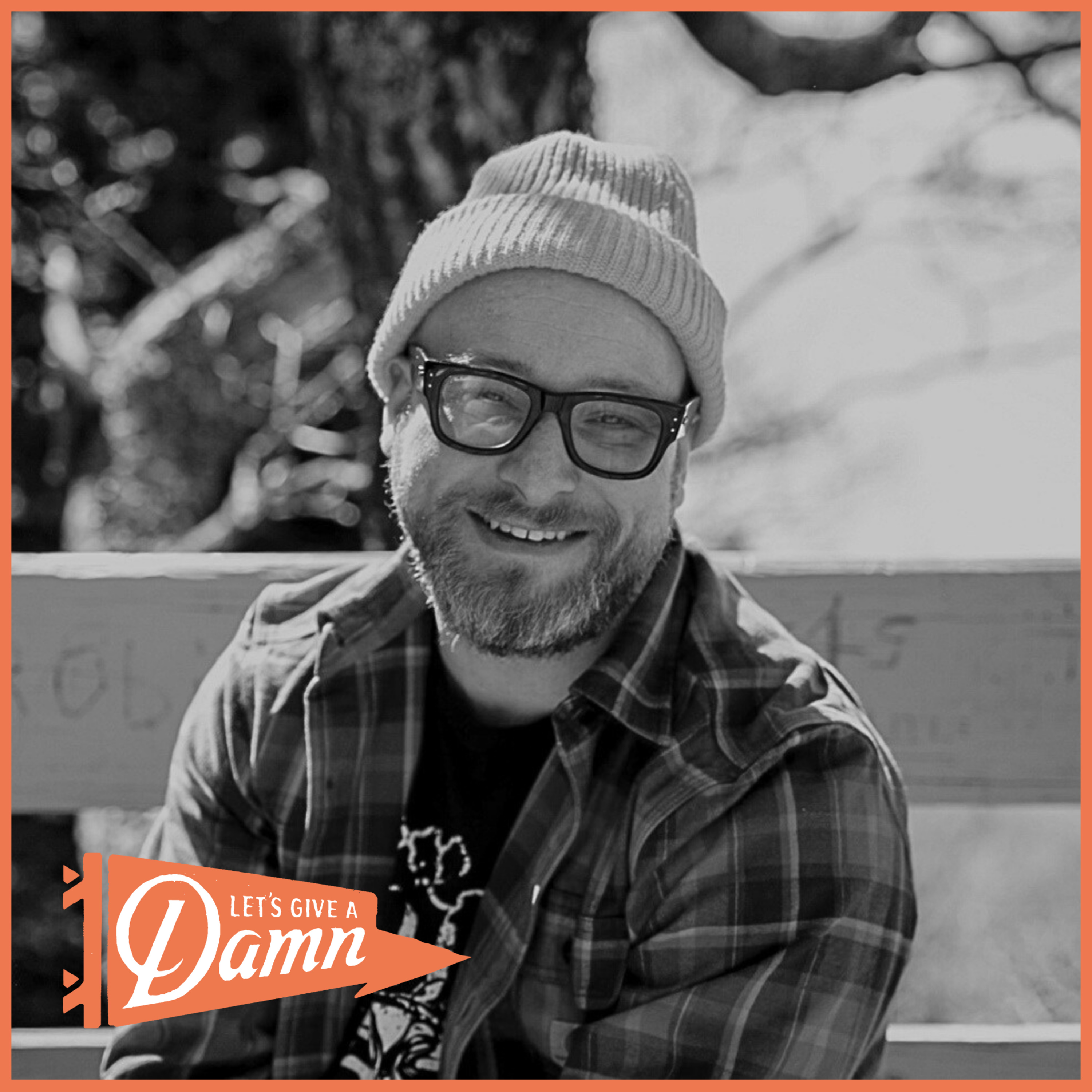
Let's Give A Damn
David Gate: A Rebellion of Care, How to Fight the Fascists, and the Importance of Poetry
01:21:39
Loading summary
Transcript100 lines
- [00:00]
David Gate
How to Fight the Fascists first learn the shape of the beast and recite the old stories plain it has known defeat many times before and it shall know defeat again. Name the evil and the evildoers who wear crosses round their necks who wrap themselves within a flag and quote the Bible like a hex hold strong the line of power Protect the rights they are assaulting to speak, to vote, to gather as they bully us to falter A single branch can easy snap so weave your hands into another's Together we're a mighty dam of every faith and color Starve the pockets of conspirators who pay tributes to the leader Boycott the shameful businesses who only want to cheat us Be a wall around the vulnerable when they come knocking at the door Be a refuge for the refugee Be a castle for the poor do not surrender to despair Fascists burgeon with our fear do not bow your head or bend the knee but but clutch joy and hope and cheer so let us stand and march and shout Take no bullshit from these clowns we will drive the bastards out we will grind the fascists down.
- [01:38]
Nick Lapara
Hello, Damn giving friends. Welcome to the let's Give a Damn podcast, a show where I have conversations with fascinating people who give a damn and who aim to leave the planet much better than they found it. I'm your host, Nick lapara, and I'm incredibly glad you're here. Now, before I introduce this week's guest, I just want to remind you that you can show your support for the show by subscribing to our Patreon, following us on social media, sharing this episode with friends in person and online, maybe buying some of the merch on our website, let's Give a Damn Dot com. Maybe you're an organization or company that aligns with us and you'd like to sponsor some episodes. There are so many ways to support, and I invite you to explore which ones are right for you. If you have any questions at all, you can reach out to me@helloetsgiveadam.com now, before we move on, I want to speak directly to you, the listener. These are very difficult days, and I feel like an idiot even saying that because. Because I could say that each and every week I am sick to my stomach and heartbroken all the fucking time. Like, all the time. From the moment I get up to the moment I finally go to sleep, I'm heartbroken. I am sick. Friends, please take care of yourselves. Now, by that, I don't mean stay silent or stop talking about the genocide and forced starvation in Gaza or or ICE kidnappings or our rapist president acting like a fascist king. Don't be silent. Do not be silent, but also find ways to stay in the fight long term. You know, a few weeks ago I was put on the guest list for the Lumineer show at Citi Field because my good friend Brandy is Wesley, the lead singer's wife. So got put on the guest list. Very kind of them, and I went to the show. On the way there, I was on the train, I opened up Instagram and the first video I saw was a headless Palestinian child blown off by an Israeli bomb that my fucking tax dollars paid for. I am not joking when I say I almost vomited and immediately regretted going to the show where I was bound to find lots of happiness and laughing and joy. I almost went home. I almost went home, but something inside of me told me to go go to the show, to laugh, to be happy, to experience joy. Because going to that show is an act of resistance. Because I'm literally filling up my fuel tank, as it were, so that I can stay healthy and in the fight. Again, my friends, I'm not talking about being silent. I am talking about please take care of yourselves and please find ways to stay in the fight long term. Okay, if you're listening to this on the day it releases, it's July 29th and I'm on a plane to Seattle to manage the Gaza 5k run walk for Mental Health with my friends at UNWRA USA. That is happening on Sunday, August 3rd. We plan to raise $300,000 or more for the mental health resources that we can provide for Palestine refugees. Now, if you're in Seattle, there's still time to join us. If you're not in Seattle, please you can still donate to help us reach our goal of $300,000 or more. You can find out more by visiting the show notes or by following UNRUSA on Instagram. That's unrwauause on Instagram and looking for their recent posts about this 5k friends this week's conversation is with David Gate, my friend, a poet, a writer and a visual artist from London who now resides with his family and some animals and in the Blue Ridge Mountains in Asheville, North Carolina. David's work centers around care for the individual heart, mind, body and soul, and the nurture of community, culture, the earth and environment, the dignity of others and spiritual communities. When this episode releases, it will be two weeks since his brand new book of poems and essays, A Rebellion of Care, released. I hope you already have a copy. But fret not, because by the time you finish listening to our conversation, I know, I. I know you'll go buy a copy for yourself and maybe some copies for friends, families, and hopefully a few strangers. In this beautiful conversation, we discuss poetry as a supreme art form. David's spiritual journey, collective liberation, the genocide in Gaza, his new book, obviously, and so much more. Please check out the show notes for all the links or visit David Gate Poetry to learn more about his work and to connect with David on social media. Before we begin, as always, a quick reminder that you can email me anytime and for any reason at Hello, Let's Give a Damn dot com. You can ask questions, recommend future guests, tell me how much you love or hate the show. Anything goes. I just love hearing from you. And don't forget, if you prefer to watch your podcasts instead of listen to them, watch on YouTube as well. Make sure you're subscribed there so you don't miss a thing. And now let's get right into my conversation with the wonderful, wonderful, wonderful David Gate. Let's go. David Gate. Welcome to the let's Give a Damn podcast.
- [07:35]
David Gate
Thank you. Thanks for having me.
- [07:37]
Nick Lapara
I'm so thrilled you're here. Thank you for doing this on a Sunday morning. We were supposed to do it on, well, a couple times, and then Friday, and then I had to cancel. And you so graciously are taking time out of your weekend on the weekend right before your book launch. How am I finding you today? How is your body, your heart, your soul? How are you feeling right now?
- [08:03]
David Gate
I. Today's good. It's the weekend, so people aren't emailing me as much, asking me to do things. So, yeah, good. Today I'm finding that releasing a book, particularly, I guess a debut book and a book of poetry, you know, which is, you know, artistic and vulnerable is, yeah, like, difficult. It's like. Yeah, it's, it's a lot of fun. And I'm really excited to have the book in the world and people are just starting to read it now and, you know, I'm getting those messages that. Some really nice messages. But yeah, definitely. It's not just, you know, like when you, you speak at an event or you, you do something like that, like, you, you have the vulnerability, hangover the next day. This is just like constant. Yeah, I'm. I'm in a constant state of vulnerability. Binging, basically. So it's like. Yeah, yeah.
- [09:07]
Nick Lapara
No, I feel that we'll talk way more about the book in the latter half of this conversation. But I'll say this right up front that, you know, I. I think it's. I think it's incredible that you're putting this book out. Not just because, you know, this morning. Couple things real quickly this morning, I was sort of flipping through, reading a few of my favorites, you know, sort of just to get me sort of revved up for this conversation. And I thought, two things. One is, damn, like, how did I get so lucky to know you and others like you, right? Because I. I just think your art is so fucking, like, it's so valuable, right? So let's. That was one thing I was thinking. The next thing was, like, how do I make sure everyone in the world reads this book right now? Because I do think that I'm not saying this to blow smoke. Like, I really think that some of these poems, all of them, but some of these poems in the overarching thesis of this book, a rebellion of care, can prepare us for what's happening right now and what's ahead. So that's one thing I was thinking. But then I was also thinking about how, you know, I was telling a friend the other day who's struggling through writing her book, her debut book as well. It was seven years ago now that the first book agent approached me and said, you need to write a book. I want to represent you. Let's go. You have a lot to say. You're doing this. Let's give a damn thing. Let's figure it out. Let's go. You need to write a book. Well, here I am, seven years later, three book agents later, because all three of them got sick of waiting for me to send them the proposal and really get on the horse, right? And I am, you know, I have no problem saying whatever to the Internet in person, on stage, but it feels very different. Tell me if you feel the same way, like, very different with, like, the written word. Obviously, everything is permanent on the Internet now, right? Like, you put a video online, you could delete it, but I could download it before you delete it, and then it's still permanent record. But it still feels so different with a book. Like, the. It just feels so permanent. Right?
- [11:04]
David Gate
Well, it lives in people's houses, you know? Like, it's not just this thing that, you know, you can refer to or go to. It's like, it's there. It's like, by people's beds, you know? Like, it's. It does feel different. For sure.
- [11:20]
Nick Lapara
Yeah, absolutely. Okay, so we've got so much of. To get into today, but before we get to the book. You know, we have met, we have talked at length, you know, over beers, over text, over whatever. But, you know, so much of my audience probably isn't super, you know, acquainted with you yet. And so let's begin with some who, what, when, where and why. Like, I want to go back as far as you're willing to go back and just figure out how you got here.
- [11:50]
David Gate
What.
- [11:50]
Nick Lapara
Who are the people, places and things that shaped you for better, maybe hurt you, maybe stunted your growth at certain points because of things they did to you or didn't do. Like, how did we get here, David? Like, you're at this point where you're, you know, we're both approaching middle age. I feel young, but my age still is middle age. And a lot has gotten us here. A lot has happened to get us here. So how did we get here? Go back as far as you want and just start telling that story of who are the people, places and things that made you.
- [12:29]
David Gate
So I grew up in London, England, in Northwest London, a little part. Little bar called Harrow, and grew up in a Christian family. Went to church every Sunday, did the. It was a small church. It was like a little church plant, little Anglican church plant that we had and would. Yeah, that was huge part of my life. When I became a teenager, I decided that that was the kind of faith I wanted. But, like, the area I grew up in was very multicultural. So, like, at school, we were taught that all roads lead to God, that, you know, every faith is valid, that it. It was like, with a high level, like, so in, say, in the. In the. The class I grew up in at school was, like, less than 50% white. And even of that 50% white, there would have been Polish kids and Jewish kids. And so it's like, very multicultural environment. I grew up around a lot of Hindus, a lot of Rastas, you know, in. In Northwest London. So I had this. I had this faith, this Christian faith, but I also had this, like, openness to other people and other ideas and loved other cultures, too. So I'm really grateful for how and where I grew up. And then, like, in my later teens, I started to write songs, worship songs for. And other songs, but, like, worship songs for. For church. And I had a bunch of them published when I was a teenager and got to, like, lead worship at conferences. And it was part of a big organization that was there, which has since, you know, was a huge springboard for me. But the guy who led that and founded it has since, you know, fallen into certain. Infamy as.
- [14:30]
Nick Lapara
Yes, yes, yes.
- [14:32]
David Gate
After he was massaging his interns, male interns, you know, semi naked and did this numerous times, numerous interns over long period of time and a whole bunch of other, you know, stuff that comes with like that kind of behavior. Like, you know, a lot of narcissistic abuse and manipulation and so forth. And whilst I never received a massage from him, which I'm very grateful for, like, I did receive, you know, a lot of, you know, I came into contact with a lot of that narcissistic abuse. And so that whilst I wouldn't have called it that 25 years ago, like it, because I didn't have the language for that at all, it definitely had a huge impact on me and kind of helped probably help stump my creativity a bit because I was kind of all, he was like the, he was like the permission giver and the like, he was the one, he was the gatekeeper to, like, if you wanted to make music, if you wanted to do anything artistic in this world, like you, you had to be on his side, pleasing him, doing what he wanted you to do. And so when I stopped kind of like doing that, you know, being very different to him, then a lot of my opportunities like dried up and it became very different. And I blame myself for a lot of it. And so a lot of that, you know, I was still creative over the next 20 years, but it all felt really like it hit a brick wall at various points. And so during that time, during my, like my adult life, I got married, we moved to Northern Ireland. We lived in Belfast for three years and loved Belfast. That was a real revelation to me in terms of how the English are perceived around the world and, and the kind of like colonial experience, you know, I, I, it's not like I didn't know that we hadn't conquered the world, you know, Real Britannia and like, but like coming into actual contact with like the colonial history, which you can't really do in England. Like, you have to get out, you have to leave. Yeah, yeah. And, and see how it actually affects people. And me finding myself living in, in Northern Ireland, Protestant, Catholic, Unionist, you know, like people who see themselves as British people see themselves as Irish. And being in that environment and leaning heavily towards the Irish point of view rather than the British point of view was really important for me. We then moved back to England. We've had a couple of kids at this point. We have another kid in England. I work for a church, very big church in, in England, doing worship. And then after about four or Five years there, I again, I found myself hitting the brick wall of I, I want to keep pushing things, I want to keep doing new things. I want to say the things I want to say. You know, my politics have always been very left leaning. And you know, actually they're not really leaning there, they're actually very there.
- [17:53]
Nick Lapara
Yeah.
- [17:53]
David Gate
And you know, I grew up in a, in a political home that was left in its nature. And so it. So in the church in the uk, like that always put me slightly on the edge too. And then creatively I was trying to push things forward. Theologically, I was trying to push things forward. And so it just felt very restrictive environment. And so I got this offer to come to America to work for a Church. Jacksonville, Florida. This was in 2011. So we, we moved and had a baby straight away after we moved here. So we have four kids. And yeah, like found the transition to America to be really interesting. On the one hand, it was everything I was expecting, which was corporate, like everything I'd always disliked about America as, you know.
- [18:49]
Nick Lapara
Yeah, they were all true.
- [18:51]
David Gate
Yeah, the biggest superpower consumerist empire, you know, like it was all that as well. And yet me personally, I found like a real freedom from the, the kind of British cultural upbringing, particularly the class system in, in Britain and really found for myself a new way of being in a new way of thinking and eventually a new way of creating and writing and kind of, you know, America. What, what makes America so frustrating is that the, the things that are good about it are truly wonderful. Like the, the, the things that about it which are actual freedom and not just the freedom to bomb other countries or, or buy, you know, 17 different serials from two serial companies. Like, the things that are actual freedom here are really beautiful. And so, yeah, fat found myself almost reluctantly falling in love with being here and which obviously gets eroded over time, you know, as things get worse. But, you know, here I am. And so I, I started in through. All throughout this time I've like written things. So like started off writing songs and then when the blog revelation, the revolution came along in like the early 2000s, I was writing blogs and then I then ended up writing, starting to write poetry. I ended up having a job as a sports writer writing about Liverpool Football Club for a few years. So I was just writing and when I was working for churches, I was writing sermons and devotionals and things like that. So like just. I've done a lot of writing in my life and so. But I got to the point where music was not doing it for me. I Just didn't like the way music's made and promoted these days is just not my, you know, I like making music, but I don't really like just everything that goes into the music industry right now. It's kind of very different.
- [21:06]
Nick Lapara
Yeah, yeah, yeah.
- [21:07]
David Gate
It was very different to when I began, so, so I just concentrated on the poetry and just began to, to think, well, I've got all these things. I've got all these, these little crafted pieces that some feel very much like poems, others feel more like aphorisms, other feelings feel more like pros, others feel like, more like kind of like proverbs, I guess, or something like that. And I, I eventually just thought, well, I don't, I don't need to know what they are. Like, I, I can, they, they're things I've written. I can just release them. Like, that's the Internet age. I can just put them into the world and, you know, let other people sort out what they are and how they feel about them. And that's what I did and started doing that on Instagram. And then the first year was just really steady growth. And then I think in the second year, 2022, I started to pick up a lot of steam. I had a few poems go viral. Yeah. And then eventually started a substack and, you know, now most of my life is writing. So does that. That wasn't that short, but.
- [22:23]
Nick Lapara
No, no, no, that was, that was great. I, you know, I, I prefer the more lengthy versions because I'm so. I'm endlessly interested in people's stories and lives. I literally, if there was a job, I guess I'm kind of doing it now with part of my life. But if there was a job where it was like, just ask questions of people, like, that would be my favorite job because I just love hearing it. So never apologize for that. You could go much longer if you wanted. So that's very interesting. We both grew up in Christian. We both had a Christian upbringing. The difference is, well, you know, yours was in London, mine was in Guatemala, yours was more left leaning and, and mine was very, very, very, very, very conservative. We both had many leaders that were telling us how to live and then doing really fucked up stuff behind closed doors. So we have a lot of the same, you know, we have a lot of the same, the same path here. I wonder, where are you? I have a bunch of questions from what you just shared, but let's begin here. So we've talked enough to know that you're in a much different place. Spiritually than where you were. But obviously, if anyone pays attention to your art, your words, spirituality and God left up to interpretation is still very much part of, you know, you're thinking about it a lot. And a lot of the people that you run with still, a lot of the people that you collaborate with are, are some version of christian or spiritual, etc.
- [24:04]
David Gate
So.
- [24:06]
Nick Lapara
How has your spiritual spirituality journey gone from what, where you were, where you were. We also share this. We were both, a lot of people might not even know what this means, but you know, we were both worship leaders. Actually, everybody knows because sort of evangelicalism is, you know, the terribleness of evangelicalism is ubiquitous. It's every like people know what a worship leader is. We were both doing that. I did it for, I did it at John Piper's church, one of the most influential churches in America and some would say the world in evangelicalism. I did it for a lot of the big name preachers and teachers. So I was very much in it as well. And in my, what I was even 10 years ago could not be further from where I am now. You know, it's been a huge transition last 10 years, definitely the last 15 years. So, yeah, maybe talk for a minute for those, that, for those, I think a lot of my audience, because of sort of how I came onto the scene, they are, they might not know all of what we're talking about, but they have some sort of spiritual trauma that they are still dealing with. They're still licking their wounds, they're still seeing therapists about their dads and their pastors and their Sunday school teachers and shit. So where, what's the journey been like? And where are you? Where do we find you sort of today in terms of your relationship with the divine?
- [25:36]
David Gate
So one of the reasons why I've gravitated towards poetry is that I got really, really tired of talking theologically and talking academically about God and just, you know, like, even when I would say things on social media posts, like everybody would respond underneath with, you know, Bible verses or different hermeneutics or theological takes and, you know, always trying to somewhat correct you to the right, you know, their version of orthodoxy. And so I just became really over that way of talking. And so now I don't really talk about the things I believe very much just because I, I, I, I find it's kind of the least interesting way to talk about God to me is like doctrine. And so, so yeah, I still have a belief in the divine. I still give it a name, which is God. I almost Entirely refer to her with female pronouns.
- [26:54]
Nick Lapara
Yeah.
- [26:55]
David Gate
Because that feels truer to me. Not that I have totally, you know, given up a sense of any kind of masculine God, but just in my interaction with the divine, I use. Tend to use female pronouns. I still believe in the Spirit of life, which I, you know, I'm happy to call the Holy Spirit. I am still absolutely fascinated by the person of Jesus.
- [27:28]
Nick Lapara
Yeah.
- [27:28]
David Gate
And. And far more interested in Jesus's life and teachings and parables and then say, a transactional view of what the cross might be. So not really interested in. I don't really pay any attention really to justification, salvation, anything like that. These days. I am far more interested in like, the teaching of Jesus. Yeah. Himself and the person of Jesus. Still find it very. Him, very instructive. So much of what I have learned and you know, like someone I'm thinking about, you know, when I was writing this book and I was thinking about what are my values? Like, so much of my values still stem from, from that. And you know, the way I kind of feel about my faith is, is not so much that I've left it or that, you know, I've deconstructed it. I definitely deconstructed the way I do it. But like, the faith itself hasn't, for me, has not come under a particular deconstruction. It's the opposite. Like, I always felt that in, in the churches I was in and in the, and the leaders I was around, like, they weren't doing Jesus seriously enough, 100%. So it was like the opposite. I was like, more fundamental than them in terms of, like, the person of Jesus and like, how that impacted the actual people in the stories and, you know, the who those stories were about and, and you know, the political consequences and the religious consequences and the, the consequences to the people on the margins. Like, that was. I just felt like, you know, I'll look around the churches I was in and think this doesn't look like that. And so, yeah, probably more. Oh, I, I take this more seriously, I think, than, than the places I was in. And so that was probably more my story. And because I didn't have to leave conservatism, like, I didn't have to leave anything political, you know, like, in. Well, in terms of my political journey, I, I did have to leave like, kind of center leftism, but I didn't, I didn't have to like, get rid of an entanglement of kind of church and state or church and, and conservative politics, which, you know, almost all my friends in America who have like deconstructed or what have had to, they've had to do a political working out, you know, as well as a, a religious one, whereas I haven't had to do that. Like. Yeah, that's probably the big difference.
- [30:24]
Nick Lapara
Yeah, that's super helpful. That's super helpful. I, even though I had to do a lot more moving away from, you know, my conservative cultish background, we do share very similar stories in that I, I love that, I love how you said it. You said that like, you know, you didn't really have to, you didn't really deconstruct and you didn't lose your faith. In fact, it's, it's actually a much pure, stronger, bigger version of it than before. And you're so right that most of the Christians that I have left and moved on from, they actually didn't give a shit about Jesus. They didn't actually care about Jesus because Jesus was a socialist who would, would much rather any day of the week hang out with poor people than rich people. Never said a word about abortion or gay marriage or hell or anything. All these things that we, all these scare tactics we use to keep people in the closet or out of this fake lake of fire. Like Jesus never said any of that. And so what, what evangelicals have done and Christians at large is they're taking the word. They're taking second and third and fourth and fifth hand accounts that, that are made up, most of them, as far as I can tell from all these guys saying, God told me this and God told me that and God told me to tell you this, and you're going hell and you're going to heaven and, and don't do this and don't do that. They'd rather take the word of those people than the actual historic accounts that we have of Jesus and the way that Jesus lived and the fact that, and other religions and other spiritual practices take Jesus way more seriously than Christians do. Like my Muslim friends, they take Jesus way more seriously. My Baha' I friends, they take Jesus way more seriously. Like there are so many others take Jesus way more seriously than the Christians who claim Jesus, right? Like Jesus is our guy. But you don't, you don't actually care what Jesus had to say or else you would be, you would be just an absolute raging revolutionary socialist and you would never take shit from any of the powers that be and you would burn all of their stuff down. Like you would burn all of their car dealerships and their buildings down and, and you would do anything to make sure that the poor had food and water and clothes in a house, so you don't actually take it seriously. Right. And so all that to say. I get questioned a lot, valid questions by a lot of my friends who have left their faith. They don't want anything to do with it anymore. They are atheists or agnostic or whatever. Most of them have not. They've not shifted to another religion. They've just left it. All right? And they've been hurt. They've been very validly hurt. And so I get questioned a lot. Why are you still in it? Why do you participate in this spiritual community? Why do you go to mass? Why do you do this? Why do you do that? And I'm like, man, I some days don't know how to explain it, but if you want one word, it's Jesus. Like, I really think Jesus is awesome. And Jesus gave us this incredible way to live. And Jesus taught us how to speak truth to power. Jesus taught us how to live. And I can't. I can't forsake that, nor do I want to forsake that. And so, yeah, it's actually gotten stronger and more true to what I think faith in a divine being is all about. I love that. I love that so much. And, yeah, even in our house, like, we used to, we were raising our kids as, you know, up until a few years ago, we were raising our kids as Christians, as, you know, good Christian Anglo Catholics do. And, you know, they were baptized when they were infants, and we were sort of catechizing them. What is the chief end of man? The chief end of man is the glorified God. You know, they had all these things memorized, right? We tried to make it fun, but we were really, were really, like, imposing this sort of thing on them. And it got to the point where I did not. I no longer wanted to push that on them. I wanted to now show them what it looks like to be a follower of Jesus and a follower of good and a follower of just being a good person and show them, hey, this is how Jesus has affected me. Like, is. Do you feel that way? Like, ask more questions and. And I don't know how you're doing it with, you know, your kids. You know, we're obviously, both of us, I would imagine, are doing our damnedest to raise kids that love and care and are going to be, you know, good humans as they grow up. But that was something that changed as my. As my faith got more real for me, I actually, like, I. As it got more real for me. I stopped consciously and subconsciously, like proselytizing, trying to gather people to like, hey. It wasn't like, it wasn't a guilt ridden. I was no longer. I had already, like hell. That was no longer part of the conversation. I don't actually know if there is a heaven or what heaven's like, but I'm not honestly concerned about it. It was more, it was more just like, hey, like, don't you want to follow Jesus? And I just stopped it altogether. I was just like, let them figure it out. Let them find the way I found it. It's working for me. It's influencing my work. Like, if I was to look layers deep at why I do everything I do, why I've spent the last two years raising just tons of money for Palestine and why I have lost a lot of work, you know, the last five, six years. Why all, why I do all this stuff. It's. It's Jesus, you know, at the end of the day. Yeah, I'll stop talking. How. How have you. For those that are raising children, then we'll move on to, you know, other things. Those of us that are raising children that are listening and those of us that want to raise kids who for the sake of this conversation, give a damn. How are you doing it? What's, what's sort of your process as someone who has this sort of very evolved version of faith? You're a, you're obviously a deep thinker. You're sort of taking in everything the world has to offer and you are channeling it into really good art for all of us to consume. How are you. And you're raising, you know, I'm raising kids in Manhattan. You're raising kids in, you know, outside of Asheville, North Carolina. Right. And you've got eight. You've got acreage. Right. Like, you've got, you've got one acre.
- [37:09]
David Gate
One.
- [37:09]
Nick Lapara
Okay, okay, okay. Sorry, sorry, sorry. You got one. But, but you. Much quicker access to a courage you have. Quick to the outside. Like, it's different environments altogether. How are, how are you and your partner, you know, thinking through, raising kids in this up world?
- [37:28]
David Gate
Yeah, I, I have never been comfortable with proselytization.
- [37:36]
Nick Lapara
Yeah.
- [37:37]
David Gate
And evangelism. So, like, even when it was like, even when I would feel guilty about that and that it was what we were meant to do and like every time you get on a plane, you're meant to talk to the person next to you about Jesus and you know, like that kind of Christianity was the Christianity I was given. I never felt comfortable with it from a personality point of view, but. But also from a, like just a faith point of view. I'd never, I never thought it was my responsibility to get anyone to join my team. Like that just felt weird and gross and it is like, you know, it was. Felt like it crossed boundaries of consent. It felt like it always crossed. It just felt gross to me. And, and over time I allowed myself to feel that. And then, then eventually I was like, oh no, I'm right. Like that it is gross. And like you, I just shouldn't do it. And so I definitely think like one of the, for a long time, one of the big guilts I would feel it and kind of like existence and I didn't even really have like a particular upbringing that hammer down hell or whatever, but I would feel very, very guilty about, you know, where my kids faith was, you know, as, as a kind of reflection on me. Right. And I think that's always the, the kind of like tier one parenting is that you, you, you kind of view your. Everything you're worried about for your kids is really just how they reflect on you. It's just a form of egotism and narcissism. And so, you know, it's just vanity. And so eventually getting beyond that, you know, or allowing myself to. I always wanted to get beyond that, but. But like allowing myself to get beyond that and get to the point where, you know, which is actually a more faithful point of view, which, which is you just let it go and you, you'd let, you know, like, I can't get my kids to do anything I want them to do. How am I absolutely to get them to like believe these things and pursue these things in a certain way. Like, I just don't have that leverage, you know, Like, I just don't have that. And, and if it requires a firmer hand or if it requires like, you know, I just don't have that either. And so like it's. I, I let them, I let them become who they're becoming. Let them be who they are and let them become who they're becoming. And I'm far more interested in like their, their character and.
- [40:25]
Nick Lapara
Absolutely.
- [40:25]
David Gate
And so that's where I will like be instructive and get involved is like, this is how you treat other people. Like, this is what it means to be a person in the world. Like, you know, and like we live intentional lives in terms of how we live on our little homestead, but also how we engage politically, how we engage in our community and all that stuff. So, you know, like Our children are witnessing. Our kids are older now. Like, our oldest is 20 through 20, 19, 17, 14. And so, like, they can read what I write online and they can see what I'm doing. And so. Yeah, and I'm really proud of the. The people my kids are, you know, at this point in their lives. They're really great friends and amazing. They have real amazing sets of values, and much of which is developed on their own or with their beers has really got nothing to do with me. And so that's. Are they good people? Are they. Are they ethical people? Are they generous, loving people? That's all I care. That's literally all I care about.
- [41:37]
Nick Lapara
Yeah, absolutely. I'm right there with you.
- [41:40]
David Gate
For the sick. But the thing is to allow yourself to be like that, and it's like, I have to allow myself to be like that. It's a. It's a certain kind of agency I was not given from 100% religious upbringing. It's something I've had to find, like, oh, I have total agency to. To kind of raise my kids how I want to.
- [42:02]
Nick Lapara
Yeah, yeah. That took me far too long. You know, our kids are a bit younger than yours. Our eldest is 13, and we have three. And our youngest is about to turn 11. They're 11, 12, 13. It took me four twins. Yeah. Yes. The first. The first two were Irish twins. Yeah.
- [42:22]
David Gate
Yeah.
- [42:23]
Nick Lapara
It took me far too long. And I still have guilty moments about this, and they don't last very long because I'm beyond all of that. Like, what am I feeling guilty about? But because they're actually really, really, really, really, really good humans so far.
- [42:39]
David Gate
Yeah.
- [42:41]
Nick Lapara
But it took me far too long to really not just figure that out, not just realize that, but also, like, begin to parent that way. Begin to parent them. That, like, here are the things that actually matter. Everything else, it doesn't fucking matter. It doesn't. Like, yeah, how. When. When shit hits the fan? Like, how do they respond when there are disasters? When we elect a rapist fascist as president? When, you know, Israel is bombing an innocent population for 700 days and 70 years? Like, how do they respond when they're faced with these things? And they surprise me all the time? Like, the guilt kind of goes away when I realize that. Like, oh, in all of my missteps along the way, we actually did. They're doing it on their own, but we are also informing them. Like, with all the missteps that have happened over the years, we actually are creating some really good humans. Because when that just happened, I would Never have responded that way. My upbringing was full of abuse, full of guilt, full of God is going to kill me. God hates me, except if I really love God and then God loves me. What a weird relationship. And so it's like they're, they're being raised in a home that is just so vastly different. And I honestly, like, I love it and I can't wait. You know, some people are like, how could you bring three kids into this world? I'm like, because we need good people. We need good kids to be raised to take, take the torch, right? Like, I'm all for people. I have several siblings who also experienced abuse growing up in our large, very conservative, fucked up home. And they won't have kids. And I'm like, I totally support that. I totally get not wanting to have kids, but also like, it is a joy and an honor and a privilege to attempt to raise really good kids in this world. You know, in this country specifically. You know, you, when you were talking about your transition from one, one historically terrorist state to another historically terrorist state, you know, you talked about how, yes, a lot of it was true. It lived up to the hype. This is a really terrible place. But also there are some things that can happen in this environment that other places don't have. And it's taken me, I didn't grow up here either. I grew up in Guatemala during a war and then eventually moved back here. But like, I still struggle to see any benefits of living here. And when you said that, I was like, oh yeah, like we do get to create, we do get to protest in certain ways. We get to, we do get to do a lot of things here. Not that any other place can't, you can't do, but in so many other places, it's just not, it can't, it can't happen that way. And so I was actually really grateful for that reminder of like, Nick, stop hating every moment of your life here and start embracing the few positives that are, you know, that do exist here.
- [45:37]
David Gate
Well, also America, like, I think one of the weaknesses of America is that it can be so you can have different things in different places. But one, but it's actually flip side is also its greatest strength. So like I can live in Asheville and you can live in New York and you know, you can be somewhat protected from the, the fullness of the, you know, like, because I live around people who are like minded and I, I, you know, there's a lot, it's, it's very easy to find like minded people Where I live now say, like, so a lot of my friends are like, you sure? Why aren't you moving back to Britain? Like, yeah, you know, like, what, right now? And I'm like, well, I would. But where would I go if. Even if I moved to Britain, what am I gonna go to? You know, still. Turf island is still full of, you know. Yep. J.K. rowlings. It's still full of Brexit. It's like, it's not. It's, you know, it's Austerity island as well. It's, like, so poor right now. And so it's like, there's no. Like, I have friends who are like, that's it. I'm moving to Italy. You know, like, I'm done. I'm out. I'm moving to Italy. And I'm like, well, Italy also has a fascist government right now.
- [46:52]
Nick Lapara
And, like, yeah, the most fascist.
- [46:54]
David Gate
Yeah. And also. And also, like, is incredibly racist. But you're a white person moving to a country where you don't speak the language. Like, you. You can. You just. That's an incredibly privileged thing to, like, say, I'm going to move to Italy and have this better life and just have this food and, you know, like, I. To me, I. You know, when I think, would I rather run away or would I rather fight? And I'd rather fight. I'd rather. I'd rather stay and do some damage to what they're trying to do. And, like, there's so many people here who cannot leave.
- [47:30]
Nick Lapara
Yep.
- [47:30]
David Gate
So what am I gonna do? Just abandon them? Like.
- [47:32]
Nick Lapara
Yep. Man, that's such a. It's such a good point. I have wanted to leave so many.
- [47:38]
David Gate
Times, and I don't, like. I don't like people who do leave. I get it.
- [47:43]
Nick Lapara
Right.
- [47:44]
David Gate
I totally get it. And, like, we have neurodivergent kids and we have a trans kid, and it's like, do I really want to be here when, you know, as this, you know, hatred is rolling out everywhere? But also, like, I want to fight. Like, I want to stay.
- [47:59]
Nick Lapara
Well, yeah, no, this is. Yes, 100%. Zero shade to anyone leaving. How can I help you pack? What. What. What do you need my help with? 100%. But also, I do think it's incumbent upon us, especially artists and people that have something to say. Not. Not just something to say, but something to say that is connecting with people. Something to say that people are validating, saying, hey, like, whatever you're doing, we need more of it. It's helping us. You know, I. I'm sure You, I know you get those messages. I get them as well. And there it's, it's enough like, not that I, not that we couldn't make this art or do this stuff, this work from wherever we could, but it's different being here in the fight, showing up at the rallies, having, having queer kids, having all the stuff that's going on, like participating in all of this stuff here versus lobbying, lobbing, you know, stuff from the outside. And again, that's not a bad position. The, the greatest James Baldwin did that he had to leave for different reasons, but he left so that he could, he, he, he spoke his best stuff from the outside in. But I'm not, I'm, I'm, I'm not. No, no, no, no, not quite. But yeah, I, I, I, I love that. So let's use that, let's use that little bit to transition into talking about the book because that's what we're here primarily to do. I've loved, I've loved the first part of our conversation. I love you so much. You're amazing. A rebellion of care. I love when you told me the title months ago. Whenever it was, I just like it, it impacted me so deeply. It's so simple, it's so powerful, it's so big. And again, these are very common words, but you putting them together in that way and then within the two covers of this book, you know, putting together these poems and essays, it's incredibly powerful. Tell, tell me, tell us sort of how this book happened. I think we can all guess given the times that we're in. But, and sort of you coming on to the I'm now a poet scene during these years. Right. Like maybe you'd be focused on different things if you had become, if you had been a poet since the beginning. But you really taking your word, Smithery and you know, shifting it from writing songs for church, for God, you know, then just writing different and then shifting into poetry, which I believe to be one of the, like, it's a top, top tier art form. Like I think this is what I truly believe. I don't know if I've said this to you before. Like, I do a lot of stuff with artists. I'm deeply in the arts world and I value, I, I consume art every hour of every day in some way, shape or form. And I love so many of them and I have my rankings of like the ones that sort of feed me the most. I truly believe that if you were to lump your like six or seven together, like poetry is the thread that holds them all together. Like, I truly believe that. I am. Like, I truly believe that.
- [51:11]
David Gate
Well, we, we often just use the word poetry or poetic to describe other art forms.
- [51:18]
Nick Lapara
So true.
- [51:18]
David Gate
Like, yeah, we were like, oh, you know, that music's poetic. Like Kendrick's a poet, you know, like we would say, you know, like that what, what they're doing, you know, that dance, the way they dance is poetic, you know, like, so it's, it has this, yeah, inherent kind of default quality because words are also the thing we all share. Like, words are, are our common ground, you know, and language is, I mean it in many ways. To have language is to be human.
- [51:53]
Nick Lapara
Yeah.
- [51:54]
David Gate
And I don't, there's a whole conversation, an ableist conversation about that, you know, that we can get into. There's a lot of nuance to that. Let's just say before, of course, I get accused of being ableist. Lots to say about that. But like, you know, in, for general, for human experience, language is, is really a huge part of what it means to be human. And, and it's what we share and the, the, all the nuances between us, all of the ways that, you know, we almost overlap but not quite that we, that we're almost together but not quite all hidden in language and like the way we think about words and the way we think about definitions and the way we use words. And so yeah, I, I, I kind of think that that painting is, is the, is, is like the best art form because for me it's just like, I think it's always the thing you can't do. Like, and I'm not very good, good painter and like, for me, painting is just sheer expression. And so like, I, I, I, I think that that's amazing and beautiful for good or for bad. Like, in terms of my poetry and this book, like, I, I can't shake the impulse to say something and make a difference. Like, so I, I have tried and there are poems in this book which are far more personal and aren't saying as much directly and are more tone and, you know, a bit more opaque. But generally my work is direct and I, I want to say things and I want to change the world. That's always been a part of the art I make. And some people criticize me for that, but it's, it's kind of just who I think, who I am and what I default to. So as soon as I started writing poetry and I, I started saying things, and I started saying things, like my whole life I've always been political. Always been spiritual. So those things were just part of it too, because of the platform I was on on Instagram, I. I was also saying things that kind of resonate on that platform about self care, human bodies and. And so forth. So I had all these different kind of streams of poems that I was just putting out, and I wasn't really. I had no strategy. I was just posting. It was purely for me to get these things out into the world. And then after about a year, I took stock of it all and was like, oh, the theme here is care. Like, the thing, the theme that I'm always trying to push people towards is a more caring politics, a more caring religion, you know, or spirituality. What I'm trying to do with myself and my own life is a more gracious, careful approach to my own mental health and my own body. A more careful parenting and more careful community. And so, you know, that theme of care was right there. But really when I, you know, so there's two elements, I think, to the rebellion part of it. One is that that this. That these acts of kindness and care and looking after one each other does make a huge difference in the world. Like, it actually pushes things forward. It is more progressive than any policy. Like, it actually pushes things where we want to go, but also in a more pessimistic way. And I am slightly pessimistic about the future of America. It is that we are gonna.
- [55:43]
Nick Lapara
Your. Your concerns are valid.
- [55:46]
David Gate
Yeah. Is that we're going to need to be good at this because the state will not look and does. You know, state hasn't looked after black people for the entire history of America. But like. Or indigenous people, you know, and, but like, you know, taking that further. It's not gonna look after anyone. And, and so like the state's not going to look after anyone. It's actually going to continue to be actively hurting us as individuals. And so we're going to be. Need to be good at this. Good at caring for each other, good at looking after one another, good at paying attention to what our neighbors and our friends, you know, and the people in our community, how they are, what they're doing. How can I help? You know, what can I give? What can I share? Moving away from c. Consumeristic, individualistic, isolationist ways of being and into more communal ways of being is. Is going to be absolutely necessary for our survival. Not just, not just to make the world better, but like actually just to get through. So. Yeah, so they're the two rebellious elements, I think, that, that I see in this way of caring for one another.
- [56:58]
Nick Lapara
On that note, could you read a couple for us? And I'm gonna. I'm gonna ask you to read two specific ones because. Because we're starting with that. Friendship will Save us on page 44 and it takes a village on page 101.
- [57:14]
David Gate
Okay, so this is one of my most popular, well known poems. You know, this is the title of one of the chapters, Friendship will Save us. And it really. This whole chapter about friendship is about how we need to prioritize friendship, perhaps even. Even above the family unit, as what will keep us going. Like, it's easy to look after a family unit.
- [57:40]
Nick Lapara
Like.
- [57:40]
David Gate
Well, it's not easy. We all know it's impossible and hard and difficult. But like, the instinct to do it is just the most like animals do it. Like, it's not. What makes us human is the ability to form real friendship and to have to look after each other beyond the boundaries of blood. So this is friendship. We'll say this Friendship is what will save us. So fall deeply in love with your friends. Date them, woo them, pursue them. Mark your anniversaries. Celebrate your victories. Take care of their names when they're not in the room. Create a space for them where all truths are tender. For intimacy doesn't have to be reserved for romance. And crushes do not belong only to lovers. So don't hide it when you find a bona fide ride or die. And then what page was the other one on?
- [58:50]
Nick Lapara
101.
- [58:51]
David Gate
It takes 101. Okay.
- [58:53]
Nick Lapara
At least in the version I have, which is the. The arc.
- [58:57]
David Gate
Yes, it's the same in the. In the real copy.
- [59:01]
Nick Lapara
I need to get one. I'm. I'm excited. Little hardcover.
- [59:04]
David Gate
I think. You are getting one. I think I'm sending you one.
- [59:05]
Nick Lapara
Oh, amazing.
- [59:06]
David Gate
I think maybe, or maybe you have one. I don't know. Okay. It takes a village. It takes a village. But there are no villages out here. Only suburbs, an endless city. Only ghost towns where the bonfires burned low and the barns are no longer raising and the rusted water towers lean. Where are we to go? There is no where I can see. I can only see how. Will you be my village?
- [59:47]
Nick Lapara
That, that. Will you be my village? Hits me very much like Fred Rogers. Won't you be my neighbor? It does, yeah.
- [59:58]
David Gate
Yeah, I didn't think of that. But yeah, it does. It really. It is.
- [60:02]
Nick Lapara
It really does. I couldn't agree with you more. So much of the focus of. I've been having conversations for months behind the scene with my mentors. And my advisory board, because things are about to shift in the let's give a damn world. And we're creating this new. I'm creating this new project called Good Trouble Supper Club for this very purpose. Because, you know, black and brown people in communities, they, they know how to do community really well. It's in there. It's in their blood. It's in their DNA because they've had to survive so much fucking shit from the world for centuries. They know how to do mutual aid. They know how to take care of each other. And I see so much of that sort of those intimate friendships from friendship from the first, from the first poem. In those communities, white people do not. We don't. What you described in the, in the Village poem about these, like, like, suburbs aren't. Suburbs aren't a black and brown people thing. Like, that's a, that's, that's like the suburbs are like the whitest sort of thing you can do. You know, garage doors, pull in, don't see your neighbor till the next day or the quarterly, you know, picnic or whatever. But you're, it's so individualistic. It's so, you know, peeled off, everybody doing their own thing. And then when hits the fan, you know, so much, so much depression, so much stress, so much suicide, so much everything is tied to. I didn't know who I could turn. I, I, I had nobody. And that's, that's your fault and that's their fault. It's both of your faults because you did not pursue that, those kinds of friendships. And when I think about true community building, not your gym buddies or your Starbucks girlies, that's not community. I'm talking about the people that are going to sustain you as Empire falls and it is falling, thank the gods, like, it is falling and we have to keep causing it to fall. But as that happens in America, in England, in many places around the world, as that continues to happen for community, like real robust mutual aid sort of community for that to form, those types of friendships have to happen. And it really. Like, I pride myself, not pride myself, but like, I feel like I'm a. I try to be a good friend. Like when I read that I have friends, that. That is the case. Like, we have very sort of intimate, deep sort of friendships. We hug, we kiss, we do go out on. I don't think we call them dates, but we probably should. We probably should call them dates and, but we need so much more of that. Just because I had that for a few people doesn't mean that I don't have much, much room to grow. And I know so many people who, you know, one of the. We moved to New York at the beginning of the pandemic and before we were moving in the months leading up, which was, you know, in 2020 when everybody was leaving, but I had a ton of friends. It was a very eye opening moment for me. I had a ton of friends that lived in New York. And when I say ton, I mean like a couple dozen of my friends in New York reached out to me. I lived in Nashville at the time, reached out to me and said, I'm going insane. I have no one to hang out with. We're all sort of sequestered in our apartments. Do you know anybody that I can go sit in the park with and just talk? And I. Like, my first reaction was, of course I'm sending a text right now. But the sad part of that was like, why the fuck. How the fuck. Who the fuck. What is going on here that you are asking me 1200 miles away to find a friend for you to go to the park with that probably lives a couple streets away or whatever. And it's not a, it's not a criticism of those people. It's just like, it's an, it's an indictment. It's a. We have to face the reality that these friendships are not happening. And if we don't form those friendships, we don't survive what is coming.
- [64:11]
David Gate
Yep. For sure. Like, it. The makes us stronger as well. Like, there's no, there's no way. Like, if you have any plan to resist, like, if you have any inkling in you to resist, you know, this Christo fascist takeover of America, then you have to, you have to be committed to doing this. And like, we've, like, this is where I start to sound a bit like a boomer, but. Or like an old person. Not, you know, screw Booms.
- [64:46]
Nick Lapara
But yes, screw them. They. They ruined everything for us.
- [64:50]
David Gate
No, no, no. I know. I always get, whenever I, whenever I have a go at Booms, I always get complaints from Booms. Yeah, but, but like the age of the flake, the age of like bailing on your friends. Like, we, we have to, we have to address that. Like, we have to address, like, and we all do it. Like, we all want to. Like, we make plans and then it comes to fulfilling the plans and we don't, we just don't want to do it. And like, you know, we, we need mental health time. We need know. And of course, like, you know, look after yourself and all that. But like, I, I think we, you should, we should be thinking twice about not seeing our friends. Like, because it's. You talking about mental health help like that. I mean, the studies show, like, the best thing is to be around people. Like, is to be like it. The biggest cure for depression is friendship. Like, it's, it. We just gotta, I think we just gotta bite the bullet sometimes and meet up for that drink and that coffee and that, you know, that hangout. And even when it appears on a day where you've had a shitty day at work, like, yeah, I do think, you know, like, you, you maybe get your mental health day today, but like to tomorrow you're gonna need a friend.
- [66:18]
Nick Lapara
Yeah.
- [66:18]
David Gate
And you know, if you keep bailing on your friends, eventually they, they start texting other people. Like, it's just how it is. So like, I, I do think, like, we have to take responsibility for like, and really, like, this is like anything in life. Like, anything. Like. And you know this as someone who's organized protest and organized social movements, the main thing is showing up like that is like the, you just show up shop to the event, show up to the, to the relationship shop. Just show up like, you don't have to have anything. You have to have money, you don't have to have ideas, you don't have to have zero energy. You can show up with zero energy for anything. But just showing up, getting there is like 90 of it like that. And so that would be my encouragement to folk listening is to just show up. Like, just keep showing up to things, keep showing up to events, keep showing up to for your people.
- [67:13]
Nick Lapara
Incredible. That was a, that was a great sermon that you just preached.
- [67:16]
David Gate
Yeah, thank you. Amen.
- [67:18]
Nick Lapara
But no, it's so true. And for those, for those listening, I don't, you know, I don't want what we just shared to feel cumbersome. It can feel heavy. There's a lot going on. You've got student loans and kids and two jobs and life's insane. I totally get it. But here's. But what I'm. What I think David is saying, what I'm saying is none of that matters because you, it does matter. But in the end, you have to have these friendships or you will not survive. And one very practical thing that I do for people, people are like, how do you. Yeah, how do you do it? Well, what I. Because I am so busy, I keep lists. Now, some people come to mind automatically all the time, but I literally keep lists. People to reach out to every week, every month, every Quarter. And every year I have lists of people and I have alarms that I set because I know that I'm just a human and I have a lot going on. And so I need an alarm sometimes to say, hey, when was the last time you reached out to so. And so just reach out, say hi, give them a random call, send them a text, whatever. But, like, reconnect that, recon. Reconnect, like reconnect that thing there. And we're going to need just, yeah, set some alarms, make some lists. That is a good way to get started.
- [68:30]
David Gate
And like, I'm not interested in. And I know I want to make that clear from what I just said. I'm not interested in, like, putting some kind of moral judgment on people. Like, oh, you feel like you're a terrible person. Who gives. You know, the reason that we, we all. We. We are this way is because of the system we live in. And like, we. We do have two jobs. None of us have enough money, none of us have enough care that should be coming from our institutions. That just does not happen. And so like, we, we are alone. And, and so it's not moral judgment. It. But it. But what it is, is, is saying the only way we resist this system, the only way we can dismantle this system is by showing up for one another. That's the, that's the only way. We can't just do it by posting online or, or like, you know, watching Netflix. Like, it's just not going to happen. The only way we can change the actual physical reality is. Is to show up.
- [69:25]
Nick Lapara
Incredible. As we begin to wrap up, I could talk to you forever. We need, we definitely need to do like a round two at some point. Maybe a live. We'll do it. We. We still need to do something live in New York. We. We talked about. We were supposed to do it a couple months ago and it didn't work out. I think that was more on my end, but I've got some ideas that I'll text you about later. But as we begin to wrap up today, you're an artist, but even artists need to consume art to say sustained. Who are you? Doesn't have to be any particular people. I guess it could even be the general art form. You mentioned paintings or, you know, paintings. But like, who are you consuming right now that is sustaining you? To be able to make the art that you make and just to be a person, but also to make the art that you make.
- [70:13]
David Gate
So one album that I've loved, that's a very recent release is Called Cell. It's called self titled by K. Tempest and K. Tempest is a poet, rapper, musician from London, trans male and has transitioned in the last five years, I guess. And so this latest album is really. It's called self titled and it's really about. It's not called K. Tempest, it's called self titled. Like it's actually the word stuff.
- [70:55]
Nick Lapara
Yeah.
- [70:56]
David Gate
And it's about self and it's about knowing yourself, becoming yourself. And it is phenomenal. They are one of the best lyricists in the world right now, I think. So that is an album that's been sustaining me. I've been thinking about the movie Sinners since I saw it. It's such an achievement to have something that says so much, says so, so so much about our culture and about the world we live in and yet be so much fun as a movie too and just be so moving as a movie like it does. It covers every base. Like it's just such a. So I'm listening to that soundtrack still and thinking about that all the time. I. If you've heard me on any podcast recently, you. You'll hear that I talk about andor from Star wars all the time. Again, that's just for me, like as a Star wars guy, as a Star wars kid who's also like, you know, anti fascist. Like it's like come this, like I can't believe this thing exists for me, you know, like, I can't believe this, this. And was. And actually the first season of. And was very informative for, for my book. There are a couple of references to the first season in there. So. So yeah, like they're the things that have been, that have been enormously sustaining for me. Always music. I'm always trying to find new music all the time. I love the new little Sims record. That's amazing too. That's another London rapper.
- [72:43]
Nick Lapara
But yeah, amazing. I know we've probably covered the answer to this question, but I want to ask it now sort of at the end of our conversation to sort of, sort of bring, I don't know, sort of as a culmination of our conversation. You know, we have a almost 700 day genocide that our tax dollars are paying for. You know, I was, I was on my way to the Lumineers, played Citi Field the other night and they're, they're friends of mine and they put me on the guest list. So I was like, yeah, I'm going to. Obviously I'm going to go. It's a, you know, know hop on the train and Head over to City Field. 36,000 people. On my way over, I opened Instagram and saw. Saw a Palestinian baby with no head. And I almost. I literally said it out loud and. And was like, I'm going home. Like, how can I go. How can I go listen to live music and be happy when I saw what I just saw? Like, how am I not burning everything down right now? Like right now? And so here's the question. As we see those things on our screens, we literally have a rapist president that is literally trying to become a forever president doing whatever the hell he wants, who is clearly on the Epstein list and now is burying that. We have ICE that is stealing our neighbors, kidnapping unlawfully kidnapping our neighbors. We have so much, so much. Like, it is absolutely and entirely overwhelming to think about all the people within a stone's throw of our homes and across the world that are suffering, some of which we can help and some of which we cannot. How are you hoping that this now permanent record of poems and essays, a rebellion of care. How are you hoping that people will use this book to stay in the fight, to stay hopeful, to not just give up?
- [75:14]
David Gate
My, My hope is for the book that it helps you feel a little more alive. Whether or not it. It's making you. It's moving you make, you know, I'm hoping that there are a few things that will make you cry and that will. Will really hit you emotionally. I'm hoping there are a few things in the book that will make you laugh. I'm hoping that there are a few things in the book that will make you reconsider how you view the world. You know, and so I'm hoping that that helps you make you feel a little more alive. I'm also help. Hoping it makes you feel a little less alone. And so, you know, that there's, you know, at the very least, I'm out here thinking and feeling similar things and writing similar things, but knowing that there are hundreds and thousands of other people who are experiencing the world in the same way. And like, you know, this kind of disconnect, this, this, this, this total juxtaposition of life that we find ourselves in right now, where you're going to a Lumineers gig but seeing atrocities, you know, this is what we share, that you and I share that experience. Yeah. Like, and so we can, we can bond over that experience, this very dissociating, you know, disconnecting experience of life right now. We can share that. And so that's the thing my encouragement would be to begin to share that, you know, you don't have to resolve it either. You don't have to. To come out. Like, one of the things that, you know, and I'm sure you're like this, and I'm sure many of your listeners are like, this is. Is kind of feeling some sort of like guilty. Guilt and helplessness every time something good's going on in my life. Right? Yep. But I do feel like, you know what, one of the things that crushes me about Gaza is that these kids and these families cannot experience those things right now because of the bombardment, you know, and it's like we don't have to rid, you know, to rid my world of all those things too. Doesn't a. It doesn't like, give it to them, which is what I want to do. All it does is takes more joy out of the world. And so, like, I find if you're mindful that you can go to that Lumineers gig, enjoy it, and think, I want this for the people of Palestine, I want this for the people of Gods. I want them to be able to go to an open air gig in the summer, enjoy their music and their culture and be free from worry about bombs. Be free. You know, like, this is what I want for them. And like you, you can do it in a mindful way that actually focuses you and, and re. Energizes you, you know, in the things in your life that you enjoy by enjoying art, by enjoying food. You know, like you, you can do it in a way that says, and I want this for the people of Gaza, and I want this for the people of Sudan, and I want this for the people of Haiti. And it doesn't have to be this thing that makes you feel guilty or ashamed or helpless. It can actually be something that inspires you. I. I hope.
- [78:49]
Nick Lapara
No, I think. Well, I was going to say if. The irony is that if we don't do those things, if I don't go to the Lumineers, if I don't go eat an incredible meal at my favorite vegan restaurant, if I don't take that trip, if I don't do those things, it's actually harder to do the work when I have the time to do the work. Right. And that's the irony is you're like, oh, I feel so bad. But if I didn't go to the Lumineers and have one too many drinks and hang out with my friends there and like, really, I mean, it was a magical four hours. Like, if I didn't do that, I would have less fuel in my tank today than I did before that show. And so yeah, it's this, it's this push and pull. It's this tug. It's the tension that we have to sort of, I think, dive headfirst into and just live with that tension and go have the meal and go to the show and, and then be ready to show up for work when it's time.
- [79:44]
David Gate
Yeah. And to be gracious to yourself, like to, to actually be generous to, to yourself and in all of this, because it is so hard and we're the first generation that has to do this. Watching it on our phones every, every five minutes.
- [79:59]
Nick Lapara
It's incredible.
- [79:59]
David Gate
It's.
- [80:00]
Nick Lapara
It really is incredible. A rebellion of care. Friends go pick up a copy or two or ten. I always recommend book bookshop.org because it supports local bookstores. If you have to, have to, have to find overnight on Amazon, whatever, but try to get it from bookshop.org David, you've got the last word. Where do you want people to like, follow what you're doing? Your substack's amazing. Tell people where they can find all of that.
- [80:25]
David Gate
Yeah, my substack is David Gate. You can just search for that and you'll find my substack. I write a newsletter every week trying to be thoughtful and mindful and poetic about what's going on in our world. I have my Instagram, which is David at Davidgate Poet, which is where you can kind of keep up. That's where I'm updating things all the time. My stories and my posts and you can see what I'm doing. And if any of my poems that you like and you want to buy as an individual print for your home or to give us a gift, you can get those@davidgatepo.com I have a bunch of stickers too. My Joy is Rebellion sticker.
- [81:07]
Nick Lapara
Hell yeah.
- [81:08]
David Gate
A bunch of stuff. And so yeah, you can, you can get stuff from there as well.
- [81:13]
Nick Lapara
Amazing. I'll link to all of that in the show notes. David, you're amazing. Thank you. I'm so glad we are in this fight and in this community building exercise together and can't wait to do it again soon.
- [81:28]
David Gate
Yes. Thank you.
- [81:31]
Nick Lapara
Sat.