Loading summary
Transcript48 lines
- [00:00]
A
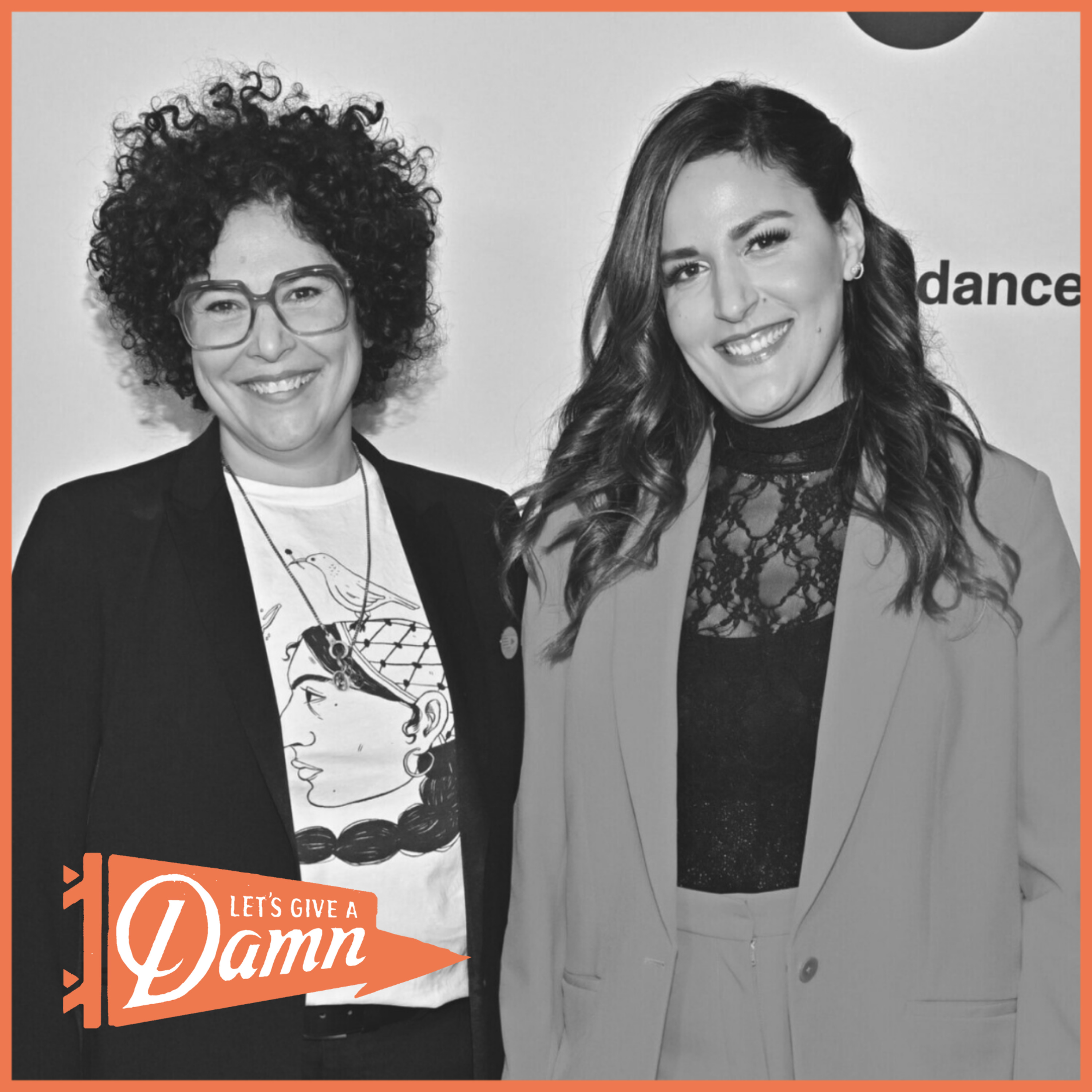
Hello friends and damn givers. Welcome to the let's Give a Damn podcast, a show where I have conversations with incredible artists, activists and troublemakers. People who give a damn and who aim to lead the planet much better than they found it. I'm your host, Nick lapara. Thank you so much for being here today. Before I introduce this week's guest, a quick reminder that you can show your support for let's Give a Damn by joining our Patreon for the price of a cup of coffee per month. You can follow us on social media, interact with our posts. You can share this episode with friends in person and online. You can also buy some of our merch on our website let'sgivadam.com or maybe you're an organization or company that aligns with us and you'd like to sponsor some episodes. Friends, there are so many ways to support and I invite you to explore which ones are right for you. You can reach out anytime with any questions at hello@letsgivadam.com we have massive plans for the podcast in this year, 2026 and the rest of let's Give a Damn the platform, and I really want you to be part of it. So don't miss your chance to jump into this damn giving community in some way. Raise your hand if you need some good news. Who needs good news? Maybe some hopeful news. I don't know about you, but I sure as fuck do. Between Israel breaking the fake ceasefire in Gaza hundreds of times and murdering hundreds millions more Palestinians during again this fake cease fire, to Republicans and Democrats deciding in the midst of this genocide to send 3 billion more dollars to Israel to ice murdering innocent protesters in Minneapolis, shooting them in the face to Trump trying to take over Venezuela and Greenland to protests in Iran. I could go on and on and on. It's too much. Well, you've come to the right place this week today, because my guests are light and hope in the flesh. I'm so excited that I got a chance to talk to them first. Noam Schuster Eliasi is an Israeli activist and comedian who writes and performs in Arabic, English and Hebrew, frequently touching upon her experience growing up in a place a town called Oasis of Peace or Neveshalom in Hebrew or Wahat as Salam in Arabic. A mixed community where Palestinians and Jews live together by choice. My other guest is Amber Fares, an award winning documentary filmmaker best known for her directorial debut Speed Sisters, which aired internationally on Netflix, Al Jazeera and rai. Her directing credits include We Are Allenda, which was on Amazon in 2023 gutsy episode 5 which was on Apple TV in 2022 reckoning with laughter from Al Jazeera's witness in 2021 convergence also on Netflix in 2021. Amber also served as cinematographer and co producer of the Peabody Award winning the Judge on PBS in 2017 and both produced and shot the short film the devil is busy HBO 2025 and she is here with us today because she's a badass, obviously, but also because she directed, produced and was the cinematographer for this Sundance Award winning Oscar shortlisted film. Coexistence My Ass. My Ass follows Noam as she creates a comedy show by the same name. Shot over five crazy, tumultuous years, the film traces Noam's personal, professional and political journey in tandem with the region's steady deterioration. This is a film that began as something completely different because of COVID and escalated settler violence in the west bank and ultimately because of the genocide which began several years into the making of this film. This film turned into something quite incredible, quite stunning, and I can't wait for you to hear more about the film, about Amber, about Noam in this conversation. Before we begin, a quick reminder as always that you can email me anytime and for any reason at Hello, Let's Give a Damn dot com. You can ask questions, recommend future guests tell me how much you love or hate the show. Anything goes. I just love hearing from you. And don't forget, if you prefer to watch your podcasts instead of listen to them, we're on YouTube as well. And now let's get right into my conversation with two incredible humans and heroes, Noam Shuster Eliasi and Amber Fares. Let's go. Hello Noam and Amber. Welcome to the let's Give a Damn podcast.
- [04:52]
B
Hi Nick, thanks for having us.
- [04:55]
A
So glad to have you here. This has been a long time coming. I'm huge. I'm a huge fan of you both and I can't wait to talk about this film. I just rewatched it last evening and I cried a lot as I did the first time. It's just such a powerful. It's a fucking just powerhouse of a film. No wonder it's shortlisted for an Oscar. We'll get to all that here in a minute, but I'm just so honored to have YouTube powerhouse humans women with me today here on this podcast. I was telling Noam before you got on Amber that this week I'm interviewing Saja Kalani from the Voice of Hindra Job, Shereen from All that's Left of youf and so many Other things. So I've got a lot of incredible women coming up here on the podcast that are making art, the kind of art that is helping us get through these fascistic times. So glad to have you both here. Yes. So Noam is joining us from Israel seven hours ahead, early evening, late afternoon. Thank you for doing this so late in the day. Also, Noam, nine months pregnant.
- [06:05]
B
Yep.
- [06:07]
A
How are you feeling?
- [06:09]
C
This might be her last interview.
- [06:12]
A
Honored beyond. Honored beyond words. Thank you so much for still putting up with all these interviews late into your pregnancy. How do you feel today? Are you doing okay?
- [06:21]
B
I would say it's maybe my last interview, but knowing myself, I'll probably take one or two more from the hospital or something or do like an Instagram live from labor or something like that. No, I'm, I'm feeling okay. I'm like, it's the end. It's weird. The brain is not really working. Somehow your body is just carrying it through. And I got, like, a lot of iron into my blood yesterday, so I think I have a little bit more energy. Yeah. But it is really amazing that you have this series of such amazing women that you're interviewing. And I'm just a protagonist of a film. I'm not a filmmaker. But seeing all these filmmakers who are women around me, it is really remarkable to. To watch women tell the stories. So I'm here for that.
- [07:16]
A
Amazing, amazing. And I have three children. I. Obviously, the man in the relationship did not birth them, but I've observed it up front three times over.
- [07:29]
B
You had a flu, so you know how it feels like. Yes.
- [07:32]
A
And I did all the taking care of and the running out for cravings and ice cream and the. All the stuff. All the stuff. So I'm. I will send prayers and good luck over to you during these last few days.
- [07:46]
C
Thank you.
- [07:47]
A
And, Amber, you're joining us from my city. Our city here in New York City. You're in Brooklyn. Waving south to you right now. Thank you. Thank you for joining us. I'm so excited to hear about the film from your perspective. So incredibly exciting. So let's. Here's. We have, like, 50 minutes. I want to stick to what your team asked me to do, so let's begin this way, though, before we get into the film, I'm very interested, not just in the film, but in you. How we got here, the kinds of things that happened to get us to this point. Obviously, we know more about. And I'm still going to ask you, Noam, but we know more about how you got here because you share your incredible story in this film, but for those that haven't watched it, I will ask you here in a minute. But, Amber, spend a couple minutes telling us about you, the people, places, and things that shaped you. How did you get to this point where you are making such incredible, impactful films? What are the things that got you here?
- [08:52]
C
Wow, that's a big question. How I met Noam, I mean, which is really how I got here specifically, was I was living in the west bank in Ramallah for many years. While I was there, I came across these Palestinian women race car drivers. And I wasn't a filmmaker, I'm not a trained filmmaker, and I went to the west bank, really to Ramallah for six months to sort of to work on helping out this Palestinian organization with some marketing consultancy, actually. And I came across these women race car drivers, and then through that film called Speed Sisters, I taught myself how to make movies and we made a movie. And while I was living there, I met Noam. Noam was often in Ramallah and with, like, some Palestinian friends of hers. And we just sort of met through some mutual friends and hung out and, you know, we're friends. And when I finished Speed Sisters, I came to the US And Noam stayed. And when I knew Noam, she was working for the. Working for the un and then I solely saw on social media that she was, you know, starting to do comedic skits and comedy shows.
- [10:11]
A
And.
- [10:12]
C
And I was, like, really curious as to, like, what she was. Was up to. And then she got a fellowship to go to Harvard to develop this. This comedy show as part of a. A program that. Correct me if I'm wrong, but the sort of. That was sort of social change, like cultural change, and for. For people from Israel, Palestine that were allowed to come, they brought them to Harvard for a year. And. And then while she was here, I was, you know, she told me about the comedy show. Like, I knew Noam. I knew where she was from. I knew her backstory. And I just thought, you know, as somebody who is Arab, Lebanese, Canadian, and, you know, has been involved in sort of Middle Eastern issues, that it was a really interesting sort of perspective and also being told through potentially a comedy show. And that's sort of how it started. We had a coffee in Brooklyn, and the next weekend I picked up my camera and I went to Cambridge and hung out with Noam. And that was in November of 2019.
- [11:14]
A
And the rest is history. Let's go back for a second. So I'm going to ask a selfish question that I'M truly interested in figuring out. So Speed Sister is another film that touched a lot of lives. A remarkable film. Thank you for making that. But you said that you were not a filmmaker, and you. It was through hearing these stories and wanting to help that you picked up a camera and became a filmmaker. What was it because you were trying to. Was there maybe a deep desire to make film that you just had never, like, grabbed hold of? Or were you just filling a gap at the time saying, nobody's making a film. I got to make a fucking film about this. Like, what was going on? And I asked again, selfishly, because I spend a lot of time in the documentary space. I love documentaries. I was actually supposed to watch your film Coexistence my ass for the first time at Mountain Film in Telluride, Colorado, back in May. And I ended up having to cancel. I was going to be on a panel and do all the stuff there, and I had to cancel, literally last minute, the night before flying out there. So I didn't get to see it then. But I love documentary films, and I am not a filmmaker, but I want to make a film so badly. I want to make a documentary so selfishly, like, what was the moment that you were like, no, I'm. This film has to be made, and I'm the one to make it?
- [12:34]
C
Yeah. I mean, there's two things there. One is I did. I was like, all, like. I did make a lot of, you know, home movies. Like. Like, I would take basically two VHS and, like, edit like that. Like. So I was, like, always really loved film and was interested in it. But I went to school. I ended up getting a master's in business. I have an mba, and I was working in Vancouver at the time for, like, ad agencies. And the job I had there was a. A marketing director for a hoodie or for a skateboard and snowboard apparel company in Vancouver. I was hanging out on Whistler. Snowboarding, basically, is what I was doing. And 9, 11 happened. And, you know, I. You know, all four of my grandparents came from Lebanon. My parents were both born in Canada, and we lived in a small sort of northern town in Alberta. And, you know, my parents started getting phone calls telling them to go back to where they came from and other, you know, relatives of mine who, you know, had lived in Canada, if not born in Canada, had lived in Canada for a very, very long time. We're also getting, like, similar sort of threats and stuff. And it just really hit me as to, like, where am I from? Like, if. If people are Going to, continuing to continue to ask me like, like, you know, where I'm, where I'm from. I kind of need to know where I'm from. And that sort of set me off on a, on a bit of a, a journey. At first I went to, I went to Lebanon for six months. I ended up working with Palestinian refugees in Lebanon. And at that time I had just, you know, I bought like a, like just a point, like a, like a film camera from a pawn shop and taught myself like sort of how to, how to take pictures and came from there and told, you know, did a, did a photo, interactive photo thing for the CBC in Canada, like that sort of thing. And then at one point I got asked by a Palestinian friend of mine to come to a meeting for this organization at the time was doing like sort of. They're not very in vogue at the moment, but they were, you know, this was in the early 2000s, this dialog group that they would bring Palestinian and Israeli youth and then bring Canadians and they, and this, the year that I was involved, they layered a film camp over it. So we were on the Gulf, one of the Gulf islands, and the kids would work in cross cultural groups to make films. And that whole experience just was really, had left a very profound mark on me both in terms of the films that they made, but also their process of making the films and negotiating and sort of that, the filmmaking process. And then I, you know, I went back to, I went to Israel, Palestine to see what happened to those kids and I ended up staying for a month and somebody offered me a job and I just went back and I really didn't know why or what I was going to do. I was just going to do the same for six months and that turned into seven years. And during that time, you know, even before we made Speed Sisters, I made a short film about a hip hop group from a refugee camp in the jurisdiction of Jerusalem. I did 15 short films from UNRA that took me before 2010 to like Jordan and Syria, Lebanon and Gaza. And so I was already like sort of making this short form films while I was there, sort of speaking and then, and then came across these race car drivers. And then, you know, it took us five years to make that film. But that was, that was really getting into sort of the nuts and bolts of filmmaking, making a lot of mistakes and sort of just figuring it out.
- [16:02]
A
I love that, I love that story. Thank you for sharing. And it seems like even if directly, filmmaking wasn't a part of a lot of the story. It was like, it was leading you to this path because you're obviously really good at the filmmaking and the storytelling. No, I'm baffled by you. Like, you're so electric. You're such an incredible human. Like, really. Like the first time when I started watching the film and there's that opening scene where you're live in front of the audience, I was just like, who is this person? And you just have such an electric magnetism. It's really incredible. And so I'm excited to hear. And again, we see it in the film. I'm assuming that a lot of the people that are listening right now have not seen the film yet, and they will as soon as they possibly can afterward. But for those that don't know, you give us a few minutes. Couple minutes on the who, what, when, where and why of Noam Shuster El Yasi. Like, how did you become the person that you are? You know, your parents, location, all that stuff.
- [17:06]
B
Okay. So.
- [17:07]
C
Wow.
- [17:10]
B
Whenever I'm asked this question, it takes me. It really does take me to my parents because I think there's such a, you know, such a strong core of what I became to be. I don't think if they hadn't make, you know, if they didn't make this. These choices, I don't know where I would be and if I would have found my way to all these things by myself. My partner actually is not like this. He had to unlearn, like, he grew up in a very mainstream, you know, Israeli Zionist, and he kind of found his political way and unlearned a lot of things to get closer to my political world. And I'm often thinking, like, if I wasn't born to my parents and if I didn't grow up with Palestinians and all of that, like, if I would have also found my way out of the, you know, the belly of the beast of the brainwashing that is around me all the time. And so it's. It's. It's interesting to think of my story in. In. In that framework, because I was really born into a really political household. Everything around me from a really young age. My first childhood memory is remembering my dad going in and out of military, Israeli military prison, detention, basically for refusing to serve. It was during the first intifada, the first Palestinian uprising. And he was among a big group of refuseniks of Israeli soldiers who were refusing to serve in the occupied Palestinian territories and also in Lebanon, and they were sent to prison. Today, there is a much smaller group of them, maybe a handful, but at the time before the Oslo Accords in the early 90s, they were quite a big group and my dad was part of them. And so I grew up in this way where most of Israeli dads around me were heroes for putting on uniform and going to obey orders that violate the very basic human Palestinian life. And in our house, my dad was a hero for not doing that and for making a statement by going to prison and saying, no, I will not participate in this illegal occupation and all of it. So from a very young age, I really remember a lot of political images going with my mom to protest when my dad was in prison. Sometimes we would climb up on this hill where my dad and the other soldiers that were imprisoned would kind of go out to a prison yard and we could wave to them. And. And so it's all these memories. And then things took a turn for my parents where they decided to not just be activists or not just participate in a program or a demonstration here and there. They decided to move to the only community in the land where Palestinians and Jews live together by choice. So it's, you know, Israel Jewish Israeli citizens, and Palestinian citizens of Israel that choose to live together in one community. It's called in English the Oasis of Peace. In Arabic it's Wahte Salam. In Hebrew it's Neveshalom. And it's a joke. I always say in interviews that whenever I type Nevashalam on my iPhone, it autocorrected to Nevre shalom. So that's the name. Never peace, never Shalom. That's where I grew up. It's the only place where families intentionally move. So I don't want to give the impression it's this huge place with thousands and thousands of people who choose to live together. It's a very tiny, small place. And unfortunately there are mixed cities in Israel where Palestinians and Jews kind of found themselves because of the circumstances, living together. But there is no declaration of an intentional kind of egalitarian or an intention to create equality and to kind of be an alternative to the, to the, you know, to the racism and Jewish supremacy that exists outside of the village where I grew up. So my whole reality as a child really changed from a really, really young age. I could see it always from an extended family where I had cousins who grew up in the Israeli mainstream educational system. And they meet Jews and they hear Hebrew and they celebrate the Jewish holidays. And I was in a village in a bilingual, bi national, bicultural community and school where Palestinian, I mean, I knew I was Israeli Jewish, of course, but Palestinian identity In all its forms, language, culture, political history, everything, narrative. It was part of my identity as early as 7 years old. And it had a profound impact on the rest of my life for many different reasons. Also, because my Jewish identity is also Mizrachi. My mother was born in Iran, and our household or the house or my mother's identity is very. It feels local. I was often confused to be a Palestinian. I learned Arabic very, very quickly. The peace movement in Israel is dominated and predominantly dominated by Ashkenazi, you know, Eastern European Jews. And I felt that my closeness to Palestinians was not just from things that I could describe. There were things that were just running deeper, I think that took me a long time to find the vocabulary for. And as things progressed, I found myself as a poster child of the peace camp for those listeners who will see the film. You will see in the film that I'm meeting Jane Fonda and Richard Gere, and all those celebrities were coming to the village to see Jewish and Arab kids, you know, just holding hands and singing Kumbaya together. And the feeling in my childhood was that we are a little bit like a zoo. And I was just told, giraffe in the zoo.
- [23:48]
C
And.
- [23:51]
B
Always pulled out of classrooms to give interviews. And as a child, when you realize that you're what is very, very normal to you, you know, it was very normal to me to speak Arabic. It was very normal to me that my best friend is Palestinian. There was nothing. But you are pulled out of class to speak to the BBC about how special it is. So you have to kind of adapt, you know, being the example of something that should be normal, but speaking about it as if it's this unique, crazy experience. And of course, I don't have to tell our listeners that Oslo failed and everything that followed failed. And so as a child growing up there, seeing the reality outside of the village becomes so contradicting to the way that I'm growing up in this tiny village. It still is very, very heartbreaking. I think. I took on this mission to be an alternative, to create an alternative. I always had this activist mindset. I always loved the stage. I always loved to speak in front of people. I love to set an example that something impossible is possible. I love this role, and I took it on. And I went to school in the US and I graduated from Brandeis University, which is not an easy university to attend with my views, for those of you who know. And then I was also in Rwanda for a little bit. And when I came back home, I landed this UN job and I Thought that I'm going into this, it made so much sense. I'm going into this career where I can influence the international scene and then run into local politics and my, you know, use all my. Use my language and my identity. But it was very, very limiting to, you know, to be in the UN and to be in this kind of activism that is diplomatic, where you have to kind of censor yourself and you have to provide all these reports to Europeans in Geneva. And I was doing this work that is not very much a normal UN work. It was kind of an under the radar project that aimed to work with Israelis who are obstacles for peace, which is 95% of Israelis. But we were working with really religious and really right wing communities. And at some point the UN just got cold feet and I was fired. And that's when I turned, I think back because theater and performance and my creative muscle, it was always there. I just chose because I thought that I want to influence politics. I chose to. I chose a different path. But then suddenly, through the back door, after I was fired from the un, I dedicated myself to find my creative voice. And that's really when I found my voice and I was able to channel the things that I really want to say in Arabic, Hebrew, English, and started performing in front of really diverse audiences abroad, here in front of Israelis, Palestinians. I won't spoil all the stories because people will watch it in the film, you know, what I'm doing there and the type of audiences that I was able to reach in a really short amount of time. And then when I got the email from Harvard that they are looking for me to propose as an artist, as a cultural activist, that's the title that Harvard gave it. I was really shocked and amazed that I am going to go to Harvard to work on a one woman comedy show. And that's also when Amber and I reconnected. And I think that's when Amber realized and clicked with the fact that there is a story here of somebody that is about to bring all these different elements that Amber was so involved in because she knew me from, you know, back in Palestine, and that I'm going to try and work this out at Harvard to an American audience, to try and export a story that is very specific to Israel, Palestine, but to try and export it to an audience that is in the US that was a few months before COVID We didn't know what was about to happen. And Amber, I think we had coffee in New York City in November 2019. We caught up on all of these things That I was just saying how I left the un, how I'm not doing comedy, this and this. And she's been following and she picked up the camera that same weekend and started, started documenting all of this. And none of us knew that it was not going to be the type of documenting a committee and trying to build a one woman show to tell Americans about coexistence. My ass is going to document five to six years of so many of us who have been through a global pandemic, a rise of fascism, leading up to so much political craziness that we all went through October 2023 and leading up to the genocide in Gaza. And I think that what was, and Amber, correct me if I'm wrong, but what was meant to be a story that is more focused on the attempt to do comedy. It became really a documentation of this, of this journey that is not just mine, but it's so many people who have been through this craziness of the past five to six years. And we get that from so many audiences after the film. They're like, wow, I was just now after watching this film, I was able to process what we've all been through in the past five to six, 60 years.
- [30:13]
A
Yes, all of that. Amber, I want to know. It's, it's so I'm gonna, There's so many things I want to say. I want to spend, I want to spend 120 hours with you all.
- [30:23]
C
I came back.
- [30:27]
A
It'S incredible. I want to spend so long. But Amber, let's just bounce off of that. So, yes, you started this film, you had instincts, beautiful instincts to like start, you know, filming that weekend in 2019, but you didn't know what the was coming. I mean it was, we've had, we've had an enormous five, six years since then. Everything from COVID to the Genesis have so many things to Trump 2.0. Like so many things have happened the last five years. I feel like I've aged 15 years in the last five. So from your perspective as the filmmaker, what did that development look like going from, hey, we're going to sort of, I'm going to document this one woman show thing that's happening here to it being a much bigger and broader thing than that which this. I would have watched the other thing as well. But this documentary is what we need right now. There are so many documentaries telling these truths, but the fact that this one is doing it through comedy and jokes and this really beautiful sort of fast paced, ever developing story makes it, you know, unique in the films that are being. That have released and are being released right now. So what, from your perspective as a filmmaker, what have the last couple years felt like to go from thinking you're doing one thing and have an instinct to turn the camera on then, and it being a totally different thing?
- [31:52]
C
Yeah, you know, I think with the films that I direct, that's often the case. I mean, the same was with Speed Sisters is. I just knew that there was this, these, this concept and this idea, but I had no idea where that was actually going to take us. With Noam, you know, I knew Noam. I know Noam's heart. I wasn't sure if Noam was that funny or not. I really couldn't tell that, you know, I had never seen her live. I saw like a couple of really funny, cute skits. But, you know, like, I was like, I don't. She just stand up. I've never seen you stand up. But I, But I knew Noam and I know that and I. And I know her perspective. And I just, you know, at first I thought, you know, it's a year of an election. She's going to, you know, be in the state, she's going to perform on campuses. She'll be able to get into places that, you know, other people won't because of her identity or because of who she is. And so I just thought that, that, you know, that that could. That in and of itself would be. Would be an interesting thing. And then when, When Covid started, you know, like, I think it's really funny, you know, because all of these events were like the biggest event that ever happened and felt like it was such a sea change and that we were, you know, and so like, when, When Covid happened, it was just sort of like, no, film yourself as much as you can. And then she, you know, in typical. What I've learned about Noam is that if history is going to live itself through someone, it is, it is. No, like something is personally touch her. She's going to be the first person I know that has Covid. She's going to end up in this like, crazy hotel. Like, I could not have written that, you know, even. Even if I tried. So I was like getting up at like 4 o' clock in the morning and I'd be like, noel, who's around you, who you hang out with, and I would like, you know, they were. There was this. This brother and sister. They were a Bedouin. They were there. And then there were these, these other like, sort of, you know, young Israelis that were there. And I just would get up in the morning, I'd have a meeting with them. I'd show them like how I wanted them to shoot and then they would just go off and like, kind of film.
- [33:45]
B
No.
- [33:45]
C
And like, then the film became about. Oh, maybe this is just a film about. About. About COVID about this Corona hotel. And then sort of pitched it to Al Jazeera and Al Jazeera Witness and. And they picked it up. It was the first time that they've ever done a film that centered an Israeli character. And we did a short film sort of about Noam, a little bit of Noam's time in. In the United States and then. And then ending up in this. In this hotel and then her coming out at. And always knowing that we may make a feature. So like, but. But we did do a short that was on that. And then she comes out and then, you know, Black Lives Matter erupts. And then you have these Belfor protests and then you had. And. And so each one of these, you know, each one of these political events and I mean, you don't make a film about Israel, Palestine without there expecting there to be some, like, some political events. Like, I mean, you know, it's not. I've never known it to be, you know, totally calm. So, like, we knew that there was always going to be like this political sort of spy or a political storyline, right? And then it was sort of like. But anyone does know her comedy look like now, now that she's back, like, it was one thing for her to be in the US where she feels a lot freer to say and people are very interested in what she has to say. And now she has to figure out what is. She looks like she's going to be there for a while. What does that look like for her? And so then it's like trying to. To film that. And then it's like her personal life, like she gets a lot of pressure to get married and she wants to be married. And then it was like, you know, that. That element and her family and that. So we always knew that there were these sort of different threads to the story. And it was just really about, you know, in these cases, you know, I was. I was so lucky because, like, you know, when. When. When Covid happened and no one went home, obviously we didn't know when I would be able to go. And I, you know, I. I called up Rachel Leah Jones, who's this, you know, really brilliant filmmaker that is based in Tel Aviv. She's American, Israeli and, and, and her, her partner Philippe Felicia is a lovely cinematographer and so they sort of picked up the mantle for me. So they were, you know, we were working very, very closely together and like none of us had anything to do because it was Covid and none of us were doing anything. So it was kind of really nice. And we, you know, created this amazing sort of, sort of film family. And then the editor that I, that I brought on to do the short and who, who edited the feature film as well, her name is Rabab Hajah Rabab is a Palestinian citizen of Israel. She speaks all three languages. She is based in New York and she also edited my first film, Speed Sister. So I'm already really close. And her, he had family that, that grew up with no in the village as well. She had an aunt, an uncle that lived in the village. And so we just had this really, really amazing team making this film. And then, you know, and so you just, you know, when you're living through something, especially for, for, you know, for Noam and for Rachel and the team in, in Israel, Palestine, because they're actually living through it and then trying to make meaning of it at the same time. And that's always like really challenging to figure out like what is, what is actually happening. First of all, what can we film what is. You know, so there, there was that and so yeah, that's sort of that, that, that, that happened for like, you know, four years and, and we, and we were already like sort of in the edit for the film. Like we're already, we knew we didn't have an ending yet. I always knew that the ending. You know, I had this idea very early on that there would be a comedy show and, and that that would be the spine of the film. We didn't do sit down interviews. I think we did one and then went like, that's not, I don't think that's what I want for this film. And we knew that we were going to film this comedy show towards the end of, you know, like towards the end of production. And then October 7th happened and we, you know, it took us a couple months just to like figure out like, even if we want like where we wanted to shoot what we wanted to do. Um, I went, I, you know, I, I flew, I flew. I was in Europe and I, and I went and saw Noam at some point. I think it was in December of, of, of 2024 and, or 2023. And we filmed a little bit, but it, but we, we, we basically what we realized at that point was we knew what we were in that we knew what our ending was like, we knew what we were building up towards. And so we went back and really worked on the rest of the film and then continued to film when we needed and then brought Noam to Montreal and, and, and, and then filmed that comedy show. And that's where like the ending really came, took shape was when we were all together working on that, that show. And, and that's, that's sort of how, you know, so we were editing and shooting really up to like kind of the last minute. Like, you know, as the film is being, you know, we would film and we'd get the footage and we'd edit it right away. Like it was really sort of right before sundown. So it was really last minute.
- [38:52]
A
Well, you did a, an absolute kick ass job rolling with the, the ever evolving story over the last few years. It really is, it's just a tremendous, tremendous film. Tremendous accomplishment. Accomplishment. I hope you both are very proud of what you've done. Again, I could talk for hours more, but I want people to, they already are intrigued enough to go watch the film. But I don't want to give away too much because it really, again, it's just as special how you all tell these stories. Noam, how does it feel right now? So you live in Israel. How does this moment feel right now? And let me just give a little more. I don't think my question needs context, but let me just give you a peek into what I'm kind of looking for here. You know, there's that moment in the film where you, you and many others have been doing just a tremendous amount of work, protesting and showing up and speaking out for so long. And then October 7th happens and there's this moment, I think, and that was one of the bigger weepings that I had during the film is you just sort of realizing, just having this moment where you're like, it's all, all this work we've done has just been undone. Like we're trying so fucking hard to present this idea that we can, that there are a lot of us that want to live, that want to coexist peacefully and equally. And then this thing happens and everything's just like out the door, you know. And then the last couple years have just been, it's just been atrocity upon atrocity, horror upon horror. So many lies, so many deaths, so many everything. And I live, you know, you live in the place that is committing these atrocities. And I live in the place that for 76 years and counting. Has been funding them, has been defending them. I grew up. So quick, quick peek into my backstory. I grew up. I'm more like your partner. I had to find my way out of a terrible storyline. I grew up. I'm Guatemalan, son of an immigrant, and I grew up in very conservative evangelical Christianity here in the us AKA very Zionist Christianity. The same Christians that are supporting Israel to this day are the ones that I grew up around. I remember we raised money every single year for Israel in our. In our upstate New York Baptist Church. We sent.
- [41:31]
B
Wow, Nikki, thank you so much.
- [41:33]
A
You're welcome. You're welcome. Yes. I hope the donations were used. Well, so that's the context I grew up. And we literally had an Israeli flag for certain times of the year up on the stage with. Along with an American flag. So they were, you know, that's the context I grew up in. And I had to grow out of that to become the leftist anarchist that I am. And so how does it feel? I live in a colonialist, imperialist, bullshit country. And you live in this place that is just. Is inflicting all of these horrors each and every day. Like you're miles from it, right? Like it's happening all around you. How. How does this moment feel right now for you? Weeks or I guess, months now, into a ceasefire that has been broken hundreds and hundreds and hundreds of times. It's being broken today. How does it feel? What are you feeling?
- [42:38]
B
The feeling is not good. It's, it's. It's, you know, there isn't like a unique feeling to this moment. It's a continuation of something that is. Has been building up for a really, really long time and we've felt the peaks of it. And, you know, also you can see during the film where we feel like, oh, this is. This is, you know, it can't get any worse. And then it can get worse. It, you know, it can get worse and worse and worse. And, you know, I think right now, and I'm sure many listeners will agree with me, it's not just a unique feeling for here. I mean, we are recording this episode days after ICE murdered another person, after already murdering and just snatching off the streets people. And, you know, what we are seeing in Iran, Venezuela, and it just, it feels like everything is connected, but it also feels like we are disconnected. And I have to say that if these two and a half years have done something to, you know, my mental health and my brain and my ability, it's just this overwhelming feeling. I think I think before October 2023, I had, I had more capabilities to articulate things and to make sense of things and to go on stage and to know that I can say more things. And now everything just feels much, much more. Less people like me have much less space not to talk about my Palestinian friends, that some of them have gone completely on mute and silent since October 2023. Because every post on social media, every like on social media can lead to an arrest, can lead to consequences that are, you know, irreversible. So the thought of me having this privilege because I'm an Israeli Jew and I have this responsibility to speak up and have more freedoms and more rights than Palestinians, therefore it's a bigger responsibility to speak up that has tightened, you know, itself the fear takes over. The anxiety also takes over. There is much less space for people like me. And together with that, what do you do when Palestinians around you are not able to do even something close, you know, to what I'm doing? And so what is my role as an ally? What is my role as somebody who's, who's really, really committed in using my privilege and using the choices that I have, making them extremely political so that I demonstrate what the solution is, what equality really means. And you know, and as a stand up comedian, as a comedian here, it's, it's tough because comedians that I used to collaborate with here used to perform on the same stages with, they have gotten away with straight up genocide jokes on stage, with being complicit and responsible and having direct influence on hearts and minds of people that killing starving children in Gaza is justified and is okay through jokes. So what do I do with that? Like what do I do with an Israeli comedian that is their video goes viral and the audience is laughing because he's making fun of a starving Gazan child that was hit by an aid package landing on him. You know, and, and then of course there are people and you meet them in the film as well. They're okay, they don't mean harm, but they also never use their voice. They spoke of course, for the return of the hostages and maybe they've spoken about a ceasefire throughout these two and something years. But it's or against Netanyahu or the Netanyahu government. But you know, leading in the film, leading up to October 2023, a lot of sins, it's me yelling at the pro democracy or like liberal Jews in Israel, you know, wake up. Netanyahu is not the problem. The problem is that we are controlling and erasing an entire population and we are controlling the Palestinians. And, you know, there is an elephant in the room. And it's not just Netanyahu. If we remove Netanyahu, it's not what will solve the core issues. And even people who are supposed to be on my camp, they don't have the. I don't want to call it courage because I'm putting myself. Oh, I'm so courageous. No, I'm also a coward sometimes. I really like when I get death threats, especially when you're pregnant. It's hard, really hard. I'm not, you know. But then you see Iranian protesters literally risking their lives in the death sentence to go and protest against this kind of regime, and you realize that we here in Israel are not even close to being brave enough to really, really try and tackle the system that is causing all of this misery, not just to us, but to Palestinians. And if we don't care about the lives of Palestinians and if we are not fighting for equality on, on this land, and if Palestinian lives continue to be, you know, dehumanized and erased in such a way by Israel and liberals continue to go blindly to the army and after this government, there will never, ever be a turning point, you know, for this. So, I mean, I'm bringing up Iran because as we're speaking, there are these, you know, mass protests there. And you see an example of people really, really going to risk and sacrifice themselves for their future and their freedoms.
- [49:37]
A
One of the things that I am really, one of the things that excites me about this conversation and a lot of the conversations I'm having with artists recently is this change that you're. The change that needs to happen for Iran, for Israel, for the US if there is going to be lasting, meaningful change, it is not going to be. I used to be super into, you know, propping up politics and supporting politicians that I think we're going to bring about change. And the reality is they're every single one of them, even the most progressive one here in New York, Mamdani. Right. Like, mom, you know, I like. I obviously like that we have Mamdani versus the other criminals, the other absolutely terrible humans. But, you know, there are already things that Mamdani is doing that are just pissing me the hell off in regard to New York, in regard to Palestine, Israel. There's a lot of things that are going on. So the politicians will always let us down. But the one thing that won't let us down, which is why conversations like this are so exciting, is are the artists, because the artists are our Truth tellers. Right. And. And you have told tremendous amounts of truth in the. I'm so glad that at a certain point, the UN was it 2019, where they, as you put it, like, got cold feet and shut that program down. Okay. Yeah, yeah. Which. Which ultimately led to you doing more stuff as an artist, as a comedian, and, you know, connecting with Amber and making this film. And I hope more and more of this happens is because, yes, we can make change and tell truth as politicians, I guess, sometimes. But there's just so much coercion and so much pressure to, well, stay in office. Right. Because these elections happen every two, four, six years. And so we've got to, at some point, compromise. And artists don't have to compromise. Like, I'm not saying they don't, but they don't have to. We can tell the truth regardless of the consequences. And the proof is that, you know, whether it's the Israeli regime or the US Regime or the. They're going after artists, right? They're. They're trying to cast doubt on what artists are doing, because artists are the ones moving the people toward action. You know, whether you're a plumber or a teacher or a parent or whatever you are, you're relying on art to feed you, to become a better person, to stand up, to speak out, to put your car in front of ice agents and ultimately die for it, which is absolutely horrible. That actually happened. I used to live in Minneapolis. That happened a mile from where we used to live in Minneapolis. Same with George Floyd. That was all in the same neighborhood in South Minneapolis. So, Amber, what do you think is happening? You know, I was thinking about this Toni Morrison. I've been thinking about it a lot recently. It's Toni Morrison in this. She was at this forum, this art forum, and she gave this, like, last. Her, like, last part of her speech was, I want to remind you that art is dangerous. I want to remind you of the history of artists who have been murdered, slaughtered in prison, chopped up, refused entrance. The history of art, whether it's music or written or what have you, has always been bloody. Because dictators and people in office and people who want to control and. And deceive know exactly the people who will disturb their plans. And those people are artists. They're the ones that sing the truth. And so, as a filmmaker and artist, what are you. As we begin to wrap up here? Like, what are you? Does that resonate with you? Do you agree with that? And what do you encourage artists to sort of wrestle with and grapple with in These fascistic times as they figure out what they're going to continue making again, whether it be music or filmmaking or comedy or poetry or whatever it is. What can you say to the artists?
- [53:44]
C
I mean. I mean, we're. The day after the global with the Golden Globes.
- [53:49]
B
Nobody said anything.
- [53:51]
C
And I think the only person I saw was Mark Ruffield said something about Minneapolis. So, like, I'd like to think, like, I think that art does have that power. Art does have power to change culture 100%. And are we. I don't know. I think there are some very, very brave artists out there. There's been a lot of people, whether it has been, you know, filmmakers and musicians, but even just the creativity of people on the streets and the ways of demonstrating, looking at JVP and the ways that they were creative in. In. In how they demonstrated how they mobilized people. But I don't think that. That. I don't think we're there. We're still living in a. Very much, Very much living in a capitalist society. And the majority of artists have been very silent on. On. On this issue. And then.
- [54:43]
B
And.
- [54:43]
C
And because there has been. I mean, there's many reasons, not just this, but the complete. Like, that's, that's why we ended up with. What's happened in. In. In. In Minneapolis is because we didn't want to listen to the students in Colombia. We didn't want to listen to the people that were on the street that were saying that. That this was, you know, that this. What is happening in Gaza is. Is just the tip of the iceberg. I mean, for those of us that have been involved in Palestinian issues, you know, we've been calling it the canary in the coal mine for many years, like decades, and people have not wanted to listen. So, like, in its ideal form, 100%, there is, you know, and there's a ton of artists, you know, a couple of them that are going to be on your. Your podcast. Shereen Debbis being, you know, really one of them. The, you know, and. And Anne Marie Jassier and, you know, those three films that came out this year, Palestine 36, the all that Is Left of you and Hindraja, that's a history of Palestine right there. That's a modern history of Palestine in those, you know, those three films. And to come out in this year, no Other Land. I mean, there's. There's so many amazing. And I'm talking just about film, but like, you know, artists that. That are. But, you know, mainstream isn't Hollywood isn't and now it's, it's come home to roost. I mean we're seeing, it's, you know, that it's imperial boomerang, that those same technologies that are being used to, to, to, to murder Palestinians, to surveil Palestinians are now being used on American citizens. And now it's, you know, I don't know what to do now. I hope that you know, Golden Globes and only one person said anything. So I mean, I don't know how to answer that question.
- [56:29]
A
Well, do you think so? I believe I have done most of my work the last three years has been with Palestine. I've helped raise millions of dollars and I've traveled with Motaz Aziza and I've done stuff with Gawar Mate and a lot of other people during the last few years. And I, and so I say that to say like most of what I've done the last three years is all about like Palestinian liberation and really collective liberation, all of our liberation. But I feel like what we've got to do. And again you're more in this and I am, both of you are. But like it feels like the only way. I feel like a lot of people are not speaking up still because their livelihoods depend on it. Right. This is still a, this is still a wildly capitalist, Zionist imperialist like economy. Like it's billions of dollars and so there's agents and managers. I know of a very, very, very, very, very well known music artist that four months ago gave the most milquetoast Israel, Palestine statement on stage. And when I asked a mutual artist friend of mine that who's a mutual, who's a friend with them, I was like what the fuck? Like they finally came out and said something two years later and it was so, so like vanilla. It was so blah. And he's like, well, their manager who made their career was on the side of the stage and is a former IDF soldier and you know, and her husband is in, was in the military. Like they're very connected to this and so they, that statement that you heard was really just an appeasing of the fans that were speaking up. I say all that to say like we've got to. It feels like the only way we get the artist to super speak up is because they're trapped in this capitalist hellscape like us. They got to make livings, they got to put food on the table and I wish they were bolder, but it is what it is. So it feels like we've got to create entire new Ecosystems. Whether it's the agent, like whether it's the agencies, the agents, the managers, the pr, because they're kind of keeping everybody. I feel like more artists would speak up if it weren't for the money parts of the, of the mechanism like telling them to shut the hell up.
- [58:31]
C
Well, I think, I think it's always, I mean, like I don't, I don't know to that. Like I can't really speak on, on that. But I, I do think that there has been a huge cultural shift in the last three years. And like I, I think that when you look at any sort of change, any. It has to come culturally first, right? And then, and then pop culture. It's not like pop culture ever leads us anyways. It comes, it's always a sub versive. Right? And I think that's where we're at right now. And I think that, you know, and that we will start to, you know, I, I guess I should say like preference like what I was saying. It's disappointing to see that. But there are very courageous artists that have been speaking up and that is starting to, to, to get larger and larger. Like you see the amount of people that have been gotten behind the films, Shireen's film or Hindra, you know, like that, that is, that is starting to grow, but that's starting to grow because of, of, you know, for us that have been, that have been. It's been because of people on the streets. It's because like that is, that's where culture is leading. Like it's those and it's, it is a mixture. Like it's. I don't want to say it's just artists because I feel like, like those protests and that they have been very creative in, you know, the people that, who've been out on the street and putting their, their livelihood and their lives on the line have been also very creative in how they've been doing it. And I mean that's really, that's all we can do. And all of these things have to happen. Like we have to have the culture shift, we have to put pressure on governments. Like we have to. All of this sort of needs to happen all at the same time in order for there to be like a tipping point, for there to be. There's no one thing that is going to, that is going to get us there. And as an artist, I'm part of that. You know, this film is one film in a history, in a library of films that have come before it and that will come after it. That have been that have been talking about this issue. And you know, I'm very honored that we are part of that, part of that library. But it's not just us. It takes a huge mass of movement in order to make that change.
- [60:48]
B
And also we have to realize that people are in different places in their process. Nick, going back to, you know, your process and unlearning and all of that. We've had so many people messaging us after watching the film, being like, you know, I watched this with my, you know, right wing Jewish family, whatever, and the film gave us vocabulary and to. Unfortunately, some people are not ready to hear what Palestinians have been saying for decades because what we are saying in this film, Palestinians have been saying for a really long time. Some people hearing it from an Israeli Jew does something in their process where they're able to take a few steps forward. It's a horrible thing to, you know, when you think about it, like, why do you need an Israeli Jew to tell you what Palestinians have been saying? Just go ahead and believe Palestinians. But if we want to look at changes, like Amber said, like a process and a cultural shift, that we have to be committed. It's a long. It's a long term. Like, I see people here around me. I see people the way the unlearning it can be. It's slow, but it's. But it will happen. And we have to believe that it's happening because it always starts from small, ambitious groups and it never just happens like this. It's a process and it's a long one and it's a painful one. And Palestinians are paying the highest price for it being so long. But one day people will look back at the way we've allowed Palestinians to live under occupation and this brutality and the erasure of Palestinian land and life and this genocide. And they will not believe that we've allowed this for so long. And when that happens, they will be. People will be going back to the vocabulary, to the stories, to the films that Amber mentioned, to everything that's been leading up to people who have been banging on the doors and telling the stories and not giving up and refusing to participate in the occupation and demonstrating and making the connection between the US and Israel. And we will. And hopefully people will find these stories and will say, how can we learn from it to be better next time? And as a granddaughter of Holocaust survivor, I'm not making any promises that people learn from their past, unfortunately. But none of it is an excuse to not do the work that we are doing.
- [63:24]
A
A much needed Reminder. Noam, thank you for bringing me back. I get, I get. Yeah, I mean my, I'm a very impatient, my bent is very impatient and like the truth is right there, like change right fucking now. How could you not? And the reality is I've done so much unlearning in my life and I still have more unlearning. I still have more unlearning to do. And you're so right that each and every day I encounter people that are making decisions and doing the work and changing their minds. And again, I wish it happened much, much, much quicker because while you're not changing your mind, people are dying and suffering and it's horrible. But the change is happening and we've got to continue to make the kind of art and say the kinds of things and do the kinds of things and show up in the kinds of ways that will cause people to think and ultimately change their minds. So thank you for that as we wrap up. Amber. Can folks watch the film right now? Where can they watch it? How can they support this incredible effort, this Sundance Award winning Oscar shortlisted film?
- [64:35]
C
Well, that is one of the things I need to do today is update our website. We have some screenings that are starting around the United States States. So in this, in the US there will be community screenings and, and theatrical screenings starting in, in a couple of weeks in Canada it is on TV Ontario and it is available on, on YouTube through TV Ontario. In London it is playing at the Bertha Dock House and it just got extended so it's playing for, it's playing through to I think the 20 something like so another couple weeks so you can go and see it there. And then in, in France and Germany it's, it's going to be on Arte in, in I believe in March. So it's. Yeah, there's, there's and we're hoping to make it, you know, available online soon as well. But I would suggest to anyone to follow us on Instagram. We have a very active and fun Instagram account and poignant Instagram account at Coexistence my ass. And, and as well as our website which we update the, the screenings which is@coexistencemass.com Amazing.
- [65:52]
A
Amber, Noam, you both are amazing. This has been super helpful, super fun. I wish we had another hour. Maybe we'll do another one at some point. Once.
- [66:02]
C
Once little baby Oscar.
- [66:04]
A
Yes, once you have, once you have an Oscar and an actual baby. No. Then, then we can do round two and really get into it. You both are amazing. Thank you so much for joining me. This was wonderful. Friends. Thank you for showing up and for spending some time with Noam, Amber and me today to find links for everything mentioned in today's conversation and to keep up with all things let's Give a damn. Visit let'sgivadam.com Please share the this episode with a friend or two. Please leave us a five star rating and review on Apple Podcasts or Spotify. And please show up next week. We have many more incredible conversations coming your way. Plus we have almost 300 episodes that we've already done that you can listen to if you haven't already. You can reach out anytime and for any reason@hellosgivadam.com keep giving a damn. I love you all. Bye for now.