← Let's Give A Damn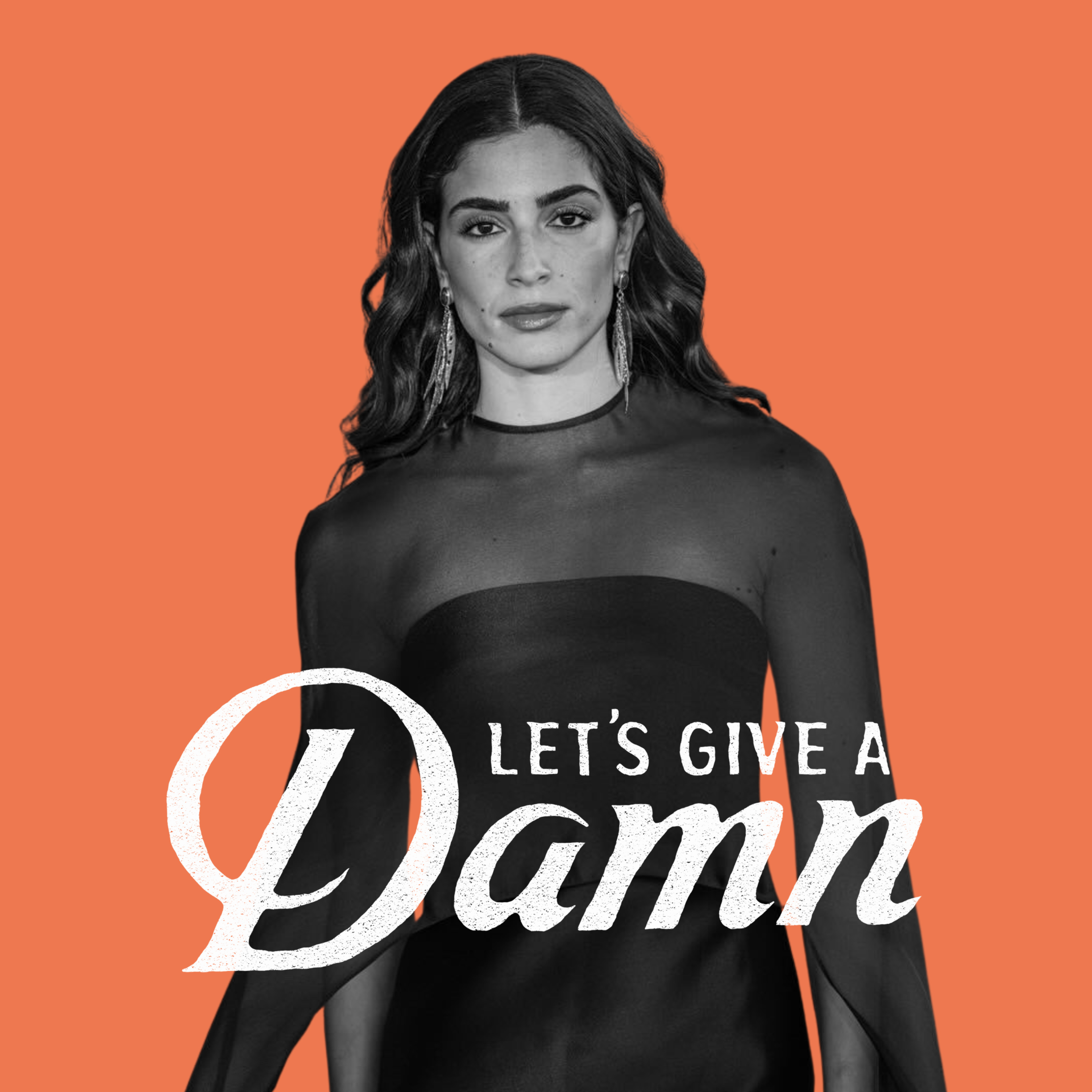
Let's Give A Damn
Saja Kilani: The Voice of Hind Rajab, Keep Telling Stories, and Hope Is Everything
01:04:38
Loading summary
Transcript43 lines
- [00:01]
A
Hello friends and damn givers. Welcome to the let's Give a Dam Podcast, a show where I have conversations with incredible artists, activists and troublemakers. People who give a damn and who aim to leave the planet much better than they found it. I'm your host, Nick lapara. Thank you so much for being here today. A quick reminder, dear friends, that you can show your support for let's Give a Damn in a variety of ways. You can join our Patreon for the price of a cup of coffee per month. You can follow us on social media and engage with our content. You can share this episode with your friends and enemies. I don't care. You can buy some of our merch on our website let's Give a Damn dot com. Or maybe you're an organization or company that aligns with us and you'd like to sponsor some episodes. Friends, there are so many ways to support and I invite you to explore which ones are right for you. You can reach out to me with any questions at all at Hello, Let's Give a Damn dot com. Now, before we get into this incredibly inspiring and hope filled conversation with my guest today, a little reality check, a little catch up. What a week. What a fucking week. For those of our listeners that live in the US Of A, a lot of our anger and turmoil right now is about ICE agents committing state sanctioned terrorism against immigrants and U.S. citizens alike. Obviously, we were shaken to our core when Renee Goode was shot in the face by an ICE agent. Did he get in trouble? Not at all. Instead, the President called this ICE agent, this ICE terrorist, a hero while calling her a domestic terrorist. And several GoFundMes were started for him totaling hundreds of thousands of dollars. Then a church was stormed by protesters on January 18th because one of their pastors in an ICE director. That's a sentence I never thought I'd say. How many levels of evil is that? That one of your pastors is also an ICE director? Can you imagine calling yourself a church while a terrorist is on the payroll? In the days following, some of those protesters were arrested and may still face trial and imprisonment. Also last week, the VP of the United States told all ICE agents that they have complete immunity to do whatever they want, whatever they need to do. Which is probably why we all witnessed the horrific murder of Alex Preddy a few mornings ago. They shot him nine or 10 times. Most of those bullets were fired after he was already lifeless on the ground. And right on schedule, Kristi Noem and her goons got on TV to paint this ICU nurse who a few moments before being shot to death was helping protesters off the street that were pushed there by ICE agents. This ICU nurse was painted as a terrorist who was dead set on shooting ICE agents because they brought a legal gun to this protest, no intention of using it, was holding a phone when they were shot. Meanwhile, Israel continues to break the ceasefire each and every day. And the President's son in law unveiled plans for skyscrapers and resorts in Gaza at Davos. While Trump appoints several war criminals to the Board of Peace to rebuild Gaza. Netanyahu, Blair, Trump, Rubio and others on this quote unquote board of Peace on all war criminals. Friends, it's a little recap of the week. I share that so that we can stay on the same page about what we're doing here, what we're aiming for, what we're going after. Friends, we cannot lose hope. One time many years ago, James Baldwin was asked, are you still in despair about the world? I know I've been in despair about the world.
- [04:10]
B
I'm enraged, Enraged. All right?
- [04:13]
A
I don't think I'm in despair. I can't afford despair. I can't tell my nephew, my niece. You can't tell them.
- [04:19]
B
You can't tell the children there's no hope.
- [04:25]
A
And that, my friends, is the God damned truth. Be angry. Get really fucking angry, but don't lose hope. You cannot lose hope. Continue to build community, continue to organize, continue to take care of each other. Continue to plot good trouble with your people.
- [04:43]
B
Don't.
- [04:43]
A
Don't lose hope. We cannot. Why? For the kids, for each other, for collective liberation. We cannot lose hope. And now as we move toward hope, my guest this week, an absolutely stunning human, Saja Kehlani is a Jordanian, Palestinian, Canadian actress and spoken word poet. Her first film performance, Sim Sim, earned her the best first time lead actress award. And at the Amman International Film Festival she starred in her debut international Oscar and Golden Globe nominated film, the Voice of Hindra Job where she received the best actress award at the 36th edition of the Carthage Film Festival. While she's not acting, Saja shares her original spoken word poetry in live performances as part of her storytelling practice. And not to spoil anything, but she shares some of her spoken word poetry in this conversation and it's so damn good. We spend a bunch of our time talking about the voice of Hindrajab, which as of last week is an Oscar nominated film. This film, y', all, it will wreck you, but you must watch it. This film of course is about five year old Hindrab who on January 29, 2024, which means we are coming up on the two year anniversary of this massacre. In just a couple of days, on January 29, 2024, Hind called the Red Crescent volunteers to come rescue her. Her family was dead all around her. Israel had killed them in their car. The film is part dramatized and part real audio from Hind and from the Red Crescent volunteers that day. It's a very difficult film to watch, but we must show up to witness. And after we witness, we must tell others what we've experienced. We must show up for Hind. We must show up for a free Palestine. Go see this film. It's in theaters all over the country. Find it near you and go see it. Tell everyone about it. And I know you'll do that without me telling you that as soon as you listen to our conversation because Saja is so incredible. Before we begin, a quick reminder as always that you can email me anytime, any and for any reason@hellosgivedam.com you can ask questions, recommend future guests, tell me how much you love or hate the show. Anything goes. I just love hearing from you. And don't forget, if you prefer to watch your podcasts instead of listen to them, we're on YouTube as well. And now let's get right into my conversation with the inimitable talent and human that is Saja Kehlani. Let's go, Saja. Welcome to the let's Give a Damn podcast.
- [07:32]
B
Thank you. Thank you for having me.
- [07:34]
A
You are. Well, first of all, you're welcome. And you are calling in from Amman, Jordan. This is home for you.
- [07:43]
B
Yes, that is correct.
- [07:45]
A
Yes, it is first thing in the morning here in New York. It is the end of the workday, if an artist even has a workday in Amman, Jordan. So thank you for taking this conversation. After many interviews today, I'm sure you and I met, we met in person last week, which was such a joy to meet in person before we got to do this. And we met at Miss Rachel's. Well, the end of a spectacular, traumatic, hopeful and also just like, yeah, deeply moving and sad day. Ms. Rachel, I think probably a hero for both of us. Such a wonderful, wonderful human put on this incredible art show that just moved me. And that's where we met because you were part of a conversation at the end of that day. And I guess a first question could be, how is that that time for you? Because you got to walk through this art show before engaging in a really powerful conversation about, with the executive director of Doctors Without Borders and about Your film, which we're going to talk plenty about, what was that reflect on that day for me and being just seeing the artwork of those Palestinian children.
- [09:14]
B
Well, it was nice to meet you then, Nick. That day, that was actually my. The day before my birthday. So it was kind of a closure moment for me right before almost, you know, the last day before you, you know, that like, scary moment when it's your birthday tomorrow and you're like, oh my God, like, I just ended my year. But it was such an incredible, powerful way to kind of bring everything together. Seeing the pictures of all the children next to their, their work was, if I wish I can put it into words, how it felt. But a lot of those children were around the same age as Hindrajab, so it was who I already feel so close to. So there's this, this kind of connection that I have with them now. And I'm so, so proud of Ms. Rachel and the voice of Hinderjab team for organizing such an exhibition and bringing their work to, to light. I know how much I was reading articles about how. And she even said in a few videos how it felt for them knowing that their art was being, you know, showcased in New York. And it's such a beautiful way of honoring them and honoring, you know, the arts and because as someone who is an artist, I really believe in that. So it was a very beautiful and like you said, at the same time, painful to see too. But the dialogue that I had with the CEO of Doctors Without Borders was incredibly inspiring. You know, the work that she's doing on ground is remarkable to say the least.
- [11:03]
A
Yeah, yeah, I concur with all of that. It was a special evening and I cried a lot. Reading the, I mean, the artwork was spectacular, but then reading the stories alongside was just heart. I mean, it's just insane what we collectively as humanity have put those children through. And they're still holding onto hope and they're still hoping for homes and peace and normal lives as kids. And it's truly, truly remarkable. Happy belated birthday. You were doing all sorts of traveling, I guess. Let me ask just another question about you. And the last week before we get into things, you have been all over, and I mean all over promoting this film that we're going to talk about. You've had lots of conversations. You've been talking about this film just non stop. Right before being in New York, you were on the west coast, so you flew from Jordan to the east coast, did some stuff in the east coast, went to the west coast, then Came back to the east coast and obviously the coast I'm talking about is in the US and then now you're back in Jordan. How's your heart? How's your health? How are you doing? Just in the midst of, you know, I think I mentioned this when we met, when we were sort of talking about pizza and about your short time in New York. But I don't think people realize like how much work it takes to get people, get people's butts into theaters to watch these films when you're not sort of backed by Netflix or whatever. You know, I was commenting that I just watched a Ricky Gervais interview where he just talked about, at this point he can just sit back because, you know, Netflix pays him a shit ton of money. Then they do all the promoting for him. He doesn't have to go on these press tours anymore. And you have just been tireless to get along with the, you know, the director and the cast, just promoting this non stop. So how, how's your heart? How's your health? How are you?
- [13:20]
B
Well, I was just actually talking about this like a few hours ago. To me, the rework wasn't just filming this, this film. It wasn't just because I didn't join it just because of acting. I think the rework started when the film was released because the message is for as many people to see it, to really spark that conversation and not just spark it in Q&As, really have that conversation with people, have these one on one dialogues that I believe these small encounters all play into this big picture. And I am willing to travel to the ends of the world to keep talking about this. I know it's not an easy topic to talk about, but at the same time we're just talking about it versus, you know, they're living it. And it's the same as people that have been telling me, you know, I really want to see this film, but it's too hard. It's too much. We're just witnessing like a film of, of a case of multiple. And we're, you know, in the comforts of our own homes or we're watching it in a theater, theater or you know, we're in a safe space. And I think it's the least we can do is just offer our eyes and hopefully allow that to affect the heart. And so that is the message and I'm hoping that as many people decide to watch it as possible. It's not something that's gonna, you know, physically do anything to you, I hope, but it's just, you know, one of those films that even if I wasn't part of, I still, I feel would have been talking about because of how essential it is for us to not only understand what is going on, but to also feel. And I. And I think the news and social media has created this distance between us and reality that I think cinema has been able to, in a way, slowly bridge that gap. And I'm hoping people give that chance. And as for me, I'm grateful and lucky to be honestly part of this film and to talk about it. I'm grateful to be here talking to you about it. I think my duty as an artist is in a way being fulfilled. Not entirely, but there's this like, you know, the cast and I were talking about this and Amir, who's one of the cast members, said something so beautiful. He said that this film has been like a life jacket for me as an artist because he reached a point where, and we all did, where we felt helplessness. We also felt slightly demotivated in our line of work. But this film kind of brought back, you know, the purpose and why we do what we do.
- [16:12]
A
Thank you for sharing that. I'm glad you're hanging in there and I'm glad you're finding some energy. I'm sure you're tired as hell, but I'm glad you're finding some energy knowing that your duty is not just to make the art, but then it's to try to get as many people as possible to consume that art. And of course the film we're talking about the voice of Hinrajab, which we're gonna spend the bulk of our time in this conversation talking about, but not before. These conversations just aren't about the art, what you've made in the world, the art that you're making in, specifically in this conversation, the film. I also want to get to know you a bit more because I think that'll help us get to know the art and sort of why you're doing what you're doing. You know, I could have, I could have reached out to other cast members, other team members to have this conversation about this film, but I, as I was looking at sort of who I could, could have reached out to. For me, it was a no brainer to reach out to you because I felt, and again, we'll talk about this in a minute. I felt that your role, everyone was important in this film, but your role was so powerful and so important in this film, which is why I wanted to have the conversation with you. So kind of in the spirit of getting to know you a little bit more, can you share a bit about your background? Because you do have Palestinian roots. Born in Jordan, sort of raised for a bit in Canada. But like, what. What's your journey been like? Just give us an overview of your family and how you got to the point where you are sort of making art like this for a living and doing it so well.
- [17:52]
B
Well, thank you. Hi, my name is Seja. I was born and raised in Jordan. Come from Palestinian. My parents are Palestinian originally. My mom's side is from Jerusalem and my dad's side is from Nazareth. I moved to Canada when I was 15 and I was there for 11 years. And now I'm back in Jordan. My journey started, honestly with theatre. I've always been so fascinated by live performances. I love watching live performances, I love being on stage. And so my love for the arts started from there. And it started actually in Jordan. I was doing school theaters. And then when I moved to Canada, I decided to minor in theater studies at university and I also studied international relations. My lack safety net, kind of a career path was supposed to be law, funny enough. And then when I minored in theater, I realized how much joy that was bringing me. And I only came to the conclusion this year that you choose happiness. And I think I subconsciously did that throughout my life without knowing. But instead of going to law school right after university, I decided to go to film school because, you know, I had done my first professional theatre show in Toronto and it changed my life completely. It was a theater called. It was a play called Tales of a City by the Sea by Samah Sabawi, who is Australian Palestinian. And that live performance is when I realized the power of a voice. And in a way, I've always been drawn to poetry and spoken word poetry, but that play kind of ignited my passion for that. So whenever I wasn't acting or auditioning or trying to be on set to learn, I was always writing on the side. But spoken word poetry, kind of. It was my personal outlet. And when I was in film school, we had like a writing class and instead of writing like a script, I wrote a poem. And that's where my love for spoken word poetry also developed. And I shared a video on TikTok. At the time, it was just like on my phone and I shared it with like, just for fun. And the reception that I received from that was quite shocking. And I realized, you know, the more honest you are with your work, the more people relate to it. So I started doing that on the side while I was auditioning. And then slowly that transitioned into live performances, which was, in a way, fulfilling my love for theatre and on stage. And then I kept auditioning, kept getting rejected until I moved, actually not moved. I came to Jordan to visit my family, and I ended up booking this, like, local feature film in Jordan. And so I extended my stay, and then we got that shot. It was kind of like a workshop feature film. But I owe it to that film because when I was auditioning for the voice of Indrajab, the director, when she called me back, she said, you know, I'm trying to find your work online. I can't find anything. I said, well, you won't. And she's like, okay, how can I know that? You know, because she loved the audition, but she's like, I can't tell how you are on set. I was like, well, you're not going to know. There's only one way to know. But I did send her a few snippets from the workshop feature that I had done, and that essentially was enough to convince her to offer me the role, which was a risk on her end. And not a lot of directors are willing to take such risks with, you know, actors that aren't known and haven't done anything, you know, international yet. So I'm very grateful for that. I was. Obviously, it was double the pressure, but because of what the film also entails, it tied a lot to a lot of my spoken word poetry and all the things that I do write about. You know, poetry is my therapy when I'm not on set and I talk about not just my identity, I talk about just any. Anything that sparks something in me, whether that be relationship, friendships, anything that I feel. It's not something that I, like, coordinate. It's almost just like a feeling that comes out. And, yeah, sorry, I went on like a trail.
- [22:46]
A
But no, that's fantastic. That's exactly what I wanted. And I'm so. I didn't know that part. Maybe you share that widely and I missed it. But this. This is a huge role to book, sort of as your first, like, real role. That's incredible. That Kauther Benjania, the director, who is spectacular, this is such an incredible film, but that she took the chance on you despite you not having much to show for it, like, I think all of us. I was just thinking about this recently, about all the people that, like, in my life, so many things have gone right and so many things have gone wrong the last few years. Like, it's been the hardest, especially the last three years, spending most of my time raising money for Gaza and spending most of my time advocating for a free Palestine. Like, you realize, like, who's. Who are the good people in your life? Who are the not so good people in your life and who's for you and who's against you. But like, all of us at some point need that person who takes a big risk on us. And this seems like it. Was it for you. Where. Because this is not like some small. I mean, this, this film is making fucking waves around the world. I mean, you want. Did you not win, like, just a month or so ago, the best Actress at the Carthage Film Festival? Like your first big role and you won Best Actress at an. At a notable film festival? I didn't know that. And that, that's. That just speaks volumes about the sort of, I don't know, the beauty of this film, even though it's absolutely devastating that chances like that were taken on people like you. And I'm so, so glad that that happened for you and for the film and for all of us, because now we get to. We get to tell people about this film and so many people are watching it and so many incredible folks have come on to executive produce it, support the film. Let's. I had a couple other questions that I wanted to ask, but let's jump. Since we're talking about the film, let's jump into really talking about the film. I saw it for the first time. I think I've seen it three times now. And I'm so with you. You referenced earlier about, like, people saying, oh, I don't know if I can do it. I don't know if I can do it. I've heard people say that and I've told them straight to their face, stop it. Stop it. I mean, I get where that feeling comes from, but stop it right now. Like, it is our duty for all those of us that are privileged to not being bombed or shot or murdered today by an illegal, evil occupation, or we owe it to. We owe it to Hind, we owe it to each other. We owe it to ourselves to witness these things, as hard as it may be. And so I watched this film. I was invited to watch it at the un What a crazy place to watch a film like this for the first time. You know, sitting in the same room and in the same seats where really horrible, evil people have voted against Palestinian statehood. They voted against aid to Gaza. They voted against caring for people like Hind to sit in those same seats. And watch this film was. I mean, it was just. I was. I was sick. I was. I was physically sick the entire time. I had to leave halfway through the Q and A because I literally felt like I was going to throw up. It was just such a. It was so, like, weird. And to be in that room watching this film we're coming up on. I mean, just in a few days. We're coming up on two years since Hind was taken from us. Yeah, it just seems impossible that it's been two years since we all started to, like, listen to those audio clips and they start. Everything started to unfold and come out online. And again, I was sick back then. I'm sick now even talking about it with you. Do you remember the first time that you found out about Hindra Job and her family and what was that like for you? I'm sure you heard about it maybe like on, you know, on the news like we did, and the clip started coming out. What was it like for you to hear her horrific fate? And what is it like now over the last couple years being part of this project and filming it and yeah, kind of having to relive Hin's story. I've watched it three times and again, I'm just sick even thinking about it. You had to show up each and every day to, you know, to memorize lines and to film and to get the notes. No, we're doing. You had to just relive this thing over and fucking over again. Like, so what was it like hearing her story for the first time and now being part of a project that is telling her story to the entire world.
- [27:51]
B
So I heard about Hind when the news had come out in January 2024. And I was trying to keep up to date in those 12 days when we still didn't know if she had been killed or not. You know, holding on to the hope that she might have been saved or somehow something had happened until we caught. Until it was confirmed that she had in fact been killed and kept in the car. No one was allowed to come to her for 12 days. So. And the first thing I heard actually about the story was this very short recording between Rena actually and Hind that had gone viral at the time. And I remember thinking to myself, this. That woman, I don't even know what she must have felt when she found out that she had been killed. And with Hind, I think I. I said subconsciously to. I remember telling myself, I wish I was there to just hug her. And I think my subconscious kept that demand until I was on set. And it only hit me when I was on set that it was that story that I'm about to tell. And even though I knew, but it was like a genuine kind of full circle moment of, you said this at the time, and now here's your chance, here's your chance to hug her in a way, through art. And I know that all sounds so beautiful and so. But it really did feel like that for me. And I think that was the reason why I was able to keep going every single day on set and look at it sometimes from a technical perspective, because you have to. And sometimes it was also that balance, you know, as an actor, you know what happens to Hind. But at the time, these Red Crescent workers didn't, and they really felt like they could save her. So it was a constant battle with yourself of trying to deal with the inner frustration that you have, but also be present at the time that they were and really honoring their perspective. I mean, you were asking how was it to show up every day. And it was also a constant reminder for me to tell myself that I'm just telling the story, I'm sharing the story. They're not only. They didn't only live it, they are still living it because they're still active at the Red Crescent. You know, the first thing I did when I received the script was I got in contact with Rena, who's the character I portrayed. Rena is head of communications at the Palestine Red Crescent, and she was the one who was on the phone with Hind for the majority of the conversation, for the majority of the call, and speaking to her for the first time. We spoke for maybe four hours. She's an incredible, incredible woman. She was so generous. I was a bit nervous about opening a wound that she might have spent months trying to heal. But as unfortunate as it sounds, Hind is just one case of many that she is dealing with. But what differentiates Hind's case is that there's the recording that had gone viral and they can't take that back. So there's that testimony. And Irene gave me a piece of advice that helped me throughout as well. She told me, I don't want you to copy me. I want you to just listen to her voice and let that guide you. And that gave me freedom of expression, because as an actor, if I am to imitate her, you know, words by words, feeling by feeling, I wouldn't be true to myself. And I don't think that would have resonated with people. But having that confirmation from her to deliver personally as well, while still honoring her side, made it feasible for me. And, you know, the environment on set was incredibly safe and supportive. I don't know how to describe it other than the fact that there was so much love on set that there was no way for you to not show up. You know what I mean?
- [32:13]
A
I'm so glad to hear that. Yeah, I've just been thinking non stop. I'm so glad to hear that it was a safe place where you could show up with all the frustrations of performing roles like this and acting in a film like this, because I can't imagine otherwise. I can't imagine having, you know, producers and directors that are not understanding, that are pushed because you're truly. There's obviously different kinds of acting. That goes without saying, but like, there's some acting where you're like, you're, you know, this, the screenplay, it's just. It's totally fiction, it's totally made up. You're like making up characters. You're. It's a story. It didn't really happen, or it kind of happened, but you're doing it in a totally different way. This film literally has recordings. It's going back and forth between what like the actual recordings and the actual voices of these Red Crescent heroes. I mean, you hear. I mean, again, it's just. It's unlike anything I've ever seen. You're hearing Hin's voice and then it's going back to you all. It's just going back and forth. I mean, it's a truly spectacular feat, artistic feat. And I keep thinking about this one scene in particular that I want to ask you about. I want to ask you about other particular scenes, but this one I want to ask you about, and that's the one where you're praying with Hind on the phone. Truly just remarkable. I'm a person of faith against all odds because so many people of faith are doing so many fucking disgusting evil things in the name of God. Against all odds. I'm still a person of faith. I'm a Christian. And that moment was so special for me because A, it felt like you. I mean, it felt like you were. It felt like I was genuinely partaking in a just a really special moment. It didn't feel like acting. It felt like something that I've done many times with other people when we're in really hard times. I've cried those tears while praying. But to be praying with someone that A. You've lost contact with many times throughout the film, right? Like you didn't Know if she had died and then she came back on to be praying with, with such a. A pure, A pure human that just wanted to not die while she was, you know, had tanks and guns within a few feet of her. What was it like? I felt like that might have been one of the harder scenes to film. Correct me if I'm wrong, but what was that scene in particular like to be partaking in such, I don't use this word lightly, like a holy moment. To be praying with Hind Rajab and to be acting as Rana who did such an incredibly heroic thing in real life to keep Hind hopeful, even though ultimately she did not make it. So what was that scene in particular like?
- [35:20]
B
So actually you are a little bit wrong.
- [35:24]
A
Okay.
- [35:25]
B
This scene was actually technically the easiest scene we've shot. Maybe we did one take, I don't remember if we did another one. Personally, it's the one scene that will never leave me for the rest of my life, I'm sure, because I'm so glad that it resonated with you because that was the one scene for me that I felt like I had been transported to her. And I remember there was like a dot on the wall when we were filming and I just really focused on it and it felt, you know, when you like keep looking at one thing, you almost like. It's like this delusional feeling where you feel like you're not in your body. And I had this out of body experience where I really felt like I was with her. And I felt like she was responding to me in present time. And the reason behind that is I'm a faithful person. I grew up learning this verse in the Quran as a child. And this verse has always brought me peace and comfort and really all the things that religion is supposed to make you feel. Everything that religion stands for and this, this sense of security. So when I was reading it and hearing it being recited back to me in a child's voice and what how old I was when I had learned it too was, it was like you said, that was the moment where I wasn't even apprehensive to the fact that I'm filming. I was just genuinely with her having this moment of security and peace. And I even forgot that she's Hindrajab that was killed. I was in that moment speaking to a child who has lost hope. And I'm trying to help her find some sort of peace in the situation she's in. And funny enough, not funny enough, but weirdly enough, Rena told me that when she was on the phone with her, reciting the Quran. It was actually the only time in that phone call where she stopped hearing bombs. And it was complete silence. And I felt that when I was filming with her. I don't know, like, obviously it was complete silence on set every time we were shooting, but in that specific moment, I felt like the entire set was frozen. And even there was an extra who was a Palestinian student studying in Tunis. She was in front of me, but behind the camera. So she knows she's not in frame. Everyone else around us knows most of them are not in frame because it was a very close up shot and yet everyone was so present that when we had Kawthir said the word cut. And it brought me back to reality of, oh, I'm shooting. And I looked around me and people were in tears. And I realized how much respect everyone had also for that one moment that even Rena, when she was on the phone with her, felt that on the phone. And you even hear that it's, you know, Hind was responding and she was listening to it. And I hope that that moment with hint gave her that sort of peace that Rena felt, that even I felt, that I felt. Everyone on set felt. And everyone that has been asking about the scene, I hope they felt as well, because it truly is like religion, when obviously practiced properly, should make you feel. I think.
- [39:15]
A
Yeah. Wow, that's really beautiful.
- [39:20]
B
Sorry, that was. I know that was a lot, but it really was the case.
- [39:25]
A
No, I'm so touched by that sort of recounting of your experience because obviously I wasn't there. I only saw sort of the final product. So thank you for sharing that. Thank you for being transparent about that moment. Yeah, it truly. I too will never forget that scene. In particular, I probably have forgotten other nuances and different things about the film, but that I will definitely never forget because I think it felt like Hind was. That was the most hopeful when she was reciting the Quran back to you, she actually sounded hopeful again. I know it was. She actually sounded hopeful. She believed that there was. That God was with her. She believed that there was hope of, you know, a different outcome. And I just found that truly, truly powerful. For those that haven't watched the film, another thing that I loved about this film so much is every once in a while you see a film that doesn't have much going on in it and still you're on the edge of your seat the entire fucking time. Like all of the entire film takes place in this one building, really, in this one set of rooms. Separated by glass walls. So even from on a very practical standpoint, maybe this isn't true. But I love that your first big break, as it were, was a film that, you know, you didn't have to do any, like, stunts and, you know, like, there wasn't. You know, it didn't take place on multiple. You didn't have to. It was all in one sort of place. Was that also a gift? Because I feel like that would be kind of an interesting and ideal situation to create something this powerful. It all happened in the same. In the same space. I've seen probably five really spectacular films in my life that were the same way. All taken, you know, within. Within one or two rooms. I think one of the last ones that I watched. I don't know if you saw Ma Rainey's Black Bottom with Colman Domingo, a really incredible film about this. This Ma Rainey, this incredible music artist. And 90% of the film takes place in the music studio. And it's, again, on the edge of your seat. There's a couple shots outside the studio, a couple shots outside of the room, but most of it happens right there. And I'm always just amazed when a director and a cast and a crew can pull off something that incredible. So what can. Yeah, what are your reflections on the whole thing sort of happening right there?
- [42:02]
B
Yeah. You were asking if it was a gift. 100%, because. Because it was shot in one location, we were able to shoot it chronologically. So that also, as someone who comes from a theater background and the other cast members also came from a theater background, that was like, a gift for us because it really felt like it was a kind of a performance and not. Not. Sorry, not a performance, but kind of like this live aspect of. You're able to build the emotion day to day, rather than, like, you know, shooting the last scene first and then shooting in the middle. But we really shot it in order, and that helped build the emotional toll that it takes for these roles. So it was very helpful. Yes, I think we. We did have this, like, challenge of, you know, it's the same characters, it's one location. Are people gonna get bored? Are they, you know, at some point just want some. Some change or want something different? But I think what anchors this film and really the backbone of it all is the real record that the director chose not to reenact, which I believe is the most ethical way to approach this. And I'm so grateful that she chose to do that. And so, yeah, I think that was the. Because every time we did get in because not the entire film isn't just on the phone with her. There were a lot of scenes between the cast and those were actually quite important for us as actors because it allowed us to also release that frustration outside of the phone call too. And those were the times where the director gave us, you know, the freedom to improv if we wanted to. But everything that was said to him was word for word, verbatim, that what was said. Because when, whenever we had the headset on, not only did we listen to Hind's voice, we also heard our characters. So we were speaking simultaneously with them to make sure that everything was said exactly how it was said.
- [44:18]
A
Wow. All the little nuances and secrets that I'm finding about this film just make it more. More power, more stunning. Really. It's truly, truly a feat. I hope. I know you're proud of the work that you've done, but I really hope that you're proud of the work that you've done because the world, the world will never be, you know, we've lost so many incredible people over the last, you know, two years and three months now. I mean, obviously 76 years, but two years and three months of this genocide. But Hindra Job's name will always be a part of our vocab. It'll always be a part of our universe. Now she, her legacy, sadly, I wish she was still here now, a what, eight or nine year old. But her legacy has truly changed millions of lives and this film is helping continue to do that.
- [45:16]
B
You know, that's actually what her mother, Wisam just recently said. She said when Kawtar first reached out to her about making this film and getting her concealed, she said she was not only on board, but she was encouraging her because her daughter would have just been lost in the number of news that. That currently are ongoing. Because unfortunately Hind is, is just one case and there are multiple cases like that. But now we're in January 2026 and we're talking about this that happened in January 2024. And I think that's a testament to the power of cinema and how it keeps the story alive even when the news is trying to kill it.
- [46:02]
A
Yeah, that's super powerful. And I was just thinking, actually that's a similar thought I had when I was watching the film was how many? I'm so glad to hear that her mother, her angel of a mother, feels that way about getting her story out because that's also retraumatizing but so important for us to tell that story. But like how many other. The tens and thousands of other children and the hundreds of thousands of other Palestinians that are still beneath the rubble, they yelled for help in the same exact way under the rubble. They yelled and yelled and yelled for hope and for help, and it never came. They died without ever receiving a response to their calls for help. And so, yes, as traumatic and as horrible as it may be to make these films, watch these films, tell these stories, we have to, not just for hind, but for the hundreds of thousands of others that called out for help, cried out for help and never got the help. So thank you for. Thank you. Thank you for all, all of this. We'll. At the end of our conversation in a few minutes, I'll ask you to share more about what folks can do to support the film and all that, but we'll get to that in a second. I'm going to go out on a limb here, put you on the spot. I was going to ask you this before we started recording, but could you possibly share. You mentioned earlier that you're a poet, and when I found that out about you, I was just googling around trying to find all the places where you had shared your poetry. And it truly, you know, spoken word, it truly is remarkable. I love poetry. I'm currently taking a poetry class, learning how to memorize poetry better. Because I love it and want to memorize it more. I want to get it in. Get it in my heart, get it in my mind more. Would you be willing to share poem of your choice? Would you be willing to share a poem with us today?
- [48:10]
B
Of course.
- [48:11]
A
Thank you.
- [48:13]
B
Would you like me to share the one that I had also shared the day we met or at the exhibition? Or would you like another one?
- [48:23]
A
I love that one and that one would be great, but I want to leave it up to you, sort of. What are you feeling right now? It can be that one which is so beautiful and powerful. So I will put it back on you and leave it up to you.
- [48:38]
B
Okay, you know what? I'll share another one. It's called Inti mean, which means who are you? And I wrote this maybe last year. Yeah, it's in English mostly, but it has like a bit of Arabic at the end. Okay. This is Intimian. I am a woman of Arab descent. I speak in English, but I dream in Arabic. And what a scene I paint with my accent. My skin is flawed with history. My blood flows like my destiny. I believe in what's written for me. You believe lies tied to my identity. How unlucky for you. But what can I do? Pacify the situation, hide behind good vocab and high level education. Tiptoe till my tippy toes tap out one day so you don't feel insulted by who I am and what I say. I'll tell you this. Thank you.
- [49:54]
A
Shukran habibti. Thank you so much. That was really beautiful. Thank you, thank you, thank you, thank you for sharing that. Let's talk just for a few minutes before we wrap up about the role of artists in the world right now. Thank you for sharing this film with us, which again, we'll try to get as many people out to the theaters right now as possible. Thank you for sharing your poetry, your spoken word poetry with us. What are you feeling about the importance of art right now? As I mean, fascism is rearing its ugly head all over the place. I live in a country. I live in the country that is just so hell bent on starting wars in as many places as possible. Our clown of a president right now is proposing $500 billion more dollars added to the defense budget so that we can build this big beautiful military. So again, I live in this place. I hate living in the U.S. i think people on the podcast are tired of hearing me say this. I didn't grow up here. I long for. I don't know why we're still here. It's, it's really hard. Like, I love living in New York City. I love the people that I get to cause good trouble with here in the US I think there's so many hopeful things about living in the U.S. there's so many hopeful people living in the U.S. but it's really just a tragic place to live. All that to say, like, there's just so many with the sort of ubiquity of social media and bad news all the time, it feels more important than ever for artists to make art that truly changes what people do, how they live, how they look at stuff, how hopeful they are. I've been thinking a lot about James Baldwin recently. I always think about James Baldwin. He's one of my favorite humans. And I shared a clip recently that I've shared multiple times where this interviewer asked him, are you in despair about the world? Or she says, are you still in despair about the world? And he answers very quickly, I've never been in despair. I'm enraged by it. But I can't be in despair about the world. We can't tell the children that there's no hope. And I think artists are the main way that we get hope. And that we give hope. I'll shut up now. What are you feeling about sort of art and artists right now? The art making that is necessary right now.
- [52:47]
B
You know, just on the note of hope, I think hope is contagious and it's the one thing that we have controlled over and it's the one thing that if you truly believe in it, it's unbeatable. And my duty as an artist is to not only talk about that hope, but to practice it with my art. And I feel like this film, as, you know, painful as it is, I think it leaves you, especially with the reception that it's received, a bit hopeful that humanity exists because of all the people that are showing up, all the people that are talking about it, all the people that are now realizing why this story was hidden from them, why certain information is being withheld on social media, whether that be through the algorithm or whatever reason that may be. But it's sparking this conversation. And also people now want accountability and they feel complicit if they don't, you know, find ways to support this film or, you know, even conversations like this. So the power of cinema is not only to. Because at least the power actually of an artist for me, is not only to tell the truth, but to safeguard it. I think it's to give it a space where it feels safe enough to express itself, but also invite those that are willing to meet it with humanity. And I think this film is slowly awakening this. And even if it isn't yet, even if people can see that, I have hope that it will. I have hope that cinema in general, independent films, films in all different kinds of languages, have the power to change the narrative. And I would love to stay part of that side of the world. I believe, you know, I'm gonna keep practicing that. No matter where life takes me, whether that be through poetry or film or anything art related, I know that I will continue to spread that kind of message. Because if we're not hopeful, if, like James Baldwin said about, you know, our children, but, you know, hope is, to me, my purpose of living. If I don't have hope, then what's the point? What's the point of continuing? What's the point of talking about these very important conversations if I don't have hope that I could in a way, impact something, even if it means, you know, I think what I. What I hope people also understand is don't underestimate those small gestures of even going to watch this film, spreading it, telling your friends to go see this film, just talking about it. Like all these small acts play into this larger role. Like this is our collective responsibility, I feel. And also it's a way to beat the system that's trying to hide everything from us. It's a way to beat the system that's also trying to separate us from one another. You know, at the end of the day, we're all the same. You know, Hindrajab, I think the reason why she, her story is also resonating with people all over. And that's in a way a bit sad that only through a child. But everyone can relate to a five year old who's put in a situation that is unimaginable. You know, it's an unthinkable situation. And there's stories of men and women, not just children, but this, this film specifically is also showing you what we're missing. And it's, it's that humanity that we all have. We're just numb to it with the bombardment of news that is also very filtered. Like for example, when I just, when I was just in the States, I, throughout the Q and A's, I asked a lot of the audience from those screenings, how many of you knew about the story before this film? You know, some screenings, a lot of people raised their hands, others people didn't know about it. And it's that question of why was this not, you know, on, on your phones? That's also a question to ask yourself. And also the fact that this film is shedding light on something that people didn't even know about is a testament to the power of cinema too. So yeah, I really believe in the power of cinema. I really believe in hope. I think it's the one thing that you have control over and it's a mindset and you choose to be hopeful. You choose to, you choose happiness, you choose peace, all of those things, you know, even with, with Hind story. Sorry, one last, one last comment. But with Hind's story, I don't see it as, you know, a victimized kind of story. From, from, from that perspective I really genuinely, even when we were filming, I saw Hind from a courageous perspective. I find that she is so strong. And unfortunately a lot of children in Gaza, a lot of children under occupation all over, really mature a lot earlier on than they need to. But that courage that she has is so contagious that it, it's almost, it makes me like, every time I talk about this, I'm like, I cannot get emotional because it is not only my duty, but I also want to honor the courage that she had at the time. And who am I to come and cry and say, you know, this is so hard to talk about when a child was so courageous to, you know, even though she knew that at some point they weren't coming, she still held on to that hope. And I think this is what I'm hoping we continue. Like, I think we owe it to her to keep that hope and courage alive.
- [59:04]
A
Couldn't agree more. I'll just comment on one thing you said, even though there's lots we could discuss there. Just the power of everybody has incredible power. The fascists and the powers that be and the warmongers amongst us want us to believe that our little voice is so tiny and you can't make a difference. And the collective us, though, all of us exhibiting hope and taking courage from Hind and other. All the other stories we have and being good witnesses, right? Being good witnesses of what we're seeing back out into the world, whether it's through art. Obviously we started this little bit talking about artists, but all of us have within us ways to take that courage, take that hope, send it right back out into the world and keep some for ourselves. Right? Not just. Not just experience it and send it back out, but we need as well, because the collective us, it's really fucking scary for those in charge when we get hopeful, when we get courageous, because they're counting on us just feeling defeated. They're counting on us just being like, well, I guess this is our lot in life. To be occupied in Gaza or to be under a fascistic regime here in the US or in other places. They just want us to just sit back and, like, take it and we don't have to. And so we continue to make art. We continue to show up. We continue to, yeah, our work and witness in the world continues to be courageous and hopeful. We have to. We have to. For Hind, for each other. A better future for our children, per James Baldwin, is only going to come if we have that courage and have that hope. So thank you for sharing your story here with us today. What can folks. How can folks support this film? I know it's not out in theaters everywhere. Some people listening will be in areas where it is in their theaters. And you should go ASAP to go watch it. Is there a plan for a streaming distribution? Like, what's sort of. How can people get involved, including if they're not in a place where it's in the theaters, how can they spread the word eventually watch it. You know that better than me. So share that with us.
- [61:24]
B
So Actually, I don't know. I don't have any news about streaming platforms. Hopefully that becomes accessible so as many eyes as possible see it. But I do know that it's screening now all over, especially in the States too. It's in, it should be in every state at this point.
- [61:41]
A
Amazing.
- [61:42]
B
And all theaters. And so, yeah, as you know, I encourage people to go see it. I encourage them to share it with their friends and family, to talk about it, even if they want to discuss certain things. And there are no Q&As. My social media is. I'm trying to answer as many people as possible. I really, really care about this film and I'd love to have to keep that conversation going with as many people as people would like to talk about. And so even the cast, I know everyone is very passionate about this film and the message behind it. So I think, like you said, that collective responsibility that we have that we shouldn't underestimate because history has proved that at the end of the day, the power of the people is what I believe in. And so for now, I think these small steps of just attending the screening and then seeing how that affects you and whatever that inspires you to do after, I encourage, I encourage that first step at least.
- [62:59]
A
Amazing. And not to take light off of the voice of Hindraja, but there's also so many other films that are about Palestine, the Story and the forthcoming Liberation Palestine 36, all that's left of you. And there's just, there's so much, obviously no Other Land from last year. Like there's so many incredible films. Support Palestinian artists. Support Palestinian filmmakers, Palestinian musicians. Support the art that is being made through insurmountable levels of grief and pain and suffering. Please go support Palestinian art. Saja Khilani, thank you so much for sharing your story with us today. Thank you for your work in witnessing the world. It's truly remarkable and I'm so grateful for you. And thanks for spending an hour with me and us today. Really appreciate it.
- [63:55]
B
Of course, thank you, Nick. I really, really appreciate it. Thank you for having me on let's Give a Damn.
- [64:03]
A
Friends, thank you so much for showing up and for spending some time with Saja and me today to find links for everything mentioned in today's conversation and to keep up with all things let's Give a damn, visit letsgivadam.com Please share this episode with a friend or two or ten. Please leave us a five star rating and review on Apple podcasts and Spotify. And please show up next week. We have many more incredible conversations coming your way. You can reach out anytime and for any reason@helloletsgiveadam.com keep giving a damn. I love you all. Bye for now.