← Let's talk branding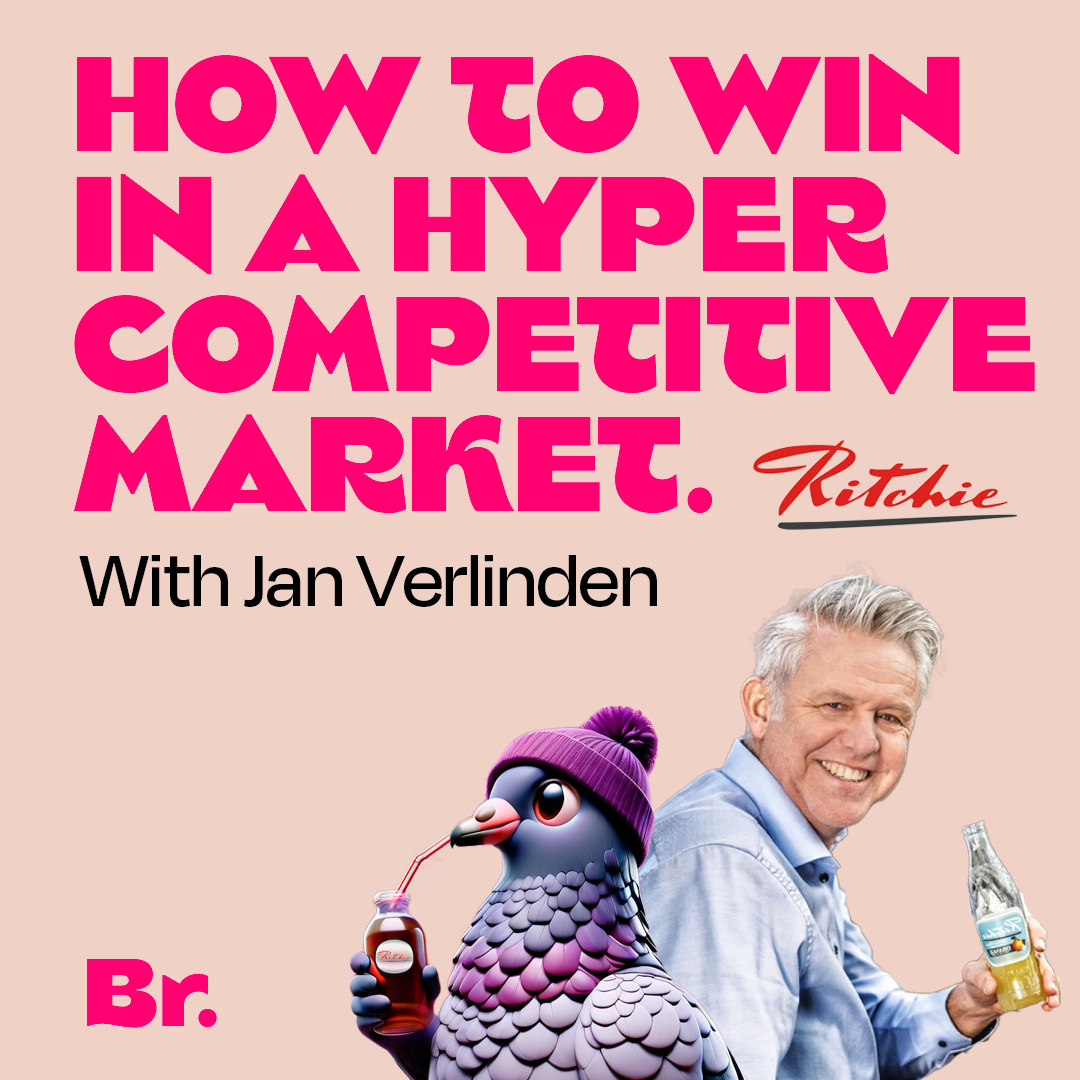
Loading summary
Transcript48 lines
- [00:00]
Jan Verlinden
Have the money, you don't have the distribution, you don't have the organization to compete. So pick the crumbs which are on the table.
- [00:09]
Host
Hey, everyone. In this episode, we're talking with Jan Verlinden, founder of soda brand Richie. We take a deep dive into his entrepreneurial journey and how he's using marketing science to build a strong brand in.
- [00:25]
Guest
A very competitive space.
- [00:27]
Host
So buckle up and let's talk branding. This episode is sponsored by creative business company, but more on that later.
- [00:37]
Jan Verlinden
Well, I'm Jan Linden, and seven and a half years ago, I decided to bring back my favorite soft drink from when I was a child. Now, where does the soft drink come from? Actually, my great grandfather started a brewery business, and then it trickled down from my great grandfather father to my grandfather to my father. So when I was born, behind the house where I lived, there was a brewery. And in that brewery, we did not only have beers, but we only had soft drinks. And one of the soft drinks was Richie. And I do remember from my childhood that it was a really great product. With my 25 years of marketing experience, I could see that it was a brand which had a lot of potential. And so I started to think about, hey, maybe it's a good idea to relaunch my favorite soft drink for my childhood. And the rest is history.
- [01:28]
Guest
So I think Richie is an amazing brand. But, like, I'm wondering, like, going back to those first days when you decide to start it, it's a very competitive space. Like, what made you choose to actually go for it?
- [01:43]
Jan Verlinden
Well, When I was 22, I decided to go and work for Big FMCG Blue Chip Marketing companies. And I must say, I really did enjoy that for a very long time. I worked for companies with big budgets, great brands, fantastic opportunities, learned a lot. But you also realize that in those big companies, at a certain point in time, there's always someone who can say no to a good idea. So you can have the best ideas. But in those big companies, sometimes good ideas don't always make it to the end. And I was fed up with that. And listen, I cannot do this until I'm 67, working for these companies and then always having to ask permission. So I said, no, I don't want to do that anymore. Now, the key thing is it's very easy, of course, to know what you don't want to do. It's not always as easy to know what you do want to do. So in my quest of, okay, what am I going to do now? For the rest of my professional Career. I was visiting my parents one day and I went into the took the childhood photo album. I mean I come from a generation where your photo album is one album of your age between birth and 16, 17 years. Your whole life is captured in a couple of hundred photos and a couple of pages. And in that photo album there's a picture of me as a young boy between a few crates of Richie lemonade. And I do realize, I do remember from my childhood that Richie was a very, very great tasting product. Now with my 25 years of international marketing experience, I could also see that Richie as a brand, a beautiful packaging and a beautiful logo and a very good name was a brand which had some potential. And then on top of that, if you then see that in soft drinks market, although, yes, it is a very competitive market with some of the biggest FMCG companies in the world you're competing with. But you could see that in every category of consumer goods there is actually a small niche of premium brands which are developing. And we could also see that there were some premium soft drinks, alternative soft drinks, craft soft drinks developed and being quite successful in our surrounding countries. And some of these soft drinks you started to see showing up on the Belgian market and said, well, hey, maybe since there is a market developing for premium, better quality soft drinks, I have the luxury or the good luck that actually in my family we had a great brand. Richard Ritchie. On top of that, I have 25 years of marketing experience making maybe these are all three things combined. I said, well, with those three elements there is a market for it. You got a brand and you get experience, maybe you have a chance to make it work. And first that was a crazy idea which was planted somewhere in my brain. And every time I went to international meetings I was working at PepsiCo. At that point in time I was more thinking on the plane about the idea of relaunching Richie. Then I was thinking about the meeting I was, I was going to, until at a certain point in time said, well, I do not want to be sitting in a, in a chair, 67 years old thinking, if only I had tried. Because apparently based on what I've read from some articles, when people are close to the end of their life, people are mostly upset about things they didn't do, not about things they did do. So yeah, one day, you know what? I'm going to go for it. We'll see. And today we, seven and a half years later.
- [05:38]
Host
One of the biggest challenges in my own career has always been to convince business leaders that brand is One of the most important assets in their company. And even though dozens of studies have shown that getting the right strategic positioning can get you a 5x performance on your ads, sometimes convincing executives to prioritize their brand strategy can be challenging. That's why this episode is sponsored by Creative Business Company, a strategic consultancy on a mission to make brand more accountable and more effective. They take the lessons they've learned from over a decade of experience of working with brands such as Morningstar, Shell and Formula E and adapt them to smaller, fast growing companies to help them get more attention, convert leads and drive sales. So if you're trying to get budget for brand, create messaging that converts or lower your cost of acquisition. Check out creativebusinesscompany.com for ideas, evidence and tools that will help you make an impact.
- [06:42]
Guest
Yeah, love that story. And like what's always been interesting to me from the first time I saw Richie, I guess it was somewhere like in retail store, I think in Avi or something. Um, like the packaging, the branding, it looked amazing and like I don't think it ever did not look amazing. And you talk about this a bit in your, your book as well. Like I have it here. I'll of course put it in the show notes for the people that I think it's only in Dutch, right Jan?
- [07:15]
Jan Verlinden
Yeah, it's only in Dutch. Is a Belgian product. I don't think there's that much demand for the book in English.
- [07:21]
Guest
No for now, but we'll see about that. But anyway, what really stood out to me is that the brand from the get go looked really good. The bottles, everything, the design. And you mentioned this in your book, the idea of like a minimum viable brand, is it really something or how do you go about that? And I'm curious to your philosophy here as like from starting that brand, what hurdles did you have to cross to come out of the gate swinging with such a beautiful brand?
- [07:54]
Jan Verlinden
Well, I mean the good news is I had quite a lot of raw material to start from. I don't think you can see it there. Those are the old bottles.
- [08:07]
Guest
Cool.
- [08:08]
Jan Verlinden
So I had old bottles to start from. The old bottles and the new bottles, they don't. They look very similar. Had a beautiful logo, had a beautiful name. So I had a diamond in the rough which needed to be polished. So that's the good side where I didn't have to create something from 0 second parties. Also had a good story, I think the fact it's a simple story. The guy brings back the favorite lemonade from his childhood which was made in the brewery of his father. So it's a very interesting story. And then it was working very, very hard because, okay, you have all these materials. And I do remember a little bit about how the brewery was run when I was a child. But then you start looking, okay, we needed to get the bottle, glass bottles. I'm probably one of the few idiots who launched a brand from day one with their own bespoke bottle. But I do believe that that was crucial part of even having the slightest chance in hell to be able to make it into this market. Because the market is extremely competitive. You're talking to the biggest companies in the world, brands which in as far as FMCG goes, are the heaviest advertised, most well known, very well liked. There was not really somebody waiting for a new cola in a way. So if you want to be present in that market, you want to give yourself a very, very small chance, you have to start and come out the gates with the best possible product you can think of. And in the book, indeed, I talk about minimal viable product, which is probably very, very relevant if you're launching a software. But if you're launching a premium consumer brand, I cannot launch and say, you know what, here's my product. It doesn't taste really great yet, but in six months it will be perfect. And the bottle, it doesn't really look very nice, but in six months it will look very nice. No way. It's not going to work. It either has to be from day one completely as perfect as can as can be oil. You. I don't. That's my personal opinion, or I don't think you'll be able to make it. And one of the discussions, I read discussions, one of the things I had to think about, sure is actually I do believe that the bottle is, is a crucial part.
- [10:46]
Host
So.
- [10:47]
Jan Verlinden
But the bottle, the investment in the bottle is massive because you have to invest in. Here's one, didn't even plan it that way, but that's actually a mold which is used to blow bottles with that. The thing is very, very heavy and the costs of those molds is, is in the tens of thousands of euros. And then you only have a mold. You don't have a bottle yet, you don't have a brand, just have a mold. So the investment to start with your own bottle is very, very high. So I also looked at what's on the market, and this is a standard bottle which is on the market, and I put my label on it. And this is the current product, as you can see, that's that's day and night. It would have been very, very hard to be successful with this bottle. We'll see how successful we will be with this bottle.
- [11:45]
Guest
Yeah. And to me that's very. No, sorry, go ahead.
- [11:50]
Jan Verlinden
No sir, everything, everything, I mean everything was thought through. The fact, don't know if you know. But the other thing which is, which I think is cool. It's a bottle with a twist of crown cap. It's unique. Now I sometimes run into people who never ever opened the bottle by hand and they say, oh, you can open the bottle by hand. Oh no, I don't think you can say, well why don't you do it the first time if you don't know it, you can open the bottle with a twist off by hand. It is impossible not to smile. So well, the zero moment of, through it, your first encounter with your product, even before you tried it, you already have a smile on your face. That's important. There's all, all these things. I've been thinking about this for, for years. The bottle took me three years to bring it to the level where it was to get it produced.
- [12:45]
Guest
Yeah. And I think that's really amazing. And I mean I work with a lot of startups and scale ups and in FMCG and, but also in different industries and I think very often we have these discussions about, well, when we're launching a brand, like maybe we can just take the container that is the cheapest and put it in there and then when it's successful we'll maybe go for more custom design. But part of the success is the shape of the bottle and all of these small details. So I do wonder whether you think that you could have brought it as far without investing and already kind of said no. But maybe as for people listening that are doubting between investing too much in these things, like what would you say?
- [13:34]
Jan Verlinden
Well, I, I personally believe that if, if, if you're gonna launch a premium product in the market, it has to be from, from the first moment, it has to be as perfect as possible. If, if you're going on a date with a girl or boy you really, really like and you're interested in people dress up, try to make them look as good as possible because you only have one chance to make a first impression. You're not going to go with dirty clothes, your hair not washed, not showered for a couple of days. But next time you'll see me, I will be really cute. Doesn't mean because there won't be a next time.
- [14:15]
Guest
But let's, let's talk a bit maybe about, like, go to market. Like, how did you initially plan to just, like, get out there and get some initial traction?
- [14:29]
Jan Verlinden
Well, I mean, one of the scariest moments was the day after my first production because suddenly I had a basement full of soft drinks. And the clock started ticking because, yes, it had a shelf life of a year, but one week before the end of the shelf life, you can't sell that product anymore for one week. So you have to sell it. You have, like six months to sell your first batch of product. Now, the good news is, as far as soft drinks is concerned, there is a next to the normal traditional retail market. You do have the Horeca market, bars, clubs, restaurants. And that's actually a very good channel for people to get to know your brand for the first time. It's an environment where trying a new product is something which is something you do. Because if that bar you go to has decided to sell only Richie and you want to have a soft drink, well, it's either you drink a soft drink, which is Richie, or you don't drink a soft drink. So that gives a lot of trial opportunities for the brand. And that's slowly but surely how the strategy you build. The strategy actually is in horacle, you try in retail, you buy. It's a very slow strategy because you have to spend quite a lot of time visiting all those horacles, trying to convince them that they should sell your product. But it's a affordable strategy because except for your own time, you don't have to invest quite a lot. And then you have the structure of beer wholesalers who then deliver the product. So some of your logistical burden from day one, you can start outsourcing and then slowly but surely you start building the brand. And then you hope one day it gets into one retailer and then another retailer, because you don't want to get too quickly in all of the retailers either. Because if you get too quickly in retail, it's not because you are in retail that you're selling. So if nobody knows your brand, they will not buy your brand. Especially not if you're more expensive or a few will try, but not enough to have the rotation a retailer wants. So, yeah, it's a meticulous process of like, like, yeah, take one step like this, one step like that, and slowly but surely, um, you hope that your brand takes off.
- [17:00]
Guest
Yeah. And. And it reminds me, like you talking about the physical availability, but also the mental availability needing to be there in the market. And that brings us to, like, one of the points. Also in your book, you, you often talk about Byron Sharp and, and like the market, some of the marketing laws, like double jeopardy, which was for me the first time I saw like, this marketer slash entrepreneur talking about these laws. I was very happy because a lot of times this is like academic speak, but people in the field don't talk about this stuff or even recognize it. Like. But you also mentioned at the same time that some of these laws might be a bit like, depressing or at least against small brands. How, how do you cope with like, the, the, the, the definitive character of laws like double jeopardy as owner of a small brand? Like, how have you dealt with that?
- [17:58]
Jan Verlinden
Well, it's hard. But look, I think Elon Musk today is not happy with gravity because Elon Musk has been trying to put his rocket into space now a few times and it hasn't happened. The laws of gravity are there for everybody. You, me, even Elon Musk. The marketing laws are reach a few. I mean, yeah, the double jeopardy law, yeah, it's, it's, it's very depressing if you start launching a brand realizing that actually the chance of being successful in launching a brand is not very high. It's a reality whether we like it or not, because people buy what they know. Small brands stay small because they're small. Big brands stay big because they're big. From time to time, there's a big. There's a small brand that makes it into a big brand, and there's a big brand that disappears. But in the majority of cases, that's what it is. But it's good to know that that is the reality. And that's why in, in, in the book, I also give actually a way, but I believe is probably that's the only way I know to say, okay, how will you be able to, to live with those crucial, those cruel marketing laws? And I do believe that as a premium brand, allowing yourself to grow slowly, healthily, that that's the only way and to fight it. Because you don't have the money, you don't have the distribution, you don't have the organization to compete. So pick the crumbs which are on the table which are left by the bigger brands, and slowly but surely with those crumbs, start to make your own meal.
- [19:49]
Guest
Yeah. And another discussion that is often linked to. Well, what Byron Sharp describes in his book is the whole point about meaningful differentiation versus distinctiveness. And in a way, I always found Ritchie to be a very strong example of a distinctive brand. But I guess you could also argue that it's differentiated. What's your take on that?
- [20:13]
Jan Verlinden
I've seen several of those discussions between distinctiveness and differentiation. I think that's a very theoretical debate to me. I mean, what do you call Richie? Differentiated or distinctive? Doesn't matter. In the end, what you'd have to put on the table in order to be able to compete with those big brands is a full proposition. Product packaging, pricing, communication, tone of voice, Everything you do which has to be strong enough to survive in the market is that distinctive or differentiated? Who cares? You put your best foot forward. I mean, in the end I sell cola, I sell orange lemonade. I sell lemon lemonade. They're different. Yeah. They tasty. Are they differentiated? It's still a cola. I mean it's a damn tasty cola, but it's still a cola. So it's an interesting intellectual debate.
- [21:28]
Guest
No, no, but I think that's a totally fair way of seeing it. And I think it is true that sometimes as marketers we get a little bit too obsessed over these things while in the reality it doesn't always much maybe. Like what I think is very interesting, especially in the journey of Richie is I think you've been quite successful in getting some fame or like becoming a bit famous. You and of course the brand and the product without having million dollars of millions of dollars to spend on super bowl ads. Like how did you crack the code on, on building that mental availability part?
- [22:13]
Jan Verlinden
Well, I mean it's very kind that you say that the brand is famous. I have seen some, some researchers and it puts me clearly with my feet on the ground. It's the brand is not that famous. Mind is zero. Unaided awareness is relatively low. Aided awareness gets a little bit bigger. I mean you cannot expect that a brand which is only seven and a half years on the market with a 0.1% market share is, is even coming to the toes of the big brands. What it is, is I use or look for as many as possible ways of, of getting noticed with as little amount as budget as possible. I do think that my packaging in shelf has some standout. Definitely has standout when it's in a bar. So that's where it starts with. But you also start or try to in the beginning generate awareness with limited social media because social media is the only thing you can afford. And then you try to do a little bit of, of press releases and, and every now and then you get a nice story in the newspaper. I also do believe that that LinkedIn is actually a very powerful tool of helping building that that awareness because people are interested not so much in brands but in people. So I try to post on a regular basis about stuff around Richie which creates followers and all those things combined make that over the seven and a half years I've managed to build a little bit of awareness for the brand. Now of course in 2020 we have the big Corona crisis and tell you that my, my strategy is in Horika. You try in retail, you buy March 2020, Horeca closes down and we don't know for how long. Now hurricane at that point in time is more than half of my volume, but not just more than a half of my volume but it's also the engine where people get to know the brand for the first time, get to try the brand for the first time and, and that suddenly disappears and who knows for how long. So that's where I had to think very hard. Okay, what are we going to do now? Because I've gambled almost everything to make this brand as successful as possible. And that's when we started to invest in very traditional mass media advertising. So we did an advertising first page, one page in Atlas Denise, the biggest newspaper in Belgium around national holiday. Then we did a an outdoor campaign. And then in autumn that year I did my first product placement around the very popular program the Slims to Mens. The year after I started to do product placement in the mall, the product placement in the house. And then I think what today probably is still my biggest stunt, the product placement in the Master Singer. So four out of the ten most watched TV programs in Flanders have product placement or sponsoring from Ritchie. And that of course has helped my overall awareness. But I mean, not that it's even close to where I want it to be, but at least it's moving in the right direction.
- [26:19]
Host
I created this podcast to help myself and others understand the power of brand building without all of the bs. So here's three no BS guides from my friends and creative business company that you can download for free to drive impact. The Brand Investment Blueprint outlines the exact process they use to convince skeptical executives to invest in brand building projects and campaigns. How Challengers Can Position for Growth explains how brands can find and leverage their hidden advantage to create brand marketing that sells. And last, my favorite how to Build a Big Brand on a Small Budget explores how to outsmart and overtake market leaders with more cost effective marketing. Go to creativebusinesscompany.com staff to download your free guides today. That's creativebusinesscompany.com Stef to download your free guides today. Back to the podcast.
- [27:19]
Guest
Yeah, but I'm curious, like, did you see those things, those like more traditional brand building campaigns or efforts? Like, did you see them push the needle and like over what timeline? Or is it harder to like see that happen in your sales volume or anything like that?
- [27:42]
Jan Verlinden
I do not invest in trackers, brand trackers, Nielsen shares, so all that, I do not have any information like that because what's the point of trying to measure a 0.1 market? That's like looking for needle. So what I will know is if I, if I pay for those numbers, that the numbers will be low. Now, did I see impact? Well, I mean, sales keeps growing, so I guess the total mix of everything I do must be working a bit, otherwise sales would not be growing. And we managed to get to very healthy sales levels. What I do know anecdotally is that during the period of a mass singer, there was a few fairs, I was present and people say, hey, masked singer. So is something which, which is, is noted. I mean, I mean you would hope it would be working because it's every Friday, 1.5 million people looking at the mask singer. It's not that, because Friday evening you look at the mask singer, that Saturday morning you say, oh, 8:00, gonna go to the shop and buy Richie. Unfortunately, that's. That type of relationship between investment and sales does not exist. But does it move the needle? Yes, I sometimes meet. I do remember when I started, all my cars are heavily branded and one day I went to the bakery and it was a father with a very young daughter. On Saturday morning she saw the car and you could see she recognized the master singer. So does it work? Yeah, I think it does work. How? Well, I don't know.
- [29:28]
Guest
Maybe like. Let's talk a bit about the brand strategy part. I think it's like what I see also in the messaging, in all the types of advertising, you manage to keep the brand very consistent. Like, what is the overall brand strategy? And like, did you, did you get help on that or did you develop it yourself?
- [29:50]
Jan Verlinden
Well, I've done 25 years of brand management starting from a junior brand manager, marketing director for big F&CG companies. If after 25 years you still don't know what to do, then probably no. I mean, I'm the brand manager for Richie. So everything you see is. I mean, I'm not a copywriter, I work with copywriters. I'm not a photographer. So I work with great creative personalities. I've met either from the past or Richie. But I'm very strict on. Yeah. What we. What we put out there as touch points for the consumer.
- [30:39]
Guest
Do you have, like, a framework that you like to use where, like, you know, in these traditional organizations, they use branch keys or whatever, types of pyramids and circles going around?
- [30:50]
Jan Verlinden
Yeah, I mean, I wrote once a brand key. I can't remember what it called with the circles around, and it's in my head. It is.
- [31:00]
Guest
Yeah.
- [31:01]
Jan Verlinden
It's not that. Well, I mean, actually, I wrote it while I was in Barcelona for a Pepsi meeting, and I looked at it not so long ago, and it's still fairly correct. I mean, once you know where you want to go, you know very quickly that it's correct or incorrect for Richie.
- [31:21]
Guest
Yeah. And I guess because, like, from the start, it was already. The story was very clear. And it's also quite simple, you know, Artisanal Belgium lemonade. This story is very. I think it makes it easy to stay consistent. And as you are the one briefing creatives and, like, managing the brand so closely, I guess that's why it's able to stay that way. Maybe, like, because obviously your experience at these big FMCGs must have taught you something, like, what are maybe some of the things that you could use while building your own brands? And maybe on the opposite, are there things that held you back because you were in these big organizations and things, as a small entrepreneur, work in a different way?
- [32:12]
Jan Verlinden
Well, that's. That's a lot of things at the same time. Let me come back on. On one thing, what you just said. Yeah, it's correct that my story is very simple, and, and I keep it simple, but that's because I want to keep it focused. Because yesterday I did a. Did a lecture for a big group, and I said, well, why don't you talk about that? And why don't you talk about the fact that your cola is the only cola that can be drunk by people who have kidney dialysis? Why don't you. I mean, there's so many other stories I can tell, but I don't want to tell a whole book. People will, at a certain point in time, discover that, but you have to keep it very simple about what it is you want your brand to be. So focus on one or two key messages. That's the most important. You cannot have 20 key messages in your communication. Use one and always sell the same Belgian natural lemonade. Boom, boom, boom, boom. That's. That's what we do. Now, coming back on, what have you learned? Well, I Learned a lot. I was very lucky to work for really big companies. And when you start as a junior brand manager, you make mistakes. And. But then there was a brand manager or a senior brand manager and a marketing manager on top of, say, well, why don't you look at it? And while doing so, I mean, you learn sometimes maybe without even knowing learning. I mean, there's a few crucial things I think which I see, which are in, in my opinion, where a lot of startups make mistakes against is number one is design your packaging. I mean, we eat and drink packaging. If I put the same product in a different color, in a different format, in a different, I don't know what it will have. Perceptions, taste perceptions. So that is something which is clearly underestimated. And I see so many startups making mistakes because, yes, design is expensive, okay, but that's a crucial investment. The other thing is your own positioning. I once had a starter coming to me, well, develop this brand, blah, blah, blah. But it's not going very well. My webshop is not doing what I want it to be. Can you recommend me an agency? I said, well, why do you want an agency? Well, so they can help me and say, well, what do you want the agency to do? Any agency. They should tell me so. An agency is not a doctor. An agency is not. I mean, it's like if you want to build a house, you don't go to an architect and say, well, draw me your house. The architect. What type of house? Well, you're the architect. Draw me a house. So the architect will draw you a very modern house. But that's not what I wanted. I want a more traditional house. I mean, yes, so. And it's hard, it's very hard to decide what you want to be because in the process of deciding what you want to be, you have to kill things you don't want to be. Or maybe you do want to be, but you don't want to talk about that. And it's the crystallization of what your brand is supposed to be. That's not that easy. And it's something I've learned fortunately with big companies. And those are things which starting companies make a lot of mistakes. Because if you don't know what you want to be, what are you going to be then? I mean, like I said in my book, if you don't know where you want to go, any road will get you there.
- [36:01]
Host
Indeed.
- [36:02]
Guest
Like what's also interesting to me, I think you're. You're like, you took your marketing background and you put it into this, this entrepreneurial journey which basically means like you are like running the show. So you obviously have a seat at the table. You are the table basically in your company. But a lot of marketers actually complain or talk about the fact, well it's hard for us to get a seat at the table. It's hard for us, you know, to get executive buy in on decisions. Like why do you think it is that marketing is often like referred to as maybe sometimes the coloring in department or maybe struggling to get like executives to listen to them and maybe how can you change that?
- [36:50]
Jan Verlinden
Well, I think there's two elements. The first element is there's not that many executives who understand marketing. And if you don't believe that marketing is extremely important in creating value for your company, if you see marketing more as a cost or marketing on which you want to see immediately return on investment, well then, then, then of course every marketeer has a big hurdle to take. So it starts from that side. On the other side, a lot of marketeers who are, I think they're good in coloring advertising and coming up with slogans and stuff but they also need to understand this is a business so you need to earn back the money you invest with your marketing. So it's probably a little bit of responsibility on both sides. But I mean of course the more financially and accounting driven your CEO is, the more quicker return on investment they want to see. And I think there's now enough theory available and Byron Sharp is one of them, Les Binette is another one where yes, you can optimize your short term return on investment and thinking you're doing the right thing, which is going to be fine for a couple of years. But actually you forget the longer term view. And the advantage I have is, I mean with Richie I only have to agree with myself. I'm convinced that marketing works. I'm convinced that media, mass media works. There's quite a lot of people say well mass media is dead. Well, I think with Richie we are well illustrating that it's not completely dead so that there are still opportunities out there. But it takes time. And yes it's, it's every time I sign a deal for ATV campaign, I mean I sign it as quickly as possible and then put it in a drawer so I don't have to look at it. Because yes, these are big chunks of money but they do work. I don't think it would have been sitting here today if I wouldn't have done my investments in, in media.
- [39:16]
Guest
Yeah. And, and I guess like sometimes there are maybe like big amounts of money to pay, but on the other hand, like there's a lot of companies investing a lot of smaller, both money and time in performance marketing or these types of things. And you don't know like whether it works better because you, you don't try the other thing because it's like not something that is very popular or like that people think is still effective. So I really appreciate that you are taking this route and proving that there is another way.
- [39:51]
Jan Verlinden
I think the biggest problem with measurable performance marketing is the biggest strength of measurable performance marketing is that you can measure it. The problem is you will measure it to a level for which it doesn't need to be measured. The alternative of putting a TV campaign out, well, you don't see immediate return on investment. You don't see immediate action. Because that's why it's important to understand the theories of, I mean the current marketing theories as they have been extremely well explained by Byron Sharp. I mean you don't have to just find quite a few other ones you, you can follow as well because Byron Sharp is fairly black and white. But you need to understand these, these theories to see how a brand is growing. Because if you don't have that, then, then, then, then you have a problem if you don't believe that long term brand equity is crucial for the survival of your brand. Yeah. Okay. Not much I can do.
- [41:11]
Guest
Maybe let's to, to wrap it up. Like what are the ambitions for, for Richie? Is it like taking over Coca Cola in the next five years? What's, what's your plan? What's your big vision here?
- [41:24]
Jan Verlinden
Well, me saying I want to take over Coca Cola, that's like saying that a, an amateur football team wants to beat Manchester United next week. You have to be realistic. I mean, no, I will never, I will not take over Coca Cola when, I mean I was fairly late when I decided to start my own business. I did it at the age of 47. And actually my main goal was and still is to enjoy myself professionally with what I'm doing. Of course, in order to be able to do that, you need to make sure that the books, that the numbers add up, that, that you end up in the green, that you can pay everything you want to do. But that's the most important. So what is my ambition? To have fun all the way. Until I decide to give this business to my children or to sell it or to fold it. Who knows? That's the most important. That doesn't mean that I'm not ambitious because I'm, I'm having so much fun when I see Richie being drunk on TV during the Masked Singer or I don't know if you looked at Cafe de Mole in the last couple of weeks. It's great fun, especially since, you know, it then helps growing the business. So all those things, that's the most important and we'll see how big we will become. My goal, I mean today my market share is 0.1% of the market. In an ideal world, I would love to get to 1% market share, but if I only end up at 0.5, I'm not going to be unhappy. That's also going to be great as long as in the process I can keep enjoying myself.
- [43:18]
Guest
Amazing. Well, thanks for sharing your journey with us, Jan. This was really fun.
- [43:24]
Host
All right, that was it for this episode. As always, if you want to stay up to date on the latest episodes, check out the show notes and find out more interesting stuff about brand strategy and brand building, visit letstockbranding.substack.com that's letstalkbranding.substack.com.