
Podcast
Live Inspired Podcast with John O'Leary
Hosted by John O'Leary · EN
Expected to die, today he's inspiring others to truly live.
World-renowned inspirational speaker + national bestselling author John O'Leary wants to help you wake up from accidental living so you can do, be, achieve and impact more through your life. Every Monday, John shares a quick burst of inspiration to help start your week on fire. Every Thursday, John interviews an amazing guest on their story, successes, failures, lessons, and life to help you uncover tips to apply in yours.
51episodes
Episodes
Newest firstAll episodes
Leadership That Changes Lives (Monday Moment ep. 875)
Apr 2700:06:26Tap to summarizeSelf-assured. Self-made. Quick to decide. Successful. Sarcastic. Snarky. Recently, I asked a classroom of high school students studying leadership to describe the traits they most often see in leaders- in politics, in media, and in social settings. This was their list. (I'll admit, I had to look up that last word.) But let's not confuse common with effective. So, let me ask you: What defines the very best leaders. Most would agree descriptors like selfless, humble, sacrificial, other-focused and loving aren't just admirable traits for leaders, but transformational ones. And each of those traits describe my friend, Amy Ruzicka. Let me explain.
Transcribe →
Willow Weston: Healing Your Hurt (ep. 874)
Apr 2300:47:07Tap to summarizeWillow Weston is an author, speaker, and founder of Collide, a ministry impacting women nationwide through honest conversations around pain, faith, and healing. Drawing from decades of mentoring and her own deeply personal story, Willow invites us to stop running from our wounds and begin facing them with courage and hope. Today, Willow shares how a childhood marked by trauma led to an unexpected calling, why avoiding pain keeps us stuck in cycles we don't understand, and how healing begins when we choose to face our wounds instead of hide. My friends, if you've ever felt stuck in your past, unsure of your purpose, or weary from carrying pain you don't know how to heal, this conversation is for you. You'll leave reminded that your story is not something to hide… it's something that can be redeemed.
Transcribe →The Brightest Lives are Rarely the Loudest (Monday Moment ep. 873)
Apr 2000:05:02Tap to summarizeRecently, 130,000 graduates of Saint Louis University received a magazine in the mail. Inside was a story about one of their own making a difference in the world. The feature wasn't about a speaker, a business owner or a corporate executive. It was about a graduate who chose a different path: serving when no one is watching, modeling love in a world longing for it, and showing up fully and faithfully for others. The story was about my wife, Beth. Let me explain.
Transcribe →
Claude M. Steele: The Tension That Divides Us and How to Overcome It (ep. 872)
Apr 1601:00:59Tap to summarizeClaude M. Steele is a legendary social psychologist whose groundbreaking research on stereotype threat, self-image, and self-affirmation has reshaped how we understand identity. His latest work explores "churn," the mental and physical stress that can arise in everyday interactions across differences, and the tension shaping so much of modern life. Today, Claude shares what it was like growing up outside Chicago in a racially diverse and complex environment, the values instilled by his parents, and how his identity shaped his perspective. We discuss his acclaimed book Whistling Vivaldi and the silent weight of stereotypes, along with the subtle, powerful actions that can help dissolve them. He also unpacks his newest research on "churn" and explains why ignoring our differences often deepens tension, while building trust is the most effective path forward. My friends, if you want to better understand one another, reduce tension, and unlock the potential that exists across our differences, this conversation is for you.
Transcribe →Another Walk with Nurse Roy (Monday Moment ep. 871)
Apr 1300:05:49Tap to summarizeRecently, Mom and I shared coffee with a man who helped shape our lives decades ago. He wasn't a celebrity. He didn't make headlines. He was a caregiver at Mercy Hospital's burn unit, and we came to know him as Nurse Roy. Let me explain.
Transcribe →
Piera Gelardi: Creativity, Connection, and Joy Through Everyday Moments of Play (ep. 870)
Apr 900:55:08Tap to summarizePiera Gelardi is a creative entrepreneur passionate about helping others reclaim creativity and possibility through the power of play. As the co-founder of Refinery29 and author of The Playful Way, Piera helps individuals and organizations rediscover something many of us have lost along the way: the courage to play. Today, Piera shares how growing up in a small town in Maine shaped her sense of wonder, how building a global brand led to unexpected self-doubt and burnout, and how reclaiming play became her path back to creativity, connection, and joy. She explains practical ways to integrate playfulness into our daily lives and how small moments can shift perspectives, deepen connection, and bring more curiosity, wonder, and joy into everyday life. My friends, if you've been feeling stuck, overwhelmed, or like life has become more about checking boxes than actually living, this conversation is for you. You'll leave with a fresh perspective on how to break free from perfectionism, reconnect with your creativity, and find joy again in the small, everyday moments that make a life truly meaningful.
Transcribe →More Than a Haircut (Monday Moment ep. 869)
Apr 600:04:38Tap to summarizeOn any given day in Marietta, Georgia, men line up for a haircut from Travis Sanders. But what draws them in and liberates them to wait isn't simply getting their hair styled. It's connection, encouragement and a powerful reminder that hardship does not get the final word. Let me explain.
Transcribe →
Demond Martin: Philanthropist, Investor and Author of Friends of the Good (ep. 868)
Apr 200:48:39Tap to summarizeDemond Martin is an investor, philanthropist, and CEO of WellWithAll, a health and wellness company committed to closing gaps in care by reinvesting profits into underserved communities. As a leader shaped by experiences ranging from the White House to Wall Street, Demond uses his platform to champion a powerful idea: that the relationships we build ultimately shape the lives we live. Today, Demond shares how a childhood marked by instability and hardship became the foundation for a life of purpose, how mentors and "second fathers" helped him see a future beyond his circumstances, and how the concept of "friends of the good" has guided his journey from surviving to serving. He reflects on the power of vulnerability, the responsibility we have to give back, and why true friendship is one of the most overlooked forces behind success. My friends, if you've ever wondered how the people in your life are shaping your future, this conversation is for you. You'll leave reminded that no one succeeds alone, that your story is still being written, and that the right relationships can lift you higher than you ever imagined.
Transcribe →Don't Wait for Your Last Day (Monday Moment ep. 867)
Mar 3000:05:39Tap to summarizeWhat would you do if you knew today was your last? At nine years old, that wasn't a hypothetical question for me. It was my reality. After being burned on 100% of my body in a gasoline explosion, I was given less than a 1% chance to survive the first night. Although I survived that night, and the following five months in the hospital, the prospect of death never faded. It felt closest, though, on the nights before surgery. Because burned skin doesn't grow back, doctors had to take skin from one part of my body and graft it onto another. In my case, the only usable donor site was my scalp. So more than a dozen times, they took skin from my scalp and transplanted it, piece by piece, across my body. Each surgery carried the very real risk that this could be the last. To alleviate my anxiety and sadness, the night before became a celebration. My parents and siblings would come, we'd eat pizza, drink milkshakes, stay up late. Sometimes they'd bring gifts. On those nights, they did everything possible to diminish the fear and elevate me. So let me ask you again: If tonight were your last, how would you spend it?
Transcribe →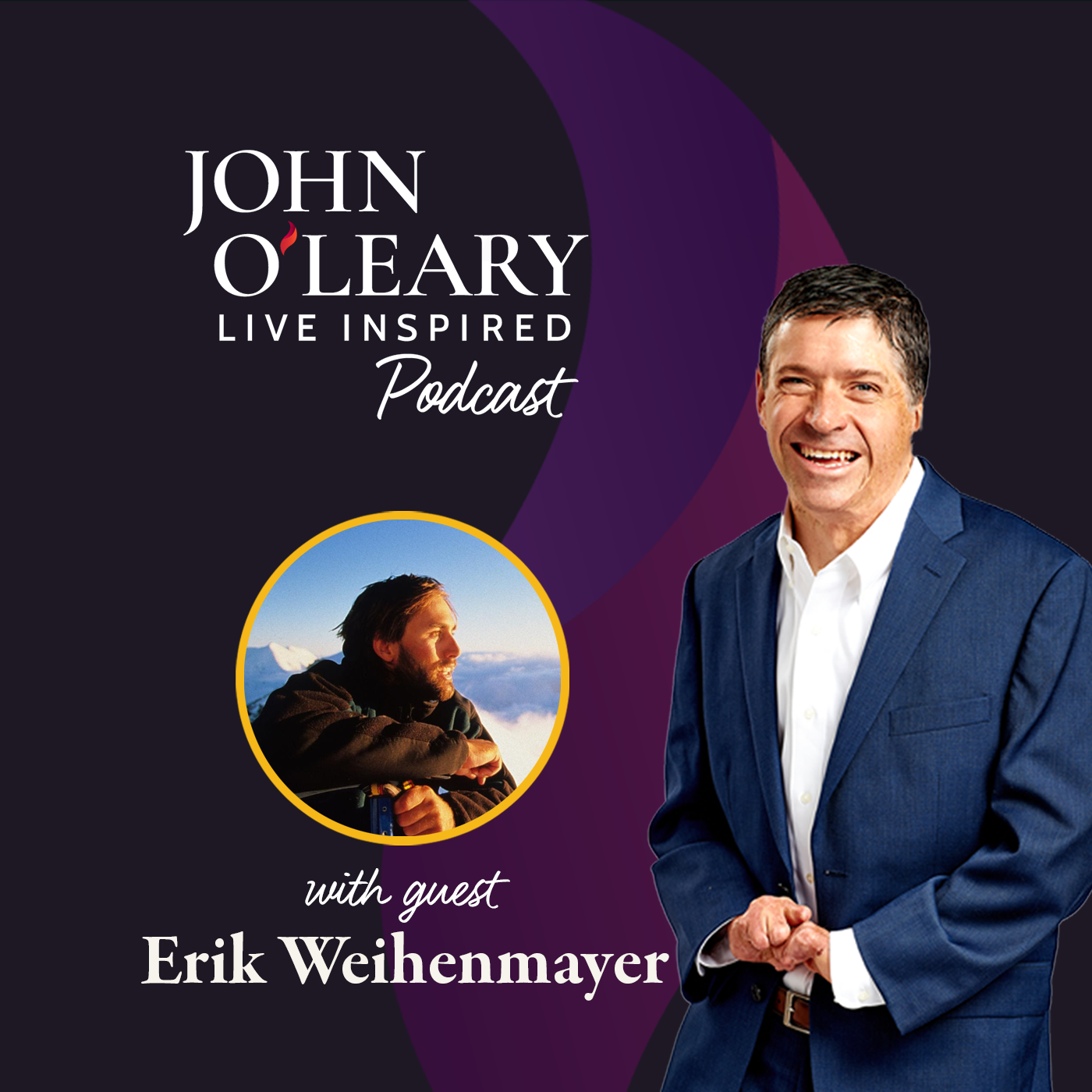
Erik Weihenmayer: World Renowned Blind Adventurer (ep. 866)
Mar 2601:02:33Tap to summarizeErik Weihenmayer is an adventurer, bestselling author, and motivational speaker… but he's perhaps best known as the first blind person to summit Mount Everest. After losing his vision as a teenager, Erik refused to let blindness define his limits. Instead, he became a world-class climber, kayaker, and co-founder of No Barriers—a global movement helping people turn adversity into possibility. Today, Erik shares how losing his sight reshaped his identity, how climbing became both his passion and his teacher, and how summiting Everest was never a solo achievement but a testament to trust, teamwork, and community. He opens up about learning to navigate fear, why saying "yes" to challenge is the doorway to growth, and how every one of us (regardless of circumstance!) can live a No Barriers life. My friends, if you've ever felt limited by your circumstances, this conversation is for you. You'll leave inspired to rethink what's possible, encouraged to lean into community rather than go it alone, and reminded that your greatest obstacles might just become the foundation for your greatest purpose.
Transcribe →