← Live Wire with Luke Burbank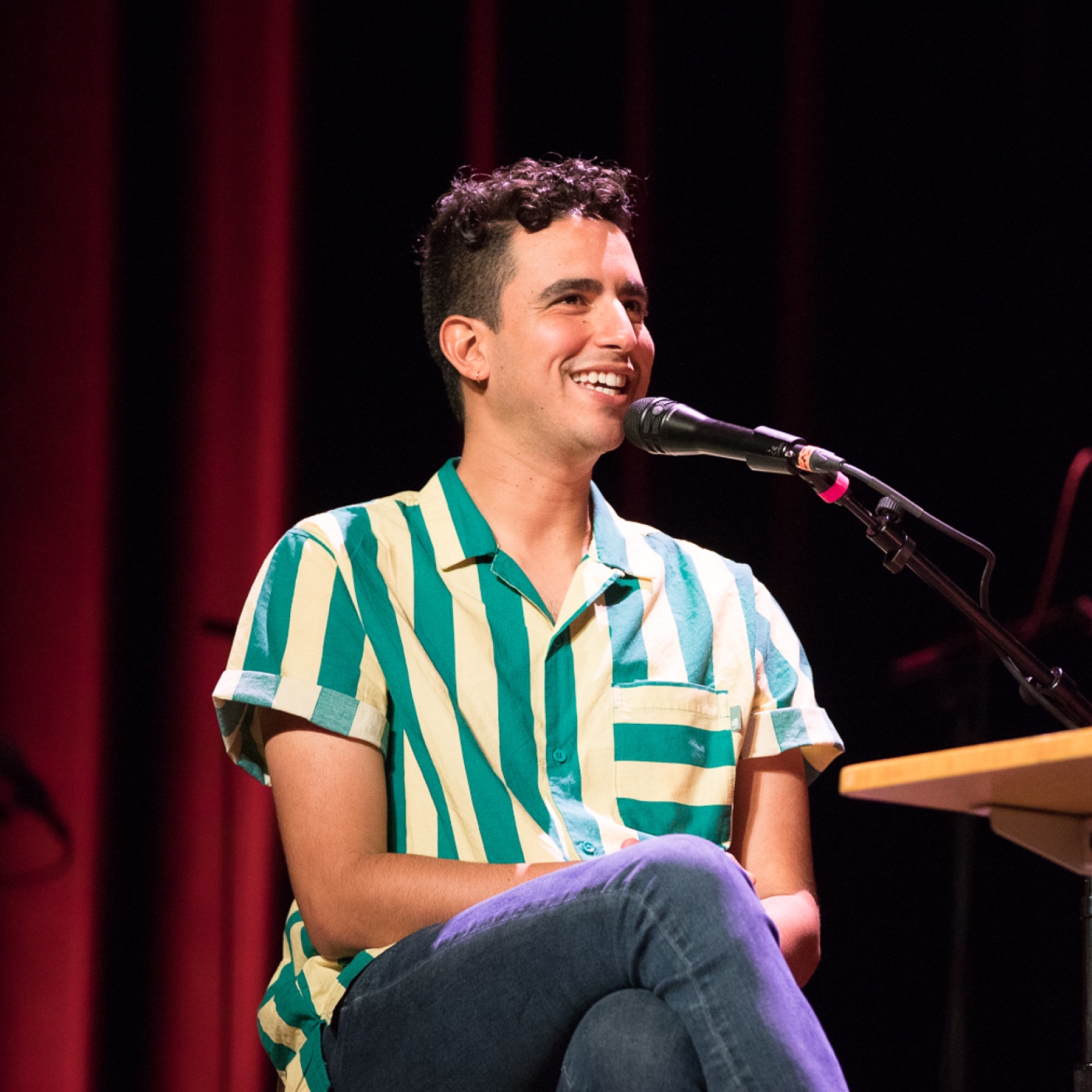
Live Wire with Luke Burbank
Dylan Marron, and Brittany Davis (REBROADCAST)
00:52:27
This episode features podcaster and writer Dylan Marron and music from Brittany Davis.
Loading summary
Transcript162 lines
- [00:03]
Luke Burbank
Hey, there. Welcome to another edition of Livewire. I'm your host, Luke Burbank. This week on the show, we are talking about surprising and unexpected conversations with Dylan Marron. He's the guy behind the podcast Conversations with People who Hate Me. And here's what he does. Basically, he goes and finds mean comments that were written about him or other people online, and then he calls the people up who wrote the mean stuff to figure out what exactly is going on with them. Or we're also gonna talk to musician Brittany Davis, who will explain how, as a blind person, music became their first language and also why they just started getting into the music of Pearl Jam. Plus, we've got your listener responses to this week's question. What's the most unexpected conversation you've ever had? It's gonna be a great show. Here's the thing, though. The stations, they expect us to take a break for the news right here. So we're gonna do that. Then we'll be back with this week's Livewire. Stick around. Hey, y'.
- [01:01]
Dylan Marron
All.
- [01:01]
Sam Sanders
Each week on the Sam Sanders show, we ask big questions and offer hot takes about the pop culture we're obsessed with. Like, should we be allowed to talk at the movie theater? Are stadium concerts boring now? Is it time to stop making bingeable tv? Join me and a bunch of comics and journalists and celebrities as we make sense of the zeitgeist, or at least make fun of it. The Sam Sanders show, wherever you get your podcast and on YouTube.
- [01:30]
Odoo
This show is supported by Odoo. When you buy business software from lots of vendors, the costs add up and it gets complicated and confusing. Odoo solves this. It's a single company that sells a suite of enterprise apps that handles everything from accounting to inventory to sales. Odoo is all connected on a single platform in a simple and affordable way. You can save money without missing out on the features you need. Check out odoo@O-O-O.com that's o-o o.com.
- [02:00]
Luke Burbank
This episode of Livewire was originally recorded in August of 2022. We hope you enjoy it. Now let's get to the show.
- [02:09]
Elena Passarello
From prx, it's Livewire. This week, podcaster and writer Dylan Marron.
- [02:23]
Dylan Marron
Debate is the only word we have for conversation across difference. So we think that the only way we can actually communicate with someone that we disagree with is to fight them.
- [02:34]
Elena Passarello
And music from Brittany Davis.
- [02:36]
Brittany Davis
Because there is sound, there is life for me and from me. And all of it has its own purpose, and it all has different dimensions.
- [02:47]
Elena Passarello
I'm your announcer, Elena Passarello. And now the host of Livewire, Luke Burbank.
- [02:56]
Luke Burbank
Thank you so much, Elaina. Thanks to everybody tuning in this week from all over the country. Of course, we asked the listeners a question. What's the most unexpected conversation you've ever had? And we're gonna read those responses coming up a little bit later on in the show. First though, it's time for the best news we heard all week. This of course, is our little reminder at the top of the show. There is still just have to trust us on some good news happening out there in the world. We find it for you. Alaina, what's the best news you heard all week?
- [03:29]
Elena Passarello
Oh, I love this news from Indianola, Iowa, population 16,000. You know, you probably are super aware of this. Over the past decade or so, quite a few small town newspapers, maybe the vast majority of them, have been bought up by these big media conglomerates and they lose their staff, they lose a lot of their heft and they really lose the local attention. That makes small town newspapers what I consider to be like one of the most important parts of American life.
- [03:59]
Luke Burbank
Yes, absolutely. It's a tragedy in this country because it is extremely hard to be profitable in the print newspaper business. And so you have. Yeah, this consolidation and conglomeration that takes so much of the specific local flavor out of these things. It's a real bummer for sure.
- [04:14]
Elena Passarello
But good news is that opposite thing is happening in Indianola, Iowa, where the Record Herald had been bought out by a huge media company and a couple, a married couple that had both worked there. They had a shared 50 years of experience at the Record Herald. Amy Duncan and Mark De Witt. They first started kind of like a local news website to kind of compensate for the fact that their newspaper had closed. They had to like go from house to house and help people understand how to get the news on their iPads. But Gannett, the media juggernaut that owns a lot of these papers now, has recently made offers to certain small town outfits where the small towns can buy the papers back. And since Amy Duncan and Mark De Vit had already spent all this time A, at the original paper and B, doing this great digital work, they bought the paper and they're gonna give it a shot. So that means people who know this community well are gonna be reporting for this community, there are gonna be tons of opportunities for that kind of discourse. And if you're within a 6,000 mile radius of Indian, Iowa, maybe you want to subscribe to keep this paper going.
- [05:26]
Luke Burbank
That's so awesome.
- [05:27]
Elena Passarello
Yeah.
- [05:28]
Luke Burbank
Well, going from kind of hyperlocal news to an actual world record. Elena. The best news that I heard about this week, this actually happened a little while ago, but it just came onto my radar is the story of a guy named Chad Kempel, who is the father of quintuplets, which, if you're not great at math like me, I had to look up. That's five. Five babies, a quint. And he decided he wanted to run a half marathon pushing his five. He actually has seven children. These are just the five that came out at the same time. So he decided to run a half marathon pushing the quints. They're four years old now. Between the stroller they were in and the kids, that's 240 extra pounds.
- [06:15]
Elena Passarello
Oh, my gosh.
- [06:15]
Luke Burbank
That Chad's pushing along for a half marathon, which, of course, is 13.1 miles, half of a regular marathon. He did this in Oakland, by the way, and he wanted to sort of teach people or remind people that anything is possible. So he had this inspirational sign that said, anything is possible. And his wife, who he credits with. Rightfully so, by the way, with doing the hard work as far as these babies are concerned.
- [06:40]
Dylan Marron
Right.
- [06:40]
Luke Burbank
Like, anything he does with, you know, physical activity around them, he says, yeah, this is. This pales in comparison to what my wife went through carrying these quintuplets. But his wife was riding on a bike next to him, and he. It was really hot, and it was a lot of children to be pushing, so he almost quit a couple of times, and she was, like, encouraging him from the bike, and he managed to get through it. He did the whole thing in 2 hours and 19 minutes, which is really not bad. Actually, it's not bad considering what he was doing. There's a couple of things about this one. Anytime I'm out for a jog, in fact, this just happened. I'm not kidding you. This morning, I was out for a little run in my neighborhood in Portland, and I was feeling a little tired as I was on my way back, and I saw a dad pushing twins in a stroller. And I thought, okay, if he can do that, I can. Without any encumbrance, I can finish this little jog. So I'm inspired by people who are out there pushing their kids around in strollers. The other thing is, the report is that his kid's main response to him pushing them in the half marathon was to yell at him to go faster. And there's a photo of him with this. This stroller. Is wild. It's, like, so long and kind of. It almost looks like a bobsled or something, you know, you'd get in.
- [07:52]
Elena Passarello
Or like a row of grocery carts being returned to the corral.
- [07:56]
Luke Burbank
That's a good description. This guy is just working so hard to make this happen and set this record. But the kids in the photo look deeply bored, like, which I feel like is parenthood in a nutshell. Like, that is what being a parent is. Doing something exceptionally hard, and your kids completely not realizing how hard it was.
- [08:18]
Elena Passarello
Breaking a global record. I was just thinking about how I just got out of an airport, and I know that my suitcase weighed 26 pounds, and I had to drag it for, I don't know, about quarter of a mile, and it was a tenth the weight of that stroller. And I was just like, I quit. Yeah, I Quint, I. I quit.
- [08:37]
Luke Burbank
So knowing, by the way, that the experience of parents is universal, no matter what we do, our kids are going to probably not be that impressed. That is the best news, weirdly, that I heard this week. All right, let's get our first guest on over. He is the host and creator of the critically acclaimed podcast Conversations with People who Hate Me. It's sort of a social experiment that started with him calling up people who'd left mean comments online about him, and he wanted to find out kind of like, what their deal was and try to make a human connection with them if he could. That podcast has now turned into a book by the same name. Dylan Marron is also the voice of Carlos on the hit podcast welcome to Night Vale. And he created this really interesting project, Every Single Word, which is a video series that he edited down popular films so that the final product features only the words spoken by people of color in the film. And it is quite revealing, I'll tell you that. Dylan joined us on stage at Revolution hall in Portland back in June. Take a listen to this.
- [09:50]
Dylan Marron
Hi, guys.
- [09:50]
Luke Burbank
Dylan, welcome to the show.
- [09:51]
Dylan Marron
Thank you for having me.
- [09:53]
Luke Burbank
Let's actually start with every single word, because I think that's one of the things that really put you on the Internet's radar to a large degree. How did that idea come to you to edit these films down?
- [10:05]
Dylan Marron
So I was, like, acting at the time. That was my entry into the Creative Forum, and I was noticing that auditions. So in casting notices, I don't know if you're familiar, but there's, like, a description of the character. Right? And so there will be one character that describes everything about them and gives you their biographical data, what they Feel how vulnerable they are, like their relationship to empathy with others. And then there's others. That's like deli worker, five lines. And then it will list every non white race. And so it's like you understand that these long flowing casting notices were for white characters. And so I wanted to kind of identify the whiteness of Hollywood films, but in a way that would ideally bring more people to the table. And so I disguised it as a supercut series. Right. It's like this shareable, bite sized form of Internet detritus that we're all familiar with. And it was cloaked in, that was a conversation about representation on screen.
- [11:16]
Luke Burbank
I have to say it was shocking to me as a white person to see a film that I love, like Moonrise Kingdom that I've watched. I mean, as a white person, you're legally obligated to love anything Wes Anderson does.
- [11:28]
Dylan Marron
Yes, yes, yes, yes.
- [11:29]
Luke Burbank
So it never occurred to me, because of my lived experience, how little representation there is in that film. It's like less than 10 seconds.
- [11:37]
Dylan Marron
Yeah, yeah. And I think to explain, I was picking films that were told Universal stories and were cast as white by default. So the Lord of the Rings trilogy, all three movies came down to I think 47 seconds. That's the trilogy.
- [11:52]
Luke Burbank
But those are short films anyway.
- [11:54]
Dylan Marron
Those are tiny, tiny films.
- [11:55]
Luke Burbank
So that's, I mean, that we have to also put that in the record.
- [11:58]
Dylan Marron
Yeah, they're TikToks, basically.
- [11:59]
Luke Burbank
Yeah. Right. Savines.
- [12:01]
Dylan Marron
Savines. Thank you. A classic TikTok. Vintage.
- [12:09]
Luke Burbank
Well, I was just, I was saying it was. It was surprising to me to realize how many of these films that I've just watched. And again, because of kind of my perspective, it didn't occur to me that there was such little representation of people of color until I was watching your series.
- [12:25]
Dylan Marron
Yeah. I think the complicated thing as a person of color is you also take this for granted too. Right. I think like the problem wasn't that I didn't like these movies. The problem was that I loved all these movies that I was editing down. And so I think what the project asks, I sound like an artist statement, you know, like printed. What this project interrogates is, you know, what are you not noticing and what are we subconsciously taking in? What messaging are we subconsciously taking in if we watch. Yes, okay. Claps.
- [12:59]
Luke Burbank
Yes.
- [13:00]
Dylan Marron
Make it slow, slow, slow. Build through what I'm saying. But I think what it's saying, it's like, what are we letting in? What are we subconsciously understanding it? If we are baking into Our brains. You know, movies are essentially empathy machines. I think that's a Roger Ebert quote. That's how we understand ourselves. That's how we understand our place in humanity. And what is it saying for people of color who are seeing avatars continuously relegated to the sidelines? And so again, it's just a supercut series. And so I think that project was what helped me learn how to take a big idea and express it in an online format.
- [13:39]
Luke Burbank
Another thing you did that got a lot of attention were these unboxing videos where you unboxed abstract concepts like masculinity and ableism.
- [13:47]
Dylan Marron
Yes.
- [13:48]
Luke Burbank
And that seems to also be when the trolls really started to come out. Was that your experience?
- [13:54]
Dylan Marron
You know, every single word. I wasn't in those videos. Those were edits of popular films. And when I started making videos with my face in them and those videos started becoming really popular, and I was coming from a very progressive perspective. Yes. And I think context is important about this, which is that this was 2016, 2017, and this was on Facebook. So this is like right when we were experiencing this national public square on Facebook. This is when Facebook video was popping off. And I think that is what set the stage for what came next.
- [14:31]
Luke Burbank
Well, what I'm really interested in is what you talk about in this book and on the podcast, which is when you started reaching out to some of these people that were posting really mean things about you. So we're hear about that in a moment. First, though, we got to take this quick break. Here on Livewire, we're talking to Dylan Marin. His new book is Conversations with people who hate 12 Things I Learned from Talking to Internet Strangers. Back with more Livewire in just a moment.
- [15:10]
Deborah Treisman
Hi, I'm Deborah Treisman, fiction editor of the New Yorker and host of the New Yorker Fiction Podcast. On the podcast, I ask a great contemporary writer to select a favorite story from the magazine's almost hundred year archive to read and discuss. Together we delve into the story, exploring its themes, its style, and what makes fiction work. You can listen to authors like Ottessa Moshfegh talk about why we write story or attaching a story or creating a story. Is this inclination that we all have to stop spinning. And you can hear writers like George Saunders discuss the nature of storytelling on the first read.
- [15:51]
Luke Burbank
You accept these things as descriptions and they make you see the scene. But every line is a chance to inflect the reader's mind.
- [15:59]
Deborah Treisman
You'll discover new favorite authors and read old favorites in new ways. Episodes of the New Yorker fiction Podcast are released on the 1st of every month. Listen and follow wherever you get your podcasts.
- [16:23]
Luke Burbank
Welcome back. Welcome back to Livewire from prx. I'm Luke Burbank here with Elena Passarello. We're talking to Dylan Marin. His new book is Conversations with people who hate 12 Things I Learned From Talking to Internet Strangers. So you were producing a series of different videos, taking on some pretty serious topics, but doing it with a kind of a. I think a fun and somewhat light approach. But this also was drawing a lot of attention from people who disagreed with what you were saying when you were saying, hey, we're too ableist as a society, or masculinity is out of control, things like that. So what were people actually saying to you that was negative? What were the kind of posts that you were getting?
- [17:03]
Dylan Marron
You know, a lot of it was homophobic. I think a lot of it. Yeah. Took swipes at my masculinity, which, just to be clear, we were never angling for Alpha. You know, like, we're going for Delta. We're going for Zeta. We're going for bottom of the barrel here. Yes, Zeta. Male in the house. I think it was like those typical jabs, you know, I think the common terms of cuck, you know, a man who has been cheated on by his wife, which, to quote Twitter, you have to laugh, you know, to call me a cuck is like, I would love for whatever woman I was married to to cheat on me. I encourage it. I hope she cheats on me. That she needs a strong sense of self.
- [17:57]
Luke Burbank
So people are coming at you with all this stuff that they think is insulting you, but the things that they value are not the things that you personally value in the same way.
- [18:06]
Dylan Marron
Yeah, I mean, that's 100% true. I also think it's like, I had to develop the sense of humor about it because that was the only coping mechanism I had. And so I. I would do the traditional things that we all do, like make fun of their typos. And that makes you feel amazing because you are the better person. And they misspelled their. And that's it. We're getting Trump out of office. You corrected a typo, you know, and I'm obviously saying that, like, joking now, but, like, you kind of felt that, you know, you're like, got em. That's a dunk. And then I think that that didn't feel like it was doing anything. And I also kind of realized that I was just essentially fighting fire with fire. So I wanted to find an alternative.
- [19:01]
Luke Burbank
So one of the people that you reached out to, they write about a book with someone named Josh.
- [19:04]
Dylan Marron
Yeah.
- [19:05]
Luke Burbank
Josh had posted something about how being gay was a sin and all of your opinions were basically wrong.
- [19:12]
Dylan Marron
Yeah.
- [19:13]
Luke Burbank
How do you go about establishing contact with somebody who has gone on the Internet just for the purposes of saying mean things about you?
- [19:20]
Dylan Marron
Well, Josh was the very first person I ever spoke to on the phone. And I would say he fully cracked open this project for me. I was receiving hundreds of messages like this and I received Josh's dm and I had developed this like unexpected coping mechanism for myself where. Because this was Facebook, this is where Facebook comes into play. It's not YouTube, it's not Twitter. Right. It's like this is a platform where you have already been encouraged to upload every single picture ever taken of you. You're tagged in photos. So I could click on my detractors profile pictures and I was taken to a partial family tree. I would know what their aunt's favorite band was, you know, and it's like I would use these like disparate details to construct this full three dimensional backstory of as a coping mechanism so that I could convince myself that these were human beings that could be reached. And I bring that up with Josh because Josh was really just like, when I clicked on his profile, sure, I was met with all the memes that I expected that, you know, indicated that we supported different political ideologies, but also real vulnerability. He was a senior in high school at the time and he was talking about loneliness and isolation. And if anything, that was something that I related to, you know, like, if I had Facebook in that time and I was the last year to not have Facebook in high school. And thank God for that. I'm so serious because, like, I think we should like normalize drafts of ourselves and understand what is and isn't okay. And to have a permanent record of that is like challenging for all humans, I think, but especially for young people. And so he was sharing things that I'm like, oh, I would have written that I was lonely on a Friday night. You know, one thing led to another and I don't know if you want to go into full detail. It's a much longer story that is available in the book.
- [21:26]
Luke Burbank
There you go.
- [21:28]
Dylan Marron
But one thing led to another and we jumped on the phone and that phone call was unlike anything I'd ever experienced. I was so used to like sharpening my dagger for my videos, you know, like taking aim at the other side through a lens. And it's like, honey, you're not. You're just talking to your people, you know, and talking to him felt like I was actually building a bridge and doing something that I hadn't done before. Yeah. Yeah.
- [22:00]
Luke Burbank
We're talking to Dylan Marin about his new book, Conversations with People who Hate Me. I've heard audio from this conversation with Josh, and it's really powerful because you hear somebody who's dealing with what they're dealing with, and as is probably often the case, it's hard for someone to continue to be cruel when they're talking on the phone with the person who's the object of their cruelty. Completely like that other stuff, my guess is, falls away pretty quickly. But is that common with the people that you've now dealt with and communicated with who have been very critical of you? Is that this is them kind of projecting their pain on someone else?
- [22:35]
Dylan Marron
Yes and no. Like, I think we love clinging to this idea that hurt people, hurt people, which I think is true a lot of the time, not all the time. You know, Like, I think the ease with which we can communicate online and take jabs at people actually disproves this, like, 100% hurt people, hurt people notion. Because, like, sometimes they're not hurt, you know? And, like, I don't use the word trolls anymore because I don't think it's an accurate word. And I also think that we must collectively move on from this very false understanding that it is. And this is in quotes, but, like, lonely guys who live in their mother's basement. Because one, if they're lonely, that's just relatable. If they live in their mom's basement. I lived with my mom after college. Deal with it. You know, things are expensive. But that's our, like, way to soothe ourselves into saying. It's like, oh, it's those people over there who do this when these platforms actually encourage that. To get back to your lovely and brilliant question, I took us on a tangent. I think sometimes it's projected pain, but I will say, always, people felt so profoundly different on the phone than they did in a text medium, because you don't actually see that the person you're talking to is human. And the one thing that I was discovering over and over again, and this is when I was talking one on one to people and when I moved into the moderated format when I started hosting calls between people, is that, like, so many times, the honest answer is like, I just never thought you were gonna read it.
- [24:12]
Luke Burbank
Yeah.
- [24:13]
Dylan Marron
And on the one hand, there's justifiable criticism. There that's like, well, that's a human. Of course they're gonna read it. And on the other hand, these platforms are so good at making us feel anonymous and invisible and, like, we don't matter and, like, we're just particles floating in space. So who can kind of blame them for thinking that this, like, missive is never going to reach its supposed target?
- [24:38]
Luke Burbank
You know, I'm wondering, as somebody who's spent a lot of time looking at this world and being now a part of this world, because another thing you do with the podcast is you. Like you said, you'll now get two people who've had some kind of a disagreement going, and you'll kind of moderate a conversation there. I mean, do you have any reason to be optimistic about, like, the way that we treat each other online going. I mean, is there any hope for this, or is this just sort of going to continue to become even more and more toxic as a place?
- [25:07]
Dylan Marron
Yes and no is the most honest answer I can give. The, like, experience I have on the phone calls that I've been lucky enough to be part of has shown me that people are hungry for connection with each other. People are eager to get to know people, to show themselves to other people, to build these bridges that we are chastised for even bringing up that word because it's too cheugy. You know what I mean? Like, and at core, people are hungry for that. People are excited for it, but that's when you get them onto the phone. I cannot even begin to tell you how hard this podcast is to produce because so many people are so hesitant to do this, Understandably. So. Right. Like, there are some people who don't have the energy to build these bridges of radical empathy with their detractors. I fully understand that. But I also feel hopeless when I spend more than five minutes on Twitter, because, sure, we have to say that, yes, necessary information can travel very fast and very far. And that's absolutely true. And it's absolutely good as a bullhorn for a video of, say, something like police brutality. Right? It's like, we have to get this message across, and no one's going to believe it if they don't see it. But all of the other conversation that happens is so gamified that it's more that we are all. And I very much include myself in this. We are all playing this game for points where you get more dopamine hits by dunking on someone than actually having a conversation.
- [26:57]
Elena Passarello
When you brought up games, it made me think of this thing in Your book, too, that I never categorized it this way. But so many things that we think of as conversations are debates. And debates can't be conversations because debates are sports.
- [27:12]
Dylan Marron
Oh, completely.
- [27:13]
Elena Passarello
How did you come up with that concept?
- [27:15]
Dylan Marron
I think it's from not understanding sports and always being terrified of sports and being, let's be real bad at them. But I think that came up for me when I started this project. And even still now, if people know the concept of the show, they'll praise me for hosting a debate show, even though I've been vocal that it's not a debate show. And at first I was kind of, like, annoyed by that. It's like, this is conversation. But then I realized debate is the only word we have for conversation across difference. So we think that the only way we can actually communicate with someone that we disagree with is to fight them, is to battle them. And I think debates work when there's a shared pool of facts. And debate, as a concept, falls apart when we can't agree on the facts we're there to debate on. So, like, it comes up with the climate. Yeah, it comes up with the climate change discussion. Or let's be real debate, which is like, if, let's say your position is climate change mostly comes from oil companies and not, you know, unrecycled plastic bottles, and then the other person's position is climate change doesn't exist, there's no debate there. I think what I learned is really ways, and what the book is really about is ways to foster, like, meaningful conversation and conscious conversation. It's a tightrope to walk. Right. Like, I'm very careful to not sloppily be like, just talk to each other and the world will be good. You know, it's like, that's unhealthy for a lot of people. And so I think we're having this huge backlash against kindness and bridge building because like I said, it's a little too cheesy for people and for very good reason. Kindness is absolutely not a substantial political platform. Right.
- [29:15]
Luke Burbank
Well, a lot of people who have been marginalized feel like completely. The advice being just be nicer to the people who have been oppressing you. They are like, that's not really how we should be fixing this.
- [29:25]
Dylan Marron
And I think that. Yes, absolutely. And I think that's, in fact, harmful to many marginalized people. But just because some people very understandably can't walk across certain bridges doesn't mean you shouldn't. If you feel that you have the ability to. You know what I mean? Like, it's, it's really. I think this work is for people who have the energy to do it and not for the people who don't. It's not a solve. Empathy alone is not going to cure everything that ails us, but I think it is a necessary ingredient that the gamified space of social media is making us forget.
- [30:06]
Luke Burbank
Yeah. All that and more in this great new book from Dylan, Conversations with People who Hate Me. Dylan Marin, thanks for coming on live.
- [30:13]
Dylan Marron
Thanks for having me.
- [30:18]
Luke Burbank
That was Dylan Marron right here on Livewire. We recorded that at Revolution hall in Portland, Oregon, back in June. Dylan's book, Conversations with People who Hate Me, is available now. Hey, special thanks this episode to Megan Millard of Portland, Oregon and Brett Sherman of Happy Valley, Oregon. Megan and Brett are part of the Livewire member community and generously support our show with a donation each month, which we are very thankful for because it's literally how we're able to keep doing the show. No donations from people like Megan and Brett, no Livewire. So thank you, Megan and Brett, for keeping the show going. Livewire is brought to you by Powell's Books. A Portland institution since 1971, Powell's offers a selection of new and used books in stores and online@powells.com Support for LiveWire comes from the Celeste Hotel in St. Paul, Minnesota. An independent boutique hotel, this former art conservatory and convent is on the national list of historic places. For booking and for more information, visit the celestehotel.com this is Livewire. Of course. Each week we like to ask for Livewire listeners a question. We were inspired by Dylan Marin's podcast about kind of unexpected, possibly tense conversations. And so we asked the listeners, what's the most unexpected conversation you've ever had? Elena has been collecting up those responses. What are you seeing?
- [32:13]
Elena Passarello
Well, speaking of Dylan, this is from a Dylan. I think it's a different Dylan who says, I had a conversation with my professor in which he told me there was no future in my major.
- [32:25]
Dylan Marron
Wow.
- [32:27]
Elena Passarello
That's always a, a hard thing when the person who's teaching you the thing that you're learning is like, yeah, kid, good luck.
- [32:34]
Luke Burbank
I was a, you know, I was a drama major in college up until probably my junior year, and we were doing some kind of acting presentation. And I, I will just say some of the monologues were, I thought, less than stellar. Some were great, but there was a real range. But the response was the same. Everyone was so effusive and so supportive of every monologue, even the ones that were great. I thought, wait a minute, are we all diluting ourselves? I was like, I thought mine went pretty well. Everyone seemed excited, but they're also being pretty excited about some ones that seemed less great. And so I said, I gotta switch my major to a real tried and true moneymaker, Journalism.
- [33:17]
Elena Passarello
Oh, yeah, I know. I was thinking about all the majors and minors that I've had over my several degrees, and none of them have futures in them. French, anthropology, Literature, creative writing. So me and Dylan and you, Luke.
- [33:31]
Luke Burbank
We can form a club. What's another unexpected conversation that one of our listeners had?
- [33:37]
Elena Passarello
Bill says, I was once speaking to a friend about our passions, and we eventually got to talking about being patriotic. And that's when he told me he only wears American made clothes. And then we had an interesting conversation about the day he discovered that his American flag T shirt was made in Bangladesh.
- [33:57]
Luke Burbank
Wow. You see that? Sometimes something that seems extremely patriotic, and then you turn it over and you find out it was made somewhere far away from here. When I was a kid growing up in the 80s, I feel like there were a lot of ads extolling the virtues of buying American.
- [34:13]
Elena Passarello
Oh, yeah, for sure.
- [34:14]
Luke Burbank
Just seemed like as a kid, there was always ads, and it was like people were wearing jeans and turning the waistband out and it said, like, made in America. And it was like lots of waves of grain and flags fluttering like it was. It seemed like a real priority.
- [34:29]
Elena Passarello
Maybe there's so few now that, like, there's no point in advertising it.
- [34:32]
Luke Burbank
Right. The, like, consortium of American manufacturers. There's not enough of them to put in for the TV ad buys that I was seeing as a kid.
- [34:39]
Elena Passarello
That's right.
- [34:40]
Luke Burbank
One more unexpected conversation before we get to our next guest.
- [34:43]
Elena Passarello
This is a great one about, I guess about taste. Jay says, one time a friend and I were talking about our favorite movies, and I started things off by saying my favorite movie was the Hateful Eight. And my friend told me that he unironically loves the B movie, the Jerry Seinfeld one. Yeah, I don't know. I think both of those are interesting choices for favorite movies, and I would love to see a mashup of the two.
- [35:07]
Luke Burbank
I will say that's a real pretty hard pivot between the Hateful Eight and Daisy Dahmer Goo, that really memorable performance by Jennifer Jason Leigh. And then you just go on right over to Jerry Seinfeld playing a bee.
- [35:23]
Elena Passarello
That reminds me when David tried to show me that scary movie Halloween, and I got so scared, and he was like, I knew you were gonna get scared. So I also rented this movie. This is back when you rented movies. And the chaser movie he had rented for me was lady and the Tramp. So we went from Halloween to Lady and the Tramp.
- [35:38]
Luke Burbank
That's when you know you're with the right person.
- [35:40]
Elena Passarello
Amen.
- [35:40]
Luke Burbank
He's at the Blockbuster or the Red Box or whatever service y' all were using. Just anticipating. I'm going to need. We're going to need a palate cleanser after the scary movie. I mean, that is love.
- [35:51]
Elena Passarello
I'm so afraid of those. One time there was a scary movie, it just the opening shot was of a doll and I was like, turn it off.
- [35:59]
Luke Burbank
All right, thank you to everyone who wrote in responses to our listener question. We've got another one for next week's show, which we will reveal at the end of today's episode. So stick around for that. In the meantime, this is, of course, Livewire. Our next guest is a genre breaking musician and producer from Seattle, born blind Brittany Davis. Musical journey began when they realized they could play piano by ear. And by the age of 13, they were recording their own music. Britney is now signed to Loose Groove Records, which is the Seattle label co founded by Pearl Jam guitarist Stone Gossard. And their debut ep, I Choose to Live, was released just this year. Brittany Davis, welcome to Livewire.
- [36:40]
Brittany Davis
Yay.
- [36:41]
Thank you.
- [36:42]
Luke Burbank
So excited to get to talk to you. I've been hearing all about you for a while now. I'm curious, when did you start writing music?
- [36:51]
Brittany Davis
I began writing music really young. I started playing piano at the age of two and started kind of writing my own songs at four and five. Wow.
- [37:01]
Luke Burbank
What are those songs about when you're four or five?
- [37:04]
Brittany Davis
Like the Popsicle truck, They're mostly instrumental.
- [37:08]
Luke Burbank
Okay.
- [37:10]
Brittany Davis
But to me, they were about a lot of things. I can't remember now because it's been a while. Yeah. But everything is music to me. So I guess everything was a song.
- [37:22]
Luke Burbank
Did I read correctly that you could actually play bird songs on the piano when you were really young?
- [37:28]
Brittany Davis
Yes.
- [37:30]
Luke Burbank
So how would that work? You would hear a robin or something and then you could come in and approximate it on the piano.
- [37:36]
Brittany Davis
Yeah. You hear this little. The little birds and you just play it, you know?
- [37:44]
Luke Burbank
Now as a person who's blind, it sounds like you've always had a really strong connection to sound. I read that you said sound is light to you. What do you mean by that?
- [37:54]
Brittany Davis
Sound is light. Silence is darkness. I mean that because there is sound, there is life for me and from me. And all of it has its Own purpose. And it all has different dimensions. The same way that different intensities of light can give you different perceptions of things. The way that it bends, the way that it shifts, you know, like, if it's a shadow, you know, you still need light for that.
- [38:23]
Dylan Marron
Right.
- [38:24]
Brittany Davis
So the different sonic dimensions are just the same, you know, dimensions as light. You know, as a matter of fact, there was a little study done. Was like, people who are born blind, their visual cortex is actually stimulated when they read Braille by touch or when they hear things by sound. So a lot of the times, it's like we're seeing two times.
- [38:53]
Dylan Marron
Wow.
- [38:54]
Brittany Davis
You know? Yeah, because that's how we see. So, you know, even though we don't have the visual organ, we have. The most powerful organ, I believe, is the brain. The mind is just the dimension of the brain. So that's why I say that sound is light, because it is a dimension, and it requires dimensions in order for it to work, same as light.
- [39:19]
Luke Burbank
So my guess would be that as a kid growing up, sound and music and song was just vitally important to you. I mean, what was that? What did it mean to you as a young person?
- [39:28]
Brittany Davis
Well, I always like to say that music was my first language. It played a role in everything that I felt emotionally sometimes. Like, different scents, things that you would smell or things that you would touch. Different textures, had different notes, had different, you know, tonal scales. Of course, I didn't know nothing about music theory back then, and I'm still learning now because I wasn't trained. But I've had beautiful mentors and people come in and teach me things and help me navigate the landscape of music. But the language was always mine.
- [40:11]
Luke Burbank
I think something that's kind of funny is that you're signed to Loose Groove Records, which was founded by one of the guys in Pearl Jam, Stone Gossard. But you were not really, like, a Pearl Jam head before you got signed.
- [40:24]
Brittany Davis
No.
- [40:24]
Luke Burbank
Do you have to now listen to Pearl Jam? Because the label you're on was founded by one of the Pearl Jam people.
- [40:30]
Brittany Davis
No, I love it, though.
- [40:32]
Luke Burbank
Oh, really?
- [40:33]
Brittany Davis
I listen to it, you know, because it's one of those things where you get curious and every side of music is kind of a side of me. So it's like, yeah, we need the. We need the goofies. We need the sillies. We need the dark and punchy and grungy. We need the too fast to stop. Having stopped since three in the morning, still going type of music. We need it all, because that's the same Thing with language, you have things that, you know that are good and. And that are pure, but then you also have those things which is like, okay, he's going off the deep end, he's cussing, he's using all kind of colorful language. And, you know, it's very important to be able to express oneself in all facets. And so that's why, you know, I listen to Pearl Jam. I'm getting into a little bit of rock and roll. Starting to get into some Neil Young. I'm getting into some Jimi Hendrix. I'm loving me some Jimi Hendrix.
- [41:37]
Luke Burbank
Well, being that you're at a level I think you're legally required to get into Jimi Hendrix.
- [41:42]
Dylan Marron
Right.
- [41:44]
Brittany Davis
I love the guy, though, man. Can't get enough.
- [41:47]
Luke Burbank
You know, something that I read in an interview with you that would have never occurred to me was that because you're blind, you have to basically kind of decide who you're gonna trust about an outfit that you might be wearing in, like, a video or for a performance. Like right now, the listeners can't see, but you have this beautiful yellow head wrap on and matching shirt and some pearls. You look great. Thank you. You said sometimes you get conflicting information from people and, like, you have to decide who you're going to go with.
- [42:17]
Brittany Davis
Yeah, it's a. It's a what. What I call interprojection. Because I have to project from the inside out what I want to represent. Because people around me have to see that in everything that I do so that they know what I'm trying to do. Because if they can't see it, they can't. They don't know it, because I can't show them. I can't go. I want to look like name archetype. I can only say that I like the materials that feel like this or the fit, you know, as far as how tight or how loose something is, how breathable it is. That's what I'm trying to say. The breadth of an outfit, how much room do I want in the outfit? Do I want a skin tight? You know, I can't say I want a skin tight like so and so, because they would understand that, of course, But I don't know that because I've never seen so and so. You know what I mean? So it's like you have to trust in yourself to be vulnerable and say, I really like patent leather, or I really like soft cotton materials that. That remind me of home, that remind me of Africa, that remind me of Earth, you know?
- [43:34]
Luke Burbank
You're listening to Livewire from prx. I'm Luke Burbank here with Elena Passarello. We are talking to musician Brittany Davis, but we've got to take a quick break. Stay with us though. We will be back with much more, including a song from Britney, so don't go anywhere. Welcome back to Livewire from prx. I'm Luke Burbank here with Elena Passarello. Are you ready for a little station location identification examination?
- [44:03]
Elena Passarello
Did Davy Crockett kill a bar when he was only 3?
- [44:06]
Luke Burbank
And you used the proper pronunciation of bar? All right, here is how station location identification examination works. I'm going to talk about a place in America where Livewire's on the radio. Elena's got to guess where I'm talking about. Okay. This place is home to the world's largest bear subspecies. It can exceed 1500 pounds. They're only found in this place and on surrounding islands. And the way that they got there was brown bears migrated to this area about 12,000 years ago and then sea level rose at the end of the ice age and then these bears became an isolated population. Kodiak bears, Kodiak, Alaska, where we're on KODK radio in Kodiak, Alaska. Good thinking, Elena.
- [44:49]
Elena Passarello
I know my bars.
- [44:51]
Luke Burbank
You sure do. All right, before we get to this week's musical performance by Brittany Davis, a little preview of what we are doing on the show. Next week. The author Melissa Febos is going to stop by to talk about her book the Dry Season, which started off as a 90 day experiment with celibacy. I know a lot of us have done that with without even declaring it to be a project. But then this ended up stretching into a year of self discovery for Melissa. She's going to talk to us about why she thinks it was actually her most erotic year, the one where she was not actually having sex. And also how people pleasing can actually be sometimes people using. Then we're going to talk to the journalist Evan Ratliff about his podcast Shell Game. This is what he did. He created an AI version of himself. Then he unleashed it on unsuspecting friends and family, even his therapist. We are going to hear from both the real Evan Ratliff and also the AI Evan Ratliff. And I just have to tell you, it is mind bending. It's really something you want to check out. Then we're going to hear some music from Tropa Mahika. That is all next week on Livewire. This is of course Livewire from prx. I'm Luke Burbank here with Elena Passarello we are talking to musician Brittany Davis. Take a listen to this. Can we hear a little bit about the song that you're going to perform today? What's it called? And what's the story of how it came about?
- [46:26]
Brittany Davis
The song that I'm going to be performing for you today is called Loud, Loud World. Because the world in which I exist can really get overwhelming. It can get loud, it can get disturbing, it can become overstimulating because I listen to it so much. You know, we say this thing all the time. We say, would you just listen? You know, but what people don't understand a lot of the time is that I listen more than I want to. And sometimes it has a profound effect on the way that I process things. Everything has to be right. It has to taste right, smell right, feel right, sound right. It got to have all of these different facets to it. There's a depth of understanding that comes through my listening, and I wanted to write a song that inspired people to really look at some of the characteristics they assigned to visually impaired folks and our ability to hear like we can hear, just like anybody else. But we still suffer and we're still impacted emotionally by the things that we hear, sometimes the same way as anyone else would be. But it also comes to a place where we have to accept the fact that we're different and we're only human. And that's one of the biggest messages in this song, is that though I'm blind, I'm not a superhero I'm just me.
- [48:00]
Luke Burbank
Well, let's hear that song. This is Brittany Davis here on Livewire.
- [48:30]
Brittany Davis
As I open up my eyes.
- [48:36]
I.
- [48:36]
Realize that I'm not the girl I used to be and as I open up my ears I realize that I don't hear what I used to hear Sometimes it all seems so loud.
- [49:13]
Dylan Marron
I.
- [49:13]
Brittany Davis
Wish I could turn it all down and even though I cannot see doesn't mean I'm in some alternate reality yes, you've got to understand that I am human just like everyone else and even though I'm blind don't mean I got a super mind I'm just me I'm myself I am only.
- [49:51]
Dylan Marron
Mine.
- [49:56]
Brittany Davis
And I am only good in this loud, loud.
- [50:06]
World.
- [50:15]
Oh, ribbons sit on the table from when I used to run track I wish I could go back to those days of innocence but now that I'm older it seems like the world is on my shoulders you saw those words coming well, maybe you should come in to my heart and listen Cuz I am only human I am only.
- [51:07]
Dylan Marron
Human.
- [51:12]
Brittany Davis
See, I try my best like everyone else and I'm no superhero I'm just myself and I am only girl in this loud, loud world Sometimes it all seems so loud I wish I could turn it on down Even though I cannot see doesn't mean I'm in some alternate reality Cause I am only.
- [52:03]
Luke Burbank
Human.
- [52:09]
Brittany Davis
I am only human humor.
- [52:18]
See.
- [52:18]
I try my best like everyone else And I'm no superhero I'm just myself and I am only a girl.
- [52:37]
In.
- [52:38]
This love love.
- [52:49]
Luke Burbank
Brittany Davis right here on Livewire. Thank you again, Brittany, for taking the time today. We really appreciate you.
- [52:59]
Brittany Davis
Thank you, Livewire. This has been great.
- [53:02]
Luke Burbank
That was Brittany Davis right here on Livewire. Their ep I Choose to Live is out now. All right, that's going to do it for this week's episode of Livewire. A huge thanks to our guests Dylan Marin and Brittany Davis. Livewire is brought to you in part by Alaska Airlines.
- [53:25]
Elena Passarello
Laura Haddon is our executive producer. Heather D. Michelle is our executive director. Our producer and editor is Melanie Savchenko. Our assistant and editor is Trey Hester. Our marketing manager is Paige Thomas. Our production fellow is Tanvi Kumar. Our house band is Mike Gamble, Pony Alves and A. Walker Spring, who also composes our music. Molly Pettit is our technical director. And our house sound is by Dee Neil Blake.
- [53:48]
Luke Burbank
Additional funding provided by the James F. And Marion L. Miller Foundation. Livewire was created by Robin Tenenbaum and Kate Sokoloff. This week we'd like to thank members Megan Millar of Portland, Oregon, and Brett Sherman of Happy Valley, Oregon. For more information about our show or how you can listen to our podcast, head ON over to livewireradio.org I'm Luke Burbank. For Elena Passarello and the whole Livewire team. Thank you for listening and we will see you next week. Wouldn't it be amazing to have a piping hot episode of Livewire delivered right to your heart and ears each week? Well, guess what? That can happen when you subscribe to the Livewire podcast feed. And you'll get the joy of seeing surprising conversation every week. So go ahead and do it. It's super easy. You click on the button at the top of your podcast app and bam, you are Livewire subscribed. And if you're still, you know, feeling the love, if you're enjoying the show, hey, maybe you could hook us up and leave us a quick review that'll help more people find out about Livewire. And thank you.
- [55:16]
Brittany Davis
From prx.