← Live Wire with Luke Burbank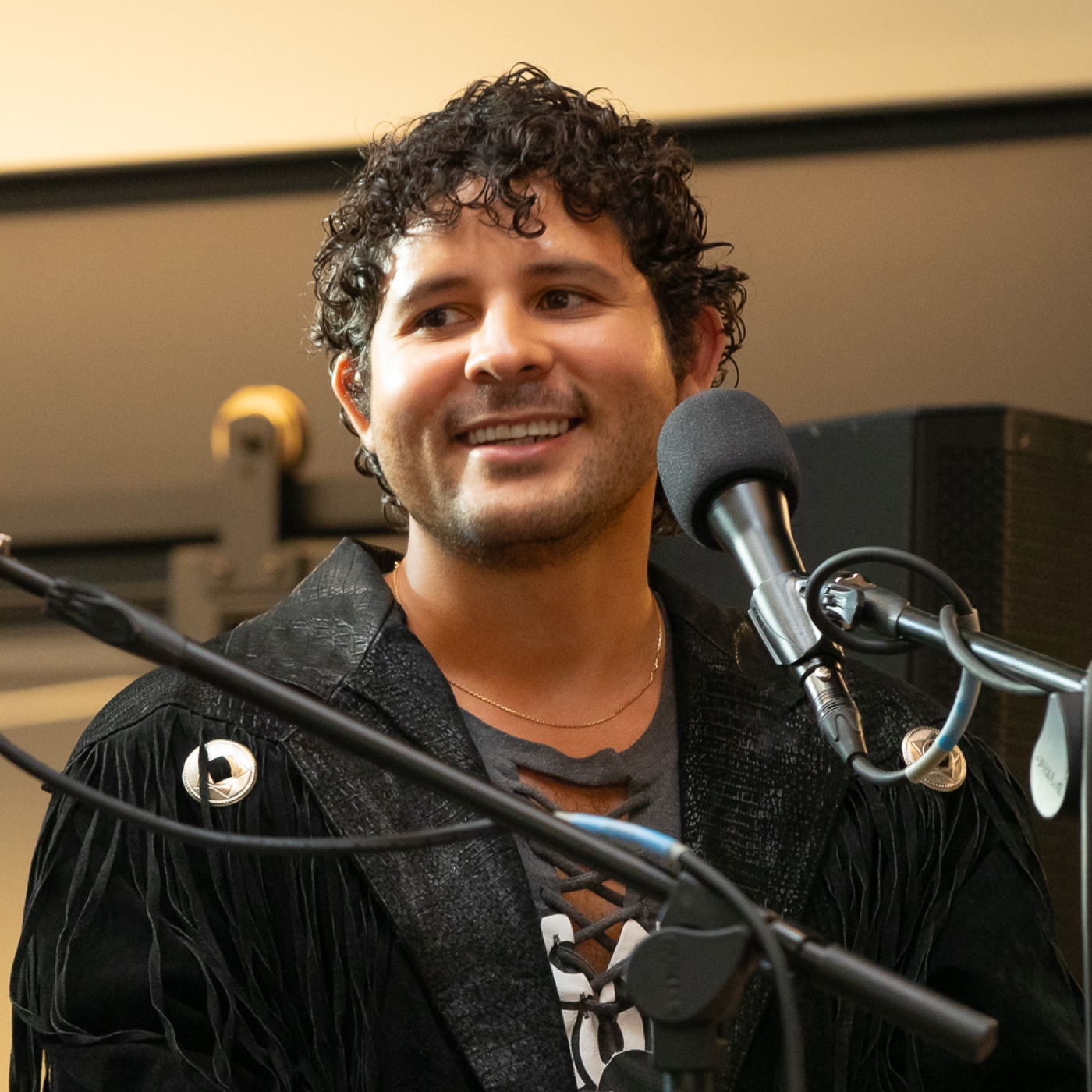
Live Wire with Luke Burbank
Edgar Gomez, River Selby, and Hunter Noack
00:51:50
This episode features writer Edgar Gomez, author and former wildland firefighter River Selby, with music from Hunter Noack.
Loading summary
Transcript164 lines
- [00:03]
Luke Burbank
Hey there. Welcome to Livewire. I'm your host Luke Burbank. Today on the show, writer Edgar Gomez will unpack his darkly comedic memoir Alligator Tears, which explores his life growing up poor and queer in Florida and how working as a flip flop salesman prepared him to be the award winning writer that he is today. Then we're gonna chat with author River Selby about their memoir A Life on Fire, which traces their journey to becoming a hotshot wildland firefighter after years of struggling with addiction. Then for our musical guest, we're gonn something a little different. This week we were fortunate enough to capture a performance from the pianist Hunter Nowak, who brings his Steinway grand piano nicknamed Maude out to all kinds of amazing natural settings where he then allows the sounds of the environment to actually become part of the performance. It is really cool stuff, I promise, so make sure you stick around for this week's Livewire, which I'll get started right after this.
- [01:00]
Sponsor/Announcer
This show is supported by Odoo. When you buy business software from lots of vendors, the costs add up and it gets complicated and confusing. Odoo solves this. It's a single company that sells a suite of enterprise apps that handles everything from accounting to inventory to sales. Odoo is all connected on a single platform in a simple and affordable way you can save money without missing out on the features you need. Check out Odoo at o d o o.com that's o d o o.com this show is supported by Blueland. You've probably heard that most of us are eating a credit card's worth of plastics every week, but you probably don't know that you're cleaning with microplastics every day. It's time to make the switch to Blueland. Blueland is on a mission to make it easy for everyone to make sustainable choices, from cleaning sprays and toilet bowl cleaner to dishwasher and laundry detergent tablets. Blueland's formulas are 100% microplastic free, made with certified clean ingredients, and free from chlorine, bleach and harsh chemicals. All Blueland cleaning products are safe to use around your family, your pets, your plants. Plus, Blueland was named an EPA's safer choice partner of the Year, so they're good for the planet as well. Blueland is trusted in over 1 million homes by people who love not having to choose between the safe option and and what actually gets their home clean. Blueland has a special offer for listeners right now. Get 15% off your first order by going to blueland.comprx make the switch to Blueland now by going to blueland.comprx for 15% off. That's blueland.comprx to get 15% off.
- [02:44]
River Selby
From PRX. It's live wire.
- [02:55]
Sponsor/Announcer
This week.
- [02:56]
Elena Passarello
Writer Edgar Gomez.
- [02:58]
Edgar Gomez
That was always my fantasy that my book would be at the airport because my mom, my mom worked as a barista at Starbucks at the airport.
- [03:06]
Elena Passarello
Author River Selby, my crew boss on.
- [03:10]
River Selby
The contract crew, I said, I want to be a hotshot. And he was like, girls can't be hotshots. And that was the moment I decided.
- [03:17]
Elena Passarello
To do it with music from Hunter Nowak and our fabulous house band. I'm your announcer, Elena Passarello. And now the host of Livewire, Luke Burbay.
- [03:35]
Luke Burbank
Thank you so much, Elena Passarello. And thank you all for coming out to the Alberta Rose Theater in beautiful Portland, Oregon. We have an amazing show in store for you this week. First, though, we got to kick things off like we always do with the best news we heard all week. All right, here's the thing. The news can seem a little bleak out there in the world, but of course, there are good things happening. And what we do in this segment each week is we find those things. We thought this week, though, do something special because Portland has been getting a certain kind of attention nationwide.
- [04:19]
River Selby
Yeah.
- [04:20]
Luke Burbank
That might make someone think there isn't any best news happening in the Rose City. But au contraire, there is best news that is happening here this week and we found it. And we'd like to report out to the entire nation who's listening in right now just how okay things are going here. This is a lightning round of best news stories coming from right here in Portland, Oregon.
- [04:40]
Edgar Gomez
What do you think?
- [04:44]
Luke Burbank
What's first item of best news that you have heard about in Portland?
- [04:48]
Elena Passarello
Okay, we all know about the world naked bike ride here in Portland.
- [04:51]
Luke Burbank
Oh, yeah, yeah, yeah.
- [04:53]
Sponsor/Announcer
It's a tradition.
- [04:54]
Elena Passarello
And might I add, it is always a protest. It's always a reaction to fossil fuels and the fossil fuel industry and sort of promoting alternative modes of transportation that don't use said fossil fuels, usually because it involves nudity. It happens in the summer, which is probably the best time.
- [05:08]
Luke Burbank
I requested that.
- [05:09]
Elena Passarello
Yeah, but listen, they had to call an emergency. Naked bite ride.
- [05:15]
Luke Burbank
Yes.
- [05:15]
Elena Passarello
Right. Riding through downtown, past the protesters, past the ice facility. Clothing non optional. Is that how you would say it? Non clothing optional. So there were some people on that cold Sunday who had on hats and scarves and there was a David S. Pumpkins costume, apparently Beetlejuice Costume and then they all drove over the Burnside Bridge and parked their bikes and kind of laid down on the ground and kind of stopped traffic for a little bit. All to sort of make protest an act of joy. And nothing says joy like nudity on a 50 degree rainy day. What's yours?
- [05:59]
Luke Burbank
I mean, you know, of course we're always looking for business development and folks to have successful businesses here in Portland. And right now there is a company that is just doing actually booming business. It's the Lippman company. They've been around for about 77 years. It's a great.
- [06:17]
Elena Passarello
That's brand recognition.
- [06:19]
Luke Burbank
Yeah, well, they've been there for 77 years down over on Yamhill. And it's a party supply company. And the reason that their phone has been ringing off the hook is because they are the place in Portland to get your inflatable frog, chicken or dinosaur.
- [06:34]
Elena Passarello
Costume, your gear, your protest gear.
- [06:40]
Luke Burbank
Yeah. Apparently it's been very fun for the manager of the store, Robin Adair, because Robin gets to sell people these things and then see them on national television hours later. She told the paper a couple bought Garfield and a banana the other day. And then I saw them on the news. Let's support our local inflatable frog businesses here in Portland. All right, hit me with another best news thing happening right here in much maligned Portland, Oregon.
- [07:10]
Elena Passarello
Luke Burbank, friends in Portland, this is also the season for squish the squash.
- [07:15]
Luke Burbank
Oh my gosh.
- [07:15]
Elena Passarello
Which is a 30 year old tradition at the Portland zoo that started in the 90s when an award winning 800 pound pumpkin and canby was donated to the zoo. So, so that the elephants could squish it. They got gourds, they got squash, they got pumpkins and they've been doing this forever. And these are, I mean, the size of the elephants heads. That's happening this week. But there's a new special development because sort of the hot it girl of the Portland Zoo this year is Tula Tu, who is the eight month old baby elephant.
- [07:50]
Luke Burbank
I know. I mean, they're giving the baby elephant a baby pumpkin to smash.
- [07:55]
Elena Passarello
I mean, the 800 pounders were so big, like there's no way that she could even like get up around it. So she's gonna squish her own squash and then she's gonna be able to watch her mom wreck shop on one of the big mama pumpkins.
- [08:09]
Luke Burbank
Why is that so satisfying?
- [08:11]
Elena Passarello
Apparently it's really good for the elephants. Like it's a kind of enrichment that, you know, it's Fun to watch, but it started as, like, an animal behaviorist therapy.
- [08:20]
Luke Burbank
Okay, here's a last bit of best news coming out of Portland, Oregon this week. You know, of course, the seasons are changing and we're getting closer to event. There's going to be snow, there's going to be ice. And here in Portland, that can be a real problem, which is why the city of Portland has 56 snowplows.
- [08:36]
Elena Passarello
What?
- [08:37]
Luke Burbank
That's a lot, right?
- [08:38]
Elena Passarello
Yeah.
- [08:40]
Luke Burbank
I mean, that by itself could be the best news we have prioritized.
- [08:43]
River Selby
Yeah.
- [08:43]
Luke Burbank
Good job buying snowplows for this city. Well, they decided. The Portland Border Transportation decided to have a contest where they would name five of these snowplows. One of them is going to be called the Big Snow Plowski.
- [08:57]
Elena Passarello
Good, good. Approved.
- [08:59]
Luke Burbank
That one's gonna handle the southwest hills. There's gonna be one called the Burnside, like, Brrr. I can't really say that word. Brrrr. There you go. Thank you. That one is gonna handle. That's actually a salt spreader. That's gonna handle Westburn side. Then you got a plowy McPlow face.
- [09:18]
Elena Passarello
Yeah. You have to.
- [09:20]
Luke Burbank
I mean, it's hard for the place at this point. If you allow people to vote on naming something, you're gonna get a. There's also Salt and Thaw, which, if you're listening, somewhere outside of Portland, we have a beloved ice cream operation here called Salt and Straw, which that's a reference to. And then, of course, the fifth and final snowplow is Beverly Clear E. Yeah, right.
- [09:49]
Elena Passarello
Does it click, click a tad?
- [09:51]
Luke Burbank
It absolutely does. It is going to plow the Beverly Cleary K through 8 school and the neighborhoods that were made famous in the Beverly Cleary books. Yes. So the fact that we have 56 snowplows and that as the seasons progress, even if it snows, you can all come to livewire. You have no excuse because the roads will be Beverly Clearyed for you to get here, no matter what's going on. That, my friends, that is the best news that I heard. All. All right. You're listening to livewire. Our first guest this week is the recipient of the American Book Award and a Lambda Literary Award for his first book, which was titled High Risk Homosexual. Edgar Gomez was born and raised in Florida, where his new memoir is set. It's called Alligator Tears. It's been called Triumphant, Dazzling, and unfailingly stylish. All things that could describe. Here's a conversation we recorded with him live at the Kiln Co working space in Portland, Oregon. Edgar, welcome To Livewire.
- [10:59]
Edgar Gomez
Thank you so much for having me.
- [11:02]
Luke Burbank
I found this book to just be so fascinating and human and readable and relatable. I really, really enjoyed it. I wanted to kind of set the scene for people that maybe haven't had a chance to read it yet. You grew up in Orlando. What sort of a kid were you? Were you a shy kid? Were you outgoing? What was your deal?
- [11:21]
Edgar Gomez
I was a really shy, nervous, nerdy kid who was always reading. So my family moved around a lot when I was a kid, and books were, like, this source of stability where no matter where we were, I could at least be following the same story. And so in that way, it gave me, like, this consistency. But I didn't have a lot of friends because I was like, you know, I love reading.
- [11:49]
Luke Burbank
Your relationship with your mom is a big part of this book. And I'm just curious, can you kind of. It went through phases, it sounds like, in your childhood and in your coming out and just based on her health and your life. But generally speaking, what was that relationship like for you growing up?
- [12:05]
Edgar Gomez
We had a little bit of a complicated relationship where when I was really young, like a lot of other gay kids, she was my best friend. She was my. My rock. And when I came out to her in high school, I came out to her at Saks Fifth Avenue at the mall, when she was there to use a coupon. And I, like, looked around and I was like, this is kind of a safe space in a way, because she's not going to make a scene around all these rich white ladies. And so I came out to her there, and her initial reaction wasn't great. It took some getting used to. And in fact, there were a lot of not great things that happened. And afterwards, I tried to have conversations with her about them, like, oh, Mama, remember that time that you got so mad that you tackled my bedroom door and came in and were like, are you a curse word? Are you a slur? And she would always be like, no, that didn't happen. Or you're exaggerating, or like, classic immigrant mom, like, you don't know how much I sacrificed for you. So I could never really talk to her about those things.
- [13:13]
Luke Burbank
And she was from Nicaragua.
- [13:15]
Edgar Gomez
She's Nicaraguan. Yeah. And writing my books, writing my memoirs has been my way to sort of have those conversations with her without her telling me, no, that didn't happen. And after these books came out, I was so, so nervous. In fact, I didn't tell her that my first book came out until like, a year afterwards.
- [13:38]
Luke Burbank
She's like, walking through the airport. There's, like a Hudson News. Her son is on the COVID Well.
- [13:44]
Edgar Gomez
That was always my fantasy that my book would be at the airport because my mom worked as a barista at Starbucks at the airport, and I was always in there. She would take me for bring your kid to work day, and so she would, like, let me loose in the airport. And it was always like this, like, status symbol. Like, if I get my book in the airport, that means that I made it. Yeah, it hasn't made it there yet.
- [14:11]
Luke Burbank
Well, if enough people hear this interview, we've got to get alligator tears in the finer booksellers in the airport in America. I think those places and Costco are where all books are now sold. I mean, very seriously. That's like the two places you want to get your book.
- [14:28]
Edgar Gomez
Yeah. Buy it in bulk. Yeah. Buy a 24 pack.
- [14:31]
Luke Burbank
That's right. You're listening to LiveWire from PRX. We're talking to the writer Edgar Gomez, and we have to take a very quick break, but do not go anywhere. When we come back, Edgar will explain how his mom made some very creative financial decisions to get him new teeth as a teen, which completely changed the course of his life. Stick around. More Livewire coming your way in a moment. Welcome back to Livewire from prx. I'm your host Luke Burbank, here with Elaine Apassarello. We are listening to a chat that we recorded with the writer Edgar Gomez talking about his latest book, Alligator Tears. We recorded this at Kiln Co Working space in Portland, Oregon. Let's get back to it. Your mom also did something incredibly kind and I want to say smart for you as a kid, which was. And again, I hope it's okay that I'm talking about it. But it's in the book, so I feel like it's fair game. She realized as essentially a single mother raising a family and trying to make it work, that, like, for so many Americans, the math wasn't mathing on the finances, and she realized that she was likely to need to declare bankruptcy. And this is very, very smart. Realize that if she was going to declare bankruptcy, she might as well make it worth it and get your teeth fixed, because your teeth were not great when you were a little kid. And the most effective way to fix it was eventually to do these veneers that were very expensive. But she brings you in for this process. And actually there's a. A part of the book where you talk about that actual, like, the sort of procedure and the way it made you feel. Would you mind reading that section?
- [16:20]
Edgar Gomez
Sure. Yeah. And if you see me tonight, don't look at my teeth, okay?
- [16:26]
Luke Burbank
I'm very close to them and they look great. Thank you.
- [16:29]
Edgar Gomez
Yeah. So this is a passage. We just arrived at the dental offices so that I can get my veneers put on.
- [16:38]
Luke Burbank
And you're about how old?
- [16:39]
Edgar Gomez
At this time I'm in high school. I want to say I am 15 years old.
- [16:44]
Luke Burbank
Okay.
- [16:44]
Edgar Gomez
Yeah. And I just got expelled from my last high school, so I'm really depressed.
- [16:51]
Luke Burbank
Well, you were in, like a sort of a cop training program?
- [16:55]
Edgar Gomez
Yes, more or less. I was kicked out of it, so I think, you know.
- [16:59]
Luke Burbank
You got cred. Yeah, you got your cred back.
- [17:02]
Edgar Gomez
So this is from Alligator tears. The day of the procedure, mom picked me up from school right after she got off work. We arrived at the dentist's office 20 minutes early and parked under a shady tree. While we waited, mom pulled a thin cardigan out of her purse, buttoned it over the green Starbucks mermaid sewn onto her uniform, then lowered the driver's seat mirror to dab concealer under her eyes and apply a fresh coat of mascara. She must have been exhausted. Ready? She asked. I leapt over the divider and wrapped my arms tightly around her chest. Thank you, I whispered. She kissed the top of my head. You're welcome. Now you can't say I don't love you. Before he began, Dr. Franklin gave mom and me a lecture on the upkeep. There were hard foods I'd need to avoid for the rest of my life. No apples, no candy, and I shouldn't try opening bottles with my veneers. He winked. I nodded politely. As if any of those things mattered to me. I would have given him my soul. He said the veneers were made to last about 10 years, though with proper care they could last up to 15, and then I'd have to replace them. That actually gave me pause. It meant there'd come a day when I'd need to come up with $8,000, an impossible sum of money. Nearly half what mom made in an entire year. Yet I also knew that once I had veneers, money would never be a problem again. They'd cover all my ugly parts, my drug record, my brokenness and brokeness. I brushed my uneasiness away. After asking mom to wait in the lobby, Dr. Franklin had me lie back on the operating bed and open my mouth. I stared up at the strip of bright white lights on the ceiling as he wrenched out my baby tooth with a pair of pliers turned on what sounded like a power drill and proceeded to slowly sand down my teeth, bone particles filling the air. When he was finished, he brought out the tray of off white veneers his assistant had recommended and cemented them one by one over my newly flattened teeth. The whole process took about two hours. It was heaven. Finally, he had me sit back up and placed a mirror in my hand. My heart pounded as I brought it up and pried my lips open. It took a second for what I was looking at to sink in. The veneers didn't merely close the gaps in my teeth, they also made my face fuller, my jaw rounder instead of tense and jammed tight like I usually kept it. I scrutinized my reflection, turning from side to side. I looked like myself. I looked like the real me, not that other shame filled version of me I'd been living as before. A startled giggle shot out of my mouth. Instinctively, I reached up to cover it with the back of my hand, but I stopped and lowered it halfway. I didn't need to hide ever again. Dr. Franklin summoned mom from the waiting room and within minutes she and half of the office were hovering over me, oohing and ahhing. Amazing work. They patted his back. It's incredible. You're a genius, Dr. Precioso, mom said, kissing my cheek. Minnolindo. A flash went off. I was back against a blank wall for my after picture with Dr. Franklin's assistant. She snatched the Polaroid from the camera and waved it in the air, then fit it into a plastic sleeve inside a binder. Next to dozens of other clients before and after photos, it reminded me of a yearbook, all our smiles vulnerable and self conscious. As I stared at my before photo, a strange pang of grief shot across my chest. I'd been that person my whole life. Whatever I'd felt about myself over the years, they'd kept me alive through everything.
- [21:28]
Luke Burbank
Edgar Gomez reading from Alligator Tears here on livewire. We are coming to you this week from Kiln here in Portland, Oregon. One of the things that you write about so eloquently in the book, Edgar, is a feeling that if somebody didn't grow up poor, I don't know if they would instinctively know this, but one of the biggest things about growing up poor is embarrassment. Constant embarrassment. You know, people think it might be food insecurity or safety problems, and it may be those things as well, but there's just this kind of low hum of feeling embarrassed all the time, which really does a number on your brain.
- [22:03]
Edgar Gomez
Yeah, yeah. No, that was A huge thing. And I always felt like people were looking at me and judging me, you know, by the clothes I was wearing, but especially by my teeth. You know, you could always sense when somebody is, like, looking at your teeth and all the things that they're thinking. And I think my mom was really smart where she knew that if I ever wanted to be successful, that I would need to kind of hide that part of myself and fake it till I make it. With, literally fake teeth. Yeah.
- [22:31]
Luke Burbank
You had a number of different, like, jobs and money making opportunities growing up that you write about in the book, starting with, like, boosting cookies that you were supposed to be selling, but they weren't monitoring the supply, so you were getting some extras that you could then sell and pocket the money. You worked. You sold flip flops.
- [22:51]
Edgar Gomez
Yes, I am a flip flop connoisseur.
- [22:54]
Luke Burbank
This was Florida, after all.
- [22:55]
Edgar Gomez
This was Florida. I worked at the flip flop shop at the Florida mall. Shout out to them. And mostly, you know, it wasn't just a flip flop shop. It was a luxury flip flop boutique. We sold the flip flops that Oprah wears. Oh, yeah.
- [23:15]
Luke Burbank
Oh.
- [23:15]
Edgar Gomez
See how everybody was like, oh, that's how I would sell flip flops. Yeah.
- [23:19]
Luke Burbank
No. Was that totally made up?
- [23:22]
Edgar Gomez
No, it was real. And so for the women, it was Oprah. For the men, it was the rock. These are the ones the rock wears. Yeah.
- [23:30]
Luke Burbank
Do you feel like being kind of on your grind as a young person has helped you in your literary career.
- [23:38]
Edgar Gomez
100%, especially working all these, like, minimum wage mall gigs? I really do believe that helped my writing, because what that job is is all about audience and how to immediately hook somebody coming into the store and convince them to do something. And, I mean, that's what I'm doing in my writing. I'm like, trying to hook you right away and convince you to keep reading. Yeah.
- [24:01]
Luke Burbank
Something that I've heard you say in other interviews, and I think you mentioned it in the book in passing, is this idea that for marginalized folks so.
- [24:10]
Edgar Gomez
Often.
- [24:12]
Luke Burbank
The value, quote unquote in their stories is their trauma, that it's like, oh, you had a hard life. It was traumatic. Now let's all just sit around and hear about it. How do you balance the joyfulness of your life with the actual trauma that happened?
- [24:27]
Edgar Gomez
You know, I think that's something that I learned from my mom. You know, my mom didn't have the easiest life in Nicaragua, and when she came to the U.S. you know, once you've experienced, you know, a dictatorship, your brothers being forced to be child soldiers. Once you've experienced, like, trauma like that, like, every other problem just feels trivial in comparison. And the way that my mom and my family tell stories, and they're always just like, they could be telling the darkest thing, but they're cracking up the entire time. And I think that's something that I learned from them.
- [25:03]
Luke Burbank
Yeah. I think I heard you say in an interview that therapy is expensive, but laughter is free and that fun.
- [25:11]
Edgar Gomez
Yeah.
- [25:11]
Luke Burbank
Edgar Gomez, thank you for coming on Live Wild.
- [25:13]
Edgar Gomez
Thank you so much.
- [25:19]
Luke Burbank
That was Edgar Gomez right here on Livewire. Make sure you grab a copy of his book, Alligator Tears, wherever it is that you get your books. Hey, special thanks this episode to James Levi of St. Paul, Minnesota, and Karen Markins of Portland, Oregon. James and Karen are part of the Livewire member community, and they are generously supporting our show with a donation each month. And, boy, are we grateful for that because it's the only way that we can keep this thing rolling. Thank you so much, Karen and James, for keeping Livewire in business. This is Livewire. I'm Luke Burbank here with Elena Passarello. Of course. Each week on the show, we ask the Livewire listeners a question. And this week, inspired by our chat with Edgar Gomez, we asked the listeners.
- [26:18]
Elena Passarello
What Alayna we wanted to know what job taught them the most.
- [26:23]
Luke Burbank
Oh, wow. Yeah.
- [26:25]
Elena Passarello
I feel like you have a few answers to this question yourself.
- [26:28]
Luke Burbank
I sure do. But I'll turn it over to the Livewire listeners. What are they telling you?
- [26:32]
Elena Passarello
Liam said that Liam learned a lot from being a camp counselor. I learned how to unclog toilets, start campfires, and survive on four hours of sleep. Sleep. That sounds like a. You have to be a multi hyphenate in order.
- [26:48]
Luke Burbank
Yes. Like a quintuple threat. Also, add to the list delicately telling young people when it's time to start exploring deodorant options.
- [26:57]
Elena Passarello
Yeah, yeah, it's a stinky gig.
- [26:59]
Luke Burbank
I think I feel like you're right at the tip of the spear there about that change happening to folks bodies.
- [27:04]
Elena Passarello
Yeah, that's right.
- [27:05]
Luke Burbank
All right, what is another life lesson that somebody in our listening audience learned on the job?
- [27:11]
Elena Passarello
Rohan worked as a dishwasher at a diner and says that hot water and loud music can fix almost anything.
- [27:20]
Luke Burbank
Did you ever have a job like that working in a dish pit?
- [27:23]
Elena Passarello
No. I worked in restaurants, but the closest dish pit, I was in the back of a limited express clothing store, and all I had to do was unbox and steam clothes. And it's. I loved it. Like, I loved it so much more than being on the floor because I just got to be by myself and play whatever music I wanted. I just listened to music all day, steamed, you know, circa 2000s era, Buffy the Vampire Slayer, tops, you know.
- [27:49]
Luke Burbank
All right, one more thing that has really impacted someone that they learned on the job.
- [27:54]
Elena Passarello
I love this one from Whitney. Whitney says, I worked at Hollywood Video in college and spent a significant amount of my wages on discounted used DVDs. I have sadly learned that this was a terrible investment. When is the last time you played a dvd?
- [28:11]
Luke Burbank
I bought a DVD player like six months ago, Elena, because I wanted to watch a specific film called Streetwise, this amazing documentary, and it was only available on dvd. So I had to buy the DVD and then buy the DVD player to play the DVD in. And I did. And it was very satisfying. It felt very old school to me to actually put the disc in and watch it.
- [28:32]
Elena Passarello
I bought one for cause. I'm writing about Elvis movies and a lot of Elvis movies are only they're not streamable. So I've gotten to know the DVD menu again and the Joy of Stuff, special features and all that jazz. So, Whitney, if you ever want to commiserate about your DVD collection, it sounds like we're here for you.
- [28:47]
Luke Burbank
You know who to talk to. Hey, thank you to everyone who sent in a response to our listener question this week. We appreciate it. You're tuned in to Livewire. Our next guest is a former elite wildland firefighter who is part of a crew known as the Hotshots. That's an experience that's detailed in their new memoir, which is called Hot A Life on Fire. It examines the the collision of fire suppression policy and colonization and climate change and their own journey in the dangerous and very male dominated world of wildland firefighting. This is River Selby recorded live at the Alberta Rose Theater in Portland, Oregon River. Welcome to the program.
- [29:33]
River Selby
Thank you. It's so great to be here.
- [29:35]
Luke Burbank
I really, really enjoyed this book. And it kind of starts out when you're around 19 years old and by your own kind of telling, in the book, you were sort of struggling at that point. Like, what was going on for you at 19? What did your life kind of look like?
- [29:49]
River Selby
So I'd grown up in a pretty chaotic environment and moved around a lot. And when I left home, I started going to community college and then dropped out just because I wasn't equipped to be able to do that and started using a lot of drugs. And a friend just suggested to me that maybe I should try Wildland Firefighting just, you know.
- [30:16]
Luke Burbank
Yeah, like you do just. Sure.
- [30:19]
River Selby
She was like, maybe it'll distract you. That's literally what she said.
- [30:23]
Luke Burbank
I mean, I would imagine it could be a distraction.
- [30:25]
River Selby
Yes. So, yeah, I went in and they were really excited that I had a driver's license. It was a contract crew, and so they hired me immediately. We did two weeks of training and then the last day we did a field day. And my crew boss later told me that he was very sure I wasn't going to come back after that, but I did.
- [30:46]
Luke Burbank
We should clarify too, that you are non binary, but at this time that you write about in the book, during your years of wildland firefighting, do I have it right? You identified as female and you went by a different name?
- [30:56]
River Selby
Yeah, I went by the name Ana. So, yeah, in the book, in the intro, I talk about how I am non binary, but I refer to myself with she, her pronouns, because that is how I experienced the world. It was the mold I was trying to fit into at the time.
- [31:11]
Luke Burbank
And what was the sort of welcome like for you, I guess, in this very male dominated world.
- [31:16]
River Selby
So I spent two years on the contract crew and sometimes there would be other women on the contract crews. But once I started on the hotshot crew. And a hotshot crew is essentially a crew of 20 people. Elite Wildland firefighters who do initial attack hotshots consistently work in direct contact with fire. So either we're digging fire line, which is like digging a ditch near a fire to prevent the fire from burning, or we are back burning, which is starting another fire that will burn the fuel before the main fire comes to it and theoretically put out the fire. And I was the only person who wasn't a man on the crew. And they hadn't had a woman on the crew in several years. Our first day of training, the captain made sure to tell everyone in the room that women have smaller lungs than men. So I couldn't be expected to do the same level of work that the men could do. So that was the environment that I was walking into.
- [32:20]
Elena Passarello
Does that make you go, just watch me?
- [32:22]
River Selby
It does. That's literally how I became a hotshot. Because my crew boss on the contract crew, I said, I want to be a hotshot. And he was like, girls can't be hotshots. And that was the moment I decided to do it.
- [32:40]
Luke Burbank
This is Livewire Radio. We're talking to River Selby about their book Hot A Life on Fire. It sounds like a very dangerous job. How actually dangerous is it in your experience?
- [32:50]
River Selby
I guess so it's quite a dangerous job. For instance, when we're conducting a back burn, say on an active wildfire, about 70% of the crew are people who are just doing the manual labor. And then there are the overhead who. Who have more experience and are making the decisions. And then there are other people on the fire who are not associated with the crew, who are also helping to make decisions. So it's very. A lot of intellectual decision making, happening logistical decisions, but things can go wrong at any point. I write in my book about a time that we were flown into a fire in the Angeles National Forest. We often were flown by helicopter because of the rugged terrain. On the first load of the helicopter, I got off with some of my crew, and we realized that the fire was burning up the ridge. We were dropped off at the top of the ridge, and we were told to dig Fireline. But when the helicopter lifted up, it lifted all of these embers up with it.
- [33:54]
Luke Burbank
Oh, my God.
- [33:55]
River Selby
And they all went everywhere, including past us and down the hill. And so we had to run and try and put out all these embers and also try to dig a fire line so that the approaching fire would stop. And then there were still formal loads of people who came in. So with each load, more embers would. More helicopters. Yes.
- [34:16]
Elena Passarello
Wow.
- [34:17]
River Selby
In the moment, you're doing the job, you're not thinking about the dangers. But once we had gotten everything contained, and the reason that we could get everything contained was because we were a hotshot crew and we were very physically fit. But it could have gone very wrong. And after that happened, it wasn't until then that I realized, like, wow, you.
- [34:40]
Luke Burbank
Could die from this very, very easily.
- [34:42]
River Selby
Yes.
- [34:43]
Luke Burbank
We're talking to River Selby about their book Hot A Life on Fire here on Livewire. This book is also about the environment and also about kind of wildfire theory and suppression. The U.S. border Patrol made some news up in Washington state recently when they detained a wildland crew and actually arrested a couple of the members of that crew for, I guess, not having their documents. I'm just wondering, as someone who's done this job and been out there and knows how hard it is, what do you think the impact of that kind of law intervention could have on crews and on us actually having the ability to suppress some of these fires?
- [35:23]
River Selby
There has been a wildland firefighter shortage for many, many years. And actually with the last administration, there had been a lot of headway, made a lot of recruiting that was done, raising pay, et cetera. And then with all the firings that happened, the levels of wildland firefighters dropped way down. And so this was a contract crew, which are crews that essentially contract themselves out to the federal government, which are really vital right now because we don't have enough federal firefighters. And essentially something like this will scare people and make them not want to do this job. Also something that happened was that the team that was managing that fire designated that crew as staging rather than actively fighting fire, specifically on that day, so that they could say this crew wasn't actively fighting fire and get around a law that says you cannot detain people who are actively handling an emergency.
- [36:31]
Luke Burbank
As a person who has you actually fought these fires, you've also studied them and you've really studied the land. What would you like to see our public policy be around this so that we can live in something that resembles, like, harmony with wildfires?
- [36:45]
River Selby
Because we live in such a big country, geographically large country, our way of thinking of tackling issues, especially land issues, is often just, you know, let's put a band aid on this. I think that we need more funding for local agencies and organizations. Indigenous groups who are trying to bring fire back need funding and support. Nonprofits need funding and support, and state agencies need funding and support. And the public needs education as to why fire is so important. And also, laypeople can come and use fire and learn how to use fire to help tend the land. And it is a way to reconnect with the land. So I think that there is a lot of potential with fire creating a healthier relationship with our local environments.
- [37:37]
Edgar Gomez
Yeah.
- [37:43]
Luke Burbank
When did you start to feel like you wanted to transition out of being part of the wildfire fighting community because you had a few jobs throughout your time and into, like, writing? Were you out there, like, chopping a fire line and thinking, I can't wait till I can be indoors on a computer? Because that would have been me. It was like when I worked at Gene Johnson Plumbing in high school, I was like, I can't wait till I'm a public radio host, because this is a lot better. Like, I mean, what was that transition like for you? And did you always have this thought about writing? Did you always think that was going to be where you might eventually end up?
- [38:17]
River Selby
So neither of my parents graduated high school. When I was younger, I didn't really think about my future that much. I didn't think that I would live past my young 20s, really. And so when I did, I started thinking about kind of what I wanted to do. But my last year of fire was in 2010, in Alaska. And that year, my mom died at the beginning of the season and I finished out the season. And of course, I had to take a couple weeks when my mom died. And the feedback I got at the end of the season, even though all of my reviews had been great, was that I hadn't been cheerful enough. And I promise you, I was more cheerful than a lot of the guys I worked with, even with that. So I think that it was a combination of just really being fed up with, with the double standards I faced and also just understanding that my life, that I was mortal and also that I had agency in my life. So I actually started my undergraduate degree when I was 32, and I am about to have my PhD by this summer.
- [39:27]
Luke Burbank
Congratulations. Well, it's a really great book, river, and it covers so many different things, not just firefighting, but your life. And again, sort of public policy and nature and indigenous culture. There's a lot in this book. It's Hot A Life on Fire. Twitter by River Selby. River, thanks for coming on livewire. Thank you so much. That was River Selby recorded live at the Alberta Rose Theater in Portland, Oregon. Their debut memoir, Hot A Life on Fire, is available right now. You're listening to livewire. Our musical guest this week is Hunter Nowak. He is a classical pianist, he's a naturalist, and he's also the founder of this thing called In a Landscape, Classical Music in the wild. And this is what he does. It's really amazing. He travels around with this Steinway piano named Maude that's like over 100 years old. And he brings it out into some of America's most inspiring settings, like mountaintops or deserts or old growth forests. And then he brings an audience together who listens to his performances through wireless headphones and then sort of wander around the landscape with this music that he's playing as a soundtrack to their outdoor experience. We got to experience one of these amazing concerts at Silver Falls State park right here in Oregon. This is our chat, which we started off with talking to Hunter Nowak. Hunter Nowak, welcome to livewire.
- [41:11]
Elena Passarello
Wow.
- [41:11]
Hunter Nowak
Thank you.
- [41:16]
Luke Burbank
In a landscape. That is a John Cage reference.
- [41:19]
Hunter Nowak
It is.
- [41:20]
Luke Burbank
And I think most people, if they know the name John Cage or if they have my level of sophistication, their awareness is that's the guy that did the song that didn't have any music in it.
- [41:29]
Hunter Nowak
That's right. That's 4 minutes and 33 seconds written for the piano. And I actually sometimes do perform that because it works very well in the outdoors, because we can all take our headphones off and just listen to the landscape.
- [41:41]
Luke Burbank
That's maybe what he's known for by people that haven't really experienced a lot of his work. But obviously he's someone who's really important to you. What is it about his work that speaks to you?
- [41:50]
Hunter Nowak
Well, I appreciate what John Cage and his contemporaries, that whole sort of school of composers, were doing when they were trying to challenge us to listen to different sounds and noises as music. Things that weren't just coming out of the instrument. But, you know, John Cage would have some silverware and throw it in a bathtub up on stage and it would cause us to ask the question, is that music? And when we're outside of a concert hall where we don't even have the illusion of control, there are a lot more sounds that end up as part of the show. Sometimes it's something that we think of as pleasant, like a bird song, other times it's, you know, a helicopter or a train going by. You know, in a concert hall, there's so much anxiety and tightness around extra sounds. And what I love about being in the outdoors is that everybody's just sort of inherently a little bit more relaxed.
- [42:47]
Luke Burbank
And so edibles are legal here in Oregon.
- [42:50]
Hunter Nowak
That's right.
- [42:50]
Luke Burbank
That helps.
- [42:52]
Hunter Nowak
I wish actually more people. Nevermind. This inter landscape concert is a great and safe exception experience for, you know, bringing your tinctures and your elixirs and whatever else you want. But what I really wanted to say is that what I, what I hope that people do is try and embrace all of the sounds of the landscape as a part of the show, as a part of the music. And that just sort of puts people in a state of mind. Even if there is like, you know, somebody sort of near the piano with a bag of chips, or there's a child making noise, we just sort of, we embrace that as a part of the experience, a part of the landscape. Like we are actually here, some of us are actually eating and there are also kids here. And that's wonderful.
- [43:36]
Luke Burbank
As you're introducing a song, you're also encouraging people pretty strongly by the end of the concert to leave the concert, at least temporarily. Like it seems like you really like people to be. Because everyone's wearing headphones. You can't see this on the radio, but everybody here has these headphones on so they can hear the music, even if they're wandering off into the woods or over by the waterfalls. Why is that part so important to you? That people are kind of in movement while they're experiencing this.
- [44:02]
Hunter Nowak
You know, we're accustomed to sitting down and looking at the performer. And so it takes a little bit of extra nudging to get people to leave their seat and go wander around because it's not normal. You know, one thing I love, especially in places where I can, you know, see a distance, is I love seeing people out, you know, looking up at a tree or staring at a blade of grass or watching the waterfalls. To me, I feel, because I know that, you know, with their headphones on, the microphones are right next to me. So I feel like I can whisper right into their ear and feel quite connected to them, even if they're, you know, a half a mile away from me. And that is that creates this, like, very special feeling where we're all kind of witnessing the world around us constantly change. But I know that, you know, I know that somebody out in the audience might be having a very personal and intimate experience with something in the landscape or with another person. And I get to be a part of that without necessarily being the center of it.
- [45:12]
Luke Burbank
You're listening to livewire. We've got to take a very quick break, but stay where you are. When we return, we're actually going to hear some music from Hunter Nowak, performed live in Silver Falls State park in front of a crowd of roaming, headphone wearing Oregonians, including me. More LIVEWIRE coming up in a minute. Welcome back to LIVEWIRE from prx. I'm Luke Burbank here with Elena Passarello. Okay, before we get to this week's musical performance by Hunter Nowak, a little preview of next week's show. We're gonna be talking to the Pulitzer Prize winning reporter, columnist and author Timothy Egan. His latest book is A Fever in the Heartland, which Kirkus calls riveting history, excellently rendered. We're also gonna be talking to poet and rapper Dessa, who shared some poems from her latest collection. And then we tried to return the favor and share an AI generated poem that we made about her that went about how you would imagine. You don't want to miss next week's episode of LiveWire. In the meantime, let's get back to our musical artist. This week before the break, we were talking to Hunter Nowak about how he developed his outdoor classical music concert series called In a Landscape. So let's hear a performance from him now. This is Hunter and his piano mod at Silver Fall State park in Oregon, recorded this summer back in August. Well, could we hear a song?
- [46:40]
Hunter Nowak
Absolutely. The next piece is a great one for wandering about or closing your eyes. It was written over 300 years ago in 1723 by Rosanna Scalfi Marcello. She was a singer, started out as a singer on the gondolas of Venice and then a nobleman by the name of Benedetto. Marcello heard her singing and they started a relationship, and also a compositional relationship where he was sort of formally trained in composition. And so he taught her how to write down some of her original compositions, many of which were later attributed to Benedetto or his brother Alessandro Marcello, because the Marcello family did not approve of this union, because Rosanna was not of the noble class. So I can't tell you for sure that this piece was penned by Rosanna, but it was most certainly influenced by her voice, and it was originally written as an oboe concerto. This is a sort of a slow, steady, spacious piece that's good for wandering slowly or watching something that's sort of moving if there's any bit of a breeze. Rosanna Scalfi Marcello's Oboe Concerto in D, which was transcribed for the keyboard by Johann Sebastian Bach.
- [51:52]
Luke Burbank
Hunter Nowak, everybody. Thanks for coming on Livewire.
- [51:55]
Hunter Nowak
Thank you so much.
- [51:56]
Luke Burbank
Thank you, everybody.
- [51:58]
Hunter Nowak
It's been so much fun.
- [52:00]
Luke Burbank
That was Hunter Nowak recorded at Silver Falls State park in Oregon as part of his series In a Landscape, which you can find out more about by going to inalandscape.com all right, that's going to do it for this week's episode of Livewire. A huge thanks as always to our guests Edgar Gomez River Selby and Hunter Nowak.
- [52:23]
Elena Passarello
Laura Haddon is our executive producer, Heather D. Michel is our executive director, and our producer and editor is Melanie Savchenko. Eben Hoffer is our technical director, Hazik Bin Ahmad Farid is our assistant editor, and Theja Polikanda is our production fellow.
- [52:38]
Luke Burbank
Valentine Keck is our operations manager, and Ashley park is our marketing manager. Our house sound is by D. Neil Blake and our house band is Sam Pinkerton, Ethan Fox, Tucker, Eyal Alves and A. Walker Spring, who also composes our music. This show was mixed by Eben Hoffer and Hasek Bin Ahmad Farid. Adios, Zeke. So good to have you here. Woohoo. Also, special thanks this episode to Ryan Blay and Lori Nowak, along with the rest of the In a Landscape team.
- [53:05]
Elena Passarello
Additional funding provided by the James F. And Marian L. Miller Foundation. Livewire was created by Robin Tenenbaum and Kate Sokoloff. This week we'd like to thank member James Levi of St. Paul, Minnesota, and Karen Markins of Portland, Oregon.
- [53:18]
Luke Burbank
For more information about our show or how you can listen to our podcast, head ON over to livewireradio.org I'm Luke Burbank. For Elena Passarello and the whole Livewire team, thank you for listening and we will see you next week. Dear Livewire, when we first met, I was really shy. I had no idea we'd spend so much time together or that you'd be one to fill my heart with with joy and make me want to be a better person. Oh, I'm sorry. I didn't know you were here. I was busy reading a review from one of our many, many rapturously smitten listeners. Oh, wait. Actually, no. Sorry. This is from Elena. Anyway, the point is, it would be really helpful if you wanted to leave us a review. Feel free to say really nice things about us and we'll even read them now and then on the show so you might hear your review of Livewire read on the program itself. Reviews help other people hear about the show, and then we can keep doing this for a long, long time because we love having this job. Thank you so much. If you've left a review and if you're about to leave review review, you can go ahead and do it right where you get the podcast.
- [54:35]
Elena Passarello
From PRX.