← Live Wire with Luke Burbank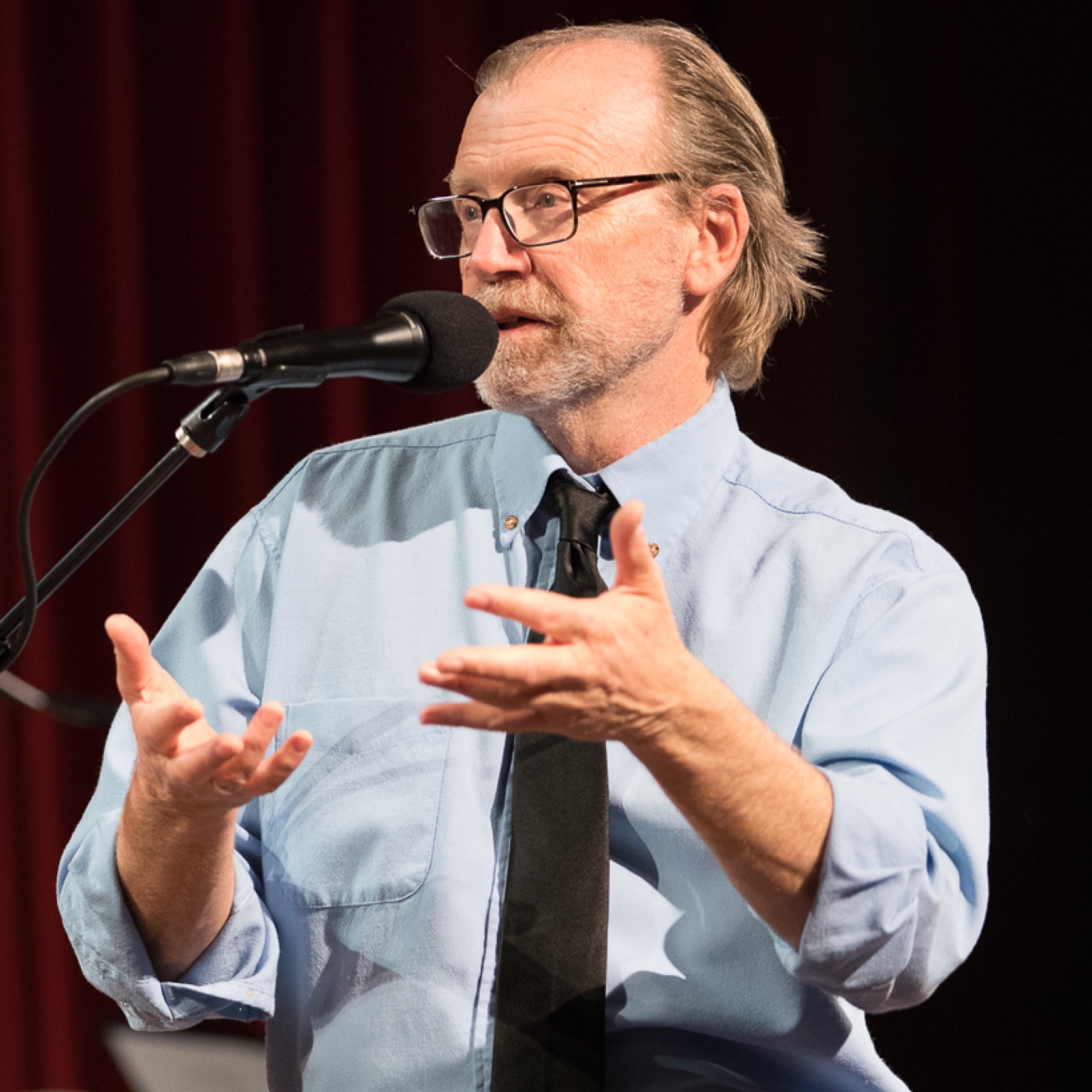
Live Wire with Luke Burbank
George Saunders and Samantha Crain (REBROADCAST)
00:51:14
This episode features writer George Saunders and singer-songwriter Samantha Crain.
Loading summary
Transcript182 lines
- [00:03]
Luke Burbank
Hey there. Welcome to Livewire. I'm your host, Luke Burbank. Okay. This week on the show we are going to be talking to best selling writer George Saunders. He's written many wonderful books including Lincoln and the Bardot, which he won the Booker Prize for. He's also a MacArthur genius. We're gonna talk to George about his creative process and also what it's like for him to write while also teaching writing to his students as he does at Syracuse University. His latest collection is Liberation Day. Then we are going to chat with award winning singer and songwriter Samantha Crane. She is from Oklahoma. She plays a style of music that she calls y'. Allternative. NPR ranked her latest album as one of the 50 best albums of 2020. I can say definitively this is probably going to be one of the 50 best episodes of Livewire ever. It all gets started right after this.
- [01:01]
George Saunders
I'm Jonathan Goldstein and on the new season of Heavyweight.
- [01:04]
Luke Burbank
And so I pointed the gun at.
- [01:07]
Samantha Crane
Him and said, this isn't a joke.
- [01:09]
Luke Burbank
A man who robbed a bank when he was 14 years old and a centenarian rediscovers a love lost 80 years ago.
- [01:17]
George Saunders
How can 101-year-old woman fall in love again?
- [01:24]
Luke Burbank
Listen to Heavyweight wherever you get your podcasts.
- [01:31]
Sponsor/Advertisement Voice
This show is supported by Blueland. Each year, Americans throw away 25% more trash from Thanksgiving to New Year's. This year, let's turn our New Year's resolutions into actions that make a difference by reducing single use plastics. Blueland makes that easy. Blueland believes that hard working clean products can be the norm, not the exception. From cleaning sprays and toilet bowl cleaner to dishwasher and laundry detergent tablets, Blueland's 100% microplastic free EPA safe choice certified formulas are safe to use around family pets and plants. You'll love not having to choose between the safe option and what actually gets your house clean. Blueland products are independently tested to perform alongside major brands and the formulas are free from dyes, parabens and harsh chemicals. Plus, Blueland is a certified B Corp and certified cruelty free by Leaping Bunny. Their formulas are EPA Safer Choice certified and many have received the Gold Material health certificate from cradle to cradle. And right now, Blueland has a special offer for listeners. Get 15% off your first order by going to blueland.comprx you don't want to miss this. Blueland.comprx for 15% off that's blueland.comprx to get 15% off. This show is supported by Odoo. When you buy business software from lots of vendors. The costs add up and it gets complicated and confusing. Odoo solves this. It's a single company that sells a suite of enterprise apps that handles everything from accounting to inventory to sales. Odoo is all connected on a single platform in a simple and affordable way. You can save money without missing out on the features you need. Check out odoo@o d o o dot com. That's o d o o dot com.
- [03:19]
Luke Burbank
This episode of Livewire was originally recorded in November of 2022. We hope you enjoy it. Now let's get to the show.
- [03:27]
Elena Passarello
From prx, It's Livewire. This week, author George Saunders.
- [03:40]
George Saunders
I wanted to avoid the moment where in the graveyard someone goes, hi, we're ghosts. We're dead, but we don't know it. So in order to kind of keep the naturalism of the story, you have.
- [03:51]
Elena Passarello
To withhold a little bit with music from Samantha Crane.
- [03:55]
Samantha Crane
I tweeted at Kelly Clarkson and I said, hey, it's American Indian Heritage Month. You should have me on your show. And I'll sing a song in Choctaw.
- [04:03]
Elena Passarello
I'm your announcer, Elena Passarello. And now the host of Livewire, Luke Burbank.
- [04:12]
Luke Burbank
Hey, thank you so much, Alaina. Thanks to everyone for tuning in from all over the country. We've got a great show in store this week. Of course, we always ask the Livewire listeners a question. This week, in honor of George Saunders, the great writer and also great writing teacher, we asked the audience, what is the most impactful thing a teacher has ever said to you? We're gonna hear those responses coming up first, though, of course, we've got to kick things off with the best news we heard all week. This is our little reminder at the top of the show that there is some good news happening out there in the world. Alayna, what is the best news that you heard all week?
- [04:52]
Elena Passarello
Oh, man, I'm going to just tell you right now. I'm going to love every single second of this best news that I'm about to tell you.
- [05:00]
Luke Burbank
Okay.
- [05:01]
Elena Passarello
It is about one of my favorite things on the planet because being used to feed the hungry. So in Greenville, South Carolina, which I believe is home of the radio station where my mother listens to this program. Anyway, so in Greenville, in a downtown pavilion, 10,000 sandwiches were made in one day by 200 volunteers for local food banks, shelters, and schools. It took them six hours to make 10,000 sandwiches. But these were special sandwiches. Cause this is Greenville, South Carolina, home to a very special product. And these were sandwiches, pimento cheese and bacon sandwiches made with Duke's mayonnaise.
- [05:42]
Luke Burbank
Oh, wow. The famous Duke's mayonnaise.
- [05:45]
Elena Passarello
So the reason that these were made with Duke's mayonnaise is because Duke's Mayonnaise was born in Greenville, South Carolina. And I did not know this about my most beloved condiment, but it was a woman owned business a hundred years ago because Eugenia Duke, who was a stay at home mom, needed to make a little bit of extra money in like 1917. And so she brought her signature sandwiches to nearby Camp Sevier, which was like one of the last places that soldiers would stop before being shipped overseas to fight in World War I. And she sold her egg salad, chicken salad, and pimento cheese sandwiches for 10 cents. And they went over like gangbusters. At one point, in order to help the war effort, she also, with her daughter, made 10,000 sandwiches in a day, which is what I think inspired this great act of charity that happened recently. Anyway, because her sandwiches went over so well, she decided to bottle and sell the mayonnaise about four years later, meaning that Duke's Mayonnaise just had its centenary. And so she had a woman owned business in the 1920s.
- [06:53]
Luke Burbank
Ah, that is so cool.
- [06:55]
Elena Passarello
And she was super charitable. They held this event where they made all these sandwiches in the very pavilion that used to house the Duke's factory in Greenville South. Carol and local Meals on Wheels delivered them. So it was this huge effort. The pictures are really, really gorgeous. And in this article that I read, they also include Eugenia's secret famous recipe for pimento cheese, which I will tell you right now. One cup of shredded sharp cheddar, one cup of shredded white cheddar, third of a cup of Duke's mayonnaise. Full stop. Quarter cup diced tomatoes, quarter cup sweet red peppers, and a quarter cup bacon. Bacon bits. Happy birthday. Buy a vat of Duke's and make this pimento cheese. Oh, by the way, this event that happened where they made These sandwiches used 100 gallons of Duke's mayonnaise.
- [07:46]
Luke Burbank
Oh my gosh.
- [07:47]
Elena Passarello
My first thought hearing that was, I just want to swim in it.
- [07:52]
Luke Burbank
I'll tell you. Like, now all I can think about is having a pimento cheese, bacon and Duke's mayo sandwich. Like I told you, I'll do anything the Internet tells me. I'll also eat any food that you feature as a best news item, Elena. And now for the rest of the day, I'm going to be obsessing over that. And I don't even really eat meat But I mean, I might have to go for this. That sounds delicious. That's the first I've even heard of that being a sandwich.
- [08:14]
Elena Passarello
And I bet, just like you told me that it should be on white bread.
- [08:17]
Luke Burbank
I feel like there are times when, yeah, good old fashioned white bread with almost zero nutritional help is just called for to do the job.
- [08:24]
Elena Passarello
Yeah, this is not going to be a way that you get your macros balanced by eating this sandwich.
- [08:28]
Luke Burbank
Definitely not. The best news that I saw this week involved a town in Minnesota, Lake Elmo, where the Washington County Library received a book in the mail recently that was 47 years overdue. The person who returned it did so anonymously because they did not want to get in trouble. But they included a note and they said they apologized for having the book for 47 years. They checked this book out in 1975. That was one year before I was born.
- [09:00]
Sponsor/Advertisement Voice
Whoa.
- [09:01]
Luke Burbank
The book, by the way, was Chilton's foreign car repair manual. They wrote this letter in the mid-70s. I was living in Lake Elmo and I was working on an old Mercedes Benz. I took out this book for reference. A few months later I moved, and apparently the book got packed up with the move. Well, 47 years later, I've found it in a trunk with other interesting things from the 1970s. It's a little overdue, but I thought you might want it back. And then this person said, my apologies to anyone in Lake Elmo who was working on an old Mercedes Benz in the last 47 years. I probably can't afford the overdue charge, but I will send you enough for a new book. So the borrower also included some money to buy a replacement. So just to kind of like wrap the story up. The person who sent this book in, they said that they were worried they wouldn't be able to afford the fines. But like a lot of places, the library in Lake Elmo, Minnesota has gotten rid of overdue fees for libraries, which I didn't even realize this was a thing that was going on. But it just makes a ton of sense. Like, let's not create any impediments to people borrowing books from the library. I remember being a kid and being terrified to go check a book out at the Green Lake Public Library because I knew I owed them money for an Encyclopedia Brown book or two that I hadn't brought back.
- [10:19]
Elena Passarello
Isn't that an Encyclopedia Brown the Case of the Overdue Book? I think it is, yes.
- [10:24]
Luke Burbank
I think Bugs, Meanie and the Tigers probably were up to no good involving an overdue Library.
- [10:28]
Elena Passarello
That villain Bugs Meanie.
- [10:30]
Luke Burbank
That's right. All right, anyway, the Lake Elmo Library getting its full collection back is the best news that I heard all week. All right, let's welcome our first guest on over to the show. He's one of our favorites and has got to be one of the few people who was a one time Chicago roofer, Beverly Hills doorman, and also winner of a MacArthur genius award. He's written 11 books. The novel Lincoln and the Bardot, which he wrote, won the Booker Prize. Time calls his latest collection of stories Liberation Day, an exquisite work from a writer whose reach is galactic. Take a listen to this. It's our interview with George Saunders recorded at the Alberta Rose Theater in Portland. Hey, George. Welcome back to the show.
- [11:26]
George Saunders
Nice to be here.
- [11:28]
Luke Burbank
This book is a really amazing Liberation Day. I'm curious, did you know you were writing a book at the time or were you just writing short stories?
- [11:36]
George Saunders
It's kind of the same for me. Like, I just. The default mode is writing stories. That's what I always do. So then you start seeing them sort of add up and like, that's 80 pages. That's almost a book. You know, if I just use a bigger font, we're pretty much there.
- [11:52]
Elena Passarello
Like the Reader's Print, Reader's Digest, large print.
- [11:54]
Sponsor/Advertisement Voice
Well.
- [11:54]
George Saunders
Or the condensed books. Remember the Reader's Digest condensed books? Yeah. Those were pathetic. What was that about?
- [12:02]
Luke Burbank
There are like whole sections of the Count in Monte Cristo I don't even know about because I read the condensed book version. I know it's about a sandwich.
- [12:09]
George Saunders
And that thing where Scrooge. That whole book where Scrooge is only nice. That was a weird.
- [12:17]
Luke Burbank
I'm always very curious about a writer's process and I know you probably get asked about this a lot, but do you have an idea of like, hey, what if these people were being kept as like human machinery in order to.
- [12:27]
George Saunders
That's the only idea I have, actually.
- [12:30]
Luke Burbank
Thank God it made it into the book. No, do you have an idea of some very sort of interesting scenario and then you kind of work out from there?
- [12:37]
George Saunders
No, it's really more an attempt to not have any ideas. Like, if I have a thematic idea, then I just do that, you know, and there's this thing I quote from Einstein all the time. It's no worthy problem is ever solved in the plane of its original conception. So if you just do what you set out to do, it's a buzzkill. It's that. That's no fun. And the reader feels like she's Just kind of the passive victim of your big idea. Whereas it's like being on a date, ladies, you know.
- [13:05]
Luke Burbank
That'S called my first two Mar.
- [13:09]
George Saunders
But if you can get, as a writer, if you can get yourself a little bit interested and confused, which I usually do just by making up some crazy voice, and I don't even know where it's coming from. I'm just trying to do it for two or three pages. Then at some point you go, okay, why is this person talking so weird? Which then equals world building. So the whole thing to me is to be a little bit happily, openly confused. Then the reader kind of is like, well, he seems confused. It's like when you're on a. A bus being driven by a drunk, you know, like, oh, everybody's. Are we okay? You know?
- [13:40]
Luke Burbank
But do you feel like that's a relatable experience?
- [13:43]
George Saunders
Yeah, but the whole thing is, if I, as a writer, am keeping the reader in mind by not being too sure of what I'm doing and sort of admitting over my shoulder, like, I'm a little lost right now, but bear with me, then the idea is that the reader at least feels involved. So there's like an intimate communication going on, and then you just go where the story goes for, like, four years.
- [14:09]
Elena Passarello
Does that get harder and harder the more often you land on a short story that's successful. Right. Like when you're on your 50th successful short story to actually shake yourself up.
- [14:21]
George Saunders
It is because, you know, you find out, especially if you're me, that there's a very narrow wedge of talent, actually, that's not infinite. Like, some writers can write anything. I'm not one of those. So you end up kind of like trying to find a square centimeter you haven't done before. Or sometimes you'll have a story that is actually fairly similar to one you've written before. And then the game is, okay, I have to find a new. A new valence. I have to find another twist. So, yeah, it's a challenge for sure. Yeah.
- [14:46]
Luke Burbank
Do you have a sort of internal clock or something that you're following as to when it's time to start revealing in the story? Some of. Because I sometimes have the experience reading your stories, and now I know it's by design where I have a no idea what's going on at first. Why are these people saying this? Are these people what is happening?
- [15:06]
George Saunders
Right, Right.
- [15:06]
Luke Burbank
And then, like, right as I'm about to, like, go to the next chapter, something just turns. A little piece of information is revealed. And now I'm like, really invested. How do you know when to do that in the.
- [15:17]
George Saunders
It's, it's really through revision. And so I always talk about this imaginary meter in your head as a writer. So this is positive, this is negative. So as you're rereading your work, you're kind of, you're reading it, trying to be a first time reader, and you're watching that meter and you're just seeing, well, would I still be into this? You know, is this guy being too smart for his own good? Are there too many jokes? Is, is the reader pleasurably lost or just getting pissed off? You know that, you know, and then, and then as you're going through it, if you feel like, yeah, I'm being a little bit too obtuse, you drop in a little clue, you know. So the whole thing for me is mostly about, for example, Lincoln and the Bardo. A lot of people, I had this experience when I was touring that book. I say, how many people made it past page 30? And about half the room would raise their hand, you know, so it's got a kind of a difficult beginning. But that was because I wanted to avoid the moment where in the graveyard someone goes, hi, we're ghosts. We're dead, but we don't know it. You know, that's a violation of the contract, you know, because they don't know that. So in order to kind of keep the naturalism of the story, you have to withhold a little bit, but again, not too much. So it's kind of like, I guess in high school, that titration, you read it through one time and you're keeping the reader out. Okay. You got to change that. And it's over and over again. Many, many iterations. Yeah.
- [16:34]
Luke Burbank
We need to take a very quick break here on Livewire. We were talking to George Saunders. His new collection of short stories is Liberation Day. We're here as part of the Portland Book Festival and we will be back in just a moment. Welcome back to Livewire from prx. We're talking to George Saunders this week, part of the Portland Book Festival. Your book Lincoln and the Bardot deals with people that are kind of in between life and death, or post death. And before whatever else happens, there are characters in this book, Liberation Day that are also in that state for various degrees of time. Do you think about death a lot? Like, as a person, Is it a big topic for you in your normal life?
- [17:37]
George Saunders
Oh, yeah. Every day? No. Yeah, no, I do. Even as a kid, I was kind of death Obsessed somehow. But I think only because it's just weird, you know, that you get up, you put on a tie. This is a tie and a corpse. That's weird, you know, so the idea that we have in this life, in this life, you have this incredible urge to love and be loved. That's the strongest thing. And then you realize everything that you love is conditional. So how do you live a functional life where everything tells you to love and that's natural, and at the same time, everything is going to go away, you know? So to me, it seems like this. The real question of any literature is how do you make a functional life out of that dichotomy? You know? So, yeah, it's cheerful. Certainly it's cheerful.
- [18:26]
Luke Burbank
You teach this writing program at Syracuse that's quite revered and, you know, only lets in a kind of short list of students every year. I'm curious. You teach storytelling there. Like, is it sometimes stressful for you to write stories and have those students read? Because you're the person at the front of the class going like, this is how you do it. And now you're teaching trumpet. And then all of a sudden you're like, and now here's how it should sound.
- [18:51]
George Saunders
Yeah, it's actually. It's sort of the opposite. They are so good. We get 700 applications and we pick six people. Yeah. So they're amazing. But it's kind of a fountain of youth because if you ever, you know, as one tends to do as you get older, get a little cynical, you know, it's all downhill after a fog hat, you know, that kind of thing. But seriously, then you get in a room with these six young people and you see the talent is eternal. It never goes away. It changes flavor, of course, but so it's really kind of an anti cynicism recipe to sit down with them and realize that you have to really bring it every time in the stories that you teach and hopefully in your own work. So it's been really a lovely life of teaching.
- [19:35]
Luke Burbank
But, I mean, after you've told them these are the principles of good storytelling and this is how you write, and then you write a thing and then it's out in the world and they're reading it, do you ever feel like you have a hard time living up to what you're teaching in the class?
- [19:47]
George Saunders
I think they don't read them. I don't hear a lot about it. And, you know, no. And also. But honestly, you know, one of the best things that ever happened when I was a student is one of our teachers got a kind of a bad review in the Times, and we were all very nervous about it. And then we went in the class and he just said, let's talk about this, you know, fearless. And he said, there's some merit in this. Some of this argument isn't coherent, some of it is. And he said, you know what I'm going to do tomorrow? I'm going to write another book, you know, so the fact that he would be so honest with us and open up like that was really good. And it made us realize that, you know, you're theoretically doing it for something more than reviews. You're doing it for the long game. You're doing it to find something in yourself. So that was really inspiring, you know. So, yeah. Yeah.
- [20:33]
Luke Burbank
We're talking to George Saunders here on Livewire this week part of the Portland Book Festival. George's latest book is Liberation Day. I don't know why I'm unusually obsessed with this detail of your life, which is that you graduated from the Colorado School of Mines and that you lived like a pretty substantial adult life that wasn't as a writer before you got into writing. I think that really grounds a lot of the stuff that you do. Or maybe just because I grew up in kind of like a blue collar background, I just associate with that. I'm wondering, though, now that you are mostly in the classroom and are mostly coming to book conferences and interviews and doing Stephen Colbert next week, is it hard for you to stay connected to whatever it was about your early life that helped you really know what it's like for normal people?
- [21:19]
George Saunders
Maybe a little. But I think a lot of that stuff, if it hits you early, it stays in the DNA a little bit. So I think, yeah, it's kind of. I remember working at the slaughterhouse, you know, and getting up in the morning and your hands would be frozen shut, you know, and I was 25 or something, and hands are shut and you have to run hot water on them to open them up, you know, so that kind of stuff you kind of. And I still flinch whenever I use a credit card. Like, you know, oh, it worked, you know, like that.
- [21:47]
Luke Burbank
So.
- [21:48]
George Saunders
But I do. But I think too, that, you know, in a certain way. Okay, so if you're lucky enough, as I've been, to maybe not have to worry so much about that, then the habit of worry can be put to good use, which is to say life in general is full of hard knocks and suffering people. It's like, as Tolstoy said, it's hard down here. Brother, you know. So I think once you've had a taste of that in your own life, you can kind of look up and see. Yeah, you know, it's never easy here. And last few years, so difficult, you know. So then fiction, at least as I understand it, can be a way of just reaching out to someone and saying, I know it's hard. Or if it's not hard now, I know it's going to get hard. We're all together, you know, that kind of thing. But also that beautiful process of starting a story, let's say. In my stories, often the character at the beginning is kind of played for a bit of a joke. There's often a little first sections where the reader and I are kind of going, look at that weirdo. That's funny, you know. You know, somebody like that. Yeah, I know. And then because the story can't stay static, I have to go back in the second beat and look at her again. And I have to say to her, basically, is there anything you'd like to tell me about yourself? And they always do, you know, the characters do in revision. So then suddenly you have somebody that you maybe made a little bit of fun of, and then you find out something that's going badly for her. Your sympathy gets engaged. You see that your first facile opinion was a little bit too easy. And this goes on and on. So by the end of it, ideally, the reader and writer together have gone through this process of being shorn of too easy judgment, you know, and so for like 10 seconds at the end of the story, like, oh, God, I could be that open minded always, or that affectionate always. Then of course you go back to normal. But in that sense, it's. It's. But in that sense, it's kind of sacramental because you go, oh, I remember that I had a glimpse of a better version of me at the end of that Chekhov story, you know, you could get there again, maybe.
- [23:39]
Luke Burbank
I got a text this week from a friend of mine who hosts the show. Wait, wait, don't tell me. Peter. Peter Segal, who interviewed you at the Chicago Humanities Festival. And he sent me all the questions that he didn't get to with you, and this is one of them. But I want to preface it by saying this was his question. Do you think there is something wrong with ending a story in a happy way?
- [24:00]
George Saunders
No, no, I think he just chickened out. I think he. No, no, there isn't. But only if it's earned, you know, if the story, you know, you're Revising it and you're leaving all kinds of hints about the reality of the story. If you get to the end and you have to falsify to make it happy, that's not happy. That's the worst kind of darkness. That's the Hollywood movie, you know, where everything goes well in spite of what the preceding three hours or two hours said. So to me, the happy story is the one that's true to itself and the one where the reader and writer get to put their heads together and say, let's look at this made up person and look at. Let's just be honest about it. Let's both bring our experience. Let's look at it honestly. Then even if it's a quote unquote, sad ending, you're still uplifted by that community. I mean, Flannery o', Connor, she doesn't have a lot of lottery wins at the end of her stories.
- [24:58]
Luke Burbank
But every.
- [24:58]
George Saunders
Time I read her, I feel more alive, I feel more realistic. I feel actually more fond of people, even ones that I might not have liked before. So. But I'll work on it.
- [25:08]
Luke Burbank
Talk to Peter.
- [25:09]
George Saunders
No, I think in this book there's a story called Sparrow that I think has a very happy ending. In this book, you know.
- [25:13]
Luke Burbank
Yeah, no, that actually.
- [25:14]
George Saunders
So that's one.
- [25:15]
Luke Burbank
It was. And maybe because it's tonally a little different than the other pieces in the book. I've never been rooting harder for two people at a grocery store to find love.
- [25:24]
George Saunders
Yeah.
- [25:25]
Luke Burbank
I mean, surely. So there you go. Yeah, a lot of this, this latest book, Liberation Day, feels to me like it's written from the other side of the sort of collapse of life as we know it here. And I'm wondering if you feel like that is inevitable. I wanted to kind of wrap things up on sort of a softball.
- [25:46]
George Saunders
Yeah, yeah. I mean, eventually it's inevitable, but I don't think it's. I don't know. I actually think, you know, people who still believe in hope and love and equality and all the things that the country is supposed to be about, we have a lot of energy and a system that is based on fear and demonizing the other and hopelessness, that that system won't last. So I think whatever happens, we're going to be okay because there's a lot of people in this country who believe in it as it's supposed to be. So it might be uncomfortable. And it's going to be. I'm sure it's going to spin, could spin out of control in ways we don't see. But I think, I think, you know, for. As a lifetime progressive, somewhat left of Gandhi, I think it's an important moment for people who feel that way not to despair and to say no. We know what the country is about, and it's our country too, and we're going to stand up for it.
- [26:49]
Luke Burbank
You are listening to livewire from prx. We're here talking to George Saunders about his latest book, Liberation Day. As we've already discussed, along with being a celebrated writer, you're also a celebrated teacher of writing at Syracuse University. And as it happens, our announcer, Elena Passarello is also a professor of creative writing. And, well, in fact, a lot of your MFA students are here with us.
- [27:14]
Elena Passarello
You made it. Good, good, good.
- [27:17]
George Saunders
They all get A's. Yay.
- [27:20]
Luke Burbank
And I understand that they have some submitted some actual questions for George Saunders.
- [27:25]
Elena Passarello
Yes.
- [27:25]
Luke Burbank
So we've got about five of these questions in a jar here, and we're going to.
- [27:29]
Elena Passarello
Can I tell you what I was going to call it?
- [27:31]
Luke Burbank
Yeah.
- [27:31]
Elena Passarello
The MFA ama.
- [27:34]
Luke Burbank
That's pretty good, right?
- [27:35]
George Saunders
Get it?
- [27:36]
Luke Burbank
We call this exercise the MFA ama.
- [27:41]
Elena Passarello
Oh, it doesn't go with the sting.
- [27:45]
Luke Burbank
So how this is going to work, George, is we'll have you select a question from the jar of truth. These are written by actual MFA students of Elena Passarellos. Elena will read you the question and then you will give us your best answer. So if you want to hand it to Elena, she will read it to you.
- [28:00]
Samantha Crane
Oh, okay.
- [28:01]
Elena Passarello
So this is from Jonas, second year fiction writer, good friend of the show. What is the best non writing activity that you can do to become a better writer?
- [28:11]
George Saunders
Reading.
- [28:12]
Elena Passarello
Reading.
- [28:13]
George Saunders
Reading. Really? No, I mean, really. That's it? Yeah. Yeah. I mean, I think you're always. I tell my students, you have to imagine you have this silo over your head and you're putting all kinds of stuff in the Russian stories, analysis of stories, your life, everything. And then you trust that all that stuff is going to work its way into your artistic body and at some moment of intuition, it's going to help you. It's not that you're consciously doing it, but it just makes you a richer, fuller person.
- [28:36]
Elena Passarello
I was really hoping you were going to say drinking. Yeah, but we'll take this. We'll take that as well.
- [28:42]
Luke Burbank
That's a pretty good. I would be Hemingway if that were the solution. All right, George, can you please select another question from the MFA AMA project?
- [28:52]
Elena Passarello
Thank you for humoring me.
- [28:53]
George Saunders
Oh, how about that one?
- [28:54]
Elena Passarello
Okay, so this is from Oceline, first year fiction student how do you know if a story idea is worthwhile? How long does it take until you know, oh, this is several questions. What happens to the rejects, I hear? Do they ever or often show up again in other forms?
- [29:09]
George Saunders
Yeah, no, that's a great. That's a great writerly question. I think my assumption is you. If it comes to you without a lot of attachment and concepts and stuff, then. And you feel interested in it, then it's a good idea. And then you gotta wait, you know, you gotta really wait for it to do that thing where it comes out of the plane of its original conception. And so that's a kind of an act of faith. But what it means is, as you're working along, if you get locked up, that's your story saying to you, you're underestimating me. You know. And then you say, what. What do you mean, little story? And it says, you think you know what I'm about. I don't mean to hurt your feelings. Well, you are hurting my feelings. But you wait it out, and in time, it'll start to lead you. So I think for me, you pretty much just assume it's a good idea and that anything that looks like an obstruction or a goiter or a mistake is actually the story's way of leading you to higher ground.
- [30:04]
Elena Passarello
Have you ever invented a really great character and then not been able to figure out where to put them for more than a month or more than.
- [30:11]
George Saunders
No, it happened in this book. There was a story called 10th of December, and there was a mother character in there. And I wrote the scene. It was pretty funny, and it just wasn't needed. So, you know, with great pain, I plucked it out and put it in a file, and then I just left it there. And then a couple years ago, I used it to make that mama bold action, you know, and she. And it's funny because that woman didn't want to be in that story. It's like, I don't belong in here. I don't care about this one. You take her out, and it's almost like a flower that gets. Gets in the right pot. She's like, oh, this is more like it. Now, let me tell you the story I want to tell you. You know, so. Yeah.
- [30:43]
Elena Passarello
That's amazing.
- [30:44]
George Saunders
Yeah.
- [30:45]
Luke Burbank
Okay, a couple more questions, please, from the Jar of Truth while we have you. Also, this does count as credit at Syracuse University in the MFA program to everyone here at the Alberta Rose Theater.
- [30:56]
Elena Passarello
Okay, how about this one from nonfiction MFA student Emily in an interview. See, the nonfiction writer does the Research. In an interview, you said the best writing advice you ever received was from Tobias Wolf, who said, don't lose the magic. Great. How do we keep the magic?
- [31:12]
George Saunders
Yeah, yeah. Well, Toby, I'd been a funny writer when I came to Syracuse, and then I got, let's say, tight below the waist. I didn't want to use a bad word on your radar show, but things down there were suddenly stiff and. No, that's not. That's not.
- [31:29]
Elena Passarello
Still a funny writer.
- [31:31]
George Saunders
That just sounds like I'm bragging.
- [31:33]
Luke Burbank
Yeah, some of it I should have said dealing with the opposite problem.
- [31:36]
George Saunders
Yeah, yeah, yeah. It's something about being on the radio. No. So I. I become very serious and. No. No humor. And so I. I saw Toby at a party and I said, I just want you to know, thanks for letting me in, but from now on, this funny stuff, no more. It's going to be real literature. And he just looked at me over his glass and went, well, good. Just don't lose the magic. And I was like to myself, why would I do that? Of course not. And then I went off for six years and just kept writing serious sort of Hemingway imitations. And so then when I finally was, you know, became funny again, that advice just flashed in my mind, like, of course, you idiot. You know. So I think. I think what I tell my students is the magic just means you're writing in a way about which you have strong opinions. Not strong intellectual opinions, but visceral opinions. Like, I always knew what it was like to be funny, and when it wasn't, I always used funny in my life to get in. To get out of trouble or whatever. I had a first girlfriend who broke up with me because I told too many jokes, and then I told a joke without even, you know. So she continued to break up with me. But. So then to say. But then when I started writing funny, I always knew, you know, I had a strong opinion. So I think if a student writes and then when she rereads her work, she has really strong visceral opinions about it, she's probably on the right track.
- [32:57]
Elena Passarello
It sounds like you have to, like, just constantly know yourself in some kind of way as you grow and change and you. It's not even like you have to keep your writing sharp. Of course that's true. But you have to keep your, like, your self awareness or yourself. Is that. Is that too much to ask?
- [33:12]
George Saunders
No, I think that's right. I think. Well, I mean, that's kind of. I think the mindset you're in when you're revising is you're just saying, would I like this if I hadn't read it before? Is it exciting? Does it. Does it thrill me? And I think that since so much of writing is actually reacting to what you've already done, you can kind of do that. You don't have to have a big thought about it. You can just read it and see what you feel like doing. And I think the feel like that phrase is really important. You know, it should be fun. If writing isn't fun, I don't think it's. Even if it's very serious, it should still be fun to do it. Otherwise, how do you know what's the guidance? How do you know where to go?
- [33:45]
Elena Passarello
And even when you're writing really dark, there's still an element of fun that's.
- [33:48]
George Saunders
A part of it 100%. Yeah. Yeah, because it's, you know, like no actual humans are harmed, you know, they're just symbols, you know, and. And really you're saying, okay, what if, you know, part of a house fell on cliff and crushed him? There's no cliff, so it's all right, you know? But then you can say, yeah, okay, let's start with that. And then we're going to see, you know, what cliff is like there on the ground. And we're going to see by association what human beings are like under duress, you know, so it's all kind of a. A game, really, you know. Yeah.
- [34:18]
Luke Burbank
George Saunders, everyone, right here on Livewire. That was George Saunders recorded at the Alberta Rose Theater in Portland, Oregon, as part of the Portland Book Festival. And George's new collection of short stories, Liberation Day, is out now. Hey, special thanks this week to Matthew Smedley of Melbourne, Australia. Matthew is part of the Livewire member community and has been generously supporting the show with a donation each month, which is a big deal because it's how we were able to keep doing Livewire. So thank you, Matthew, for keeping the show going. This is Livewire Radio. As we do each week, we ask the listeners a question because we have been talking to George Saunders, who is also a great teacher of writing, and also because Elena Passarello is a great teacher of writing. We wanted to find out what the most impactful thing a teacher has ever said to our listener. Folks have been sending in those responses. Elena has been collecting them up. What are you seeing?
- [35:31]
Elena Passarello
Ellie says my second grade teacher once said, you play stupid games, you win stupid prizes. It really makes you think.
- [35:39]
Luke Burbank
Certainly stuck with her. I was perpetually in trouble in school, which will come as no surprise to the listeners. And I used to get detention all the time. And I would sit in third grade class during recess and I would stare at my teacher, Mrs. Wharton. And she would eat an apple slowly and then she would consume the entire core while maintaining unbroken eye contact with me. That wasn't so much verbal, but it really stuck with me.
- [36:01]
Elena Passarello
That was your stupid prize for playing stupid games.
- [36:03]
Luke Burbank
That was exactly. What's something else memorable? A teacher said to one of our listeners.
- [36:09]
Elena Passarello
Here's a wonderful one from Lisa. Lisa says, at my eighth grade graduation, my. My teacher told me he wanted an invitation to my college graduation. And I never forgot that. That's so important. I think for a lot of students to be told that someone sees the future for them. I think a lot of people take it for granted cause they've had adults their entire life telling them about their future. But sometimes school is the place where adults help students really visualize a longer path to bigger goals. Goosebumps all over just reading that one.
- [36:43]
Luke Burbank
Absolutely. You know, I was the first person in my family to go to college. I don't think it even occurred to me. And I had an English teacher at Nathan Hale High School who said, hey, you should go to college. And I think that was part of why I actually did it. So, yeah, it's amazing the impact one adult kind of looking out for you can really have.
- [36:59]
Elena Passarello
Yeah, it's a good thing to keep in mind.
- [37:01]
Luke Burbank
What's another piece of advice that a teacher gave one of our listeners?
- [37:04]
Elena Passarello
This is a touching story from Kathleen. Kathleen says the most impactful thing a teacher ever told me was that I was the most social person she'd ever met. Because she had a student who we'll call David who ate his lunch in her room alone every day. But I had her class after lunch. So I'd always come in and say hi to David and he would light up. She complimented me and said, there are probably days when I am the only person who talks to David all day to say his name. And it's a lesson I've always carried with me that maybe being uncool, which is very important to high schoolers, was worth it if it meant making someone feel that they belong.
- [37:38]
Luke Burbank
Wow. I really wish we could all go back to high school as like 40 year olds because I feel like you just become such a more aware person, probably a more. At least I'm a much more, I think, empathetic person. At my age, I would be going around the school talking to all of the Davids if I knew then what I know now about sort of how humans are, you know, and what mattered.
- [38:00]
Elena Passarello
I think sometimes in high school, like the wrong things or the things that don't actually matter matter, but that kind of stuff that matters.
- [38:07]
Luke Burbank
Well, shout out to all the teachers who got mentioned today for saying really important stuff to their students. We really appreciate what you all are doing out there and we appreciate everyone who sent in their responses to the question. Thank you. You are listening to Livewire Radio. I'm Luke Burbank. Right over there is Elena Passarello. Okay. Our musical guest this week is a two time Native American Music Award winner. Her genre spanning discography, of which she likes to refer to as y', alternative, has been critically acclaimed by the likes of Rolling Stone, Spin, the Guardian, and npr, who ranks her latest album A Small Death as one of the 50 best albums of 2020. Her latest EP is called I Guess We Live Here Now. Take a listen to Samantha Crane here on liveland. We were, we were hearing reports before the show. They were like, Samantha Crane's soundcheck was unbelievable.
- [39:05]
Samantha Crane
Oh, that's nice.
- [39:06]
Luke Burbank
100% delivered on that. It's also really nice to have you here in person. We had you on the show before, but it was in the pandemic and so it was kind of virtual, if I remember right. Were you at the airport on your way to a show that we were going to have that got canceled or.
- [39:22]
Samantha Crane
Oh, yeah, I was actually. I forgot about that. It was right at the beginning of the pandemic and I was in London and they were like, they're closing the borders, so you should go back to the States. And so I did. I was trying to get here to do the show. I forgot that that was the beginning of.
- [39:45]
Luke Burbank
That was us. I'm glad you forgot to.
- [39:46]
Samantha Crane
That was you guys. You did that?
- [39:47]
Luke Burbank
Yeah, we canceled like the day you were gonna fly here. I understand that you played the Kennedy center recently and you sang in Choctaw.
- [39:57]
Samantha Crane
Yeah, so I started writing songs in Choctaw a few years ago and I did perform one of those songs at the Kennedy Center. I think I just started doing it because, you know, I grew up hearing the language in powwow songs or in sort of traditional songs in terms of like Christian hymns that had been like translated to Choctaw or something like that. But I think I was just sort of thinking, you know, this is like a living, breathing language. Like there's people that still speak it, I speak it. There's like young indigenous people that want to utilize the language in their own creation. And so if we are modern contemporary people, why not make like, I'm a songwriter. I'm Choctaw, so this is sort of my job, right? Like, make modern contemporary songs with modern contemporary thoughts and feelings in use the language. So it's a slow process for me because it's like a second language. But I am trying to, like, get at least one song on every album from from now on.
- [41:03]
Luke Burbank
And you're trying to get. Is it Kelly Clarkson? You're on Twitter right now.
- [41:07]
Samantha Crane
That was a joke. I was drunk the other night.
- [41:15]
Luke Burbank
I was ready to mobilize the Livewire listening audience to make this happen. You tweeted at Kelly Clarkson saying you want to perform a song in Choctaw on her show because it's indigenous peoples month.
- [41:27]
Samantha Crane
I did, yeah. It's American Indian heritage month. And I was watching Love is blind the other night, and I had had, like, a bottle of wine kind of, and I saw, like, a commercial for, like, the Kelly Clarkson show for some reason, I don't know, or maybe I was just, like, doing the phone doom scroll or something, and I was like, I've got an idea.
- [41:58]
Luke Burbank
I think it's a good idea. I think we should try to make it happen.
- [42:00]
Samantha Crane
So, yeah, I did. I tweeted at Kelly Clarkson, and I said, hey, it's American Indian heritage month. You should have me on your show. And I'll sing a song in Choctaw.
- [42:09]
Luke Burbank
And.
- [42:10]
Samantha Crane
And I think I only got, like, five retweets, so I'm gonna retweet it.
- [42:15]
Luke Burbank
Right now, which should get that up to, like, seven, eight.
- [42:18]
Samantha Crane
Wow. Woo.
- [42:24]
Luke Burbank
This is Livewire. I'm Luke Burbank here with Elena Passarella. We are listening to our conversation with the musician Samantha Crane. Now, we've got to take a quick break, but don't go anywhere. We are gonna be back with some music from Samantha that is absolutely going to blow your mind. So stick around more. Livewire in a moment. Hey, it's your friend Luke reminding you, as if you didn't already know, that Livewire has sort of always been a show that does not really work out on paper. The math doesn't totally math, as they say. We're a weekly national broadcast. We do dozens of live events that are produced on a budget that is mostly held together by, like, duct tape and determination, I guess so. As you have probably already heard, things are really tough out here in public radio, especially for shows like Livewire. Government arts fundings have been slashed. There are a lot of stations that can no Longer pay for the show, and ticket sales and sponsorships are down across the entire industry. These are all the ways that we've been able to kind of balance our books over the years, and those are going away. We have somehow survived for two decades, basically by being too stubborn to quit. And we are not going to quit anytime soon. But we cannot do this alone. If you are hearing my voice right now, we need you to join us to make this radio show and this experience happen. Look, maybe you discovered a musician on Livewire that you weren't hearing on, like, the top 40 radio. Maybe you found, like, your next favorite book or author. Maybe you ugly laughed alone in your car or ugly cried. No judgment. Look, if this show has been there for you in any way, shape, or form, we are asking you right now to help us build a version of Livewire that can't be defunded, can't be canceled, and can't disappear because budgets get tight, which is what we're in danger of having happen now. Right now, if you can join our fully charged campaign@livewireradio.org fullycharged, you will help us keep the lights on and keep the weird, wonderful conversations that Livewire is known for flowing. So thank you so much for stepping up and doing your part to keep Livewire going. We can't do this without you. Welcome back to Livewire from prx. I'm Luke Burbank here with Elena Passarello. We are listening to a conversation we had with the singer and songwriter Samantha Crane at the Alberta Rose Theater in Portland, Oregon. Check it out. I know that you've had some music featured on what I think is one of the coolest. It's not even new because they're going to season three, but Reservation Dogs.
- [45:21]
George Saunders
Oh, wow.
- [45:21]
Luke Burbank
Yeah. Which is shot in Oklahoma, where you're from. That show is so good.
- [45:26]
Samantha Crane
It's so amazing. And, like, the amount of pride that people from Oklahoma have for it, especially if you're, like, native and from Oklahoma. It's like a double. And Sterling Harjo, the creator and sort of showrunner for the show with Taika Sterlin's, like, one of my best friends. We've been working together since I was, like, 18, basically. So I've had music, like, in a few of his films, and he made, like, early music videos for me and all this. So it's, like, so amazing to see him take all of these ideas that I've seen him have over the past, like, 15 years and finally get, like, the TV show to put all of the good ideas in it. And then, yeah, luckily, I'm getting to do some music for it, too. So, yeah, the show is so good.
- [46:11]
Luke Burbank
Obviously, it's a television show, so things are played for. Everything is heightened because that's how it works on tv. Do you feel that that is, on some level, a fairly accurate representation of your experience being Native American in Oklahoma?
- [46:26]
Samantha Crane
Yeah, I think so. I mean, obviously, that show is shot a bit more in like, a. Like a slightly. Like you said, slightly heightened.
- [46:37]
Luke Burbank
You didn't steal a Flamin Hot Cheetos truck?
- [46:38]
Samantha Crane
No, I did not.
- [46:39]
Luke Burbank
With your friend to sell at a scrapyard?
- [46:42]
Samantha Crane
I did not. But there are definitely, like, elements of the storylines of those people that match up with my life or with people in my family or friends of mine. And I think beyond that, just the humor of it is very, like, location specific and also very culturally specific, too. Which is. That's what's so funny about it to me, is that people think it's funny outside of, like, Oklahoma and native communities in Oklahoma. Because I just thought it was so, like, culturally specific to us, like, super inside baseball, like, everything. I'm just like, oh, it's an inside joke. You wouldn't get it. And then they're laughing. So I didn't know that somebody saying.
- [47:26]
Luke Burbank
Go get white Dave is always funny, I think in any context.
- [47:32]
Samantha Crane
Yes, yes, yes.
- [47:34]
Luke Burbank
Okay, can we hear a song?
- [47:35]
Samantha Crane
I'm gonna play a song called Joey, which is actually, I think it's on the pilot episode of Reservation Dogs. If it's not the pilot episode, it's the second episode.
- [47:43]
Luke Burbank
Okay.
- [47:44]
Samantha Crane
So it kind of fits with this Good transition. I didn't even plan this.
- [47:48]
Luke Burbank
Oh, this is serendipity.
- [48:15]
Samantha Crane (singing)
Joey, why don't you come around and see me? Got plenty of room now that I live alone Last time I saw you, you were walking in the middle. Your face was sweaty and your outfit was gone. I don't mind if you spill your wine like you used to I know it's different but we'll figure it it out. Sometimes I feel like my memories never happened could you remind me? Take me back for a night. Today the real. I don't even feel like that girl anymore Was it heaven? Me, I don't even see through those eyes anymore A hundred small days undread.
- [49:52]
George Saunders
Before.
- [49:57]
Samantha Crane (singing)
I am a revolving door.
- [50:04]
George Saunders
I.
- [50:05]
Samantha Crane (singing)
Am a ring door.
- [50:13]
Luke Burbank
Joey.
- [50:13]
Samantha Crane (singing)
I'm working at a shop down on Main street it pays the bills and keeps my head screwed on tight.
- [50:28]
Samantha Crane
What.
- [50:28]
Samantha Crane (singing)
A feel of a cause we were never for staying so narrow so straight and unwilling to fight. Was it ever real? I don't even feel like that girl anymore. Was it heavenly? I didn't even see through those eyes anymore. A hundred small deaths, hundred before. I am a revolving door I am a revolution loving door so what is time but a thief among men? Just stay robber who moves on out.
- [51:49]
Samantha Crane
Of here.
- [51:53]
Samantha Crane (singing)
Forget the time it say watery for end it moves on and it still rings as it wants to. Joey, I need you more than ever before now. You are the gentle lonely key to my past. I want to reminisce remember my springtime. I can rewind but I need you to play back.
- [52:46]
Samantha Crane
Thank you.
- [52:49]
Luke Burbank
That was Samantha Crane right here on livewire. Her latest ep, I Guess We Live Here now, is available now. This is Livewire. A little preview of what we are doing next week on the program. I am so excited about this. We will be joined by actor and writer Jeff Hiller, who's going to talk to us about about his wonderful memoir, actress of a certain age, my 20 year trail to Overnight Success, which kind of looks at his career, which was mostly like small little TV parts here and there. He even thought about maybe giving up acting at some point. And then in his mid-40s, he's cast as Joel on HBO's show Somebody Somewhere. And then he goes on to win an Emmy and his whole life and career to change is an incredible story. And Jeff was just amazing on the show. I cannot wait for you to hear this interview. Plus, we're going to have some comedy from Mohamed El Shaki, one of our favorite comedians on the show. He is so funny. You're not going to want to miss that or the music that we'll have from singer and guitarist Edna Vasquez. Edna is taking on the male dominated world of mariachi in her new album. This is going to be an absolute corker of a show next week, so make sure you do not miss it. All right, that's gonna do it for this week's episode of the show. A huge thanks to our guests George Saunders and Samantha Crane. Also special thanks to the Portland Book Festival.
- [54:26]
Elena Passarello
Lara Haddon is our executive producer. Heather D. Michel is our executive director. And our producer and editor is Melanie Sevchenko. Molly Pettit is our technical director and mixer. And our house sound is by Dee Neal Lake. Trey Hester is our assistant editor. Our house band is Ethan Fox, Tucker, Sam Tucker, Eyal Alves and Awaker Spring, who also composes our music.
- [54:47]
Luke Burbank
Additional funding provided by the Oregon Arts Commission, a state agency funded by the state of Oregon and the National Endowment for the arts. Livewire was created by Robin Tenenbaum and Kate Sokoloff. This week we'd like to thank members Matthew Smedley of Melbourne, Australia. G', day, Matthew. And also apologies for that very tired joke. For more information about the show or how you can listen to our podcast, head on over to livewireradio.org I'm Luke Burbank for Elena Passarello and the whole Livewire crew. Thanks for listening and we will see you next week. Dear Livewire, when we first met, I was really shy. I had no idea we'd spend so much time together or that you'd be one to fill my heart with, with joy and make me want to be a better person. Oh, I'm sorry. I didn't know you were here. I was busy reading a review from one of our many, many rapturously smitten listeners. Oh, wait. Actually, no. Sorry. This is from Elena. Anyway, the point is, it would be really helpful if you wanted to leave us a review. Feel free to say really nice things about us and we'll even read them now and then on the show so you might hear your review of Livewire. Read on the program itself. Reviews help other people hear about the show and then we can keep doing this for a long, long time time because we love having this job. Thank you so much. If you've left a review and if you're about to leave a review, you can go ahead and do it right where you get the podcast.
- [56:35]
Elena Passarello
From prx.