← Live Wire with Luke Burbank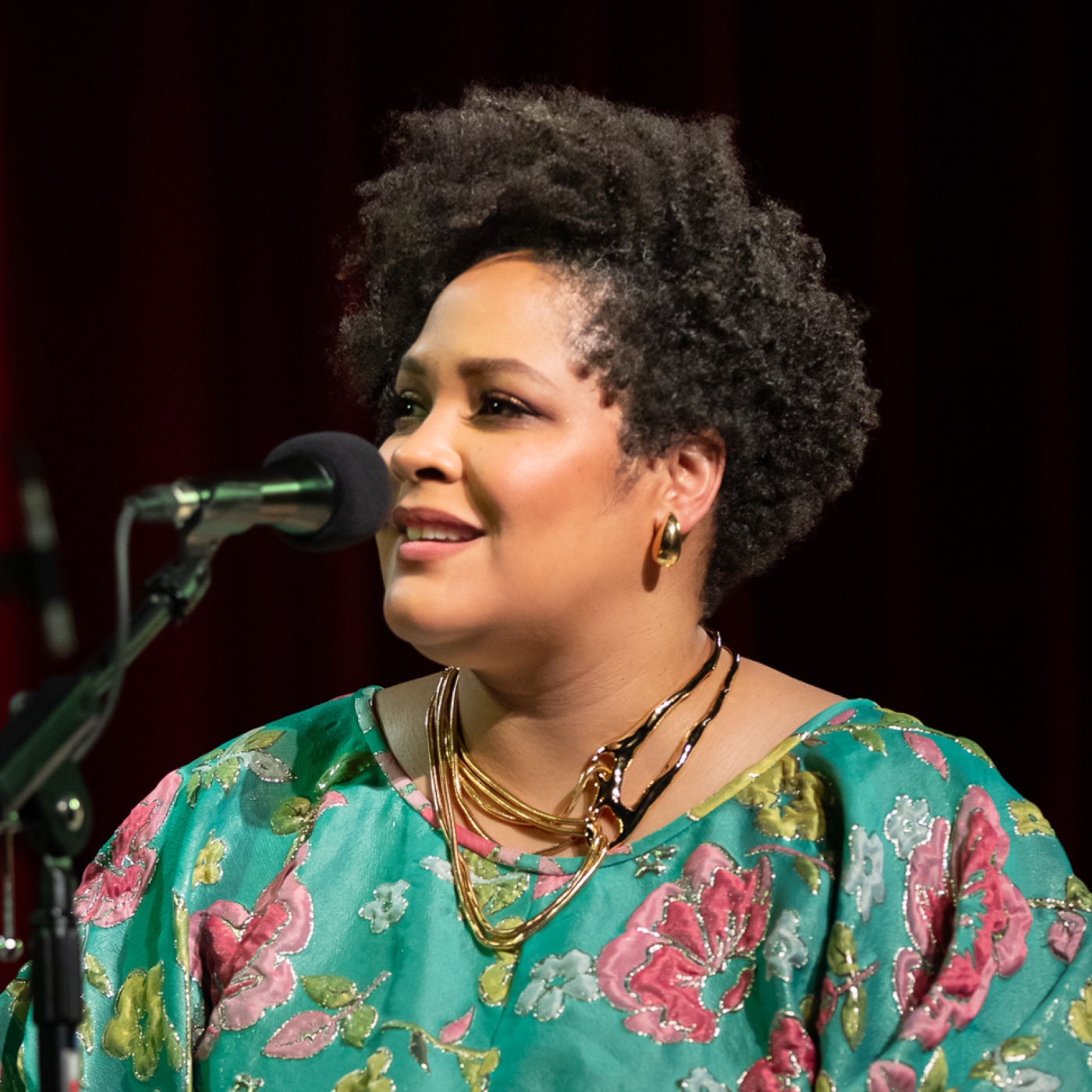
Live Wire with Luke Burbank
Ijeoma Oluo, Sarah Marshall, and Anna Tivel (REBROADCAST)
00:52:04
This episode features writer Ijeoma Oluo, podcaster Sarah Marshall, and singer-songwriter Anna Tivel.
Loading summary
Transcript152 lines
- [00:03]
Luke Burbank
Hey, there. Welcome to Livewire. I'm your host, Luke Burbank. This week on the show, New York Times bestselling author Ijeoma Oluo joins the show again. Talk about her latest book, be a revolution, how everyday people are fighting oppression and changing the world, and how you can too. Plus, we're gonna chat with Sarah Marshall, host of the hit podcast you're Wrong about. Sarah will be on the Livewire stage.
- [00:26]
Ijeoma Oluo
Doing what she does best, which is.
- [00:28]
Luke Burbank
Unpacking the real stories behind the people and things in our cultural past that we think we know the story on but that we might be wrong about. Then we're going to hear some music from acclaimed singer songwriter Anna Tivel, whose music is really, I have to say, unforgettable. Speaking of unforgettable, this is an episode of Livewire that is going to really stick with you. So make sure you stay with us. It all gets started right after this.
- [01:01]
Unknown Speaker
The world we live in isn't perfect.
- [01:03]
This is all wrong.
- [01:05]
Luke Burbank
I say put mental health first, but.
- [01:08]
Unknown Speaker
It doesn't get any better on its own. I stand before you as a concerned citizen. That's why we talk to activists about how they do what they do and what inspires them to keep going. Because we're all about change. Listen to stories that give us all hope on All About Change. Wherever you get your podcasts.
- [01:30]
Luke Burbank
Livewire is brought to you by Progressive Insurance. Do you ever think about switching insurance companies to see if you could save some cash? Progressive makes it easy to see if you could save when you bundle your home and auto policies. Try it@progressive.com Progressive Casualty Insurance Company and affiliates. Potential savings will vary. Not available in all states. This episode of Livewire was originally recorded in September of 2024. We hope you enjoy it. Let's get to the show. Hey, Elena.
- [02:00]
Elena Passarello
Hey, Luke. How's it going?
- [02:02]
Luke Burbank
It's going fabulous this week. I am wondering if you are ready for one of my favorite parts of the week, which is station location identification examination. Oh.
- [02:13]
Elena Passarello
So ready. Cracking knuckles. Let's go.
- [02:15]
Luke Burbank
Okay, good. Get yourself all together because this is, of course, the part of Livewire where I quiz you on a place in the country where Livewire is on the radio. You've got to guess the spot that I am talking about. This is, I think, actually a very interesting clue. It's a city that shares its name. So it's the US City with the capital city of another country.
- [02:34]
Anna Tivel
Ooh.
- [02:36]
Elena Passarello
A city that shares its name with the capital city of another country. St. Petersburg, Florida.
- [02:43]
Luke Burbank
Very good guess. And you are in the right state, but we are not looking for St. Petersburg.
- [02:48]
Elena Passarello
Ah.
- [02:49]
Luke Burbank
This city is also part of the central time zone, even though the state we've already mentioned, Florida, is on the.
- [02:55]
Elena Passarello
East coast, so it's on the panhandle.
- [02:57]
Ijeoma Oluo
Mm.
- [02:58]
Elena Passarello
Is it Panama City Beach?
- [03:00]
Luke Burbank
It's Panama City, Florida.
- [03:03]
Ijeoma Oluo
You are absolutely right where we are.
- [03:04]
Luke Burbank
On the radio on wfswfm. I've had gator balls in Panama City, Florida.
- [03:11]
Ijeoma Oluo
That's.
- [03:12]
Luke Burbank
Haven't we all a medical condition? It's actually like a chicken nugget, but they use gator. Nice work.
- [03:17]
Unknown Speaker
Woo hoo.
- [03:19]
Luke Burbank
All right, shall we get to the show?
- [03:21]
Elena Passarello
Let's do it. All right, take it away from prx. It's Livewire this week. Writer Ijeoma Oluo.
- [03:37]
Unknown Speaker
Why not demand true, you know, liberation for us all? Why not lean into the best of us that we know we have to say we could build something wholly good.
- [03:47]
Elena Passarello
Podcaster Sarah Marshall.
- [03:49]
Sarah Marshall
I think learning to be a storyteller, you do learn that, you know, people don't respond to statistics. We respond to narratives. And also that there are certain details.
- [03:58]
Elena Passarello
That really stick with music from Anna Tivel and our fabulous house band. I'm your announcer, Elena Passarello. And now the host of Livewire, Louis Burbank.
- [04:14]
Luke Burbank
Thank you so much, Elaina Passarello. Thanks to everyone tuning in all over the country, including Panama City, Florida. We have a really, really fascinating show in store for you all this week. We also, of course, have asked the Livewire listeners a question this week. We've asked tell us about someone who is making a positive change in your community. And we're gonna be hearing those responses coming up in a first, though, we gotta kick things off, as we always do, with the best news we heard all week. This right here is our little reminder at the top of the show. There is good news happening out there in the world. Elena, what is the best news that you heard all week?
- [04:54]
Elena Passarello
Oh, are you ready? I love this story so much. This is a story about a fantastic, venerable high school in New Orleans called St. Mary's Academy. It's an all girls Catholic school in East New Orleans that was started by an African American nun a long, long time ago, right after the Civil War. And there were two students who were seniors last year, Kelsey Johnson and Nakaya Jackson. And their math teacher put a $500 challenge on the board to create a new proving of the Pythagorean theorem that used trigonometry. So there are like 300 proofs that use geometry to prove the Pythagorean theorem. Do you remember the Pythagorean theorem from.
- [05:37]
Luke Burbank
You were going to ask me if I knew all of the proofs.
- [05:39]
Elena Passarello
Do you know all 300.
- [05:43]
Luke Burbank
Pythagorean theore. That's a triangle kind of related topic.
- [05:47]
Ijeoma Oluo
That's.
- [05:47]
Luke Burbank
That's all I got.
- [05:48]
Elena Passarello
Yeah, it's like you can prove the one side of the triangle if you know the other two sides. A squared, B squared, C squared. So geometry. 300 proofs that prove the Pythagorean theorem, but only one person in the past, like 2000 years has ever proven it using trigonometry. So Kalsi and Nakaya spent last winter working on this. They say they did very little else. And guess what? They both came up with a trigonometric proof of the Pythagorean theorem. They ended up presenting it at a Math Society conference in Atlanta in 2023, and it just blew up. They got a key to the city of New Orleans for this achievement. They got a commendation from the governor. They got a shout out from Michelle Obama. And then this killer segment ran on 60 minutes this may that wasn't just about this accomplishment, but also the school, St. Mary's Academy, and its mission to promote the excellence of black women, to refuse to lower the ceiling of the expectations of young black girls. And like, this school is amazing, by the way. Seven, for the past 17 years, 100% of its graduates have been accepted to colleges.
- [06:57]
Luke Burbank
Wow.
- [06:58]
Elena Passarello
Like, really, really cool school. And definitely worth support, which is where Charles Barkley comes in. Charles BARKLEY Saw this 60 Minutes and his found, got in touch with Saint Mary's and said, what can we do? And this month, the first check from basketball legend Charles Barkley arrived for $100,000. Whoa. But that's not all. There are nine more of those checks coming because Charles Barkley was so inspired by the great work of these two students who, by the way, have gone on to scholarship rides to LSU and Xavier College, respectively. But he was so impressed by them that he decided to give them $1 million so that more amazing graduates could go even further, which I love.
- [07:43]
Luke Burbank
I mean, the irony of this to me is when I was growing up, Charles Barkley was featured in all of these ads, I believe, for Nike, where famously, he said, I am not a role model. That was the whole framing concept. And yet, could you have a better role model than the guy donating millions of dollars voluntarily to help support this amazing school and these amazing students? I mean, yeah, I love that. The best news that I saw this week comes out of New York state, specifically Southampton on Long island, where there is a stop and shop, a little grocery store that has one of those tanks with, like, live lobster in it that you can buy and take home and make for your special lobster feast. Well, recently, they looked at the new kind of, like, you know, group of lobsters and noticed that one of them was, in fact, orange, which is very rare. This turns out to be one in about 30 million lobster are naturally orange. The rest of them are typically brown, I guess the ones that they usually sell. And this was immediately noted by people that were coming into the grocery store and saying, what's going on with this orange lobster? Well, they named it Clementine, became kind of a mascot of this little part of Southampton. They tried to call the local aquarium to see if the Long Island Aquarium wanted this lobster, Clementine. They declined for one reason or another. But thankfully, a group called humane Long island found out about this, and they swooped in to grab Clementine. By the way, good credit to the stop and shop in Southampton for not trying to sell Clementine in some, like, exotic pet market or something. They were just like, we should give this very rare lobster away or at least maybe repatriate Clementine to the ocean. Which is exactly what happened. The folks from Humane Long island built this large saltwater tank to put Clementine in. And this is according to John D. Leonardo, who's their executive director. We got ourselves a big saltwater tank. I'll spare you my Long island accent. I don't think anybody needs that.
- [09:49]
Ijeoma Oluo
This part of the show.
- [09:51]
Luke Burbank
And we put her there to rehab. We brought her to the ocean, and she immediately began foraging. She was ready to go as soon as she saw the ocean. So Clementine is back out in the ocean, living her best life. By the way, this sounds like a really good group, this Humane Long Island. They've also saved a wallaby that was being exploited on Coney island on the boardwalk that was being used for flying photo ops.
- [10:18]
Elena Passarello
Oh, my God.
- [10:18]
Luke Burbank
That's no place for a wallaby.
- [10:20]
Elena Passarello
I don't wallaby there either.
- [10:22]
Luke Burbank
Right. Anyway, the saving of orange Clementine the lobster is the best news that I heard all week. All right, let's get our first guest on out. She is the author of the number one New York Times bestseller, so you want to talk about race? And was named one of Time magazine's 100 next for their list. Her latest book, be a revolution, she interviewed over 30 people across the US about how they create change around racial equity in their communities. The San Francisco Chronicle calls It a remarkable, inviting, and even comforting manual for how people can come together to build a more peaceful world. Ijeoma Oluo joined us on stage at the Alberto Rose Theater in Portland, Oregon to talk about the book. Take a listen.
- [11:28]
Ijeoma Oluo
Hello, Ijeoma.
- [11:29]
Unknown Speaker
Hello. Hi, everybody.
- [11:34]
Ijeoma Oluo
Welcome back to the show. It's so nice to see you.
- [11:36]
Unknown Speaker
It's so good to be back.
- [11:37]
Ijeoma Oluo
This book is really remarkable. It has, I think, like some of your other work, it has information in it that I think is so important, particularly important for white folks like me to read and try to fully understand. But it's written in such a clear eyed way. I mean, it's really amazing what you've done here. I know that you write in the beginning of the book that you started at sort of the beginning of your career as a public person and as a writer and commentator, that you talked about changing our systems of oppression, like modifying them, whether it's the carceral system, you know, criminal justice system, trying to fix them, because you thought abolition was not realistic. Why do you now think abolition is something that we should be talking about and you should be writing about?
- [12:23]
Unknown Speaker
You know, I think all of us have always been encouraged in these systems to, especially those of us most impacted by systemic harm, to not ask for too much. There's this idea that if you push too hard, that the blowback will be so big. And we saw this like after Trump was elected, right? How many people blamed people like me? Oh, well, if you weren't so loud about race, people wouldn't have voted for Trump. Right? It's that idea that if you ask for too much, then we lose everything and it's just not true. Right? We see the cycles. We know that every time we make progress, there's pushback because power wants to protect itself. But we're always told, don't reach for the stars. Don't think that you could create something wholly good. Instead, try to tweak these really horrible, really, really irreparably broken systems. And, you know, I just don't want to live like that. And, and I'm not the only one. And I wasn't early to it. I was late. And I learned by watching other people who had the audacity to say, absolutely not, I won't live like this. I don't want my community to live like this. And I know we can come up with something better because I know that better is within me, better is within my community. And so in watching the ways in which we've been creating abolitionist species, why not? Why not? Demand it for all of us. Why not demand true liberation for us all? Why not lean into the best of us that we know we have to say we could build something wholly good instead of trying to find a way to live or die a little more slowly from something that has been robbing us of so much for so many generations.
- [14:11]
Ijeoma Oluo
You have a line in this book that really stopped me in my tracks. One of white supremacy's greatest weapons is the war on imagination. Is that something you had heard in conversation with people? Is that an original Ijeoma Oluo line? Because that is powerful.
- [14:25]
Unknown Speaker
No? It is a thought that I have come to over and over again and actually where it came from for me. I was in conversation with NK Jemisin, amazing spec fiction writer, amazing person who imagines these entire beautiful, complex worlds from the ground up in her books with this incredible deep knowledge of blackness and black history. And in conversation, I was realizing, like, oh, this is the thing. This is the thing that we're discouraged from doing is saying, no, what if from the ground up we could envision the best for us? What would the grass look like? What would our buildings look like? How would we talk to each other? And that vision is so discouraged and we're told to just not even try. And I think part of what I wanted to show with this book, and that became really clear for me as I was interviewing people for this book, is that there are really amazing, wildly imaginative people already building small versions of radically different ways of being and being in community and caring for each other. And it's completely erased from the everyday narrative of how we can live. And so what I set out to do with the book is to show that it wasn't. You can create a whole new thing. I mean, you could, but it's also whole new things are being created every day and you can join them.
- [15:55]
Luke Burbank
You're listening to Livewire from prx. We are talking to New York Times bestselling author Ijeoma Oluo about her latest book, Be a Revolution. When we return, Ijeoma is gonna tell us how conversations about disability and race should, in her opinion, go hand in hand. But don't go anywhere much More with Ijeoma in a moment here on livewire. Special thanks to our sponsor, Up Up Books, a Portland bookshop specializing in diverse authors, local writers and independent presses. They're located across from Revolution hall in the Buckman neighborhood, and they offer a space for book clubs, workshops and events. Check out their website and grab a book@upupbooks.com welcome back to Livewire from PRX. I'm Luke Burbank here with Elena Passarello. We are listening to a conversation we recorded with the writer Ijeoma Oluo, talking about her latest book, Be a Revolution. Let's jump back into that. We recorded this live at the Alberta Rose Theater in Portland, Oregon.
- [17:15]
Ijeoma Oluo
You write in this book that the chapter about disability and race, you say broke the book. What do you mean by that?
- [17:25]
Unknown Speaker
You know, I had this really, this idea because I had written a book before and therefore was an expert on all books.
- [17:31]
Ijeoma Oluo
It was a good book, though.
- [17:33]
Unknown Speaker
It was a good book. Right. And therefore, you know, as I said, expert on all books. And I knew exactly how it was going to go, and it was going to go perfectly, and I had every chapter laid out. And then I realized as I started sitting down and interviewing people doing movement work, especially bipocs in doing movement work for disability justice, that no one fit into categories, that this wasn't a thing that I could decide ahead of time what chapters would be, where that people were going to tell me their stories and how they're moving through community. And that was going to shape the book, and it was going to shape my place in it. I am not this passive observer that I thought I was. And so that chapter really challenged me and how I saw myself as a neurodivergent person and challenged the way in which I see structures and systems. And it was a real moment for me where I was like, if no one reads this book but me, it will be a success, because it is shifting the way that I am seeing all of these systems and systemic work so deeply. And it went from I'm going to have all of these neat little chapters to I'm going to have these broad connecting sections that show how connected our oppression is, but also how connected our liberation is as well.
- [18:52]
Ijeoma Oluo
You make the argument that ableism and racism are intertwined in a way that's inextricable. I did not realize until I read this book that Harriet Tubman had sustained a traumatic brain injury and was also doing everything she did, working through a disability as well.
- [19:10]
Unknown Speaker
That's something that came clear in a lot of discussions in the book, was how much we erase disability from our discussions on race. And when we're talking about heroes of our movements and many people, the truth is, racism is disabling and in fact, in the violent way it was for Harriet Tubman. But ptsd, imprisonment, medical neglect, and abuse, all of these things are disabling. And so a large portion of people, most important to Our movement work are disabled. And it is often so erased from history that disabled people in our communities don't know they're denied that knowledge. And so it's really vital that we be able to talk about that and see that and recognize that there isn't the black community and then disabled community. Disabled people are in our community and leading our movements and therefore should be voices that we are turning to. And there shouldn't be a goal that we have for liberation that doesn't center those most impacted. And yet, time and time again, even when those most impacted are leading the way, the ways in which they're most impacted are erased to our detriment. And it stops us from being able to truly see their work. It stops us from being able to truly implement the dreams that they had for us all. And so it's really important that we let go of stigma around disability, that we recognize the immense gifts, the immense effort, and that we own up to the immense harm that we've done as an ableist society to everyone, but especially to disabled people.
- [21:03]
Ijeoma Oluo
The way that this book is set up is interviewing people that are doing the work. And then you'll have some kind of recommendations, if you will, some bullet points of how to be a revolution. What are things that people can put into action, you know, as kind of, here's people that are doing it. Here's something you might be able to do that's a way to get started in this. One of the things you have towards the end of the book is kind of an encouragement to people that are doing this sort of work to make sure that it's also serving them, to make sure that they're also still finding joy life. Because you profile some people that are very like, every waking moment of their life is thinking about this work, is doing this work. I'm curious for you, have you been able to take that advice in your own life? Do you do things that bring you joy? Do you. Do you find ways to. Because this is, you know, this is a intense thing to be taking around the world and talking about with people day in and day out.
- [21:54]
Unknown Speaker
Well, I'll say, first of all, I do think, one, that advice is a little conditional, right? Because I do believe that there are people who aren't impacted by systemic oppression who will show up at a space and be like, I'm here to grow. I'm here for my Eat, Pray, Love journey. And that is not what I'm encouraging. What I find, though, is that often those most impacted who have to do this work for Survival are told that we should be martyrs to it, that we should be grinding ourselves down. And the truth is, is that part of the revolution is in how we live every day. You know, what sustained systemic oppression is the idea that there are some of us who don't deserve to live, who don't deserve joy, who don't deserve, you know, safety, who don't deserve community, who don't deserve to live right now in this very broken world. And insisting that you do is a huge part of the work. It is not something I'm good at. It's something I'm good at telling other people to do.
- [22:59]
Ijeoma Oluo
That's how it is with a lot of stuff.
- [23:00]
Unknown Speaker
Yeah. Because, you know, I mean, it's a mix of things, right? Like, it's a bit of hubris. If I don't work constantly, no one else will ever do the work. It's fear, it's conditioning. Black women are often conditioned, told that we exist only in service. And I'm absolutely in therapy trying to work through that. Yes, absolutely.
- [23:32]
Ijeoma Oluo
I mean, most of this audience is therapists. It's the number one industry amongst public radio listeners.
- [23:42]
Unknown Speaker
And, you know, I am lucky in that I've been able to build relationships where we care for each other and part of how we care for each other. And, like, my beautiful spouse is part of this as well. He'll step in and be like, hey, when's the last time you did a thing that made you smile? Like, let's step away, let's step away. And that's part of community care, that I want to normalize more for myself and. And that we need to normalize more in movement work. That how we live while we are doing this work is one of the most important parts of the work. If white supremacy says that we don't have value, that we don't deserve to live, how are we able to fight it while also saying we don't deserve to live while we're fighting it? We have to do that. I know it is hard, but I think if we can do it as a community and we can turn that into one of our values, not only will we get through this together and we need to get through this, but we'll get through it with a stronger idea of what we're trying to build, what we're trying to build. Like we know what we're fighting against, but what we're building, what we're protecting, that's found in our joy, that's found in our imagination. And if we're not nurturing that where will we be once we defeat what's trying to kill us? We have to know where we're going. We have to know what we're trying to replace it with. We have to know what we're trying to protect.
- [25:07]
Ijeoma Oluo
Well, this book seems like a really good start to that journey. Ijeoma Aluo here on Livewire. Thank you so much.
- [25:22]
Luke Burbank
That was Ijeoma Aluo right here on Livewire. Her latest book, be a Revolution, is out and available right now. Hey, special thanks this episode to Kristin Bott of Portland, Oregon, and Andrea Haning of Hillsboro, Oregon. Kristen and Andrea are part of the Livewire member community, and they are generously supporting our show with a donation each month. And, boy, are we thankful for that support, because if you haven't heard, it's how we are actually able to do Livewire. So a big, big thanks to Kristen and Andrea for keeping Livewire going. All right. Each week on the show, of course, we like to ask our listeners a question. Inspired by the work in Ijeoma's book, we thought we would ask Livewire listeners to tell us about someone who is making a positive change in your community. Elena has been collecting up those responses. What are you seeing, Elena?
- [26:29]
Elena Passarello
Well, this is basically a second best news segment because all of this information is so amazing about these people doing great work. And one person, Chris Hyde, received two nominations from Amy and from Lynette. Okay, so Chris Hyde is in the Olympia, Washington, area. And last year he started out making free soup for all of his neighbors. He created this program called Super Sunday. It's a Facebook group which has now grown into this community of like 2,800 members. And people are bringing in ingredients from their community gardens and they're donating. And in the summertime now, he's switching from soup to salads and barbecue. But even local businesses are donating to the group. And he's put together food boxes for anyone who's food insecure. And now he's gathering all the info to be listed in the group for further resour. So in just one year, he is literally feeding his community. And two members of our amazing Livewire listeners wanted to shout him out.
- [27:30]
Luke Burbank
That's incredible. You know, you're doing good work if you've made it onto the radar independently of two different people listening to this show right from up there in Olympia, Washington, shout out to Chris.
- [27:39]
Elena Passarello
Yes. Also now, I want some soup.
- [27:41]
Luke Burbank
I know. Or salad. Or maybe both, honestly.
- [27:43]
Elena Passarello
And some breadsticks.
- [27:44]
Luke Burbank
All right, who else should we be elevating the work of here on the show.
- [27:48]
Elena Passarello
Okay, let's fly across the country to Richmond, Virginia, where Naomi has nominated Taylor Scott. Doing a similar thing. Taylor started up RVA Community Fridges to share extra produce first from her garden. But it's expanded to 14 fridges around the city, and it's provided over £50,000 of food. Reducing food waste from growers, combating food scarcity in Richmond's most vulnerable neighborhoods. Her efforts, Naomi says, reminds me of what's possible when food work is community driven rather than profit driven.
- [28:22]
Luke Burbank
You know, I hadn't really been familiar with this idea of fridges until recently, but it makes a lot of sense because, of course, there's the donation of food and then there's the keeping it so that it's edible.
- [28:32]
Elena Passarello
Right.
- [28:33]
Luke Burbank
And this idea of setting up locations where food can be brought but then can, you know, it's almost like the sort of food equivalent of those little, you know, free libraries that people will put out. And I think it's a really genius idea.
- [28:44]
Elena Passarello
It's true. And we have one of those little free libraries, but they're just for feminine hygiene products close to the university, which I think is also very cool.
- [28:52]
Luke Burbank
Oh, also smart. All right. One more amazing thing that someone's doing that we should all know about. Elena.
- [28:58]
Elena Passarello
Okay. I am so excited to tell you about Bobby's nomination. Sarah Young in Bellingham, Washington, mild stomps.
- [29:06]
Luke Burbank
Yes.
- [29:07]
Elena Passarello
Sarah Young has been engaged in activities without compensation or recognition to bring understanding and joy to our community. Her latest project is called the Bellingham Pollinator. So Sarah dresses in up basically like a bee in a bumblebee costume.
- [29:22]
Luke Burbank
I already like this. I don't know how this story ends, but I'm already into it.
- [29:25]
Elena Passarello
And then she commits, quote, random acts of art throughout the city. So you see this kind of public art pop up thing happen. A bee is doing it. And when you go to investigate the piece, there's a little QR code. And then that QR code leads to information about the. The. The mysterious Bellingham Pollinator. And also an uplifting story or a motivational quote or something like that. So you get a little bit entertainment, a little bit of art, and a little bit of affirmation and motivation with everything that she does. How cool is that?
- [29:57]
Luke Burbank
I love that. Just a little moment in everyone's day or week to just like, kind of enjoy some art, interact with some art, Just get out of your kind of day to day grind of regular life. I will also say, when I was living in Bellingham, it was years ago. That was when we were suffering through what were called murder hornets. So this is a real upgrade in the did I use that correctly? Kind of situation. Definitely take this person, Sarah over whatever was happening when I was there.
- [30:28]
Elena Passarello
So the Bellingham Pollinator over the Bellingham murder hornet.
- [30:31]
Luke Burbank
Yeah, 100%. Our next guest is a writer and podcaster who wonders why we keep falling for the same old myths. Like, why do we believe that serial killers are brilliant? Or like, did Tanya Harding really get a fair shake all those years back? And how is that we keep stumbling into moral panics that turn out to be maybe not so worth panicking over. She tackles these questions and more as the host of the hugely popular podcast you're wrong about, which regularly tops the charts and gets written up all over the place. We are very glad to have her back on the show. Sarah Marshall joined us on stage at the Patricia Research center for the Arts in Beaverton, Oregon to talk about her brilliant program. Take a listen to this.
- [31:21]
Ijeoma Oluo
Hello, Sarah.
- [31:23]
Sarah Marshall
Hello everybody.
- [31:24]
Ijeoma Oluo
Thank you so much for coming back on the show. We had such a great time talking to you a while ago and I've been enjoying both of your podcasts. What's so interesting and entertaining about you're wrong about is the way that you and your guests will dive into these really big cultural topics and people and moments, but then find these little details that really reframe how we think about it. Have you always just kind of had that as part of your DNA?
- [31:47]
Sarah Marshall
Probably, yeah. I think that that's. We live in kind of, you know, an overwhelming time in terms of how much information and how many stories and images we're exposed to. And I think, you know, fixating on details is a way of, I think, fixing things in your mind, allowing yourself to actually remember things. And also I think learning to be a storyteller, you do learn that people don't respond to statistics, we respond to narratives, and also that there are certain details that really stick and if they stick for me, then they'll probably stick for somebody else. Speaking of Tonya Harding, something I really held onto once I learned it was that her mother had used her figure skating trophies when she was growing up to store loose change in. And that's the kind of detail where like you can know the broad strokes of the story, but like that really brings you, I think, into the moment of being like this like 11 or 12 year old girl who just wants your mom to love you and she's like putting her loose change in your trophies.
- [32:48]
Ijeoma Oluo
Yeah, those are the kinds of details about various people that are Profiled. I'm thinking of the episode where you talk about Richard Reed, the shoe bomber, you know, and by the way, I felt so seen when you were talking about how. I mean, obviously that was a very dangerous thing for everyone on the plane. Thank goodness it didn't, you know, fully come to fruition. But the real downstream effect has been we take our shoes off at the airport, except when we don't, and we're always getting yelled at, and there seems to be no uniform system about the shoes. And I feel like every time I think I know what the rule is, there's a TSA person who's like, that's not how we do it in Phoenix.
- [33:25]
Sarah Marshall
Yeah. And you're like, I'm sorry, I'm not familiar with your work, Dwayne. But, like. And it's also like, I think some people don't like this. I really do. When you go into a restaurant and they're like, have you eaten with us before? And you're like, no, Tell me everything about how this restaurant works. Don't expect me to figure it out.
- [33:42]
Ijeoma Oluo
You like that?
- [33:43]
Sarah Marshall
I love it.
- [33:43]
Ijeoma Oluo
You like a little extra. But the thing about Richard Reed is that. And this is something that happens a lot on that show on. You're wrong about. You're talking about Richard Reed, the shoe bomber, who we think of probably in the mug shot where his hair is sort of chaotic and he's not a three dimensional person. He's not a person who grew up with, you know, his mother remarrying someone that didn't look like him, and him being the only person of color in his predominantly white family, him looking for somewhere to belong. These details of his life, like, are just. They humanize him in a way that I would have never. I mean, I would have never thought about that guy again in my life until I listen to that episode.
- [34:19]
Sarah Marshall
That's so great. Yeah. And I feel like there's, you know, there's something about these stories especially that become lodged in our culture and the way that we live our lives, where it, you know, the idea of, all right, well, we've been taking our shoes off for 20 years now. Surely it was a very real major threat. And that, you know, the story is that it was scary for the people on that plane, but that he really didn't have a snowball's chance of doing any damage. And that some of us know, some of us have friends who've reported back to us that if you're flying, like, first class or luxury, then you don't get checked as much security wise, because the theory, I guess, is that wealthy people can't be dangerous. So that kind of implies that there's an element of theater going on.
- [35:03]
Ijeoma Oluo
Right, Exactly. We are talking to Sarah Marshall about her podcast. You're wrong about. You talked to the great media writer Taylor Lorenz about influencers. And of course, that's such a pejorative now for a lot of us. But like so many things that you get into in the podcast, probably misogyny is part of it because some of the first influencers were so called mommy bloggers. They were women who were describing their experience often as mothers, and it was dismissed as just, you know, some gals doing a thing. And so that started the whole process of this kind of way of relating to people off on kind of the wrong foot in terms of how we perceive it.
- [35:45]
Sarah Marshall
I think so. And I think that there's, you know, one of the omnipresent problems is that as a culture, as Americans, for whatever reason, we just don't take it that seriously when women do things. It just doesn't, you know, there's. For whatever reason, we could get more into it if we had a longer segment here, like a real bias against the idea that women talking can never be good, possibly because if we congregate, then we start to compare notes and then, you know, things could get dangerous. But I mean, the original mommy blogs are so interesting because. And as you know, Taylor talked about, that was one of the first places where as someone with just kind of mass media available to you, you might have seen people being candid about, you know, not just. And of course, the family blog style, the sort of monetizing your children for social media cloud industry has advanced so far, so it's hard to remember when it was new. But there was a time when, for example, where were you supposed to go to encounter someone talking about experiencing postpartum depression, you know, because you couldn't encounter that in a mainstream news source unless it was Brick Shields. And she was like the first. And so this idea of us dismissing it as sort of frivolous and gossipy and silly for women to be writing about their families and their children, you know, that's very telling.
- [37:16]
Ijeoma Oluo
You have also a film podcast that you do with Alex Steed. It's called you are good. And the way you describe it is a feelings podcast about movies. What is that? What does that actually sound like?
- [37:31]
Sarah Marshall
I think, I mean, the goal is to have a guest come on pretty much every week and have them bring in a movie that they for whatever reason, have a lot to say about, you know, and one that they have maybe used to develop a sense of identity. So, for example, we relatively recently had on Evelyn Lee, who's an amazing actress, talking about the Little Mermaid and kind of growing up as a young trans woman in America and seeing herself in this mermaid movie, you know, and that's not. That's the episode we did. But we could have had, you know, a hundred other people on who would have. Would have had a hundred other stories about growing up with that movie. So the idea is that, you know, we're looking at media critically and we're asking what it could do a better job of, but also looking at it as one of the primary tools that we have as we're kind of gathering the pieces of identity and trying to figure out who we are.
- [38:25]
Ijeoma Oluo
I want to try to, if I can, take this conversation to the place everyone's hoping it goes, which is the podcast business.
- [38:31]
Sarah Marshall
Oh, boy.
- [38:33]
Ijeoma Oluo
Particularly, you're wrong about it is a wildly successful podcast. It gets millions and millions of downloads. And yet, last check, you don't have any ads. You're not part of some giant media corporation. There are a lot of people that are doing podcasts just, you know, for the love of the game. But the popularity of your podcast means it could be very, very financially profitable for you if you chose to monetize now that way, I can only imagine the eye watering numbers that, you know, Spotify has offered. Why have you turned all of that down? Why are you not the Joe Rogan Rogan of being smart or whatever?
- [39:13]
Unknown Speaker
Yeah.
- [39:14]
Ijeoma Oluo
Why have you not embraced the lucrative riches that you could probably have?
- [39:19]
Sarah Marshall
Honestly, as I call him Newsradio's Joe Rogan.
- [39:23]
Ijeoma Oluo
That's a really good framing device.
- [39:25]
Sarah Marshall
Yeah. You know, the guy from Newsradio, his best work.
- [39:28]
Ijeoma Oluo
The guy from Fear Factor, it is.
- [39:30]
Sarah Marshall
It was his best work. Okay, well, do you know how the trend of a Scorsese movie is like? We started a new con. We were all friends. We were doing well. Then we started doing really well. Then everything. Everyone got arrested.
- [39:47]
Ijeoma Oluo
This is like the part of the Wolf of Wall street where Jonah Hill is popping and locking.
- [39:51]
Sarah Marshall
Exactly. Yeah. And kind of looking at that narrative, what it's interesting to think about is what size do you want to be at to have the life that you want? And I would say, by my standards, you know, the show is supported on Patreon and Apple, plus subscriptions. Always be plugging. Yes. You know, so we are supported by our listeners and I make much more doing this than I ever did or ever would have in academia or as a freelance writer, which is not a high bar, but, you know, the resident.
- [40:25]
Ijeoma Oluo
College professor laughs knowingly when you say that.
- [40:28]
Elena Passarello
Yeah, not shocked. Not shocked at all.
- [40:30]
Sarah Marshall
I thought as a kid that academia gave you the resources to go hunting for artifacts at a moment's notice, but.
- [40:36]
Elena Passarello
Right.
- [40:37]
Sarah Marshall
Hardly any funding for that any longer.
- [40:40]
Ijeoma Oluo
Have the people, though, from these organizations thought you were kind of, you know, a bit nuts to say, no, thanks.
- [40:47]
Luke Burbank
We've. This is working.
- [40:48]
Ijeoma Oluo
We're making a living. And this is.
- [40:49]
Sarah Marshall
This is good, probably, but, I mean, I also don't want to name names, but a company, I mean, let's just make up a silly imaginary name. Spotify. Okay, sure. We did talk to them at one point, and they were like, well, we're gonna need all to own your intellectual property. And we were like, that's ridiculous. And that is, you know, if you're acquired by a big company, in my experience and the people who I know in podcasts, that's the standard that they decided on a few years ago, and that's what they're gonna want to do. And so I think, to me, kind of, it wasn't that I was so savvy at any point, really. It was just that when I started the show with Michael Hobbs, we had the ability to very luckily support ourselves as writers and therefore to record a bunch of episodes without being paid by anybody because we liked it. And then that sort of gradually gained a following. And then the secret to our success was that there was a pandemic, and suddenly everyone needed a lot of hours of something to listen to. And so it was a series of lucky maneuvers. And also just every offer we got, honestly being not that great and having the sense of like, people already like us. I don't think you have that much to offer to us, really, in the end, and I think so. If I have any advice, it's just to recognize the value of what you do and really ask. If I become a very small fish in a giant pond, what are they actually going to give me? Because corporations don't make these deals out of the goodness of their hearts.
- [42:23]
Ijeoma Oluo
Right. Although we have learned that rich people are less dangerous.
- [42:27]
Sarah Marshall
Yeah, that's true. That is true.
- [42:29]
Ijeoma Oluo
I'm just saying you might want to rethink that.
- [42:32]
Sarah Marshall
We all watch succession. That kind of proves the point that.
- [42:37]
Ijeoma Oluo
And other insights can be found on youn're wrong about Sarah Marshall's podcast. Sarah, thank you so much. Again.
- [42:46]
Luke Burbank
That was Sarah Marshall here on Livewire. If you have somehow not already heard you're wrong about. And also Sarah's other podcast, you are good. I cannot recommend them highly enough. Do go check it out. My name's Luke Burbank. I'm here with Elena Passarello. We have to take the quickest of breaks, but do not go anywhere. When we come back, we're gonna hear some music from Portland based singer, songwriter writer Anna Tibble off of her latest album Living Thing. Get ready to feel very moved right after this on Livewire. Welcome back to Livewire from prx. I'm Luke Burbank here with Elena Passarello. Before we get to our musical guest, a little preview of what we're doing next week on the show. We are going to be talking to our friend, the magnificent poet and writer Danez Smith. Their work has been featured in Vanity Fair, the New Yorker and the Late show with Stephen Colbert. I've also been a finalist for the National Book Award. And Danez is going to be chatting with us about their latest collection of poetry. It's called Bluff and it's really, really incredible. Then we're also going to say hi to Rachel Kong. Rachel's latest novel is Real Americans, which looks at American identity through three generations of one family. Highly anticipated book by the New York Times and the LA Times called it an irresistible puzzle of a novel. And as if all that weren't enough, we've also gotten music from Danelia Cotton. Danelia has put out this really incredible album. It's called Charlie's Pride, a tribute to black country music and it honors Charley Pride, who was the first black American voted into the Country Music hall of Fame. It's going to be quite a show next week, so make sure you tune in. This is Livewire. Our next guest is a singer songwriter known for introspective and narrative driven folk music. No Depression praises her as one of the finest storytellers modern folk music has to offer. This is some music from Anna Tivel, who joined us for a very special Livewire event we did at the Domain Drouin Oregon winery. We got together in this little grove of trees. It was in the beautiful Willamette Valley. You'll almost be able to hear that on this recording. This is Anna Tivel here on livewire. Check it out.
- [45:17]
Ijeoma Oluo
I was I've really been enjoying your music lately and I was on your website and do you have the lyrics to your songs posted?
- [45:25]
Anna Tivel
I do.
- [45:25]
Ijeoma Oluo
Yeah. I don't think I've seen that before from an artist because they really read as pieces of poetry. Do you Think of yourself as sort of a poet almost.
- [45:34]
Anna Tivel
First, I think I just love words. I love them. I love them the way I love music. Or to me, they are so musical and they're so tactile and tangible and every word sort of has this whole world. And I think more than I know how to make music, I feel really drawn to fitting words together.
- [45:58]
Ijeoma Oluo
I think you. Well, you describe yourself as an aspiring recluse and I know that you are sort of self identified as a shy person. How does that work out for you as somebody who has taken on this life of like public performance and being interviewed on radio shows and stuff?
- [46:15]
Anna Tivel
It's just learning all the time. I think lately I'm realizing I'm not shy. I just am slower and quieter than most people. And I've always thought I should change that. But recently I'm just realizing maybe it's okay if people shift uncomfortably while I very slowly crawl my way to the end of a sentence. That we're all in this world together. There's space for everybody.
- [46:46]
Ijeoma Oluo
I feel like that requires a certain level of confidence, actually, and self assuredness. I mean, is this a confidence thing? Like you're comfortable letting us all go on this journey with you?
- [46:58]
Anna Tivel
It must just be nature. It must be like you're always sort of trying to connect with people and there's ways that feel really honest and there's ways that feel like rickety and you're reaching, reaching so hard, trying in their language. And then you kind of slowly learn your own language and you end up connecting better that way somehow. And maybe that's just a whole life of figuring that beast out.
- [47:26]
Luke Burbank
One more time for Anna Tivel, everyone.
- [47:29]
Anna Tivel
Thank you. Here's one, though. I think this is just a big rambunctious, glad to be alive and wondering at the science fiction that even brought us all here. You know, we all just agree that that's a thing and then we make more of us. And then the new ones that come, the people that are here, just say, we don't understand it either. Good luck to you. You know, just a big wheel. Cheers.
- [48:18]
Unknown Speaker
Before you come into the world, you should know there are things that will hurt and things that it won't. Like scraping your knees on the asphalt and the freedom right before you fell. And nobody tells it like it is. They say, isn't it lovely? And buck up, kid. But you learn how to breathe just by doing it at a dream until you believe yourself. Taking a picture to pass the time. A disposable camera and so rise you'll be leaning your head in the half light. What a feeling to be alive. An impossible question the heart will ask you stumble around till the walls collapse A bird hidden hard on the mirrored glass Looking for something in someone else and nobody tells it like it is they say follow the good road and chin up, kid. But you learn how to scream when the train comes in, you feel a weight like you've never felt. Taking a picture to capture it. A parade in the emptiness after it you'll be ultramarine and violet. What a feeling to be alive. And nobody tells it like it is they say don't rock the boat and shut up, kid. But that big black train is rolling that deep down scream is growing Hurricane come howling A shaft heard from the mountain A blessing and a burden I swear this will be worth it. Like it is they say don't blow around on a different wind. But you're gone and you're not even listening. They were wrong and the wind is a living thing and you're taking a picture you won't forget. Something real in the way you remember it. You'll be everything, you'll be riotous. What a feeling to be loved. Before you come into the world, you should know there's things that will hurt and things that won't, like scraping your knees on the asphalt and the freedom right before you fell. And nobody tells it like it is. They say, isn't it lovely? And buck up, kid. But you learn how to breathe just by doing it. How to dream until you believe yourself.
- [51:41]
Anna Tivel
Thank you.
- [51:43]
Luke Burbank
That was Anna Tibble here on Livewire, recorded at Domain Druin Oregon Winery. Her new album, living Thing is so good. I have been deep diving on this ever since I got to meet Anna at that show and it's really, really good. So do check it out. That's gonna do it for this week's episode of Livewire. A big thanks to our guests, Ijeoma Oluo, Sarah Marshall and Anna Tivel.
- [52:12]
Elena Passarello
Laura Haddon is our executive producer, Heather D. Michel is our executive director, and our producer and editor is Melanie Sevchenko. Eben Hoffer is our technical director, Leona Kinderman is our assistant technical director, and our house sound is by D. Neal Blake. Ashley park is our production fellow, Woo Hoo. And Becky Phillips is our intern. Our house band is Sam Tucker, Ethan Fox, Tucker, Eyal Alves and A. Walker Spring, who also composes our music. This episode was mixed by Molly Pettit, Eben Hoffer and Trey Hester. Special thanks this episode to David Millman and Kayla Arnold.
- [52:42]
Luke Burbank
Additional funding provided by the Marie Lamp from charitable foundation Livewire was created by Robin Tenenbaum and Kate Sokoloff. This week we have to thank members Kristen Bott of Portland and Andrea Koenig of Hillsboro, Oregon. For more information about our show or how you can listen to our podcast, head ON over to livewireradio.org I'm Luke Burbank. For Elena Passarello and the whole Livewire crew, thank you for listening and we we will see you next week. Wouldn't it be amazing to have a piping hot episode of Livewire delivered right to your heart and ears each week?
- [53:32]
Ijeoma Oluo
Well, guess what?
- [53:33]
Luke Burbank
That can happen when you subscribe to the Livewire podcast feed, and you'll get the joy of surprising conversation every week. So go ahead and do it. It's super easy. You click on the button at the top of your podcast app and bam.
- [53:46]
Ijeoma Oluo
You are Livewire subscribed.
- [53:49]
Luke Burbank
And if you're still, you know, feeling the love, if you're enjoying the show, hey, maybe you could hook us up and leave us a quick review that'll help more people find out about Livewire. And thank from PRX.