← Live Wire with Luke Burbank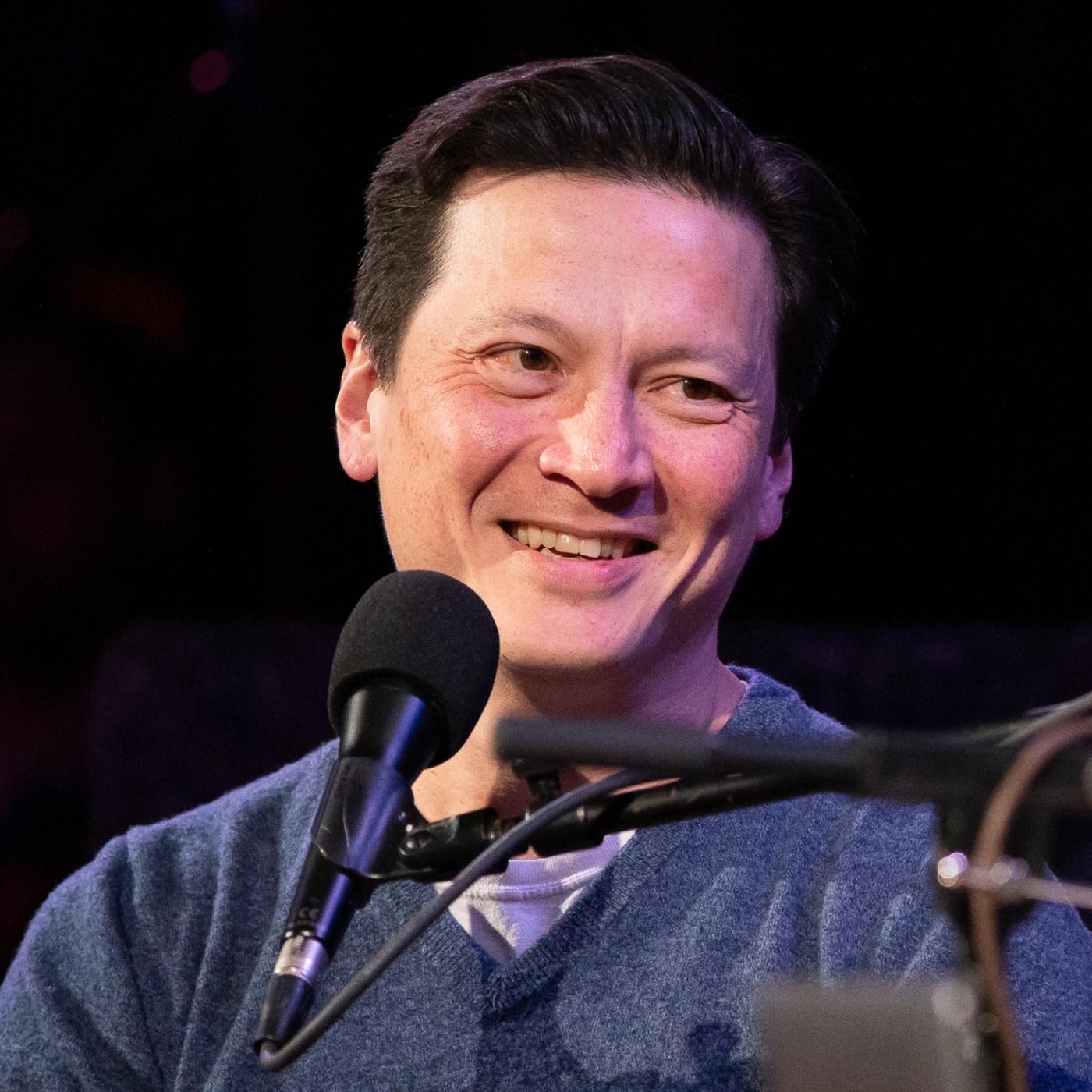
Live Wire with Luke Burbank
J. Kenji López-Alt, Ann Powers, and Khatumu
00:52:01
This episode features chef and author J. Kenji López-Alt, music journalist Ann Powers, and music from singer-songwriter Khatumu.
Loading summary
Transcript189 lines
- [00:03]
Luke Burbank
Hey, there. Welcome to Livewire. I'm your host, Luke Burbank. This week on the show, we are digging in with the legendary chef and food scientist Kenji Lopez Alt, talking about his quest to sample every teriyaki joint in my hometown of Seattle and also the peculiar ritual that you might observe him performing if you see him at a teriyaki place. We are also going to discuss the surprisingly controversial world of broccoli cheese soup. And we're gonna talk to music journalist and legend Ann Powers to find out why she initially didn't know if she wanted to write a book about Joni Mitchell when her publisher called her to say, you should write a book about Joni Mitchell. And then, from past legends to future legends, we've got some music from Kutmu. It's going to be a tasty episode of Livewire this week because we are serving up something very special. It all gets started right after this. I'm Kim Droves. And I'm John Good. We're the hosts of the City Lights Collective on wabe.
- [01:07]
Kenji Lopez Alt
We shine a light on Atlanta's arts and culture scene, from hidden gems to the bold voices shaping our creative future.
- [01:15]
Luke Burbank
Short stories, big ideas, and unforgettable moments of the city we love.
- [01:20]
Kenji Lopez Alt
Join us for the City Lights Collective.
- [01:22]
Luke Burbank
Wherever you listen to podcasts.
- [01:30]
Ann Powers
This show.
- [01:30]
Luke Burbank
Is supported by Odoo. When you buy business software from lots of vendors, the costs add up and it gets complicated and confusing. Odoo solves this. It's a single company that sells a suite of enterprise apps that handles everything from accounting to inventory to sales. Odoo is all connected on a single platform in a simple and affordable way. You can save money without missing out on the features you need. Check out odoo-o o.com.
- [01:56]
Elena Passarello
That'S o d o o.com from PRX.
- [02:01]
Ann Powers
It's LiveWire.
- [02:09]
Elena Passarello
This week. Chef Kenji Lopez Alt.
- [02:13]
Kenji Lopez Alt
Hers is mostly broccoli seasoned with a little cheese, and mine is basically just like, you went to the stadium and, like, pumped the nacho cheese sauce into it and, like, garnish it with a floret.
- [02:24]
Elena Passarello
Music critic Ann Powers.
- [02:26]
Ann Powers
I didn't know if her legend would obscure her as a subject to me, so I actually kind of made that.
- [02:33]
Elena Passarello
Part of the book with music from Kutumu and our fabulous house band, I'm your announcer, Elena Passarello. And now the host of Livewire, Luke Burbank.
- [02:49]
Luke Burbank
Hey, thank you so much, Elena Passarello. Thank you, everyone, for tuning into Livewire from all over the country, and thanks to everybody for coming out to the Nordstrom Recital hall here at Benaroya in Seattle. All right. It is no secret that times are tough out there. The news is not great nationally. Globally. But we here at Livewire are of the opinion that there are, in fact, still a few. Okay. Things happening here on planet Earth. And we spend most of our week looking for them. Sometimes it takes most of the day, but we find them and we present them to you in a little segment we call the best news we've heard all week. All right, Elena, what is the best news that you heard all week?
- [03:38]
Elena Passarello
Okay. Brazilian. Best news.
- [03:40]
Luke Burbank
Okay.
- [03:40]
Elena Passarello
Catholic best news.
- [03:42]
Luke Burbank
All right.
- [03:43]
Elena Passarello
Sisterly best news.
- [03:44]
Luke Burbank
Love it. Three for three.
- [03:45]
Elena Passarello
We're going to Pantagrasa, Brazil, where there are two nuns named. I hope I get these pronunciations correct. Sister Marizel Cassiano and Sister Marissa De Paula. They actually work in the community. They work a lot with troubled youth. They work with addiction. And apparently in this part of Brazil, Punta Grassa, there is a television program called Pie Attention. And it looks kind of like. Remember church chat with Dana Carvey?
- [04:12]
Luke Burbank
Oh, sure.
- [04:12]
Elena Passarello
Kind of like studio lighting and like a little couch, and they're holding handheld mics. And so the two sisters are there as guests, and they're being interviewed by the host, who's a deacon. And the subject turns to, like, religious callings, being called to a certain kind of action for faith and what that feels like. And one of the sisters, Sister Marzel, says, oh, man, I wrote a song about this. She stands up and she starts singing. And then Sister Marissa stands up and starts dancing. Kind of like pop lock kind of moves. Like she's doing, like, stepping kick out. And I was like, okay. And it's very appropriate, these hip hop coded moves. Because then Sister Marzell starts beatboxing.
- [04:52]
Luke Burbank
Nice.
- [04:53]
Elena Passarello
That is going, like, the deacon host gets up and they start dancing. And it is so full of joy and glorious. Like, it really is just people, like, moving their bodies in this really happy way. Sister Marzelle says that she sees beatboxing as a tool that God uses to reach the hearts of the people we work with.
- [05:16]
Luke Burbank
Aw.
- [05:17]
Elena Passarello
Now they're working with a lot more people. Now. Sister Marissa, the dancer, does not have Instagram, but Sister Mary Zelia does. I hope I got that right. She now has 100,000 followers on Instagram, thanks to people like Viola Davis, who sent it out.
- [05:32]
Luke Burbank
Nice.
- [05:33]
Elena Passarello
Whoopi Goldberg saw it. And Whoopi Goldberg recently sent on the View that this was his sister act come to life.
- [05:40]
Luke Burbank
Beautiful.
- [05:41]
Elena Passarello
So that's the best news I heard this week.
- [05:43]
Luke Burbank
That's amazing. The best news that I saw all week actually takes us to Georgia. I'm wondering if you know where this place is. It's. Is it Dakula, Georgia?
- [05:54]
Elena Passarello
Dakula, Georgia, Georgia. That's the county where I'm from.
- [05:57]
Luke Burbank
Okay.
- [05:58]
Elena Passarello
Well, they were our rivals in high school.
- [06:00]
Luke Burbank
Okay, well, what happened in Dakila? It's a very sweet story about your rivals and specifically about a guy named Michael Baker. Okay. Mikael Baker was graduating high school, and he was in his whole robe, and he got some special kind of medal for some academic achievement or whatever. And as he was getting off stage, he got a call on his phone because he also worked at the Burger King, and it was slammed.
- [06:24]
Ann Powers
Oh, no.
- [06:25]
Luke Burbank
There was, like, a huge line, and his coworkers were like, mikael, could you get over here, please? So while all of his friends were going and partying the night of graduation, he was at the Burger King, like, keeping the line moving and helping out his co workers. And a mother of one of the other graduates of the high school came through the drive through at the Burger King.
- [06:44]
Elena Passarello
She was one of the reasons why it was so slammed.
- [06:46]
Luke Burbank
Exactly. And she noticed that he was still there in his graduation uniform with the little headset on, like, you know, welcome to Burger King. And she just thought that this was such a really sweet thing that this kid. Did I say kid? You know, anybody younger than me feels like a kid. And so she thought, you know, I bet you that he could use a little blessing. How about we start a GoFundMe page for him to pay for college or other things that he might need? He was just showing himself to be such a nice young person. The GoFundMe has raised, at last check, $199,000.
- [07:19]
Elena Passarello
199.
- [07:22]
Luke Burbank
Wow.
- [07:22]
Kutumu
Wow.
- [07:24]
Luke Burbank
190. You see the headline, the article I have. I crossed out 180k, because I checked it right before the show, and it went back up. It's like. It's going up. It's at, like, 199. Like this. It's gonna be $200,000 for this kid, for his. And it's gonna be for his education. I don't know what college costs anymore.
- [07:41]
Elena Passarello
Yeah.
- [07:41]
Luke Burbank
But let's just say it's a very, very good start on things for this kid.
- [07:45]
Elena Passarello
Yeah, that's fabulous.
- [07:46]
Luke Burbank
Mikael Baker being rewarded for his service to his friends at Burger King. That's the best news that I. Our next guest is a chef, food scientist, culinary innovator, Internet star, and author of the New York Times bestseller the Food Lab. He's also a James Beard Award winner and honestly is pretty much the guy to ask if you want to know where to get a bagel here in Seattle, which, because I'm from Seattle, I can't say the word bagel correctly. He's also the co host of the hit podcast the Recipe, along with Deb Pearlman. We are so happy to have him back on the show. Please welcome Kenji Lopez alt to Livewire. Kenji, welcome back to Livewire.
- [08:50]
Kenji Lopez Alt
Thanks for having me again.
- [08:51]
Luke Burbank
The last time you and I were hanging out, it was for my other job, my TV job, and we were driving around South Seattle and we were like checking out different teriyaki spots, which you've kind of become known for, really being very thorough in your exploration of the teriyaki food scene here in Seattle. I think at one time you're going to try to eat at every single place.
- [09:10]
Kenji Lopez Alt
I'm still trying to, yeah.
- [09:12]
Luke Burbank
Have you gone since you and I last had teriyaki, have you still been going out and exploring?
- [09:16]
Kenji Lopez Alt
I have. I mean, when I started it, I was going to about one per day, and then after a week I slowed down to a couple per week. Now I'm at maybe one or two per month. But I'm up in the 30s now out of slightly less than 90 places. There's around 90 places in Seattle, and that's not counting, like the east side.
- [09:32]
Luke Burbank
And like Seattle, teriyaki is kind of its own thing, right? What makes it different than things like it you could get in other parts of the country?
- [09:39]
Kenji Lopez Alt
Yeah, well, Seattle, I mean, teriyaki as we know it in the U.S. chicken teriyaki was invented in Seattle by a Japanese immigrant in the 70s. Tosha. You can still. He still cooks.
- [09:50]
Luke Burbank
I was up at his spot in Mill Creek. In Mill Creek. And he is there seven in the morning, just cutting up chicken and cooking rice and doing it.
- [09:59]
Kenji Lopez Alt
Yeah, so he, I mean, he invented the style of, of chicken teriyaki that we know here. So the, the, the chicken thighs that are marinated, sliced, sort of sweet and savory glaze. And, you know, that became sort of the, you know, I'm from New York, so I equate it to like a New York slice of pizza where you ask someone, what's your favorite pizza shop? And it's like the one that's down the street from you because there's a pizza shop in every neighborhood. And so there's a teriyaki shop in every neighborhood. And it all started with Toshi's place. And so the chain, there's a lot of teriyaki shops called Toshi's now, which at some point were all franchises of his original shop. And then eventually they all separated it into their own individually owned locations. So the Toshis are not related to each other anymore. Even though some of them have the same logo and the same typeface and everything. They're all unrelated to each other. And Toshi himself has his place up in Mill Creek.
- [10:49]
Luke Burbank
Now is there, I mean, is there a cultural significance to the food, to the folks who are making it, to sort of how it fits into the Pacific Northwest?
- [10:58]
Kenji Lopez Alt
Well, I mean, I think like, like a lot of immigrants, they found the jobs they could and a lot of that is in, is in, is in food. So you know, that's why there was this proliferation of Chinese restaurants across the country. But yeah, it's. And you see it still as largely an immigrant owned and immigrant run operation. These days you'll find, I mean teriyaki originally Japanese or Japanese American, although these days I think you'll find most of them are not actually Japanese run anymore. There's a lot of shops that are run Korean, Chinese, Vietnamese, immigrants. And oftentimes what you'll find is that there's the basic teriyaki menu that has your chicken and your gyoza and your spicy chicken, but then there's also going to be bibimbap or there might be, there might be like General Tso's chicken or there might be, you know, banh mi and pho and generally those are the things that the people who are running the restaurant, that's their food. And the teriyaki is there because people expect the teriyaki to be.
- [11:54]
Luke Burbank
I see when we were out eating teriyaki, I think there was at least two groups of people who approached you to say, oh man, we're fans of your videos and the things and we, you know, we kind of look for places that you're recommending and stuff like that. What's it like for you out in the Seattle area when you're. Because I watch a lot of your videos where you're sitting, you're set up at a picnic table or something and you're about to try something. Are people coming up to you and like interrupting the filming process or are you an object of a certain amount of attention when you go to a place sometimes.
- [12:22]
Kenji Lopez Alt
I mean more and more increasingly, but you know, it's like a, it's a really nice self feeding cycle. I'm also a self feeding cycle. But the process itself is a self feeding cycle because you know, the more you share information with people, the more people are like, oh, you should check out this territory. I was sitting at a restaurant in Eastlake two nights ago and this guy walks past the table as he was leaving, like winks at me and puts a piece of paper down in front of me and I read it and it just says like, check out. Oh, I have a picture of it. I can't remember which one but I wrote it down. But he's like, check out this teriyaki joint. And that's all it said. I get really good recommendations because the people who follow my stuff also want to give me advice and they tend to have tastes that align with mine. And so I get a lot of good recommendations and that makes, I mean, my job, which is just going around eating things that other people cooked a lot easier.
- [13:15]
Luke Burbank
The last time somebody handed me a note in a restaurant and I turned it over, I woke up four days later in Reno with no memory of what had happened. So teriyaki is a much better outcome. It's Livewire Radio from prx. We are talking to Kenji Lopez, alt. We're at Benaroya hall in Seattle this week. We've got to take a very quick break, but stay with us. We will be right back. Hi, I'm Deborah Treisman, fiction editor of the New Yorker and host of the New Yorker Fiction Podcast. On the podcast, I ask a great contemporary writer to select a favorite story from the magazine's almost hundred year archive to read and discuss. Together we delve into the story, exploring.
- [14:13]
Ann Powers
Its themes, its style and what makes fiction work.
- [14:17]
Luke Burbank
You can listen to authors like Ottessa Moshfegh talk about why we write story or attaching a story or creating a story. Is this inclination that we all have to stop spinning and you can hear writers like George Saunders discuss the nature of storytelling on the first read. You accept these things as descriptions and they make you see the scene. But every line is a chance to inflect the reader's mind. You'll discover new favorite authors and read old favorites in new ways. Episodes of the New Yorker Fiction Podcast are released on the 1st of every month. Listen and follow wherever you get your podcasts. Welcome back to Livewire from prx. We're at the Nordstrom Recital hall at Benaroya in Seattle this week and we are talking to Kenji Lopez, alt chef and food writer and food personality. I was watching a video on your YouTube channel where you were talking about your sobriety and I was wondering about the you know, alcohol and food are often so intertwined. You know, it's this wine with this pasta or whatever. Has now being a person who doesn't drink, has that changed your relationship with food at all?
- [15:47]
Kenji Lopez Alt
You know, it was something when I realized I needed to stop drinking, that was one of my concerns. Although, you know, alcoholics, when they are trying to quit drinking, they'll come up with many excuses not to.
- [15:59]
Luke Burbank
So it's going to ruin the pasta if I stop having a cask of wine every night.
- [16:04]
Kenji Lopez Alt
But you know, it is like an intense part of the industry where both, both in terms of the idea that when people go out to eat they are, you know, the wine, the drinks are part of that experience. And so as a, as a cook, you sure as a restaurateur you should be knowledgeable in that, which means tasting it. And it's also, you know, also just the lifestyle. It is like, you know, cooks tend, cooks and musicians I think tend to drink a lot, you know, but you know, I quickly found out that in.
- [16:32]
Luke Burbank
Fact sometimes they laugh for reasons we don't understand.
- [16:39]
Elena Passarello
There's just a lot of cooks and musicians in this audience, I think.
- [16:43]
Luke Burbank
But I mean, one of the things that you mentioned in that video, Kenji, was that for you when you really got sober was because of talking to some other people in the industry, other chefs and who were both people who were sober. I have family members that are in the restaurant business who also don't drink alcohol. Do you, I mean, it's hard for you to speculate on this, but do you feel like there is some sort of a movement with at least more mindfulness around drinking or sobriety?
- [17:07]
Kenji Lopez Alt
Absolutely.
- [17:08]
Luke Burbank
In the food industry?
- [17:09]
Kenji Lopez Alt
Absolutely. You know, I think the food industry has changed a lot for the better over, you know, the 25 years since I started cooking in restaurants. Both in terms of just care for the mental health of people working in restaurants. The abuse that goes on, I mean, it still happens, but it's a lot better than it used to be. And also in terms of the substance abuse and yeah, there's a lot of conversation. I don't think there's ever been a better time to be a non drinker for salt. Like, you know, my career has been a series of real lucky breaks and I chose to go sober at the right time because I don't know if you've had like the non alcoholic beers or gone out to a restaurant recently. Every restaurant has a really robust, really good non alcoholic cocktail program, a non alcoholic wine and beer program. So it's a Real good time to be a non drinker right now.
- [17:55]
Luke Burbank
I've been enjoying your podcast, the Recipe with Deb Pearlman. For folks that haven't heard it, what's the premise of the show? I guess it's kind of right there in the title.
- [18:05]
Kenji Lopez Alt
You know, Deb came out with a book a couple years ago, and she and I have sort of been in similar in each other's orbits for years because we both started writing recipes online around the same time. And both of us have a. You know, our focus is home cooks, but we have real different approaches to how we bring recipes to home cooks and how we think about developing a recipe. And so, yeah, we thought, hey, you know, like, we should, we should do a show because we, we have overlapping audiences. We're trying to solve the same problem, but we're solving that problem in really different ways. And so the premise of the show is that we pick a recipe that we've both worked on, say, like, macaroni and cheese, and then I'll make her version of the recipe, she'll make my version of the recipe, and then we discuss how sort of the development process. The idea is like to take a peek under the kitchen hood.
- [18:52]
Luke Burbank
Oh, there you go. Why did you dedicate an entire episode to broccoli cheese soup? That seemed left field to me.
- [19:03]
Kenji Lopez Alt
I mean, people devote entire bowls to just melted cheese and broccoli, right? It's. No, because it was a real. It was a very popular. It's a very popular recipe. Like, we both have broccoli cheese soup recipes, and our recipes couldn't be more different. They're very, very different from each other. Hers is mostly broccoli seasoned with a little cheese. And mine is basically just like you went to the stadium and pumped the nacho cheese sauce into it and garnish it with a floret. But no, broccoli cheese soup is really popular. You know, thank Panera.
- [19:36]
Luke Burbank
Well, that's it. I think that's. They've really kind of moved the needle on America's appetite for.
- [19:43]
Kenji Lopez Alt
Well, it was Panera and it was, it was George Bush. George Bush Sr. Who, when he became president, famously said, like, I'm president now, mom. You can't make me eat broccoli. And then I think Campbell's then developed broccoli cheese soup to capitalize on the, on the, on the publicity that I.
- [20:01]
Luke Burbank
Remember when that was an extreme thing for a US President to say, oh, yeah, he's not having broccoli.
- [20:08]
Kenji Lopez Alt
It's like long for the days of.
- [20:11]
Luke Burbank
Vegetables and tan I would crawl across broken glass to have that be the main political scandal we're dealing with. You also talk on the podcast about nachos. And what I was struck by was you were talking about the origin of nachos, and I think it maybe goes to sort of credit with being a place in Texas. I had read in the LA Times years ago a totally apocryphal history of nachos. All these stories are apocryphal about a particular restaurant in LA that Jack Nicholson used to go to. And this, the woman who was credited as inventing them, had been like trying to find something to make for people. This was printed in the Los Angeles Times, and I was telling everyone this story that nachos were invented in la. Does the success that is nachos have many mothers?
- [20:59]
Kenji Lopez Alt
These stories are always like, somebody who. Somebody who's part of the restaurant trying to feed someone when there's apparently no food in the restaurant. We ran out of everything. What can we do? All we have is the chips and cheese and beans and everything. Exactly what it takes to make something delicious. I'd never heard that story. No, the only story I heard was about, yeah, Ignacio, nicknamed Nacho, and he invented it because American tourists, I think, were coming to his restaurant. Or maybe this is the Caesar salad story.
- [21:29]
Luke Burbank
Oh, yeah.
- [21:31]
Kenji Lopez Alt
Someone was coming to his restaurant, and he ran out of ingredients and made nachos.
- [21:35]
Ann Powers
I heard that, too.
- [21:36]
Kenji Lopez Alt
Same story with buffalo wings. Same story with, like, onion dip. It's all the same.
- [21:41]
Luke Burbank
Okay. I was going through some of your older New York Times cooking section columns that just. Each one, I don't want you to feel like you have to give away the milk for free. But I did want to ask you some of the things that are posed in these columns. For instance, the burger that you were unable to improve. The Oklahoma Onion Burger.
- [22:00]
Kenji Lopez Alt
Oh, yeah. Well, the Oklahoma Onion Burger is a burger that, like a lot of good foods, was born of frugality. And so during the Depression in Oklahoma, they replaced a lot of the meat in a burger with a pile of onions. And so in Oklahoma Onion Burger, you take a very, very small ball of beef, you put a big pile of thinly shaved onions onto a griddle, and then you smash the beef down into it, or sometimes the other way around, and you let that cook, and then you flip it over, and what you end up with is these onions that have this kind of array of textures and flavors. So the ones that are, like, hanging over the edge get really dark and frizzled, and then you get These kind of caramelized onions that are along the top. And then there's these kind of softer steamed onions and a little bit of crunch in them in the middle. So you get like a ton of onion flavor and not a ton of beef flavor, but it's real delicious.
- [22:49]
Luke Burbank
Speaking of onions, and this is the final question, because I'm 48 years old, and I still don't know how to do this. What is the best way to cut an onion?
- [22:59]
Kenji Lopez Alt
So I learned how to cut an onion from Jacques Pepin's book, La Technique. And he does the classic technique where you split an onion in half. You take off the peel. He always recommends taking off the peel plus one layer on the inside. And then you hold your knife vertically, and you make a series of vertical cuts up and down. And then you hold your knife sideways and make a couple of horizontal cuts, and then you rotate it and slice across those. That's the classic sort of French method, how they teach you to do it at culinary schools. Then Alton Brown, he recommends slicing radially because onions are radially symmetric. Right. So it makes more sense to slice them radially. So I, to me, I was like, okay, so which one is actually the best method? So I had a friend of mine build a mathematical model of an onion, and we tested a variety of angles and a variety of slice sizes. We tested whether adding a horizontal slice would make a difference or not. And so basically what we did was we calculated, first of all, the method that would give you the most number of dice using the fewest number of strokes, so the efficiency of the method. And then we also counted the standard deviation of a cube size to tell, you know, how even your dice is going to be. And what we found is that if you take your half onion and you place it on the table, and you call the height of it, so the radius of the onion, you call that one. Okay. You angle your knife at a point under the table. About 0.6 under the table. So if you aim your knife down to there, it's not quite straight up and down, and it's not quite radially symmetric. It's somewhere in between. If you just kind of fudge it somewhere in between, that is the most efficient way.
- [24:39]
Luke Burbank
Is that now how you cut onions, like at home?
- [24:41]
Kenji Lopez Alt
Yes. That's not how I do it. Yeah, I follow my own advice usually.
- [24:44]
Luke Burbank
Okay, well, we're glad to have it, because you sure know a lot. Kenji Lopez Alt, thank you so much for coming on Livewire. That was Kenji Lopez alt right here on Livewire. His Podcast the Recipe, which he hosts with Deb Perlman from the Smitten Kitchen, is available wherever you get your podcasts. Hey, special thanks this episode to Joan Cirillo of Portland, Oregon, who is part of the Livewire member community and is generously supporting our show with a donation each month. Not sure if you're reading the news, but those listener donations are now even more vital to keeping Livewire going. So a big, big thanks to Joan for helping out. You're tuned in to Livewire. I'm Luke Burbank here with Elena Passarello. Okay. Each week on the show, we ask the Livewire audience a question. And this week, we were inspired by an upcoming guest's career as a legendary music journalist. So, Elena, what did we ask the Livewire audience?
- [25:58]
Elena Passarello
We asked them to tell us about the most memorable concert they ever saw.
- [26:03]
Luke Burbank
Wow. Okay. We actually went out into the audience at a recent live recording of the show to get some answers. Here is what folks said. This was Marcia.
- [26:13]
Elena Passarello
Here was my most memorable.
- [26:15]
Kutumu
I was a teenager, and I went to a Grateful Dead concert, and I didn't know the brownies were laced with pot. And I slept through the whole Grateful Dead concert laid out.
- [26:28]
Ann Powers
So I guess you didn't remember the concert.
- [26:30]
Kutumu
No, but it's certainly memorable that I didn't remember it.
- [26:35]
Elena Passarello
I mean, as far as I'm concerned, that's the best way to experience a Grateful Dead concert.
- [26:39]
Luke Burbank
I never quite connected with the Grateful Dead, but I know that their fans are legion and they really, really like it, whether they're conscious for the concert or not.
- [26:48]
Elena Passarello
I think the Grateful Dead exists on both sides of a person's consciousness. You know, like, I think they are dream logic.
- [26:54]
Ann Powers
So.
- [26:54]
Elena Passarello
So well done. Well done.
- [26:56]
Luke Burbank
That's intense. How many brownies did you have before we started recording today?
- [26:59]
Elena Passarello
I just stuck, like, six of them.
- [27:00]
Luke Burbank
Into a smoothie just the right amount. Here is a very memorable concert that listener Frank attended. At one point, I saw Sufjan Stevens at the Aladdin theater on my 16th birthday, and I was sending in the front row. He sang the Ballad of John Wayne Gacy Jr. And I had a moment of feeling deep panic that this was an unsafe individual, which was. That's good performance right there. It's a good show. Unclear how many brownies Frank had consumed before the Sufian show. Frank's premise is that because he was concerned about what Sufjan Stevens, the singer, was going to get up to, that indicated that the performance was actually very good, that Sufjan had him feeling a little bit on Edge. Now, the song, of course, the Ballad of John Way Gacy, for being kind of on a dark topic. It's a very beautiful song.
- [27:55]
Elena Passarello
Oh, yes.
- [27:57]
Luke Burbank
All right. Caroline had a memorable concert experience. Let's take a listen to this.
- [28:01]
Elena Passarello
I saw James Taylor at Tanglewood. I'm originally from the Boston area, and.
- [28:08]
Kutumu
We had lawn seats, which was lovely.
- [28:10]
Luke Burbank
I feel like if you go to Tanglewood at any time, day or night, James Taylor might be there, just kind of hanging. Feels just tangling in the wood, you know, just tangling out there. I feel like he might live there. It just seems it's very James Taylor coded, as the people would say these days.
- [28:26]
Elena Passarello
But we very illegally snuck our way into the front row after intermission, and we were feet or inches away from him and Carole King and Don Travolta and all these ridiculous people that they run on stage. I see John Travolta, he did have a. He did have a single. Dude, did you know, like, gonna let her in?
- [28:48]
Luke Burbank
Like, you know, John Travolta had a single. I was unaware of that.
- [28:51]
Elena Passarello
I feel like everybody in the late 70s, you know, like Lou Ferrigno, John Travolta, Joe Piscopo. Yeah, they all had Bruce Willis, and.
- [28:59]
Luke Burbank
They were all at the James Taylor concert in Tanglewood. I have decided at my ripe old age of 49, Elena, I am done sneaking into the better seats than I have at concerts or sporting events. And here's why. I've realized I am unable to enjoy the rest of the performance because of my anxiety around getting kicked out of the place I'm not actually supposed to be. I'm better off just being in my original seats. View obstructed and relaxed.
- [29:28]
Elena Passarello
That's right. Have a brownie. Stay in the cheap seats. Enjoy yourself, Burbank. Just go for it.
- [29:34]
Luke Burbank
All right, thank you to everyone who answered our question about a memorable concert. Our next guest is one of America's best loved music critics. With stints at npr, in the LA Times and New York Times, among other places. Her body of work, writing about musicians, has made her kind of a legend in her own right, which came in handy when she set her sights on a book about the one and only Joni Mitchell. The result of all of that is the book on the Path of Joni Mitchell, which Publishers Weekly calls a dazzling portrait of a legendary musician. Now, just a heads up in our conversation, we're going to talk about Joni Mitchell's use of blackface. And in case it's not abundantly clear, we obviously believe that was unacceptable Back then and also as it would be now, Anne has got some thoughts on how she has sort of struggled to reconcile Joni Mitchell's actions with her legacy as an artist. So we're gonna hear about that and a whole bunch more from our conversation with Anne Powers, recorded live in Seattle at Benaroya hall earlier this year. Take a listen. Ann Powers, welcome to Livewire.
- [30:43]
Ann Powers
I'm so happy to be here. Thank you so much.
- [30:46]
Luke Burbank
Can you take me back to the day that you got a phone call from a book editor in New York, and they said, we would love it if you would write a book about Joni Mitchell? And you said you had to take a walk around the block to think about it.
- [31:00]
Ann Powers
I definitely did. I mean, I'm a Joni fan, all of us. I mean, who isn't a Joni fan, right? We've all had our moment. We love Blue. We love Jira. But I looked at tackling a subject like that as similar to trying to, say, climb Mount Rainier or something. It was very daunting to think about really taking on a legend like that. And I wasn't sure that I wanted to do it. I didn't know if her legend would obscure her as a subject to me. So I actually kind of made that part of the book. You know, my journey toward figuring out how to take into account what we, as fans have made Joni, what that the culture has made Joni, and then how she reacted and became the artist she is through that process.
- [31:49]
Luke Burbank
I mean, it sounds like in the book that because you're a music writer, you were of course, aware of the impact of Joni Mitchell, but that, like, she wasn't maybe your number one just because of some thoughts about her. And she had a lot of success early, and she sort of looked a certain way. And you said you didn't really vibe with that part of her career.
- [32:07]
Ann Powers
Yeah, well, first of all, given just my age, when I grew up in Seattle, you know, I was a new wave girl. So really, like, Kate Bush was my pinnacle. But, you know, a thing that happened is when I started on this book, I got into the early Joanie Records, and I suddenly was like, oh, my God, Kate Bush took so much from Joni Mitchell. And I never realized it. So then I felt kind of bad. But so that was part of it. And then also, yeah, you're right. Like, I write in the introduction about how she was daunting to me partly because of her image, her Persona, and, as you say, her looks. But what I figured out was she had Just the same anxieties and questions about herself that I have. And she wrote that right into her songs.
- [32:57]
Luke Burbank
You made the decision to not try to interview Joni Mitchell for this book.
- [33:00]
Ann Powers
Yeah, yeah, yeah.
- [33:01]
Luke Burbank
Cause you basically. It sounds like you were afraid of falling in love with her.
- [33:04]
Ann Powers
In a way.
- [33:05]
Kutumu
Yeah.
- [33:05]
Ann Powers
I was afraid of being dominated by her. I know from other friends of mine, people I know who've written a lot about her, that she's so charismatic. But it's not just that. Anyone who writes a biography, once you are connected to your subject, whether it is officially authorized or not in that way, then it is really their book. But I wanted it to be a book that was about the world that Joni Mitchell made and the world that made Joni Mitchell. And there are great books out there that are simply interviews with her. There's a fabulous book called Joni on Joni by Malcolm Arom. I highly recommend it. Michelle Mercer's book. Will you take me as I am David Yaffe's reckless daughter? Those books exist, so I wanted to do something different.
- [33:50]
Luke Burbank
Yeah.
- [33:50]
Ann Powers
But I will say I did interview many people around Joni, everyone from David Crosby, RIP To Graham Nash, to Joni's ex, Larry Klein. So I really, like, have a lot of research in the book. It's not just me rambling on about my thoughts.
- [34:07]
Luke Burbank
It's the right amount of that and the right amount of information about this person's life. One of the things that seems to come to light in this book is that Joni Mitchell is maybe not always the most accurate storyteller on the life of Joni Mitchell.
- [34:20]
Ann Powers
Yes.
- [34:20]
Luke Burbank
Like, for instance, it sounds like she had polio as a child in Saskatoon, Canada, and credits it with why and how she became an artist.
- [34:31]
Ann Powers
In some ways, yes. Her biographer, David Yaffe really emphasizes that in his book, too, in Reckless Daughter. It's an excellent book, by the way.
- [34:38]
Luke Burbank
But you. It seems like you were a little suspicious about if it actually played the role in her life artistically that she thought she did or that biographers thought it did.
- [34:47]
Ann Powers
Yeah, well, as Michelle Mercer, all of us Joanie writers, we all hang out in a little club. So anyway, as Michelle Mercer has written, Joanie Arty was on the path to be an artist before she got polio. She was interested in. She was interested in dance, she was interested in painting. She wanted to write. So I think she was already on the creative path. But what polio. What going through the experience that polio gave her, I think was this incredible determination. This is the kind of trauma that can make or break a person and absolutely no judgment on what happens to you after you go through such a trauma. But for her, I think it made her determined to be great. If her life was going to go on, she had to learn to walk again. Again. She had an aneurysm much later in life, and that was the third time she had to learn to walk. This is one tough woman. And that experience was the beginning of her sense of herself as needing to make a difference in the world, needing to be a genius, a great artist. Not just some lady playing in a coffee house on a Thursday night at first 7:00pm, you know, but a very important artist.
- [36:01]
Luke Burbank
Another sort of big development in her early life was that she was pregnant and she gave her daughter up for adoption and wrote about it in her music, including the song Kelly Green.
- [36:13]
Ann Powers
Little Green, Little Green. Yes, yes.
- [36:15]
Luke Burbank
And how did that impact her as an artist going forward?
- [36:19]
Ann Powers
Well, you know, Luke, I'm also an adoptive parent myself, and I'm very lucky to have an open adoption. My daughter's birth mother, we are close to her. In fact, she's coming to visit us this week here in Seattle. And my daughter's coming out, too. So this is a very emotional subject for me. And I want to say, I think only the people involved in an adoptive family can truly speak for that family.
- [36:45]
Luke Burbank
Sure.
- [36:46]
Ann Powers
But after she was reunited with her daughter, Joni said, and I was hanging out with Wayne Shorter and Herbie Hancock, recording a session, and they said to me, something is different about your voice. Your voice is fuller. I mean, this is Joni as the doyenne. By now she is in midlife. She said, something in me, a loss, a hole was filled by this. I think the loss and grief you go through as a birth mother, only a birth mother can speak of it, but it's so deep. And for Joni, that went into her music, you know, there is a kind of a melancholy in her music, and there's a depth in her music that is in part related to having entrusted her child in adoption. At the same time, the ongoing theme of, like, what does it mean to be a free woman? What does it mean to be mobile? What does it mean to be ambitious? All of that. This is what women have dealt with so often and especially in the 60s and 70s during those days when women's liberation was happening and it's full flower. This was so relevant to her personally, partly because of her status as a birth mother, but also just because she was a young woman at that time.
- [38:05]
Luke Burbank
Right. You write in the book about where she fit into and maybe didn't fit into feminism. Would it be second wave feminism?
- [38:12]
Kenji Lopez Alt
Sort of.
- [38:12]
Luke Burbank
But the idea that maybe that movement was about going out and gaining equality versus ruminating in sadness. And she was ruminating a lot of sadness.
- [38:22]
Ann Powers
Well, the thing about the rumination, I think that's related to another phenomenon of the 70s, which is everybody got a therapist in the 70s. You know, everybody was seeking enlightenment. Everybody was into self help, including Joni. And so she kind of gave us the soundtrack to her inner thoughts. And that was very powerful. Like, if you. You know that song Coyote, for example. Yeah. You know how the. It just goes on and on and on, like, nobody can sing that song because, like, where do you breathe? And that was partly because she is kind of creating what it sounds like inside of our heads, you know. And how that applies for women at that time, I think, is that women were trying to figure out how to reconcile their desire for intimate relationships, heterosexual women in particular, with men who, you know, maybe didn't value their freedom that much. I'm just saying a few of them might not have, you know, and in a world that didn't value that. And she wanted to figure out, how can I love and be loved and still be that singular artist I want to be and go on the road? And she was that exemplar of that. I think so many people related to that.
- [39:37]
Luke Burbank
We're talking to Anne Powers about her book Traveling on the Path of Joni Mitchell. You'd be remiss if you didn't talk about it in the book, which you do, and we would be remiss if we didn't talk about it here. But I know what's coming. Yes, you mentioned Wayne Shorter and Charles Mingus and Joni Mitchell's love of jazz and jazz fusion and her embrace of black American culture, which also showed up in a pretty bizarre kind of phase of her life and career where she was regularly performing and showing up in blackface.
- [40:10]
Ann Powers
Not regularly, but she created a character. So as she told it, one October, she was walking down Sunset Boulevard, or was it Hollywood Boulevard in la, looking for a Halloween costume to go to a party at the home of Leland Sklar, the bassist. And she walks by a black man on the street. They kind of exchange a flirtatious look. And she felt like she was possessed by the spirit of this man, she said, and ended up putting on it, basically dressing in blackface, I would say, or passing as this character whom she named Claude and later named Art Nouveau. And this character is one that she wore at this costume party, but then later on the COVID of Don Juan's Reckless Daughter. The album also twice in film, so you can see it very shortly in the Shadows and Light concert film. There's a tiny moment where you see Claude and people have written about it in the past. She herself never talks about it at this point, really, but most people who have written about it or talked about it have kind of defended it and said, well, as a woman in a sexist world, she could relate to what black men were going through. Or this is kind of a tribute to people whom she admired. But what I wanted to confront was, why did we all accept it? Why did everyone around her accept it? You know, And I didn't really ever come to, like, a firm conclusion. I had to confront my own complicated feelings about this part of her life. In the end, I mean, I think entitlement is very hard to shake. And even if you are, as Joni is, a very, very sympathetic and close friend to her collaborators who are not white. She loves the music. She understands it. It's easy to cross lines. If no one is saying, hey, I'm.
- [42:05]
Luke Burbank
Calling you out, that doesn't certainly for you, invalidate the rest of the music that she created and art that she created.
- [42:14]
Ann Powers
I think, you know, I'm going to refer to the great Claire Dieterer, who is a fabulous Seattle writer. And she has this wonderful concept in her book Monsters. The concept is the stain. How do we deal with the artists we love making transgressions that we cannot accept? She says, do not necessarily reject the artwork, but it has a stain. And you have to acknowledge the stain. You have to see it, you have to live with it. And that is kind of how I think of it.
- [42:45]
Luke Burbank
Yeah. I'm wondering for you, from going from when you got that phone call and you had to take a walk around the block to now on the other side of it, you've just been, like, sort of floating in this, you know, amniotic sack of Joni Mitcheldom.
- [42:59]
Ann Powers
Well, the sack was big because, first of all, I have to tell you, I got really into jazz fusion. I wrote a 27,000 word chapter on jazz fusion.
- [43:10]
Luke Burbank
Nice.
- [43:11]
Ann Powers
Thank goodness for editors, because y' all don't have to read that, but I.
- [43:15]
Elena Passarello
Feel like anything on jazz fusion needs to be at least 25,000 words long in respect for the.
- [43:20]
Ann Powers
Just, like, the songs, right? Exactly. But I got so into, like, all this obscure stuff around her, too. That was really. That was. That was the beautiful part.
- [43:31]
Elena Passarello
But the thing that I would be Afraid of. Or maybe you weren't because she wasn't. Straight down your lane is after five, six years working with the subject. What do you do when you pull out hissing of summer lawns or a Joanie like, is it over for you?
- [43:44]
Ann Powers
Oh, heck no. No, no. What does it feel like to listen.
- [43:47]
Elena Passarello
To her now in a casual capacity?
- [43:49]
Ann Powers
No, I just feel so smart. I know all about it.
- [43:52]
Luke Burbank
You gotta be insufferable at a barbecue, somebody puts Joni Mitchell on, it's like.
- [43:58]
Elena Passarello
Actually got 30 minutes.
- [44:00]
Luke Burbank
Yeah, that's Ann Powers, everyone. The book is Traveling on the Path of Joni Mitchell. That was Ann Powers recorded live at Benaroya hall in Seattle. You can check out her book Traveling on the Path of Joni Mitchell wherever you get your books. All right, we have to take a very quick break here on Livewire, but don't go anywhere. Speaking of music, up next, we'll hear an incredible song from Kutumu. More Livewire coming your way in just a moment. Welcome back to Livewire from prx. I'm Luke Burbank here with Elena Passarello. Okay, before we get to this week's musical performance with Kutumu, a little preview of what we are doing on the show next week. We're gonna talk about this very surprising and kind of unexpected project that Dylan Marron did. Okay. He is the guy behind a podcast called Conversations with People who Hate Me. This is what he did. He found mean comments that were written about him or other people on the Internet and then he called up those commenters, the people that wrote the mean stuff, to figure out what exactly was going on with them. And he found out some really surprising stuff. We're also gonna talk to musician Brittany Davis, who will explain how being a blind person made music their first language. And then we're gonna hear a song from Brittany. That's all next week on Livewire. This week, our musical Guest is a 23 year old alternative folk singer songwriter who had a breakout hit, Hunting Days, that went super viral on TikTok. Her EP Free Therapy was released this spring and she, she's probably maybe the only one time Yale Wiffen poof we've ever had on the show, which is the country's oldest a cappella group. She's performed hundreds of times with them. This is Kuthumu, who joined us at the Alberta Rose Theater in Portland, Oregon. Take a listen.
- [46:01]
Kutumu
Hi.
- [46:06]
Luke Burbank
Hello there. Okay, I have to admit, I spend far too much time on TikTok and I was seeing your music on TikTok and I was really excited that you were gonna be on the show. But it was news to me, talking to the producers, that there were rumors that you were, like, an industry plant. Do you take that as a compliment?
- [46:22]
Kutumu
High praise. Yeah. One of my friends sent me, like, a Reddit post that was like, industry plant. And I was like, oh, my God. So I thought it was funny.
- [46:30]
Luke Burbank
You're not part of that pop music, folk music machinery. That is Yale Whiffin poof.
- [46:36]
Elena Passarello
Into the pipeline.
- [46:39]
Kutumu
I wish you would make my life so, so much easier if there was a huge budget behind what I do. But there's unfortunately not.
- [46:44]
Luke Burbank
So what was that like with all those performances with the Yale Acapella group, which is like a really well known group, and, I mean, did you learn a lot about music and performing from that?
- [46:56]
Kutumu
Yeah, I mean, I thought it was so fun. Also, for people that don't know, it's tenor, tenor, baritone, bass. So I was singing pretty low in my register, and it was like, pretty much all guys. But, yeah, I mean, I learned a lot. And harmony is super cool. I don't know if anyone here has ever done acapella college.
- [47:12]
Elena Passarello
Acapella is crazy.
- [47:13]
Luke Burbank
Most of these people have.
- [47:16]
Elena Passarello
This is actually just one big acapella group. They sound amazing.
- [47:20]
Luke Burbank
Some of them were just doing it outside the theater for money earlier. Was it like being in the movie Pitch Perfect?
- [47:25]
Kutumu
Oh, exactly like it. Exactly like it.
- [47:28]
Luke Burbank
Yeah. Tell me a little bit about the song we're gonna hear.
- [47:31]
Kutumu
So I just graduated in May, and congratulations. Thank you. Than, yeah. And I, like, dated some guy from Belfast and we broke up, and I was very heartbroken. And this was one of the first songs that I wrote. And over Covid, I got really into songwriting. And this song is called Allergy Season, and it means a lot to me and my friends. We all, like, jam it when I'm back in New Haven. It's fun.
- [48:01]
Luke Burbank
This is Kutumu on Livewire.
- [48:21]
Kutumu
You had me over unannounced and my nose was bleeding. It was allergies season. You put your hands up my blouse I can't explain the feeling but it was like now a new house the faint smell of cut grass in your life with your head on my breastbone like an old porch a wood swing a shared kiss in a backseat a tent sit up five feet from the shore. So when you went and talked to your friends and they thought, how was it? Dead end. You couldn't tell me then what you're telling me now that you used me to figure out what you didn't want and what you didn't need? No. So I'm tired of wishing you were with me Delusional as it sounds I hate the love when you're around I'm tired of thinking you still miss me and I hate the way that I sound when all this love bug things keep coming out of my mouth I guess cause it's allergy season now now you know I'm like a soldier's wife you could die on me but I still wouldn't believe it no But I would learn to make a necktie so I can I could practice you leaving but from my new house to your old job on 8th street the parking is empty so you sit alone in the backseat Thinking about an old porch you would swing A shared kiss that you missed Cause your mind was wandering so when you thought you kind of felt boxed in how could I hear you through the silence? I guess my love was never enough. It's kind of selfish to bluff for what you didn't want and what you didn't need no. So I'm tired of wishing you were with me Delusional as it sounds I hate that I love when you're around I'm tired of thinking you still miss me and I hate the way that I sound when all these love bug things keep coming out of my mouth I guess it's allergy season now oh look I never noticed you wanted I and I can really take rejection like maybe use your words and I wouldn't seem this crazy maybe I'm the girl that you just keep around and call when you're feeling down Cuz I'll never figure out I meant nothing to you. Is that true? No, it can't be. Cause I'm sitting where we used to under the canopy and now it's 2022 and I'm still sneezing the same love bug this allergy. Thank you very much.
- [52:36]
Luke Burbank
That was Kuthumu right here on Livewire, recorded live at the Alberta Rose Theater in Portland. Their EP Free Therapy is out now. All right, that's gonna do it for this week's episode of Livewire. A big thanks to our wonderful guest, Kenji Lopez, Alt Ann Powers and Kutumu. Special thanks this episode to the Hotel Sorrento in Seattle.
- [53:00]
Elena Passarello
Laura Haddon is our executive producer. Heather D. Michelle is our executive director. And our producer and editor is Melanie Sevchenko. Our technical director is Eben Hoffer, with assistance from Ness Royster. Hazik Bin Ahmad Farid is our assistant editor. And our house sound is by Dee Neil Blake, Ashley park is our production.
- [53:16]
Luke Burbank
Fellow, Valentine Keck is our operations manager, Andrea Kash Estra Martinez is our marketing associate and Ezra Veenstra runs our front of house. Our house band is Ethan Fox, Tucker Eyal Alves, Mike Gamble, Danny Ailey, Zach Domer and A. Walker Spring, who also composes our music. This episode was mixed by Eben Hoffer and Hazik Bin Ahmad Farid.
- [53:37]
Elena Passarello
Additional funding provided by the Oregon Arts Commission, a state agency funded by the State of Oregon and the National Endowment for the Arts. Livewire was created by Robin Tenenbaum and Kate Sokolof. This week we'd like to thank member Joan Cirillo of Portland, Oregon.
- [53:50]
Luke Burbank
For more information about our show or how you can listen to our podcast, head on over to livewireradio.org I'm Luke Burbank for Elena Passarello and the whole Livewire crew. Thank you for listening and we will see you next week. Dear Livewire, when we first met, I was really shy. I had no idea we'd spend so much time together or that you'd be one to fill my heart with joy and make me want to be a better person. Oh, I'm sorry, I didn't know you were here. I was busy reading a review from one of our many, many rapturously smitten listeners. Oh wait. Actually, no. Sorry. This is from Elena. Anyway, the point is, it would be really helpful if you wanted to leave us a review. Feel free to say really nice things about us and we'll even read them now and then on the show so you might hear your review of Livewire read on the program itself. Reviews help other people hear about the show, and then we can keep doing this for a long, long time because we love having this job. Thank you so much. If you've left a review and if you're about to leave a review, you can go ahead and do it right where you get the podcast.
- [55:07]
Elena Passarello
From PRX.