← Live Wire with Luke Burbank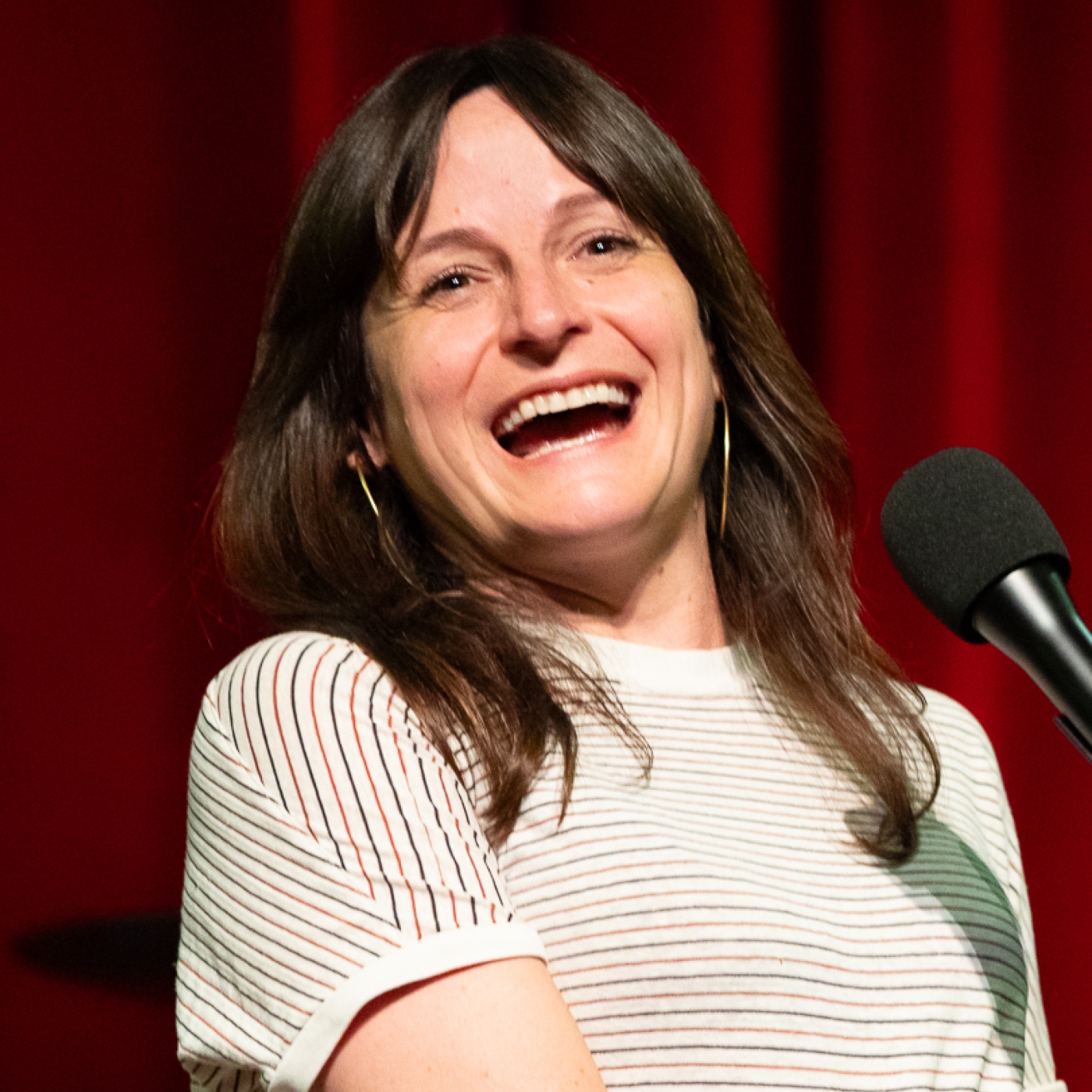
Live Wire with Luke Burbank
Karen Russell, Sam Miller, and David Ramirez
00:52:05
This episode features author Karen Russell, comedian Sam Miller, and music from singer-songwriter David Ramirez.
Loading summary
Transcript172 lines
- [00:03]
Luke Burbank
Hey there. Welcome to Livewire. I'm your host, Luke Burbank. This week on the show, we're gonna be talking to author and Pulitzer Prize finalist Karen Russell about her latest novel, the Antidote. It's sort of got some Grapes of Wrath elements meets the wizard of Oz meets the movie Hoosiers. Also, there's a talking cat. It all works beautifully though, just believe me on that. Then we're gonna hear some stand up comedy from Sam Miller. Sam does not hide the fact that that he's been to jail several times in his life and also that we are allowed to laugh with him about that part of his story. Finally, you gotta prepare yourself as Austin based singer songwriter David Ramirez is gonna deliver some of the most soulful, some of the most gut wrenching vocals you've heard in your life. And if you don't agree, we'll give you your money back. But I know it's not gonna come to that, so stick around. This week's episode of Livewire get started right after this.
- [01:00]
Anna J. Pizza
If you're a creative charting your own path, it's easy to get lost. I'm Anna J. Pizza. I'm a New York Times bestselling author and illustrator. My podcast, Creative Pep Talk is a weekly podcast companion for the creative journey. Full of interviews, stories and strategies, it is designed to help you move forward towards your best work. You can start with episode 502, how to Beat the Analysis Paralysis of the Right Path. It's a recent creative pep talk listener favorite.
- [01:30]
Luke Burbank
Livewire is brought to you by Progressive Insurance. You chose to hit play on this podcast today. Smart Choice make another smart choice with Auto Quote Explorer. To compare rates from multiple car insurance companies all at once, try it@progressive.com Progressive Casualty Insurance Company and affiliates not available in all states or situations. Prices vary based on how you buy. Support for this show comes from the Exploratorium. Leap into the wild new world of artificial intelligence this summer at the all new all ages Exhibition Adventures in AI now through September 14th at Pier 15. Tickets at Exploratorium.
- [02:10]
Elena Passarello
Edu AI from PRX. It's live life.
- [02:24]
Luke Burbank
This week.
- [02:24]
Elena Passarello
Author Karen Russell this book, I think.
- [02:27]
Karen Russell
It'S really exploring the way that you can have a collapse of memory that forecloses a lot of possibilities.
- [02:34]
Elena Passarello
Comedian Sam Miller if any of y'.
- [02:37]
Sam Miller
All are wondering if you have a problem with drugs or alcohol, just read your belly tattoo. What does yours say? Cause mine says, let's dance.
- [02:48]
Elena Passarello
With music from David Ramirez and our fabulous house band, I'm your announcer, Elena Passarello. And now, the host of Livewire, Luke Burbank.
- [03:04]
Luke Burbank
Welcome to Livewire, everyone. Thanks for coming out to the Alberta Rose Theater. We have a really fun show in store for you this week. But of course, we can't get started until we kick things off the way we always like to with a little thing we call the the best news we heard all week. Here's how this works. Things are hard out there, okay? But Livewire goes harder when it comes to finding you good news that is happening.
- [03:33]
Elena Passarello
Yeah.
- [03:34]
Luke Burbank
And we like to bring you those stories here at the top of the show to remind you that, in fact, there is good news happening out there in the world. Alaina, what's the best news you heard all week?
- [03:40]
Elena Passarello
Well, the worst news I've heard this week is that I forgot to bring my glasses. So let's just see how we do here.
- [03:46]
Luke Burbank
It's remarkable how quickly I've gone from does not need glasses guy to needs glasses guy to where the are my glasses guy. It's just like lightning fast.
- [03:58]
Elena Passarello
Well, thank you for the loner. I appreciate it. I'll give him back when it's your turn. I want to tell you the story, everyone, of a person named Heather Schmidt Jerush, who's a preschool teacher in Chicago, Illinois, and a gentleman named Dominic Jerush. They had a lovely Chicago wedding with 75 guests. And the sort of showstopper moment was Heather's father really wanted this family friend to perform the ceremony, but he was out of the country. And as a surprise, at the last minute, Father Bob walks in, performs the ceremony. It was great. It was super memorable. And then he had to get on a plane and fly back to South America. Didn't even get to stay for the reception. That wedding was 10 years ago, and the happy couple are still together. A few days ago, they were camping in. Even with my glasses, this looks like Point Patriarchy Lake, which I just don't think is the name of it. So anyway, Heather and Dominic camping at a lake. Heather's phone rings. It's her sister. And like most people with sisters, she's like, whatever. It's not important. Keeps calling, keeps calling. Heather picks up the phone. Father Bob is the pope.
- [05:05]
Karen Russell
Whoa.
- [05:07]
Luke Burbank
What?
- [05:11]
Elena Passarello
I'm sure you've heard this. Chicago born Robert Prevost, our first American Pope. I don't know if you've seen. There've been so many fun stories of people that knew him.
- [05:23]
Luke Burbank
I was in Chicago the day the news came out, and it was a situation. It was like Ferris Bueller's day off at the end. Just Pope related. So. Yeah, I mean, the stories have been kind of incredible. Of like the people that just knew him.
- [05:37]
Sam Miller
He.
- [05:37]
Luke Burbank
He was at a White Sox game.
- [05:38]
Elena Passarello
Yes.
- [05:39]
Luke Burbank
Just caught by the cameras being a fan.
- [05:41]
Elena Passarello
Yes. Or did you see the TikTok? I don't know if it's true or not, but it's a zoom call of a family going, mom's situationship from high school. Is the Pope now.
- [05:49]
Luke Burbank
Yes. And I do not want the facts to get in the way of that story at all.
- [05:54]
Sam Miller
Please.
- [05:54]
Luke Burbank
Same.
- [05:55]
Elena Passarello
Yes, same. So they all freaked out and they say their only regret is that Father Bob didn't get to stay for the cocktail reception because then they could have said that they had cocktails with the Pope. That is the best news that I heard this week.
- [06:07]
Luke Burbank
That's incredible. Okay. Thank you for giving me back our community glasses.
- [06:17]
Elena Passarello
Thank you.
- [06:17]
Luke Burbank
Yeah, that's a tough one to follow. And I don't know if I can. But I'll just tell you the story of a woman named Miranda Gonzalez in Houston. About 15 years ago, she got a cat, which she named Holly Marie Gonzalez. And she had a plan 15 years ago when she got this little kitten, which is that one day when the kitten turned 15, she was going to throw at a quinceanera. And not just like a low key event, a full on real quinceanera. She got her friends and family to serve as padrinos, which meant they donated to the event, which would happen maybe in a traditional quinceanera with like a human child. The party had a grand entrance for the cat. Holly the cat showed up in a remote controlled Bentley. And before the show, I was advocating for us to show a picture of the cat in the Bentley. I was reminded this is radio and so it doesn't matter. But I'd like you to observe the look on Elena Passarello's face when I show her a picture of the cat in the Bentley. Yeah. If you're in your car, pull over and Google cat quinceanera. Houston. This is a really cool part, though. Of course. Of course this went viral. Oh, by the way, other things, there was a father daughter dance. Love makes a family, Elena.
- [07:46]
Karen Russell
Absolutely.
- [07:47]
Luke Burbank
Don't you forget it. There was a cake, there was a mariachi band, a full mariachi band, who told the local media it was the first time they'd played a cat quinceanera.
- [07:55]
Elena Passarello
Oh, surprising.
- [07:57]
Luke Burbank
And of course, this went viral when it went to the Internet. And this is where things get really cool because Miranda decided to make this a fundraiser for A local cat shelter, a place called Almost Home Cat Haven. So when it started getting all this attention with the cat in the Bentley and everything, she started soliciting donations from the people that were spreading this video around and everything. And they raised so much money, they saved the cat shelter from closing. It was gonna close that week. What? It's in the article.
- [08:28]
Elena Passarello
It's a miracle.
- [08:29]
Luke Burbank
I'll loan you the glasses in a minute and you can read it. This is like something out of a movie. They were on the verge of closing, and the donations from the Cat Quinceanera Attention saved the Almost Home Cat Haven in Houston, Texas. So there you go. There is good news happening in the world, people. That's the best news I heard all week. Our next guest is the author of six books of fiction, including the novel Swamplandia, which was a finalist for the Pulitzer Prize and announced her arrival as a major American writer. Not for nothing, she's also a MacArthur genius award winner. Her latest eagerly anticipated novel, the Antidote, is out now, and we're so happy to have her back on Livewire. Please welcome Karen Russell to the show. Karen, welcome to Livewire.
- [09:34]
Karen Russell
Oh, I'm so happy to be back.
- [09:36]
Luke Burbank
We were talking backstage, and you said that this is sort of the end of the publicity run. You live here in the Portland area. Is it a great relief to be done not with just the writing of the book, but then the hard part, the promoting of the book.
- [09:50]
Karen Russell
Oh, my God, this is my favorite part. Just the Hooked on Phonics part. Like, it's written. I can't mess with it. It's so great to just drive across town to Livewire and to feel just sort of like a. Yeah, midlife. I don't know, like, chain smoking Denny's. Wait, like, what's up? Like, I'm not. I was thinking about my first visit when I was just, like, trembling and overwhelmed, and I was like, this is the coolest speakeasy in the world. Where am I now?
- [10:13]
Luke Burbank
You're just bringing that energy of a person who was nominated for a Pulitzer Prize and has absolutely delivered on all the kind of hype around, like, this next novel. I wonder what that was like for you to have so much success with Swamplandia and then kind of have so many people really anticipating the next big thing. You were going to do this book?
- [10:32]
Karen Russell
Yeah. Well, you know, it's interesting. I think some of the press around the book that surprised me slightly was like, woman comes out of coma after thousands of years with new book. And, you know, I had been Writing these short story collections and a novella that I put they were genuinely just as challenging and important to me as this novel or my first novel. So I think one thing I learned is the cultural cache of story collections is not equal to a novel. And that my family is more impressed by novels because they are sold in airports. That's really, it turns out, like there's no higher note to hit, you know.
- [11:11]
Luke Burbank
I want to read what Ron Charles wrote about the book in the Washington Post. Russell may be writing about a tiny town in the middle of nowhere, but the scale here is large. Into this book, she's packed a whiff of Steinbeck's grandeur. A murder mystery, the legacy of genocide, a young woman's coming of age, a Dickensian story of a missing baby, a warning about climate change, and even a talking cat.
- [11:36]
Karen Russell
I think the cat is really polarizing for a lot of people.
- [11:38]
Luke Burbank
Really?
- [11:39]
Karen Russell
Yeah. There are people who are like, yeah, and even a cat. And there are people like, ugh, and even a cat.
- [11:45]
Luke Burbank
I mean, it is an ambitious book. I'm wondering what was the genesis of it. Did you, like, read an article about the Dust bowl and just become fascinated? Like, when did this book start to become a thing in your mind?
- [11:56]
Karen Russell
I was telling Elena. I mean, it's pretty humbling in this way, too, because I got the idea really early on. I was still finishing my first novel, Swamplandia, which is about a family of alligator wrestlers and the Florida Everglades. And my joke at that time, which I thought was pretty funny, was that I was writing Drylandia, right? And then I just, I really struggled with it. It was, I think I wrote a lot of stories that felt connected to this world and sort of testing grounds for the ideas, you know, or in the landscape. But I would put it aside sometimes for years at a time. But much like a cat, it just kept coming back.
- [12:31]
Luke Burbank
We're talking to Karen Russell. Her latest book is the Antidote. This is Livewire Radio from prx. We are at the Alberta Rose Theater in Portland this week. We have many more questions for Karen, but not until we take this very short break. Back with more LIVEWIRE in just a moment. Special thanks to our sponsor, Up Up Books, a Portland bookshop specializing in diverse authors, local writers and independent presses. They're located across from Revolution hall in the Buckman neighborhood, and they offer a space for book clubs, workshops and events. Check out their website and grab a book@upupbooks.com welcome back to Livewire from PRX. We're at the Alberta Rose Theater this Week. I'm Luke Burbank here with Elena Passarello. We are talking to Karen Russell about her latest novel, the Antidote. Let's talk about the setting. Do you say Uz, Nebraska?
- [14:04]
Karen Russell
Well, I mispronounced it for most of its composition as ooze. Like Teenage Mutant Ninja Turtle ooze.
- [14:10]
Luke Burbank
Uh huh.
- [14:10]
Karen Russell
Secret of a Hebrew Scholar was like, of course, you know, it is Uz. And then I did know that.
- [14:15]
Luke Burbank
Okay, good. Uz, Nebraska. This is set in the 1930s. Who's living there? What are they living through? What's sort of going on there?
- [14:25]
Karen Russell
Yeah, so they're living through these apocalyptic clouds of dust that have swallowed the sun and are really, you know, kind of people are quite literally blowing off the map, you know, leaving this town. It's the Great Depression and the Dust bowl drought on the southern plains.
- [14:40]
Luke Burbank
And this thing really happened, right, this Black Sunday storm. Because this book is part history, part sort of fiction, part magic.
- [14:48]
Karen Russell
You know, it's historical and fantastical in that way. And the storm, you know, kind of feels genuinely so extreme that it's taking millions of tons of dust and dumping them as far east as Congress. I think it's really resonant with some of the extreme weather we've been living through in recent times. And you know, I started the book again right after the wildfires. I thought that was the hardest time of our.
- [15:12]
Luke Burbank
The fall.
- [15:13]
Karen Russell
2020 wildfires. Yeah, yeah. And so I think part of the book, the fantastical part, is that there's a witch who absorbs people's memories for them. She's like the town's memory bank. She calls herself a vault. And if there's something that was too, kind of too difficult to carry into the future, some event from your life too precious for daily reminiscence, you give it to this woman and yeah, she just takes it into the vault of her body and you can, you know, withdraw it at some later date. I was really interested in kind of the relationship between memory and history and sort of what sort of futures we can imagine. So this book, I think it's really exploring the way that you can have a collapse of memory that forecloses a lot of possibilities too. So it was about a bankruptcy of memory and these witch ladies in this town. So it's a problem for the town, right, because this woman goes bankrupt during the Black Sunday dust storm and she stored whole lifetimes for people, right. And so there's going to be a run on her like there was a run on the other banks. And she doesn't really have anything to return to people.
- [16:14]
Luke Burbank
I mean, that's such a genius idea that there would be a run on the bank, except it would be again, as you just said, these memories she's holding. Can you tell us a little bit about Del?
- [16:25]
Karen Russell
Yeah. So Del is this feral orphan. There's been a string of murders in this region and her mom is one of the victims. She's sent to live with her dusty bachelor uncle. It's like a very bad roommate situation. And she's a basketball star. Like, that's sort of what's getting her through. It's just like her. You know, that sound is just her heartbeat, the metronome. And there were these basketball teams. I sort of. There's a book called Dust Bowl Girls by Lydia Reeder. I mean, genuinely, if you have seen the pictures of this time, it's like a tsunami of dust is swallowing towns. Like every. People are dying of silicosis. And still these young women were like, practice is Wednesday, Mary. I'll see you at practice. You know, and really sort of that life wish was sort of incredible to me. So she's sort of in furious flight from her grief and she just is alive to play basketball. And at a certain point, like any enterprising young person, you know, these vaults, I imagine them as women living on the margins who sort of, you know, something happened to dynamite a space through them that they're now renting out as storage, essentially. So she's like. She has this roaring abyss inside her and she's like, maybe I can be a witch too.
- [17:32]
Luke Burbank
There are photos in this book that are real photos of the era, if I understand right. Which probably brings us to the character of Cleo, who's a photographer. She's a black woman who is basically sent out to sort of do like, publicity shots for like, Works Progress Era. Like, hey, look what we're doing with this, more or less. But a camera kind of goes haywire.
- [17:51]
Karen Russell
Yeah. So I became sort of obsessed with the New Deal photographers. And I bet a lot of you are familiar with them, even if you don't know that's the origin of these images. I mean, Migrant Mother by Dorothea Lange.
- [18:02]
Luke Burbank
And the woman.
- [18:03]
Elena Passarello
The woman is sort of going like this, looking really worried with her chin in her hands.
- [18:06]
Karen Russell
Yeah. And then later I think was like, what? Like, I have a lot of faces. Why is that the one that. I mean. And then the way. Yeah. Foreshadows how we all feel when our friends post.
- [18:15]
Luke Burbank
Yeah, that was the original. The original photo that was not cleared with the Friend group on Instagram.
- [18:21]
Karen Russell
I mean, really, I mean, people did experience it as a violence sometimes, right? I mean, I feel that even looking at author photos, as soon as you meet an author and their face moves, you're like, oh, I was totally wrong about you.
- [18:30]
Luke Burbank
You know, right from that era, there are these incredibly moving, both in the book and just generally out in the world of particularly the Dust bowl and people at the real just margin of life with just so little to their name. And there's something about how sort of authentic they appear that for those of us not in this situation, it's this kind of tourism. But it was their real life.
- [18:53]
Karen Russell
It was their real life. And you know, there is this Dust bowl exodus of half a million people who are leaving this region at that time. Cleo, I just, she's sort of inspired by all of the correspondence of these photographers who were sent out to introduce America to Americans. And as I was sort of learning about this project, there's this sort of shadow archive of hole punched images. And so some of these photos are in the book, the hole punch negatives that were never circulated or were never published. And I just thought there was something so resonant about that hole punch. There's something so violent about it.
- [19:24]
Elena Passarello
Why did they do it? Why did some of the images that you found have the hole punches in them that we see in the book?
- [19:29]
Karen Russell
So Roy Stryker, who was the kind of complex individual who helms this project, I mean, it's the only one of its kind, right? It's the same state sponsored, this government funded documentary project. There's always this kind of tension between the need to create propaganda essentially for the New Deal and its aid programs. It's very controversial. And also this documentary impulse. So Roy would put a literal hole punch through the work that wasn't going to be circulated. And his photographers, of course, hated that. I mean, the story I grew up with about the Dust bowl was very regional, it was very white. And so it was interesting to look at the work that was rejected sometimes for aesthetic reasons, you know, it was a duplicate. But sometimes also, you know, it's clearly a political calculation.
- [20:12]
Luke Burbank
Right? Because in the book, it's like Cleo. The feedback Cleo is getting is the powers that be are not really interested in photography that is actually depicting the diverse nature of the people that are out here living.
- [20:24]
Karen Russell
Yeah. And I mean, and it's complex, truly. I mean, there is diversity in the file. If you go, you'll see it. But there was some letters I read which would say, take pictures of Everyone, but please lay the emphasis on the white farmers. That has a much higher likelihood of being circulated. So then, as now, right. Thinking about what we are receiving, the stories we're receiving, what forces are shaping those images, I think what this ultimately led me to sort of explore was the way that things that can feel so entirely individual, right? Like the things that we don't even want to think about ourselves, or the things that we have to exile from our waking consciousness, like to get through a Wednesday. The stories that don't get passed down in families can in aggregate become like a mass denial, a mass forgetting. And I mean, you know, the gaps in my understanding of the Dust bowl will not be everybody's. But I was thinking a lot about, you know, as a young person, for example, I never connected the exodus of these primarily white tenant farmers from this region with this other dispossession that had happened not even half a century earlier of, you know, the dozens of native nations on the Great Plains. I knew about those two events, but I didn't see them as connected. They sort of lived almost in the way internalized like that. I had encountered them in textbooks, right in these separate boxes. So I think trying to kind of widen the aperture of how we hold this history ended up feeling really important to me. And it's a tricky thing to talk about too, because I've had people ask me, well, why are there witches in this? It was already so extreme, so fantastical. And I just think there's a way where the scale of that kind of willful amnesia or the scale of that loss, it's just hard to come at in a strictly realist book or I wouldn't know how to write that book. I really needed that conceit to sort of engage with that.
- [22:15]
Luke Burbank
And also this idea that Del's uncle came over from Poland, right. And these were people that were serfs over there, more or less, and had nothing, and then came here and then were told by the US Government, head out to Nebraska, where there's all this free land, and ask no questions about who was here before. And so they come out and are just toiling. And for there to be, in a way like pain is not a zero sum game. Right. And the pain of the native people that were there and displaced is horrible and should be acknowledged. And it doesn't mean there's no pain for Del's uncle. And trying to figure out how to sort of reconcile all that is complicated. And it's also kind of a central theme of the book.
- [22:58]
Karen Russell
Yeah, I think that's really essential work. Right. I found myself thinking about that a lot. Like, definitely not wanting to minimize the suffering of people who are losing their homes during the Great Depression. Like, to lose one's home is a devastating thing. But also maybe wanting to look at the way this contract gets set up and the way that it is truly poisoned from the start. Right. And that is part of our nation's story. I mean, it's, you know, a place where, like, these ideals, these beautiful ideals that we all hold, I think we can see today. Right. We do not live up to those ideals. And freedom has always meant freedom for some here. So that the resonances between these stories, I didn't know kind of going into this. And it came to feel like the real heart of this story project in some ways. You know, I'll tell you, my own grandparents were, you know, my grandma came from Sicily and my grandpa was a Slav. Debated, like, was he Polish? Was he Ukrainian? We debated. They talk about, like, what people sacrificed to come here to give their children this new life. I don't know that we always look at these federal land policies, for example, which are really designed to as land grabs, as ways to remove native nations who held land in common, you know, or had different ownership structures, fundamentally change.
- [24:11]
Luke Burbank
The nature of the land so that you then are very vulnerable to something like the dust bowl happening.
- [24:17]
Karen Russell
Absolutely. The way that agriculture is happening there, you know, with cash crop agriculture, with a market system that really pushes people towards monoculture. I mean, it's the system that we still have today. So I think, you know, also, I'm going to say there are some jokes in this book. This sounds really, really dire. There's joy in the book too, because that's like, what we are. But I thought that ended up feeling really like the conscience of the book to me, in a way. And it felt powerful. It's gonna sound so reductive outside the context of this story. But this settler and I really related to him, he just keeps saying, what choice do I have? Like, I'm just one guy. I'm destitute. This is what's on offer. I can prove up on this land. Yeah. Now I'm a colonizer in this new place. What choice do I have? And I was thinking, what a lonely question. And one that's very familiar to me as someone who every day is like, so scrolling through and accepting the terms and conditions. Right. Every day. And so I don't, you know. But I was thinking about shifting out of that kind of rhetoric of resignation and into Something powerful. And I felt like that sort of happened to me outside of the book in a funny way. While I was researching it. Like, I met the most generous, the most brilliant, these incredible people, all of whom are working for a more just world in, like, different ways. And I was like, oh, what choices do we have? Is the question. Like, it's a great question when it's intoned as a real question.
- [25:37]
Luke Burbank
Yeah. All of the sort of rapturous reviews and appreciation you've been getting over this book, Karen, is totally deserved. I'm curious though, if you never have to come up with another way to describe large amounts of dust for like the rest of your life, will that be fine?
- [25:55]
Karen Russell
Yeah, I think that's my goal. My new goal is for the jokes to dust ratio to shift in the direction of jokes.
- [26:03]
Luke Burbank
Well, when you do that, we'll be reading that as well. The book is the Antidote. Karen Russell, thank you so much for coming on Livewire.
- [26:08]
Karen Russell
Thank you so much.
- [26:13]
Luke Burbank
That was award winning author Karen Russell right here on Livewire. Her latest book, the Antidote, is available for you to read right now. Hey, special thanks this episode to Mitch Stanley, of course, Portland, Oregon, who is part of the Livewire member community and is generously supporting our show with a donation each month. And we are so grateful for the support, Mitch. It is the way that we can keep Livewire going. I don't know if you've heard funding for public radio a little dicey right now, so thank goodness we've got Mitch Stanley of Portland, Oregon, helping us out. You're tuned in to Livewire. I'm Luke Burbank here with Elena Passarello. Of course, each week we like to ask the Livewire audience a question. This week, we were inspired by Karen Russell's fascination with memory related to her new book, which is called the Antidote. Elena, what did we ask the Livewire audience?
- [27:18]
Elena Passarello
We asked them to tell us a small memory that they'd like to preserve from forever.
- [27:23]
Luke Burbank
Okay, so here's what we actually did. We went out into the audience at a recent taping of the show to collect those answers. Let's hear what people were saying. This is Gene swimming with turtles in Kauai.
- [27:36]
Karen Russell
I felt like I was in the.
- [27:38]
Elena Passarello
Flow of the universe and I was where I needed to be.
- [27:42]
Luke Burbank
Swimming with turtles in Kauai. Have you ever done that?
- [27:45]
Elena Passarello
No, I've never swum with any turtles, except for, like, nasty box snapping turtles in, like, some kind of South Carolina creek.
- [27:53]
Luke Burbank
A moment that you did not feel like you were in the flow of life?
- [27:55]
Elena Passarello
No, no. I felt like I wanted to get out of the flow of the river because those things are scary.
- [28:00]
Luke Burbank
I was always afraid to go in the water in Hawaii because of sharks. This is a true thing until, like, three years ago. And then I got over my fear, and I did that thing that Gene was talking about. I went swimming with turtles. And it was, in fact, amazing.
- [28:14]
Elena Passarello
Yeah.
- [28:15]
Luke Burbank
Yeah. Here's something that Michelle wanted to remember forever.
- [28:19]
Karen Russell
Building a jump in the snow and daring each other in our toboggans to go over the jump. And I actually did it going backwards. So that was, like, success of my youth.
- [28:35]
Elena Passarello
Nice.
- [28:36]
Luke Burbank
You never know when you're going to be experiencing the high point of your youth, right?
- [28:40]
Elena Passarello
No, yeah. This sounds like a literal high point. A high point while traveling backwards, too. Go, Jill.
- [28:45]
Luke Burbank
Yeah, absolutely. That's got powerful. It's a Wonderful life vibrations, like the beginning of the movie when they're sliding down on the ice and George gets his bad ear saving his brother. Okay, here's something that Paige wants to never forget. I think there's a small memory I.
- [29:00]
Karen Russell
Have of hiking in the Hoh rainforest.
- [29:03]
Luke Burbank
In the Olympic national park. And it was a beautiful spring day in March. No rain that day, miraculously. And my partner and I took a nap on a bed of moss, and it was brilliant. Oh, my gosh. Did you also drink water out of a leaf? Were you Fern gully? What was going on with this?
- [29:23]
Elena Passarello
That was the most Pacific Northwest. Have you noticed that all of our audience cards have been taking place outside?
- [29:29]
Luke Burbank
Yes.
- [29:30]
Elena Passarello
People's big memories happen outside the house, which is a good directive, I guess, for all of us to get out.
- [29:34]
Luke Burbank
That is a really good thing to remember. Also, I don't know how I would go about discussing with my partner, it's time to nap on this moss.
- [29:41]
Elena Passarello
Maybe in their dating profile, it was like, turn ons, moss naps.
- [29:45]
Luke Burbank
Well, they met the right people. Okay, one more of these from Steve. A memory Steve wants to hold on to when my parents made me ride to Canada in the back of a pickup truck from Texas.
- [29:58]
Karen Russell
Whoa.
- [29:59]
Luke Burbank
We forgot to mention Steve is a golden retriever.
- [30:01]
Elena Passarello
Yeah, that's a very, like, Gen X memory. You know, there's a song cut off where that stops being a memory and starts being, like, a traumatic.
- [30:11]
Luke Burbank
Well, yeah, Certainly a traffic violation in this day and age. I mean, the sheer number of miles I covered in my childhood in the back of pickup trucks, that was a big part of growing up in the 80s.
- [30:22]
Elena Passarello
Nice.
- [30:23]
Luke Burbank
Anyway, thank you so much to everyone who took a trip down Memory lane with us. We really do appreciate you. All right, let's get to our next guest. A nationally touring comedian from here in the Pacific Northwest. His comedy often mines his incredible life story, which includes addiction, pretty recovery, dating while sober, and, of course, what the jails are really like in Yakima, Washington. His debut album, round trip, hit number one on iTunes and was the runner up in the 2021 Seattle International Comedy Competition. Sam Miller joined us at the Alberta Rose Theater in Portland, Oregon. Take a listen to.
- [31:07]
Sam Miller
Portland. How we doing, man? It's good to be here. I'll introduce myself. My name is Sam Miller. I'm from Olympia, Washington. I'm six foot six. I'm 360 pounds, I got two kids. I've been married 13 years, and come June, I'll have been clean and sober for 17 years. Thank you. Thank you. Yeah. Yeah. Sometimes people ask me, they're like, sam, what was it like when you were drinking and doing drugs? And I just show him this tattoo. For those of you that can't see, that tattoo says, let's dance. If any of y' all are wondering if you have a problem with drugs or alcohol, just read your belly tattoo. What does yours say? Cause mine says, let's dance, which is wild because I don't enjoy dancing at all. Yeah, it was bad. I used to get in a lot of trouble. I'm not proud of this. I used to fight the cops a lot. Pro tip. Don't do it. Yeah, they cheat. Yeah. Yeah. You think you're fighting one cop, by the time you get your shirt off, there's eight of them. You know, it's not cool at all. I used to go to jail a lot. Yeah, jail sucks, man. Yeah, they won't even let you leave. Wouldn't be so bad if you could go home every day. That'd be like a job. That's my thinking joke. Yeah, man, we used to watch a lot of TV in jail. Any want to guess what our favorite TV show was? Cops. Yeah, man, this crowd is cooler than I thought. Yeah, Yeah, A lot of you got that. You didn't use your guessing voice. You guys were like, cops, move on. Yeah, you're right, though, man. I love Cops, man. We used to watch that in jail. The guards, they'd make fun of us, you know? They'd be like, ain't you guys tired of seeing cops? I'd be like, dude, that's tv. They can't arrest me anymore. Actually, as you see me right now, I am maximum arrested. And then I'd get That for real, like that righteous anger, you know, I'd be like, in fact, I can't get any more in jail, so why do you get out of my face, yo, you can get more in jail. Yeah, There's a jail within the jail. It's even jealous, man. Yeah. If I'd have known they had a basement, I would have been running my mouth, man. That was awful. That's another sign you might have a drug problem if you've been arrested in jail. That's not good at all. Yeah, I was confused, man. I'm in jail, I'm being handcuffed. I'm in jail, I'm being handcuffed. I was like, where are you taking me, ma' am? I'm here. You know, Walk me in a circle and cut me loose. This kind of just as that, man. Doing good now, though, man. I got two kids. One of them's on purpose. Yeah, cha cha cha. You guys thought it was some loser ex con I got on purpose kid. I love my kids. The accent one, the other one, they're cool. They got big heads, though. I got big headed kids. They look like Lego people. Yeah, I know. My kids got fat heads because it rains and their shoulders don't get wet. I told that joke in case the jail jokes made some of you upset. So I was like, I'm a good guy now. You're welcome. Yeah, I met my wife when I was four months sober. I was still homeless, but I didn't tell her that. You know, if you want to know, man, it's our dating people. The young folks think it's hard dating on the apps. Try dating when you're homeless. That's hard. You ever try to get a middle class lady under a tarp with you? Yeah, they won't do it. Yeah, I try everything. Land a middle class lady, man. I love middle class ladies. I used to spray paint Live laugh love on my tarp. It's your motto. But yeah, me and my wife, though, we got a good thing going, man. She let me move in way too early, you know, she had bad boundaries. Thank God. I was pumped. Yeah. Moving in, it was my idea, you know, I was like. I was like, we should move in. She's like, it's kind of early. I'm like, not really, you know, storm's coming, you know. Thank you. Yeah, it's cool, man. I love my life today. I'm on the road a lot. I go all over the country now. I'm very grateful. I'll be honest. Like, I don't Have a lot of cravings for drugs and alcohol anymore. I work hard on my recovery, but there are other things out there that a man could fall into, you know? But I'll tell you this. I would never cheat on my wife, okay? Because she's also kind of my landlord. You know what I'm saying? Yeah. I would never cheat on my wife. Especially in the winter. Yeah, that accident. Kid really screwed it up, though, man. That was wild. I don't know if you guys know this, but I was not necessarily father material 10 years ago. You know what I mean? It was bad. I was driving a 2003 Kia Spectra. I'm £360. That car was way too small. Yeah. I used to fart and my ears would pop. That's a science joke. I was like, all right, man, let's go. Live wire. I do my smart ones tonight. But, yeah, man, I didn't want to be a dad. I was scared, you know? My wife got pregnant. I don't know why I said it like that. I was there when she got pregnant. But, yeah, she was pregnant. This is my first kid. He was born at the nice hospital on the east side. Our second kid was born at the crappy one on the west side because we didn't pay her bill. But anyway, even up to that point, I'm still terrified of being a dad. Like, I'm so scared. You know, we're at the hospital, she's on this bed or, like, feed her in the air. I'm watching this, and I've had some wild. I used to eat LSD and jump off of waterfalls. All right? Childbirth is crazier than that. Childbirth is insane. Because even up, up to the point of actual delivery, I still did not want to be a dad. But the most amazing thing happened in my life the minute I saw the top of that kid's head. I loved him. It broke me wide open. I've never loved anything that much in my life. And it happened all of a sudden, and I already loved her. Childbirth is crazy. I saw a thing that I love come out of a thing that I love. It's incredible. It's like if a cheeseburger pooped a hot dog. By the way, just so you know, all the jokes you've heard tonight, that's the one my wife don't like. She don't like that one. Yeah. She's like, why do I gotta be a cheeseburger? I'm like, it's gotta be bigger than a hot dog. Yeah. Yeah. It doesn't make any Sense. Hey, thank you so much, man. I'm on Livewire. Bye.
- [39:13]
Luke Burbank
Sam Miller, everybody. That was comedian Sam Miller, recorded live at the Alberta Rose Theater in Portland, Oregon. All right, here we go again. It's time for a little station location identification examination. Now, if this is your first time listening to Livewire, first of all, where have you been? Second of all, here's how this works. I will ask our esteemed announcer Elena Passarello a series of questions about a place in the United States where Livewire is on the radio. And Elena's gonna try to guess where that place is. Are you ready?
- [39:59]
Elena Passarello
I am ready now.
- [40:01]
Luke Burbank
You have an unbelievable facility with these things, Alayna, but I think even you might be slightly thwarted by the first clue.
- [40:08]
Elena Passarello
Oh, no.
- [40:09]
Luke Burbank
The population of this place, Elena, was 107 at the 2020 census. That was up from 28 people the previous time. Whoa. That's a population explosion.
- [40:21]
Elena Passarello
Yeah. That's like 75%.
- [40:23]
Luke Burbank
Yes.
- [40:24]
Elena Passarello
So places with towns that small, thinking west.
- [40:28]
Luke Burbank
How about so far northwest that it was once thought of as Seward's Folly?
- [40:32]
Elena Passarello
Okay. Yeah. So we're going to Alaska.
- [40:33]
Luke Burbank
Yes.
- [40:33]
Elena Passarello
Nice. Thank you. Okay. Ooh, I don't know. I think that might be it for me.
- [40:39]
Luke Burbank
How about this? This is actually an interesting place to take the hinting not so much into Alaska, but into US History involving a name that is also the name of this town. It shares its name with a Wisconsin senator who is linked to very controversial political practices. Somethingism.
- [41:00]
Elena Passarello
McCarthy, Alaska.
- [41:03]
Luke Burbank
McCarthy, Alaska, home of KXKM Radio. And I have this in the notes from our executive producer, Laura Haddon. If someone is hearing us in McCarthy, Alaska right now, email us and we will send you a tote bag.
- [41:16]
David Ramirez
Yeah.
- [41:17]
Elena Passarello
Each and every one of you.
- [41:18]
Luke Burbank
That's right. We have about 107 extra tote bags that we're looking to send out there.
- [41:22]
Elena Passarello
We should do an audience card where we just ask. Ask the citizens of McCarthy, Alaska to answer the audience card.
- [41:29]
Luke Burbank
We should do a live taping of live wire in McCarthy, Alaska. Now, that would be fun.
- [41:35]
Elena Passarello
I wonder how you get there. I bet the transpo involves planes, trains, and automobiles.
- [41:39]
Luke Burbank
I think that's just a start to getting to McCarthy, Alaska. That'll get you to Juneau or something. The jumping off point. Anyway, shout out to all 107 people listening to us in McCarthy, Alaska on KX K. This is Livewire. We have to take a very quick break, but do not go anywhere. When we return, singer songwriter David Ramirez will play us some incredible music. So stay with us. This is Livewire welcome back to LIVEWIRE from prx. I'm Luke Burbank here with Elena Passarello. All right, before we get to David Ramirez's music, a little preview of what we're going to be doing on the show next week. We're going to talk to the writer and poet Saeed Jones, who will chat with us about his 2022 collection of poems called Alive at the End of the World. It's a book wherein he explores grief and life and being a black queer person in a world that I don't think I need to even say this on the show kind of feels like it's going to end all of the time. Then we're going to be talking to the best of bestselling novelist Sylvia Moreno Garcia about her book the daughter of Dr. Moreau. We're gonna find out what happened to Sylvia after she was freely allowed to watch horror movies at the age of five. Then we're gonna hear some music from the indie folk duo the Lowest Hair. So that is coming up next week on livewire. In the meantime, our musical guest this week was awarded Songwriter of the Year by the Austin Chronicle recognizing his contributions to the musical scene in, you may have guessed it, Austin, Texas, where he lives. NPR calls him the ever moody innovator of Americana, which I tend to trust NPR's opinion on all things moody. His latest album is called all the not so Gentle Reminders, which he describes as a much needed love letter to his younger self, a sentiment that actually made the entire theater go awe when he said this. David Ramirez joined us at the Alberta Rose Theater in Portland, Oregon. Take a listen to this. Your, your latest album comes out in like at midnight, three hours. Yeah. Is it midnight Austin or midnight west coast or.
- [43:53]
David Ramirez
I think it's out in London, but. So it's just like the New Year's, I suppose.
- [43:58]
Luke Burbank
Yeah. Right.
- [43:59]
David Ramirez
Yeah.
- [43:59]
Luke Burbank
What was the process of recording the new album? Did you do it in Austin?
- [44:02]
David Ramirez
I did it in Austin, yeah. This one was an interesting one for a minute. There was last record I released was 2020 and after, you know, the shutdown and the world slowly coming back and I was going through a pretty decent heartbreak and I was pretty dead set on throwing in the towel and not wanting to do it anymore and not really identifying as a creator or writer and, you know, the new world and who am I going to be and who do I want to be? And thankfully, I was around some really, really close friends who pulled me out of that rut. And then I just went out to this really Sweet cabin out in Waverly, Alabama, and have some friends that own this really beautiful venue out there called Standard Deluxe. And they had a cabin that was empty, and I just brought all my gear, and it was the first time for me to write in that capacity, but there was just a lot of fear going into it. And do I still have the curiosity that it takes to make something that I'm really proud of and to isolate myself in the past? It's been a very dangerous thing.
- [45:04]
Luke Burbank
Sure.
- [45:05]
David Ramirez
But this was necessary for me, and it was a lot of fun. And, you know, you hit that 10 day mark knowing that you'll be out there for four weeks in the middle of nowhere, and you start going a little crazy. And then.
- [45:17]
Elena Passarello
Were you all alone?
- [45:18]
Luke Burbank
All alone.
- [45:18]
David Ramirez
All alone. All alone, all alone.
- [45:19]
Elena Passarello
Was nobody in the other cabins?
- [45:20]
David Ramirez
Well, the couple who live and own the property, I would, you know, text them and shoot the messages like, y' all are welcome to come by, like, have a glass of wine. But I think they were really trying to respect my space and. But, yeah, after about, I don't know, 10, 12, 14 days, I started kind of, you know, feeling normal again and really enjoying the space. And then. And then came back home, and we tracked it a year ago in Austin.
- [45:45]
Luke Burbank
So that was a healing process for you, Because I could see that really going either way, that amount of solitude. Sure.
- [45:51]
David Ramirez
Yeah. No, it was. It was healing. It was just nice to fall in love with the kid who fell in love with music again. And I had missed that little guy. And I'm gonna cry.
- [46:06]
Luke Burbank
I think my therapist calls that attending to yourself, David. I think that's a.
- [46:09]
David Ramirez
Okay, yeah, yeah. No, it is very, very sweet and nice, but that was. It was very healing and very necessary, and I'm glad that there were people in my life who were not just pushing me to, you know, make something, but pushing me to be myself. Yeah.
- [46:25]
Luke Burbank
What song are we gonna hear?
- [46:26]
David Ramirez
I've written a lot of songs for my mother and my great grandmother and my siblings, but I have yet to really get one out about my father. And when I look back at my love for music, all of it came from him giving me a Walkman when I was 10 years old and sharing all his favorite cassettes with me. And, yeah, I feel like this song's been kind of waiting in the wings for a very long time. This is called the Music Man.
- [46:45]
Luke Burbank
This is David Ramirez here on Livewire.
- [47:04]
G
Back when it was all simple, Back when I wasn't afraid, Back when time was my best friend and I would laugh at the grave My daddy gave me a Walkman My daddy gave me tape Before I knew any better I put it in and press the play so take a look at me now I'm quite the music man Take a look at the crowd all here for the music man we're all here for the music Sat began to turn the magnets both took control My world flipped upside down through cheap plastic headphones Sometimes the little things cause the biggest scene the tiny pebble in my shoe A big bottom in blue jeans so take a look at me now I'm quite the music man Take a look at the crowd O Jesus Here for the music man we're all here for the music it's the music Sam.
- [50:19]
Sam Miller
Take a.
- [50:20]
G
Look at me now oh, I'm quiet the music man Take a look at the crowd oh, here for the music Take a look at me now I'm quite the music man Take a look at the crowd all here for the music we're all here for the music it's the music we're all here.
- [51:36]
Elena Passarello
We'Re.
- [51:36]
G
All here we're all here.
- [51:45]
Elena Passarello
We'Re all.
- [51:47]
Karen Russell
Here.
- [51:51]
G
All the time Music.
- [52:07]
Sam Miller
Thank you.
- [52:08]
David Ramirez
Thanks. Thank you, Portland.
- [52:10]
Sam Miller
I appreciate it. Thanks for that.
- [52:16]
Luke Burbank
That was David Ramirez right here on Livewire performing his song Music Man. That's off his latest album, all the not so Gentle Reminders. All right, that is gonna do it for this week's episode of Livewire. A huge thanks to our guests Karen Russell, Sam Miller and David Ramirez.
- [52:37]
Elena Passarello
Lara Haddon is our executive producer. Heather D. Michel is our executive director, and our producer and editor is Melanie Savchenko. Our technical director is Eben Hoffer. Hazik bin Ahmad Farid is our assistant editor. And our house sound is by Dneil Blake. Ashley park is our production fellow.
- [52:52]
Luke Burbank
Valentine Keck is our operations manager. Andrea Castro Martinez is our marketing associate, and Ezra Veenstra runs our front of house. Our house band is Sam Pinkerton, Ethan Fox, Tucker, Eyal Alves, and A. Walker Spring, who also composes our music. This episode was mixed by Eben Hoffer and Hazik bin Ahmad Farid.
- [53:10]
Elena Passarello
Additional funding provided by the Marie Lanfram Charitable Foundation. Livewire was created by Robin Tenenbaum and Kate Sokoloff. And this week we'd like to thank member Mitch Stanley of Portland, Oregon.
- [53:21]
Luke Burbank
For more information about our show or how you can listen to our podcast, head on over to livewireradio.org I'm Luke Burbank Fer Elena Passarello and the whole Livewire team. Thank you for listening and we will see you next week. Wouldn't it be amazing to have a piping hot episode of Livewire delivered right to your heart and ears each week? Well, guess what? That can happen when you subscribe to the Livewire podcast feed. And you'll get the joy of surprising conversation every week. So go ahead and do it. It's super easy. You click on the button at the top of your podcast app and bam. You are Livewire subscribed. And if you're still, you know, feeling the love, if you're enjoying the show, hey, maybe you could hook us up and leave us a quick review that'll help more people find out about Livewire. And thank you.
- [54:29]
Karen Russell
From prx.