← Live Wire with Luke Burbank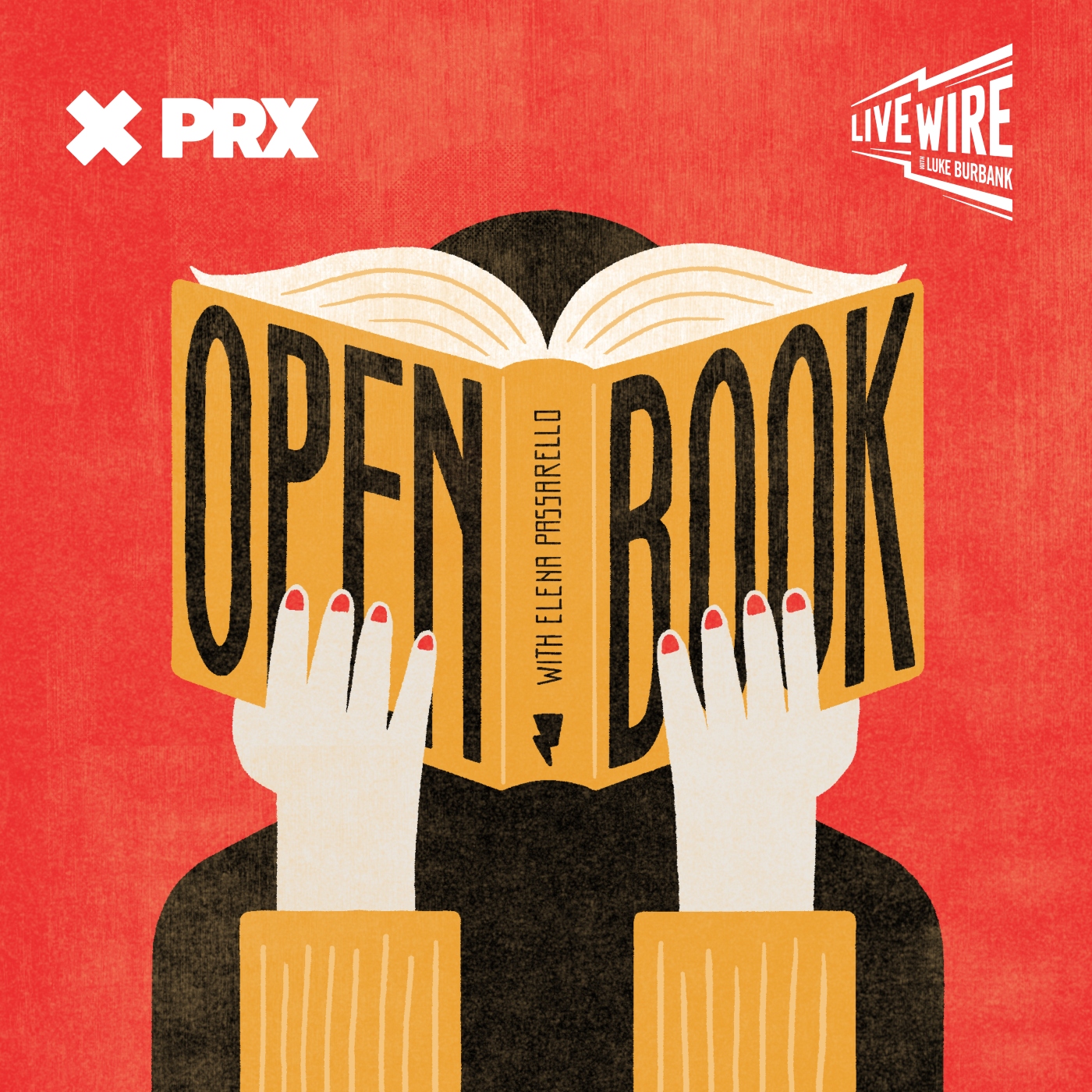
Live Wire with Luke Burbank
Open Book: Karen Russell
00:21:27
Open Book is a literary limited series featuring some of today’s most celebrated authors riffing on reading habits and bookish hot takes.
Loading summary
Transcript111 lines
- [00:00]
Announcer
Livewire is brought to you by Progressive Insurance. Fiscally irresponsible financial geniuses, monetary magicians. These are things people say about drivers who switch their car insurance to Progressive and save hundreds. Visit progressive.com to see if you could save Progressive Casualty Insurance Company and affiliates. Potential savings will vary. Not available in all states or situations.
- [00:27]
Elena Passarello
Hi there. I'm writer Elena Passarello, and this is Open Book, a literary podcast from Livewire Radio, brought to you by Powell's Books, where we talk to writers about their reading habits. Now, when I'm not having fun being Livewire's announcer, writing is my job. I am the author of two nonfiction books, and I'm currently mired in a third book project. Please wish me luck. And outside my own writing projects, I teach the next generation of memoirists and essayists and in an MFA program here in Oregon. And all of this is just to say that books are, without exaggeration, my whole life. On this inaugural episode of Open Book, we are talking to the one and only Karen Russell. Karen has written several works of fiction, including her novel Swamplandia, which was a finalist for the Pulitzer Prize. She's also the recipient of a MacArthur genius grant. And her latest is the Antidote. It is just this mesmerizing novel that's both well researched and. And totally surprising. I would call it a fantastical Dust bowl epic. And now she lives in damp, not very dusty Portland, but her career thus far can be described as both fantastical and epic, too. I gotta tell you, I had a blast talking to Karen about going wild.
- [01:47]
Karen Russell
In the public library as a kid, which we both did.
- [01:50]
Elena Passarello
About whether or not Jane Eyre should be shelved in the horror section, and about how becoming a spirit sports mom can really help make a dent in your to be read pile. Karen also gives us all quite a few book recommendations along the way, so you'll want to keep your ears peeled for that. So now, without further ado, here she is. This is Karen Russell on Open Book.
- [02:16]
Karen Russell
Oh, my gosh. Karen Russell, welcome to Open Book.
- [02:20]
Hey, Elena, it's nice to see you again.
- [02:22]
I am so excited to be talking to you, but this is gonna be like torture for me because I am enthralled in your latest novel, the Antidote. And that is not what we're here to talk about. So before we begin, let me just say America and all the ships at sea. You should check this book out. It will make it difficult for you to go to work because you will want to keep reading it. But I want to talk about what Books make you not want to go to work and keep reading. So as. As a reader, maybe we could start there. As a reader, do you have a memory of a book that just kind of kept you in your chair, ignoring your deadlines, obligations, children, whatever?
- [03:00]
For sure. I was just now getting really excited about all the ships at sea and like all the mariners reading the Antidote and just on Antarctica abandoning their posts.
- [03:09]
That sounds great. Periscope down.
- [03:11]
Yeah. I mean, I think that there's always that tension, right? Like I really do, especially as a younger person. I absolutely did all my real living in books. I mean, that was the door that I would carry around. Like it is not hyperbole to say that book saved my life. And I was also like a sci fi fantasy nerd at that time. I still am, you know, but yeah, I just went through different seasons. I really loved like the Last Unicorn by Peter S. Beagle, a fantasy classic when I was like very young. But I loved, you know, the Heart is a Lonely Hunter. It was one of my favorite books and I think it like, deeply imprinted on me. I think this book owes a great debt to that one.
- [03:45]
The Heart is a Lonely Hunter.
- [03:46]
Yeah, by Carson McCullers, who was really kind of a baby when she wrote that masterpiece. Their eyes were watching God. I loved 100 Years of Solitude, but also, you know, Stephen King, I really loved. You know, I loved. I went through a phase where horror, I don't know, spoke deeply to me. And I would just go to sixth grade looking like a gaunt veteran of war, you know? Cause I hadn't slept in weeks.
- [04:07]
Cause you were up all night reading. Thinner.
- [04:09]
I was up all night reading it. Yeah, exactly, right. And then I would just be like, sorry, like Ms. Timmis, were you reading.
- [04:17]
These kinds of books roughly at the same time? Like the Carson McCullers, the Stephen King, the fantasy. Were you?
- [04:22]
I really was. And I had this deal, you know, I think my mom was skeptical of genre books and in part because our library would put this like, I don't know, diminishing sticker on them of like a cross eyed dragon or like a scary alien, you know. So I think she had just internalized some hierarchy, which many people do, right. Where she was like, well, literature is the Brontes and Ray Bradbury must be. I don't know what it is. It has this like, you know, foolish dragon on it, indicating that it's. It's not high literature. And of course I. One of the consequences of, you know, getting all of these books, I could get, you know, If I got Jane Eyre, I could get Cujo, for example. That was the deal that we brokered. And I think it made me question some of these kind of taxonomies. Right. I was like, well, they're ghosts and Jane Eyre, you know, like, I mean, I really started to question as a very young person why certain things are categorized as they are, you know, and.
- [05:13]
A rabid dog could totally show up at Mr. Rochester's house 100% easily or easily.
- [05:19]
What is scarier? Why is that not shelved as horror, for example? Right. Or why is. I mean, Stephen King has a book, the Girl who Loved Tom Gordon that I teach. I think it's such a perfect book. And I think he's really like one of our. For as lauded as he is, but like an undersung prose stylist. So, yeah, I think reading like an omnivore at that early age for sure marked me in some way.
- [05:40]
Karen, we were talking off mic about I'm the same way where like zoom is sort of a technological marvel if I can make it work. And you said the same thing. What is your experience as a reader with different technological devices that aren't paper. Are you an audiobook person or a Kindle person?
- [06:00]
Yeah, I think now that I have become to my own incredulity, a sports mom. Like, I drive my 8 year old to like many sports games and it's great to have audiobooks.
- [06:11]
Okay.
- [06:12]
Although I will say there's a lot of protestations. There's not always so much in the shaded vent of what we're all keen to listen to.
- [06:19]
Right. Because you're not doing what I do, where you listen to an audiobook by yourself. There's an 8 year old who's probably weighing in on Cujo. What are you listening to?
- [06:29]
Or watching a guy play basketball. In his mind, I feel like he's strong. He powerfully disassociates when I have an adult book on or NPR or whatever.
- [06:40]
What about. Do you ever do.
- [06:41]
It's an important skill.
- [06:42]
Yeah. Well, I mean, disassociating. Yeah. Yeah. What do you think about E readers?
- [06:47]
I mean, I do. I love them when I'm traveling because it turns out that it's impossible to pack like nine hardcover books, you know, and also, you know, clothes to hide your nudity. So it's good to have a Kindle for that reason. And I actually like fiction. I really has to be analog for me usually I prefer it to be and stuff where there's sort of, you know, where something is happening at the sentence level, where it's not, you know, nonfiction is a little easier, I think, because it's just a different demand. It's like, you know, things are often pretty explicit, and it's. The information transfer is just happening in a different way. And I think fiction, like, if I kind of get distracted or. Yeah. If I'm driving, you know, I don't have, like, the full capacity to attend to whatever is. Micropulsing.
- [07:34]
No. Fiction. Audiobook.
- [07:36]
Sometimes. I mean. Sometimes. Sometimes. I mean, I'm now in this new perverse zone where I'll have, like, the. I'll be reading and I'll also have the audiobook.
- [07:44]
Yeah.
- [07:45]
Do you do that?
- [07:46]
Yes, all the time.
- [07:47]
Oh, good.
- [07:47]
I kind of love it. Like, there's certain kinds of books where I think the. When the on ramp is audio, I get more engaged. But I think, like, with the antidote, where we're kind of meeting different voices really early on, I think paper is better so I can kind of slowly absorb what's happening. Also, there's visuals in there, so I really like the opportunity to kind of pick my on ramp.
- [08:12]
I totally agree. I was just remembering when my son was born, I listened to Lincoln and the Bardo as an audiobook. I will say I had to immediately pivot to the hardcover because it was voiced by 11 billion actors, and I just was not capable. Like, I was, like, already, like, teetering on the edge of madness, like, insomnia, you know, And I was like, you know, George, I got to meet you on the page. That.
- [08:37]
Yeah, that's an interesting. Because you think that would be perfect as an audiobook because it's poly vocal, as we would say in our classrooms. But the other thing about the audiobook that got me was one of the voices was, like, Ron Swanson, Nick Offerman, who we love, who's been on Livewire. So that's another reason why I pick paper over audio. When I have already decided how the characters are and they sound in my head. Sometimes I can't go to another perfectly valid interpretation that the book actor is doing.
- [09:04]
Oh, totally. You know, I was kind of doing this toggling between the paper book and the audiobook for Louise Erdrich's the Mighty Red, which it is excellent. And she reads her own work. And so there's something instructive about it. It's sort of like hearing the music composed on the original instrument. I always think I learned something. I noticed no one's ever asked me to read my own audiobooks.
- [09:27]
Is that true?
- [09:28]
Yeah, it's True, but thank God it's a different skill. I think my brother read his audiobook and I love. Yeah, there's something really intimate about it and I just think it is interesting. Like you really. Sometimes lines that I had read as kind of flat or uninflected are hilarious in the voice of the author, you know, and vice versa, too.
- [09:48]
Humor is especially tricky, I think.
- [09:50]
Oh, yeah.
- [09:50]
When you're transferring it to someone else. Okay, so let me ask you this. Six books so far, and a couple of them are collections of short stories. So multiple stories. You've just got this long career as a writer. How is that changing who you are as a reader versus reading Cujo and Jane Eyre, you know, and striking these contracts or when you were a. A budding writer. What's it like now?
- [10:12]
Goodness, you know, it's just. It is really interesting. I think I'm, you know, from the vantage of midlife, things look a little different. I noticed with this book. It feels a little more straightforward and direct than some of the other things I've written. And that also somehow feels a little bit particular to this book and what it's taking on and what it's interested in. But also maybe has something to do with the middle of my own story. But I am like the least reliable narrator for how I'm changing as a writer. You know, like, I'll be the last.
- [10:39]
To know as a reader. So I have written not six books, but I feel very different as a book reader now. And sometimes I wonder if it's just because I'm middle aged and I have 16 jobs and I'm just like much more into the short story than I ever was before.
- [10:55]
Oh, yeah.
- [10:56]
But like, I also wonder if. I wonder if making books has affected who I am as a reader. You know what I mean?
- [11:02]
Yeah, I do. I think I'm more interested in nonfiction than I was as a young person. And there's a different sort of curiosity and urgency to know about the world maybe in proportion to how the stakes feel. I mean, so important right now. So I really, in a way that I guess is different. It's surprising. I'm like reading all of these books about soil, you know, or reading about nonfiction that's sort of directed towards different kinds of futures, right?
- [11:28]
Yeah, totally.
- [11:29]
That, I mean, just speaks to the moment that we're in.
- [11:31]
I guess I'm in the throes of putting a book together right now and I'm thinking about the vacation book. Did you do this? You know, where it's like, I can't I can't really read exactly what I want to read right now because I have to read nonfiction books about the equivalent of soil for me, and then I have to avoid certain things because they're too close to what I'm working on.
- [11:48]
Totally.
- [11:49]
Did you. For any of your book projects, did you ever have a vacation book or a type of book that you couldn't wait to read once you were through the mire of putting the book together?
- [11:59]
Well, you know, it's funny. I mean, student manuscripts, too, right? It's like, I think when some of your job is reading, finding that vacation book, it makes. It makes pleasure reading feel all the more like an illicit activity. Right. There's always a stack of stuff I'm supposed to be reading, so it's sort of thrilling to be like, it's just a little crush. And for me, you know, Kristin Arnett's book, was that most recently.
- [12:21]
Yes. The clown book.
- [12:22]
Yes. Stop me if you've heard this one. I mean, she's so brilliant. She sees all of us flawed clowns with so much compassion. And I just. It felt so great to belly laugh. And I like with Kristen, who's a friend, too, so it's like spending time with your friend, you know, on the page.
- [12:38]
There's no better feeling than when someone you know and love wrote a book.
- [12:41]
That you love that just knocks it out of the park. There is no better feeling. It's true. Cause you enter with some trepidation, right? Or like I do.
- [12:47]
It feels like true love. Like, it feels like that. It feels like a.
- [12:50]
Just a little crush.
- [12:51]
Like, it feels. It's like. I mean, I have a husband and a family, but, like, ugh, I just love it so much. So my vacation read for the last book was this murder mystery told from the points of view of a flock of sheep.
- [13:05]
Amazing.
- [13:06]
Three bags full.
- [13:07]
Oh, my God. Oh, my God. I feel like I'm the target demographic for Three Bags Full.
- [13:13]
It's amazing. I think. Yeah. I think it was originally written in Germany. It takes place in Scotland, and. But the sheep have to figure out these things that sheep don't know in order to solve the mystery of the shepherd who has been murdered. So they have to figure out, like, what it means to be there and not there. They have to figure out what it means to. To tell a story. Like, they really. It's like, very German. It's like existential sheep murder mystery.
- [13:36]
Oh, well, listen, I mean, you had me at I'm sorry for whoever got murdered. But even if it was just Existential sheep hanging out. I feel like I'm all in.
- [13:44]
I feel like you would love it.
- [13:45]
Yeah. Let me tell you now because I want to call it in advance. I feel proud of knowing this. Like a. Like a carnival witch. What everybody's next vacation read is going to be. The poet Paige Lewis has written the most spectacular novel canon. They are so brilliant. And there's never been a book like this one.
- [14:02]
Give me the sheep murder mystery.
- [14:04]
I really can't even do like a logline because it's that brilliant. They wrote a non binary epic about two dueling prophets. There's a whale named How Big. It's so good. Genuinely. I have never read anything like their book and I hope everybody reads it.
- [14:23]
Purpose of podcast, figuring out what Laners next vacation book is gonna be. And I think, I think, I think you just nailed it. I think we're gonna have to read this book. Oh, great. Do you have Karen, like a little black dress book that you can kind of give to anyone and you kind of know that it's gonna be a hit. You know what I mean?
- [14:44]
Oh, my goodness. I've given Elizabeth McCracken's books, like all of them actually. Like her memoir, her novel, her stories. I feel like people. I mean, correctly.
- [14:57]
She uses humor really well.
- [14:58]
Yes. She's a favorite. I sort of think the Autobiography of Red. And that's not a book for everyone, but actually like Anne Carson. Yes. And it's a novel in verse about a little red winged dragon. And I mean, that's sort of. I don't know why that just came to me, because it's actually. Maybe because we were talking about canon. I mean, it's so singular. It's like the only one of its species in a way.
- [15:24]
I know what you mean. Cause it's an evangelical book for a certain kind of reading. There are people, I think, who feel maybe like they can't read, quote unquote, weird stuff. And you're like, let me just get you into the room.
- [15:36]
It's a good starter book for that, right? Or it's kind of a good to kind of. Yeah, I don't know. I felt very, like, pushed out of my own nest by that book.
- [15:44]
You did?
- [15:45]
Yeah, at the time that I read it, you know, and I just. I love it. But it's funny that I don't know that. That I'm sure Ed Carson was like, that's not a little black dress book, you fool. But I. I'm with you. Do you have one?
- [15:57]
I think their eyes were watching. God is pretty good.
- [15:59]
Oh, yes.
- [16:00]
That's one of the. The books. This is a question that I. I should ask more on this podcast. You know those books where you get to the last page and you immediately turn the book over and read the first page? Like, you finish the book and you just go right back and you start it again. Clutch Flashman's Syzygy Beauty is another one that I did that for. But, yeah, I think their eyes were watching. God is like a lot of different people. I would give it to my dad, I would give it to my students, I would give it to my neighbor. People who like lyrical language, I think would like it. Yeah. And it's in Florida, so.
- [16:32]
Yeah. No, I love. I love that book. You know, that was such an important book to me. Our house was flooded in Hurricane Andrew. We had to, like, go live with relatives in Pennsylvania for a long time. And that book is so much about how that hurricane. I thought, there's nothing more vivid in our literature as a testament of the way that weather kind of shapes and unmakes people's lives. And it's such a beautiful love story also, but also such a harrowing. I mean, speaking of rabid. Yeah, rabidity. It's terrifying.
- [17:01]
Did you read the book before Hurricane Andrew was in 92. Right. Did you read it before or after?
- [17:07]
No, I read it after. And I think that's one reason that it really. That it was important to me.
- [17:12]
That's great. Do you have a controversial book opinion, Karen Russell?
- [17:17]
I do. I mean, I do just think that books are better than film and television. That's just sort of on balance, I would say books are better. Yes, they're better.
- [17:30]
Will you be saying this to the film executives that want to make a major motion picture out of the antidote?
- [17:34]
I'm going to be like, they coerced me into saying that. It was a podcast about books. I really didn't have a choice books. You didn't see how menacing the other people in the room were. There were three TVs stacked up, and they were just smashing them with bats. And I had to agree.
- [17:51]
Okay, so books are better. So there's no movie that's better than the book? There's no TV shows?
- [17:56]
Oh, no, no, no. I just think, like, in aggregate, if you were like, what's better, books or film and tv? I break books always. Which is maybe not even that controversial for somebody who's like, I spent all of my life reading and writing. I don't know. I think it's cool.
- [18:11]
Yeah, let's Put some airspace down for that. I think that's great. Okay. Number two.
- [18:15]
Number two, this is like my crotchety midlife controversial opinion, Elena. I think there's too much white space right now in our fiction. It's tempting, okay? We're all so tired and our brains have been destroyed by these devices. We have to. We have to keep trying everybody.
- [18:33]
So too much white spaces. When you. When you look at a page and someone has obviously hit the return key.
- [18:39]
A lot between paragraphs. I'm not talking to you. Okay? But I think in us, the readers and the writers of fiction, let's just keep trying to have sustained focus for a little longer.
- [18:50]
I heard that being blamed on when somebody has kids, they start writing flash and they start using the return key a lot more.
- [18:56]
Okay. I'm also not speaking to new mothers. I redact. I need to retract. Look, okay, new mothers can do whatever the hell they want. You could just put down a whole salt shaker of white space.
- [19:06]
But we're both.
- [19:07]
You're right. We're both teachers.
- [19:08]
I do sometimes when my students bring in something that has a lot of white space in it, I go, what if I forced you not to do that? How would that change the end of the place before the white space begins and then the beginning of where the white space concludes? Like, what if you just had to do that work? What would you put there?
- [19:27]
Right. How would you bridge?
- [19:29]
Like, you have to kind of hold it. You have to hold those choices, their feet to the fire, just a little bit to know that they're really supposed to be like that.
- [19:39]
Yeah. That it's. It's very. That it's deliberate and not just sort of someone. Tarzan swinging away from a narrative responsibility.
- [19:45]
Tarzan swinging away, like, nope, not going to address that.
- [19:49]
Yeah.
- [19:50]
Okay. So there's a ton of white space in any book that I ever write. If I send you a galley, I'm just gonna write. Sorry, Karen in little post it.
- [19:56]
Look, I already regret my controversial opinion. I think I'm gonna say it's born out of my own insecurity that my attention is so contracted. Like, I have really noticed here, like, how are you a different reader? I'm not proud of this, but, like, to find the system sustained focus, to give, like, a weighty book or a dense book. Like, I was rereading Marques, and, you know, you stand under these paragraphs that are like waterfalls, you know, of sound and sense. And I really struggle. I feel like those people that, like, don't train for a marathon, they're like, I could run this and then they're just limping along at the end, you know, I mean, it's really, I really noticed like that I have. There's been some real erosion of my own attention. So same there you go, everybody. My controversial. I speak to myself with my controversial opinion.
- [20:39]
I think that's great. I think, I think, I think we all need to just spend a little bit more time with sustained attention and that will make everything better. That will make reading Marques better. That will make reading Anne Carson better. That'll be make reading a book where there's like a page of white space for every two sentences better. We all just need to pay attention just a little bit more. I've loved paying attention to you. Thank you so much for being on this podcast.
- [21:05]
This was a blast.
- [21:08]
Elena Passarello
That was author Karen Russell. Her newest novel, the Antidote is out now and you can order it@powells.com thanks for listening to Open Book. I'm Elena Passarello, your host. Our executive producer is Laura Hadden, and our producer and editor is Melanie Savchenko. Evan Hoffer is our technical director. Hazik Bin Ahmad Farid is our mixer. Awalker Spring composed our theme song. And Ashley park is our social media marketer. A big thanks to the entire staff at Livewire Radio, the fine folks at prx, and of course, Howells Books for sponsoring this podcast.
- [21:54]
Announcer
Wouldn't it be amazing to have a piping hot episode of Livewire delivered right to your heart and ears each week? Well, guess what? That can happen when you subscribe to the Livewire podcast feed and you'll get the joy of surprising conversation every week. So go ahead and do it. It's super easy. You click on the button at the top of your podcast app and bam, you are Livewire subscribed. And if you're still, you know, feeling the love, if you're enjoying the show, hey, maybe you could hook us up and leave us a quick review that'll help more people find out about Livewire. And thank you.
- [22:34]
Karen Russell
From prx.