← Live Wire with Luke Burbank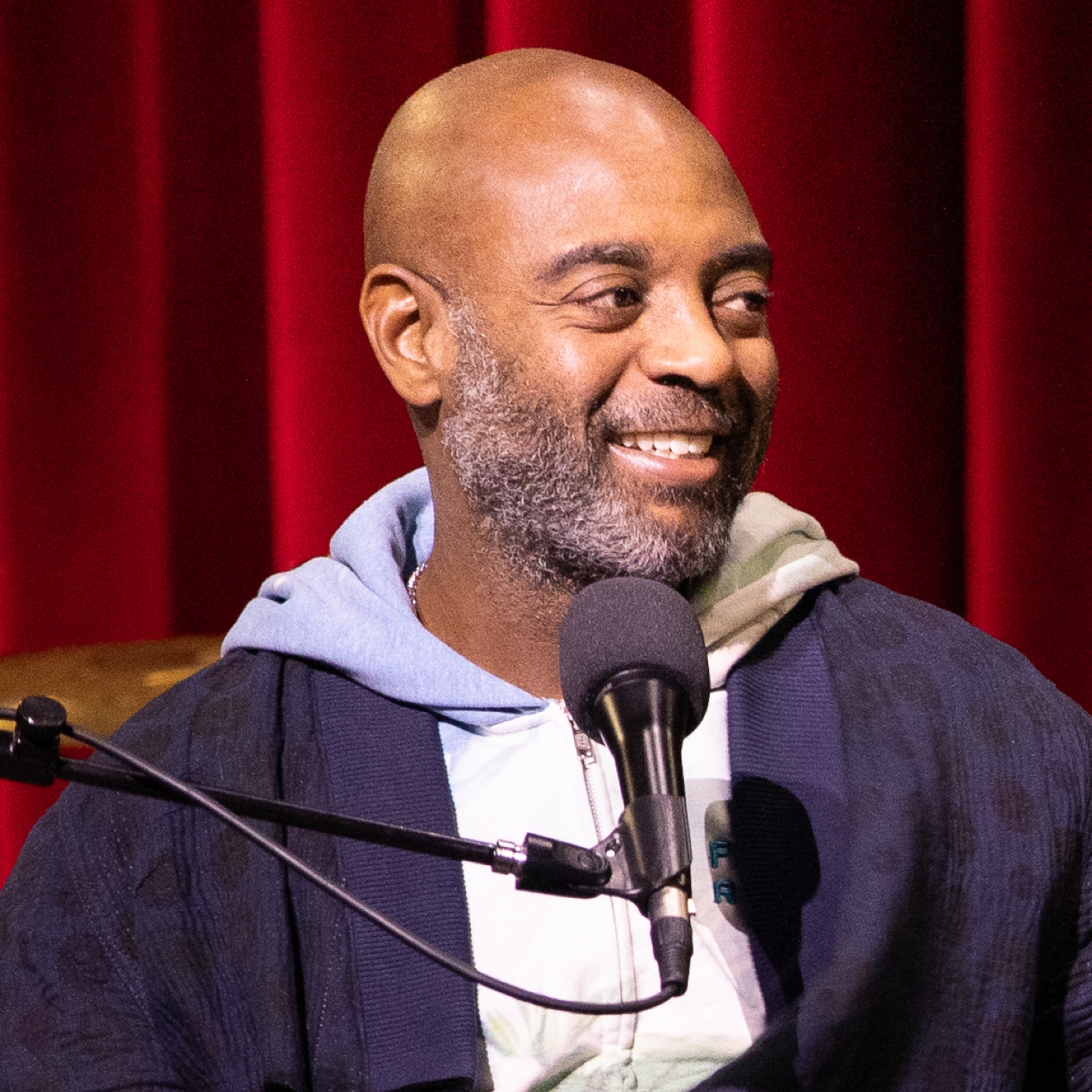
Live Wire with Luke Burbank
Reginald Dwayne Betts, Annabelle Gurwitch, and Max Gomez
00:52:02
This episodes features poet Reginald Dwayne Betts, actor and writer Annabelle Gurwitch, and music from singer-songwriter Max Gomez.
Loading summary
Transcript128 lines
- [00:03]
Luke Burbank
Hey there. Welcome to Livewire. I'm your host, Luke Burbank. All right, this week on the show, we are talking to the poet and MacArthur Genius Award winner Reginald Duane Betts. He has spent years working to put books in prisons across America through his organization, Freedom Reads. His latest collection of poems is titled Doggerel and it was actually published on the 20th anniversary of his own release from prison. Then we're gonna talk to the actor and New York Times best selling author Annabel Gurewich. She will unpack her new book, the End of My Life is Killing Me, which chronicles her journey after being diagnosed with stage four metastatic lung cancer. We're very happy to report that Annabelle is doing very well. Then we're gonna get some music from singer songwriter Max Gomez all the way from New Mexico. We are gonna carpe diem the heck out of this episode, y'. All. That's an Annabel Gurewich reference. That'll make more sense in a minute. Stay tuned. Livewire starts. Hey there, Livewire listeners. Spring is in the air and so is Livewire's annual membership drive. Here is what we are trying to do. We have set a goal to get 50 new members to help keep Livewire fully charged all year long. We need our members to help us make this show. I can't overstate that. Members also receive exclusive discounts on live events. You get on air mentions and you get bonus content in our monthly newsletter. Here's how you can join Livewire. You head to livewireradio.org and become a member. We're trying to get 50 new members this spring. And here's where the producers have written in Sing Please, please, please by Sabrina Carpenter with the words please, please, please become a member. I don't know if that was a good idea, but I just did it.
- [02:00]
Warby Parker Sponsor
Every idea starts with a problem. Warby Parker's was simple. Glasses are too expensive. So they set out to change that. By designing glasses in house and selling directly to customers, they're able to offer prescription eyewear that's expertly crafted and unexpectedly affordable. Warby Parker glasses are made from premium materials like impact resistant polycarbonate and custom acetate. And they start at just $95, including prescription lenses. Get glasses made from the good stuff. Stop by a Warby Parker store near you.
- [02:31]
Blueland Sponsor
This show is supported by Blueland. Living a cleaner and more sustainable lifestyle by reducing single use. Plastics is a small action that makes a big difference. And Blueland is on a mission to make it easy for everyone to make those sustainable choices they believe that hardworking clean products can be the norm, not the exception so that you can do better for your family and the planet. At the from cleaning sprays and toilet bowl cleaner to dishwasher and laundry detergent tablets, Blueland's 100% microplastic free EPA Safer Choice certified formulas are safe to use around people, pets and plants. You'll love not having to choose between the safe option and what actually gets your house clean. Blueland products are independently tested to perform alongside major brands and the formulas are free from dyes, parabens and harsh chemicals. Plus, Blueland is a certified B Corp and certified cruelty free by Leaping Bunny. Their formulas are EPA Safer Choice certified and many have received the Gold Material Health Certificate from Cradle to Cradle and right now Blueland has a special offer for listeners. Get 15% off your first order by going to blueland.comprx you won't want to miss this. Blueland.comprx for 15% off, that's blueland.comprx to get 15% off from PRX it's live wire.
- [04:01]
Elena Passarello
This week, poet Reginald Dwayne Betts I
- [04:04]
Reginald Duane Betts
like to double down on a bad idea. So the next thing I know, I had like 400 poems about dogs.
- [04:13]
Annabel Gurewich
Actress and writer Annabel Gurich I attempted to steal a painting from the wall of the hospital where I'm treated and it was in the basement. I thought, I'll be liberating it for
- [04:26]
Elena Passarello
the people with music from Max Gomez and our fabulous house band. I'm your announcer, Elena Passarello. And now the host of Livewire, Luke Burbank.
- [04:41]
Luke Burbank
Thank you so much, Elena Passarello. Hey, thanks everyone for tuning in for Livewire. From all across the country this week, we have a phenomenal show in store for you. I promise. First, though, we gotta kick things off the way we always do with the best news we heard all week. This is our little reminder that there is good news. Some weeks it's harder than others, Elena, to do this little preamble part. But yes, there is good news happening out there in the world. We promise. And we've found some of it for you. Laina, what's the best news you heard all week?
- [05:15]
Elena Passarello
Well, my best news is a little bratty.
- [05:18]
Luke Burbank
We'll accept it.
- [05:19]
Elena Passarello
It's good news for folks who like peace and quiet, or as much peace and quiet as possible when they fly on airplanes.
- [05:27]
Luke Burbank
Okay, what's going on?
- [05:28]
Elena Passarello
According to this article that I read in Yahoo. Travel, United Airlines is now making a hard, fast rule that you have to use headphones on the plane with all of your devices that making noise and you could even get kicked off a flight or even barred from the airline if you don't comply with this now official rule.
- [05:51]
Luke Burbank
Well, what was the rule before?
- [05:52]
Elena Passarello
I think it was an encouragement. It's a rule on Southwest and an encouragement on Delta and it was an encouragement on United. But now they're going full on rule, buddy. So that's good news for me.
- [06:04]
Luke Burbank
The fact that this was previously on those airlines just encouraged. Excuse me.
- [06:10]
Annabel Gurewich
Yeah.
- [06:11]
Elena Passarello
You know, I try to be an open minded person and a generous person, but there's something about not hearing other people's, you know, TikTok scrolls and infomercial ads that just really helps me to. And you know, I have noise canceling headphones. So I don't even know why this is such a big deal for me. Maybe I just like it when people have to be forced to be considerate.
- [06:34]
Luke Burbank
There is something that is, and science should study this. There's something that is uniquely jarring about hearing someone else's phone full speaker when you're on the airplane. I don't know what it is. Also, by the way, I don't have the confidence for other people to hear what I'm looking at on my phone.
- [06:52]
Elena Passarello
Yeah, nobody wants to listen to what I'm listening to.
- [06:55]
Luke Burbank
I'm probably scrolling TikTok. I'm probably doing something kind of mindless. But if other people were gonna be hearing what's coming out of my phone, I mean, that also would just be on both ends of the possible experience. I'd like us to all be wearing headphones. And now that we have the full force of the law, I'm gonna start harumphing even more. Sort of emphatically the best news that I've heard all week takes us over to Ichikawa, Japan, not too far outside of Tokyo, where things seem to be looking up for our friend Punch the monkey.
- [07:30]
Elena Passarello
Oh, Punch.
- [07:31]
Luke Burbank
Now if you're one of the three people hearing this who is not up to speed on the plight of Punch the monkey. Punch is a little baby macaque monkey at this zoo near Tokyo who was rejected by his mother. Which did you hear about the reasoning they think why the mother rejected him. I didn't know this was a factor for monkeys. I think one, it was her first baby monkey. So sometimes that can be, I guess, traumatizing. And it was a very hot day when Punch was born.
- [08:02]
Elena Passarello
I was my mother's first child and I was born on a very hot day. So this is explaining a lot.
- [08:07]
Luke Burbank
Uh huh, uh huh. I thought. But wouldn't it be interesting if this is how humans childbirth went? Like the particular day might affect the rest of the relationship. So Punch was rejected, unfortunately and sadly, by his mother. And so the zookeepers at this zoo in Japan gave Punch a, like, orangutan stuffed animal. That was from ikea, by the way. I also learned it's like. And so Punch was having a hard time making friends and didn't have a maternal figure and so would just kind of like drag this IKEA stuffed animal, which is like four times Punch's size, around the enclos. And then when the other monkeys would bully Punch, which was happening sometimes Punch would then run and hide, kind of, you know, kind of all pushed up against this orangutan. And this, of course, captivated really, the world. The lines at this particular zoo have become, you know, like hours long to get in to see Punch. Well, amazing news, Elena. Punch has now made friends with some of the other monkeys in the enclosure. Punch was recently seen riding around on the back of a monkey.
- [09:12]
Max Gomez
Yay.
- [09:12]
Luke Burbank
And not being kicked off.
- [09:14]
Annabel Gurewich
Good.
- [09:15]
Luke Burbank
He's using the IKEA stuffed animal less and less as like a kind of a security blanket and is even now becoming kind of sort of a celebrity destination. This is how, you know, you've really made it. Lisa from Blackpink, which is a very popular K pop band, visited Punch the other day. So that was like, huge. In fact, there seems to be a whole thing with musicians now really getting bought into the experience of Punch. Apparently Noah Kahan, the singer that everybody loves, David Byrne, has been weighing in on Punch's sort of plight. In fact, Rob Halford from Judas Priest has been filmed with his Punch merch that once you get the guy from Judas Priest on your side, the other monkeys are really going to leave you alone. I would not, I would not mess with a monkey that has Rob Halford backing him now. So Punch seems to be adjusting, you know, better than was expected and is doing fine. And also it means a lot of new revenue for this zoo. So presumably all the animals are going to be doing so like Punch going from, like, rejected to embraced to actually being this like, real kind of boon for this zoo. That is the best news that I heard all week. All right, let's get our first guest over here. He's a lawyer, writer and MacArthur Genius Award winner who spent 20 years using his writing to explore the world of prison and its effects on American society. His latest collection of poetry, Doggerel, was published on the 20th anniversary of his own release from prison, where he served over eight years, much of that time in solitary confinement. The book is a meditation on dogs, hence the name doggerel, the literal and kind of metaphorical variety. And it is really an incredible read. This is Reginald Duane Betts, who we talked to at the Alberta Rose Theater in Portland, Oregon. This was part of the Portland Book Festival. Take a listen. Hello, Reginald. Welcome to Livewire.
- [11:30]
Reginald Duane Betts
You know, I've never been on anything like this before. Thank you for welcoming me.
- [11:37]
Luke Burbank
Well, we're so glad to have you here. I've been a fan of your work, and I've been super fascinated by your story for all these years. So it's really exciting to have you here on the stage with us. I'm wondering, did you realize that you were writing a book that was going to feature as many references to dogs as you did when you were working on dog roll, or did you just look down and go, I got, like, 10 poems that seem to have a theme here?
- [12:01]
Reginald Duane Betts
No, no, Honestly, what happened was I probably had, like, 10 poems, 11 poems that had a theme, but I still didn't know I had a theme. And my friend Lloyd Groom was like, you know, I think that you have something going with these poems about dogs. What if you started paying more attention to dogs? And I like to double down on a bad idea. So the next thing I know, I had, like, 400 poems about dogs.
- [12:28]
Luke Burbank
But I want to be clear to the audience here and also to the radio listeners that, like, just to say that this book is about dogs would be really under describing it. It's not like a bunch of cutesy poems that, like, you know, rhyme with Fido. There is a whole universe of experiences in this book. It just so happens that there also are some references to your dog, Tay Tay.
- [12:48]
Reginald Duane Betts
Well, yeah, but, you know, interestingly enough, I mean, I think that most people recognize their relationships with their pets as one of the most serious and important relationships they have. Absolutely. But going into poetry, the impulse was that if you want to write poems about this, it can't be taken seriously. And so I wrote the poems out of need. At first, I wasn't writing them to be a book. I wasn't writing them to even share them with anybody outside of the few close friends that I was writing poems for. And then I started thinking, wait a minute, I never saw strangers in the street and thought they want to hear a poem. But when I started walking dogs and strangers started talking to me about my dogs, it empowered me. So now I'm writing these poems And I'm thinking, oh, this poem is about Tay Tay. This person is walking a Jack Russell terrier. We basically cousins.
- [13:38]
Luke Burbank
Yeah. It is. Like, a lot of this book takes place when you were in Italy, I believe.
- [13:47]
Reginald Duane Betts
Yes.
- [13:48]
Luke Burbank
And you had your sons there. What was the story of that trip?
- [13:50]
Reginald Duane Betts
I had gotten a fellowship to go to live in a castle for two weeks and write poetry.
- [13:55]
Annabel Gurewich
Aw.
- [13:57]
Max Gomez
Sorry.
- [13:58]
Reginald Duane Betts
It was the most depressing time of my life. No, you know, honestly, what happened was they set me up in a castle, and I happened to be going through a really tragic experience in my life. And I was depressed, and I was sad, but I also was getting reconnected to my body in ways that I had never done before. So I started biking, and I was having to bike a mile, two, three miles just to get to town. And I would bike and just listen to strangers talk. And a cacophony of noises that I couldn't decipher allowed me to get closer to the sounds in my own head that I could learn to make sense of. And so, for me, like, the sort of rush that became the book didn't even happen at the castle. It happened at the coffee shop. It happened while riding my bike. And the poems in this book, the people that populate this book are people that I met on an Italian countryside. They're the dogs that I met. It's the restaurant. It's literally the names of two different restaurants that I was frequenting that have become the substance of this book. But I appreciate you saying that it's not just about dogs, because I have never written a book in my life that I will say every single page is about me, and every single page in this book is about me, which means that when I stand in front of you and I talk about it, which means that, you know, when I read the poems to people, which means that when I hand that that book to somebody, I know that I'm giving them a piece of my life. And I know that it is a joyous, beautiful, reflective piece of my life, more so than anything I've written, and so happy to talk about it.
- [15:31]
Luke Burbank
On the subject of which, could we hear a poem from the book? Could we hear on Joy?
- [15:35]
Reginald Duane Betts
This is the great setup, because it's gonna be like, I thought it was a good book. On joy. You asked me how I'm doing, and I realized there are not enough words for joy in this language. Not like in German, where a man can whisper a phrase for relief that roughly translates to, it felt like a stone falling from my heart. The gods must not know the things I've wanted in this world. In prison, a letter is called a kite, as if words alone can gift a man wings. And I want to tell you that my body is a kite swept into the wind to say some days my heart is the wildest, hungriest thing I know. Whatever about choices, follow me now. The erratic thing that knocks against my ribcage says, and I have everywhere off cliffs and cities whose names I cannot pronounce. Back in the prisons to walking Alec in a park with Debbie, to my son's basketball games, to weeping and to down on my knees to something I've never actually called joy, but just might be that remembering of all the things I believed needed letting go only to learn the raft on which I ride into my todays was built with them.
- [17:23]
Luke Burbank
This is Livewire from prx. We are talking to the poet and activist Reginald Duane Betts about his latest collection, Doggerel. We have to take a very quick break, but when we come back, Reginald is going to talk about this amazing work that he's been doing to build libraries in prisons across America. You don't want to miss it. We've got much more Livewire coming your way in just a moment. Welcome back to Livewire. I'm your host, Luke Burbank, here with Elena Passarello. We are talking to the poet Reginald Duane Betts. He joined us as part of the Portland Book Festival, talking about his journey from incarceration to becoming an award winning poet to building libraries and prisons all over America. This is through his organization, Freedom Reads. Let's take a listen to that conversation with Reginald Duane Betts recorded at the Alberta Rose Theater. You know, a big part of your story was your incarceration and then after that, all the work that you've done for incarcerated people around access to books. And I hope that this question doesn't sound disrespectful to the experience of folks who are incarcerated, but I have friends that have done some fairly long bids and what they've said is there's a surprising amount of joy in prison as well. I mean, it's some of their worst experiences and some of their best experiences were happening in there. Were there moments of joy when someone handed you this book of poetry? If I understand right, you were in solitary and someone gave you a book of poetry. Did that feel like joy to you?
- [18:58]
Reginald Duane Betts
Yeah. No. And honestly, man, I think that it's something that is so seductive, not about sorrow, but about feeling wretched, that you begin to believe that that's the Thing that you should hold on most from your experience. And so I was writing these poems about prison, and what I wasn't talking about was those moments of joy. What I wasn't talking about was the sheer audacity and creativity that comes with saying, if somebody calls out for a book and I do not know the person's name, and I just say, what cell are you in? And I slide the book that I have to them, like, the creativity, the audacity, the belief that what you have matters to somebody else. And that's how I became a poet. I'm in solitary confinement. I call out for a book, and somebody slides Dudley Randalls, the black Poets, under my cell door, and I discover poetry. And I'm literally not here in front of you today if that doesn't happen. But there were other moments of joy. I mean, look, yo, I was just in Puerto Rico last week, and I was in a prison in Puerto Rico, and I had translated poems from this book into Spanish, and I read for 25 minutes, and I told jokes in Spanish. But the only reason that I was able to do that is because when I was 16 years old, sent to the county jail with a bunch of adults, somebody was picking on me. And it was a guy that was El Salvadorian, who likely got deported after his sentence was over, who was in Ms. 13, who didn't know my name or my mother's name, stood up for me. And when I tried to kick it with him and his homies, I couldn't kick it with his homies because they only spoke Spanish. So I told myself, I'mma teach myself Spanish. Five years later, I finally got around to it. But the point is, it was real joy. That whole process of learning was joy. I'm talking about. It took me two weeks to learn how to do this.
- [20:55]
Luke Burbank
Oh, dude.
- [20:57]
Reginald Duane Betts
You know, and my whole life that
- [20:58]
Luke Burbank
has hung me up for so long, I'm telling you, I would walk around. I committed to trying to learn Spanish, and I had a decent amount of vocab and a little bit of ability to conjugate. And what I could never get over was rolling my Rs. It's the reason to this day you
- [21:10]
Reginald Duane Betts
got to go to prison.
- [21:14]
Luke Burbank
Well, when Donald Trump hears this, it could happen.
- [21:16]
Reginald Duane Betts
You never know.
- [21:20]
Luke Burbank
We're talking to Reginald Duane Betts about his latest book of poetry, Doggerel. You started a project called Freedom Reads that works to. I mean, and your story, as you just illustrated, your ability to access the written word was everything to you when you were incarcerated. Can you tell Me what Freedom Reads does and why that is so important to the folks that it's trying to help.
- [21:44]
Reginald Duane Betts
Outside of my two sons, I think Freedom Reads is the reason why I have to cop to Ben, easily one of the top three luckiest people alive on this planet. I was asked, what would you do for people in prison if money wasn't an issue? And I said, we put millions of people in prison. I would put millions of books in a prison. And then that conversation ended up becoming a $5 million grant from the Mellon foundation, and it ended up becoming a Freedom Reads organization. We build libraries in prison. They have handcrafted bookcases 44 inches high, so about waist high. Maple, Oak, walnut, cherry. The beautiful thing about books is that it helps you transform your life. But the challenge about books is if you only do it inside of the cell, then it doesn't become a locus of community. It doesn't become a symbol. So by building a Freedom Library that lives in the space in the cell block, so when you walk out of your cell, when you roll off your bunk, you see it every day. It transforms the experience. And we went from an idea to building the first Freedom Library at Angola and at MCI Norfolk, two of the two most notorious prisons in the country, to now We've built over five, opened over 550 Freedom libraries in 17 states. I went from a team of just me to a team of roughly 27 of us have served time in prison. And I can say that, like, I've been in more prisons. I've been in three prisons in a week. I've been in more prisons than I ever expected to go to. But to go inside and open sometimes 10, 15,000 books in one day and put them on bookshelves in communities with people who names we never expected to know has been one of the greatest joys of my life.
- [23:38]
Luke Burbank
Have you found it challenging to work with the administrations of these prisons?
- [23:44]
Reginald Duane Betts
I mean, I was in solitary confinement 45 days before I came home, you know, so I don't have a good working relationship. And we have had no trouble.
- [23:56]
Luke Burbank
Wow.
- [23:56]
Reginald Duane Betts
One, we build a Freedom Library for the staff, too. The people working in the Department of Corrections are often. They have high rates of alcoholism. They have high rates of suicide. They have high rates of domestic violence. Nobody grows up and says, the top five jobs that I could get. One of them includes being a co and so I carjacked somebody. I refuse to walk into a room and. And act as if I'm holier than thou or my enemies are the people that Work in the Department of Corrections. I think the people that work in the Department of Corrections are facing the same kind of challenges everybody else are facing. And we think about how to work with them. And it hasn't really been a challenge, to be perfectly honest. It has been a challenge sometimes because they're, you know, overburdened because they don't have funding, because they don't have resources, because they don't trust me. Why would they not trust me? I have no idea. But, you know, but I mean, we have worked closely with them and they have been some of our staunchest supporters. And more importantly, I am going to spend more of my time getting to success than begrudging the impediments to that success. Because every time we open up a library, we're helping upwards of 200 people incarcerated and their families and the people that work in prisons where every single library.
- [25:08]
Luke Burbank
How do you decide on the. On the books, exactly?
- [25:11]
Reginald Duane Betts
I'm telling you, it's not easy, man. You gotta figure 500 books is a whole world. Yeah, it is a whole world. Sir Walter Riley wrote a history of the world with 500 books. That's why I chose 500 books, so I can have some symbolism in there.
- [25:24]
Luke Burbank
Nice.
- [25:26]
Reginald Duane Betts
But, you know, we think about it as a browsing library. We think about it having to contain poetry, fiction, fantasy. We gotta contain that. You gotta have the classic sci fi, but you also gotta have, you know, NK Jemisin, and then you gotta have that first, like, you know, Raymond Chandler. You gotta have Walter Mosley. You gotta have those first run of the detective books, but then you gotta have the history of science. Because I'm saying, if you don't know coon, you don't know coon. And. And so. And we talked to a lot of people. Jill Lepore was here. We talked to, literally talked to Jill Lepore. She gave me a great history book that few people ever heard of. So basically, we tried to stretch the whole spectrum and recognize one thing. The Freedom Library is like a river. You can step in the same river, but you can't step in the same place in the same river twice. Sometimes books go out of print. 15% or so of our books are in Spanish. And so a lot of those go out of print because they're just not a lot of printed. A lot of poetry books aren't printed. So we put some poetry books out of print. I feel like I should get more acclaim from my poets for putting their books out of print.
- [26:34]
Luke Burbank
Yeah, right. When you were incarcerated, could you have ever imagined this world that you would be able to create for yourself, and that you would put out a book that would reference your Jack Russell terrier named Tay Tay as much as it does. Could you have expected this?
- [26:53]
Reginald Duane Betts
Now, you know, my judge told me, I'm under no illusion that sending you to prison will help, but you could get something out of it if you want.
- [27:02]
Luke Burbank
And this is your 16 years old.
- [27:03]
Reginald Duane Betts
I'm 16 years old.
- [27:05]
Luke Burbank
And the judge is telling you, I know this is going to be dangerous and bad for you, but I'm doing it to you.
- [27:10]
Reginald Duane Betts
Yeah. And. But. And he's telling me, you can get something out of it if you want. And I just realized this recently. I went into the holding cell after that, and I said, you know, what are you going to do when you get home? I said, I'm going to be a writer. And I had never thought about being a writer in my life. But the strange thing about it, and I realized is that you get to choose if you speak life and possibility into somebody's life or if you speak death. And when a judge said you can get something out of it if you want, the wild irony is that the very next decision I made was about getting something out of prison. And I didn't know I was responding to the judge, but I went in a holding cell and was like, I'm gonna be a writer, having never in my life thought of being a writer, not knowing what it was to be a writer. So it's not just that I couldn't fathom this. That's one version of it that I couldn't fathom this. But the other version of it was, it was absolutely necessary when I was 16, to imagine something that mattered ended up on the other side of it. And I'm just grateful that this is the thing that ended up on the other side of believing that I could make my life matter after I shattered, you know, the hopes of so many people who cared about me.
- [28:22]
Luke Burbank
Well, it matters a lot, and we're really glad to have you here. Reginald Dwayne Betts. The book is Doggerel. Thank you for coming on Livewire.
- [28:28]
Reginald Duane Betts
Thank you.
- [28:33]
Luke Burbank
That was Reginald Dwayne Betts here on Livewire. His latest poetry collection, Doggerl, is available right now. Hey, special thanks this episode to Ariane Clark of Corvallis, Oregon, and Edwin Bai of Brooklyn, New York. Edwin and Ariane are part of the Livewire listener community, and they are generously supporting our show with a donation each month. And that, my friends, is how we're able to keep doing this thing during these tumultuous financial times in public radio. So a huge thanks to Edwin and Arian for making Livewire possible. You're tuned in to Livewire. All right, our next guest is an actress who you've probably seen on Seinfeld or Dexter or the show Better Things. She's also a New York Times best selling author of six books and was the co host of the hit TBS show Dinner and a Movie. Now here's where things get a little more serious. Her new book is titled the End of My Life is Killing Me, and it chronicles her life after being diagnosed with stage four metastatic lung cancer. Of course, everybody would react differently to that sort of diagnosis. But for Annabel Gurwich, her reaction involved working as the merch girl for a heavy metal band in a European van tour being run by her boyfriend, and, you know, just generally learning that sometimes you can, in fact, carpe too much diem. This is our conversation with Annabel Gurwich recorded live at the Alberta Rose Theater in Portland, Oregon.
- [30:24]
Annabel Gurewich
Gosh, it's nice to be back here.
- [30:27]
Warby Parker Sponsor
Yay.
- [30:27]
Luke Burbank
Yeah. Welcome back to the show.
- [30:29]
Annabel Gurewich
Thank you so much.
- [30:30]
Luke Burbank
It's so nice to see you. You and I go way, way back in our public radio lives. And when I heard that you'd written a new book, I was very excited. When I heard the topic matter, I was less excited for you. I'm wondering, how was it that you first had a sense that. That you may have had cancer? If I understand right from the book, the news was delivered from a doctor that you thought might have been trying to ask you out.
- [30:57]
Annabel Gurewich
Yes. The entire diagnosis came about because I thought that this very cute Dr. McDreamy guy might have a thing for older women. I had gone to get a COVID test with my son, who was living the dream, having just graduated college at home, quarantining with mom in your childhood bedroom. Fantastic. And, you know, I was so fortunate enough to be the person in a position where during COVID I was like, okay, it's my personal boot camp right now. I was, you know, hiking every day. Felt great. So I was really asymptomatic when this happened. I did not know I was at risk for this disease. And we'd gone for a COVID test. And like I said, Dr. McDreamy said you should get an X ray. And I was like, I know what this is. Then my life turned into a zombie apocalypse movie.
- [31:58]
Luke Burbank
Well, let me just ask this. Did he literally come back to you in person and say, oh, you're fine, you're all clear.
- [32:05]
Annabel Gurewich
Yes, exactly. Fine. No problem. You go on your way. We get on the freeway and there are no cars. Okay. First sign of a zombie apocalypse during COVID there were no cars on the freeway in Los Angeles. Then the car breaks down. AAA doesn't come. The phone rings. It's Dr. McDreamy. And I turn to my son and I say, still got it. And he says, can you take this call alone or are you in front of your son? I'm like, oh, yeah, this is. I mean, come on, it's happening, right? It's all happening. So exciting. And he. I said, no, no, it's fine. So it is like the parents worst nightmare was that I read the wrong scan results. We spent the next months trying to figure out if I had like some kind of pneumonia. But no, in fact, I had this terrible. What is an incurable disease? And what's been this crazy way again, like a zombie apocalypse of like your life turning upside down situation is that I was told. And the statistics for how long you can live with this, it is so variable depending upon the particular genetic makeup you have and whether you respond to these new drugs. New drugs have been developed that turn off one gene in your body. And I thought I was going to die within possibly months, but here I am five years later, stabilized because of science.
- [33:47]
Elena Passarello
Science.
- [33:49]
Annabel Gurewich
Yay, science. And you know, I still have stage four cancer. One day my medication will not work anymore. I'll have to switch to new treatments. But I made a pharmaceuticals and caffeine. And I'm really happy about it.
- [34:06]
Luke Burbank
But also, as you kind of write about in the book, by the way, we're talking to Annabel Gurwich about her new book. The end of My life is killing me is that's a real. Like a whip saw on a person to go from. I feel that I'm perfectly healthy too. I feel that I may only have months to live to. Actually, I could live longer than that. Did you do crazy stuff in the window of time when you thought you weren't gonna be alive for very long and then did you have to backtrack any of that?
- [34:34]
Annabel Gurewich
I did crazy things. So I really thought, you know, okay, so here I am. What is this opportunity? My fingerprints disappeared. It was a side effect of the medication. I emailed friends and said, who needs someone murdered? But, you know, only for a really good reason. And then I attempted to steal a painting from the wall of the hospital where I'm treated because I really love this painting. And it was in the basement. I thought I'LL be liberating it for the people. I thought, what's the worst that can happen? Like a life sentence.
- [35:18]
Max Gomez
Ha.
- [35:19]
Annabel Gurewich
I mean, I really and truly went crazy. Then I thought, okay, you know, this carpe diem thing. I was like, okay, maybe I should have sex if it's gonna be the last time in my life.
- [35:32]
Luke Burbank
Yeah, a lot of guys were coming out of the woodwork.
- [35:34]
Annabel Gurewich
Well, you would think, you know, who would want to get into something with someone who's got a ticking time bomb? Someone with commitment issues. You can't believe the amount of propositions I got. I came forward in the New York Times to write about the diagnosis because I wanted to encourage people to start going back to their doctors. During COVID a nurse wrote me saying she'd marry me and had a great health plan. I've saved her email. Old boyfriends were coming out of the way. Woodwork it was. So then I decided, wait a minute, I know who I should see. Someone who also has cancer. So then I looked up cancer dating on the Internet and I found a site for cancer. And I found out that there were 870 cancers in my neighborhood. And it took me a couple hours before I figured out it was cancer, the astrological sign.
- [36:32]
Luke Burbank
Oh.
- [36:35]
Annabel Gurewich
So, yeah, I mean, you know, the metric is just different when you think, you know, I gonna die. And then I actually started seeing someone.
- [36:48]
Luke Burbank
Jeremy.
- [36:49]
Annabel Gurewich
Jeremy, who has a very good sense of humor about, you know, get involved with a writer and your life is over.
- [36:56]
Luke Burbank
Your life of privacy is over.
- [36:57]
Annabel Gurewich
Your life of privacy is over. And I started seeing Jeremy and this man who I had known when we both were married. And he made a proposition to me. Within three months of seeing each other, he asked me if I wanted to go on a whirlwind trip to Europe. And something I write about in the book. So I'm thinking bucket list. He's like, oh, I'm gonna go to London and the Netherlands and Paris. And I agreed to go on this trip. We hadn't spent 24 hours together. We'd never farted in front of each other.
- [37:33]
Luke Burbank
Thankfully, you weren't on any kind of medication that made you need to fart constantly though, right?
- [37:37]
Annabel Gurewich
I absolutely was. Oh, no. So I said yes to this trip. And then he tells me, you know, I manage bands and I am going to be driving the van for a heavy metal band that I manage. That's what this trip is. You can come tag along on this low rent van tour if you'll agree to sell merch.
- [38:06]
Luke Burbank
Now, can we mention the name of the band. Is that okay? It's in the book.
- [38:11]
Annabel Gurewich
Yes. Well, the name of the band was Dead Poet Society. Now, I had been watching the movie Dead Poets Society with Robin Williams who kept saying, seize the day, carpe diem. So I'm like, oh, my God, yes, I'm going to go. I had no idea. I mean, this is the dream of a 20 year old. This is not the dream of someone in their 60s. I land in England and I realize and I see the van, and it looks smaller than I expected. He opens up the door to the van. The band is sleeping off a hangover. They had been playing the night before. And out comes like, a bag of empty chips, a beer bottle, dirty socks. No one had bothered to clean it up. And I. And he says, welcome to your home away from home.
- [39:04]
Luke Burbank
Would you have had that sort of equanimity with the whole thing before your diagnosis?
- [39:09]
Annabel Gurewich
Oh, God, no. You know, the thing was, it was a sort of a liminal space. And from the moment I landed, there was like two choices. Go home immediately or give in to the situation. And every. Well, what was so funny is that every moment was a reminder that I was the least important person in the van. All of these guys, they were 27 and they were on a trip that they hoped would change their life. And the crazy thing is, is that their indifference turned out to be the greatest gift for me. Because what I realized that had been, you know, cancer had taken from me was the ability to be ordinary, to be myself in a way that wasn't living through some extraordinary situation. What I say about the band in the book is that I sold $1,400 of their merch, and they gave me the gift of indifference. And I changed my approach. I let go of the. This is when I realized you can car pay too much diem.
- [40:24]
Max Gomez
Right?
- [40:26]
Annabel Gurewich
And so after that story in the book, the rest of the book is about reframing something that Georges Parec, the French philosopher, has written about, about elevating the infraordinary, looking for the beauty that lies just below the ordinary in your life. Well, it became like a daily. I hate the word practice, but I'm gonna say practice. Something I could do.
- [40:53]
Elena Passarello
You could call it a perectus, after
- [40:54]
Annabel Gurewich
George Parech, a parrectus of looking for ways to change the way I experience my daily life, my ordinary life, without, like, these bucket list things, without being held onto the extraordinary. And so one of the things I started to do was make regular dates with friends. This is like a German concept called Stammtisch we make regular dates. I'm a secular person, so I don't have like a church community, but I have a friend community and I made these regular dates. I started taking ukulele lessons with two of my friends. You know, I really reject that phrase. You know, cancer can be a teacher because anything cancer has to teach me, I'd like to learn in a different way.
- [41:39]
Luke Burbank
I wish for you that it didn't take these particular circumstances for you to get to write this book. But I'm glad that it's in the world. And what I would recommend to folks is to get the book. To read the book afterward is really powerful because it's a real kind of sort of how to for folks that find themselves in this position that you did because it's obviously such a confusing and scary world.
- [42:02]
Annabel Gurewich
I really appreciate that. You know, this is a little bit of, I don't want to say self help, just education strategy and education that I've included.
- [42:10]
Luke Burbank
Well, it's an incredible book. We're so glad to hear that you're doing well, Annabelle, and we look forward to having you back for the next book.
- [42:16]
Annabel Gurewich
Thank you, Annabelle Gurwich, everyone, here on Livewire. Thank you, everybody.
- [42:25]
Luke Burbank
That was Annabelle Gurewich recorded live at the Alberta Rose Theatre here on Livewire. Her book the End of My Life is Killing Me is out and available right now. You're tuned in to Livewire. Okay, we've got to take a very quick break, but do not go anywhere. When we return, we are going to hear some music from the singer songwriter Max Gomez. He's kind of a like, got some John Prine vibes happening, which if you know me, is like the highest compliment that I can pay a musician. He's going to sing us a song about his home state of New Mexico, which ended up turning into like a sing along with the crowd. It was actually really, it was a blast and I know you are going to enjoy it, too. So stick around. We'll hear it right after this quick break on Livewire. Hey there, Livewire listeners, it's Luke letting you know that we will be back at the Alberta Rose Theater in Portland, Oregon on April 9th with New York Times bestseller and all around legend Cheryl Strayed. Plus the creators of Ear Hustle, the podcast that was created and produced in prison, amazingly, plus comedy from Kyle Kanane and music from Patterson hood of the Drive By Truckers. Get your tickets@livewireradio.org, we'll see you April 9th. Welcome back to Livewire from prx I'm Luke Burbank here with Elena Passarello. Okay, before we get to this week's musical performance from Max Gomez, a little preview of next week's show. We are going to be talking to the writer and podcaster Kelsey McKinney about her book. You didn't hear this from me. Mostly True notes on Gossip. Now, Kelsey was the founding host of the hit podcast Normal Gossip. And from that, she's kind of become like a go to expert on the topic. Then we're gonna talk to the award winning author Omar El Akkad about his work of nonfiction. It was titled One Day Everyone will have always been against this. It actually won the 2025 National Book Award. It's part memoir, it's part manifesto, part breakup letter with the West. Then we're gonna hear some really fun music from the Seattle based indie folk band Coinka. So make sure you tune in next week for Livewire. Meanwhile, this week, our musical guest grew up in Taos, New Mexico, where he says he fell under the influence of country blues, which is a musical style, not a mental health issue, at least in his life. His debut album, rule the World came out in 2013 to all kinds of critical acclaim. And his 2018 song Make It Me has been streamed over 4 million times on Spotify alone. He has played with the likes of John Hyatt, Patty Griffin, and Jeff Beck before joining us at the Patricia Research center for the Arts in Beaverton, Oregon. This is Max Gomez right here on Livewire. Check it out. Max, welcome to the show.
- [45:29]
Max Gomez
Thanks.
- [45:33]
Luke Burbank
Your new album is Memory Mountain, which I have absolutely loved. I've been listening to it. Like, it's like when I first put it on, I think it was maybe Monday of this week. And I thought, oh, this is a perfect Monday morning record. And then I put it on on Tuesday. I was like, actually, this is a good Tuesday album. And then like, I was listening to it today and I was like, this is perfect for today. Like, it really. Do you think about, like, when you're like writing and recording this music, do you think about where and when in time people will be listening to it?
- [46:00]
Elena Passarello
No, he's not.
- [46:02]
Luke Burbank
He's nodding. No, this is his first time on the radio.
- [46:05]
Max Gomez
You know, we did think maybe, maybe this is a road trip record. You know, those are kind of like my favorite records. A lot of my favorite records are road trip records.
- [46:14]
Luke Burbank
What was the sort of story of the creation of this album? Like, where did the songs come from? Where were you at?
- [46:19]
Max Gomez
It's my first ever independent venture. I've long been cast and tattooed and teased as a one album artist. Branded a one album artist for good reason. Only had one album.
- [46:31]
Luke Burbank
Oh, that was why they said that.
- [46:33]
Max Gomez
But I stand before you today and I'm speaking to you out there in radio land. A two album artist.
- [46:39]
Luke Burbank
Yes, so they call him.
- [46:45]
Max Gomez
Thank you. And yeah, Memory Mountain is the second album and it's out now and you can find it, you know, wherever you may listen and dream and of course on my website and things like that. Max gomezmusic.com hey, what song are we gonna hear? I wanna sing you a song about my home state. It's a bit of a protest song. It's a bit of a country song that sort of stands up for, you know, the modern history books here. And it's sort of a sing along and I really love it. If the crowd would cheer a little bit and sing it with me, what do you say? Would you sing it with me and cheer a bit? Thanks, Luke. How about a hamburger? Livewire radio and thanks. Well, in a barren but beautiful desert my pony up and died I found my way to an old highway Putting my thumb out for a ride A team of crazed coyotes stopped and offered me a ride they said, what do you know about New Mexico? I turned to them and I cried it ain't new and it ain't Mexico Some things you ought to know, yeah, like one in one is too Skies where the four winds blow Corazonis Contento Some things you ought to know like New Mexico, You know the trunk was filled with chili headed west on I4O destination headquarters one man, Trader Joe the deal was on the table for an insufficient sum when the buyer had the nerve to ask where the hell's this chili from? We said, it ain't new, it ain't Mexico that's right. Some things you ought to know, yeah, like one and one is two Skies where the four winds were flow. Some things you ought to know like New Mexico. Satisfaction My guitar solo I brought all the way from New Mexico for you. Thank you very much. Now, in this last verse, in this last verse, I sing you a true story. And in this true story, I mean you no disrespect in case you happen to be from Kansas or Kansas City, Missouri, or in case you ever worked for the tsa. But one time I was there. I was down there at the Kansas City airport when they asked me for id. So I showed my driver's license to this gal at security. She said, although you speak good English, I cannot let you through because for international travelers only. Passports will do. I said it ain't new and it ain't mechanical. Mexico. That's right. Some things you ought to know. Yeah, one, and one is two skies where the four winds blow caught out so. Ms. Continto. Yeah. Well, some things you ought to know like New Mexico.
- [52:38]
Annabel Gurewich
Oh,
- [52:48]
Max Gomez
Thank you very much. I'm Max Gomez. It's nice to see you. Nice to meet you. And remember, should you be traveling to my home state from right here in, say, Oregon? Beaverton, Oregon. Remember, if you get there, there ought to be no passports to show. Not in new mexico, usa. Thank you very much. Thank you, Luke. Thank you. Livewire.
- [53:44]
Luke Burbank
That is Max Gomez right here on Livewire. That was Max Gomez recorded live at the Patricia Reeser center for the Arts in Beaverton, Oregon. His album Memory Mountain is out and available now. All right, and that is gonna do it for this week's episode of Livewire. A huge thanks to our guests Reginald Duane Betts, Annabel Gurewich, and Max Gomez. Plus, a special thanks this week to Amanda Bullock and the Portland Book Festival and to Toby Fitch, who is now board chair emeritus of Livewire. After 15 years of service to the show, we would not be here without Toby Fitch. So thank you so much. Tobe.
- [54:33]
Elena Passarello
Lara Haddon is our executive producer. Heather D. Michel is our executive director, and Melanie Sevchenko is our producer and editor. Eben Hoffer is our technical director. Trey Hester is our assistant editor.
- [54:44]
Luke Burbank
Our house sound is by Dee Neal Blake and Erin Tomaszco. Our show was mixed by Eben Hoffer and Trey Hester.
- [54:51]
Elena Passarello
Additional funding provided by the City of Portland's Office of Arts and Culture. Livewire was created by Robin Tenenbaum and Kate Sokoloff.
- [54:59]
Luke Burbank
This week we'd like to thank members Ariane Clark of Corvallis, Oregon, and Edwin Bay of Brooklyn, New York. For more information about our show or how you can listen to our podcast, head ON over to livewireradio.org I'm Luke Burbank. For Elena Passarello and the whole Livewire crew. Thank you for listening and we will see you next week.
- [55:24]
Blueland Sponsor
This show is supported by Odoo. When you buy business software from lots of vendors, the costs add up and it gets complicated and confusing. Odoo solves this. It's a single company that sells a suite of enterprise apps that handles everything from accounting to inventory to sales. Odoo is all connected on a single platform in a simple and affordable way. You can save money without missing out on the features you need. Check out odoo-o o.com that's o d o o dot com.
- [55:57]
Luke Burbank
Hey, if you appreciate the work that Livewire is doing to amplify riveting and unexpected voices to a national audience, and I gotta tell you, it's a big audience these days, please, please, please consider offering some monthly support by becoming a member of our League of Extraordinary Listeners. Here's how it works. Membership starts at just five bucks a month and there are great perks at every level, including a special shout out on the broadcast. Impress your friends by being shouted out on Livewire. It means the world to us and really does make it possible for us to do the show. So please, if you can, help, support us by visiting livewireradio.org Membership ships.
- [56:43]
Elena Passarello
From prx.