← Live Wire with Luke Burbank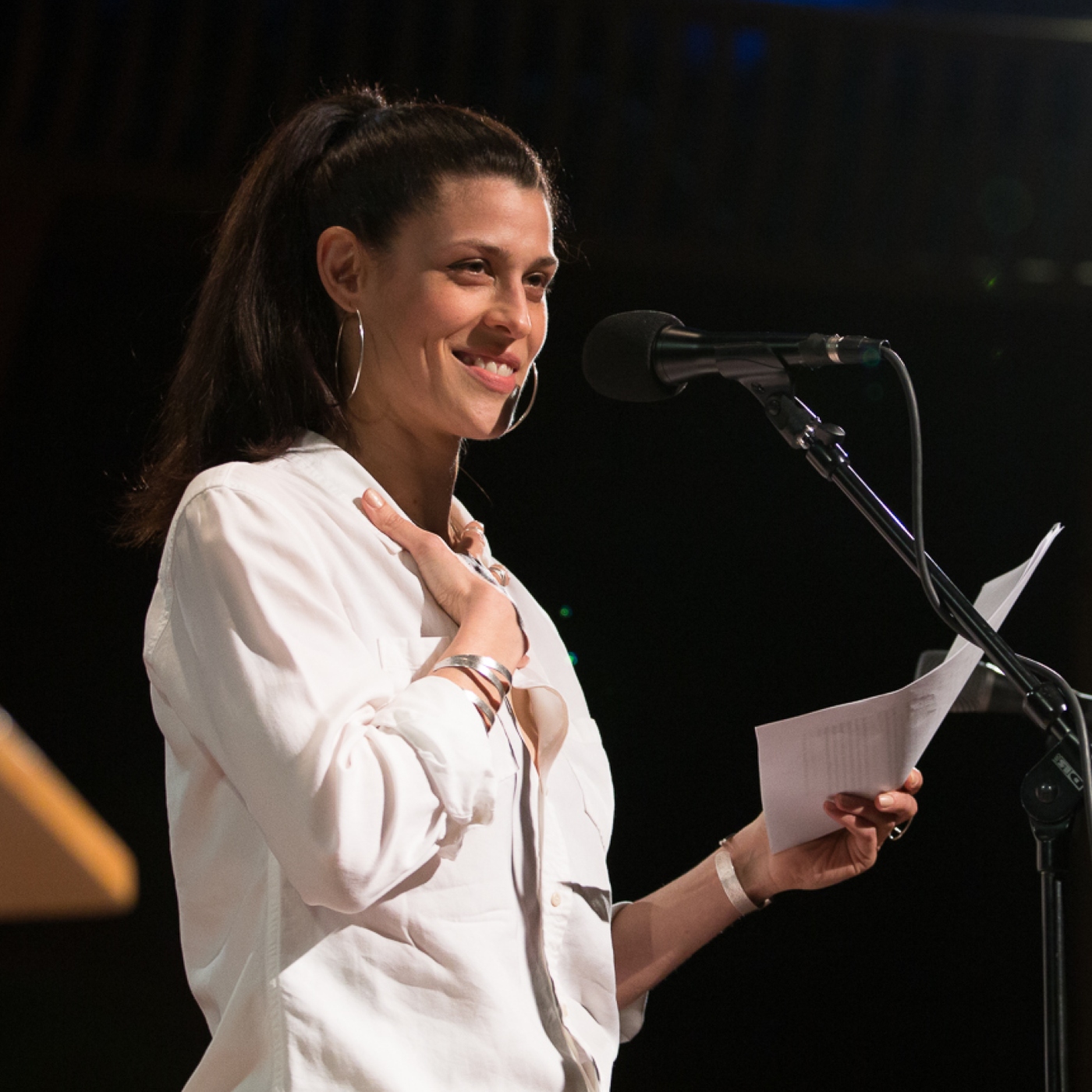
Live Wire with Luke Burbank
Timothy Egan, and Dessa (REBROADCAST)
00:52:25
This episode features acclaimed author Timothy Egan, plus rapper and poet Dessa.
Loading summary
Transcript172 lines
- [00:03]
Luke Burbank
Hey there. Welcome to Livewire. I'm your host, Luke Burbank. This week on the show, we are going to be talking to Pulitzer Prize winner Timothy Egan. He is of course the author of many best selling books and he is going to talk about his latest project. It's a book called A Fever in the Heartland, the Ku Klux Klan's Plot to take over America and the woman who Stopped them. It is a fascinating story that not a lot of people know about, about a very troubling time in our nation's history. Then our friend, the rapper, poet and singer Dessa is going to return to Livewire to talk about her latest collection of poetry, which we may or may not be allowed to say on public radio. She's also going to perform a poem that she writes backstage during our show and it will not disappoint. So stick around for all of that. Liveware. Get started right after this.
- [01:00]
Odoo Sponsor Announcer
This show is supported by Odoo. When you buy business software from lots of vendors, the costs add up and it gets complicated and confusing. Odoo solves this. It's a single company that sells a suite of enterprise apps that handles everything from accounting to inventory to sales. Odoo is all connected on a single platform in a simple and affordable way. You can save money without missing out on the features you need. Check out odoo@o-o o.com that's o d o o dot com.
- [01:30]
Luke Burbank
This episode of Livewire was originally recorded in June of 2023. We hope you like it. Now let's get to the show.
- [01:38]
Elena Passarello
From prx, it's Livewire. This week, Pulitzer Prize winning reporter and bestselling author Timothy they say history doesn't repeat itself.
- [01:55]
Timothy Egan
It rhymes. The thing that's so disappointing is how then they could fall for a con man. How now a con man can come along and tell a million lies and so many people will still follow.
- [02:05]
Elena Passarello
And musician and poet Dessa, there is.
- [02:08]
Dessa
Always a tinge of fear, right? Because a stage dive that is unsuccessful is an ambulance ride.
- [02:16]
Elena Passarello
With music from our fabulous house band, I'm your announcer, Elena Passarello. And now the host of Livewire, Luke Burbay.
- [02:26]
Luke Burbank
Thank you so much, Elaina Passarello. Thanks to folks tuning in from all over the country. We have a great show in store for you this week. Of course, we always ask the Livewire listeners a question. This week, in honor of a challenge that we put out to our friend Dessa, the singer, songwriter, rapper, poet, we're asking the Livewire listeners what's the most ridiculous challenge you've ever accepted. And we are going to hear those responses coming up in just a few minutes. First though, of course, we got to kick things off with the best news we heard all week. This right here is our little reminder that there is some good news happening out there in the world. Elena, what is the best news you heard all week?
- [03:09]
Elena Passarello
Ah, graduation news.
- [03:16]
Luke Burbank
So what is going on with graduation?
- [03:18]
Elena Passarello
Pomp and Circumstance was definitely playing at Seton Hall University this year where Grace Mariani was one of the many students to earn her undergraduate degree. She got a BS in education. She wants to be a special ed teacher, magna cum laude.
- [03:33]
Luke Burbank
Nice.
- [03:34]
Elena Passarello
Grace attended every class of her four years of study with her service dog, Justin, who became something of a celebrity in their four years at Seton Hall. Justin is adorable. He's a six year old yellow lab with an angel face and I can just see the entire campus falling in love with him. And there's this great video of the moment Grace Mariani comes across the stage to get her diploma. The president of Seton Hall, Joseph hall, no relation, hands the leather bound sort of diploma in like that folio to Grace. And then he turns to Grace's right and Justin is right there next to her, just like he has been through her whole education. He's got a little rolled up piece of paper with a ribbon on it and he holds it out for Justin. And Justin is a very good service dog. First he looks to Grace and they communicate and it's okay. And then Justin picks the diploma in his mouth and then they proceed to go to the end of the stage together. The whole crowd is going wild. You can hear people in the video going, justin, Justin, Justin.
- [04:41]
Luke Burbank
That is so great, actually. You know, academia and higher education also plays a role in the best news that I saw this week. It takes us over across the pond to Cambridge where A person named Dr. James Wade is on the English faculty there at Cambridge. And he was just, you know, picking through the National Library of Scotland and was looking and found the this very interesting document from 1480 kept by a person named Richard Heag, who it turned out was a cleric and a tutor who worked for a noble family. And in it, Richard is detailing a big night out where he saw what they think might be the first ever recorded standup comedy performance. You know, I love it when we have a good stand up on Livewire. The this was a whole thing. Apparently the performer who was kind of like a traveling minstrel, told a story of the hunting of the hare featuring a killer rabbit. This stand up performance also involved a mock sermon in prose. And in this mock sermon, three kings eat so much food that 24 bowls explode out of their stomachs and begin sword fighting. I've almost had that happen. And then there is some sort of alliteration, nonsense verse that this standup comic of 1480 was performing, which is called the Battle of Brackenwelt. And now why this is kind of important and interesting actually, according to the scholars, is because, you know, this was a time when things were pretty tough for folks, right? And also this era is thought of being a time when there was largely a rejection of science. And just like maybe you would think folks didn't have a great sense of humor, but it turned out they were also partying pretty hard in these days. And there were a lot of these minstrels going around doing essentially proto standup comedy routines which people were into like it kind of flies in the face of what we think of as sort of what was going on in this period of time, at least in this part of the world. What I thought was amazing was Richard, he the guy that wrote this all down. Again, maybe the first ever transcription of a standup comedy performance. The opening line of his kind of recording of this says, this is recorded by me, Richard Heag, because I was at the feast and I did not have a drink. Which means that the two drink minimum did not apply.
- [07:14]
Elena Passarello
The two mead minimum.
- [07:16]
Luke Burbank
Right, the two flagons of mead minimum.
- [07:20]
Elena Passarello
The two goat skinned mediums did not.
- [07:22]
Luke Burbank
Apply back in old 1480 when maybe this was the first ever stand up comedy performance. And that is the best news that I saw this week. All right, let's invite our first guest on over to the show this week. He is a frequent guest on Livewire, also a Pulitzer Prize winning reporter and columnist, and he's the best selling author of eight books, including the Worst Hard Time about the Dust bowl that won a National Book Award. His latest book is A Fever in the Heartland, the Ku Klux Klan's Plot to Take Over America and the Woman who Stopped Them. Kirkus calls it riveting history. Excellently rendered. Take a listen to this. It's Timothy Egan right here on Livewire.
- [08:15]
Timothy Egan
Great to see you again, Luke.
- [08:17]
Luke Burbank
Timothy, welcome back to the show.
- [08:19]
Timothy Egan
Thank you. I love this show. I'm happy to be back.
- [08:21]
Luke Burbank
We're always very excited to have you on. And one of the things I love about your writing is you have this amazing ability to zero in on characters or moments in history that may have been forgotten or maybe people didn't realize how pivotal something was at the time. This story really goes into this part of our country's history in the 1920s that I wasn't familiar with. I'm wondering what was your way into this story?
- [08:45]
Timothy Egan
It was through Oregon.
- [08:47]
Luke Burbank
It's about the Klan. Y' all just beware.
- [08:52]
Timothy Egan
So, you know, this is. You sort of touched on this. This is something that happened, a really dark and scary episode, largely forgotten because of American amnesia, that explains much of the way we live now and explains much of the madness that's going on in our country right now. It shows one of the veins that was there before that still circulates. But, you know, I just come back from a 1200 mile pilgrimage through Europe for my last spiritual journey, and I said, you know, I want to do something a little closer to all my adult life. I'd heard about the Klan in Oregon. I mean, Oregon is known as this uber woke state. But in fact, they had a Klan governor. They had a mayor of Astoria, my beloved Astoria, First American city west of the Mississippi elected an open Klansman as their mayor. Astoria held a Klan convention and 10,000 people showed up. So Oregon actually in the 1920s had more members of this oldest domestic terror group than any state but Indiana. So I started looking at Oregon. Oh, they also passed a law, voted the people to essentially outlaw Catholic schools because Catholics were largely immigrants. Then they tried to ban the Columbus Day holiday as a way to get at Italian immigrants. So they hated immigrants. Blacks, Catholics, and Jews. Oh, they also hated socially liberated women like my grandmother, who was a flapper.
- [10:11]
Luke Burbank
Wow.
- [10:11]
Timothy Egan
They didn't like these women leaving their husbands to go out at night. Or single women. How dare they go into the speakeasies, you know, dancing to black jazz. That really stirred them up.
- [10:20]
Luke Burbank
I'm wondering about 1920s Indiana. That seems like an interesting place for the Klan to have this intense stronghold, considering that Indiana fought on the side of the Union.
- [10:30]
Timothy Egan
So from Oregon, I realized the real story was in the dead center of the country, the quintessential American state. Now, a couple of simple, horrible facts. One in three white males in the state of Indiana in the 1920s belonged to the Ku Klux Klan. 300,000 people put their hand on a Bible and swore to, quote, forever uphold white supremacy. And they had very few Jews, very few African Americans. Although blacks were moving north because of the Great Migration, not even that many Catholics. It was the most homogenous of all American states. It was Rockwellian America on the surface. And these Klansmen were merchants, bankers, preachers, politicians, judges. They weren't toothless Rubes living under bridges. They were the people who held their communities together. So because it was so homogenous, they feared the churn of america of the 1920s, the great change going on. So this Grand Dragon where I write about was, you may recognize him today as a, you know, he was a con man. He knew how to play to people's fears. He lied by way of respiration, as.
- [11:38]
Luke Burbank
In, if he was breathing, he was lying.
- [11:40]
Timothy Egan
Right, right.
- [11:41]
Luke Burbank
That reminds me of somebody.
- [11:42]
Elena Passarello
Some of the sentences in this book were like a weird time warp. Like, wait, who am I reading about now? What, 1920s, 2000s? Because they could very easily be applied.
- [11:52]
Timothy Egan
You know, it's unfortunate for our country, but we. This is an American archetype. I used to call him sort of the music man of hate, the Grand Dragon. He would go from town to town and they would start in these churches, these Protestant churches, and he'd bribe a minister and then they'd go to the fraternal clubs. It was the golden age of the odds, Odd Fellows, the Elks. And they'd steal from them, their silly rituals, their secret handshakes, and make that part of it. But what was so horrible about this clan? On the surface, again, they were very mainstream. They had a Ku klux kiddies where 8, 9 and 10 year olds would go to their little dens and put on hoods and robes and learn who to hate. They had a women's Brigade that had 2 million members. They had barbershop quartets at their rallies. But beneath it, they were still all about fear of others and terror.
- [12:41]
Luke Burbank
And also, there's a hero of this book, the woman who stopped the Klan or at least struck a real blow to their movement. And I want to talk about that woman when we come back from this quick break. This is Livewire Radio. We are at the Reaser in Beaverton this week talking to Timothy Egan about his book A Fever in the Heartland. Stay with us, we will be right back. Look, I'm not saying that I have a coffee problem, but I am definitely telling you that I am reaching for yet another cup of coffee. And if you know exactly where I'm coming from, let me tell you about Fetch Coffee Roasters right here in Portland. They're small batch women owned. And here is the kicker. Every bag that you buy sends a dollar to a dog in need. Think about it. Fetch Coffee Roaster. So basically, right now, your coffee addiction, you can consider that to be like philanthropy, which is amazing. They are right now roasting a special blend for Livewire. It's called Get Wired. Plus they've got their great regular roast lineup like Muddy Paws and Zoomies. And if you want to get 15% off right now as a Livewire listener, all you got to do is use code Livewire. This is on your first order. Use the code livewire@fetchgroasters.com Fetch coffee wagtails. Welcome back to Livewire from PRX. We're at the Patricia Research center for the Arts in Beaverton. This week we're talking to Timothy Egan. His latest book is A Fever in the the Ku Klux Klan's Plot to Take Over America and the Woman who Stopped Them. I want to get a little more information about this guy, D.C. steve Stevenson, who was the grand wizard of the, of the Indiana Ku Klux Klan and wielded immense power. Can you kind of put into context what this guy looked like and what sort of control he had in 1920s Indiana?
- [14:57]
Timothy Egan
Well, he himself said he was a nobody from nowhere. He was a traveling salesman who drifted into Evansville, Indiana, right across from the Ohio River. And southern Indiana is very much a Southern state. You mentioned they fought on the Union side where their generals complained they were the most Southern sympathetic of all the states. So he tried a whole bunch of schemes to make money and he finally.
- [15:18]
Luke Burbank
Seized a bond and racism.
- [15:20]
Timothy Egan
Racism, exactly. And he, in four short years, he's controlling 21 states. A Klan republic, which was the state of Indiana. They had a Klan governor, Klan legislature, Klan members of Congress, Klan mayor in Indianapolis, they called it Klanopolis. And a completely Klan controlled state. He himself was worth $28 million, had a mansion, his own private plane and a yacht, all off of the initiation fees of these Klanspeople. So he saw it as a great scheme, a great way to fleece people. But they went along with it. They knew what they were doing. They had this fear. He just knew what people wanted to hear. And he would always say, you didn't create your own problems. Someone else did. And there's a scene on the fourth of July in Kokomo, Indiana, the largest Klan rally in the history of the world. 200,000 people assemble in the cornfields of Indiana outside of Kokomo. And he drops out of this plane with his purple robe and saying greeting to all my subjects, you know, and they all bow down like he's, it was a total cult behind this one guy. But his, his dark secret was he professed temperance because they were really for Prohibition because they didn't like immigrants, their wine and beer.
- [16:36]
Dessa
Right.
- [16:36]
Timothy Egan
But he himself was A raging alcoholic and a blackmailer. He professed sexual purity. They were signs. Would say protect women. He himself was a sexual predator and a rapist. And so he had this secret, you know, secret. And that's where Madge comes in.
- [16:52]
Luke Burbank
Yeah. Let's talk a little bit about Madge Overholtzer.
- [16:56]
Timothy Egan
Yes.
- [16:57]
Luke Burbank
How did she and Stevenson. How did their paths cross?
- [17:01]
Timothy Egan
So she lived with her parents. She was 28 years old. She was a woman of her age. She cut her hair in a short bob. She loved going to jazz clubs. She didn't feel like she had to be married to complete herself. She was a very much a 20th century woman. But her job was at risk. She had a state job. And so she had to go to the grand dragon who controlled the whole state. Now, let me just give you a quick context here. Other people had tried to bring down this Klan. The NAACP came into town and said, you know, we blacks have been the most loyal voters for the Republican Party since Abe Lincoln. We're going to bolt. They told Calvin Coolidge, if you don't condemn what's happened here in Indiana. And silent Cal, remain silent. The University of Notre Dame, which the Klan planned to bomb the Golden Dome because they hated Catholics so much. There was a riot in South Bend where the students went out and they were mostly Irish American kids. So they threw potatoes at the Klan and routed them. And the next day, there was a huge headline in the Chicago papers. You know, students route Klansmen. And it gave birth to their nickname, the Fighting Irish. Really came out of that riot in 1924 when the Notre Dame students routed the Klan.
- [18:13]
Luke Burbank
That was the last likable thing the Notre Dame fan base did.
- [18:15]
Timothy Egan
That's true. You know, I have to say I.
- [18:19]
Luke Burbank
Agree with you Oregon fans here that.
- [18:22]
Timothy Egan
I mean, I do. You're absolutely right. But here's the context. Some. Some important institutions took a swing at this monster, and they all failed. The only one who was able to bring him down, through the horror of what happened to her, and I don't want to spoil the story, she became one of his victims. But she bravely, her words in court were able to bring this monster down. He said she was a nobody. He was the law is what he said. I am the law.
- [18:48]
Luke Burbank
Having looked now at the Klan back then, and I'm sure you're also kind of analyzing it through the lens of our modern politics, do you see some of the similar things when we have despots with authoritarian tendencies and armed militias, people showing up in the public space with weapons? I mean, do you see troubling similarities?
- [19:07]
Timothy Egan
Well, you know, of course. Look, you don't tell these stories just because they're good stories. And, you know, they say history doesn't repeat itself. It rhymes. And this is one of those things where you see a lot of the things that are happening today just. Just repeating themselves. Now, the thing that's so disappointing is how then they could fall for a con man. How now a con man can come along and tell a million lies and live an awful life, and so many people will still follow. If you say the right things, people are willing to forgive that. Also that the slogans were very similar. So the Oregon Clan slogan was Make America a country for Americans.
- [19:46]
Elena Passarello
Pretty close.
- [19:47]
Luke Burbank
I mean, that barely fits on a hat.
- [19:49]
Dessa
Yeah, that's true.
- [19:50]
Luke Burbank
Why? They had to shorten it.
- [19:52]
Timothy Egan
And they had 6 million members nationwide. Their goal was the White House, and they were on their way to 20 million people. They marched down Washington D.C. august 8, 1924, 50,000 Klansmen. So today, if you go to a call press conference and you say, I'm a member of the Ku Klux Klan, you're shamed and hooted. And in 1925, if you said, I'm a member of the Klan, people come up and say, howdy, neighborhood.
- [20:19]
Dessa
Wow.
- [20:19]
Timothy Egan
It was that ingrained in society. Now we've forgotten this. The Klan is toxic, but their ideas still float around.
- [20:28]
Luke Burbank
We're talking to Timothy Egan about his latest book, A Fever in the Heartland, here on Livewire Radio, coming to you from the reaser in Beaverton, Oregon, this week. Should we take that as some small comfort that the Klan is sort of reduced to this very sort of hated organization now, as opposed to how it was in your book in the 1920s?
- [20:47]
Timothy Egan
Certainly. And one of the. I mean, there's a lot. There are good Hoosiers, as they call themselves.
- [20:52]
Luke Burbank
I believe we're on in Indiana. So we just.
- [20:54]
Elena Passarello
There's some great Hoosiers out there, folks.
- [20:56]
Timothy Egan
I'm still waiting to get my blurb from Mike Pence. God, he hasn't responded.
- [21:02]
Luke Burbank
I mean, the fact, though, that, like, because it's so easy to feel like this is the darkest timeline, like we're currently in the darkest timeline.
- [21:08]
Timothy Egan
Right.
- [21:08]
Luke Burbank
But we are not in a timeline where the Klan is allowed to run a state openly.
- [21:14]
Timothy Egan
Right.
- [21:15]
Luke Burbank
So, I mean, does that represent sound progress?
- [21:16]
Timothy Egan
Well, I know just. Of course, that. And I. I am. I believe in the quote, that the arc of the moral universe is long, but it bends towards justice. That Martin Luther King Jr. Said and Barack Obama said And it's hard to continue believing in that. Our better angels, as Lincoln said, sometimes get their asses kicked by our worst angels. But I'll just give you a couple quick examples. They passed all these eugenics laws, including one here in Oregon where they involuntarily sterilized so called undesirables. And those were promiscuous women, Those are people who had epilepsy, those were alcoholics. So they would, you know, deem you undesirable and unable. And they would. Thirty states had these laws. That was one of the Klan's biggest things. They're off the books entirely. They, one of their big things was to make it a felony, a felony for two members of the same race to marry. And they passed laws in many states that outlawed marriage of different, of different races. Those are off the books finally, after a Supreme Court decision.
- [22:11]
Luke Burbank
Yes, upsettingly, recently though in a lot of places, right?
- [22:14]
Timothy Egan
And we just passed a federal lynching law which was, was the whole point of the NAACP when they started last year. Joe Biden just signed the federal lynching law. So I mean, it's a hard story, but there are good people in here. The good guys and women do win. I mean, they route this monster. Finally.
- [22:32]
Luke Burbank
I'm curious how that eventually happened. Was it because of external pressure that was put on the Klan? Was it because people lost interest in it? Was because minds, hearts and minds actually changed.
- [22:45]
Timothy Egan
So I wrestled with that. Luke, it's a great question. You know, she exposed how scandalous and dark hearted these bastards were. And then the head of the Oregon clan fell because it was a dentist who killed a woman while giving. Trying to give her an abortion. The head of the Colorado clan fell because he was molesting a boy. So they had a series of personal scandals.
- [23:05]
Luke Burbank
Turns out these folks weren't great.
- [23:08]
Timothy Egan
No, they, no, they were.
- [23:09]
Luke Burbank
They had some, they had some real skeletons in their thing.
- [23:12]
Timothy Egan
They marched for, you know, save our women, period. It was all bs. So my alternative theory is they got everything they wanted. They had three goals. Prohibition, to outlaw alcohol in every square foot of the United States because it was coming from immigrants, right? Italians and Irish. And in Indiana it was so strict, they at one, some of these towns outlawed sauerkraut because there was, you know, it was fermented and it had 0.00% alcohol. They made it a crime. In Indiana they call it the bone dry law to have an empty bottle if it smelled of booze. So that was the first goal they wanted and they got it. Number two, Jim Crow Moved to the north. And Washington, Oregon. They had redlining laws banks refused to loan to African Americans. Schools were segregated, many schools in the North. So they passed that and finally the horrible Immigration act of 1924, which is their main goal. They wanted to create a bloodstream that looked like america of the 1890 before all these immigrants came. And so scholars have estimated that up to 2 million Jews in Eastern Europe who otherwise would not have been slaughtered by Hitler during the Holocaust, including Anne Frank's family, would have come here hadn't they not passed that law. It was designed to keep Jews out, Southern Italians out, Greeks out, Asians, forget about it. They were not allowed at all. Africans. So they got their main goals. That's my alternative theory is having accomplished most of what they wanted, they sort of went out of existence. I'm still struggling with which happened first.
- [24:43]
Luke Burbank
I'm curious, so that people don't get the sense that the book is only dark, because, first of all, it's, as are all your books, very well written. It's an extremely interesting story. It has dark moments, but there's also a lot of heroism and I think a lot of reason for hope. I'm curious if you just like, personally as Timothy Egan, if, as you sort of looked into Madge Overholtzer and this role that she played in this book, if you sort of took anything away that the rest of us could apply to, like standing up to hate and intolerance.
- [25:14]
Timothy Egan
Yeah, that's a fantastic question. Not enough people did stand up to an Indiana. The right thinking people caved. And, you know, in some of these towns, 50% of the people belong to the clan, including their children. I have a chapter here on the first recording of African American jazz. Louis Armstrong cuts a record in Richmond, Indiana, with King Cornet's. I think it was called King Cornette's Jazz. The very first African American jazz recording went big on the same day that the Klan held a rally in that town that attracted 40,000 people. So jazz, America's musical gift to the world, flourished in this darkness. And one certainly outlived the other. So that's one of the things I was looking for. As far as Madge goes, she was just a take no woman. She was just like a woman of her age. And she's like, you know, she thought she could control this guy because she was a feisty, independent flapper, and it just didn't turn out well for her. But she had the guts. Again, I got to watch my words. I don't want to spoil the story. She had the guts after this awful thing happened to her to say, I'm going to bring that guy down. So as far as hate, you know, I think this is, this is true of Oregon. There were very few Jews, despite it being some sort of reputation, very few blacks. Oregon actually, after it became a territory, kicked most of the blacks out. And after it became A State in 1859, they moved to Washington because they weren't welcome here. So there's a vein that runs in there, and it comes from homogeneity. And Indiana is somewhat similar in that.
- [26:50]
Luke Burbank
Yeah. Well, it's a fascinating book. It's A Fever in the Heartland. It's by Timothy Egan. Go out and get it, Timothy. Thanks for coming back on Livewire.
- [26:57]
Timothy Egan
Thanks for having me.
- [26:57]
Dessa
Appreciate you.
- [27:04]
Luke Burbank
That was Timothy Egan right here on Livewire. His latest book, A Fever in the Heartland, the Ku Klux Klan's Plot to Take Over America and the Woman who Stopped Them, is available now. Hey, special thanks this episode of Livewire to Todd Witter, Portland, Oregon. Todd is not just a pal of mine. Todd is also an important part of the Livewire member community and is generously supporting our show with a donation each month, which is a very big deal because it is genuinely what allows us to get keep doing Livewire. So thank you, Todd, so much for keeping Livewire going. Livewire is brought to you by Powell's Books, a Portland institution since 1971. Powell's offers a selection of new and used books in stores and online@powell's.com. this is Livewire from PRX. I'm Luke Burbank here with Elena Passarello. I'm very excited to play this round of station location identification examination with you this week. It's a town I've always been weirdly fascinated with. Okay, so this is, of course, the part of the show where I quiz Elena on a place in the country where Livewire is on the she's got to guess where I am talking about. Okay. This city is nicknamed the Little Apple.
- [28:38]
Elena Passarello
Oh, is it like Albany, New York?
- [28:41]
Luke Burbank
It's not in the state of New York, but it has the name of a very sort of important part of New York City. Oh.
- [28:48]
Elena Passarello
Oh, interesting.
- [28:50]
Luke Burbank
Let's move on to hint number two. It's a bustling college town in the Midwest and the name of the town is. Is also the name of one of the boroughs of New York, some might say the the centerpiece of the boroughs of New York.
- [29:05]
Elena Passarello
Oh, Bronx, Montana.
- [29:09]
Timothy Egan
Close.
- [29:10]
Luke Burbank
Manhattan, Kansas. Manhattan, Kansas. That's right.
- [29:14]
Elena Passarello
I have a bunch of pals in Manhattan. They teach at the university there. What's up everybody?
- [29:19]
Luke Burbank
They're tuning in to KANV Radio there in Manhattan, Kansas. It's part of Kansas Public Radio.
- [29:26]
Timothy Egan
Woohoo.
- [29:27]
Luke Burbank
Shout out to all of Alaina's friends out there. Livewire is supported by Literary Arts, which presents the Portland Book Festival, featuring author panels, a book fair and more, November 8th in downtown Portland. Learn more at pdxbookfest.org this is Livewire from PRX. I'm Luke Burbank here with Elena Passarello. Alright, our next guest is a musician who splits her time between Minneapolis, Manhattan and a tour van, where she admits she tends to cruise about like six miles an hour over the posted speed limit. She's also written essays for the New York Times and National Geographic Traveler. Her latest book of poetry, which technically we can't say the name of on public radio, is out now. This is Dessa right here on Livewire. Hi there, Dessa. Welcome back to the show.
- [30:29]
Dessa
Thanks for having me.
- [30:31]
Luke Burbank
Now, you're an incredible musician. We've had you on as a musical guest before. You're a writer, you're a podcaster, and one of the things I loved about this book of poetry is that you really take us kind of behind the scenes of like, the life of being a touring musician. And so I thought it might be kind of illuminating for everyone to just jump right in on a poem about that. Can you read how to stage dive?
- [30:53]
Dessa
100%. This is a poem called how to Stage Dive. Pay attention to your posture while singing and practicing guitar. High school is a great time to start at your first open mic, speak and sing more slowly than feels natural. Time moves differently up there and it always will. Accept every performance that you are offered. When you get a plain envelope with some cash in it, pay a little tax. Anyway, the humblest shows in coffee shops and rec centers will be the most important of your career because the shy kid in the back grows up to work for Warner. Arrive on time even if the headliner is late. Don't eat or drink anything expensive backstage unless you are invited. Stand by the merch booth after a show. If you played well and you have a sharpie in your hand, it will occur to somebody to ask for an autograph and then a line will form. Carry reserves of aspirin, allergy medicine and hot sauce. This habit will double your value to the touring party. Nobody is named. Hey, soundman, do not trash the green room. Little clubs are owned by the same people who own big clubs. And you will have to come back to Omaha Someday hire people that you trust. Keyboard can be learned, character cannot. Yes, a grilled cheese sandwich can be made with a hotel iron. Do it once and then get over it. The grease is messing up everybody's clothes. Help load in the heavy gear. The band will notice and talk about it. When you are not around, your van will be robbed. Bring the merch, cash and your laptop inside. Every single night. When your name is on the marquee, take a picture. You're allowed perform at least one song very well during soundcheck because the bartenders are listening and they are the viceroys here with the ear of the booker whose pen signs your check. White shirts will show sweat rings tight stripes confuse the TV cameras. We all wear black on stage for a reason. Invite your openers to help themselves to the cheap beers. Save the good stuff for your people. Pick a city where you have a strong draw, preferably a sellout, and towards the end of the set, play your second biggest song. Ask the band to loop the outro. Walk to the edge of the stage. Take a small step that puts your toes over the edge. Lift your arms. The front two rows are close enough to see what you are thinking already. Rock back twice in time with the music to prime them and then jump. Land on your back. Land on your back on their bed of palms. You will not feel weightless. You will feel the full heft of your grown body, muscled up to the light by drunk people of varying heights. And you will want to lift your head to look back at your band, your friends on stage, to say, this is madness, or come and join me. But you don't have time for that, because now you have to focus. Look up at the ceiling, the light trusses, the calcified smoke. Feel the fingers curl around your ankles. Listen to the voices below, coordinating your safe passage. Make yourself into a battery to store some of this feeling, because it is the currency of your life and it is only ever dispensed this way, sandblasted. And there will be many months and some years where you will receive no payments at all. And you will need to draw on this reserve of elation and arrogance and selfishness and selflessness and communion while your friends buy dogs and houses. You can't steer, really. The crowd just sets you back on stage when it is time.
- [35:26]
Luke Burbank
That is Dessa, right here on Livewire, reading from her new book of poetry. You know what's on the Moon? That's such a beautiful piece of writing, but it also the line in that poem that struck me was that you're basically reminding yourself that what you're getting from this life of being a touring musician is this community and this feeling. And what you're not getting is a dog and a house and the traditional trappings of life that I would imagine you watch your friends and people in your age cohort doing.
- [36:06]
Dessa
Yeah. I mean, if you can bury a complaint in a thank you. Right. That's the way to do it. Yes. There is a little bit of whining at the end in that probably, as is the case with any human life. Right. That you get to look left and right and see how others did it and on some occasions wish you had what they were eating. But on the whole, yeah, I think, like, forfeiting the stability and the predictability of a life where I have, say, dental insurance. It's been a fair trade. I really like this life.
- [36:39]
Luke Burbank
Were you pretty scared the first time that you actually did a stage dive? And how did you, like, hype yourself up for it?
- [36:48]
Dessa
Yeah, I mean, I think I've been scared every time. There is always a tinge of fear.
- [36:53]
Luke Burbank
Right.
- [36:53]
Dessa
Because a stage dive that is unsuccessful is an ambulance ride.
- [37:00]
Luke Burbank
Do you want to try it with this crowd? I know for a fact we have some of the most spry people from Scappoose here in the front row. Regular attendees.
- [37:12]
Dessa
I'll be honest. I took a quick scan and I decided today I think I'd stay up here.
- [37:20]
Luke Burbank
All right. There's a poem in this book that I have been, like, ruminating on because it just. It's funny and beautiful and brings up a lot of thoughts I hadn't had. It's called Fun Facts. Could you read that for us?
- [37:35]
Dessa
Fun Facts. Did you know that tomatoes aren't actually vegetables? They're microaggressions. That if you squish a lightning bug on your finger, its closest male relatives will return to avenge him. That it takes your body 20 minutes after you've stopped eating to know if this was a date or just a friend. Hang.
- [38:06]
Elena Passarello
That.
- [38:06]
Dessa
Even before the Chinese invented paper, wasps were making it. But before that, Christopher Columbus invented wasps. That a newborn baby has a hole at the top of its skull which must be taped shut so he does not escape through it during the night. That there are no two fingerprints. That some people perceive cilantro as currency. That the pupil extends all the way to the back of your head and down to your pelvis. That the ability to curl your tongue is not that important, and that it takes seven years for all the cells in your body to let you down.
- [39:11]
Luke Burbank
That's Dessa reading from her new book of poetry, Bits on the Moon. Okay, the line in that poem where you're saying it takes the body how long to figure out if this is a date or something else that feels like it's drawn from lived experience for you?
- [39:31]
Dessa
I mean, yes, but at the same time, I don't want to, like, you know, staple like the back of my hand to my forehead. Poor me. Because I think a lot of us have sort of like, made a social overture where we were a little too shy to say, do you want to go on a romantic date with me at 7:00pm?
- [39:47]
Luke Burbank
Right? Yeah.
- [39:48]
Dessa
Because she's like, hey, we should hang. Or, like, do you want to go over, like, notes from Jim?
- [39:54]
Luke Burbank
Because if you put it out there that directly, like, would you like to go on a date with me? And they decline. There's like, no. There's no pretending that that wasn't your intention.
- [40:05]
Dessa
And I hate pain, you know, so, yeah, I think a lot of us have tried to, you know, like, split the diff, you know, kind of, kind of one ski in both. Hoo, man, I'm out of metaphor there.
- [40:16]
Luke Burbank
But have you developed a system at this point in your life, or are you still more or less just playing it by ear?
- [40:24]
Dessa
It sounds so sad. I recently met a guy.
- [40:31]
Luke Burbank
Well, wait, wait, wait.
- [40:33]
Dessa
One more time.
- [40:34]
Timothy Egan
Ooh.
- [40:38]
Luke Burbank
I didn't know you could do that with the audience. You just, like, played him like a theremin. That was incredible. Okay, speaking of non living experiences, these AI chatbots, I feel like they're kind of starting to muscle in on the writing game. As you would know, Elena, and also the poetry game. We actually had ChatGPT write a poem about you, Dessa. This is a real thing. We put some of your information into the program and it wrote a poem about you. And here is how that poem goes, actually. Would you like to read it, Elena? Sure.
- [41:19]
Elena Passarello
Okay, I'll do this first stanza, you do the second stanza.
- [41:21]
Luke Burbank
Okay. We can alternate.
- [41:22]
Elena Passarello
A voice so smooth, a flow so sweet. Dessa's music is a treat to meet.
- [41:32]
Dessa
Her words.
- [41:33]
Elena Passarello
They flow like a river's stream A story so real it feels like a dream.
- [41:39]
Luke Burbank
From the pain of heartbreak to the thrill of love. Dessa's music soars like a free flying dove. Her lyrics paint pictures vivid and true A mirror to life and all that.
- [41:52]
Elena Passarello
We go through ending on a Preposition. Come on, ChatGPT.
- [41:57]
Luke Burbank
Spoken like someone who teaches English at a university. Are you feeling any threat from this, chatgpt, do you think? I mean, this is A real question because you've spent a lot of time also thinking about the human mind and the human brain and technology. Do you think, realistically, there is a danger that these AI programs could create art and things that are equal to what humans can do?
- [42:25]
Dessa
You know, I spent some time with ChatGPT last week asking it to write a rap in the style of me as well. And, yeah, I will admit, I was whatever, like, three stories below. Underwhelmed was. I was just so surprised. I was so surprised that it's that bad still, you know?
- [42:42]
Luke Burbank
Oh, okay.
- [42:43]
Dessa
But, yeah, I think it's a matter of time. Absolutely.
- [42:47]
Luke Burbank
This is Livewire Radio. We are talking to writer, rapper, podcaster, poet, Dessa. So we've been talking about the intersection of technology and poetry, because you're a poet and it's something you've thought about, but we sort of wanted to do a little experiment with you, Dessa, or have you participate. It's not like an experiment on you. It's an experiment that you're participating in. We hope. We wanted to see if you can prove that human poets are still superior to some damn computer robot, which is, I assume, how AI works. So we have some prompts, we have some words that we're going to lay on you, and then we're going to have you go off stage and write a poem in real time and then come back out later in the show and present us the results of your work. Would you be down for that?
- [43:34]
Dessa
I'm game.
- [43:35]
Luke Burbank
Okay. I like it. Now, the words that we have for you are some of the top Google search terms from last year. Elena, can you please reveal to Dessa what the prompts are for this poem?
- [43:57]
Elena Passarello
Four prompts. You have to use all four.
- [43:59]
Dessa
Is that correct?
- [44:00]
Luke Burbank
Yes.
- [44:00]
Timothy Egan
Yes.
- [44:00]
Elena Passarello
Wordle.
- [44:02]
Dessa
Ugh.
- [44:03]
Elena Passarello
Betty White. Okay, PCR test near me.
- [44:11]
Dessa
And this one's a question.
- [44:13]
Elena Passarello
What does oligarch mean?
- [44:19]
Luke Burbank
Oh, man. I want to say now, Dessa, if you already have written a poem about those things, you can't use it. This needs to be original work about those things. Okay.
- [44:33]
Dessa
Okay. Meat versus machine. I'm ready.
- [44:35]
Luke Burbank
Okay, Dessa, ladies and gentlemen, you're listening to Livewire. I'm Luke Burbank. That's Elena Passarello right over there, and we are talking to Dessa about her latest book of poetry, which we can't really say the name of, but just Google it. We got to take a quick break, but don't go anywhere, because when we come back, we are going to hear the result of Dessa being off stage and Writing that poem on the fly. And I've got a feeling it's going to be amazing. So stick around. This is Livewire. Welcome back to Livewire from prx. I'm Luke Burbank here with Elena Passarello. Okay, we are gonna get to Dessa in a moment and hear the result of her very fast poetry writing backstage. But we did ask the audience a question this week based on Dessa taking on this challenge. We asked, what is the most ridiculous challenge you have ever accepted? Elena has been collecting up those responses. What are you seeing?
- [45:48]
Elena Passarello
How about this one from Nora? The most ridiculous challenge Nora's ever accepted. Officiating my friend's secular wedding without offending her very conservative parents.
- [46:01]
Luke Burbank
I've only officiated one wedding, and I can tell you this now, Elena, because the marriage knuckle, the distance. I was literally sitting in a Starbucks the day of googling wedding vows. Do not ask me to officiate your wedding because, like almost everything in my life, I will be doing it at the last minute, and the quality of the work will suffer.
- [46:23]
Elena Passarello
I officiated the wedding of my brother to his lovely bride about a year ago, and immediately after, I was flying to San Francisco to do an Elvis impersonation for this project that I was working on. And so I gave my brother the option to get married by Elvis, and surprisingly, they said no.
- [46:42]
Luke Burbank
His sister as Elvis at this, I assume, very beautiful and well thought out ceremony.
- [46:48]
Elena Passarello
Yes. Gorgeous, fancy wedding. And Elvis did not enter the building.
- [46:53]
Luke Burbank
No, he didn't. I think we're all better for that. Okay, what's some other ridiculous challenge one of our listeners took on?
- [46:58]
Elena Passarello
Oh, now this one hits me where I live. It's from Ava. Ava says, going to a bookstore after deciding I am not allowed to buy any more books until I make a dent into what I already own. Oh, that is torture. Like, you know what else? Like when you go into an airport and your bags are full and you've already got books, but you have time to kill, so you go to, like, the bookstore and the airport, and it's like, I can't buy anything.
- [47:21]
Luke Burbank
I have a friend who is so dialed in on his travel stuff that he will take a book that he's almost done with so that he. Then he flies with it. He finishes the last, I don't know, however many pages, and then just, like, donates it or hands it off or leaves it sitting on a chair, and he comes back lighter than he went out.
- [47:42]
Elena Passarello
I do that with old New Yorkers. I travel with all of The New Yorkers that have been stacked up and then try to have, like, zero New Yorker sum game.
- [47:52]
Luke Burbank
I have 15 years of new Yorkers at my house that I really committed to fully reading someday. Okay, one more ridiculous challenge that a Livewire listener accepted.
- [48:03]
Elena Passarello
Here's a terrifying one from Nick. Nick says, I once ate a ghost pepper on a dare.
- [48:09]
Luke Burbank
Yikes. There are entire channels of the Internet now that are just dedicated to celebrities eating chicken wings that are too hot for them.
- [48:19]
Elena Passarello
And so many of them are so good at it, which really shows you how tough you have to be to make it in Hollywood.
- [48:24]
Luke Burbank
You know, that's a really interesting takeaway from that. All right, thank you to everyone who responded to our listener question. We appreciate it. All right, as promised, we have a performance coming up from Desa in just a minute. But first, a little preview of next week's show. Livewire coming to you live from Minneapolis. That's right. We recently traveled to the Twin Cities to talk to some folks that we thought really represented the great state of Minnesota, including our friend, the comedian Brandi Brown, who is maybe the number one connoisseur of the Minnesota State Fair. She knows everything about it. She also will tell us about the time that Prince made her a snack. I guess it's a thing that happens if you grew up in Minnesota. Then we'll get some standup comedy from the one and only Maria Bamford, herself a Minnesota legend. Then for our musical guest, I am very confident in saying this is absolutely a Livewire. First, our musical guest in Minnesota is a band. They are called the Reasonable Doubts. The band is composed of Minnesota state judges, including multiple members of the Minnesota State Supreme Court, who were so stressed out with their job as judges that they decided to start a band. And they did. And they are going to be our musical guests. It's one of my favorite things that's happened in a long time. So make sure you tune in to next week's Livewire. All right, let's now get back to the live show. Now, if you can remember all the way back before the break, we asked Dessa, noted rapper, singer, poet, friend of Livewire, to actually write a poem backstage during the show based on some top Google searches that we'd recently looked at. So she was working away. She's back on stage, and we're going to hear what she came up with. Take a listen. Hey, Elena.
- [50:17]
Elena Passarello
Hey.
- [50:18]
Luke Burbank
Can you remind us of the prompts that we gave Dessa earlier in the program?
- [50:23]
Elena Passarello
Yeah, sure. They are wordle. Betty White, PCR test near me and what does oligarch mean?
- [50:31]
Luke Burbank
All right, all right. Dessa, you have been hard at work back in the green room creating a poem with those prompts. Please take it away.
- [50:45]
Dessa
And this is an homage titled Aging Tastefully. You couldn't be a better Betty than a Betty White Tight curls, blue humor and a lot of fight Take me at my wordle the world is full of hurdles and the best place for a burden's at the bottom of a bourbon PCR Perils come relentless no matter our intentions, the circumstances test us and if we're lucky to live long enough trust that we will see a test near you and a test near me. Don't take more than you can eat Stand. Should another need your seat, Ask not what does oligarch mean? Unless thine own yacht sparkles spotless clean Be like Betty in her crown of curls sharp tongue, soft heart ever golden girl and when our time together finally comes to an end I'll sing it then and ever thank you for being a friend.
- [52:13]
Luke Burbank
That was Dessa, everybody. That was Dessa right here on Livewire. I told you she did not disappoint. Her new book of poetry, the name of which, alas, I cannot say on public radio, is available now. That's gonna do it for this week's episode of Livewire. A huge thanks to our guests Timothy Egan and Dessa.
- [52:41]
Elena Passarello
Laura Haddon is our executive producer, Heather D. Michel is our executive director, and our producer and editor is Melanie Savchenko. Eben Hofer is our technical director. Hazik Bin Ahmad Farid is our assistant editor, and Theja Polykonda is our production fellow.
- [52:55]
Luke Burbank
Valentine Keck is our operations manager, and Ashley park is our marketing manager. Tiffany Nguyen is our intern.
- [53:02]
Elena Passarello
Our house band is Ethan Fox, Tucker, Sam Tucker, Eyal Alves and A. Walker Spring, who also composes our music. This episode was mixed by Molly Pettit and Trey Hester.
- [53:11]
Luke Burbank
Additional funding provided by the Regional Arts and Culture Council and the James F. And Marian L. Miller Foundation. Livewire was created by Rob Intenenbaum and Kate Sokoloff. This week we'd like to thank member Todd Witter of Portland, Oregon. Hey, Todd. For more information about our show or how you can listen to our podcast, head on over to livewireradio.org I'm Luke Burbank for Elena Passarello and the whole Livewire team. Thanks for listening and we will see you next week. Wouldn't it be amazing to have a piping hot episode of Livewire delivered right to your heart and ears? Each week well, guess what? That can happen when you subscribe to the Livewire podcast feed. And you'll get the joy of surprising conversation every week. So go ahead and do it. It's super easy. You click on the button at the top of your podcast app and bam, you are Livewire subscribed. And if you're still, you know, feeling the love, if you're enjoying the show, hey, maybe you could hook us up and leave us a quick review that'll help more people find out about Livewire. And thank you.
- [54:36]
Elena Passarello
From prx.