← Locked On Celtics - Daily Podcast On The Boston Celtics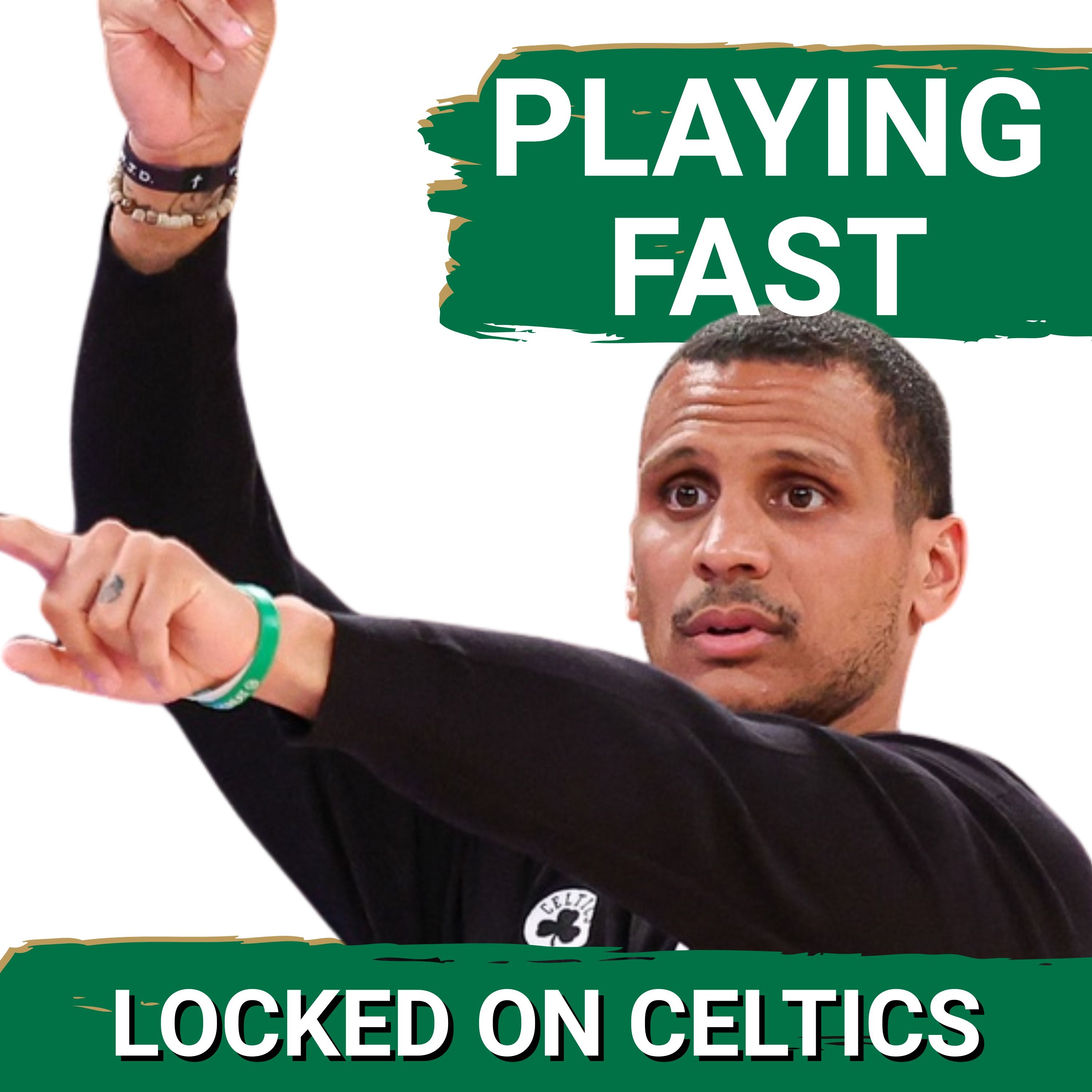
Locked On Celtics - Daily Podcast On The Boston Celtics
Can Celtics Be NBA's FASTEST Team? | Can Boston Sustain This INTENSITY?
00:28:30
Boston Celtics shake up their playbook with lightning-fast offense. Can they surprise the NBA with speed? John Karalis of Boston Sports Journal breaks down the Celtics' new up-tempo strategy, dissecting player reactions and Joe Mazzulla's emphasis on consistency over day-one enthusiasm. The discussion covers Xavier Tillman's offseason transformation and its potential impact on Boston's frontcourt options. Karalis analyzes how this shift could reshape the Celtics' offensive identity and challenge opponents. Tune in for an insider's look at the Celtics' evolving game plan and what it means for their season.
Loading summary
Transcript44 lines
- [00:00]
Jeff Bridges
Foreign.
- [00:06]
John Corralis
Every day. This is a vacation with Chase Sapphire Reserve the butler who knows your name. This is the robe, the view, the steam from your morning coffee. This is the complimentary breakfast on the balcony, the beach with no one else on it. This is the Edit a collection of handpicked luxury hotels you can access with Chase Sapphire Reserve and a $500 edit credit that gets you closer to all of it. Chase Sapphire Reserve the most rewarding card.
- [00:35]
Dr. Horton Advertiser
Learn more@chase.com Sapphire Reserve cards issued by.
- [00:38]
John Corralis
JP Morgan, Chase bank and a member.
- [00:39]
Dr. Horton Advertiser
FDIC subject to credit approval your new beginning starts now. Dr. Horton has new construction homes available in Ellensburg and throughout the greater Seattle area. With spacious floor plans, flexible living spaces and home technology packages, you can enjoy more cozy moments and sweet memories in your beautiful new home. With new home communities opening in Ellensburg and throughout the Seattle area, Dr. Horton has the ideal home for you. Learn more at Dr. Horton.com Dr. Horton, America's builder and equal Housing Opportunity Builder Morning Zoe.
- [01:13]
Dana
Got donuts Jeff Bridges why are you still living above our garage?
- [01:17]
Jeff Bridges
Well, I dig the mattress and I want to be in a T mobile commercial like you teach me.
- [01:23]
Dana
So Dana oh no, I'm not really prepared. I couldn't possibly at T Mobile get the new iPhone 17 Pro on them. It's designed to be the most powerful iPhone yet and has the ultimate pro camera system.
- [01:36]
Jeff Bridges
Wow. Impressive. Let me try. T Mobile is the best place to get iPhone 17 Pro because they've got the best network.
- [01:43]
Dana
Nice Jeffrey.
- [01:44]
John Corralis
You heard them.
- [01:45]
Jeff Bridges
T Mobile is the best place to.
- [01:47]
John Corralis
Get the new iPhone 17 Pro on us with eligible trade in in any condition.
- [01:52]
Jeff Bridges
So what are we having for lunch?
- [01:54]
Dana
Dude, my work Here is the 24 month bill.
- [01:57]
T-Mobile Advertiser
Credit is on experience beyond for well qualified customers plus tax and $35 device connection charge. Credit send and balance due if you pay off earlier. Cancel Finance agreement. IPhone 17 Pro 256 gigs 109999 A new line minimum 100 plus a month plan with auto pay plus taxes and fees required. Best mobile network in the US based on analysis by Oklahoma Speed Test Intelligence Data 1H 2025 Visit t mobile.com 1.
- [02:13]
John Corralis
Celtics says they will be the fastest team in the NBA this year. Joe Missoula says. Let's see about that. We'll talk about it right now on the Locked on Celtics podcast.
- [02:25]
T-Mobile Advertiser
Huh?
- [02:26]
John Corralis
Yep, yep. Be down be ever ready. It's the seas. Who else could it be? What they gonna say now screaming like J.T. corralis recap the madness every game, every practice prime time depp and D White on the sideline. Rennie J's how we started raising business, how we finish locked on Celtics pot. Home of the winners, baby. Hey there. Welcome back to the Lockdown Celtics podcast right here on the Lockdown Podcast network. Where does your team every day your team is the Boston Celtics. I talk about them for free every Monday through Friday. Bonus podcast when they play on weekends during the season. So make sure you're subscribed. The show's available Everywhere. It's on YouTube. Get into the comments section there. Share your thoughts with your fellow Celtics fans. Become an every day be here with me on this ride every Monday through Friday and let's have some fun together. I'm John Corralis, beat writer for Boston Sports Journal. I've written a couple books about the Celtics. I've been doing this, this job, a version of it for about 20 years now. So I'm excited about this season. Later on, we're going to get to Xavier Tillman. He'll be in the third segment. Xavier Tillman talks about losing 12 pounds and his knee feels better than it's been for the past couple of seasons. We're going to spend the first two segments talking about the Celtics playing fast. And the second segment would be Joe Missoula. Kind of interesting perspective from him on this after day one. Today's show is brought to you by FanDuel. Right now, new customers can bet just $5 and if your bet wins, you get $300 in bonus bets to use across the app. Head to FanDuel.com to get started. We're going to start with the players and I talked to Josh Minot a little bit for an upcoming story and one of the things that he said right away, because I asked him how did practice go? And he was like, we got after it. He said that Xavier Chimlin said that Luca Garza said that those are the players that were available. Well, I talked to Minot myself but though all of them had the same kind of reaction that guys, we went after it today. We were up and down. Every time you turned Xavier Tillman was like every time you turn around it's like new spot knew this, new that Garza kind of same thing it when, when I talked to Minot, he was just like, man, we, we really did go. You can even see the assistant coaches when they were walking off the floor, a couple of them were like pouring with sweat. These guys were, you know, if the coaches are working that hard, players are working that hard, that's, that's how The Celtics work and it's encouraging to, to kind of get that because we talked about the stylistic changes that the Celtics did need to make this year. And right away they're, they're paying off on the promise that this is going to be about transition. This is going to be about getting up and down the court quickly. Controlled, but quickly, you know, And I think right away we're, we're getting that indication from the team that it wasn't all talk. It wasn't, it wasn't like, hey, we're going to do this, but let's, let's work some other things in. Very obvious, and we've all seen it. This team is not in a place where you can just walk the ball up and survey the floor and pick out a mismatch. The part of why the Celtics have been such a slow paced team and we talk about slow pace, there's a couple of things here. Pace, the stat, which is possessions per 48 minutes. And the theory is why that's why that's called paces. If you play at a faster pace, you're putting up more shots for 48 minutes. And the Celtics were like 0.09 off of the slowest pace. We'll say slowest pace, but lowest pace in the league. They are a slow team. And then there's also the. Even when they bring the ball up the floor, brought the ball up a floor last season, there was still a level of they're not getting into multiple actions, they're getting into one pick and roll. You know, you want to play here and there and you kind of run the play through, but there you. When you had Tatum and Brown and White and Holiday and Porzingis, it didn't take long to find the mismatch. And so you didn't need 24 seconds. You get the ball over the court. You know, 17 seconds. On the clay, you didn't need the 17 seconds. You could. And you could take it all the way down to three or two and just keep working and grinding to get an advantage. You knew at some point one of these elite players was going to get an advantage. So first of all, credit to Joe and the coaching staff if you understand what's in front of you, right. You have to understand this is the team that we have. These are the players. Right. Right now, people see Joe Missoula as the, hey, get up as many three pointers as you can type of coach. And like you, you want to listen to the math, you want to listen to the, the analytics because the numbers bear it out like the three is so much more than two in the NBA. The that taking those shots versus some of the other shots that historically might have been available, we know that those are better. But Missoula isn't just like hey, I'm the three point guy. That's a league wide trend. And he's just, I think he might have taken those analytics to another level, but he's also got two eyes and basketball knowledge and you can see well, I don't have all of these same tools anymore. So generating the good shots this year is going to look different than generating the good shots last year. And that's going to mean getting the ball up the floor and not just pitch it ahead. Take the first shot that's available. This isn't Mike d'. Antoni. This isn't seven seconds or less. This isn't the just run and gun. What the Celtics are doing when they play fast. It's trying to get as many options as they can on a possession. Get the ball up the floor. You got 24 seconds on a shot clock after the, you know, after the ball changes hands. So don't waste your time taking all 8 seconds and starting your offense at 16, 15, 14. Get the ball up. You should only take you a few seconds, three, four seconds to get the ball up the up over half court. So now you start with 20, 19, 18 on the clock. Go get into your offense. Let's go and have your plays. You have your sets, but it's just okay, run this is nothing there. Great, we're going this way. Run this. If that's nothing there then go the other way and everybody's going to have their responsibilities. But it's not just play fast up tempo, fast break basketball. It's you can still be a fast paced team and a mostly half court team like the Celtics can play with a fast pace and that pace number might not actually change a whole lot. Right. It's not going to go from I don't have it in front of me, 98 to maybe 105. But it could go from 98 to 99 and had still have a noticeable impact. Like you could, you could look at the game and say they are playing much faster. Does that mean that they're getting up 10 more shots per game? Maybe it does, but also maybe it just means that they're moving the ball from side to side to side and driving and kicking and secondary attack, third attack. That is pace, that is playing fast. So these guys, you know when we talk about fastest team in the league, if Josh Minot is to be believed, it, it will look like more transition points, but the Celtics might not necessarily lead the team and lead the league in transition. Their fast pace might look a little bit different. So it's about getting the ball up the floor. It's about execution and just running through your options over and over. There are five guys on the floor and instead of finding the mismatch that's out there, bending the defense over and over and over again until you create the mismatch, that's where the Celtics offense is going to look different. So today, like I said, Minot, Garza, Tillman, they're all like, wow, this is, look how fast we're going. Joe Missoula said something a couple of things very interesting that I think challenges the Celtics, puts a little, a little cold water on the enthusiasm for this first day and challenges the Celtics to build on that. That is coming up next. Today's show is brought to you by fanduel. Our friends at fanduel are going to give you a big time bonus, the best bonus that I've seen here on the network. If you're a new customer and you've been holding out, sign up for FanDuel. Place your first five dollar bet. If it wins, you'll unlock 300 in bonus bets to use across the app. You could use it on anything. Football, baseball. You could have bet on the Red Sox to beat the Yankees. That would have paid off because they did. And whatever it is, make it a good bet. Win that first $5 bet, you win a few bucks. You also get 300 to use across the app to build parlays, player props, live lines during games. You know those are always fun, especially if you're watching the Celtics and you know Celtics go up 20 or the other team goes up 20 and you see the line move, you can say, I don't trust this lead. I'm going to bet on the liveline. That's an option too. So sign up@fanduel.com right now. When you sign up, it'll ask you to set your limit, set your budget, use their budgeting tools so you can have some fun with your disposable income. And when you hit the limit, no problem. When, when you reset, when you get paid again and you have some more disposable income, a few bucks to bet. Hopefully you have better luck and you can gamble responsibly and have some fun over@fanduel.com Go there now to download the FanDuel app and get started.
- [13:21]
Jeff Bridges
Morning, Zoe. Got donuts.
- [13:23]
Dana
Jeff Bridges, why are you still living above our garage?
- [13:26]
Jeff Bridges
Well, I dig the mattress and I want to be in a T mobile commercial like you teach me. So Dana.
- [13:33]
Dana
Oh no, I'm not really prepared. I couldn't possibly at t mobile get the new iPhone 17 Pro on them. It's designed to be the most powerful iPhone yet and has the ultimate pro camera system.
- [13:44]
Jeff Bridges
Wow, impressive. Let me try. T mobile is the best place to get iPhone 17 Pro because they've got the best network.
- [13:52]
John Corralis
Nice.
- [13:52]
Dana
Jeffrey, you heard them.
- [13:54]
Jeff Bridges
T mobile is the best place to.
- [13:55]
John Corralis
Get the new iPhone 17 Pro on us with eligible traded in any condition.
- [14:01]
Jeff Bridges
So what are we having for launch?
- [14:02]
Dana
Dude, my work here is done.
- [14:04]
T-Mobile Advertiser
The 24 month bill credit is on experience beyond for well qualified customers plus tax and $35 advice connection charge credits ended balance due if you pay off earlier, Cancel Finance Agreement. IPhone 17 Pro 256 gigs 1 99.99 A new line minimum $100 plus a month plan with auto pay plus taxes and fees required. Best mobile network in the US based on analysis by Ooklove Speed Test Intelligence data 1H 2025 Visit t mobile.com thank.
- [14:22]
John Corralis
You for making Lockdown Celtics your first listen every day. Go check out Lockdown NBA Lockdown NBA game night. I host on Wednesdays. This is the Wednesday show. So Jake Madison and I have already recorded our shows. We're talking about Jonathan Kaminga who agreed to his deal with the Warriors. We're talking about Steve Kerr and his lack of an extension to coach the Warriors. What does that mean? We're talking about LeBron and the Lakers and, and LeBron has an injury. Marcus Smart has an injury. So we're talking about all that. And Detroit Pistons talk. It's all unlocked on NBA game night. So go check that out whenever you're done with this podcast. Make it your second listen. So Joe Missoula was asked about playing fast. This is, this is the topic. This is the thing right now that everybody wants to talk about. And because you don't get to see every bit of practice, there's not a lot else to talk about right now. In. In the guys who are talking who have gone through it are like, whoa, we're moving out there, buddy. But it's day one and there Joe said a couple of things. These are two answers from Joe that I kind of put together. But they work. When it comes to playing fast and keeping this thing going, I thought it was a very interesting quote.
- [15:38]
Joe Missoula
Playing fast, I think is an overused term, I think it's more of a mindset and overall approach to the way you execute, the way you move the ball, the way also you defend. So we'll just take a look at our roster and see what gives us the best chance to put us in position to win every night. Everyone's energetic and enthusiastic on day one. I think that's a waste of time. You have to try to. It's not long lasting. It goes away relatively quickly. So you don't really want to rely on enthusiasm. You want to rely on the passion, the details, the work ethic and the mindset. So really it's just about being consistent, having a consistent mindset, having a consistent approach, having a consistent dedication to the details and to the system that we're trying to play. And you know, we should be acting, coaching, playing, thinking, working the same way we do two months from now. He did today. So that's the most important thing.
- [16:26]
John Corralis
That is the most important thing and that's an important message. He's speaking directly to his team there. And it's so easy, right? It's day one of training camp. Everybody's excited. You know, guys have something to prove. Guys are trying to make their case for maybe a starting spot, maybe any spot, maybe to just be a part of the team. There's guys that are, you know, Josh Minot is desperate. He, you know, guys like Luca Garza are a little desperate. Xavier Tillman, these guys. So of course you've been building up to this one day. If you can't be enthusiastic and full of energy and full of life on day one of training camp, then you're in the wrong business. So, yeah, this is great. Guys were, you know, out there and doing what they do and they're enthusiastic now. Let's see what happens. They might have had a second session on that day, and if they do have a second session, it's not quite as much running, but there's still like, can you bring it when you're tired in a second session? Can you bring it on day two? When day one you're like, we went harder than I thought. I'm kind of sore actually. Day three, Day four, a weekend. The first time you travel to head out for your first couple of preseason games on the road? Can you bring it consistently? Can you bring it on a back to back? Can you bring it when you're on a road trip, a long road trip? All of these things. Joe, if nothing else, is consistent in his messaging and he, he understands what this team is trying to accomplish. What they need to do to try to accomplish that. And I think he. He gets the human nature of it all. So. Yeah. Is day one, was that great? Did they have a great practice? Probably did. They probably had a great practice. All of the guys are probably like, I can't believe we ran so much. Or we can't believe we. You know, this is so much different than last year and all of that stuff and whatever crazy things they do, you know, last year they were. But it wasn't just football. They were doing all kinds of crazy things. You know, last year in. He's probably showing wild animal videos and, and whatnot. Can you keep that mindset? What can you do to keep that mindset in January where we know that this is where things start to fall apart and people start to lose focus and look forward to the All Star break? If the Celtics are going to be surprising at all this year, they're going to have to go through like a January and be the team that takes advantage of everybody else's January swoon. That's what this. If this team goes through the same low as everybody else in January, then you're like, yeah, okay, they're just like every other team. But if you're trying to be a 45 to 50 win team, you can't have that. You can't have that July doldrums. You have to be able to somehow mentally fight through that. And that's where your Minots and Garzas and Tillmans and you know, the guys that are. Are on the fringe. Jordan Walsh, Baylor Scheireman. That's where those guys have to really find a way to cut through the boredom, malaise. Whatever, whatever. That's what, that's what Joe is talking about in this quote. Can you do this two months from now, three months from now? Like, day one is easy. It's great. It's easy to be in here and be like, yeah, man, there's so happy to be back. And look at this, look at, look at us with our Celtics jerseys on. I can't believe I'm a Celtic. And, you know, these are great opportunities for all of us. What happens after you don't get that opportunity? Are you going to fight? What happens if you do get that opportunity? You know, like, I'm looking at a guy like Josh Minot who I think can maybe be a wild card for this Celtics team. Like, he, he meant, he make a. He might get cut for all I know, but he might be that guy, that 6, 7 guy with the long arms that you bring in is just flying all over the place and just. Just doing whatever. I don't care what happens. Like, for him, this is it. This is the time you're either in the league or out of the league. You know, like, that's how he has to approach this. And it's yes or no, sir kind of stuff. It's very. A college attitude with Joe, you know? Yes, Joe, no Joe. What do you need me to do? Go in there, when we fly around, do like, like Aaron Nesmith impression from a couple years ago and put my body on the line. Sure, I'll do that. Whatever I need to do to get that next contract and make a few million bucks. Because that's, that's what you're looking for, right? You're trying to set yourself up. This is a job. You're trying to continue and hold on to this precious commodity, a spot in the NBA. So those are the guys. You know, it's easy for Jalen and Peyton and Derek and Sam Houser to be leaders and be like, this is how we do things around here. But they're the ones, they're going to be the ones that fall into that January kind of thing, right? Because you're like, I've been here. I'm established. There's nothing, you know, whatever. It's. It's. This is the tough part of the season. It's going to be these other guys, the younger guys, the fringe guys, who are going to have to wake the. The veteran guys up with their energy. That's. That's part of all of this. So that. That quote from Joe, I think is. Is really, really important. Day one, that's fine. It's great. Show it to me again. And after you show it to me again, it's over. As Joe says, nobody cares. Okay? Day one is over. Nobody cares. Day two, what do you got? Great. You did that. That's awesome. Nobody cares anymore. Day three, what do you got? That's the thing with the NBA and pro sports. You've done it. That's great. Now what. Xavier Tillman mentioned him a few times here was interesting because he talked about his, you know, he's lost some weight, he's gone through some therapy for his knee. Talk about a wild card. I've talked about this in the show before. I've written about it on Boston Sports Journal. Xavier Tillman could change everything for this team. We'll talk about that next. Today's show is brought to you by Peloton. Peloton is shaping the future of fitness with the brand new Peloton Cross Training Tread Plus. Powered by Peloton iq, it's their most advanced equipment yet. Designed to give you real time guidance and endless ways to move. Whether you're running, lifting or cross training with your favorite instructors. This is training reimagined. Peloton is built for breakthroughs with tools that help you plan, stay motivated and reach peak performance. Peloton's IQ system offers real time strength coaching. It actually tracks your reps, suggests the right weights, it corrects your form, makes every rep safer and smarter. Correcting your form Correct form is a huge partly forget about how much you lift. If you have the correct form, the number doesn't matter. You're going to get your results. The swivel screen is a game changer. You can go from running on Tread plus to strength training without missing a beat and personalized class recommendations keep you engaged. You get workouts tailored to your vibe and energy level each week. So let yourself run, lift, flex and push forward. Explore the new Peloton Cross Training Trade plus today at one peloton.com introducing Family.
- [24:20]
T-Mobile Advertiser
Freedom from T Mobile. We'll pay off four phones up to 3, 200 and give you four free phones all on America's largest 5G network. Visit T mobile.com familyfreedom up. 800 per line via virtual prepaid card typically takes 15 days. Free phone via 24 monthly bill credits with finance agreement example Apple iPhone 16128 gigs 829.99 eligible trade in example iPhone iPhone 11 Pro for well qualified credits end and balance due. If you pay off early or cancel contact us.
- [24:51]
John Corralis
Hey thanks for making Lockdown Celtics your first listen every day. Happy to have you on board. I will still be doing mailbag episodes. John corrales.com mailbag john corrales.com mailbag to get those questions in get those in. When they have some downtime and off day, it'll be an easy way for me to get to some of your questions. So get those in. Especially as this preseason rolls along and practices happen and there's new stuff happening in these practices. It'd be great to hear from you and get your questions. Xavier Tillman I think this guy. Look, I'm not trying to overstate it because I, I don't expect much from Xavier Tillman, but he does have a track record in the NBA. He does have NBA skills, an NBA body and he's, he's made a contribution. He, you know, hit a big shot in the NBA Finals. He's, he's, capable when he's healthy. Unfortunately, he hasn't been healthy this summer. He talked, he talked about this summer, losing 12 pounds, switching up his diet, hiring a chef, eating things like chicken and rice and salmon and rice to keep his weight manageable. This is, this is a tough part when you're a big dude to like and you know, sometimes when you're an elite athlete, you're like, I can eat whatever I want and you get into some bad habits. So keeping that diet in a good spot and dropping the 12 pounds is a big deal and it's helped him keep that knee inflammation down. He says it's the lowest that it's been since he's been part of the Celtics. He got a couple of stem cell injections in January and March of last year. So between that a regimen of stretching and keeping his, his diet better and losing the weight and keeping that weight off is a part of him potentially taking advantage of this opportunity. Look, we've spent all summer barely talking about Tillman. If he can be a high level contributor, a real part of this rotation, then that, that changes the dynamic because it just snaps a couple of things more into place. You can go to Chris Boucher, you can go to Luca Garza, you can do a more offensive set type of lineup, you can do a more defensive kind of lineup. You. To have a guy with Tillman's size and strength to be able to play down low, guard a guy on the, on the, in the corner, tag on a pick and roll, you know, the, the roll man is coming down the middle of the lane and you're disrupting the timing of that alley oop and still being able to get out to the corner to have that, that takes, you can't do that with a bad knee. If Tillman is available to do that and be a guy with size that can dislodge people and, you know, really disrupt those pick and rolls and still get out to the perimeter and guard effectively. That is, I think, a potential game changer for the Celtics. So just good to hear him talk about slimming down, getting his, his three point shot down. One of the side effects of, hey, my knee is feeling better over the summer is being able to head out there to the court and I'm just going to take a bunch of jump shots, take hundreds and hundreds of jump shots all summer long. And natural jump shots, good jump shots, the ones that you're taking in the game because your knee is good. If your knee is not good in the offseason, you have to Rest it to try to get ready for the season. Well, that cuts into your reps for shooting, for picking up new things, for working on that defensive mobility. All of that stuff is if the knee isn't there and he talks about the flare ups and he has to sit for a few days, if he's not having the flare ups, then he gets to work on his game. And if he gets to work on his game, it just gives him that confidence. And look, if he's out there knocking down open shots, that's a big deal for Joe Missoula. And, you know, we'll see what it does for the Celtics moving forward. Does it, does it keep Tillman around? Does it make him more tradable, as people say? Oh, no, we will take that guy because he, I think he can help us if he has value to the Celtics in any way. Because he didn't have value. And he said it as much. He's like, last year was very hard. He said, I was going through my stuff. My knee would have days where it just swell up into a balloon after I had one scrimmage. So I knew consistency wise I could be there. I knew consistency wise I could be there to kind of support. But as far as my actual play, I couldn't do everything I wanted to do. So that was last season. If he can play this season and be that guy that's reliable and you can kick it to him and he's going to knock down shots and he's going to have to be guarded. That's, that's, that's a, that's a big difference. That front court just becomes better. You know, it's still on paper, it's still not great. But look, you can throw Keita and Tillman out there, and if that's okay and it still spreads the floor, then you got some size, some beef boxing out, you could get some rebounds. The exponential effect of being able to guard and box out, rebound, set, strong picks, be a threat, pick and pop just adds another dimension to an offense that's really, really trying to cook. So good news from Tillman again. Day one. Of course, everybody feels good after day one. How do you feel after day two? How does, how does week two look? How does month two look for Tillman? I am not expecting anything, but I am bracing myself. I had a little, just a little bit of anticipation, like, okay, maybe, you know, it's you. I don't know, you're. You're just. We'll see. We'll see. Leave it at that Celtics practice again. On Wednesday. I think they have Thursday off and then back at it over the weekend. So on next Monday I will be talking about the weekend Friday Saturday events. So I'll be here five days a week throughout the preseason, then once the season starts, maybe six if they play on a Friday night, seven if they play on a Saturday, Friday and a Saturday. I'll just be here for whatever you need for free daily. So Becoming Every Dayer. Subscribe Join Me on this journey Join your fellow Celtics fans on this journey. Do it in the comment section on the YouTube page. Share your thoughts there and then if you like the show, tell your friends about it. Tell everybody. Share the podcast. Tell them they should be listening to and watching the Lockdown Celtics podcast here on the Lockdown Podcast Network. It's your team every day.
- [32:14]
Dr. Horton Advertiser
Your new beginning starts now. Dr. Horton has new construction homes available in Ellensburg and throughout the greater Seattle area. With spacious floor plans, flexible living spaces and home technology packages, you can enjoy more cozy moments and sweet memories in your beautiful new home. With new home communities opening in Ellensburg and throughout the Seattle area, Dr. Horton has the ideal home for you. Learn more@drhorton.com Dr. Horton, America's builder and Equal Housing Opportunity Builder if you're a.
- [32:46]
T-Mobile Advertiser
Maintenance supervisor at a manufacturing facility and.
- [32:49]
Dr. Horton Advertiser
Your machinery isn't working right, Grainger knows you need to understand what's wrong as soon as possible. So when a conveyor motor falters, Grainger.
- [32:56]
T-Mobile Advertiser
Offers diagnostic tools like calibration kits and multimeters to help you identify and fix the problem.
- [33:02]
Dr. Horton Advertiser
With Grainger, you can be confident you.
- [33:04]
T-Mobile Advertiser
Have everything you need to keep your facility running smoothly. Call 1-800-GRAINGER clickgrainger.com or just stop by.
- [33:11]
Dr. Horton Advertiser
Grainger for the ones who get it done.
- [33:17]
John Corralis
A Prime Members, you can listen to this Locked on podcast at free on Amazon Music. Download the Amazon Music app today.