← Locked On Celtics - Daily Podcast On The Boston Celtics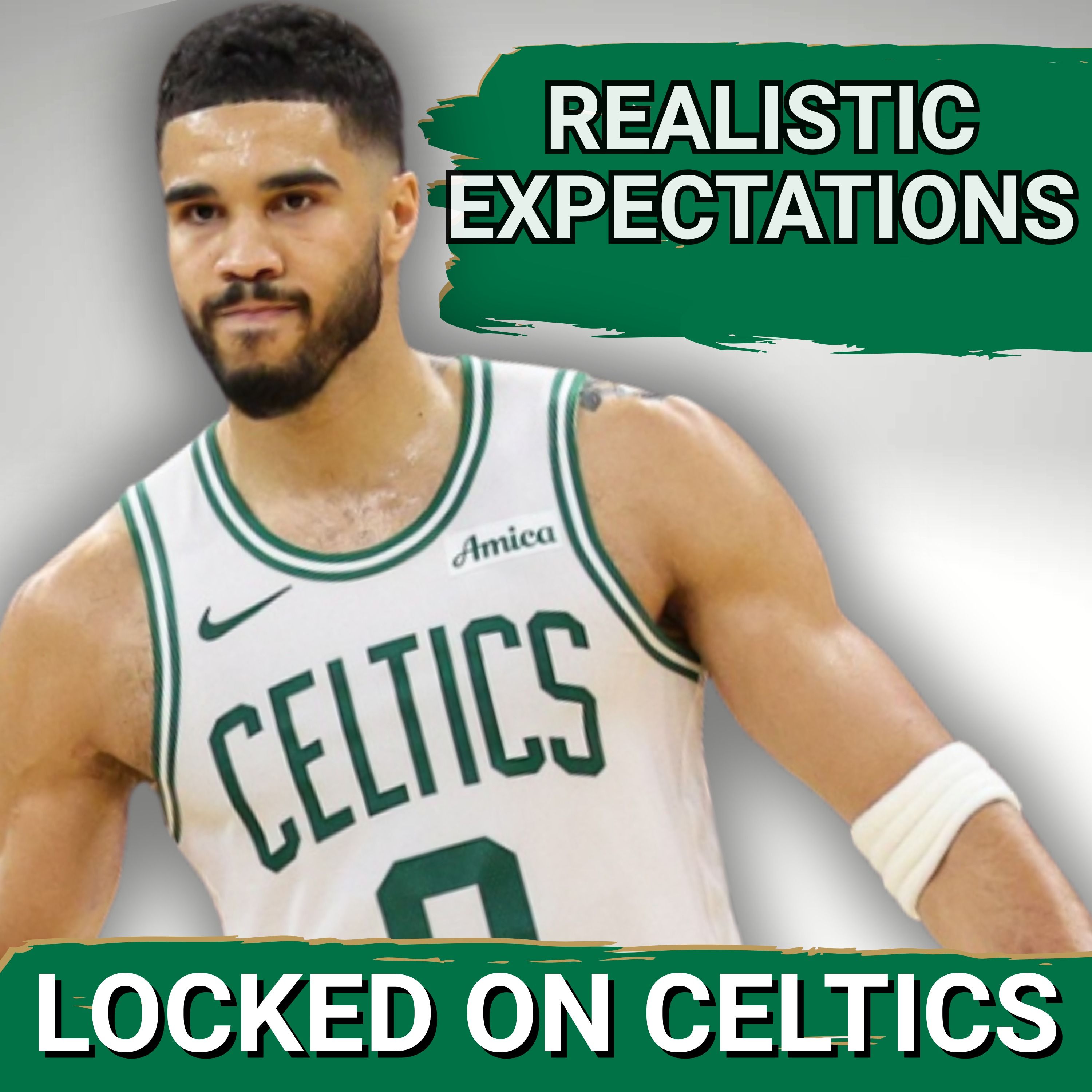
Locked On Celtics - Daily Podcast On The Boston Celtics
Jayson Tatum BACK! What Should We Expect From His Return To Boston Celtics?
00:36:52
Jayson Tatum’s highly anticipated return sparks hope for the Boston Celtics, but will his comeback instantly elevate this surging roster—or create new challenges down the stretch? John Karalis of Celtics On SI and Tom Westerholm of Boston.com debate realistic expectations for Tatum’s first games back, how his reintegration could impact Jaylen Brown, and whether an 80% version of Tatum shifts the Celtics’ playoff ceiling. They break down the likely minutes restriction, the emotional energy at TD Garden, and what Tatum needs to prove on both ends of the floor as he regains form. The conversation spotlights the Celtics’ remarkable resilience without Tatum, the rise of Hugo Gonzalez, and how roster moves have opened unexpected opportunities for key players. Can Joe Mazzulla maintain the team’s chemistry while adding their franchise cornerstone back to the mix? Get insight on minutes management, injury recovery, and what fans should—and shouldn’t—expect as Boston pushes for an Eastern ...
Loading summary
Transcript100 lines
- [00:02]
John Corrales
It's the Locked On Podcast Network your team every day.
- [00:11]
Tom Westerholm
Hi, this is Wes Goldberg from Locked On Heat and Locked On NBA Daily. Imagine you're watching the game at a buddy's house when you get a call that somebody tried to break into yours. In a second, everything can change. That's why there is ADT. ADT's security system helps keep your home safe 247 with the most company operated monitoring centers in the industry, the ADT plus app keeps you in control the entire time. Don't leave your home wide open during an emergency. When every second Counts, count on ADT. Visit ADT.com or call 1-800-ADT ASAP.
- [00:42]
John Corrales
This is Nick Engsted with the Lockdown Mavericks podcast. This message is a paid partnership with Apple Card. I love that I can earn up to 3% daily cash back on every purchase with my Apple Card, which can be automatically sent to my High Yield Savings account through Apple Card right in the Wallet app with my iPhone. I can use Apple Card with Apple Pay basically everywhere I go. You can apply for Apple Card too, right in the Wallet app on your iPhone subject to credit approval. Savings is available to Apple Card owners subject to eligibility Savings and Apple Card by Goldman Sachs Bank USA Salt Lake City Branch Member FDIC terms and more@applecard.com now in the locked On Celtics podcast, More Jason Tatum Talk. He's back. What can we realistically expect from him when he returns? Locked On Celtics Pod Home of the Winners hey there. Welcome back to the Locked On Celtics podcast right here on the Lockdown Podcast Network. Where is your team? Every day your team is the Boston Celtics. I talk about them Monday through Friday. Bonus podcast on the weekends. Think there's probably a reason for me to do a bonus podcast after the Friday night game against Dallas. Plus there's bonus podcasts all throughout the week, so check that out. I have a bonus podcast on Jason Tatum if you missed that. Just my initial thoughts, but so much more to get into here. So we're gonna do that now. My today's show is brought to you by fanduel. Fanduel is giving away a turn, giving you a way to turn that energy into a bigger potential win with a college basketball parlay profit boost. Head to FanDuel.com to get started. It's FanDuel.com FanDuel play your game. Did I introduce myself yet? I'm John Corrales, beat writer for Celtics on si. All that stuff. I've been doing this job for a long time. That's all you need to Know, I'm doing today's show with Tom Westerholm, everybody.
- [02:31]
Tom Westerholm
What up? Thank you, thank you, thank you, thank you. I, I, I will imagine that Jason Tatum's reception tomorrow will be more enthusiasm. No, you know what? Let's less enthusiastic than my reception to the lockdown Celtics show here, I think.
- [02:51]
John Corrales
Okay, cool. All right.
- [02:54]
Tom Westerholm
Banter attack. All right, let's go.
- [02:59]
John Corrales
I think so. I don't think you start Jason Tatum. I don't think you start Jason.
- [03:06]
Tom Westerholm
Yeah, yeah.
- [03:07]
John Corrales
So I think, I think, I think he comes off the bench, which means we're gonna get the Jason Tatum checking in moment of, like, you know, Eddie Palladino and, you know, checking in Jason Taylor. Like, he's gonna be like, ah, as soon as he gets up, you're gonna. Well, the first thing you're gonna see is two dozen videos on Twitter from every Celtics writer, every NBA writer. There's. Oh, here comes Jason Tatum checking in. Listen to the salvation. I'm gonna tell you right in advance, it's gonna be a loud ovation. It's gonna be a standing ovation. So, yeah, don't be surprised. So that. That's the first thing that's gonna happen there, but it's, it's gonna be fun. It's good to have him back more. More than anything. My first reaction is, you know, good for Jason. Like, good for Jason. I'm just happy to see a guy put in the work and make it back and have, like, this cool story and have this, this moment, this season and. And to do it in 10 months. I think, I think he. He's accomplishing everything he wants to accomplish, and it's going to be. It's. It's a good moment for him, for the team, for. For Boston. So I guess. I guess my first reaction is you. Good for you, buddy. Good for you.
- [04:39]
Tom Westerholm
Yeah, I think you should tell him that. I think I, I think, you know, when you, when you sit down and you call for the microphone and Celtics PR Gives you the microphone, I think your first message should be, hey, Jason, I just want to say, good for you, buddy. Like, thank you, buddy. You did it. Yeah. Look at you.
- [04:58]
John Corrales
You did it. That should be so. All right, so my first question. Let's formulate my first question. Let's, let's. So, so good for you, huh? Are you, Are you happy? Are you happy that you did this?
- [05:19]
Tom Westerholm
Yeah.
- [05:19]
John Corrales
Yeah.
- [05:20]
Tom Westerholm
Yeah. I think that's good. I think that would go over really well.
- [05:22]
John Corrales
I think that's a winner. Jason Tatum, are you happy to be playing basketball again?
- [05:27]
Tom Westerholm
Yeah, yeah. I mean, look, I. I'm to. To your point, right? It's. It's been a weird stretch because there has been. Right when. When Tatum went down with his injury and everything felt so apocalyptic for the Celtics because you knew that they were going to be trading guys away. Right? You knew that.
- [05:49]
John Corrales
Yeah.
- [05:49]
Tom Westerholm
Players were going to be gone in the offseason anyway. Last season felt like to some extent, you knew there was going to be a retooling, and it felt like kind of a last stand for a certain group of players. And it was a bummer because it wasn't anybody's. You know, it wasn't anybody in the organization's fault that it was a last stand. It was just the CBA worked out the way the CBA worked out. And so, yeah, it really had this kind of. Kind of mini last dance aura to it.
- [06:17]
John Corrales
Yeah.
- [06:18]
Tom Westerholm
And then Tatum goes down and it's like, well, this is. Wow. This is. That. That is. That is a very sad trombone kind of way to end. To end The Boston Celtics 20, 24, 25 season. And I. I think the thing that's wild now is it's just like all this time later, it. It one. It doesn't even feel like it's been that long. It feels simultaneously like a long time, and it doesn't feel like it's been that long at the same time. Like, it's like, yeah, Jason Tatum is back already, and in the interim, so much good Celtics stuff has happened. They have been. If. If people liked the Celtics more around the NBA and in NBA circles, this would be easily the feel good story of the season. They would be, like, mildly. You know, I get why six fans might not feel that way.
- [07:09]
John Corrales
Right, Right.
- [07:10]
Tom Westerholm
You know, if this was any other. If this was a different franchise, this would be like the feel good story of the season.
- [07:14]
John Corrales
And the reaction to Tyrese Halliburton back is going to be a little bit more feel good, I think. You know what I mean? Yeah, it's gonna be a little bit more like. Yeah, yeah, yeah, yeah, exactly. That's gonna be a real good for him.
- [07:28]
Tom Westerholm
It is. There's gonna be a lot less of, like, wow. Like a lot of this, like, you know, Carmelo Anthony concern trolling about, like, well, somebody's gotta. Somebody's got a sacrifice. Like, like, okay, dude, thank you. But yeah, I mean, it's. It's. I mean, genuinely. Right. Good for Jason Tatum. It's. This is going to be great for the Celtics. And I'm. It's. It's. It's going to be fascinating, man. Like, this team is. This team is rolling, and this is going to be a really interesting stretch. I'm. I'm fascinated to see how it works out.
- [08:02]
John Corrales
Yeah. I mean, think about, like, how. How that, how that, how that season ended. The questions, like, we knew, man, Porzingis is probably gone. Holiday is probably gone. But there was even some question about is Jalen.
- [08:21]
Tom Westerholm
Jalen was on the table. Yeah, gone.
- [08:24]
John Corrales
Like, is this the time I should.
- [08:27]
Tom Westerholm
I should clarify. Jalen was on the table in the way people were talking. Not.
- [08:30]
John Corrales
Yeah, no, right. The Celtics were never going to do it, but there was, you know, at the time, a natural kind of talking point became, well, if Jason's out and Jalen is, you know, he's 29. Is. Is this the time to maximize what you get bottom out, you get AJ Dibenza and you get like, all of these picks and you stock up and you just come back with Jason Tatum and Derrick White and whatever else you get and whoever else you get from the. The draft. At that point, we didn't know Ugo Gonzalez is a future star. So he just. You didn't know, like, there were question marks to just slide that in there. You didn't know what.
- [09:17]
Tom Westerholm
So.
- [09:18]
John Corrales
So you had to explore all of the possibilities. All. Everything was on the table. So for it to be here 10 months later, almost exactly. The surgery was on May 13th. For it to be here 10 months later with the Celtics in the two seed and Jalen in the MVP conversation, and Hugo Gonzalez is a budding superstar, and you get Nimius Keda as, you know, the opportunity that these guys got because of everything, you know, I'm a big believer in, like, the. The worst thing that happens can sometimes be the best thing that could happen and vice versa. Like you. You. The best thing that could happen. And you're like, well, wait a second. There's a downside to this, and you never want anybody to get hurt, but it happened. And so because it happened, you think, okay, well, what's the side effect of this? They traded away everybody and they gave these guys opportunities. And all of a sudden, a bunch of guys performed at a level that no one expected. And so now Jason Tatum's coming back to this incredibly positive situation. Almost born out of the negativity of the whole situation, which is, you know, a nice silver lining to something that we obviously wish never happened. But after it happened, to have this be the result is. It's kind of amazing.
- [10:56]
Tom Westerholm
Yeah. No, it really is. And it's. It is Wild to look back, you know, like, it's wild. I know we've kind of done this little retrospective a few times, but it is still really wild to acknowledge and look back at how at the beginning of the season, we said, here are the things that the Celtics would need for this season to be a success. They would need X, Y and Z. And. And they have shot so far past all of those things. Like, it's just eclipse. It's. It's stupid how far they've gone past all of those things that we were like, hey, this season would be a win if. Right. So, I mean, you know, and, I mean, it's. And it's interesting to look at it from. From that perspective too, that you just laid out. Right. Of like, the best thing that could happen can also be the worst thing. And it's like, I mean, I don't know, it's, you know, hopefully, hopefully the best thing happening of Keda being awesome and Shireman working out and Ugo Gonzalez being a future star doesn't now become the worst thing now that Tatum is back. And it just throws a monkey wrench into everything. Like, I don't know.
- [12:00]
John Corrales
Well, Right, Right. Yeah.
- [12:04]
Tom Westerholm
This is. I don't think I. That's not gonna. I'm not saying that's gonna happen. I don't think that's gonna happen, but. Yeah.
- [12:09]
John Corrales
Tom whispers.
- [12:10]
Tom Westerholm
Don't yell at me. Oh, my gosh.
- [12:15]
John Corrales
Okay. Stephen A. Westerholm.
- [12:17]
Tom Westerholm
That's. That's me.
- [12:21]
John Corrales
All right, let's get to the game. We're gonna get to the game tomorrow. What can we expect? How should this go? All of that stuff is next. Today's show is brought to you by FanDuel. College basketball is non stop. Big games, tight spreads, momentum swings every single night. From early tip offs to late night west coast shootouts, there's always action on the board. And now FanDuel is giving you a way to turn that energy into even bigger potential wins with a college basketball parlay profit boost. You can build any college hoops parlay that you want. You can mix spreads, totals, player props to match how you see the slate playing out. And you can apply the profit boost and instantly bump up the potential payout. Go safe, go bold. Or ride with the team that you've been following all season long. It is your parlay. It's your style now with more upside behind it. So head over to FanDuel.com to get started. Make sure you're using the tools that are available to you there so you can set your budget Set your limit and you can gamble responsibly. They will help you do that if you set that limit at whatever your disposable income is. So head on over to FanDuel.com that's FanDuel.com FanDuel play your game this is
- [13:41]
Tom Westerholm
Jake from Lock Dawn. When the game's on the line, the best know when to pass because the right assist can change everything. And off the court, it's no different. That's where your State Farm agent comes in. Whether it's protecting your car, your home, or helping you prep for the unexpected, they'll help set you up with a game plan that works for you.
- [13:57]
John Corrales
Like a good neighbor, State Farm is there.
- [13:59]
Tom Westerholm
Coverage options are selected by the customer. Availability and eligibility vary by state.
- [14:06]
John Corrales
Let's do this. Thank you for making Lockdown Celtics your first listen every day. Want to invite you to join the everyday or club. It's@lockdown celtics.supercast.com lockdown celtics.supercast.Com you get ad free audio for 5 bucks a month or 50 bucks for the year. Compatible with all major podcasting apps. You can also get access to our Discord server, which is live chat in game for Celtics and NBA fans. So check it out. Locked on celtics.supercast.com so Tom, the Celtics will. I'm assuming that we didn't do all of this just for Jason to back out at the last second. How do you think.
- [14:48]
Tom Westerholm
How do you think Jason Tatum ruled out for tomorrow on the, on the,
- [14:52]
John Corrales
on the Internet would have been helpful? Can you imagine? That would be absolutely. Just. We did all of this. He's questionable. I mean, he is questionable. There's no. He's. They didn't say he's in. Yeah, you're the ones that are making the leap, so it's on us.
- [15:09]
Tom Westerholm
Well, Toms is the one who's making the leap. We're just backpacking off him.
- [15:13]
John Corrales
But yeah, that's right. Blame shams.
- [15:16]
Tom Westerholm
Always blame shops.
- [15:17]
John Corrales
Always blame shams. What's your plan for Jason Tatum in game one?
- [15:24]
Tom Westerholm
Yeah, I, I think you nailed it. I, I think it is. I mean, obviously I, I think there is going to be, obviously there's going to be like a very strict minutes limit. And I really think that it is going to be like 15 minutes. Right. Like, I don't. This is not a, every coming back to the NBA is, is really hard. Right. NBA basketball is highly taxing, highly competitive, highly physical, all that stuff. And you know, Tatum needs to kind of work himself back in. My expectation for him would be that he will really struggle at first. And that's okay. That's literally all part of the process. Right. That is just a part of the. A part of the thing you have to go through when you come back from a massive, you know, career altering injury like the one he had. So I think, you know, like a. A real kind of limited stint. Lots of. Lots of the TD Garden. Doing your post game question of, like, you did it, buddy. Good job. Give him that little bit of a boost. Like, yeah, you know what? It feels good to be back out there. Feels good to kind of hear TD Garden go crazy when they see you out there. Like, a lot of that kind of stuff. I don't think tomorrow is actually, like, tomorrow is in no way. I think about how Jason Tatum performs on the court. I think tomorrow is about him being on the court, getting that little first taste and. And getting. Yeah, just. Just kind of starting to get his win back. I think, more than anything.
- [16:54]
John Corrales
Yeah. And I'll take it a step further. You need him to suck. You need him to go out there and struggle because that's the. That's part of the process. Right. And you need. I think two minutes into his first stint, you'll see him hand full of shorts, just hunched over, like, oh, my God, this is who, you know, turning to, like, Derek White. Like, I need one. I'm so, so out of shape. Yeah. Coach
- [17:31]
Tom Westerholm
Baylor, get your butt back in here, buddy. You're.
- [17:37]
John Corrales
But you need him to go through that. That's what this is. This is the re. Acclimation. This is the ramp up. This is. You've done all you can do in scrimmages. It is now impossible to get into NBA shape with more practice scrimmaging.
- [17:57]
Tom Westerholm
Right?
- [17:58]
John Corrales
I don't care who you are. There's no amount of practice at no level. I don't care how hard you actually practice. There's nothing that compares to a game. And so you. You got to take it to that next level. So if Tatum is at 80% of Jason Tatum, the next 20% only comes with playing these games. Getting the wind just knocked out of you, feeling the lungs burn, feeling the legs get heavy, wondering, oh, my God, when's the last time I felt like this? I said in my last podcast, the bonus podcast, like, I wouldn't be surprised if he says something along the lines of, yeah, I. I haven't felt this tired since high school, you know, like some old. Like, they used to make us run. And this is how tired I feel because. Because of all of this. So that's. This is why I say bring him off the bench. People are saying, no, he's a starter. You start. I'm like, yeah, of course.
- [19:05]
Tom Westerholm
Of course he's a starter. That's not. Eventually he's gonna start.
- [19:08]
John Corrales
Like, that's not. I'm not saying you bench Jason Tatum. You have. It's like when I was saying Ugo Gonzalez should go play some games in the G League. Like, he, you're. You're not demoting him to the G League. I'm like, just go play 36 minutes in a game. Play five games that, you know, go, go spread your wings. Go run up and down the floor. Like, yeah, you got to come off the bench. I'm gonna work Ugo Gonzalez into every.
- [19:31]
Tom Westerholm
I was gonna say it is impressive how much Ugo is getting into this.
- [19:34]
John Corrales
Jason, every segment for the rest of the season is going to be some mention of Hugo Gonzalez. I, I just want to mention. I just, I am self aware. I'm aware of what I'm doing. You need Tatum, because Tatum and Ugo are right there at that same level. You need Tatum to go. And Gonzalez's floor is Jason Tatum. You know, Michael Jordan. No, you. You have, you have to go out there and go through it as a. Off the bench, number one. You just don't want to disrupt the starters yet, right? You're. You're going to have time to play with those guys. Just my ideal situation, he comes in at the TV timeout for, you know, the last TV TV timeout of the first quarter. So it's like two and change. So two, three minutes of the first quarter, then you play three minutes or so and quarter break, guaranteed timeout. Sit down. Everybody comes over. Jason, how you doing? You feeling okay? Great. Okay, get back out there. You play three, four more minutes to the next TV timeout. Guaranteed break. Come out, sit. Everybody come over, take them to the back. I don't care. You don't have to sit in the. Take them in the back, Go through everything. If you need to take an image of something, take it all, whatever. Then halftime, get ready, take a shower if you need to come back out there. And in the third and fourth quarter, you do the same thing. And that's it. That's 14, 15, 16 minutes of basketball. And you do that for the first couple of games. Probably miss the Cleveland game. He's going to miss games. And then you, you just build up. So if it's 16 minutes of basketball against, against Dallas, then it's 18 minutes against San Antonio. And then maybe you miss the OKC game. Maybe you play the OKC game and you try whatever it is. Definitely not back to backs, but just play it by ear and let him go through the soreness and then build it back up. And this is the whole process of ramping up. That's what it is. So that's what they should do that. That's my plan for Jason Tatum, which I know Brad Stevens is listening, so I hope you took all those notes.
- [22:13]
Tom Westerholm
Correct. Yes, hopefully. Listen, hopefully the people in charge of his rehab are listening because we are doctors on this podcast. Yeah, we're always saying that. Yeah, no, I think I, I think just to add to your point, the only thing I would add is, is I think it's, it's really important as he's getting his win back, to also get those first few tweaks where you, where you, you take a step that felt that would have, that would have been really risky six months ago. Right? Get those, get those steps that are now safe. That those are, those are now safe steps. Like, if he's coming back, he's ready to come back. And that means that, like, those steps don't feel right yet. You know, like, yeah, yeah. Have that feeling of like, oh, man, I don't want to. You know, you have to take them. You know, you just, you literally have to take those steps. And honestly, that feeling might not go away for him this year. Like, that might be something that doesn't resolve itself until, you know, he, he has, he has a half an NBA season or, you know, quarter of an NBA season under his belt and in summer and a training camp and, you know, it might not feel right until next year, but, but that's, again, that's all part of the ramp up process. That's all part of this really, really important process that he's currently undergoing. So, yeah, I think wind and also just kind of taking some of those risky steps again.
- [23:34]
John Corrales
Yeah, let's, let's try to project forward when we come back. Well, what can Jason Tatum be?
- [23:41]
Tom Westerholm
And then, you know, almost Hugo Gonzalez, some might say.
- [23:45]
John Corrales
Let's not push it. Do that when we come back. Today's show is brought to you by Five Hour Energy. It's time for the Five Hour Energy flavor draft. And with 18 different flavors to choose from, including new options like Confetti Craze, Fruity Rainbow Cotton Candy, there's something for everybody. The board is set, the flavors are ready, and I've got my number one pick for the five Hour Energy Flavor Draft. Now there's different flavors, there's different kinds of things. If you've got a heavy sweet tooth, then you want maybe something like cotton candy, which is just pure sweetness from start to finish. Sweet tooth fix, but without any sugar guilt. And that's the number one thing with all of these flavors. When I mentioned confetti craze, when I mention Hawaiian Breeze or the pomegranate, any of the no sugar. And that's the important thing. No sugar. No sugar crash. But you still get some of that sweetness that you're looking for. I'm not looking for something as sweet, so I'm going with either grape or berry or strawberry, banana. That's all very, very subtle. It's more fruity. I like the berry because it's big, bold berry flavor. It's got a clean finish with minimal aftertaste and it's got that easy to recognize fruit profile. Little raspberry, little BlackBerry. So it's a little mixed berry type of thing. That's where I'm going with my flavor on Five Hour Energy. You can get your own at Five Hour Energy. Com. That's the number Five Hour Energy.com or you can go pick some up at Amazon. Today's show was also brought to you by Indeed. We know how crazy the workplace can get. Deadlines are stacking up. You got inboxes overflowing and you got one position that you need to fill and you're just hoping that the right person comes along. No, you wouldn't do that. Brad Stevens wouldn't do that. Be Brad Stevens. Go find somebody that checks all your boxes. Brad Stevens has scouts. You have Indeed sponsored jobs. So reach the people who actually fit what you're looking for. Skills, experience, location. So you're not just hoping the right candidate stumbles across your post. They'll in the minute that I'm talking to you. Companies like yours will make 27 hires on Indeed according to Indeed Data Worldwide. So spend less time searching, spend more time actually interviewing the candidates who check all your boxes. Less stress, less time, more results when you need the right person to cut through the chaos. This is a job for Indeed Sponsored Jobs and you'll get a $75 sponsor job credit to get your job the premium status it deserves. Indeed.com podcast, make sure you let them know that we sent you Indeed.com podcast. Terms and conditions apply. Need to hire. This is a job for Indeed sponsored jobs. Thanks for making Lockdown Celtics your first listen every day. Go check out Locked on NBA Locked on NBA game night. They're covering all the big stories. Jason Tatum's a big story. So that's on lockdown NBA game night is seven days a week. All the games covered on game night. I host a show on Wednesdays, so check it out. Keep up with the league with lockdown NBA. All right, let's get back to the, let's wrap up the Jayson Tatum is back conversation. Let's spin it. Forward Tom, I'm excited for, first of all, I'm excited that he's going to be able to knock off all the rust and go through all this stuff and kind of figure out who he is and what he's going to be eventually. I expect him to start eventually expecting to play and, you know, be a meaningful part of all of this. But I do question realistically, what he's going to be this year.
- [27:36]
Tom Westerholm
Yeah,
- [27:38]
John Corrales
I, I, I don't think he's going to be 100% Jason Tatum until the beginning of next season, which is fine. Like, I would, no one should. Is 80% of Jason Tatum good enough to change this? This team's for, like, I'll put it this way. What does 80% of Jason Tatum do for this team?
- [28:06]
Tom Westerholm
I mean, it's a really tough question because 80% of Jason Tatum. What, what are we, what%. What is in the percent that we're taking out? Right. And I, I mean, I think the answer is like, you know, some athleticism. Right. Some level of, like, knowledge of his own body. Right. You know, you know, that, that, that, like, knowing how to operate within the physical gifts that he has. Right. But then also the, the, but, but also what's been taken from him that he has to try to build back. Like, that's a, it's a really complex.
- [28:42]
John Corrales
Yeah.
- [28:43]
Tom Westerholm
Situation for an athlete, you know, especially an athlete as, as elite as Jason Tatum is. So, you know, I, I think to me, the biggest question is. Okay, what I think I, honestly, I'm most interested in what he can give the Celtics. I know this sounds crazy to say about, like, I, I hesitate to say it because I don't want to be accused of, like, downplaying Jason Tatum. I have not downplayed Jason Tatum going forward, but this year I'm curious what he can do on the defensive end. Right. I'm, yeah, sure.
- [29:13]
John Corrales
No, it's fair. Why would that downplay. That's fair?
- [29:15]
Tom Westerholm
Well, because I'm most interested in what his defense, what he can bring defensively and rebounding, and it makes it sound like I'm calling him a role player, but.
- [29:23]
John Corrales
Well, he ain't coming back to be no role player, Doc, you know what I mean?
- [29:27]
Tom Westerholm
So, I mean, I, I'm. Yeah, I don't know, man. It's. It, I think, I think it kind of depends on what? On, on how he adjusts to all of that. Because I mean, the Celtics, I think are currently, I mean, we talked about this the other day. I, I, you know, as long as they don't meet the Hornets in the playoffs, I think that this Celtics team is kind of a dark horse contender as currently constructed. And I am, you know, what can Tatum bring to that? Well, I mean, listen, Jason Tatum coming back to any team improves it, but this team has been very finely tuned and now you are, you know, putting a guy who's trying to figure himself out back into that. I do think it's, I do think that when I see people say like, well, Jalen and Jason have always figured it out before, I think that's true for next year. I do think that there's a fair question to be asked about what, what does it look like this year? Like, this is, this is a really good team that is going to be trying to reintegrate a really hot. A guy who's previously been really high usage and you know, deservedly so. Right. Should be extremely high usage. But this season I think it, it is going to be really interesting to, you know, and I'm using interesting as a euphemism for, you know, potentially challenging to figure out how this all comes together again.
- [30:48]
John Corrales
I don't think it's out of bounds to say for, for the next two months you got to figure some stuff out, you know, like that's, you're right, next year is next year and that they will be fine next year, but
- [31:02]
Tom Westerholm
for the next probably really dang good next. Right.
- [31:06]
John Corrales
But for the next two months. Yeah, that's going to be a challenge because he's coming back, you know, he hasn't played for 10 months. That's gonna be a process that's not gonna happen overnight. So yes, they're gonna have to figure some stuff out this season. So I mean, I think about like human nature and when you're put in an uncomfortable situation, new job, whatever it is, you know, what do you do? What do people, how do people normally react? I think what you do is you lean on just the habits. You lean on the old whatever it is. Whenever people are stressed, whenever people are unsure, everybody reverts back to their base habits. So what are Jason Tatum's base habits? Step backs. His. He's going to drive. I question if he's going to have the. I don't want to call it reckless abandonment, but I question whether he's just going to be headstrong and say, you know what? I'm driving. I'm trying to dunk on people. Maybe he is, maybe he isn't. I have no idea. We're gonna have to see it. But when you've hurt your foot, you hurt your lower leg, and you're like, obviously, he can be explosive, but are you gonna. Are you gonna really. Are you gonna really jump into traffic? You're gonna really want to land on. How's that gonna look, right?
- [32:38]
Tom Westerholm
Because, like, he was doing sort of a Giannis thing before he got hurt, right where he was doing that, like, that. Use these big shoulders and, like, power your way downhill and spray it out if you need to or whatever. Like, I mean, that was what. That was a huge part of what made him so special before he got hurt. That's gonna be hard to do going forward. That's gonna be hard to do this year. Now. I don't know about. I think next year he'll be fine, but that's going to be hard to do over the next few months.
- [33:03]
John Corrales
I think March, April, I don't know, May, maybe May.
- [33:07]
Tom Westerholm
Yeah.
- [33:10]
John Corrales
He. It's going to be. My expectation is going to be, like, a little bit more jumper heavy for Tatum.
- [33:16]
Tom Westerholm
I agree.
- [33:18]
John Corrales
You know, snatchback dribbles. The. You know, I'm. I'm. Oh, I think I'm going to drive, but no, I'm going to pull back. And because I'm comfortable fading away, I know I can land softly. I can fall backwards. There might be a little bit more falling for Jason Tatum. Kind of like sliding and then getting up and going. It's just going to be. I. I guess the way I'm going to put it is how risk averse is he going to be in the early going? And it's a natural part of coming back. The. My body failed me. My leg exploded 10 months ago doing a natural thing, and he was just diving for a ball. But I don't want to land wrong. I don't want to be in the middle of the, you know, where eight sets of feet are. You know, I. So I think it's going to be a lot more jumpers, a lot, you know, at least the start a lot more, you know, step backs a lot more, you know, passing out of certain situations, maybe just easing his way into things. So hopefully I'm wrong because I want to see him be Confident. That'll take time. But I think for now it's. It's the especially know Friday night that's. That's going to be. Who knows what it's going to be? We shouldn't expect anything but it. I think just setting the expectation of give him time, let him get the confidence out there, get the confidence in his body and just the confidence in the game. Trusting the game to not screw him over again by blowing out, just to be like, I can go play this game now, and it's not going to be something that hurts me anymore. These are the mental hurdles that just. The shock therapy, the immersion therapy. Oh, you're afraid of heights. Well, guess what? You're jumping out of a plane, that type of thing. And you just got to go do it and be afraid of it and have it go well and be like, okay, thank God. And then in the next day, you'd be like, okay, I'm. I'm good at this again. I'm Jason freaking Tatum. I'm gonna be fine. And build back up to just being a basketball player again. You know, there is. This is still a big step to be taken, for sure.
- [36:03]
Tom Westerholm
The good news is for Celtics fans,
- [36:07]
John Corrales
we're talking about is there to kind of help him along the way. I said that Hugo Gonzalez is there.
- [36:13]
Tom Westerholm
Gonzalez is there to help him along the way for sure. Also, the other good news for Celtics fans is that we're the ones who are like, I mean, to some degree, you know, you said maybe 44, 45 wins. I said I could see it. I could also see them being in the lottery. So what we should be saying here is Celtics fans should be expecting Jason Tatum to just, like, step right back in 48 minutes tomorrow. He's ready to go, Right?
- [36:38]
John Corrales
That's right. Considering everything that we've had a concern about, if it follows the trend. I know.
- [36:43]
Tom Westerholm
I just. I just don't know about Neemi as a starting center. Are we sure? Are we sure?
- [36:50]
John Corrales
Jason Tatum's debut, starting 42 minutes, 39 points, 11 rebounds, eight assists.
- [36:59]
Tom Westerholm
Yeah. Game seven against the Knicks, and he puts up, like, 48 and, you know, on 14 shots.
- [37:08]
John Corrales
Yeah. If it follows how this season has gone. Yeah, that's what it's gonna be like. Comeback player of the year. They. They used to give out comeback player of the year, but they used to
- [37:21]
Tom Westerholm
do that for a guy who missed the season previously. Jason Tatum just gets it for, like, coming back mid season. It's like lighting everything on fire. Yeah.
- [37:29]
John Corrales
How crazy was it that they used to do a Comeback Player of the Year. There's so many guys that had so many injuries that they were like, yeah, we got to do it. We got to give somebody an award for coming back from stuff.
- [37:39]
Tom Westerholm
Yeah, yeah, bring it back.
- [37:42]
John Corrales
Sure.
- [37:43]
Tom Westerholm
We need it. We need a comeback for the Comeback Player of the Year.
- [37:45]
John Corrales
That's. I like it. I like it. It's a good place to end it. Tom. Appreciate you buddy.
- [37:50]
Tom Westerholm
Appreciate you man.
- [37:51]
John Corrales
And I appreciate you listening, watching however you're consuming this podcast. I do thank you for being here on a regular basis Monday through Friday for this podcast. Plus bonus podcasts throughout the week. Definitely when they play on weekends, obviously. Friday night, Jason Tatum returning. I will be at the Garden. I will have a bonus podcast after that, so make sure you're subscribed. Watch the show on YouTube. Get to the comments there. My favorite thing for you to do is share the podcast. Tell everybody they should be listening to and watching the Lockdown Celtics podcast here on the Lockdown Podcast Network. It's your team. Every day. It's tax time. And for a lot of us, the old way of doing taxes is just a lot. But this year you're getting an upgrade. Intuit TurboTax now has in person locations where you can meet face to face with a real tax expert. Get your documents uploaded and just like that, you're done. Your expert works to get you every dollar you deserve. While you get real time updates and go about your day, head to turbotax.com local to book your appointment. Calling all daydreamers and date nighters. Come immerse yourself in the rich culture of Texas and dig into our mouth watering barbecue. Trailblazers can explore our natural wonders and beach lovers will wonder why they've never felt so relaxed before. You're invited to discover experiences you can
- [39:21]
Tom Westerholm
only find find in Texas.
- [39:23]
John Corrales
Visit traveltexas.com and plan your trip today.
- [39:26]
Tom Westerholm
Let's Texas the tournament is on and fanatics merch is 30% off with pays. A fast online checkout offered by banks and credit unions. Snag all your team gear, jerseys, caps, bomber jackets, even fuzzy rhinestone slippers with pays. Your actual card numbers aren't shared with merchants, so you can lock in your gear with added security and rock those fuzzy slippers with confidence. Use Payze with code PAYZPERKS for 30% off at Fanatics until March 31, 2026 20. Terms apply@Fanatics.com pays.