← Locked On Celtics - Daily Podcast On The Boston Celtics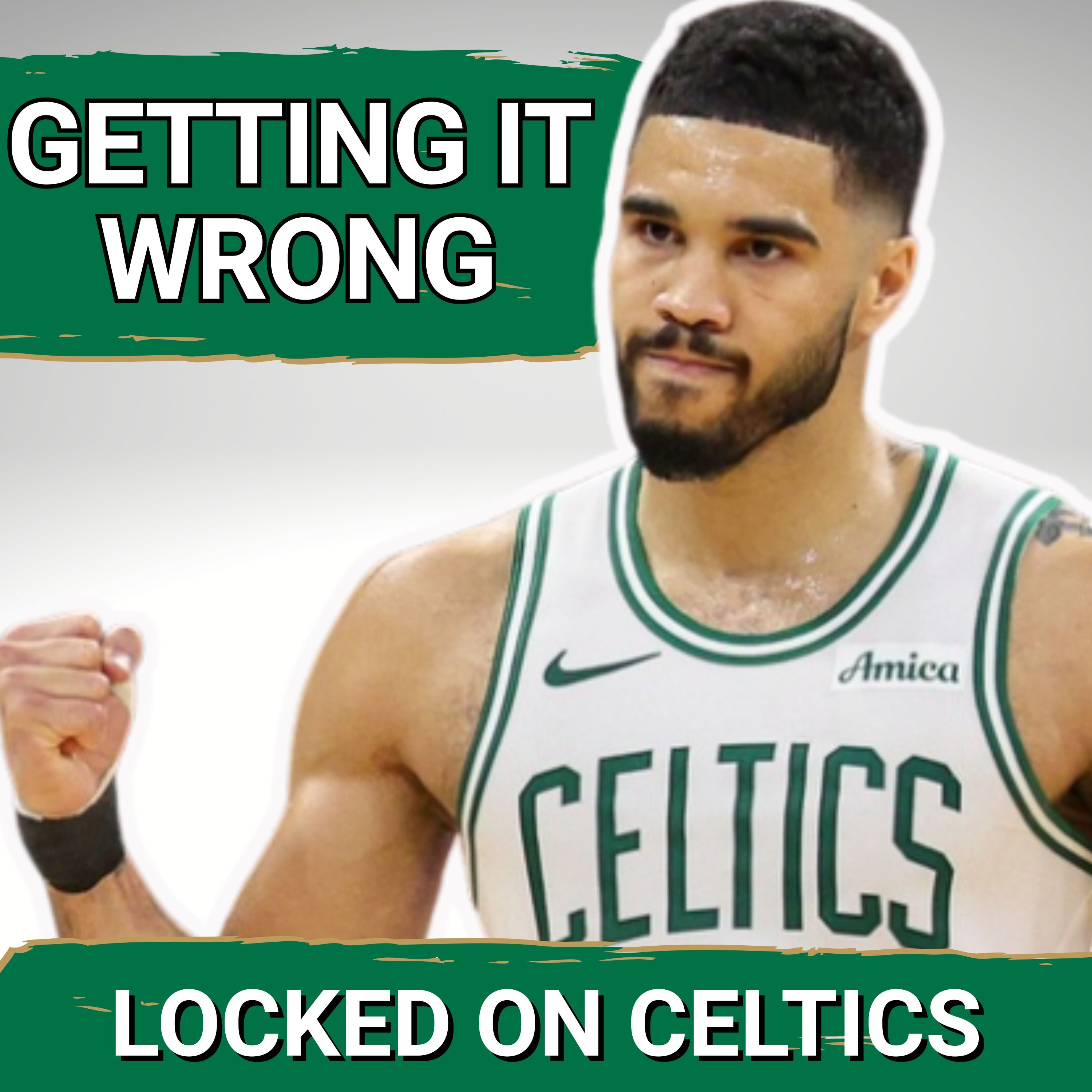
Locked On Celtics - Daily Podcast On The Boston Celtics
The TRUTH About Jayson Tatum’s Boston Celtics Comeback—What You’re Missing
00:38:09
People are getting it all wrong about Jayson Tatum’s potential return—here’s the real story. John Karalis of Boston Sports Journal sets the record straight, explaining why Boston shouldn’t expect Tatum to immediately play at an All-NBA level or be a playoff savior. From minutes restrictions to the possibility of coming off the bench, every detail of Tatum’s recovery timeline is crucial to the Celtics’ long-term outlook rather than this year’s championship push. We also open the mailbag. Key topics include strategic implications for Payton Pritchard, Jordan Walsh, and the evolving center rotation with Neemias Queta. Player development wins with Sam Hauser and Luke Kornet highlight Boston’s strong back-end staff, while technical free throw decisions and the search for Walsh’s perfect nickname add flavor. Get the latest on Brad Stevens’ approach, mailbag insights, and why the focus is on preparing for next season—not risking it all for this one.
Loading summary
Transcript7 lines
- [00:02]
A
It's the Locked On Podcast network your team every day. Alienware's sale of the season lets you unleash peak performance at big holiday savings. Save on select Alienware PCs like the groundbreaking Alienware 16 Area 51 gaming laptop, taking performance to the next level with Intel Core Ultra processors. And even better, you can get it before the holidays. Plus you you could save on all the latest accessories and displays like the Alienware 32 4K QD OLED gaming monitor. Visit alienware.com deals before it's too late.
- [00:39]
B
The Kia Sportage Turbo Hybrid has a bold design, a spacious interior with 232 horsepower and a 12.3-inch panoramic display to keep the adventure going and fit with the way you live. And with SiriusXM every drive comes alive, bringing you closer to the music, sports talk and podcasts you love right in your vehicle or on the SiriusXM app. Every SiriusXM equipped Kia Sportage Turbo Hybrid includes a three month trial subscription to SiriusXM, so the experience begins the moment you drive. Learn more@kia.com Sportage Hybrid Kia Movement that.
- [01:09]
A
Inspires the College Football Playoff is everything. Toughness, growth, sacrifices, laser focus. This is where i50 everything you got all damn day. The attention to detail is like none other. Be physical, be flat. We are the winner. Tulane takes on Ole Miss, followed by James Madison in Oregon. Time to bring it first round coverage of the College Football playoffs presented by allstate Saturday at 3:30 Eastern on TNT and HBO. Max, are you ready? Let's go. Everybody's getting the potential Jason Tatum return all wrong. We'll get it right right now on the Lockdown Celtics podcast, huh? Yep yep. Be town be ever ready. It's the seas. Who else could it be? What they going to say now screaming like J18 corralis we kept the madness every game, every practice. Prime time. Depp and D. White on the sideline. Ren and Jace how we started raising Ben. That's how we finish. Locked on Celtics pot. Home of the Winners podcast right here on the Lockdown Podcast Network where it is your team every day. Your team is the Boston Celtics. I talk about them every Monday through Friday. I got bonus podcasts. They play the Heat on Friday night. They have a game on Saturday night. I'll have podcasts after each of those then all next week. Every one of them is free so check it out. Wherever you get your podcast, watch the show on YouTube. Get into the comments section there. If you're new to the show. I am John Corrales, beat writer for Boston Sports Journal. I've been doing a version of this job for about 20 years now, this podcast for 10, and I've written a couple of books about the Celtics. Later on. We're going to get to mailbag questions in the second segment. Third segment, I should say we'll get into Namish Kaeda, technical free throws, Jordan Walsh's nickname. We'll get into the second segment. We'll get into some Jayson Tatum questions, because I'm going to start with Jason Tatum and why people are getting this all wrong. Now, I have been very vocal. I've been one of the first people to believe wholeheartedly that Tatum was coming back this season. I still think that that's the case. The momentum is building for that to be the case. I think Brad Stevens kind of opened the door for that in his conversation with the media on Wednesday. Now we're now everybody's coming around to the idea Jayson Tatum might play this season, but now they're getting the circumstances wrong. And you, every day, there's the people who are with me every Monday through Friday. I think you're probably getting it right because you're with me so often. I think you understand what I've been saying. But number one, do not expect a person stepping onto the floor wearing the number 0 with the name Tatum on the back to be, quote, unquote, Jayson Tatum. I think a lot of people are looking at this potential return. I'm like, well, look, man, the Celtics could be dangerous, and if they have an opportunity to go for it this year, like, Jason Tatum's coming back and, you know, but like, no, no, no, no, no. Stop that. Stop that. It's not. Is it possible? Yeah, it's possible. It's possible. Is it likely? Probably not. Because as I've said before, I've said it everywhere. I've talked about Jason Tatum. When you come back from an injury, first of all, it's a slow process. It's a slow process getting back to yourself and playing actual basketball, getting into a competitive game versus every bit of ramping up that you do. All of the running and scrimmaging and all of that stuff is nothing. There is nothing. And I cannot stress this enough, nothing like playing an actual game where there is an opponent and you have to play against that opponent, scrimmaging your own teammates. There's something about it. It's hard to explain. The movements aren't the same. The surprises aren't there. The adrenaline isn't there. The, the extra kick, the extra physicality the extra emotion, the stuff that makes you do things and move in different ways and move a little bit faster and all of that stuff playing in a game is going to be different. That means it's going to put a brand new stress on his body, which he's going to need to do. Which is why I want him to come back this season so he can get that out of the way. That's an important element. I expect him to come back March, early March. Maybe, maybe he'll, he'll come back sooner than that. And if he comes back sooner than that, then maybe there is something thing on the tail end where, hey, maybe the Celtics are a dangerous playoff team. It's not out of the question. I don't want to say it's out of the question. All I'm saying is don't expect it. Expect Tatum to come back and be on a minutes restriction and to probably not play back to backs and to, I don't know, maybe even not start right. Like, I don't know. Maybe he will, maybe he won't. But this is, as I've said, no a number of times, Jayson Tatum's return is the end of the 25, 26 regular season and the it becomes the beginning of the 20, 26, 27 preseason. That is it. That is the end of the story. To me. That's how we should look at it. I'm not even saying that he'll be himself for a playoff run. It's possible that he will be himself and in a month or two he can be ready for some playoff basketball or real like real minutes. But also, let's consider the possibility that the Celtics say he's only coming back for the regular season and we're shutting him down for the playoffs because we don't want to put him in that kind of situation. I, I'm not saying that that's going to happen, but I think there's any number of possibilities here where Tatum comes back, he goes through some progression. If he doesn't feel himself, if he doesn't feel great, then they will there, they will tone down how much he plays. That soreness, that initial soreness, just all through, not just the Achilles all through his body is going to hit him hard. He's going to probably need a couple of days to kind of properly recover from that. The last thing the Celtics want, the last thing Tatum wants is to go through this again. I said this on yesterday's show. If you missed it, Jayson Tatum didn't come through all of this he didn't run 26 miles of a marathon to screw around on the point two and hurt himself again. Right? This is the part. This is the most important part. This has been a marathon. You have to finish the right way. So the soreness, whatever his body, whatever fatigue he's going through, I'm sure the Celtics are going to want him to get back to 100% before he plays that next game. So if he plays and then maybe sits a game and plays a game, I would be shocked. If he plays back to backs, I would be. I wouldn't be surprised if his minutes restriction is pretty low, meaning 15 minutes when he starts. Because you have to give him six, seven, eight minutes and then see, maybe he plays six, seven, eight minutes, goes into the back, goes through all the testing, gets ready through halftime, comes out, warms up again, plays, you know, six, seven, eight minutes in the third quarter, goes back into the back, goes through the testing. That's what I'm saying. Like this, this becomes a preseason for him and for the Celtics, record wise, it doesn't matter. Don't be surprised if the record takes a hit too, by the way, because Tatum comes back and the rotations get thrown into a little bit of flux and he's probably not going to come out shooting, like, perfectly right? So he might come out in his 15 minutes. He might be. He might be a minus in those 15 minutes. Also, if he is a minus in those 15 minutes, don't be like, hey, oh my God, Tatum's broken. He's never going to be the same again. You know what I mean? Like, he's working his way back. All of this stuff that I've seen about, well, the Celtics could make some moves and maybe this guy's expendable or this guy, you know, all of that's like, no, none of that. Jason Tatum's return does not impact this year's team, this year's goals that Brad Stevens said, we're not putting a ceiling on them, that's great, but we're also not putting a rocket ship. We're not tying a rocket ship to this team unless. Unless you get like a good deal. So Tatum's return has to be treated like he's going to be treated with kid gloves. He's not going to come in as himself. Now, if he comes back in early March, by the end of April, when the playoffs start, is he going to be himself? Will he have played enough? I don't know. That's why I'm betting against it. I don't. And I don't think the playoffs are the place to put him in and say, hey, here's still a minutes restriction, 20 minutes. I just don't, I don't like that because the playoffs are a different level of physicality, a different level of play. And I would rather, I would just rather not, I would rather not subject Tatum to that just yet. Now I'm saying that now if he's ready for that and if they say, hey, you know what, he's progressed and he's ready for that, then it's a different story. It's a completely different story. But to me, for now, do not expect him to be anything close to what he was. And I don't ever expect him to be that during this season. That's why it's so important for him to come back this season. Because I don't want all of this stuff that I'm saying to apply to October, November, December of next season. Come back this season to get all of this stuff that I'm talking about out of the way to come back and get your body ready for NBA basketball. Okay, you've gone through it. Don't bother with the playoffs. I don't care about the playoffs. This is not a championship contending team. Go into the summer, get yourself right, go into next season. Now you've had all of that re acclimation, now you're ready to hit that ground running. That's, that's the plan. That's what people should expect when it comes to Jayson Tatum. His return is only to prepare him for next season. End of story, end of segment. I do have mailbag questions. A couple of them involve Jayson Tatum. That plus more when I come back. Today's show is brought to you by DoorDash. This season's heating up and doordash has a way to keep fans in their bag the whole way through. Whether you're watching the highlights the tunnel fits or just your favorite player, doordash makes this entire season more fun. Every player has their bag and with doordash, fans have one too. Doordash keeps your snacks, stock your gear fresh and your watch party vibes absolutely on point. There are nights where your team stresses you out. Let doordash become your post game therapy. Sometimes you just need dessert. Now those late those late night interviews hit and suddenly you need a bag of chips or something as you're watching the post game. Doordash is built exactly for that. If the group chat says pull up. DoorDash makes you show. Make sure you show up prepared snacks, cups, even phone chargers for the friend who's always at 2% from tip off to overtime. Stay in your bag and order on doordash. Get snacks, drinks, gear, whatever you get, whatever gets you through the season delivered right to your door. Doordash in your bag all season long. Today's show is also brought to you by Rocket Money. Your money works for you, but it could also disappear from you. A few subscriptions here, an impulse buy there. Suddenly the numbers in your bank account don't match the numbers in your head. Rocket Money helps you get clarity, tracked every dollar and stay in control of your finances because managing your money should not feel like a second job. Rocket Money does the heavy lifting for you so you can save more and stress less. Seeing all your spending on one dashboard makes it easier to understand where your money is going. It builds budgets based on past spending. It keeps you on track without overthinking it and having the app find good times to save each month and keeps you consistent with your financial goals. Take control of your finances and cancel unwanted subscriptions, which is a big thing that Rocket Money does. Go to RocketMoney.com Locked on today. That's RocketMoney.com LockedOn RocketMoney.com LockedOn thank you for making Locked On Celtics your first listen every day. You already love and live the Celtics. Now level up and join Locked on Celtics every day or club. Get the show with no interruptions, members only, Discord access and more. All for $5 a month or $50 a year. Go to locked on celtics.super cast.com lockdown celtics.supercast.com Check the link in the show notes to get more all right, I went on my little thing about Jason Tatum. Now let's get into mailbag questions which all go to john corrales.com mailbag john corrales.com mailBag for mailbag questions and we're going to start with a couple of questions from beginning on the Jason Tatum topic. Tash says once Tatum returns to the lineup, do you think they move Walsh or Pritchard to the six man spot? Nick has the same question. Basically, let's say Anthony Simons is traded for a big man at the deadline and Tatum comes back, does it make sense to move Pritchard back and have a starting lineup of white, Jalen, Walsh, Jason and the new big man or Namish Keita? So I, I honestly I I don't know that Tatum even starts when he returns. We've seen guys come off the bench. We just saw Victor Wembanyama he's, he's. He came off the bench. He's been coming off the bench a little bit since his return from the calf stream. It may be a case of let's get Jason in there against a little bit lesser competition against the backups and not necessarily with the starters. Let him kind of do his thing and maybe you don't move anybody from the starting lineup. So it's, it's not, it's not out of the question to start your normal starters, whatever your normal starters end up being at that point, whether. Whether a new big man comes in or not, but your regular starters, presumably it's not out of the question to start them and then have Tatum come off the bench and play, you know, a few minutes in the second quarter, maybe he becomes a sub for Jalen Brown and you just kind of have that, that dynamic if he does start. I think they move. It's a good question, because I think my natural inclination is to say they move Walsh to the bench, but Walsh becomes a really necessary defender, and he still takes the pressure off of Jalen Brown. I like the idea. I like the idea of White as your point guard. If Tatum starts, then Tatum, Walsh, Brown and Keda slash Vita Zubac. Wishful thinking. Because now in this scenario, if Simons is traded, then you're going to definitely need scoring off the bench. And I think Pritchard's going to have to be that guy again. Unless Tatum comes off the bench and is that guy himself trying to work through some stuff. Maybe. Maybe you want your starters to come out and make a big run on their own, and then Tatum comes in and tries to do his thing, and because he's a little out of, you know, a little rusty or whatever, that doesn't go quite as well. And, you know, you're trying to, I don't know, bridge that. Getting through the rustiness with still trying to win games. So if Tatum starts, I'm moving Pritchard to the bench. But also, I am not saying that Tatum is going to start necessarily. I, I wouldn't. I wouldn't. I'm not guessing either way, but I wouldn't be surprised. Next question comes from Matthew, who says my questions around player development. Seems like Brad had hit on late draft picks pretty consistently. I see him getting a lot of credit, which is great, but these guys aren't thriving on talent alone. Who deserves credit for shaping successful role players like Hauser, Cornette, Walsh? This is, this is a. So Brad gets credit for guys like that because you got to pick Them, right, you got to pick, you're going to pick the guy that you think is going to hit. Also keep in mind that sometimes it's just dumb luck getting a guy at the end of the draft or undrafted. Sometimes it's just a matter of are you willing to be a two way guy? Are you willing to do, you know, to do this or take this? And some guys are not, and they do not get selected. Some guys are and they be, they get selected and then that becomes a hit. So the end of the draft, the end of the second round, the undrafted guys coming in, sometimes it's just, hey, this guy was willing to do it. And we, you know, we were on the same page and that worked out. You have to have the right guy in there willing to do the work. The player development staff is, is just, it's a really good staff that I think the way they've put it together, the, the former players, the high level European players, the former D1 guys, they, they just, they have a good plan. And I think from top to bottom, a player development strategy is a good front office that identifies strengths and weaknesses. A good coaching staff that is good at varied things. Like you're putting together a group of guys. Like one person is a good, you know, is, is really good at working on shooting. Another person is really good at working on, you know, certain elements. And you, you have people with certain strengths, varied strengths that you can kind of pass these guys on to different temperaments, different, you know, some guys are a little bit more encouraging, some guys are a little bit tougher. You, you want to have some coaches that you can lean on to be like, hey, do this, do be tougher on this guy. Be a little, you know, this guy needs a little bit of a softer touch. So that is part of it. The head coach, the assistant coaches, beyond the player development coaches, film room, like the, the guys in the film, like the, the film guys that are, are not just putting together clips for games and scouts, they're. They're putting together clips for player development. Now what makes them different than other teams on this side? I don't know. I don't know every team's player development strategy. I just know that the Celtics work really, really hard and it's, everybody deserves credit. The player for wanting to improve and putting in the work, the front office for selecting a guy that is willing to do that. The coaching, the player enhancement, coaches that put in that work and understand what this guy needs and put in that personal time and effort that those guys are unsung heroes, the player development staff. Unsung heroes. And because they put in the longest hours getting these guys ready, and they never get enough credit, the assistant coaches who are also working with these guys, and then the head coach, you know, the head coach making sure that he understands where, you know, where the. These things are going, where in the development. This is strength and conditioning, people. Everybody deserves credit. It's. It is a significant operation. It's a significant operation. You know, it used to be, you know, we just talked about Ed Lacert, who's going through a battle with believers. He's going through a cancer battle and wish him the best. And I hope. I hope that he recovers, and I hope that people are. Are. There's a. An effort to do like a. A. A bow marrow testing, like a cheek swab thing. That's@celtics.com. you can go there. You can register. Please do that. It's. It's super important. But in Ed Lacert's days, what did you have, like, two people in the training staff? Like, this used to be a skeleton crew, right? It used to be a head coach, a couple of assistants. Red. Red had one. Did he have one assistant? Like, Red probably didn't even have an assistant when he started, and then he probably got one along the way. You look at. You look at a bench, like, in the 80s, it's, you know, Casey Jones and like, two or three dudes, and that's it. And like, Ed Les sir at the end of the bench, a trainer. You know, maybe he had a masseuse, and that's about it. Now it's, you know, everybody's got their own trainer. Everybody's got their own person. Everybody's, you know, masseuses and science, Sports. Science guys and all that. It's a crazy operation. There's two rows of coaches now. There's. It used to be like, 14, 15 people, everybody on the bench. Now it's like 30 people around. It's crazy. So that. That whole thing goes into this operation. I will come back. I got questions about Namishkeda, technical free throws and Jordan Walsh's nickname. It's all when I come back. Today's show is brought to you by Gusto. Let's be real. No one starts a business because they love calculating tax withholdings or managing payroll spreadsheets. That's where Gusto comes in to take the stress out of payroll, benefits, and hr so you can focus on running your business, supporting your team, doing the things you need to do. Right. Gusto is the all in one remote, friendly payroll and HR platform that makes managing your team simple, transparent and fast. Whether you're hiring, onboarding or paying employees, Gusto helps you do it all from one place without the hassle or hidden fees. Unlimited payroll runs for one monthly price, which means no surprise charges at the end of the month. Gusto's automated tools like Offer letters, onboarding materials and direct deposits can save you hours every week. And knowing you can reach a certified HR expert anytime gives you real peace of mind. Try gusto today@gusto.com lockdown MBA and get three months free when you run your first payroll. That's right, three months of free payroll@gusto.com lockdown mba one more time. That's gusto.com LockedOnNBA Locked on listeners asked.
- [26:42]
B
For more and now you can get it with the Everydayer Club. For just $5 a month, you'll get every episode ad free, plus access to our members only discord. Exclusive audio from Locked On Sports today and other perks you won't find anywhere else. If you never miss a show, this is the next step. Join the Everydayer club today@lockedonpodcast.com everydayerclub or visit the link in the show notes. That's lockedonpodcast.com everydayerclub part of the Locked On Podcast network. Your team every day.
- [27:20]
A
Hey, thank you for making Lockdown Celtics your first listen every day. Now check out Locked on NBA. That feed has two podcasts locked on NBA game night seven nights a week, covering every game in the league. I'm there on Wednesdays with Jake Madison from Lockdown Pelicans. Lockdown NBA has all the big stories, all the big storylines. They drop shows Monday through Friday in the afternoons. So get that wherever you got this podcast, you can even watch it on YouTube. Big finish here for the Mailbag again, Mailbag questions come in@john corralis.com mailbag john corrales.com mailbag Ted says isn't it time to admit Keda is our center? He has improved each season and with starter minutes has improved enough to solidify his position. My hopes for this year were that he would be confetti, that we would be competitive, maybe scare a team in the playoffs. Am I being too optimistic? So look, I am. I think Keda still tops out at good backup center. I I think that he's doing a good job right now. I don't think that he's a guy that you can let a team game plan for in a playoff series. I just, I feel like he's, he's still a little too, a little, A little too uncoordinated. The, the stuff that has bothered me about Kada hasn't gone away, but he has improved a lot. If the Celtics go get Zubac, then Zubac is clearly the better player and then Keita gets to be the second string guy. And that's, I think that's an incredible frontcourt. Kata has made it. He's improved to a point where I'm like, that dude is a great backup. He can be a great backup. Now can he become a starting center on a playoff team, a contending team? He's gotten this far, so I'm not going to say he can't. I do think just in watching him, I do have a hard time believing that he's going to get to that point. But if he works on some things, maybe some core strength, maybe some better footwork, you know, he just, look, he falls too much for a center. He's constantly on the floor and he doesn't exactly get up quickly. My problem with Keita is for all of the athleticism that he can display in certain situations, getting the ball down low in the dunker spot, he doesn't have that quick burst, that quick power dribble. Use your back and shoulder to create some space and get the ball up onto the backboard, onto the rim, potentially drawing a foul and finishing that play. He can't, he can't get from. Unless it's a perfectly timed pass, he can't get from certain spots to where he needs to be. Those are big problems to me. It's not something that can't be fixed. But he has still deficiencies. Again, fully acknowledged that he has been super impressive and he has gotten himself to a point where I'm like, yeah, for this team. I have no problem with him playing as much as he's playing. He is good. He is good. He's still developing. And if he can develop and do those things, just talk about player development. Celtics have a good team, like a good player development team, if they can get him to that, that spot. And this falls on strength and conditioning, working on his, his quickness, his lateral movement, his, you know, stop start. It's. It just takes him a little bit longer. He is more prone to his own momentum on the floor, meaning if he's running full speed, let's say to the free throw line. For him to stop at the free throw line, he has to hit the brakes at the three point line, right? He doesn't have that quick Stop, quick turn. Like, if you think I'm being unfair, watch like Wembanyama. What makes Wemby Wemby is watch how quick he moves. He runs full speed, can stop on a dime, turn around and go the other way. Watch how every player does that. Kata doesn't have that. When he dunks and his whole body flies like, that is actually, to me, a sign of what I'm talking about. When he dunks and his whole body and his legs go up and almost hit the bottom of the backboard. That's because he doesn't actually have full control of his body. That's something that he needs, guys. And it's. It's different than just dunking and swinging. And I'm sorry, it's hard for me to explain, but it's just an awkwardness. Like he's a rag doll. He's not dunking and swimming, swinging and then landing and coordinated turnaround. Like Aaron Gordon comes in and just dunks and flies. Yeah, he swings and lands and turns and goes. Super athlete Kada is like, his legs go one way, one legs this way, one leg's that way. He. It's. It's like. It's almost like he's holding on. He's swinging because he can't stop himself. I'm going on and on about this, but these types of things like that. I'm really trying to explain what I'm. What I mean here with Keita. He's good. He needs to get better. And I think strength and conditioning, coordination, footwork. Get this guy into a karate studio and get him working on his hips, his legs, his lower body, his base, and maybe he can become a starting center? Ira asks, this may have been answered at some point, but why would Brown, a fair and sometimes unclutched free throw shooter, take text when Peyton Pritchard or Hauser's on the court? It's a question that I've asked myself a number of times. And also I didn't see when this question came in. That has changed in recent games. I saw who took it. Derek took a technical foul. Cade Cunningham got. Got attack and Derek went and he smoked it. But I thought that was good. I think Jalen is actually understanding. I'm gonna give Jalen a ton of credit here this season for letting other people do these things and not letting his own, I don't know, ego get in the way of, hey, I'm the star. I'm going to take this tech. He's gotten away from that a little bit. He still does Sometimes, because there is still some of that. And, and that's not just him. Like, every star wants to take the free throw when there are better options out there, but he's given up the ball in late game situations. He has given up some of these technical fouls. He has encouraged, like Jordan Walsh. He's been a big proponent of Jordan Walsh getting out there and defending the other team's best player. When Jalen has always said, I want to do both. Jalen's understanding, I think now, oh, my God, if I'm going to be this number one guy, I didn't realize how much responsibility I had on me. Start delegating some of that stuff and I'm. I think that's a sign of maturity. You can delegate that stuff. It's totally cool. No one is going to question it. You're still a first team, all NBA guy right now. So that stuff, sure. For your own edification, for your own ego, for, you know, your own ability to say, hey, I do all of this and blah, blah, blah, blah, buddy, you don't. You don't got to do all that. You know, it's okay. Other people have that. It's okay. I'm glad that he's come to that spot. So good for him. Let's end on this. Daniel says, I've been super impressed by Jordan Walsh this year. He deserves a nickname that he can embrace. But if he doesn't love Garbage man, then what? There are a lot of options out there. Listen, when it comes to nicknames, I'm. I'm a big believer in they have to happen organically. They have to. They have to happen in a moment where no one was trying to give a nickname. This is why I loved Player X for Jason Tatum last year, because he was out there saying, hey, you know, I. If people look at my numbers and they see my name attached to them, they don't think of me as an mvp. But if it was Player X, Player X would be an mvp. I'm like, oh, man, that's perfect. Player X. And it never caught on. And okay, everybody has to be on board for it to catch on. The anomaly is that I don't. No one calls him the Anomaly. I see nicknames like that try to pop up. People try to say it. No one's calling him that. That hasn't caught on. It has to happen just organically. Somebody has to say something and people have to be like, oh, yes, love it. So the Garbage Man, I don't know, I joke around because he doesn't like it. So that makes me be like, well, if you don't like it, then that has to be it. I don't know why that applies to nicknames, but yeah, there are other things that are out there. I don't know. I don't, I just, I don't like forcing a nickname on somebody. Sometimes, sometimes people, sometimes people do that and it works and that's fine too. I just, it needs to come from like a podcast. Not my. Doesn't have to be my podcast. Somebody has to say something about him. Somebody has to write something about him. Another player has to say something about him. Something that you know, you know when I drop my analogies. And if somebody comes up with an analogy that sticks, that's how nicknames happen. So if he doesn't love Garbage man, there's a chance Garbage man sticks because I know his teammates. You know, when you're on a team and somebody says I don't like something, then they'll be like, okay, we're gonna do that all the time then. Especially for a guy like Jordan, like Jalen's gonna probably say that all the time. So maybe it sticks. And if, if he does embrace it, then great. And plus there's a, a great always sunny clip where the in the gang broke D where the guy who was supposed to be Landslide the comedian says I'm a garbage man. Like that's a great clip to play for him when every time he does something you'd be like, I'm a garbage man. So I, because I have a ready made clip, I'm, I'm all for it, but I don't know. I'm sure people in the comments are going to say something. I'm sure people are going to try and maybe, maybe somebody does find something that sticks. But what ends up happening is people try too hard and it doesn't go well again. Mailbag questions John corrales.com mailbag John corrales.com maybag Celtics and Heat on Friday. That'll be a fun one. I will be there. Postgame podcast coming up after that bonus podcast. It's free, available everywhere. If you want to pay $5 a month, you can get this ad free. So you don't hear any of the ads in the middle of the show. Five bucks a month or for $50 a year you can get yourself onto the lockdown Celtics every day or club at locked on celtics.supercast.com do that. You get Discord Access, exclusive merchandise drops, all that stuff and, and more. If you're, if we're on your Spotify wrapped. Then tag the Locked On Podcast network on social media, the national network and you'll get a coupon for five bucks off there. Now I would love it if you shared the podcast. Spread the word. Tell everybody they should be listening to and watching the Lockdown Celtics podcast here on the Lockdown Podcast Network. It's your team every day.
- [40:30]
B
The Kia Sportage Turbo Hybrid has a bold design, a spacious interior with 232 horsepower and a 12.3-inch panoramic display to keep the adventure going and fit with the way you live. And with SiriusXM every drive comes alive, bringing you closer to the music, sports talk and podcasts you love right in your vehicle or on the SiriusXM app. Every SiriusXM equipped Kia Sportage Turbo Hybrid includes a three month trial subscription to SiriusXM, so the experience begins the moment you drive. Learn more@kia.com Sportage Hybrid Kia Movement that.
- [41:00]
A
Inspires New Balance Hoops is changing the game with a roster built for the future. Aaron Neesmith, Tyrese Maxey, Zach Lavine, Cooper Flagg is the newest NBA draft pick and Cam Brink, who's raising the bar for women's basketball. Whether it's the Hezilo V2 for quick cuts, the two way V5 for all around play, or the Kawai 4 for those who never stop climbing, New Balance Hoops makes shoes built for every player. Visit new balance.com basketball to explore more. The College Football Playoff is everywhere. Toughness, growth, sacrifices. This is where I see everything you got all damn day. The attention to detail is like none other. Be physical. Keep playing. We are the winner. Chilean takes on Ole Miss, followed by James Madison in Oregon. It's time to bring it first round coverage of the College Football playoffs presented by allstate Saturday at 3:30 Eastern on TNT and HBO. Max, are you ready? Let's go.