Podcast
Long Strange Trip: CEO to CEO with Brian Halligan
Hosted by Sequoia Capital · EN
The CEO rulebook is getting rewritten. Brian Halligan, Sequoia partner and co-founder and longtime CEO of HubSpot, sits down with some of the CEOs who are defining the new one—from hypergrowth AI-native startups to 150-year-old behemoths. Whether you’re an early-stage founder or a scale-up CEO, Brian will be digging for advice you can use on the long strange trip of your own CEO journey.
19episodes
Episodes
Newest firstAll episodes

The Philosopher CEO | Clay Co-Founder Kareem Amin
2w ago01:09:26Summary readyI had Kareem Amin all wrong. When Clay first crossed my radar, I thought he was too laid-back: no chip on his shoulder, not the hungry founder I expected to win. Clay has since exploded. Kareem builds from what he calls "a place of wholeness" rather than lack — nothing to prove, no enemy to beat. It makes him sound like a philosopher, but the operating instincts underneath are sharp. He spent roughly five years wandering before Clay clicked, and his takeaway is that the hard part of building isn't working hard — it's the courage to commit to one idea and stop listening to everyone else, customers included. He flipped every assumption in his market: sell to technical "go-to-market engineers," charge for usage instead of seats, pick power over simplicity. We both created categories, in opposite ways. I flogged "inbound marketing" with a book, a conference, and relentless content. Kareem coined "go-to-market engineering" and then refused to take credit, letting agencies own it because a category has to be bigger than you. We also get into his "momentum detective" theory of the CEO job, why he's deleting his standing one-on-ones, and why apologizing is one of his sharpest tools. There's no single way to run a company. Kareem is my proof.
Summary
Kalshi’s Tarek Mansour vs. the Federal Government
4w ago01:03:29Summary readyTarek Mansour calls himself a paranoid risk manager - the guy who can list 20 ways a hot air balloon will go down before it leaves the ground. Then he bet his entire company on suing its own regulator. Kalshi spent years walking through the desert. The CFTC pocket-vetoed its election markets ahead of the 2022 midterms, people left, and the company took a layoff while the government piled on audits and enforcement actions. Death by a thousand paper cuts. Instead of pivoting, Tarek and co-founder Luana Lopes Lara sued the federal government against the guidance of nearly all their investors and advisors. They won, three and a half weeks before the 2024 election, and Kalshi now claims 95% U.S. market share in prediction markets. We get into how two co-founders run 150 people with nearly everyone reporting directly to them, why it’s intentionally chaotic, why the two of them disagree by design, and Tarek's poker-player theory of expected outcome vs. outcome. He also breaks down his obsession with marketing timing - like launching the Timothée Chalamet spot 12 hours after the Knicks news broke - and his "hole in the ship" rule: a founder has to be the one staring at the leak. Tarek and Luana's dynamic reminded me a lot of me and Dharmesh at HubSpot: total opposites, and one plus one equals three.
Summary
David Senra: Mute the World and Build Your Own
Jun 400:56:51Summary readyDavid Senra has spent a decade reading the biographies of 400+ founders for his podcast Founders - and lately he's started interviewing the living ones face to face. He joins me to share what all of them actually have in common, and it isn't what Silicon Valley thinks. His one word is focus — what he calls "mute the world and build your own." He walks through Dana White buying the UFC for $2 million and turning it into a nearly $8 billion TV deal by ignoring everything outside his own arena; why Daniel Ek believes founder-problem fit matters more than product-market fit. We get into the idea that the best founders are driven by control, not money - and why selling your best company and trying to recapture the magic at 60 almost never works. David’s perspective on overcoming negative self-talk: at some point you have to change your fuel source from something that punishes you to something that generates. If you've ever wondered whether the founder mythology is real, David has read more of the source material than anyone alive.
Summary
Notion’s Ivan Zhao: The Refounder
May 2101:03:06Summary readyIvan Zhao, founder and CEO of Notion, joins me to introduce a new contender in the founder mode debate: jazz mode. Ivan has a different take than Jack Dorsey's circular org chart or Brian Armstrong's player-coach approach. He thinks hierarchy is human nature, and that you can't flatten it away but you can build a company that improvises like a jazz band instead of marching in formation. Notion has roughly 60 ex-founders on staff and a deliberately decentralized structure to make that work. We get into why Ivan rebuilt his engineering org around a barbell — super junior ICs paired with very senior architects — which is the opposite of what most AI-pilled CEOs are doing right now. He explains why building with language models is "more like brewing beer than engineering a bridge," and how Notion's first candidate interview no longer involves a resume. Ivan is the king of refoundings. He's done it twice, once from a small apartment in Kyoto with five employees left, once from Cancun the day he got early access to GPT-4. When I was running HubSpot, I described our scale-up years as boring compared to what's happening now. Ivan's advice for any CEO who's calcified and wondering if it's time to blow it up: feel the AGI first, then trust your body when it tells you to move. 00:00 Introduction 02:22 From Founder Mode to AI Org 11:00 Hiring for Taste and Agency 24:28 Refounding Notion in Kyoto 30:27 Craft Versus Commerce 32:26 When to Refound 34:07 GPT-4 Refounding Shock 45:35 Leadership and Founder Energy 53:17 Sales Culture and Closing Thoughts
Summary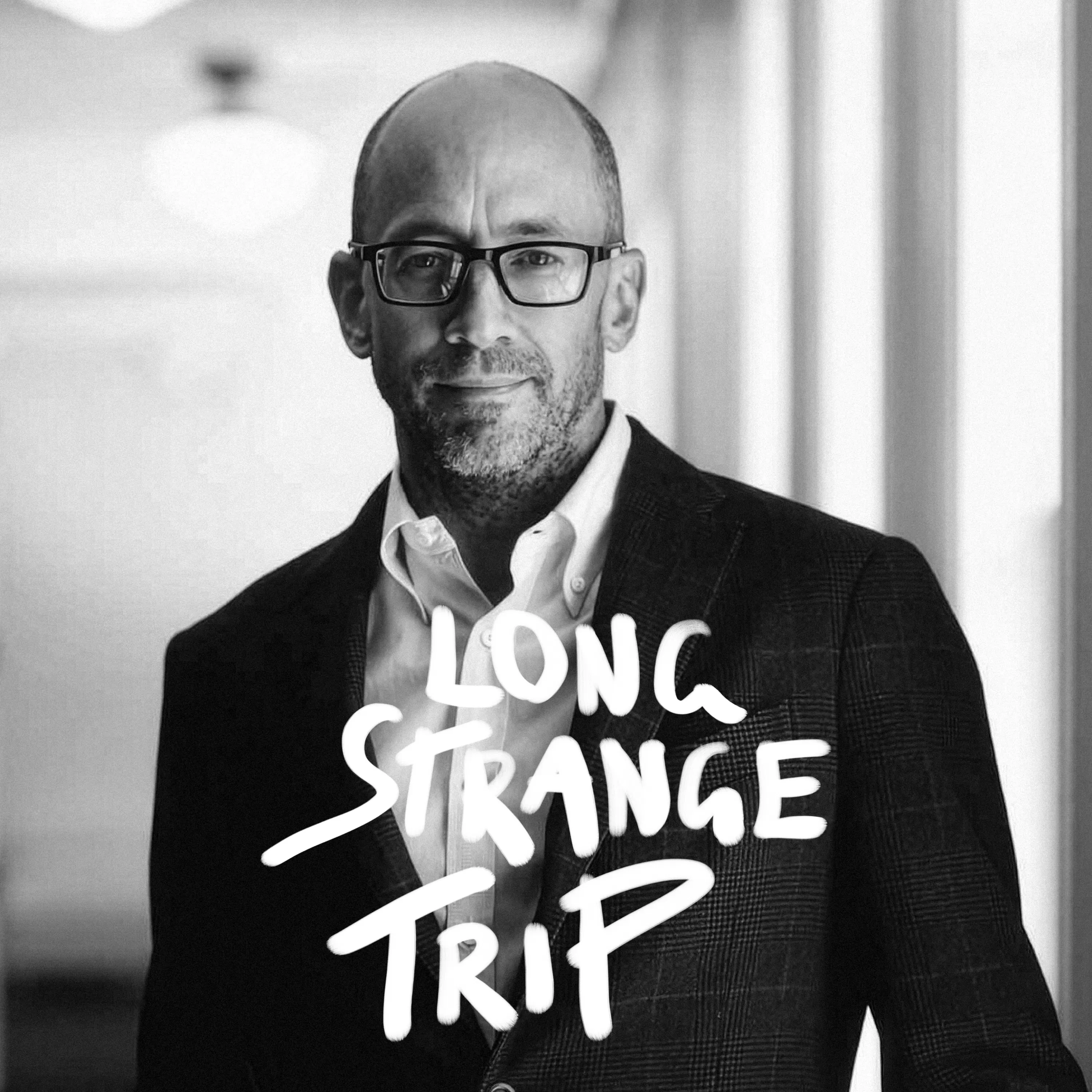
Surviving Twitter's Growing Pains: Ex-CEO Dick Costolo
May 701:08:17Summary readyDick Costolo took over as CEO of Twitter in 2010, inheriting what he calls "the drama queen of hypergrowth companies." Hired as the adult in the room behind founders Jack Dorsey and Ev Williams, Dick spent five years dragging Twitter from a chaotic collective into a public company, and learned a scale-up CEO playbook in the process. We get into how he killed group decision-making and replaced it with what he calls "bias to yes"—only your direct manager can tell you no. Why he stopped solving problems with processes ("the launch checklist was 17 pages long") and started solving them with DRIs and operating control. How he managed by walking around the engineering floor at 9:30 PM to figure out what was actually getting built. And the Steve Jobs trick he stole from Pixar for finding out what's really going on inside a team. Dick is candid about the misses, too, including trying to buy Instagram for around $700 million before Facebook did, and his own struggles to fire fast. When I was running HubSpot, I fired slow almost every time and regretted it. Dick did better, but he'll tell you it never gets easier. If you're scaling past 150 people and feeling the organizational barnacles build up, this one's for you.
Summary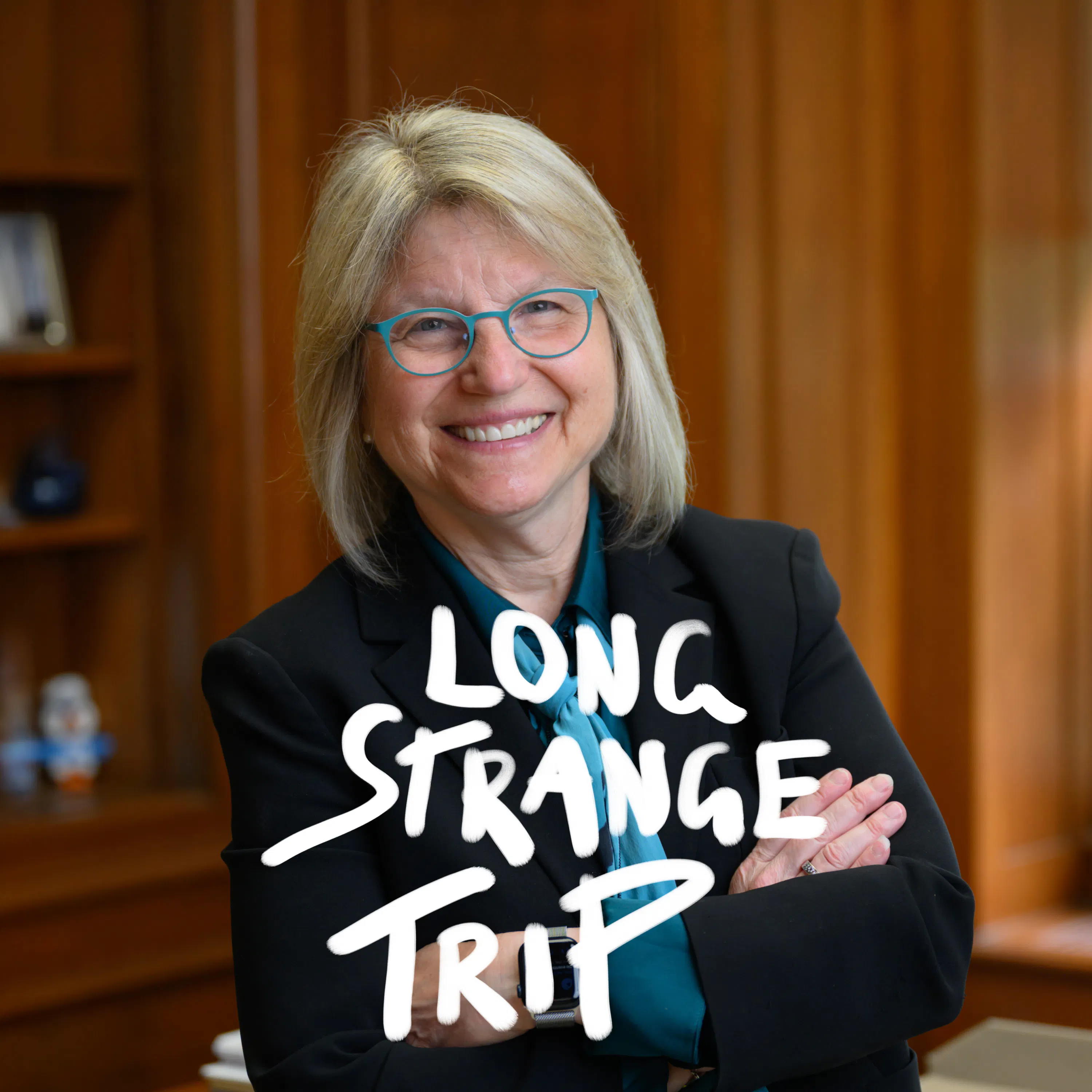
What Founders Can Learn About Excellence From MIT President Sally Kornbluth
Apr 1600:44:28Summary readySally Kornbluth is president of MIT and one of the best crisis leaders I've come across. Within a year of starting the job, she got summoned – not invited – to testify before Congress alongside the presidents of Harvard and UPenn. You know how that went. The others didn’t make it. Sally did, and she came out stronger. We spend a lot of time on sustaining meritocracy, which I think is one of the hardest things for any scaling CEO to pull off. Sally has a line I can't shake: if you take a lick of the lollipop of mediocrity, you suck forever. That's how MIT has operated for 150+ years. We get into how you actually hold the bar as you scale, why most founders drop it without realizing it, and what to do once you've dropped it. We also get into the crisis playbook – staying calm on the outside when you're screaming inside, why explaining is losing, and why having a board that's truly behind you is the most underrated variable in whether you survive. The board backing her was the pivotal moment, full stop. Other things we cover: what managing PhD students taught her about leading without being overbearing, the 5:1 praise ratio and why it doesn't cost you anything, how she told the federal government "no thanks" on their higher ed compact, and what AI actually means for education, including why writing is still thinking.
Summary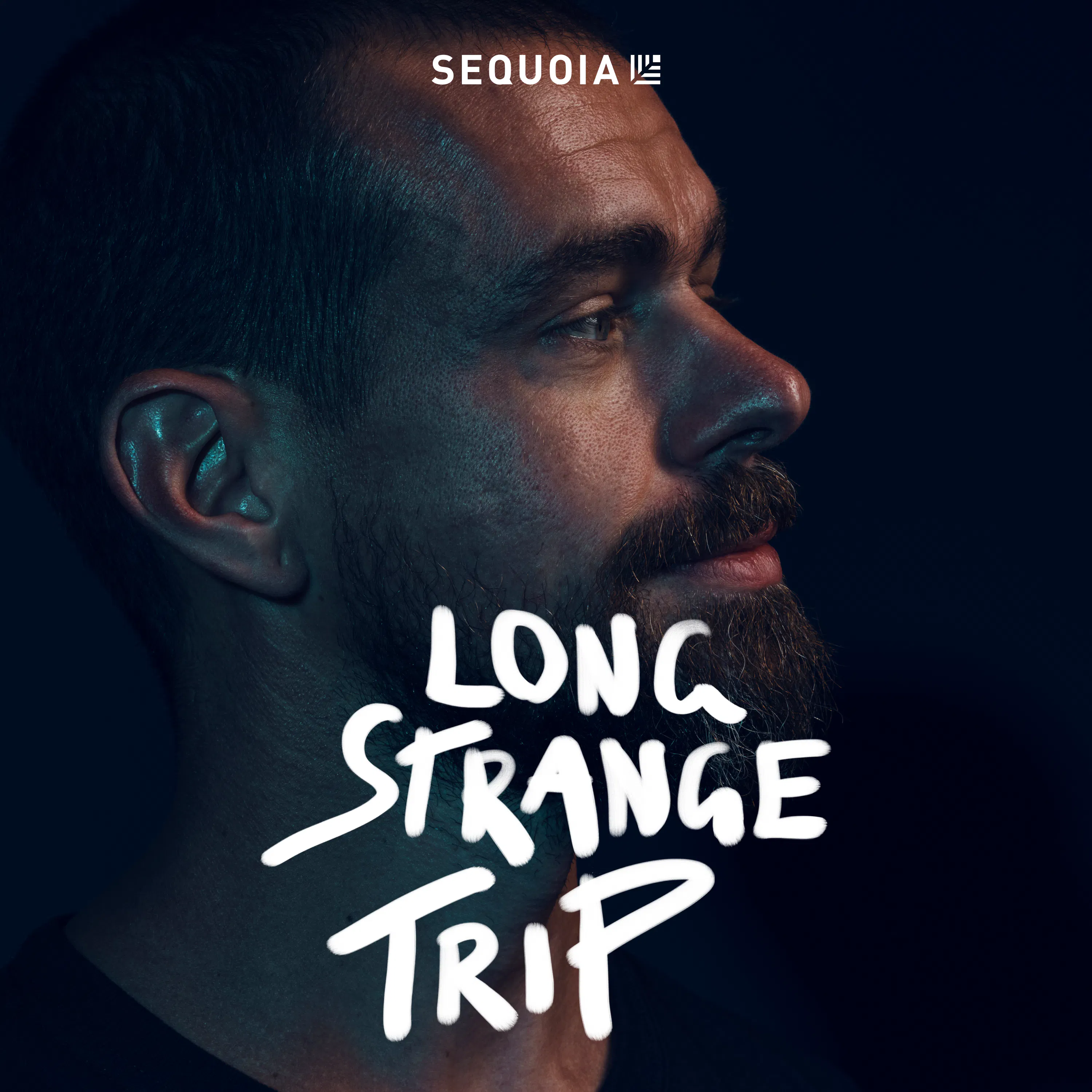
Jack Dorsey: Every Company Can Now Be a Mini-AGI
Apr 201:03:41Summary readyJack Dorsey (Block CEO) and Roelof Botha (Sequoia partner and Block board member) join to discuss a bold claim they wrote about recently: the traditional corporate hierarchy isn't just inefficient — it's obsolete. Jack made one of the toughest calls in recent business history: cutting 40% of his workforce and rebuilding the company from the ground up around what he calls an AI "intelligence layer." We get into how that conversation went down, the math they used to land on a number, and why he's convinced that acting from a position of strength beats reacting from one of weakness. Jack breaks down his vision for simplifying into just three roles, and what it means to replace a pyramid org chart with a circle — AI at the center, and people at the edge. Roelof, who helped think through the restructuring, shares his perspective on how AI-native startups are building differently, and what CEO qualities are timeless. I've eliminated org charts before. I know how hard this is. But Jack is doing something I never had the tools to pull off. If you're a founder wondering whether your hierarchy is working for you or against you, this one will make you uncomfortable in the best way.
Summary
Oura’s Tom Hale: What People Don’t Tell You About Being CEO
Mar 2600:59:39Summary readyTom Hale didn't originally set out to be a CEO - then he put it on his bucket list to prove something to himself. Now he runs Oura, the Finnish health tech company behind the most talked-about wearable on the market - the Oura ring. In this conversation, we get into what the job actually feels like from the inside (spoiler: the kibble-to-champagne ratio is not what you think), and Tom shares some of the sharpest frameworks I've heard for scaling a company through the 200-to-2,000 employee gauntlet. We dig into Oura's controversial pivot to a subscription model - the Reddit flames, the one moment Tom almost blinked, and why he's now calling it an unqualified success. He breaks down the asymmetry between work and headcount that causes politics to metastasize in growing companies, what he looks for in middle managers to keep bureaucracy from setting in, and how he thinks about staying close to customers as layers accumulate between you and them. We also get into the Gucci partnership, what a Roman emperor has to do with it, and the unexpected retail insight that came out of it. And Tom shares why he sleeps soundly despite Apple being the 800-pound gorilla in wearables. If you're a founder navigating the messy middle of company building, this one is worth your time.
Summary
The Most Founder Mode CEO Working Today Isn’t the Founder: Opendoor’s Kaz Nejatian
Mar 1201:02:50Summary readyKaz Nejatian reveals how he left Shopify to pull off a highly unusual feat: refounding a struggling public company in just 16 days. From first attempting to take the company private and then becoming CEO with an unwavering commitment to prioritizing product, Kaz shares his unconventional playbook and approach to life. We go deep on why most enduring companies are built on "first derivatives" of their core business and not the obvious thing everyone focuses on. Kaz explains why he reads the Bible every day, how overriding life's defaults requires going full force (not halfway), and why founder mode means taking responsibility for outcomes, not processes. He breaks down the mechanics of the Opendoor turnaround, why he tethered his compensation to stock performance, and how he’s making the company AI-native. Essential listening for understanding true founder mode, or for anyone building something that matters.
Summary
Ben Horowitz On What Makes a Great Founder
Feb 2600:49:07Summary readyA16z’s Ben Horowitz joins me for a raw, unfiltered conversation on what actually breaks founder CEOs, and what separates the great ones from the rest. We unpack founder mode, where it works and where people are taking it too far. Ben shares why overly deferring to experienced executives creates politics and fiefdoms, but avoiding senior talent altogether is just as risky. Founder mode is not about micromanaging. It’s really about taking responsibility for outcomes and having the confidence to manage people who may have more experience than you. Ben goes deep on “constructive confrontation” and why running away from the truth to preserve feelings is one of the most dangerous things you can do in a tech company. He explains why bad news has to travel fast, how decision debt paralyzes organizations, and why hesitation, not lack of intelligence, is what usually gets CEOs replaced. We also dive deep into hiring, especially the VP of Sales role founders mess up more than any other. Ben breaks down why great sales leaders qualify you in the interview, why references matter more than charisma, and why selling a hard product builds a different kind of operator. Along the way, we cover the psychology of being a first-time CEO, what Zuckerberg, Jensen, and Elon actually have in common, why culture is defined by behavior not values, and why feeling like you don’t know what you’re doing is more normal than most founders admit.
Summary