
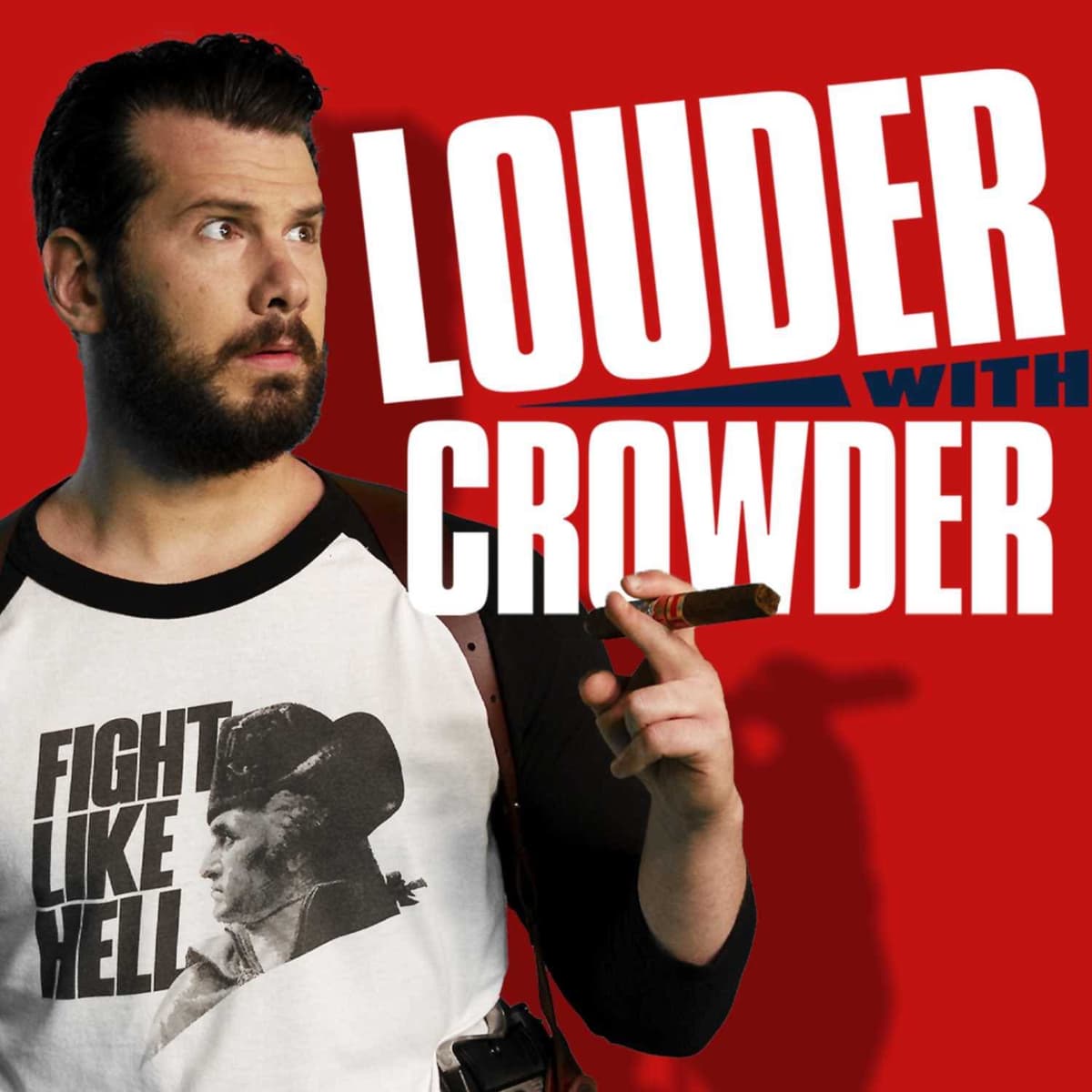

Podcast Summary: Louder with Crowder
Episode Title: Joe Rogan is Deadass Wrong on ICE: We Need to Go Even Harder
Date: January 15, 2026
Host: Steven Crowder
Platform: Rumble
Episode Theme & Purpose
This episode centers on a discussion of U.S. immigration and ICE enforcement, responding specifically to recent public criticism by Joe Rogan—who compared ICE operations to the Gestapo. Steven Crowder argues for even stronger enforcement, critiques media narratives, and explores the societal effects of empathy-driven, feelings-based opposition to immigration enforcement. The show also touches on related social and cultural issues, including family dynamics, respect within marriage, and the broader consequences for American society.
Key Points & Discussion Breakdown
1. The "Hard Part" of Immigration Enforcement
[00:01 – 12:00]
- Crowder introduces the idea that although many Americans (including some Democrats) agree illegal immigrants need to be deported, there's a collective reluctance to accept or witness the enforcement process.
- Lane, "the Brain," is credited for pointing out:
"Of course you want to be empathetic...but you also understand that it has to be done. You understand that deporting people is a painful process. It's never going to be pleasant." (00:04) - Crowder underscores that immigration enforcement and deportation are inherently unpleasant, but necessary, framing it as a moral and constitutional obligation.
2. Minnesota, ICE, and Media Misinformation
[24:00 – 47:00]
- Segment opens with critiques of Governor Tim Walz of Minnesota for a poorly handled live address about ICE activity in the state.
"Last night, Tim Walls...decided that he was going to host or drop a very serious, highly produced live address...It didn't go according to plan. Like everything else in Minnesota these days." (25:00) - Crowder mocks the technical issues with Walz’s speech and ridicules his advice for citizens to film and help document ICE activity:
"He also encourages citizens...to create a database of ICE agents. But it's not doxing." (34:00) - He argues the media and politicians exaggerate incidents involving ICE to fuel outrage and protests.
Notable Quotes:
-
On media bias:
"If there was a single actual atrocity, you would know about it...If the instance existed." (34:30) -
On mob reactions to ICE use of force:
"These are just lawless criminals. It's like I've said about the drug war...they're just gonna go to something else illegal." (42:00)
3. Distorting the Truth about ICE Encounters
[48:00 – 59:00]
- Crowder references a recent Minneapolis ICE shooting, accusing mainstream outlets of omitting key facts (attacker was violent, ICE officer fired in self-defense).
- Emphasizes that honest reporting came from less prominent outlets, not mainstream media.
"We had to outsource honest reporting...That's the last voice I want you to hear on a report." (53:50) - Argues the narrative of ICE as abusive isn’t supported by facts and is driven by leftist propaganda.
4. Tribalism, Safety, and Societal Division
[60:00 – 62:00]
- Crowder contends leftist activists, rather than ICE, are making cities less safe and endangering federal officers.
- Expresses the need for "tribalism" in political discourse:
"It's us versus them. It is when lives are on the line. They drew that line. I'm going to stay on this side of it." (61:00)
5. International Affairs Check-In: Iran
[62:00 – 69:00]
- Crowder covers unrest in Iran and the U.S. response, highlighting what he sees as mixed messages from President Trump regarding consequences for executing protesters.
- Critiques U.S. diplomatic ambiguity:
"I would say a value to place above those is keeping your word...our allies need to know that we mean what we say." (68:30) - Jokes about Iranian leaders attempting to smuggle money out via “carrier pigeon,” mocking international corruption and the Treasury’s response.
6. Social Dynamics: Marriage and Public Disrespect
[70:00 – 99:00]
- Shifts to a cultural topic: women publicly criticizing their husbands on social media for “clout.”
- Crowder and co-hosts lampoon viral videos in which wives complain about routine family dynamics.
"Till death do us part? Or until better engagement on TikTok or a few extra likes." (70:30) - Argues that publicly disrespecting husbands damages family structure and undermines men's role as leaders.
- Stresses that “respect for the head of household” is more critical to family success than “unconditional love.”
- Backs up arguments with statistics on men’s mental health, workplace fatalities, and declining marriage/birth rates.
"44% of men now are afraid to approach women at all. And if this was going both ways…you wouldn't see 80% of the suicides coming from men." (95:20)
Notable Quotes:
- On respect in marriage:
"The single most important indicator of a successful household, marriage, family, is not feeling...It is unconditional respect for the head of the household." (80:00)
7. Debate with Joe Rogan’s ICE “Gestapo” Comparison
[100:00 – 110:00]
- Plays Joe Rogan’s comments about not wanting ICE to become “the Gestapo” and the CNN spin on Rogan’s remarks.
- Dismisses Rogan’s comparison as uninformed and inaccurate, clarifying facts about ICE’s actual conduct with statistics.
"Report from ProPublica, 170 US citizens total arrested by ICE; 72% were held for interfering with ICE…It is not a problem. There’s no comparison to the Gestapo." (105:00) - Crowder insists that most Americans support deportations in principle, but balk when confront with the harsh realities of enforcement—criticizing what he terms as "feelings-based" opposition.
Notable Quotes:
- On enforcement realities:
"You can feel like your cities are less safe, they are safer. What makes you feel like they're less safe is exactly what you are watching. It's making you more safe." (112:10) - On moral responsibility:
"If you don't have the stomach for this, then how do you talk about taking your country back?" (114:30)
8. Media Shifts: Obama vs. Trump Eras
[115:00 – 124:00]
- Contrasts media portrayals of ICE under Obama vs. Trump, arguing leftist outrage is inconsistent and opportunistic.
- Plays audio from CNN’s sympathetic coverage of ICE in Obama’s presidency compared to accusatory coverage now.
Notable Quotes:
- On hypocritical outrage:
"Barack Obama was president for eight years...Find me one piece where any conservatives went after ICE ever." (120:50) - On “extremes”:
"The left extreme...we've seen them burn down cities...The right's extreme...Here's an app, self deport, here's a ticket, here's some cash. Otherwise, we're going to do it for you. Which one's more radical?" (122:30)
9. The Issue of Sanctuary Cities and Deportation “Choke Points”
[124:00 – 132:00]
- Tom Holman (former acting ICE Director) is played, explaining how sanctuary policies force ICE to conduct riskier raids in communities instead of jails.
- Crowder says Democrats are deliberately keeping violent criminal aliens in U.S. prisons and refuse to deport even them.
- Asserts that compromise on deportation is rendered impossible by such policies.
Notable Quotes:
- On sanctuary cities:
"The left, mainstream left, thinks you can't deport illegal aliens who are also violent criminals and are currently taking up space in our prison system. See why tribalism is important? You can't link arms with those people." (130:00)
10. Closing Reflections
[133:00 – End]
- Crowder reiterates that the constitutional and cultural strength of a country demands tough, sometimes unpleasant, choices.
- Argues that empathy without boundaries is leading to negative outcomes—both in immigration policy and family structures.
Most Memorable Quotes (with Timestamps)
-
Lane/The Brain:
"Of course you want to think this way. Of course you want to be empathetic...but you also understand that it has to be done." (00:04) -
Steven Crowder:
"If there was a single actual atrocity, you would know about it." (34:30) "It's us versus them. It is when lives are on the line. They drew that line. I'm going to stay on this side of it." (61:00) "The single most important indicator of a successful household, marriage, family, is not feeling...It’s unconditional respect for the head of the household." (80:00) "Report from ProPublica, 170 US citizens total arrested by ICE...It is not a problem. There’s no comparison to the Gestapo." (105:00) "You can feel like your cities are less safe, they are safer. What makes you feel like they're less safe is exactly what you are watching. It's making you more safe." (112:10) "The left, mainstream left, thinks you can't deport illegal aliens who are also violent criminals and are currently taking up space in our prison system. See why tribalism is important?" (130:00) -
On the disconnect between ideals and action:
"You break the law. Most people know that you have no right to do that. Most people support the idea of you being deported. Then how do we do it? Genuinely comment below, because I don't think that anyone else has an answer." (108:20)
Key Timestamps for Reference
- 00:01–12:00: Introduction, framing immigration as “the hard part,” empathy vs. action
- 24:00–47:00: Minnesota, Governor Tim Walz, ICE media coverage
- 48:00–59:00: Analysis of Minneapolis ICE shooting and media narratives
- 70:00–99:00: Rant on public disrespect in marriages and societal consequences
- 100:00–110:00: Joe Rogan’s Gestapo remarks, fact-checking, polling on ICE
- 115:00–124:00: Media coverage of ICE: Obama vs Trump
- 124:00–132:00: Sanctuary cities, Tom Holman, deportation policy
- 133:00–End: Final reflections and close
Tone & Style Notes
- Crowder’s delivery is brash, unapologetic, and often laced with sarcasm and humor.
- Frequent use of analogies, pop-culture references, and mockery, especially when discussing politicians, media figures, leftists, and social media trends.
- Strong emphasis on pragmatism over sentimentality, with frequent challenges to listeners to confront uncomfortable realities.
Conclusion
This episode delivers a combative defense of ICE and strict immigration enforcement, pushing back against criticisms by Joe Rogan and others. Crowder consistently draws a line between "feeling good" and "doing good," arguing that tough choices lead to safer, stronger communities and families. The show is punctuated with lampooning of political opponents, mockery of media narratives, cultural commentary, and repeated calls for personal and collective backbone in the face of adversity.