← Lovett or Leave It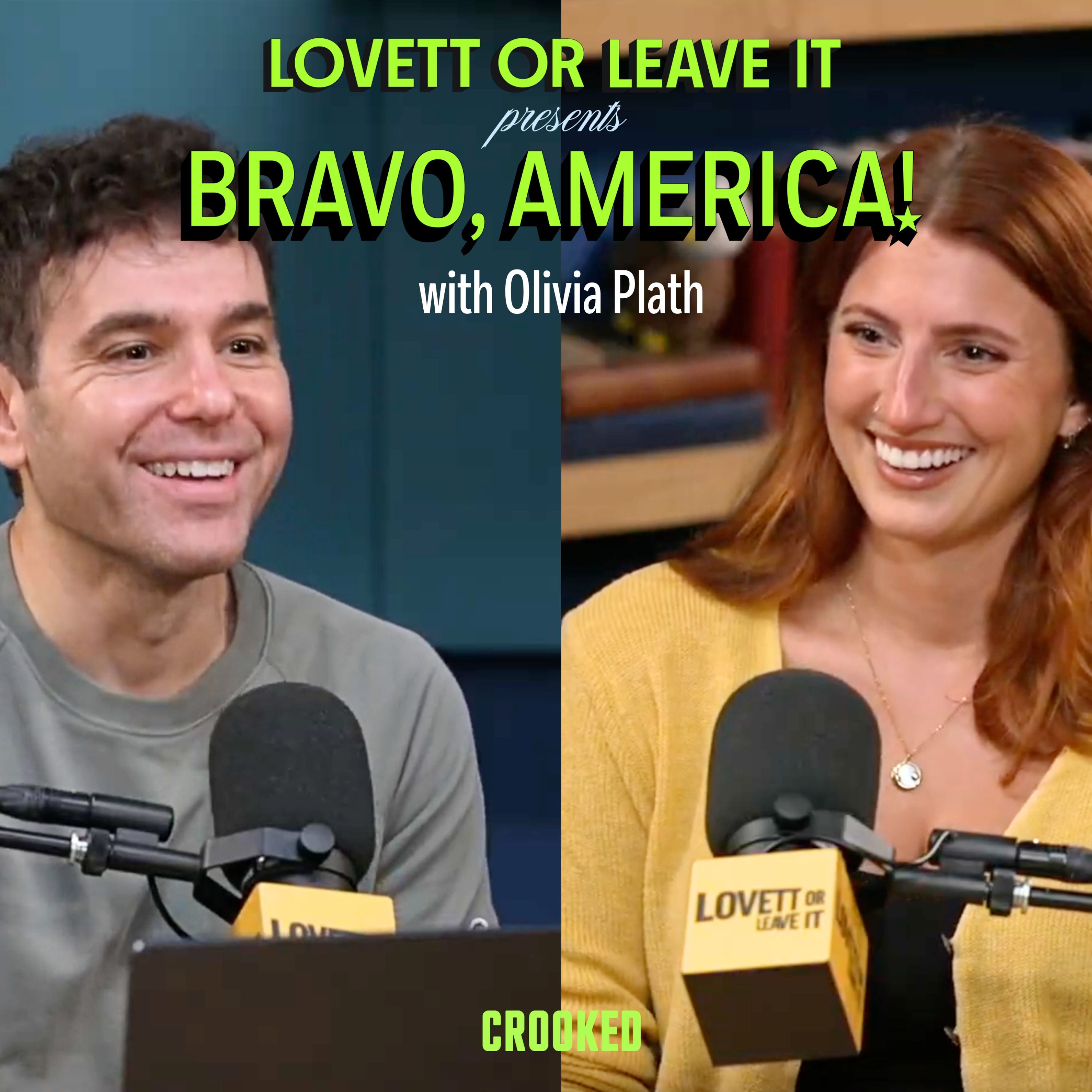
Lovett or Leave It
Lovett or Leave It Presents: Bravo, America! (with Olivia Plath)
00:57:15
Olivia Plath joins to talk about leaving Welcome to Plathville and leaving behind the fundamentalist Christian community in which she was raised. She shares what it’s like to leave a marriage that began on television when she was very young, why as a teen she felt she needed a gun to protect against a Hillary Clinton victory, and why she decided to talk more about the anger and abusive aspects of her relationship that did not end up on TLC. Olivia has been on a journey, much of it for the world to see, and it’s given her a fascinating perspective on reality TV, on what happens to kids when their parents seek fame, and what it’s been like to grow up in one world and then choose to live in another. In this special limited series, Lovett sits down with reality icons who helped lead a hostile takeover not just of television, but of our culture. In intimate and revealing conversations, Lovett and his guests explore the ways these shows blur the line between authenticity and performance...
Loading summary
Transcript154 lines
- [00:00]
A
Now is your time to get into a new Dr. Horton home by taking advantage of its national red tag sales event going on right now through October 19th. Stop by any of its participating communities and find select red tag homes at Incredible Pricing. So whether you're buying your first home or looking for an upgrade, you don't want to miss the red tag sales event going on right now. Discover the Dr. Horton Difference at Dr. Horton.com Dr. Horton America's Builder and Equal Housing Opportunity Builder.
- [00:29]
B
I bought my first gun when I was 17 years old. I wasn't legally old enough to buy a gun. I gave my brother some cash and he bought it under the table. And it's cause my parents were telling us that if Hillary won the election, she was gonna turn the military on American people. And we've gotta stand up for ourselves.
- [00:45]
A
And we don't know that they were wrong.
- [00:46]
B
And were they wrong?
- [00:48]
A
We never got to know. We never found out.
- [00:58]
B
Straight shoot. Love it or leave it. Let's love it or leave it.
- [01:04]
A
Hey everybody. I'm Jon Lovett, and this is Love it or Leave it presents Bravo America. I'm sitting down with icons of reality TV because I love reality TV and also because I don't believe you can understand politics in this moment. If you don't get the dynamics of reality television, the way in which performance and authenticity are intertwined, the way in which drama is used to gain attention, and the way in which the only thing worse than being a villain is being boring. Trump gets this. Do Democrats? I don't think so. Congresswoman Sarah McBride put it perfectly when we interviewed her on Pod Save America earlier this year. Some of my colleagues are treating me the way they are treating me for a couple of reasons. One, it's because they want attention, right? They want to employ the strategies of a Bravo TV show to get attention in a body of 435 people. And the way to do that is to pick a fight with someone and throw wine in their face. But this isn't just about politics. This is about the way in which reality TV has changed the culture in which we live. And we are having incredible revealing in such interesting conversations with reality's biggest stars, with people that have grown up on these shows, raised kids on these shows, had divorces on these shows. I've loved every single one of these interviews, and this one was no exception. I'm talking to Olivia Plath from welcome to Plathville on tlc. I was not a watcher of Plathville, but I found her story fascinating. Welcome to Plathville is about a Christian fundamentalist family and these two parents raising nine kids. As those kids grow up and start to become exposed to more and more of a world they were really never exposed to because they were homeschooled and kept away from television and the Internet and the dangers of our secular world. And it follows what happens as those kids grow up and, by the way, grow up famous, and all the consequences of it, including Olivia, who ends up in a marriage at a very young age on this show that gets her a lot of fame. And as she grows up on camera and becomes exposed to more and more of the world, her worldview changes, and that creates a lot of conflict. And you watch someone over seven years come to discover because they are thoughtful and empathetic, that they want something different out of their life. So that's why I was really excited to talk to Olivia. And it was an incredible conversation. This was her first interview since her last appearance on the show. She has just now seen her final conversation with Ethan, this person that she married in the opening episode, and whose relationship comes apart in front of the cameras. And it's just really interesting what she learned from that experience, not just about reality television or herself, but what she learned about what it's like to leave a really kind of black and white worldview. And also some of the ways in which it's made her feel like she's grateful for having been on the show, despite a lot of sadness and complicated feelings she has about it. We also talked about why she posted videos she recorded of some of the abusive moments she had with her ex, and why she felt it was important to put that in the world, even as she has empathy for anybody that grew up the way that she and the other people on the show grew up, not just in front of the cameras, but in front of the cameras without having had any exposure to reality television or pop culture before they were stars themselves. She also talks in a really interesting way about what it's like to leave a bubble in which everything is certain for a world in which you don't have all the answers and the lessons there, not just for what it's like to grow up in this very specific religious context, but also in politics, when a lot of people are acting out of fear and take comfort in a worldview that's very black and white. I really love this conversation. This incredibly kind and thoughtful person who's been through so much and came out the other end with a really, like, optimistic and beautiful way of looking at the world. So please Enjoy my conversation with Olivia Plath. Olivia, thank you so much for being here. So this is, if I'm not mistaken, your first time doing an interview since the finale of the season aired, is that right?
- [05:22]
B
That's correct, yeah.
- [05:24]
A
So what was your reaction to that final episode?
- [05:29]
B
First, it's the only episode of the season I watched in its entirety. I heard that I was name dropped a lot and so I was like, I should just be aware, I guess, of what people are saying. And I was also morbidly curious, having filmed that scene, just wondering what the end result was because I was such a ball of nerves in the moment that I don't really remember what I said or how everything worked out. And I wanted to see how the story was kind of portrayed. I don't really, honestly, I don't really know what my thoughts are. I watched it and I was like, okay. I think exiting reality tv, I have tried mostly through therapy, really worked to find the nuance in things. I think it's really easy to look at things as black and white, especially in reality tv. And my black and white knee jerk reaction is like, wow, that person was a jerk. And this person did this and this person did that. And then the nuance of it is there's so many people collaborating on a project and whose bias comes forward and whose voice is heard when there's so many things being said. Yeah, I look at it, I'm kind of glad I've wrapped that chapter up.
- [06:31]
A
And do you feel like that final conversation was mostly reflective of the reality? Kind of reflective of the reality. What do you think?
- [06:43]
B
It's hard to say because this is actually something that I literally was working on in therapy this past week and I was talking to my therapist about how I really struggle to say things concisely. I'm so used to things being taken as a sound bite or being told, hey, can we get that 15 second shorter? We're not gonna put a minute and a half of you talking in this interview. We just need this thought. And I was always panicked of like, no, I can't do that for you. You're gonna take it out of context and I have to tell you everything and I have to give you the bird's eye view. And you gotta know why I made this decision. You can't do that in reality tv, unfortunately. And so I look back at that conversation, I'm like, wow, there's a lot of things I wanted to expound on and a lot of things I wanted to say. And what are you going to Fit into five minutes. So, yeah. Then as the conversation of bold, do you actually say those things or not? Do you go on your social media and expound further, or do you just allow things to be misunderstood or just say, hey, people interpret things differently and move on? What's the move here? I don't know.
- [07:38]
A
Yeah, well, just for people that maybe didn't see it or aren't familiar, this was your final moments on the show, and it was a conversation with your ex, not yet divorced ex, officially Ethan. And it is sort of full circle from where the show began, because the show begins with you as a very young woman girl marrying Ethan in an episode of television that you later revealed you didn't really know was gonna be on television until I. Right before, right?
- [08:11]
B
Yeah. I found out two weeks before our wedding that my ex mother in law had invited a film crew to come shoot it as a promo for a show. And the reality is, I had the reality. I love that I'm using that word. I had no idea what that even meant. I'd never watched a reality show before in my life. And when I'm told, like, oh, we want to pitch a promo for a reality show, I'm like, okay, like, I don't want that to happen on my wedding day. I really have no idea what this involved. And the same thing happened even going into season one of shooting the show. I really had no idea what reality TV was comprised of, what it took to make a show. I just didn't know anything. I was really young and really sheltered and I actually this past week with the final episode, seven years worth, that I was on the show with it airing, I went back and I watched some of the first scenes from season one and season two, and I don't think that was me.
- [09:02]
A
Oh, it was you.
- [09:02]
B
I think they hired a stand in.
- [09:03]
A
You think they got a stand in? Well, what? That's so like, seven years is a long time. Seven years is enough space to see someone, a younger version of yourself as a different person. I know in my own small way, I remember things that when I was starting out in my career that I felt like, oh, I let this person down or I did a bad job. And now I look back and I think, like, you were just a young person, you just didn't know what the fuck you were doing. And I wonder, like, do you have more empathy for yourself in that moment now? Do you have more empathy for Ethan now, for other members of the family? Like, how do you. How do you feel looking back on those early moments?
- [09:36]
B
There's a lot of things I feel one in talking about a viewership for a reality show, I just can't believe that that many people watched and were supportive because I look back and I'm like, oh, I look really brainwashed and silly, and I had no idea who I was. And the fact that so many people watched me discover who I was and were there for every step of the way and supportive of it, I find that so fascinating on this side of things. I think it is this really hard balance of what do you expect of people, given their background and what tools they have or don't have and what things they've endured in their life or not. And I know that I made a lot of poor choices over the years of growing up on reality TV that were out there for everyone to see and comment on. And there were definitely people who gave me a lot of grace and were like, oh, she's really young and she was really sheltered. Doesn't know better. And then there were other people that's like, she's 22. Like, that's old enough to start getting your shit together.
- [10:35]
A
You mean online or do you mean online?
- [10:37]
B
No, online. And I agree with both of them, honestly.
- [10:39]
A
Yeah.
- [10:41]
B
Something I've thought about walking away from reality TV is that it was so helpful for me in some ways because it gave me a mirror that I didn't have. I would see people comment on my behavior and I'd be like, did I do that? Was that my motive? And sometimes it's bad. And it really messed with my mental health for a while, but it was also good because it allowed me to grow and kind of reflect and see things that I couldn't see on my own.
- [11:02]
A
Yeah. You know, you've talked about this, that being on a show where the premise is, look at all these kids, they're so cut off from the world, creates a special need on the part of producers to take care of those kids. And it seems like you don't feel like that was there.
- [11:27]
B
I think talking about the production side of reality tv, you can get in the weeds really quickly. I look at producers that I've worked with throughout the years, and I see that they consistently have not had the resources they needed to make a reality show that's exploitive of other people. To be honest, if you're making a show on kids that have no life experience and you're filming them going out in the world for the first time, discovering all these things, it's gonna be really, really hard for them. And as a producer, you're not trained to be a therapist. You're not trained to kind of walk people through these really hard times in life. You're there to make a story and do the interview and then go back to your hotel at the end of the day. And I think about this crew that I worked with years in and years out, who could be on the road for three months away from their family. And on day 69 of these three months, I. Well, that's more than three months. But I'm over here having, like, a panic attack, and they're not qualified to really walk me through that, help me through that. And I think that so much is expected of producers that they're not really supportive. And I think that that comes from the higher up, that comes from the network. And I think it's also very indicative of society today, right? Like, if you follow the money, who is being blamed for a job versus who actually has the resources, who's being supported, who's not? And if you follow the money, like, at the end of the day, it's always the big dog up top, right?
- [12:55]
A
But then when I was watching you on the show, like, first of all, it's a sad experience for me to watch the show, and part of it is, I assume that the producers are human beings trying to do their best in this situation. But then you think, can Plasville be safe at any speed? Is it possible to ethically make a show about children who have no access to television and are in this cloistered environment? I don't know the answer. I know what you think.
- [13:27]
B
Yeah, I don't know either. I mean, on the one hand, I think it's good to see people who live different than us and to see. I think that's part of what reality TV does, right? It normalizes the extreme, the outliers, the people who are different. It kind of shows it to us. And I think it's really important to see people who believe different than us and live differently than us so that we have understanding and empathy and all these things. But then what line does it cross where this is not something that people are learning from, relating to, but simply being a spectator of, like, what's the. What's the ethical line there? And it's something I've disagreed with with several other producers on the show now, walking away from this journey of, like, are you okay working on a show that one covers up these things or highlights these other things? And I think a lot the answer I've gotten a lot at the end of the Day is it's a hard industry out there and we're trying to feed our own family. I'm like, I. I understand that it's very unprecedented times, but that' very interesting question. Yeah, yeah.
- [14:31]
A
Well, I do think here too there is nuance, like you were saying, because there are some people that say, oh, you know, look at this show. It glorifies this type of fundamentalist, kind of closed off world. But I've watched the show and you're on the show and I feel as though like people watching it came away having a lot of really serious questions about this environment and even whether or not it's on television, like the amount of control that goes in there. So on the one hand, like, I do think there are ways in which it is at least tilting towards some kind of honesty about the world. But then you also say that there are really serious things that happened that they didn't put on television.
- [15:15]
B
Yeah, I mean, wait, you might know more about this than I do. I know that there have been studies done to show that statistically people who watch and consume reality TV have higher IQs.
- [15:27]
A
That checks out with this group. Bunch of freaking geniuses in here.
- [15:33]
B
I think that's the push for these kinds of shows in its conception is that we want to relate to people and we want to learn from people and we want to watch and analyze and either say, oh, I understand why this person made this choice, or oh, I would never make that choice because of my life experience and bias. So I understand the premise of reality shows. Where is the ethical line? I don't know. I don't have the answer for that. Having been on a reality show four years and having like, I can watch my deconstruction from fundamental religion in real time. Yeah, I can look at seven years of my life and if I ever want to remember how I've grown, all I have to do is pull the old show up and watch it. And I also think that there is an ethical line where people get exploited on these shows. Like two things can be true at the same time. And it's a really hard thing to wrap my mind around.
- [16:21]
A
Yeah, well, because exploitation, what that means, it's part of like, part of it is what is filmed and how it is filmed. But then part of it seems to be about how people receive it, which really has nothing to do with the actual experience of making it. And so I guess the question for you is, do you think that being on Plathill was ultimately good for you?
- [16:47]
B
Yes, I think that I might have gotten where I am now without the show. But the show really just like picked me up and set me down in the middle of mainstream society that I knew nothing about and mirrored my own reactions and behavior back to me in such a way that I was able to learn from my own choices. And part of that is because I have a really hard time tuning out the Internet. It's been an issue, like, from the very beginning of the show. I'm always curious what other people think and especially if it's my behavior out there. I'm like, well, I know why I made this choice. Why do they think I made this choice? And it felt like I was learning so much about myself in the process. It also tanked my mental health. So again, there's nuance there of like, how much do you listen, how much do you take in? But, but looking back, I think it was a really good experience for me. I think I learned a lot. I was exposed to a lot of different things that I was forced to kind of sit and reckon with. I was forced to look at my own bias on things. And I look back now and I'm like, wow, I said a lot of things I no longer believe. So there's a clear, a clear chart of growth.
- [17:56]
A
We're going to hold there for a second. We'll be right back. Hey, don't go anywhere. There's more of love it or leave it coming up. This episode is sponsored by BetterHelp. October 10th was World Mental Health Day and this year we're saying thank you therapists. Betterhelp therapists work according to a strict code of conduct and are fully licensed in the US BetterHelp does the initial matching work for you so you can focus on your therapy goals. A short questionnaire helps identify your needs and preferences. And our 10 plus years of experience and industry leading match fulfillment rate means we typically get it right the first time. If you aren't happy with your match, switch to a different therapist at any time from our tailored rex. With over 30,000 therapists, BetterHelp is the world's largest online therapy platform and it works with an average rate of 4.9 out of 5 for a live session. Based on over 1.7 million client reviews. This World Mental Health Day, we're celebrating the therapists who've helped millions of people take a step forward. If you're ready to find the right therapist for you, BetterHelp can help you start that journey. Our listeners get 10% off their first month at betterhelp.com loveit that's BetterHelp h e l p.com lovatt all right, two more reps. Why am I wiped out? Where have my gains gone? Did my testosterone take a dip? Get closer to understanding your health with LabCorp on Demand. Choose from a range of lab tests for insights about testosterone levels, men's wellness, and more.
- [19:15]
B
You'll receive results within days. With convenient testing, you get closer to answers and back to getting gains. Visit ondemand.labcorp.com podcast and use code podcast for 15% off.
- [19:27]
A
Select tests. Go test yourself. Okay, we're back. What do you think was different about you or, like, you know, you and Ethan, completely different paths politically, kind of in your emotional relationship to the world you were in? Like, what. What do you think allowed you to, like, why did this show do for you what it did when for others it didn't?
- [20:00]
B
That. That could probably be a very long conversation because people are so complex. The thing off the top of my head that I've thought a lot about recently of why I stand where I stand, why I believe. What I believe is the absence of fear. And there's these studies done that show that, like, when we're afraid of something, we actually end up kind of speaking into existence. We manifest it. And I think that's highlighted in the political sphere today of America, of constantly looking for someone else to point the finger at and be afraid of and building these monsters up in our minds. And I know that throughout the course of the show, as I started to kind of deconstruct and change, Ethan was always like, well, what's making you change? It's the producers that are atheists or think different than you. Like, it's because you're around them all the time that you're changing, or it's because you're going on all these trips, or it's because you're doing this and you're doing that. Like, trying to find the reason why I was changing and being afraid of it versus I was just kind of like, I'll take it all in. Sure. I'm not really scared of if someone thinks different than me either. I will have to defend my point and know why I believe what I believe, or I'll have to be forced to say, oh, I don't know that I should learn that and then kind of change my mind. I think I haven't been afraid of a lot of things throughout my life, which I think has opened a lot of doors. I mean, it started when I was, like, 2 years old climbing trees. My mom was like, how are you getting up in the tree, you should not be doing that. But I just wasn't afraid. It was a new horizon to be explored.
- [21:29]
A
Speaking of not being afraid, there's something about the way in which you seem to, on camera, be willing to talk about things that clearly makes other people in the family uncomfortable that you're raising things that, like, hey, that's not what we're doing right now. We're in perfect family mode. We're having a. This is a. We're not. We're not addressing that issue. And in watching you in that. In those moments, it's like, are you just less able to fake it, or is there some part of you that saw the show itself as kind of protection and space to talk about things?
- [22:09]
B
I think both. I hate elephants in the room so much. Like, if something's wrong, I would just rather talk about it. I don't pursue conflict, but if it arrives at my doorstep, I will absolutely entertain it just to get it over with, like, have the conversation, get it out. So I think that's one of the things, is that their family just always swept things under the rug, and I just. I couldn't. And then the other thing was, I know reality TV gets a rep for not being real. And I was like, I will not be a part of a project like that. I, like, in good faith, cannot spend a whole day filming something that had no substance for me. If this is gonna be a portrayal of my life, then it's gonna have to also show the hard conversations and the questions asked. And, I mean, I really struggle with small talk anyways. I can kind of relate to anyone. I can make a conversation with anyone, even albeit awkwardly, but I really do not like small talk more than I have to. I would rather just get something of substance.
- [23:08]
A
Did you ever have a topic or a disagreement or something you knew you wanted to bring up, but you waited until it was time to shoot because you felt it would be better to have these cameras behind you to catch it?
- [23:28]
B
I think that's a little bit of a trick question. And not that you did that to me on purpose.
- [23:32]
A
I didn't.
- [23:33]
B
No, I know you didn't. But, like, as someone who's been on reality tv, the only reason why I think I would say yes, but then I would say the reason why is because you learn so quickly in reality TV to not have important conversations when cameras are not around, because they'll make you do it all over again anyways.
- [23:48]
A
Interesting.
- [23:49]
B
So you learn that, like, okay, if I bring this up in my own Time to somebody, it's not going to be their authentic reaction when I do that the second time. And also, especially for me and Ethan, just kind of like talking to a wall about where I was coming from, what I was thinking. I was like, I'm not gonna talk to a wall twice. This is a really hard process if we're doing it one time.
- [24:13]
A
I really feel for you in those conversations. And just especially, like, I was kind of looking at the early seasons and seeing what was happening later and kind of going back and forth a little bit and just looking at it over seven years, there's a lot of it that feels kind of stuck. And, like, especially as you get to year seven, and it's like, hey, you were too fucking young. This was stupid. Everyone get out. Like, what are we doing here? Is there a part of you that's like, why were we fighting so hard? We were kids when we got married. We clearly, this was a mistake. What's keeping us together?
- [24:49]
B
Yeah, I think what. What I always went back to is it doesn't have to be a mistake. Right? Like, the percentage of people who get married to the first person they were ever with and then that lasts the rest of their life, that does happen. But it's not all that common. But it does happen, and especially in fundamental Christian circles where divorce is frowned upon. Like, I remember year one of being married and, like, saying to my dad, I think I might want to get divorced because I just felt so overwhelmed with all the family problems and, like, his inability to set boundaries with his family. And I remember my dad told me, if you get divorced, that's going to break God's, and that will break my heart. And I was like, well, I mean, I don't really have a support system in Georgia, so, like, I at least need the parental support that I might be getting from my parents at the time. And so I was like, well, I'm not gonna do that. Then I guess I have to figure it out. And I look back now and I'm like, I really could have just cut out four years worth of circular conversations that just got us nowhere. But I just didn't want to give up. And part of that was public perception. I knew, being a woman, that if I chose to walk away one, his family would say all the things about me that they've spent this whole season saying. But now they're all great and happy because I left, and I just didn't want that. Selfishly, I also thought I would be blamed for getting divorced, and I didn't know how to defend that choice that I felt like I would have to defend. So I just kept thinking, I guess I can make it work. I'll just try a little more. It doesn't have to be this way. It could change and you can't make that choice for somebody else.
- [26:16]
A
Do you think? The good news is a lot of people have not needed intense Christianity to stay in relationships for too long. If that makes you feel any better.
- [26:24]
B
Thank you.
- [26:26]
A
That raises, I think, something that I was feeling when I was watching the show, which is, and I think part of why it's so interesting, because there's this sort of light, bouncy music. I'm like, I'm sad. I don't understand what's happening. There's a lot of bouncing happen. But this is a sad situation. And, and part of it, I wanted to talk to you about it because as you said, you got kind of plopped into the middle of the secular kind of modern world from this very kind of closed traditional culture. And inside of the show and inside of that world, it's pretty clear that a life led according to a set of values, which are good values. Right. Gets inextricably connected to a specific kind of set of traditional gender norms, to a kind of control, to a kind of alienation from like the more cosmopolitan secular world. And I'm wondering if you have felt anything missing as you've left behind the kind of more right wing, kind of closed version of traditional values that you feel like you wish you could have without the other parts of it.
- [27:39]
B
Yeah, that's a great question. I think one of the first things I noticed in leaving Fundamental religion was I didn't know how to have community outside of it. Because when I was growing up, the way that you made friends was you went to church and there was just always this built in system to find everything you needed. And if you could go to one place and find everything you need versus having to source everything you need from different places that you are not sure if you should trust. Anyways, it just, it was a very overwhelming process of being like, okay, so how do I make friends? Where are people even going to make friends? Down to the smallest conversations of like, have you seen this movie? No. You should add to your list. Why bother? The list is so long.
- [28:23]
A
The list must be so long.
- [28:24]
B
It's so long. Music, movies, books, like all these things. And it just felt really overwhelming. And there was part of me that really craved that structure that I had before that kind of told me this is exactly how to do things. And the way I described it to my therapist is that before, especially like in these current political times, everything had a structure, right? If I wanted to know how to change the world, there was a formula for it written for me. I went out and did xyz and I tried to convert people in this way. And then I said, okay, I've done my part. I've tried to change the world for good. Now I'm sitting here going, how do you change the world for good? How do you make a difference? I have no clue where to start. And sometimes I feel a bit homesick for that structure of how everything was. And then the next moment I'm like, no, I don't want to be in a box. I don't want anyone to put me in a box. I don't want that. But, yeah, even so, two years ago, my younger brother died. And even going back home for his funeral and watching how my parents and siblings coped with his death and the grieving process of it was, we know where he's going. We know he's in a better place. This is what was supposed to happen. God ordained this. X, Y, Z. And me and my sister that I'm close to are sitting there going, yeah, I have no clue, man. I don't really know what happens when you die. Like, are you still energy? Are you not? And I remember one of my other sisters saying to me, like, this is the beauty of religion, is that we know. I'm like, right, so would I rather know or not know? I think I'd rather not know.
- [29:53]
A
Kind of.
- [29:54]
B
Kind of. But then there's moments I feel very nostalgic for the assured faith of knowing that this is what it is.
- [30:02]
A
Do you find, like, now that you. Because you're living in Washington, D.C. now, do you find trying to piece together the parts of that community that you liked without as a religious component, do you find yourself looking for a less domineering version of, like, a religious part of your life?
- [30:21]
B
Yeah, I think in the very beginning, I didn't want to be friends with anyone who's religious. It just, for lack of a better buzzword, felt triggering. And now I'm at a place where I'm like, no, I actually want that. I want people in my life who believe all different kinds of things, because I think that's really what, at the end of the day, what reality TV is even all about, right? It's to foster these conversations where people with different perspectives sit at the table and talk about it. And unfortunately, the reality of reality TV is that it's fast paced and it's all about the effects and the drama. And I think that it dampens conversations about why the way, you know, why people are the way that they are, specifically in America. Like, if you compare American reality TV to British reality tv, very different.
- [31:03]
A
Yeah. British baking show is very sweet and.
- [31:06]
B
Just very, like, mellow. Right. Like, you look at Gordon Ramsay now. I was talking with my friend Alex about this. You look at, like, Hell's Kitchen Gordon Ramsay shows now, and they're like, you have one day to turn this restaurant around before the whole thing goes down. You're like, oh, no, it's happening. It's all these side effects, like sound effects. But in the very beginning, it was like, so, we're gonna fix this. There was way less cursing, way less intense music. It was more of a documentary form. And I think that as people's attention spans have shortened and their need for escape from life has increased, reality TV has become what it is, which is much more like clickbaity.
- [31:41]
A
So I want to kind of get at this in both directions. Now that you're kind of out, whatever that means to you, what preconceptions did you have about life outside a traditional religious home? Like, did you have that have been changed by what it's been like to live in, say, dc?
- [32:05]
B
Hmm. Wow. That's a very multifaceted question. Like, it really could be answered in so many different ways. I think if I'm thinking about myself six, seven years ago, trying to live a mainstream life, whatever that meant to me, I really did think that I was going to take this whole set of values and just, like, send it down the conveyor belt and take this one instead. I really thought it was just going to be an exchange. Like, I'm not going to believe this anymore. So I'm just going to take this suitcase and these will be my beliefs I'll take with me through life. And the more that I've given these kind of rigid, structured beliefs up, the more I've realized that it's not really a trading in one for another. It's giving up thinking in a black and white way and realizing there's so much nuance that how do you just take one suitcase? It doesn't all fit. There's so many different trains of thought there. And that's been. I think, like I referenced earlier, one of the harder things of lacking that structure is I really just. I thought it would be an easy exchange, and I explained it to my therapist. It's like, this was A nicely packaged box. And I knew exactly what it was, and I gave it up. And now I'm just staring at all these clouds in the sky, and I'm like, I don't really know. These are shapeless. I don't really know what to make of this. Like, if this is not the morality, what's the morality now? And she'll always say, like, well, how are you defining that? And I'm like, no, there has to be some societal line. Like, this is the morality. And in my aversion to being black and white, I've become so black and white. White in the way that I try to not be black and white.
- [33:39]
A
I don't know how to solve that. Hey, don't go anywhere. There's more of Love it or leave it Coming up. Love it or leave it. Brought to you by Bombas. Fall is here. Kids are back in school. Vacations are over. It's officially what? Of course, it's cozy, cozy season. Which means slide into some Bombas. You know, Bombas, the most comfortable socks and slippers out there, made from premium materials that actually make sense this time of year. Bombas are made from the softest materials. Merino wool that keeps you warm when it's chilly, but cool when it's hot. Supima cotton that's softer, stronger, more breathable than regular cotton, and even rag wool, the thick, durable, classic sock you'll want all fall. And it's not just socks. Bombas designed slippers that make it hard to leave the house. From Sherpa line Sunday slippers to packing friendly gripper slippers and even waterproof Eva Friday slides, which, as I've said, I have and I really, really like. I wear them every day. Wore them this morning. To where, John? The gym, Pilates, Pilates, Pilates, whatever. Best part, for every item you buy, Bombus donates one to someone experiencing homelessness. Over 150 million items have been donated thanks to customers. And with their happiness guarantee, if you're not 100% into what you got, they'll make it, right? No risk, all reward. Plus, they're available through international shipping to over 200 countries. You know what kills me in a gym class? When, let's say it was supposed to start at 7:45, and they're like, oh, it's 7:46. Let's give everybody who's late a couple more minutes. Like, no, no, no, I'm here, I'm here. I got here on time. Let's go, let's go. This.
- [35:09]
B
This.
- [35:09]
A
This core won't Strengthen itself. Caitlin, let's go. So they do a Barry's. They just start. Yeah. And it's also like, look around at the fucking type A Pilates people in this room. We're here. We're here. Speaking of a happiness guarantee, if you're not 100% into what you've got, they'll make it right. No risk, all reward. Plus, they're available through international shipping to over 200 countries. I love Mamba socks. Wear them every goddamn day. They're the best. I really do. Like, they're the only place I go to buy socks. They do good. They're really comfortable. They're really well made. They're well made. Sock. I recommend it. Bombas.com love it. Use code love it for 20% off your first purchase. That's B O M B-A-S.com loveit code love it. At checkout, the 2026 Chevy Equinox is more than an SUV. It's your Sunday tailgate and your parking lot snack bar. Your lucky jersey, your chairs and your big cooler fit perfectly in your even bigger cargo space. And when it's go time, your 11.3-inch diagonal touchscreen's got the playbook, the playlist, and the tech to stay a step ahead. It's more than an suv. It's your Equinox Chevrolet. Together, let's drive. And we're back. What were some preconceptions you had about, like, New Yorkers, people outside of your community, like, liberals, the left? Like, how much were you hearing about that as, like a group of people? Like, clearly, if you're in a community that is really taking pride in kids not being exposed to anything, some part of that has to be letting people know why it's so dangerous, why it's so scary.
- [36:50]
B
Well, yeah, it's very fear based. I mean, I know I've talked a little bit on social media about this, but I bought my first gun when I was 17 years old. I wasn't legally old enough to buy a gun. I gave my brother some cash and he bought it under the table. And it's because my parents were telling us that if Hillary won the election, she was going to turn the military on American people. And we've got to stand up for ourselves.
- [37:11]
A
And we don't know that they were wrong.
- [37:12]
B
And were they wrong?
- [37:13]
A
We never got to know. We never found out.
- [37:17]
B
But like, that constant fear. I guess I kind of assumed that everybody lived and operated under that fear. Just of the different sides. I was never quite sure how much of it to buy into, obviously enough to buy an unregistered handgun. But the other part of it was like, well, but are they all that bad? And I remember I started photographing weddings years ago, before the show even started. And the first time that I flew out of town to go shoot a wedding, I stayed with a girl who was in the same Christian ministry group as me, and she was living with her boyfriend and they weren't married. And I distinctly remember having this thought of, she's a really nice person. Like, she's so kind. And they seem to have a healthy relationship, which I thought was impossible if you didn't do things this way. I think it's hard to tie up that thought with a bow of like, what did I realize I didn't know or had misconceptions about? Because it was everything. Yeah, I just kind of assumed that anyone who didn't live the way that I grew up was in the wrong. And yeah, I was reading one of my old journals the other day and I was a very judgmental person.
- [38:30]
A
I think that's true. By the way, again, you do not need Christian fundamentalism to be a judgmental teen in your journal. Now let's do it from the other side. Now you've made friends in this new life, this non black and white life. I'm sure they have questions. I'm sure they have preconceptions. What do you think the kind of the libs or the kind of people that maybe gawk at welcome to Plathville? What do they get wrong about the people you grew up with? Your own family?
- [39:03]
B
You know, I think it's often black and white from a different perspective, which I've been guilty of. But if you take welcome to Plathville, for example, and you see this family that sheltered their kids in their own words, almost too good. And you look at that and you look at the byproduct of that as all these kids who are unable to navigate the world, unable to function in the world. Right. It's easy to look at it and be like, that was all terrible. And I have my own thoughts about, like, their parenting and things like that. But sometimes I have to remind myself and take a step back and say, hey, but it's not a bad thing that their kids had access to the outdoors and didn't have as much screen time. And it's not a bad thing that their kids had, you know, music that they all learned how to play instruments. Those aren't bad things in of themselves. And. And I think it again, kind of Highlights the need for nuance, that it's not all good and not all bad, that you can have a way of life that doesn't prepare people for the real world, but they might have still learned useful skills in that way of life.
- [40:01]
A
Do you feel okay now?
- [40:03]
B
Yeah. Yeah. Yes. I mean, some days, no. Decidedly, very much, no. But that helps me know that I am okay because I can look at my behavior and be like, wow, okay, I don't feel right, and this world doesn't feel right. And trying to make sense of it all is really overwhelming, but at least I am aware of that and not living in a bubble anymore. Yeah.
- [40:23]
A
Because I do think, like, I think one. I think everybody does this. But one thing we do when we look back on ourselves a few years earlier and say, boy, we were so young then, is part of it is trying to convince ourselves that we've figured it all out now. But you'll look back on this moment at the end of the show and think, wow, I was still, in some ways, in it, in ways I didn't totally understand. And I'm wondering if you feel that.
- [40:48]
B
I am less sure of anything now than I was at 20 years old. Yeah.
- [40:54]
A
Do you feel like you have. I don't know when you posted it, but you posted this audio of the way Ethan, in one of your fights, was talking about what would happen if you had a gay kid or what would happen if you had a trans kid. And it's a horrible moment, horrible moment for him. And he's expressing things that, like, are scary. I think, especially if you're in a relationship with someone, thinking about what it would be like to have a family with that person, both in how he's talking to you and also how he's talking about how he would treat a kid. He's also, there's, you know, you pointed out in this conversation where he says, like, I'm gonna get the word. It's something in the vein of, like, pussy, ass, bitch. I can't remember exact about what would happen if he had a guy that was a boy son, who was, you know, effeminate in some way. Like, that's the gist of it. I'm not totally capturing it. And on the one hand, man, that's a terrible thing to say. On the other hand, he's clearly struggling with losing you, with feeling out of control. And you're posting someone in, like, a terrible moment. And I see the value of it. I see why you feel like that's important to see in the world. But at the same time also, it is posting a private moment of someone at their worst, who I feel like you, as a kind of empathetic person, also have empathy for. And I'm wondering, like, how you think about that.
- [42:19]
B
Honestly, that was a really. I mean, I sat on some of the things I've posted recently for two plus years, going on three years now. For that reason, I think I didn't post things for a long time because I questioned the ethics of it. I wondered if I should really share it. And at the end of the day, I did decide to share and post that. Part of that was because there are a lot of specifically women who follow me and have reached out to me privately and just said, thank you for being so honest about your experience in marriage and in leaving fundamentals, fundamental Christianity. And I felt like there was a missing piece of the story on reality TV that was very much network driven of what are we not gonna talk about politics? We're not gonna talk about politics. It's unfortunate to me that that topic is a political topic instead of a human rights topic, but nevertheless. And I just felt like, because there was so much context missing in the show, and it does put bouncy, light music to this family that is living in fear and treating outsiders quite poorly because of that fear of losing their core family unit and the need to kind of put this facade out. And I said, well, I know the facade they're trying to sell to everybody, but I know what actually is happening behind closed doors. And part of my deconstruction journey was leaving a marriage that I never thought I would leave. I never thought I would get divorced. And a large part of the reason why was because of politics at the end of the day. And it took me kind of two years to look back at my experience and say, yes, this is a horrible moment for him, right? Like, this is not him at his best at all. But it wasn't a one off that happened every day behind closed doors. And I stayed. And it was coming to, like, reckoning with myself of why did I stay? Why did I let myself be talked to this way? Why did I. Why did I entertain this kind of marriage? Why was I clearly saying in these videos, like, we can just agree to disagree, like, we can just meet in the middle when that's a belief system I would never entertain. I would never want to be with someone who says, yeah, I'm gonna disown my kid if they're not straight like me. But I still said, can we just meet in the middle? Like, can we just compromise on this because I was so desperate to not lose marriage, and I learned so much from it. And other women have told me that they've learned so much from me sharing about my story that at the end of the day, a few years down the road, I did decide to post it. I've still oscillated between, like, did I do the right thing? Did I do the wrong thing? I don't really know. It sparked a lot of conversations in my life, even clients of mine who have come to me and said, I've lost a sister or a family member to domestic abuse or violence. And I have never felt strong enough to say anything. And I felt really seen when you shared this and helped people see that they know someone doesn't have to hit you to be abusive to you. Yeah. I don't really know if it was the right thing or not. I know it's facilitated a lot of conversation.
- [45:34]
A
Yeah, no, I'm not. No.
- [45:36]
B
It felt healing in some way, but there's moments I've been like, should I have done that? I shouldn't have done that. Right.
- [45:40]
A
Well, that's. Well, I totally respect it. I'm more. Actually, I'm assuming that you have that doubt. And that doesn't make posting it wrong, but I think it does highlight a feeling you have of seeing Ethan not just as someone who's clearly being, at the very least, very verbally abusive and acting in a way that's like. Is not healthy for any relationship, to put it mildly, but also is in some ways, like, as you said at the beginning of this, people are kind of victims of their own circumstance and how they were raised. And like, that's the tension that I feel in how you talk about this. That, like, that in some ways you see somebody kind of trying to find the control that they were raised under.
- [46:20]
B
Yeah. It's especially a hard thing when it's somebody you loved. If I had that conversation with someone on the street. Right. Wrong or right. I don't know. But with a degree of personal relationship and empathy removed, I might be like, that was a really fucked up conversation. And can't believe that there's tons of conversations like that on the Internet of owning people and having these debates, whatever it is, when it's somebody that you loved and were married to, and you just can't really fathom how it became that. It was almost like waking up one day and realizing too. I don't think I knew why I was taking those videos in the moment. It was almost like, am I actually living this. I'm gonna take this so I can look back later and know if it was as bad as I think it was or not. And maybe I'll decide it wasn't. And years down the road, learning what actually is abuse in a relationship and realizing that you don't have to be physically hit to be abused in a relationship made me go, oh, wait a minute. Yeah, there's a reason why I took these videos. I took them as a witness to my own experiences that nobody else was there for. I took them so I would understand what I was going through at a later time. If I didn't understand why I was taking it then.
- [47:23]
A
We're taking a quick break. We'll be right back. Hey, don't go anywhere. There's more of love it or leave it. Coming up.
- [47:31]
B
A massage chair might seem a bit extravagant, especially these days. Eight different settings, adjustable intensity. Plus it's heated and it just feels so good. Yes, a massage chair might seem a.
- [47:45]
A
Bit extravagant, but when it can come.
- [47:47]
B
With a car, suddenly it seems quite practical. The all new 2025 Volkswagen Tiguan, packed with premium features like available massaging front seats, it only feels extravagant. Skipping cold and flu season is plan A. But if you do get sick, be prepared for plan B with Kleenex lotion tissues. Kleenex lotion tissues moisturize skin, helping prevent the added discomfort of red irritated skin on top of your cold and fl. So this cold and flu season, grab Kleenex lotion tissues. Visit kleenex.com to learn more and buy now for whatever happens next. Grab Kleenex.
- [48:30]
A
And we're back. There are moments and they're in the show, filmed for the show, where it's clear your. You no longer believe a story and your partner is desperate to believe the story. And you know, we're in a moment where like there are a lot of people that are kind of drawn into a kind of fear based version of politics. The story is really enamoring in part because it does give you a bit of certainty, it does give you control completely outside of even of a religious context. And I'm wondering what kind of you've learned about what that first step is to letting go of that. And then you've talked about the difficulty of it, right? The uncertainty and the nice, the bow, the values wrapped up in a bow. But I'm wondering what you feel like is a good first step or a good kind of way to reach out to somebody, people maybe in their own lives, that they feel like they've lost Touch with because of. Of politics or people that feel like they can't be as close to anymore because they've gone down a very right wing role, like kind of online red pilled thing.
- [49:43]
B
That's a hard one. Because right off the bat I would say, well, I think what's missing in politics today or a fear driven society is conversation is finding the humanness in each other. Right. That's like the thing I would say first because it sounds the best. And then I would have this other nuisance, oh no, you're free to cut those people out. You don't have to talk to them at all. Like, why would you entertain delusion? But it's somewhere in the middle of that. Right. Of like having boundaries for yourself. Sure, there's a reason why I chose to get divorced. I could have tried to like find empathy and have these human conversations all day long, but at the end of the day it was just a really unhealthy dynamic. Don't need to entertain that in my life anymore. Doesn't mean I have to be that way about everyone. Right. Like again, it's that nuance that's so freaking hard for me coming from such a black and white world. And that's honestly kind of the scary thing about looking at even politics today is it so closely mirrors the way that I grew up. It's so black and white and there's so little room for discussion and people to be different and have conversation. I look at like ancient Greece and I'm like, wow, man, that's why the world was thriving then, right? Like, that's why that was such a vibrant society, is because they put so much emphasis on debate and discussion. And not in a way of owning people, but in a way of like, let's all bring our conversation, let's all bring our ideas to this table and let's sit and discuss it all day. Let's see what conclusion we come to of what's the best thing for everybody. And I think plus the feta. Plus the feta. Yeah, I mean that too. That would get me in a great headspace every day. Yeah. But I think conversation is the thing that's missing even in reality tv. Everything has to be condensed and has to be efficient. At what cost?
- [51:33]
A
First of all, thank you. This has been really great conversation. So really appreciate it. And before we let you go, we do want to just check on your pop culture knowledge a little bit. Oh, no, I know, I'm sorry, but we're just gonna have to do it.
- [51:48]
B
You know what I'LL own it if I don't know it.
- [51:50]
A
If you don't know it, you don't know it.
- [51:51]
B
I'm gonna leave here a smarter person.
- [51:53]
A
I doubt that, but. So because you weren't raised with TV or the Internet, we realized there was probably topics that you missed out entirely. Which is why we're gonna make sure you know about some of our favorite pop culture moments in a segment we're calling do you know about this? Okay, first up, do you know about alf? Elf, can we show a picture of alf? No, you don't know about alf.
- [52:18]
B
Okay, this looks like a Sesame street character, but it's absolutely not.
- [52:23]
A
So. That's alf. He's an alien from another planet. And he lived with a family hidden because the government was trying to get ALF. This was a very, very popular show in the 1980s. It was in the 1980s. I watched it as it aired. Now, the thing about ALF is, and I may have this wrong. Somebody check this in the comments. Alf, in the very last episode, was grabbed by the government. But then the show was canceled. No resolution for Alf. He was a wisecracken. He was, like, funny.
- [52:59]
B
E.T.
- [53:00]
A
Do you know about E.T. you don't know about E.T. no, and I'm sorry for that reaction. Oh, You've never seen E.T.
- [53:06]
B
That'S okay. You can be shocked. I'm shocked at what?
- [53:09]
A
I don't know ET oh, so you know what's so cool? That's so cool to have not seen. See, that's awesome. You get to see E.T. i have so many firsts. Wait, have you seen Indiana Jones?
- [53:19]
B
Okay, I've seen one.
- [53:22]
A
Which one?
- [53:22]
B
I don't know was. No, it was the Tomb Raiders one.
- [53:27]
A
Oh, oh, oh, oh. The one. In a sense, they all are that. Wait, Last Crusade? Temple of Doom?
- [53:34]
B
Yeah, yeah, yeah.
- [53:35]
A
Temple of Doom, where they kind of go in the. There's mine carts chased with minecarts. I'm nom Shivai. I'm nom Shabai. Does that sound familiar?
- [53:40]
B
Yes.
- [53:40]
A
Okay, you got Last Crusade. That's so cool. Wait, have you seen Jurassic Park?
- [53:45]
B
I saw the first 20 minutes, and then I saw someone hurt by a dinosaur, and I said, I'm out.
- [53:51]
A
Oh, wow, you made the right call, because that keeps happening. Do you know about Madonna and Britney Spears kissing at the 2003 Video Music Awards?
- [54:02]
B
No, but I'm gonna look this up later.
- [54:03]
A
Well, got it right here for you.
- [54:05]
B
Perfect.
- [54:06]
A
That was, like, a very controversial thing.
- [54:08]
B
I feel like I've seen this photo maybe, but I have no context for it.
- [54:12]
A
Yeah, I guess at this point, I don't either. Do you know about Tom Cruise jumping on Oprah's couch?
- [54:18]
B
No. Wow.
- [54:19]
A
God, that's so cool.
- [54:22]
B
That's it.
- [54:22]
A
He jumped on. He's very excited. It was because he was in love with Katie Holmes. They have also since divorced. There are actually some very interesting, similar contours.
- [54:31]
B
Isn't that, like, a track record for him?
- [54:33]
A
I don't really know. His, I think. I'm not sure what we would say his.
- [54:36]
B
I feel like he's in and out of relationships a lot.
- [54:39]
A
How about. Do you know about Janet Jackson's wardrobe malfunction in 2004?
- [54:45]
B
No.
- [54:46]
A
Oh, this was so crazy. And it happened live. And so Janet Jackson and Justin Timberlake performed at the super bowl. And you know about the Super Bowl?
- [54:54]
B
Yes. Cool.
- [54:55]
A
So Justin Timberlake, at the very end of their performance, reaches up and, like, rips off a piece of fabric from Janet Jackson's clothes and reveals her boob with a kind of piece of jewelry on it, I believe, which was I saw live and never again. But seared into my memory.
- [55:15]
B
Was this planned or unplanned?
- [55:16]
A
So that's the thing. Ostensibly, I believe the story is that it was something was supposed to rip off, but it wasn't supposed to be both layers of fabric. The boob was supposed to remain protected by fabric. And here's what's crazy. Guess who got in trouble.
- [55:31]
B
Janet Jackson.
- [55:32]
A
Yeah.
- [55:32]
B
Yeah. I mean, I'm not shocked. I'm not shocked. The fact that women can't breastfeed in public, but you can buy porn at any stand, tells you everything you need to know about, like, why women's bodies are policed.
- [55:47]
A
I don't know if I. Does porn ever come up in the Plattefield universe of what happens when people find out about Internet porn?
- [55:53]
B
Yes.
- [55:54]
A
It must be pretty shocking.
- [55:56]
B
I mean, when Ethan wanted to start courting me, his mom made him confess to me, and this has been talked about on the show for sure, that he was no longer 100% pure. Because when they would go to the library growing up, he would sneak off to the swimsuit aisle and find magazines of women in swimsuits and look at them because he thought they were hot. And his mom was like, that is porn. And he had to confess that to me. And he literally told me. He was like, I don't know if you're gonna wanna still marry me when you know this. And I was like, that doesn't bother me. I mean, how's that different than going to the beach, which you Also didn't do.
- [56:32]
A
Right, Right. You wore clothes at the beach. Do you know about Richard Hatch from Survivor?
- [56:37]
B
No.
- [56:38]
A
Oh, he was the first winner of the season one. Well, that's a spoiler for season one of Survivor. I just ruined that for you. But he was a gay guy, kind of a mastermind, strategist and a nudist. And so this show, one of the first big, big American reality shows, was one by a nude gay mastermind.
- [56:57]
B
This is actually shocking.
- [56:58]
A
Isn't that interesting?
- [56:59]
B
Yeah.
- [57:01]
A
And then I don't think Platteville happens without Richard Hatch. Like, I don't think. I don't think a world without Richard Hatch is a world where welcome to Platteville ultimately happens. Right. Don't you think? In a sense. I think one has to happen for the others to happen.
- [57:14]
B
They're both a sort of survival in a sense.
- [57:16]
A
In a sense. Olivia Plath. Are you gonna keep the name Plath?
- [57:21]
B
I am, yeah.
- [57:22]
A
Huh.
- [57:23]
B
Much to the chagrin of the Internet.
- [57:25]
A
Oh, really? They want you to not keep the name? God, people just loved. Isn't it interesting that so much of the Internet, in watching a show that's about telling people how to live a certain way, also gets so angry at that show because they want to tell you how to live a certain way?
- [57:40]
B
Yeah, I know this is a deep cut reference, like niche reference. I don't know if you'll get it, but me being harassed for having the last name Plath kind of feels like Janet Jackson being punished for her boob showing.
- [57:52]
A
I agree with that. I agree with that. A lot to think about. Audience of Internet people. Olivia, thank you so much. Really good to talk to you.
- [58:00]
B
Thank you for having me. I appreciate it.
- [58:11]
A
If you're already scrolling endlessly, which we know you are, don't forget to follow us rooketmedia on Instagram, TV, TikTok and all the other ones for original content, community events and more. You can also find Love it or leave it on YouTube for videos of your favorite segments and other YouTube exclusive content. And if you want to sing our praises or rip us a new one, please drop us a review. Finally, if you want to listen to Love it or Leave it ad free and get access to exclusive shows, go to crooked.com friends to subscribe on Supercast, Substack, YouTube or Apple Podcasts. Wherever you are, you can find us. Love it or Leave it is a Crooked Media product production. It is written and produced by me, John Lovett and Lee Eisenberg. Kendra James is our executive producer. Bill McGrath and Caroline Reston are our producers. And Kennedy Hill is our associate producer. Hallie Kiefer is our head writer. Sarah Lazarus, Jocelyn Coffin, Peter Miller, Alan Pierre and Suba Argoal are our writers. Jordan Cantor is our editor. Kyle Seglin and Charlotte Landis provide audio support. Stephen Cologne is our audio engineer. Our theme song is written and performed by sure sure. Thanks to our designer Sammy Caderna Reeves for creating and running all the of our visuals, which you can't see because this is a podcast. And to our digital producers David Toles, Claudia Shang, Mia Kelman, Delon Villanueva, and Rachel Gaeschi for filming and editing video each week so you can Our head of Production is Matt de Groat and our production staff is proudly unionized with the Writers Guild of America East.
- [59:32]
B
It's Love it or leave it.
- [59:41]
A
The 2026 Chevy Equinox is more than an SUV. It's your Sunday tailgate and your parking lot snack bar. Your lucky jersey, your chairs and your big cooler fit perfectly in your even bigger cargo space. And when it's go time, your 11.3-inch diagonal touchscreen's got the playbook, the playlist, and the tech to stay a step ahead. It's more than a suv. It's your Equinox Chevrolet. Together, let's drive.
- [60:09]
B
Skipping cold and flu season is Plan A, but if you do get sick, be prepared for Plan B with Kleenex lotion tissues. Kleenex lotion tissues moisturize skin, helping prevent the added discomfort of red, irritated skin on top of your cold and flu symptoms. So this cold and flu season, grab Kleenex lotion tissues. Visit kleenex.com to learn more and buy now. For whatever happens next, grab Kleenex.