Loading summary
Transcript31 lines
- [00:00]
A
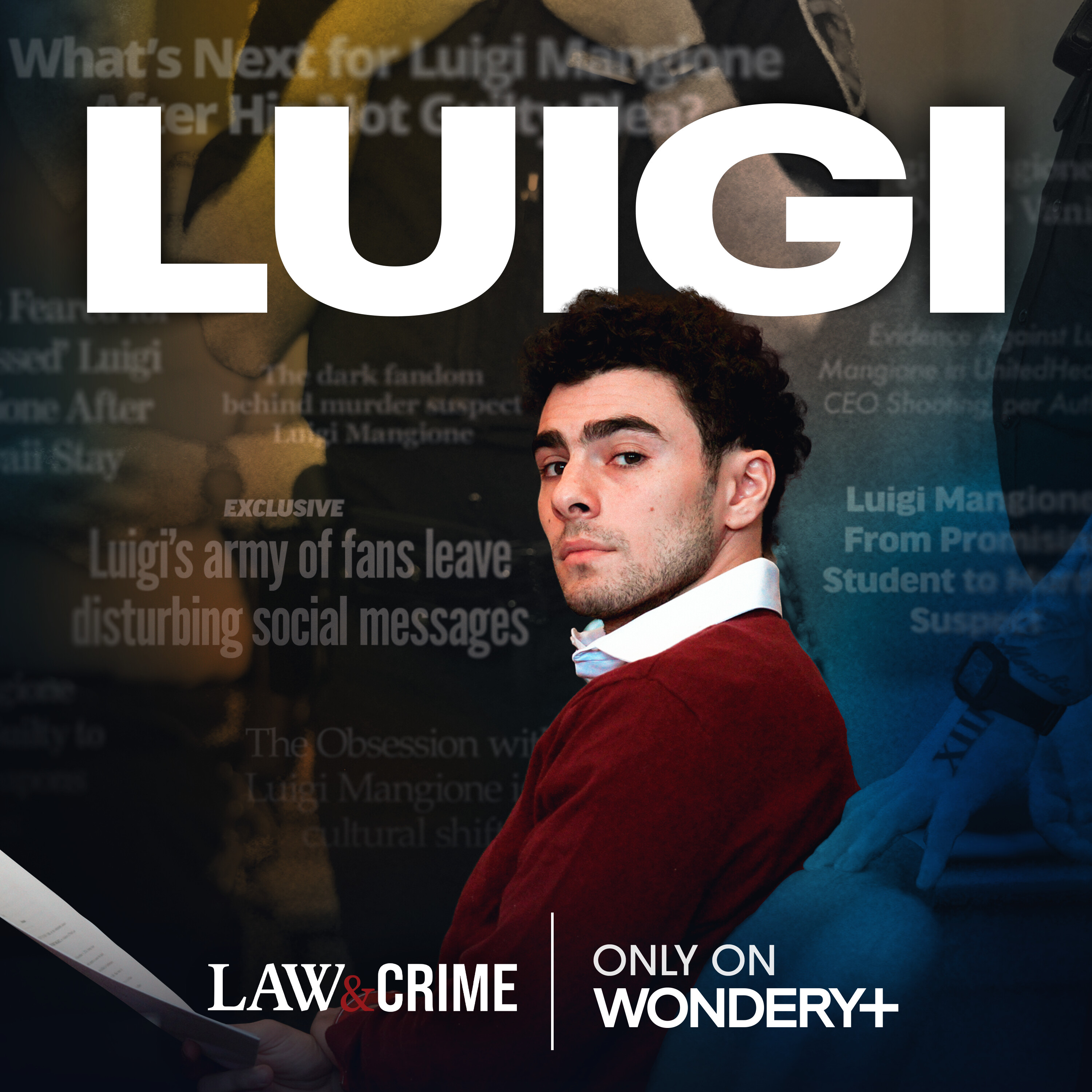
Hey, guys. I'm Justin Shepard, and today I'm sitting down with Law and Crime's Jesse Weber to dig into his awesome new podcast, Luigi, which covers all things Luigi Mangione case. Hey, Jesse.
- [00:10]
B
Hey, Justin. Thanks so much for having me. You know, you're doing great things in the true crime world. We had an opportunity to meet at CrimeCon last year, so it's a pleasure and a privilege to be able to talk a little bit more about this case with you.
- [00:24]
A
Absolutely. And pleasure's all mine as well. Well, for people who don't know, Jesse has covered many major cases, including the ongoing Sean Diddy Combs case. But this podcast takes a different bit of an angle, so I can't wait to dive in. So, that being said, let's just. Just hop right into the questions here. Why do you feel Law and Crimes, Luigi, is more than just a true crime investigation podcast? What makes it uniquely stand out to you?
- [00:45]
B
Yeah, it's a great question, because, look, obviously we talk about what you have to talk about. The alleged crime, the evidence, the investigation, the charges, all that. But what I think is very unique about this podcast is. What is this called? It's called Luigi. So it's a character study. It's trying to understand a little bit more about who he is, and if he really did do this, why did he do it? Right. That might not come out at a criminal trial. Prosecutors don't have to prove a motive per se, but the understanding the why of somebody doing this out of nowhere, why would he target a random CEO of a health insurance company when there was no other apparent connection? That's a big part. So we actually get the opportunity to explore his backstory, talk to people who knew him. And I think that is gonna be a key function. But one of the other things that we do and something that I've never seen in all of my years covering cases, I have never seen a public reaction to a criminal defendant like this. And we can explore that a little bit. But understanding that aspect, the public's fascination with him, what that could mean for a potential trial. You know, one of the things we talk about is jury nullification. When a jury just ignore the facts and the law and maybe side with their emotions in this case, and a big issue became the apparent manifesto or his writings and how the media responded to that and the media's role in all this and what information they can share and should share. Because what you're seeing from the public is not only a fascination, but with this case, but a certain segment of that is rooting for him and siding with him. And you wonder, is it necessarily, do they think he's completely innocent, that he didn't commit this crime, or did he commit this crime and they think it was justified? Which is a really scary concept. So we explore those different aspects of it in Luigi, and I'm very happy to be a part of it.
- [02:40]
A
Well, I think something that you just said really is a good segue into my next question, because anybody who knows you knows that you've covered some of the biggest true crime cases out there. So for this one in particular, how do you feel that mainstream media is handling this one differently? And then why do you think that they're handling it differently?
- [02:56]
B
If you think that it's interesting you use the word differently, because for me, it seems like they're handling it almost like a school shooting case. What do I mean by that?
- [03:06]
A
Interesting.
- [03:07]
B
When somebody commits a mass shooting or school shooting, what's the first thing you see news outlets do? Do we release the name of the shooter or not? Or in our coverage of it, do we try to minimize the name as much as possible? Why? Because you don't want copycats, you don't want martyrs, you don't want to glorify that person. You don't want to give that person a national stage. Because you wonder, is that what they wanted in the end? And when you have somebody who's accused of gunning down a CEO in broad daylight in New York City, by the way, on a street that I have been on thousands of times, I used to park my car right across the street from where this happened. I've walked in that area all the time. To do that. You have to wonder, was it a way to get attention? Was it a way to make a statement? So what you're seeing from the media is obviously they're mentioning his name, they're talking about who he is, but sharing the writings of his, sharing potential motivations. Particularly when you're seeing a segment of the public, a segment of the population who might be sympathizing with him, they might feel a sense of responsibility, a journalistic responsibility to present the facts and the evidence and the details of this case. But also, what do we have to shield or maybe do we not wanna release everything because we're concerned about copycats, we're concerned about people continuing the alleged mission of this killer? That's a really scary reality that we're in right now.
- [04:31]
A
Yeah, absolutely. And real quick, just on a quick anecdote, I was actually on that exact street where that happened three days prior to it happening.
- [04:37]
B
Really?
- [04:37]
A
I was right there. Yeah, in New York.
- [04:39]
B
I'll beat you. I was there the night before.
- [04:41]
A
Oh, you did? You win.
- [04:42]
B
Literally again, I parked near that garage and for just anybody who doesn't know, okay, that area, hotels, semi near Times Square. That part of the day, it's the hustle and bustle. It's like broad daylight. And by the way, there was look like somebody was there who was like an eyewitness. There's cameras everywhere. It's, it's a, it's a show shocking crime. And also equally shocking that he was able, or whoever the, you know, the alleged killer was able to get away is fascinating to me.
- [05:13]
A
He just disappeared. Well, so in law and crimes, Luigi, you've had access to interviews and documents that the public hasn't seen yet. Could you kind of give us a teaser of one of those bombshells from the podcast that people won't find anywhere else?
- [05:25]
B
Okay, I'm going to give you a few right now. Like I said, we try to do a 360 degree picture. So we interview people that knew Luigi Mangione. We talked to people like RJ Martin, who was staying with Mangione at one point in time. We talked to people. We talked to somebody who was in his community, grew up with him. I will tell you first, from that point of view, it's fascinating because for them, they said it's a 180. They did see a little bit of a change in his life, particularly after he had medical issues. But the level of shock that they had when they see the guy that they knew now on the television accused of this crime, it's incredible to hear their voice. But also, okay, we have the opportunity to sit down with the people who organized the December 4th legal fund. All the money that he has been, I don't wanna say he. People on his behalf have been raising for him. I think it's almost up to $800,000. We get a chance to speak to them, talk about their motivations. And also we get a chance to speak to Ken Klippenstein, who is that journalist that made the decision to, to release and I don't know if I wanna use the word, but I'll use it. The manifesto of Luigi Mangino, the alleged manifesto of Luigi Mangino. And that was a difficult decision on whether or not to release all the contents. And we get an opportunity to sit down with him as well. So some key players in this case.
- [06:43]
A
That's pretty amazing stuff. I can't you know, can't wait for people to hear that. Now the reaction going back to something we talked about a little bit earlier, the reaction to this case is almost as shocking as the crime itself. What does that say about where we are as a society?
- [06:58]
B
Scary. Scary. There's a number of different reasons why. So obviously we're talking about a situation where the CEO of a healthcare company was gunned down. And we know that health insurance has ruined people's lives. Okay? Completely understand that it's a very emotional, emotional industry. And so you understand that. But no matter what it is, even if we assume that the reason was that that had to do with that murder or alleged murder is never the answer. And the idea there's one thing for people to side with a criminal defendant, somebody on death row, the evidence suggests they didn't do it, they're being unjustly prosecuted. That's something separate. But where you have evidence, arguably he's innocent until proven guilty, but where the evidence seems so strong that he was the one who committed this crime, and a large portion of the population or a certain segment of the population just puts it to the side and said, you know what? I think it was justified in the end. Because you also have to imagine, if he really did commit this crime, where was it gonna go next? Was there going to be another target? Was there going to be another CEO? Obviously people have fascinations with accused killers and convicted killers and they receive letters in prison all the time. But what you're seeing right now, where his image is broadcast at a nightclub and people start going crazy, or his image is on a billboard and he's being celebrated in a way, and I also have to believe it's aesthetics. He's a good looking guy. Okay. That I think contributes to it as well. If you look differently, I don't know if you might see the same reaction. That's just the truth. People are human beings.
- [08:38]
A
Yeah, you're right.
- [08:39]
B
So it's a disturbing thing and I think it's an interesting and concerning character study that we're seeing about the American population.
- [08:47]
A
Well, let's delve into something that you just said a little bit more about the way he looks. Because we've seen the likes of Ted Bundy, Jeffrey Dahmer, Menendez brothers who have been in the news a lot lately as well, being lifted to the status of heartthrob, particularly with fictional retellings of their stories in modern media. But this is one of the few recent cases where this has emerged and would love to hear more about Your thoughts on him being depicted as a, or thought of as a heartthrob, in your opinion, does it hurt or help.
- [09:11]
B
His case in terms of jury selection? Can help, right? Young guy, good looking guy. Jurors may. It matters. Let me tell you, it matters. And they're not supposed to decide a case based on that. But you have to wonder if that influences their decision. And for him, it's not just that he's a good looking guy, they also say this is a guy who took action against an industry that I hate, that has wronged so many people. And so he's an attractive potential hero to them. And that is a real possibility that I'm not saying defense attorneys will work with. But you have to wonder, and it's something we explore in the show, in the podcast, whether or not implicitly, whether or not in a certain way, subtly, the defense will move in that way with certain arguments that they make, whether a closing argument or an opening statement, the way that they question certain witnesses, whether they bring any witnesses who knew Luigi Mangione. And you wonder, they're trying to appeal to the jury's sentiments because the law and the facts might be so bad for him. Although I will tell you that I do wonder if he was overcharged a little bit. But we can maybe talk about that separately. But look, I do think that that plays a factor. It shouldn't, but we have a long ways to go. And I will say also, if this trial doesn't happen in the next year, if it doesn't happen, and remember, he's facing charges in multiple jurisdictions, but if it would happen in five years, people forget. Right. And you have to wonder if that would have a factor too. Stories change, people's interests change. And you wonder or not whether that would have a factor.
- [10:54]
A
Yeah, and absolutely would love to have more of a conversation with you about that. So. Because this one is so different. When the news first broke on this case, did you have any idea or any suspect that it would cause such a wave in, in mainstream media and culture?
- [11:13]
B
I suspected it was a big case because the CEO of United Healthcare was gunned down in New York City. That is a shocking, huge, shocking crime. I was actually in this room when I found out. My producer told me. So I knew that it was gonna get a lot of interest. There was gonna be a manhunt. Trying to understand why this happened. I didn't expect the fascination with the suspect. I didn't expect this. Again, what seems to be a potential fanfare for him, as I said, we see this happen sometimes in other cases, but I have never seen support for a criminal defendant where the evidence appears to support the prosecution's charges that he committed the crime. Again, innocent until proven guilty, but I've never seen anything like that. And how could I ever expect for him? I don't even think he expected this amount of support that he's getting.
- [12:05]
A
No, I don't think he did either. And I think that that's been seen in kind of his reactions when he does speak. But let's delve a little more into that as well. So his case, Luigi's case, is divided public opinion. Like you said earlier, some see him as a villain, others see him as a symbol of something bigger. In your opinion, what is the one piece of evidence, what would be the one piece of evidence that could change the way that people see this case?
- [12:29]
B
I think we've seen a lot of it, but, I mean, the surveillance footage is so key to this case, because what does the surveillance footage do? It's not just one piece of footage. It maps out the potential timeline. Before, during, and after the event. And whether it's from the hostel or it's from the coffee shop or it's from the street or it's from the Port Authority, whatever the taxicab, you don't usually get that. That is why, by the way, you don't see a lot of crimes in major metropolitan cities, particularly New York City, it's very hard to commit a crime and get away with it. Right. And so I think that surveillance footage, particularly if the jury accepts that that was him with his mask off, smiling at the hostel, you compare it to the rest of the footage. It's, it's. It could potentially be a slam dunk for prosecutors. And again, would that be enough to convict him? That's one question. But the audience, the whole audience, the whole public has already seen it. They already, I think, made an assessment about whether or not he committed this crime. And I don't know if that's gonna change public sentiment one way or another.
- [13:43]
A
Well, do you think because of that that this is going to make it harder for a trial by jury with the sentiments out there?
- [13:49]
B
It's gonna be hard, but we've had a lot of high profile cases before. We've had high profile cases against. I mean, look, we're about to have the trial of Sean Combs. They're confident they'll get jury selection done quite quickly. It'll be tough. Jury selection's not perfect. There are questions in which you have to root out potential Biases. You have to root out what people's feelings are. Can they put, everybody's gonna know this case, but can you put aside that and say, all right, I might have seen things, I might have heard things about the case, might have even read a little bit about it, but can I put all that to the side and look strictly at the facts and the evidence? It's easier said than done. And you also have to take jurors words at it, words for it. Do they. Are they being honest with the court or are they stealth jurors who want to be on that jury and render it a verdict one way or another? That's a big consideration in any high profile case. So it's definitely going to be tough to get a jury. Obviously not impossible. You wonder if there's going to be. There's going to be claims or arguments for a change of venue and what that might look like. But this is a national case case and it's had national exposure and national sentiment.
- [14:55]
A
That's all the questions that I have. I really appreciate you taking the time today and speaking with me about the new podcast.
- [15:01]
B
No, first of all, thank you so much for having me. I hope everybody can check out the Luigi podcast. We're very proud of it. We have four episodes right now. Maybe continuing to do more and I just hope everybody listens and maybe learns a little bit more about the case. So, Justin, thank you so much for taking the time with me. I really appreciate it.
- [15:16]
A
No, likewise. Thank you.