← Makes Sense - with Dr. JC Doornick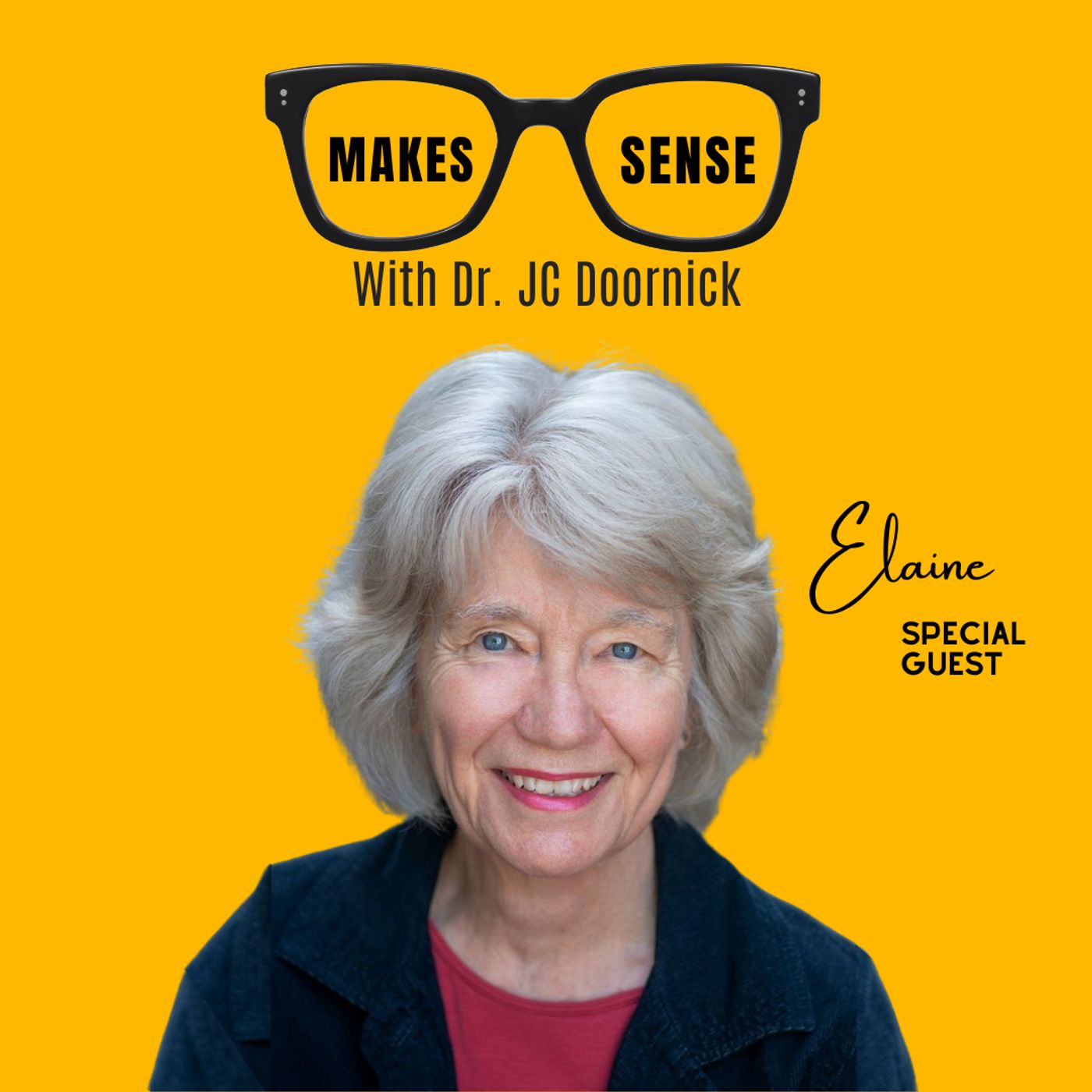
Makes Sense - with Dr. JC Doornick
Are You Too Sensitive? This One Truth Changes Everything with Elaine Aron - E-179
00:58:04
Ever been told you’re 'too sensitive' or need to grow 'thicker skin'? If loud rooms, busy days, or just absorbing other people’s stress drains you completely, you aren't weak. You are actually hardwired differently.
Loading summary
Transcript94 lines
- [00:02]
Dish Commercial Announcer
Celebrate America's 250th with Dish. For a limited time, get an extra $250 off when you sign up. Call 888-add-direct or visit dish.com today and use code DISH250 to claim your $250 savings. That's 888 add Dish offer ends August 12th. Terms apply.
- [00:32]
Lowe's Commercial Announcer
From backyard barbecues to homegrown herbs, the best parts of summer start at lows right now. Get three fairy Morse 1.3 quart vegetables and herbs for just $12. Plus get four bags of Miracle Gro 0.75 cubic foot garden soil for only $10. Whether you're planting something new or giving your garden a refresh, now's the time to make the most of your outdoor space. Save more on what you need this summer at Lowe's. We help you save valid through 624 wall supplies. Last selection varies by location, excludes Alaska and Hawaii.
- [01:01]
Grainger Commercial Announcer
When you're a maintenance engineer in a beverage manufacturing plant, you keep production lines moving and quality on track because there is no room for slowdowns. With Grainger's vast selection of high quality motors, sensors, belts and hard to find parts, you can get what you need fast and all in one place, so nothing gets in the way of getting the job done. Call 1-800-GRAINGER clickgrainger.com or just stop by Granger for the ones who get it done.
- [01:30]
Elaine Aron
Processing is really the most important part of being highly sensitive. It's not so much sensory, it's sensory processing. Processing is we process everything more deeply and that's our survival trait. Makes sense.
- [01:50]
Dr. JC
Have you noticed that the world that we live in has been doing most of the thinking for you? That your beliefs, perceptions, reactions, fears and doubts have been shaped by unsolicited outside noise? How easy it's been for you to slip into that default sleep walking mode and label it as life and reality. Yeah, that ends here. Welcome to the make sense with Dr. JC podcast. This is your opportunity to start thinking for yourself, reclaim control, and step back into that role as the shot caller and dominant force of your own reality. It's when you change the way that you look at things that the things that you look at begin to change. So let's wake up, let's rise up, and let's make sense of why and how shift happens.
- [02:40]
Elaine Aron
Makes sense.
- [02:43]
Dr. JC
So one of the things that I genuinely appreciate about Elaine and her work is that she gave millions of people language for something they were already experiencing but couldn't explain. And I just love that I Love how you're just like, oh, we'll just call it this. And everybody's like, yes, I love that. So, so many highly sensitive people spent years believing that they were too emotional, too reactive, too overwhelmed, or simply too much. By the way, I'm one of them. And your work has basically reframed sensitivity. It's really, really interesting. I was talking to my wife and I said, I'm having you on the show. And she's like, we talk about that stuff all the time. And it's interesting from a therapist, you know, she typically has to do some sort of intervention. So she's very excited to hear, hear this conversation because typically people come to her with the problem of that. And what I especially appreciate about your newest book is that you took the conversation into a domain that I love, where we're basically going beyond psychology and into spirituality, which I love in consciousness, meditation and meaning, but not from a dogmatic perspective, but from a place of curiosity and exploration. I get that from you. And those are some of my favorite words. So that really resonates with me because we talk a lot about that on the show and the fact that different nervous systems experience reality differently and how awareness basically changes everything. So one of the things that we always say is we like to arm people with this show with the weapon of awareness. Anyway, that's what I like about you. So I don't know how many times a day you get people telling you what they like about you, but there you go.
- [04:19]
Elaine Aron
That's lovely. That's a very lovely, lovely introduction. And I have to say that my experience, it's hard sometimes for men who are sensitive to sort of admit to their sensitivity. But I've never met a good interviewer who was not a highly sensitive, high sensation seeking type of person. And it's. It's perfect. You want to meet new people, talk about new things, but you need to go off and think about it, and you have the best questions, the best insights. So I often call interviewers on it who are making fun of sensitivity. I'll say, I bet you're highly sensitive. And then they get it.
- [04:53]
Dr. JC
And when you have a podcaster that has a show called Makes Sense and a book that he wrote called Makes Sense, you got to wonder where that comes from. You know, that's got to be some sort of superpower of sensitivity. So my first question that I always ask people on the show, and it's a great way to catch people up, is what's it like to be Elaine Aaron these days?
- [05:14]
Elaine Aron
Well, first of All I'll own up to it. I'm a very energetic, but realistically 81 year old. The 80s caught me by surprise. I get more tired. I'm happy that I finished this book. It took me five years to write it, and now I feel like I can kind of coast along doing podcasts and recovering from them and enjoying myself in that way. But I'm also kind of hungry for something new, but I don't know what that will be yet. And so I am so much a creative person. That's what keeps me alive. And so I have to have something. But I feel like I kind of reached the peak in some way with, with this book. Except, of course, the book is not finished because the subject is not finished. So I guess higher states of consciousness and what I'm doing in that regard is the most important thing to me now especially.
- [06:14]
Dr. JC
Well, the good news is, is that some of the topics you're talking about are ones that the smartest people in the world can't figure out. So you've got a lot more work to do. Consciousness.
- [06:24]
Elaine Aron
That's true. And we really need more. More research, which I'm hoping will happen.
- [06:29]
Dr. JC
We've had Donald Hoffman on the show, and I don't know if you know who he is. He wrote a book called the Case Against Reality. So he's devoted his life to trying to figure consciousness out. He's got his own opinion, but he always, as the scientist would say, well, you know, I. I know that I'm probably wrong, so if somebody has something better, please let me know and I'll. And I'm all ears. So with regards to me being a highly sensitive person, I just want to credit you. I'm one of the people that never knew what it was. I will send you a copy of my book, and in one of the chapters, I tell a story of something that happened to me when I was 8 years old. I don't want to get into the whole thing because I want to get into this interview, but basically I had a terrible, terrible experience where every one of my five senses were just accelerated beyond belief and to the point where I couldn't handle it. You know, it was like. It's like I was in a war zone. And there's much, much more to the story. But what ended up happening, and this is before I knew about a highly sensitive person, is I came to design the story of what actually happened as me basically coming online and recognizing my superpower. And if you look, you know, here we are, many, many years later. I'VE built an entire career and one of the top podcasts in the world with my superpower of just this keen curiosity that I have. When we're having our conversation, you know, you'll probably notice that, you know, or I'll tell you at the end that I didn't get to any of my questions because, you know, I'm. I'm a very, very keen listener. Which is ironic because when I was a child, I was told that I wasn't, so I had to come into my own with it.
- [08:02]
Elaine Aron
So processing is really the most important part of being highly sensitive. It's not so much sensory, it's sensory processing. Processing is we process everything more deeply, and that's our survival trait. And if everybody had it, there'd be no advantage to anyone being highly sensitive. So we are a special minority that evolved in over 100 species. Probably. Probably most species, if you. If you get to know them, they have personalities, and some of them are more thoughtful. I love the film and information on the black wolf of Yellowstone, who was so smart, he wouldn't fight with the other wolves in order to get a mate. He'd get. He. He'd mate with one of the ladies who was available, and then he would run, and they would run after him. He would cross this road in Yellowstone that all the wolves were afraid to cross, and that's how he protected himself. Talk about a good survival strategy. Thinking deeply.
- [09:00]
Dr. JC
I know. I mean, it's probably changed the entire world if anybody would even allow themselves to do that. One of my favorite quotes that I heard from Wayne Dyer the Great, is he used to say, if you change the way you look at things, things you look at change. So I've spent so many years of my life looking at things the way I was taught to look at things. But the moment I allowed myself to change the way I looked at things, and then I find out about what you do, and I said, ah, that's what I actually think, not what I was taught. Elaine, for somebody that's listening, tuning into this recording right now, and they're kind of wondering, a lot of people, ironically, might be hearing about HSP for the first time. And I say, haven't you ever listened to Alanis Morissette? But they might be wondering, am I in hsp? You know, I organically figured it out with your help as well. What are some of the clearest signs that somebody might be a highly sensitive person just to begin?
- [09:53]
Elaine Aron
Well, thinking deeply, having trouble making decisions, because you think of all the possibilities getting easily overstimulated that that is true. Because if you're going to process everything more thoroughly, you're going to struggle a bit with having too much to process. And then there's our empathy and our emotional responsiveness. I call it emotional responsiveness. Call it emotional leadership, actually, because often we're feeling and expressing what other people should be feeling, but haven't figured that out yet. We may be the first ones to cry, the first ones to get annoyed. We're probably the first ones who said, no, I don't want any cigarette smoke in my airplane cabin. That kind of thing. And then we just notice subtleties. We notice beautiful things. We notice irritations, but also appreciate beauty, aesthetics a great deal more. So that's it in a nutshell. I call it D.O.E. s depth of processing over stimulation, emotional responsiveness and sensitive to subtle stimuli. You can go to hsperson.com to take the little test that we've just revised, that we've improved even more and find out if you're highly sensitive. Just as many men as women, many extroverts. So it sort of defies some of what might be your stereotypes of what a sensitive person is.
- [11:10]
Dr. JC
Not necessarily shy are some of the clear signals. And, you know, this is. I don't. I don't want to necessarily go to this place, but I would assume that, you know, because I was frustrating to certain people. I remember times where people would be like, oh, God, you know, you always have to overanalyze everything. Are those some of the signs and symptoms of being an HSP Is the. Is the feedback we get from the herd?
- [11:35]
Elaine Aron
Oh, yeah. I mean, if you're a minority, you're different than them all. People want to think everybody's like them. So first of all, they don't think the sensitivity is real. I just had to deal with some German broadcasters who are going to do a whole show on whether this is a con or not. I had to do a little education there. But, yeah, it's irritating to people. I think a slowness in making up our mind about things or wanting to think things through, people to say, okay, we're going to do this. And then we think, wait a minute, that restaurant wasn't very good the last time I went there. Or that hike will be too hot today. It's too sunny and there's no shade. Pretty soon the people who know, you know, to ask your opinion first. But the. Yeah, that's. And being easily overstimulated, that we don't necessarily, if we've been out all day doing things, want to go to a nightclub at night or that sort of thing. We say, no, thank you, I'd rather go home.
- [12:28]
Dr. JC
What a fun conversation this is because I'm seeing such a paradox in irony, in the fact that a great majority of the world, without knowing it, is trying to learn how to become highly sensitive. But we'll get into that later. What's the difference between being an hsp, a highly sensitive person, and what society would call fragile?
- [12:49]
Elaine Aron
People love the word resilience, you know, and to me and my researcher friend Michael Plewis, resilience means resistant to, to information because you, you don't notice what's going on as much. So, you know, most words, sensitivity is a kind of an exception, have an opposite. So fragile. Well, does, does fragile have, I think there's a sweetness about fragile to many people. It's a good question. I, I, I posed that question to someone who, I thought, who was physically fragile and he said, I'm not fragile at all. You know, I'm very strong. So what you see on the outside isn't what's inside often.
- [13:34]
Dr. JC
No, no, I'm listening to you. It's, it's, it's interesting because this, this goes into relationships and everything, you know, like I, I consider myself keenly aware and very, very curious and society would very often look at that as a weakness, you know, and, and I said, well, what should I do? Should I train myself to not be aware and ignore things? Which is part of this fun paradox right now because you'll find people that say I'm not a highly sensitive person. But you see them practicing so many different things that are helping them tap into what, you know, Steve Jobs called the signal, and more importantly, avoid the noise. I mean, we live in a very noisy world. So I've noticed that HSPs, or I guess self proclaimed HSPs become exhausted by things like overstimulation and loud environments and chaos. So superpower wise, I always thought it was a great thing that I didn't like being around noise and everybody else has been trained to like embrace the suck of the noise and what's happening neurologically there when. I don't know how much you like talking about that, but neurologically, what's happening when somebody is sensitive to things?
- [14:52]
Elaine Aron
Oh, there's, it's, it's awfully complicated, but there's a lot going on and it basically, if you want to look at, well, we, we use the Human Connectome Project to look at the, it's clear that the processing areas of the brain, not the initial processing so much as the areas that elaborate the meaning of things are more active, they're. They're more expanded and sensitive people. But yeah, I just want to be clear about something, that the book we're going to talk about is not just for hsps, even though it's got that title, Spirituality through a Highly Sensitive Lens. That was sort of foisted on me by my publisher, who wanted. Who wanted my HSP readership to be sure to see the book. But it's really a book for everybody, and the lens is me. I think that people have not paid adequate attention to meditation and to enlightenment, which is a real thing. So talking about neurological change, that's where we see the big changes in the brain. And they're permanent changes. And it doesn't matter whether you're highly sensitive or not. You want those changes which have to do with EEG coherence. The electroencephalogram shows all a sort of a background organization of all the parts of the brain. Even though on the surface there's stuff going on having to do with what we're doing at the moment, in the background, there's a coherence. And the more coherence, the better you function. All kinds of disorders are associated with a less coherent brain. So to me, the sad thing is that people don't know anything about this or very little. Basically, all meditation comes from the east, and even what trickled in and has been in the west always had the purpose of enlightenment, nirvana, self realization, God realization. And yet here we all are meditating. If people are meditating without the awareness that that is the actual purpose of meditation. So that's one of the things that I wanted to make clear also that there are very big differences among kinds of meditation, yet most people just start doing whatever somebody happened to tell them about. And I feel people should know about the differences and know so that they can make an. An educated choice about that. I sort of jumped into the other book, just, oh, no, we're, we're. We're.
- [17:21]
Dr. JC
It's.
- [17:22]
Elaine Aron
We're.
- [17:22]
Dr. JC
We're getting to that. What I'm trying to do for the listeners is build to this place where you've identified that HSPs, you know, have a knack for taking note of some of these amazing things that, that help us. I, I heard you once say, and I just want to find out if it's true. What was the original idea for your. The name of this book before your editors told you that they got to
- [17:45]
Elaine Aron
add the HSP for the draw spirituality or whatever?
- [17:49]
Dr. JC
That's Right. Is that. Is that a true story?
- [17:52]
Elaine Aron
Yes.
- [17:52]
Dr. JC
I love it.
- [17:54]
Elaine Aron
I wanted that title so much, but they didn't like it. But everybody I mention it to loves it, because I don't know what spirituality is, and I don't want to cram it down the throats of people who are atheists and agnostics, because I don't think that has anything to do with meditation or enlightenment. You've got a whole bunch of Buddhists who don't believe in God, you know, so why does God have to come into it? And yet, in the west, at least, spirituality and God are pretty well tied together in people's minds. So, you know, if you want to say spirituality is about finding the meaning in your life, then that's cool. But I just think some people are just turned off by that word spirituality. And I didn't want to turn them off, but I got stuck with it. And I know that for the majority of Americans, at least, the polls, the surveys say that most people feel they are spiritual and love all these spiritual topics.
- [18:42]
Dr. JC
So one of the things, as an hsp, and I do a lot of public speaking, and very often people will challenge me specifically on the. On the topic of religion and stuff, it's somehow they pick up that I'm not like them. And when people say, what religion are you? Or what is your political preference as an hsp looking to avoid that situation, I just. I just say, well, the same as you. And they go, well, how do you know you're the same as me? And I go, well, what are you? And they tell me, and I go, you see? And then I get the hell out of there. So one of. One of the things, this idea of being drawn to some of these spectacular things or having a propensity to be drawn, like, I meditate twice a day. I've been doing this for years, years and years and years. And it was not until I heard that I didn't know that that was part of my superpower to. To be drawn to certain things. And, I mean, I've gone to the Amazon jungle and experienced plant medicine. I'm constantly seeking these personal growth things, and I never made the correlation. So on the topic of superpower, you've basically been arming and equipping people or empowering HSPs to look at it not as a weakness, as a superpower. So what strengths do highly sensitive people often possess? I think people love to hear that. I loved hearing that. In the sense that what strengths do they possess that society very much overlooks?
- [20:04]
Elaine Aron
Well, I have to bring up the very great importance of the term differential susceptibility, which we're different than other people because we're susceptible to everything. And that's not vulnerable, it's susceptible. But it does mean that if you have a pretty good childhood and can set up a pretty good environment for yourself as an adult, then you can outperform other people in all kinds of ways, socially, mentally. I mean, I don't like to get into the whole IQ thing, but I don't know about that. But I know that processing things more deeply has got to give you an advantage. But if you had a rough time of it, then you're more likely to be depressed or anxious or shy. And that's the stereotype that society carries around. I think a lot about, about sensitivity is that there is a fragility that makes you more vulnerable to things. So I just want to say that in terms of our superpowers, again I think processing things more deeply is the most important thing. But I'm also going to say something about me. I have in the last 10 years, I think it was the pandemic, become much less happy with having to make generalizations about HSPs because during the pandemic people came to me and said tell us about how the pandemic is affecting hsps. And I say, how should I know? How's it affecting left handed people? I don't know, they're all different. I like that saying. We were all in the same storm, but different boats. And some of the introverted HSPS loved being stuck at home, others the extroverts, hated it. We all are quite unique. In fact, we're probably more unique than other people. So our uniqueness might be one of our superpowers. But then it's hard for me to say how each person is unique. You have to look at yourself and, and see what is your superpower, what is your greatest strength and then make use of that. And I suppose what you're talking about over and over I hear is rising above social stereotypes, expectations. And most people who were highly sensitive as they were being raised, their parents didn't know what the trait was, but they weren't too crazy about it. So the first thing we have to do is get over feeling that there's something the matter with it that turns it into a superpower more than anything else. No. I bet you had a pretty good childhood. Can't say for sure, but I would bet that your parents were encouraging. Most white men actually have had a pretty good childhood, even if they were Highly sensitive. They often didn't know they were highly sensitive. It turns out if you played sports as a young boy, you're set for life. If you're highly sensitive, they didn't play sports. That's a problem.
- [22:54]
Dr. JC
What do you mean by that? That's interesting. I never, never contemplated that. I'm highly sensitive and I've learned how to turn it into a career and I love it. I love that about me. And I think, I would assume my wife loves it because she says she loves me, but I played a lot of sports. I played football, I played lacrosse. What do you mean by saying that we're set for life?
- [23:15]
Elaine Aron
Well, it turns out I'm talking about a book by Ted Zeff, who wrote a book called Strong Sensitive Boy. And it was supposed to be for men, but the publishers told him no one's going to read a book about highly sensitive men. Now, we do have a few books for highly sensitive men, but at the time. But he went to five different cultures and interviewed sensitive men and found out that in the US And Canada, especially as compared to Thailand or India or Denmark, that sensitive boys generally get bullied and look down on. But if for some reason they were able to play sports, and I think this is sometimes what parents do, sometimes it's just what you're born with a certain ability and athletic, and sometimes it's extroversion and sensation seeking which helps you play sports because sports are rough, you get hurt. And sensitive people are more sensitive to pain. So boys often, their first memories, often falling down to the playground and crying. And then someone coming up and said, what's the matter with you, you crybaby? Aren't you a mama's boy? And all that kind of stuff that can happen. But if you can't play sports for whatever reason, it turns out in his, his book he found those were the boys that did not have a hard time in childhood. So not having a hard time in childhood is just very important for sensitive people because you can imagine as you get hit with one thing after another, you're too shy, you're too sensitive, you're too this, you're too that. It's hard for you to grow up strong and confident and ready to go to the Amazon and ready to defy people and say, I'm going to look at it differently. I think it's a, it's a wonderful thing. But I wish I could say that all HSPs have that superpower. They have it, but they have to first reframe their childhood, understand their Trait. Get some therapy that we do really well from interventions of all kinds, but psychotherapy included, because we take in the positive, we absorb it. And absorbing things is our super strength and our super weakness, depending on what we're absorbing. But we can change what we're absorbing by what we expose ourselves to. Social psychologists make very clear your. Your attitudes change when you change groups. When you change a group, you'll get new attitudes. So be careful about who you associate with and who you listen to.
- [25:38]
Dr. JC
It's so interesting because I'm realizing now that I lived in a home with a single mom. I mean, my father left when I was very, very young. And I'm realizing how good that was for me because I've Very likely because.
- [25:55]
Elaine Aron
Because fathers can be just murder for. Highly sensitive.
- [25:58]
Dr. JC
Could be. Yeah. And it's making me say, like, I'm going to do some quality control on a regular basis to make sure I'm parenting my two boys and my daughter the right way. I would love to get into the new book. And to be honest with you, as somebody that knows your work, that's a pretty bold move. And it's. And it's a move that I'm very, very happy that you made. You know, I was wondering, like, how does somebody move on from the highly sensitive person? Is it just Highly Sensitive Person Part two?
- [26:23]
Elaine Aron
You know, so Highly sensitive person makeover book. A highly sensitive dog. Yeah.
- [26:28]
Dr. JC
Like a chicken soup type thing, Right.
- [26:31]
Elaine Aron
Absolutely. I wrote enough books about it already. I. I said I'm creative. I. I just. I felt. Yeah. I couldn't make any more generalizations.
- [26:39]
Dr. JC
Right.
- [26:39]
Elaine Aron
I felt uncomfortable with that role. And everybody else is. I mean, there's so much stuff out there, good and bad.
- [26:46]
Dr. JC
Yeah.
- [26:46]
Elaine Aron
Just so much stuff out there that I felt. I knew some HSPs probably wouldn't like this turn, but that doesn't. That didn't stop me. I knew this was really, really important.
- [26:58]
Dr. JC
Yeah.
- [26:58]
Elaine Aron
To the. That people don't have the message. And I couldn't give them the whole message because it's not complete. But they should know that it's out there. And it is an amazing thing.
- [27:11]
Dr. JC
I would think that it has everything to do with how they interpret the word spirituality. But let's jump into it. And I love reading your stuff, knowing that we're kind of like experiencing the world through your lens and at the same, recognizing how we're alike, you know, which is cool. So the book is called Spirituality through a Highly Sensitive Lens. And we know that the editors had something to do with that. I wear these glasses all the time. And you wouldn't know until you were in person with me that they don't have lenses. And there's a story behind that. And it was. It's kind of like a token. And it's. It's a fun thing. You know, my kids are like, are you going to wear the glasses out again? And I'm like, I wear the glasses. And I just decided that I didn't want to look at the world or perceive through any lens but my own. That's why I did it. So I started popping the lenses out of glasses and stuff. So I love this direction we're going. So your newest book moves, as I said before, beyond psychology and into spirituality. And, you know, spirituality is an acquired taste.
- [28:15]
Elaine Aron
Let's be sure you read the subtitle, which is what the title ought to be.
- [28:20]
Dr. JC
Right? Let's hear it.
- [28:21]
Elaine Aron
An objective look at meditation methods in enlightenment. And I emphasize objective. In fact, I know no one can write an objective book. I tried my best. I really tried, but I put in italics my own path so that if you want to read it, you can read it so that you know what I actually do to meditate and what, how I've worked on getting enlightened. But the. That was the purpose of the book was to give people. There is no book out there that describes all the methods of meditation in one book in an objective way. If you go to something on Buddhism, you will not get the facts about TM or you won't even. In Buddhism, you. If you go to Zen, you won't get the facts about Tibetan Buddhism. It's. And if you go to a TM teacher, they'll think you're talking about mindfulness. They won't realize that there's a wide range of Buddhist meditation practices. And so people, as I say, they tend to learn what their friends learned or what just they stumbled upon. And they don't realize that they're hopefully. And a lot of people quit meditating. And we can talk about that too. But those who do, practicing consistently for year after year, you really hope that they're doing something that is suitable for them and that is getting them to where they want to go. So that's why that I emphasize that that title, that was to provide something that nobody else has provided and to link it to enlightenment, which. There's a lot of books out there on enlightenment. Somebody gets enlightened and then they want to write a book and tell you how they did it. And then that's how you're supposed to do it. I call the subject of enlightenment is like the Wild West. There's so many websites and podcasts and books and stuff, and it's just all over the place. And I think it needs to be all over the place in the sense that we don't know. It looks like it depends on the person as to what is the best path. But I think we could do a lot more research on it and see what the brain is doing when people are doing different things and seeing what the brain. We did cite a lot of research on this done in one laboratory by one person, but we ought to have it from other labs with other forms of enlightenment in order to know for sure what path you ought to be on. It's kind of like evolution, you know, the survival of the fittest method. But so far, we don't know what the fittest method is because people are not looking that carefully at it.
- [30:54]
Dish Commercial Announcer
Celebrate America's 250th with Dish. For a limited time, get an extra 250. $250 off when you sign up. Call 888-ad-d dish or visit dish.com today and use code DISH250 to claim your $250 savings. That's 888 add Dish offer ends August 12th. Terms apply.
- [31:23]
Grainger Commercial Announcer
Grainger knows when you're a procurement manager for an office park, you're not managing one building, you're managing all of them. And to stay ahead, you need to see through walls and around corners. Lights about to fail, filters ready to clog, H Vac on its last leg. If you wait until something breaks, you're already behind. Count on Grainger for quality products, easy reordering and 24. 7 support. Call 1-800-GRAINGER click grainger.com or just stop by Grainger for the ones who get it done.
- [31:53]
Dr. JC
I love that I heard you say with regards to enlightenment, because people either say that that's not possible or people are very believing in it, or somebody will recognize there's all sorts of different interpretations of that. But I heard you say something in the sense of. From all of my work, my research interviews and things like that, I can tell you that enlightenment is happening. And what that means is that it could happen for you, right?
- [32:18]
Elaine Aron
That's. That's the most important thing, right, is that it's happening. I'd like to use supernova idea that it happened began in the 60s when all this meditation came to the west and there was an explosion. But like supernovas, the light didn't get to us until now. And around 2009, 2010, people began really talking about getting enlightened as opposed to meditation. They've been meditating for, I don't know, 50 years, and all of a sudden something happened, or some of them much sooner. And it, It's. It's just something has happened, but we still don't have a good enough sense of, of what it is to give people exactly what they should do. And it may not be, you know, one of the things, people are so unique and their brains are so unique. So just like since maybe sensitive people should be doing on a different path than people who are not sensitive, not there, get there faster, but they get there in a different way.
- [33:20]
Dr. JC
I actually think that this is your best work. And. But what would you say if somebody has not read any of your work and they're being introduced to you for this book, your. Your new book, Would you recommend this as a, As a first book to read or.
- [33:37]
Elaine Aron
I would. I would say, are you highly sensitive? Do you know? If you're highly sensitive? I would have them read the highly sensitive person first by them both, definitely. But if people already know they're highly sensitive, or if they know they're not highly sensitive or they don't care, you know, then this is the book to read to me. But, you know, as you say, some people are going to be turned off by the subject of spirituality. But so I had to, in the book, I had to address the subject of enlightenment or awakening. I use the terms interchangeably, some people for awakening, because it sounds like it's still happening for people. It's not like a sudden thing. And it's an archetype and an archetype. You don't want to identify with an archetype. You don't want to be the hero. You don't want to be the Great Mother. You don't want to be the enlightened one. And it's not going to happen. But if you play that role, you can get into trouble. So enlightenment is simpler than that and yet real. First of all, it's not an attitude. You can't adopt it. You. It's not a single spiritual experience that changes your life. It is a spiritual experience that starts and never stops again. And it's starting is sometimes gradual and sometimes very dramatic. Sometimes it happens after trauma, and sometimes it happens as a result of somebody talking to you in a certain way. We call it pointing out where a spiritual teacher will describe to you that all around us, everywhere, if you'll notice, behind everything, there is a silence, a Stillness. And that actually is infinite. And that is. You have your mind busy doing things, but that is actually who you are or what you can be identified with that. So like the ocean has waves and that's what's going on in life, all that. But the depths, if you can connect yourself with the depths of. There's a stillness and a peace there that you can make use of, you can be anchored to. That gives you a kind of equanimity. It also reduces the importance of your little self. Your little, Your desires for things are. Become less important. You, you still have desires or preferences, but you're not glued to them. So the self becomes just. It shrinks in relation to this bigness. And that's how we all ought to, to be able to be and be a different world we lived in. If people had a sort of a, an equanimity. So I like when you said, what? Well, what is your religion? And then they say, and then you say that that's me or something. Because if you have a big enough perspective, you are like everybody, it doesn't matter your political.
- [36:25]
Dr. JC
But don't. But don't let everybody know that.
- [36:28]
Elaine Aron
Oh no. But I talked in the book about how I kind of had this shift back in 2016 and at the time I was in Europe, but I was there during the election that some people loved and some people hated, but all my friends hated. And I, I had this big word actually flash in my head, equanimity. So then I came back to the States and people were upset with me that I wasn't more upset. And I, I realized I have to act upset or people just think I'm terrible, I'm irresponsible, I don't care about anything. But I knew it was all going to be okay in a big bigger sense. I mean, the biggest sense, obviously the biggest sense.
- [37:12]
Dr. JC
I'm a big fan of Carl Jung and, and I also was a huge fan of Alan Watts. And they speak a lot about, you know, one of the biggest struggles that we have is that we, we think that we're special and unique from one another. I want to talk more about silence because I know that for me, a lot of the practice that I do is to move myself into silence. And it's a very, very powerful skill set for a highly sensitive person or anybody to learn, you know, is to block the noise out. So I'd love to just know from you, what role does silence play? So if we voluntarily sit in silence, which is not easy in this world because it demands the Latter, the other, if we, you know, or. What role does silence play in emotional regulation and healing for a highly sensitive person or for anybody? What role does silence play? Because I want to put the value on that. So somebody might say, oh, maybe I should allow myself to sit in silence.
- [38:13]
Elaine Aron
Well, silence is a. Is a metaphor in a sense. It's not exactly silence. It's an inner settled downness. So in my book, I talked about being on the subway in New York. Very noisy place, crowded subway. The subway, the car. Subway stops in the dark, and people start to get very anxious. And it's not silent, but I can go into the silence inside of me, the stillness inside. But I'm transcending to some other way that my brain works. And my brain knows how to do it because I've done it so much. So it's an automatic place. And then what happens is actually, I calm down and everybody around me starts to calm down. And then the train goes again, and everybody's relaxed. So there's emotional contagion, which is a nice result of that. But it. It's. We don't have to be silent. I am suffering right now. I'll say suffering. It's annoying. I have what is called pulsatile tinnitus, which means I hear in my ear all the time and mostly when I'm meditating, because it doesn't bother me. Most of the time when I'm meditating, I hear the pounding of. Of blood vessel, the pounding of my heart. You know, it's the. It means I'm alive for sure. If it stopped. Well, it does stop, but I. It comes and goes, and it's. It's. I've had it before, and it has stopped. Well, right now I haven't. And so it's interesting for me because I simply transcend it. It's still there, but I translate. So to train your brain to do this does require consistent practice. It's not something that you can just turn on and. And have it there. It's kind of like brushing your teeth or something. If you want to have good teeth, you got to brush them every day. You got. You got to meditate every day to have a brain that can find that depth and that equanimity and that silence. And it can. And in fact, most people get it as soon as they learn to meditate. If. If they're doing something that's reasonably effortless, they're doing something that requires more effort to sort of block out sound, then it may take a while. It's a different Approach, but it, it will get you to that silence, eventually to that inner stillness.
- [40:35]
Dr. JC
I love that you acknowledged that. You know, and by the way, I, I knew we had a lot in common because I have the same thing with my ears. And then when that's not happening, I just have some good old fashioned tinnitus. And.
- [40:50]
Elaine Aron
Yeah, I have that too. Yeah.
- [40:51]
Dr. JC
So. And, and you know, it's. What's funny is, is the only reason that I ever perceive that it's a problem is because I didn't used to have it. And it kind of like a diagnosis to some people. I've kind of learned to like, just say, hey, that's what I do. You know, it's. It's my superpower or tuning into the frequency. I make up all sorts of stories. This is why I actually, I tried all forms of meditation, but I gravitated towards tm. And I like that you said before, if you just choose one, you don't get to experience. I experienced them all. I just love the concept of. I heard them come talking about transcendence and things like that. So I love the way you explain silence. It's like it's not that there's ever an absence of anything. It's still there, but you can transcend it. And that's what I do with my tinnitus as well. And, and my, my visceral knee jerk reflex as a sensitive person to somebody calling me a name or anything like that. And there's got to be some form. And I'd love to know how you do this. If somebody comes up to Elaine Aaron and you know, uses a trigger, trigger word or an event happens that you can't control the subconscious mind. And that automatic reflex that we have that might, you know, be fight or flight or something like that. Do you have a strategy that you, when you take note of, you know, you're getting angry or frustrated or something like that. Do you have a strategy, Some sort of cognitive distancing I use. That's what I say. What does Elaine Aaron do when somebody says, hey, I didn't like your book, or something like that?
- [42:27]
Elaine Aron
Well, most of the time it's pretty easy. I allow them to have their perspective.
- [42:32]
Dr. JC
Right.
- [42:33]
Elaine Aron
But now I'm gonna be really honest, tell you about something that happened the other day. We go into a restaurant. I love this restaurant. They, instead of putting us at the table, we like, they said they're going to be 10 people at that table. So they moved us to the bar. Okay. So we had a nice quiet table at the bar. Except at the other end of the room, there was two couples with a table between them. And they were talking loudly to each other, really loudly. Clearly one of them, at least, was pretty loaded. And I said. After a while, I said very nicely to them, I said, could you guys move to be at this, you know, closer together so you don't have to talk so loud? This man said to me that I was a grumpy old white lady. No, he didn't say what he just said. I think I put that in. But he was white, too. He was a grumpy old lady. He hit a sore spot with me because if anything, I'm not. I don't feel I'm a grumpy person. So I said, do you want to fight about that? I said, come on out here and let's fight. I don't know. It was just an impulse. He said, oh, well, why don't we just get stoned instead? I said, no, I don't do drugs. Sorry. And I haven't had anything to drink yet, but you obviously have. And he just kept saying mean things to me. So we left. But I was fairly angry because I guess we all have what I call complexes. We have things where we're touchy, and we remain touchy even if we are enlightened. And this is an important subject in my book about the problem of spiritual teachers who do awful things. Because if they have not resolved their complexes around sex or money or power, then when they get in a position where it's easy for them, they do it. They get in trouble. And I like Ken Wilber. I don't know if you've read much Ken Wilbur, but I like his idea of. Of waking up is one way that we can develop. Voila. We did it. We made that shift. Cleaning up is another thing. Cleaning up our junk. Growing up is another thing. He has several of these ways. You know, we all grow up learning to crawl and then to walk and then to run. And maybe we're athletic or some of us grew up to be not just able to do math, but brilliant mathematicians. So we all have ways. There are certain developmental things. He has a certain list of them. One of them is waking up, but another one is cleaning up. That's what we're very good at. At the west, we have done a lot of work in the area of psychotherapy. Carl Jung was the one one who invented that word complex. Well, he took from Freud the Oedipal complex. But he said, we have all kinds of complexes, not just that complex places where we get kind of caught in knots. And I think when I confessed my age, 81, I have a complex around stereotypes about aging. And when somebody says, I'm a grumpy old lady, that lit my fire. I would have loved to got down on the ground and fought with him, which I knew I wasn't going to do, but that's what I felt like. So the complexes are real. And I think anybody who pretends as an enlightened person that they don't ever get upset about anything is just not being real. So, but as far as my, I mean, I, I, there's so much that doesn't bother me. It's, it's ridiculous. And I've, I, I do feel, and I think age helps with that. Age gives us perspective on things, but. And so does sensitivity.
- [46:25]
Dr. JC
That's funny.
- [46:25]
Elaine Aron
Well, I've said a lot in answer
- [46:27]
Dr. JC
to that when I, Well, I mean, it's very relevant because people, I always say learning and knowing is nothing more than a distraction in the absence of action if nobody knows what to do with what we just talked about. So I love that you just shared a real life. You know, she's human. She's human. I always look at interactions, whether they're healthy or unhealthy, as I call it, the bouncing of the ball. So if somebody bounces an aggressive ball at me, first of all, I always take note. God, he's sensitive. Isn't that funny? Here I am, the sensitive person, saying, he's sensitive, but he doesn't know. But if he bounces a ball of aggression, I've come to learn that he wants me to bounce it back. So what's interesting, and this is what the hat does, is my response when somebody says something like, you're a grumpy, blah, blah, blah, is. My response is, huh? And what's interesting is, is I'm not giving him a ball back. And that's the only moment where he realizes that the reason why he did that is because he's trying to elevate himself with power or something like that. So I like to give people the opportunity to experience silence, like, as you said before. And it's very frustrating for people. My wife always says, don't H me, right? But we live in a world that demands rapid response, demands certainty, demands, you know, a fight. And if you're not a fighter and you don't react to something, they don't like that very much. What I'd love to do is, I know you broached it before, but this is the word spirituality. I know there's so many different things, but how would you define. I want to make sure we get this out. How do you define spiritual spirituality?
- [48:12]
Elaine Aron
Well, in the book, I refused to define it. I gave somebody's. Somebody had done a nice review of that subject and they gave about 10. And I gave those, reduced it to five or six of them. And I thought the one that was probably most apt was what gives meaning to your life? Because I think spirituality often gives the meaning to people's life, but other things can too. But if you ask people what. What is really the most meaningful thing in their lives, it sounds like something spiritual. Often, yeah. Like for. For many people, it's, I just want to serve the world or help other people. Well, that's a part of spirituality. I found that there's four paths traditionally in Vedanta. One is helping people, karma yoga. One is bhakti devotion. One is yana yoga, which is study and learning and going deeply into things in an intellectual way. And then the fourth one is meditation. And most people do more than one. But I think you can find meaning from. From study, as a scientist might do, going deeply into something. Find meaning in serving other people, find meaning in being devoted to something or to someone. And for many people, I think meditation and yoga is their spirituality. And another, I had to add a fifth one, which is nature, which I put yoga in there, that people find meaning. And often if you ask them about their spirituality there or their religion, they'll say, oh, mine is nature. I just go out in nature. Or I love being with my cats, or I love to garden. And that's what I'm feeling, the flow. And that, that to me is spirituality. So if we expand it in that way, then everybody's spiritual except the ones who are doggedly determined not to be. But if you push them, it'll turn out they're spiritual too. They just don't want to use that word. And I've heard so many people will. For one thing, most people equate it with religion. And then they'll tell you that all the problems in the world are. Are due to religion. And say that sounds sort of like the NRA thing. You know, it's like, wait a minute. It's not guns that kill people, it's people who kill people. It's not religion that kills people, it's people who kill people. It certainly was not the intent of any religious founders, any of them, that people would go out and kill other people. Not even Muhammad, if you look carefully at what he wrote and Said.
- [50:47]
Dr. JC
Right. I don't know if it was intentional, but it seems that your book was written in such a way that it allows the reader to decide what it means for them.
- [51:01]
Elaine Aron
Well, that was the idea.
- [51:03]
Dr. JC
Yeah. That's really, really cool. What a unique thing to do.
- [51:07]
Elaine Aron
They should have that hat that says, I'm gonna.
- [51:10]
Dr. JC
I'm gonna send you a copy of the book and a hat. You don't have to wear it, but you'll at least have it. So, first of all, I don't know you well enough to say that, but say this, but I'll say it anyway. I'm proud of you for making this big leap. You know, it's like Ralph Macchio never really got away from the Karate Kid, but, you know, you have managed to step into a whole new realm that has endless possibilities, and it really resonates with people. So what would you say to the person listening right now that has spent their entire life, this is an awakening moment for them, believing that their sensitivity was a flaw. What would you say to that person?
- [51:48]
Elaine Aron
It's not a flaw. Let's let. Why would it be in 30% of humans and most other species? Because it's a survival strategy. Why is it a survival strategy? Because it helps you survive better than other people. Why doesn't everybody have it? Because if everybody had it, it wouldn't. There wouldn't be any difference. You have to have that difference in order to get something from. So you're different. You're different, and that is the thing that has to be embraced. You're different.
- [52:19]
Dr. JC
I don't know how you'll answer this, but my biggest concern is that I always called these. These interviews the Jacuzzi experience. You know, when somebody's in here with us and they're watching this and they're listening, it just makes so much sense. Just like my podcast in there. I call that the Jacuzzi Experience. But in order for it to be a pivotal experience, well, first of all, they would have to want it to be. And I understand that. But what would you say is something that they should start and stop doing as a first step or consider stopping or starting to do as a first step?
- [52:55]
Elaine Aron
I think they should consider learning to meditate, look at the different kinds of meditation, and consider learning one. That would be the first step. I have a little metaphor in the book that I like. I think you would like this, too. The idea of the walking sidewalk through the airport and that you get on it and you're going to your gate and you just stay on it. And that's like, people get born and they go to school and then they get a job, and then they get married and have kids and then they do their job, and then at the end they get to retirement and have grandchildren and that's the end of the road. But, you know, you can step off that moving sidewalk anywhere and check out something, and that's what makes a life different. So I would suppose stop first and think, could something else be added to my life that ought to perhaps be a priority? A priority? Should I make. Should I look? Do I want to just go down to the end of the sidewalk or do I want to look around and see what might be useful? And I'm saying, because I've researched it a lot. Consider meditation and consider enlightenment. Consider awakening. Ask the teacher of meditation how their method is going to get you enlightened. They ought to have the answer, because all meditation methods came from a tradition of enlightenment. But if they sort of slough it off, I'll, I'll tell you. I heard an interview of John Campbett Sin, the guy who made mindfulness very famous, and someone asked him about enlightenment, and he has a complex about that because he got mad. And I thought, oh, what is that about? He said, people should not be told anything about enlightenment because it just gets them distracted, gets them focusing on something that's impossible. Okay, so I telling that story because people have heard that, well, you will never get enlightened if you make that a goal. Well, okay, you'll never get to the top of the mountain if you don't think about the top sometime. You know, you just say, there is no top to the mountain. That's kind of not going to help. So, yeah, make looking at your priorities. And I think my book gives some priorities to consider and to consider carefully. And I, I think that maybe, I'm thinking the title of the book should have been shall we look at your priorities? Question mark.
- [55:18]
Dr. JC
Or, or just say, yeah, interesting. That's. This is a. I was asked to do a TED Talk coming up, and they said, what's the name of your talk? And I just said, and that was it. And, and I didn't get accepted. So, so here's an interesting question. Obviously I like interesting questions. And this will be our closing question. And after all of these decades of research and, and your own experience, you know, and personal exploration, what gives you the greatest sense of hope about humanity?
- [55:53]
Elaine Aron
Well, that is a big question because people very often want me to say that I think if everyone became enlightened or more People became enlightened. Most spiritual teachers will say that. And I, you know, it's that perceiving thing. I don't like to make those judgments. I know the Dalai Lama was asked about this and he said we should work hard. But I don't know something that the words of that effect, they're in my book. So then my mind sort of raced around and said, I think our kindness, our kindness that we can often be kind, not always. But if we fall, we are a cooperative species. We'd like to be helpful to our own group. So the biggest problem I see with the human race is our minimal group. If you have people go 1, 2, 1, 2 and send the ones to one end and the twos to the other and ask them which group is better, they will immediately say their group is better. People think people actually have strong opinions about what kind of telephone you have. You have an iPhone, then someone with an Android. And we love the people who are like us. So when we can expand that, that's where the greatest hope would lie. If we could do that. And we have done that. Ken Wilber talks a lot about, about how we. Everybody had slaves until just a few hundred years ago. And then we got it into our heads, maybe this doesn't work so well because it's not really fair. Somehow we got that idea and we pretty much gotten rid of slavery. Not entirely, but quite a bit. So it seems like we can grow. And I think it would be growing. Ken Wilber calls it becoming world centric versus group centric. So thinking in terms of the entire human race, all living beings. So that would be where I would have hope to the degree that we have even the idea of that we have hope. I can't hope that everybody will get enlightened or even a large percentage because I don't know if that's going to happen or not. I just don't know.
- [57:55]
Dr. JC
Or maybe we already are enlightened and we just have to come home to it. And remember, I love saying to people when they asked me, what's your greatest wish? And I said, I. I just wish that all humans would stop trying to stand up for their concepts and their. Their thoughts and theories and themselves and stand up for the human race as a whole.
- [58:15]
Elaine Aron
Yeah.
- [58:15]
Dr. JC
You know, and just recognize how we're all alike. What a beautiful soul you are. I'm so excited. You know, at 81, you're just getting started with this new stuff. So please, please take care, good care of yourself. But what would you recommend someone do that wants to Engage further with you is just your. Your website or how would you recommend somebody start stalking you?
- [58:39]
Elaine Aron
I'm an introvert. You don't want to.
- [58:42]
Dr. JC
So that's it, just go to leave me alone dot com. But if they want to learn, learn more about your work other than buying the book, do you have a website
- [58:51]
Elaine Aron
or any person?.com is very important. I put blogs on there. I'm just finishing one now. On the subject of surrender, surrendering to that pounding in your ear.
- [59:03]
Dr. JC
Hsperson.com okay right now my blog's the
- [59:06]
Elaine Aron
first is about research on sensitivity because the set people tend to go to it because they're HSPs. But then the second half is on something spiritual.
- [59:16]
Dr. JC
What a treat it was. I really, really appreciate you coming and I know that everybody's going to just love this and I think you're going to help a lot of people make some breakthroughs. Cruise, I know that your work has changed my life and so many people and I just want to thank you for being here and thank you for taking the time out of your busy schedule to be here.
- [59:37]
Elaine Aron
Well, this has been a delight for me too. I didn't know much about you and it's just been really lovely. Lovely interview. You're very good at this and I'm glad you're an extra and I'm glad you're out there. This is Elaine Aaron and this podcast Makes Sense.
- [59:53]
Dr. JC
That's it for today to support the make sense with Dr. JC podcast. Be sure to subscribe, like and share as well as follow the Makes Sense substack for free daily quotes, live streams and blogs. And remember, learning without action is just another form of distraction. If something hit home and you learned something today, give it away. That's the only way it's gonna stay. See you next time.
- [60:22]
Elaine Aron
Makes sense.
- [60:26]
Dr. JC
If you like the show, please take a moment to rate, review and subscribe.
- [60:31]
Elaine Aron
It really does help the show to grow. Thank you for listening.