← Makes Sense - with Dr. JC Doornick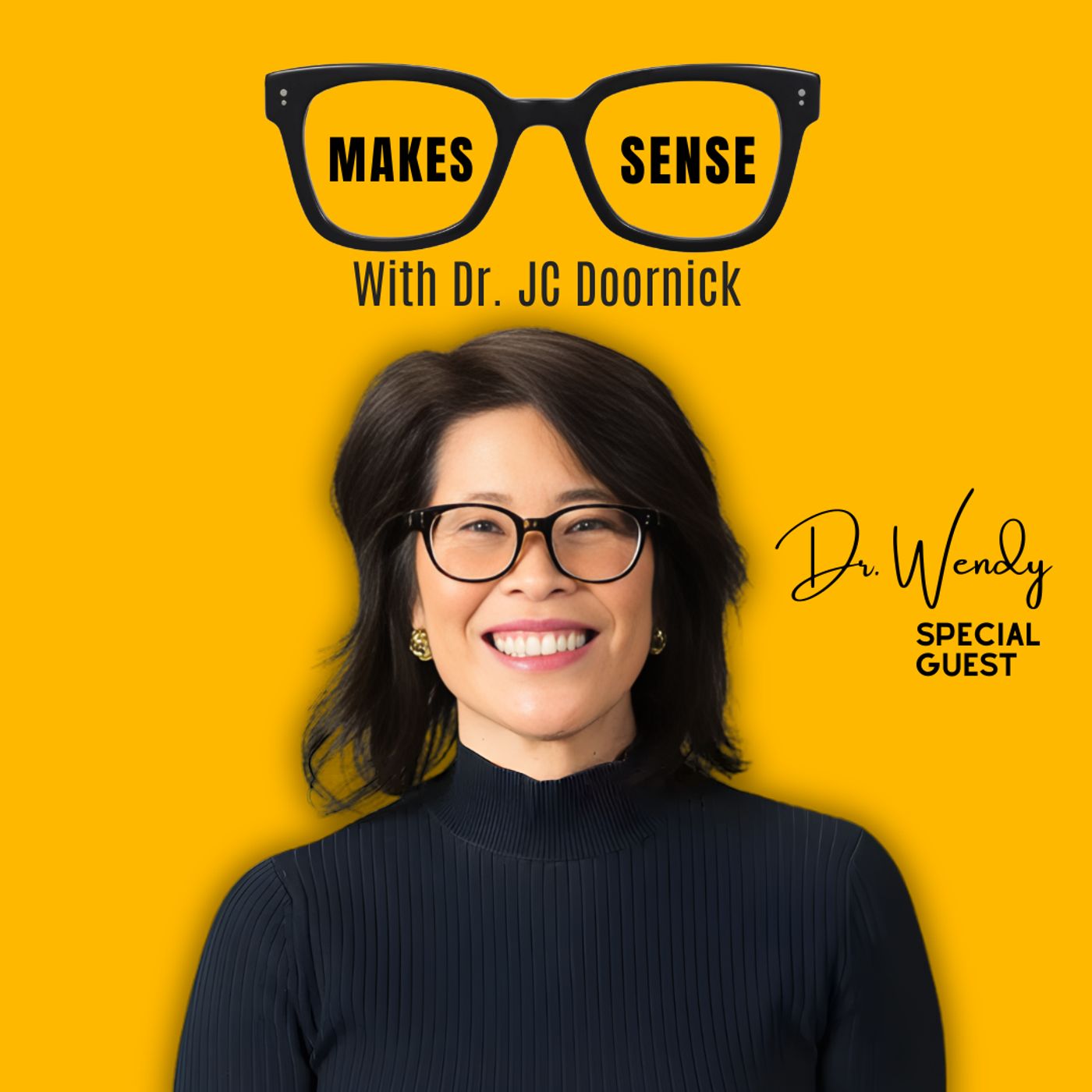
Makes Sense - with Dr. JC Doornick
Grow New Brain Cells: The 10-Minute Habit for Focus & Memory with Dr. Wendy Suzuki - Episode 153
00:57:01
our brain isn’t fixed—it’s trainable. In this episode, Dr. Wendy Suzuki reveals how just 10 minutes of movement can trigger neurogenesis, reduce anxiety, and sharpen focus—giving you a powerful edge in today’s AI-driven world.
Loading summary
Transcript121 lines
- [00:01]
Dr. JC
Big jobs don't need 10 different suppliers. It's time for one partner for every
- [00:07]
Dr. Wendy Suzuki
size, finish and bulk order delivered on your schedule. The Home Depot Pro.
- [00:12]
Dr. JC
It's about time.
- [00:15]
Dr. Wendy Suzuki
Hiring isn't just filling a role. It's about finding people who can drive results. Indeed Sponsored Jobs helps you match with the right candidates faster. Target candidates by skills, certifications or location. Join the 3.3 million employers worldwide that use Indeed to connect with quality talent that fits their needs. And listeners of this show will get a $75 sponsored job credit to help get your job the premium status it deserves@ Indeed.com podcast. Terms and conditions apply. Hiring do it the Right Way with Indeed.
- [00:46]
Dr. JC
Hanaday presents. In the red corner, the undisputed, undefeated weed whacker guy, champion of hurling grass and pollen everywhere. And in the blue corner, the challenger,
- [00:59]
Dr. Wendy Suzuki
Extra strength Hadaday eye drops at work
- [01:03]
Dr. JC
all day to prevent the release of histamines that cause itchy allergy eyes. And the winner by knockout is Patternet. Bring it on.
- [01:19]
Dr. Wendy Suzuki
It retains the capacity to grow brand new brain cells into adulthood. And there's only two brain areas in the entire brain that maintain this capacity to grow new brain cells.
- [01:31]
Dr. JC
Have you noticed that the world that we live in has been doing most of the thinking for you? That your beliefs, perceptions, reactions, fears and doubts have been shaped by unsolicited outside noise? How easy it's been for you to slip into that default sleepwalking mode and label it as life and reality? Yeah, that ends here. Welcome to the make sense with Dr. JC podcast. This is your opportunity to start thinking for yourself, reclaim control, and step back into that role as the chef shock caller and dominant force of your own reality. It's when you change the way that you look at things that the things that you look at begin to change. So let's wake up, let's rise up, and let's make sense of why and how shift happens.
- [02:21]
Dr. Wendy Suzuki
Makes sense.
- [02:24]
Dr. JC
So first and foremost, I actually want to tell you what I like about you. But. But first, if it's okay, I would like to speak to your brain first, if you don't mind. I don't think anybody's ever done that. What I want to do is I want to, from a place of gratitude, talk to Dr. Wendy Suzuki's brain. So first of all, to your brain, I would like to say thank you. Thank you for adapting. Thank you for producing new hippocampal cells to strengthen your neural pathways and make her feel more clarity and confidence in response to her moving. Because had she not felt that way, we probably wouldn't have a lot of this cool stuff that we're going to talk about. So thanks for responding to stress with a positive fashion without a collapse, you know, but in some sort of growth, you know, I want to thank your brain for doing that as well. What I love about Wendy is that, you know, she's a scientist. So when she comes across something that's fascinating, even if it's a challenge of sorts, like any scientist, she starts to experiment. From what I gather from your story, you know, you pushed yourself really, really hard. Academia, this is part of the irony of, of health professionals in general is they always like they're here trying to make breakthroughs for everybody else, but they always sacrifice their own bodies and health. And I was actually a chiropractor for 20 years, you know, and I. And I had a bad back, you know, so it's kind of funny. But instead of quitting when adversity struck, you know, she did what any curious scientist would do, and she should went into experimentation. And when I first saw you at the Limitless live event and I was just kind of talking to you about this, the first thing I noticed before I even knew anything about you is that you were on stage kicking and punching and getting really, really excited. So from a standpoint of just somebody observing, it was very exciting to watch. But later, what I found is that you were actually improving your own brain health, but in doing so, gave an experience where people walked out of there experiencing what you have been talking about. So I just found that very, very fascinating because it takes the idea of interacting with an audience to a whole new level. And any show that I've watched you guest on, whether it's Mel Robbins or Stephen Bartlett and all these fancy shows, you know, you always do the same thing. And I. And I notice that the people that interview you kind of leave a little bit smarter and healthier with their big fat fluffy brains and things. So I'm excited from a selfish standpoint for this interview because I'm sure that I'm going to leave in better shape than I came in. So. Welcome to the make sense with Dr. J.C. podcast. Dr. Wendy Suzuki.
- [05:10]
Dr. Wendy Suzuki
Dr. J.C. thank you. That was such a lovely. The most interesting intro that I've ever gotten to receive. So thank you so much. That was. That was lovely.
- [05:22]
Dr. JC
Well, you know, I. I think that we are all gaining so much from your brain, and I don't think anybody's ever thanked it.
- [05:30]
Dr. Wendy Suzuki
So you are correct. I've. My brain has never been thanked, though I must say that my My official CAS welcome for all of my College of Arts and science students is. Dr. Suzuki, you have a beautiful brain. So my brain has been complimented, okay, very regularly, but. But never thanked. So. So you're right. You're right.
- [05:52]
Dr. JC
Well, I wonder just right off the bat, I wonder if you've always had a beautiful brain or, you know, are they. When somebody compliments you, are they complimenting you because of all the work that you've done? You know, I mean, how would you answer that question right off the bat?
- [06:07]
Dr. Wendy Suzuki
Well, that's such a great question because that's why that phrase is magic. The phrase is magic because everybody has a beautiful, incredible, astounding brain. You don't have to do anything. You there with your beautiful brain and just waiting for that compliment. And it's true every single time, no matter what age you are, no matter what you've done, what you're about to do. So that's part of why I love that.
- [06:34]
Dr. JC
One of the things that I was thinking about, I always kind of find something nice to say about people and it's genuine. But. But I'm curious. We're going to get into a lot of the. The movement correlation with brain health. But yeah, what I was just doing was in essence complimenting you and affirming some things about you. So when somebody speaks to people with something like appreciation, what happens inside of the brain? I know that there's a dopamine thing and an oxytocin thing, but is there something to say before we get into the whole story for people being nice and encouraging and expressing appreciation to one another?
- [07:16]
Dr. Wendy Suzuki
Yeah, that's such a great question because I think that. Absolutely. What did I feel when I heard that story about myself and the gratitude that you're expressing towards my brain? It was surprising. It was unexpected. And those surprising, unexpected, positive things are wonderful ways to spike dopamine in your brain. And that just brings up those feelings of reward. I feel good, I feel happier. And so, yes, that is part of the argument for doing that, that you feel good. It makes everybody else feel good. And it's also part of the argument for the power of mindset. So you, as a amazing host, know that you want your guests to feel appreciated, welcomed, in a good frame of mind when we start these conversations. And so you just did a major power move to make me do that by changing my brain chemistry. And so that is something that anybody can use in their everyday life from their family relationships, their family conversations. Even if you've had the same conversation every single day, maybe you are leading lots and lots of people in your corporation. That is a very powerful lesson that you've just given all of us.
- [08:42]
Dr. JC
And as a husband and a son, but also somebody that works very often with men and women, there's something also to be said about an unexpected compliment.
- [08:53]
Dr. Wendy Suzuki
That's right. That's right.
- [08:54]
Dr. JC
We'll probably get into some of that, what areas of the brain, you know, because if somebody's getting, getting compliments, but they're always used to it, that's probably going to be lower level brain stuff. But if you're surprised all of a sudden. So it wasn't strategic. I actually do like those things about you and I wanted to thank your brain. But I'm. But I'm happy it worked out. I've heard your story and I just think it's so fascinating because I think anybody can relate to their mess turning into their message. I don't know if you, you spoke about that with Mel, but I mean, that's kind of what seems to have happened. It's. From what I understand, you had your tenure and you were doing some research on something that is very fascinating about the hippocampus and memory and stuff. But as a result of it, you kind of turned into a little bit of a hot mess yourself. And yes, unknowingly kind of stepped into everything that's transpiring now. So I'd love to get that story out there for anybody that's not heard it before.
- [09:49]
Dr. Wendy Suzuki
Yeah. So I think my story is relatable to so many different people. You have some dream in your life and you've worked, been working so hard. And mine was I wanted to get tenure. I was assistant professor at New York University. And they have this wonderful process called tenure where they give you six years to become a world class scientist. And if you do that, you get tenure and you get a job for life. And if you don't, you're fired. So, you know, no pressure, no big deal. And so you're working really hard. Am I doing enough? Am I world class enough? Do I have enough publications? And my strategy was just to work hard, Put your head down and work hard. You know how to do that, Wendy. And I did. And I kicked out all those other things like friends and going out to dinner and going to Broadway, even though I love Broadway. And I just worked hard in my lab and I got more cranky and I wasn't sleeping well and I was stressed out and not doing very well. I gave myself a vacation by myself because I had no friends and I Decided to go river rafting in Peru. And so I went on this river rafting trip with a whole bunch of really athletic river rafting people. A lot of triathletes were on these, on this trip, and it was so fun. And I got outside and I got physical, and we were rafting past these Inca ruins. And I felt so good that when I got back, I said, okay, I have to keep this movement and being outside in my life. And I went to the gym, and I signed up for the gym and realized that that was really missing because of this trip to Peru. And I. Somehow I. I made it stick. I started going to the gym more regularly. Every workout felt good and better. And I got a little bit addicted to going to the gym regularly. And that felt good. And there was an immediate kind of positive mood boost like I felt when I immediately got back from Peru. And so I had this model in my mind. It's like, how, how can I make myself feel that way more often? Because it wasn't how I was feeling in, in my life. So the gym helped with this. And. But then fast forward a year and a half. I was feeling better. I had so much more muscle, muscle power. I had lost a lot of weight. I was feeling so much better. And. But it was deeper than that. I felt like I. So first, deeper than mood. Mood is amazing. Mood was everything. I felt energized. I was happier. I was. I was more friendly to everybody around in my life. But then I was sitting down writing my grants, and I felt like my writing was better. I felt like my thinking was better, my focus was better. And that's what made me sit up and take notice that it's not. It's not just a mood. It's mood, which often comes immediately, very early with. With a regular workout routine. But it was focus and memory. I happened to be studying memory in my own lab, and that's what sent me back to the literature. What do we know about exercise in the brain? What is happening to me right now? And so what did I find? Oh, my gosh. You know, all this evidence that I had learned in my past, but I hadn't been thinking about it, that exercise actually enhances your focus, enhances your hippocampal sensitivity, cell growth. And there's so much evidence and, and so much more evidence that had accumulated since I had been exposed to this in my undergraduate life. And then that moment when I was, you know, six years into my, trying to get tenure. And so that was a huge revelation. It's like, oh, My God, I think I've just improved my brain by mistake. Thank goodness I need it because I'm. I'm about to, you know, put in all my documents and kind of wait with bated breath to see whether I got tenure. And that not only, okay, I got tenure and that, that was all great, but it really opened up this possibility, like, now what are you going to do, Wendy? You've gotten tenure. You have your job for the rest of your life. You are one of the chosen at the university. What are you going to do? And I'm like, I really want to study memory. What's going on? That was such a transformative kind of event. I ended up eventually first starting smaller research projects about the effects of exercise on the brain in a classroom. I taught a class called can exercise change your brain? And I got certified to teach exercise so I can bring exercise into the classroom, which is what I do now. I make everybody move in my lectures because I'm a certified exercise instructor, and I know how powerful that is. And so I bring them into the joy of movement and what it does for your brain. But that turned into a switch of my whole research program. And that's what really brought me to where I am right now and what I'm talking about, what I'm doing and what I think is so powerful for everybody, from elementary school students all the way up to our most senior of senior citizens. So powerful. And the message is the same. Exercise is transformative for your brain.
- [15:07]
Dr. JC
So many amazing things there. And I'm just going tracking through your story and how you didn't go on that rafting trip with the intention of getting some exercise. It was probably more of just stepping away. And I also find it very funny how we always explain those moments when we're working, working really hard.
- [15:29]
Dr. Wendy Suzuki
Yeah.
- [15:29]
Dr. JC
And you, you even said it. You said, and I had my head down. It just doesn't sound good for your brain to have your head down and work hard. It's fascinating, and it says a lot for exercise, because what it's implying is that just by going out and moving your body, you might have an epiphany as well and a breakthrough. I had a patient that was a little old lady, but she was just fascinating, very, very wise. And she said a quote that just lives with me every day. And I went through a big health transformation. So I can tell you, I can say that it's true. She said, it's on a healthy body that a healthy mind rests. You know, I just wanted to get down and just Start honoring her. And to the point. I lost a bunch of weight and I got healthy about 20 years ago, and it transformed my life. But once again, I never knew how it would affect my brain. And the first thing that I remembered was how I stopped forgetting my keys. I used to go out to the car and say, damn, I forgot my key.
- [16:33]
Dr. Wendy Suzuki
Yeah.
- [16:34]
Dr. JC
And just little things like that. So, you know, I'm excited to learn more about this stuff. So, yes, you are a scientist, so let's geek out a little bit. I. I love science.
- [16:44]
Dr. Wendy Suzuki
Yeah.
- [16:45]
Dr. JC
So I want to speak a little bit more about the scientific component of it. And I believe it's called hippocampal neurogenesis. So could you just explain from the person that totally knows what that is to the person that doesn't even know what a hippocampus is?
- [16:59]
Dr. Wendy Suzuki
Yeah, yeah.
- [17:00]
Dr. JC
What exactly that is.
- [17:01]
Dr. Wendy Suzuki
Okay. So the hippocampus is an incredible brain structure that we all have. There's one on the right side of the brain, there's one on the left side of the brain. It lives deep in the temporal lobe, which is the part of the brain kind of behind your ear there. So deep down in there, as protected as it could be in there, the hippocampus is. Is a structure that we now know is essential for our ability to form and retain new, long term memories for facts and events. Not everything, but facts and events are really, really important. Events are what builds our own personal history. So you have damage to the hippocampus, which can happen in diseases like encephalitis, and you lose that ability to form new memories. So you have the memories from your past, but you can form not a single new memory. What does that do to you? It puts you in a block of amber in the moment that you lost your hippocampus. You can't put anything into your own personal history ever again. And that's actually tragic. So we should all be first thankful for this hippocampus that we have. It means that I will remember this conversation. I remember the wonderful introduction that you gave me and questions that you're asking me. But the other incredible thing that the hippocampus does, besides allowing us to form new memories for facts and events, is that it retains the capacity to grow brand new brain cells into adulthood. And there's only two brain areas in the entire brain that maintain this capacity to grow new brain cells. One is the olfactory bulb that helps you smell, and the other is the hippocampus. And so what does that mean? Well, that means that Everybody has this capacity to get new brain cells that could potentially help your mem, you know, any age. And so the next question everybody could ask is, how do I do that? How do I grow new hippocampal brain cells? So the easy answer is that everybody gets a few more just because you're human. But to grow even more, you need to get a protein in your brain called brain derived neurotrophic factor. It's a growth factor, very important during early development when you're growing and you're mother's uterus and BDNF can increase in one particular situation that we have talked about for this whole podcast, that is moving your body, moving your body, particularly at a level that increases your heart rate, I.e. aerobic level activity will increase the level of BDNF in your hippocampus and therefore increase the number of brand new brain cells that are being grown. And that is the secret sauce that anybody, anywhere needs to have the biggest, fattest, fluffiest hippocampus that they can. Which means that their memory is good. Hippocampus. Part of the hippocampus is also involved in emotional resonance. So mood regulation is in there. But the thing that most people just light up for is, yeah, I want a better memory. I forget my keys too. What if I never did that anymore? What if I could remember people's names? Oh my God, that would be so amazing. This is the formula. Get your heart rate up as much as you can aerobically. We happen to be in the Winter Olympics season and I always think about all of that amazing work that those athletes do, aerobic training all through the year to have this five seconds of glory. When they go down the slalom, it probably takes them more than five seconds. But you know, that very short time period, all of that work is increasing their level of hippocampal BDNF and is helping them grow new hippocampal brain cells. I bet they didn't even know that, but that's what they get. In addition, and all of us, even though we're not Olympic athletes, can get a little bit of that by simply going on par walks as much as we can. It's as simple as that.
- [21:06]
Dr. JC
So fascinating. You know, there's an interesting choral. I played lacrosse and ah, that's, that's a lot of fun. But when you're going to school, talk about workload and you have that. But it's interesting how we all got good grades and there's definitely a correlation. There's structure, but you know we were unaware of that because all the other kids were actually actively trying to kill brain cells, if you know what I mean. But here we are. We weren't allowed to do drugs, we weren't allowed to party, you know, during the season and stuff like that. So I have to go thank my coach for that. I'm just laughing at this idea especially, especially what's going on in our, our society now. It's like everything is about losing weight. And I'm just thinking about Gabrielle Lyons, thinking, big, flat, fluffy, nothing. I hear you say it all the time. And I, and I kind of know what you mean, but what do you mean when you say big, fat, fluffy brain? And how is that a good thing? Yeah.
- [22:06]
Dr. Wendy Suzuki
So we know for a fact from many, many studies in experimental animals that the size of the hippocampus in rats that are running on a wheel a lot, which is their favorite form of aerobic exercise, is literally bigger. And okay, I added the words fat and fluffy because that goes with big. So. But it's based on a biological fact. It started in rodent studies, but now it's been confirmed in human studies that activities that increase BDNF and, or activities that really focus on hippocampal function. There are very famous London taxi cab driver studies because that's what the hippocampus is really good at, is spatial learning and memory. Brilliant neuroscientist in London, Eleanor Maguire, asked the question, well, if that's the case, and London taxicab drivers have to study for four years to take this big test called the knowledge to learn all the lawful driving routes through this complicated city. Maybe that helps their hippocampus. Yes, it did. It correlated with increased size of the hippocampus. Big and fat and fluffy. Again, so that is just a biological fact. But what I talk about also is a big, fat, fluffy brain. And that comes from my mentor, neuroscience mentor, the woman who kind of inspired me to become a neuroscientist. Her name was Professor Marian diamond, the very first female to ever get a PhD in neuroanatomy at UC Berkeley, ever, first woman PhD, became an incredible instructor, an incredible neuroscience kind of groundbreaker for the discovery of brain plasticity. She showed that rats that were raised in what they guessed to be an enriched environment, which was a rat cage full of toys that got changed out, lots of other rats to play with running wheels. I like to call it the Disney World of rat cages that that actually increased the size of the outer covering of the brain, our brain and their brain, mammalian brain called the cortex in visual areas in somatosensory, that is the touch area. And that was the first finding of big, fat, fluffy brains coming from what she called enriched environments. What was the control? What was the reference? It was a impoverished environment which was basically a shoebox of a rat cage. No toys but free food and water and no running wheel and maybe one other rat so they wouldn't get so lonely. Compared to that, the rats in Disney World, raised in Disney World had bigger outer coverings of the brains and eventually it was shown that their hippocampus was bigger. The thickness of the hippocampus, the size of the hippocampus was bigger. And so that's where I get the phrase big and fat and fluffy. Hi, you're listening to Meditating with Jan from Toyota. Soften your focus and visualize yourself off roading in a Tacoma. Now engage your senses. What do you hear? A dog? Because you're driving the kids to a farm sanctuary in a Grand Highlander. Breathe in, breathe out and go from dreaming it to driving it today.
- [25:21]
Dr. JC
Dealer inventory may vary. See your participating Toyota dealer for details. Event ends March 31st. Toyota let's Go places during Lowe's Pro Savings Days the job works in your favor. My Lowe's Pro Rewards members buy more and save more material materials they rely on every day. Get up to 25 off Select Molding when you spend $1,000 or more and up to 25 off Pergo Evercraft Laminate Flooring Put Pro Savings days to work for you. Members get more at Lowe's. Valid to 327. Selection varies by location while supplies last Royalty Program subject to terms and conditions. Visit the Pro Desk or lowe's.com terms for more details. Subject to change. Suffering from dry, tired, irritated eyes? Don't let dry eyes win.
- [26:03]
Dr. Wendy Suzuki
Use Sustain Pro.
- [26:04]
Dr. JC
It hydrates, restores and protects dry eyes for up to 12 hours. Sustain Pro Triple Action Dry Eye Relief
- [26:12]
Dr. Wendy Suzuki
the Jack Welch Management Institute at Strayer University helps you go from I know the way to I've arrived with our top 10 ranked online MBA. Gain skills you can learn today and apply tomorrow. Get ready to go from make it happen to made it happen and keep striving. Visit strayer.edu Jack WelchMBA to learn more. Strayer University is certified to operate in Virginia by Chev and its many campuses, including at 2121 15th Street north in Arlington, Virginia.
- [26:42]
Dr. JC
So I dare I say that means that size matters. Size matters in this situation. And you know, I've always been and this is a a compliment to my wife, I've always been very much more attracted to intelligence and now I know why, you know, so that's why I, I find my wife extremely beautiful. But maybe it's because she has a big fat, fluffy brain. Here's an interesting question and I want to get more into the science of the movement and stuff. But yeah, I want to talk about memory because if we look at the hippocampus and I, and I, and I think it's really cool that you mentioned over and over again that there's two. A lot of people don't.
- [27:23]
Dr. Wendy Suzuki
Yeah.
- [27:23]
Dr. JC
Know that. You know, and that's super cool right there. Like I actually had somebody when I shared that with them, they're like, no, that's wrong. And I'm like, look it up.
- [27:31]
Dr. Wendy Suzuki
Yeah.
- [27:32]
Dr. JC
But we also know that there's a filtering system and this is kind of the work that I do. I always refer to the brain as a sense making, meaning making machine and very often it's faulty. I was joking with Jim Quick because, you know, his best selling book is called Limitless and I was like, well, we should write a new book called Limited because we are limited in how much we actually see. So my question to you is that if the hippocampus is retaining memories, but we also know that very often we conjure up memories that are based on an illusion of what we think happened, maybe because of trauma and things like that. Is there any correlation of getting a big fat and fluffy hippocampus and a brain? Is there any correlation that your sense making and meaning making machine improves? Because a lot of people are, are locked into a memory of something that happened that didn't necessarily happen. I always say what you see is what you get, but it's not necessarily what is. So is there any studies or correlation that the sense making and meaning making machine becomes more efficient as we're building brain cells? Because that's what I would be interested in.
- [28:49]
Dr. Wendy Suzuki
Well, here's the data with building of hippocampal size through aerobic exercise. There's so many studies in rodents that have shown this. It's hard to study meaning making in rodents, but what they get is better spatial memory. That's the easiest thing to study. It's so well honed in rodents. And so you get basically better memory of the kind that the rodent hippocampus does. That is, that is clear. You get, you get better memory performance in humans. Also, there is evidence that certain forms of memory get better. Meaning making has not been studied and I would not agree with the idea that you start exercising a lot, lots of BDNF in your hippocampus and it does get bigger that the memories that you've already made get better or more accurate. It's, it's that you, the hippocampus is then better able to encode the new memories. So that is the predicted findings from all, all the data there.
- [29:55]
Dr. JC
Here's where that question comes from. So thank you for sharing the data. So I go to the gym and I'm in a place now where that's how I manage things like stress, anxiety, depression, right? I, I don't eat, drink and things like that. I go to the gym and everything is. It's like Prozac, you know. But what I also identify is that like, let's say my wife and I are having like a heated conversation or maybe I'm dealing with some sort of a stressful event at work. I'm much better at handling that event when I come out of the gym as well. So that's what's fascinating is, is it almost appears that exercise and what it does for our brain gives us a better operating system. And that is huge value because I think most people are worried about stuff that maybe doesn't really, you know, require so much worry. You talk a lot and you always use the word love when you talk about the neurochemical bubble bath. And you alluded to it a little bit. So I want to ask a specific question about it. But first, what do you mean when you say a neurochemical bubble bath?
- [31:00]
Dr. Wendy Suzuki
By neurochemical bubble bath, I mean that every single time you move your body, that you have a clear image of what that's doing to your muscles and to your limbs and things. But that movement actually stimulates the release of a whole bunch of neurochemicals, neurotransmitters that you've heard about like dopamine, like serotonin, noradrenaline and bdnf. Also, cortisol is part of the neurochemicals that get released in your brain with movement. Exercise is a stress. You need that sugar to be released that cortisol helps with so that your muscles have the energy that they need to work because you are. Exercise is a form of stress. So this was. I don't know how I, I don't remember how I came up with it, but in. It's just so boring to say. And then dopamine is released, like, big deal. Maybe it was after I did a review paper and I just looked at this list of amazing Neurochemicals that get released after exercise. It's something exciting and I like a bubble bath. And so it's a release of all these chemicals as if you have this wonderful sea salt bubble thing happening in your brain. It's a beautiful image to help people imagine the positive things happening in their brain when they're moving their body. And so that's what I mean. It just means that there are well known set of chemicals, including neurotransmitters that get released with exercise. And to help you remember it, I call it a neurochemical bubble bath.
- [32:43]
Dr. JC
I love that. When I go to the gym tonight, I'm going to walk out the door and say, sweetie, I'll be back for dinner. I'm going to go have a bubble bath. Yeah, that's perfect. I love it.
- [32:53]
Dr. Wendy Suzuki
Can I go back? I want to answer your question about why when you go to the gym you are better able to deal with your difficult, stressful situations. And that brings up the second key brain area out of many. But number two really, that that gets benefit from every single time you move your body. We talked about the hippocampus and bdnf, the other brain area that really is the number one in terms of effectiveness. If you look at all the studies on the effects of exercise on the brain in people, what is the number one study that number one brain area that they cite as being benefited? Prefrontal cortex. Prefrontal cortex is being benefited partially, we hypothesize, because it uses dopamine as a neurotransmitter that's being released. Oh, it's, it's helping the prefrontal cortex. But the prefrontal cortex is your executive, executive CEO of your entire brain. And one of the things that it controls is your emotional regulation. So there are feedback loops from your prefrontal cortex down to an area called the amygdala right in front of the hippocampus. That is your anger stress area. It gets activated in lots of difficult situations. And when you let that stress bubble up, that regulation from prefrontal cortex to the amygdala gets cut off and the amygdala takes over. And you are angry, you are hangry, you are all the kinds of angry and it makes everything worse. Exercise at the gym enhances, strengthens that regulation from the prefrontal cortex to the amygdala. You are good, you can handle that person. You know that person's going to give you a hard time, but you are there. You know what, you can predict what's Coming. We've all had that feeling where. Yeah, you. You predicted that beautifully. And you answered the question before it was even asked or addressed the issue before it even came up. That is part of the benefit that you get with your regular workout, that prefrontal improvement, because it's enhancing your emotional regulation.
- [35:04]
Dr. JC
I always wear this hat, and this is kind of part of my. My new book and my shtick, and sounds like this. It's. And what it stands for is H followed by three M's. And it stands for haven't made up my mind. And what's fascinating about this is I'm going to geek out just a touch from my studies. I'm not a neuroscientist, I'm just a fan, but I've done a lot of reading. And that's what happens when your friend is Jim Quick. You have to read a lot.
- [35:34]
Dr. Wendy Suzuki
Right?
- [35:35]
Dr. JC
What I speak about is the stress response system and how a lot of people. It's kind of like the reverse of what, what you were just talking about. How the hippocampus and the amygdala kind of get together in the lower, lower levels and tell the prefrontal cortex, here's the deal. And then people are getting these weird perceptions and ideas flying off the handle, letting their knee jerk reflex. So the idea of cognitive distancing, you know, Viktor Frankl talks a lot about that, but the idea of, of pausing that and saying, okay, we'll come back to that in a second. But then allowing your prefrontal cortex to actually have a say. So what I teach people to do is whenever something occurs or you have a stressful event, you just say, and that's what. That's the anchor. But what I'm hearing is that that probably plays a big role when I come back from the gym, is I no longer feel compelled to react where now I can move from reaction to response. And that's probably why we have much healthier conversations. And sleep probably plays into that as well. One thing I want to point out, which is interesting, everybody's trying to get rid of stress, but what's interesting is, is we're also kind of talking about fighting stress with stress, with, with tension, you know, going to the gym and doing some work and stuff like that. So I find that fascinating. Here's, here's the distinct question about the bubble bath. And I love the bubble bath, you know.
- [37:08]
Dr. Wendy Suzuki
Yeah, okay.
- [37:09]
Dr. JC
I just wanted to know how you came up with it.
- [37:10]
Dr. Wendy Suzuki
It.
- [37:12]
Dr. JC
What is it about movement or exercise that specifically. I mean, I know it's A cascade of events. But when we talk about heart rate, intensity, duration, what of those is the primary thing that is triggering the bubble bath?
- [37:29]
Dr. Wendy Suzuki
Yeah, that's such a great question. We don't know all the answers. We actually know more about the triggering of BDNF release in the hippocampus. There have been three pathways identified. One makes sense. So when your muscles are working as they do in exercise, they release a factor into the blood that has been shown to go up from the peripheral blood system where your muscles are working up into the brain blood system and transform into bdnf. There's another ketone body that gets released from the liver during exercise, also a pre BDNF molecule. It gets converted into BDNF once it goes into the brain. And then a third is factors released by fat cells when you are exercising also contribute to this kind of convergence of more BDNF that ends up being released in your brain. In terms of what exactly is triggering dopamine, serotonin, noradrenaline, endorphin release, that is not known. We know it happens. We know it happens in animals, we know it happens in humans. The mechanism still being explored, but the mechanism for the BDNF is one that we have a little bit of a better handle on.
- [38:48]
Dr. JC
So fascinating. I'm just wondering if I could just go to the gym for five minutes now and be fine. I love speaking to people like you. I've had Jill Bolte Taylor on the show as well.
- [38:58]
Dr. Wendy Suzuki
Yeah.
- [38:58]
Dr. JC
And it's just so fascinating when you learn the science behind some of these things. A lot of people are going around saying, this is interesting. You know, I didn't forget, forget my keys today and, and all that. But there's a science to it and we can actually leverage it. So what I'm really, really fascinated with, and I think that most people are, is how little do I have to do because most people are not doing, you know. So if somebody wants a bubble bath, if somebody wants a big fat, fluffy brain, the average person is going to end with the crazy lives. The average person. What's the minimum? And I've heard you talk about that, but what's the minimum effect or effective dose of movement?
- [39:39]
Dr. Wendy Suzuki
Yeah, yeah. So the answer to that is quite clear. Studies have shown that just 10 minutes of walking can have enough of an effect to lower your anxiety and depression levels. Okay, and so that's great. But then you say, well, but I want the fat hippocampus. Does it give me the fat hippocampus? And the answer is probably not alone, but that's the minimum dose of all these things that I've been talking about. They don't call come all in a pre made package. They come a little bit separated and the BDNF seems to be most readily released with that aerobic exercise. You can get some aerobic exercise with the power walk. The 10 minute walk studies were not aerobic walks. They were just walk for 10 minutes. And I think everybody has experienced that. I can't stand it in the office anymore. I'm going to go outside and just take a regular walk around. It's like, okay, I feel a little bit better. That is the movement having an effect on your basic mood on part of the bubble bath. Other elements, especially the long term elements. The big fat fluffy brain indicates anatomical changes that that goes into physiological changes in your hippocampus. I'm sorry, you don't get that with just 10 minutes of walking. You get that with regular aerobic workout. And that's where the prescription gets a little bit fuzzy. I can add the findings from my own studies in my own lab, which is that we showed that low fit people that are working out less than 30 minutes a week for the last three months actually have improved prefrontal and hippocampal function when they start to do aerobic workouts for two to three times a week, 45 minutes. I mean aerobic, I mean spin class is what we ask them to do. We give them free spin class. And that moved the needle. And so it is doable. It's not as low as 10 minutes, but you have a little buffet that you can choose from now.
- [41:45]
Dr. JC
Buffet. You know it's funny because we have conditioned things that we say that prove your point. I'm gonna go walk it off. In fact, when I was in college, I worked at a bar. I was, I was like a bouncer at the door for a little while. And we used to say, hey, go, go walk it off. Go cool your head. So now we understand what that is, but we also say you have to walk before you run. So when we talk about safe to say that when we talk about the 10 minutes there's a dramatic effect of it. But if you want the long term big fat fluffy effects, what we're hoping is that the walk maybe turns into a run of sorts one day. I believe everybody has to be addicted to something and I think it's, it's human nature. So we want people to get addicted to something that's good for them. Is that safe to say?
- [42:33]
Dr. Wendy Suzuki
Exactly. Yeah, I think it's safe to say. I also know that by using the running metaphor, you are horrifying so many people as like, I will never run in my whole life. Which is when we need to remind people that dancing, walking fast with your dog, walking, you know, far with your friends. There's more than one way to get this movement into your life. So important to realize that be creative and use your own likes. It's not all about doing the worst horrible thing that you think I'm never going to do because you're never going to do it. And a little bit of coaching, it's self coaching to remind yourself, what are those things that I have enjoyed throughout my life is a great direction to go to find that thing that you will do.
- [43:23]
Dr. JC
Makes sense. You know, it makes perfect sense. Are you a big fan of things like meditation and breath work and do they play a role in this as well?
- [43:34]
Dr. Wendy Suzuki
Absolutely. I'm a huge fan. I was a huge fan of both. I was a yo yo meditator for many years. It's like, oh, I need, I really want to do this. And I would try and then I would fall off the wagon and try again. I finally found something about 10 years ago that really made me meditate regularly daily, which is a tea meditation. I meditate over the brewing and drinking of tea. I learned how much I love tea. And then more recently, I've started going to a yearly breath meditation retreat where you do structured breath meditation every day, morning, afternoon, and then you have some break. It's a lovely, fun things to do. But that is very powerful as well. The very first kind of meditation was, was breath meditation, the oldest form of meditation. And it is powerful. It's activating your parasympathetic nervous system immediately. So getting good at bringing that, those patterns into your breathing seems kind of silly. Like, I know how to breathe well. I learned I didn't know how to breathe and now I have many more patterns to call on in lots of situations.
- [44:41]
Dr. JC
So big concern hot topic is, you know, the rapid advancement that we can't stop of things like AI. And my last guest that I just interviewed was this guy, Rizwan Verk, who is the authority and simulation hypothesis. And so we don't even know if any of this is even real. You know, we're moving into this AI dominant era. And much of my work kind of recognizes that for the most part, human beings, without even knowing it, are kind of like delegating and offloading. I think you call it cognitive offloading. We're kind of delegating and offloading thinking to the matrix per se, you know, to social media, to news and all that. We've kind of like somehow mistaken efficiency as intelligence. What are your concerns with that and what do you think needs to be done about that? Because we're using our brains less and less and I don't think that's a good idea.
- [45:40]
Dr. Wendy Suzuki
Yeah, that's not a good idea. I, I do think there's powerful things one can use AI for. As a dean of the largest private undergraduate college in the country, AI is not helpful to offload all your essay writing. Obviously that is where you want to use your brain. It's, it's gotten just too easy to offload all of that thinking, all of that work. It takes time and practice and poor grades turning into better grades to actually learn how to write. I know that from long, hard efforts at writing. And people say, oh, you're a good writer. You, you wrote two books. Oh, I, I took me so long. How many red marks did I get on my papers? A lot. I had nobody to write it for me. Or that's not true. Everybody had. If you're rich enough, you always had access to pay somebody else to write it for you. That was always there. Now it's more equitable. I guess that's part of a good thing. But I think that there's a big element of timing, of when this could be most efficient to help the world get better and not just me to get more time, although for myself, which is, which is important. But I think strong thinkers. Using AI strategically is very powerful. I think giving it willy nilly to our kids to go run amok and use it not to think and to be able to, you know, finish their huge piles of homework, that, that is terrible. The worst thing that we, we could ever do. So it is an age specific thing. And you know, we're already in these conversations about how to AI proof our classes. And I think what I love seeing is that it ends up being many more conversations, deep conversations that are part of the grade that you have with each other, that you have with the professor so they can see the, the developing of your ideas in real time when you're not using AI. We don't have a solution already made, but a colleague of mine wrote an op ed about how sales of blue books skyrocketed last year because we're going backwards to tell me in your own words, in your written handwriting, what you know about this. And that is the purest way to understand a student's understanding of the topic at hand.
- [48:11]
Dr. JC
It seems like if we progressively bypass the prompt phase and we don't wrestle with our own thoughts, we're going to be in trouble. Back to the cognitive distancing concept. If, if I ask you a question because I'm wondering what I can do for people as well. So if I ask you a question or ask my children a question, that will not suffice with a program dancer and I, and I make them think outside the box because we're talking about physical movement, but we also burn a lot of calories thinking and people are kind of taking a break from that. I would assume that a question that I ask you, like, you know, maybe I asked you one of these questions today and you're in your prefrontal cortex when you're thinking. Right. Is there any science in benefit to that? Because that's my biggest fear is that we're moving further and further away from thinking. And it might be efficient right now, but I would assume the long term effects are going to be bad or could be bad. But is there a little bit of a cognitive fitness component to this when, when, when you tangle with your thoughts
- [49:22]
Dr. Wendy Suzuki
and you think, oh, absolutely. I mean, I'm in the business of teaching thinking, teaching thinking about not just my discipline, neuroscience, but all the other disciplines represented in a college of, a typical college of arts and science, a liberal arts institution. And I deeply believe that all of that kind of thinking is what got me to where I am today. Yes, I majored in physiology, anatomy when I went to college. But I was also, I took a lot of French classes. I went abroad and I did my third year abroad and I learned French and I took French literature and French art classes in French. And that really taught me how to think. Of course, it was in an era where there were no computers and there were no, there was no. There were computers, but they were not Google and certainly AI wasn't, wasn't even a glimmer in anybody's eye. So the practice of thinking is so important and has been shown by the National Academy of Medicine to be also very, very powerful Together with exercise, as you were saying, you have to. You work your brain. It's like a brain workout. Thinking that it is a brain workout and it's not. Sorry, I have nothing against Sudoku. It's not just Sudoku that's a little bit too patterny. It is strategic. It is chess. Learn a new language. Do something that's like, oh God, that's not going to be easy. That's going to be a little bit hard. That is great for your brain. And also like exercise leads directly to positive brain plasticity.
- [51:04]
Dr. JC
My biggest concern is efficiency. You know, we're addicted to it. And you know, you mentioned learning a language. Kids don't need to learn languages now because the apps do it for them. So good parenting, right? We gotta lead by example. Simple. And, and you know, set down some rules you spoke about in your book Good Anxiety, which I think is the funniest name for a book ever. Because I mean like, hey, let's. I'm gonna. My goal is today to have some anxiety because it's good according to Dr. Suzuki. I love the concept though. I explain what you mean when you talk about anxiety is not necessarily a villain. It could be good.
- [51:40]
Dr. Wendy Suzuki
Yes, absolutely. So I always say that anxiety in fact is good because we all have it. It's something that every one of us experiences out of all of our millions of years of evolution. It didn't leave us. And so you have to ask, what is it there for? It's there for protection. It is a protective emotion. It keeps you safe from other things. And that is why it survived. It helped us survive as a species millions of years ago. Okay. Now it's not as beneficial because the stimulants of anxiety are far too many and far too accessible for us. However, the book Good Anxiety tells us how to get back to that protective element of anxiety and really use the power of anxiety. I talk about all the superpowers that come from anxiety because if it is protective, it can't just be, oh, I'm going to teach you how to reduce it. Right? How are you going to use it? And that's how the book was born. It was, it was both science, meditation on anxiety, but also very practical use of. Actually here are all the ways as I started researching and writing the book that I already use my anxiety for my benefit. And that's, that's how the book kind of came to be.
- [53:03]
Dr. JC
Okay. Brain rotation and you know, there's, yeah, there's actual terms, you know, and the kids think it's funny. Like, you know, I heard my son say to my daughter, like, oh, she's doom scrolling and stuff like that. So my question is, is, is those are dopamine hits, you know, and getting likes and views and comments and.
- [53:21]
Dr. Wendy Suzuki
Yes.
- [53:21]
Dr. JC
And we're living in a, in a bubble bath of dopamine, but it's being generated, you know, without thinking.
- [53:28]
Dr. Wendy Suzuki
Exactly.
- [53:29]
Dr. JC
Is this affecting the effectiveness of movement? Are we going to have to work harder to get the results that you're talking about with exercise as a result of being driven down this path?
- [53:44]
Dr. Wendy Suzuki
Yeah, that's an interesting question. I don't know any studies that look at that directly. I think it could get harder to benefit from exercise because it's harder to pull our way, pull ourselves away from the doom scrolling or just any scrolling. Right. It's not all doom related. Sometimes it's, you know, positive or other thing, not just doom related. So yes, to pull yourself away from that, that is addictive and is dopamine generating and reducing our ability to focus for longer periods of time. That makes it harder to start going to the gym, makes it harder to perhaps appreciate the dopamine that's generated there because you get all the dopamine from your doom scrolling, but you get other things that come with exercise. You do not get that energetic, good, you know, workout feeling from doom scrolling ever. So I think indirectly it is an effect. And so there's lots of ways to look as a society about how to decrease that habit. Taking phones away or not allowing these kinds of smartphones until much later in our maturity and to use it responsibly when you get into, you know, high school, college, university, all of these things are really, really important to think about systemically.
- [55:08]
Dr. JC
Do you have children?
- [55:09]
Dr. Wendy Suzuki
No, I don't have children.
- [55:11]
Dr. JC
So one of the things that I notice in my kids as a result, I mean, I have dream kids, they, they, they're great, they're athletes, they do every, most everything. Right. But they are, you know, glued to the, to the screen sometimes. And I'm seeing an increase in the attention lag. You know, it's like, yes, Lexi. Lexi, right, Lexi. And then they kind of look at you. There's definitely some things that are gonna have to change there.
- [55:38]
Dr. Wendy Suzuki
Yes.
- [55:38]
Dr. JC
I would love to know what your morning routine is. And I know that you talk a lot about how movement in general is good, but you choose to do it in the morning. But what's the essence of your morning routine and why?
- [55:50]
Dr. Wendy Suzuki
So the essence is I try and get all the good things for my life and for my brain done first thing. Because I found that if I leave them later, then something always takes its place. So my routine is I like to wake up early. I'm always, I've always been an early bird. I wake up between 5 and 5:30. I first do my tea meditations. So the meditation over the brewing and drinking of tea that lasts for about 45 minutes. And then after my tea, I do, I like to do a 30 minute. But sometimes if I have to get going early, it goes down to 10 minutes. Cardio, weights, kind of workout. I also throw in some yoga in there if I need a stretch out in the morning. My optimal time is 30 minutes. I have all these 30 minute workouts that I really love. Then I have breakfast and then I get into work usually by 8:30. 8 or 8:30. So that is my preferred morning routine on regular work days.
- [56:45]
Dr. JC
And if you were only allowed to keep one of those things for your morning routine, which would you say is the most valuable one that you would just never ever not do?
- [56:57]
Dr. Wendy Suzuki
That is a very diabolical question.
- [57:00]
Dr. JC
I'm sorry about that.
- [57:03]
Dr. Wendy Suzuki
And I feel bad saying this because I wrote a book all on exercise.
- [57:08]
Dr. JC
Right.
- [57:08]
Dr. Wendy Suzuki
And so people think you can't throw away the exercise, but I can walk up and down the stairs. I cannot get my tea meditation back in the same way.
- [57:17]
Dr. JC
Interesting.
- [57:18]
Dr. Wendy Suzuki
During the day. So I would keep the tea meditation and then because I couldn't do anything else, I would, I would up my walking upstairs and doing an extra lap around things to get my workout in, not in the morning. That's what I would do.
- [57:32]
Dr. JC
Perfect. And I'm sorry I asked that question to you.
- [57:35]
Dr. Wendy Suzuki
That's okay.
- [57:36]
Dr. JC
But I was just curious choice. It was, it was my dark passenger that, that said that. So just final question. If somebody's listening to this and they have this little tickle of wanting to do something, what would you recommend is the one thing that they do to get started? What would be the best way for them to take a step forward, to start tapping into some of this stuff?
- [58:00]
Dr. Wendy Suzuki
I think walking is the best thing. Walking outside on a nice day. Don't choose the, you know, rainy, horrible day and just, just do a 10 minute walk and notice, notice how you feel before, during, and after. You have literally just given your brain a bubble bath. Notice how that feels and that will get you started.
- [58:23]
Dr. JC
Yeah. And if, and if you like the bubble bath, maybe you'll take a longer bubble bath.
- [58:28]
Dr. Wendy Suzuki
Well, exactly.
- [58:29]
Dr. JC
I feel like I just had a bubble bath. And I think everybody that listens to this will feel the same. So I want to thank you so much for taking time. It's an honor and a privilege that you've been in what we call the dragon's lair. You did fantastic.
- [58:42]
Dr. Wendy Suzuki
Oh, thank you.
- [58:44]
Dr. JC
How should people that want to stalk you in a safe way?
- [58:48]
Dr. Wendy Suzuki
In a safe way. Yeah.
- [58:49]
Dr. JC
Reach out in a friendly way way. Where would you direct them to learn more about yourself?
- [58:52]
Dr. Wendy Suzuki
Yeah. You could find everything, including all my Instagram and all my handles@wendys suzuki.com it's my website. Good hear about my classes, about my vision for the college, about all of my work and and talks and and podcasts appearances as well. So that's the best place.
- [59:11]
Dr. JC
Dr. Wendy Suzuki, thank you so much for being on the make sense with Dr. JC podcast. It's been nothing but a delicious delight. Thank you so much for being here.
- [59:20]
Dr. Wendy Suzuki
Thank you for having me. This was so much fun. My name is Dr. Wendy Suzuki and this podcast makes sense.
- [59:27]
Dr. JC
That's it for today. To support the make sense with Dr. JC podcast. Be sure to subscribe, like and share as well as follow the Make Sense substack for free daily quotes, live streams and blogs. And remember, learning without action is just another form of distraction. If something hit home and you learned something today, give it away. That's the only way it's gonna stay. See you next time.
- [59:57]
Dr. Wendy Suzuki
Makes sense. General Assembly's AI training courses help you or your team develop the skills to confidently use AI at work and thrive in the AI era. Get 50 off any General assembly workshop with code Sirius 50. Start now at GA CO SiriusXM. That's GA CO SiriusXM. Did you know about 1 in 3 people with plaque psoriasis may also develop psoriatic arthritis, which causes joint pain, stiffness and swelling. Does this sound like you? Listen to what it sounds like to be a million miles away. Trimfya Gusoquimab, taken by injection, is a
- [60:40]
Dr. JC
prescription medicine for adults with moderate to
- [60:42]
Dr. Wendy Suzuki
severe plaque psoriasis who may benefit from
- [60:45]
Dr. JC
taking injections or pills or phototherapy.
- [60:47]
Dr. Wendy Suzuki
And for adults with active psoriatic arthritis, serious allergic reactions and increased risk of infections and liver problems may occur.
- [60:54]
Dr. JC
Before treatment, your doctor should check you for infections and tuberculosis. Tell your doctor if you have an infection, flu like symptoms or if you need a vaccine.
- [61:03]
Dr. Wendy Suzuki
Imagine being a million miles away. Explore what's possible.
- [61:08]
Dr. JC
Ask your doctor about trimfaia.
- [61:11]
Dr. Wendy Suzuki
Tap this ad to learn more about trimfaya, including important safety information. Your home holds the story of your life. Renewal by Andersen. Windows are built to weather every season with you. They frame the little moments. Look, Daddy. And the big ones. From first steps to graduation
- [61:32]
Dr. JC
to new beginnings.
- [61:33]
Dr. Wendy Suzuki
While life keeps moving, our windows stand strong through every chapter. Let Renewal by Anderson be part of your story.
- [61:40]
Dr. JC
Windows Built to last.
- [61:42]
Dr. Wendy Suzuki
Visit renewalbyandersonhome.com to learn more. Oh no. My coffee. Brawny here.
- [61:52]
Dr. JC
New brawny 3 ply is now more absorbent.
- [61:55]
Dr. Wendy Suzuki
Wow.
- [61:56]
Dr. JC
Got a clean shirt. Do you wear plaid? Some of the strongest Chevy trucks have you covered when the road takes you from smooth sailing to Chevy, Colorado will eat up some of the toughest terrains with five available drive modes, and Silverado and Silverado HD have the muscle to take you out for some serious with multiple engine options and impressive towing, while Silverado EV is the perfect combo of performance and capability, making it a snap to hitch up this electric truck and hit the road. Wherever the road leads, Chevy trucks are right there with you. Click to learn more. Chevrolet Together, let's drive.