← Makes Sense - with Dr. JC Doornick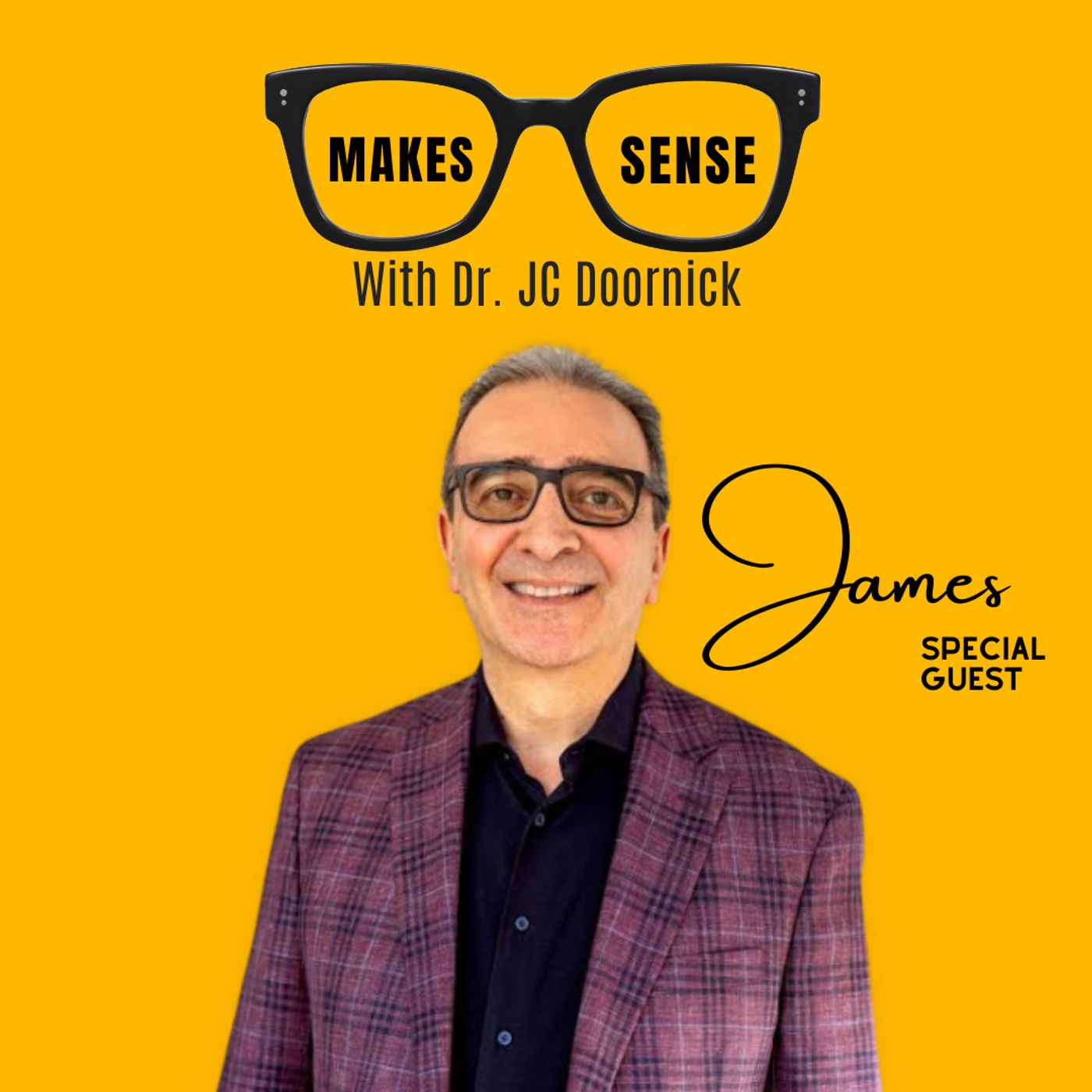
Makes Sense - with Dr. JC Doornick
How to Stay Relevant When the World Changes Fast with James Orsini - E-177
00:51:10
Does it feel like the world is moving faster than you can keep up? From AI taking over tasks to the "way we’ve always done it" suddenly failing, the pressure to stay relevant is real. Today, veteran operator James Orsini joins Dr. JC Doornick to talk about the human side of high-level success.
Loading summary
Transcript129 lines
- [00:01]
Dr. JC
Dish has been connecting communities like yours for the last 45 years, providing the TV you love at a price you can trust. Watch live sports, news and the latest movies, plus your favorite streaming apps, all in one place. Switch to Dish today and lock in the lowest price in satellite TV, starting at $89.99 a month with our two year price guarantee. Call 888-add-d Dish or visit dish.com today.
- [00:31]
Grainger Announcer
Grainger knows when you're a procurement manager for an office park, you're not managing one building, you're managing all of them. And to stay ahead, you need to see through walls and around corners. Lights about to fail, filters ready to clog H Vac on its last leg. If you wait until something breaks, you're already behind. Count on Grainger for quality products, easy reordering and 24. 7 support. Call 1-800-Grainger click granger.com or just stop by Granger for the ones who get it done.
- [01:12]
Dr. JC
Have you noticed that the world that we live in has been doing most of the thinking for you? That your beliefs, perceptions, reactions, fears and doubts have been shaped by unsolicited outside noise? How easy it's been for you to slip in to that default sleep walking mode and label it as life and reality? Yeah, that ends here. Welcome to the make sense with Dr. JC podcast. This is your opportunity to start thinking for yourself, reclaim control, and step back into that role as the shock caller and dominant force of your own reality. It's when you change the way that you look at things that the things that you look at begin to change. So let's wake up, let's rise up, and let's make sense of why and how shift happens.
- [02:02]
James Orsini
Makes sense.
- [02:05]
Dr. JC
Welcome to the make sense with Dr. J.C. podcast, Mr. James Orsini. I also call what you have just entered the dragon's lair. So welcome.
- [02:15]
James Orsini
That sounds great. Thank you. Good to be here.
- [02:17]
Dr. JC
I always start off as a way of getting people caught up. You know, in the introduction I've mentioned all of the wonderful things that you've done and we're going to get into some of that. But my first question is, what is it like to be James Orsini these days?
- [02:31]
James Orsini
You know, it's a good life. I have a beautiful family that I love spending time with, got some great friends, have had and continue to have a great career. You know, it's funny because I was on a call right before this and I said, you know, I'm in touch with every boss I've ever had. And the guy was like, really? And I Said, yeah. I said, if you think about it, I had to quit everyone to go on to the next role that I had. I've been fortunate enough to, to do it in such a way that everybody feels good about it and, you know, still there to help whenever, whenever they need. In fact, my first boss and mentor will actually be a guest at my daughter's wedding on August 1st.
- [03:14]
Dr. JC
Wow.
- [03:15]
James Orsini
40 plus years with this guy.
- [03:16]
Dr. JC
That says a lot about you. Funny that you say that. And it's encompasses a chapter of my book. But my first mentor, his name's Dr. Larry Marks, and, and that whole story is really funny, but, you know, he's, he's in his mid to late 80s now, but this is a guy that I speak to very frequently. If I called him right now, he would call me back within five minutes. And I just, you know, all I do is I just call him up and I thank him so much. But what's interesting about what you just said is there's this general consciousness that, you know, you're supposed to, like, stick with the same people in the same company. I don't know who made that up, but it's, it's, it makes sense that we evolve and we, we move on to the next thing. So that's great, great to hear you, you say that.
- [03:58]
James Orsini
And yeah, especially if, you know, you feel it's in your growth path, you know, not like, hey, I'm going to do exactly what I was doing here right over there now, for your competitor. Uh, you know, I, I think for me, it was a lot of zig and zagging throughout my career and, and everyone that I was with understood why I was doing the next thing that I was doing and supported, supported my growth.
- [04:24]
Dr. JC
Not part of my set questions, but you just triggered this in my brain. How do you know when it's time to move to the next step?
- [04:33]
James Orsini
You know, I like leaving when people are throwing rose petals and not rocks. Every time that I've left, I was really at the height of my game. In the particular environment that I was in, there was never really a reason to leave, but, but the advice and counsel that I give to students and everything is, it's okay to take a call, always take a call. You know, not that I'm looking to leave or have myself out there or I'm on a job board or anything like that, but it's, it always helps to listen. And there were times where I listened, didn't take the role and put somebody I knew in the role. You know, it was so funny because in that mentor situation that I just mentioned to you, he had lost his role in the company that we were in. He was on the sideline. I got a call from a role, and then I said. I called him up. I said, listen, this role is beneath you, but the guy that's above is pretty much my peer, so I'd be kind of stuck. Right. If you take the job, you will quickly outshine the guy above, and I'm relatively certain they're going to put you in that role. And that's exactly how it played out and why, you know, we continue to. To. To be friends and. And colleagues all these years later. His most successful role was a role that they called me for.
- [05:51]
Dr. JC
What I love about that, and it kind of makes me want to, like, apply for a job to work for you, because it would. It would indicate that you, as a mentor or a boss, would probably be trying to raise me up to leave, you know, like. Like we would. A child. You know, I would assume that that's part of what you try to do with the people that you mentor is absolutely.
- [06:11]
James Orsini
And then I support them for success, you know, in. In their. In their next lifestyle. So, you know, I ran a company for Gary called the Sasha Group, and we had seven really senior leaders. All but two have left now and are outside of Gary's hallways. And I do what I can to position every one of them to be successful. But I did learn a lot about leadership and about empathy and kind candor and all that from being close to Gary for so many years.
- [06:43]
Dr. JC
You just made me realize that I got to set a new goal, that one day people will refer to me as just JC and everyone will know who I am.
- [06:53]
James Orsini
Gary, you know, Gary, you know, so, like, share.
- [06:56]
Dr. JC
Yeah, exactly. Exactly. I want to be like a Shaq or a Gary. I want to talk about what I find so fascinating. You know, I had the opportunity to hear you speak at Creative Con, and ever since then, I've kind of been stalking you a little bit and learning more about you because you're somebody that has so much experience and you've, you know, you're such a powerful source of. Of knowledge, almost like a historian or like a Somalier of business and all these things that you've been through. So I want to talk a little bit about the speed of change right now. You know, I'm gonna. We're gonna try to make this a little bit of an advisement from. From the great James Orsini. So you've already survived multiple business revolutions, you know, it's, it's unbelievable what you've been through and grown through as well. Does the AI era, which is everybody's topic right now, I find the human behavior is more fascinating than ever. Does the AI era feel fundamentally different to you or from your experience? Is it just another version of managing rapid change?
- [07:56]
James Orsini
It feels painstakingly similar to me as the.com implosion in 2000, 2001.
- [08:04]
Dr. JC
Wow.
- [08:04]
James Orsini
Okay. I remember reading a prospectus for a company, and into prospectus, it said, we do not know how to make profit. If we do make profits, we will not sustain profits. And that was a company that IPO'd at 11 and closed at 121.
- [08:21]
Dr. JC
Wow.
- [08:21]
James Orsini
And I remember going to a friend of mine, Merrill Lynch, I'm saying, look, I read all these books about basic, you know, I'm New York State cpa, I understand finance. How can you not make profit? I said, what are you guys doing? And he said, james, we're rewarding them for taking up the white space, okay? Because we don't understand this whole Internet thing and we're just going to reward anybody who plays in it. And I see this painstakingly similar approach in this AI. If you just mention AI. If you play in AI, you're going to be rewarded. And let's, let's look back on the.com era, other than, you know, Priceline and ebay. Most of them imploded because they didn't have a business model. This is what I kind of see and feel around this whole AI thing. A great term that I learned earlier this week. Without a human in the loop, you have to be really, really cautious on what it is. I mean, you heard me talk about it at the conference where I said, I'm just waiting to see what's the growth from AI, because at this moment I see it's about cost savings, it's about efficiency, it's about speed. But I haven't seen many examples of. And here's how we're going to grow, right? You know, you can't cut your way to growth. Oxymoronic.
- [09:32]
Dr. JC
Yeah. Isn't that funny? So just in your observation right now, how does somebody stay relevant in this AI right now? I mean, here, my observation is that everybody is kind of like almost like a stampede, like a worried stampede. I see that everybody is trying to, like, learn everything they can about how to use AI. And when you think about a topic that you talk about a lot about future proofing your career, what human skills in this relevance topic, what human skills become More valuable as AI starts to progress, you know, because Jim, quick as you, you got to meet him at that event too. He's launching a genius campaign right now all about human intelligence. So what, what's what? Human skills are more important than ever right now.
- [10:17]
James Orsini
I think curiosity, I think the willingness to learn. Don't be an ostrich burying your head in the, and hope that it just passes you by. Be aware. But they in the middle. This is kind of, you know, what some of the problem is with our country where we hang on the fringes of the extremes all the time. You know, I saw an article recently, it said, you know, IBM had stopped hiring some juniors, you know, and then they quickly realized, wait a second, we're not going to have any managers five years from now if all of our entry level work is done by AI, going to be nobody to promote, you know, to be a manager. So, you know, staying curious, one of those seven leaders that I mentioned to you that left the Sasha group, now he has done some cracking of the code of AI and it's worked personally for him. He started some smaller businesses using AI as a support. He put himself a diet and A Regiment, lost 45 pounds using AI as a, as a tool rather than drugs and things like that. So he's now pivoted and he said, you know what, I know enough basic about AI that I can help the normal Joe. So I'm going to do this 90 day learning program, charge 1500 bucks and just make the average Joe who's an entrepreneur, founder, you know, a leader of a startup, learn some basic skills on how to apply and utilize AI today in your normal walk of life. So yeah, I think that's brilliant. I think that's really smart. You heard me at the conference say the reason why I like the two roles that I'm supporting here, in fact, Totem and Vibe, is because I think there are going to be people who lose their jobs at AI and then those people will become founders and entrepreneurs and do some interesting things. Yesterday I'm scrolling through TikTok and there's a professor who said, and by the way, the next round of millionaires are not going to be Silicon Valley guys. It's going to be plumbers and H Vac guys. Because AI is not gonna fix your boiler. You're not gonna climb under your deck and fix the pipe. It'll never happen. So those guys are gonna be in demand.
- [12:32]
Dr. JC
Yeah, my, one of my kids is kind of going the route of FBI, you know, and the other kid is probably the real smart one, he is in school to become an electrical engineer. And I said, that sounds like a good idea.
- [12:45]
James Orsini
I think it's brilliant.
- [12:46]
Dr. JC
And I hear Gary talk about that as well. You know, Gary is always saying, like, you want to make a ton of money, become an electrician? You know, I love that.
- [12:54]
James Orsini
Well, those guys, you know, pretty much started six figures with no college debt. Way ahead of the game. You're talking, like, a decade ahead of the game.
- [13:01]
Dr. JC
Here's an interesting question. What is one thing that people may need to unlearn right now if they want to stay relevant in the next decade?
- [13:10]
James Orsini
I think it's sort of protectionism. You know, I always compare what it was in the hallways of Saatchi versus the hallways of VaynerMedia. We were always afraid that somebody was going to take our idea because we were. We were in an environment of fear. Is this the day the client fires us? And then when I got to VaynerMedia, I realized, wait a second. This is an environment of fearlessness, right? There's. There's nothing that they believe they can't do. And they're willing to collaborate because they're confident in their ability. They're not worried about the next guy taking their idea. They're embracing the enhancement of that idea. So, you know, I think you got to release the. I got to protect this. This is me. It's me, me, me. It's my idea. We four no more kind of kind of approach.
- [13:54]
Dr. JC
Is it safe to say that you're a big advocate of people staying in the creative process and coming up with their own ideas?
- [14:01]
James Orsini
Yeah, I think. Well, Gary likes to say you're. You're only one piece of viral content away from fame and fortune, right? From really turning your business around. And if. And if you approach every piece of content with that mind, this could. This could be the piece that changes everything. You know, you're gonna put that effort in. You're gonna look for others to help round it out and soften it up. And. And I always tell people, you know what this is. This is the difference between static and beautiful classical music on the radio. You don't have to. You don't have to take a hammer and smash the radio to change the channel. You know, sometimes it's just a little tweak. So I spend my day tweaking entrepreneur ideas. So these entrepreneurs come to me with an idea. I'm like, let's try to. You know, I've seen it done that way once before. Maybe look at it that way. Here's an example of how you could do something like that. You might want to talk to that guy over there. He's done that. That's my day. I don't produce decks. I don't make presentations. I tell stories from my life.
- [15:00]
Dr. JC
Yeah, Maybe before you decide to retire, we should create a new platform called, like, Orsini GPT.
- [15:10]
James Orsini
And now I'm not retired. Well, I mean.
- [15:12]
Dr. JC
I mean, when you actually really decide to retire, you know, I'm the same way. I want to talk a little bit more about future proofing, but first, it's funny.
- [15:21]
James Orsini
You.
- [15:22]
Dr. JC
You made me think of this. I had a. I'm getting pitched on stuff all the time and the pitch unbeknownst to them, because, you know, if you're just pitching and not getting pitched, you don't understand how similar your pitch is to everyone else's, which I find humorous. So I always accept pitches. I'm like, sure, let me hear about it. You know, this guy was telling me about this really cool platform, but it has nothing to do with what I'm doing right now. And it's. It wasn't interesting to me. I thought it was cool. But he was basically saying, you know, like, if you don't take advantage of this right now, which, you know, like, a big commitment to do all that stuff, it's going to pass you by. And I said to him, I go, that sounds kind of nice, if that passes me by. So what do you have to say to people that are frightened? You met John Lee. John Lee is, you know, entrenched in AI and that's all he does, is he's teaching AI and I'm friends with him. And he. Every single week, he goes, all right, forget everything I said, everything's changed again.
- [16:20]
James Orsini
Everything's changed again.
- [16:21]
Dr. JC
So what do you. What do you have to say to that person that has that, like, fear of missing out or they're trying to catch up with something that's. They're never going to catch up with it.
- [16:31]
James Orsini
I say embrace the fundamentals to achieve success. Right. So. So there are just some basic fundamentals. What do I mean by that? I think anybody could grow a company that's not profitable. I think it's a real unique skill to grow a profitable company.
- [16:49]
Dr. JC
Right.
- [16:49]
James Orsini
I often say there's a difference between swelling and growing. Both get you big. One is healthy and one is not.
- [16:57]
Dr. JC
Wow.
- [16:57]
James Orsini
Right? So. So I spend a lot of time on basic block and tackling and telling people, let's figure out a plan to grow healthy. When I ran the Sasha Group, okay? We, we were a little under 10 million in year one, 12 and a half in year two. 15 and a half a year three, 17 and a half a year four, 20 and a half in year five. Never dipped below a double digit profit margin in any year, including Covid. That is healthy, profitable growth. Now that's not explosive growth. Okay, which some Gary's companies do. They have explosive growth, right? From 40 to 350 million. That's explosive growth. Some years more profitable than others. It's just a different style for me. I only know how to grow profitable companies.
- [17:41]
Dr. JC
Right?
- [17:41]
James Orsini
When I was the CEO of a small publicly traded mobile media company, I got the company to cash flow break even a year and a half ahead of schedule. A new board came in and they said, James, you're running this company like it's General Motors, okay? We want explosive growth, no profits. I said, I don't know how to do that. I could only run a profitable company. Let me help you find the next CEO. And that's kind of what, what we did. We, we parted ways. You know, like I said, I had a three year contract. I said three and a half years. You know, I don't know how to run a company that's not profitable because I embrace the fundamentals to achieve success. I'm not chasing a shiny object or start. By the way, that company went bankrupt several years later after two CEOs, three chairmans of the board and two CFOs. Not that I'm anybody's savior. It's not about that. It's just careful what you wish for.
- [18:33]
Dr. JC
You know, it's so funny. I guess I'm the minority, but explosive growth doesn't get me all hot and heavy. You know, I, I love the idea of profitable growth. I mean our family is focused on family and you know, I, that's one of the things that I got when I was having a talk with Gary about, as you know, we were just talking about our family. We weren't talking about business and stuff like that.
- [18:57]
James Orsini
His favorite topic, by the way.
- [18:58]
Dr. JC
Oh, for sure. I picked, I picked up on that right away because I asked him a question about like kids and, and, and technology and he got all fired up about it. But this idea of explosive growth, it doesn't get me excited. I love profitable and I love, I love a good living. But what is going on where I see in business, especially in the young generation, if you don't have explosive growth and you don't become a billionaire, you know, threatening trillionaire, it's like You're a failure. You know, it seems like some sort of a trap.
- [19:30]
James Orsini
Well, look, you know, so Gary wrote the, wrote a book called 12 and a half about the soft skills of leadership. And patience is one of those characteristics that, that he highlights. The Israeli 13, he calls it 12 and a half because he hasn't mastered the kind candor side of it. But patience is really important, and we're in a society that is impatient. And I sometimes see that, you know, even with myself, right. You know, I'm hitting buttons three and four times, you know, stand around waiting for an elevator, right? Like, of course somebody hit the button. That's why we're here. Then somebody else is going to come up and I got the magic finger. Let me hit that button.
- [20:12]
Dr. JC
Yeah, hit it again.
- [20:12]
James Orsini
Yeah, faster, right. So, but patience is learned. It is a skill I've had many times. People like James, you're not sensing the urgency. I said, I, I understand the urgency. I said, I'm just not my hair on fire like everybody else in the room. Somebody's got to stay calm and get us right what the situation is. Right. I thought a thoughtful plan to get us to the other side. So patience is, is really, really important. And, and some of the youth don't have it, you know, so my wife and I are trying to be a good, a godly example to our three now grown children. One already married with a baby on the way, one getting married in August, you know, one living in Manhattan, tearing it up in the city. I mean, we're, we're just still trying to walk a walk of example because they will gather more from what they see than my words. Right. So I need to demonstrate what it is I'm saying to them. Yeah, Right. And as I'm working with these entrepreneurs, it's the same thing I am sharing from my experiences. Okay? Don't, don't do what I did here. Here's. Here's a mistake that I made. You can avoid that. Okay. You don't need to go down that path. And by virtue of avoiding a mistake, you're going to pick up speed anyway. Right? This is when Gary hired me. He said, James, you've made 25 years of mistakes that I don't want to make. Help me avoid the potholes and move faster.
- [21:39]
Dr. JC
Genius.
- [21:40]
James Orsini
Yeah, it was great. One, he was brilliant for hiring somebody like me when he did. I was a big investment at the time, but he was a retailer trying to become an ad guy. He's now the voice of an advertising industry. Kudos to him. But it was also, you know, at the very first meeting, very first meeting, he introduced me to his 400 plus people, and I said, I'm here to help keep the trains on the rail. He said, hold on, hold on. No timeout, time out. You're here to help me hover above the rails like the trains in Japan, to move faster, recalibrated everything right there in a second. And then I understood, okay, this is, this is my role. You know, it's all about speed for him. And we'll have to. We'll have to leverage my experiences to bring him speed.
- [22:25]
Dr. JC
I know that you're involved with, you know, Factotum and Vive right now, and I want to hear more about those. But kind of in the same sense, what kind of scenarios and projects get you excited? You know, I find it fascinating that you're a guy that can come in and help, right. The ship of somebody that is like, completely stuck and thinks that their things are not going the right way. What is it about that scenario where you come in and. And fix things? Is it. Is. It's always been like a superpower of yours? And how has that got you reignited after retirement here to engage in Factotum and five, you know?
- [23:09]
James Orsini
Well, I think it's. I enjoy helping others actualize their vision. Right. So, you know, when I was the CEO of that Sito Mobile, it was a hard and lonely job at number one. Right. And then I read a book, Consigliere Ruling from the Shadows by a guy by the name of Richard Heidner, and it was about being a great number two. I was like, wait a second. That's kind of who I am. In fact, if I had somebody like me when I was a number one, I'd be hugely successful. I didn't. I had a number two who wanted to be a number one. So, you know, that's. That's a difference. So, you know, for Gary, it was. Can you describe what you do in a single sentence? I said, yeah, I take dreams and visions and turn them into action plans. He's like, great, you're hired. I got a lot of dreams and visions. You know, I'm partnering both with Bobby Lane on Factotum and Andrea Sullivan on Vive.
- [24:05]
Dr. JC
Two amazing human beings, by the way.
- [24:07]
James Orsini
Yeah. And they are both leaders that I'm helping actualize their visions. You know, the whole Vibe initiative was really birthed during COVID when Andrea was stir crazy and was taking Fortune 500 female executives to faraway places like Bali and Costa Rica just to have human interaction. Because we were all locked down in our homes. So she was traveling to places where covet wasn't as, as prevalent and they were doing good things and serving communities, but also learning. That was the gist of vibe. And Gary saw that and he's like, James, I think there's a commercial business model and what she's doing there, she's doing it for fun. But check it out, let's see if we can make it a real business. And then I did, you know, it was a combination of his vision to make it a business and her vision to, to do this thing for people. And in that particular case, we wrote a business plan in January. We programmed it in February and March. We sold into it March and April. We launched the first class in May. We did a million dollars in the first year. So that was really cool. Bobby came to me and you know, in both those situations, I worked both with Bobby in the past, Andre in the past. Bobby came to me with this idea probably 15 years ago and I was like, you know what? Not really cooked up yet, not right for me. But you know, swing, swing back when you got a little something, a little more meat on the bone. And then over the last six years he's really plowed efforts into it and, and he had some successful case studies in the uk and he's like, what do you think? And I said, you know what, now there's clay on the wheel. I think I can help. What do you want? A vase, a cup, a dish? Because you know, how do you want me to mold this? And he's like, look, I'm looking to. You grew Sasha to 20 million in five years. Can you help me get factotum to 30 million in three years if I give you a 10 million head start? So that's my role, that's what I'm trying to do now in helping him stand up the US operation to what is a very successful UK operation.
- [26:17]
Grainger Announcer
When you're a maintenance engineer in a beverage manufacturing plant, you keep production lines moving and quality on track because there is no room for slowdowns. With Grainger's vast selection of high quality motors, sensors, belts and hard to find parts, you can get what you need fast and all in one place. So nothing gets in the way of getting the job done. Call 1-800-GRAINGER click granger.com or just stop by Granger for the ones who get it done.
- [26:47]
Dr. JC
How does James Orsini view failure? Because you get involved in these things and it's like very exciting and you know, you obviously don't get involved in something and you don't, you don't think it's got clay on the wheels and all that stuff, but there is that possibility of the unknown. What's your thought on that?
- [27:04]
James Orsini
Yeah, my thoughts are fail fast, fix fast, learn fast. Right. So if I can just kind of, kind of do that, I'm really, I'm not afraid to fail. Yeah, I have enough success now after 40 years that I'm not really proving anything to anybody else. That's, that's the beauty of where I sit right now in my career. It's hard for my wife to understand too, because I got a little shoulders back kind of moxie. Like, you know, if it ended today, I'm like, real good, you know, like, it's. There's people like you who want to talk to me and hear about it. You know, I think today you are my 75th podcast that I've now done.
- [27:41]
Dr. JC
So that's a busy day.
- [27:44]
James Orsini
No, no, not just today in total, but it's, you know, so I fail less because I look at some of the things that I have done in the past where, you know, I, I think I shared the story where how Bobby and I met was. It was a failure that I was a young global CFO and I bought three companies in London and I merged them together and I didn't pay any attention to culture and it was a dumpster fire. When I was done, that's how Bobby came. I'm like, well, you gotta help me fix this. I need somebody on the ground who can unravel the mistakes that I've made. So, you know, it's not all success stories. It sounds great in a one page bio, but yeah, there were definitely bumps in the road.
- [28:30]
Dr. JC
So if I want to get Bobby's attention as a potential partner, I should just fail and he'll be impressed by it or something like that.
- [28:38]
James Orsini
Well, you know, we have a lot of folks that are failing that are hiring factotum right now. So, hey, good place for us to be.
- [28:44]
Dr. JC
Failure is a big business. So I like to keep my finger on the pulse of what some of the giants are doing. And, you know, through some pretty good resources, there's some very big companies that operate that have traditionally operated on a massive scale in the live event. And, you know, they have big organizations that are about to completely fire everybody and just like replace them with like two, like, agents. You know, there's this whole agentic AI thing. So this is happening like everywhere. And. And then there's also startups that are just not Even hiring people and having AI agents, you know, do the work. What are your thoughts on that? And is there an implosion ahead there?
- [29:30]
James Orsini
I. I think it's a mistake. I think one of the things that we were talking about recently is this switch to analog from digital. Right. A return. A return to analog. A return to phones down. You know Gary owns restaurants, right?
- [29:47]
Dr. JC
Yeah, it was at, at the Fish one.
- [29:49]
James Orsini
It was five Fish Club. Right. Amazing little maven this week. He wants his next club to have lockers, so when you walk in, you gotta lock up your phone. Right. In order to enter the restaurant. Yeah, so we're seeing a lot of that. I just came back from a client of mine in Maryland who ran a conference. This is the third year doing it. 700 people. It's for automotive dealership guys and everything. People are starving for human interaction. Apollo, the big hedge fund company, the last two investments were more purchasing big events companies. So I don't think live events, concerts, anything like that are going anywhere anytime, fast. Okay. I just, you know, a couple years ago did the ERAS tour with my daughters and my wife for Taylor Swift. It was actually cheaper for me to fly to four of us to London, buy the tickets at Wembley Stadium than, than here in, in the States. So live human interaction is big. We're gonna, we're gonna swing back this pendulum to, to that. Right. I run a family home at the Jersey shore for two weeks every summer and my kids can't wait to be a part of just this board game, Cornhole Toss Beach Life for two weeks straight. I think anybody who just is building a world that is solely digital is really missing out on. On some stuff.
- [31:17]
Dr. JC
Yeah.
- [31:18]
James Orsini
And, and I think there, you know, there's going to be a return to back. Back to basics and having a blend though, you know, I mean, still leveraging tech, but, but having. Having this blend of. It's an and. And rather than.
- [31:35]
Dr. JC
And one of the funny observations that I have about the advancements of AI is that people are feverishly trying to get AI to be so good that it looks real. It's like, why don't you just be real? You know, it's like almost like real human interaction and interface and also social media. Probably one of the reasons Gary's been so successful with that is that it's just raw and real. It's not fancy and everything like that. So let's talk a little bit about this future proofing concept because I think a lot of people are mesmerized by this idea of just taking risks and Going for it and everything. And I don't see a lot of people and there's poor parenting probably in there as well, but I don't see a lot of people like doing any like planning. You know, they're just like all in and they're just going to like go for it. What industries or career paths do you think are most vulnerable right now? Because the world simply doesn't need them anymore in any way, shape or form.
- [32:32]
James Orsini
I think research paralegal, you know those, those entry level positions in service sector companies that spend their day looking through files and researching that stuff is going to be a real problem, you know, because they, it could do it quicker now. Can't do it just machine have to have human in the loop. Somebody's got to still look at that. But you know that's not an entry level who's looking at it. That's a little level up. Right. So but I think that's the danger. Anything that was there grinding, if you will. Okay. And coming up with the legal brief that now you're going to, you know, you're looking back on previous legal cases for historical data that that shit's all being done through a machine now and then it's fairly accurate. I give it 80, it's not 100, but it's fairly accurate. So if somebody just has a human in the loop for 20 of the time, that's, that's going to be, that's going to be important. Yeah.
- [33:33]
Dr. JC
If you ever catch some of the old movies, you know, like the Tom Cruise movies with the lawyers spending like the entire night reading all the law books and stuff.
- [33:41]
James Orsini
Exactly.
- [33:42]
Dr. JC
Those guys are out, right.
- [33:43]
James Orsini
They're followed with three guys carrying all the binders as they walk in into the room. Right. There's one lawyer arguing the case and there's three dudes behind him. Did all the research behind it, that stuff about that.
- [33:56]
Dr. JC
Those guys need to find something else. So if somebody wanted to future proof themselves now, there could be a lot of people listening. You know, I always want to make sure that people kind of like know what to do. If somebody wanted to start today future proofing themselves, where would you recommend that they place their focus?
- [34:13]
James Orsini
I think they, they should have a side hustle around their passion. Okay. So the days of dedicated to. I'm, I'm just a robotic for the corporate man. I forget about what I like to do. Okay. I like to bake, I like to, you know, do trading cards or whatever. I think you should simultaneously be running the side hustle because if and when your passion becomes your profession, it is lights out. Right? You, you've already won. You know, when you're smiling every day, when you're whistling every day that you're, that you're doing this. So I believe this gig economy of side hustle is, is really important and leads to some hugely, hugely successful businesses that were outside of, you know what, what you thought your profession was so big, big proponent of that.
- [35:08]
Dr. JC
Yeah, well, that's what the Dragon is doing as you are looking at him right now. You know, I mean I, I left some very, very lucrative businesses to start a podcast. And everybody said, well, you're out of your mind. And it took me eight years, but you know, I'm having a ball now and, and I'm also playing the guitar.
- [35:27]
James Orsini
Yeah, look, it's not the first time I've heard out of your mind. Right. When I left Goldman in the 80s to go to work for a single public relations firm in New York City called Roland that nobody had ever heard of, they were like, you're crazy. Who's leaving Goldman Sachs in the 80s? Everybody's trying to drive there. You're leaving it. Yeah. But within five years we built the fifth largest public relations firm in the world. And I was a global CFO overseeing 31 offices in 26 countries by the time I was 30. So didn't look foolish in the rearview mirror, looked foolish at that moment. But I knew I didn't like what I was doing anyway. I was making money, but I really was not enjoying my role in Wall Street. I quickly recognized like, this is not for me and if I don't leave pretty soon, I'm gonna make too much money where I can't leave. So you know, it was, it took a shot. So I think there's more people taking shots now. And by the way, if you could do it with the air cover of I got a full time job that's paying me and giving me benefits and everything. I'm gonna do this thing after hours, I'm gonna wake up early in the morning, I'm gonna, you know, a lot of people making a lot of money on collectibles and trading cards and stuff like that. I don't do that personally because it's not what I like to do. But there are enormous businesses around that, you know, just flipping stuff. You know, this whole world of live shopping now, you know, can really put anybody in, in the mix of, of moving product. You know, it's easy to put up a shopify site, go to direct to consumer. The fulfillment gets A little harder because obviously you got a lot of stuff in your basement, boxes and stuff like that. But. But generally speaking, I had a niece who, you know, recognized she was selling the medical products and then realizing the operating room, when they open the package, they throw away the tools, and she's like, wait a second. Like, I'm going to collect those tools and I'm going to sell that to morgs and veterinarians who don't care that it was an unused tool. Right. I mean, that's a whole side hustle. She's running a whole another business because you just recognize, like, look at all this waste. I could do something with that waste.
- [37:33]
Dr. JC
It's funny, when I'm at a place now, when people say, what are you, out of your mind? And I go, oh, well, thank you so much for noticing. I appreciate the compliment. And they go, compliment? I've been trying to get out of my mind my whole life. It's gotten me nothing but, you know, trouble. Here's an interesting one. What skills do you believe will never go out of style, no matter what, no matter how advanced technology gets? You know, I want to empower somebody listening right now. And just what are some human skills that will just never be replaced?
- [38:04]
James Orsini
Well, we talked about, certainly we talked about the trade industry, right? So. So the. The plumbing, the electrician, the other stuff, I don't think that'll ever be fully automated and out of the box. But I think understanding finance has made me a hugely successful businessman, okay? Because I never had to walk into a situation blindly and rely on somebody else to tell me what this means. You know, my wife has a whole profession of helping to educate and bring financial literacy to female founders and business owners. Okay, we started a business, but, you know, we don't know how to balance a checkbook or anything like that. I think it's a big flaw in our colleges and universities and high schools even, that you're not teaching somebody basic budgeting skills. We all have a checking account. We're all, you got to have a balanced budget. You know, I shared that even with my children. Like, look, you got to have some kind of basic understanding. You're not all accountants. I get it. But, you know, you. You have to understand money, the power of it, the fear of loss, and how to just, you know, know that the pluses need to be greater than the negatives or you're in trouble. So, you know, big, big proponent of that. Even Gary talks about, you know, there are certain things you have to go to school for, right? Medical, accounting, Legal, you know, but, you know, if you're going to be a, a major of African American studies or something like that, you know, maybe, maybe you don't need to have $300,000 worth of debt. He laughs at those that are majoring in entrepreneurialism. He said, just go, just go to work. Like, why? What are you studying to be an entrepreneur? If you're an entrepreneur, you know it, right? He had a very famous speech at Columbia. Where. Or. No, it was ufc, I think it was. Or where he said, who here is an entrepreneur? The people raised their hand. He's like, all right, get out of here. Go be an entrepreneur. Why are you listening to me?
- [40:07]
Dr. JC
Well, you're in the wrong place, right? Oh, that's great. That's genius. That's. This is, this is also funny. And I'm just thinking that probably anybody could probably just call up anybody that's in an Orsini, even if it's one of your kids, and just get some financial advisement, you know, just thinking about them growing up in your family, I mean, they got to know more than most people.
- [40:29]
James Orsini
Well, look, you got to know enough to realize I don't do my own taxes, right? I, I have my own, you know, financial and wealth advisor. Like, I know my lane too. I don't try and be everything to everybody.
- [40:41]
Dr. JC
Well, but you underst. You have a basic understanding, though.
- [40:44]
James Orsini
Yeah, I have a, I have an understanding enough to realize that I'm not going to be current on tax loss. Right. So I better, I better go to somebody who's, who's paying attention to everything that's changing because 2026 is different than 2025. You know what I mean? So even those kind of things, you know, doctors are specialists, right? So there's, there's specialists in the, in the finance field as well.
- [41:05]
Dr. JC
Yeah, that was a golden cage. I, that being a doctor was. I mean, I, There was, there was a lot of good stuff to it, but. Oh, I was so happy to free myself up from that. I want to talk a little bit about identity. You know, I just talk to people all the time about. It's like they know what to do, but they got to get out of their own way. So one of the things that I've noticed is that people often kind of become trapped by the version of themselves that created their previous success in this fast changing world. Have you seen that? Have you seen people. You know, I mean, like, the story that comes to mind is the whole, you know, BlackBerry concept. You know, it seems like you gotta be Agile. Now, you can't be caught up in who you think you are based on who you were. You know, how important is it for people to be? I think you said it before, open and curious and agile.
- [41:57]
James Orsini
Yeah, I think it is important. I think the whole concept of personal brand is important. Right. And what does your personal brand stand for? And. And can it stand on its own? You know, I have, when I write an article, I actually have some people thanking me for. For writing the article myself because they realize it's not AI that's me talking. Right. So that's when you. When you have a personal brand where people actually recognize that really, you know, really important in. In standing that, standing that up. And, and there's times where both now, in fact, totem here in the United States and in the past with Ceto Mobile, where in the early stages, my personal brand was bigger than the company brand and they had to have to lean on my personal brand first to help stand things up.
- [42:47]
Dr. JC
Interesting.
- [42:47]
James Orsini
And then the company brand takes over. But, you know, look, I'm a big consistency. I'm the same guy, you know, on a call with you here that I am with my clients, that I am with my family, that I am in my church, that I am in my philanthropic endeavors. That's how I manage my world, by not having to change out and wear these different masks from time to time. But so what you see is what you get. And I think that was the beauty of Gary, because people ask me, what is he like? And like, what is he like you're seeing him on? He's exactly like what you see on video. That's. That's who he is. Right. The fact that you quickly realized family was important to him, that shouldn't be a surprise to anybody. Okay? That's the most important thing that he has, you know, and that was our kindred spirit. We are total opposites. Me and him are total opposites. Right. I. I would joke and say I wear a ski helmet going down the bunny hill at Shawnee and he jumps out of helicopters. You know, two totally different people. But mutual respect for what it is that we do. Family, very important. Principles, very important. Kindness, important. Helping others, important. You know, so those were all the things that aligned for us.
- [43:59]
Dr. JC
So funny. You just reminded me I was at Comic Con with my son, who's a freak for that stuff, and we're just walking, walking around. And, you know, I see over at. I think it was a V. Friends booth or something like that, but Gary's there and there's like you know, there's like, at least 150 people online to, like, I don't know, shake his hand and get an autograph or something like that. And we were just walking by, and I. I had met him a couple times, but I didn't, like, know if he, like, knew me. But we were just walking by, and I'm with my son. It's, like, perfect timing that what Gary did. He goes. He goes, dragon. And I turn around and I'm like. And I walk up and I shake his hand, and my son meets him, and my son goes. We walk away. He goes, you know, Carrie, Vee. And I said to him, I go, apparently, apparently, you know what? He's got a great memory.
- [44:48]
James Orsini
He remembered. Great, great politician. I'm. I'm horrible with names, everything like that, but, you know, he's like a politician who remembers everything. Similar story. A friend of mine was wearing a Jets hat at Comic Con, and Gary's like, you know, jets? And he goes, gary, where's James Orsini? And Gary goes, he's back at the office doing work while I'm here. That's funny. It was so. It was so funny because the guy's like, I can't believe, like, he actually had a little dialogue with me.
- [45:19]
Dr. JC
He goes, that's the funny thing about success is that, you know, the world starts to perceive that you're different, you know, and sometimes, I guess people get caught up in that. I hear him speak about this, and I've heard you speak about it, too, but just as kind of somebody that really has their finger on the pulse, you know, you're still in the game. What advice do you have to give someone that is looking to reinvent themselves at, like, 40, 50, and 60? Because I very often meet people that I perceive, you know, in those age groups, they have a lot of wisdom and experience. I think they're. They're highly capable of doing some big, big things, but they kind of have this impression that they've missed the boat and that, you know, what do you. What do you have to say to those people?
- [46:01]
James Orsini
So with those people, I say that they should do what I call an SSP matrix, a Strength SK Skills and Passions matrix. These are my strengths. These are my skills. These are my passions. Forget about your resume and what you've done in the past. Okay. I'm going to give you my wife as an example. So she was a big corporate, you know, finance international director of financial reporting, like, big stuff in big corporations. And then she. She sort of. That ended and wanted Wanted attend. I said, what do you want to do? She goes, I want to help. I want to help female entrepreneurs with financial literacy. And I said, that's fabulous. I said, I know somebody who owns a bookkeeping firm down in Florida, and most of her clients are female business owners. So I said, let me call her and just see if she's willing to meet you. She's not looking for somebody like you, just so you know, but when you tell her about your strengths, your skills and your passion, she doesn't have somebody like you in her 12 person company. Company. And they got to talking and they hit it off. And my wife loves her life now. Now she's making, you know, 125 of what she used to make. But it wasn't about the money.
- [47:14]
Dr. JC
It wasn't about.
- [47:15]
James Orsini
It was about smiling when you're doing this task and helping people, you know, helping people find their way. So. So she's now the sort of video overlay that explains the financials to a bookkeeping firm that was just turning over books and records. Right. So now there's an interpreter of, hey, what are these things actually telling me? You know, And I'm just watching the change in her. I mean, you know, she. She's glowing doing. Doing this thing that aligns with her strength. All right, so she. She has a strength and, and that she's a female, wants to be dialogue with other females. She got a skill in accounting and. And she has a passion for helping other people. When you marry that up.
- [47:59]
Dr. JC
Sounds nice. I always tell my kids, I mean, like, you know, my kids do great. They play sports and they're. I'm totally fine with them playing Fortnite at night, but I. But I always say to them, I'm like, you really love those games, don't you? And they're like, oh, man, it's so great. I'm like, well, why don't you get involved in that business? And they're like, I don't know, you know, I'm gonna go do something that sucks. What do you think the future of leadership looks like?
- [48:20]
James Orsini
A lot more in kindness, a lot less rigid, a lot more flexibility. Covid proved that we don't have to all be in the office 24 7. Okay. So, you know, recognizing and meeting people where they're at. I. I think, I think the hybrid blend is going to be the best. Not, not fully remote, nor fully in the office. But I like the hybrid blend. You know, it's more in the middle. It's what Gary calls purple. Okay. More life in the middle, less on the extremes. You know, come, come back, come back to the middle and have, have a much better, much better lifestyle.
- [48:59]
Dr. JC
Is my Dragonfly NFT going to be worth money one day?
- [49:03]
James Orsini
From your mouth to God's ears. I got a couple of be friends as well. I'm the, I'm the consistent cougar as you would. You would picture that as my right personal brand.
- [49:13]
Dr. JC
Perfect.
- [49:13]
James Orsini
If I was going to own one, would you picture me with a consistent cougar? Because it is who. Yeah.
- [49:18]
Dr. JC
So I could care less if it, if it makes money. I love it. I just like looking at it. All right, so what I want to do now is I want to do a couple of rapid fire questions because we're at the end. You do your best. Biggest mistake people make during change, Lack of patience.
- [49:34]
James Orsini
Expecting it to happen too fast.
- [49:37]
Dr. JC
There's that patience thing again. How about this one? Most overrated business trend.
- [49:42]
James Orsini
I would say I gotta be a millionaire by my 20s or 30s.
- [49:48]
Dr. JC
One thing AI will never replace.
- [49:50]
James Orsini
Plumbers.
- [49:51]
Dr. JC
I'm from a family of plumbers and electricians.
- [49:54]
James Orsini
My grandfather was a plumber. My father was a plumber. My brother's a plumber.
- [49:58]
Dr. JC
Most underrated human skill.
- [50:00]
James Orsini
Kindness. Yeah, just, just be nice, man.
- [50:03]
Dr. JC
One thing people should stop doing immediately.
- [50:06]
James Orsini
Chasing this shiny object.
- [50:08]
Dr. JC
Yeah, I love that. These are good. You're good at this. Definition of relevance in 2026.
- [50:15]
James Orsini
I think it would be an awareness of your surroundings. What's, what's happening around you and how might it affect you in some way?
- [50:25]
Dr. JC
What scares you the most right now about the future?
- [50:28]
James Orsini
To tell you the truth, I don't fear the future. I embrace the future and there's not much I fear.
- [50:36]
Dr. JC
And what are you excited about most about the future right now?
- [50:39]
James Orsini
Oh, for me, being a granddad coming down the pipe here and, you know, I don't know what that entails, but. But I'm excited about it and I hope, I hope I live up to the title.
- [50:53]
Dr. JC
Well, I think everybody is going to be a little bit wiser and a lot of people are going to probably figure out that some change might be on the horizon for them in a positive way. And now people know that you're actually a pretty cool guy that has his shit together. So that's pretty cool. You know, thanks so much for being here. If people want to step into your ecosystem, what's the best way to do that?
- [51:18]
James Orsini
Yeah, I am James Orsini on LinkedIn and Instagram. I'm at Jimmy the Pencil on X and TikTok.
- [51:27]
Dr. JC
That's great. And I will say that James is like a very, very nice, friendly person on social media. Like, if he shares your stuff and things like that, he's wonderful. I, I shouldn't say that to everybody, but thank you so much for being here. It's just really a joy. You know, you're the kind of person that I would love to talk to for a lot longer. But, you know, I'm sure that we're, we're going to cross paths over and over again, and I'm excited to see what, what happens with Factotum and, and Vive and, you know, and I'm not going to even try to make a prediction of when you're going to retire.
- [52:02]
James Orsini
Thanks, J.C. appreciate it. I hope your audience enjoyed it. Hi, this is James Orsini, and this podcast Makes Sense.
- [52:09]
Dr. JC
That's it for today to support the make sense with Dr. JC podcast. Be sure to subscribe, like and share, as well as follow the Make Sense substack for free daily quotes, live streams, and blogs. And remember, learning without action is just another form of distraction. If something hit home and you learned something today, give it away. That's the only way it's going to stay. See you next time.
- [52:38]
James Orsini
Makes sense.