← Makes Sense - with Dr. JC Doornick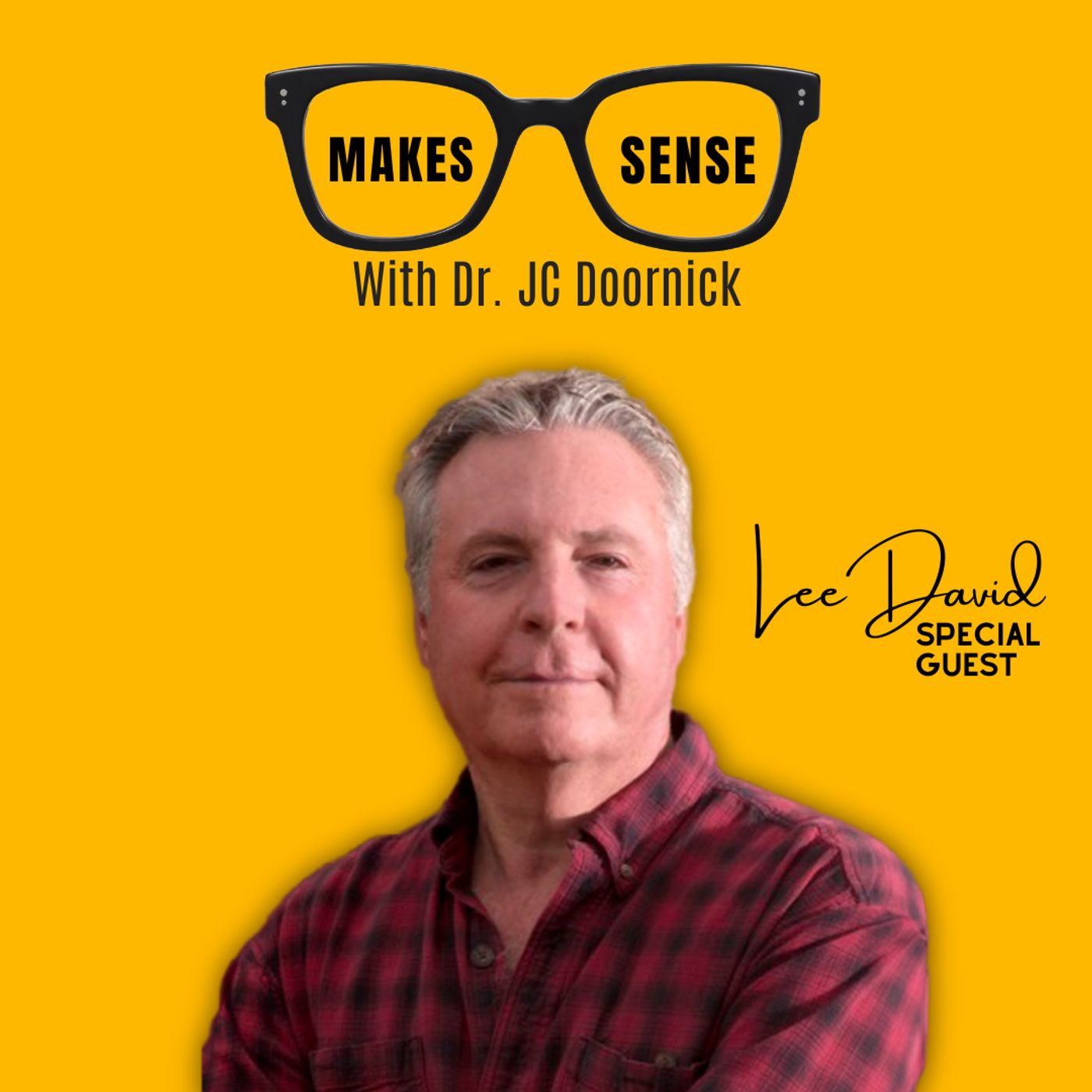
Makes Sense - with Dr. JC Doornick
The MacGyver Secret: How to Unlock Your Subconscious Mind and Solve Anything with Lee Zlotoff - Episode 143
01:05:05
In this Lee Zlotoff interview, the creator of MacGyver reveals The MacGyver Secret—how subconscious incubation, intuitive intelligence, and resourcefulness help you solve hard problems in an uncertain, AI-driven world. A must-listen for anyone who wants to think better, lead smarter, and turn constraints into advantages.
Loading summary
Transcript59 lines
- [00:00]
Lee Zlotoff
Well, the holidays have come and gone once again. But if you've forgotten to get that.
- [00:04]
Dr. JC
Special someone in your life a gift, well, Mint Mobile is extending their holiday.
- [00:09]
Lee Zlotoff
Offer of half off unlimited wireless. So here's the idea. You get it now, you call it an early present for next year. What do you have to lose? Give it a try@mintmobile.com Switch limited time, 50% off regular price for new customers. Upfront payment required $45 for three months, $90 for six month or $180 for 12 month plan taxes and fees. Extra speeds may slow after 50 gigabytes per month when network is busy see terms. What this is is this ability to tap directly into your inner resources that are vast and that most people aren't aware that they even have to help them solve pretty much any kind of problem they have.
- [00:45]
Dr. JC
Have you noticed that the world that we live in has been doing most of the thinking for you? That your beliefs, perceptions, reactions, fears and doubts have been shaped by unsolicited outside noise? How easy it's been for you to slip into that default sleep wa walking mood and label it as life and reality? Yeah, that ends here. Welcome to the make sense with Dr. JC podcast. This is your opportunity to start thinking for yourself, reclaim control, and step back into that role as the shot caller and dominant force of your own reality. It's when you change the way that you look at things that the things that you look at begin to change. So let's wake up, let's rise up, and let's make sense of why and how shift happens. Makes sense. Welcome to the make sense with Dr. JC podcast. God, what an interesting human being you are. And I'm just so honored. I just feel like calling my mom right now and said, mom, look at me now. I made it. So thanks so much for taking time to being here with us.
- [01:53]
Lee Zlotoff
My pleasure. J.C. i just want to open up.
- [01:56]
Dr. JC
With just stating something that I previously shared with you. I had the opportunity to meet you at the Limitless Live event and Jim Quick's event, great friend of ours, and I got to break bread with you and your wife and I had a moment where I'm like, am I having dinner with MacGyver right now? You know, so that was really fun. But what I came to learn is that you guys are just awesome human beings that I would say give a shit about what needs to be given a shit about and had a lot of respect and admiration for both you and your wife. So it was an honor to meet you.
- [02:29]
Lee Zlotoff
Well, thank you to Set the stage.
- [02:31]
Dr. JC
This dragon is 54 years old. And when MacGyver came out, and we're going to get into that story, you know, it's really interesting. It was a TV show, and it was a personality. It was really, as far as I can remember, besides, like, Superman and things like that, it was an action hero, you know, and there were so many that came after that. But as somebody that was born in 1971, when I was watching it, I just remember absorbing, you know, what I was watching at a time where I was trying to figure out what kind of a man I was supposed to be. So if anybody ever comes up to me and says, hey, you're a good guy. I respect you, and stuff to a certain degree. I have Lean MacGyver to thank for that. So I thank you for that. We were chatting, and this is a pretty amazing phenomenon that that's happened, and I would love to air this out for our viewing audience, our listening audience. That is not really up to par with MacGyver. And that's an interesting thing. I think that some people understand it as a verb less than, you know, the caricature of it. You told me, you said this thing called MacGyver just fell in my lap. Could you just kind of share that story and catch everybody up to speed with that?
- [03:42]
Lee Zlotoff
Well, sure. So I was back in 19, I think. 84, it was. I was tasked with writing a pilot at that point. Didn't have the name MacGyver on it. That was something I gave it, but about a action adventure hero. And for a variety of reasons, I thought, why don't we try a character who refuses to use a gun because most action adventure heroes, you know, use guns. And who has to overcome the obstacle or beat the bad guys by using whatever happens to be at his disposal. And in this case, you know, Swiss army knife, paperclips, duct tape, that kind of stuff. And so I wrote that pilot, which gives me the right to call myself the creator, apparently. And it became a television series in 1985 that ran for seven seasons till 1992. And then there was a reboot version done in 2016 that also ran for five seasons. So total of 12 seasons of MacGyver. And curiously, this character or the show was then sold all around the world in 75 foreign countries, and kind of became a iconic character or kind of mem. Of sorts, for resourcefulness and ingenuity and a certain amount of morality, I guess, who would take on problems that nobody else could. In other words, the byline of the show Was when our usual secret agents can't handle the problem, we go call MacGyver, and we send MacGyver because he was capable of dealing with situations that other people just didn't know how to deal with. And rather than bringing in all sorts of sophisticated gear, you know, and James Bond Q gives him all those toys at the beginning. You know, the watch that's a bomb and the pen that's a gun and all that stuff. And MacGyver went in with nothing. He kind of how to make it up as he went along and use whatever he could find. After the first series, which ended in 1992, I discovered, as did the studio, that they had screwed up and all of the rights to that character had reverted to me, not to them. This doesn't happen very often in Hollywood. In fact, it almost never happens. But it happened to me. And that gave me the opportunity to build on this brand that had become literally a global phenomenon for, as I say, kind of ingenuity, resourcefulness. And in 2015, two, MacGyver as a verb was added to the prestigious Oxford English Dictionary. And now to MacGyver, something is in virtually every dictionary in the world. And so here I had this sort of global brand. And so I've done a number of things with it. We. We have a website, obviously, MacGyver.com very complicated name. And we've established a MacGyver foundation that does philanthropic projects and has for probably 10 or 15 years now, at least. We're working on a new project right now called MacGyver in a box, which people can go to the website and find out more about if they're interested. There is a fiction series that we did kind of picking up the original character from the 1992 series. And I also wrote a nonfiction book called the MacGyver Secret. Connect to your inner MacGyver and solve anything. Because in my development as a TV writer, I stumbled upon this problem solving technique that not only changed my life, but probably saved my life and certainly made me very successful in the entertainment industry. And so I chose, I think it also is in 2016, to release this book called the MacGyver Secret. It's super thin. You can. Two trips to the bathroom, you got it all. But what this is, and I suspect, what I talked about at the Limitless Live conference where I met you, J.C. this ability to tap directly into your inner resources that are vast and that most people aren't aware that they even have to help them solve pretty much any kind of problem they have. It can be a technical problem. It can be a creative problem. It can be a personal problem. But right now, you know, we live in an increasingly uncertain world. Certainly the COVID pandemic brought that home. And even now, whether you approve of what the current administration in. In D.C. is doing or disapprove of, it doesn't matter. There's just a lot more uncertainty going on in the world than there used to be. So this is a tool to kind of help people navigate it, and it doesn't require anything except a pen and a piece of paper. So there you go.
- [08:41]
Dr. JC
I love it. So many things you just said that popped into my head. That's the problem with talking to Lee's is you could have, like, a. A planned conversation, but it's just probably going to go awry. So the first thing is, is that the resourcefulness component, you know, I. I very often tell people that I work with and mentor that I believe everybody is capable, but they're just lost and scattered. And, you know, I just kind of view the world as sleepwalking, thus not understanding their resourcefulness and moving farther and farther away from their belief of in it. You gave the analogy of James Bond. I never thought of it that way. Like, James Bond was a cool cat, but he had Q. I realized then that MacGyver, his resourcefulness, was his own cue. It was kind of already in him and. Quick question. I can't really face place it well, but did the A team come after MacGyver?
- [09:32]
Lee Zlotoff
I think it was almost at the same time, because it kind of sounds.
- [09:36]
Dr. JC
Like they read your pilot.
- [09:38]
Lee Zlotoff
Yeah, I. I think it kind of started slightly after MacGyver. I. Honestly, off the top of my head, I couldn't tell you, but, you know, somebody can just type it into their phone and find out.
- [09:47]
Dr. JC
That's right.
- [09:48]
Lee Zlotoff
That's right.
- [09:49]
Dr. JC
I mean, that's not. That's not how. Mike.
- [09:51]
Lee Zlotoff
They were contemporaneous. They were within a few years of each other. But I'm pretty sure I certainly wasn't aware of the A team when I was writing MacGyver. But certainly I think the A team was aware of MacGyver during its run. Right. Again, what made MacGyver so different was it was bright makes right, not might make right. Exactly. And he had to look at what he had. Number one, don't panic. Okay. Number two, what do I have available to me that I can then turn into it? He obviously, you know, he knew physics and chemistry and electronics and all that kind of stuff, and this was long before there were such things as cell phones. That could. You could just type in and say, tell me how to get out of this situation.
- [10:33]
Dr. JC
So everybody. Everybody has the same access that he just. He carried it in his. In his own cell phone in his brain.
- [10:40]
Lee Zlotoff
Right? Right. So, but I think what you're most referring to and what's most important about this is there are really sort of two parts of our mind. That's what I discovered. I'll tell you briefly, if you want, how I kind of came to this, which was, okay, so I'm a television writer. This means I have to produce enormous amounts of creative material under relentlessly tight deadlines. So it's sort of like saying, oh, put a gun to your head now. Be creative, okay? And it's not an easy thing to do. And I noticed something curious, which was that when I was driving or taking a shower, the best stuff would come to me. And when I was sitting at my computer or typewriter, whatever, and I was trying to be creative, like, nothing, you know, it's just, like, painful. And I asked myself, wait a minute, what's happening when I'm driving and taking a shower? Such that this stuff comes to me. And of course, not easy to start writing stuff down when you're driving or taking a shower, you know. So what is happening? Such that when I'm doing those activities, the good stuff comes to me, and when I'm trying to do my job, I'm struggling. And the answer turned out to be, because I kind of experimented with this question, and it turns out that there are really sort of two parts of our consciousness. There's the conscious mind, which is our waking mind. I call it the hamster wheel. And the reason I call it the hamster wheel, because we wake up in the morning, this series of thoughts just starts going in your head. It doesn't really stop until you put your head down on the pillow. And if you're lucky, you fall asleep, okay? But there's another part of our consciousness which is known as our unconscious or subconscious. We call it your inner MacGyver. Really doesn't matter what you call it, to be honest. Call anything you want. But there's this other part of your consciousness. And because we're awake three quarters of the day, again, most of us don't get eight hours sleep. But let's assume for the purposes of this, you do. So you were awake for, you know, the better part of 16, 18 hours, okay? And then you're asleep for, give or take, eight hours, okay? And you think, okay, well, then my conscious mind, my hamster wheel, that's got to be most of my consciousness. And this other thing you're talking about, Lee, is. I don't know, it's this little thing. Maybe every once in a while I have a dream and I remember it. Truth is, we all dream every night, four or five times. That doesn't mean you remember the dreams, but we call it REM sleep. We know you're dreaming. We can put machines on you and he'll say, yep, he's dreaming now. We can just tell by the way his eyes are moving inside his head. Okay? But it turns out that that part of your consciousness is massive, is incredibly intelligent, and is willing and ready to help you if only you knew how to tap into it and ask it. I'll give you a simple example. Appearance versus reality. Okay. It appears that the sun goes around the Earth. Sunrise, high noon, sunset. Anybody looks, out they go. You can see the sun moving. But we know for a fact, certain the sun does not move. The Earth moves. We're moving. We're all moving, believe it or not, at a thousand miles a second. I know that's kind of hard to digest, but there it is. The Earth is not only spinning around on its axis, but it's also rotating, orbiting around the sun. So the sun stands still, even though it looks to anybody with that the sun is moving. So it looks to you like the answers you're looking for must be in your conscious mind, and they're not. They're really in your subconscious mind. You just don't know how to connect to it. And what the MacGyver secret is, again, nothing more than a pen and a piece of paper is it allows you anytime, anywhere to tap directly into the biggest resource you will ever have, which is your subconscious. You. And get answers to anything. Again, creative, technical, personal, financial, it doesn't matter. You have more resources inside of you, kind of like MacGyver than you know. You just haven't had the ability to connect with it. And the MacGyver secret is ridiculously simple way that doesn't require any drugs or mantras or woo woo, nothing. All you need is a pen and a piece of paper to start a dialogue between your subconscious and your conscious mind to get really great, innovative answers for whatever you're dealing with. And I stumbled on it, and then I ended up sharing it with a friend who was at that time struggling to launch an Internet company. And he came back to me and he said, holy mackerel, this is a game changer. This is not just for creative writing, which is what you Use it for Lee. This is for solving problems of any kind kind. I built my business and saved my business multiple time with this technique. So he said, you got to put it out there. And I went, come on, who's going to listen to a TV writer about this kind of stuff? But I ultimately found a co author who was a PhD from Yale in clinical psychology and cognitive science. I think she now holds the Arthur F. Th Chair at the University of Michigan Psychology department. And I said, would you help me put this out there in book form? And. And she ultimately said, yes. Turns out she was a big fan of MacGyver. Not surprising, but there you go. And because I had inherited, as it were, the MacGyver brand, I could call it the MacGyver secret. So that's what I did.
- [16:23]
Dr. JC
The secret is out. That's so cool. I. You know, I'm just so frustrated right now that we didn't have this conversation before I put my book to the final stage. I'm. I'm publishing my book in February, and I talk a lot about this stuff, but I just didn't have some of the words that you just used. First of all, I love the concept of looking at it as your inner MacGyver. I've never called it that before, and, yeah, it sure is vast. And I always tell people it's so vast that it can operate with perfect execution without you there. And that would be you referring to the you that you were talking about of your conscious mind. You know, conscious mind is kind of just like thinking that it knows what it's doing. It's kind of like looking at the. The brain, specifically the subconscious mind, as the Swiss army knife. You know, it's. It's there whether you know it's there or how to use it or not. So I love the MacGyver secret. Very, very much in tune with what I call the interface response system. It's just you would have to consciously decide to use the pen and paper, though, and the sky's the limit at that point. I'm almost thinking, I don't know, this might have to be something we talk about offline. But I'm almost thinking that we could just get rid of chat GPT and come up with an AI thing called MacGyver. I'm sure you. He's like, damn, why did you say that?
- [17:40]
Lee Zlotoff
Here's the. Here's the kind of irony of AI you have your own AI system.
- [17:46]
Dr. JC
You sure do.
- [17:46]
Lee Zlotoff
Okay. Actually, it's not. It. Let's ni. It's natural intelligence. It's not artificial intelligence, Right? Here's the crazy thing about. There's a lot of crazy things about the subconscious. But you know when you see people who are pregnant and they use a sonogram to hear the heartbeat? Okay, so the heartbeat starts in the womb. Okay? Your heartbeat doesn't start when you're born. It starts before you're born. The subconscious, by the way, helps to regulate the heartbeat, though. Your subconscious started before you were born. And it is the most amazing recording machine or organism that has ever come along because everything that you have ever done, said, tasted, heard, known is still in there. It's all in you. None of it went away. Just because you can't remember it's there doesn't mean it's not there. And you can have access to that. And like I said, your subconscious is always trying to help you. I mean, look, all of us have had aha moments at one point or another. A lot of people. It also happens in the shower or when they're driving. I can explain to you exactly why that is. The reason why that is is because when you're doing something like driving or taking a shower, your conscious mind has to pay attention. Sure, you know how to drive a car. You turn the key, you step on the gas, but you got to know, how fast am I going, who's behind me, who's in front of me, who's to my left, who's to my right. You have to pay attention or you're going to end up in a tree or bad accident. Same thing in the shower. You don't get creative about the way you wash yourself. You probably wash yourself in the shower the same way. But you don't want to slip and fall. You don't want to get water up your nose. You don't want to get soap in your eyes. You have to pay attention to what you're doing. Your conscious mind is preoccupied. That allows your subconscious mind to go, hey, Lee, you know that story problem you were struggling with? What if you tried this? And I go, where did that?
- [19:45]
Dr. JC
Whoa.
- [19:45]
Lee Zlotoff
My God, that's amazing. Why didn't I think of it? Well, of course I did just think of it. But it wasn't my conscious mind that thought of it. It was my subconscious mind. Same thing when you're driving. You have to be paying attention to what you're doing. And that allows the subconscious mind to say, hey, J.C. you know that section of the book that you've been struggling with? What if you did this? What if you did that? So all I did was say, Is there a way to reproduce that process without having to drive or take a shower? Because that's what I first did when I was in Hollywood, and I came upon this. I would jump in my car, drive around Hollywood looking for a shower. This had some unintended consequences, you know, because they thought, is this guy screwing every Holly, you know, every starlet in Hollywood? I mean, he disappears for no apparent reason. It's like, what's going on? I mean, that's why I figured out, okay, is there a way to produce that same result anywhere, anytime on demand, without having to get in a car or get into a shower? And the answer was yes, in my particular case, what I did. This is going to sound crazy, but I put a whiteboard in my office, and I put a workbench in my office. And when I was tasked with a new creative issue. We need a story lead, and we need it fast, because the network just threw out the last one. And production is coming up, and we're up against the gun as though. So rather than going to the whiteboard and saying, oh, my God, I got to come up with a good story, what am I going to do? What am I going to do? I would just write, I need some great ideas for episodes. And then rather than stand there and rack my brain, I went to the workbench and I built models out of paper. You know, build the Empire State Building out of paper. I built every kit they had. I built the Taj Mahal. I built the Vatican. I built the Brooklyn Bridge out of paper. Trust me, nobody needs a Brooklyn Bridge made out of paper. But I wasn't doing it because I wanted the models. I gave those to my kids. They trashed them. It was great. I was doing it because it did the exact same thing that driving and taking a shower did, which was it occupied my conscious mind so my subconscious mind could work on the problem. It just got me out of the way and said, there's a better, smarter, more creative part of me. I'm going to let it do the work. And I'm just going to sit here and just cut and paste and do literally idiot work, okay? And then after a half hour or 45 minutes or an hour of working on those silly models, I get up and I go to the board and I say, what do you got for me? And then I would simply start the act of writing. I could write gibberish. I could write what I wanted for lunch. I could write the Star spangled banner within 30 seconds of the act of writing. Boom. Ideas. Literally just Flew out of me right through the tip of that magic marker or whatever it was. Dry marker, okay. And within minutes, they were like, I got three great episode ideas. Okay, this will be my A story. This will be my B story. I'm going to save this for another episode. And I would do that six or seven times over the course of a day in my office. At the end of the day, I would have a story broken down scene by scene, beat by beat. It would usually take a writer anywhere from a week to 10 days to break a story like that. And I could do it in less than a day. I'd write it up, I show it to my executive producer, and he'd say, how the hell did you do this in a day? And I said, I just didn't think about it. He went, whatever. Okay, I'm sending it to the network. We give him two hours to say yes or no. And then you go back in there and you write the script. And I did the exact same thing in writing the script. So two amazing things happened as a result of this. Number one, I became inordinately successful because on demand, I could crank out a shootable script like nobody's business. The second thing that it did for me, and this is the part that saved my life, was it eliminated all the stress of having to do that. When they said, you got to do this again, Lee, instead of freaking out and panicking, I went, I don't have to do it. I'm just going to let my subconscious do it. You want to think of them as Santa's elves or Rumpelstiltskin. Doesn't matter what you think about it as, it's yours. It's there. It's willing to help you, and it will give you the answers you need, because it did for me again and again and again. And obviously, I still use this to write. So when people say, oh, you could write with AI Now, I go, I already write with AI. Except it's ni. It's natural intelligence, or it's my intelligence. It's not a machine.
- [24:18]
Dr. JC
That's amazing. And first of all. And now I officially know, other than you as a human being, why Jim Kwik is fascinated with you. Because he's all into memory recall and all that. I just. But somebody's bound to ask me, you know, questions about, like, what was it like to meet Lee? And, you know, what's his secret? How did he do all that? And I'm like, well, it's not what you think. He just took a lot of showers and Made paper airplanes and stuff. I love the idea. It says a lot for journaling when I journal. And this is probably why people struggle with that so much. They think they have to write something. I just write. And then all of a sudden, like you said, boom, it comes up. But whenever I have something, like, I found out that I have a very, very important speaking engagement or something. I just found out the other day that I got booked for a ted talk just two days ago. So naturally my. My non MacGyver mind started to just play this role that I was going to throw up and break my nose on stage. And so what I did, rather than trying to figure it out, I went to the gym and I cranked some rock and roll and I came out of there just feeling like 100% laser. USAA knows dynamic duos can save the day. Like superheroes and sidekicks or auto and home insurance. With usaa, you can bundle your auto and home and save up to 10%. Tap the banner to learn more and get a'@usaa.com Bundle restrictions apply. Focused. Let's fast forward. Now. You mentioned the big C word, right, Covid? And I mean, I would assume that we've always had this feeling that everything's just not the same and uncertain, but thinking wake up call wise post, Covid. I just feel like everybody's more aware of the fact that things have changed. Nothing's the same, and leaders are kind of expected to have the answers that they don't actually have. Like, we're. We're leaning on so many other resources and people because there's a lot of uncertainty. From your perspective, I'm always thinking, like, when I say from your perspective, am I asking Lee a question or MacGyver, or kind of the. The two of you, I would assume. But from your perspective, what did that moment reveal about how humans deal with uncertainty? Because that's what's fascinating. I feel like upstream to all disease, almost all disease, except for maybe 5%, you're born with all problems and disease upstream. I think the problem is emotional mismanagement. Most people are unaware of it until something like this happens. So what did it reveal about how human beings kind of deal with and navigate uncertainty?
- [26:49]
Lee Zlotoff
Well, for starters, Covid was a global phenomenon. Wherever the first case showed up, China doesn't matter. Within three months, the world as we knew it had a shutdown. Everything pretty much had to stop. Okay. That was a first in the history of what we call modern civilization. Okay. We are a global society. We can play the game of nation states. To our benefit or our destruction as much as we want. But at the end of the day, we are all interconnected now. We are all in this together, okay? The problems of things like climate change and food and water and health care, they're not going to go away, okay? We have, I believe, the means to solve them, but that means we kind of have to get out of our own way and work together, which is not always an easy thing to do. And I get that. But the fear that came with COVID is we thought we knew kind of how things were going to play out and continue. That certainty was taken away. If the whole world can shut down within a manner of months and nobody quite knows what to do or even. How did this initially. How did this disease get transferred? Did it get transferred by being on surfaces? We eventually found out it was. It was. It was transferred through the air, through breathing and saliva and things like that that just kind of come out when we. When we breathe in and we breathe out. Okay? So the virus turned out to be communicated that way, but we didn't even know at the beginning how it was being communicated. People terrified to go out of their houses. I shared that anxiety. But at the end of the day, we realized, number one, that we were a global society. We had never produced a vaccine in the space of a year before for anything. And in the space of a year, because resources were thrown at it, number one, we had multiple effective vaccines within the space of a year. So now Covid seems like a memory, but the truth is it still affects our behavior because of the uncertainty we deal with. It was also pretty much the governments went to all of the labs in the world and said, forget proprietary information. Anything that you think will help solve this, you share, because otherwise it'll just wipe us all out and the world as we know it is over. Okay? So we had to start sharing all those labs, all that proprietary stuff that drug companies and everybody else normally says, oh, no, that's. That's ours. We, you know, it's private. You can't have it. Everything had to get shared, okay? We became the global subconscious, if you want, or the global MacGyver at that point.
- [29:34]
Dr. JC
And when.
- [29:35]
Lee Zlotoff
What is it going to take to nail this thing and bring it to the ground? Now, granted, several million people died. Nobody wants several million people to die, okay? But the truth is, it was a slap on the Wrist. We're almost 8.7 billion people on the planet at this point. If we lost three, four, whatever it was, million people, that's nothing. When the Bubonic plague swept through Europe in the Middle Ages. It killed one out of every two people. Okay. If that had happened to us, it would have literally brought the Earth to a standstill and civilization to the verge of collapse. Not pretty, not easy. Okay. So we have the capability to solve a lot of the problems that we're facing. Just as we can do that as a globe, you can do it as an individual. Because the truth is, as individuals, that problem solving starts inside of all of us. That's where the solutions came from. Was it lots of people working together? Of course. But this one said, I have this idea. This one said, I have this idea. What if we put those two ideas together, maybe we'll have a solution. So understanding that life has always been uncertain, we just have gotten so successful at surviving that we think everything is just going to go on the way it has. That's not necessarily the case. We know that now. That makes us all a lot more uncertain and a lot anxious. I don't blame everybody for feeling that way. Sometimes I feel that way. But if you thought. Yeah, but I have means within me and without me to confront any problem, any situation, any obstacle. Given that time may be short and resources may be short, I can still come up with a great answer. That's the beginning of not only changing the way you look at the world, but maybe changing the world looks the way the world looks at itself.
- [31:29]
Dr. JC
Wow. It's almost Covid is less of a catastrophe and more of just a wake up call. I would even almost say a necessary wake up call, because you don't know that you're drifting until you look up the beach and see your towels way up the. Way up the beach. So thank God. I mean, God, like you said, I'm not cheering that 3 million people died, but naturally it could have been a lot worse. It's kind of what it takes these days to wake people up. And I'm pretty sure they've probably already fallen asleep to it, so they need to just all go get the book, I guess. I want to. I'm going to tap into the book just quickly here.
- [32:06]
Lee Zlotoff
Sure.
- [32:07]
Dr. JC
I've heard you talk before about subconscious incubation, which I think is such a cool word. And then it's kind of referring to someone stuck in that. What it was called functional fixedness. I love that. Where they can only see one use for a tool or one way forward, which is very, very apparent right now. So how does what you call the MacGyver secret break that mental block?
- [32:33]
Lee Zlotoff
Sure. Number one, it starts with at least imagining, if not knowing, that you might have answers that are not immediately available to you. But that doesn't mean they're still not in there. Okay, so the MacGyver's secret in three simple steps is you write down the question or the problem that you have, just like I did. I need ideas for an episode or I need more money. How am I going to find more money? Or what am I going to do about the fact that I can't seem to get along with my boss or whatever it is? Okay, you write that down, and then you put it aside and you go do what we call an incubation activity. So you're turning this question over to your subconscious. By the way, neuroscientists have found that when you write it down longhand, it's better than if you just say it out loud. That doesn't seem to work. You can do it with a computer, but it doesn't work as well as if when you write it down in longhand, for some reason seems to go deeper into the neural pathways of your brain. I don't know why, it just does. So you write it down. You can write one sentence. You can write a whole page of, why can't I do this? I've tried this. I've tried this. Why doesn't this work? Why? You can write as much as you want, and you can write as many questions as you want, by the way. You can write 10 questions, doesn't matter. And then you go put it to your subconscious and get your conscious mind out of the way so you can go work out at the gym. Any sort of physical exercise is great. I built those silly models. You could clean the house, you can walk the dog. You can, you know, take a shower, you can go for a drive, you can have sex, you know, whatever occupies your conscious mind so it's out of the process. And then after a set period of time, that could be an hour, that can be four hours, that can be a day, you come back and you look at that question, and then you simply start writing. You say, what do you got for me? But don't wait for it to come up. Just start writing like you journal. Doesn't matter what you write, Write anything. Write nonsense. Just write. Physically write. And then your subconscious goes, ah, this is the way I can give you the answers you've been looking for. Here they are. And you write until you kind of realize, okay, I've either gotten the answer or your subconscious has said, could you be a little more specific with me? Are you looking for this or are you looking for that? By the way, sleep can be an incubation activity. You can write the questions before you go to bed, get up in the morning, go to the bathroom, come back and just start writing and see what happens. Sleep is a perfect incubation activity. Why? Because your conscious mind is shut down when you're sleeping. Your subconscious mind goes 247 and has since it started in your mother's womb. It never stops. Just like your heartbeat, it always continues. It's there all the time in the background trying to help you. This is just a way of starting to communicate with it. It's crazy that it's that simple and that easy, but it really is that simple and that easy. Whatever you're facing, you have resources that can help you deal with it. There are lots of examples in the book of people who obviously use this and then report it back. This is how it worked for me. The process is generally the same for everybody. When you ask the questions, what incubation activities you use, when you come and call for the answers, that varies from person to person. And you got to play with it a little. You got to experiment with it. Gee, is sleep the best incubation activity for me? Or is it going to the gym? Or is it walking the dog? Or is it cooking? There are hundreds, if not thousands, of incubation activities. The point is, get your conscious mind out of the process and let your subconscious mind do what it does best, which is give you the answers you're looking for.
- [36:24]
Dr. JC
Man, so many things whirling around in my head right now. I'm just. I'm just kind of renegotiating what it means when you refer to the busy mind. It's not so much that your mind is busy, it's how your conscious mind is perceiving it and getting in the way. So, like, get unbusy. And I love the idea of incubation. It just seems like such a rational thing to do. Now I understand what I've been doing with success. It's almost like saying instead of forcing the answer, which is what everybody's trying to do. And I always say that's like trying to drink water with a fork. Trying to force an answer out of. Out of that busy mind. That's like you're not even accessing the right part of it. It's just about asking the right questions. And that just seems rational. By the way, it doesn't have to be coming up with the next episode of MacGyver. You also sometimes have to Navigate the voices that you're hearing in your head that if you buy into, could send you a drift. One of my favorite questions to ask myself is what else might be true and not always get the answer, but in that space. This is part of my interface response system. If I can, like Viktor Frankl said, if I could separate myself from the stimulus, mm. Response, Response, which is kind of an incubation space of a sort, and ask the right questions and be patient, just allowing your brain to gain alternative perspectives on something other than the one that you have right in that moment. It's a world of difference. You know, I love this. You know, I was excited about this and I was like, yeah, we're gonna talk about MacGyver and all that stuff. But, you know, it just goes so much deeper. And my following, my sense makers, my sensible people, they just eat this stuff up. They're going to love that. One of the most striking things about MacGyver is that you said this in the beginning and I didn't really know how important it was when I was young. I mean, like, you took me through high school, into college pretty much, you know, was the fact that it was like nonviolent. You know, it was nonviolent solution, focused stuff. He didn't need a gun. You know, he relied on internal sources, which is such a great lesson for a kid to learn. Believe in yourself. And a lot of kids out there don't have the right mentorship and parenting, and they're sure not getting it in schools these days. You know, internal resources, creativity, awareness. What you're seeing now, have we forgotten how powerful those tools are? What I'm perceiving is that I don't even know if kids need to believe in themselves nowadays. You know, when you and I were raised, it was like, if you don't succeed, try and try again. That's a MacGyver concept, concept. But now kids are like being told, hey, if you don't succeed, try something else. I'm seeing less and less problem solving or challenge accepting and more just try something else until it comes easy. What are your thoughts on that?
- [39:21]
Lee Zlotoff
First of all, on the MacGyver non violence thing, I, I didn't do that out of a moral thing. I did it out of a dramatic thing. I thought, okay, if he doesn't have a gun, then every week he's going to have to come up with something different to overcome the situation. And that'll be a great hook. I don't particularly think guns are usually the best or the right answer for a Lot of problems. But I know a lot of people tend to resort to that when they get frustrated or don't know what else to do. In terms of. We have, unfortunately, through our technology, I feel disenabled a lot of people rather than enable them because you have all this available to you now, who is that person in that show? Boom. You can just go to your phone and the information is there for you. Okay. And so actually knowing how to solve a problem, we've started to lose that ability. I don't think we teach it to our children enough except to wrote answers, you know, oh, we're going to give you a test. You absorb this information. We test. If you regurgitate the information successfully, then we give you a grade and then you can promptly forget that information and go get some more information. We don't really teach people how to think critically and we don't really teach people how to solve problems on their own. Oh, we have to go find an expert. Oh, we have to go find someone outside of us. We are under the impression that everything we need is somehow outside of us and we have to go get it. We're a consumer society. That's a pretty prevalent way of looking at things. Oh, well, if I'm not happy, I should go buy a new car or I should go get a boat or a bigger house or this toy or whatever it is. In my personal experience, and certainly this forms a lot of my belief, the things we're really looking for are not really outside of us. They're really inside of us. So let me explain what I mean by that. When we were Neanderthals or CRO Magnons or prehistoric man, anything you wanted to survive you had to get from the outside. You either had to dig roots out of the ground or berries, or you had to go chase an animal and kill it and skin it and throw it over your shoulder and hope you could get it back to the cave until. Unless a bigger animal came along and took it away from you, okay. Or ate you, everything you needed was outside of you. Clearly there is poverty and deprivation in the world. There's no question about that. But for the vast majority of human beings, we don't worry every day about where is the food coming from, where is the water coming from, is there a roof over our head, do we have clothes, so forth and so on. We have been incredibly successful as a species in providing for all our needs. But that then tells me that what we're really looking for, whether it's a better life, a clearer view of the world, a better relationship, whatever it happens to be that you're looking for, the answers and the things you're really looking for are not really out there. They're really inside of you now. And if you can access them, lo and behold, they become available to you outside. I know that's a very radical way of thinking about things because, as I say, we've all been raised to think everything I want is outside of me. Fame, fortune, success, love, all that other kind of stuff, it's all out there, and I have to go get it and somehow try and bring it back or hold on to it or keep it. I don't think that's necessarily true. In fact, I think the opposite is true. I think if you can find it within yourself first, then it appears in your life. I can't tell you how the physics of that work, because I don't really know. I just know from my own experience that that's how it has always worked for me and continues to work for me. So then you say, well, how do I find it in myself? Okay, fair question. The MacGyver's secret is one way of doing that. By no means is it the only way of doing that. There are lots of different ways to access what's going on inside of you. But the answers and the things you really want, even physical things, start from. From inside of you. They don't really start from outside of you. I understand if people just shake their head and say, this guy's crazy. I don't know what he's talking about. But that's been my experience. And. And I. Again, the richness and the fullness of my life, for which I feel inordinately blessed, I don't think was stuff from the outside. I think it was stuff from the inside. Obviously, being a writer in Hollywood, I created that stuff from the inside. And then they gave me money and titles and all that other kind of good stu. But. So in my particular case, it was obvious that it somehow had to start inside of me and then go outside of me. But I think that's true. I think it's true for everybody.
- [44:23]
Dr. JC
Yeah, I'm just. I'm just recognizing that you're either attractive in a magnetic sense or not, you know, so, you know, you could write something and nobody could give a damn about it. So it starts on the inside, and we do like the stuff that comes from the outside as a. As a result of it.
- [44:40]
Lee Zlotoff
It.
- [44:41]
Dr. JC
Another. Another thing that I like to speak a lot about is that, you know, I refer to what you're saying is that everybody thinks everything they desire is in the not now. You know, it's gonna happen in the future. Everybody is trying to leverage a better future. And I always say, well, what the hell good is that? If you can't enjoy the now in the present moment, you're never going to be happy when you get everything that you want. So I love that conversation and the idea of reminding people that's what it is. It's just like, hey, you forgot you already have these resources inside. It almost feels like, you know, the more powerful tool is not something that we carry per se, but something that we possess already. It doesn't need to be carried. It's been there. I want to talk about the correlation between what I'm seeing in society. See, I'm an observer. I'm a I, My hat says, which stands for by the way, haven't made up my mind about anything. So I'm just a very, very curious person, even about the things that I think I know for certain. So what I'm seeing is that we live in a very fragile environment as well, which has fragile systems are economic or political, even personal, you know, and societal and things like that. I want to talk about how the MacGyver mindset helps leaders per se, and everybody's kind of a leader of their own life build antifragility instead of just efficiency. So let me just make sure everybody understands what I mean. It seems that chat GPT included, it seems that everything is being promoted as the goal is to make things more efficient. But it seems like the MacGyver mindset would say that we also have to acknowledge this idea of making things less fragile and having more confidence in yourself and things. So I hope that that lands enough for you to speak to it.
- [46:52]
Lee Zlotoff
Yeah, I think so. There's efficiency and there's effectiveness. Okay, so this can seem like the most efficient way to get from point A to point B. But at the end of the day, does it really solve the problem that you're trying to solve? Okay, we can produce an enormous amount of food that has very stable shelf life, in some cases for years and years. Is that food necessarily good for you and nourishing? So it's efficient? Is it effective? Okay, we are. Most of us, certainly the leaders of our world, have to make critical decisions with limited information under inordinate, you know, inordinate in ordinary or extraordinary constraints. How do you do that? Okay, how do you say, who do I listen to? What do I turn to? Right. What is the basis of my decision, given that everything is up in the air. Okay? So certainly, from what I've heard from the business leaders who I've shared the MacGyver secret with, they go, this is a game changer for me because I know the information is never going to be certain. I know it's never going to be complete. I got to come up with a plan for my company or my employees or my team or whatever it is, and I have a limited amount of time and not necessarily infinite resources to do that. Great. Here's a tool that allows you to do that. So, in essence, as leaders, we need to recognize that we're never going to have everything we need to make the right decision. And you're not going to know it's the right decision until you make it anyway, okay? And sometimes you make a decision and you hit a wall and you go, whoop, we got to turn left or turn right or go down or go up, because this is not getting us anywhere. So the notion that uncertainty is now part of our lives, it can paralyze us because they go, whatever I do, it could be wrong, and I'm scared. And I'm not sure if you turn inward and ask your subconscious, which may or may not be attached to everybody else's subconscious. You know, Freud and Jung. Jung seem to think that there was such a thing as a collective subconscious. I'm not arguing for that. I'm just telling you that everything you ever need is probably already inside you. If you just take the time to get calm, focused, ask the question, get out of your own way, and let the answer come back to you. It's not that complicated. It's just not. We humans, we're very good at making everything very complicated. But I have learned over time that the more you try to simplify things also and integrate things, the better off you are. We are extremely good at compartmentalizing. This is my work life. This is my family life. This is my sex life. This is my friend life. This is my whatever. We put everything in boxes. We're really, really good at that. That doesn't necessarily help. Sometimes it's really important to try to integrate all those things so the things that work in one part of your life can actually help the other parts of your life, rather than things being in these compartments. And you never let them kind of talk to each other. They're silos, okay? We are all of us sometimes trapped in silos, and we don't know how to communicate outside of that. And that's part of not even knowing how to communicate successfully with ourselves. So at the end of the day, that's part of what the MacGyver secret teaches you to do. And as you say, our conscious mind is always living either in the future or the past, and it rarely spends a lot of time in the present. If you could spend more time in the present, you could see things a lot more clearly, because you're not being influenced by the past, and you're not being made anxious by the possibilities or the dangers of the future. There was some research that suggests the conscious mind developed to better assess threats. I mean, look at us as human beings. We don't have tusks, we don't have fangs, we don't have claws, we don't have scales or thick skin. We are remarkably vulnerable, fragile creatures. And to survive, this thing we call consciousness developed to say, should I eat that berry or will it kill me? If I see that animal, Do I chase it or do I run away from it? Our conscious minds have been very good at helping us assess threats. They don't necessarily help us solve problems, because if they're so focused on thinking about what can go wrong, as you said, other truths can't get in there, right? Other realities and other possibilities can't get in, because you're just worried about what can go wrong. You're not saying what is the right thing to do right now. So that anxiety and uncertainty, it's genuine. I don't fault anybody for feeling it. I know it's there. I feel it. But I, at least, and many others, obviously, who have used things like the MacGyver secret, if not the MacGyver secret itself, go, yeah, but now I have a tool. I have a tool to deal with all that, and go, what do I really need right now? What do I have to work with? How can I solve this problem? And you'll get an answer. And it's usually a great answer. And more often than not, it's an answer that completely surprises you. I can't tell you how many times I have worked with groups, and people say, I have no idea where this answer came from. I would never have thought of this. And I said, well, I didn't give you that answer. You did just give it to yourself. What you're saying is, my conscious mind would never have thought of this. That's exactly right. It never would have, because it's trying to do something else. It's trying to protect you. It's not trying to help you solve the problem.
- [53:12]
Dr. JC
It's just all about that Swiss Army Knife. You know, everything's a Swiss army knife. I don't seem to recall ever seeing MacGyver break the fourth wall and look at the screen and go, oh, we're. You know, I mean, like, you really did a good job of addressing. What I meant by anti fragility is. You know, it starts with just acknowledging that happens. You know what I mean? And. And even from the leadership perspective, I. I'm never going to have all the answers and all that. What it tells you is that you can find them. That's probably what's most damaging in today's society, is they're being found for you and you're not even having to try. I want to go into a little bit of helping the individual that's. That's out there right now. You know, you spoke with me the other day about, you know, some of these powerful questions. So if somebody is listening right now. If somebody's listening right now and feels overwhelmed. Oh, I don't know, maybe somebody out there is overwhelmed. Overwhelmed. I'm not sure, but overwhelmed by an uncertainty that we're talking about. Could you just kind of walk them through and, you know, you don't have to spend too much time on it. The three questions MacGyver would ask to regain clarity, and as I remember them, they were, where am I? Where do I want to be? And what resources do I already have? But that person that's overwhelmed due to uncertainty, how would you walk them through that?
- [54:37]
Lee Zlotoff
Well, when we get overwhelmed, physical things happen as well as emotional and mental things happen. Our system starts to kind of basically overload. Okay. And we feel unable to. To function, unable to think clearly. Sometimes it's so bad, you know, people say, I can't even get out of bed. Okay, so there are really just three questions that you have to ask yourself. One, where am I right now? Maybe it's physical. Maybe it's a mental place. Maybe it's. It's like I'm overwhelmed right now. Okay, great. I don't know what to do. I don't know what to think. I'm swamped. My nervous system is just overcharged at the moment. Okay, second question. Where do you want to be? Well, I don't want to feel like this. Great. Okay. I don't want to keep feeling like this. We've established now where you want to be. We don't know how it looks like, but we know at least that you don't want to stay where you are. Third question. How do I get from where I am to where I want to Be. Ah. Now at least we have the possibility of an avenue, of a direction, of an opportunity, of a plan. And then the next question you say is, what do I have to get me from where I am, which is where I don't want to be, to where I want to be? Is it inside of me? Is it outside of me? Is it friends? Is it family? Is it neighbors? Is it community? Because most people have access to those things. So maybe I need something outside of me. Or maybe I need. I have to find a way to calm down. How would I calm down if I'm feeling overwhelmed? Maybe I should take a bath. Maybe I should take a shower. Maybe I should just have a cup of tea and try to be quiet. Western culture, we're not meditators, okay? But meditating in one form or another. In fact, the incubation activities of MacGyver are essentially waking meditations. We just don't call them that. You go for a run or go for a walk. By definition, you're doing something other than just staying in bed, feeling trapped. Get up and move. Just get up and move. Walk around the house, okay? Wash the dishes. Do something ordinary, but do something as opposed to living in terror or panic or overwhelm. Where am I? Where do I want to go? How do I get from here to there? What do I have at my disposal to get me from here to there? And then you've begun the process of moving out of that space of, I'm trapped. I'm hopeless. I can't tell you. I mean, how many people in the course of my life and career have come up to me and say, macgyver saved my life. And I go, okay, that's nice. And they go, no, no, you don't understand. I was ready to kill myself. And I go, okay. And they said, but I thought to myself, what would MacGyver do in this situation? And believe it or not, just asking that question gave me just enough hope to go, I bet there's a way out, because he would find a way out. And now, if he could find a way out, I should be able to find a way out. And I'm on the darkest place I've ever been, because I don't think there's anything left for me. And those people come up to me, conferences, restaurants, wherever it happens to be, and they go, you don't know this, but that character you created literally saved my life. So thank you, and I'm touched. I mean, what can you say except I'm glad? You're welcome? I don't know what to say.
- [58:26]
Dr. JC
I would assume that when you first sat down to write the pilot, you didn't foresee that, you know, and.
- [58:32]
Lee Zlotoff
No.
- [58:32]
Dr. JC
So that. But that's what's so cool. That was part of your resourcefulness. Resourcefulness is really interesting. And I think one of the mistakes people make is that if they do look internal and they don't believe that they have the resources, they forget that resourcefulness in general is a resource. You know, one of the things that we don't see enough today that we saw in MacGyver, is that quitting was not an option. It was almost like a kid in a candy store when the shit hit the fan. You know, it's like, okay. And as a viewer, you knew. You're like somebody that watched MacGyver for the first time. They'd be like, oh, he's really fucked, and be like, oh, you just wait. He's got this. He's got this.
- [59:16]
Lee Zlotoff
So.
- [59:16]
Dr. JC
So if you can do that for yourself and just say, he's got this, that's awesome. My final question, it's probably a tough one, is this. If MacGyver were alive today, and he kind of is. I mean, we're talking to him right now. I mean, did MacGyver ever die, first of all?
- [59:34]
Lee Zlotoff
Well, here's the nice thing about fictional characters.
- [59:36]
Dr. JC
Yeah.
- [59:37]
Lee Zlotoff
Stay around as long as you want.
- [59:38]
Dr. JC
I mean, did the greatest American hero ever die? I don't remember. You know, they just kind of took a break. If he were here today in this conversation, but he was in observation and watching the uncertainty, the panic, and the complaining, and all these people waiting for permission to move forward, what do you think he would have to say? Or what would he remind us of? What would his message be for this current reality?
- [60:06]
Lee Zlotoff
I think he would say, we got this. We can do this. None of the problems we're facing are truly insurmountable. If we can get out of our own way, look at things clearly, understand what the resources are that are available to us and use them properly. Again, it's not that complicated, okay? We built this mess. We should be able to clean it up. We haven't built something that is unfixable. We keep trying to invent technologies to do that, but unfortunately, the technologies are aimed at making money, not necessarily solving problems. And there's a difference between making money and. And solving problems. Sometimes you need money to solve problems. I get that. But right now, there's this weird imbalance where a relatively small percentage of the population controls the vast amount of wealth in the World. I don't know if that's the way it should be. Maybe it is. But it looks to me like when things get so far out of balance, they become unsustainable in some way. I can't predict the future any better than anybody else, but if a MacGyver was here, I think he'd say, where are we? Where do we want to go? How are we going to get there? And what are the things at our disposal to do that? And the answer is, they're all there. They're all available to us. We know what needs to be done. We just have to come up with the human will, not necessarily the political will, but the human will to say, why can't we do it like this? And maybe, just maybe, we have to take. Making the most money at the same time is not necessarily the best way to get there. Yeah.
- [62:00]
Dr. JC
Money is such a fascinating thing. And my observation is that money used to be something we would make to be resourceful and do things, but now it's turned into money is something that we make to use to make more money. There's no end to it. I just had this vision, and I don't know, we might have, like, a political campaign in the future, but if I was driving down my neighborhood street and amongst all of the signs sticking in the neighbor's yards of people running for this and that, if I saw MacGyver, I would just fucking lock my brakes up and I would say, there it is. Finally. We've got it. Lee, thank you so much for being here. I really, really enjoyed this conversation, and I know that it's going to really, really help a lot of people. I think that the MacGyver secret is just something that should be next to everybody's toilet. You said it first. You know, the thin nature of it. And that's because that's a place that you'll probably open it up. It's just such a simple yet lost thing for people to remember, as we said. So, Lee, if I know that you've got a lot of exciting stuff coming up, as we said the other day, you're not done yet. Besides MacGyver.com is there anything that you want to share or anything you want to direct people to? Because from what I understand, you can go to MacGyver.com and. And just have your finger on the pulse of all things, really.
- [63:25]
Lee Zlotoff
MacGyver.com is the simplest way to engage. Obviously, if people want to write or have questions, they can just write infocyver.com and it'll find its way to me eventually. And I will be in the 2026. I will be doing some MacGyver secret webinars or intensive courses online because, as we discussed, I'm approached all the time about this uncertainty, this anxiety, this what am I supposed to do? And so I thought, okay, let me see if I can offer this more directly to more people. And so you can sign up for the MacGyver newsletter. That's easy enough to do at our website, and then you'll know when those courses and things are coming along. But, yeah, that's really it. I don't spend my life on social media. I have someone who helps me do that because it's not what I do. But the concept of MacGyver, which is really what I think whole discussion was about, that concept is available to everybody.
- [64:26]
Dr. JC
Yeah, it's timeless.
- [64:27]
Lee Zlotoff
You don't have to buy something from me in order to have that. It's that sense of, I can fix this. I have agency, I have power, I have capabilities that I may not even be aware of. And now it's just a question of how do I turn my mind to saying, I can access those things and I have the agency to change my life however I really want to. And that's the biggest MacGyver thing that is available to anybody and everybody. It doesn't cost a dime.
- [65:00]
Dr. JC
Well, ladies and gentlemen, you've been MacGyvered. I just feel so honored about this. And, yeah, this. These concepts are timeless. You know, they're going to live far beyond you. Thank you so much for being here. This has been wonderful.
- [65:13]
Lee Zlotoff
My name is Lee Zlotov and this podcast makes sense.
- [65:18]
Dr. JC
That's it for today. To support the make sense with Dr. JC podcast, be sure to subscribe, like and share, as well as follow the Makes Sense substack for free daily quotes, live streams and blogs. And remember, learning without action is just another form of distraction. If something hit home and you learned something today, give it away. That's the first only way it's gonna stay. See you next time. Makes Sense.
- [65:51]
Lee Zlotoff
If you like the show, please take a moment to rate, review and subscribe. It really does help the show to grow. Thank you for listening.