← Makes Sense - with Dr. JC Doornick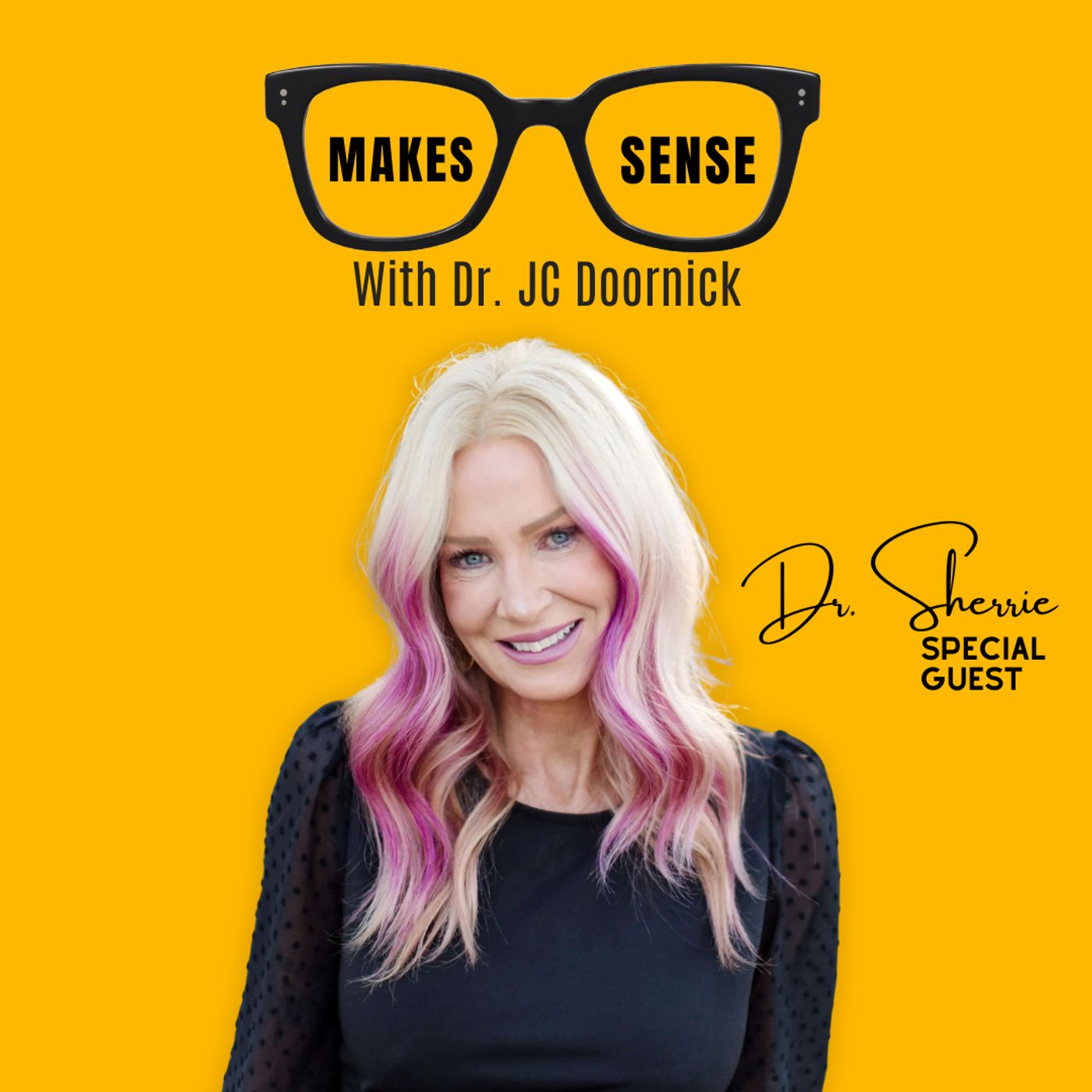
Makes Sense - with Dr. JC Doornick
Why "Choosing Yourself" Might Mean Losing Your Family with Dr. Sherrie Campbell - E165
01:06:40
Dr. JC Doornick sits down with Dr. Sherrie Campbell to explore the controversial truth that sometimes healing requires walking away from the people who hurt you most. If choosing your peace means losing your family, this episode will help you understand why “No Contact” may be the most courageous form of self-respect—and how You Are Home teaches us to build safety within ourselves.
Loading summary
Transcript269 lines
- [00:00]
Dish Network Announcer
For 45 years, Dish has been connecting America with the best in family tv, entertainment and advanced technology at an unbeatable value. And that commitment continues with our new 45th anniversary special offer. Get the lowest price in satellite TV starting as low as $89.99 a month. In a world of rising costs and hidden fees, Dish stays transparent, reliable and honest, just like our founders intended. Learn more by calling 888-@add dish or visit dish.com terms and conditions apply.
- [00:30]
Dr. JC
Is cutting ties with a toxic parent an act of cruelty or the ultimate
- [00:36]
Co-host or Interviewer
act of self care?
- [00:37]
Dr. JC
Dr. Sherry Campbell joins the Makes Sense with Dr. JC podcast to discuss why the no contact strategy is the only way to achieve true internal safety. In this episode, we explore the myth of the good parent. Societal shaming around family estrangement and and what it really takes to break that family cycle and grant yourself permission to walk away. If you've ever been told but they're family while your mental health is suffering at the same time, well, then this episode is going to challenge everything that you thought you knew about healing. Have you noticed that the world that
- [01:13]
Co-host or Interviewer
we live in has been doing most
- [01:15]
Dr. JC
of the thinking for you? That your beliefs, perceptions, reactions, fears and doubts have been shaped by unsolicited outside noise? How easy it's been for you to slip into that default sleep walking mode
- [01:29]
Co-host or Interviewer
and label it as life and reality? Yeah, that ends here. Welcome to the make sense with Dr. JC podcast.
- [01:36]
Dr. JC
This is your opportunity to start thinking for yourself, reclaim control, and step back into that role as the shock caller
- [01:44]
Co-host or Interviewer
and dominant force of your own reality.
- [01:47]
Dr. JC
It's when you change the way that
- [01:48]
Co-host or Interviewer
you look at things that the things that you look at begin to change.
- [01:52]
Dr. JC
So let's wake up, let's rise up, and let's make sense of why and how shift happens.
- [02:01]
Dr. Sherry Campbell
Makes sense.
- [02:04]
Dr. JC
We're always told that family is everything. But what if the people that were supposed to protect you are the ones that you need protection from? Great morning friends, great morning world. I want to welcome you back to
- [02:17]
Co-host or Interviewer
the make sense with Dr. JC podcast
- [02:20]
Dr. JC
where we take things that don't make sense and, well, make sense of them. Today we're stepping into one of the most uncomfortable conversations in healing, and that's the myth of the good parent. The pressure of the but they're my family and the quiet, often judged decision to just simply walk away. Today I'm joined by somebody who has been willing to say what most people are just thinking but too afraid to say out loud. And. And that is our guest, Dr. Sherry Campbell. What I like about Dr. Sherry is that she doesn't just talk about healing in a way that feels good and seems appropriate to society. She talks about it in a way that's actually honest. And it's so refreshing because a lot of the personal development world still holds onto the idea that every parent is a good parent and that every relationship should be saved. And forgiveness always means reconciliation. And Dr. Sherry's been willing to challenge that and say something that for a lot of people, feels like a deep exhale, but also a little terrifying, and that sometimes the most loving thing that
- [03:30]
Co-host or Interviewer
you can do is just simply walk away.
- [03:33]
Dr. JC
It is my honor and privilege to welcome back. Not everybody comes back to the now makes sense with Dr. J.C. podcast.
- [03:42]
Co-host or Interviewer
Dr. Sherry Campbell. So good to have you here.
- [03:45]
Dr. Sherry Campbell
Thank you so much. I'm so honored. I'm a comebacker. I. I love that. Thank you. I'm very honored.
- [03:50]
Dr. JC
Well, you'll soon see why.
- [03:51]
Co-host or Interviewer
I mean, other than the fact that we love you. My wife, who has a thriving sex therapy practice, but also a very interesting relationship with her parents.
- [04:02]
Dr. JC
We were having this conversation and we
- [04:04]
Co-host or Interviewer
said, we need to catch up with. With Dr. Sherry. And then all of a sudden, I'm like, oh, my God, she's got a new book.
- [04:10]
Dr. JC
What I'd love to do is something
- [04:12]
Co-host or Interviewer
that I do for all of our
- [04:14]
Dr. JC
guests, and it's something that a lot
- [04:17]
Co-host or Interviewer
of people don't really get the opportunity to receive.
- [04:19]
Dr. JC
And I just want to tell you
- [04:21]
Co-host or Interviewer
first what I like about you.
- [04:22]
Dr. JC
This is the treat, right?
- [04:24]
Dr. Sherry Campbell
I love it. Yes.
- [04:26]
Dr. JC
Other than the fact that I love your hairstyle.
- [04:29]
Co-host or Interviewer
And we were just talking, you know, the last time I saw her, you know, and a lot of people know she has pink streaks in her hair. She doesn't have them, but she looks beautiful, and she looks great. But I was like, where's the pink hair? But anyway, we always love to see what Sherry's hair looks like because she just doesn't age. This.
- [04:46]
Dr. JC
What I like most about Dr. Sherry
- [04:48]
Co-host or Interviewer
is that she doesn't just talk about healing in a way that feels and seems appropriate. I think we'll probably see that soon.
- [04:59]
Dr. JC
She talks about healing in a way
- [05:00]
Co-host or Interviewer
that's actually honest, and it's such a
- [05:03]
Dr. JC
refreshing thing to just have a conversation
- [05:06]
Co-host or Interviewer
about what most people are not willing to talk about.
- [05:09]
Dr. JC
So a lot of the personal development
- [05:11]
Co-host or Interviewer
world still kind of holds on to this idea.
- [05:14]
Dr. JC
And, you know, viscerally, I think we
- [05:16]
Co-host or Interviewer
all feel it that. That every parent is good no matter what. And, you know, that's not.
- [05:21]
Dr. Sherry Campbell
We do feel that we're programmed.
- [05:24]
Co-host or Interviewer
That's right.
- [05:24]
Dr. JC
And every relationship should be saved, and forgiveness always ends with reconciliation. And she's been willing to challenge all
- [05:34]
Co-host or Interviewer
of that stuff and say something that for a lot of people, like I said, feels like, kind of like a
- [05:39]
Dr. JC
deep exhale, but also at the same
- [05:42]
Co-host or Interviewer
time, terrifying at the same time.
- [05:46]
Dr. JC
That's just such a refreshing concept. And like I said, we've asked you
- [05:51]
Co-host or Interviewer
back on the show because we're so excited to just catch up, but, man, is this an important topic. And what a perfect time for your new book, which we'll get into. But my first question to you is this.
- [06:02]
Dr. JC
What's it like to be Sherry Campbell these days?
- [06:05]
Dr. Sherry Campbell
Wow. Okay. So I'm actually kind of introverted. So I've become so, so, so public over the course of the last 10 years because. But it's your family. My first book was like the. I was the first expert to put no Contact as an option into the clinical literature. And. And so I didn't realize that 10 years later there'd be this whole movement. And I had no intention of starting a movement. I just wanted to give an option. And today, I think Cancel Culture, no Contact, are very confused, and we can probably talk about that. But I'm very blessed to be where I'm at. I feel very grateful. I think my favorite part of life is creating and writing books, and I've done seven, and I'm on a contract for another one because I went viral on a new topic on. I labeled something the Low Effort Family, and that went wildly viral. So we're working hard to be first to market on that, as we have other influencers already trying to steal, which is common, but it says the work is important, which is wonderful. But no Contact, I think, has been very triggering against societal norms and battling up against a cognitive dissonance that all parents are good. And my TED Talk that I did is titled Not All Parents are Good. And that's not to say that there aren't really good parents. Not all parents are bad, but facts are not all parents are good. And so I know that I can be controversial for people.
- [07:36]
Dr. JC
Well, so I'm.
- [07:37]
Co-host or Interviewer
I'm taking it that life is good on Planet Sherry. Yeah.
- [07:40]
Dr. Sherry Campbell
Yeah.
- [07:41]
Co-host or Interviewer
That's awesome. It's funny we were talking a little bit about this because, you know, I. I've got the podcast now, and I've got the.
- [07:48]
Dr. JC
The book and all of these things,
- [07:50]
Co-host or Interviewer
and I'm just learning more and more what that. Careful what you ask for, it just might get it. Thing is, and because There's a lot
- [07:57]
Dr. JC
of responsibility that comes when you put
- [08:00]
Co-host or Interviewer
yourself out there and share from the heart, which is a very noble thing to do.
- [08:06]
Dr. JC
But if a lot of people like
- [08:07]
Co-host or Interviewer
it and it helps them, well, it
- [08:09]
Dr. JC
sucks to be introverted at that time.
- [08:12]
Dr. Sherry Campbell
I'm a friendly introvert, thank God.
- [08:14]
Co-host or Interviewer
Friendly introvert. Yeah. I think a lot of people that don't follow you'd probably be surprised by the end of this episode that you're introverted. Let's get right into it. I love this idea of no contact.
- [08:25]
Dr. JC
So when it comes to no contact, it's such a controversial thing.
- [08:30]
Co-host or Interviewer
You know what? The same time, powerful and even something that could be looked at as something that people could be abusing. You know, there's an unhealthy and a
- [08:41]
Dr. JC
healthy side of no contact. No contact. So I would love you to just
- [08:45]
Co-host or Interviewer
kind of share with us from your perspective.
- [08:48]
Dr. Sherry Campbell
Yeah.
- [08:48]
Co-host or Interviewer
What that I will.
- [08:50]
Dr. Sherry Campbell
Absolutely. I'm going to grab my dog. She wants love. So I think that I've relabeled no contact as protective estrangement because no contact has started to get lost. Just like the word narcissistic or the word toxic. Right. It's. It's all starting. It started to get lost. So really it's protective estrangement. I am protecting myself from a family unit that is abusive and harmful to me. And I have no interest in having them in my lives on any level ever, because I did 45 years of that life and that didn't lead me anywhere but into greater levels of. Of low self worth, self doubt and those types of things. I think that unhealthy no contact, I would call that cancel culture. As a therapist, I have never, and I will never encourage someone to go no contact. My hope for everybody is that you are not like me. And left with no other choice, cancel culture has turned into this. I'm not getting what I want when I want it. So I'm going to go out and publicly cancel you as a way to manipulate you to give me what I want.
- [10:09]
Dr. JC
Right.
- [10:10]
Dr. Sherry Campbell
So all of that is contact. Right. My mom did that stuff to me. It just wasn't called cancel culture back in the day. It was called the silent treatment. And she'd give me the silent treatment a lot. And so I was sort of never knowing where I fit. And then when someone is just silencing you, it's actually more uncomfortable than if they give you words. And so I would activate and try to close that gap, you know, make the pain go away. Sort of like we get into our car. And if we don't put our seatbelt on, we have this negative noise. So to get the noise to go away, we put the seatbelt on. That's sort of what it's like to close the gap of cancel culture. And then there's this stage of relief when contact has been reestablished and maybe that person who's canceled you now has gotten what they want. But in your mind you're like, okay, well, I'm not in pain anymore. That is cancel culture. That would be unhealthy. No contact. I didn't have those feelings when I established no contact. But the gift I did have is that they cut me off because they followed the wrong car to a restaurant. So at that moment I was like, I now am just recognizing I'm being abused over things I did not do wrong. It's not my fault. Someone followed the wrong white car. They wouldn't answer my calls to try to help them to the restaurant. And then they just annihilated me in public in front of my daughter at a restaurant was awful. And my mom then silenced me and which was normal. And I knew that something in my body had changed, that I was never going to go through this again, not in front of my kid. It would be the first and last time that she would do that. And it was. And so I never mended the fence. And now it has been 10 years. I was done for good. Something in me, I would call it like a bandwidth. I didn't know that that could break, but it can. So it did. And I went through five years of pretty bad post separation abuse from them. My rebirth day is what I call it is June 12th. And so I will be 10 years of no contact. June 12th. I don't hate them. I love them on a high level because I don't like them and I don't respect them. And I simply don't have anyone in my life that I don't like or respect. I think about them daily. It's almost as if there were an electrical cord that connects me to them. The cord is still there, but there's no current anymore. The relationship is there. Dragon. It's just that it used to be active and verbal and now it is inactive and not verbal. And I have peace. And I guess that I could share something in that there is a stage after estrangement. And I did not know that until I had a remarkable dream about two months ago. And I'm actually really not a dreamer, let alone profound dreams. Like, my dreams are just like, what the Hell, but this one was profound. And what I got out of that dream is that I don't feel at all above my family in, like, dominance or ego or knowing, but I do feel above them in development. And what's happened now is that they're just not relevant in my life anymore. These people who had such a powerful presence of defining my identity and decision making and, you know, all these things, they just don't have any relevance in how I choose to be in my life, what my decisions are, what my path is. And it's. It's a really beautiful feeling because any pain I have about them, which I do, and I talk about it in the new book, I Built a House. So the pain's in the basement. It's all still there, but there's no current pain. And so every pain that I have is triggered pain, but there's no more current pain. So they just don't have any relevance anymore. I don't wish them any harm. I'm not going to invest any energy in that. But they don't have any relevance. And the level of liberation that that makes me feel made me realize, like, now I've moved from estrangement into self integration. I'm very much integrated into my own self, my own identity, my own idea of parenting, my. My books, my. My. My partner, my love, my step kids, like, just Sherry. I'm just very integrated. And it took. I'll be 55 April 9th. So it, you know, it took a very long time to really become strongly identified after having to really go through the basement work of my psyche and clean out all those crime scene boxes that were committed against me and, you know, move my life up the house and up the floors. And I still visit the basement because I still get triggered, but I visit there from a place of a much stronger sense of integration.
- [15:17]
Co-host or Interviewer
So, yeah, yeah, there's just so many fun things to unpack there. I always look at the idea once you've decided who you are and where you're going, and it's easier to identify what no longer applies. And I think that one of the reasons that people struggle with this concept, the myth of the good parent, is that they haven't really decided where they're going, and they can't make the correlation that they can't go there with. With this current reality. You know, let's unpack that.
- [15:48]
Dr. JC
And I can't wait to get into
- [15:50]
Co-host or Interviewer
the new book because I can just tell there's so many awesome analogies that you use that just really help people understand It.
- [15:57]
Dr. JC
But let's talk about this myth of the good parent.
- [16:00]
Co-host or Interviewer
You know, I want to unpack that a little bit, because a lot of
- [16:03]
Dr. JC
people perceive that even questioning that your
- [16:07]
Co-host or Interviewer
parent doesn't have some inherent good.
- [16:10]
Dr. JC
And this whole concept of, like, oh, well, I mean, like, everybody makes mistakes and they. And they mean well. It just seems like we're not supposed to do that.
- [16:19]
Co-host or Interviewer
So. So let's unpack a little bit the. This myth of the good parent.
- [16:23]
Dr. Sherry Campbell
I think that all people assume that their parents wanted children to love. And I think that different generations maybe have different children for different reasons, but having children isn't hard. Every uterus is kind of designed to do that. Maybe you struggle with your ovaries. But my point is, is that anyone at any income, any addiction level, any educational level can get pregnant. It's not special that that can happen. What makes parenting special is the way that you love your children. I think there was a time that people had kids because that was the next thing you did, like, on a. You got married. Well, now you need to have kids, right? But I think that there are many parents who have children so that they can have a consistent source of attention and supply. Like in the metaphor in my book is like, I'm born into the house, but it's not owned by me, because developmentally I can't do that yet, right? I'm dependent for quite some time. But there are parents who don't want to hand over the title of the property to the person who is born to inhabit it. And then they make a mess of your porch. So you move them to the yard, then they make a mess in your yard. And all the time, you know, you're communicating with them, like, hey, you know, you just kind of, like, made a mess on my porch. And someone like, my mom would go, oh, it's your porch, right? So after decades of that, I'm like, you know, maybe we'd get along better if I just, like, moved her into the yard, because she's kind of run me out of empathy for her at this point. And when they go to the yard, you're kind of like, you know, they've got issues. I went through this whole phase of they're doing the best they can for where they're at, Right. You know, my mother was married three times before I was 11 or 12. My dad was married five times, my mom four. Both of them very toxic. So in the yard, I spent a lot of time there and a lot of hope. I was so hopeful that when I moved her to the yard, that we would get along better because we would see each other less. Right? Which is sort of sad that to get along with someone you have to see them less. Right? But that's what was going on in my mind, like maybe if I just see her less. So I moved states and I tried to make it work, but she ruined every barbecue, every family get together. She destroyed my yard, ruined my flowers. And so I had to move her off my property to the fence. And that was extremely painful for me because I did not want to do that at all. I was hoping I would find that maybe she was just emotionally immature and that I could find ways to handle her, but I just couldn't. So she went out to the fence because I figured, well, then the HOA can clean up her mess, not me. And so that's like high contact. The yard would be low contact where you have sympathy for them. And then at the fence, I kind of had compassion for her because I lost empathy. So I moved her to sympathy. And then she's at the fence. So she tried to break in a lot, did a lot of destruction to the fence, had a few successful break ins to the yard, messed up the yard. And the more powerful of a no, I said, then she moved herself to the barricades in my neighborhood, metaphorically, and started a smear campaign. And that's where we've been since I had to board up my house for a little bit and stay inside. So that's sort of the metaphor of the book because I think emotional location makes this easier to understand. Whenever a parent gets rejected and they go to the neighborhood cul de sac and you've been trying for 45 years to have a relationship with this person and they go out to the, to the neighbors and go, I don't know what happened. She just suddenly cut me off. Yeah, well, like, what about the porch? And like the decades you were in my yard? And so it's just very gaslighting. And so the book really helps you to know people's emotional location in your life. I would hope very few people are going to have to go to your fence. There's many, many people that you can tolerate in your yard. They may make a TD mess, but they're like, oh my God, I'm so sorry. Right. So they fix it. I just didn't have that. So I created a whole structure. And the reason I wanted to do structure is I'm. This book is like designed to build your identity. I was the type of person who could sit somewhere in Public and not feel settled. But by all accounts, in the outside world, I look so successful, I look so confident, I do all these things, but I'm actually like scanning everybody's body language. Their facial expressions shifts in tones of voice, just reflect flexibly. So then I thought, well, maybe that's just wired that way, right? Maybe I'm just sort of fundamentally flawed or just maybe a bit too sensitive. And it actually just wasn't any of that. I just never had any emotional structure to, to know how to navigate or regulate my emotions. And so I was always in reaction and fear and anxiety and nervousness and so building this little house. I mean, I've been talking this language for a long time. Like there's basement monsters and those are the voices of your inner child. And now I really know when I get triggered from the outside. Let's say an abandonment wound activates and I'm on the top floor. I. I'm on the express elevator, no choice. And I have to go meet that monster. And I don't ever feel anymore. I'm going backward. The elevator isn't about going backwards in this book. It's about going inward. And so I really learned to love my monsters and now I can regulate them because I have a structure. So I think we need structure to heal this. And when we don't get any structure from parenting, which is what parenting is supposed to give us, and we have dysregulated, out of control, immature, toxic parents who are on marriage marathons like my own, or they're addicted, or they're making the oldest child raise all the kids. Whatever your situation is, not all parents are good. Some of them are terrible, terrible abusers. And they don't get caught because they get a label of parenting slapped on them. So it's really wild to me what people could get away with under that label.
- [22:33]
Dr. JC
Very often when I hear guests speaking,
- [22:36]
Co-host or Interviewer
I'm always just thinking about my audience. And I'm thinking some people are listening to you speak and saying, oh my
- [22:43]
Dr. JC
gosh, yes, yes, that, that.
- [22:47]
Co-host or Interviewer
But then some people are like, God, this woman seems like she's a big thumb sucking complainer.
- [22:53]
Dr. JC
You know, and then, and then there's also. Well, but there's also this group of
- [22:58]
Co-host or Interviewer
people that doesn't even know that they have a say in the trauma. You know, like there's this, there's a
- [23:08]
Dr. JC
very large group of people that are just saying, especially cultural wise and everything. There's so many people out there that are thinking that, you know, you should be grateful and all that May be angry.
- [23:19]
Co-host or Interviewer
I can't even imagine some of the feedback you get.
- [23:21]
Dr. JC
But my question is this because this
- [23:24]
Co-host or Interviewer
is kind of where my work is. You know, I'm very, very interested in perception and where it comes from. Because I think the first step to change the way that you look at things is you got to kind of understand where the way you look at things comes from.
- [23:39]
Dr. JC
So do you think that people knowingly or unknowingly stay in toxic family dynamics as a result of love? Or is it more about like programming
- [23:50]
Dr. Sherry Campbell
and conditioning for the child? I think it's always about love. You know, children want to have the best relationship with their parents that they could ever have. There will be no one in your life, no partner, no friend, no nothing that will want a relationship with you the way a child will. And parents exploit that. Parents really have the opportunity to then also have the best relationship with their children they could ever have of any relationship in their own life. If you mess that up, you don't want to do that. I'd love to give you an example of some of the stuff I hear from the people who call me a thumb sucking baby, but there's cursy words. Can I do that on your show?
- [24:31]
Co-host or Interviewer
100%.
- [24:34]
Dr. Sherry Campbell
So the subject of this email I got, if people believe there aren't sick parents out there, and then people go, no, that's extreme. This is not extreme. This is not extreme. I was called a prick by my dad growing up. I didn't even know girls could be that, but who's counting? So I get this message, they went through my website to contact me and it's, it's subject is sick. Here's the message. It's so iconic that I actually had to keep it because I'm like. And also the grammar is a whole other thing. But that's, that's just me being petty. It says, you are destroying lives, mother's father's, parents. You are as sick as they get with this insane philosophy as you ascribe out of your own mental illness. Next sentence, after calling me mentally ill, you are ruining lives for good, you stupid ass dumb fake face person. Just stop it.
- [25:32]
Co-host or Interviewer
Wow.
- [25:32]
Dr. Sherry Campbell
Okay, so if any of you think I'm a baby, a thumb sucker, like I saved that for funsies. So I think I'm pretty strong. And I would also like to state that no one in their right mind would ever want to face the kind of bravery and strength it takes to be all alone in this world without family. So I think you need to step back and reconsider that. Parents like that. Obviously one of their children found my work. Thank God this exists every day, everywhere, all the time. Why should any child take that? I'm a stranger to her, so I can only imagine what she does with someone she's comfortable with. Oh, because I looked her up, see, because she was not smart. And I got her email because it came through contact me. I mean, there was another one. She had a follow up. So I find it so ironic that I'm being accused of being mentally ill. And then her next sentence is, you stupid ass, dumb fake face person. I'm not sure what face person is, but so fun. So I feel like what people don't want to look at is this. They want to think this is the exception, right? This is in families, regardless of education level, whether of a socioeconomic status, it doesn't matter. Wealthier, more educated people sometimes aren't any better than this. Okay? So it exists everywhere. If you want to control your children and have ownership of their lives and you guilt them into coercive, obligatory behaviors, you are not parenting, you are not loving, you are forcing and you are controlling and you are criticizing and you are shrinking and, and minimizing and damaging the spirit of a small child. That should be a felony. I don't understand why people aren't angrier about this. We are talking about child abuse. That people aren't angrier is far more shocking to me. One thing I said in my TED Talk is we're not allowed to talk about bad parents in a culturally open and safe space. And you know what? I just don't care. I'm going to talk about it. So if you think I'm a baby, why don't you try on my life for a day? Walk in my shoes, get messages like this every day and then tell me that I'm a baby. I dare you.
- [28:09]
Co-host or Interviewer
I just get such a kick out of unconscious behavior. You know, this is.
- [28:16]
Dr. JC
You'll, you'll see when you, when you get my book.
- [28:18]
Co-host or Interviewer
The reason why I wear this hat, it says huh.
- [28:23]
Dr. JC
And what it stands for is haven't
- [28:24]
Co-host or Interviewer
made up my mind yet. Meaning when I hear people say stupid shit.
- [28:30]
Dr. Sherry Campbell
Yeah.
- [28:31]
Dr. JC
Before I let my knee jerk reflex
- [28:36]
Co-host or Interviewer
respond to it, I just step into an open and curious space and try to find a way to understand why they're saying stupid shit. And I'm sitting here listening to what you said and I'm a dad, right? Since, by the way, since we, since we last spoke, my wife and I went and adopted a little girl. And that's a Whole story you'll find out about at the end book.
- [28:59]
Dr. JC
But we've got three kids, and, you know, my greatest desire, whether it's healthy
- [29:06]
Co-host or Interviewer
or unhealthy, is that my kids look at me and point at me like I was never able to do and say, that's my dad. That one there.
- [29:14]
Dr. JC
Right? That's. That's. That's how. That's the most successful moment of my life.
- [29:19]
Co-host or Interviewer
But at the same time, and I think this is where parents can, you know, up but be healthy at the
- [29:29]
Dr. JC
same time, I do a lot of stupid. I say things that's probably damaging and traumatic to them and stuff, but the difference is that I'll circle back and I'll let them know, hey, dad was an idiot right there.
- [29:48]
Co-host or Interviewer
And I don't know if you even picked up on it, but what I said was not okay, and it's not true.
- [29:53]
Dr. JC
So I just want.
- [29:55]
Co-host or Interviewer
For everybody that flies off the handle and gets mad at somebody like Dr. Sherry, I would just entertain the idea that the reason why you're mad is because you're going to be outed or something for not being perfect. It's not about being perfect. You know, it's about, like, even looking at her with this beautiful dog here. She's doing such a great job parenting this little puppy, but she's not perfect with that dog.
- [30:19]
Dr. JC
But I bet you after she misses
- [30:21]
Co-host or Interviewer
something, maybe forgets some kibble or something, she goes back and says, sweetie, I've totally up, and I didn't give you your kibble. So what we're talking about is an environment where parents are abusive in nature but not recognizing it at all and not considering conversing about it. And, you know, that's that narcissistic concept.
- [30:44]
Dr. JC
Here's an interesting question. At what point does healing, because you
- [30:49]
Co-host or Interviewer
talk a lot about healing, actually require,
- [30:52]
Dr. JC
like, almost like a kind of betrayal of who you used to be? This is what I find interesting is this idea of.
- [30:59]
Dr. Sherry Campbell
That's a great way to phrase it.
- [31:01]
Dr. JC
Like that version of you that kept saying, well, maybe this time will be different. Like you said when I put her in the backyard.
- [31:07]
Co-host or Interviewer
And by the way, she didn't put her mom, like, in a hole in the backyard. These are all metaphors.
- [31:11]
Dr. Sherry Campbell
What's the metaphor?
- [31:12]
Dr. JC
How does that transpire where. Where we actually almost feel like we
- [31:17]
Co-host or Interviewer
have to betray who we used to
- [31:19]
Dr. JC
be for who we want to be,
- [31:21]
Dr. Sherry Campbell
so we never really got to be who we were. Like, I. I had an insight the other day on my own show that I never was given any worth to lose it. Sadly, I just had no compass for self worth. I was never offered any to lose. And I want to circle back to it isn't about perfect parenting. You don't want to eliminate your humanity. Like honestly, some parents who try to be perfect end up being abusive out of their perfection desires, right? Because they're thinking more about being a perfect parent than they are actually just loving their kid. And repair is everything. If you mess up like you had just stated, you go back and you just repair those things. I certainly had to be a person of survival, right? I was not allowed to be a person of authenticity or to even try authenticity on. I didn't. Wouldn't even know what that was. So I was a programmed girl to love them no matter what they did to me and to just always bend forward, flex, shift, adapt, assimilate, adjust to all their stuff, their moods, their, their new relationships, their hatred of me, their love bombing of me. I never really was safe enough to establish my own identity. So undoing my sort of like false self or manufactured self that I talk about in my previous book about emotionally abusive parents, it took a long time and I did a lot of research. I started taking personality inventories and you know, I did my human design chart and my astrological chart. I did the enneagram, the, you know, I just, those were all my answers to my questions. And I started to build something sort of educationally, did a lot of journaling on it and I'm still in the process of identifying myself and I hope I will always be.
- [33:19]
Road Safety PSA Speaker
I drive my bus in a busy city. I that's why road safety is so important to me. I know that I must slow down and be extra careful when I make a wide turn. Buses need more room than cars. Everyone can help keep our roads safe. Next time you're driving, remember to give buses plenty of time and space to finish turning before driving ahead. Let's all plan to share the road safely. Learn how at www.sharetheroadsafely.
- [33:50]
Dr. Sherry Campbell
i view authenticity, I think now very differently than, than maybe the definitional aspect of it. It's not all my good traits, you know, I mean my authenticity or my wholeness would sort of have to include all the parts. And so I'm going to be the most authentic when I'm the most flawed and genuine to those flaws and desiring to heal those and also when I have my shining amazing moments. But there's always a lot of work to be done. You know, when you come from a family like this, it's There's. There's a lot of work, and I'm at a point now that I just kind of hope my inbox is still full of that work when I die. It's become my most passionate pursuit.
- [34:32]
Co-host or Interviewer
Wow. Man, this is gonna be a really cool book. I could just tell. And I. I just. I just love the whole house concept and all of that. That's going to really help some people.
- [34:45]
Dr. JC
That being said, one of the coolest
- [34:48]
Co-host or Interviewer
things I think that I heard from Camp Sherry now in this. In this new reality is. Is this. This phrase emotional homelessness? I mean, like, God, how empowering is it for someone to realize that they were homeless in a different way?
- [35:05]
Dr. JC
What does that actually feel like for
- [35:08]
Co-host or Interviewer
somebody that's living it to. To experience emotional homelessness?
- [35:13]
Dr. Sherry Campbell
You're in a room full of the people who should love you the most, and you're told that they should love you the most in every area you look. It's in every card, it's on every commercial. It's. We cannot get away from this indoctrinated belief. It's on the TV shows. You know, it's everywhere. And I was in a room full of people who felt more like predators or strangers to me than anyone who really loved me. I was made to feel I was in the way. I was too much. I needed too much. I asked for too much. I was annoying. I was a burden. I was bad. I was emotionally homeless. I had a home. I lived in a box with the people, but there was no love, not for me. And I was also sort of the chosen one. So I could see that they could treat other people that way, but not me. I mean, I. I used to think my mom had like a. Like a social voice or a phone voice. And I always wanted phone voice lady to love me. She cannot. She has not ever loved me. As shocking as that may feel, the people, like, we know when we're loved, and we've very clear when we don't. And I've never been given the feeling. I mean, the original title to the. The book, this book, I like better, but it's already been used. But it was Reclaiming home. And so we settled on you are home, because it's not an external house, obviously, you are the home. It's your inner world, and we structure your outer world. It's just sometimes easier for people to take things. And I've been an elite athlete my whole life. All of my best coaches and mentors have used metaphors, and I've always related to those far more than Clinical jargon. So instead of using boundaries, I'm doing emotional locations. It's a porch, a yard offense. There's a. A basement, a ground floor, a mindfulness middle floor, and a top floor of manifesting and an elevator and stairs. Okay. So all of that, I broke it down to something very concrete so that I could help rebuild your identity from the ground up.
- [37:16]
Co-host or Interviewer
I love this so much. I have this fun little game that I play, but now I'm gonna. Everybody's gonna know.
- [37:23]
Dr. JC
So I have.
- [37:24]
Co-host or Interviewer
All over my office, I have all sorts of fun things. But over here I have my. What I call mission control, which is my. My goals, my goals, my dreams. And, you know, it's just. It's a tactical way for me to make sure that I'm like, moving towards
- [37:39]
Dr. JC
my goals and dreams very often.
- [37:41]
Co-host or Interviewer
And, you know, we're talking about parents here, but very often people don't follow through.
- [37:47]
Dr. JC
Like, people say, I'm going to do
- [37:48]
Co-host or Interviewer
this, and they don't follow through, or
- [37:50]
Dr. JC
people end up screwing me over or something like that. So what I've done, and I think
- [37:55]
Co-host or Interviewer
this is what makes my mission control really cool. And it's very much like your house analogy is on the bottom right. I actually have a jail cell. And unbeknownst to people, when people kind of fuck me over, I don't like, tell them or anything like that. I just move on because I don't have any time. And I don't know if I even care, but I put them in the jail. And it's just such a wonderful feeling to just be like, you sit there and, you know, I'll let you out if I decide.
- [38:30]
Dr. JC
Just listening to you talk and also
- [38:32]
Co-host or Interviewer
going through this myself. God, you know, like, if I come
- [38:35]
Dr. JC
on your show one day, you'll hear
- [38:37]
Co-host or Interviewer
all about all my.
- [38:38]
Dr. Sherry Campbell
But yeah, you will come on for sure.
- [38:40]
Dr. JC
Well, it's in my book, so it's relevant. I know that it's been like this for me, but it almost seems like people get confused between the difference of actually doing some healing and just learning how to get better at tolerating. You know, like, can you just talk a little bit about the difference there?
- [39:01]
Dr. Sherry Campbell
Yeah, there's this. This new thing going on in mental health, this saying that if you're really healed, then you could go back and be happy in the environment that abused you.
- [39:12]
Dr. JC
Right.
- [39:13]
Dr. Sherry Campbell
I'm like, okay, carry the two. Do the math. Like what? Like, so a marker of my healing is to go back to my abusers and. And do better at it. Like, I don't Know what kind of thought is creating this out there. But you know, I would really hope that healing would be a marker of you not having an unconditional tolerance to disrespect.
- [39:37]
Co-host or Interviewer
Right.
- [39:37]
Dr. Sherry Campbell
I cannot believe and I will never ascribe to the idea that my healing should make me so well, that I could go be around the people who hurt me the most. I would hope that my healing would actually take me in the opposite direction. That my self respect, my self love and my desires for self preservation and a wholeness to my life would understand that that would be the last thing that could help me heal. So I want to keep moving forward and to do that I have to have tremendous levels of bravery to step in and stand on business for my self respect. Because if I don't do that, no one else will. That's the vulnerability of this. Me being more healed isn't going to make my family have any more respect for me. I promise. I've lived it. So I, I, I, I know. So I really hope if you're a listener and you're thinking, well, maybe if I just heal enough, then I'll be able to be around them. I don't think you can heal in the same environment that's poisoning you.
- [40:46]
Co-host or Interviewer
It's almost like they're trying to find a more intense suntan lotion to handle the heat, the sun that's getting closer.
- [40:56]
Dr. JC
I want to talk a little bit
- [40:58]
Co-host or Interviewer
about the other side of this. And this is all the maniacs, angry people will probably love this question.
- [41:06]
Dr. JC
Well, I want to look at the, the parent that is maybe doing the
- [41:11]
Co-host or Interviewer
best they can, really, and also owning, you know, up and saying they're sorry
- [41:16]
Dr. JC
and, and making a concerted effort.
- [41:18]
Co-host or Interviewer
No, let's just fabricate this parent that's actually doing the best that they can. But the child, for whatever reason, is not even giving them space for their own growth and healing.
- [41:34]
Dr. JC
So what's the difference between setting a boundary? If I have a toxic parent and I set a boundary, how is that
- [41:44]
Co-host or Interviewer
different by me actually trying to control them in a way?
- [41:49]
Dr. JC
Because sometimes I would assume this happens in reverse. Am I right?
- [41:53]
Dr. Sherry Campbell
Oh yeah, it absolutely does happen in reverse. I think the first thing to understand is the miseducation around boundaries. Boundaries are always designed to keep people in your life, never out right in. So if I say, hey, Dragon, you know, when you said this in the show, it really hurt my feelings and I know you, you would be like, oh my gosh, Sheri, I'm so sorry. I would never want to hurt your Feelings. I'll be very mindful about that going forward. And I will not. I'll not do that again. I will make sure that. That I don't do that again. And then you're in my life, and. And you heard me and you saw me and you wanted to respect my boundary. Not out of any judgment of if you think my boundaries. Right. But because you love me and you value the relationship you have with me enough to make this minor adjustment. Right. For example, I have a patient who was called an idiot growing up by her parents. And so one day she's dating this guy, wonderful man, by the way, but he's like, oh, my God, babe, you're such an idiot. And he really hurt her. And he did not mean it genuinely. He did not mean it in any way. That was real. It was. He. He, in his mind, was just being plainful, playful. But that was a very triggering word for her. And he felt so bad. He's like, I will never say that. Not only will I never say that to you playfully, but now I've learned I don't want to say that about anybody because, like, you never know what they've been called or, you know, anything like that. So he wants to stay in her life. So every boundary you get is an opportunity for a greater depth of love and respect. So there are toxic adult children out there. In fact, I'm treating a mother right now who raised four of them. She set no boundaries with them. She's enabled them, and she's terrified of her kids now. So it does work in reverse. So I think there's a couple of other situations that I'll circle back to that you talked about. Let's say you're established, no contact, and there is a parent now going into therapy, really doing the deep dive on why their child would cut them off. And they're taking a very guided and heartfelt path to trying to reconnect with this child. Because of our intuitive body, we can really tell when it's. Sorry you feel that way. I guess I'm a terrible mother, which is what I got.
- [44:28]
Co-host or Interviewer
Yeah.
- [44:29]
Dr. Sherry Campbell
From. Wow. I. I have really been missing you, and I didn't understand your boundaries at first, and I was very angry about them. But I've gone into therapy, and I recognize all the mistakes I've been making, and I'm just so brokenhearted that I hurt my own child in these ways. And I'm willing to do anything to repair with you. And I will also accept if what I've done is too unforgivable for you to repair. I just really want you to know that I'm doing my work and I'm really trying and I will always be here for repair. Sorry. Guess I'm a terrible mother. And that.
- [45:09]
Co-host or Interviewer
Right?
- [45:10]
Dr. Sherry Campbell
Fundamentally different. If my own mother came at me with that kind of an apology after everything she's done, all the books I've written, I would hear her out at the very least. Okay.
- [45:23]
Co-host or Interviewer
It would be such a. A delight to even just know that she made that distinction. Even if she reverted back to her unhealthy behavior after.
- [45:32]
Dr. JC
What a win.
- [45:33]
Dr. Sherry Campbell
What a win.
- [45:34]
Co-host or Interviewer
Yeah.
- [45:35]
Dr. Sherry Campbell
And that will never happen. Okay? Because what happens in the ego of a toxic parent is my truth was rebranded as slander. So all of my truths, every word in every book has been rebranded to her to protect her ego is slander. She knows exactly what she's doing. She knows exactly how she raised me. She did those things intentionally. We do not accidentally show up in a relationship and not know how we're treating someone.
- [46:07]
Co-host or Interviewer
Right.
- [46:08]
Dr. Sherry Campbell
Okay. We may not always be in control of our reactions. We may have to go in and repair after. But to not do any of that, to not try to be better at. I'm trying to be better all the time. Right? I always want to be better. I want to be a better fur mama. I want to be a better mom to my 21 year old who's constantly growing and shifting and giving her more and more of the independence that she needs. And I find her so interesting and I'm so curious about her and I love her so much. And I have such an incredible relationship with my daughter and I've made so many mistakes in the parenting, but I believe that love is the answer to a healing of any kind of. And I don't have parents who love. That's not a high value for them. They may disagree with that. They may think that. That what their desires for control are. Love, I don't know. But it's not love and it's not unconditional. So I feel so grateful now. Not for them, but I feel grateful that in spite of them, I've become someone that I do really like and I really respect. And it was so hard. And there are days that are still so hard being me in this situation because that electrical current isn't there. And I have this relationship with them forever. I'm just separate from it. But I do, on most days, just feel like they don't have any relevance anymore. Will I be sad if I find out she dies? Of course. Course. Of course. Yeah, of course. I don't want anything bad to happen to my mom at all. I don't sit in that space. Not that I didn't have my moments, y', all, throughout my healing, when I'm being abused with trusts and everything else, of course I did. But I'm through all of that, and it all passes and. And I've just had to learn to live in this kind of structure and do my healing while I'm getting abused. And I'm just a lot stronger and smarter than I think that they ever thought I would be because I was the loser kid in the family, so. Well. Oh, well, not anymore. So, yeah, I'm glad it all happened because I was able to turn my predators to a purpose. I've been able to do something, I think, really good and healing for me and hopefully for others as well. And I'm just so grateful that I even have a following. I'm always shocked by it. Like, there was a line of people to want to talk to me after my TED Talk, and I got a standing ovation, and I wasn't sure, like, am I gonna get stoned?
- [48:46]
Co-host or Interviewer
Yeah.
- [48:46]
Dr. Sherry Campbell
Off this, I never know. There could be the ass, dumb, fake face person, like, in the crowd, and I get booed or whatever. But like you said, I mean, many people said I didn't even know this was a thing. Like, I didn't know there was a structure or a way to talk about it. And that, you know, you are home. This book has probably been written inside my body for about 20 years. That's why it's my favorite book.
- [49:11]
Dr. JC
Yeah. You know, I. I think that human
- [49:13]
Co-host or Interviewer
beings don't even know what they're allowed to give themselves permission to do.
- [49:18]
Dr. JC
And one of the things I want
- [49:21]
Co-host or Interviewer
to, you know, kind of move to the. A little bit more about the book here as we get to the end, but you mentioned a little bit about how you dealt with it. But, you know, from the standpoint of how the book translates it and how
- [49:34]
Dr. JC
you explain it, how do people deal
- [49:36]
Co-host or Interviewer
with the societal shaming component of this. This whole.
- [49:40]
Dr. JC
But they're your only parents. You know, the guilt, the judgment.
- [49:43]
Co-host or Interviewer
How do you advise somebody that is
- [49:46]
Dr. JC
putting up with the.
- [49:47]
Co-host or Interviewer
And tolerating things because they don't want to? I know that I've gone through that myself. Like, I don't want to be labeled as a bad son and stuff, so I'll put up with way, way more than I. Than I. I would if it was more acceptable. How do you advise somebody? Not that you're prompting them to tell their parents to screw off. But how does somebody become empowered to go deal with that? That's come. That comes along with it.
- [50:15]
Dr. Sherry Campbell
That's why the first book is. But it's your family, right? But it's your mom, but it's your dad. But it's. So that's my first book from 10 years ago. I frame it as if you're someone who's famous and you have paparazzi and online keyboard warriors and all these people. Like, imagine being Britney Spears. There's no one I would want to help more than that little one. I just love her. I think she's had such a terrible family experience. I think she has no idea how to manage her own life now without him because they had way too much control. And I have so many thoughts there. But I look at it like, like anybody who's famous, you get hecklers. You have to learn to turn down the noise, right? And it's not easy and it can be shocking. But I can tell you that although I take a little shit every day in social media, I get more love and more gratitude than I get any of that. I block, I remove, and I delete. I think it's very easy to be whoever you want to be behind a keyboard. Social media has made this much worse. I think that sort of like Taylor Swift, like all press good or bad is good press, right? So, you know, and Snoopy, that teacher is like. Like, you have to learn to get there. I had to look at it and I will tell everybody, this is not automatic. It's been a process of a decade now for me of just thickening my skin and recognizing that I really am too sensitive of a creature to be on this platform. But I'm doing it bravely anyway. And I'm doing it not because my sensitivity has changed, but I have learned how to develop thicker skin and put a little more armor. I haven't had anything really strike me and take me down in a long time, which is wonderful. And not as many people come at me with that. And what does come at me is the same shit, different day. It's because toxic people don't have any depth. And all these parents sort of run this like they go to the same card writing school. You know, they take all the same classes. Passive aggressive card writing, silent treatment. So it's nothing I haven't already heard from my own parent. I just had to be careful at one point in my growth to think that, well, if I keep being told the same thing, then maybe it is me Our brains will hold on to the negative far more than it will hold on to the positive. I could have one negative text in the very beginning or message and a hundred good ones, and I would hang on to that one because I was trained to believe I was bad. I started to look for ways to agree with that as a child, which is so sad, because there were times of just great confusion, like, why am I so bad? Like, what? Why am I so bad? I don't understand. Like, if you tell me, then I can fix it. Right. So I recognize that there's a lot of very underdeveloped, cruel, not just immature, but very cruel people out there, and parents happen to be some of those people, and so do some people in social media. It isn't a bearing on me.
- [53:37]
Co-host or Interviewer
Yeah.
- [53:38]
Dr. Sherry Campbell
And I just have to have that thick skin.
- [53:41]
Dr. JC
One of the things I love about
- [53:43]
Co-host or Interviewer
being an open and curious person, you know, I allow myself to dispute my own. And I can look back at times where I was abusive and. And toxic and things like that, and I understand why I did it. It wasn't appropriate, but, you know, it
- [54:02]
Dr. JC
was from insecurity or my own trauma or something.
- [54:06]
Co-host or Interviewer
I totally, totally get all that stuff. But at the same time, I have this ability, and I think some people don't, to recognize that it's not. Okay. The best compliment that I ever get from. You know, I've been public speaking for a long time, and people are afraid to tell me this, but a lot of people walk up to me now after they hear some of my shows or they see me get off stage, and they're. They're kind of shaking, and they're like, man, you used to be the biggest in the world. And I just want to tell you that I see that, and.
- [54:42]
Dr. JC
And they're worried that I'm gonna.
- [54:43]
Co-host or Interviewer
And I'm like, that's the greatest thing ever, because that's proof that I'm. I'm moving forward when it comes to this book.
- [54:50]
Dr. JC
So I'm.
- [54:50]
Co-host or Interviewer
Once again, I'm thinking about my listeners and anybody that comes across this, and I would assume that. Who's this?
- [54:58]
Dr. JC
Sherry Campbell. Oh, interesting topic.
- [55:00]
Co-host or Interviewer
But now, after hearing this conversation for an hour, some of them are saying, like, holy emotional homelessness. That's me.
- [55:09]
Dr. JC
Who's. Who's this book for, Sheri?
- [55:11]
Dr. Sherry Campbell
I think that it's for the people who grew up in a family system where maybe by all accounts, on the outside, your home life looked perfect or the life that you've built. Built, you know, looks very successful and fulfilling, but, like, Internally, you may still be feeling unsettled or ungrounded, unfulfilled, and kind of unsure of where you belong. And this is what I call emotionally homeless, because it's not about where you live at all. It's more about how you live within yourself. I went from being abused by others to a. A pretty decent relationship of self abuse. I, um, I was just recognizing that my pain was showing me how disconnected I was from my own needs and my identity. And I. I didn't really even know how to have those because I never had any practice having those. I was like the need meter, the emotional slave or janitor for my parents. And so I just kind of found myself constantly looking outward, like maybe this job or maybe if I make this kind of money or maybe if my podcast does this or. Or if I have this relationship. And none of those things just really gave me the steadiness. There's a song called Unsteady, and I just always felt a bit unsteady. To this day, I have feelings of a lack of steadiness because of all of this stuff that's in my basement, right? I have the voices of my inner child there, like my patient that was called an idiot. This book is when. If you want your nervous system, you want to be building it internally, otherwise you're going to keep seeking externally, right? So if you're a bucket, and there we always seem like we want more water. I want more money, I want more love, I want more success. But really, if we have holes in our bucket, then the amount of water is kind of null and void. This book is going to teach you to repair your foundation so you increase your capacity to hold the water you have. So instead of asking for more water or more light or more love or more miracles, if your bucket has holes in it, you have to increase your capacity to hold the water. Then you'll be living within yourself, not trying to find home and safety and settledness and something outside of you. And that's still the work I'm doing, you know, fully transparent. I'm still doing that work. And there are weeks that I'm like, wow, I'm just not handling my stress well. You know, I'm in perimenopause, so don't come for me. I want to help people build something that was never essentially constructed for them when it should have been developmentally. I want to help you seal up your foundation, right? So that you, you increase your capacity to hold all that you have doesn't do the trick. So that's who this book is for.
- [58:06]
Co-host or Interviewer
I think I saw somewhere that you call that a renovation, right?
- [58:09]
Dr. Sherry Campbell
Yes, it is. Healing renovations. And you know what's so cute?
- [58:13]
Co-host or Interviewer
I love it.
- [58:13]
Dr. Sherry Campbell
Every chapter ends with housework exercises. They do stuff like this in the book.
- [58:19]
Co-host or Interviewer
Oh, that's so cool. The basement, the basement, the basement. I can't wait to see who I end up putting in the basement.
- [58:27]
Dr. JC
My wife's birthday.
- [58:29]
Co-host or Interviewer
At the time that we're recording this, my wife's birthday is next week. So this is going to be one of her gifts on the 9th.
- [58:37]
Dr. Sherry Campbell
Yeah, that's my birthday dragon.
- [58:40]
Co-host or Interviewer
Holy shit.
- [58:41]
Dr. Sherry Campbell
That is my birthday, April 9th.
- [58:43]
Co-host or Interviewer
Well, there you go. I'm glad. I'm glad I said something about it and without throwing anybody. That's not for me to throw under the bus. You know, she's going through this stuff, so this is like. She's going to really, really love this.
- [58:56]
Dr. JC
She's doing well with it to close out. God, there's so many.
- [59:00]
Co-host or Interviewer
So many different things to unpack here. We might have to, like, revisit this at some point.
- [59:06]
Dr. Sherry Campbell
I would love to. Yes.
- [59:07]
Co-host or Interviewer
Well, apparently you're writing another book anyway, so. And I can't wait for you to see what mine's about.
- [59:14]
Dr. JC
People are always going to evaluate, like,
- [59:16]
Co-host or Interviewer
whether or not the juice is worth the squeeze. I think a lot of people, like, will agree with everything, but just go right back into the cognitive bias of just saying, oh, she's crazy, that that's
- [59:28]
Dr. JC
not the way just to protect their own.
- [59:30]
Dr. Sherry Campbell
Yeah.
- [59:31]
Dr. JC
Dysfunctional house, right? If you have a dysfunctional house there.
- [59:35]
Co-host or Interviewer
Human beings have been gifted with this ability to think that it's a great house.
- [59:39]
Dr. JC
So what is on the other side?
- [59:42]
Co-host or Interviewer
We talk about the juice worth the squeeze. Let's talk about the juice.
- [59:45]
Dr. JC
What's on the other side for that
- [59:48]
Co-host or Interviewer
person of taking this big right turn in a world that is just unconsciously going left?
- [59:55]
Dr. Sherry Campbell
The lack of the relevancy of your abuser in your life. Right. Listen, truth be told, you can deeply understand your past and still feel triggered in the present. Okay. Truth be told, I think for me, the amount of relevance that a parent has for a child is there's no one bigger. Yeah, right. To have the most powerful people in your life not have relevance anymore to your heart, your soul, your spirit, your drive, your goals, your happiness. I mean, what better juice is there? That's freedom. That is freedom. Like today when my monsters get triggered. Yes, they were created by my parents, but I have fully adopted them. They are mine now. I'm not going to return to Sender, those are mine. And I love them so much. Even though they torture me sometimes, I do love them so much because each time I go down and visit with one of my monsters, I love them the way I always needed to be loved as a child. I talk to them the way I always needed to be talked as a child. I reassure them, I coach them. Right?
- [61:08]
Co-host or Interviewer
Yeah.
- [61:09]
Dr. Sherry Campbell
You have the most powerful people in your life lose their relevancy and to see such an incredible, incredible increase in your happiness. Go find better fruit than that. It doesn't exist. That's the juice right in the squeeze of the book. You are home. It is so special.
- [61:26]
Co-host or Interviewer
I love that.
- [61:27]
Dr. JC
And you know, there's this other side
- [61:30]
Co-host or Interviewer
where I have found a way.
- [61:33]
Dr. JC
You know, I was thinking about, I
- [61:35]
Co-host or Interviewer
didn't end up doing this, but I was thinking about dedicating the book to basically saying thanks for everything up mom and dad. I would never have written this book without it, you know, so I did that.
- [61:44]
Dr. JC
I always thought about that. But you know, that's just me doing my own healing, trying to turn water into wine.
- [61:52]
Co-host or Interviewer
But what I find is that my true healing comes from leading by example. And just as you said, giving my kids, you know, what I didn't have.
- [62:01]
Dr. JC
And I would assume that even though
- [62:03]
Co-host or Interviewer
my, my kids might hopefully won't write a book about me being in their basement one day or putting me in their fence, that would be my goal. I would love to find that out. But they're still going to do something for their kids that I didn't do. And I'm okay with that.
- [62:19]
Dr. JC
What I love about this new work
- [62:21]
Co-host or Interviewer
that you're doing is that it's not like just another conversation and it's not just bringing up some of the same. It looks like you've actually created a guide or a house, you know, to actually walk people through it. And I think it's just so relevant. And I'm a, I'm a big, big fan. Even if it, even if it means that I'm gonna get a message telling me that I'm a ass face or whatever that woman said, well, tell them
- [62:47]
Dr. Sherry Campbell
that you're a fake face person.
- [62:48]
Co-host or Interviewer
Fake face person.
- [62:49]
Dr. JC
Well, you know what?
- [62:50]
Co-host or Interviewer
I, when people do that stuff to me, I go, well, I, I definitely have been like that. So if that just showed up a little bit, you know, I hope it doesn't ruin your whole day.
- [63:01]
Dr. Sherry Campbell
Yeah, for me, I, I never really was. I mean, I had, as a kid, I had times where I was mean to other kids. Of course, most of the time Though I was so scared that I was under the other mean kids. I think that, like, comments I've heard from people like, there's a. A kid I was in high school with and he found out I got a Ph.D. and he goes, sherry Campbell.
- [63:25]
Co-host or Interviewer
Yeah.
- [63:26]
Dr. Sherry Campbell
And, you know, fair. I was failing most of school for a very long time because I was just so sad and depressed and they didn't care about me, so I didn't care about me. You know? And if she wants to call me a fake face person, that's good. I can give her the lady who does my Botox. She's amazing. Does incredible work. She can go do that. But fun and games. You know, My first book, I was definitely more raw. I was. It was. But it's your family. And I did dedicate some of the book to them. I've changed so much in the last 10 years. The gratitude was pure for me at that time. But now I don't thank them for. My trauma didn't make me stronger. My trauma made me very weak and very broken. And all of those things, I made me stronger.
- [64:16]
Dr. JC
Right.
- [64:17]
Dr. Sherry Campbell
And so I'm not grateful for what they did to me. I look at it as on some high spiritual level. This is the clarity class and the grade that I chose to be in in this life. I just want to do the best to get a good, solid B in the class. Right. And I don't feel like I came from them anymore as much as I came through them to have my own life.
- [64:40]
Co-host or Interviewer
Interesting.
- [64:41]
Dr. Sherry Campbell
And that's been a big difference. There's no ownership anymore because I own the title and all the land and all the property inside and outside. I get to decide who has access to me, who doesn't, and at what location. I have that kind of structure to my life now, and that is what has made me feel safer in the world. And I just so appreciate you having me on. And I want to circle back and just congratulate you so deeply on your book and your new adopted baby girl. So beautiful. And you're such a wonderful podcaster. You're such a great listener. I. I just can't say enough good about you, Dragon. So just thank you for having me. Go to drshericampbell.com and everything is on my website. I'm Dr. Sherry on TikTok, Dr. Sherry on Instagram. And I'm Sherry Campbell, Ph.D. on Facebook. I'm kind of everywhere. All the links will be on my website. And my name is S H E R R I e because there's 7, 000 ways to spell Sherry. But yeah, I would love to have some of you in my community and help love you through your life and. And keep you positive and. And also in the truth and all those good things.
- [65:54]
Co-host or Interviewer
Awesome.
- [65:55]
Dr. Sherry Campbell
This is Dr. Sherry Campbell, and this podcast makes sense.
- [66:00]
Dr. JC
So, in closing, there's something really powerful about this conversation. And it's not just about family. It's more about truth. Because for a lot of people, the hardest part isn't the trauma. It seems that it's more about the realization that people that you hoped would change might not. And that leaves us with a decision. Do I keep going back? Try to earn something that was never given? Or do I finally come home to myself? Because maybe. Maybe the healing is not about fixing the relationship. Maybe it's about no longer needing things to be different in order for them to be okay. And that's not easy, and that's not comfortable. That's grieving the family fantasy while building at the same time something inside of
- [66:48]
Co-host or Interviewer
you that nobody can take away.
- [66:50]
Dr. JC
So maybe the question today isn't, is it wrong to walk away? Maybe the better question is, what is it costing me to stay? If this conversation resonated with you today, please consider sharing it with someone else that might need that permission to to finally choose themselves. Make Sense. That's it for today. To support the make sense with Dr. JC podcast, be sure to subscribe, like and share, as well as follow the Makes Sense substack for free daily quotes,
- [67:20]
Co-host or Interviewer
live streams, and blogs.
- [67:22]
Dr. JC
And remember, learning without action is just
- [67:25]
Co-host or Interviewer
another form of distraction.
- [67:27]
Dr. JC
If something hit home and you learned something today, give it away.
- [67:30]
Co-host or Interviewer
That's the only way it's going to stay. See you next time.
- [67:38]
Dr. Sherry Campbell
Makes sense.