← Making Sense with Sam Harris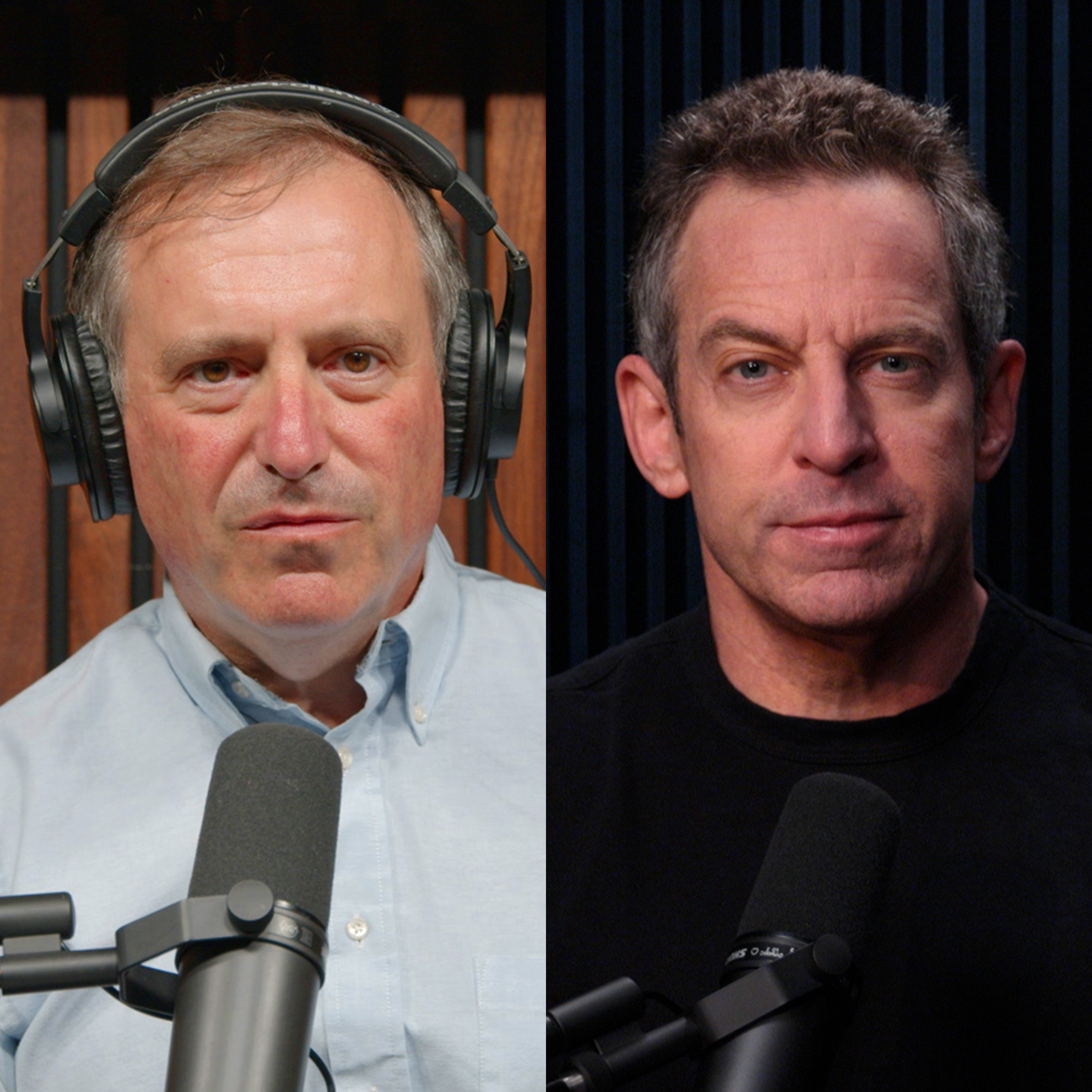
Making Sense with Sam Harris
#425 — Are We Prepared for the Next Pandemic?
00:27:14
Sam Harris speaks with Marc Lipsitch about pandemic preparedness. They discuss what we learned from Covid, loss of trust in institutions, how to effectively communicate scientific information in the current media landscape, vaccine hesitancy, the...
Loading summary
Transcript33 lines
- [00:07]
Sam Harris
Welcome to the Making Sense Podcast. This is Sam Harris. Just a note to say that if you're hearing this, you're not currently on our subscriber feed and will only be hearing the first part of this conversation. In order to access full episodes of the Making Sense podcast, you'll need to subscribe@samharris.org we don't run ads on the podcast, and therefore it's made possible entirely through the support of our subscribers. So if you enjoy what we're doing here, please consider becoming one.
- [00:36]
Mark Lipsitch
I am here with Mark Lipsich. Mark, thanks for joining me.
- [00:40]
Thanks for having me. I enjoy your podcast. I'm happy to be on it.
- [00:43]
Oh, nice. Well, I am a big fan of the center for Communicable Disease Dynamics, which is a mouthful which you run at Harvard. Before we jump into the topic at hand, can you summarize your scientific background?
- [00:57]
Sure. I was trained as an evolutionary biologist and mathematical biologist. I'm now an infectious disease epidemiologist and microbiologist, so I've moved sideways a little bit. But the common thread is that I'm very interested in understanding how when we give people vaccines and antibiotics, how that affects the populations of infectious agents, and then how those changes in the infectious agents affect us and our health. And so I work on how that works, how we measure it, how we measure whether vaccines are doing their job, for example, how we track antibiotic resistance over time and so forth. And then more recently, I've been involved in two other things. One is the response to the COVID pandemic on a bunch of different fronts, and the other is areas of research policy and research ethics around potentially risky experiments and human challenge trials for Covid vaccines. So I move around a little.
- [01:59]
Yeah, well, it's probably been a busy few years for you. I can imagine this has really been. The entire world came crashing into your wheelhouse somewhere around the beginning of 2020.
- [02:11]
Yeah.
- [02:12]
Let's start with COVID I mean, obviously I'm very concerned about the Trump administration's apparent assault on American science and scientific institutions. I want to get there. But let's start with COVID What did we learn from COVID I guess what did we learn that we should have learned? What have we imperfectly learned? And what perhaps wrong lessons might we have learned at this point?
- [02:35]
Yeah, and I think the other piece is what did we observe and probably won't learn, even though we should have? There's a whole history of observing lessons and repeating the same mistakes. I think what we learned was a number of things, but One really big one is the importance of public trust and public solidarity in the response to an emergency like Covid. I think that the fact that different parts of the country and different people had very different levels of trust in what the government was telling them and in the vaccines and before that, the interventions that were put in place to slow the spread meant that it was much more divisive than it was in some other places and that our response was worse. I think we also learned that our public health system needs an upgrade. It was designed in the 19th century at a very hyperlocal level with all the data and all the power really in the states and counties. And that makes it very hard to have a unified national response. And I think we also learned that, and this is one of those things that we sort of relearned, had been already noted a few decades ago, that policies need to be revisited on a regular basis with new information. The information is changing very fast in the middle of a pandemic. And the policies that seemed like a good idea in the past may have lost their value or we may have more new information that says they weren't actually valuable and we should stop them. And I think an example of that might be, a good example, might be school closure, which looked like the right thing to do. I think it was the right thing to do in the absence of good information. But we learned pretty quickly that young children in particular were not very important in transmission. We learned that those schools that stayed open managed to do so pretty safely. And the policy was kind of stuck in place. And the US was one of the places that kept schools closed the longest for not very good results and for a lot of damage that that did. And that was pretty clear pretty early. But we for various reasons kept policies in place past their useful life.
- [04:58]
How would you describe the unraveling of institutional trust and actual trustworthiness over the course of the pandemic? I mean, to what degree was the loss of trust warranted? I think everyone who's on the highly contrarian, anti establishment side at this point has a litany of abuses. They can cite real or imagined abuses, noble lies that were told. Masks don't work and masks don't grab all the PPE because they're desperately needed for first line responders. But also masks don't work. Try to square those two. That logical contradiction. How would you describe the what happened and the challenge of communicating scientific uncertainty to a public in the middle of a global health emergency that the scope of which is still. You're still struggling to understand and you're messaging into a highly polarized and fragmented information landscape.
- [06:03]
Yeah, well, I think we started from a position of very low levels of trust in government among some people and some segments of society. And in public health particularly. Public health has been underfunded for a long time in the United States and particularly in the least advantaged parts of the country. And so we started from a rough position and we also started from a level of enormous inequality. And we know that people who were more disadvantaged had worse Covid outcomes within the U.S. and so there was already grounds for polarization. I do think that the early communication from the US Government under the first Trump administration was very confusing and that the promises that it would be over by Easter had no basis in any kind of science and were nonetheless made from the White House. On the other hand, indeed, as you said, there were comments made by people who were trying to induce the behaviors in the population that they thought would be more desirable. And they did come out with comments that were not scientifically valid. And that of course undermined trust when they changed or when people, as you noted, figured out that it actually didn't make logical sense to say don't use all the ppe, which doesn't work in the first place. So I think there's plenty of blame to go around, but that the system was in bad shape to begin with. And that's something to remember for the future because the people will largely be different the next time. But the system is going to be very much whatever we make it or at the moment, however we're breaking it. And seeing the current threats to good science and good public health is pretty worrisome as I think about the future.
- [08:02]
Yeah, we will get to fears of the future because I share them. What is the appropriate posture and just rhetorical algorithm to be running as a communicator of public health information in the midst of an epidemic like that, where uncertainty is real and the story is changing. And yet you know that you're getting clipped into social media and you've got six minutes on CNN and it's an environment that's hostile to nuance, it's hostile to uncertainty on the part of the so called experts. The very role of an expert is being undermined by perceived failures of expertise and unfortunately, scientific uncertainty. While it is the often the only sane thing to confess in the midst of a conversation about the science, when you're confessing it on the news, you're at least to many people's ears, you're failing to function in the political role that is also part of the communication of science during an emergency. So you're giving advice to the public and when the story changes, or when the story is always a probabilistic one, you think something may benefit, but maybe it's, but you're not sure and you're aware that the stories might change. How will you want to walk that tightrope next time? Because clearly during COVID just the communication burden and the failure to meet that burden was just unbearable at a certain point. I mean, we just, we had a society that shattered over the perceived failure of expertise in the midst of this pandemic. So much so, I mean, the shattering is a little bit of a cartoon, but it's not too far from what's true. We had half of our society that was absolutely terrified of COVID and desperate to get vaccinated at the first opportunity. I mean, I waited in the dark at four in the morning to get overflow, possible overflow vaccines in a ghetto in my city. And yet the other half of the country thought Covid was more or less a non issue. It was the flu, but they were terrified to get vaccinated. And that division remained for in some sense it still remains, right?
- [10:22]
It still remains. Yep.
- [10:23]
Again, how would you, as someone who's trying to give an honest account of the best information, insofar as you have it hour by hour during a pandemic, meet this challenge of communicating nuance and uncertainty in the current environment? Because I just think we, we obviously failed somehow last time. And there has to be some rhetorical device that authorities can arm themselves with so as to inoculate people against their conspiracy thinking and their waiting of when the story changes. That's how science is done, right? There's nothing nefarious about the story changing in principle. And yet every time the story changed, it was perceived to be to the absolute discredit, really, the everlasting discredit of scientific institutions.
- [11:15]
Yeah, I think it's a great set of questions you ask, and it's not hypothetical. At the center for Communicable Disease Dynamics at the Harvard Chan school, we ran 150 plus zoom based press conferences during the course of the pandemic to try to do exactly what you're saying, to try to lay out what was known and what was not known. But I think from the perspective of government spokespeople and experts, this is something that really has to start between, during peacetime, during a period when people are hearing about beach safety and avoiding heat stroke and sort of more Routine things. And it has to become clear that science evolves. Most science doesn't evolve as fast as pandemic science. And so it is a special time during a pandemic. But when there's a new outbreak of something that's not understood, experts can say, look, this is what we think it is. These are the precautions we're taking because we think it may be these things. And we're going to keep updating and we're going to keep refining what we know and then changing our recommendations as we understand it better or as the situation changes, or both. And I think people, people do that in their normal lives all the time. You know, weather forecasts are use. Use science. And people are perfectly capable of understanding that as you track a storm, you update what you think about it. They don't say that the weather forecasters are wafflers or incompetent. We sometimes do think they wish they were more on the ball, but we know that it's a probabilistic game. I think people are actually smarter and more able to deal with these kinds of things than they're often given credit for. But they have to be treated as adults and be used to it during peacetime and during periods when they aren't also under incredible stress from the pandemic itself. The leader of Singapore actually set an extraordinary example. He did a Facebook Live post or session in February of 2020 as the pandemic was starting and had come to Singapore already. And he got on Facebook Live and said, this is what we know. We went through SARS 1 in the past and we have learned some lessons from that because they were very hard hit by the original SARS in 2003. He said, this is what we know, this is what we're doing. We're going to change what we do and what we know as the situation changes. And it was very straightforward, all in very clear language. And I think we have a lot to learn from that performance. And it's not something that a lot of public health officials are comfortable doing. I think there are also ways to build it into the system. Up until the end of last month, I was part of setting up a new center within the CDC called the center for Forecasting and Outbreak Analytics. And one of the things that we really tried to do there was when designing our public communications was to have a regular update when there was a crisis going on. We would set a regular pattern of updating what we said so that people would expect that and wouldn't be, wouldn't think there was some kind of emergency if there was a new statement, because there was a new statement on some regular schedule. And also it would be expected that those updates would come. And so if for some reason it didn't come, there would be a demand for it and that would insulate against potentially political interference. So I think there are ways to do that. That's something the UK really has pioneered in their public health communications and do very well. And so I think building in regular updates of data, building in expiration dates for policy decisions and public health guidance, where you say this is our interim decision or guidance until say 30 days or 90 days and then we're going to revisit it helps to unstick the process and avoid the kind of policy stickiness that really caught us, made our policies worse during COVID And that's an old lesson. There's a great book by Harvey Feinberg and Richard Neustadt on the swine flu affair. When we vaccinated millions of Americans against swine flu in 1976 after three cases, and then that never became a thing. And we had a number of adverse effects and their number one recommendation was to make sure that policies have off ramps. And that's an example of one of those lessons that we should have already had in our back pocket, but we didn't quite.
- [15:55]
Why do you think vaccines are so uniquely terrifying and polarizing? It seems that people who are highly radicalized by vaccines and their use and their mandates and their et cetera, et cetera, aren't radicalized by similarly or even more even riskier medical interventions. Right. I mean, you had the spectacle of people who wouldn't take the COVID vaccine under any circumstances and would have gone to their deathbeds praising themselves for not having taken it, and yet they'll sign up for something that is the safety of which is far less demonstrated. And I mean, even something that's like a therapeutic for Covid. I mean, I know people who wouldn't get vaccinated for Covid, but the moment they got Covid, they got monoclonal antibodies pumped into them and a bunch of other cocktails just on the chance that it would mitigate the illness. This was early on when it was still an illness that people reasonably feared. What is it about vaccines, in your view?
- [16:58]
Yeah, I think monoclonal antibodies are also quite safe. But putting that aside.
- [17:03]
But I mean, tens of millions of people hadn't taken them for Covid at this point.
- [17:08]
So I think one part of the answer is that there is a sophisticated and widespread campaign to try to make people scared of vaccines, which has been led in the past by the man who's now our Secretary of Health and Human Services. And we shouldn't put that aside. That some people have an interest in making radicalization about vaccines and why that is, we could speculate about, I don't actually understand, but it is a fact.
- [17:37]
I think that is just also my question, right? It's like, so they're doing it for vaccines in a way that they're not doing it for other medical interventions. And so this gets at. This is just another way of stating the question, like, what is so scary about vaccines? Is it. I mean, to give you just a shade of an answer that I have rattling around my brain, it might have something to do with the fact that we give them to healthy children, right? Like, it's not like your child is sick and you have to do something to get him or her well, it's your child's healthy. And now you're sticking a needle into, you know, in many cases an infant who can't even understand what's happening. That's disturbing. And the idea that there's some risk of a bad effect, which is real, that's somehow intolerable, right?
- [18:26]
I think that's true and I think that is part of the story. On the other hand, as you said, there are a lot of things that are much more dangerous in reality than vaccines are. And yes, I think as a matter of human psychology, it is more natural to people to intervene when there is an immediate problem. So an illness to treat rather than to prevent. It's just part of human nature, as best I understand human nature. But I also think we shouldn't discount the fact that people have chosen to make this a toxic issue, to use perhaps the wrong word. An issue that is polarizing and that where fear is being instilled for no good reason. I think the susceptibility to that fear might have something to do with what you said. But we shouldn't overlook the fact that this is a big industry.
- [19:18]
So what should we believe about COVID and Covid vaccines at this point? Maybe we can do this kind of rapid fire. I'll tell you what's in my head and you can debunk the myths and half truths that have gotten there. Perhaps. I imagine that I know that something like 1.1 million Americans died from COVID and probably I think this is due to still mathematical modeling, but something like 300,000 people died who didn't need to die based as a result of vaccine hesitancy does that sound right to you?
- [19:56]
Yeah, I think the numbers are a little bigger on the number who died, but that's the right order of magnitude.
- [20:02]
Is there any reason to be more concerned about the risks associated with MRNA vaccines as a class of vaccines than ordinary vaccines? And is there something riskier about COVID vaccines than the other vaccines that people.
- [20:18]
Routinely take on Covid? No, it's. I mean, it's a new virus. So we are learning about the safety as hundreds of millions of people get it. But we've learned a lot because hundreds of millions, billions of people have now gotten these vaccines. MRNA is a new technology. It's understandable that people find it unfamiliar and have questions about it. But the data show that these MRNA vaccines against Covid are extremely safe. They are not 100% without side effects. There are side effects. Those have been documented. It's also clear that in the presence of COVID circulating SARS, COV2 or COVID virus, it is a good trade off to take the risk of side effects for most people compared to the risk that it protects you from, from getting Covid and its complications.
- [21:10]
How do you think about the risks for specific groups like teenage boys? I mean, I think that was the one cohort where it seemed like there was real signal of myocarditis risk that was looking like in that group. Maybe it was a toss up as to whether or not they should get vaccinated, given the risks on both sides. I don't know what the current thinking is there, but it seemed like it was. You were not completely irrational to think maybe my teenage son does not need the COVID vaccine, given how benign the disease tends to be in kids that age and the elevated risk for boys for whatever reason.
- [21:48]
Yeah, I think that's not irrational. And I think people who make that decision or whose kids make that decision with them when they're teenagers, are making an understandable decision. We had our. Well, we have girls, but we would have had our teenagers vaccinated had that been who we had as children, because had we had boys, because the myocarditis, while real, was not very severe, in most cases it went away. And the small risk of really severe Covid and long Covid, which there's growing evidence that vaccines help with as well, would have been enough in our minds. But I think people. That's part of treating people like adults is there are ways to reasonably disagree. And I don't begrudge anybody who makes the opposite decision of that for that group of people. I think as you get to Age groups or groups of people like pregnant women who are at very high risk or comparatively high risk of complications. That decision becomes harder to justify based on numbers and really a matter of being opposed to vaccination more generally. And that I think is very hard to understand. But it's certainly something that some people, A view that some people hold and that needs to be discussed with them, with their doctors and figured out.
- [23:21]
What about now? Now that the disease has evolved to be more benign, how do you view the risk reward of vaccination? So, speaking personally, I told you I was waiting in the dark at four in the morning hoping to get an early vaccine. Now, for the last, I think, at least two years, I don't think I've been vaccinated because I've gotten Covid more or less on schedule once a year. And that in my mind has served as my vaccination for that year. How preposterous is that road to personal health?
- [23:57]
The value of vaccination, as opposed to becoming infected to build immunity, is that the risk of long Covid is not there. The risk of, although low, of severe illness is not there from the vaccine and it is from COVID even though the probabilities are low. So it's an understandable decision. I think you could improve your odds a little bit of certainty of staying healthy by periodic Covid vaccination, but it is not the same kind of public health emergency that it was in years past. And so I think people will have different views. And that's certainly true in the numbers that the numbers of people getting vaccinated has gone down. Part of the main reason why it appears to be a more mild illness is that we have a lot of immunity in the population, both from previous infections and from multiple rounds of vaccination. So some of it is the evolution of the virus. But there aren't very many people around to test this hypothesis on. But my prediction would be that if you magically made the entire population susceptible again and removed their immunity, there would be a lot of severe Covid around. It's just that we. The combination of host immunity and a little bit of the evolutionary changes has combined to make it rarer that people get severe illness.
- [25:21]
So again, just taking my personal case and people can draw whatever lesson they can draw from it. So if I get the flu vaccine every year, because that's what I do, and it's a new flu every year and I'm not getting the COVID vaccine, do you detect any cognitive dissonance there? I mean, it's in my own mind, the rationale is I remember every time I got the COVID vaccine, it actually seemed like I had fairly significant side effects. I mean, I felt crappy for at least 24 hours. So it seemed like more of a vaccine than a flu vaccine, which I never perceive an effect from. And that's really just my. The source of my bias. If you were me, would you be getting a COVID vaccine every year and a flu vaccine every year and that that would be the rational way to have a sane approach to.
- [26:09]
I think so. I mean, these are not the same kinds of truly life and death decisions that they were when the vaccines first came out and when Covid was a bigger threat. So, you know, I'm not gonna spend a lot of time trying to convince you one way or the other, but the COVID vaccines are also probably more effective than the flu vaccines on the whole. And so, yeah, you pay a bigger price and you get somewhat more protection.
- [26:33]
So, on balance, are we any better prepared for the next pandemic, or do you think we're worse off for this.
- [26:42]
Sam Harris
Stress reversal we experienced? If you'd like to continue listening to this conversation, you'll need to subscribe@samharris.org Once you do, you'll get access to all full length episodes of the Making Sense podcast. The Making Sense podcast is ad free and relies entirely on listener support. And you can subscribe now@samharris.org.