← Making Sense with Sam Harris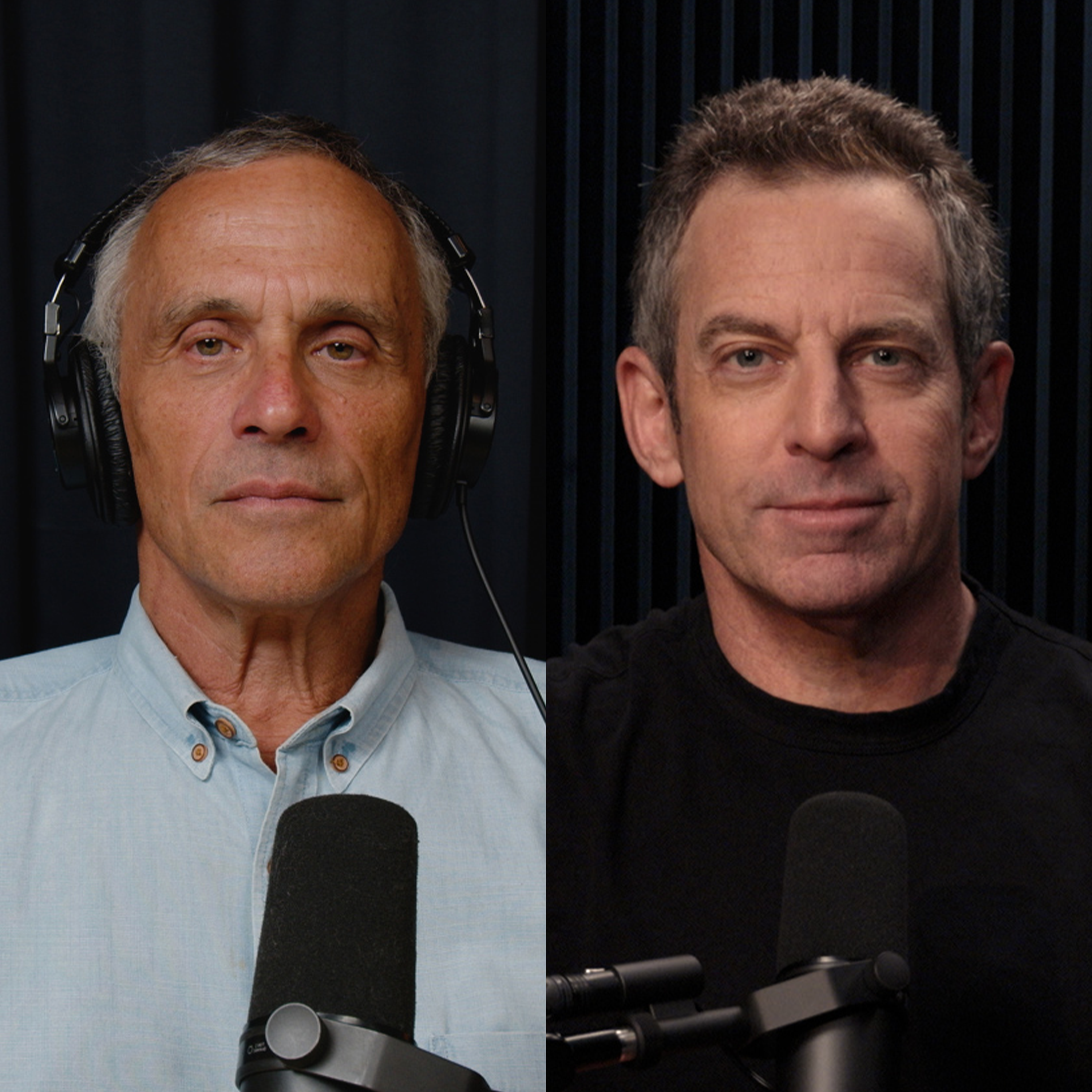
Making Sense with Sam Harris
#431 — What Is Happening on College Campuses?
00:23:29
Sam Harris speaks with Michael Roth about the state of higher education in the U.S. They discuss whether concerns about wokeness were overblown, how colleges should handle campus protests, where universities should draw the line on extreme political...
Loading summary
Transcript30 lines
- [00:07]
A
Welcome to the Making Sense Podcast. This is Sam Harris. Just a note to say that if you're hearing this, you're not currently on our subscriber feed and will only be hearing the first part of this conversation. In order to access full episodes of the Making Sense podcast, you'll need to subscribe@samharris.org we don't run ads on the podcast, and therefore it's made possible entirely through the support of our subscribers. So if you enjoy what we're doing here, please consider becoming one.
- [00:37]
B
Well, I'm here with Michael Roth. Michael, thanks for joining me.
- [00:40]
C
Glad to be here.
- [00:41]
B
So you are the president of Wesleyan University and also a frequent contributor to the New York Times. Are there any other hats you wear that I'm not aware of?
- [00:50]
C
Well, I'm a grandpa and a dad and husband, and those are the main things right now. I teach every semester still at Wesleyan and try to write books for mostly academic audiences, but more recently trying to broaden my reach.
- [01:11]
B
Yeah. So what do you teach? What is your intellectual and academic background?
- [01:16]
C
So I'm a historian. And as a student at Wesleyan, I couldn't make up my mind between history, philosophy, and psychology. And I had a fairy God dean, as I describe him now, who was a substitute dean. That's the best kind. And at the time, he said to me, why decide, man? And he allowed me to.
- [01:38]
B
What year was that accent from?
- [01:40]
C
1976. I remember the ferns in his office. I think they were ferns. And Charlie. Dean. Charlie. And so we made up this major there called History of Psychological Theory, which I thought was. I was getting away with something. And as it turned out, for the next 40 years, I worked on history, psychology, philosophy. So it turned out to be right. But as I left his office, he said, you ought to go to California, man. And I had never been west of the Poconos, so from growing up in New York, and so I drove my girlfriend and I drove to California that summer. I bought a tent and then couldn't really decide always between philosophy and history especially. So I became an intellectual historian.
- [02:25]
B
Nice.
- [02:26]
C
And my work has been on history of philosophy and psychology over the years. I did a. My senior thesis at Wesleyan was on psychoanalysis and politics, and that became my first book. And then it became an exhibition at the Library of Congress. And then most of my work in the scholarly world was about how people make sense of the past, so things about memory and historiography, how people deal with trauma. And then since I've been at Wesleyan, I've written a few books on Liberal arts education and freedom of speech and safe spaces and things like that.
- [03:03]
B
Nice. Well, many of those ideas and areas of expertise will be brought to bear on the conversation we're going to have today, I imagine. I don't know how deep into the history of ideas we need to go, but certainly the recent history of ideas. Yeah, it'll be relevant. Also, let's begin with the very broad question, how are things in the ivory tower these days?
- [03:25]
C
Oh, it's terrible. I've been teaching undergraduates since 1983 on my own, I guess, even before that as a ta And I don't remember a time of such trepidation, of really angst about government intervention and at the same time, a kind of reluctance by students and even by faculty and certainly by administrators to stand up for the things we've claimed to believe in for the last 20 years or so. So it's been. It's a very odd feeling these days. We worried for the last dozen years or so about illiberalism from the left, especially. Many people have worried about that. And I, although I see myself on the left, I also worried about that, but to me has nothing in way of comparison to the authoritarianism that is now being marshaled against freedom of thought and freedom of inquiry, freedom of expression by the federal government. And so that's terrible. But what really bothers me more than even than that, which bothers me a lot, is the reluctance of my colleagues to stand up for some basic freedoms that we, until very recently, took for granted.
- [04:44]
B
Well, I definitely want to talk about the creeping authoritarianism and the capitulation of the institutions. But before we jump into that, what are the legitimate concerns about the ideological capture of American universities by the far left and far left ideologies? There's this intersection of what often goes by the name of wokeness, what I would call a kind of social justice, moral panic in certain areas. Also a kind of quasi Marxist ideology, perhaps informing that, and certainly an oppressor, oppressed ideology that has been mapped onto the protest movement around, or animated the protest movement around October 7th. What is the most charitable construal of the concern around all of that? That many people. I think we're going to demur here, but I think many people think the Trump administration is simply just acting on that concern. It's just gone too far. There's been this leftist takeover of elite institutions and a resulting degradation of the quality of thought there. Certainly ethical thought, political thought. What can you say in defense of that concern? Not much.
- [06:02]
C
I mean, to me, that's akin to saying that Putin has legitimate concerns about the Ukrainian threat against Moscow, that, you know, the Ukraine could have joined NATO and Russia would have been imperiled. Or the Russians don't, you know, they have legitimate historical concerns in what is called the Ukraine, Ukraine or the Ukrainian entity to use. So I think it's vastly overblown. I think ideological capture itself is a misnomer. It doesn't really describe what's happened at most colleges and universities where the most popular majors remain economics and psychology. The most popular professions are. The most desirable professions, especially at the elite schools, are in finance or people wanting to go to Wall street so they could work for a private equity firm that could buy, let's say, a group of podcast entities like yours. I mean, this is not neo Marxism. This is not progressivism. This is not. The danger in higher education is more vocationalism. So I think that it's important to not give in to the demands of the aggressor just because there are some worries that people who thought they were on the left have.
- [07:19]
B
So then, Michael, let me just take you back. So again, leaving aside the, I think, the obvious maliciousness and malignancy of the response to this from the Trump administration, let's just talk about the problem. I remember first being alarmed by all of this when I saw Nicholas Christakis in the quad at Yale being hounded by a group of students who, not.
- [07:44]
A
All of whom, but certainly several of.
- [07:45]
B
Whom, to my eye, were violating every norm of basic sanity on a college campus. Short of punching Nicholas in the face. I mean, there was a none too implicit threat of violence there at some point. I mean, it was actually, it was not clear to me that he could have safely left that crowd at a certain point without having to physically force his way past students. And those students got awards for their social justice activism, if I'm not mistaken.
- [08:14]
C
Well, they also got death threats. Because the reason you're aware of this is because it was filmed by people who wanted to make propaganda out of that, and they did so very successfully. I wrote to Nick Christakis right after that and said, this is horrific. I'm so sorry this happened. I don't know him. Actually, we've met more recently. So I don't disagree that that behavior was awful, but it would be like saying, I don't know, go to a fraternity party and see people vomiting and saying, oh, American universities have been. There's an ideological capture by, I don't know, the alcohol industry. I mean, this is idiotic behavior. At Yale, where Most people are trying to get good jobs on Wall street, not destroy the system of free speech and liberal democracy. It was bad. I think it was. The folks behaved badly. And there was much too much tolerance for bad behavior on the part of colleges and universities. I think that's true, but I really don't think it. I don't think that's a serious concern. I do think there was a serious concern about the lack of ideological or even intellectual diversity in the faculty at colleges, universities. And I've been writing about this for a long time, and I do think that's a serious problem. And it's getting worse in many respects, because folks aren't even going to graduate school if they're moderates or conservatives in especially humanities and social sciences, interpretive social sciences. And that just is a narrowing of education, a narrowing of the kind of questions asked. So I see that as a real problem. I think, like the Yale example, which is now, what, 10 years old or 8 years old, or the Charles Murray, Middlebury example. These are bad things. But Charles Murray probably gave 100 lectures aside from that one, which went without incident. So I just don't want to take those examples as exemplifying something much broader than it seems to me they merit being used for. I do think that the faculties at schools like mine have paid too little attention to ensuring intellectual and ideological diversity in the departments where that would really make a big difference, like the humanities and interpretive social sciences. And it's hard to know exactly what to do about that. We've tried some things at Wesleyan with very small successes here and there, but that seems to me a real problem when protests get out of hand, I think. I don't see that as big a deal as some of my friends do or some of my colleagues do. It did seem to me that for a lot of people who thought of themselves as liberals, or at least moderates and liberals, to be outflanked by young students who demanded things we didn't think were reasonable, that was upsetting to people. But that's kind of what happens as you get older. Young people ask you to do things that are dumb from your perspective. You don't have to do them. And I think when the schools actually stood up to protesters, appropriately acknowledging their right to protest, but not to harass people, I think things actually worked out pretty well at most schools. So the Yale example is a bad one. And there are probably, you know, two dozen other examples we can come up with.
- [11:43]
B
But I want to talk about the protests and what you recommend There because my understanding is that Wesleyan navigated the moment post October 8 slightly differently than campuses like Columbia or UCLA or I forget the others that really had a problem. But before we do so, just on the point of viewpoint diversity that you just brought up, is there any daylight between you and someone like John Jonathan Haidt or Steven Pinker, both very popular academics who've been fairly voluble on the need here to somehow recruit people who are politically right of the 10% mark on the left right political continuum?
- [12:27]
C
Well, I think Jonathan and I have worked together over the years on this issue and though we don't always see things the same way, one of the few people who gave a mixed review to the coddling of the American Mind book. But I do agree with him that getting bringing more ideological diversity into the university's faculty is really important. And I called in, I think, 2010 or something like that. Well, no, 15, I guess, for an affirmative action program for conservatives and colleges, universities, which pissed off everybody, really. I mean, the left, even the conservatives. Oh, especially because they said we don't need affirmative action, we just need merit. But I actually think we had to be very intentional about hiring libertarians, people with strong religious faith that was related to their scholarship and traditional conservatives. And I do think it's really important. I was made aware of this by a trustee at Wesleyan who became a friend who just kept pointing out to me all the ways in which things that seem normal to me, if you didn't share that ideological perspective, they were incredibly biased. And so I, you know, it's one of those moments where you say, oh my gosh, I am really biased. And so I need to correct for that. I mean, I'm not. I teach Aquinas. I don't, you know, I haven't converted to Catholicism, but I. I can teach Aquinas. But they shouldn't have only have Jews from Long island teaching Catholicism. They should have people who have lived experience, I think, and as much as you can. And, and so I've, hi. Tried to hire people from the military. I've hired people with different points of view than the standard graduate from an Ivy League humanities department. And I think that when I started this, there was a lot of skepticism, to put it mildly, from my colleagues at Wesleyan and elsewhere. Now there's. It's a robust conversation on campus about ideological bias. And that to me is really as much as I should do as the president. I mean, I should get people to be more aware of their biases. And then they're good people. They're professionals. They don't want to be acting with bias. And so I think there's been some correction. It could be greater. And I think that is a real issue.
- [14:42]
B
My understanding is that there were. I can only imagine we're past this point now as the shadow of the Trump administa administration imposed itself over all of our universities. But in the not too distant past, prospective hires or new hires were having to sign effectively DEI pledges of some kind. Right. They had to. I forget the actual verbiage, but it was something like I'm committed to, even if their discipline was mathematics is. I'm committed to rooting out racism in my field or whatever it was. You didn't see that as a kind of systematic way of filtering against the very people you would otherwise want to recruit?
- [15:26]
C
Oh, I do. I do think those were bad ideas. Except when what you were trying to do is to make sure that somebody was able to teach a classroom of people from diverse backgrounds. That seems to me perfectly reasonable. In other words, we want to have professors or teachers who are able to teach a classroom with people who have different lived experiences, come from different backgrounds. That seems to me perfectly legitimate a concern. If, if I'm hiring a cracker Jack computer scientist who just is used to teaching in graduate school, other graduate students or very, you know, high end majors at a great school, and you put them in a classroom at a public university where people come from various backgrounds, you want to make sure that they're, they're able to deal with that. I mean, as a teacher, you have to adjust to the people in front of you and then have them adjust to you. So I think that's reasonable. But this idea that you would really want someone to make an ideological commitment to a program of diversity in order to teach math or history or whatever, that seems to me reprehensible.
- [16:33]
B
So where's the actual line here? Because obviously no university would want to recruit a professor who is a closeted or out of the closet neo Nazi. So there's some part of the ideological spectrum that is disqualifying from the point of view of you don't want the brand damage, you don't want the influence on your kids. I mean, why would you want a neo Nazi teaching history or anything else at your university? But by the same token, why would you want a Hamas supporter? Why would Columbia want a professor who is an unabashed supporter of a death cult masquerading as a group of freedom fighters? Where's the line there for you?
- [17:18]
C
So I think that A university shouldn't hire someone who is an active supporter of a terrorist organization. So I think that's. To me, that's pretty clear. Someone who is an opponent of the occupation or of violence. That seems to me that wouldn't be disqualifying, but I do think it would be disqualifying to hire someone whether they were, let's say, a radical anti Zionist or a radical Zionist who thought their job in the classroom was to have more people like themselves. I mean, I think that's just disqualifying because that's not what your job is as a teacher, is not to, say, convert people to your view, whatever your view is. But to the question, like how broad the spectrum should be of opinion, I have a terrible answer, which is that's a pragmatic issue. There is no formula for that. I don't want a Nazi on my campus. And someone said, well, you say you're in favor of free speech. Do you have limits to your support for free speech? I do have limits, and those limits are defined really sociologically or historically. There's not a formula for it. But I do think it's illegal in the United. I know it's illegal in the United States to give material support to a terrorist organization. I think it should be illegal. And I would not want those supporters teaching in my university. There are times when you find out later on that somebody teaching, whatever, I mean, they could be teaching, let's say, math, and they actually are strong supporters of Hamas because they feel it's not what you described as a death cult and a terrorist organization. I would agree with your description that they have a different view of it. I think that as long as they're teaching math, that's really not my business what their idiotic views about politics are. Lots of people, in my view, have idiotic perspectives on politics. When they bring them into the classroom in a way that discriminates against students or harasses students, then I think they should be fired.
- [19:20]
B
Is the line different for a guest speaker? If you have a student group that wants to bring in a controversial speaker, how do you handle that? And what is the. Is the Overton window wider in that regard?
- [19:32]
C
I think it's wider, but again, I have this wishy washy answer. I mean, it's a pragmatist. I don't think there's a formula for it. I'll give you an example. Years ago, before the word woke was used, we had. Antonin Scalia was invited to give a talk at Wesleyan. We have a free Speech series. And I was asked to invite him. And I thought the faculty were kind of baiting me to see if I would not accept their recommendation because they were to the left of me. And I thought Justice Scalia had done more harm to the interpretation of the American Constitution than almost anyone since the 1800s. But they're the committee that recommends someone. He's a Supreme Court justice, you know, I invited him. I also thought he'd say no because he's a Supreme Court justice. He's busy. He wrote back immediately, said, I'd love to come to Wesleyan. And he mentioned that Larry Lessig had been there, who, of course, quite far on the left, but had clerked for him. And Lessig had a great experience at wrestling. So I said, okay, he's coming now. If I hadn't invited him, I would have protested. I wouldn't have protested, like, to sort of stop him from speaking, but I would have stood outside with a sign saying, justice Scalia is a bad guy or something. Something dumb. But instead, I had to invite him. I had to introduce him because I issued the invitation. That was the fourth. So I did that. And he gave a good talk. He spent the whole day on campus meeting with students. There were protests here and there, not to keep him from speaking, but just acknowledge that they were against the work he had done as a Supreme Court justice. And we had a. It was actually a great day on campus. I allowed myself a reference to a critic of his in my introductory comments. A very. He's the only one in the room who understood, who got it. He did get it. Who disagreed with the originalism. And so I thought that was about as good as it gets. We had protesters who stood up in the room in orange jumpsuits because of Guantanamo. That was the issue of the day. We went around and said, you have to sit down or leave. You can't block the view of others. They sat down or left. He gave his talk. At some point, when he was calling on people, a young student, she jumped up and said, why don't you call on a woman? Because he only called on guys. And he said, okay, okay. And he called on a woman, and it was fine. You know, I mean, people expressed themselves in a way that was honest, but that allowed for the conversation or debate to continue. I think that's, to me, a great model. It's not always possible, but, you know, at Wesleyan, I think we have developed a culture where people can be. They may be angry that we've invited, you know, Roth to come and speak or Schmidt to come and speak or whomever. But they, they have so far, knock on wood, they haven't forced us to cancel any events. If they did, we would discipline those students. It's very clear to them that that's against our rules, and we enforce our rules. And that's a really important rule because obviously, if you keep someone from being heard, you're really undermining the whole educational project.
- [22:45]
A
Yeah.
- [22:45]
B
So why do so many colleges get this wrong? Again, they could be outliers. But many people in my audience will have seen video after video of essentially an effective use of the heckler.
- [22:59]
A
If you'd like to continue listening to this conversation, you'll need to subscribe@samharris.org Once you do, you'll get access to all full length episodes of the Making Sense podcast. The Making Sense podcast is ad free and relies entirely on listener support, and you can subscribe now@samharris.org.