← Making Sense with Sam Harris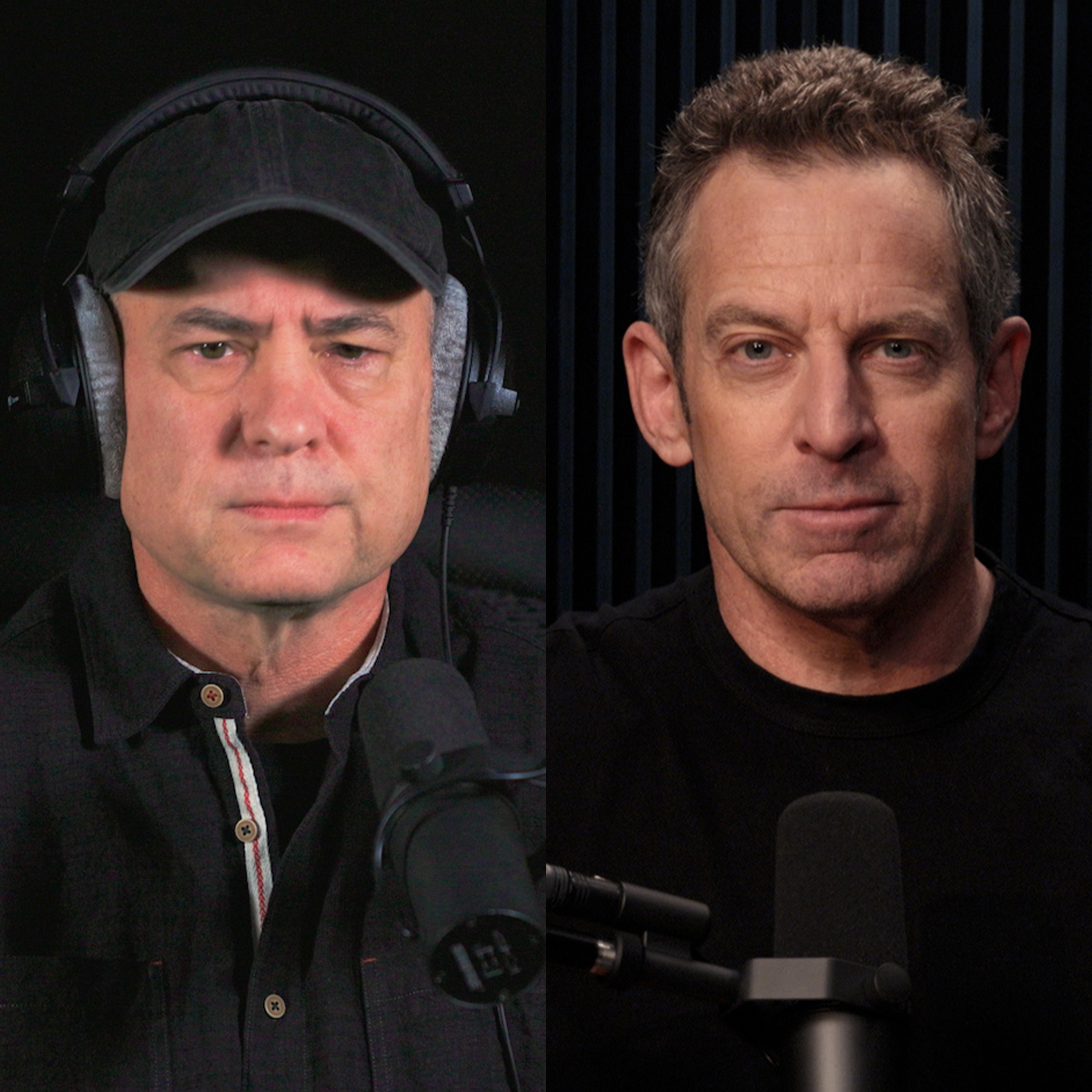
Making Sense with Sam Harris
#433 — How Did We Get Here?
00:22:06
Sam Harris speaks with Dan Carlin about the decades-long buildup to our current political moment. They discuss the growing powers of the presidency, executive orders, different factions within the Republican Party, the fragmentation of our society,...
Loading summary
Transcript49 lines
- [00:07]
A
Welcome to the Making Sense podcast. This is Sam Harris. Just a note to say that if you're hearing this, you're not currently on our subscriber feed and will only be hearing the first part of this conversation. In order to access full episodes of the Making Sense podcast, you'll need to subscribe@samharris.org we don't run ads on the podcast, and therefore it's made possible entirely through the support of our subscribers. So if you enjoy what we're doing here, please consider becoming one. I am here with Dan Carlin. Dan, how the hell are you?
- [00:40]
B
Good, man, how are you? Long time no here from.
- [00:42]
A
Yeah, it's been too long. It's been years. Years upon years, I think.
- [00:46]
B
Yeah. A lot of water under the bridge.
- [00:48]
A
I didn't look back, but it seems like we were probably talking in a different era.
- [00:52]
B
Yeah. Different reality. Yeah, for sure.
- [00:55]
A
So let me just introduce you for those few people who might not recognize you. You're one of the first podcasters. You really are the OG podcaster, and many of us believe the best who has ever lived thus far. I mean, you have several disarming at the start right there, Sam.
- [01:18]
B
Disarming tactic.
- [01:19]
A
Anyone who's heard this podcast knows I don't tend to butter up my guest with a ton of praise. But honestly, you have several series of the hardcore history podcasts that are just true masterpieces. And that is not an exaggeration. It's not a word I use very often. So congratulations and thanks for taking the time to do this podcast.
- [01:40]
B
It's, first of all, very kind of you. And I feel like those of us, including yourself, who've been doing this for a lot of years, it's a. It's a fraternity that's grown by leaps and bounds in the last, just a little bit, 20% of its history or something.
- [01:53]
A
Yeah, yeah. There's something like 4.6 million podcasts, I'm told. Now, I'm not sure I believe that, but that's.
- [01:59]
B
I can remember when no one knew what it was and it was a 45 minute conversation at a cocktail party when people say, what do you do for a living?
- [02:07]
A
Yeah.
- [02:07]
B
And you'd walk away after 45 minutes and they still wouldn't know.
- [02:10]
A
Can you imagine starting a podcast now? I mean, how would that work?
- [02:14]
B
I don't even know. Unless you came in bringing your own sort of notoriety or popularity or audience with you. I don't know how you would grow from nothing. I mean, I know it happens and there's still people, but I don't know how I'd do it if you had to try to stand out in such a crowded field now.
- [02:31]
A
Yeah, yeah. And you, you have resisted the slide into video. Our, our. The ordeal of, of doing this setup for the last 20 minutes has convinced you that that is the right decision. No doubt.
- [02:41]
B
But empathy, Sam, I have empathy for my audience, and they don't need to see this. They hear it. That's hard enough for some of them, especially with my loudness and softness variability. So we're doing as much to the audience as I think they deserve right now.
- [02:56]
A
So now you release episodes on a. To call it a trickle is probably an exaggeration of your output at this point. I mean, you are clearly a perfectionist and you just. I mean, I recall waiting with the rest of your fans for the next installment of one of your hardcore history episodes, and it was like, you know, a six month wait. And essentially you're producing audiobooks without acknowledging that level of work. Give me your philosophy around that. I mean, that is just. It's so counter to what everyone else in podcasting feels they need to do to succeed.
- [03:34]
B
Well, it sort of depends on the nature of the content. And in our, in our case, we figured it out slowly. I mean, it was a. It was something. We sort of came to the understanding over time that you're dealing with something that's sort of evergreen. And when you have something that's evergreen instead of topical, you've got two audiences for this stuff. You've got the audience that's waiting with bated breath for the next episode, and then you've got the people that aren't maybe even born yet that are going to hear it down the road. It's very, it's very analogous to a book, right? So you could put out a book and you might serialize it in a magazine. And then each month, this is probably dating us now, but then each month the listenership is eagerly awaiting the next installment in the magazine, but you're also writing for an audience that isn't going to find you for a long time. And sort of a light bulb went on over our heads a while back where we realized that audience doesn't care how long it took you to make the production, they just care that it's good. And I was talking to a friend of mine who's a showrunner the other day, and I was going over that same dilemma you said, where, you know, trick trickle of releasing new content. And he said, you're making absolutely the right choice. Because he said, if you screw it up and do something that's not that good, he goes, the people that are waiting with bated breath will just go, oh, that sucked, and move on. Whereas the people down the road who've never found it, that's the real audience you need to be working for. And so once you have the luxury of not having to produce content that quickly, you know, a lot of. A lot of people just need to get it out because they have an audience waiting and they need the ads or whatever it is. We're in a position right now where we can just focus on quality and figure that if you do that and it's good enough, everything else sort of takes care of itself down the road.
- [05:06]
A
Yeah, yeah. And you're touring now. I noticed you're. I forget what your next cities are, but presumably everyone can find your schedule on your website. What. What do you do at those events? How do you structure those events?
- [05:19]
B
You know, I kind of got talked into that because I wasn't sure what the attraction was. But, you know, my. My agents and whatnot were establishing that there was a demand out there on the part of promoters and whatnot. So we did some test shows. I've done like, book tours and stuff like that. We did some test shows. They went really well. And so we thought about adding four or six shows a year when possible. When it doesn't, you know, decrease our already voluminous release schedule. But otherwise, yeah, just. It's sort of a lark, I think. I think the audience enjoys it and I enjoy seeing them, but it's never gonna be a huge part of what we do. Probably.
- [05:54]
A
But do you write a talk for that event or.
- [05:58]
B
Oh, I see what you're saying. Well, you know, I'd like to. I think maybe that provides a more predictable product for an audience showing up. Because part of the attraction now is we don't know what's going to happen. I go on there with some. Usually with some friend or a. Or a colleague or something, and then we start talking in front of the audience and then we'll take audience questions. And every single time we've done it, it's been completely different. So maybe there's some predictability if you have a show, per se, but this isn't really a show, it's just sort of a. Of a talk.
- [06:25]
A
Yeah, yeah. I'm actually touring for the first time in six years, starting next week, and I'm really enjoying it.
- [06:29]
B
Are you enjoying it?
- [06:30]
A
I haven't started yet. This is. This is the.
- [06:32]
B
We don't know Yet, Okay.
- [06:33]
A
I'm enjoying preparing for it. I'm writing a talk and thought I was going to divide the event into talk and then discussion. But in writing the talk, I found that I have so much to get off my chest that I'm just going to talk the whole time and then and walk off stage.
- [06:49]
B
I'm going to show whatever they're happy at the end. Right. That's all we care about.
- [06:53]
A
But no, I'm looking forward to it. It feels like in real life, moments are more and more precious. I mean, we've just migrated our lives to this digital swamp, which I'm sure we're going to talk about. And the one thing you can't fake, the one thing you really have to make tangible sacrifices for, is to be present with people. And so it seems like it's a good thing to do and it's been too long.
- [07:17]
B
I think there's a pendulum aspect to it too. I think as we move into an era where it's harder and harder to tell what's real and what's not, and a lot of the content out there is artificially or computer generated, I think human beings start to seek authenticity. You know, when the pendulum swings so far in the other direction, all of a sudden, maybe old time theater comes back and you want to see people spitting on stage and unexpected lights falling from the ceiling and audience and, you know, actors having to improv. Maybe this, this creates a thirst for authenticity, you know.
- [07:48]
A
Yeah. All right, well, let's get into it first before we get in, before I drag you into the morass here, remind people of your own politics. How have you, apart from hardcore history, you've had your Common sense podcast for years where you've commented on topical issues and frankly worried about the state of American politics for quite a bit longer than many have worried about it. And we're going to get into some of your concerns, but remind people of just how you frame your own politics for your audience.
- [08:21]
B
Well, I mean, a politics, a political party of one, right? A religion of one. I mean, I really, I think, you know, looking when you look back on your life as you get older, as we are, you notice things that didn't really make sense when you were younger, that seemed more clear to you. And one of those things for me is being a radio talk show host who didn't fit in the daytime. I mean, we used to call me the Martian in the day part, right? I mean, there'd be some conservative AM host before me and some conservative AM host after me, and the Advantage. Now, looking back on it that I see was I fought with that audience all the time. I mean, they didn't like me all that much a lot of the time. And. And I found that I learned things from them that I didn't know as a kid from Los Angeles, you know, growing up when I did, and at the same time, began to understand their arguments and concerns a little bit more. And then also at the same time, learned that I don't need to preach to a choir. Right. I. There was not gonna be any sort of audience for me anyway, so it was all about learning how to live with people who disagreed with you fundamentally about a lot of things. And so now when you convert that from AM radio, commercial radio, into something like podcasting with common sense, I was primed to not have an audience that saw things my way. And if you listen to the imaging, you know, I would write the liners for the big voice guy. And a long time ago, I learned that when you have faults as many as I have, you try to make lemons into lemonade, and you have the big voice announcers sort of turn all of your problems and downsides and. And weaknesses into selling points. Right. And so being this guy that wasn't a Democrat or Republican that didn't agree with the way things were, we turn those from weaknesses into strengths through the branding and the marketing. What. And what was weird, Sam, is that when I started in the 1990s, there literally was nobody on my side, but then somehow, we just caught a wave accidentally in the zeitgeist. Right. And so for a little while, it almost seemed like there was a new generation coming up that was more in tune with the way I thought. And it was all false hope because we fell right off the cliff later, but into a worse situation than before. But for a long time, me doing AM radio with an audience that didn't like me very much turned out to be a pretty good breeding ground, I found, in a way that I didn't realize at the time.
- [10:35]
A
So how is America doing, Dan? What's your general sense of the last? I guess a lot, but we're going to talk a fair amount about the Trump 2.0 moments of the last seven months, but you can take a larger bite of it than that. It's been a few years since we've spoken. What's your sense of the state of our country?
- [10:55]
B
Well, I think where I differ from a lot of people, and this is to be expected, I guess, given my proclivities, but I look at this in A much sort of zoom out, longer term lens. I mean, many of the things that we look at as relatively recent political developments, 10 years, 12 years, whatever you want to say, look to me like decades of dominoes tumbling to get us to where we are now. Like, one of the things that I'll get slammed for by some people is that they'll say that I blame both sides for things. You know, I'm a both sides are ism kind of guy. But when you've got problems that I assert are decades and decades and decades in the making, it's not only one part of the political system that's involved in it by its very nature. Right. And so when you ask how I see it, I see it in a much more longer term sense. A lot of what's going on now, to me seems like the end result of a bunch of things we did warn about and talk about forever, along with a lot of other people. The growth in executive power and authority, the Swiss cheesing over, the eras of the Constitution, the weakening of the guardrails, and all these sorts of things, until you eventually get somebody who isn't bound by protocol, which by the end of the, the 20th century was really the only thing holding back some president who didn't want to be bound by protocol, if that makes sense.
- [12:09]
A
Yeah, that was the shock of the first Trump administration from my point of view, that we discovered that in the place of laws, what we really had backstopping the protocol is norms that people decided not to violate. And Trump certainly discovered that you could violate them with impunity. And the second time around, we're getting more of that, more or less as expected. All right, so let's take the larger sweep before we focus on the last seven months. What have been your concerns going back decades about what some have called the imperial powers of the presidency?
- [12:49]
B
Well, I mean, first of all, let me just say I feel like the error, if you're looking on the bright side or if you're looking for silver linings, I feel like the era that we're living through now has helped me better understand errors in the past past. I mean, there tends to be, you know, the times change and you never dip your toe into the same river water twice, but you can dip your toe into the same river. And I feel like what we're seeing now helps me better understand other eras in history where you were going, what were they thinking? Or how do people behave? Because I think we sort of devolve toward the mean when we get into large groups of People in similar kinds of structures. And I feel like watching what's happening to us now unfolding, I understand the 30s better, the 40s better. You know, I feel like. And that's something that when you live longer, you just inherently understand history better because you've lived through more of it. Right. So when you talk about our. Our problems here, it's a combination, in my opinion, of systemic and then the people. Right. Because you couldn't get away with a lot of the stuff that's being done now. If the American population were, for example, the same people they were 40 years ago, it's almost like the old frog in the hot water trope. I mean, we were at a different level of water heat back then, and we wouldn't have put up with it. What's so shocking to me as I watch the zeitgeist and the country unfold the way it is, is how many people are either good with it, things that we never would have put up with a long time ago, or the unquantifiable ability we human beings have to tell ourselves we're not seeing what's really happening. That, to me, is also, I find instructive. Like I'm learning about humanity by our ability to fool ourselves into not seeing what we think we're seeing. Like, we smell brimstone. We don't want to smell brimstone, so we pretend we're not smelling brimstone. That's not really an answer to your question, but I think we're in an end game here where there are some Rubicon moments happening. That doesn't mean they're going to happen, but this is the most dangerous I've felt the country's been in my lifetime. And the very things that I feel are threatening it are the very things we talked about forever. I mean, these are all things. I've been discussing these things since long before I was on the radio listening to the dead Kennedys in 1980, talking about these things.
- [15:01]
A
Right, yeah. So. Well, I must say, it is cold comfort that you might be getting a better handle on the Weimar Republic or the fall of Rome. Living through the current instance. Right.
- [15:12]
B
I mean, looking for silver linings.
- [15:14]
A
These are the pleasures of a historian or an amateur historian.
- [15:17]
B
That's right.
- [15:18]
A
And yeah, I mean, I agree with you. I view those points in history differently now. And I want to get to the psychology and sociology of it all, because I think you and I are similarly mystified as to how something like half the country can see what's happening so differently. But before we're there just again, generically. What are the concerns about presidential power that predate the Trump administration from your point of view? I mean, do you take something like the executive order, which is being used with such abandon now, or the emergency powers. Right. The ability to declare more or less anything, an emergency, and then do whatever he wants? This obviously precedes Trump. What's your view of the history that has led up to this moment?
- [16:10]
B
Well, it goes back to the founding, right. It predates the Constitution, the Articles of Confederation. We're still having these questions about the power of the executive and whether or not we need a king and how much the other branches of government should be involved in being able to checkmate what a powerful executive wants to do. I mean, Madison versus Marbury, these are all. I mean, when you study American history, this is the basic 101 level stuff, right? I mean, so nothing's new in that regard. The difference is, though, when you read, and I'm a huge fan of the founding documents, when you read things like the Federalist Papers and you realize the guy is writing this are like 23, 24 years old, it's shocking, right? But when you read what they're talking about, they're talking about all these questions like what the role of a chief executive could be. What do you do if the chief executive is not a wise person? What other elements in the country are there to play off against that? And what do you do if somebody goes rogue? You can find in our past presidencies lots of examples of people pushing the presidential envelope. You mentioned earlier the term the imperial presidency. Well, that dates back from a book from the early 70s that Arthur Schlesinger wrote. And he's writing about the presidency from his era, Right. The Nixonian presidency, which when I grew up, that was considered to be sort of the went too far president. And we're going to learn from that. Right. But the powers of the presidency now, 40 years later, are infinitely stronger than they were when we were worried about an imperial president in the early 1970s. The fact that we don't talk more about that is indicative as to the problems. I mean, if you're not going to have a conversation about what's wrong systemically with the system, well, you're certainly not going to identify the problems, and you're going to have even less public support towards fixing them. So when you say, what was the common sense show about? We had a few pillars, and one of the pillars was partisanism and hyper partisanism. And what that was gonna do to Us and how the system is incentivized. I mean, you know, there's a lot of money in dividing Americans from each other, but also the idea of the checks and balances in our country and how those things have been diminishing over time and that eventually you're gonna run into somebody who takes advantage of that.
- [18:16]
A
Can you imagine a candidate for the presidency in 2028, say, picking as a central plank of his or her platform, curtailing the powers of the presidency?
- [18:29]
B
It's counterintuitive, isn't it? It's part of the problem. It's part of why we haven't had it. So, for example, let's say you had a Democrat run and say, well, we never have to have. This can't happen again. So you elect me, I'm gonna return power from the executive branch to the courts and to the Congress, and we'll fix this imbalance. Right. Something we used to talk about all the time. Well, the people that raised money for that candidate, the people that elected that candidate, they're gonna accuse that candidate of surrendering to the other side, of behaving in a unilateral disarmament. Right. The other side pushes the envelope, and then we give up. In other words, all of the carrots and sticks in our system are designed to run with any constitutional imbalances caused by the previous party and the previous occupant of the White House. So you're right. It's absolutely counterintuitive to think about somebody gaining power with all that that requires and then turning around and giving it away. Because that's what the system needs.
- [19:19]
A
Yeah, I mean, it would be. I guess I could be an audience of one here, but it would be a very attractive thing to run on from my point of view, because obviously, I have many concerns about what Trump is doing and intends to do. But I have similar concerns if anyone too far to the left took instruction from his example. And we had a President AOC or someone like that who just decided to declare a state of emergency left, right and center and issue executive orders like we've been seeing.
- [19:51]
B
Well, it's political hypocrisy, isn't it? Right. If the other side did it, what would people be saying? And you had mentioned executive orders earlier. I throw signing statements in with those, too. If you look at the way those things used to be used. So people will say something like, well, you know, they've been using executive orders and signing statements forever. Yes, but not for the same thing. Right. So, for example, when George W. Bush started issuing signing statements to bills that he disagreed with, but he wanted to pass for political reasons. What he essentially did was say, I'm signing this bill. The signing statement would say, I'm signing this bill, but I'm not being bound by anything that I feel later interferes with the actual powers of the presidency. In other words, it was like putting an asterisk next to your signature and you can say something like, well, past presidents used signing statements and they absolutely did, but they didn't use them like that. Right. So it's a little bit like executive orders now. We don't use them the way we used to. And when they used to be rare, it was one thing. So one of the things I'll hear Trump supporters say is that Donald Trump isn't doing anything that other presidents haven't done. But let me make a distinction. So let's say you take the most constitutionally extreme thing that Bill Clinton ever did and add it to the most constitutionally extreme thing Ronald Reagan ever did, et cetera, et cetera, et cetera, and then you get a president in the future who does all those things. Right. In other words, I'm not doing anything Ronald Reagan didn't do, or Bill Clinton, but I am doing what both of them did. In other words, there's a quantity has equality all its own standard there also. So the current president is doing things that have been done before, but not by one president. So I mean, we are changing the nature of things.
- [21:26]
A
Yeah, I mean, he's also doing things, I mean, in defense of our mutual incredulity at this point about the mental states of our neighbors, he's also doing things that no president. If you'd like to continue listening to this conversation, you'll need to subscribe@samharris.org Once you do, you'll get access to all full length episodes of the Making Sense podcast. The Making Sense podcast is ad free and relies entirely on listener support. And you can subscribe now@samharris.org.