← Making Sense with Sam Harris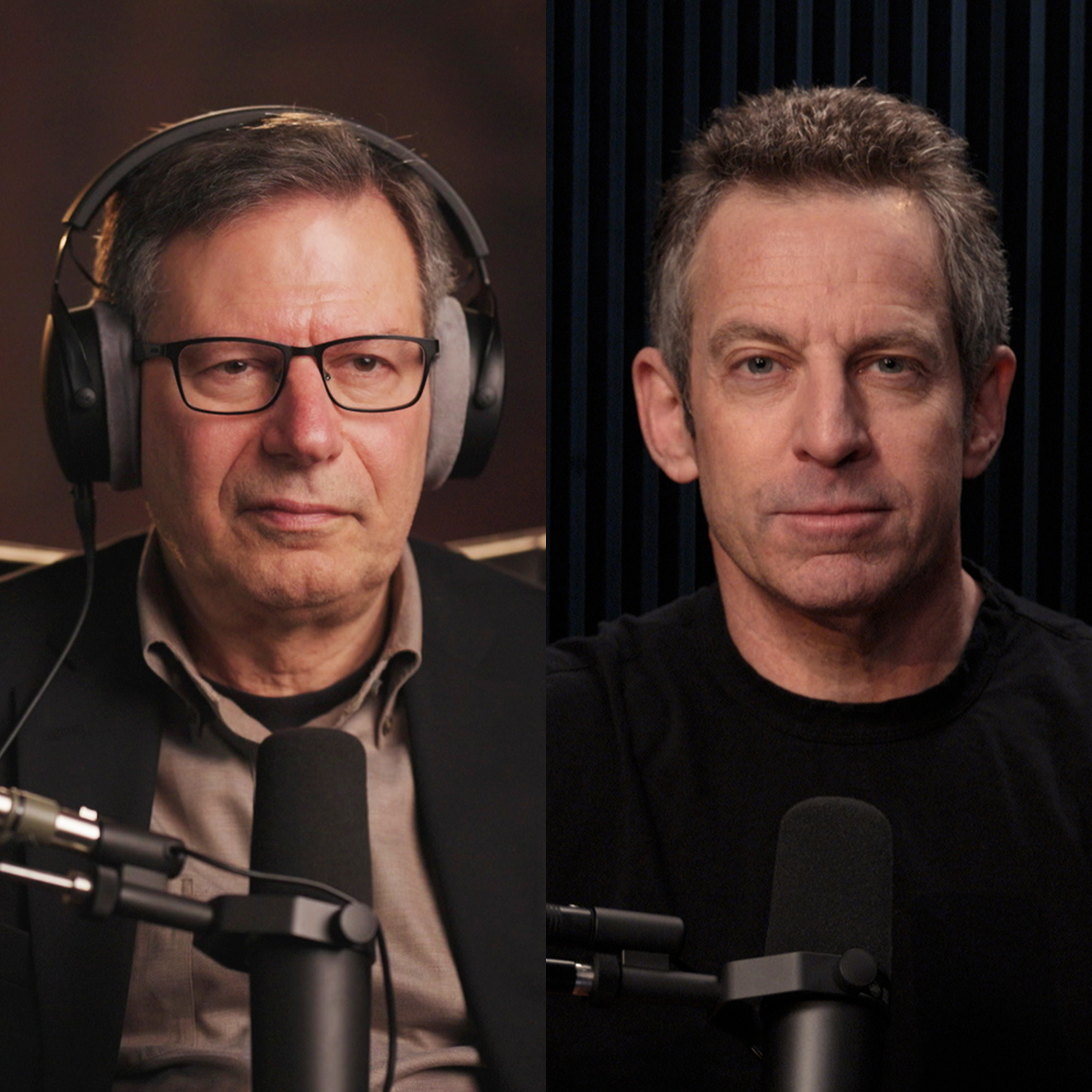
Making Sense with Sam Harris
#440 — A World in Crisis
00:24:44
Sam Harris speaks with Robert D. Kaplan about his new book, . They discuss climate change, demographics, the primacy of order over freedom, why Russia is a country in decline, political extremism and the migration crisis in Europe and the UK,...
Loading summary
Transcript25 lines
- [00:07]
A
Welcome to the Making Sense Podcast. This is Sam Harris. Just a note to say that if you're hearing this, you're not currently on our subscriber feed and will only be hearing the first part of this conversation. In order to access full episodes of the Making Sense podcast, you'll need to subscribe@samharris.org we don't run ads on the podcast and therefore it's made possible entirely through the support of our subscribers. So if you enjoy what we're doing here, please consider becoming one. I am here with Robert Kaplan. Robert, thanks for joining me.
- [00:39]
B
It's a pleasure to be here.
- [00:41]
A
So I've been a fan of your work for many, many years. I think like half of humanity. I was first introduced to you when you wrote that rather shocking article on The Atlantic in 1994, the Coming Anarchy, which I think was probably the most read piece in the magazine for quite some time. I don't know if it's been supplanted by anything in recent years, but that article was everywhere.
- [01:04]
B
Yes, see, remember it was the 1990s, so it was photocopied. It was the most photocopied article of the decade because that was the technology then. Nowadays you have so many outlets, so many things coming at you that it's hard for a piece really to rise above the rest, so to speak.
- [01:24]
A
Yeah, yeah, well. And then you followed it up, if memory serves, with the book length version, the Ends of the Earth, which I also read at the time in hardback. So I've been following you for quite some time before we jump in and talk about your new book and all manner of thing that worries us. How do you describe your career and your focus as a writer and journalist?
- [01:48]
B
Well, I started out as a journalist at a newspaper in Vermont, the Rutland Daily Herald, and then I bought a one way ticket to Europe and North Africa. And I traveled the world essentially over the years and I got bored with conventional journalism, you know, with standard, narrowly focused journalism. When I was in Turkey, I didn't care how many F15s the Turkish government was going to buy from the United States. I wanted to visit the Museum of Anatolian Civilizations. I thought that would tell me more about Turkey than how many F15s they were going to buy. So I just gradually emerged out of daily journalism. And I had an editor who really helped me in this regard, William Whitworth, who was the editor of the Atlantic Monthly for 20 years from 1980 to 2000, and he died last year. Without him, I don't know what I would have done. But he recognized something in me and let me do the kind of writing I wanted to do, which was to incorporate with journalism, philosophy, geography, history, literature.
- [03:04]
A
Yeah, yeah. Well, you do that quite eloquently. The new book is A World in Permanent Crisis, which we will get to. But let's start with the Ends of the Earth and how the world looked to you then. Because in addition to everything descriptive that is of such interest in your work, you're not shy about prognosticating. And I'm wondering how your view of the future has held up over the last 30 plus years. Because in the Coming Anarchy, and again in the book, the Ends of the Earth, you paint a very bleak picture of the future. And it's not too much to say the. The unraveling on some level of civilization. I remember you were focused more on the way the end of the Cold War would just kind of lift the lid on simmering cultural conflicts and the way that environmental concerns and urbanization and other demographic trends would just lead to fragmentation and disorder. What, if anything, in that view has held up well? And what do you think you got wrong?
- [04:08]
B
Well, the specifics always you get things wrong, but I think the general view is held up well. Remember, these were products of the 1990s. The Coming Anarchy was published in 1994 as an essay. It came out in book form in 1996. That was the heart of the mid-1990s, when the policy elite at famous posh conferences in Davos and elsewhere were predicting a world of liberal humanism. They predicted that Africa, Asia, every place would just follow Eastern Europe into democracy and good governance. And I was traveling around Africa, the Middle east and other places, and I said, that's not true at all. These places have different histories. They're at a different time in their development. And they're not just following what happened with the collapse of a number of regimes in former communist Eastern Europe. So I saw a totally different world than the policy elites at the time. And I actually followed it up with another Atlantic essay called Was Democracy Just a Moment? Which came out in 1997. Again, this is the 1990s, when the whole policy elite bought into the notion that history was over, that there were going to be no more wars, we can just concentrate on stabilizing human rights, et cetera. And I had a different image. So I would say that my overall prognosis of the world has held up extremely well. I wrote about anarchy in Sierra Leone and Cote d', Ivoire, the Ivory coast, but those were models for what would later happen in Libya, Syria, Iraq, many other places, Burma, then called Burma, now Myanmar, et cetera. So I think generally it's held up well.
- [06:13]
A
And obviously you wrote certainly the article coming anarchy in 94 before virtually anyone was on the Internet. Right. I forget what year we all got on 96 or something, but obviously before social media and smartphones. And the implications of this technology knitting the world together for good or for ill, and largely for ill, is of relevance in your new book, Wasteland, because you focus more there on the way in which the shrinkage of the information landscape and also just of geography, I mean, the connection of every place to every other by air travel has just changed the dynamics of everything. And the institutions fraying in one part of the world affect the institutions elsewhere. But before we jump into the new book, do you still view the environmental focus you had 30 years ago as fairly central, or is it a second order concern?
- [07:13]
B
No, it's fairly central, Sam, because at the time I said in the Coming Anarchy, the essay, the 1994 essay, that the environment, the natural environment, would eventually constitute the number one security issue of the 21st century century. Of course, now it goes under a different name, climate change. It used to be global warming, but what we're really talking about is populations in the developing world that have not stabilized and gone down like in the west, but are still climbing, climbing, climbing. Meanwhile, there's less and less water to drink. And for agriculture, there's less and less nutrients in the soil in many of these countries, which again puts more pressure on food production, so that the. And this leads to migration. It leads from the rural areas, which can no longer sustain agriculture, into the cities which can no longer sustain these bulging populations, so that consequently people live in slums and shanty towns. And this goes uncovered still in the media to a significant extent because they're off our radar screen, so to speak. We don't realize that most of Africa now is urban. It's not National Geographic photo rural. It's mostly urban. And therefore these places are harder to govern, harder to satisfy, because urban populations require complex infrastructure that rural populations don't. So I would say that the natural environment writ large, connecting with a lot of other factors, is still fairly central.
- [09:04]
A
Yeah, the demographic details you cite in the book around urbanization and just population growth in Africa especially are pretty alarming. I mean, if memory serves as something like you're forecasting that 85% of humanity will be living in these vast megacities, not that high.
- [09:22]
B
I forget the exact figure, but look at it. This Way at the beginning of the 21st century, our century now, there was one African for every one European. At the end of the 21st century, there's going to be seven Africans for every European. Europe is only divided from, is only separated from Africa by the Mediterranean Sea, which is fairly narrow in global terms. So we're going to have decades ahead of more and more migration as many of these people in sub Saharan Africa become middle class. And in the first generation of middle class, they leave, they migrate for better opportunities elsewhere so that this steady migration from not only Africa, from the Middle east is going to fuel European populism for decades to come.
- [10:18]
A
Well, I want to jump into that. I want to talk about the specific fates of Europe and America and Russia and China and many of these places you focus on. But let's talk about the central analogy you draw in your book to the Weimar Republic. It's been pretty common, probably all too common and somewhat misleading for people to analogize between America under Trump and Weimar. That seems to sharpen up the concern about authoritarianism, perhaps to too fine a point. But you draw a global analogy. You're describing what you call a global Weimar. Maybe remind people just what Weimar was and what lessons we draw from it and why you think this is a good analogy for the globe.
- [11:03]
B
Right. I'm not interested in Hitler per se. When people say Weimar, they think that it ended with Hitler. It did. But that's not what concerns me with this analogy. In this book, Weimar is a town in central Germany where at the end of World War I, in 1918, German constitutionalists, lawyers, politicians all met to draw up a new constitution. Now, Germany had just lost World War I, millions of deaths and Kaiser Wilhelm II would turned out to be a disastrous autocrat. Even Bismarck from the late 19th century ruler of Germany, was looked down upon. And the rulers of Weimar, the people who gathered at Weimar, were determined never to have another autocrat rule Germany. So what they did was and we all do this in our lives periodically, they overlearned the lesson. They made not only it so hard for another autocrat to emerge, they made it hard to govern the place in the first place. So that there was constant crises, constantly weak governments, weak cabinets, nobody was in control. And because nobody was in control, it led eventually to a super autocrat, to Hitler. But for me, the world today is like the 15 years of Weimar between 1918 and 1933. It's why do I make an analogy between the world and Weimar? Weimar was so small, the world is so big, because technology has shrunk Geography. It's not only the Internet, social media, it's air travel, it's the unity of financial markets. We're all close to each other now. We all inhabit an anxious, claustrophobic world like Weimar was. And it's not going to lead to another Hitler. I say that, you know, I say that up front very clearly. But what it would lead to is like a permanent crisis, permanent paralysis, so to speak, that the days when the world had some coherence during the bipolar Cold War and unipolar American leadership in the immediate aftermath of the Cold War, those days are over. Now we live in a global Weimar where we're close enough to affect each other, but still there's nobody in control.
- [13:47]
A
Well, on the matter of control, one point you make in the book, and you probably make it elsewhere, if memory serves, is that order must precede freedom. And this is something that is, I think, routinely overlooked on the left. But as you move right of center with this epiphany, you run the risk of authoritarian capture. Right? I mean, if you privilege order over everything, I mean, the primacy of order leads to all kinds of right wing temptations of a sort that we're seeing play out globally. How do we avoid this lurch toward tyranny in the face of disorder?
- [14:25]
B
Yes, this was the very problem that the founders of the American republic wrestled with. If you read the Federalist Papers, you read the debates between Hamilton and Jefferson and all of those things, they were absolutely united and they wanted to avoid tyranny. But they also were afraid of chaos, of anarchy. And the reason they were afraid of chaos and anarchy was because they had Cromwell in their backs. The English Revolution, remember we're talking here, the 1780s or so, and their frame of reference was back to the 1700s, the 1600s, so they knew it was a fine balance. Madison said, you don't want a democracy, you want a republic. What he meant by a republic was, was limited democracy where people would vote every two or four years, but otherwise elites at the top who are well educated, you know, moral, would run the system. It was like a combination. They would be horrified at the push polls we have now of, you know, of primary elections. We just horrify them. They would see that as a lurch towards disorder, so to speak. But order comes before freedom because without order there is no freedom for anybody. You know, anarchy is a word we use. Most people have never experienced it. I've experienced anarchy in Sierra Leone, in Iraq, in Afghanistan and other places. Literally, when there's nobody in control is the most frightening political reality you can think of.
- [16:15]
A
Yeah. You make a related point which I had never considered, but it strikes me as true that when you're talking about establishing democratic order, democratic institutions are more important than democratic ideals. We tend to think about it in terms of the ideals first. But really, when you look at our. Especially when you look at our failure to export democracy to the rest of the world, I mean, to go into the Middle east and our various misadventures there and try to nation build. The ideals can be spread as liberally as you want, but the failure to build durable institutions just renders the whole project synonymous with failure and internecine chaos in the end.
- [16:57]
B
Spot on. The great late Harvard political scientist Samuel Huntington said that America is great not because of the character of its peoples, but because of its institutions. And he didn't just mean the separation of powers in Washington between executive, legislative, and judicial. He also meant the separation of the states, the counties, and the federal government. Wherever you looked, there was separation of powers and with strong institutions at every level. So this is what made Huntington say America is a great country because no place else has our level of separation of institutions. And so this is. This is what makes America great. And it's also what makes the present moment in America so perilous, because we're seeing these institutions challenged, we're seeing the separation of power challenged. You can have periods where you have a stronger presidency, a weaker presidency, a stronger Congress, a weaker Congress, but it stays within a certain medium, so to speak. And many countries don't have any of this. Huntington said something else. He said that America has no business lecturing the world about its systems of government, because the American form of government was, despite our revolution was largely inherited from 17th century England. What the revolution in the Continental Congress and the Federalist Papers were all about was iron of fine tuning the details. We inherited our system of government from 17th century England, whereas many countries in the developing world have inherited nothing. Essentially, the colonialists ruled, and then they just left, so to speak. So you have many countries in the world that are having to build institutions from scratch, which is something we actually never had to do.
- [19:14]
A
Yeah, yeah. All right, so let's take a tour of the chaos and start with Russia. So in the book, you describe Putin as the most dangerous Russian leader since Stalin. It would seem that most Americans, certainly right of center and most definitely in Trumpistan, are unaware of this. There's even a fondness for Putin that has spread in that cult. Why does Putin worry you more than anyone else?
- [19:42]
B
Remember when The Soviet Union for most of the Cold War. Stalin died in 1953. So for most of the Cold War, we faced a Soviet politburo of like 12 or 14 men. Yes, we had Soviet leaders, Khrushchev, Brezhnev, Andropov, et cetera. But they were merely spokesmen for the Politburo. So there was collegial rule, collegial leadership. And this Politburo, though technically communist, was in fact, deeply cautious and conservative. And why do I say that? Because the only way to they were all survivors of Stalin's purges of the 1930s and 1940s. How do you survive Stalin's purges? You have an opinion on nothing. Essentially, you're overly cautious, you never open your mouth. And that's who essentially ruled the Soviet Union through most of the Cold War. So we had it easy in a way. Putin is not like this at all. Putin is a risk taker. He governs alone, essentially. Around him are various circles of oligarchs, of crime figures, of intelligence figures of the media. If Putin were to get sick tomorrow, it's unclear who would rule Russia. Russia could descend into a kind of low calorie version of the former Yugoslavia in the 1990s. So Putin is very, very dangerous and the most dangerous and also the strongest Russian leader since Stalin died in 1953.
- [21:28]
A
And what's the significance of the war in Ukraine, in your view? And what did it reveal about Russia?
- [21:35]
B
It revealed Russian weakness. Really? Because remember the day before the Ukraine war started in early February 2022, Russia was assumed to be able to conquer Ukraine in short order. Send in a bunch of tank divisions, various arrow points on the map of tanks rolling in. Because look at it from the point of view of early February 2022. Russia had essentially won the war in Syria. It had made deep inroads in sub Saharan Africa. It made deep inroads in the caucuses, in the Greater Balkans, in Transdenstria and other places. Russia seemed invincible, both to us and to Putin. The lesson Putin learned from those small wars was wars can be easy, you can win easily, so to speak. But then he made the fateful decision to invade Ukraine. And it was revealed that in a great power military operation, Russia had no logistics. You know, there's a saying that amateurs discuss strategy and professionals discuss logistics. Big military operations are logistics, logistics, logistics. In other words, it's not just the tanks. It's the maintenance crews that have to be alongside them. It's the food wagons that have to be alongside them to feed the soldiers. It's the laundry people. It's all kinds of things have to accompany your main fighting units in the, you know, relatively in coordination. And it turned out that Russia had none of this, you know, it just had none of this. It could fake it in small scale military operations in Syria, which was mainly an air war from the Russian point of view, and in various places in sub Saharan West Africa. But the Ukraine war revealed Russian weakness. So we have a country, Ukraine, a big country of 44 million people, but still just one country that has been able to withstand the might of the Russian war machine for like almost four years now.
- [24:00]
A
So what's at stake there? What do you think is likely to happen and what do you think the likely consequences or of it happening?
- [24:07]
B
I think Russia is a country in decline, really. And I think that, remember, World War I changed.
- [24:15]
A
If you'd like to continue listening to this conversation, you'll need to subscribe@samharris.org Once you do, you'll get access to all full length episodes of the Making Sense podcast. The Making Sense podcast is ad free and relies entirely on listener support and you can subscribe now@samharris.org.