← Making Space with Hoda Kotb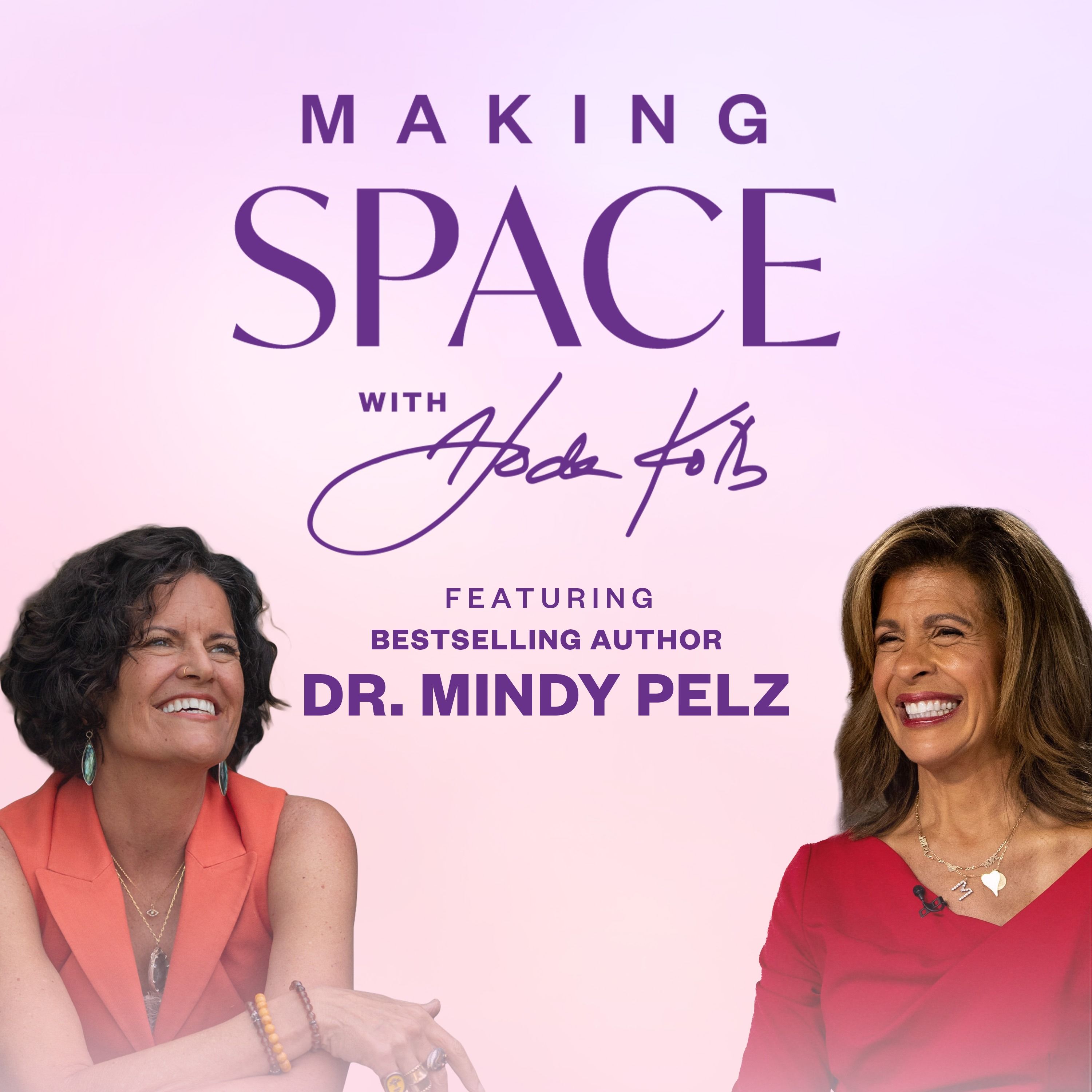
Making Space with Hoda Kotb
Dr. Mindy Pelz on the Wisdom That Emerges from Menopause
00:42:17
Dr. Mindy Pelz is a New York Times bestselling author and clinician focused on women’s health, hormones, menopause, and aging. She sits down with Hoda to talk about her latest book, "Age Like a Girl," and how studying menopause changed the way she views the female body’s evolution through midlife. Plus, she shares why challenges later in life offer an opportunity to live more intentionally. Listeners should consult their healthcare provider before making changes to their diet or fasting routine.
Loading summary
Transcript265 lines
- [00:00]
Commercial Narrator
Jump start your January goals at Whole Foods Market. They have hundreds of yellow sale tags for feel good savings across the store. Explore sales on sustainable wild caught sockeye salmon fillets, organic boneless chicken breasts and many more quality finds to support your wellness journey. In fact, Whole Foods Market is the only certified organic national grocer shop Whole Foods Market with so many ways to save all month long terms apply what.
- [00:30]
Does perfectly picked wellness sound like at Target? It sounds like gut health in a gummy like coffee made from mushrooms and the perfect workout set. It sounds like protein hidden in chocolate bars, cloud popcorn bags, even water.
- [00:49]
Hoda Kotb
From.
- [00:50]
Commercial Narrator
Rise mushroom coffee to David bars. It sounds like wellness perfectly picked for you is now and new. At Target.
- [01:06]
Hoda Kotb
There are people who accept the world as it is and there are people who refuse to believe that this is just how it is is a complete answer. Dr. Mindy Peltz is one of those people. She is a New York Times bestselling author, clinician, and one of the most influential voices in women's health today. She has written seven books, surpassed 110 million views on her YouTube channel, and seen her podcast reached more than 11 million downloads. Her work in fasting hormones, metabolic health and aging has attracted a global community of more than 5 million people searching for a different way to understand their bodies. After being diagnosed with chronic fatigue syndrome in her early 20s, Dr. Mindy began a decades long quest to find answers that traditional medicine could not offer. What started as a personal search for healing became a mission to challenge the idea that women's bodies are broken and to help women reclaim trust in their own biology. Her new book, Age Like a Girl is her most personal work yet. It explores what happens when a woman stops overriding her body, stops rushing and starts listening. It reframes menopause not as a decline, but as a powerful biological and neurological shift, inviting women to see this stage of life not as an end, but as a becoming. In our conversation, Dr. Mindy opens up about what drives her to find answers, what she's learned from working with women around the world, and what you can do to make this time in your life a lot better. I'm Hoda Kotb and this is my podcast, Making Space. First of all, I'm so happy to be sitting with you. I've admired you from afar. Thank you. I've listened to your podcasts on a lot of my good friends and I was so excited to see this book and it's called Age Like a Girl. And then I started reading. I saw the word menopause and I was like, I know exactly what this book is going to be about. It's going to be about menopause. This is not that book. This is a book that's not explaining or describing what we're going through. And I love the concept. So first of all, just tell me how this came to you as something that you wanted to write.
- [03:28]
Dr. Mindy Pelts
Yeah, Well, I always say it started with the mama bears. In my practice, I had a practice full of women that were going through perimenopause and they kept having all these crazy symptoms. And one of the most startling symptoms was behind closed doors. They would be like, my life on paper is perfect, but I'm depressed, I'm anxious, and I have suicidal thoughts.
- [03:48]
Hoda Kotb
Wow.
- [03:49]
Dr. Mindy Pelts
And I was like, so many of these women were saying it that I dove into the research to try to figure out what is the purpose of menopause. Like, we live 42.5% of our life, if we're lucky, post reproductively.
- [04:03]
Hoda Kotb
Right.
- [04:04]
Dr. Mindy Pelts
That's a large part of our life.
- [04:05]
Hoda Kotb
That's a chunk. That's a big chunk.
- [04:06]
Dr. Mindy Pelts
And what I know about the human body is it doesn't do anything by mistake. So I wanted to figure out why the human body would continue to thrive for a female once her reproductive cycle went away.
- [04:18]
Hoda Kotb
Interesting. So you, how old are you?
- [04:20]
Dr. Mindy Pelts
56.
- [04:21]
Hoda Kotb
You're 56. So when you think back to whenever that moment was where you started to feel different, describe yourself in that moment in that window.
- [04:29]
Dr. Mindy Pelts
Well, so my symptoms through menopause were really different because in my early 40s, they were all physical. It was like night sweats and weight gain. And then it kind of went in, in the mid-40s into like, I just feel kind of depressed. And then the brain stuff started to K and it was really like, nothing could make me happy. And I would say, I'm a workaholic. Like, I can put in a 10 to 12 hour workday. And all of a sudden I started noticing I had to shut down the amount of work I was doing. I would lose my thought when I was with patients. Or if I was like doing a video for YouTube, like, my memory would just go. So that made me kind of move from the body to the brain because there's so many symptoms, right? Which one? Why are all these symptoms happen? What is the body trying to tell us?
- [05:21]
Hoda Kotb
Okay, so a lot of women who I'm imagining are listening, saying, yeah, I feel brain fog, I feel kind of in a funk. I don't feel good. But this is just how life goes, man. This is what Happens in this stage. So buckle up and endure. And what's your answer to that?
- [05:39]
Commercial Narrator
Yeah.
- [05:39]
Dr. Mindy Pelts
And the next thing that they say is, is this gonna last forever?
- [05:43]
Hoda Kotb
Yeah.
- [05:44]
Dr. Mindy Pelts
So what I wanted to explain is this is not gonna last forever. So let's explain this.
- [05:49]
Hoda Kotb
Okay.
- [05:49]
Dr. Mindy Pelts
At 40, when estrogen that signals the brain to literally remodel itself. This was Lisa Moscone's work that she found that when we go through these massive hormonal shifts, Neurons in the brain that are delivering information to different parts of the brain, some of those neurons get sloughed away, and new neurons appear that give you new thoughts.
- [06:12]
Hoda Kotb
Wait, wait, wait. So you're not just on the decline? Yes. There's stuff that's building in your brain.
- [06:17]
Dr. Mindy Pelts
It's literally like a. A kitchen remodel. It's like the brain is remodeling itself for the next phase of your life.
- [06:25]
Hoda Kotb
Ah. So that's a big underlying highlight thing. Cause I think we all thought that. Oh, it's called decline. That's what happens. I'm 61. Like, you feel that you're firing on all cylinders, and then you're like, oh, I can't remember. Uh, oh, I don't know this. Uh, oh. So you're losing brain cells, and some are being built.
- [06:46]
Dr. Mindy Pelts
That's right.
- [06:46]
Hoda Kotb
That's crazy.
- [06:47]
Dr. Mindy Pelts
So, like, think about it. Literally think about a kitchen remodel. You wouldn'. Walk into the middle of the dust and be like, when is this gonna be done? You have some sense that there is going to be a completion, and it's purposeful. So here's the brilliant part, and Lisa's research taught us this, is that those neurons in your brain that kept you addicted to what everybody else thinks of you, the people pleasing. If I fix your problem, I'm gonna be worthy. The way in which so many women are outwardly looking for validation, those neurons go away.
- [07:22]
Hoda Kotb
That's why we stop caring about what other people think.
- [07:25]
Dr. Mindy Pelts
Like, literally, we're not designed to care.
- [07:26]
Hoda Kotb
You know what's so funny? I interviewed Jamie Lee Curtis and a bunch of other women of that age, and one of the things they always say is, Kathie Lee said this too. I don't care anymore.
- [07:35]
Commercial Narrator
I don't care.
- [07:36]
Hoda Kotb
I just thought it was a kind of state of mind. You just tired of it, but you say, there's something more.
- [07:41]
Dr. Mindy Pelts
Yeah, no, you're not designed to care. This is the big premise of the book, is your brain is remodeling itself. All those neurons that kept you addicted to everybody else's abuse. Opinion of you goes away and you start to build new neurons that make you actually are more introspective. You turn within and you're like, what do I want? Like speaking your voice. So many women are like, I'm not. I don't want to speak up because I don't want to rock the boat. You put them through this brain remodel of menopause and all of a sudden they're going to tell you what they think.
- [08:15]
Hoda Kotb
Let's talk about timing though. Okay? So when you start forgetting and being in a fog and saying, when am I gonna get clarity? And where's my phone? And I can't find the keys. And what did my kids say? I can't remember was their homework due to this part where the remodeling starts. How long of a process is that?
- [08:32]
Dr. Mindy Pelts
Yeah, I mean, this is bad news. Yeah, it's about 10 years. Okay. But what I did in this book is in the middle section I wanted to explain, like when your moods go off, think about these lifestyle changes, when your memory goes off. Cause this is what I've learned is we don't need to bring forward like here's a fanc supplement or here's a fancy medication. We need to start to teach women how to use their lifestyle to create a neurochemical reaction in your brain. Let me give you an example. Right now we're in connection with each other, we're making oxytocin. And so there's there when you connect with another human, oxytocin comes in. Well, oxytocin actually brings down cortisol. Cortisol is your stress hormone. And when you balance cortisol, actually you can start to now balance insulin. And you actually, by bringing stress down, you become more insulin sensitive. And when you're more insulin sensitive, all of your sex hormones start to balance.
- [09:29]
Hoda Kotb
So having great connections with even someone you've just met in this moment, as long as there's a real, true connection, all that's bubbling up inside of you.
- [09:39]
Dr. Mindy Pelts
That's right. And that's what I wanted to bring forward is like, you're not a victim to this ten year experience.
- [09:45]
Hoda Kotb
Yeah, yeah.
- [09:46]
Dr. Mindy Pelts
It's an opportunity to get to know yourself in a different way. And as women, we respond to every environment we put our bodies in. You put yourself in a negative, stressful environment, your body's gonna go into having a negative reaction. If you put yourself in really positive environments, you're gonna have a whole different neurochemical reaction. Same body, different environment.
- [10:12]
Hoda Kotb
Okay. So if I would like to not wait 10 years to get rid of my brain fog. If I wanna get something going, I like this interpersonal connection. I think that what other things can people do who have busy lives and kids and jobs, et cetera, et cetera, that they can fit in, that can help clear that up.
- [10:33]
Dr. Mindy Pelts
So you wanna go with memory first? Let's go.
- [10:35]
Hoda Kotb
Memory.
- [10:35]
Dr. Mindy Pelts
Yeah, memory and brain fog. So we have to remember like a remodel. There's a lot of dust and chaos. And so if there's chaos in your brain, you wanna make sure your environment is calm. So something as simple as decluttering. Just know there's a lot going on up there as your remodels itself. So now can you make your environments feel calm? And so like, for me, we lived in that house. I had that house where all the kids showed up. And, you know, when I went into my late 40s, all of a sudden the kids showing up equated to a mess. And I had to like train everybody in the house that I can't handle messes. Now I need you to take care of that. And then I went, had certain rooms where I had completely reorganized the room so it was calm. And every time I went in to that room, I started to feel more calm.
- [11:29]
Hoda Kotb
Okay, so your environment clearly clear your environment.
- [11:32]
Dr. Mindy Pelts
Clear your environment. So that would be one. Another one for memory that I love, that I found a tremendous amount of research on is storytelling.
- [11:40]
Hoda Kotb
Oh, what is that?
- [11:41]
Dr. Mindy Pelts
So let's check this out. So when we tell a story about something in the past, we are actually exercising our brain and making it go back into the memory center. And in order to do that, it stimulates a neurotransmitter called acetylcholine. And acetylcholine goes away often when estrogen goes away. So when those two start to go away, you can't access memory, but you just need to exercise that part of the brain. So tell stories. We have left storytelling up to tv.
- [12:14]
Hoda Kotb
That's interesting.
- [12:15]
Dr. Mindy Pelts
So, but you know how we know this innately? Do you have that relative that always tells the same story?
- [12:21]
Hoda Kotb
Yeah, yeah.
- [12:22]
Dr. Mindy Pelts
I mean, my mom is that. And until I understood what she was doing, I was like, I would say, mom, we've heard that story before, right? But then you realize what she's actually doing is exercising her memory bank. And so I started asking her different questions. Like, you know what? You've never told me about that story. Can you tell me about X, Y and Z? So we have to think of memory as a muscle, okay. And so if you start to use it through storytelling or dip into old facts. You know, like, what was your childhood phone number? Like, and maybe you don't use. Maybe you actually remember the way to get somewhere without having to use an app to show you. We have to exercise that.
- [13:09]
Hoda Kotb
Okay, so we've got some tricks there to get your memory going. What about, like. I mean, nutrition, obviously, is gonna be a big thing that you tackle, but I feel like some nights I'll have salmon and broccoli or whatever. I'll wake up the next day and I feel like I'm on fire, like, excellent. And sometimes whenever I feel that way in the morning, I backtrac. I'm like, what did I eat? When did I eat it? What was it? Was it that? So tell me about how nutrition plays in how we feel as we age and that meh kind of feeling.
- [13:37]
Dr. Mindy Pelts
It's such a good question. Because the diet that you thrived on at 35, you may not thrive on at 45, and at 55, it might really be damaging you. So let's make it simple, because nutrition seems to be very complicated for people. The first thing is get off the ultra processed foods, which is why I'm smiling when you're like, I have salmon and greens.
- [14:00]
Hoda Kotb
Yes, you feel it.
- [14:01]
Dr. Mindy Pelts
Yes, you feel it. So we gotta get off the canned packaged foods with the bad oils and the chemicals. Just get off that and eat real food. Okay, so protein, vegetables, legumes are amazing in the book. One of my favorite types of food is tubers, which are sweet potatoes. Jicama sun chose potatoes. Those are all incredible for the menopausal brain, and I have a whole list of reasons why.
- [14:29]
Hoda Kotb
Okay, well, those are important. So sweet potatoes are good for the menopausal brain.
- [14:32]
Dr. Mindy Pelts
Sweet potatoes are amazing.
- [14:33]
Hoda Kotb
What do they have? Is there something in there?
- [14:35]
Dr. Mindy Pelts
Yeah, well, a lot of magnesium. They feed your microbiome, and your microbiome makes serotonin and all kinds of things. They regulate your blood sugar. They're lower on the glycemic index.
- [14:46]
Hoda Kotb
Oh, smart. Okay.
- [14:48]
Dr. Mindy Pelts
So they actually stabilize your blood sugar.
- [14:51]
Hoda Kotb
Okay, so eat. Eat all stuff that's real from the earth.
- [14:55]
Dr. Mindy Pelts
Yeah.
- [14:55]
Hoda Kotb
What else can you do, nutrition wise?
- [14:58]
Dr. Mindy Pelts
So let' swe're gonna have to touch on fasting, because that's.
- [15:01]
Hoda Kotb
I want to. I'm dying to. Okay, tell me about the fasting piece.
- [15:04]
Dr. Mindy Pelts
Yeah. So the best way to talk about this is through the lens of Lisa Moscone, our brain researcher. When I had a conversation with her on my podcast, she emphasized that the female brain doesn't know what to do with glucose as estrogen starts to decline.
- [15:21]
Hoda Kotb
Oh, okay.
- [15:23]
Dr. Mindy Pelts
So glucose is the molecule that just. So we keep everybody up to speed. When you eat food, it turns into these glucose molecules, but you have another fuel source for your brain. It's called a ketone. And so as you go through menopause, your brain slants more towards a lower glucose diet, which is why your salmon and your greens fueled you so well. That's not a high glucose meal. And if you can get to ketones through intermittent fasting, 13 to 15 hours, we can talk about what that is. You are now metabolically switching into a different energy system. I call it the fat burning energy system. Because what your brilliant body will do is it senses that there's no glucose coming in.
- [16:11]
Hoda Kotb
Right? No food.
- [16:12]
Dr. Mindy Pelts
And so it switches over and burns fat. That menopausal belly weight that you're exhausted with, it will exhausted, burn. And that in order to make a ketone that will go up into your brain and supercharge your brain. And so the brain fog goes away, the depression, the anxiety goes away. Because what comes with ketones is more dopamine, more gaba, there's a whole neurochemical shift just from eating.
- [16:41]
Hoda Kotb
Okay, so this is all from not eating?
- [16:44]
Dr. Mindy Pelts
Yeah.
- [16:45]
Hoda Kotb
So your brain's on fire, you feel better from not putting any food in?
- [16:50]
Dr. Mindy Pelts
Yeah.
- [16:51]
Hoda Kotb
Okay, this is interesting to me. So how long should the stretch of not putting any food in go? Yeah, let's pretend I don't know. You're at home, you've put the kids down, you had your meal and it's eight o' clock at night and you ate a snack and now you're done.
- [17:07]
Dr. Mindy Pelts
Yeah. So the best way to look at this is in a 24 hour period. You wanna have an eating window and a fasting window. So if I'm done eating at 8 o' clock at night, so this means nothing going in your mouth, you can have water, but you don't want your blood sugar to go up. And then I eat at, let's say 10 or 11 the next morning.
- [17:30]
Hoda Kotb
So you say don't eat till 10, even if you have like a busy morning, you have meetings, you have things still.
- [17:36]
Dr. Mindy Pelts
Yeah. Okay, so the next logical question usually is the coffee.
- [17:40]
Hoda Kotb
Coffee, I was gonna ask. I was like, girl, I'm in. But just sort of. Okay.
- [17:44]
Dr. Mindy Pelts
And then let's talk about how you get yourself there so people can walk away with something to apply. So, so black coffee's okay, A full fat cream is okay. Something with a lot of fat in it, a lot of People do the MCT oil in their coffee. That's all just to stabilize, but not.
- [18:02]
Hoda Kotb
Half and half full fat. Cream, heavy cream.
- [18:05]
Dr. Mindy Pelts
You could do half and half and half. Okay. No oat milk, almond milk, no creamer or sugar.
- [18:12]
Hoda Kotb
Okay. So you just have your coffee and that'll take you through till like 10 or 11 or whenever.
- [18:17]
Dr. Mindy Pelts
Yeah. So most people that. That kind of becomes a meal.
- [18:19]
Hoda Kotb
Ah. So then you reach 10 or 11. What should be the first thing you put in your mouth if you want to keep clear? Brain, body on fire. All those good things.
- [18:27]
Dr. Mindy Pelts
Yeah. Oh, this is such a good question. So there's two things. One is you want to feed your microbiome. So we have trillions of bacteria in our gut. So I always like to put like a salad, maybe some fermented foods. If you do animal products. I'm a huge fan of breaking your fast with bone broth because it really repairs the inner lining of the gut. So you want to think about what that's gonna help support the gut and fiber. Fermented bone broth is great. Second thing you wanna think about is protein. It's a really big one right now, especially in the diet.
- [19:00]
Hoda Kotb
Everybody's talking about it. Yeah.
- [19:02]
Dr. Mindy Pelts
So you need about 30 grams of protein to start to actually move yourself metabolically to more insulin sensitivity.
- [19:10]
Hoda Kotb
Okay.
- [19:11]
Dr. Mindy Pelts
So I like the research on that. And so just make sure that first meal has 30 grams of protein.
- [19:16]
Hoda Kotb
So what is. Can you break it down? Like, how many eggs am I eating? What is 30 grams?
- [19:21]
Dr. Mindy Pelts
Yeah, eggs. E. Eggs is like, it's like six eggs.
- [19:24]
Hoda Kotb
So you gotta eat six eggs.
- [19:25]
Dr. Mindy Pelts
Yeah, yeah. Eggs is probably not your best choice.
- [19:27]
Hoda Kotb
Yeah, that's a good one.
- [19:28]
Dr. Mindy Pelts
But like a seven ounce chicken breast, which would be like about this big.
- [19:32]
Hoda Kotb
All right.
- [19:32]
Dr. Mindy Pelts
Yeah.
- [19:33]
Hoda Kotb
And that's how much should you have throughout the day?
- [19:35]
Dr. Mindy Pelts
You're supposed to have one gram per pound of ideal body weight.
- [19:39]
Hoda Kotb
Oh, okay.
- [19:40]
Dr. Mindy Pelts
But this is why I say try to have 30 grams per meal is. I've watched a lot of women double down on protein only to gain weight.
- [19:48]
Hoda Kotb
Oh, really?
- [19:49]
Dr. Mindy Pelts
Yeah. Okay, so, you know, use your intuition and maybe look at 30 grams per meal. But if you're shoving eggs in your mouth because you need to hit some number.
- [19:59]
Hoda Kotb
No good. Stop. Okay, so some people are morning workout people. I am. I like to go to the gym. I go at like 5:15. Okay. Is it okay to go on empty?
- [20:08]
Dr. Mindy Pelts
Yeah. So there's a couple ways we could look at this.
- [20:10]
Hoda Kotb
Okay.
- [20:10]
Dr. Mindy Pelts
Okay. We'll break this down in simple terms. When you go in a fasted state to the gym. Your body needs glucose to make those muscles work. And if you haven't given it a meal, it's gotta go find glucose somewhere else. So it's gonna burn fat to find it. So for weight loss, if you can go in a fasted state, that is the best way to go to the gym.
- [20:34]
Hoda Kotb
Got it.
- [20:34]
Dr. Mindy Pelts
Okay, now what I'm about to say is gonna sound like I'm opposing that if you're going for strength training. Amino acids are incredibly important before a strength training workout.
- [20:45]
Hoda Kotb
So how do you get those?
- [20:46]
Dr. Mindy Pelts
Protein is typ. So you have two options. You could put protein powder in your coffee.
- [20:52]
Hoda Kotb
Oh, okay.
- [20:53]
Dr. Mindy Pelts
The coffee becomes the vehicle for a lot of things and it'll dissolve in there and you can make a little protein powder. There was even a trend that was called a carnivore coffee and it was like people were putting raw eggs in their coffee.
- [21:07]
Hoda Kotb
Okay, gag.
- [21:08]
Dr. Mindy Pelts
Don't recommend that. But I'm just telling you how crazy.
- [21:11]
Hoda Kotb
People got with their coffee because they were dying to get the protein. That's right. Got it.
- [21:15]
Dr. Mindy Pelts
Or you could just take an amino acid supplement. We have our fasters. Put amino acid powder in water and just drink it down so that you have the ability to. And now you're going to be able to lift weights.
- [21:33]
Hoda Kotb
More ahead with Dr. Mindy Peltz. Stay with us.
- [21:44]
Commercial Narrator
This season everyone deserves a little more and Mazda delivers with the extended driving range of the CX50 Hybrid so you can spend more time together. Standard all wheel drive in every Mazda CUV including the CX5 and room to bring everyone with three row seating in the CX90. Find more reasons to celebrate the season at the Mazda More to move you sales event.
- [22:05]
Hoda Kotb
Every Mazda CUV offers you an elevated driving experience and refined performance. Discover it at your local Mazda dealer today.
- [22:14]
Commercial Narrator
Protein is now at Starbucks and it's never tasted so good. Try our all new caramel protein lattes with up to 31 grams of protein and options with no added sugar.
- [22:24]
Dr. Mindy Pelts
Level up. Level up. Level up. Level up. Level up.
- [22:27]
Commercial Narrator
Level up Your drink at Starbucks.
- [22:29]
Adobe Acrobat Studio So brand new. Show me all the things PDFs can do. Do your work with ease and speed. PDF Spaces is all you need. Do hours of research in an instant with key ins from an AI assistant. Pick a template with a click. Now your prezo looks super slick. Close that deal. Yeah, you won. Do that. Doing that. Did that.
- [22:48]
Dr. Mindy Pelts
Done.
- [22:48]
Commercial Narrator
Now you can do that. Do that with Acrobat. Now you can do that. Do that with the all new Acrobat it's time to do your best work with the all new Adobe Acrobat Studio.
- [23:03]
Hoda Kotb
So now you've had your first meal. What are you doing, like, in terms of eating throughout the day? Can I eat my normal thing? Oh, you can.
- [23:11]
Dr. Mindy Pelts
Yeah. What we would say is like, once you open up that eating window, eat like this is not an opportunity to stop eating. What most people find when they tack on a 13 to 15 hour fasting window every single day is their hunger goes away.
- [23:27]
Hoda Kotb
And so. Oh, it does?
- [23:28]
Dr. Mindy Pelts
Yeah.
- [23:28]
Hoda Kotb
Okay.
- [23:29]
Dr. Mindy Pelts
I know that sounds crazy, but you've never fasted.
- [23:31]
Hoda Kotb
I keep thinking about like when they tell you you can't eat before colonoscopy or something and all you can think about is food and you're like, oh my God, I can only drink this, like clear, crystal light or whatever it is. But your stops being hungry after a bit.
- [23:44]
Dr. Mindy Pelts
Yeah. I mean, this is why I think fasting has continued to stay in our culture. Is it's the only nutrition and plan that I know that gets easier with time.
- [23:55]
Hoda Kotb
You know, it's so funny, fasting. I don't know if it gets a bad rap or not a rap at all, but other than people telling you they do it, you don't really hear about it as a thing.
- [24:05]
Dr. Mindy Pelts
Yeah, people. It was a thing in the beginning for people. Like 10 years ago, it was really. People would tell you, oh, I'm not eating breakfast cause I'm fasting. I think the culture, so many people are doing it now that it's just become common sense.
- [24:18]
Hoda Kotb
And I guess everything that we see about all the diets and things are all kind of being monetized. It's like, try this diet, buy this pill. I mean, what do you.
- [24:29]
Dr. Mindy Pelts
Well, it's funny because when I first learned fasting, I learned a term called autophagy. And autophagy means that when your body goes without food, the cells start to cle themselves up and they get stronger. And in 2016, there was a Japanese scientist that won a Nobel prize for this term that he associated with lack of food. So I was like, oh my God, somebody's gonna come up with an autophagy stimulating diet or autophagy supplements or meds, but nobody could come up with that. You can only stimulate autophagy by going without food is the main way, so nobody can make money off of it. That's where I'm going with this.
- [25:13]
Hoda Kotb
Yes. Oh, you're right. There's no way to monetize.
- [25:16]
Dr. Mindy Pelts
Think about it. This is what we've noticed on my YouTube channel is like, I can teach you how to go without food. And all of a sudden, your food bill goes down. You don't need as many supplements. You get off medications. Industries are not big Ag, Big Pharma. They're not excited about that.
- [25:38]
Hoda Kotb
Makes sense. You know, it's funny. A friend of mine whose mother was struggling with cancer, they were. Why don't you try. Let's try not having a ton of food and see what happens with your body. And she said she noticed changes in her mom. Good changes. So I think it's just really fascinating. Okay. And so should you just stay in that window that you were describing 13 to 15 hours?
- [25:59]
Dr. Mindy Pelts
Yeah. So you could get up. So let's use you as an example. Maybe you try some protein in your coffee, and then you drink it. See how you do. I mean, there's gonna be an adjustment period. And then when you get done with your workout, then. Then go home and eat some protein. Go have your six eggs, because you just emptied out the glucose stores in your muscles. So now you want to put good nutrients in.
- [26:23]
Hoda Kotb
Good, good. Okay. And then go throughout the day and then just do the same thing and stop. Well, you think you'd see weight loss or. What are you seeing other than a good food?
- [26:30]
Dr. Mindy Pelts
Weight loss is huge. I mean, the amount of weight loss we have watched people on my YouTube channel get is insane. Hundreds of pounds.
- [26:39]
Hoda Kotb
Wow.
- [26:40]
Dr. Mindy Pelts
And women in their 80s that are like, oh, my gosh, I learned how to fast, and I finally lost my menopausal belly weight.
- [26:46]
Hoda Kotb
That's crazy.
- [26:47]
Dr. Mindy Pelts
This is the thing to know about extra weight is when you have extra anything. Glucose, toxins, hormones. Our bodies are so smart that what they do is they say, I probably shouldn't put this around the heart and lungs. Those are important organs. So I'm gonna store it around your belly to save your life. And then we look in the mirror and we're like, you know, I'm undisciplined. We tell ourselves horrible things, but really, what? Your brilliant body put it there because it didn't wanna put it around an organ system that would kill you. So when you go into these micro moments of no food coming in, the body's like, oh, I know what to do. I stored extra glucose around your belly. I'm gonna go burn that today. So what I saw in my clinic was like, literally, when I taught these mama bears how to fast, they would walk in the next week, and it looked like somebody had taken a fat coat off of them.
- [27:44]
Hoda Kotb
Oh, my gosh.
- [27:44]
Dr. Mindy Pelts
And it was like, crazy.
- [27:46]
Hoda Kotb
Wow. You could see it right away.
- [27:47]
Dr. Mindy Pelts
You could see it right away.
- [27:48]
Hoda Kotb
Something you're lugging around. Okay, so the nutrition piece is important for all the things you're describing in your book. Again, it's called age. Like a girl. So there are other factors that play into this for a lot of people. Like, sleep is a big one. I mean, what the hell do you do? You wake up, you panic. What happened? My kids, my this, my that. Like how important and how much of that is affecting just that meh feeling that a lot of people in their 40s and 50s and 60s have.
- [28:17]
Dr. Mindy Pelts
Yeah, sleep's a big one. And there's two things I would say on it. Remember that estrogen was your timekeeper. It would actually, estrogen would stimulate the part of the brain that knew where you were in the 24 hour cycle. Now estrogen's gone, she's leaving. And so you have to find other things to tell the timekeeper what time of day it is. So red when you get up in the morning and you see the sun rise, your eyes will register that and send a message to the timekeeper in the brain and say, it's daytime, turn off melatonin. And then in the middle of the day, when you go out in the middle of the day and you see full spectrum light, the timekeeper goes, okay, it's the middle of the day. We want to keep melatonin at bay. No more melatonin. At the end of the day, you go and look at the sunset and your eyes will send a message to the timekeeper. Oh, it's the end of the day. Go ahead and make melatonin.
- [29:18]
Hoda Kotb
Wow.
- [29:18]
Dr. Mindy Pelts
So light becomes really important.
- [29:20]
Hoda Kotb
So artificial light, should we be getting or. No, but what if. Yeah, okay. I was just thinking in New York, like the last few days, but yeah, so.
- [29:28]
Dr. Mindy Pelts
Well, this is why red lights have become so important. You could get a red light. Like in my house, I have red light bulbs that were like $10 and I just changed a couple lamps out. And so at the end of the day, I sit in that room with red light.
- [29:42]
Hoda Kotb
So, you know, it's like the sun's setting.
- [29:44]
Dr. Mindy Pelts
There's full spectrum happy lights you can get online. And like, you know, people use them for seasonal affective disorder. You could put that on while you're just working at your computer in the middle of the day and that light will start to register to the brain where you are in the day.
- [30:01]
Hoda Kotb
Okay, so. So of all the things, nutrition, exercise, sleep, all the different things, where does sleep fall? In there.
- [30:08]
Dr. Mindy Pelts
It's a big one.
- [30:09]
Hoda Kotb
It's a big one. Okay.
- [30:10]
Dr. Mindy Pelts
But I mean, I don't know. This is where the menopause conversation is going askew, in my opinion, because we're saying women need to prioritize sleep. Well, it's not like we're not prioritizing sleep. We just can't sleep. Right. We, like, can't fall asleep. We can't stay asleep. So how do we prioritize something we can't control? We're not being able to do that.
- [30:31]
Hoda Kotb
Yeah.
- [30:32]
Dr. Mindy Pelts
So this is why in the book, I was like, look, let's re pattern light. Temperature's another one.
- [30:37]
Hoda Kotb
Temperature's. Yeah. So what should the temp be?
- [30:39]
Dr. Mindy Pelts
You need your body, your core body temperature to go down by 2 degrees.
- [30:46]
Hoda Kotb
Okay.
- [30:46]
Dr. Mindy Pelts
So I'm in the living room. I'm sitting there watching a movie, and it's warm. When I go into my bedroom, it needs to be at least 2 degrees colder than the living room so that my core temperature can go down.
- [31:01]
Hoda Kotb
Okay.
- [31:02]
Dr. Mindy Pelts
When your core temperature goes down 2 degrees, it actually tells the brain, the timekeeper, it's time to go to bed. And it'll signal melatonin.
- [31:11]
Hoda Kotb
Oh, that's interesting. Yeah. Okay, so drop the temp in your room a little bit.
- [31:14]
Dr. Mindy Pelts
So drop the temp.
- [31:14]
Hoda Kotb
Okay, got it.
- [31:15]
Dr. Mindy Pelts
And then, I mean, of course, I think we are definitely a lot more intuitive. As we go through menopause and we go through this process, our nervous system becomes highly refined. I think that's by evolutionary design. So we have to be careful what conversations we engage in. If I don't know about you, but I can't do work before I go to bed because my brain is still going. So remember that if you start to wind your brain up, you might struggle to fall asleep because it's just chatting at you.
- [31:49]
Hoda Kotb
What do you think about all of the meditation, breath work and all of these things and how they affect your body and mind?
- [31:56]
Dr. Mindy Pelts
Yeah, so there's great research on yoga. Before bed will actually put your body into a rhythm to be able to sleep. So it's like body meditation. We know that chanting music, that repetitive chanting will stimulate the parasympathetic nervous system, which is amazing. So that's incredible. And then, yeah, I mean, I think making sure that you're preparing yourself for sleep, I think that's where we might have been able at 35, just to jump in bed and go to sleep. At 65, we might need to have a whole go to sleep process.
- [32:34]
Hoda Kotb
Okay, got it.
- [32:34]
Dr. Mindy Pelts
Oh, and I know I was gonna tell you box breathing.
- [32:38]
Hoda Kotb
Oh, yeah.
- [32:39]
Dr. Mindy Pelts
That's pretty profound.
- [32:40]
Hoda Kotb
Yeah. Yeah.
- [32:41]
Dr. Mindy Pelts
If you just do the four, breath in, hold it for four. For four. And then release for four.
- [32:48]
Hoda Kotb
And do it again.
- [32:48]
Dr. Mindy Pelts
And do it again.
- [32:49]
Hoda Kotb
Yeah. And that does.
- [32:50]
Dr. Mindy Pelts
Yeah.
- [32:51]
Hoda Kotb
I've done some breath work and some meditation, and I found it, like, really settles to me. It's like, you know, it's like you have a bunch of lake water in a jar and you shake it and then you watch how it all just drops down. And I feel that way when I'm meditating. I feel like the ocean, the top of the ocean is so tumultuous. And you drop and drop and drop and drop down. And no matter how tumultuous it is, you go low enough, you're gonna feel like it's calm down here. Who knows what's going on up there, but boy, it feels good. Yeah, it feels good down here.
- [33:22]
Dr. Mindy Pelts
Yeah.
- [33:25]
Hoda Kotb
More with Dr. Mindy Pelts when we come back.
- [33:27]
Commercial Narrator
Back.
- [33:36]
At Nature's Bounty, the belief is simple. You already have a brilliant body. Supplements just help support your journey. For over 50 years, nature's bounty has offered vitamins and supplements to help you eat, sleep, thrive, repeat. From magnesium glycinate for heart and muscle support to hair growth capsules for fuller, thicker hair and probiotics. With 20 billion live cultures for digestion, Nature's Bounty. It's in your nature to thrive. Learn more@naturesbounty.com these statements have not been evaluated by the Food and Drug Administration. These products are not intended to diagnose, treat, cure or prevent any disease.
- [34:06]
Ever walk past a place for rent and wish you could just take a peek inside, maybe even explore the layout. Envision the natural light streaming through the windows or plan where your vinyl record collection would go. At apartments.com you can. With tools like their 3D virtual tours, you can see the exact unit you could be living in. Really envision yourself in your new home. With apartments.com the place to find a.
- [34:31]
Hoda Kotb
Place.
- [34:34]
Commercial Narrator
Member week is on at lows. Get up to 40% off hundreds of items like appliances, home essentials, decor and more. Perfect for your January reset. Plus, earn five times the points on an eligible purchase. Shop member deals in store and online from January 8th through the 14th. Still not a member? Join for free today. Lowe's we help you save point boosters subject to exclusions and more terms apply Loyalty programs subject to terms and conditions. Visit lowe's.com terms for details. Subject to change.
- [35:07]
Hoda Kotb
The other thing because a lot of women who are feeling this are in the sandwich generation and they feel incredible stress. It's like carrying. Caring for your mother, caring for your children, doing all the things, being everything but stress, stress, stress, stress. I mean, stress is one of those things that you try to put at bay. How much does that play into what's happening to us in our 40s, 50s, and 60s?
- [35:28]
Dr. Mindy Pelts
Yeah. Unfortunately, I think that's the core of why we have, especially in the Western world, so many menopausal problems, is that women go rushing into their perimenopausal years. So maxed out.
- [35:42]
Hoda Kotb
Yes.
- [35:43]
Dr. Mindy Pelts
And what happens when the ovaries stop making estrogen is they hand that job over to your adrenal glands, and your adrenals are like, wait a second. I've been doing a lot of work here, and now you want me to make more estrogen for you? So it really is. Having a highly stressed, rushing life is a recipe for menopausal madness.
- [36:05]
Hoda Kotb
Wow.
- [36:06]
Dr. Mindy Pelts
So we've gotta start to learn to build in downtime. We have to start to look at me time. A lot of women start to isolate themselves just to calm. So I think you just. The beautiful part of the remodeling of the brain is that you will intuitively start to care for yourself a lot more. I think it's startling for women when they're, like, used to caring for everybody else, and then all of a sudden that instinct stops and they want to care for themselves. It's beautiful. But you might have been getting a lot of worth from caring for everybody else.
- [36:45]
Hoda Kotb
Right. And it's a huge shift. It's almost like a personality you had for all those years, and now you're like, oh, wait. And people, I'm sure, will come up to you and go, what happened to you?
- [36:53]
Dr. Mindy Pelts
Right.
- [36:54]
Hoda Kotb
Like, where's my thing that you always brought me? But you have to really stand firm in that.
- [36:59]
Dr. Mindy Pelts
That's why I put an appendix to men in this book.
- [37:02]
Hoda Kotb
Yeah. Oh, tell me.
- [37:03]
Dr. Mindy Pelts
Because as I was writing it, my number one feeling was I really want women to feel heard and seen through this book and that understand the process. But what a woman is gonna do, an empowered start to talk about what she discovered in the book, and how is she going to explain it to her husband or to, you know, the men in her life who aren't having that experience. So I put an appendix to men, and the appendix is basically written to a man so that women could hand the book and just say, here you go.
- [37:35]
Hoda Kotb
This is what I'm reading. Read your section.
- [37:37]
Dr. Mindy Pelts
Yeah, I got it for you because I think it's. You Know, I think it's confusing for men. All of a sudden, if you're married to a woman, you're like, you were doing all these things for all of us, and you look like you enjoyed it, and now you don't wanna do that anymore.
- [37:52]
Hoda Kotb
Right. Where'd that come from?
- [37:54]
Dr. Mindy Pelts
Right. And I wanna normalize that.
- [37:56]
Hoda Kotb
Right. I think it's like an attitude change. And you're like, no, this is more than that. So again, for women who are listening, who are in their 40s, their 50s, their 60s, and they're thinking, at this time in life, the wheels just kind of start falling off. I've heard everyone say, ugh, I'm getting old. Ugh, I can't remember, but there is some light at the end of the tunnel. So what if you're. If someone's about to pick this book up and they're thinking to themselves, I already feel this kind of meh way. What's the message about what's ahead for that rest of their life, that next 40 years?
- [38:31]
Dr. Mindy Pelts
Yeah. It's a message of hope because your brain is remodeling itself so that you can start living life on your terms. So know where you're heading is a beautiful place. You're in a temporary, temporary stuck spot.
- [38:43]
Hoda Kotb
That's it. Temporary, temporary. Yeah. Cause I think they think the decline is here.
- [38:47]
Dr. Mindy Pelts
That's right. And so why I put in the middle of this book, use your lifestyle to help yourself. I think as women, we have outsourced so much of our worth and care to other people. And I always say, don't wait for a hero to show up and make this menopausal experience amazing for you. Be your own hero. You get to be the hero of your own story now. And you get to use your lifestyle when your brain's not working well and your memory's gone down. Okay. Get to know the ketone system and try some intermittent fasting. Try exercising your brain with, you know, using storytelling if the stress gets too high. Okay. What if you go out into nature and you get cortisol will start to lower and you'll start to calm like you did with that beautiful meditation. Like, you are not a victim. You're not a victim to the process. This process is happening for you, and your lifestyle controls how bad it's gonna be. Hmm.
- [39:51]
Hoda Kotb
That's a great message. Real quick on hormone replacement. Are you pro con?
- [39:56]
Dr. Mindy Pelts
Yeah, I think it's done some amazing things. I'm really happy we're talking about it. It is not a one size fits all. So I Wanna just make sure that we don't set women up for failure once again by saying. Saying you're suffering. Take a patch and the suffering goes away.
- [40:13]
Hoda Kotb
Right?
- [40:14]
Dr. Mindy Pelts
So you need to have an OB that you're really working closely with and know that there's a learning curve. So that would be the first thing. The second thing that I think is interesting just to point out is maybe the depression, maybe the insomnia, maybe the rage is because there's parts of your life you don't want to play anymore, you don't want to do anymore. So if we start to make every woman calm through this experience, we may not get to know ourselves in a new way.
- [40:43]
Hoda Kotb
That's interesting.
- [40:45]
Dr. Mindy Pelts
You see where I'm going with this? Like, the rage, okay? We live in a world that taught women that if you look a certain way, you act a certain way, we will love you. And so, so many women have wrapped themselves up in bows in order to be palatable to a culture that says, yes, we like that. So we push down our own authentic V. And I think what happens at menopause is this massive remodeling and this neurochemical shift sort of wakes us up and we're like, you know what? I don't wanna play that game anymore. Do you relate?
- [41:27]
Hoda Kotb
Yes, I relate a hundred. And I always say, like, it takes so long to find your voice. When did you find your voice? You know, I interview a bunch of people and I ask them about imposter syndrome, and do you feel like you're all these things and suddenly now they're just, like, busting out and saying, this is me now, and why did it take so long? And why did I wait this long to feel the rage before I decided, like, yeah, the time is.
- [41:54]
Dr. Mindy Pelts
And we don't want a culture full of rage for women.
- [41:56]
Hoda Kotb
No, no, we definitely do not.
- [41:58]
Dr. Mindy Pelts
But I do think it is time to stand up for ourselves. Michelle Obama is a great example. I was, like, jumping up and down on my couch this summer when she came out, and people, the media went after her and said, oh, she didn't show up at some events, so she must be leaving Barack. And then she got interview and said, I'm just doing life on my own terms now. I was like, there it is. That's it.
- [42:22]
Hoda Kotb
That's what we're talking about.
- [42:23]
Dr. Mindy Pelts
That is what we're talking about.
- [42:24]
Hoda Kotb
Well, this has been a great, great conversation. We call this podcast Making Space. So if you had a day where you didn't have an interview, you didn't have an appearance you didn't have a patient, a client. You had nothing. You had a clean slate from the minute you opened your eyes to the minute you closed them at the end of the day. How would you spend that day?
- [42:43]
Dr. Mindy Pelts
Yeah, well, I'm creating this in my life.
- [42:45]
Hoda Kotb
Oh, good.
- [42:46]
Dr. Mindy Pelts
So I can tell you exact. I'm a big fan of my morning time. So morning time is I meditate. And then I always try to put something good into my brain through a book first so that I can train my brain to think the thoughts I want. I've just started surfing at 56 years old.
- [43:02]
Commercial Narrator
Wait, what?
- [43:02]
Dr. Mindy Pelts
Yeah.
- [43:03]
Hoda Kotb
That's so cool.
- [43:04]
Dr. Mindy Pelts
I know. So this is a fun story, because when I was in the seventh grade, I grew up in Malibu, and I was a little tomboy. I went out to surf, and this boy I love liked, looked at me, and he was like, mindy, girls don't surf.
- [43:18]
Hoda Kotb
Oh, geez.
- [43:19]
Dr. Mindy Pelts
And I was like, girls don't surf. I guess I don't surf. I play every other sport, but I guess I don't surf. So this summer, we moved to Santa Cruz, California, and a friend of mine who's 52 says, you want to come surf with me? And so I'm like, yes, you're a woman. We surf now. Right. So I took my little girl, and I was like, I'm gonna surf. And I go out every day.
- [43:44]
Hoda Kotb
How was it to get on that board?
- [43:46]
Dr. Mindy Pelts
It's humbling. It's humbling. But I did it for me, not for anything else.
- [43:52]
Hoda Kotb
I love it.
- [43:53]
Dr. Mindy Pelts
And so now every day, I get in the water, two hours a day I surf. There's whales jumping, there's otters next to me. What? Yeah.
- [44:01]
Hoda Kotb
How cool. All right, so you're in the water, and then how do you kind of spend the back half of the day?
- [44:08]
Dr. Mindy Pelts
So I'm a big fan of if I didn't have to work. Let's just point this. So I also love walking and hiking. So my day would be pretty physical. It would be a hike. And then nighttime for me is a combination of chanting music like I talked about. I've gotten really into doodling. Have you doodled?
- [44:26]
Hoda Kotb
No, I haven't doodled.
- [44:27]
Dr. Mindy Pelts
Okay. I'm a horrible artist.
- [44:28]
Hoda Kotb
Yeah, me too.
- [44:29]
Dr. Mindy Pelts
So I find at night, I sit in my room with red lights on and the chanting music, and I just doodle.
- [44:36]
Hoda Kotb
What are you doodling? Anything.
- [44:37]
Dr. Mindy Pelts
Anything. Circles, lines. There's. There's, like, interesting sites on socials that can inspire you.
- [44:43]
Hoda Kotb
Oh, neat.
- [44:44]
Dr. Mindy Pelts
But what it does is it lets my thoughts sort of move through me. From the day.
- [44:48]
Hoda Kotb
That feels good.
- [44:49]
Dr. Mindy Pelts
Yeah. And then I'm on 8 o' clock in bed.
- [44:51]
Hoda Kotb
Me too.
- [44:53]
Commercial Narrator
Yes.
- [44:53]
Hoda Kotb
I thought it was just the Today show crew, but yes, there are others. All right. Thank you so much. I appreciate it. Congrats on your book. Thank you. Hey, guys, thank you so much for listening and for coming on this journey with me. If you like what you heard, and I hope that you do, please give Making Space a five star rating and review on Apple Podcasts. And make sure you tell your friends. Follow us on Apple Podcasts, Spotify or wherever you're listening right now. Making Space with Hoda Kotb is produced by Allison Berger and Mitch Rissmiller along with Kate Saunders. Our associate audio engineer is Julie Juliana Masterilli. Our audio engineers are Matt Tierney and Joe Plord. Original music by John Estes. Libby Liest is the executive vice president of Today and Lifestyle.
- [45:57]
Commercial Narrator
Hey, girl, what's happen? Is that your antiperspirant?
- [46:01]
Dr. Mindy Pelts
Uh, yeah.
- [46:03]
Commercial Narrator
Let me see that can. Aluminum, butane. I cannot pronounce that. You have to switch to native deodorant. Native's simple formula has only clean ingredients. It gives you effective 72 hour odor protection with no hydrocarbon propellant. Wow, this smells heavenly clean. Effective 72 hour odor protection isn't a myth.
- [46:25]
Dr. Mindy Pelts
It's native.