← Making Space with Hoda Kotb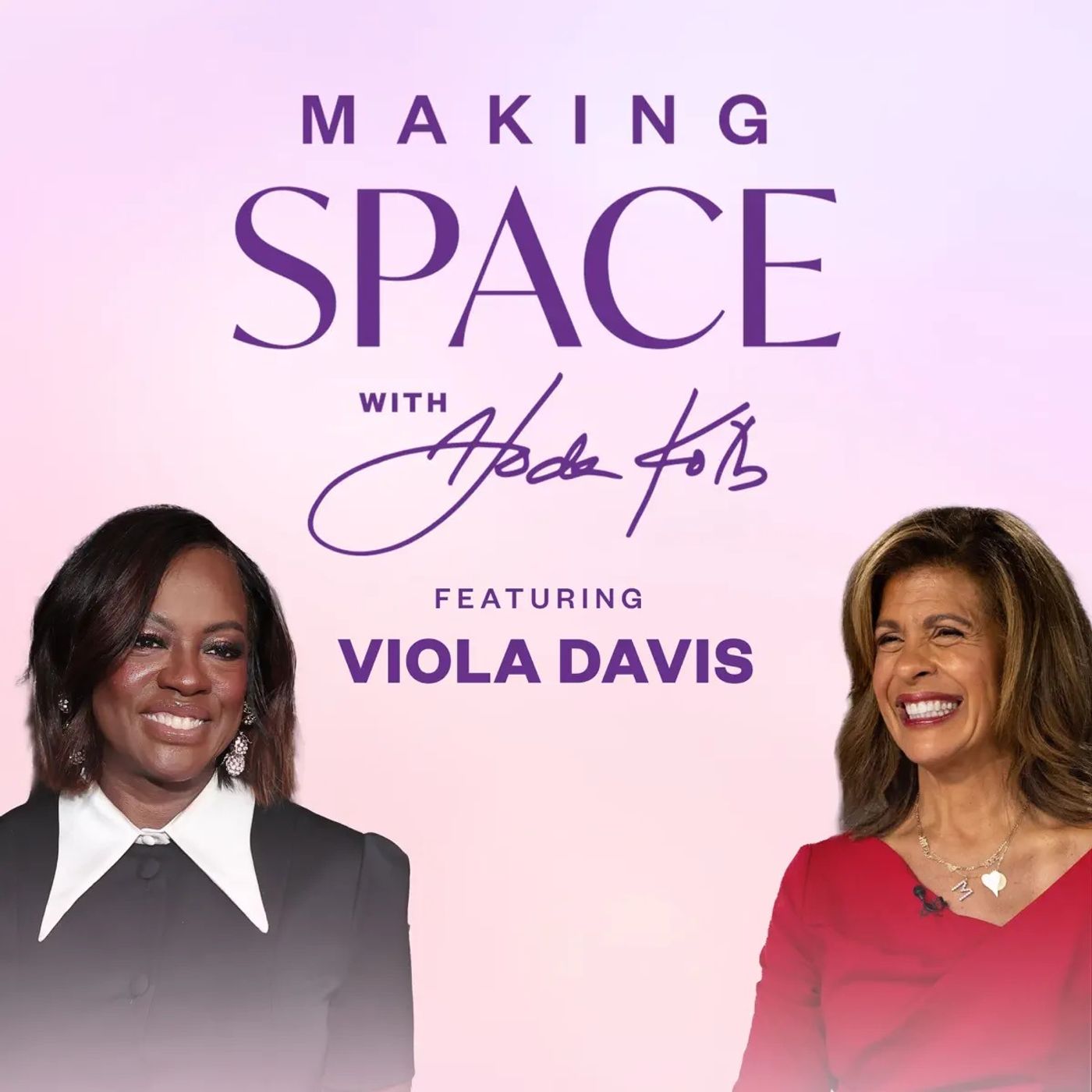
Making Space with Hoda Kotb
Viola Davis on Self-Love and Shaping Your Own Future (April 2022)
00:37:06
Academy Award-winning actress Viola Davis has built a career defined by purpose, strength, and honesty, but her journey began with a childhood shaped by bullying and feeling different. In this conversation from April 2022, Davis sits down with Hoda to talk about overcoming adversity, learning to love herself, and understanding how her past helped shape the woman she is today. Plus, she reflects on resilience, legacy, and why believing in yourself is often the first step toward shaping your own future.
Loading summary
Transcript153 lines
- [00:00]
Commercial Announcer
Everyone deserves to be connected. That's why T Mobile and US Cellular are joining forces. Switch to T Mobile and save up to 20% versus Verizon by getting built in benefits they leave out. Check the math@t mobile.com switch and now T mobile is in US cellular stores. Savings versus Comparable Verizon plans plus the cost of optional benefits plan features in Texas and fees vary. Savings with three plus lines include third line free via monthly bill credits. Credit stop if you cancel any lines. Qualifying credit required. You've made it on time for the McDonald's breakfast menu. You think to yourself, finally, I could start my day with my perfect breakfast. But what if breakfast could be even more perfect with the hot honey sausage egg biscuit it finally is. This won't last forever, so go to McDonald's and get it while you can. Ba da ba ba ba Just a note.
- [00:51]
Hoda Kotb
This episode contains explicit language that some will find offensive. My guest, Viola Davis recounts a very painful personal story that contains racial slurs and hurtful language. We think it's important that you hear the actual words that she shared with me. Every once in a while I walk away from an interview and I know the conversation will stay with me. I feel it in my core. It changes me. And this is one of those times. I originally sat down with Viola Davis in the spring of 2022. She was just about to release Finding Me, the memoir about her life and all she's overcome. And if you have not read it, I encourage you to do it. It is a story of perseverance like you have never heard before. Yes, she is arguably one of the most talented actors in the business and recently became an EGOT winner. But I couldn't wait to hear from Viola. The woman. The one who survived an unthinkable childhood. The one who was bullied and chased and felt like she was running for her life. The one who witnessed abuse and endured hardship so painful few people would have survived. But Viola overcame. She persevered and she grew. She describes life as a relay race and she is still, still running, just trying to get the baton from one stage of life to the next. Just talking to Viola, I wept in admiration, in awe, and in celebration. I'm Hoda Kotb. Welcome to my podcast Making Space. I can't, I can't, I can't. I can't wait. It's highlighted. It's dog eared. I bound your book, the PDF and made a little book out of it so I could carry it with me. Oh, can I just tell you something? It is so meaningful and beautiful and touching and I don't even know how to describe it, but it moved me to my very core.
- [03:16]
Viola Davis
Thank you.
- [03:16]
Hoda Kotb
To my very core. It's so incredible. I mean, I.
- [03:19]
Viola Davis
Thank you.
- [03:20]
Hoda Kotb
I thought I knew you, and then I read this, and now I'm like, wow, I'm so moved. And I'm also kind of mad at myself because I've interviewed you so many times and I realized I must not have ever asked the right questions because this book is just so full of you. So let me ask you how it feels during this moment. Here you are, you've put your life on the page and you're handing it out like a piece of your heart, and you're saying, this is me.
- [03:48]
Viola Davis
Yes.
- [03:49]
Hoda Kotb
How does that part feel in this moment?
- [03:52]
Viola Davis
Terrifying. It really does. It's a lot of. It's a lot of fear, you know, because I'm putting my life out there for the world to judge observe. You know, it's like that old saying, I know what I said. I just don't know what you heard, and I know what I wrote. I just don't know how it's going to be received. And I think that that is really ultimately what happens when you make yourself vulnerable. It's like running naked in a crowded stadium. So it's terrifying.
- [04:32]
Hoda Kotb
Well, it is so full of heart and soul. Let me just start by saying, and I think I speak for a lot of people in America. I did not know what you have endured in your life as a young girl. I knew that you had struggles. I did not know you grew up hungry. What did it mean? What does that mean, to grow up hungry?
- [04:52]
Viola Davis
The hunger was just one part of it. It's growing up hungry. It's growing up, growing up exposed to that level of abuse. It's growing up feeling like an outsider. Sort of like I've been spit out into the world and really. Spit out, operative word meaning spit. The thing about being hungry is you don't think about anything else. You don't get at the business of being you. You don't get at the business of being anything. You get to school at 8. By 8:15, you're falling asleep. You're listening to people who say, oh, my mom made me breakfast this morning. I didn't want that cereal. And you're thinking, you didn't eat your cereal. You had cereal with milk. You know, your brain chemistry changes. How you perceive the world changes. And I'll tell you the worst part of all of it is the deep, deep shame. Because how do you tell someone that you're hungry? How do you. How. How do you say that to a teacher who's worried about maybe your grades, how you're progressing in class, and you're thinking, can you just give me something to eat? And maybe I can answer that. It's a basic human need that's not being fulfilled.
- [06:18]
Hoda Kotb
There was a line in your book where you said, like, one of your friends came over to your house, opened the fridge and asked if you were moving because there was nothing in there.
- [06:25]
Viola Davis
Yeah.
- [06:26]
Hoda Kotb
How did you find food? How did you find your basic needs so you could continue on your day?
- [06:33]
Viola Davis
You find it. You know what I started to remember because it's memory, Right. When you go back and it hits you, it's different almost than nostalgia, but so the memory is on the street. I would go up to people and say, do you have a quarter? Do you have 50 cents? Or people who would come up to me, especially older men, might I add, who'd say, you're so cute, I'm gonna give you 35 cents if you give me a kiss on the cheek. So I figured out a way to get that. Give them that kiss on the cheek. And getting that 35 cents, wow. It's going to soup kitchens, Catholic churches, or the lunches they provided at the recreation parks during the summer. There's all kinds of things that you have to rely on that you have to forage. Friendships where, you know, parents are gonna make three meals a day. So you form those friendships, you go over to the house and you wait for the meal.
- [07:40]
Hoda Kotb
Wow. I mean, there was this other part of the book, I think it's a chapter you, entitled Running. And you were literally, as you call it, hunted down by young boys, chasing you, calling you the N word. You were like, in a sense, running for your life. Yeah. In those moments, I can't imagine that was happening day after day, that kind of horrific bullying.
- [08:05]
Viola Davis
It was day after day. That's what it felt like. Now, was I actually running from my life? Would they actually have killed me? I don't know about that, but that's what it felt like. It's just like anxiety. They say anxiety is just fear of death. What I realized from a very early age was I was born in a world that I just didn't fit into. And I did not have the language to understand the power of race, the power of being dark skinned, the potency of being different. But I realized it then, especially, you know, the young boy who. Who literally was maybe a shade and a half lighter Than me who said, you don't call me black. You don't call me black, Viola. You're black, I'm Portuguese. And he punched me. The power of that is just not how I was defined by those eight or nine boys. It's how the world defined me. It's that fear of being black. What black meant in that, in this powerful caste system we have of how you treat people based on perceived value and worth. And I was worthless. That's what it told me. I was a child. Children cannot deal with the abstract, right? We don't have those building blocks. So it felt like I was running for my life and I didn't have any arms to run into, so I was just running.
- [09:45]
Hoda Kotb
And when you say no arms to run into, you describe. It's so poetic and scary. It like struck me over and over in my heart. But you even talked about how there weren't enough pages in the book to chronicle all of the fights that went on inside your home. What you were, what you bore witness to, what you felt helpless. I, I would imagine as a kid watching this in front of you, you do.
- [10:12]
Viola Davis
It's, it's, it's. The last of the acceptable violences is domestic violence. Nobody really cares, I'll tell you that. I think it's a complicated issue to deal with. And so what happens is you sort of sweep it under the rug. It becomes your sort of dirty secret. But every time you faced it, it is absolutely traumatic. If I felt like I was running for my life from the eight or nine boys I felt, then I had to go into a home where I was running from my life. That's what it felt like when I would witness the violence between my mom and dad.
- [10:56]
Hoda Kotb
And.
- [10:58]
Viola Davis
I keep remembering these moments of violence that even happened at night in the middle of the street. And not one window opened. No one came out to help. And I look back on that now because as a kid we prayed that no one would see us. And then as an adult, I'm looking back and go, why didn't anybody see us or help us or did they see us? It becomes that complicated.
- [11:31]
Hoda Kotb
What was your survival technique like to live day in and day out in a home that felt like that. And to go to school in a situation that felt like that, you had to have some place where you, little Viola, went to, to live. How did you transport yourself?
- [11:49]
Viola Davis
Well, little Viola, I had a whole technique of leaving my body. It was pretty awesome, by the way.
- [11:54]
Hoda Kotb
Tell me.
- [11:56]
Viola Davis
I'd always go into the bathroom and I'd stay There, nothing was. I'd just sit on the top of the toilet seat and I would stay there for the longest time. And I had a whole thing where I just would focus on one part of my body, usually my finger, and I shut everything down. And after a certain amount of time, I literally would leave my body and I'd go up to the ceiling. I turn around and I would look at myself and it was awesome. It was like that sort of machine in Harry Potter, the pensive, where you would remove a bad thought that was just causing you so much pain. In order to give yourself some relief, you put it in the bowl. The pensive. That's what it felt like. So I did that a lot. I dreamed, I tried to achieve. And I kept secrets.
- [12:58]
Hoda Kotb
He kept secrets.
- [12:59]
Viola Davis
I felt like the keeping of the secret, the people not knowing, it sort of helped me to survive. I didn't understand anything about secrets actually eroding you. That wasn't a part of my vocabulary, my understanding of human emotion. I just felt like if. If no one knew, then how they would see me is based on what I was achieving outside of my house. I recreated myself. Wow. Wow.
- [13:36]
Hoda Kotb
And that kind of admiration that you would get on occasion when you had a school play or that kind of applause, did that change you? Did that do the trick at the time?
- [13:46]
Viola Davis
It did.
- [13:46]
Hoda Kotb
It did.
- [13:47]
Viola Davis
It did. Absolutely. Then I could become that. That thing that you're telling me that I am and not the little black girl with nappy hair. That did not feel pretty at all. And by the way, can I just add something?
- [14:04]
Hoda Kotb
Yeah.
- [14:04]
Viola Davis
That people have absolutely no problems calling, first of all, women ugly, but especially dark skinned women ugly. But when you recreate yourself in another reality from yourself, the danger of that is you also disconnect.
- [14:25]
Hoda Kotb
Yeah.
- [14:27]
Viola Davis
And that's what I did. I disconnected. Same thing that I did when I sat on the toilet.
- [14:32]
Hoda Kotb
Yeah.
- [14:33]
Viola Davis
I disconnected. And the disconnection, or like a lot of people who go through trauma when they compartmentalize, which is also not good. That's what I did. I compartmentalized. I used drive and ambition to replace feeling and vulnerability.
- [14:53]
Hoda Kotb
Did you ever feel like your stuff was unhealable, like that was just going to be you?
- [15:02]
Viola Davis
Well, I wish I could store it away, but I had to unpack it. Here's what I believe. I believe that what connects us is not just the joy, is not just the achievements. It's also the sadness.
- [15:21]
Hoda Kotb
Yeah.
- [15:22]
Viola Davis
It's also the pain. I feel that if I cannot share my pain with someone else, the pain, the joy, the Achievements, then it's not real connection. But in order for me to share that, for me to have the ability to share that, I have to unpack it.
- [15:41]
Hoda Kotb
Yeah.
- [15:42]
Viola Davis
Because the power and the energy that it takes to store it erodes me. Yeah. That's what gives me anxiety at night. Once again, it's secrets. Okay? Now the specificity of it all, that's something that you don't share with everyone.
- [16:00]
Hoda Kotb
Yeah.
- [16:00]
Viola Davis
Because no matter how much I shared in this book, there's a lot that I didn't share.
- [16:05]
Hoda Kotb
Sure. Did you hate your parents then?
- [16:10]
Viola Davis
You know what? I think that I did have a lot of anger towards my dad. Not my mom, my dad.
- [16:19]
Hoda Kotb
Yeah, I did.
- [16:21]
Viola Davis
And that's why I wrote about when he came home one night and someone had stabbed him in the back and I prayed that he would die. I mean, I associated him with everything that was wrong with our lives, everything that was weighing us down. I just want to come home and be happy.
- [16:43]
Hoda Kotb
You know?
- [16:44]
Viola Davis
One of the things I didn't write in the book, but I'm thinking about now, one of the greatest memories I had lasted for one day. And that's when we had some food. It was at 128 Washington Street. My mom put the food on the table and my dad came home in a great mood and we all sat down at the table, which, listen, never happened. And we all sat down at the table. We were eating. And I remember my dad saying, things are going to be different and I'm going to be different. Okay. And I want to hear about what Yalls day was like at school. How y' all doing in school? And we going to be a family from now on. And I remember we were all in shock. But I will say that something was transforming inside of me.
- [17:36]
Hoda Kotb
Wow.
- [17:36]
Viola Davis
And I'm like, I was so happy. And then the next day it was over. That's all I wanted. I wanted the Brady Bunch, you know?
- [17:54]
Hoda Kotb
Coming up, Viola Davis shares the moment in her life that changed everything. What did young Viola's eyes see in that moment?
- [18:04]
Viola Davis
Magic.
- [18:05]
Hoda Kotb
More with Viola Davis when we come back.
- [18:19]
Commercial Announcer
Everyone deserves to be connected. That's why T Mobile and US Cellular are joining forces. Switch to T Mobile and save up to 20% for versus Verizon by getting built in benefits they leave out. Check the math@t mobile.com switch and now t Mobile is in U S Cellular stores. Savings versus comparable Verizon plans plus the cost of optional benefits plan features and taxes and fees vary. Savings with three plus lines include third line free via monthly bill credits, credit Stop if you cancel any lines. Qualifying credit required. Adobe Acrobat Studio, your new foundation. Use PDF spaces to generate appreciation. Grab your docs, your permits, your moves.
- [18:57]
Viola Davis
AI levels up, your pitch gets it in a groove.
- [19:00]
Hoda Kotb
Choose a template with your timeless cool. Come on now, let's flex those two.
- [19:05]
Viola Davis
Draft, design, deliver, make it sing. AI builds the deck so you can build that thing.
- [19:11]
Commercial Announcer
Do that, do that, do that with Acrobat.
- [19:14]
Viola Davis
Learn more@adobe.com do that with Acrobat.
- [19:21]
Commercial Announcer
When the flu is keeping you up at night, don't try to tough it out. Knock out your flu symptoms with NYQUIL Intense Flu. You got this. It provides powerful relief of your flu symptoms so you can sleep well through the night. Nyquil Intense Flu. The nighttime Sniffling, aching, aching fever. Best sleep with a flu medicine. Use as directed. Keep out of reach of children.
- [19:47]
Hoda Kotb
One of the first quotes in your book is about faith. It says, I think human beings must have faith or must look for faith, otherwise our life is empty. I feel like that constantly saved you.
- [20:01]
Viola Davis
Yeah, well, absolutely. Which is the belief in things that you cannot see.
- [20:06]
Hoda Kotb
Yeah.
- [20:07]
Viola Davis
Because there's nothing else. You know, it's a famous saying, you know, necessity is the mother of invention. Oh, for a music fire. Right. I didn't have anything else, but I always compare my life to that image of the first man on earth, looking out at the ocean and the mountains and the sky and maybe it's raining and there's thunder and lightning and he has no language because this is before language. This is before psychology. This is before people were named. This is before love or hate or anything. And how then do you figure out life? How then do you figure out meaning? How do you communicate anything in order to find it? That's how I felt. I didn't have nothing.
- [21:12]
Hoda Kotb
I have chills. Chills right now on me.
- [21:15]
Viola Davis
So what you then rely on, see, this is the power of connection.
- [21:20]
Hoda Kotb
Yes.
- [21:21]
Viola Davis
What you rely on are people who see you. Yeah. And I'm not saying see you, like, oh, wow. Hey, Viola. Hey, you want to go get something to eat? People who really maybe see the pain, see the potential, see the talent. People who just love you and they carry you. They may carry you from Thursday to Friday, and then one person may carry you throughout your childhood. Some people may teach you how to even buy pads at the store when you get your period. But those moments and those connections carry you and they bring us through life.
- [22:04]
Hoda Kotb
I need Kleenexes or something. I'm not sure what's happening right now, but this is really good. Oh, My God. You know, there was a moment, obviously, that changed your life, and it was when you flipped on the TV and the autobiography of Ms. Jane Pittman came on and Ms. Cicely Tyson was starring in it. What did young Viola's eyes see in that moment?
- [22:29]
Viola Davis
Magic. When a magician takes a rabbit out of the hat and you don't even see how he does it. You're just looking at a rabbit coming out of a shallow hat. I saw everything. I saw what I wanted to be. I saw my possibilities. I saw my value. I saw it all in her. I was like, that's it. You know, it was a path, a blazing path for me. My sister Dolores is an incredible teacher right now. My sister Diane works for the Department of Agriculture in D.C. and my sister Anita went to business school. And for all of us, it changed us. Not even just in the acting field. It lit fire inside of us that wasn't in our lives before.
- [23:30]
Hoda Kotb
Because your sister Dolores, I think it was Dolores, who told you, we're not gonna live like this. I mean, to think that all of these sisters were raised in these really horrific circumstances. You said went to school not smelling right. We couldn't wash your clothes. You talked about how you wet your bed till you're 14. All these things. Things. Yet somehow you grew, all of you. It wasn't like you weren't the one that got out. What was it that was in the family that made that possible for all of the sisters to get out?
- [24:05]
Viola Davis
Well, first of all, you have to define getting out.
- [24:10]
Hoda Kotb
Yeah.
- [24:11]
Viola Davis
You know, it's like a therapist told me, is anxiety. All it is is a lint. So you have to define getting out.
- [24:20]
Hoda Kotb
Yeah.
- [24:20]
Viola Davis
Because I know me, I do have some level of trauma and anxiety from the past.
- [24:25]
Hoda Kotb
Sure.
- [24:26]
Viola Davis
So getting out, in terms of my profession.
- [24:29]
Hoda Kotb
Yeah.
- [24:30]
Viola Davis
Required drive.
- [24:32]
Hoda Kotb
Yes.
- [24:33]
Viola Davis
Drive is different than growth and healing. Drive is habits. Drive is getting up every day and doing the same thing. Going to school, making good grades. Getting involved in everything. Don't share your business with everyone. Get involved in as many things as you can. Throw as many balls against the wall and see which one sticks. Embracing teachers who love you. Going to Upward Bound Preparatory Enrollment Program. Summer in the city. That's it. That's how you get out. Go to college. Now the getting out. Emotionally, getting out is totally different, which is why I wrote the book. You don't get out. That's what happens. You have to reconcile and own your story. I didn't. I cut it out like it was the fat on a awesome piece of filet. Mignon. You cut out the fat, and you recreate the story that you want to create. The problem with that is that, once again, you make yourself tough. You shut out the dark. You also shut out the light. And so that's what I realized when I was 28 is that I didn't get out, Hoda. I didn't. The little chocolate girl who was still running from the eight or nine boys went to Juilliard. And I still felt in every class and everything that people were calling me, you know, you ugly nigger. And I was still chucking them the finger and maybe cussing them out. And I was still just being really, really hurt, but I didn't know how to sort of reconcile it.
- [26:38]
Hoda Kotb
Yeah.
- [26:41]
Viola Davis
Yeah. So how did you.
- [26:44]
Hoda Kotb
Or did you.
- [26:46]
Viola Davis
Ownership. That's what I did. Brene Brown, you either own your story or your story owns you.
- [26:55]
Hoda Kotb
Huh?
- [26:56]
Viola Davis
I'm not ashamed of it, because I know that every single part of it made me who I am. So like Arthur Miller said, I write so people can feel less alone. I wrote the book so people can feel less alone. I'm owning my story so people can be less alone. And I'm also owning my story because I want to love me, Hoda. I mean, at some point, I mean, you know, come on. It's like, yeah, you know, I'm 56.
- [27:29]
Hoda Kotb
I was listening to Alicia Keys song I have a voice. It's so powerful. It's with Brandi Carlisle. And every time I hear it, I think to myself, I'm 57. And I think to myself often, like, what took me so long to have it?
- [27:45]
Viola Davis
Yeah.
- [27:45]
Hoda Kotb
You know, I didn't. I didn't ask for the raises I deserved. Like, you do all these things in life and you nod your head, and I had that same epiphany. It's like, am I going to be going to my grave with good enough? That's all I deserve? When did you. When was it that you knew your worth? When did you know your worth?
- [28:14]
Viola Davis
I'm trying. The only reason why I'm silent is not because I don't have an answer, is because I'm deciding if I want to say it or not. Because I'm. And I should just say it.
- [28:25]
Hoda Kotb
Say it.
- [28:25]
Viola Davis
It's a work in progress.
- [28:27]
Hoda Kotb
Yeah.
- [28:28]
Viola Davis
I started the journey in understanding the value of worth when I was 28 years old. Because as much as I said, I don't want to be my mom, I love, love my mom, but I want to be my mom, I realized I was my mom. She was my imprinter. You know, and I would say by the time I met my husband at 34, 35, I knew that I was worth more than what I was accepting in my life before that time. But I only knew that by digging and sifting through all the shit and the piss and the brick and the mortar and understanding that those memories and what happened to me didn't devour value me. So I would have to say, really, when I met my husband, you know what it is? I always define my life, or life in general, as a relay race. So your purpose in life is just like a relay race. Great runners.
- [29:33]
Hoda Kotb
Yeah.
- [29:34]
Viola Davis
And each runner runs their leg of the race and they pass a baton onto the next great runner and they run their leg of the race. And that's how life goes. That's how you should see your dash of time. But man, I just. As I'm getting older, I'm realizing life is about connection, but it's about you. Everything comes from you. So each of those great runners is just you at a different age. It's young Biola surviving that path, running and coming out with freaking nicks and scrapes and probably slick wrists and all of that. But getting that baton to 28 year old Viola, who says, I'm going to take it, I'm going to take it, Viola, I'm going to go to Juilliard, I'm going to do this or whatever, I'm going to work in the theater, I'm going to do the best I can or whatever. And then hits a wall and goes, oh my God, I'm going to get. Give it to the 38, 39 year old Viola who's getting married and understands that now I gotta now take another entity into consideration. And Now I'm at 56 year old Viola. And one of the reasons why I wrote the book once again is because I felt at 54, I was dropping the baton. Cause I was looking back to too much. But life, that's how I see it. It's a whole relay race of you.
- [31:08]
Hoda Kotb
Oh my God, that's so brilliant. That is the most brilliant analogy. I'm just. When you were saying it, everyone I'm sure who's listening is going to be applying it to their life. Coming up, Viola on her greatest achievement, her daughter, Genesis. Stay with us.
- [31:30]
Viola Davis
Wasn't that delicious?
- [31:32]
Hoda Kotb
So good.
- [31:32]
Commercial Announcer
Your bill, ladies. I got it.
- [31:34]
Viola Davis
No, I got it.
- [31:37]
Hoda Kotb
Seriously, I insist.
- [31:38]
Viola Davis
I insisted first.
- [31:39]
Hoda Kotb
Don't be silly.
- [31:40]
Viola Davis
You don't be silly.
- [31:42]
Commercial Announcer
People with the Wells Fargo active cash.
- [31:43]
Viola Davis
Credit card prefer to pay because they.
- [31:45]
Commercial Announcer
Earn unlimited 2% cash rewards on purchases.
- [31:48]
Hoda Kotb
Okay.
- [31:48]
Viola Davis
Rock, paper, scissors for it.
- [31:50]
Hoda Kotb
Rock, paper.
- [31:53]
Commercial Announcer
The Wells Fargo active cash credit card. Visit Wells Fargo.com ActiveCash terms apply. Eating healthy doesn't mean you have to.
- [32:02]
Viola Davis
Eat out at a pricey restaurant.
- [32:04]
Commercial Announcer
Healthy choice Simply steamers Grilled chicken and broccoli Alfredo is an easy, high protein meal with nothing artificial. The steam tray keeps the sauce separate, so you get crisp broccoli, creamy Alfredo sauce, and tender grilled chicken. That's delicious every time. And it's a satisfying meal with 28 grams of protein. You can find it in the frozen aisle. Healthy choice.
- [32:24]
Viola Davis
What having it all tastes like.
- [32:26]
Commercial Announcer
They put hot honey sauce on the snack wrap. McDonald's outdid themselves again. The classic snack wrap we all know and love paired with the sweet heat of hot honey sauce. Just what we needed to make it even more perfect. You know the drill. So go to McDonald's and try it today.
- [32:49]
Hoda Kotb
Now with your upbringing. And you have Genesis, your beautiful daughter. Were you as after you got married? Yes, I definitely want kids. No, I definitely don't want kids. I'm not sure what I want to do about kids. Given what you had seen.
- [33:08]
Viola Davis
Definitely felt like I didn't want to get married or have children.
- [33:11]
Hoda Kotb
Yeah.
- [33:13]
Viola Davis
I didn't see being alone as not sexy. I thought it was sort of sexy. I would see, like, Linda Evans at awards shows, and I thought that was pretty cool that she went by herself. I thought, that's a strong woman. I still feel that way, by the way. I hit it.
- [33:34]
Hoda Kotb
You hit it.
- [33:35]
Viola Davis
Okay, let's just say that I hit it. Yeah, you would say that. I've achieved a certain level of success. And then I crashed and burned because I was like, this is it. Why is this it? Because I stopped at success and not as significant. And I remember running into Lorraine Toussaint, who, by the way, is awesome sauce. Okay. She is awesome. I love her. And I remember asking her, lorraine, why did you adopt your daughter? And she paused for the longest time, and she said, I didn't want Ceres Regular to be on my tombstone. Wow.
- [34:20]
Hoda Kotb
Wow.
- [34:21]
Viola Davis
And it hit me that my entire life has been defined by achievements taking the place of meaning.
- [34:29]
Hoda Kotb
Oh, man.
- [34:30]
Viola Davis
And I'm so conscious, even with Genesis, that I always want to say, you know, you're not an extension of mommy's dreams. She's her own person. I mean, you know that I don't want to work out any of my shit on her, and I don't want her to feel like she's extension of me, my dreams. She doesn't owe anything to me.
- [34:47]
Hoda Kotb
Yeah.
- [34:48]
Viola Davis
But at the same time, I do sort of believe that she's my legacy. She's my hope. She's my meaning. She. I love children. I do. I love children. And I love being married. I'm not gonna lie. I love it.
- [35:09]
Hoda Kotb
I just rewatched your Oscar acceptance speech. And at the end, you talked about.
- [35:15]
Viola Davis
Your parents and to Dan and Mae Ellis Davis, who were the. And are the center of my universe. The people who taught me, good or bad, how to fail, how to love, how to hold an award, how to lose. My parents. I'm so thankful that God chose you to bring me into this world.
- [35:40]
Hoda Kotb
And you talked about how grateful to God you were that those were the people who were chosen to give birth to you. And after reading your book, I found that so profound, knowing what you had been through. Why did you say that?
- [35:57]
Viola Davis
I think that we devalue the simple. And I think that we devalue all the things in life that wake us up. And what woke me up in my life was going through everything that I've been through. What I learned from a very young age is radical love, radical forgiveness, radical transformation in all of that and piss and joy. Those are the hardest lessons to learn in life. Okay, you look at any animal, whether it's a snake, whether it's a caterpillar, whether it's a phoenix, they die, turn to ashes. The caterpillar is, like, just crawling, and then they become a butterfly. That's what my parents gave me. Hoda. When my father died, he literally transformed decades before. He apologized to my mom every single day, said, may Alice, you know I'm sorry, right? All those things I did to you. I'm sorry, May Alice. He gathered all my family members around who he knew were struggling with whatever, and he said, you guys, you have to get your life together.
- [37:40]
Hoda Kotb
Wow.
- [37:42]
Viola Davis
And what I know is that over achievements has been the biggest gift in my life. What I was giving with my parents is an opportunity to grow. They gave me that ingredient that could either have killed me or had me grow in a way that some people never experience in their entire lives.
- [38:16]
Hoda Kotb
Wow. Wow.
- [38:18]
Viola Davis
That's how I feel. And that's why when I finally ended the book, I ended the book with God, kept me exactly where I was at. Yes.
- [38:30]
Hoda Kotb
Yes. Yes. One of my favorite paragraphs in the whole book, and there are so many good ones, is this one. The question still echoes. How did I claw my way out? There is no out. Every painful memory, every mentor, every friend and foe, served as a Chisel a leappad that has shaped me. The imperfect but blessed sculpture that is Viola is still growing and still being chiseled. My elixir. I'm no longer ashamed of me. I own everything that has ever happened to me. The parts that were the source of shame are actually my warrior fuel.
- [39:06]
Viola Davis
Come on. Come on. That's awesome.
- [39:09]
Hoda Kotb
That is so awesome. I underlined it. I'm highlighting it. When I get the real book, I'm gonna keep it by my bed. It is so incredibly beautiful. And again, just lastly as we wrap up, the title is Finding Me. Have you found her?
- [39:25]
Viola Davis
Oh, yeah. Okay, I have. I said it. You know, little Viola is celebrating. She's sitting right next to me and she's happy that she's finally being embraced.
- [39:38]
Hoda Kotb
Well, Viola, it's a beautiful, beautiful book. I've been waiting for this book. I've watched some of your commencement speeches and I've interviewed you, and now I get to read it from COVID to cover. And people are gonna devour this. I think you're going to change. I mean, you've already changed a million people's lives, but I have a feeling you're going to do a lot more with this.
- [39:56]
Viola Davis
Thank you so much.
- [39:57]
Hoda Kotb
Thank you, Viola.
- [39:58]
Viola Davis
I adore you.
- [39:58]
Hoda Kotb
Thank you so much for keeping this. Okay, I love you. See ya.
- [40:03]
Viola Davis
Okay, bye. Bye.
- [40:04]
Hoda Kotb
Bye. Hey, guys, thank you so much for listening and going on this journey with me. If you like what you've heard, and I sure hope you do, please give Making Space a five star rating and a review on Apple Podcasts. And be sure to tell your friends and follow us on Apple Podcasts on Spotify or wherever you're listening right now.
- [40:35]
Commercial Announcer
They put hot honey sauce on the snack wrap. McDonald's outdid themselves again. The classic snack wrap we all know and love paired with the sweet heat of hot honey sauce. Just what we needed to make it even more perfect. You know the drill, so go to McDonald's and try it today.