Podcast
Managing A Career
Hosted by Layne Robinson · EN
I help you navigate the path to professional success. Whether you're a recent graduate still searching for your place or a seasoned professional with years of experience, the knowledge and insights I share can show you how to position yourself for growth and career advancement.
44episodes
Episodes
Newest firstAll episodes

You Don't Have To Be The Smartest Person In The Room - MAC150
3w ago00:15:19Tap to summarizeThere is a specific moment that happens in almost every meeting, and if you pay attention you can feel it in your body. Someone is presenting. The room is nodding along. And a question starts forming in the back of your mind — something that doesn't quite add up, a number that seems off, an assumption nobody has said out loud. You glance around the table, and everyone else looks fine with it. So you run the math in about half a second: if I ask this, I might be the one person in here who didn't get it. And you let the question go. You nod along with everybody else.That half-second is the subject of this episode, because that half-second — the one where you swallow the question — is quietly costing you the thing you actually want. It is one of the clearest, most repeatable places where careers stall, and almost nobody notices it happening.Answers got cheap.Start with something that has genuinely changed. For most of a thirty-year career in the corporate world, having the answer was the currency. The person who knew the thing, who had memorized the system, who could tell you off the top of their head why the process worked the way it did — that person had leverage. Knowledge was scarce, and scarcity is value.That is not the world we are in anymore. Everyone at your company has the same AI tools, the same search, the same instant access to the same answers. The analyst two desks over and the VP three floors up are typing into the same box you are, and it is handing all of them the same competent, confident paragraph it hands you. The raw ability to produce an answer has been flattened. When the answer is a prompt away, being the person who has it stops being special.This idea crystallized while listening to an episode of Problem Solvers, Jason Feifer's interview show at Entrepreneur. His guest was Naveen Jain — the founder of InfoSpace, Moon Express, and Viome, a man who introduces himself as intensely curious before almost anything else. In their conversation about solving hard problems, Jain said a line worth keeping: you don't have to be the smartest person in the room — you just have to be the one asking the question nobody else is asking. That reframes the whole contest. It stopped being about knowing the most a while ago. Now it is about seeing what everyone else looked right past.This is a shift I have circled before from different angles. In How to Partner with AI Instead of Being Replaced by It (MAC-124), the argument was that the tool doesn't take your job — it takes the answer-retrieval part of your job and leaves you the part that needs judgment. In AI Is Eroding the Signals Employers Use to Judge Talent (MAC-142), the case was that when everyone's output looks equally polished, the old shortcuts for spotting who is actually good stop working. Put those together and you land somewhere specific: if the answer is now a commodity, the only thing left to set you apart is the quality of what you point the tool at.Because here is what the model cannot do. AI will answer anything you ask it — brilliantly, instantly, without ever getting tired. What it will not do is tell you that you are asking the wrong question. It has no idea that the problem you handed it is really a symptom of a different problem you didn't think to mention. It cannot sit in your Monday meeting, notice the thing everyone in the room has quietly assumed, and say "wait — are we even solving the right problem?" That move isn't retrieval. It is judgment. And judgment still lives in the person typing the prompt, not the model answering it.So the differentiator has quietly moved. It used to be: who has the answer? Now it is: who is asking the better question — of the room, of the problem, and yes, of the AI itself. The person who gets more out of these tools than everyone else isn't the one hoarding a clever prompt. It is the one who knows which question is even worth asking. That judgment is still rare. And rare is still valuable.Curiosity is a behavior, not a personality.Here is the thing that lets most people off the hook. When you say the people who advance are the curious ones, a certain listener hears that and thinks: well, that's not me. I'm not a naturally curious person. Some people are wired to ask a hundred questions and I'm just not one of them. And then they file "be more curious" next to "be more charismatic" — a personality they didn't get dealt, so why bother.That is the misread worth correcting. Curiosity, in the way that matters for your career, is not a temperament. It is a behavior. It is a specific, observable thing you do in a specific moment: you hear something, and instead of moving past it, you ask about it. Out loud. Where someone can see you do it.There is good backing for how much that behavior matters. Writing for Forbes, Diane Hamilton argues that curiosity is the single skill leaders notice most when they are deciding who is ready to move up. Not the hardest workers. Not the quietest executors. The people who ask better questions, challenge the assumption, and go looking for what they don't yet understand. Because when a leader watches you do that, they are not just seeing curiosity. They are seeing someone who is already thinking at the level of the next job.That is the reframe at the center of the episode. Most people believe they get promoted for executing the role they are in. They don't. They get promoted when someone with authority becomes convinced they are already thinking about the role above it. Executing the role gets you a good review. Thinking about the role gets you the role. Your work proves you can do the job you have. Your questions prove you are ready for the one you don't.The fear is pointing the wrong way.Knowing all of that does not make the half-second go away. You still sit in the meeting and still feel the pull to stay quiet. So deal with the fear directly, because it is the actual obstacle. The fear is this: if I ask, I'll look like I don't know something I'm supposed to know. Asking the question exposes the gap. Staying quiet hides it. So silence feels safe, and the question feels risky.That instinct to go quiet has a name. In Own Your Mistakes, Deliver Results (MAC-149), it was the Inaction Trap — the reflex to freeze and say nothing, because doing nothing feels safer than doing the wrong thing. That episode was the theory of it: why inaction is its own kind of mistake, and usually a costlier one than the error you were trying to dodge. The question you swallow in a meeting is that same trap, shrunk down to a single, ordinary moment. The silence doesn't actually protect you. It just makes the inaction invisible — to everyone except the part of you that knew you had something to say.Now flip the fear all the way over, because it is backwards. Think about who, in your experience, actually asks the confident question in a room full of senior people. It is not the intern hoping nobody notices them. It is the person secure enough that they don't need to perform knowing. The people most afraid to ask are usually the ones faking the most certainty — a connection worth an entire episode in Faking It (MAC-083). Projecting certainty you don't have is exhausting, brittle, and eventually cracks in a way far more expensive than a question ever would have been.Here is the reframe: it isn't knowing versus not knowing. It is pretending to know versus choosing to ask. The person pretending to know plateaus, because they can never learn the thing they are pretending they already have. The person who asks keeps getting sharper, meeting after meeting, because every question closes a gap instead of hiding it. And the room reads it exactly that way. When someone senior asks the simple, foundational question — "wait, why do we do it this way?" — nobody thinks they are slow. They think they are confident. The willingness to ask the obvious thing is itself a status move. The low-status move isn't asking the question. It is sitting on it to protect yourself.What a good question actually looks like."Ask more questions" is useless advice without a picture of what a good one sounds like. Not every question lands the same. "When's this due?" is a logistics question — necessary, but it signals nothing about how you think. The questions that mark you are the ones that open the problem up instead of just moving it along. Also writing for Forbes, Rachel Wells assembled a useful set of high-leverage questions worth asking — the kind that surface...
Transcribe →
Own Your Mistake, Deliver Results - MAC149
4w ago00:15:38Tap to summarizeThere is a moment in every professional's career — usually a Thursday afternoon, usually too late to fix quietly — when the mistake surfaces. A wrong number in a quarterly summary. A miscommunicated timeline. A judgment call that turned out wrong. And in that moment, the professional makes a second decision that matters far more than the first: whether to move or to freeze.This is the fulcrum that separates durable careers from stalled ones. Not the size of the mistake. Not the severity of the error. The speed and quality of the response. Layne Robinson has spent thirty years watching careers survive enormous errors and stall over small ones. The pattern is unambiguous: the difference was never the mistake itself. It was whether the person moved or froze.The Inaction TrapMost professionals carry an unspoken belief that their career runs on a perfect record — that every misstep is being tallied somewhere, and one bad entry will bring the whole ledger crashing down. This belief is wrong, but it is powerful, and it drives a specific behavioral pattern that Robinson calls the Inaction Trap: when a mistake surfaces, fear of the consequences locks the professional in place. The internal narrative sounds like caution — "I'm thinking it through," "I want to get this right before I respond" — but the behavioral output is silence. And silence, in an organizational context, is not neutral. It is information.Here is the part that most professionals miss: their manager noticed the silence before they noticed the mistake. A mistake tells a manager that something went wrong. A two-day silence tells a manager that this person might not be ready for more responsibility. The mistake is an event. The silence is a signal about character and reliability — and signals about character weigh far more heavily in talent reviews than individual events.Robinson draws on his experience on both sides of the desk. As the professional staring at a screen at 5 PM, rehearsing the explanation, drafting a message that never got sent. And as the manager watching a direct report go quiet for two days after a deliverable went sideways, knowing exactly what was happening but hearing nothing. The silence told him more than the mistake ever could.Organizations Optimize for Output, Not PerfectionThe foundational reframe is this: organizations do not optimize for perfection. They optimize for output. Your VP does not remember who had a clean quarter. She remembers who delivered the result. If you encounter an obstacle — including one you created — and you drive through it to the final outcome, that is the story that gets told in your next talent review. Not the stumble. The recovery.When you make a mistake and act on it immediately — own it, diagnose it, course-correct — the cost of that mistake is bounded. It happened, it got fixed, and the final deliverable still landed. The narrative is: this person hit a wall and kept moving. That is a story about reliability.When you make the same mistake and do nothing — wait for someone else to find it, hope it resolves itself, spend your energy on damage control instead of damage repair — the cost becomes unbounded. The original error is still there. But now there is delay, opacity, and a trust deficit stacked on top of it. The narrative becomes: this person cannot be counted on when things go wrong.Amy Edmondson's research at Harvard over two decades supports this at the organizational level: when companies punish mistakes, employees hide them. When employees hide them, the organization loses its ability to learn, adapt, and correct course before small problems become catastrophic. But the individual career lens matters even more: you cannot change the culture by yourself. What you can control is your own response speed. The professionals who build durable careers — the ones who keep getting tapped for bigger roles — are the ones who move first. They show up with the diagnosis and the fix before anyone else even knew there was a problem.That speed is the differentiator. Not the clean record.The Mistake Matrix: Five Types, Five PlaybooksNot all mistakes are the same, and the recovery protocol for each one is different. Robinson categorizes professional errors into five types based on thirty years of observation. Knowing which one you are dealing with changes how you respond.Type 1: Execution Mistakes. These are process and operational errors — the wrong number in a spreadsheet, a missed QA step, a report sent without the final review. They are mechanical. The fix is mechanical too. Acknowledge it without excuses, correct it immediately, and — this is the part people skip — update the process so it cannot happen the same way again. The goal is not just to fix the error. It is to show that you have institutionalized the fix. Your manager does not want to hear "it won't happen again." She wants to see the checklist that makes sure it will not.Type 2: Judgment Mistakes. You made a decision — prioritized one project over another, allocated budget to the wrong initiative, misjudged stakeholder appetite — and it turned out to be the wrong call. Judgment errors sting because they feel personal. But here is the frame that changes everything: you made the best decision you could with the information you had at the time. Own the decision. Explain the logic as it existed when you made it. Identify the variable that changed or the data point you did not have. Then outline the immediate pivot. When you frame a judgment error as a decision made on incomplete information rather than a character flaw, you sound like a senior leader. Because that is exactly what senior leaders do every week.Type 3: Communication Mistakes. These are alignment and expectation errors — you forgot to update a stakeholder on a delay, you over-promised a timeline, you left a critical team member out of a conversation. Communication mistakes are insidious because the damage is not in the error itself. It is in the gap. The person on the other side did not know, and now they feel blindsided. The recovery is radical transparency: reach out, acknowledge the gap, clarify the actual status, and set up a predictable cadence going forward. Dina Denham Smith's research on mistake recovery reinforces this — the fastest way to rebuild after a communication failure is to become the most reliable source of information in the room. Not for a day. For the next thirty.Type 4: Inaction Mistakes. This is the category most people do not even recognize as a mistake. You stalled a project because you were afraid to make the wrong call. You sat on a recommendation for two weeks because you wanted more data. You missed an opportunity because you were waiting for permission that was never going to come. Inaction mistakes are the quietest career killers, because nobody calls them out explicitly. There is no incident report for "failed to act." But there is a pattern that shows up in talent reviews: "needs to be more decisive," "waits for direction," "could show more initiative." If you have heard any of those, you have been making inaction mistakes. The fix: set micro-deadlines, run small experiments to gather data, and present recommendations with pros, cons, and mitigations rather than waiting silently for someone to tell you what to do.Type 5: Experimentation Mistakes. These are the ones that should actually make you proud, even though they rarely do in the moment. You launched a pilot. You tried a new tool. You proposed an unproven strategy. And it did not work. The key distinction is that this failure came from action with a hypothesis, not from negligence or avoidance. The recovery is a blameless post-mortem: document what you learned, share the insights with the broader team, and use those learnings to refine the next experiment. Edmondson's framework on organizational learning calls these "intelligent failures" — they are the cost of innovation, and organizations that punish them stop innovating. Your job is to make the learning visible. The experiment failed. The feedback did not.The Sixty-Second PivotOnce the type is identified, the response protocol is the same. Robinson calls it the Sixty-Second Pivot — four steps you can run through before your next heartbeat settles.First: name the mistake out loud. Even if only to yourself. "I sent the wrong numbers." "I made a bad call on the timeline." "I forgot to loop in the stakeholder." Naming it converts the panic into a category. It is no longer a formless dread. It is a specific, solvable problem.Second: assess the blast radius. Who is affected? What deadline is at risk? Is this a one-person fix or does it need coordination? You are not solving it yet. You are sizing it.Third: draft the disclosure. Not the apology — the disclosure. "I found an error in the Q3 summary I sent this afternoon. The revenue figure on page four is overstated by twelve percent. I have already corrected the source data and I will have the updated report to you by end of day." Own it, frame it, attach the fix. Smith's research is clear:...
Transcribe →
You Can't Argue With Feedback - MAC148
Jul 700:12:54Tap to summarizeSomeone reads something you wrote — an email, a proposal, a post you were a little proud of — and they tell you it sounds like a machine wrote it. Not "this could be tighter." Not "strong draft, a few notes." They say it sounds AI-generated. And every instinct in your body fires the same four words: but I wrote it.That reaction is universal. It is also, without exception, the wrong move. Not because the feeling is wrong — the sting is real, and we'll get to why — but because those four words close the one conversation that could actually help you. This is what Layne Robinson unpacks in the latest episode of Managing A Career: the half-second after you receive feedback that feels factually wrong, and what you do in that moment that decides whether the feedback helps your career or quietly damages it.The distinction that changes everything. When someone gives you feedback, they are almost never handing you a fact you can disprove. They are handing you a perception. And a perception is not a verdict you can appeal — it is a report on how you landed. "Your post sounds AI-generated" might be completely false as a statement of authorship — you wrote every word at your kitchen table — and still be completely accurate as a perception. Because it is true that they read it and felt a machine on the other end. You can win the argument about the fact. You will lose the thing the fact was pointing at.This perception-versus-verdict distinction is the spine of the episode. Layne traces it through a story that isn't his — a LinkedIn post from writer and coach Khushi Lulla, who shared that one of her clients called her own writing AI-generated. A professional writer. Her own words. Called artificial by the person she was trying to serve. What Lulla did next is the lesson: she didn't fire back, didn't pull up her drafts to prove authorship. She kept reading the feedback — she stayed in the discomfort — because she wanted to understand why the client saw it that way.Layne commented on that post because he had been having nearly the same conversation with people on his own team. Different words, same shape. Someone hears something about their work that they are convinced is simply not true, and they spend all their energy proving it isn't true. Over thirty years, he has watched how rarely that works.Reacting is not responding. The episode draws a hard line between two things that feel identical from the inside but produce completely different outcomes. Reacting is the four words. But I wrote it. It is instant, defensive, and aimed at protecting you. Responding is what Khushi Lulla did — staying in the discomfort long enough to get curious about where the perception came from. One closes the conversation. The other opens it.Curiosity here is not a soft skill or a personality trait. It is a tactical choice. As explored in a Psychology Today piece on criticism and defensiveness, you can be genuinely curious about a perspective you think is dead wrong without agreeing with a word of it. Curiosity is not surrender. You are not conceding the point. You are collecting information you cannot get any other way.The person giving you feedback is not a judge. They are a witness. They are describing what they saw from where they were standing. And a witness who feels attacked stops talking. A witness who feels heard tells you everything — including the part that actually helps you. When you feel those four words rising, that is your signal. Not to speak. To listen harder.Why it stings so much. Layne is honest about the difficulty. "It sounds AI-generated" does not just inform you — it stings. The episode draws on a framework from the book Thanks for the Feedback by Douglas Stone and Sheila Heen, which lays out three triggers that make feedback hard to hear. Truth triggers — when we think the content is just wrong. Relationship triggers — when it is who said it that sets us off. And identity triggers — when the feedback pokes at our sense of who we are."Your writing sounds like a robot" hits two of those triggers simultaneously. It is a truth trigger, because you know you wrote it, so the content feels false. And it is an identity trigger, because your writing is you. Being told your voice sounds artificial is not a note on a deliverable. It feels like a note on your humanity.That double hit is exactly why people react instead of respond. The sting is real. But naming it gives you a half-second of control. When you can say to yourself, okay, that's the identity trigger talking, you have created just enough distance to choose the response instead of firing the reaction. The skill is not "stop feeling the sting." You are going to feel it. The skill is feeling it and not letting it drive.Decoding the signal underneath. Once you have paused and stayed curious instead of defensive, the real work begins. You have to decode the perception into the signal underneath it. Because "it sounds AI-generated" is a symptom, not a diagnosis. Nobody can act on it as stated. You have to dig for what they actually experienced. And when you do — when you ask "what specifically gave you that impression?" — it almost always resolves into something concrete and fixable.It usually means one of a few things. It means the writing was too clean — every sentence the same length, every edge sanded off, no rhythm. It means there was no point of view — it summarized, it hedged, it never said I think or I disagree. It means there were no specifics — no real example, no number, no moment that could only have come from you. The structure was so balanced and so generic that it could have been about anyone, written by anyone, or anything.The uncomfortable part: the things that now read as "a machine wrote this" are the exact things professionals were once praised for. Clean structure. Professional polish. No rough edges. For years those were the markers of competence. Now they are the markers of absence.This connects directly to a broader shift Layne explored in AI is Eroding the Signals Employers Use to Judge Talent (MAC-142). The whole basis on which people judge your work is shifting. The feedback "this sounds AI-generated" is the early-warning siren. It is not an insult. It is a perception telling you that your fingerprints have worn off your own work. And once you have decoded it that far, the fix is obvious — and it is not "polish it more." More polish is what got you flagged. The fix is to put yourself back in. A specific story. A genuine opinion. A sentence only you would write. You do not make it cleaner. You make it yours.This is bigger than one post. Layne scales the lesson beyond writing and beyond one comment. You do not get to control the story people tell about you. You do not get to walk into the room and announce "I'm strategic" or "I'm a strong writer" and have it stick. The narrative is built out of perceptions — a hundred small impressions, formed in rooms you are not in. What you do get to control are the inputs. And the only way to change an input is to first understand what people are actually perceiving, and why.This is the same muscle explored in Put Yourself In Their Shoes (MAC-073) and in Acting on Feedback (MAC-074). This episode is the layer underneath both — the step that happens before you act, where you correctly read the perception instead of arguing with it. And it connects to Receiving Effective Feedback (MAC-012), one of the very first things ever covered on the show. The throughline across all of them: the feedback is rarely the point. The perception behind it always is.Think about how this scales. "You're not seen as strategic." That is not a fact to dispute — your boss is not going to be argued into seeing you differently. It is a perception to decode. What are they watching you do that reads as tactical? "Your team seems junior." Same thing. "I can't really tell what you do all day." Same thing. Every one of those is a witness statement. Every one of them is decodable. And not one of them responds to but that's not true.The action plan. Layne closes with four concrete steps any listener can apply immediately:1. Pause Before You Defend. The next time feedback lands wrong, do not say the four words. Buy yourself time out loud: "Let me sit with that — can you tell me more?" That single sentence converts a reaction into a response, and it keeps your witness talking.2. Treat the Person as a Witness, Not a Judge. Ask for the specific moment. "What specifically gave you that impression?" You are not asking them to justify a verdict. You are asking a witness to describe what they saw, so you ca...
Transcribe →
Manufacturing Serendipity - MAC147
Jun 3000:15:19Tap to summarizeThe watercooler was never random.That single line is where this whole argument begins, and it's worth sitting with — because almost everything professionals believe about remote work and lost connection rests on the opposite assumption. The story we tell ourselves is that the office was a place of happy accidents. The best career-building moments happened by chance: the hallway run-in, the coffee-machine conversation, the elevator ride where you ended up next to someone three departments over and discovered a shared problem. Remote work, the story goes, killed the magic of those spontaneous collisions.But those moments were never spontaneous. They were structured. The building decided who you ran into. The floor plan decided which departments shared a break room. The parking lot decided who you walked in with. The conference-room schedule decided who was lingering in the hallway at the same moment you were. You didn't manufacture those encounters — the physical environment manufactured them for you. You just showed up.Picture the specific moment that builds careers. You're walking back from a meeting, and your VP happens to be refilling her coffee at the same time. She says, "Hey — I heard your team shipped that project ahead of schedule. Nice work." Fifteen seconds. No agenda. No calendar invite. And six months later, when a cross-functional leadership role opens up and someone asks her who should be considered, your name is already in her head. That hallway does not exist in your house. And if you're waiting for the remote-work equivalent of that moment to arrive on its own, you're going to be waiting a long time.As a Forbes piece on remote serendipity put it, the real problem isn't that remote work eliminated spontaneous connection — it's that professionals never had to be intentional about it before. The building did the work. And now the building is gone.This is why so many corporate attempts to "recreate the office experience" remotely miss. The awkward virtual happy hours. The forced Zoom game nights. The "let's all turn our cameras on and pretend this is fun" exercises. They're solving the wrong problem. They're trying to replicate the architecture instead of replacing the outcome. The outcome was never the coffee. The outcome was exposure — that people outside your immediate team knew your name, knew your work, and had a reason to think of you when an opportunity opened up. That's what remote work actually took away. Not the water. The hallway.Two kinds of social capital — and remote work only protects one.To make this concrete, you need a framework. There are two kinds of professional social capital, and the distinction is the whole game.If you've spent any time around career-advancement thinking — or listened to episodes like Your Manager Is Not Your Career Sponsor (MAC-139) or Networking is a long game (MAC-121) — you've heard the difference between people who like you and people who will advocate for you. What follows is the structural version of that same distinction.Bonding capital is the trust and familiarity you have with the people you work with every day. Your immediate team. Your manager. The colleagues on your Slack channel you message twenty times a day. In a remote environment, bonding capital is actually fine. You're on calls with these people constantly. You collaborate on documents. You know their kids' names. This is the social capital that distributed work preserves reasonably well.Bridging capital is different. Bridging capital is your connection to people outside your immediate circle — other departments, other teams, senior leaders you don't report to, cross-functional peers who work on adjacent problems. Harvard Business Review's research on virtual social capital found that remote work causes professional networks to shrink and become heavily siloed — and the kind of capital that shrinks fastest is bridging capital. The connections across the organization. The ones that create your sphere of influence.In an office, the building mixed these two pools automatically. You built bonding capital in your team meetings and bridging capital in the elevator, the cafeteria, the all-hands after-party. Remotely, you get bonding capital by default and bridging capital by… nothing. It doesn't arrive. There's no mechanism delivering it.And bridging capital is the kind that drives advancement. It's the kind that produces sponsors. It's the kind that gets your name mentioned in a talent review by someone who isn't your direct manager. Bonding capital keeps you employed. Bridging capital gets you promoted. One keeps you visible to five people. The other makes you visible to fifty.Here's the mechanism that makes bridging capital matter so much, and it's worth being precise about it. Once or twice a year, a room full of leaders sits down to decide who's ready for more. Talent reviews. Calibration meetings. Succession planning. Your manager walks into that room and advocates for you — but your manager is one voice, and a single voice is easy to discount. The moment a second leader says, "Yes, I know their work — they helped us untangle that cross-team mess last quarter," your case stops being one person's opinion and becomes a shared fact. That second voice is bridging capital, spoken aloud, at the exact moment it decides your trajectory. In an office, that second leader met you in the hallway, in the elevator, at the all-hands afterparty. Remotely, if you haven't built the bridge, that chair stays silent. And in a calibration room, a silent chair isn't neutral. Silence is a no.The Exposure Map: a diagnostic, not a networking plan.So here's what to do about it. Build what I call an Exposure Map.This is not a networking plan. Networking plans are vague and aspirational — "build more relationships," "attend more events," "be more visible." Those are goals without mechanisms. An Exposure Map is a diagnostic. It tells you where your professional visibility actually sits right now, and more importantly, where the gaps are.Here's how it works. Take a piece of paper — or a spreadsheet, or a whiteboard, whatever you think with. Write down every person in your organization who knows your name and could describe what you do. Not people who have seen your name on a distribution list. People who could, in a room without you, say: "Oh, I know them — they did X." Be honest. For most remote professionals, this list is shorter than they expect.Now group those names by department. If you're in marketing, how many names are in finance? In product? In operations? In engineering? On the executive team? If every name on your list sits inside your own department, you have strong bonding capital and almost no bridging capital. You're highly visible to a small cluster and invisible to the rest of the company.But not all gaps are equal — and this is the step most people skip. Before you start filling gaps, rank the departments. Ask three questions about each one. First: does this department influence budget, headcount, or resource decisions that affect my team? Second: do leaders from this department sit in talent reviews or calibration meetings where my name could come up? Third: is my team's work an input to theirs, or theirs an input to mine — is there an upstream or downstream dependency? A department that touches all three — budget influence, talent-review presence, and a direct work dependency — is a high-impact department. A gap there is not just a missing relationship. It's a missing career accelerant.Rank them. Put the high-impact departments at the top of your map. Those are the gaps that cost you the most.Forbes' remote-networking guide recommends identifying key stakeholders across departments and requesting brief, low-friction virtual conversations — ten-minute introductions, not hour-long meetings. But before you can request those conversations, you need to know where the gaps are. That's what the Exposure Map gives you. It's the diagnostic before the prescription.There's a deeper way to think about this, too. In From Gear to Field (MAC-143), I talked about career gravity — the idea that your organizational influence is a function of accumulated credibility multiplied by proximity. In a remote environment, proximity isn't physical distance. It's relational distance. How many layers of introduction separate you from the person who needs to know your work? The Exposure Map measures that relational distance, department by department.Find the bridge nodes — don't try to meet everyone.Here's the key insight that keeps the Exposure Map from becoming an overwhelming to-do list. You do not need to fill every gap. You need to identify the bridge nodes — the people who sit at cross-functional intersections. The program manager who works with three...
Transcribe →
You Aren't Burning Out; You're Rusting Out - MAC146
Jun 2300:14:24Tap to summarizeYou left a job once because you were exhausted. Maybe more than once. You were drained, you couldn't recover, Sunday nights felt like dread, and eventually you decided this place is burning me out — so you left. Then, six months or a year later, you found yourself at a different desk, in a different company, with a different manager, and it felt exactly the same.That repetition is the most important clue most professionals never read correctly. This episode of Managing A Career is about stress — but not in the way stress usually gets discussed. It isn't about meditation apps, boundaries, or getting more sleep. It's about something more fundamental: what your stress is actually trying to tell you, and why getting that diagnosis wrong might be costing you more than you realize.The problem isn't the stress. It's the diagnosis.When most people say they're "stressed at work," they're using one word to describe three completely different experiences — and they don't know which one they're in. That isn't a vocabulary problem. It's a navigation problem, because the action that fixes one of those experiences will make the other two worse.Think about a fever. If you take an antibiotic, that's a reasonable first move — if you have a bacterial infection. If the infection is viral, that same antibiotic does nothing except wipe out the good bacteria you actually need. Same symptom, entirely different cause, entirely different treatment. Stress works the same way, and most professionals are reaching for the antibiotic when they need the antiviral, or the reverse.There's a researcher at Stanford named Alia Crum who has spent her career studying what she calls "stress mindset." One of her most striking findings is that roughly 85% of people hold a "stress-is-debilitating" view — the belief that stress is fundamentally harmful and should be minimized. The problem isn't that this view is completely wrong. The problem is that it's wildly incomplete. And because it's incomplete, it produces a reflex — I'm stressed, something is wrong, I need to fix this, I need to leave — that fires regardless of what kind of stress you're actually in. Crum's work on rethinking the stress response is worth sitting with, because it reframes the whole question: before you act on your stress, you need to know what it is.Three experiences hiding inside one wordThere are three distinct experiences that professionals collapse into the word "stressed." Knowing which one you're in is the entire game.The first is growth stress. This is the stress of a stretch role, a new responsibility, a skill you're actively building. It feels like cognitive overload — too many tabs open at once, the sensation of moving too fast through territory you don't fully know yet. It's uncomfortable, and it's supposed to be. It's the feeling of learning. Hans Selye, the endocrinologist who first distinguished what he called eustress — good stress — from distress, described eustress as the body's response to demands that are meaningful and within the range of your developing capacity. The key word is developing. Growth stress is bounded; it has an arc. And here is the single most useful heuristic for identifying it: growth stress gets smaller as your competence grows. If the overwhelm you felt in month two of a new role is smaller than the overwhelm you felt in week one, you're in growth stress. The stress is working for you. That distinction between eustress and distress is decades old, and it still gets lost the moment someone feels their heart rate climb on a Monday.The second category is burnout. Burnout is not a bad week. It's chronic, unresolved demand that has persisted long enough to deplete your capacity to recover. Its defining feature is that rest doesn't fix it. You take a long weekend, you come back, you're still depleted. You take a vacation, and on the first day back it returns within hours. Burnout isn't a temporary overload — it's a structural problem that has been accumulating long enough to compromise your baseline. Psychology research distinguishes stress types by duration and pattern: acute stress, which resolves on its own; episodic acute stress, where the same stressors recur often enough that you're always in recovery mode; and chronic stress, which is persistent, embedded in the structure of your situation, and doesn't resolve without structural change. Burnout lives in that third bucket. It requires more than rest — it requires that something actually change: the load, the role, the relationship, or the environment.The third category is the one most people don't have a name for: rust-out. Rust-out is not over-stimulation; it's under-stimulation. It's the experience of being in a role that no longer uses what you have. You're bored in a way that's slowly corrosive. You feel drained — but not from too much. From too little that matters. You notice that when you work on something outside of work — a side project, a hobby, a volunteer commitment — your energy comes back. At your desk on Monday morning, it disappears again. Rust-out is a misalignment signal. It means you've outgrown the role, or you're structurally blocked from using your primary capabilities, or the work has stopped providing what you need it to provide. The reason rust-out — sometimes called bore-out — is such an effective trap is that it feels exactly like burnout on the surface. Both leave you drained. Both make Sunday nights feel heavy. The only difference is the cause — and the cure is the opposite. Burnout requires less. Rust-out requires more. Treat rust-out like burnout and you rest when you should be seeking challenge; you leave when what you actually need is a different kind of work, not a different company.The misdiagnosis that follows you to the next jobHere's why this matters more than it might seem. There are professionals who have made two, three, four job changes in five years — each driven by the feeling that the previous place was burning them out. For some of them, that was exactly right. For others, the problem followed them. The same hollow, drained, Sunday-night-dread feeling showed up in the new role within a year, sometimes within six months.That's not burnout. Burnout doesn't transfer. If the problem is the load and you change the load, the burnout resolves. If you change the load and the feeling persists, the problem wasn't the load — it was misalignment. You were rusting out, and you carried the mismatch into the next opportunity because you never diagnosed what you were actually carrying.The same failure happens in reverse. A professional takes a stretch role — a real reach, something they were told they were ready for, something they wanted. By month three it's crushing. Every week feels like a deficit. They're staying late and still behind, exhausted by Friday. They decide it's burnout, step back, advocate for reduced scope, start protecting their calendar — and they quit the role quietly from the inside, right before the competence arrived, right before the stress would have started getting smaller. You can't fix what you can't name. In both of those stories, the naming was wrong.Why the reflex fires before the diagnosisIt's worth dwelling on why this misdiagnosis is so common, because the cause isn't carelessness. It's the default mindset Crum identified. When roughly 85% of people believe stress is fundamentally harmful, the felt experience of stress becomes an alarm rather than information. An alarm demands one response: make it stop. And "make it stop" is a treatment-agnostic instruction — it doesn't ask what's burning, it just reaches for the nearest extinguisher. For most professionals, the nearest extinguisher is one of two reflexes: rest harder, or leave. Both are sometimes right and frequently wrong, and the reason they're wrong is that they were chosen by the alarm, not by the diagnosis.Consider how differently the same Sunday-night dread reads depending on the category underneath it. For someone in growth stress, that dread is anticipation wearing an uncomfortable costume — the body bracing for a hard week it's actually equipped to handle and will handle a little more easily than the last one. For someone in burnout, that same dread is a genuine warning that the structure is unsustainable and the tank is empty. For someone in rust-out, it's the quiet protest of a capable person who knows Monday will ask almost nothing of them. Identical sensation. Three different meanings. If you only read the sensation, you will be wrong about two-thirds of the time, and the corrective action you take will make the situation worse rather than better. That's the real cost — not the discomfort of the stress itself, but the months or years spent applying the wrong remedy with full conviction.There's also a timing trap buried in here. Growth stress and burnout can look similar in any single week, because a hard week of learning and a hard week of depletion both leave you tired on Friday. The difference only becomes visible across time and across rest. That's why a snapshot fails you and a pattern doesn't. You cannot diagnose any of these three from a single bad day — you can only diagnose them from the trend line. A person who judges their career by their worst Tuesday will ...
Transcribe →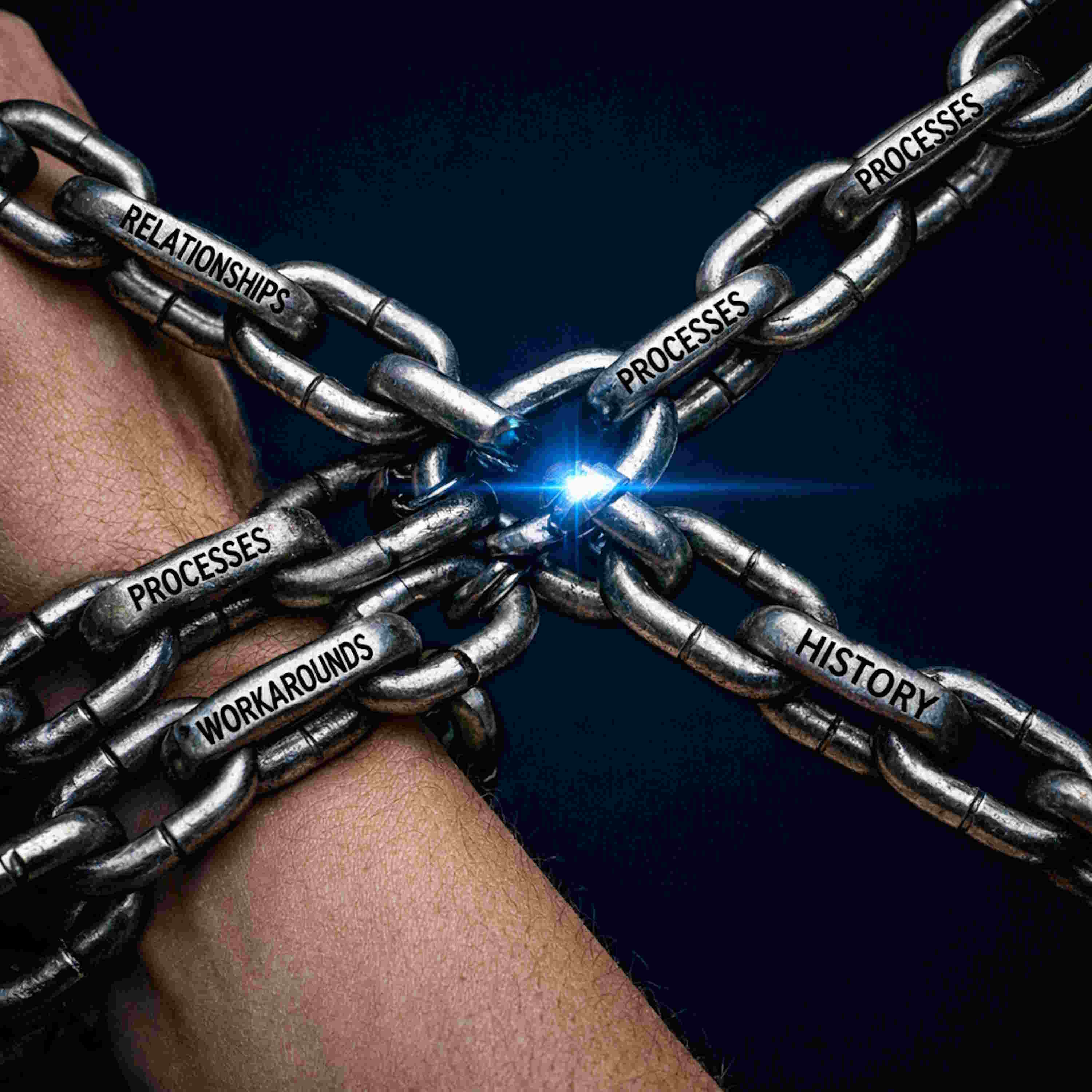
The Indispensability Ceiling - MAC145
Jun 1600:17:11Tap to summarizeThere's a career trap that rewards you for walking into it. It doesn't announce itself. It builds quietly, one undocumented process at a time, one knowledge-transfer conversation that never happened, one person who came to you instead of figuring it out themselves because it was easier and faster and that's just how things work here.By the time you recognize it, you've been in it for a while.This is the indispensability ceiling.The Setup You Didn't See ComingStart with a single question: if you were out of office for a month — not a week, a month — what would break? Not slow down. Break.If the honest answer is "a lot," you're already in the trap.The indispensability ceiling is the point in your career where your excellence at your current level has made you structurally unavailable for the level above. You're performing well. Your manager depends on you. Your teammates come to you when things go sideways. By every visible measure, you're doing great.And yet the promotion doesn't come.What's happening isn't a mystery once you understand the mechanism. When you are the only person who can do the critical work in your role, your manager faces a genuine business risk in promoting you. It's not that they don't believe in you. It's that promoting you creates a hole — and if that hole has no obvious fill, the organization often defaults to keeping you exactly where you are. Forbes contributor Caroline Castrillon has documented this pattern across industries: talented professionals are routinely passed over for promotion — and external candidates are hired above them — precisely because internal high performers are seen as too hard to backfill.That label — "too valuable where you are" — sounds like a compliment. It functions like a sentence.There's a line worth sitting with: "If you're the only one who can... you're the one who always will." The knowledge you protect, the workarounds only you know, the relationships only you maintain — they feel like leverage. But leverage cuts both ways. The same thing that makes you essential today is the thing making you unavailable for tomorrow.The Manager's Math — Why the System Produces ThisBefore diving into the fix, something important needs naming clearly, because talented professionals get this wrong consistently.They blame their manager.And that's understandable — emotionally, it makes sense. You're delivering. You're performing. You want to grow. And the person with the most direct influence over your promotion isn't creating a path. That can feel like indifference. It can feel like betrayal.Here's what's actually happening.Your manager's performance — their bonus, their review, their standing with their own leadership — is often measured by the output of the team you're on. When you're the keystone of that output, exporting you isn't a gift to the organization. It's a risk to them personally. The Ambition in Motion leadership coaching team calls this the manager incentive problem: when a manager's results are tied directly to their team's output, losing a critical performer feels like self-harm.This isn't your manager being a bad person. This is the system paying them to keep you in place.That distinction is everything. If you mis-diagnose the source of the problem — if you treat a structural constraint as a personal failure — you'll spend your energy on the wrong solution. You'll have better 1:1s. You'll deliver more impressive results. You'll wait.And you'll still be in the same chair next year.The system isn't going to fix itself. Your job is to remove the reason the system is blocking you.The Knowledge Trap — What You're Carrying That Only You KnowGetting specific about what creates the ceiling is the first step to doing something about it.The technical term for what's happening is a single point of failure. When critical knowledge lives only inside one person, that person becomes a structural risk to the organization. They cannot be removed, moved, or promoted without operational disruption. The organization knows this, even if they don't say it out loud. Your manager knows it. The people who run talent reviews know it.And the knowledge that creates the single point of failure isn't usually something dramatic. It's the quiet accumulation of things only you know: The workaround for the system that nobody ever properly documented. The client who will only talk to you. The process that lives in a shared drive folder you built three years ago and nobody else has ever opened. The institutional history — the why behind a dozen decisions that predates everyone else on the team.You built that knowledge, often over years, often because you were simply good at your job and nobody else stepped up. That's not a character flaw. It's the natural result of being reliable and capable in an environment that rarely rewards people for making their knowledge transferable.But every piece of knowledge that only lives in you is a link in a chain that holds you in place.The behavioral economics research on this is sharp. The better you get at solving problems with your current knowledge set, the more the organization reinforces that behavior. You get recognized for it. You get rewarded for it. The incentive loop is self-reinforcing. And the more you accumulate — even inadvertently — the more essential you become at the current level, and the further the next level recedes.Brilliant people hit this ceiling. People who were performing at the top of their game, who had every technical skill and every interpersonal quality they'd need for the next level, but who could not get there because they had quietly made themselves impossible to replace where they were.Structurally: your knowledge is an asset to you and a liability to the organization. And until you resolve that liability, they cannot afford to move you.The Replaceable-by-Design PlaybookHere's where the frame flips, because the prescription for this problem is deeply counterintuitive.The path to promotion is making yourself replaceable.Not redundant. Replaceable. Those are not the same thing, and the distinction matters.Redundancy means you're no longer needed. Replaceability means you've built a system, a team, a knowledge base that runs without requiring your constant presence — which is exactly what the level above you requires. When you can say, "this function runs smoothly without me touching it every day," you have demonstrated the core competency of leadership. You've shown that your value is not in your execution — it's in your architecture.Executive coach May Busch has a framework she calls "role in a box." The idea is simple: before you can have a promotion conversation, your current role needs to be stable, documented, and transferable — in a box. As long as your manager is mentally holding your current responsibilities together with worry about what happens if you leave, they cannot simultaneously be building your path to the next level. They're too busy holding the floor.Your job is to put your current role in a box so that your manager can finally look up.The Five-Step Knowledge TransferThis is the action plan — and it runs over thirty days, not next quarter.Step 1: Run a Knowledge Audit. Before you can transfer anything, you need to inventory what only you know. Spend one hour listing everything in your current role that exists primarily in your head. Four categories: systems access, institutional history, client relationships, and process documentation. Don't edit while you list. Just map it. This work connects directly to Documenting Your Work (MAC-005) — the discipline of capturing what you know isn't just about protecting the organization, it's about liberating yourself. And the private record of your wins from the [[brag-document|Brag Document]] work in MAC-141 feeds your promotion case; the knowledge transfer document removes the reason you can't get promoted. Both matter. Neither substitutes for the other.Step 2: Rank by Criticality and Transferability. Not everything on your list is equal. Some of what only you know is genuinely critical — the kind of thing that would cause real disruption if you disappeared tomorrow. Some of it is lower stakes. Start with the things that are both highly critical and theoretically transferable. Those are your first targets. The workaround that keeps the report running. The client relationship you've never introduced anyone else to. The process that lives only in your head.Step 3: Identify One Person Who Could Learn It. You don't need to train the whole team. You need one person per critical knowledge area who could learn what you know. This...
Transcribe →
You Need a Public Portfolio - MAC144
Jun 900:16:50Tap to summarizeThe day you find out your role is being eliminated is a terrible day to start building your reputation. So is the morning you finally decide you've earned a promotion — and you realize the only people who can speak to what you've actually done all sit inside the same building you're now trying to leave.I want to talk about something almost nobody does until they're in crisis, which is exactly why so few people do it well: posting publicly. Putting your thinking, your work, and your expertise somewhere the world can actually see it. LinkedIn, a blog, a newsletter, a YouTube channel — it genuinely doesn't matter which.And I already know the objection, because I've heard it from sharp, capable people for thirty years. "I'm not looking for a job. I'm happy where I am. Why would I bother?"Here's what I want you to sit with. That feeling of security is not a reason to skip this. That feeling of security is the window. It's the one stretch of your career when you have the time and the calm to build the thing you'll be desperate for later. And most people sleep right through it.The comfort trap.Most people decide whether to post publicly based on a single question: am I job-hunting right now? If the answer is no, they don't post. If the answer is yes — if the layoff hits, or the promotion slips away — suddenly they're updating a profile that's been frozen for three years and scrambling to look like someone who's been engaged all along.That's the wrong variable. Whether you're job-hunting today tells you nothing about whether you'll need a public track record tomorrow. And the timing of tomorrow is almost never yours to choose.Think about how the actual disruptions arrive. The reorg you didn't see coming. The acquisition that quietly makes your whole team redundant. The new VP who brings their own people. The budget cut that lands in a quarter that looked fine in January. None of those put a note on your calendar. They show up, and the clock starts the same day — and that's the day you'd be starting from zero.I've watched genuinely excellent people get caught flat-footed by this. Not because they weren't good at their jobs — they were often the best on the team. They were caught because everything they'd built was internal. The trust, the track record, the reputation — all of it lived inside one company's walls, legible to exactly the people who could no longer help them.Paint the picture. A senior analyst, fifteen years at one company, universally respected inside the building. Everyone she works with knows exactly how good she is. Then the acquisition closes, her function gets consolidated, and she's in the market for the first time in over a decade. She opens her laptop to start reaching out — and discovers her network is almost entirely people at the company she just left, her LinkedIn hasn't been touched since she set it up, and when she searches her own name there is nothing there that says what she can actually do. Fifteen years of excellence, and from the outside she looks like she started yesterday. None of that was a competence problem. It was a visibility problem, and it was completely preventable on any ordinary Tuesday in those fifteen years.So here's the reframe I want you to make. The question isn't "am I looking for a job." The question is "if the ground shifted under me next month, what could I point to that exists outside these four walls?" For most people, the honest answer is nothing. And that's a structural risk, not a personal failing — it's just the default state nobody warned you to fix.The comfort isn't the problem. The comfort is the opportunity. You're just not supposed to waste it.Internal wins versus external wins.Let me get specific about what I'm actually asking you to build, because the right mental model changes everything. Draw a hard line between two kinds of wins.An internal win is the project you shipped, the process you fixed, the fire you put out, the report you turned around over a weekend. It's real. It mattered. And it is almost completely invisible the moment you step outside your company. It lives in a Slack thread, a deck nobody kept, a manager's memory that fades the day they change jobs. Internal wins evaporate.An external win is the same work — but made searchable. It's the short write-up of how you fixed that process, posted where anyone can read it. It's the breakdown of what that project taught you. It's the comment you left on an industry post that showed how you think. External wins are portable. They follow you. They're still working for you years after the project itself is forgotten.The collection of those external wins, accumulated over time, is your public portfolio. Not a fancy personal website — though it can be. Just a body of public work that demonstrates, rather than claims, what you can do.And I want to be precise about the difference between demonstrating and claiming, because it's the whole game. Your resume is a list of claims. "Strong communicator. Strategic thinker. Cross-functional leader." Everyone writes those words; they cost nothing to type. A public portfolio is evidence. It's the difference between telling someone you can teach and pointing to fifty things you've taught. One is cheap. The other is proof.This matters even if you never leave.Here's the part that lands hardest for the "I'm not looking" crowd. You don't have to leave for this to matter. The people deciding your promotion are evaluating you too — and increasingly, they're looking outside the building to do it. The data on this is not subtle. Roughly seventy percent of employers research candidates online before they make a decision, and more than eighty percent of hiring professionals screen someone's online presence before the interview even happens. And it doesn't stop at the hiring gate — that scrutiny continues throughout your time at a company.Sit with what that means. When someone goes looking for you and finds nothing, that emptiness is not neutral. In a market where everyone else has something, a blank result is itself a signal — and not the one you want sending. I talked a few weeks back, in the episode on how AI is eroding the signals employers use to judge talent, about how the cheap, easy-to-fake markers have lost their meaning. A real, accumulated body of public work is the opposite of cheap. It's the costly signal that's hard to fake — which is exactly why it's worth so much.Why the long game quietly rewards you.A single post does almost nothing — let's be honest about that. But public work has a strange property: it keeps working after you've stopped. The developer and writer known as Swyx makes this case better than anyone in a piece on learning and building in public — durable work you put out keeps paying you back for years, long after you've moved on from it. The piece you wrote two years ago is still out there being found, still introducing you to people while you sleep.That's the one place the word genuinely applies — your reputation compounds. Each piece sits on top of everything you've already published instead of starting over. Fifty posts isn't fifty times one post. It's a base that keeps generating return long after the effort is spent.And notice what that means for the kind of person who's reading this: you do not need a single post to take off. The whole model rewards the boring, consistent middle far more than the occasional viral hit. Fifty-two ordinary posts over a year beat one brilliant post you agonized over and then never followed up. Consistency is the strategy that's actually available to a busy professional with a real job — you don't have to be clever or lucky on any given week, you just have to keep showing up in small, low-stakes increments. The person who posts a plain, useful paragraph every Friday for a year will, without exception, end up more findable and more credible than the person waiting for the perfect think-piece they never publish.There's a name for the upside of all that visibility, and longtime listeners already know which quote I'm about to reach for. The Roman philosopher Seneca said that luck is what happens when preparation meets opportunity. I built one of my earliest episodes around that line — A Little Bit of Luck — and I've returned to it more times than I can count since, in everything from Reorganizations to Riding the Coattails of Others.Here's the part most people miss in that quote. They fixate on the preparation — deliver results, build skills, earn credibility — and they ignore the opportunity half entirely. But opportunity has a precondition: you have to be visible to it. Preparation you keep to yourself never meets anything.That's exactly what Harvard Business Review put research behind in a piece on how to create you...
Transcribe →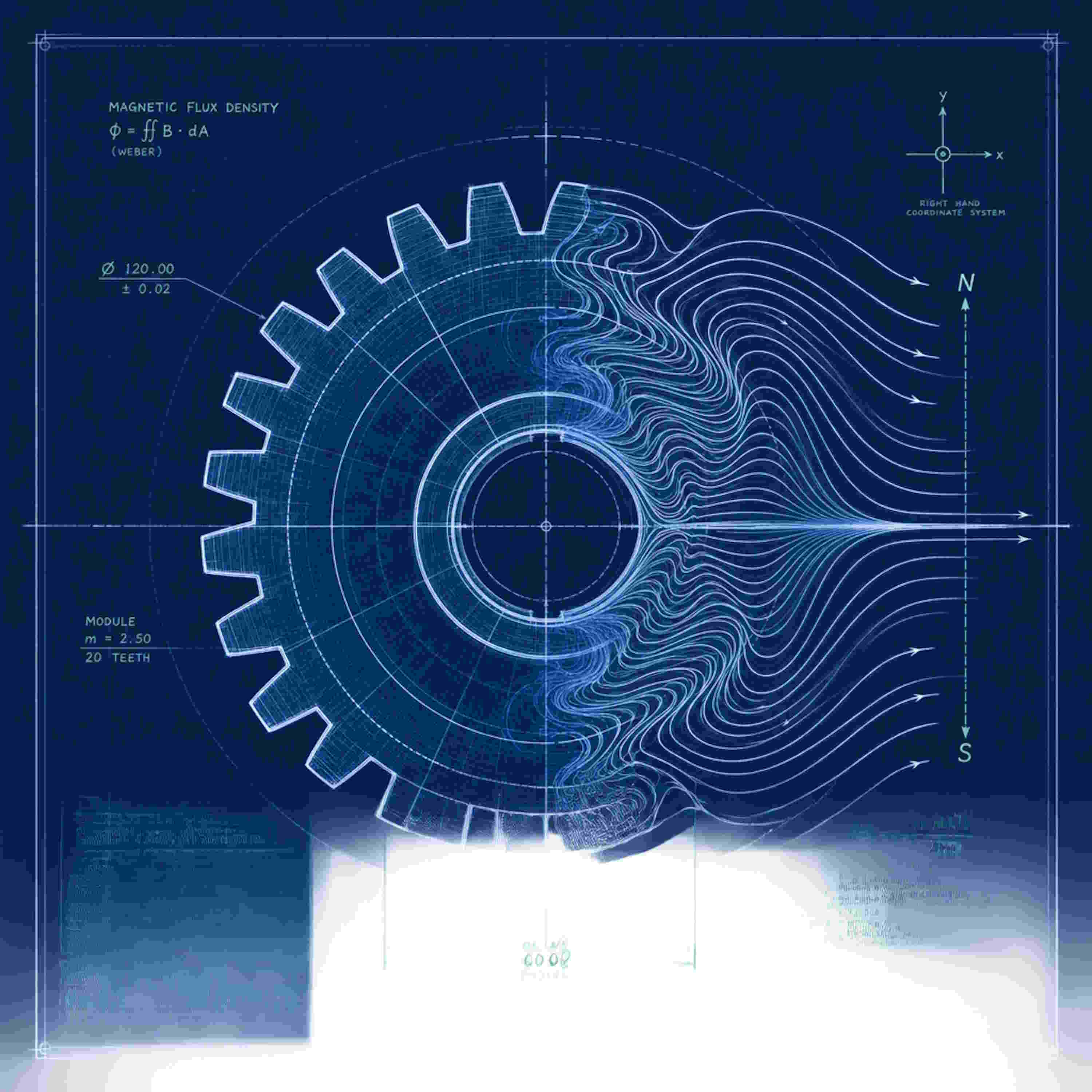
Are you a Gear or a Field - MAC143
Jun 200:20:50Tap to summarizePicture this. You've just been promoted. You earned it — you were the best at what you did, and everyone knew it. The first few weeks feel like validation. Then, slowly, things start to feel wrong. Not catastrophically wrong. Just off. You're working as hard as you ever have, maybe harder, and somehow getting less done. The decisions that used to feel clean are murky. The problems that used to resolve in hours are sitting on your desk for weeks. You're not failing. But it doesn't feel like succeeding, either.That experience is one of the most common, and most disorienting, transitions in professional life. And it has nothing to do with whether you're talented. It has to do with the fact that the tool you were rewarded for mastering is no longer the tool the job requires — and nobody told you the swap happened.This episode came out of a LinkedIn post by Jackie Simon, a PCC-certified leadership coach whose career writing I've referenced before on this show — back in Episode 12, Episode 50, and Episode 66. She described a leader she was coaching who had moved into a VP of People role. Same company, same team, same sharp instincts that had made her exceptional. And for months, she kept trying to be a gear when her job had become a field. That single line — gear versus field — is the cleanest description I've found for the thing that quietly derails so many good careers. So let me unpack it, push it further than the original metaphor goes, and then walk it through every stage of a career.The gear.A gear works through direct contact. It turns, it drives, it produces. The faster and harder it works, the more impact it creates. That is how most high performers operate early in their careers, and it works — it's supposed to work. The gear is not a failure mode. It is the correct mode for a significant stretch of your professional life. If you're an individual contributor, your value is almost entirely in what you personally produce: speed, precision, individual excellence. The gear is the tool, and you are right to sharpen it.There's a concept that's been in management theory since 1969 — Dr. Laurence Peter's Peter Principle. The idea is that organizations promote people based on performance in their current role rather than aptitude for the next one, so people keep getting promoted until they reach a level they can't perform at, and there they stay. It sounds harsh, but it's a description of a system, not a judgment on the people inside it. And here's the part that matters: the Peter Principle isn't about incompetent people. It's about competent people who were never taught that the tool changes. You were excellent with the gear. The organization rewarded you for it. You got promoted. And then nobody told you the new role requires something entirely different. That's the gear trap.The field.So what's the alternative? Jackie's framing is the cleanest I've heard. A magnetic field doesn't touch everything directly. It changes what's possible in the space around it — silently, indirectly, at scale. That's the shift: from creating impact through contact to creating impact through presence.I want to push on the physics, because there's more in it worth unpacking. A gravitational field — the field around a planet, or a star — runs on two variables. The first is mass. The more mass an object has, the stronger its field and the further that field extends. A small rock in space has almost no field. A star has a field so powerful it bends light. The second variable is proximity, and this is where it gets interesting. Gravitational field strength doesn't just decrease with distance — it decreases with the square of the distance. Double your distance from the source and the field is only one quarter as strong; triple it and it drops to one ninth. This is the inverse square law, and the field doesn't fade gradually — it falls off fast.Translate that into organizational terms. Your field — your influence, your presence, your ability to shape what happens around you — is a product of two things: the mass you've built over time, and the proximity of the people you're trying to move.Your organizational mass is your accumulated credibility. It's the track record of problems you've solved, commitments you've kept, people you've developed, and trust you've earned. You don't build it overnight. You build it over years, across teams, across difficult moments you handled well. Every time you delivered when it mattered, every time you told the truth when it would have been easier not to, every time someone looked to you in a hard moment and found you steady — that added to your mass.And proximity means the people closest to you feel your field the strongest. Your direct team feels it intensely: every mood shift, every change in priority, every decision you make or don't make, they feel immediately. Your skip-level peers feel it somewhat. People three layers away feel only a fraction of what your direct reports experience. That's not a flaw in the system. That's physics — and it has a practical implication most leaders get exactly backward. When leaders feel their influence isn't reaching far enough, the instinct is to reach harder: push more, get into the weeds, apply more gear. But a gear only works through direct contact, and you cannot scale direct contact to an entire organization. The more you push from a distance, the more friction you generate, and the more your actual reach collapses. The field doesn't push. It changes what's possible in the space — and the way you extend its reach isn't to stretch further yourself, it's to develop other field generators within each proximity ring. (If you want the deeper treatment of leading without direct authority, this idea of influence without authority is the broader discipline underneath it.)Every career stage.This shift doesn't happen once. It happens multiple times, at different scales, and missing it at any stage costs you. Stay with the gear and the field — one question at a time: at each stage, are you creating impact through contact, or through presence?Stage one — individual contributor. You are the gear, and that's exactly right. Your job is to produce, and the faster and more precisely you turn, the more you contribute. This is the stage where working harder genuinely creates better outcomes. Build your craft, deepen your skills, deliver consistently. The one thing to watch: even here, the people with the best long-term trajectories aren't only building technical skill. They're building relational credibility — showing up on time, keeping their word, making life easier for the people around them. That's early-stage mass. It may not feel like much yet. It adds up.Stage two — senior IC or technical lead. Here the gear starts to feel the pull of something larger. You're still expected to produce, but your choices now affect other people whether you intend them to or not. The way you handle a conflict, the standard you set for your own work, the way you engage in a meeting — all of it creates conditions for the people around you. This is the edge of the gear becoming a field. You're not managing anyone, but you are influencing, and the best people learn to do it on purpose.Stage three — first-time manager. This is where careers most often stall. You were promoted because you were the best gear in the shop, and nobody told you the job fundamentally changed. The instinct is to keep doing the work — it's faster, it's cleaner, the quality is right. But every time you do the work that belongs to your team, two things happen: the work gets done your way today, and your team learns a little less for tomorrow. You become the bottleneck. There's also a structural trap here. If you are indispensable to every critical function in your current role, you cannot be promoted out of it — the organization literally can't afford to move you, because no one is ready to replace you. Your indispensability becomes your ceiling, and that's a gear problem, not a talent problem. The shift signal: measure your success by what your team produces, not by what you produce. If those two numbers aren't diverging, you're still in gear mode.Stage four — mid-level manager or director. The field is now required. You're not managing tasks — you're managing conditions: setting direction, clearing obstacles, aligning incentives, developing the people below you into leaders who can run their own fields. A field without alignment is just noise, and directors still in gear mode create chaos at scale by making micro-decisions across too many domains — every one of which prevents someone beneath them from developing the judgment to make those decisions themselves. A director doing the job well is almost invisible in the day-to-day, because the systems and people they've built run without them. Your job here is to build the mass in your managers so their proximity rings are covered and your overall field reaches further.Stage five — VP...
Transcribe →
AI is Eroding the Career Ladder - MAC143
May 2600:16:07Tap to summarizeAI is Eroding the Signals Employers Use to Judge Talent — And Nothing Has Replaced ThemThere is a problem developing in the professional world that most career advice hasn't caught up to yet. It's not the job-loss story — that one is getting plenty of airtime. It's something quieter, and in a lot of ways more corrosive: the collapse of the signals the entire career ladder was built on.To understand why this matters so much, you need to go back to the original premise.The career ladder — the idea that you start somewhere, prove yourself, get recognized, move up, and repeat — was built on a specific assumption. The assumption was this: the things you produce as a candidate or early-career professional are reasonable proxies for your actual ability.Your résumé showed you could organize information and communicate clearly. Your cover letter showed you could write persuasively and understood the role. Your portfolio showed you could do the work. Your writing sample showed you had the depth to back up the claims on the first two pages. Your coding test showed you could actually code. Your case study showed you could think.These artifacts — the things you submitted, the things you produced — were what economists call "costly signals." That term has a precise meaning. A costly signal is one that is expensive to fake. The polish on a résumé used to require actual skill or effort. A strong portfolio used to require actual time and creative ability. A solved technical assessment used to require actual knowledge.The entire system worked because producing a high-quality artifact was hard enough that only people with underlying competence could do it consistently. The cost of faking it was high. The signal separated the skilled from the unskilled.AI eliminated that cost. Overnight.Here's what AI can now do — and this list matters because each item on it is a rung on the career ladder that has just been sawed off:AI can write your résumé. Not just fix the grammar — write it, from scratch, tailored to the role description, keyword-optimized, polished.AI can write your cover letter. In your voice, in the tone of the company, hitting every point the job description signaled it wanted to see.AI can produce your writing samples. Articles, reports, memos, case analyses — indistinguishable, at the surface level, from work done by someone who actually has expertise.AI can build your portfolio. Design mockups, architecture diagrams, code repositories, campaign decks.AI can solve your technical assessments. Coding tests that used to require hours of preparation and real ability can now be completed in real time with an invisible screen overlay, an AI tool running parallel to the interview, or — and this has been documented — an earpiece delivering answers while the candidate nods along on a video call.AI can ace your case study and generate your thought leadership posts. The LinkedIn takes, the industry insights, the professional commentary that was supposed to prove you were a thinker in your field.Every single proxy the career ladder ran on is now a cheap signal. And when signals go cheap, markets break.Who This Hits Hardest — And Why the Impact Isn't Evenly DistributedThe disruption here is not evenly distributed. And understanding where the damage lands helps you understand what to do about it.It hits early-career professionals the hardest. The entry-level job was always the "prove yourself" position. It was the place you produced the things that established your track record. You didn't have relationships yet. You didn't have a reputation yet. What you had was the work you could produce, and the quality of that work was supposed to be the evidence.That is exactly the layer AI has compromised. The people with no established network, no verifiable track record, and no relationships that could vouch for them — those are the people who were most dependent on artifacts as their primary signal. And that signal is now cheap.It also hits mid-career professionals who have been accumulating credentials and artifacts under the old model. If you have spent years building a portfolio that looks impressive, you may be sitting on an asset that is being rapidly devalued — not because the work was bad, but because the medium it lives in is no longer being trusted.And it is beginning to hit the hiring process itself in a way that compounds everything. Employers know they cannot trust the artifacts anymore. So they are falling back on the most expensive, most relationship-dependent filtering mechanism available: people they already know, or people vouched for by people they already know. Which means the hidden job market — the roles that never get posted publicly because they are filled through referrals — is becoming more dominant, not less.Researchers have now started looking at what happens to labor markets when that filtering mechanism breaks. The findings are uncomfortable. One analysis of digital hiring platforms found that high-ability workers — the people who were most skilled — were being hired at significantly lower rates after widespread AI adoption. Not because they were doing anything wrong. Because their high-quality authentic work was no longer distinguishable from AI-generated work by someone with far less underlying ability. The signal was dead. The market couldn't sort.If you have been working hard, building real skills, doing real work — and you have noticed that it has started to feel like none of that is translating the way it used to — this is why. The system that was supposed to reward your effort is no longer reliably reading the signal you are sending.The Reframe: The Proxy Was Never the PointHere is the thing about all of this. The career ladder was always a proxy. The résumé, the portfolio, the writing sample — those things were never the point. They were stand-ins for something more fundamental: the answer to the question "can I trust this person to do the work?"Artifacts were just the cheapest available way to approximate an answer.AI has stripped the proxy. What remains is the real thing. Trust. And trust cannot be generated in 90 seconds with a tool.The professionals who are navigating this era well are not trying to out-AI the AI in their artifacts. They are building the thing the artifacts were always pointing toward.What the Professionals Who Are Winning Are Actually DoingLet's get specific about what that looks like in practice. There are three things the people navigating this era well are doing differently.The first is building a sustained, observable track record. Not a portfolio. Not a document. A pattern of behavior over time that people have witnessed.There is a distinction that matters here. A document is a claim. A track record is evidence. A résumé tells me you did something. A referral from someone who watched you do it tells me you actually did it. The first is now cheap. The second is still costly — it requires someone to stake their own credibility on you.That is the shift. The new filtering mechanism is not the artifact. It is the person willing to vouch for you. And the way you acquire vouchers is by doing visible, verifiable, quality work in front of people who matter — over time.The professionals advancing well right now are not the ones with the best profiles. They are the ones who consistently show up in rooms where real decisions are made, contribute in ways people remember, and accumulate a network of people who have a stake in their success.The second thing is distinguishing manufactured presence from earned presence. And this is where I want to be direct, because I think a lot of people are making a serious mistake.AI-generated LinkedIn posts are not building your credibility. They are eroding it. Not because people are always going to detect them — some won't. But because they produce a veneer of expertise without any of the underlying substance. And veneer fails under scrutiny in exactly the situations where your credibility is being actively evaluated.The hiring manager who saw your posts and asked you into an interview is now going to have a conversation with you. That conversation is a live demonstration. If the posts were genuine, the conversation confirms what they expected. If the posts were manufactured, the conversation exposes the gap.Earned presence is different. It is specific. It is grounded in real experience. It is the kind of post that only you could write, because it came from something you actually saw, actually navigated, actually learned. AI can imitate a form. It cannot manufacture the experience the form is supposed to represent.The professionals building real credibility right now are the ones documenting what they actually did, sharing specific observations from specific situations, and engaging in genuine two-way conversation about the ideas they hold. That is what compounds over time. The manufactured content does not compound — it just accumulates.The third thing — and I want to spend a moment here because I think it is the most counterintuitive one — is that genuinely skilled people need to start treating live, in-person demonstration as a primary credential.This is already happening structurally, whether the individuals involved understand it or not. Major companies — including some of the largest in the...
Transcribe →
Your Brag Document - MAC141
May 1900:18:54Tap to summarizeThe Brag Document: Your Career's Most Underused ToolThere's a quiet failure that happens to professionals every single year, and it happens not because of poor performance, not because of office politics, and not because of a bad manager. It happens because of memory.Performance review season arrives. Your manager sits down to evaluate your year. And what they're working from — despite their best intentions — is whatever they can most easily remember. In most cases, that means the last six to eight weeks. Maybe ten. Rarely the full twelve months.This isn't carelessness. It's cognitive science. There's a phenomenon researchers call recency bias: the brain's tendency to disproportionately weight recent events when evaluating a longer period of time. When your manager tries to recall your performance across 52 weeks, the availability heuristic kicks in. The brain retrieves what it can access most readily — and what's most readily accessible is what happened most recently.The result: a strong Q1 can be invisible by December. A critical project you finished in August barely registers in November. A rough October — even a minor one — can cast a shadow over a genuinely excellent year. And none of this is fair, or intentional, or personal. It's just how human memory works when it's asked to do something it isn't built for.The brag document is your countermeasure.What a Brag Document Is — and Isn'tA brag document is a private, running record of your professional contributions. Not your resume. Not your LinkedIn profile. Not the self-assessment form you fill out three days before your review and then panic-search your calendar trying to remember what you did in March.It's a living document you maintain throughout the year — capturing what you did, what it produced, and what the impact was, while those things are still fresh. The name comes from a post by software engineer Julia Evans, who popularized the concept in tech circles. Her core argument is simple: having excellent work go unnoticed is a solvable problem. The solution is to stop relying on memory — yours or your manager's — and start creating a written record.Here's what most people get wrong about it: they think it has to be formal. It doesn't. You're not writing for an audience. You're writing for yourself, in plain language, with enough detail that you can reconstruct the story six months later. One entry might be two sentences. One might be a paragraph. The only requirement is that it exists — and that you added to it this week.Four Things Worth TrackingWins and outcomes. Projects delivered, problems solved, metrics moved. Crucially, the goal is to document the value delivered, not just the task completed. "I finished the report" is a task. "I finished the report that cut the team's Monday prep time by two hours every week" is value. The distinction matters enormously when your manager is trying to remember why your year was strong. Numbers travel further than narratives in a calibration room — time saved, revenue impacted, error rates reduced, team output increased.Positive feedback. Your manager gave you a compliment in a 1:1. A peer sent you a message thanking you. A stakeholder mentioned you by name in a leadership meeting. Those moments are evidence. Screenshot them. Copy them into the document. When your manager walks into a review meeting trying to reconstruct your year, specific quotes and recognition from third parties are the kind of thing they can actually hold onto — and repeat.Growth. New skills developed, certifications completed, stretch assignments taken outside your original job description. Professional development signals trajectory, and trajectory is what gets you promoted. Most professionals track their growth mentally. Tracking it in writing means it's available when it matters.Glue work. This is the category most people miss entirely. Glue work is the essential, invisible labor that keeps teams functioning — mentoring a junior colleague through a difficult project, improving a process nobody asked you to improve, writing documentation that saved three people two hours each, resolving a team conflict before it became a leadership problem. This work almost never surfaces in reviews because it doesn't produce a visible deliverable. But it is frequently the work that distinguishes a strong individual contributor from someone with genuine leadership potential. If it's not in the document, organizationally speaking, it didn't happen.The Habit That Makes It WorkThe reason most professionals don't have a brag document isn't that they don't understand the value. It's that the habit was never designed.Here's the system: one recurring calendar block, every Friday afternoon, fifteen minutes. Non-negotiable. One question: What did I finish this week, and why did it matter?That's it. You're not trying to capture everything. You're not trying to be eloquent. You're writing a brief, honest account of the week before it becomes last month. Done in under ten minutes. Filed in the document. Done until next Friday.The format doesn't matter. A Google Doc, a Notion page, a note on your phone — whichever tool you already open without thinking. The format matters less than the friction. If it takes three steps to open it, you won't. If it's pinned, you will.This is a career administration Fortress Block. Not protected time for a deliverable — protected time for yourself. Fifteen minutes a week, every week, against the full weight of your annual career narrative. The math is not complicated.Putting AI to Work on Your LogHere's where the modern professional has a genuine edge that didn't exist five years ago.After fifty-two weeks of Friday entries, you have a raw log. Dozens of wins, pieces of feedback, growth moments, glue work entries. At some point — heading into review season, sitting down for a quarterly IDP check-in, preparing for a salary conversation — you'll want to turn that raw log into something polished. A self-assessment. A promotion case. A year-in-review summary written in the language your company actually uses.That's exactly what an AI language model can do in under ten minutes.Open whatever tool you use — ChatGPT, Claude, Gemini, it doesn't matter. Paste in your brag document. Then ask it specific questions:Summarize my biggest contributions from this year in order of business impact.How many times did I document a mentoring interaction, and what was the aggregate result?Total up every time I saved hours for the team and give me a combined estimate.Which of these entries demonstrate next-level competency on my career ladder?Draft a 400-word self-assessment using this log as source material.The AI doesn't editorialize. It reads what you actually wrote and synthesizes it into a coherent narrative. The entries you captured in thirty seconds on a Friday afternoon become the source material for a summary your manager will actually read.To make this concrete: suppose your brag document contains fourteen entries across the year where you helped a colleague through a problem, explained a process, or walked someone through onboarding. In isolation, none of those felt like wins — they felt like doing your job. But when you ask an AI to identify your mentoring contributions and quantify their scope, you might get back: fourteen documented interactions with five colleagues across three major process areas. That's not a footnote in your self-assessment. That's a leadership data point.Or suppose you've logged six process improvements throughout the year. Individually, small. Aggregated by AI, they might represent forty or fifty hours of recovered team capacity. "I improved several processes this year" is forgettable. "My process improvements recovered an estimated forty-seven hours of team capacity this year" is evidence.The key principle here is the same one that applies across every professional use of AI: you're not outsourcing your career story to a machine. You're using a machine to do analytical and editorial lifting on raw data you created. The insight, the experience, the specific moments — those are yours. The synthesis is pattern matching at scale. But none of it is possible without the log. That's the variable entirely in your control.The IDP Connection: Two Documents, One StrategyIf you're already maintaining an Individual Development Plan — and if you've listened to the IDP series on this show — you have a forward-looking document that captures where you want to go, what you need to develop, and what goals you're working toward. That's the roadmap.Here's the problem most people run into: they build the IDP in January, they review it in June, and when they sit down to fill in the successes section — they stare at a blank page.The IDP has excellent structure. What it lacks is data. And without data, the IDP review conversation becomes vague and memory-dependent — which puts you right back in the recency bias trap, just with better formatting.The brag document solves this. The IDP is the GPS — it tells you where you're going and what roads to take. The brag document is the trip log — a continuous record of where you've actually been, what you encountered, and how far you've traveled.Four times a year, quarterly, you o...
Transcribe →