Podcast
Manifold
Hosted by Steve Hsu · EN
Steve Hsu is Professor of Theoretical Physics and Computational Mathematics, Science, and Engineering at Michigan State University. Join him for wide-ranging conversations with leading writers, scientists, technologists, academics, entrepreneurs, investors, and more.
29episodes
Episodes
Newest firstAll episodes
AIs Win Math Olympiad Gold: Prof. Lin Yang (UCLA) – #97
Oct 2300:50:43Tap to summarizeLin Yang is a professor of computer science at UCLA. Recently, he and his collaborator built an AI pipeline using commercial models such as Gemini, ChatGPT, and Grok that performed at the gold medal level on International Mathematics Olympiad problems. Steve and Lin discuss this research, which relies on "verifier-refiner" LLM instances and large token budgets to reliably solve difficult problems. They discuss how these methods can be used to advance AI for scientific research, legal analysis, and complex document processing.https://github.com/lyang36/IMO25/blob/main/IMO25.pdfhttps://x.com/hsu_steve/status/1948189075707469942Chapter markers:(00:00) - AIs Win Math Olympiad Gold: Prof. Lin Yang (UCLA) – #97 (00:57) - Prof. Lin Yang, UCLA (04:27) - Journey from Physics to Computer Science: 2 PhDs (11:15) - Transition to AI from Theoretical CS (13:16) - AI Pipeline Math Olympiad: Gold Medal! (28:23) - Probability Amplification (29:00) - Applications in Industry and Legal Analysis (29:58) - Challenges in Model Reasoning and Verification (33:23) - Future of AI in Scientific Research and AGI Speculations –Steve Hsu is Professor of Theoretical Physics and of Computational Mathematics, Science, and Engineering at Michigan State University. Previously, he was Senior Vice President for Research and Innovation at MSU and Director of the Institute of Theoretical Science at the University of Oregon. Hsu is a startup founder (SuperFocus.ai, SafeWeb, Genomic Prediction, Othram) and advisor to venture capital and other investment firms. He was educated at Caltech and Berkeley, was a Harvard Junior Fellow, and has held faculty positions at Yale, the University of Oregon, and MSU.Please send any questions or suggestions to manifold1podcast@gmail.com or Steve on X @hsu_steve.
Transcribe →
The Global AI Race: Z.ai and the View from Beijing — #96
Oct 901:06:35Tap to summarizeZixuan Li is Director of Product and genAI Strategy at Z.ai. He was educated at Renmin and Tsinghua University in China, and at MIT and Carnegie Mellon. Z.ai has released frontier open source LLMs but is largely unknown in the West except among AI experts. Steve and Zixuan discuss the AI race from the perspective of a startup in Beijing.https://chat.z.ai/Follow Z.AI on X: @Zai_orgChapter markers:(00:00) - Introduction and Guest Background (05:14) - Z.ai's Evolution and Challenges (10:37) - AI Model Comparison and Industry Insights (34:04) - Pragmatic Views on AGI in China (35:51) - Specialized Models and Scientific Contributions (39:02) - AI Chips and Model Training in PRC (50:54) - Open Source AI and Future Predictions –Steve Hsu is Professor of Theoretical Physics and of Computational Mathematics, Science, and Engineering at Michigan State University. Previously, he was Senior Vice President for Research and Innovation at MSU and Director of the Institute of Theoretical Science at the University of Oregon. Hsu is a startup founder (SuperFocus.ai, SafeWeb, Genomic Prediction, Othram) and advisor to venture capital and other investment firms. He was educated at Caltech and Berkeley, was a Harvard Junior Fellow, and has held faculty positions at Yale, the University of Oregon, and MSU.Please send any questions or suggestions to manifold1podcast@gmail.com or Steve on X @hsu_steve.
Transcribe →
Seeking Truth From Facts: Weeks Where Decades Happen — #95
Sep 2500:48:49Tap to summarizeThis episode is a co-release with the Seeking Truth From Facts podcast: https://substack.com/@seekingtruthfromfactsThe theme of this episode derives from Lenin:“There are decades where nothing happens; and there are weeks when decades happen.” ― Vladimir Ilyich Lenin Steve and Alf discuss:(00:00) - Introduction (01:32) - China Victory Day Parade and new military technology (12:27) - The SCO summit and its implications (20:24) - Modi's presence and the prospect of a Sino-Indian rapprochement (25:00) - Trump's South Asian blunder? (32:14) - The Alaska Summit and the chances of peace (40:01) - Israel's loss of popular support on both the left and the right (46:12) - Bipolarity or multipolarity? –Steve Hsu is Professor of Theoretical Physics and of Computational Mathematics, Science, and Engineering at Michigan State University. Previously, he was Senior Vice President for Research and Innovation at MSU and Director of the Institute of Theoretical Science at the University of Oregon. Hsu is a startup founder (SuperFocus.ai, SafeWeb, Genomic Prediction, Othram) and advisor to venture capital and other investment firms. He was educated at Caltech and Berkeley, was a Harvard Junior Fellow, and has held faculty positions at Yale, the University of Oregon, and MSU. Please send any questions or suggestions to manifold1podcast@gmail.com or Steve on X @hsu_steve.
Transcribe →Kyle Chan on the Future of US-China Competition — #94
Sep 1101:10:51Tap to summarizeKyle Chan is a Postdoctoral Research Associate and Lecturer in Sociology at Princeton University. His research focuses on industrial policy, clean technology, and infrastructure with a regional focus on China and India. He is currently working on a book on Chinese industrial policy that aims to explain how China came to dominate certain industries today that had originally been led by the US, Japan, and other industrialized nations. These industries include electric vehicles, solar, high-speed rail, and consumer electronics. The book will describe the wide range of industrial policy tools used in China and their ongoing efforts in other industries, such as semiconductors and biotechnology.Kyle Chan writes a popular newsletter called High Capacity on industrial policy, clean technology, and infrastructure, particularly in China and India.Personal website: https://www.kyleichan.com/NYT op-ed: https://www.nytimes.com/2025/05/19/opinion/china-us-trade-tariffs.htmlLu Feng interview: https://www.high-capacity.com/p/chinese-industrial-maximalismChapter Markers:(00:00) - Introduction (00:50) - Kyle's Background and Research Interests (05:51) - China vs. India: A Comparative Study of Railway Development (12:38) - The Broader Implications of Industrial Policy (37:48) - Introduction to Industrial Maximalism (38:54) - China's Manufacturing Strategy (41:33) - US-China Technological Competition (59:45) - Global Collaboration and Future Outlook Music used with permission from Blade Runner Blues Livestream improvisation by State Azure.–Steve Hsu is Professor of Theoretical Physics and of Computational Mathematics, Science, and Engineering at Michigan State University. Previously, he was Senior Vice President for Research and Innovation at MSU and Director of the Institute of Theoretical Science at the University of Oregon. Hsu is a startup founder (SuperFocus.ai, SafeWeb, Genomic Prediction, Othram) and advisor to venture capital and other investment firms. He was educated at Caltech and Berkeley, was a Harvard Junior Fellow, and has held faculty positions at Yale, the University of Oregon, and MSU. Please send any questions or suggestions to manifold1podcast@gmail.com or Steve on X @hsu_steve.
Transcribe →Joleen Liang: 40M+ kids educated by adaptive AI — #93
Aug 2800:59:07Tap to summarizeDr. Joleen Liang is Co-founder of Squirrel AI, which pioneered adaptive learning at scale, first in China and now in the US. By 2021 its technology had served over 60,000 public schools in 1,200 cities across Asia. Squirrel AI has implemented large knowledge graphs mapping out the main concepts in the K-12 math, science, and language curriculum. The Squirrel learning tablet actively observes student behavior (including eye-tracking during video lessons) and adapts its presentation and testing to individual learning patterns.Chapter markers:(00:00) - Joleen Liang: Co-Founder of Squirrel AI (02:14) - Squirrel AI: Beginnings and scale (14:44) - AI vs Human Teachers (33:51) - Learning environment: tablet, headphones, human supervisors/analysts (51:11) - Challenges and Opportunities in the US Market Music used with permission from Blade Runner Blues Livestream improvisation by State Azure.–Steve Hsu is Professor of Theoretical Physics and of Computational Mathematics, Science, and Engineering at Michigan State University. Previously, he was Senior Vice President for Research and Innovation at MSU and Director of the Institute of Theoretical Science at the University of Oregon. Hsu is a startup founder (SuperFocus.ai, SafeWeb, Genomic Prediction, Othram) and advisor to venture capital and other investment firms. He was educated at Caltech and Berkeley, was a Harvard Junior Fellow, and has held faculty positions at Yale, the University of Oregon, and MSU. Please send any questions or suggestions to manifold1podcast@gmail.com or Steve on X @hsu_steve.
Transcribe →Max Dama on HFT: Millisecond Algos and Bid/Ask Dynamics — #92
Aug 1400:54:46Tap to summarizeMax Dama is the co-chairman of Headlands Technologies LLC, a global quantitative proprietary trading firm headquartered in Chicago, with offices in New York, Austin, London, Amsterdam and Singapore. He earned a B.A. in Mathematics, Statistics, Computer Science, and Business from the University of California, Berkeley.A generation of quants know Max through his notes on automated trading and on interview brain teasers.https://work-in-progress.notion.site/Max-Dama-s-Brainteasers-Study-Guide-WIP-9eb1f4b692f241d894462ddf1ab34617http://isomorphisms.sdf.org/maxdama.pdfSteve and Max discuss:(00:00) - Introduction (01:18) - Max Dama's Early Life and Education (02:19) - Journey into Trading and Career Development (06:56) - The High-Frequency Trading Industry (26:42) - Academic Foundations for Trading (27:50) - Computer Science in Trading (28:57) - Insights into the Trading Industry (35:49) - AI and the future of HFT Music used with permission from Blade Runner Blues Livestream improvisation by State Azure.–Steve Hsu is Professor of Theoretical Physics and of Computational Mathematics, Science, and Engineering at Michigan State University. Previously, he was Senior Vice President for Research and Innovation at MSU and Director of the Institute of Theoretical Science at the University of Oregon. Hsu is a startup founder (SuperFocus.ai, SafeWeb, Genomic Prediction, Othram) and advisor to venture capital and other investment firms. He was educated at Caltech and Berkeley, was a Harvard Junior Fellow, and has held faculty positions at Yale, the University of Oregon, and MSU. Please send any questions or suggestions to manifold1podcast@gmail.com or Steve on X @hsu_steve.
Transcribe →Andrew Song: Global Cooling with Sulfur Dioxide in the Stratosphere — #91
Jul 31, 202501:04:37Tap to summarizeAndrew Song is a co-founder of Make Sunsets, a company focused on addressing climate change through solar geoengineering. The company launches balloons filled with sulfur dioxide (SO2) into the stratosphere with the aim of reflecting sunlight to cool the Earth.https://makesunsets.com/Previous Manifold episodes on climate:https://www.manifold1.com/episodes/casey-handmer-terraform-industries-and-a-carbon-neutral-future-57https://www.manifold1.com/episodes/tim-palmer-status-and-future-of-climate-modeling-16https://www.manifold1.com/episodes/klaus-lackner-on-carbon-capture-climate-change-and-physics-40Steve and Andrew discuss:(00:00) - Introduction (01:35) - Andrew's Background and Swimming Career (06:37) - Journey into Startups and Y Combinator Experience (11:30) - Make Sunsets: Concept and Science (32:53) - Exploring Supersonic and Balloon-Based Solutions (33:45) - Environmental Concerns and Biodegradable Solutions (36:13) - Business Model and Cooling Credits (39:26) - Future Prospects and Climate Modeling Challenges Music used with permission from Blade Runner Blues Livestream improvisation by State Azure.–Steve Hsu is Professor of Theoretical Physics and of Computational Mathematics, Science, and Engineering at Michigan State University. Previously, he was Senior Vice President for Research and Innovation at MSU and Director of the Institute of Theoretical Science at the University of Oregon. Hsu is a startup founder (SuperFocus.ai, SafeWeb, Genomic Prediction, Othram) and advisor to venture capital and other investment firms. He was educated at Caltech and Berkeley, was a Harvard Junior Fellow, and has held faculty positions at Yale, the University of Oregon, and MSU. Please send any questions or suggestions to manifold1podcast@gmail.com or Steve on X @hsu_steve.
Transcribe →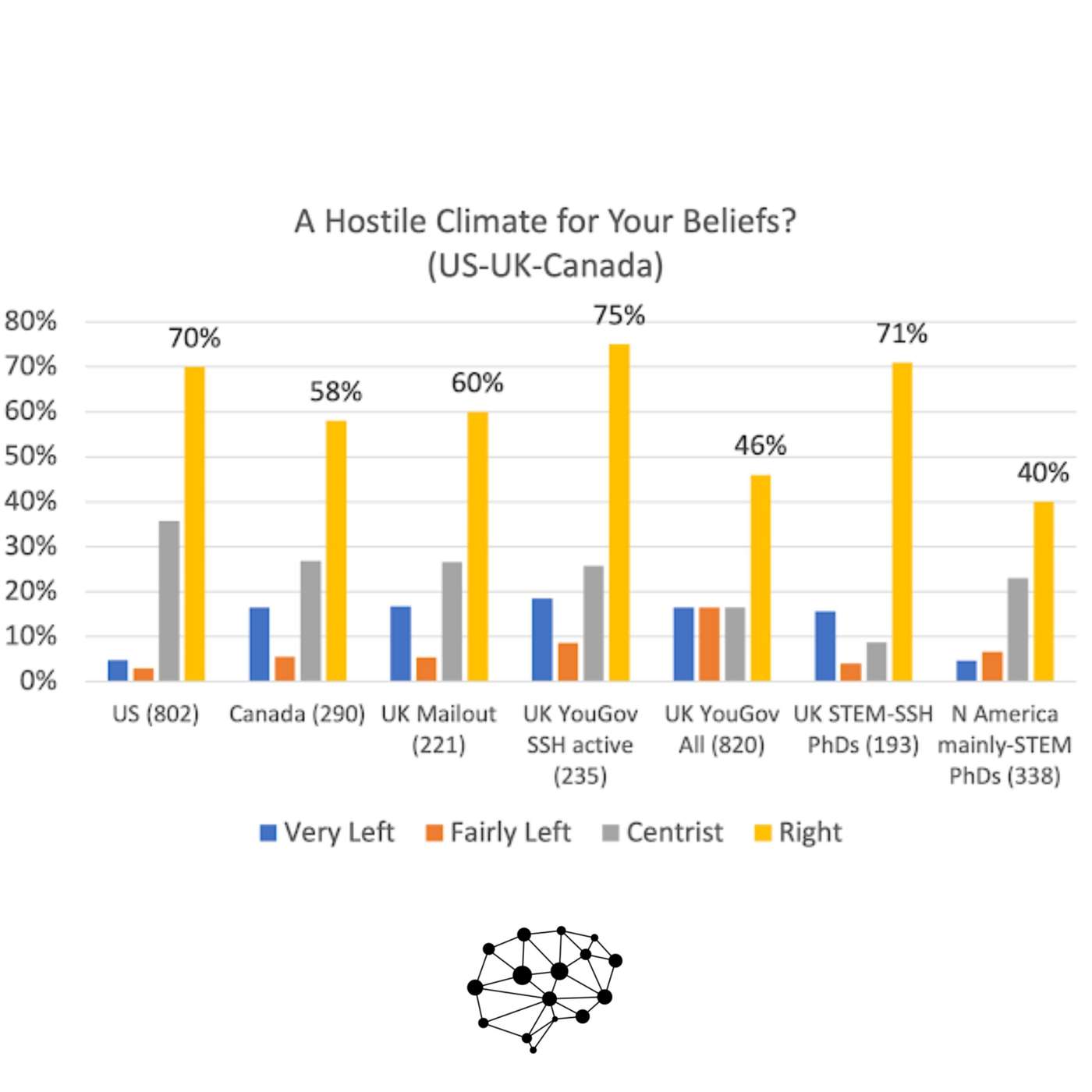
Richard Lowery: The War for American Universities — #17
Jul 28, 2022Tap to summarizeRichard Lowery is a professor of finance at the McCombs School of Business at the University of Texas, Austin. In this conversation, he describes the ideological climate of his university and the consequent negative effects on undergraduate education and freedom of expression on campus.Links:Richard Lowery at UT Austin:https://www.mccombs.utexas.edu/faculty-and-research/faculty-directory/james-lowery/National Review coverage:https://www.nationalreview.com/corner/a-brave-prof-fights-the-woke-faculty-at-university-of-texas/Academic Freedom in Crisis:https://infoproc.blogspot.com/2021/04/academic-freedom-in-crisis-punishment.htmlMusic used with permission from Blade Runner Blues Livestream improvisation by State Azure.–Steve Hsu is Professor of Theoretical Physics and of Computational Mathematics, Science, and Engineering at Michigan State University. Previously, he was Senior Vice President for Research and Innovation at MSU and Director of the Institute of Theoretical Science at the University of Oregon. Hsu is a startup founder (SafeWeb, Genomic Prediction, Othram) and advisor to venture capital and other investment firms. He was educated at Caltech and Berkeley, was a Harvard Junior Fellow, and has held faculty positions at Yale, the University of Oregon, and MSU.Please send any questions or suggestions to manifold1podcast@gmail.com or Steve on Twitter @hsu_steve.
Transcribe →Ron Unz on the Subprime Mortgage Crisis, The Unz Review, and the Harvard Admissions Scandal – Episode #10
May 16, 2019Tap to summarizeRon Unz is the publisher of the Unz Review, a controversial, but widely read, alternative media site hosting opinion outside of the mainstream, including from both the far right and the far left. Unz studied theoretical physics at Harvard, Cambridge and Stanford. He founded the software company Wall Street Analytics, acquired by Moody’s in 2006, and was behind the 1998 ballot initiative that ended bilingual education in California.ResourcesThe Unz ReviewThe Myth of American Meritocracy – How corrupt are Ivy League admissions?The Myth of American Meritocracy and Other EssaysTranscript
Transcribe →