← Marketing Against The Grain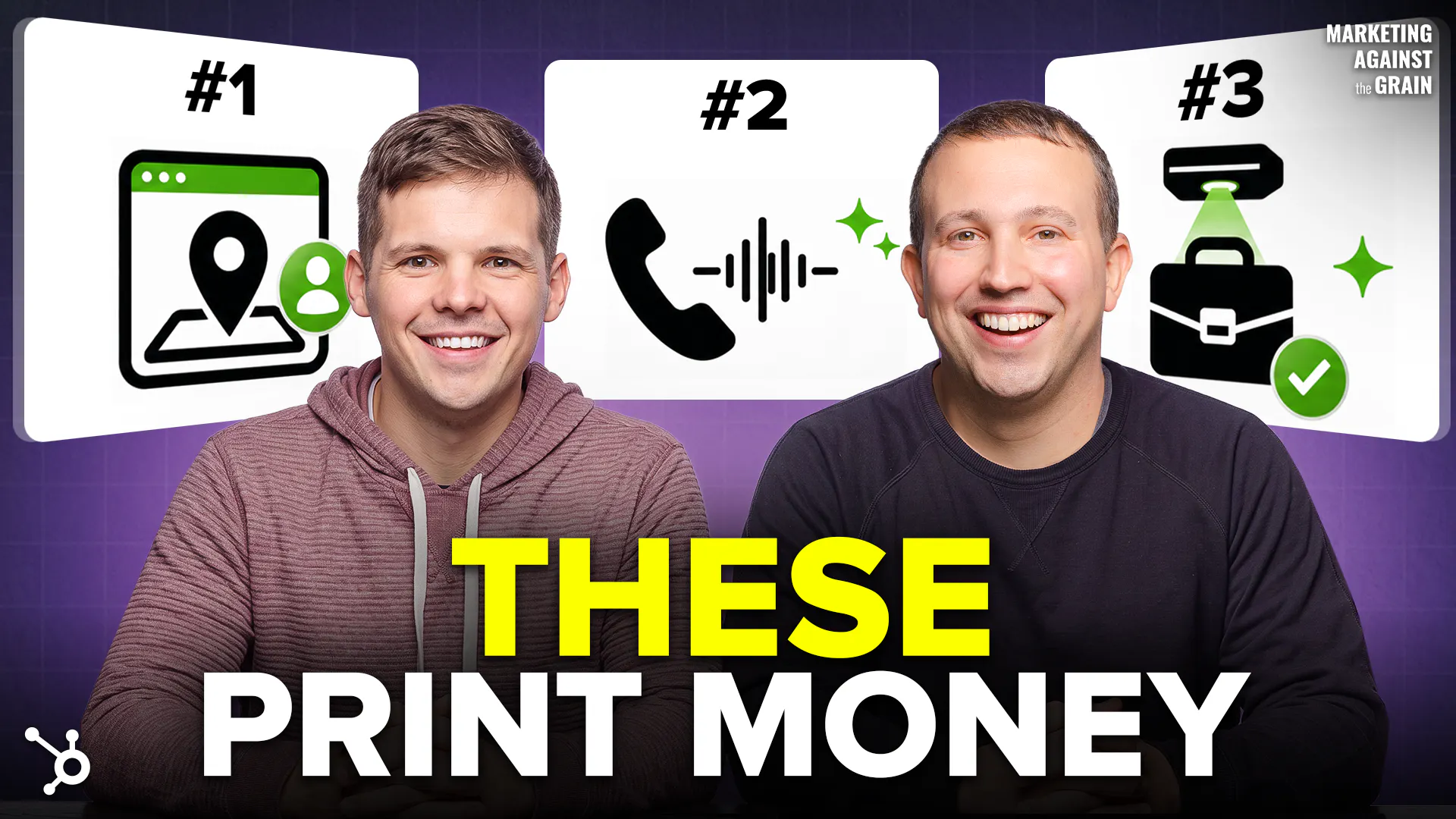
Loading summary
Transcript86 lines
- [00:00]
Host 1
Foreign. So on today's show, we are talking about something that's critically important. It's like, how do you find ideas before they get popular, before they go viral? And how do you turn those ideas into amazing businesses, amazing campaigns, things that are going to generate revenue and income for you? And we have a very special guest. Chris Kerner is here. And Chris, off air, you were like, I'm the ADHD entrepreneur. I've started 75 businesses. And one of your secret sauces is kind of identifying opportunities before they're huge. You're gonna get a real time workshop of what makes these ideas interesting. How do you find them? And Kieran and I are gonna be providing some, like, real time marketing strategy and tactics that we would do if we were gonna go and blow up these ideas and make them big and legit. So, Chris, with that all said, beautiful. Welcome to the show. Excited to have you on.
- [00:56]
Chris Kerner
Thank you for having me. I'm stoked. You guys are my people.
- [00:59]
Kieran
Chris, you've kind of found like all different types of businesses actually across different industries. I think you, like, twice turn broken iPhone screens into furniture and artwork, which is actually pretty dope. What is your favorite business? Which one is the one that you still have the most affection towards?
- [01:14]
Chris Kerner
Man, you might as well ask me. You know who my favorite kid is? I've got four kids and I love
- [01:18]
Kieran
them all for different reasons.
- [01:20]
Host 1
We're gonna make you pick.
- [01:22]
Chris Kerner
Okay. I mean, it's tough. Like, I am a lover of business. I love all of them for different reasons. I hate all of them at different times for different reasons. It's just a constant roller coaster. But probably the one today that I like the most is my E commerce business where we resell Buc EE's snacks. Buc EE's is a Texas based gas station and I love that business. Great business, because, yeah, it's E commerce. I don't have to talk to people face to face. And it's a hard business that we've cracked the code on, so it doesn't feel hard anymore. And it's profitable and it's been around for six years. And that's my favorite today.
- [01:57]
Kieran
Very cool.
- [01:58]
Host 1
Kieran, our European friend. Do you have any context for what Buc ee's is, Kieran?
- [02:02]
Kieran
No, It's a gas station. It's a gas station.
- [02:05]
Chris Kerner
Food.
- [02:06]
Kieran
I suspect that it's.
- [02:07]
Chris Kerner
It's a lifestyle. It's not even fair to call it a gas station. They're as big as a grocery store. It's like they're like 70,000 square feet. Most gas stations have like four to 12 pumps. These guys have 80 to 150 pumps. They're on, you know, 30 acres. They do millions of dollars of sales a week. Tens of millions a week. Like it's a multi billion dollar business with only 50 retail locations. I mean they sell food, fresh food, snacks, shirts, pajamas, backpacks, coolers, you name it. Perfectly clean bathrooms like it is. It's the Disney of gas stations. It is.
- [02:45]
Kieran
What's your business? You take their food and you drop ship it?
- [02:48]
Chris Kerner
No, actually we do the real shipping. We, we go to a ret the box truck, the BUC EE's closest to us. We load it up with snacks and shirts and you know, we have 1300 products that we sell. So we load it up with a bunch of stuff, take it back to our physical warehouse, put it on the shelf, scan it, put it on our Shopify store and, and start selling it.
- [03:08]
Kieran
Like is the kind of unique thing you found that people love this gas station, you know, love the merchandise from it. And they don't have any kind of ecom store themselves.
- [03:16]
Chris Kerner
Exactly.
- [03:17]
Kieran
Yep, that's, that's pretty, that's pretty awesome.
- [03:19]
Host 1
It's essentially an outsourced e comm store. And as Chris was saying here, there's only 50 of them and they're very concentrated in kind of the south eastern, south central part of the United States. So if you live where I live in Massachusetts, you're, you're, you're really far away from many BUC EE's and so maybe you just want your fix and you got to order from Chris.
- [03:38]
Kieran
Have you seen these YouTube folks who go around and eat all the kind of food around the different gas stations? And they're huge. You know, there's like the YouTube ones who go eat all the, all the expensive food and like try out, fine, dine in. And then there's these kind of random YouTubers because I went down a rabbit hole and they just go around and try all the kind of gas station food.
- [03:55]
Host 1
Yeah, this is a lot of the people that blew up Buc EE's and made it this big thing and make business go. If you want the best AI resources we've got for you this week, you want to scan that QR code or click the link in the description below. And we've got an awesome set of stuff for you, Chris. Let's get into the main event here. Let's start talking some other very interesting ideas like running e commerce business around Buc Ees, like private label items.
- [04:20]
Chris Kerner
So you Know, they say that, you know, one dot does not make a pattern, but multiple dots make a line, and a line is a pattern. And so when I start a business, I only need to see, like two or three dots and I've got a line. I've got enough to work with. And if you can start a business with, you know, a little bit of money and a few tools, then it's not like that big of a lift to quote unquote, start a business after seeing, like, a few data points that tell you there's something here. So in the case of Texas Snacks, which is my Buc ee's business, I went to a Buc ee's. I said to my cousin, I can't, like, these guys must sell so many shirts online because it's just such a good brand. I went to my phone, I went to Buc EE's.com, i didn't see a shop button in the menu. And I was like, something's wrong here. Website must be down. And I. That was just two data points. Popular brand. A lot of people here, they didn't sell online. And then it was like, okay, previous data points. I've launched Shopify stores before. That's not intimidating to me. That's the third dot. Oh, we should do this. We should try this. If it doesn't work, maybe it goes viral. If it doesn't go viral, maybe it works. Maybe both happens and six years later, we're still here.
- [05:26]
Host 1
It's wild.
- [05:27]
Kieran
Your mind must automatically go into business ideas. You have to be consciously aware that you're trying to start a business. And, and I suspect it's so ingrained in your brain that you're just unconsciously always thinking through business ideas. Maybe talk a little bit about, like, how do you develop, like, such good pattern matching skills to understand those two. Two data points could actually mean, hey, this could be a good business idea.
- [05:50]
Chris Kerner
It just like anything, it's a muscle. And I grew up poor. And so my, my first business was selling used golf balls. And I don't know how I matched that pattern, but it was like, all right, golf balls flying in my yard, maybe people would buy them, right? And it worked. So, like, I think the key to all of this, to pattern matching anything, not just business ideas, is you have to take action on it immediately because it solidifies that connection in your brain. But if you just have a question about the world and then you move on with your life, you're not lifting weights, you're not building any muscle, you're not Getting any better at that. So if you go to a restaurant, for instance, and there's a line around the corner and they're selling tacos, like, a lot of people see that and think, these guys must print money. Hey, how was your day? You know, they move on. Instead, you should go, man, these guys must print money. How much? Let me count the people on the line. 13 people. Okay. Average order value. These tacos are four bucks. Most people are getting three, plus a drink. 15 bucks times 13 per hour. They're open 12 hours a day. Wow. This taco shop makes 3.2 million a year. What are their margins? I wonder what their rent is. Let's go look@LoopNet.com the rent here is about 20 bucks a foot. Holy crap. And so, like, by the end of that 15 minute exercise, maybe five minutes, like, you've just essentially worked out for four hours straight, you know, you've built that muscle so much more than you had before. And so next time you go to a, you know, a theme park and they're selling churros or whatever, you're more likely to. To do that math again, to take action. And I say action, it's just thinking more deeply or pulling out the calculator on your phone. Like, within a week or a month, you'll be pretty adept at identifying cool opportunities.
- [07:29]
Kieran
So you have two signals. Can you just maybe clarify if you're trying to teach me, how can I make sure that I always think about these two signals for any idea that I'm coming up with?
- [07:40]
Chris Kerner
So there could be any number of signals, but some common ones that a lot of, you know, good opportunities have is, does this thing make people say, omg. Like, does it create a visceral response in someone or a potential, I call it viralable response in someone or something. Does it make us feel something? Like, if you drive by a Buc EE's and you had no context on what it was, there's a really good chance you Google it. Like, you take a picture of the beaver and you're like, what is that? Like, it just stands out on the highway.
- [08:12]
Host 1
What.
- [08:13]
Chris Kerner
What is that? It makes people feel something. It makes people want to pull in. And then they get in. They're like, what is happening here? Like, it's. It's a. It's an experience you'll never forget. So does that thing, maybe it's a TikTok or an Instagram reel or a tweet or something that gives you that idea. What do the comments say? Because a lot of these things I come across are just on social media and instead of just looking at the views, the views can be a false positive. The views can just be like, you know, it could be a really good hook but, but not a good business idea. It could have a hundred million views of a business idea, but it might just have a good hook. Right. But the comments are like, that's genius, genius, genius, genius. Okay, there's something here. And then I'll almost always go to trends.google.com right? That's like trends.google.com Google Trends. And I'll type in that thing. Maybe it's like appliance, rental, forestry, mulching, AI audits, whatever. And I'll just look at the, at the chart on Google Trends. I'll look at the one week chart, the month, the five year and the all time and where's it going? Is it trending? And then I'll just hit the dropdown and I'll go from Google to YouTube. All right, what's it doing on YouTube? And almost always that step is redundant because what I see on social media ends up being okay, yeah, this is like this is going somewhere, this industry is going somewhere and I'd much rather, you know, start a business in a space that's growing. Like I'd rather ride a tidal wave than trying to stand up on a two foot wave. You know, it's just easier when a
- [09:45]
Host 1
buyer asks AI for a solution like yours. Do you know if you're showing up or not in HubSpot, we've got a great product that actually helps you get discovered in AI search. HubSpot AEO helps you show up in these moments with the right answers buyers are looking for before the first click, before the first fill. That's the moment HubSpot AEO is built for. Go check out HubSpot AEO. You can trial it for free and it's going to help you understand how you're showing up in AI Search and how you could show up even more.
- [10:17]
Kieran
I think you're going to share some of your most current and favorite business ideas. We're going to go through three and then I'm going to try to add a fourth to impress you.
- [10:29]
Chris Kerner
Yeah, okay, so there's a lot of like Internet based ideas that, you know, a lot of them are made worse with AI for whatever reason they're disrupted in a bad way. And a lot of them are made much easier, much better because AI, like we could all agree AI makes a lot of things just more efficient, quicker. Right? We can just sift through data, so much faster and better now. So one of these ideas is not necessarily new, but with the advent of AI, it's, it's much better because you can quickly create a lot of surface area for testing. So some people call this like being a website landlord. Now what this is is let's say there's a thousand different cities in America, okay? Thousand different markets. And let's say there's a thousand different industries, niches, whatever you want to call it, multiply those two things together and you have a million different opportunities here. So here's an example. Omaha, Nebraska, Fence staining, okay. Albany, New York, pressure washing, whatever. You can mix and match any of those and you're going to use some online tools to find signals in any of those two things. So geography plus industry. You're going to use some, some online tools. Some of them are cheap, some of them are free. To see is, is there more demand than supply for that industry in that city? And because of the fact that there's literally a million variations of this, there's so much blue ocean opportunity, whatever you want to call it. So you're going to find quickly that like, all right, let's just say we're going pressure washing, pressure washing Omaha, you know, there's an equilibrium there. There's enough demand for this supply.
- [12:08]
Kieran
Cool.
- [12:09]
Chris Kerner
Pressure washing Albany, same. Pressure washing. Coral Gables, same. Riverside, California, same. But then you're going to go pressure washing Tacoma, Washington and you're going to see, interesting. There's two companies doing pressure washing in Tacoma, Washington, but just as many people are searching for it as are in Coral Gables, Florida. Huh? Okay, I'm going to go see if I can buy some domain names in this space for 10 bucks. You know, Tacoma pressurewashing.com Tacoma WA pressurewashing.com buy one for 10 bucks and then you're just going to build a simple lead gen site on that domain name. And then you wait. You just wait. You're not going to put paid ads into it. You're going to use AI or some vibe coding tools, ChatGPT, Claude, whatever, to put some content on there to get you ranking. You're going to do some best practices for, you know, keywords, backlinks, whatever, and you're going to build kind of a generic looking site for people in Tacoma, Washington in this case that might need pressure washing. And then you're going to wait. Well, you're going to wait on that site, but you're going to keep doing the same thing for roof cleaning or roofing or gutter Cleaning whatever it is in any given market. But you're only going to build the site if you see signals that it would be, you know, promising there. So you're going to do this at scale. Once you do it once, you could literally copy and paste that website, swap out the name, swap out the city, whatever, and just put them on new domain names. And then you wait and then inevitably people will start reaching out. Could take a day, could take a month. Maybe for some sites, no one ever does. Maybe for other sites it starts happening immediately in great number and you're going to start getting these leads and you won't know what to do with them. And at that point you reach out to an actual pressure washing business in Tacoma, Washington in this case and say, hey, I have a lady, this is her name, this is her address, she needs her driveway pressure washed. Would you like this free lead? Well, who are you? I mean, okay, like you're credible at this point because you're not just saying, hey, I think I'm going to bring you leads. Can we work together? It's like, no, here's a free job. Wow, thank you. Here's another free job. Wow, thank you. And then BY Job number three, it's, hey, these are $50 a piece. You know, they're good, you've closed them, you went out there, they're $50 a piece. So you do that at scale. It's the 80, 20 rule. A lot of these sites will never go anywhere, but you only spent 10 bucks on them. A lot of the sites will. And after a while you're selling leads to local business owners.
- [14:34]
Host 1
All right, so let's break down what's actually happening here. So you're, you're buying these domains, you're spending some AI credits, a basic subscription on AI, and you've got some type of basic web hosting that, you know, each one of these sites is probably roughly 30 to 50 bucks a month. You know, in terms of overhead costs that aren't your time to run this. And then you're basically, I'm going to run some basic technical SEO play to get, to get all these leads and I'm going to then resell those leads. And that's a pretty good business. The other thing you could do is then sell that to somebody who wanted to start a business. You know, like you could actually sell the whole operation as somebody who was, oh, look, I want to start a pressure washing business and I actually want to buy this site for 100 grand or whatever. I think the long term value of this is here. And I think this is a really good example of something where it's like the dot com address has been around for decades. And so I think people think that they're all gone, and it's not even close that they're all gone.
- [15:38]
Podcast Advertiser/Announcer
1.
- [15:39]
Host 1
So it's like a really good fallacy of like, just because something has been around a long time doesn't mean there's no opportunity. In fact, it actually just means it's been validated. There are a lot of people that use it, and there are pockets of opportunity everywhere. Chris. Like, I'll give you. I'll give you an idea back that I think is also interesting. You know who loves very obscure domain names? Commercial real estate developers or big residential. Like if I'm building a high rise at 87 Houston street and I want 87 Houston Street.com. well, one of the things that happens there is all those properties that, that these developers buy, they come through, like, very specific pipelines. Like, for example, sometimes they're municipalities selling land to developers. Right. And sometimes it's a private sale, but there's like a big bid up for it. And so you kind of know you can build a pipeline of what these addresses are. And I would suggest you go into big cities and you buy all of the premier addresses for the big parcels of land or anything that you think would be a big hotel or renovation project, and you buy all those domains. You 10 bucks a year. You're not going to sell a ton of them, but you're going to resell them for 10, 20, $100,000 based on what that property is.
- [16:57]
Chris Kerner
Yeah.
- [16:57]
Host 1
Is that it's kind of a similar build on your idea, right?
- [17:00]
Chris Kerner
Oh, dude, like, I'm already thinking of how I could add on to that idea. So I would go to Claude and say, what are the most. The 1000 most common street names in America. Cool. What are the 1000 most. I like numbers on street names. Great. Because no, numbers aren't five digits. They're going to be like two to four. Okay, so I'll buy two, I'll buy 22. I'll buy 20, you know, increments of four, eight, whatever. And then I'll just like whittle it down. Using AI Again, this would have been too tedious to mess with three years ago, but it's like, okay, I know that Maple Avenue is the most common street name in America, and I know that 14 is the most common number. I'm going to buy 14maple avenue.com/ a hundred others. Because then like your Surface area or your opportunity to sell these is much greater. As opposed to like only buying one random thing in the hopes that that one building will go up for sale one day and they'll want it from you.
- [17:51]
Host 1
You know, first of all, I love that. Second of all, why limit it to the us? Like, for example, I live in England. You know what, everything is named here the same thing as it is in the uk. Like, there's the same addresses in Boston, Massachusetts as there are in London. And so if you have the address, it's like, great, well, maybe somebody in London needs it. Maybe somebody in the US needs it. Yes, you got to have some money to have a portfolio of these. But you're talking thousands of dollars. You're not talking. Yes, tens of thousands or hundreds of thousands of dollars. And once you sell one or two, you're going to make all your money back.
- [18:23]
Chris Kerner
Well, I was on biz by sell like a couple of years ago and I saw this portfolio of domain names for sale and I think there were like 3 to5000.com and what this guy did over probably many years is by first name, last name domains, like same thing we're talking about, but John Smith, John Parker, whatever. And he had thousands of these. And he just sat around and waited. He just sat around and waited for people to say, can I buy this? But I think you could be a lot more aggressive and reach out to all the John Smiths and say, hey, you know, cc. All of them in the same email. Highest bidder gets this domain.
- [18:57]
Host 1
I want to get to idea number two. Hit me up number two with number two. Chris.
- [19:02]
Chris Kerner
Number two. Okay, so I'm a big fan of dog fooding, AKA eating your own dog food, AKA using what you're building or selling to promote the thing that you want to build or sell. So there's a lot of use cases for AI in small businesses and most of them I think are still too early. They sound really good on paper, but they just, they're too clunky right now. Except for one for sure, and that's AI Voice agents. AI Voice agents are really, really good and getting a lot better. So I distinctly remember where I was two and a half years ago or so where I came across this random startup that was doing AI Voice agents. And I called it and I talked to it and the, the latency was so bad. It was just, it was cringeworthy. It was awkward to just wait for the response. And the responses themselves were pretty good. It sounded pretty human. But it, the delay just didn't work. But now we have tools like 11 labs that clone voices almost perfectly. I use it to dub my YouTube videos, and the latency is almost nothing, especially when the voice agent is trained on a. Like a corpus of data, and it doesn't have to go sift through billions of, you know, tokens to find your answer. So I am a big fan of building voice agents for small businesses and then using those voice agents to. To show them how it works. I know several people that are charging, you know, between 2 and 500 bucks a month for this to have, you know, to install a voice agent for, say, a plumbing company that can do both outbound. Hey, your appointments tomorrow. Are we still good? Yeah, I'm good. Okay, we'll see you then. Or inbound. Hey, you know, my sink's leaking. Can you come fix it? Yeah, let me look at my calendar. And it's just synced to the business owner's calendar. That is something that is not hypothetical or theoretical anymore. Like, it is working. It's very good. And most importantly, people are paying for it.
- [20:51]
Kieran
I've just invested in a company that has a inbound voice agent, and they are on fire for small local businesses that are, you know, do appointment set in or everything you talked about. Basically you just forward your number to the agent, and the agent can do all of your appointment booking, do all of your inbound sales. If you were going to, like, do it yourself, there would be some complexity, right, because you would have to have the agent, the agent would have to be smart enough to be able to do routing. So, like, if you're. If you're a. If you're a, you know, landscape business and you set up an inbound voice agent, it would be able to have to take an action, send you an email, book something in your calendar. So the person would need to be tactical enough to build the agent, plus maybe some workflows for how to write that call. Is there a platform of choice that you recommend or you just think that's a skill worth learning?
- [21:41]
Chris Kerner
No, I mean, there's quite a few platforms that make this pretty plug and Play. I use GoHighLevel for it. I mean, you're 10 clicks and you can have a voice agent live ready to go on a number and everything. It takes quite a bit more friction to have it, like, ported to your number, but that is also possible. But there are platforms today that make it very plug and play. And I don't think that means this is less of an opportunity to sell it into small businesses because you know, 10 years ago or 15, it's like, oh, I'm going to build websites for small businesses and then Squarespace and wix and HubSpot come out. It's like, oh, it's, it's so easy now. No one will pay for it. No, they still are. Like everyone still is. You still have a job that needs to be done.
- [22:20]
Kieran
That use case is super validated.
- [22:23]
Chris Kerner
Yeah.
- [22:24]
Kieran
Like specifically for small businesses actually and non tech businesses.
- [22:27]
Host 1
I think this particular idea is a really good example of that whole notion of like surfing the wave where there's a lot of demand and it's super early and you can just get really good at the skill. You can package it and price it in a very programmatic way. To your point, Chris, it's like, hey, it's 500 bucks for me to set this up for you and you know it's only going to take you 30 minutes and not going to cost hardly anything for you to do it. And so you're making a pretty good margin and there's going to be a bunch of demand because basically every local business is going to need this over the next few years and it's not this hard, impossible thing to learn.
- [22:59]
Chris Kerner
Yeah. And there are tools where you just put in the URL of the business, bobsplumbing.com and it will train itself on everything on the business, on the faq, the operating hours, so you don't have to go like download PDFs and go to this computer and that guy's computer. It's not even tedious, you just put in the URL.
- [23:15]
Host 1
We do the same thing with our customer agent, HubSpot and it's amazing how much you could just learn a business so quickly and have AI answering questions for you, whether it be chat voice, whatever. I think what you're saying, which is really savvy, that I think is also interesting about this idea is that when people think about AI, they think about ChatGPT, maybe they think about Claude. What they don't realize is that voice is a really important channel for AI and it's something, there's just a ton of legacy business that happens on the phone. Not everything happens on the Internet, regardless of what we all think. And applying a new technology to an old way of working is almost always a no brainer opportunity.
- [23:56]
Chris Kerner
Yes, agreed.
- [23:58]
Host 1
All right, so we got voice agents. Kieran, any marketing you would do if you were, if you were somebody who's like, hey, I'm just setting up voice agents for people, how would you get
- [24:07]
Kieran
your first hundred customers for local businesses, what's working really well in that space is just the ease of the use case. Like, hey, for this number. And you get free bookings on tap. Like none of the. There's a great company I talked to that was doing stuff within restaurants. Do you know a restaurant loses 30 to 40% of their revenue or available revenue for missed calls? Like it's wild how prominent and impactful that use case is for small companies. And so it's actually a not a hard sell. And so the marketing of it is actually saying, hey, do you lose revenue by not being able to answer the phone? Oh yeah, I lose a ton of revenue by not being on the phone. Oh, well, forward your number to this agent and it will book all of the meetings for you and you will never miss a meeting again. Oh, cool. I will buy that. Take my money. It's so sellable. I think I would just do like paid marketing and outreach.
- [25:01]
Host 1
Outreach have a low friction experience around it.
- [25:05]
Kieran
So the friction is that the non tech person will feel nervous about an agent talking to their customers. So there's, there is some hand holding.
- [25:15]
Chris Kerner
I think that's why like showing them how it works and having them be a potential user of it is like, it's a very light bulb moment for them.
- [25:23]
Kieran
Yeah. Get them to talk to the voice agent. Yeah. There's another company I'm invested in that do like really cool things around creating synthetic versions of your customers so reps can do role plays. And it's a great onboarding experience because it's like super fun. You can create a synthetic version of myself and then I can sell to myself and I get to experience a product in a really fun way. So that's the cool thing about voice.
- [25:44]
Host 1
Okay, Voice AI idea number two. I think there's a huge services opportunity there. Chris. Let's do the third one because then I want to hear if Kieran's agent gave us a good fourth one.
- [25:54]
Kieran
Do you have one? I do have and I actually am going to do this one so I can just tell you.
- [25:58]
Chris Kerner
So I want to add another note to that and that's with any of these AI services for small, large, any business, it's very, very critical that you do something that ties as closely to the revenue or profits or savings as possible. Because if you do like just something kind of nebulous like we'll improve your sops or your workflows or we'll get more productivity, it's like meh. But if it's like, hey, yeah, you could work them through the math too. It's like how many missed calls you have a day? 5. What's your close rate? 20%. Okay, so you're losing one job a day. Cool. What's your average job size? $2,000. You're losing $2,000 a day and you're using their math to show that. And they probably hadn't ever done that math before. And how much does your Voice agent cost? 500amonth. Okay. Huh. 500amonth to save? 60,000amonth. Of course, I'm not saying that's realistic, that might be extreme, but use that math to show them. Wow, this is a no brainer offer. Like it, I would be stupid to say no to this voice agent. So I just wanted to finish with that. But my third idea, and this is kind of similar to voice agents but different. And that is AI audits. Paid AI audits as a service. Again, this is not theoretical. I know people that are doing this actively and it is a great offer. So let's say you don't know much about AI or much about business even. That's okay. 10% of adults are business owners. So if we, you know, have 300 people in our sphere of influence, we know 30 business owners. So what we do is we sit down with them, Starbucks or whatever, and we just say, tell me about your business. What problems are you having? What do you hate about your business? What do you love about your business? What problem can you just not seem to fix with your business? You pull out your iPhone, you turn on voice memos, you record the whole thing and you don't even know what to say to them. And then you go to Claude, ChatGPT, Grok, whatever, upload the voice note and say, hey, I want to charge this person for an AI audit so I can help identify problems in this business and how AI can fix it. But I don't know where to start. I don't know what to do. You just upload that, it'll spit out a bunch of suggestions and then you say, all right, number three, that's interesting. What does that mean? Interesting? Okay, number seven, what does that mean? Then you go back to your friend and say, hey, I think I could really help you with your business. And you kind of prescribe them solutions. You sell the audit itself, which would be like a 5 to 20 page PDF that AI just spits out. And you can sell that for hundreds or even low thousands of dollars. But what you really do is you use that as your foot in the door to upsell them on actual solutions. Like, hey, turns out you need a voice agent, you need a chatbot on your website based on what you told me. So it can be profitable as a standalone service, but it could be very profitable if you use that as a reason to show your expertise in AI and to sell them on higher ticket services down the road.
- [28:49]
Kieran
Money printer. So I think the way I think about this is as someone who's going to do like a little side hustle of launching something soon into that's built in the cloud, there's a multitude of ways to do this. Like there's all the way from Alex Lieberman's 10X which is on fire, where he's really built McKinsey for AI and has like real engineers, then all the way to just like people pay you money to show you. I've never used cloud before, I've never used OpenAI before. How do I use it and how do I get people in my company to use it? And you can make a lot of money just doing that. And then there's the middle end part where you can say, hey, I'll not only show you how to use Cloud or OpenAI but I'll build you some custom skills, I'll bid you some custom plugins, I'll help you to like customize it to your needs. And so when you're thinking about that business idea where you land there is on one opposite side of the spectrum is you're an incredible seller and that person is like, I'm just going to show you how to use cloud. I'm not that technical but I'm a great seller, I'm good with people and I'm AI. So I can show you how to use Cloud OpenAI and then on the other end of the spectrum is you really know some engineering things or you have an engineering co partner like Alex does. And then the middle one is actually pretty interesting. Like if you really are in the weeds with AI, you can do a lot yourself now building skills and plugins. But I think we have surpassed the place where the models are, they're intelligent enough to do most of the work you need to do in like smaller companies. It's just the companies are both still afraid of AI and don't really know how to adopt that. And so that's where all the money's going to accrue.
- [30:17]
Host 1
Amen. And how are you going to market that, Kieran?
- [30:19]
Kieran
Again I can tell you like firsthand it is social and paid. That's the businesses who are scaling in that space or scaling that space and I would add an outreach, but outreach is like somewhat, a little bit more messy for that space because there's just so much noise in it. I think part of what people gravitate towards is like you yourself are a known entity and people know your brand and you are the brand and they trust you because they see you posting about AI and they follow your stuff. That is like the best place. It just takes a little bit of time to do that. But paid I think can do a lot for you in that space. Outreach and content and social. I'm going to give you one that I was actually looking into because I think it was, I think it's a pretty cool one. So the other place that is really fascinating is really, really undigitized B2B spaces. And so we went through like the off premise software to SaaS software, to AI software. But some of these industries are still like trying to get from off premise to like really horrible antiquated SaaS software. And there's like no way, no AI in those industries. So I'll give you an example. There is a huge industry on, on people like inspectors, they go around and they do like drain surveys, they do like noise pollution surveys, asbestos surveys, damp wood surveys. Like it is a huge industry of people go around to like businesses in different places and they have to survey it and certificate something. And there's businesses like really bad software in those industries that are printing like they're like 20, 30 million ARR. And their software is like horrible. Like I, it's, it's like Microsoft front page, you know, kind of software. And I was speaking to someone, I had someone like doing some work for me and I was like looking to see how he was working. Like it was like, you know, really kind of like olden ways, like taking notes, photos, blah blah, blah. And I was like, do you use software? Yeah, I use software. Can you show me what software you use? And I went through the software like so I went and researched the business and it was doing well, good money. This person pays €3,000 a year to license this software. So they templatize their reports. But when I say templatize, they basically are doing it from scratch each and every time really. I think I could vibe code the AI version of that in a day. All you need is a voice agent to speak into, capture the photos are taken and then transcribe it into the things that they need to transcribe it into the report. And it made me realize like there's just a freaking huge opportunity in modernizing some of these sectors. And so I think one of the places you could look is if you have a two by two, like what sectors are the least digitized. They've never really even done the SaaS thing and have the most amount of overall revenue in that little niche. And I would probably just spin out a tiny little team and go after some of that.
- [33:12]
Chris Kerner
What I love about that idea is these, you know, asbestos removal guys are very easy to find. And I have to think that not a lot of people are doing outreach to them. It's not top of mind. We don't. Right. So you could easily scrape every single asbestos removal with any number of tools out there and have like 10 data points on the owner like that. Right, right.
- [33:33]
Kieran
So they're underserved in everything. So you're making the argument that they're underserved and not only the experience they get from the products, but they're underserved in terms of marketing because everyone else is overserved right now on marketing. Everyone's like getting marketed to death because AI is doing 80% of everyone's marketing. But those folks are underserved. So like the utopia is that you can find underserved in terms of product and underserved in terms of marketing. You'll just print money. This one here, I'm actually going to like do a little side thing with some people to do a version of this, but I suspect it's huge, like in the US as well.
- [34:03]
Host 1
Yeah, But I think Chris came through with the right insight, which is like, if somebody is so neglecting this category of businesses that there's not even any good tools for them, then there means nobody's marketing to them and hardly anybody's selling to them. And if they're selling to them, they're phoning it in, selling to them. They're barely doing any real sales work. And so all you have to do is be okay. You don't even have to be good, you just have to be okay.
- [34:29]
Kieran
If you do AI personalization, if you do AI personalized emails, I bet you they come back and they're like, holy smokes. Like, thank you so much for emailing me this. Nice. You knew my name, you knew my business, you knew a bunch about me. Because like, AI can ingest all that data and make it sound like really personal. So like, to me, the opportunity and one of the things I would summarize, and when I'm listening to Chris and it's really got me fired up actually to think about this is we spend so much of Our time in the parts of tech like you and I do, it's just a whole world that's much more interesting in some respects. And that's the opportunity is so much larger, like for, for these kind of things. So I don't know. I've got so many ideas from this, this episode.
- [35:10]
Host 1
Well, I've got a ton of ideas from this episode. I think the other thing that's interesting is that the most seemingly boring stuff is also the opportunities for the best marketing too. It's not just you have less competition. It's like we're talking about, oh, could we build a product that makes somebody who's doing asbestos surveys like 10x easier? I think we could, we could do it pretty easy. You know what, we could also do crazy short form videos of all the asbestos that are hanging in buildings. And like the, the top like 2% outlier of crazy properties just becomes a Tick Tock channel that goes viral around all things asbestos and dirty buildings. And by the way, you know who's gonna watch that? Every asbestos inspector in the world is
- [35:52]
Kieran
going to watch that Tick Tock channel influencer.
- [35:55]
Host 1
It's like, yeah, exactly.
- [35:57]
Kieran
I left tech and the VC world to go and be an asbestos influencer. And I'm a hundred times more happy. You would be 100 times happier than I am right now.
- [36:10]
Chris Kerner
Well, it's like it's those deep cut tiktoks where the asbestos removal guy might not see it, but every single person that knows him is going to see it and share it with him. So he's going to have all the same people sharing this video with him. And in the beginning of this episode, we talked about how great it is to ride a tidal wave and how much easier it is to start a business when you're on a tidal wave. And that's great. But I might argue that one thing that's even better than a tidal wave is an industry where there's way more demand than supply. And I think this could be one of those industries. Right. Because asbestos removal as an industry might not be growing. It's not on anyone's radar, but there's probably relatively very, very few people attacking that industry.
- [36:49]
Kieran
Right?
- [36:50]
Host 1
Right. Yeah. Nobody's doing anything interesting. Right. I think part of the other callback and one my favorite part of this episode, Chris, was when you were like, does it make you say omg, does it really take you back? Right. And you know, you could live in New York City and probably have a crazy account of just all the old buildings with asbestos and like, oh, there's this famous concert hall that has these asbestos shingles. And did you know it would be $30 million to remove them? And so they can't and they had to do these things. Like there's just interesting things everywhere.
- [37:24]
Kieran
Yeah.
- [37:24]
Host 1
And framing them for people in a way they never thought about it is like actually one of the secrets of humanity. Right. And it's what makes people actually say, oh my God, that is a genius thing. Is is actually not anything that takes brilliance. It is taking the time to look at something differently than everybody else has looked at it. And Chris, I think on today's show you've helped us try to do that. You've given us tactical tools to kind of inspect ideas, but you've also helped us think about things that we might walk by on a day to day basis in really new and interesting ways.
- [37:58]
Chris Kerner
Yeah. Well, thank you. This has been awesome.
- [38:00]
Host 1
This has been awesome. Thanks everybody. Hit like hit subscribe and we'll see you real soon on the next episode. Marketing it's the Grain Let me tell
- [38:07]
Podcast Advertiser/Announcer
you about a great podcast, Demand Decoded. From the team at blend, a B2B website and demand generation agency, comes Demand Decoded, the podcast that breaks the mold of traditional B2B marketing tactics. Hosts Dan and Phil deliver actionable insights that transform your marketing into a revenue generating machine. Whether you're struggling with LinkedIn ads that aren't converting, want to understand the difference between lead generation and demand generation, or need to optimize your conversion rates, Demand Decoded gives you strategies that work today. Tune in for weekly episodes featuring expert analysis and hard earned tips that'll help you become a better B2B marketer. They recently did a great episode titled how to Fix the AI Inconsistency Problem Wrecking your Go to Market. Listen to Demand Decoded wherever you get your podcasts.
- [38:56]
Chris Kerner
This data is wrong every freaking time.
- [38:59]
Kieran
Have you heard of HubSpot?
- [39:01]
Host 1
HubSpot is a CRM platform where everything is fully integrated.
- [39:05]
Podcast Advertiser/Announcer
Whoa.
- [39:05]
Chris Kerner
I can see the client's whole history. Calls, support tickets, emails, and here's a task from three days ago. I totally missed HubSpot Grow Better.