Podcast
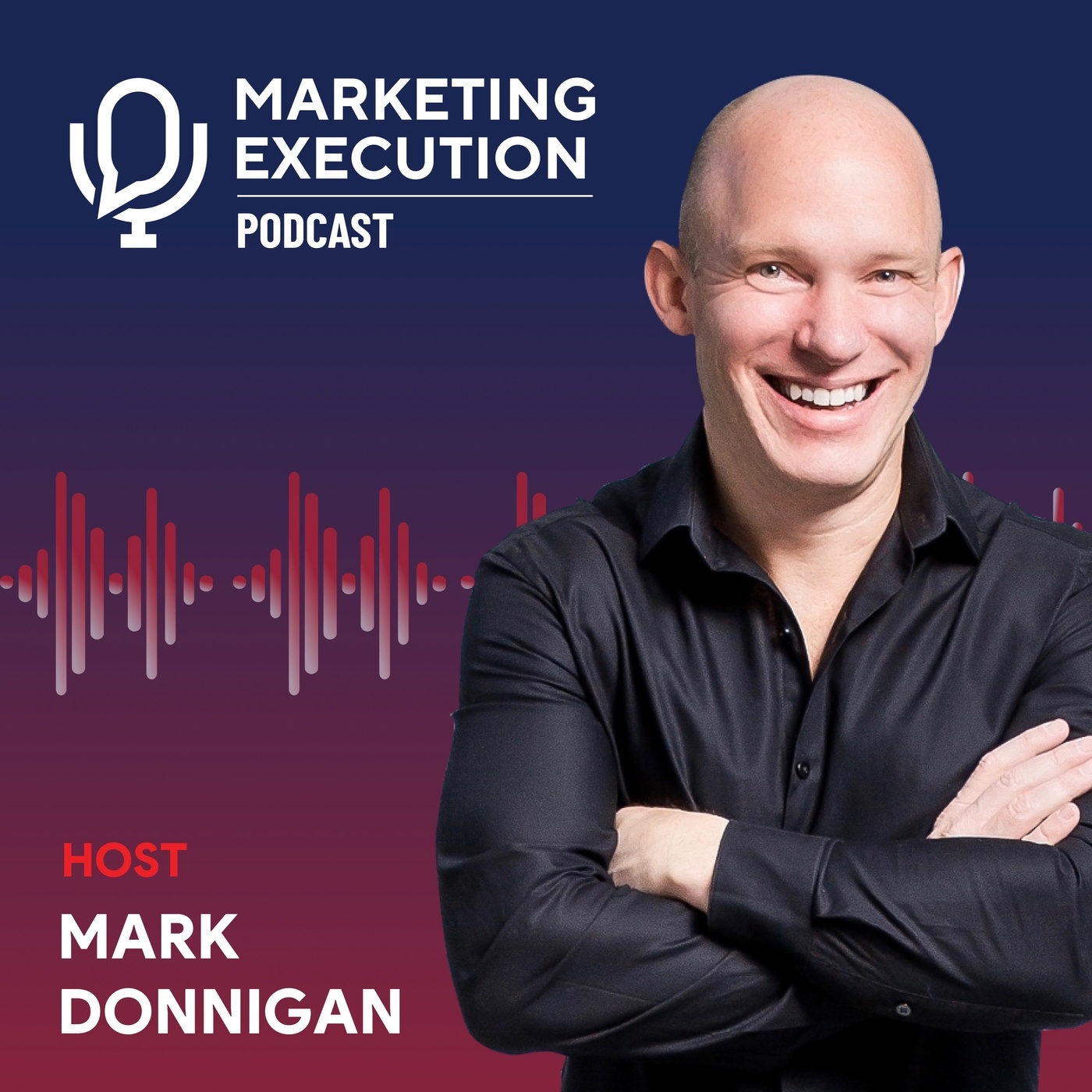
Marketing Execution with Mark Donnigan
Hosted by Mark Donnigan · EN
Stop throwing money at marketing that doesn’t work. The Marketing Execution Podcast cuts through the fluff to deliver real, actionable B2B marketing strategies for tech founders and executives who need results, not theory.
About the Show
You’re in the right place if you’re tired of generic marketing advice that doesn’t work for complex B2B tech and SaaS product sales cycles. Host Mark Donnigan brings decades of in-the-trenches experience scaling tech startups to help founders like you turn technical innovations into market winners and revenue.
This isn’t another ”growth hacks” show. Each episode delivers battle-tested frameworks and strategies for technical founders navigating the challenges of bringing innovative solutions to the market. There are no buzzwords or fillers, just practical insights you can implement today.
You’re a perfect fit for this show if you’re a tech founder or startup leader who:
- Knows your product is great but struggles to communicate its value
- Needs to scale beyond early adopters into mainstream markets
- Wants to build a repeatable marketing system, not just run random campaigns
- Is ready to move from theory to execution
Subscribe now to learn how to turn your breakthrough technology into a breakout business.
Visit https://growthstage.marketing to learn how Marketing Pods enable growing companies to scale their marketing impact without hiring a big team or burning money on expensive consultants or agencies.
30episodes
Episodes
Newest firstAll episodes

AI Copywriting Framework for B2B Sales Letters and Ads
Mar 2800:16:59Tap to summarizeMost copywriters overthink their opening. The "Offer Lead" framework from Great Leads flips the script: lead with your deal, not your story. Put the price, the guarantee, and the product front and center in your headline. Your most aware buyers already know what they want — just show them the terms and get out of the way. On this episode of the Marketing Execution Podcast, I break down how this direct-response principle applies far beyond sales letters. Facebook ads, YouTube scripts, even B2B outreach — when your audience is problem-aware and solution-aware, burying the offer kills conversion. I walk through the exact structure: headline that fuses your strongest benefit with your deal, a 200-word lead that amplifies emotional urgency, and a "reason why" that makes the discount feel logical instead of desperate. Three variations for paid social. One video script framework. All built to let AI do the heavy lifting once you nail the strategic inputs. If you are spending weeks crafting campaigns that dance around the ask, this episode hands you a faster path. Subscribe to the Marketing Execution Podcast for frameworks that turn positioning into pipeline. Visit https://growthstage.marketing to learn how Marketing Pods enable companies to scale their marketing impact without a big team, expensive consultants, or agencies.
Transcribe →
Hook Story Offer The Simplest Framework for B2B Revenue Growth
Mar 2400:14:58Tap to summarizeThe one prompt framework — Hook, Story, Offer — generated more engagement than months of overthinking content strategy. On this episode of the Marketing Execution Podcast, I break down why the simplest copywriting structure is also the most effective for B2B tech founders who need to move fast. Here is the core insight: flip the reader's expectation in one sentence, tell a tight story that builds trust, then make your offer feel like the only logical next step. This framework works for landing pages, cold outreach, LinkedIn posts, and investor decks. It's a repeatable system you can deploy this week using a step-by-step prompt sequence that practically writes itself. If your messaging is not converting, the problem is in your structure. Subscribe to the Marketing Execution Podcast for frameworks that turn words into revenue. Visit https://growthstage.marketing to learn how Marketing Pods enable companies to scale their marketing impact without a big team, expensive consultants, or agencies.
Transcribe →
Headlines and Hooks with AI
Mar 2100:16:30Tap to summarizeThe best content in the world is worthless if nobody stops to read it. Headlines are engineered systems with five precise components: a number, an audience, a noun, a reason, and what we call "twisting the knife" — stacking additional outcomes that make clicking irresistible. On this episode of the Marketing Execution Podcast, I break down the exact hook frameworks that drive massive engagement, from "How Things That Don't Go Together, Do" to "I Did The Hard Work So You Don't Have To." These are repeatable structures you can deploy in your GTM messaging today. After 20 years scaling tech startups and generating over $500M in revenue, I can tell you: the companies that win attention win deals. Subscribe to the Marketing Execution Podcast for frameworks that turn content into a pipeline. Visit https://growthstage.marketing to learn how Marketing Pods enable companies to scale their marketing impact without a big team, expensive consultants, or agencies.
Transcribe →
How To Write A Quick 5-Sentence Story
Mar 1700:16:30Tap to summarizeMost content marketers overthink storytelling. Five sentences, a simple "What If" question, and a clear structure — that's all it took to turn a blank page into a compelling narrative that connects with any audience. On this episode of the Marketing Execution Podcast, we break down a deceptively simple framework that B2B marketers can steal to craft stories that land with technical buyers in minutes. Here's what makes this approach powerful for GTM execution: the "What If" technique gives you six creative lenses to reframe any product, feature, or customer pain point into a story that sticks. Pair that with a rigid five-sentence structure (scene, conflict, solution, result, lesson), and you have a repeatable system for generating messaging across sales decks, case studies, LinkedIn posts, and investor updates. If your pipeline depends on content that resonates but your team is lean, this episode hands you the exact methodology to scale storytelling without scaling headcount. Subscribe to the Marketing Execution Podcast for frameworks that turn strategy into revenue. Visit https://growthstage.marketing to learn how Marketing Pods enable companies to scale their marketing impact without a big team, expensive consultants, or agencies.
Transcribe →
The "What If" Framework for Strategic Storytelling
Mar 1200:17:00Tap to summarizeMarketers sometimes stare at blank screens waiting for content ideas. Meanwhile, a simple "What If" framework turns everyday observations into compelling stories in five sentences or less. On this episode of the Marketing Execution Podcast, we break down a six-category question system that transforms how you generate GTM narratives and product positioning angles. The framework gives you concrete categories: Flip the Truth, Change a Purpose, Add a New Ability, Alter the Size, Shift the Time, and Mix with Fiction. Each category comes with a specific action, a question template, and examples clear enough for a 13-year-old. When I applied this iterative prompting approach to our own content pipeline, we stopped struggling with messaging and started producing positioning stories that actually resonated with enterprise buyers. The real unlock is the step-by-step structure: observe, document what's true, apply one of six "What If" lenses, then write a five-sentence story. This is category design thinking at its simplest. Whether you're a founder crafting investor narratives or a marketing lead building campaign angles, this framework scales. Subscribe to the Marketing Execution Podcast for more actionable growth frameworks you can implement this week. Visit https://growthstage.marketing to learn how Marketing Pods enable companies to scale their marketing impact without a big team, expensive consultants, or agencies.
Transcribe →
The LinkedIn Content Engine: Copywriting Principles That Still Win
Mar 1000:16:16Tap to summarizeLinkedIn content advice tells you to "just be authentic." Meanwhile, your posts get 12 impressions and zero leads. The real problem is that you have no system for turning audience pain into scroll-stopping content at scale. On this episode of the Marketing Execution Podcast, we break down a 3-step prompt system rooted in golden-age copywriting principles that turns content creation from a guessing game into a repeatable engine. 1. Map your audience's fears, frustrations, wants, and aspirations using language that sounds like a real conversation. 2. Run each pain point through 13 distinct content angles, from belief-breaking contrarian takes to data-backed hooks. 3. Feed the winning angle into a proven copywriting formula that writes clean and direct posts built for engagement. This is a GTM content framework that compounds. Twelve audience problems multiplied by 26 angles gives you 312 content ideas before you even touch a keyboard. For B2B founders and marketing leaders trying to build a pipeline through organic content, this system replaces sporadic posting with strategic execution. Subscribe to the Marketing Execution Podcast for frameworks that turn marketing effort into measurable revenue. Visit https://growthstage.marketing to learn how Marketing Pods enable companies to scale their marketing impact without a big team, expensive consultants, or agencies.
Transcribe →
How Luke Matthews Writes LinkedIn Storytelling Posts With AI
Mar 500:16:25Tap to summarizeMost LinkedIn content gets ignored within 3 seconds. Luke Matthews cracked the code using AI to generate storytelling posts that stop the scroll, and he's sharing his exact prompting framework. Matthews doesn't just throw generic questions at ChatGPT. He feeds the AI 10 of his best-performing posts, then instructs it to blend specific thought leadership voices with proven formatting patterns. The secret? A mandatory opening structure. This framework forces AI to generate posts that hook readers immediately while maintaining an authentic voice. The result transforms generic AI output into compelling narratives that drive engagement without hashtag spam or corporate fluff. The Marketing Execution Podcast breaks down Matthews' complete prompting strategy, including how he layers additional stories into AI-generated drafts to extend posts while preserving core messaging. For B2B tech companies drowning in content demands, this approach solves a critical scaling challenge: producing consistent, high-quality social content without burning out your team or hiring expensive agencies. Subscribe to the Marketing Execution Podcast for frameworks that turn AI from a mediocre content mill into your strategic storytelling partner. Visit https://growthstage.marketing to learn how Marketing Pods enable companies to scale their marketing impact without a big team, expensive consultants, or agencies.
Transcribe →
A Practical Guide to Business Models
Mar 300:17:21Tap to summarizeMost founders treat business models like revenue strategies. They're missing 80% of the picture. A business model is a systematic framework for unlocking long-term value across every stakeholder in your ecosystem. From PayPal's laser focus to Netflix's pivot from DVD rentals to streaming dominance, successful companies engineer their models around distribution, partnerships, and incentive structures that compound over time. This episode breaks down proven business models spanning hidden revenue generation, multi-sided platforms, freemium mechanics, and vertical integration. You'll discover why Google spends 71.9% of network revenues on traffic acquisition, how Luxottica built a vertically integrated empire controlling the entire optical supply chain, and why subscription models curse you with churn if you can't sustain fresh value. Whether you're designing your first GTM strategy or re-engineering an existing model, this framework reveals how business model design accelerates growth while traditional planning stalls it. Subscribe to the Marketing Execution Podcast for strategic insights that turn technical innovation into market dominance. Visit https://growthstage.marketing to learn how Marketing Pods enable companies to scale their marketing impact without a big team, expensive consultants, or agencies.
Transcribe →
Why the Lean Startup Changes Everything
Feb 2400:17:01Tap to summarize75% of startups fail using traditional business plans. Steve Blank discovered why and built the methodology that changed everything. The Lean Startup approach replaces elaborate planning with rapid experimentation, turning the conventional wisdom about entrepreneurship on its head. Business schools from Harvard to Stanford now teach these principles instead of five-year forecasts that rarely survive first customer contact. The business model canvas, minimum viable product, and customer development aren't just buzzwords. Blue River Technology pivoted from robotic lawn mowers to agricultural automation using these frameworks, then raised $3 million and shipped a commercial product nine months later. GE's Energy Storage division used lean methods to validate their Durathon battery, eliminating entire market segments and discovering new ones before investing $100 million in manufacturing. The result? Immediate backlog of orders. This episode of the Marketing Execution Podcast breaks down the three core principles that reduce startup failure rates: hypothesis testing over planning, customer feedback over intuition, and agile development over traditional waterfall methods. You'll learn the exact frameworks that transform how companies search for scalable business models, whether you're launching a venture or driving innovation inside an established enterprise. Subscribe to the Marketing Execution Podcast for strategic GTM insights that drive measurable results. Visit https://growthstage.marketing to learn how Marketing Pods enable companies to scale their marketing impact without a big team, expensive consultants, or agencies.
Transcribe →
Secrets of Closing the Sale
Dec 2Tap to summarizeYour sales team is giving prospects false reasons for not buying, and you're missing the real objections. Zig Ziglar's research reveals that customers decline purchases based on surface-level concerns while hiding their true hesitations - a disconnect that kills potential deals before you even know what hit you. The Marketing Execution Podcast breaks down Ziglar's systematic approach to reading customer behavior and building unshakeable credibility. You'll discover the SUMMIT framework that transforms technical founders into trusted advisors, plus the tactical empathy techniques that move enterprise buyers from skepticism to signature. Most importantly, learn how to craft demonstrations that address both logical requirements and emotional drivers, the combination that closes complex B2B deals. Mark Donnigan shares proven methodologies for long-term relationship selling and objection handling that have generated over $500M in tech startup revenue. These are enterprise-focused strategies for technical products with extended evaluation cycles. Subscribe to the Marketing Execution Podcast for strategic GTM frameworks that actually work in complex B2B environments. Visit https://growthstage.marketing to learn how Marketing Pods enable companies to scale their marketing impact without a big team, expensive consultants, or agencies.
Transcribe →