← Marketing Vanguard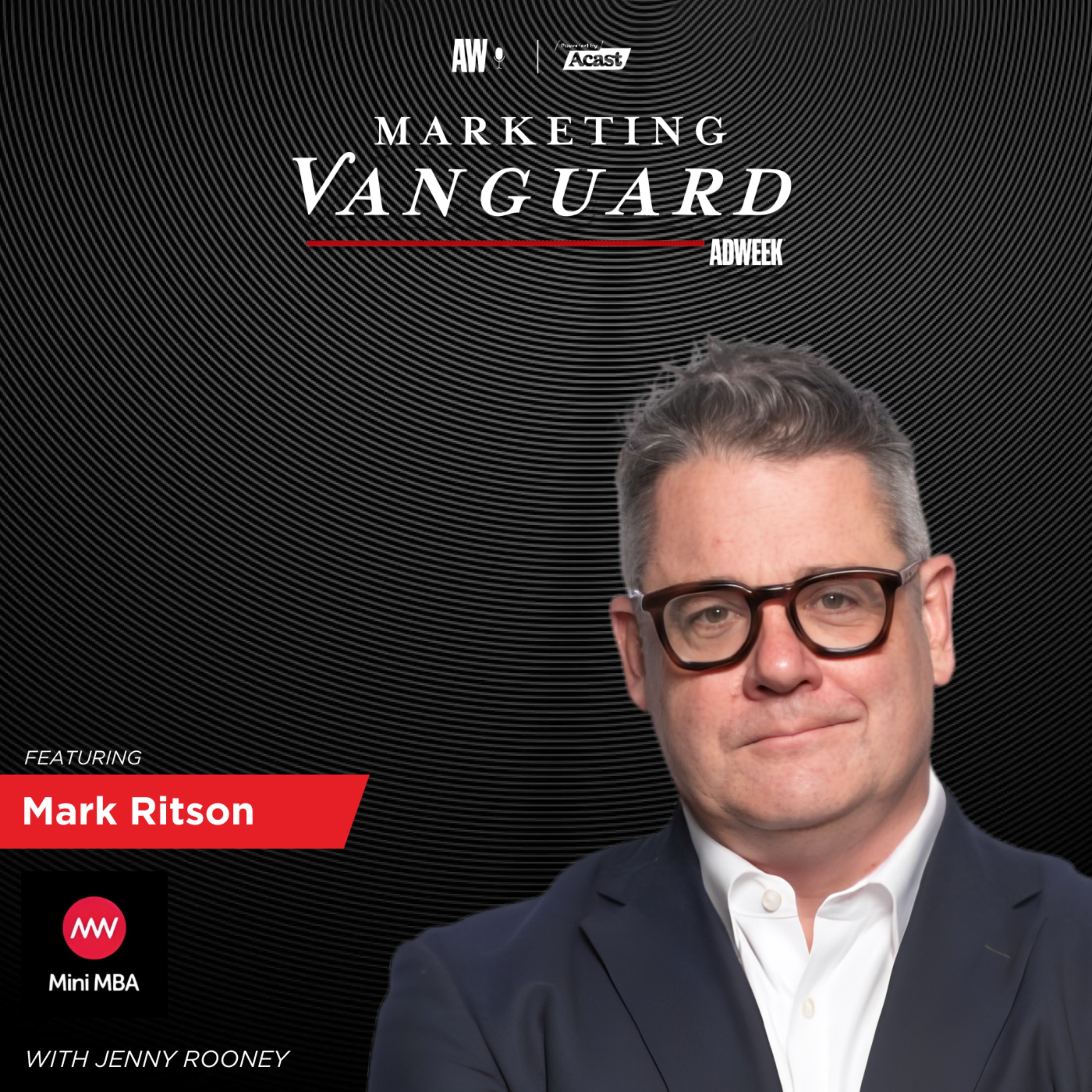
Loading summary
Transcript65 lines
- [00:00]
A
I believe Brand Purpose is by and large a waste of time. There are exceptions, but my data is pretty strong. It's a lot stronger than the Brand Purpose Team. Whenever I have that debate with senior American marketers, the response is, oh, I think we're saying the same thing. And I said, no, we're not.
- [00:16]
B
Hi, everyone, and welcome to the Marketing Vanguard podcast. We're doing a special series live from Cannes. Lions along the Croisette in the heat. We have hot and spicy conversations. And I know I'm going to have one right now with Mark Ritson. Here he is the world renowned marketing professor and founder of Mini mba. Mark, welcome.
- [00:33]
A
Jen. How are you? Are you warm enough for your kid? You enjoying it?
- [00:35]
B
Oh, my goodness gracious. This is one of the hottest cans on record, I would say.
- [00:39]
A
Where did you grow up again? In the States? You told me this once.
- [00:41]
B
New Jersey, Texas, Connecticut.
- [00:43]
A
Yeah, even Texas hasn't got anything on this, right?
- [00:45]
B
No, no, this is. This is.
- [00:47]
A
This is hot.
- [00:48]
B
This beats that. Yeah, very hot. But that's okay. We're in it to win it, and this is why we're here.
- [00:52]
A
You'll struggle through, darling. You'll somehow survive for the three weeks in Cannes. Yes.
- [00:56]
B
So let's talk about surviving in Cannes. How many times have you come here?
- [01:00]
A
This is my second. I was a very public critic of Cannes.
- [01:04]
B
So let's talk about that.
- [01:05]
A
Well, it would just seemed like you couldn't win, right, because you were either posting pictures of being in Cannes and pissing everyone off that was not in Cannes, or everyone else in Cannes was kind of like, yeah, I'm here too. You know, no big deal. And then every year we got these sort of votes. You know, I just didn't want to go, and so I was pretty anti it. But then last year I came and I have to say I was quite impressed with it.
- [01:26]
B
Why? Like, what impressed you the most?
- [01:27]
A
There's two things, I think. I mean, Tim, my CEO, who's a Cannes virgin, it's his first year this year. And I said to him, look, there's a couple of things going on. There's all the Americans and all the Europeans and a few of the internationals here, you don't get the American elite and the European elite in anything except this. And that really did impress me. I've lived in both worlds, but I've never seen them all together. And then the creative strategic nexus is also there. So all the creative people here. But so are the suits, so are the. The brand managers, so are the account planners. So you really Feel like there's a crosshairs of kind of all the interesting stuff. And so I think they're the two big attractions. Everyone that you want to have a meaningful chat with is literally around the corner. The only criticism I'd say is we sometimes lose track of. You know, I have a famous statistic. Advertising is a very important part of marketing, but it's only about 8%. There's all the other stuff we don't talk about. Right. So it tends to become this bubble of advertising, which it has to be. You know, there's other things we also need to sort out, but for these five days, it's amazing.
- [02:26]
B
Yeah, well, it's interesting. I mean, I've never thought about it this way and I've come for, I don't know, 11 or 12 years, but.
- [02:31]
A
Oh wow, you're a real old timer now.
- [02:33]
B
A little bit, yeah. It is marketers marketing to each other.
- [02:36]
A
Yeah. Which isn't necessarily the best of it normally. Right.
- [02:39]
B
But it's fascinating because I mean, the.
- [02:40]
A
Activations, how they do it. Right. With the target and with the genesis and of course, if you look at the history of how agencies have marketed themselves, it's pretty poor. Right?
- [02:49]
B
Yeah.
- [02:49]
A
So, yeah, having said that, they're doing a pretty good job.
- [02:52]
B
Pretty good job, yeah. We've seen some really cool stuff. I want to go back to you. For people who don't know, I would love for you to share your personal history because I mean, listen, you are iconic, you are opinionated and you have been unabashed in your perspective on this industry and on what good marketing looks like. But you weren't always here in this place. So tell us about how you got here.
- [03:16]
A
So I'm English, I live in Australia because I'm married to Australian. I spent most of my formative marketing years in the States, so I'm a bit of everything. I was an academic for 25 years, so I was a marketing professor at places like London Business School and mit. I was a visiting Prof. For many years. So I taught MBA students. And then about 10 years ago I decided I was gonna take my award winning MBA courses in marketing, make a company and basically give access to marketers. The MBA level training in marketing without having to do the two years, the finance, the hundred grand attached to it.
- [03:50]
B
How did MIT and London Business School of Business?
- [03:52]
A
Well, I mean, I'd already left them, so you know, it wasn't up to them. But yeah, I won the teaching prize at MIT. I won it at LBs. That was very useful for my next step. To be able to say, I've done it and I've won prizes for it. So, yeah, we rolled it out. It's grown and grown every year. So we, by now We've trained about 40,000 marketers, but we never touched America. And it's a really good example of strategy. So we have all these discussions in Cannes about strategy. I learned strategy late in life because I ended up working for some pretty big brands at the very highest level. I'm a marketing professor. I know nothing about strategy. So I really went back to school in my 40s to learn it. And what I learned in a nutshell was strategy is about choice and strategy is about what you don't do. And so the one thing I said to my team from the beginning was we aren't going to go after America. It's too big, it's too complicated, it's very high acquisition costs, very competitive, and we don't have any expertise there. Right. So we're in 40 countries, but not really us. And I said, whenever the time is right, we'll get a partner. And sure enough, Adweek turned up this year. There's like an Adweek shaped hole in our business and we couldn't have found a better partner. So now we'll work with you guys and it should be an amazing time.
- [05:02]
B
Well, we are very excited and as well. And yes, this is news, this is breaking news because I think we're developing a partnership that's going to deliver. What I feel like is what you did with Mini MBA is you made it accessible, you made it bite sized. I don't mean that in a.
- [05:16]
A
No, it's a compliment.
- [05:17]
B
But you boiled it down to the essential elements and you made it something that people could do as part and parcel of their regular work lives.
- [05:25]
A
And that's a key part, Jen, because when we launched it, I thought to myself, look, it'll probably make a bit of money, it'll certainly scale. But the third part, which I wasn't expecting, is it was clear within a year that the experience the Mini MBA were getting online was better than the classroom experience. Because I was still teaching in the classroom and that bit was not part of my expectation. So I delved into it. And the simple point is when you allow marketers who are busy, you know, it's a senior program, 30s and 40s, when you allow them to choose when and how they study, it's a hell of a lot more effective than bringing them into a lecture theater in a 16th century way and talking to them for three hours and so what we find now is if you take 100 mini MBAs, they're all learning in different places at different times in different ways each week. But there's still a syllabus, there's still a weekly load, there's still a Q and A with me, but they might do it in the gym, they might do it driving home, they might do it with their teammates. And we love that diversity because it works for learning. And look, our two stats that we sold the program to all of our investors was very simple. 75% of marketers don't have a good training in marketing, you know, in the States as well as everywhere else. And no one under the age of 35 is ever going back into a classroom again.
- [06:37]
B
Yeah, it's so true. It was disruptive before its time, and here we are. But having access to you is a big piece of it because you define the brand right. You are the ip, if you will.
- [06:46]
A
Yes, yes.
- [06:46]
B
So how will you continue to be accessible to folks who subscribe to mini mba? And how is our partnership going to work?
- [06:54]
A
Well, so the mini MBA bit's great. When people sign up for a cohort, they might be in a class with 2,000 marketers, and the first thing they think is, you know, oh, God. They imagine a lecture theater of 2000 people. It becomes very personal and very intimate because it's me and the marketer for 10 weeks. You know, it's them, you know, with me. Now, a lot of it's recorded, but a lot of it is proper Q and A. And that's. That is scalable if it's done well. And with AI, we're finding now that it's going to be even more scalable. The adweek relationship is fascinating. We're at a turning point in American marketing, in my opinion. The backstory is, I love America. I was trained in America. American marketing is the best place in the world to learn and study it. But over the last 10 years, it's drifted behind the international world of marketing. I cannot explain this, but the quality of brand management, of advertising, of execution, it's got a little soft. And I really see adweek as really the last bastion. You know, you run articles that are critical in the proper sense, not, you know, negative, but they'll point out when something hasn't worked. And I don't think there's much of that left. And if you look at my columns over the years, I mean, I've been columnist of the year in the UK seven times over. About half my columns are, this is amazing. But the other half, it's gone wrong here. And I think it's gone wrong because of this and this. And that's a good balance. We learn as much from pointing out what hasn't worked. And I think American marketing is ready for a more critical, fair assessment of what is and isn't working. And I think it's a great time for me to start writing for Ad Week and for us to share some of the international literature, which, I mean, you've seen it. It doesn't permeate enough. Byron Sharp isn't well known. Sophisticated mass marketing salience two speed targeting. The world of marketing really has changed. And I'm not talking about AI. You know, P and G have always had it. Diageos, they stay ahead of it, they're scholars of the game. But the average big American marketing team are missing out on some of the most wonderful applicable literature you've ever seen.
- [08:47]
B
So this really democratizes that understanding.
- [08:50]
A
That's what we're here for, right? I mean, at the end of the day, you can teach marketers through many different vehicles, through podcasts, through articles, not just in a virtual classroom. And I think that's still the ultimate high for me is saying, you know, here's the latest stuff, here's what we've.
- [09:04]
B
Learned, and you can continually evolve it.
- [09:06]
A
As the work goes. The world is changing and it's about the work. So what we sometimes find is, I think people, they get caught in the optics of this or that. It's about the work. It's about who's done the good work, who's had the win, why have they had the win. You know what I mean? We stay close to the ground. I think that's crucial. The practicality is crucial.
- [09:23]
B
Yep. You spend a lot of time with cmos. I'm curious the Mark Ritson perspective on what's on the mind of the cmo.
- [09:30]
A
I mean, it's the same old story to some degree, right? So we have this constant. I call it the question, right. If I ever hang out with anyone senior in marketing, and I'm not exaggerating, they always ask the question. And the question is what? I get it. We have to spend a big proportion of our money on brand building. But my board don't get it. How can I get them to get it? I swear to you, that comes up every single time. Right. And so that's the obsession at the moment is how do I get my organization to give me the money and patience to do it? Right. Big concern. There's also an occupation with what I call the pornography of change. So as you go around this beautiful venue, there are various people and companies selling change through every window and AI and the world is changing faster than ever before. No, it's not. First of all, it's changing just like it always did. It's always been changing.
- [10:18]
B
You know, that's reassuring for a lot of people to hear.
- [10:21]
A
It should be. And it's important because as it turns out, you need to spend time not changing to be successful in marketing. The problem I've got is I don't make any money talking to you, saying too much change going on just as much as the Rev was. I haven't got a book that says, you know, everything's pretty much the same. Right. These guys out here are selling consultancy and expertise based on I'm going to scare you, I'm going to worry about stuff you don't know about and then I'm going to sell you it. AI is going to change everything, there's no doubt about that. It's not going to change it as quickly as everybody thinks. We've got work to do first, you know what I mean? As well. So for me, the message from the data I'm presenting this week is there are two or three factors that drive really strong creative effectiveness. Probably the most important one is once you've got a good ad, run it for two and a half, three years at least. Now you try selling that message here where it's an annual six month cycle change. But it's wrong. The data is clear. If you've got a good ad, run it for years.
- [11:17]
B
That's a hard sell though to your board and your CEO and to your.
- [11:20]
A
Agency that wants to keep making ads.
- [11:22]
B
Absolutely.
- [11:23]
A
But it doesn't stop it from being correct. So I think that message to the CMO of it's okay, the world is changing. AI is going to make some massive implications for us, but not as quickly as we thought. The 30s were going to be dramatically different. But it's not going to be about prompts, it's not going to be about where we are right now. You can almost afford to monitor it and just let it become what it's going to become for a little while and just stay tuned, you know, we've got work to do.
- [11:48]
B
Yeah. What's refreshing about you is just like as I started this by saying you're opinionated, you share those opinions even if it makes people uncomfortable. And I just think we're living in an era we don't have time to mess around with Mistaken assumptions. Right. And so the fact that you've go there.
- [12:03]
A
That's true, Jen. And I think discomfort is an interesting one for Americans because I think my experience in the 80s and 90s was it was a place where discomfort was okay, right. We can have a debate about this and then we can have a beer. In the last 10 years, I've seen the exact opposite in the States. We can't have an uncomfortable discussion where we trade different perspectives. Right. I believe brand purpose is by and large a waste of time. There are exceptions, but my data is pretty strong. It's a lot stronger than the brand purpose team. Whenever I have that debate with senior American marketers, the response is, oh, I think we're saying the same thing. And I said, no, we're not. I'm not falling out with you. I think what you're doing with all of this investment and brand purpose is largely a waste of money. I don't think it's necessarily a bad thing. I just don't think you'll get a return, and I think you should accept that. And do you know, the purpose of purpose is purpose. Do it for the good you're doing. Don't try and kid everyone. We're going to get a big return. But when I say that to very senior American marketers, they sort of get uncomfortable and they're like, well, I think we agree, don't we? And I'm like, no, we don't agree, and that's okay. But it's not going to be down the track because I'm pretty sure I'm right.
- [13:06]
B
Yeah. Love it. Well, that's a great example of what folks can get from you, from your wisdom, from your experience. Last couple quick questions. We're here in Cannes. It's only Wednesday. However, it is also Wednesday. So is anything bubbling up as far as, like, what is the headline of Can 2025?
- [13:21]
A
I don't think there's anything particularly different. I think there's a lot more comfort than there was last year. You've probably felt the same thing. We were still coming out of really strange, you know, tectonic shifts in economies and everything. It feels like more of a pre Covid can, which has got to be good news, right? There's certainly question marks, but it feels like we've got comfortable with discomfort and so everyone's kind of just getting on with it. Last year it still felt a little, you know, so I think that's the main one. What else? I'm feeling like there's a lot of brand consolidation going on. And that's a good thing. I think my fourth conversation in two days at CAN about the brands that I'm going to close and the way I'm going to migrate my portfolio, I think that's a great thing.
- [13:59]
B
Why?
- [14:00]
A
Well, it's a long story, but I find most companies are very comfortable creating and making more brands. And I always say to them, that's great, but unless at the other end of the chopping block, you're killing the same number, it's only going to end one way. Right? Killing, in my experience, is more enjoyable and productive than creating. Yeah, I've killed about 200 brands in my consulting career and I've created about half a dozen. And that's a good ratio.
- [14:22]
B
I love that.
- [14:23]
A
Killing is good. When we talk about brands.
- [14:25]
B
Talking about brands, that's an important.
- [14:26]
A
That's an important extra.
- [14:27]
B
I love that. Well, Mark, listen, this has been enlightening, as always. I'm super excited about our relationship moving forward.
- [14:34]
A
Me too, Jen. We've known each other a long time, right? Working together is going to be good.
- [14:38]
B
We're able to do this and bring this value to our communities, which I think is what ultimately that's what this is all about. So thank you so much for joining me. Enjoy the rest of your can. Let's circle back on the other side of it and I'll get your additional comments as far as what you think can 2025 will pass.
- [14:53]
A
Yeah, let me get to Friday and then I'll have a full.
- [14:55]
B
There you go. Every day changes everything. So thank you so much.
- [14:57]
A
Thanks, Jen. Thank you for listening to Marketing Vanguard, part of the Adweek Podcast Network and Acast Creator Network. You can listen and subscribe to all of Adweek's podcasts by visiting adweek.com podcasts. Stay updated on all things Adweek Podcast Network by following us on Twitter @AdWeekpodcast. And if you have a question or suggestion for the show, send us an email@podcastdweek.com thanks for listening.