← Marketing Vanguard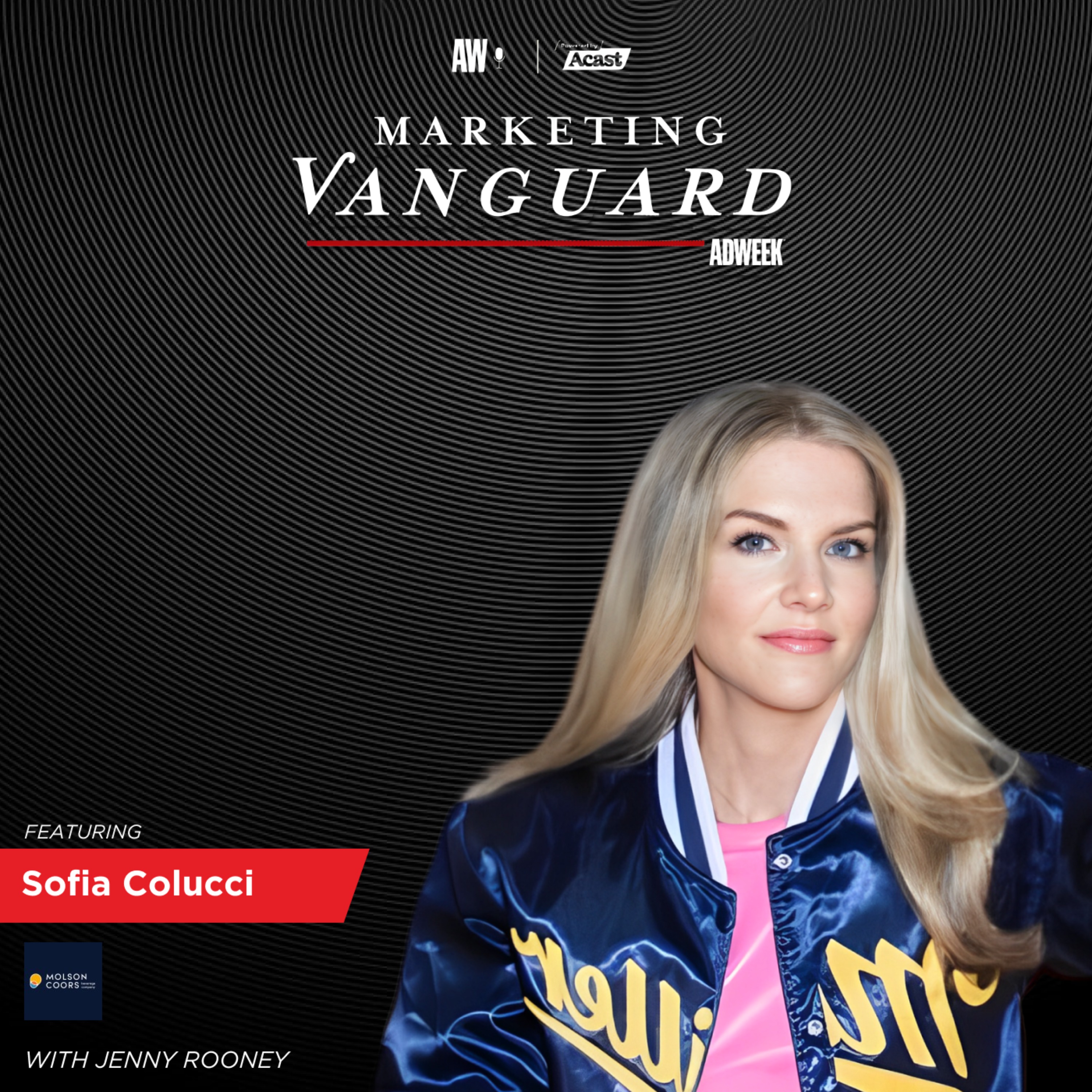
Marketing Vanguard
Balancing Data and Gut: Inside Molson Coors' Marketing Evolution with Sofia Colucci
00:26:45
Loading summary
Transcript67 lines
- [00:01]
Jenny Rooney
Partnerize is the only partnership management solution powering profitable growth for marketers through an end to end software platform and comprehensive service practice. The Partnerize platform delivers a fully integrated, comprehensive suite of discovery, recruitment, optimization, payment, brand safety and fraud prevention capabilities supported by unrivaled service expertise. With Partnerize, you're in control of the entire partnership marketing lifecycle, all on a single platform.
- [00:31]
Sophia Colucci
One of the things we realized, it's basically when we dug deep to be like, hey, how can we become better? There are a lot of opportunity areas that came out, but one of them was just like, how do you build the marketing capabilities within your marketing team and how do you build that creative gut? Because what was happening a lot was we actually have become really good on the science piece. Like we have great research, great testing, we have this multi touch attribution model where we can look at the pieces of work we put out and be able to understand which pieces and what media is impacting the roi.
- [01:04]
Jenny Rooney
Hi everyone and welcome to the Marketing Vanguard Podcast. I'm Jenny Rooney and I am here coming live from Brand Week 2024 in Phoenix, Arizona. And I'm thrilled to be here with Sophia Colucci. You're the CMO of Molson Coors. And Sophia, you have come to some of our events before. I cannot believe that you and I actually haven't had you yet on the Marketing Vanguard podcast. So I'm thrilled to have you. So welcome.
- [01:28]
Sophia Colucci
I'm thrilled to be here. Thank you.
- [01:29]
Jenny Rooney
So with this we really dive into marketing leadership. What defines you as a leader? How you're making decisions day in, day out that drive forward, certainly the brand, but also the business. Right. I mean that's such a topic of conversation so much. I think at Brand Week and elsewhere. Obviously we spend a lot of time talking about the tactics, but I think this is our opportunity to talk about you as a leader and the choices you're making and how you're working internally to drive forward frankly your agenda, but also your colleagues agendas and how you think you need to work to position the brand best that drives the business forward. So without further ado, I'd love for you to share a little bit about you and really what your remit is at Molson Coors.
- [02:09]
Sophia Colucci
Yeah, absolutely. Thank you for having me here. And this has been a wonderful event so far. So it's really great. I've been at Molson Coors for almost seven years now, so I've spent all of my career in marketing, really worked at three big companies. So I started out at Mapley Foods, a Canadian food company. Then I was at PepsiCo for eight years, and then I've been here for seven years. And in my career, it's always been a combination of brand management and innovation. And I'd say with the brand management, like general management to in the last number of years, more on the communication side, but the whole spectrum of things. And then at Molson Coors, I started an innovation, made my way to the brand side. And then a year and a half ago, I was promoted to cmo. So it's been a wonderful ride.
- [02:50]
Jenny Rooney
So that's exciting. And I love hearing the stories of folks who have been promoted up to the CMO role within their organizations. Talk a little bit about that process and what you had to accomplish for yourself before you could do that and what the company wanted you to accomplish before you were able to move into that role.
- [03:05]
Sophia Colucci
Yeah, look like I'm just thrilled. I love working at Molson Coors. I love the work that we get to do and the people that I get to work with. And I would say I think I was a bit surprised when they promoted me. Not because they had been planning for me to eventually become CMO as a successor. We have a successor program plan at Molson Coors, like a lot of companies do. But I always thought that the reality was that my boss, Michelle, who was the cmo, that she would have to move to a different role. And it didn't really seem like that was going to happen. And I really enjoyed working for her.
- [03:37]
Jenny Rooney
Michelle St. Jacques.
- [03:38]
Sophia Colucci
Yeah. So it's not like I was in a rush. So at the time I was leading Miller family of brands and economy, but we'd been talking about getting me prepared. I remember they had me work on this six month intense, like leadership development program. It was amazing. I. I went to Portugal and I spent like this intense week with leaders from all over the world just to grow as a leader. And so there was things like that that they were doing. I didn't really realize it at the time. And then February of 2023, MSJ took me out for dinner and she seemed nervous. We need to go out for somewhere nice for dinner. I'm like, okay. Like this is.
- [04:13]
Jenny Rooney
That might have made you nervous?
- [04:14]
Sophia Colucci
Yeah, a little. Well, it was just funny because. Let's go somewhere nice. And I remember my husband was traveling at the time that week and I'm like, oh, I got to get a babysitter. Okay. I'm like, great, let's go out for dinner. And then when we went up dinner, she was fidgety and then she handed me a gift, like a box, and it looked like a jewelry box and a card. And I opened the card, and then it was essentially a card telling me that they were offering me the job as cmo and like, that there was going to be changes. And then the necklace was this necklace that in Morse code said, you've got this. So, msj, she's very thoughtful and she does those really special things. She's awesome. And so one of the greatest things in this job is that we can still work together. And I say that she's crazy. I'm crazy too. So it's like the highest form of compliment. And we work together really well. And so it's nice because there's a lot of trust there. And so she trusts the way I think and evaluate, work and lead the marketing team. But then I also truly want to go to her at times, just bounce ideas off of her because I really respect her as a marketer. So it's a really good partnership that we have.
- [05:21]
Jenny Rooney
And what's her title now?
- [05:22]
Sophia Colucci
So now she's Chief Commercial Officer. So it's more of a commercial role. I mean, to be clear, as a cmo, I am still very much held accountable to our profit, our nsr, we have monthly business reviews. They get intense. So there's still very much the commercial side of my job. But now what MSG has is she's in charge of all of the Americas, so her role is expanded. And then she's got sales as well as marketing and digital. And the sales team at Molson Coors is massive. Just because you can think of all the different touch points that we have.
- [05:52]
Jenny Rooney
Yeah, distributors obviously are a big part of your ecosystem. And listen, you spend time with CMOs, I spend time with. That's a different business model. So definitely talk a little bit about that, how you have to navigate that and be mindful of that dynamic for your marketing organization.
- [06:07]
Sophia Colucci
It's so funny. It's so true. And I had conversation with Pete Coors, so he's one of the members of the Coors family and sits on our board. We were saying in this business, it's not just, like, about liking working with distributors. Like, you really have to love it. And I really do. And I do think that part of it is how I grew up with the different companies I worked at Maple Leaf Foods, the Canadian food company I worked in, was probably more customer driven than consumer driven. So at a very young stage in my career, I learned the importance of partnering with sales to make things happen. And I was responsible for the P and L and the bill of material, all of it. So I really understood the impact that those relationships with sales could have. Same thing going to PepsiCo, very similar in that sense too. And it's funny because I even went to PepsiCo with the idea that I would work more on brand building. But they said, oh, this person knows how to work with sales. Let's put her on more of the general management roles. Which by the way, I don't regret and I'm happy about it. And so coming to Molson Coors, I knew that was a big aspect of it. And look, I think the reality is the beer industry has a lot of just history in terms of it's very male dominated. And people even like when I was going to go work at Molson Coors, I remember someone from PepsiCo said, are you sure you want to do that? But what I do think that has happened over the last number of years is that there's been a lot of strong women before me that have done such a great job building themselves, showcasing the role of women as consumers in beer. And it really helped me when I joined the organization. And I would say working with distributors, like, I think the most important thing is to truly look at them as partners and the value. So for instance, we could have a great marketing idea, but if it's not going to work when you get out to a Walmart at the point of purchase, forget about it. And those distributors, they get it. They've been in the business for years. And so we have regional distributor council meetings, we have national distributor council meetings. We have opportunities to go out with them. So from the day I started even working on, because I started on innovation, I really seized those opportunities and I loved just learning from them and getting feedback from them. The reality is you're not going to take everything they do and do it. But I truly believe great feedback can come from anyone. And I also believed, I think it's really important to listen to other people's perspectives and try to see if it makes sense or not. And oftentimes it does. And I think that's helped because by collaborating with them it has made the work stronger.
- [08:40]
Jenny Rooney
It's not unlike, I guess, the metaphors, automotive marketers and dealers or franchisees who are part of restaurants or casual dining. Like that kind of dynamic, right? It's a similar metaphor for sure.
- [08:50]
Sophia Colucci
I mean, because the reality is like the model we have is that if you think about the type of work that we put out to the world, Miller Lite Coors Light. We have national advertising, but a lot of it is local and they invest alongside with us. So if distributors don't believe in the work that we're putting out there, they're not going to invest. The other thing I'd say too is if you look at categories like beer, the reality is so much of the ability to sell and to be successful comes at the point of purchase and it comes down to the execution. So if you have your product on displays, you're going to get like better sales. It just, it's the way it works. And again, this is why you need distributor buy in.
- [09:30]
Jenny Rooney
Are you working with retail media networks then?
- [09:33]
Sophia Colucci
Yeah, we work with retail media networks.
- [09:35]
Jenny Rooney
All of that?
- [09:35]
Sophia Colucci
All of it, yeah.
- [09:36]
Jenny Rooney
So all the data you're getting from that, has that been a game changer for you or how are you thinking about it?
- [09:40]
Sophia Colucci
It definitely helps. I mean the reality is the data in alcohol, it's a little harder, it's more regulated than it is in other industries, but for sure.
- [09:49]
Jenny Rooney
Okay, so let's go back to you in this moment and thinking about the brands. And by the way, it's in a highly competitive category. I mean there are new entrants every day that are beer adjacent or for sure there are startup beer brands that are coming to the fore every day. How do you think about being the person who's both responding to but also anticipating where the industry is going and making sure that you are frankly like reading the tea leaves, watching the trends and being able to bring that back into the organization to help guide it forward?
- [10:21]
Sophia Colucci
For sure. And I think that it's a combination of both our portfolio strategy as well as obviously our marketing strategy and communications. So look from a portfolio strategy perspective we have, and we said this years ago but we've stayed committed to it and we've made progress with it. Looking at consumer trends, looking at where things were going. We made the decision to transform ourselves from a beer company to a beverage company. So it was five years ago, Molson Coors beverage company and we've made choices to get into non alcoholic propositions to go beyond beer into spirits. And that was purposeful because while beer is massive, it's not going to go anywhere. We need to diversify our portfolio to meet consumers where they're at and where they're going. So I think that would be a big thing. And then from a overall communications approach, look like it has been a combination of really looking at like where the media landscape has evolved. And I mean it's obviously no one's going to be shocked by this. Like, consumer behavior just isn't the same anymore. And it's not the same as just like buying media like on television. Like, we've really shifted our mix. Like we are a lot more digital and social now than we were before. And it's funny because we actually had our distributor conference a week and a half ago and there's a top to top meeting. And that was one of the questions because they're pushing, they're saying we're not seeing as many of your ads on TV as we used to. And what I'm saying is actually like what's really interesting is we're spending the same amount, if not more. We're just meeting consumers where they're going. So like a good example that Aaron on our team suggested I use, which I thought was really helpful, is we have a partnership with Yellowstone for Coors Banquet. It's a product integration, but it's perfect. And what we were saying is that look like when Yellowstone is live. Yes, we're obviously on Yellowstone and advertising, but then we also are buying media on Peacock for all those people. And that by the way, is digital. That is not, you know, traditional media. And so it's just also helping frame it up, especially because we do need to make sure that we're bringing everyone along in our organization.
- [12:22]
Jenny Rooney
Yeah, that's so exciting. So what's your piece of work that you're most proud of at this point?
- [12:26]
Sophia Colucci
It's interesting. So across the board. I've worked on Miller Light for years, obviously and I worked on innovations. There's certain innovations that I'm really proud of, certain ideas that we've put out in culture on Miller Light I'm very proud of. We talked about on Coors Light. Lights Out. That was great.
- [12:41]
James Francis
Yeah.
- [12:41]
Sophia Colucci
I think since I became CMO a year and a half ago, I think the thing I'm proudest of is the work that our team has been doing to build our marketing capability. We talked a little bit about it on stage, but one of the things that we identified about a year ago we were in Cannes. It was I guess over a year ago, but we were saying how we're in a good place for marketing. How do we continue to get even better and stronger? We partnered with all of our agency partners, all of our marketing leaders. I brought everyone together. So it was truly a team effort. One of the things we realized is basically when we dug deep to be like, hey, how can we become better? There are a lot of opportunity areas that came out, but one of them was just like, how do you build the marketing capabilities within your marketing team and how do you build that creative gut? Because what was happening a lot was we actually have become really good on the science piece. Like we have great research, great testing, we have this multi touch attribution model where we can look at the pieces of work we put out and be able to understand which pieces and what media is impacting the roi. So what was starting to happen was that our teams, while we were creative, they were also relying so much on that data that they weren't building their gut. And so one of the things that I'm really proud of is that we actually build our own internal definition at Molson Coors on how we evaluate creative. And I was like adamant, it has to be an acronym so everyone remembers it because otherwise people won't, I won't. And so we actually call it. And by the way, this took us a long time to get it because it wasn't as easy as it sounds, but now it sounds very easy. It's muscle.
- [14:15]
Jenny Rooney
Partnerise is the only global partnership management solution powering profitable growth for marketers through an end to end software platform and comprehensive service practice. The Partnerise platform delivers a fully integrated comprehensive suite of discovery, recruitment, optimization, payment, brand safety and fraud prevention capabilities supported by unrivaled service, including the category's only in house support program. With partnerise, you're in control of the entire partnership marketing lifecycle all on a single platform. Partnerise gives marketers a better way to.
- [14:54]
James Francis
Partner for all your meeting, event and workplace needs. Convene is a partner, not just the place. A preeminent global hospitality company within the meeting, event and shared workplace industries. The company and its portfolio of brands provide clients with concierge style service in house, food and beverage in house, event production resources and dedicated service staff, all to ensure a seamless and memorable experience.
- [15:23]
Sophia Colucci
And what muscle it's every letter stands for how you think about evaluating creative work. So like the M is magnetic. Does it make you feel something? Happy, Sad, Cry, Unexpected? Is it so unique that your daughter or son would text you about it? Simple. Could you explain it to your Uber driver? Crafted brilliantly, we've sweated every piece of the execution L. Is it connected to your long term platform? So whether it's choose chill for Coors Light or great tasteless filling for Miller Lite and then E, does it capture the essence of its look, tone, point of view? So I mean we've now all of our marketers have gone through the training, we've Embedded it into our goals. Every piece of feedback, every brief is all around muscle. We've taken the organization through it, and our vision around muscle is it's an enabler for us to basically deliver on our ambition. And this goes back to. We want to be the most creatively effective beverage marketer in the world.
- [16:26]
Jenny Rooney
Yeah.
- [16:27]
Sophia Colucci
And we know that this is going to help us do it.
- [16:29]
Jenny Rooney
Yep. I saw a post you did not too long ago, maybe a few months back, about a repositioning of the Blue Moon light.
- [16:35]
Sophia Colucci
Yes.
- [16:36]
Jenny Rooney
And I just remember looking at that and being so fascinated by it.
- [16:40]
Sophia Colucci
Yeah.
- [16:41]
Jenny Rooney
Share that case study for sure.
- [16:43]
Sophia Colucci
Yeah. And I can also talk about mistakes I've made in a good way. So when I was working on the innovation team, we were looking across our portfolio where we could look at white spaces for new brands, brand extensions, and Blue Moon is a beer that a lot of women love it.
- [16:58]
Jenny Rooney
I love it.
- [16:58]
Sophia Colucci
Yeah. A lot of. And we were talking about it at lunch. A lot of people like, especially if you're not a beer drinker. It's orange, it's delicious. But it is on the heavier side, so having a lighter version of it is great. And so we were coming up with the idea in 2019. We launched it in 2020, but at the time, I think we didn't want to call it Blue Moon Light because we were worried it was going to cannibalize Blue Moon. So we called it Blue Moon Light. SK tested well. It's fine. We put it in light packaging. The problem was it did very well in the first year, but as the years went on, and this was also in the surge of hard salt, people didn't know what it was, and they actually thought it was a Blue Moon hard seltzer. And so it started to lose momentum with distributors again. You need to get them on board. We started to lose distribution. The velocities weren't as strong. And so last year, our team just. We were looking at opportunities across the board and someone brought up, like, why don't we just call it what it is? Yeah, call it what it is. And that's just such a good learning for us, too. And this goes back to muscle Simple. It's make sure that, like, people get it right away. And since we renamed it, like, all of a sudden, we saw velocities total go up. And so it's up to us, like, we have to put the investment behind it. We got to get the distribution back out there. But it was just such a simple one.
- [18:11]
Jenny Rooney
Love that.
- [18:12]
Sophia Colucci
Love that.
- [18:12]
Jenny Rooney
Well, listen, so Much of what we're talking about here at Brand Week is not that everything's perfect all the time, but it's also the missteps we make and we learn from them. So I love that. Last couple quick questions. I always ask these on the Marketing Vanguard podcast. You're a player on a soccer team. Are you the striker who's trying to score the goals? Are you the midfield line trying to be that connective tissue between the strikers and the defensive players? Or are you at the back defending the goal at all costs against your competitor?
- [18:37]
Sophia Colucci
Definitely. Like, I just feel like I'm such a connector. It's funny, when I was younger I played soccer and I was defense, but if I think of the role I play, one thing I am, I have come to realize about myself so deeply is I rarely if ever have the answers. But what I have become good at over the years or better at is being able to listen to different points of views and perspectives from the room, whether it's members of our team, whether it's distributors, whether it's agency partners. And I can help facilitate to connect them and then make things happen. Yeah, that's what I've been able to strengthen over the years. But I'm never the smartest person, but I can figure out how to help get those ideas from those people.
- [19:20]
Jenny Rooney
Love that you mentioned the whole piece about GUT and everything else, what Nike's going through as an example.
- [19:25]
Sophia Colucci
Yeah.
- [19:25]
Jenny Rooney
Would you use that as an example to support what you were saying before about just like we need to get back to. And frankly, we were talking about it on stage with Ra'jah and Claudine, like getting back to gut and getting back to 100%.
- [19:36]
Sophia Colucci
100%. And I think that's why it's important too. Like even when we're socializing this idea with muscle, with our whole organization, the important thing that I've tried to connect it to this is going to help us achieve creative effectiveness. And creative effectiveness is not just wishy washy. It is going to help us sell more beer, sell more beverages. And even what was really nice is I took our CEO Gavin, who is our ex cfo. He's a numbers guy. He gets it. Like he gets it. He loved it. And to be clear, it's not about just embracing the art, the muscle, the subjectivity and forgetting about the science. It's both. But it's also figuring out where and when to use those. Like we are. We're going to continue to look at the science and figure out how to optimize It. But if you don't build the art and build the brand, your brands are going to suffer.
- [20:24]
Jenny Rooney
Yeah, and we're seeing that. Well, agency partners will be happy to hear that. Internal creative teams are going to be happy to hear that because I think there's been like a. We've gone through a period and so I'm hearing this more and more and obviously we're seeing examples of it. So hopefully that bodes well. Last quick question. Who's next? Who should I have on the podcast? Who's somebody you admire in the industry who's doing extraordinary things? You can either know that person or have never met that person.
- [20:48]
Sophia Colucci
Well, a couple of people. I mean, I think a friend of mine from Kraft Heinz is Nina Patel. So I don't know, I mean, she's a vp. She's amazing. I think that Ulta is doing really awesome stuff too.
- [20:59]
Jenny Rooney
I was just talking to Deepak about what they're doing with Ulta.
- [21:01]
Sophia Colucci
Yeah, I think Ulta is doing awesome stuff. I'm actually going to go. A woman named Maria Salcedo leads their strategy team and so I'm going to go there next month to chat with them. But their CMO is great too.
- [21:13]
Jenny Rooney
Yeah, Michelle.
- [21:13]
Sophia Colucci
Michelle's awesome.
- [21:14]
Jenny Rooney
Well, Sophia, thank you so much. We could go on and on but I really appreciate you taking the time and it's an exciting time for you and an exciting journey and can't wait to see what's next.
- [21:23]
Sophia Colucci
So thank you.
- [21:24]
James Francis
Thank you so much for all your meeting, event and workplace needs. Convene is a partner, not just the place. A preeminent global hospitality company within the meeting, event and shared workplace industries. The company and its portfolio of brands provide clients with concierge style service in house, food and beverage in house, event production resources and dedicated service staff all to ensure a seamless and memorable experience. Welcome back listeners. Today we are joined by James Francis, head of product from Convene and we're going to talk today about maximizing the ROI of your next event. But first, James. Hello. How are you?
- [22:04]
Michelle St. Jacques
I'm very well, thank you for having me.
- [22:06]
James Francis
Yeah, our chats have been really interesting and insightful. We've been to a few Convene events and it's always interesting to hear behind the scenes of anything and you guys are a well oiled machine so we're happy to be chatting with you. So today's topic is about maximizing the ROI Next event industry wide. We know that marketing budgets and everything, they're under pressure right now but event spend is up. So how can our listeners ensure there's a memorable experience?
- [22:35]
Michelle St. Jacques
Yeah, we're seeing the same trends that while our customers budgets and we have client advisory boards and spend a lot of time talking to our clients, we very much appreciate that. Yeah, there's a lot of pressure on budget and event spend is higher than ever, which is a fascinating kind of paradox, I think. One of the things that I think we're seeing is an increased spend on all the add on experiential components that make it a more dynamic and exciting event for a range of audiences. So we talked a little bit about branding and we talked about immersing in the brand last time and creating a full experiential event from start to finish. I think that's one way of ensuring that you're really having an impact on the audience you've invited, that you're creating a really memorable experience. Some fun examples that we've seen in the past are roving oyster shucker. Right. So you're getting live oysters shucked right in front of you to a typewriter and a poet creating poems there and then for you in the moment. And I think these kinds of things, when they align with what you're trying to do, be it a literary event or be it a food based event. Right. These things can really have an impact and really show what you're trying to do with your brand and really make it feel very immersive and give these memorable little touch points where someone can go and share it. There's also plenty of Instagram TikTok moments in all of that. That kind of helps drive a wider interactivity with your event too. Right. And I think in this sort of post pandemic world, we live in also a very climate conscious world, the likelihood that you'll get necessarily an entirely physical audience isn't always true anymore. And I think it's very important to think about what the digital experience of your event is. And that might not be full hybrid, that might just be recorded. You may just want to create content after it. However, one of the things that we spent a lot of time, energy and money on in the sort of post pandemic years was making sure that all of the convened venues were fully hybrid ready. That's lighting for stage, through to cameras built in, through to dedicated teams that are trained on how to create hybrid and partnering with virtual event sites so that we can deliver a really seamless experience. And I think you need to plan for both audiences. They're not going to be 100% equal, but you will get Many more participants. If you open up your event digitally and you'll get many more interactions, even if they are not as high touch, they will still be many more interactions and actually more people engaging with the content of your event and how you can engage those people beyond just the content in room. The number one purported reason to come to any conference or event is that you want to network with other people. So the content in the room is powerful and is a great draw and making sure there are networking opportunities and thinking through how that works as well to ensure that people are getting what they want out of the event. So don't over program it, allow some space for interactivity and think about what that digital forum might be too. One of the things that I think is quite unique actually about convene space is they're 50, 50 enclosed room, open gallery, networking space. If you've got a room full of people, you need a room and you need enough space for all the people to stand, all those people to eat, all those people to network and have sponsors around them and have comfortable furniture and even some phone booths and things like that so they can go and take a call as they need to. So we've really tried to make sure that the spaces are designed for this kind of high interactivity event and really like foster human connection really. And that's why people are turning up to physical spaces. Right. They can get any kind of heads down work done at home. Like you're going to an event because you want to meet people and be part of something.
- [26:09]
James Francis
Right. I was wondering that about that transition. So what are some of the more common ways you're seeing event organizers measure the return on investment of events? Like is it if there's like interactive parts and people can interact on the apps and that's how they're measuring it. Like what are some of these other ways?
- [26:28]
Michelle St. Jacques
Yeah, it's way easier when you have a digital component that you can actually see how long and most digital platforms will provide you with data around what level of engagement people had. Did they have it actively open as a tab or were they just sort of listening to it in the background? Right. So they'll give you that level of fidelity on how engaged your audience was in the space. It's harder to do. You can get a sense for it. You can look around the room and see how many people turned up. And I think a lot of the new digital technologies are enabling like real hard data around this. So how many people did actually checked in, how many people came, how many people took their badge. These are all data points you can get. And then the other thing that people will do is really try and get data from their event sponsors. So for example, if they've got exhibition stands, how many contact moments did those individual exhibitors have? How many leads did they generate? Right. Like try and get back to a kind of hard set of numbers. And then also just constant polling and qualitative side of it of talking to the event participants and engaging with them afterwards to understand what worked and what didn't. In the end, your event is a product, right. For the delegates who show up and ensuring that your event went well and that you were engaging people is something that's, I think, really important to gather feedback on.
- [27:35]
James Francis
Agreed. So that's so interesting because as attendees, we don't see any of that on the back end. So that's fascinating. Well, thank you, James. This was super insightful. Thank you again for joining us and thank you listeners and we'll see you next week.
- [27:48]
Michelle St. Jacques
Thank you for listening to Marketing Vanguard, part of the Adweek Podcast Network and Acast Creator Network. This podcast was produced by Jordan Prano, executive executive produced by Al Manarino and John Heil and edited by Layne McGibony at Boutwell Studios. You can listen and subscribe to all of Adweek's podcasts by visiting adweek.com podcasts. Stay updated on all things Adweek Podcast Network by following us on Twitter at Adweek Podcasts. And if you have a question or suggestion for the show, send us an email@podcastdweek.com thanks for listening.