← Marketing Vanguard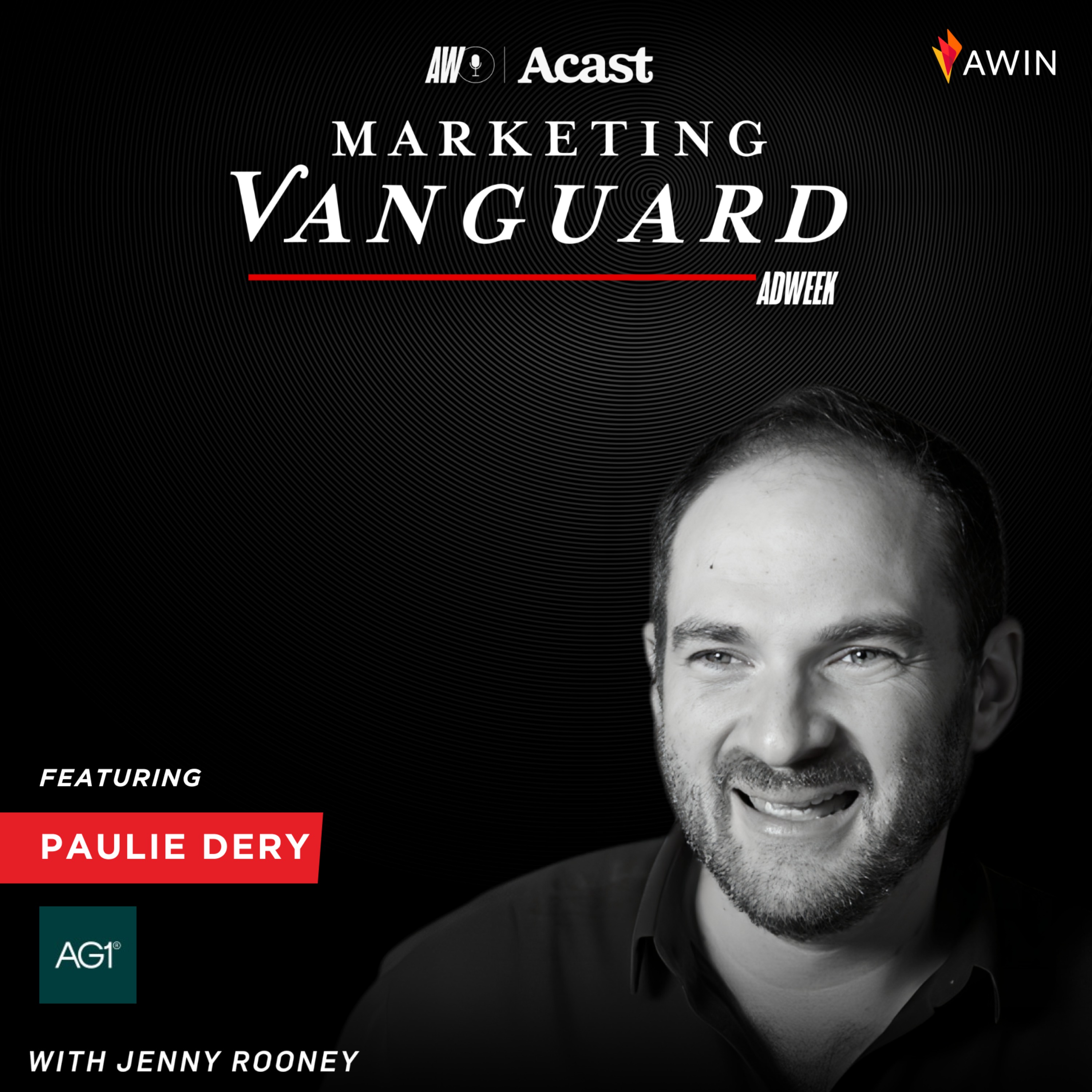
Marketing Vanguard
Building 200-Year Old Brands in a 24-Hour World: AG1's Marketing Revolution with Paulie Dery
00:28:51
Loading summary
Transcript50 lines
- [00:01]
Jenny Rooney
This episode is brought to you by Philo Ads. Want to get your brand in front of the right audience? Philo Ads is the way to go. With 98% of viewing on connected TVs and over 900 million monthly ad impressions, Philo gives advertisers unmatched accessibility, flexibility and results. Power your next campaign with Philo Ads. Today, head to Ads Philo TV to get started.
- [00:27]
Paulie Deary
Understand who you are. Stay true to that and stay true to your community. The rest will take care of itself. GLP1s might come along. There might be a new thing tomorrow. As long as people know who you are and what you're about, you will. You'll be ready for all of those.
- [00:45]
Jenny Rooney
Hi everyone and welcome to the Marketing Vanguard podcast. I'm Jenny Rooney here at Adweek and I'm thrilled to be joined today by Paulie Deary. He's the Chief marketing officer of AG1, former Lee Athletic greens. Paulie, welcome.
- [00:59]
Paulie Deary
Thanks, Jenny. Great to be here on the Vanguard. Loving it.
- [01:02]
Jenny Rooney
Yeah, no, I feel like we're overdue. I feel like I've known of you, about you. I followed your story for years and it's exciting because when I look at your resume and I know folks would see this too, obviously you strike me as somebody who's gone for the edgy brands and I mean that in the best possible way. Uber yet. Now, AG1, you came up through the agency world and I just feel like you've got an interesting and unique story in our industry. And again, I'm not placing value judgment on one of the. You know, there's a lot of marketers who elevate to the CMO role who came up through maybe more traditional paths or have spent time at more traditional brands. I don't know, I just, I find that you seem to be a perhaps, maybe it's an excitement seeking aspect.
- [01:50]
Paulie Deary
It may be. First of all, every career decision I made, everyone said, that's dumb, that's a dumb thing to do. And I kind of now I just think, I wait to hear that. So it validates that it's a good idea. When I was a kid, I was at an ad agency in Australia and it was a lot of fun and I thought, wow, I'd love to go try this crazy little agency in Hell's Kitchen, New York called rga and no one had heard of them and everyone was like, that's dumb. It turned out to be a tremendous almost decade at RGA as agency of the decade and so much fabulous work and what a great lot of my Best friends are still there. And then when I made the move to brand side with Uber, everyone was like, that's dumb. You've got this, your best job, your ec div, iga. It's incredible. There's this startup called Uber. It seems sketchy. What is this? And made the move and then eventually was with Uber and we took it to ipo. We went through all this craziness to do, but we finally got it really settled. It's a fantastic company today, and I think that's because a lot of the work we did and I went to a cooler and cut company in Texas called Yeti. And at the time, people say, that's dumb. Why are you doing that? Seems stupid. And five, six years later, I think Yeti again is one of the great American brands. And Now I'm at AG1 and it's the same deal, and we're on the track to make this again one of the great brands in the country. So, long story short, what interests me about moves are how do I have impact on a business? I think when you're in the agency, it's the hardest thing, right? And you sit there and you're like, boy, it'd be a lot easier if I was the person at the other end of the table making this decision, because this is really hard and they're not great listeners. And do they really understand great creative. Because they don't seem super creative people. And so that was my kind of move to brand was, well, what if I could make those decisions and have a great impact on the business? I was very lucky that Uber picked up on that early and really let me in at the table and let me tell those stories and have great impact. So for me, every move's been about impact. Where can I have great impact? And what are the companies or CEOs that really value creativity as a big part of their business? Yeti's always had a great brand, great storytelling, so they embraced it. AG1 knew what they were getting when they hired me, was very open about what type of marketer I was, and that was exactly what they wanted. So that's kind of how I fell into each role. But it was always, where could I have impact? And where could creativity really lead the path forward?
- [04:20]
Jenny Rooney
Well, I think that's the important nuance, right? I mean, listen, you're a group executive creative director, rga, and I have to ask, were you there during the Nike Fuel Band?
- [04:30]
Paulie Deary
Of course. We did some phenomenal Nike work. And the great wizard of Oz, Nick Law and Bob Greenberg we did incredible work. But you know what I loved about that work was, yes, there was amazing Nike work, but there was amazing verizon work, amazing MasterCard work. It was so interesting that these somewhat traditionally big, heavy brands, because the digital revolution was occurring, you could really do interesting things. So I think that's kind of stayed with me. When it was with Uber, it became a very big org. Right. And to be able to maneuver that org and do great things in that org, I think was partly because of RGA and what we learned there.
- [05:09]
Jenny Rooney
I'm sitting here a little bit wistful in hearing you talk about that era because that was a pretty heady era where there was so much. And to me, this takes me back to late 90s, the rise of the interactive agencies and all the digital work. I mean, truly, like the Internet was suddenly where you could actually advertise and build brands and Yelp and then into the 2000s, there was just sort of that excitement right around the unlock that this web technology, technology in general was going to afford brands.
- [05:38]
Paulie Deary
Yeah, but it was magic.
- [05:39]
Jenny Rooney
It was magic.
- [05:40]
Paulie Deary
Yeah. And I think advertising always, when it's at its best is when there is an element of perceived magic. Right. I think in the 80s 90s TV was magic because it wasn't a commodity. Right. It took time, it took money, it took talent. And then all of a sudden it got very sped up and the magic kind of went away. I could shoot a TV ad very quickly and the magic went away. Digital came along and the magic was back. I don't know how to build those apps. I don't know how to do that. So the clients were handing over and getting what they perceived as magic in return. We're there again with AI, we're always in the magic phase. You just have to find it.
- [06:18]
Jenny Rooney
And RTA was a unique environment back then. It's changed dramatically since then. Any thoughts?
- [06:25]
Paulie Deary
Yeah, look again, I think, and this is maybe a leadership topic for me, what the magic of rga. Look, I came to RGA as an advertising punk, right? Baseball cap wearing my idea is the best. Stay out of my way. Where's craft service and rga? Absolutely smack that out of you so fast. Because what was fascinating about it, and really this was Nick and Bob's gift, was you're going to sit next to someone called a technologist or a U X person, right? Or an engineer, and to be honest, pretty socially awkward people that would talk into their shoes. And to have to work with those people was a real challenge. But what I really picked up on quick was, these guys make your ideas so much better. You know, like, I could never turn this idea into an app or turn it into a tool the way they do. And so really the magic of Nick was, hey, why don't you just go talk to this person? And he knew that it would get you to something really interesting. And the RJ's magic was, how do I throw enough bizarre people together to make something wonderful? That was the secret juice I think they're today. Look, agencies are going through it. I'm not here to pile on agencies, but something's up, right? It was a big reason. I've taken everything. I've gone in house, and it's the people say, why in house, right? Is it cheaper? Is it faster? I think they're byproducts. But the truth is, the answer is, something's just not clicking on the agency side. I think they'll get there, they'll work it out. There's a lot of smart people there. And when they work it out, there'll be more of a balance in the industry. But something's broken. Whether it's, I don't know, holding companies, fee structures, how they value time, but, you know, something isn't working on the agency side. And I think that's what RJA in the old days really uncovered was you gotta let these crazy people just be sometimes. And that's the focus.
- [08:17]
Jenny Rooney
And I spent that much time talking about that because I do think it's important to understand where you came from and how that's informing what you're doing now. And I just. I do. I feel like you've been drawn to brands that like. I love the fact that people said, that's dumb. And yet those were the things that were alluring to you. So why they call them dumb moves? And what was it about those brands again, Uber, Yeti, AG1 and 6, that were so alluring?
- [08:47]
Paulie Deary
It's a great question, and I maybe need to be lying on a couch to answer these, but a couple of things I always look for is what's the best product? I am not a good enough marketer to sell bad products. I think you have to be a very talented person to do that. So one thing I always loved was Uber had really such a fascinating product to me. And when I spoke to everyone at Uber, there were so many things they were doing that just hadn't been told. And that was part of their problem. They hadn't told the story of how 70% of the deaf community are unemployed, but Uber was the number One employer of deaf people because we created a deaf driving app for drivers and they could earn. Well, that's incredibly powerful story, right? How it's changed the movement of cities, how it's given people the power to earn. All this stuff hadn't been told. So we knew that the product was a game changer. But there was so much to uncover. Yeti too, really created an industry of incredible products that just needed to scale their storytelling a little, right? But it was such a industry leader in ag 1, 2, tackling this crazy health industry, this snake oil industry, and just not compromising with the product they make and put together. As a marketer, that's very interesting to me. So I have a phenomenal product, but probably a little bit under leveraged in storytelling. How do I make my life as easy as possible? That's a good start, right? But you also have to appreciate a challenge. So for me, Uber, great story about Uber. They actually called very early and said, look, we don't really have marketing. Would you come help us out? And I said, no. I said, look, call me back in like a year. And every year they called. And I really appreciated that. So I finally said, look, here's one of the world's great brands that doesn't have a brand. Couldn't tell you what an Uber ad was at the time or any advertising, but I knew the product was addicted. So that, to me was a great challenge. It was really the physical digital coming together, which I think is the magic. You got to look for that tension and challenge, right? So great product, but there's tension there. There's a challenge there. My very pregnant wife and I drove across the country to San Fran. Uber fell apart, right? Delete. Uber occurred. Travis. Stuff was happening, all this stuff, and we thought, geez, do we do a U turn back to GA or do we keep going? And I'm glad we kept going because the challenge breeds creativity, right? Chaos breeds creativity. And if things were great at Uber, I don't think I would have been able to have done half the stuff I ended up doing. It was the tension and chaos where they kind of allowed you to go, well, we'll give it to him, see what happens. And that was fruitful.
- [11:24]
Jenny Rooney
If you're looking to connect with younger, highly engaged audiences on the biggest screen green in the house, Philo Ads has you covered. From flexible buying options to powerful targeting and transparent results, Philo Ads makes premium CTV accessible to brands of every size. Visit Ads Philo TV and start building your next campaign today.
- [11:49]
Paulie Deary
Because we were able to really turn things around. Same at Yeti, one of the great brands, very popular in Texas and Florida. Wanted to scale, didn't quite believe they could and they absolutely could. They're a phenomenal brand and scaled beautifully. It was just really giving it the encouragement and scale to go tell that story to Grand Less. They're always looking for a little bit of that tension as something you could lean onto. I always say, like, I think the CMO of Nike or the CMO of Apple would be the worst job in the world. I could only stuff that up. They're so talented, so great. But give me a good challenge and a good product and I think we'll do something interesting.
- [12:24]
Jenny Rooney
You run towards the fire, you run towards the twister.
- [12:27]
Paulie Deary
I think it's more fun to be had.
- [12:29]
Jenny Rooney
Look, let's talk about this again with your creative background now and we talk about this magic concept. It is very interesting because I feel like creativity in the traditional sense is sort of under attack these days. I can't not ask you about. I want to get to AG1 in a minute, but I can't not ask the AI question for you. And I mean talk about there's something broken with agencies. I mean, look, if we wanted to, we could spend time talking about 2008 financial crash and suddenly, like, there have been some different shifts that have taken place. Obviously some have been technological, some have been financial, et cetera. But a lot of that creativity is set a premium. It's not as readily available in the magic piece. But how do you, especially as a foundationally, a true creative mind, think about how creativity is being redefined now? Marketers in particular, CMOs, what are the best practices for bringing creativity back in a way that might not look like what it was 10, 12, 20 years ago, but it can still rekindle the magic.
- [13:28]
Paulie Deary
Look, I hope people keep pushing towards no creativity for brands because I think what it means is the ones who have it are just going to dominate, right? And I am in full support of that because all it'll do is say, see, look at that. And I actually look back to 08. It was a big turning point in RGA because all of a sudden there were clients who were willing to spend into the recession and try things and they came to IGA because they were like, I don't want to spend on tv. That seems expensive. I'll see what happens here. Right? And we. That's where I think we actually did the most interesting work. Right? Creativity led a lot of brands out of this dull. And so that's the hill I die on. Creativity will lead brands to the right place. And listen, it's funny because I don't think CMOs are trained in creativity, right? Or how to pick good work. I think there's a lot of smart marketers out there. But what's hard about creativity is it's a lot of it's taste and there's no MBA for that. Right. My MBA in that was 10 years getting grinded as a junior copywriter at an ad agency in Australia and then sitting around great creatives as you grow to kind of work out what's good. And I think again, what was great about Uber Yeti, AG1, they were like, look, I think if we could do good tasteful work, I think that's half the problem.
- [14:48]
Jenny Rooney
The other leaders, you credit the CEO, the boards, whoever else in the company with seeing creativity for the value that it brings.
- [14:58]
Paulie Deary
Yeah. So like if I think about yeti, right? Tremendous leader there. Matt, right. Is very smart guy. Not a guy you would think, oh, that's a real creative leader. Right. But what he always understood was the value of this product is a brand, right. The minute you become a commodity, the minute people go, should I buy this cup or this cup, it's over, right? It's got to be. Oh, it's is it a Yeti or isn't it? Right? And that is brand and the creativity that encapsulates, right? It says something about who you are. If you come to a picnic or a tailgate and you don't pull out a Yeti or you do pull out a Yeti, it says something about you. And that's where you want a brand. Right? That's where you want things. And he understood that, right? And understood the power brand. It was the same with Uber. Geez, we're in such a hole. We're not going to performance market our way out of this, right. We have to rebuild a brand. It was a brand that wasn't really built on great foundations. So we had to do that. AG1 2. If I look at AG1, a D2C darling, right? Phenomenal business and did super interesting things early on, are now at a stage and they were so smart to get ahead of this where they're like, look, we're at a point now where the business is maturing so well. We need to think about our brand long term. Right. And that's the exciting part. So it really is about those leaders who can get ahead of it, not get stuck in the day to day, hey, what was the number today? Do we hit our number today. I always say, we're building this brand for 200 years, not the next two. And you have to make decisions based on that. Find people who get that right and work for them. The other thing I'd say is to any marketers out there, young marketers, be picky with who you work with. It's like when you're with a boyfriend or a girlfriend and you think, I'll change them, I'll be the one that can change them. No, you won't. No. They have to go through something themselves to work out that they need to change themselves. It's the same, I think, with CEOs and brands. You can't turn up to a brand that doesn't want to do it and tell them, they know, here's how you're going to do it. That's a very hard thing. There has to be something there to play with. So, anyway, long story back to AI and things. There's always been tools for creativity. Always. Whether it's Photoshop, digital film, which I remember when I was a kid in young production days, and they were like, this is the death of advertising. You shot that ad not on film. You'll go into advertising jail. There will always be tools for creativity. It's. Do you have the taste to use them? Well, the consumer loves a great idea. They understand good insight, they understand good emotion. How you deliver that is up to you with whatever tool is available. But if you don't deliver that, it doesn't matter. Right. I think Coke got a lot of heat for that AI ad. It didn't bother me. It was AI. It bothered me. The idea kind of sucked. If I saw a great ad that was AI, I'd be like, awesome. Yeah. It's the fact people are just. The idea is AI. And that's the problem. Right? That's the problem.
- [17:57]
Jenny Rooney
Such a good call out. Okay, so, AG1, let's now talk about this company that you're at. You've been there now for how long?
- [18:04]
Paulie Deary
Seven months, maybe.
- [18:05]
Jenny Rooney
Was it last August?
- [18:06]
Paulie Deary
Oh, yeah. Latest. September 24th. Yeah.
- [18:09]
Jenny Rooney
So where is that company in its journey? Obviously, you said, yes, it was a GTC darling. And as you talked about previously, you liked to go into places that you frankly had some play at. Right. Where you could take it from point A to B or B to c. Where was AG1 when you joined where is it now Journey? What's your aspiration for the brand and business?
- [18:29]
Paulie Deary
Yeah, great question. It's a couple of things I actually saw a lot of Yeti in AG1, right. When I joined Yeti, we were about 5,600 million a year. The category leader created a category. If you like had a normal, loyal, enormous loyal fan base. I see the same with, with AG1, right? It says $600 million all subscription, one channel. Really loyal fan base created the category and is the premium player. So I really like that challenge.
- [18:55]
Jenny Rooney
On that point, real quick, brands that have community around them seem to be also things that you have gravitated to.
- [19:00]
Paulie Deary
Yeah, I mean that's a whole other podcast. I think that building through community is the greatest way to build a brand and build brand loyalty. It takes time. Again, you need those leaders that support you in that endeavor. But you can't fool your community. And if you invest in them and you're for them, everyone else will follow you and come to you. And in fact, if you're very focused on them and don't care about anyone else, it makes them want you more. I can go on for days on that. But you're absolutely very astute. I build through community and then tell story about that community and that goes and gets you a larger audience as a strategy. So look, AG1, the other thing about AG1 was it's a snake oil industry, right. There are so many players out there that just are cheating and don't put themselves through the rigor. We do. And I like that. I like that for us to hold firm and we've got so much to talk about. The other thing was I think health in this country is at an inflection point. It is very expensive to get sick in this country. I grew up in a country where a lot of that was covered for you. Health in this country is a real problem. And personally I really wanted to be attached to something that I could help improve. And AG1, it just helps you start your day to get a little bit of a hold back on your health every day. And I think that's a super important message. The other thing, back to the business. So 600 million, one channel subscription, one product. It's just been AG1 forever. So what happens if we start doing more with that? And we've just opened up Amazon, we're about to go into some brick and mortar. We are looking at a raft of things today. We just launched a new formula. There's a lot of space to play with such a trusted brand. So lots of exciting opportunities again to do everything. All the, I think little nest building nuggets I've taken from past experiences to kind of use all that on offer. Whether that's scale, mode, story mode, Brown foundation mode, brand foundation mode, creativity. All these things are now at play at AV1. Getting to build the in house team. All those things are in play and super exciting to me. And it is a phenomenal product and it will be one of the next great brands of the world because it delivers on its promise. And when you get a brand that does that, you're in a good spot.
- [21:20]
Jenny Rooney
And it goes back to your original point. Like you've gravitated to brands that had actually good, very good products at the core.
- [21:25]
Paulie Deary
Yeah. And great leaders. Great leaders. So Dara, CEO still there. What a leader, is kind of the CEO of Silicon Valley, I think at the moment. Matt at YETI, he's been at YETI 10 years. Right. And Kat Cole at AGI. I mean, what a legend. I mean, people ask, why did you end up at agui? I was very lucky to have a good resume and a few good options on the table. But you spend 10 minutes with Kat Cole and you're going because she is just so supportive in what we try and do, understands the mission and wants you to live it and is just, what do you need? My calls with Kat are, what do you need? How can I help? When you hear that from your CEO, you're in a good spot.
- [22:03]
Jenny Rooney
I have to ask Holly, because adjacent to your product, it's GLP1 Mania now. Right. And focus on weight loss products, nutrients supplements. So. And we don't have enough time now to go deep on that. But like that to me is an example of something that's rising up in culture or rising up specifically in the healthcare world so that there's so much attention being paid to that. How as a brand do you think about I should adjust my messaging against the backdrop of that or do I hold the line and just keep marching forward, not paying any mind to that? Or is it somewhere in between? You know what I mean?
- [22:39]
Paulie Deary
Yeah, I think it's somewhere in between. I think the AG1 folks, our research people who are the best, have always understood that the gut is the second brain. Right. And you gotta look after your gut health to have a healthy brain and healthy body. And so the fact that GLP1s have come along and the AG1 is the core benefit to take if you're on these things, is good. But here's what I'd say, it's foundational nutrition, you should be taking it anyway. The other part of that I would say, and it's really the thing we're focused on, is clinical Studies. Look, is the product you're taking clinically studied? Have you done the research? It's very expensive. It takes an enormous amount of time. We've really doubled down on that. So the thing that I think worries me the most about the GLP1s and stuff isn't the GLP ourselves, it's the supplement community doing what you just said, which is jumping on, saying we're the solution and they have no idea if they're the solution or not. The supplement community isn't regulated, it's not regulated by the fda. So they don't have to test themselves, they can just make claims and a lot of them are small, so they can make outlandish claims. Right? So that's what worries me. Listen, if you're a supplement brand out there that wants to do the right thing and educate people, how do I support you? We want that in our industry. The problem is there aren't many of those out there and so we have to hold that torch. So there will always be something that comes up, whether it's GLPs, whether it's digestive issues, all this stuff. They're not fads per se, but they always come. They come, they go, they pop back up, they're in vogue, they're not. You have to be above all of that all the time to be fad resistant. Right? And that's why your messaging is incredibly important. If you bounce around and hey, I'm for this. Just kidding, I'm for this. Oh, I'm also for this. The consumer's like, I'm lost. And you don't seem very into this actually. So that's the point. Who are you? Understand who you are, stay true to that and stay true to your community. The rest will take care of itself. GLP1s might come along, there might be a new thing tomorrow. As long as people know who you are and what you're about, you will, you will be ready for all of those. The best example, I think Stanley and Yeti, right? Stanley was on an incredible hot streak with this youth thing, but they kind of really stepped away from what Stanley was, which was this 100 year old camping brand. And we probably could have done the same thing, like, geez, should we go for this young 16 year old hot market? Look what's happened now, right? Things come and go. If you stay true to who you are and what you are and believe in it and your community believes in you, you're still standing. And that's a very long winded answer.
- [25:21]
Jenny Rooney
Very great advice and such Great insight. For any other marketers listening, we're kind of at time, but I have two last questions. What's on the horizon? What should we collectively be paying attention to coming from AG1? Any news you can share? Anything you want to tease as we move into the second part of this year?
- [25:37]
Paulie Deary
Yeah, lots of exciting stuff. Firstly, I think pulled together an amazing group of humans, which is awesome at AG1. And really the goal is to relaunch the brand, not a rebrand. But I think in a world of influences and all these media techniques, I think it's like, who are we for? And really resetting that back to our core customer is fantastic. And then reintroducing ourselves to the consumer. Right. We believe in owning the mornings and I'm excited to start doing that and launch that as a brand platform. The other thing I would say is great ideas. If you can be mediocre and you have a ton of media dollars, you'll be fine. You'll be fine. You can do this. If you don't have all those media dollars, then you better have some bloody good ideas up your sleeve. And that's what I always push my team. Hey, the better the idea, the less I have to spend, actually, guys. So let's do great work that cuts through. So I think a couple things reset the brand and reset our position as the leader in the category. Right. We've just come out with all these new clinical studies. We've put millions of dollars in. We've committed $20 million in research to the next three years. No one else is doing that in our category. That's what industry leaders do and that's part of our focus for the near term. And then if we roll out some new products and new things, be ready for some great ideas to help us launch all that. So that's what I'm super excited about.
- [27:04]
Jenny Rooney
Let us know at Adweek because we'd love to be able to share that news.
- [27:08]
Paulie Deary
Be my first call.
- [27:09]
Jenny Rooney
Who's next? It's my last quick question. Who is somebody who you admire from afar or a close peer, somebody who holds the CMO title or equivalent title at any other brand that you think is doing some extraordinary things that I should have on the podcast?
- [27:24]
Paulie Deary
What a great question. People I admire don't know very well, but Tariq, I think the time he had at McDonald's you have to do a case study on. Right. I just give such credit to Big. Not that McDonald's is an ugly brand, but a big organization, big global brand to do great work in that Environment. What a skill, right? And the Remus work. Incredible. Cactus Jack, all that stuff. Imagine trying to sell that through. Just phenomenal. There's two ways you can sell that work. You either con people and don't show them, or you bring them along and they get excited. And I bet you he did the latter. And then just people. I like to talk to Musa. I think there are so much smarter people than me out there. The more I could talk to him and just SAP off them, the better. If I had one hour left in my life, I'd probably give Nick Laura call and just say what's up? And hear what he had to say because he's always got some new angle on the industry and I'd put Shingy in the same boat. The thing I love about Chingy is I think people have a real perception of who that is. The first 30 seconds you talk to this guy, you go, this is like one of the greatest guys I've ever met. And he's just thinking on another level. And so I love that with him. I love all the stuff that comes with him because much like a great brand, he is who he is and you love that. And he's never changing and he is as advertised. And it's kind of what I want a brand to be as well.
- [28:54]
Jenny Rooney
Awesome, awesome suggestions, all of them for all the reasons you articulated. And so what a killer panel that would be, right?
- [29:02]
Paulie Deary
Yeah, maybe too many Australians on that panel. We'd have to. All good, bad things. Yeah, yeah.
- [29:08]
Jenny Rooney
Great things. Polly, thank you so much. This has been a pleasure and I look forward to continuing the conversation again sometime, hopefully in person.
- [29:15]
Paulie Deary
Loved it. Jenny, thank you so much.
- [29:17]
Jenny Rooney
Thank you.
- [29:18]
Paulie Deary
Thank you for listening to Marketing Vanguard, part of the Adweek Podcast Network and Acast Creator Network. You can listen and subscribe to all of Adweek's podcasts by visiting adweek.com podcasts. Stay updated on all things Adweek Podcast Network by following us on Twitter at Adweek Podcast. And if you have a question or suggestion for the show, send us an email@podcastdweek.com thanks for listening.
- [29:46]
Jenny Rooney
We know brand growth equals business growth, but do your stakeholders Tracksuit is an affordable, always on brand tracking dashboard that helps marketers and agencies prove the impact of their work on brand metrics over time. Benchmark against competitors Built from best in class methodology, the Tracksuit dashboard is accessible and easy to understand for everyone from CSOs and CMOs to CFOs and founders. Research shows that brand investment in good economic times and bad is essential to driving sustainable growth. The bottom line Turning off the brand tap will cost you in the long run. Tracksuit gives marketers and agencies a common language to measure and communicate brand's impact without the $100,000 price tag. Their in house research experts will have your survey live and your full marketing funnel and brand perceptions visible in just 30 days. Check Tracksuit out at gotracksuit.
- [30:39]
Paulie Deary
Com.